


 0

Every year the same week turns an ordinary street into a run of cracks, whistles and thuds. For most people, Guy Fawkes Night on 5 November is a bit of fun. For light sleepers, it is a string of broken nights that starts days before the bonfire and often runs past midnight. If you are searching for Guy Fawkes Night ear plugs that work in a real bedroom, this guide covers what to expect in the UK and Australia, how to choose and fit a pair, and how to quieten your room before the first bang.
| Key Insight | Explanation |
|---|---|
| Start testing before the week of 5 November | Single bangs begin appearing in the days before the night itself. Test your plugs on an ordinary weeknight so you know the seal works before you need it. |
| Fit beats brand | Choose between the XS, S and M tips by lying on your usual sleeping side for around 20 minutes. The size that seals without pressure is the right one. |
| Plan for the late bangs | Private fireworks often continue well after official displays finish. Insert your plugs before dusk so you are not re-settling after a startle. |
| Close the gaps, not just your ears | Sealed windows, lined curtains and draught excluders reduce sound at the source. Plugs do the rest, especially when a window has to stay open for warmth. |
| Replace foam tips on schedule | Compressed or dirty foam changes the seal without warning. Replace the tips every 6 to 8 weeks, and check your spares before 5 November. |
| Keep nightly use for the peak nights | Wirecutter’s guidance cautions against wearing earplugs every night. Use them when the noise is worst and return to your normal routine afterwards. |
Light sleepers rarely wake because a sound is loud. They wake because a sound is sudden, sharp and repeated. Fireworks deliver all three within the same minute, which is why a display two streets away can disrupt sleep more than a steady engine noise from the main road.
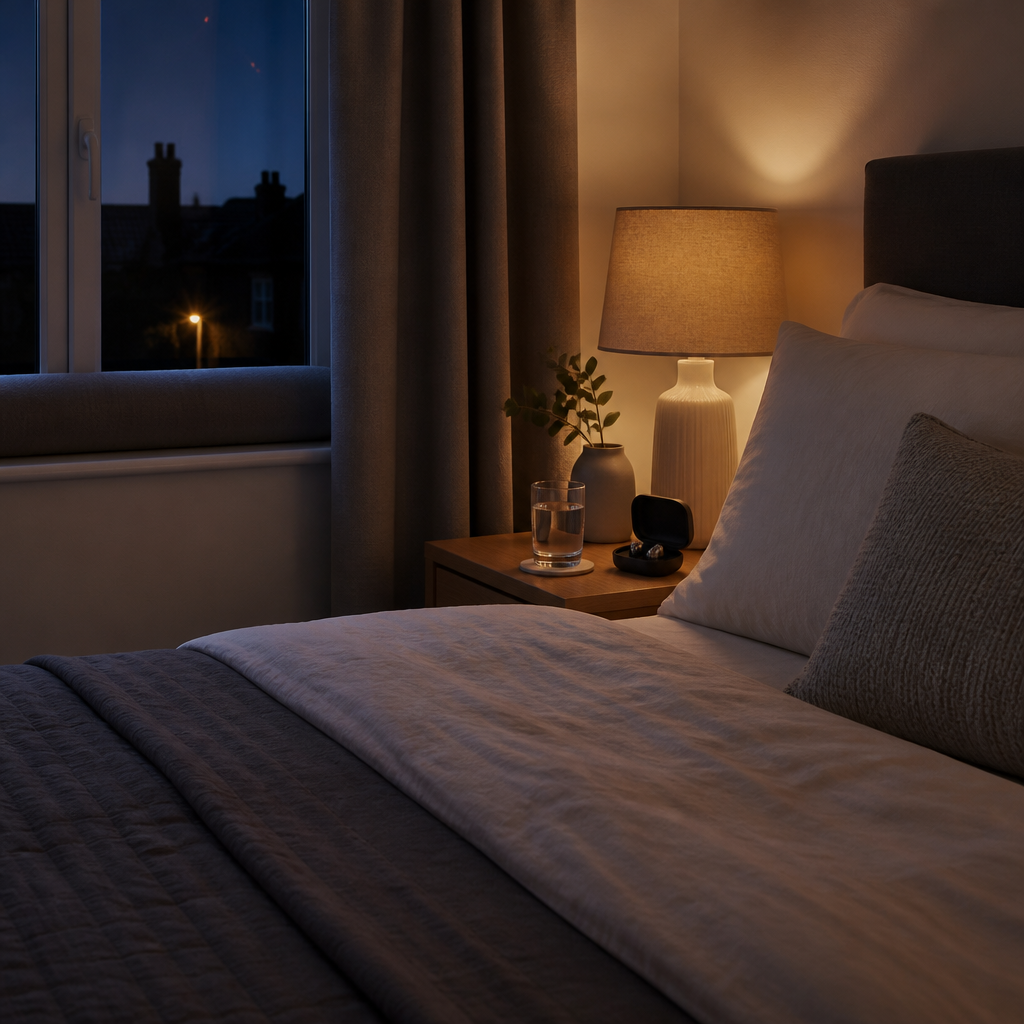
A sleep-focused review that tested earplugs for at least ten nights each makes a useful general point: foam plugs usually block loud noise better than wax or silicone because they carry higher noise reduction ratings. That matters on 5 November, when the problem is not a constant hum but a series of impulses. For impulses, the seal and the material count for more than the volume of the room.
Your brain keeps part of your attention on sounds that could signal danger. A bang from a garden you cannot see keeps that system alert, even when the sound is not loud enough to wake you fully. In practice, a night of scattered bangs often leaves light sleepers feeling unrested, even when they remember falling asleep quickly.
The worst nights are often not 5 November itself. The week before brings a steady drip of single bangs from people testing or planning their own displays. Light sleepers start listening for the next one at bedtime, so the anticipation keeps them awake even on quiet nights. Treat the whole week as the problem, not just the evening.
In the UK, the noise does not stop at the bonfire. Private fireworks, organised displays and the occasional stray rocket tend to build across the days around Thursday 5 November 2026. The clocks went back on 25 October, so by the time most people get home the evenings are already fully dark, which is when much of the firing starts.
Most people set up for the night itself and forget the run-up. A few short bangs on a Saturday evening in late October can wake a light sleeper as easily as the main event, and the expectation of more keeps them alert. The practical fix is to test your plugs during an ordinary week before the 5th, so you know the seal works before it matters.
Organised displays usually finish at a set time, but private fireworks often continue well past the official show. Plan to need your protection until the small hours. Set up the bedroom before you go to bed, not when the first rocket goes up, because settling back down after a startle takes far longer than staying asleep in the first place.
Pro tip: Insert your plugs before dusk, not after the first bang. Once a light sleeper is startled awake, the second attempt to fall asleep is much harder than the first.
Guy Fawkes Night is not a national event in Australia the way it is in Britain, so the calendar looks different. Fireworks are concentrated around New Year’s Eve and public celebrations, and noise can arrive from unexpected places at other times of year. Check with your local council for scheduled displays near you rather than relying on a national date.
What makes early November relevant in Australia is the season. It falls in late spring, when many households start sleeping with windows open and balconies in use. That changes the sound environment more than the fireworks themselves do.
Dense suburbs and apartment blocks carry sound in ways that catch people out. Hard surfaces, shared courtyards and open-plan layouts let a single bang echo through several rooms. If you share a wall or a stairwell with neighbours, expect to hear sounds you would never notice in a detached house with the windows shut.
Earplugs make the most sense when you cannot close the window. Curtains and sealed glass reduce sound at the wall, but earplugs remove it at the ear, which is the only control you have when the window is open for warmth. A fan running for airflow can also mask sharp bangs, so it doubles as a useful tool. Pairing the two is more practical than choosing one.
Three approaches come up most often for fireworks nights: reusable pairs with replaceable foam tips, disposable foam plugs, and headphone-based options such as noise-cancelling headphones or white noise. Each suits a different situation, and it helps to know which one you are buying for before you spend money.
My clear position is this. For a single night, disposable foam is the cheapest way to get a seal. For a season of loud nights, a reusable pair with replaceable tips is the better buy. Headphones are a supplement for steady background noise, not a replacement for plugs when the bangs start.
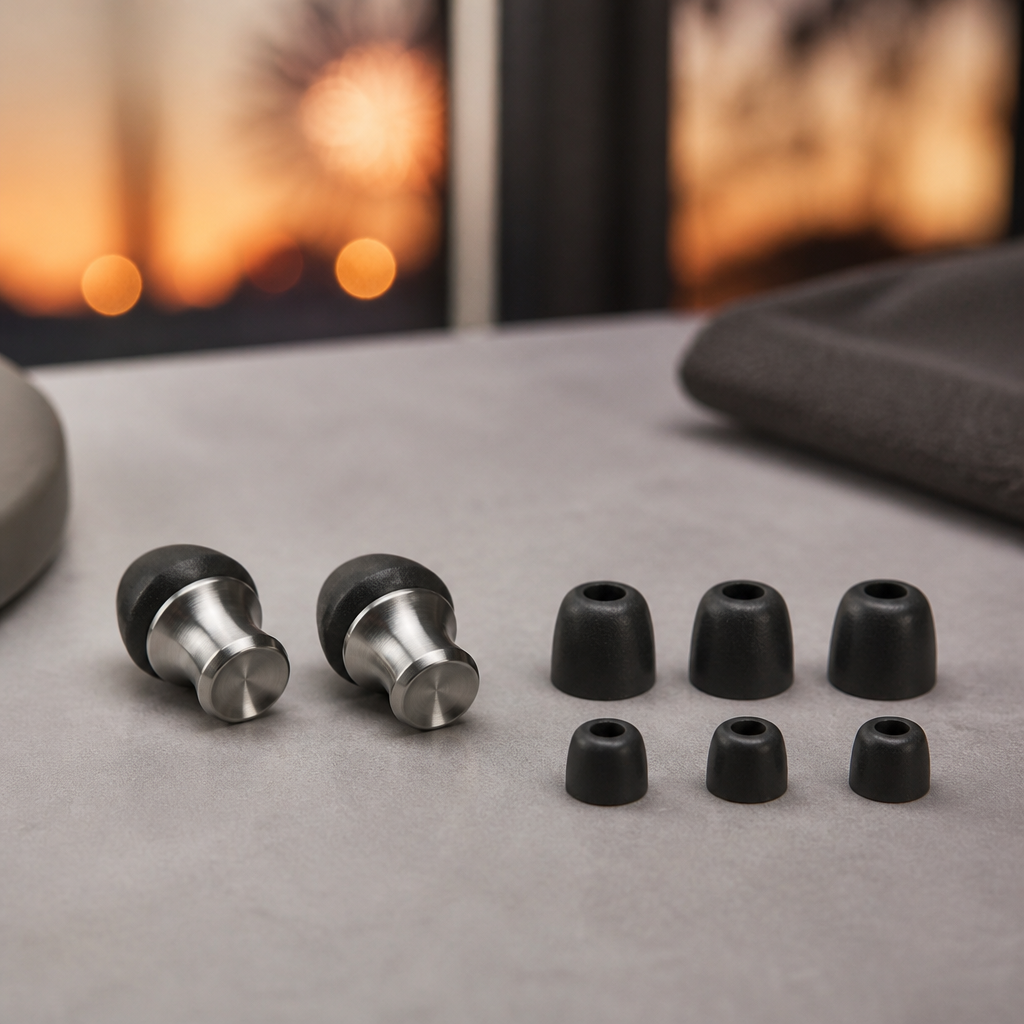
Reusable metal-bodied pairs use a concave aluminium body with a soft memory foam tip. The ATTENU8 design comes with three tip sizes (XS, S and M) and a rated noise reduction of approximately 32dB. The main advantage is that you replace only the foam tips, which the brand recommends every 6 to 8 weeks, rather than the whole plug. Across a fireworks season with several loud nights, that spreads the cost and cuts the waste.
Disposable foam plugs are inexpensive, widely available, and rated strongly for loud noise. They are the sensible choice for a one-off night or a bag you keep for travel. The drawbacks are waste and the fact that each pair is used once, so a long season adds up quickly. A plug that is too large will feel tight by midnight, so choose the size carefully rather than grabbing whatever is in the box.
A UK sleep guide on fireworks nights lists earplugs alongside noise-cancelling headphones and white noise machines as options. Both are useful for steady background sound. In practice, they handle a continuous drone better than a sudden crack, and headphones are awkward for side sleepers. Use them to cover the background, and keep plugs in for the bangs.
| Option | Best Use | Main Drawback |
|---|---|---|
| Reusable pair with foam tips | Several loud nights across a season | Higher upfront cost, and tips need replacing every 6 to 8 weeks |
| Disposable foam plugs | A single firework night or travel | Single use, more waste, and fit depends on choosing the right size |
| Headphones or white noise | Steady background noise and people who cannot wear plugs | Weaker against sudden bangs and awkward for side sleepers |
Most earplug disappointments come from fit, not from the product itself. A tip that is too small lets the sharp edges of a firework through, and one that is too large starts to press after an hour. Fireworks nights run late, so a plug that feels fine at 9pm can become a problem by 1am if it was never sized properly.
Test each size before the night. Lie on the side you usually sleep on, insert the plug, and stay there for around 20 minutes. Choose the size that seals without pressure and stays put when you roll over. In our experience, one size usually feels clearly right after a few attempts, and the other two are obviously too loose or too tight.
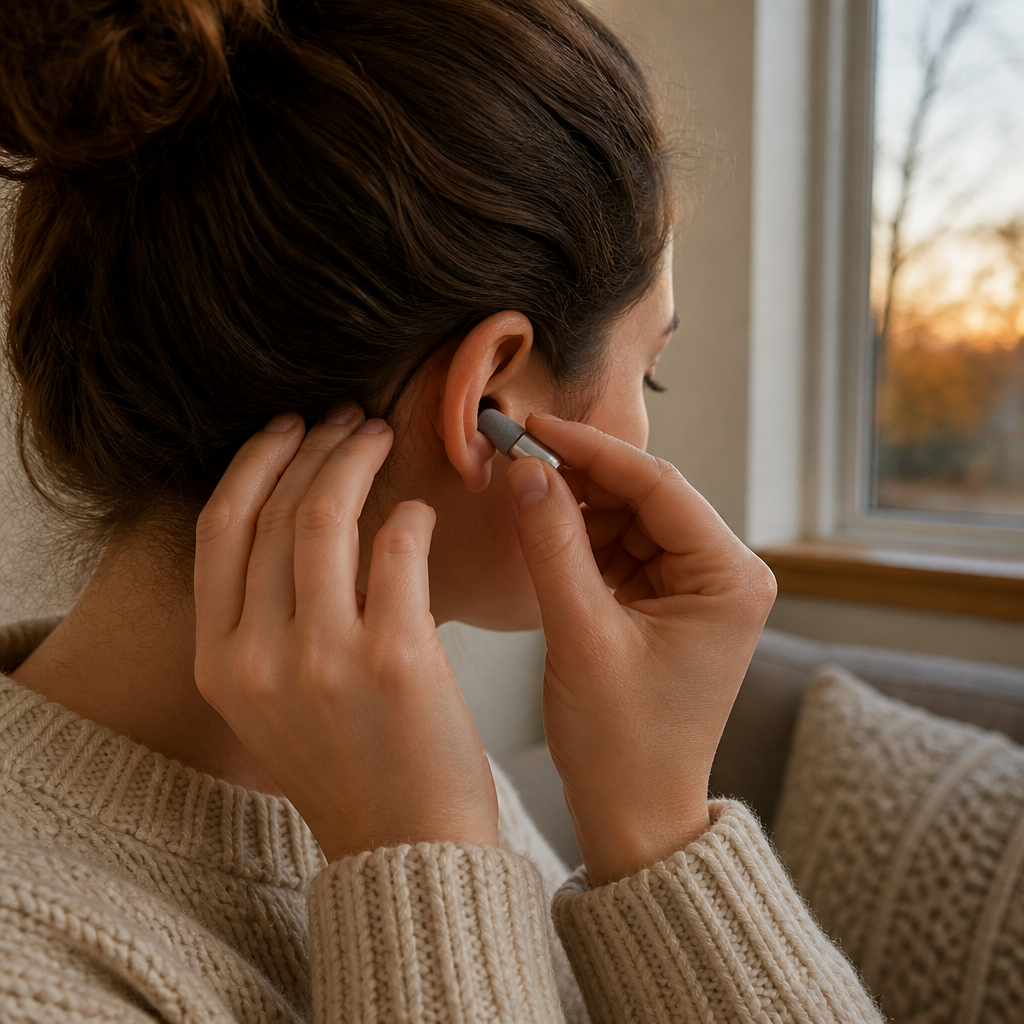
Gently pull your ear up and back to straighten the ear canal, then guide the foam tip in with a light twist until it sits snugly. Hold the body for a few seconds while the foam expands. Forcing the tip deep into the canal is the most common mistake, and it causes discomfort rather than better blocking.
A plug you can still feel an hour after you put it in is the wrong plug, however good its rating looks on the box.
Pro tip: Wash and dry your hands before insertion, and keep the aluminium body free of face cream and wax. Residue can stop the tip sitting flush, which recreates the leak you were trying to avoid.
Plugs do most of the work, but a quieter room makes them more effective and means you rely on them less. Think of it as layering. Close the gaps where sound enters, cover the windows facing the street, and add a steady background sound so the sharp bangs stand out less.
Start with the bedroom you actually sleep in. Move the bed away from the window if you can, and close the door to the rest of the house so that a bang from the front room does not reach you at full strength.
Check the seals around the window frame and the bottom of the door. Draught excluders are cheap and make a noticeable difference to what you hear through a door. Heavy, lined curtains help more than thin ones, and when the window is shut, the glass is doing much of the work. If the window has to stay open for warmth, be honest about that trade-off and lean harder on your earplugs.
A fan or a white noise app works by masking. A steady sound fills the gaps so a sudden crack stands out less. Set it to a constant level and avoid switching it on and off during the night, since that change can itself wake a light sleeper. Test the volume on a quiet evening so it is loud enough to mask but not loud enough to disturb.
Keep the rest of the plan simple. Use the same routine on every loud night, so your body learns what the sequence means and stops reacting to each sound as a new emergency.
The final part of the plan is what happens after the first few nights. Your plugs and your routine need to hold up through the late bangs, and you need to know when to stop using them. Plan the second half of the week as carefully as the first.
Foam tips lose their shape with use and pick up earwax and dust. Once a tip is compressed or dirty, the seal changes without warning, and more sound can leak through without any obvious reason. For the ATTENU8 design, that means replacing the foam tips every 6 to 8 weeks, and sooner if they look flattened or discoloured.
Check your spare tips before the week starts. Running out on 5 November is a common and avoidable problem.
Plugs are for the peak nights, not the entire season. Wirecutter, the product guide from The New York Times, cautions that earplugs suit temporarily noisy environments and advises people to try not to wear them every night. That applies here. Use them on the nights you need them, then return to your normal routine.
If your work involves regular loud noise on construction sites, in factories or on shift, a sleep plug is not a substitute for the hearing protection your workplace requires. Keep the two separate, and follow the rules set by your employer.
Pro tip: Do a practice night this week, while the streets are still quiet. If the seal fails, you will have time to try another size or open a fresh set of tips.
Ear plugs reduce the sharp bangs considerably, but they will not remove every sound. Pair a well-fitted pair with a closed window or a steady fan for the best results on the loudest nights.
Test them across several nights in a normal week, not just once. One sleep review tested each pair for at least ten nights, which is a sensible benchmark for judging comfort and fit.
Foam plugs are usually rated highly for loud noise, and disposable foam is a strong option for a single night. A reusable pair with good foam tips performs similarly when the fit is right, so fit matters more than format.
No, Guy Fawkes Night is not a national event in Australia. Fireworks there are mostly tied to New Year’s Eve and public celebrations, so check your local council for any scheduled displays near you.
Wearing them on the peak nights is reasonable, but Wirecutter’s guidance advises against using them every night. Replace the foam tips on schedule, and return to your normal routine once the noise drops off.
No. Sleep plugs are designed for comfort at night, not for the noise levels of workplaces or events. If you are standing close to a loud display or working in a noisy environment, follow the guidance for that setting.
Tell us which fireworks night is hardest on your sleep and what has actually worked for you, whether that is a pair of plugs, a fan, or a quieter room.

