


 0

Most people treat a noisy night as a one-off annoyance. A siren at 2 a.m., a neighbour’s television through the wall, or a partner’s snoring might cost you one bad morning. The long term noise sleep effects are harder to see and more expensive. Your body keeps reacting to sounds you have stopped noticing, and the bill arrives later as fatigue, poor concentration, and raised blood pressure. This guide explains what the research says, what it costs in practice, and where a durable fix such as reusable ear plugs fits in.
| Key Insight | Explanation |
|---|---|
| Waking up is not the only cost | Noise that never fully wakes you can still shift time out of slow wave and REM sleep, the stages most tied to recovery. |
| Nighttime exposure is the worst timing | A 2014 review by Demian Halperin described nocturnal noise as possibly the most worrying form of noise pollution for health, because its effects combine during the night and carry into the next day. |
| Stress hormones work overnight | Night noise can prompt adrenaline and cortisol release, along with higher heart rate and blood pressure, even when you stay asleep. |
| Daytime performance pays first | Sleepiness, irritability, and slower thinking the next day are the costs most people notice before any long-term damage. |
| Sleep losses accumulate | Several nights of mild disruption add up, and chronic poor sleep is linked to heart disease, diabetes, and depression in the research. |
| Match the fix to the noise | Earplugs handle sudden, unpredictable sounds well, while masking sound and sealing a room address steady background noise. |
Sleep is not a single state. It cycles through lighter stages 1 and 2, deep slow wave sleep, and REM sleep several times a night, and each stage does different work. Deep sleep supports physical recovery, while REM is tied to memory and emotional processing. When noise intrudes, the damage is often invisible in the morning.
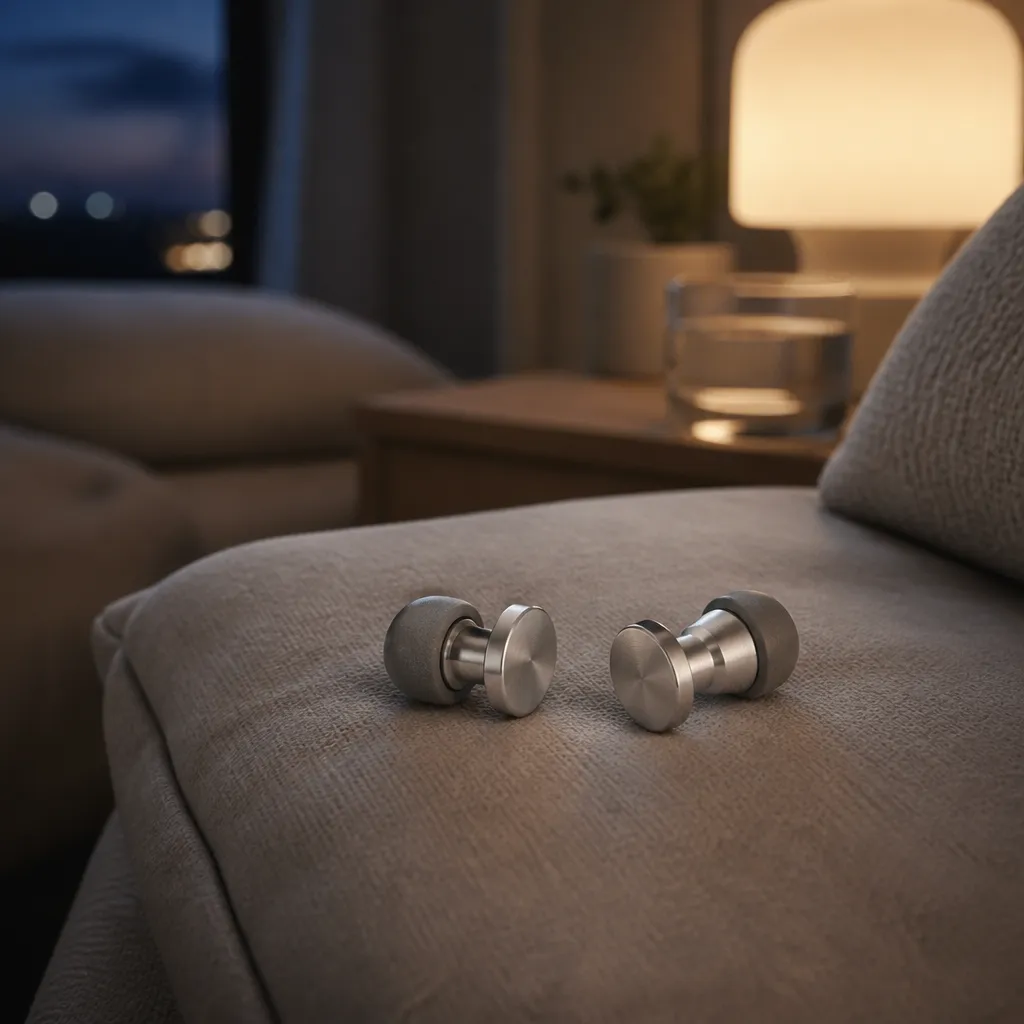
The Sleep Foundation summarises research showing that environmental noise, such as air and vehicle traffic, can increase time spent in stage 1 sleep and reduce slow wave and REM sleep. Even sounds that do not wake you can change how your night is structured. You may remember nothing and still wake up unrefreshed.
Micro-arousals are brief shifts toward wakefulness that often leave no memory. A truck passing at 3 a.m. may never register consciously, yet the sleeper’s brain can still respond. In practice, people who insist they sleep through the night often describe mornings that feel heavier than their hours in bed suggest.
Eight hours in bed means little if a large share of that time is spent in lighter sleep. The Sleep Foundation notes that a quiet bedroom is generally best, although steady background sounds such as a fan may mask unpredictable noise for some sleepers. White noise does not help everyone, and research on background sound is mixed, so test it on yourself rather than assuming it works.
Pro tip: For three mornings in a row, note your sleep duration, how many times you were disturbed, and how alert you feel by 10 a.m. Patterns appear faster than you expect, and they show whether noise or something else is the real problem.
The brain processes sound even while you sleep. The Sleep Foundation’s summary of the research indicates that nighttime noise may trigger extra production of hormones such as adrenaline and cortisol, along with elevated heart rate and blood pressure. You do not need to be awake for these changes to occur.
Cortisol follows a daily rhythm and normally begins rising in the early morning as part of the body’s wake cycle. Repeated stress responses during the night can disturb that rhythm. The practical result is grogginess at the time you should feel sharpest, and it is easy to blame caffeine or age for a problem that started at 4 a.m.
Halperin’s 2014 review describes poor sleep as associated with cardiometabolic, psychiatric, and social negative outcomes in both adults and children. It also cites emerging evidence that the short-term effects of nocturnal noise may be followed by long-term adverse cardiometabolic outcomes. That is a research signal rather than a verdict on any single night, which is why the pattern matters more than one loud evening.
A common mistake is to treat a bedroom that feels tolerable at 11 p.m. as a safe one. Noise you barely notice at bedtime can still push heart rate and blood pressure around in the small hours.
The noise you have learned to ignore is often the noise your body has not stopped responding to.
The first invoice for poor noise management arrives the next day. Halperin’s review notes that people who struggle with nocturnal noise often report daytime sleepiness, tiredness, annoyance, mood changes, and reduced well-being and cognitive performance. These are the costs most people feel in their working hours.
Sleep disruption also changes how you handle the rest of your day. A tired person has less patience for small problems and less tolerance for stress. Those effects are usually the first signals that the nights have been costing more than you realised.
Cognitive performance is usually the first thing to slip. The CDC’s 2023 review on sleep deprivation, sleep disorders, and chronic disease states that inadequate sleep disrupts critical neural processes and impairs cognitive functioning. For anyone who drives, operates machinery, or makes decisions in a loud job, a foggy morning is a safety issue, not just an inconvenience.
Annoyance is a documented outcome of noise exposure, not a character flaw. Noise-driven sleep loss can make small frustrations feel bigger and shorten your patience with the people you live with. Partners often notice the change before the person experiencing it does.
One noisy night is an irritation. Five noisy nights a week for a year is a pattern, and patterns are what the long-term evidence is built on. The strongest long-term findings concern chronic poor sleep in general, and noise is one of the most controllable contributors to it.
The effects are cumulative in a practical sense. Each night that falls short of restorative sleep leaves less margin for the next one, so the body starts the following day from a lower baseline.
The CDC’s 2023 review links sleep deprivation with chronic disease, and the broader research associates long-term poor sleep with higher risks of heart disease, diabetes, and obesity. Noise does not explain all of that risk. It does, however, add a repeated stressor to a system that is already working hard to recover.
People adapt to noise in the sense that they stop reporting it. That adaptation is subjective. The sleep stage shifts described earlier can still happen, so feeling fine about a noisy bedroom is not reliable evidence that your nights are restorative. Halperin’s review makes the same point by separating measurable effects from the subjective feeling of disturbed sleep.
A 2024 paper by M. Basner in the journal Sleep, indexed on the publisher’s site, notes that countless studies have shown that traffic noise disturbs sleep and impairs sleep recuperation. Traffic is the best-studied source, but the underlying mechanism applies to any unpredictable sound that reaches a sleeper.
Most people never add up what noise costs them. Start with sleep, then money, then time, because each one hides a different part of the bill.
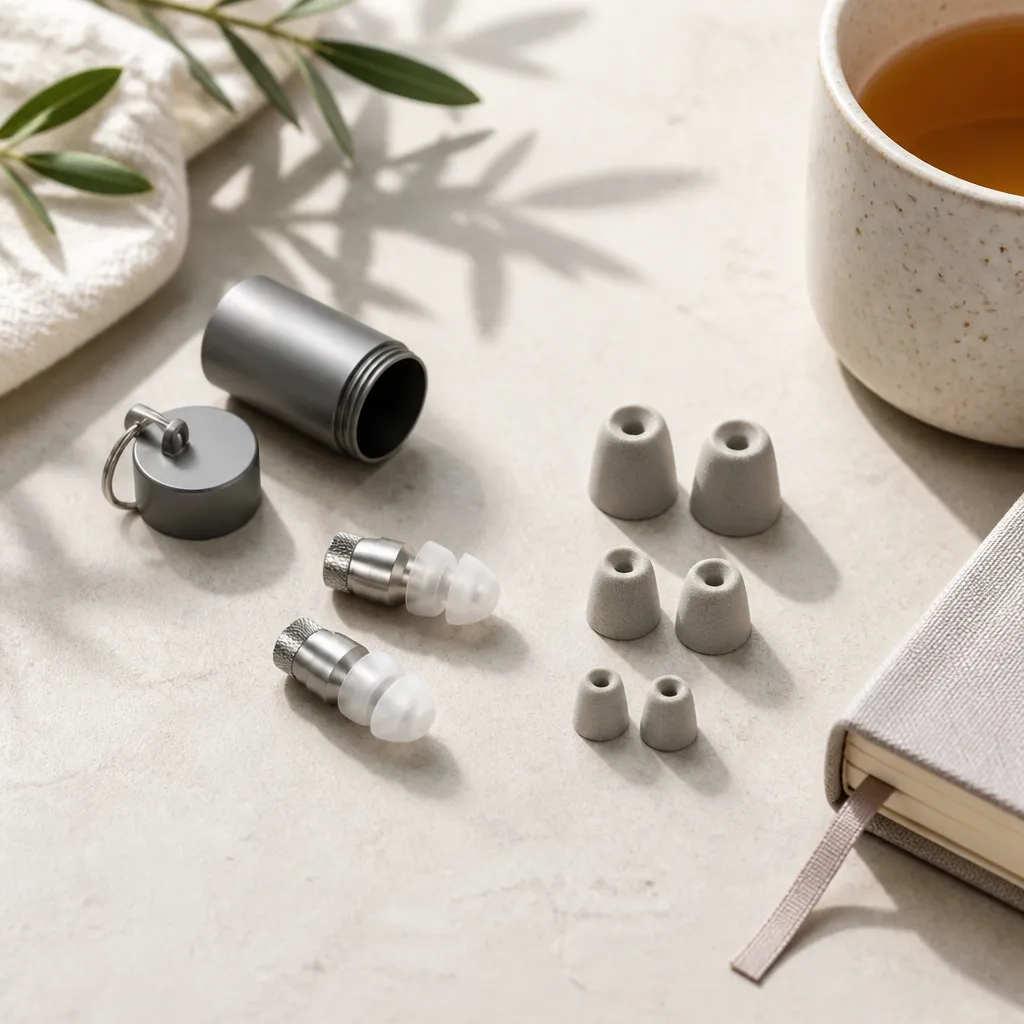
Suppose you use one disposable foam pair per night. That is roughly 365 pairs a year, and each one is a small recurring purchase you forget about. A reusable pair with foam tips replaced every six to eight weeks needs about six to nine tip sets a year. The exact savings depend on local prices, so work out your own cost per night before deciding.
The ATTENU8 design uses a concave aluminium body with three sizes of soft memory foam tips (XS, S, M). The manufacturer rates it at approximately 32dB noise reduction. For a light sleeper, the value is not only financial. It is a fit you can rely on every night, without wondering whether the plug has collapsed.
For people in construction, manufacturing, or military settings, hearing protection is not optional, and noise-related sleep loss sits on top of daytime exposure. A worker who sleeps poorly has less margin for error on the next shift, and a loud job leaves no room for a foggy head.
Pro tip: Replace foam tips on a calendar schedule rather than waiting until they look worn. Tips can lose their seal before any visible damage appears, and a poor seal quietly removes the protection you paid for.
No single fix suits every sleeper. The right choice depends on whether your problem is sudden spikes, a steady hum, or a room that lets everything in.
| Approach | Best For | Main Drawback |
|---|---|---|
| Disposable foam ear plugs | Trying earplugs for the first time or occasional travel | Recurring purchase cost and variable fit from pair to pair |
| Reusable metal-bodied ear plugs with foam tips (ATTENU8) | Nightly sleep and repeated use in loud settings | Higher upfront cost and a short fit trial to find the right tip size |
| White noise or a fan with sealed windows | Steady background noise and sleepers who like masking | Does not reduce sudden spikes, and some people find constant sound disruptive |
Earplugs work best on sudden, unpredictable noise such as traffic, neighbours, and shift-change alarms. They do not help with every sound, and an ill-fitting pair can cause discomfort that makes you stop wearing them. Fit is the variable most people underrate.
Disposable foam plugs are cheap to try and easy to buy, but they are compressed, used once, and thrown away. A reusable design with a concave aluminium body and interchangeable tips changes the cost pattern and gives you a consistent fit to test over several weeks. Expect an adjustment period, and try the XS, S, and M tips before deciding that none of them suits you.
Yes. The Sleep Foundation notes that sounds which do not fully wake you can still change how time is spent in each sleep stage. Halperin’s review also describes stress responses such as raised heart rate and blood pressure during nocturnal noise exposure.
There is no reliable timeline for an individual. Next-day effects such as sleepiness and poor concentration are documented, while the long-term cardiometabolic links are based on repeated exposure and are still emerging. Treat the pattern as the signal, not a single night.
For most healthy adults, reusable plugs with clean tips used as directed are a practical option. Clean them regularly and stop using them if you notice ear pain, discharge, or changes in hearing. See a clinician before continuing if any of those symptoms appear.
ATTENU8 recommends replacing the foam tips every six to eight weeks, rather than replacing the whole pair. Setting a calendar reminder is more reliable than judging by appearance, because a worn seal is not always visible.
It can help some sleepers, particularly against steady background sound. Research on background noise is mixed, and white noise does not reduce sudden spikes such as a passing vehicle or a door slamming, so it is often best combined with other measures.
No. Light, temperature, schedule, and health conditions all matter. Start with the noise audit described earlier, because it is one of the few variables you can measure and change quickly.
Tell us which noise disrupts your nights most, and what, if anything, has actually helped you sleep through it.

