


 0

If your Saturday morning starts with a neighbour’s mower at 7am, you are not imagining it. In much of Australia, November is when lawns move from early tidy-up work into full growth, and noisy neighbours across the country shift from occasional yard jobs to weekly mowing, edging, blowing and pump runs. For light sleepers, the damage rarely comes from one loud hour. It comes from stop-start noise that keeps your nervous system on alert all weekend. This guide explains when the racket peaks, which machines cause the most trouble, how to raise the issue without starting a feud, and how to protect your sleep while the lawn settles.
| Key Insight | Explanation |
|---|---|
| Unpredictable noise does more damage than steady noise | A mower that runs every Saturday at the same time is easier to plan around than one that starts at random on weeknights. |
| Heavy early-spring jobs should be finished by November | Dethatching is best done in early spring, so a neighbour still scarifying or scalping in November is making the loudest noise at the worst time. |
| Leaf blowers and pressure washers are the first thing to address | Their high-pitched noise carries through closed windows, and they are usually the easiest machines to ask a neighbour to skip or move. |
| Ask for a specific schedule, not silence | Requests like “Could you mow before 10am on Saturdays?” get far better responses than general complaints about noise. |
| Ear plugs solve the bedroom problem, not the street problem | Well-fitted foam tips rated at approximately 32dB noise reduction help at night, but they work best alongside bedroom changes. |
| Keep a dated noise log before you escalate | Dates, times, equipment and duration make a council complaint easier to act on, and they make your own conversations more specific. |
Spring lawn care is supposed to follow the grass, not the calendar. One Australian lawn checklist makes the point plainly: growth depends on grass type, climate, soil condition and rainfall, so a date on the calendar is only a rough guide. That means many lawns are only now reaching their busy phase, and a fortnightly mow in September can quietly become a weekly job by mid-November.

In practice, the noise peaks on weekday evenings after work and on weekend mornings, when people finally have time outside. A mower at 6pm on a Thursday lands on a light sleeper who is trying to wind down, and a leaf blower at 8am on a Sunday is just as disruptive to someone who went to bed late. Neither is extreme on its own, but together they keep your sleep cycle interrupted for days.
Unpredictable noise wakes people more often than steady noise does, even when the steady noise is louder.
This is the point I make to anyone who asks why November feels worse than September. Your brain adapts to a noise it can predict, but it keeps listening for the next start-up sound when it cannot. A neighbour who mows on the same Saturday each month is far easier to live with than one who runs a machine three evenings a week with no pattern at all.
Light sleepers usually notice the start of a noise more than its volume, which is why the first few seconds of a machine firing up often do the waking.
Not every loud weekend is a careless neighbour. Many people are working through a spring checklist that they meant to finish weeks ago. The standard sequence is to inspect the lawn first, clear winter debris, mow correctly, check for compaction and thatch, and only then fertilise. Once you know that sequence, you can tell whether a neighbour is catching up or just getting started.
The most useful sign of active growth is not the month but how often the lawn needs cutting. A lawn that moves from every fortnight to every few days is in full growth, and the mowing noise will follow that pattern. If you hear a machine three times in one week, the grass is probably growing faster than its owner expected.
Warm-season grasses such as buffalo, couch, kikuyu and zoysia respond to soil warmth. One Australian reference point used in lawn care guidance is around 14°C soil temperature, and October is often cited as a fertilising reference in many regions. Treat those figures as signals to check, not as dates to obey.
A late frost can burn fresh growth, so some owners hold back on their heavy jobs until the risk passes. Mower servicing, sharpening and scalping are all meant to happen early in spring, before the lawn takes off. When those tasks slide, they often land in late spring, which is why you may hear a neighbour’s mower being tuned up or run hard in November.
Pro tip: Note the date your own lawn first needs mowing twice a week. Once you know that date, you can plan your sleep routine and check your ear plug seal before the noise starts, rather than after a bad night.
Not all garden noise is equal. A mulching mower running on a sunny afternoon is a minor nuisance, while a high-pitched blower at dawn can wake a sleeper through a closed bedroom window. Ranking machines by how they affect sleep, rather than by how loud they are on paper, gives you a more useful list of what to ask a neighbour to change.
Petrol mowers produce a low, sustained rumble that travels through walls and floors. The bigger spring issue is the catcher. When a neighbour switches from mulch mowing to bagging, the machine runs longer and the emptying trips add extra stop-start noise. Mulch mowing also reduces the number of passes needed on a lush lawn.
Blunt blades and poor servicing make mowers slower and louder because the machine works harder for longer. A neighbour with a sharp blade and a serviced engine often finishes in less time with less strain on the motor, which means less noise overall.
Leaf blowers and line trimmers produce the sharpest noise in most suburbs, and they are the easiest to ask a neighbour to skip. Their pitch cuts through closed windows and ear plugs more easily than the rumble of a mower. In November, grass clippings and early seed heads collect on paths and driveways, so blowing becomes a routine weekend job for many households.
My advice is to ask for blowing to happen before 9am on weekends, or to swap for a broom where that is practical. Trimming often comes at the end of a mowing session, so if the mowing window is agreed, the trimming can follow the same window.
Pool pumps and pressure washers run for long periods, which makes them different from a short mowing session. A pump that runs overnight is a constant hum that never switches off, and it is easy to stop noticing until it starts costing you sleep. Pressure washers are loud and often used in bursts that feel unpredictable.
Hedge trimmers are brief but frequent in late spring, as shrubs flush with new growth. Several short bursts across a Sunday afternoon can be more disruptive than one longer job, because your brain never fully settles between them.
Most noise disputes start with a vague complaint at the fence line and end with both people feeling annoyed. A better approach is to raise the issue once, early, with a specific request the neighbour can actually say yes to. In my experience, a calm conversation in daylight on a quiet day gets better results than a note slipped under a door after a bad night.
Choose a moment when neither of you is mid-task and you are rested. Speak before the next scheduled weekend, not during the noise itself. Opening with “I’ve noticed the mower going early on Saturdays and I’m finding it hard to sleep” describes the problem without accusing anyone.
Ask for a window, not silence. Requests such as “Could the mowing and blowing happen before 10am on weekends?” or “Could the pump run only during the day?” are easy to agree to and easy to check. If it helps, offer a trade, such as you doing your own noisy jobs at a time that suits them.
A common mistake is asking someone to stop gardening altogether. People rarely agree to that, and some will respond by doing the job at the same time just to make a point. Keep the request reasonable and you are far more likely to get a schedule change.
Pro tip: Follow the conversation with a short text that repeats the agreed window. It removes doubt about what was said and gives you a reference point if the noise continues.
Each response suits a different situation. The right choice depends on how often the noise happens, whether the neighbour is open to talking, and how badly your sleep is suffering. The table below sets out where each option works and where it falls short.
| Approach | When it works | Where it falls short |
|---|---|---|
| Talking to the neighbour with a specific request | Occasional noise from someone you can speak to easily | Does not work if the neighbour ignores the request or is hard to reach |
| Formal complaint to your local council | Repeated noise that appears to breach local guidance, backed by a dated log | Slower, and the council may need clear evidence before acting |
| Well-fitted ear plugs plus bedroom changes | Any situation where you cannot control the source, including overnight pumps | Does nothing to change the neighbour’s habits or the daytime noise outside |
In practice, I would start with the conversation, keep the log running while you wait, and use ear plugs to protect your sleep in the meantime. A council complaint is the right route when the noise is frequent and the conversation has failed, not a first step between neighbours.
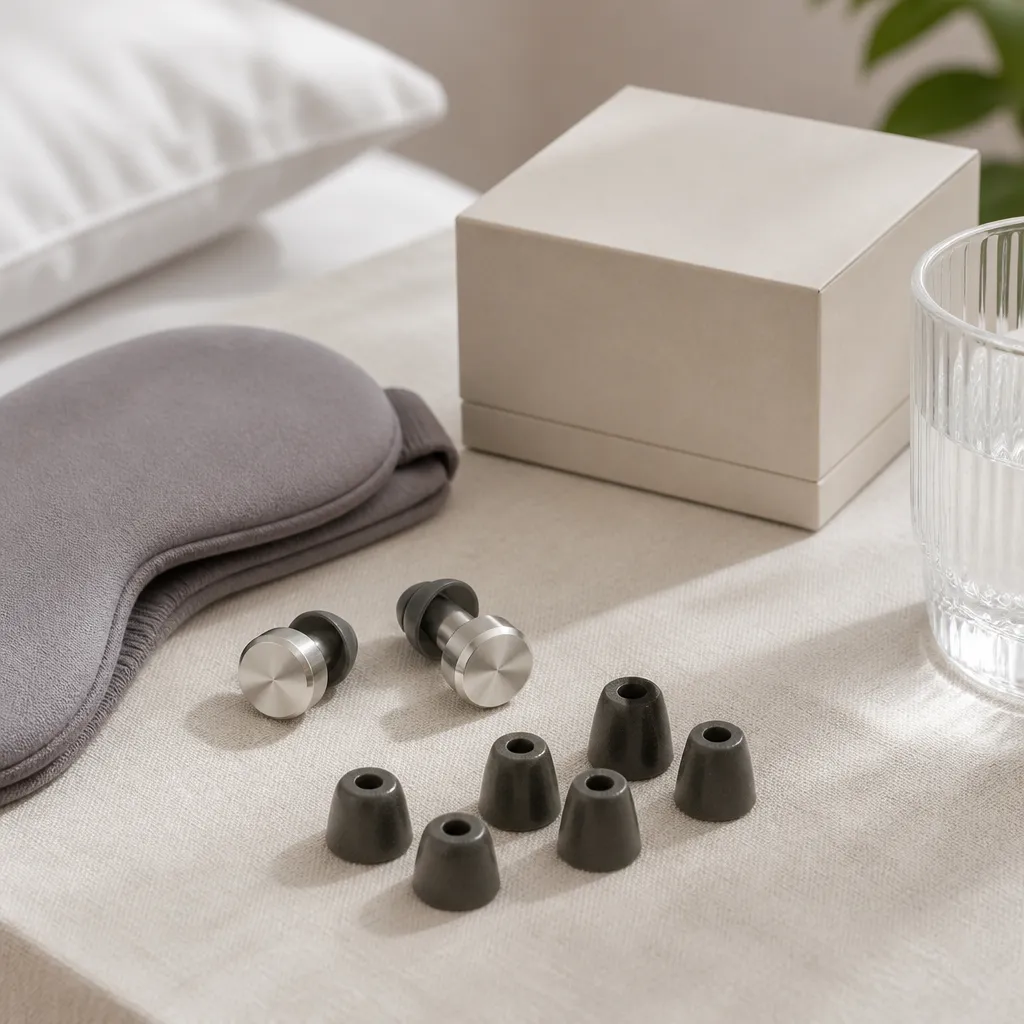
Ear plugs only work if they seal properly, and most disappointment comes from a poor fit rather than a poor product. ATTENU8 ear plugs use a concave aluminium body with three sizes of soft memory foam tips (XS, S and M), rated at approximately 32dB noise reduction. That rating assumes a good seal, so fit is the first thing to get right.
Try each tip size in the morning, before you need them, rather than at 11pm when you are tired. The tip should feel snug without pressure or ache. If your own voice sounds hollow or the seal breaks when you yawn or chew, move up a size. Ears often differ, so check each side separately.
Insert the tip gently, compress the foam slightly, and hold it in place for a few seconds while it expands. Rushing this step is the most common cause of a leaking seal, especially for people used to pushing in softer foam.
The metal body is built to last, and only the foam tips need replacing, every 6 to 8 weeks with regular use. A worn tip loses its shape and seal, which can make the plug feel like it is working while it quietly lets noise through. Keep a spare set in the bedside drawer so a worn pair does not leave you exposed during a noisy weekend.
Be honest about the limits. Ear plugs reduce the sharp, high-pitched noise of blowers and trimmers well, but they do less against low rumble that travels through the structure of a house. For that, you need the bedroom changes covered in the next section.
You do not need a renovation to make a bedroom quieter, but you do need to think about where sound enters and how it bounces around the room. Hard surfaces such as bare floors, large mirrors and plain painted walls reflect sound back into the room. Softer materials absorb more of it, which is why a room full of fabric often feels calmer even when the outside noise has not changed.
A thick rug, lined curtains and an upholstered headboard all help. Layout matters too. Moving the bed away from a shared wall with a neighbour’s pump or machine shed can make a bigger difference than any single purchase. For a clear overview of soft furnishings and room layout, this design resource on sound-dampening ideas covers the basics.

Most noise leaks through gaps rather than through thick glass. Check for light showing around the window frame at night, or a faint whistle when the wind picks up. Draught strips, door seals and a well-fitting bedroom door do more than most people expect, and they cost far less than replacing a window.
Garden noise rules differ between councils and states, and they are rarely the same as rules for construction or industrial noise. Before you make a formal complaint, check your council’s website for the guidance that applies to your street. Councils often take repeated noise more seriously than a single bad weekend, which is why a diary matters.
Record the date, start and end time, type of equipment, rough duration and how it affected your sleep. Keep entries factual and brief. Three weeks of consistent entries is far more persuasive than a long list of complaints written in the heat of the moment.
Escalate when the conversation has failed, the noise keeps repeating, and your log shows a clear pattern. Start with the contact listed on your council’s website, and keep copies of everything you send. You should not need to escalate over a single bad Saturday.
Pro tip: Use the same log to plan your ear plug routine. If the diary shows blowers at 8am on Sundays, you know which mornings to check your tips and seals before the weekend arrives.
There is no single hour that applies everywhere. Check your council’s noise guidance, then ask your neighbour for a specific window that suits both households. Most people accept a sensible morning start, and a schedule request is more likely to work than a complaint about one particular time.
For most healthy adults, reusable foam-tipped ear plugs are designed for regular use and are comfortable to sleep in. Stop using them if you feel pain, irritation or discharge, and speak to a GP if symptoms do not settle. Keep the tips clean and replace them when they lose their shape.
Replace the foam tips every 6 to 8 weeks with regular use. The aluminium body is designed to stay in service, so you only need to replace the tips rather than the whole pair. A tip that no longer springs back or shows visible wear is due for replacement sooner.
No, and anyone who says they do is overselling. Well-fitted plugs reduce the high and mid-frequency sounds of mowers, blowers and trimmers well, but low rumble can still reach you. A good seal, a softer bedroom and an agreed mowing window together give the best result.
You usually cannot stop someone from doing a lawful activity, but you can ask for a specific time window and a quieter alternative such as a broom on certain days. If the noise is frequent and the conversation does not help, a dated noise log gives your council something concrete to act on.
Not every task needs to be finished by November, since fertilising and some repair work depend on when the grass resumes growth. Heavy early-spring jobs such as dethatching are best done early in the season, so a late dethatch in November usually means a neighbour is catching up.
Tell us which garden machine wakes you most often and whether a specific schedule request has ever worked for you, because your experience will help other light sleepers plan their weekends.

