


 0

A summer festival means hours of bass, crowds pressed against the barrier, and a high-pitched whine that lingers until the following week. Most people treat that ringing as a badge of honour. It is actually a sign that your inner ear has been overloaded. Ear plugs for festivals are the simplest fix, but only if they fit properly, suit the sound levels you will face, and get worn consistently across a multi-day event. This guide covers those three things, along with what to do before next summer’s line-up is announced.
| Key Insight | Explanation |
|---|---|
| Ringing means damage has already started | Tinnitus after a set is a sign of overexposure, not proof the show was good. Treat it as a cue to change your routine for the next set. |
| Rated noise reduction is a best-case number | Lab ratings assume a perfect seal. OSHA guidance recommends derating a rating by 50 percent to estimate real-world protection. |
| Fit matters more than the price tag | A well-seated plug outperforms an expensive one with the wrong tip size. Test all three sizes at home, weeks before the event. |
| Carry a backup pair | Losing or damaging one pair in a crowd is common. Keep a spare in a separate pocket or bag so you are never unprotected. |
| Step away from the speakers every hour or two | A few minutes away from the main stage gives your ears recovery time. Pick your quiet spot before the music starts. |
| Choose a moderate rating you will actually keep in | Heavy muffling flattens the music and tempts you to remove your plugs. A plug you wear for the whole set protects more than a stronger one you pull out. |
| Plan your gear before the line-up drops | Check fit, order replacement tips, and set a routine in the off-season so you are not solving problems on site. |
A festival stage can push sound well past the levels most people experience in daily life, and the damage builds over time. Many attendees assume only a full day of close-up noise is risky, but several loud sets on consecutive nights add up. A ring that fades by morning does not mean the strain on your inner ear has gone with it.
Consumer testing of concert ear plugs often uses a simple worked example: a 100 dB set with a plug rated at 20 dB noise reduction brings the sound reaching your ear down to about 80 dB. That is a meaningful drop, but only if the plug is sitting properly in the canal. The rest of this guide explains why that condition is harder to meet than most people expect.
Tinnitus after a set is the most visible sign of overexposure, and it is easy to shrug off as part of the fun. In practice, it means the level and duration of what you just heard exceeded what your ears comfortably absorb. Repeated exposure without recovery is what turns a temporary ring into something that lasts, so treat each ringing night as a reason to change your routine, not as proof you had a good time.
Sound at the front barrier can be far louder than sound at the back of the field, because you are closer to the speaker stacks and the level climbs quickly as you approach them. Many people plant themselves at the front for the headliner and then wonder why their ears are ringing on Sunday. Standing a few rows back, or moving to the edge of the crowd during the loudest sets, lowers your exposure without costing you the atmosphere.
Every box of ear plugs carries a noise reduction number, and it is the figure most buyers compare first. The problem is that the number is measured under ideal conditions, with the plug seated perfectly in a test setup. Your ear canal is not a test setup, so the protection you actually receive will be lower.
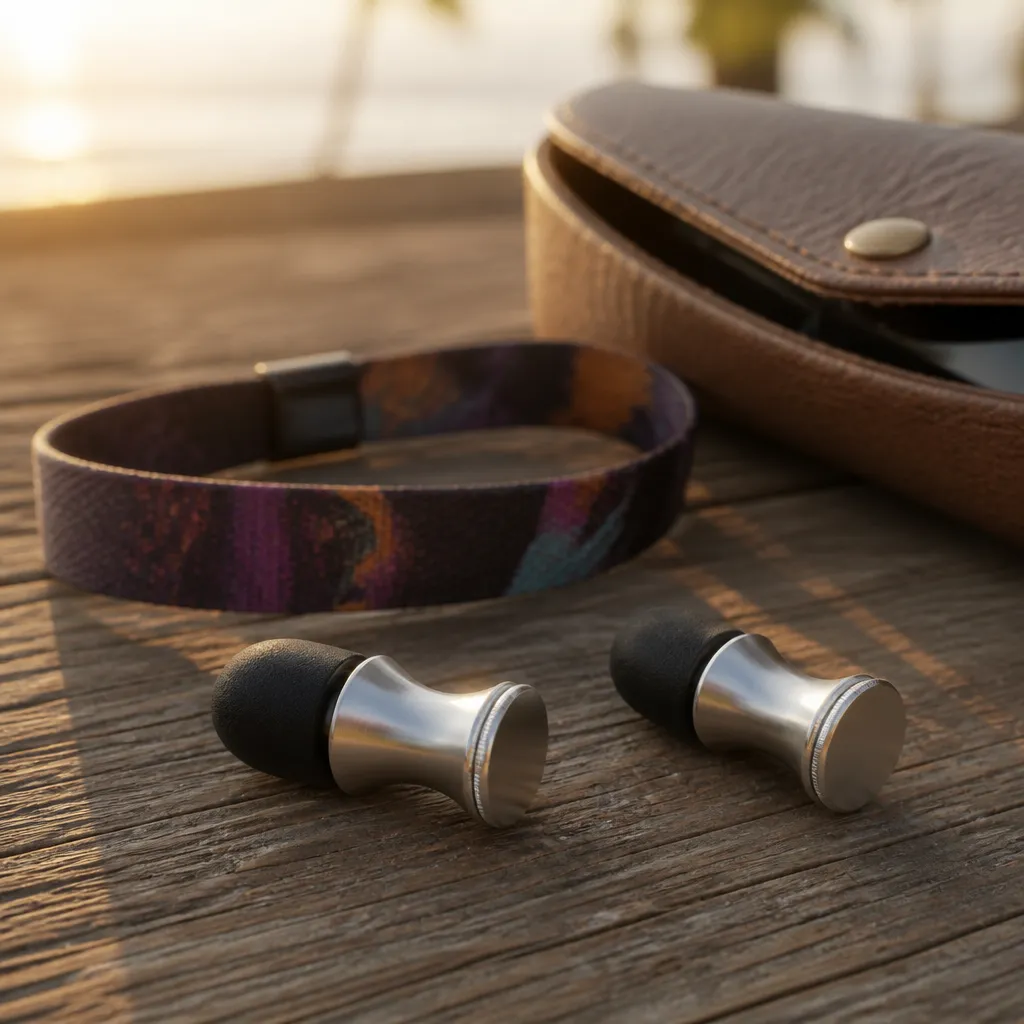
The noise reduction rating (NRR) is a laboratory figure that shows how many decibels a plug can block under controlled fit. Our pairs carry a rated figure of approximately 32 dB, and we state it plainly because it is what the lab measured. It is a useful way to compare one plug against another, but it is not a promise about what you will hear at a live show.
OSHA, the US workplace safety body, recommends derating a plug’s rating by 50 percent to estimate real-world protection. Applied to a 32 dB rating, that gives you roughly 16 dB to plan around. Use the lower figure as your working assumption, then decide whether that is enough for the stage you plan to stand near. A pair that delivers half its rated number in your ear is still doing useful work, but only if you know that is what you bought.
Higher ratings mean more muffling, and heavy muffling can make music sound flat and distant, which is why many attendees pull their plugs out after the first song. Testing on concert plugs has found that the models which sound most natural usually offer moderate attenuation, while the strongest noise reduction tends to sacrifice frequency balance. At a festival you want to feel the bass, follow the melody, and talk to friends, so a moderate rating you keep in place beats a heavy rating you remove at nine o’clock.
The best ear plug is the one still in your ear when the headliner starts.
Pro tip: Decide your target reduction before you buy, based on how close you plan to stand. Then choose a plug that gets you there in real use, not just on the packaging.
No ear plug performs as rated without a proper acoustic seal, and fit is where most festival protection fails. Ear canals vary widely in size and shape, and a tip that is too small lets sound leak past the seal. Some plugs run large, so the size you assume you need may be wrong, and the only way to find out is to test.
Our pairs come with XS, S, and M memory foam tips, and most people settle on one size that feels comfortable and seals cleanly. Test all three before the event, not on the first night of the festival. Insert each size, then hum quietly with your mouth closed. A good seal makes your own voice sound deeper and closer, while a poor seal leaves it sounding almost normal.
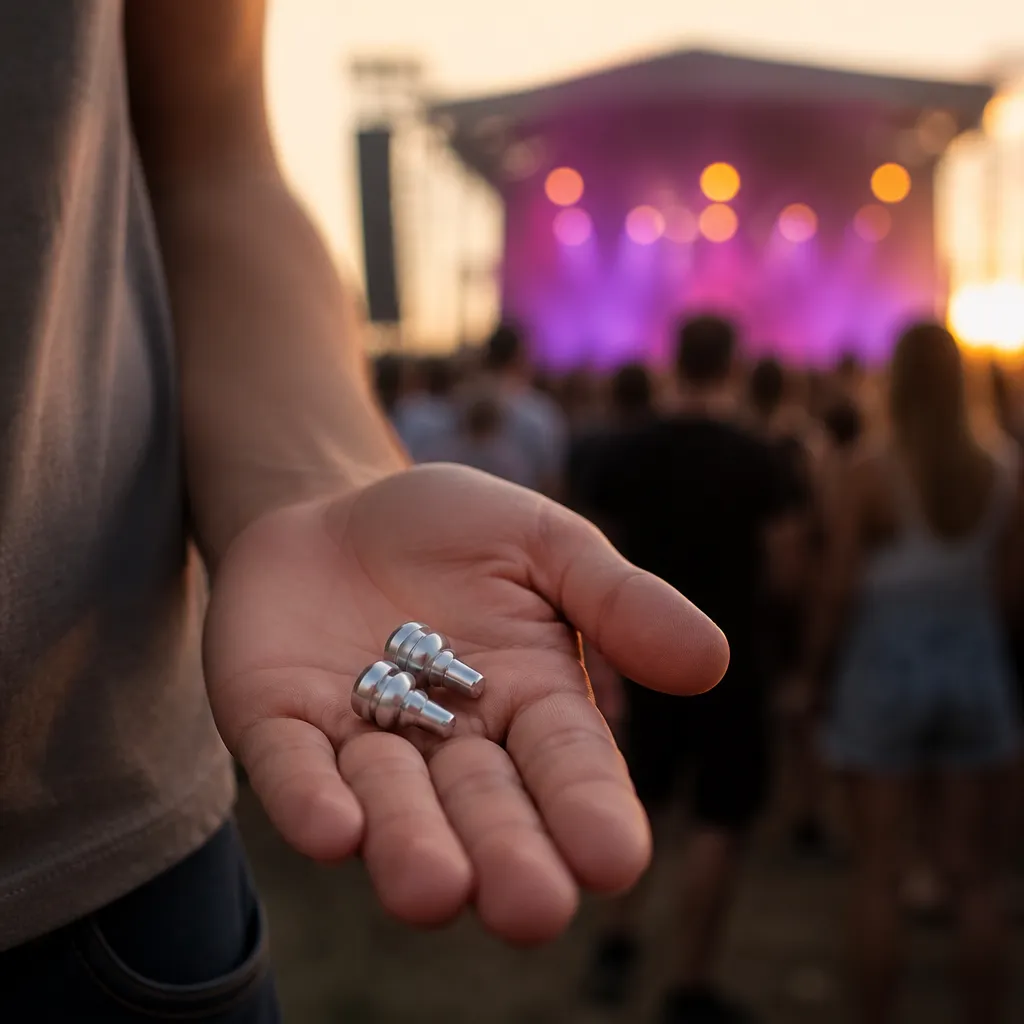
A seal can fail quietly. Shallow insertion is a common cause: when a plug sits at the entrance of the canal rather than deeper inside, an air gap can form and amplify certain frequencies. Lab testing of concert plugs has shown that a shallow fit with a pinhole gap can create a resonant peak near 1,300 Hz, pushing sound at the eardrum about 12 dB louder than wearing nothing at all. If the music suddenly sounds thin or sharp, re-seat the plug before you assume it is working.
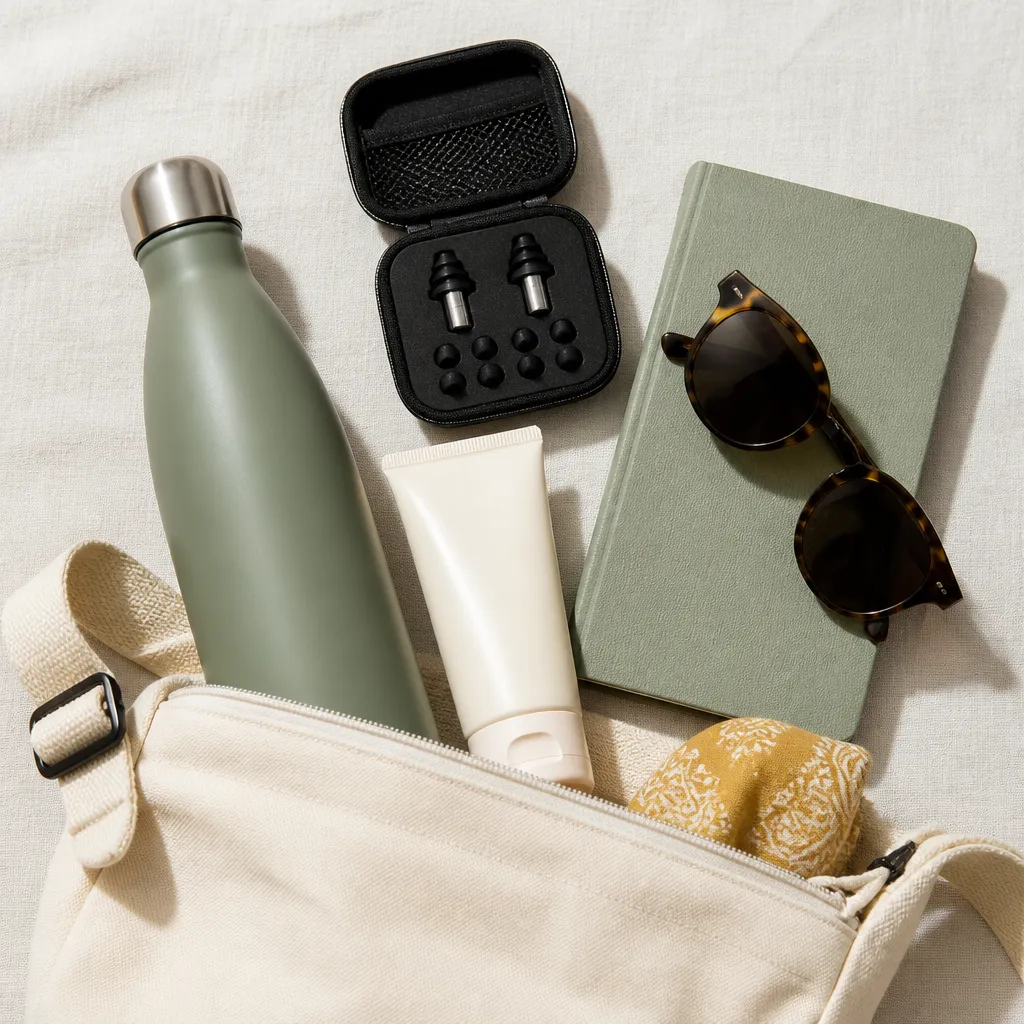
Dirt, sweat, and festival dust reduce grip on the tip and change how it seals. Our foam tips are designed to be replaced every six to eight weeks of regular use, and a tip that looks flattened, discoloured, or stiff should be swapped sooner. Keep a spare set in the case so a worn tip is never the reason you go without protection.
Not every festival day needs the same level of protection. A afternoon near a small stage carries very different exposure from a night at the front of the main stage, and your gear should reflect that. The table below compares three common options so you can match the product to the situation rather than buying the most expensive one by default.
| Option | Best Use | Main Drawback |
|---|---|---|
| Disposable foam plugs | Backup pairs and low-exposure afternoons | Typically thrown away after one use, so costs add up over a season, and fit can vary from pair to pair. |
| Reusable metal-bodied plugs with replaceable tips | Multi-day festivals, nightly use, and anyone who wants a consistent fit | Needs regular cleaning and tip replacement, and the upfront cost is higher. |
| Custom-moulded plugs fitted by an audiologist | Frequent loud events, musicians, and people with sensitive hearing | Requires an appointment and a fitting fee, and is less flexible if your exposure changes. |
For a single-day outdoor show with a mix of quiet and loud acts, a reusable pair with a moderate rating covers most situations. For a multi-day festival where you will be near the speakers every night, a reusable pair with fresh tips and a backup set makes more sense than disposables. If you attend loud events every month, a custom-moulded pair can be worth the appointment.
In crowds, plugs get dropped, sat on, or left in a tent. A second pair kept in a different pocket or bag means a lost pair on day two does not end your protection. Disposable foam pairs also work well as a backup, since you can carry a few without much weight or cost.
Ear plugs do the heavy lifting, but how you move through a festival day matters just as much. Most people spend the whole day in one spot, at one volume, and never give their ears a break. A better pattern is to plan your exposure the way you plan water and food, with deliberate pauses built in.
Sound levels drop noticeably as you move away from the speaker stacks, which is why standing at the back of a large field is so different from standing at the barrier. Before a headliner, decide where you will watch from, and choose a spot where you can still see the stage without being pinned against it. Your friends will still find you, and your ears will be grateful on Monday.
Hearing health guidance for festivals consistently recommends finding quiet spots to take breaks, because stepping away from the noise for a few minutes can reduce the risk of hearing loss. In practice, look for a shaded area, a food stall away from the stage, or a spot behind a tent. Use the break to sit down, take your plugs out for a minute if the area is quiet, and then put them back in before the next set.
Heat and dehydration make long days harder, and tired ears recover more slowly. Drink water steadily, and do not wait until you feel thirsty. Limit additional noise after the show as well, since a loud car ride home or a late-night bar can add to the dose you took in during the day. Give your ears a quiet evening before you go back to normal life.
Pro tip: Set a phone reminder for the first quiet break of each day. Most people forget to take one until the ringing starts, and a scheduled pause is far easier to keep.
The best time to sort out your festival hearing protection is not the week before the event. Off-season is when you have time to test fits, order replacement tips, and build a routine without rushing. Start now, and you will walk into the 2027 season with gear you already trust.
Fit testing at home takes ten minutes and tells you more than any product review. Try all three tip sizes, hum to check the seal, and wear your chosen pair for an hour while you do something ordinary, like cooking or reading. If your plug falls out, causes discomfort, or makes everything sound tinny, you have time to try something else before the season starts.
A practical festival kit includes your main pair, a backup pair, a spare set of tips, and a small case that protects the plugs in a bag. Keep it in the same place each time so you never leave without it. Consistency matters, because a kit you grab on the way out the door is more likely to get used than one you have to hunt for.
Buying good plugs is only half the job. Decide in advance that you will put them in before the first set, take a quiet break each day, and replace tips on a fixed schedule. Write those rules down. A routine you agreed to in October is far more likely to hold up when the headliner starts in July.
Yes, provided the plug is comfortable and properly seated. Wearing protection through loud sets is the point, but you should still step away from the speakers during breaks and remove your plugs in quiet areas when it is safe to do so.
They reduce volume, and they can change how music sounds. A moderate rating preserves more detail and bass than a very heavy one, so you can still follow the melody and talk with friends. A poorly seated plug can make music sound thin, so check the seal if things sound off.
Test each tip size at home. Hum with your mouth closed, and if your own voice sounds deeper and closer, the seal is good. If the plug feels loose, causes pain, or the music suddenly sounds sharp, re-seat it or try a different size.
Our foam tips are designed to be replaced every six to eight weeks of regular use. Replace them sooner if they look flattened, discoloured, or stiff, since worn tips seal less reliably.
Ringing that persists, or hearing that stays muffled, should be checked by an audiologist or doctor rather than waited out. Use the experience to adjust your plan for next time, including rating, placement, and break habits.
What has your experience been with ear plugs at summer festivals, and which tip size or routine worked best for you?

