


 0

Storm noise sleep disruption is one of the least discussed causes of broken nights in Australia. A thunderclap at 2 am rarely wakes you fully, yet it can pull you out of deep sleep, leave you lying awake for twenty minutes, and leave you flat the next day without you ever connecting the two. If you are a light sleeper, or you work in loud conditions and need your ears to recover at night, storm noise is a specific problem with specific fixes. This guide explains why storms disrupt sleep differently from other noise, what the research says, and which options hold up when the sky opens.
| Key Insight | Explanation |
|---|---|
| You can wake without remembering it | Storm noise can shift you into lighter sleep stages even when you do not fully wake, so a “good night” memory is not proof of good sleep. |
| Unpredictable bangs cause more damage than steady rain | Sudden spikes keep the body on alert. A steady sound may mask them for some sleepers, but not for everyone. |
| Fit decides how much a plug blocks | Ear plugs only deliver their rated reduction when the foam tip seals the ear canal. Test all three sizes lying down before storm season. |
| Replace foam tips every 6 to 8 weeks | ATTENU8 recommends replacing only the foam tips on this schedule. A tip that no longer springs back has lost its seal. |
| Combine fixes instead of picking one | Earplugs handle sharp cracks, sealed windows handle wind and rumble, and a fan can cover steady rain for sleepers who respond well to it. |
| Plan the morning after | Storm nights are linked to next-day sleepiness and irritability, so move demanding tasks and protect an earlier bedtime the following night. |
Most people assume they sleep through storms because they remember nothing about the night. Research on environmental noise suggests that is the wrong test. A 2014 review by Demian Halperin, published in Sleep Science, found that nighttime environmental noise provokes measurable biological changes, including a stress response, and clearly affects sleep architecture as well as subjective sleep quality.
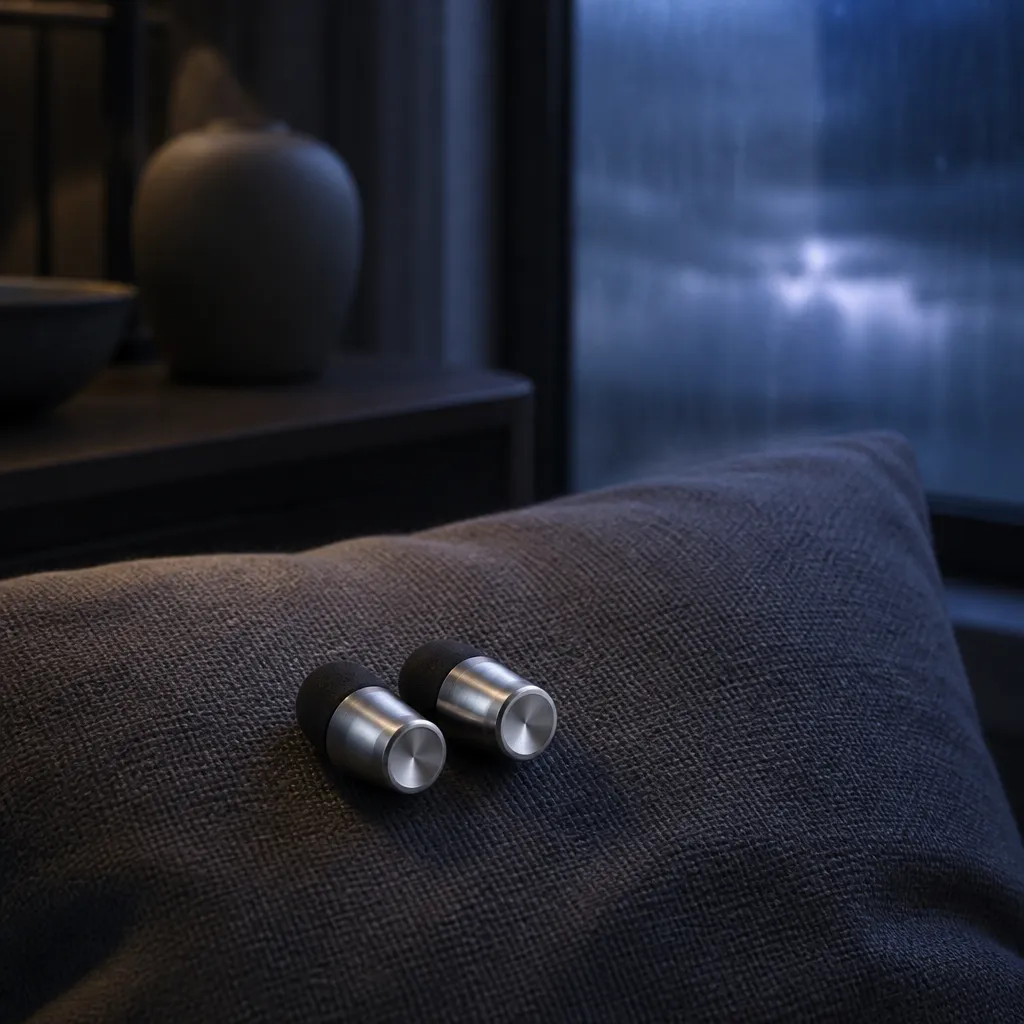
Storm noise is different from the steady traffic hum that much of the research examines. Thunder arrives in unpredictable bursts, often with a sharp crack that rises well above the level of a quiet suburban bedroom. Heavy rain on a tin or metal roof adds a constant roar that some sleepers find harder to tune out than a single noise.
Predictability is the real issue. The Sleep Foundation notes that noises can wake you or change your sleep stages even when you do not fully wake, and that steady background sound can help mask unpredictable noise for some people. Storm noise is the opposite of steady, which is why one housemate can sleep through a storm while the other stares at the ceiling.
In practice, the first crack is rarely the whole problem. The sounds that do the most damage are the second and third, the ones you half expect, which keep your nervous system on watch. A light sleeper often wakes before each burst, drifts back, and wakes again, and that fragmented pattern leaves you more tired than one long, clean wake-up would.
Sleep is lost in the gaps between storm noises, not only during them. For a light sleeper, the anticipation of the next crack is often what keeps them awake.
A sudden loud sound is the most disruptive type of noise for sleep. The Sleep Foundation summarises research on environmental noise, such as air and vehicle traffic, showing that it can increase stage 1 sleep, the lightest stage, while reducing slow wave sleep and REM sleep. Storm noise is not traffic, and I am not aware of a study that measures thunder specifically, but the mechanism is likely to be similar: the sound intrudes, the brain shifts toward lighter sleep, and the deep stages get squeezed.
Slow wave sleep is closely tied to physical recovery, and REM sleep is linked to memory and emotional processing. Losing either one across a stormy night is a real cost, even if you wake up feeling you slept fine. That gap between how you feel and what your sleep was actually like is where storm season does its quietest damage.
Rain is a different problem. Its sound is continuous, so many people assume it is harmless. For some sleepers it works like the white noise the Sleep Foundation describes, masking the sharper sounds around it. For others, the steady roar becomes a background stressor they cannot switch off, and the research on background noise is mixed enough that personal preference matters more than any rule.
In practice, rain helps people who already sleep well with a fan running, and it makes people who prefer silence more irritable. Test a fan or white noise on an ordinary quiet night before a storm forecast, not during the first storm of the season.
Wind adds another layer: a loose gutter, a fence panel that knocks, a bin lid rolling down the driveway. These sounds are short, irregular, and often metallic, which makes them hard to predict and easy to hear through an open gap. Sealing the spaces around windows and doors removes much of this intrusive noise more effectively than most gadgets.
The enHealth guidance on the health effects of environmental noise, published in Australia, found that noise had a larger effect on self-reported sleep than on objectively assessed sleep. The report suggests annoyance may be one factor behind that gap. In other words, how you feel about your night matters, and it can be disrupted even when measured sleep changes look small.
The Halperin review adds that people who struggle with nighttime noise often report daytime sleepiness, tiredness, annoyance, mood changes, and reduced well-being and cognitive performance the next day. If you have had a run of storm nights and then feel unusually short-tempered at work, the noise is a likely contributor, not a coincidence.
Do not schedule your hardest task for the morning after a storm. Move demanding work, avoid a late afternoon coffee, and go to bed a little earlier the following night. You are paying back a sleep debt over several nights, not trying to catch up in a single long sleep.
A common mistake is treating a rough morning as a motivation problem. In most cases it is a sleep problem, and the fix starts with the next evening rather than with willpower at breakfast.
Storm season in much of eastern and northern Australia tends to run from spring into summer, and storms can roll through in the afternoon, evening, or overnight. With the calendar now at November, many households are about to face their first long run of storm nights, so it is worth setting up before the forecast turns.
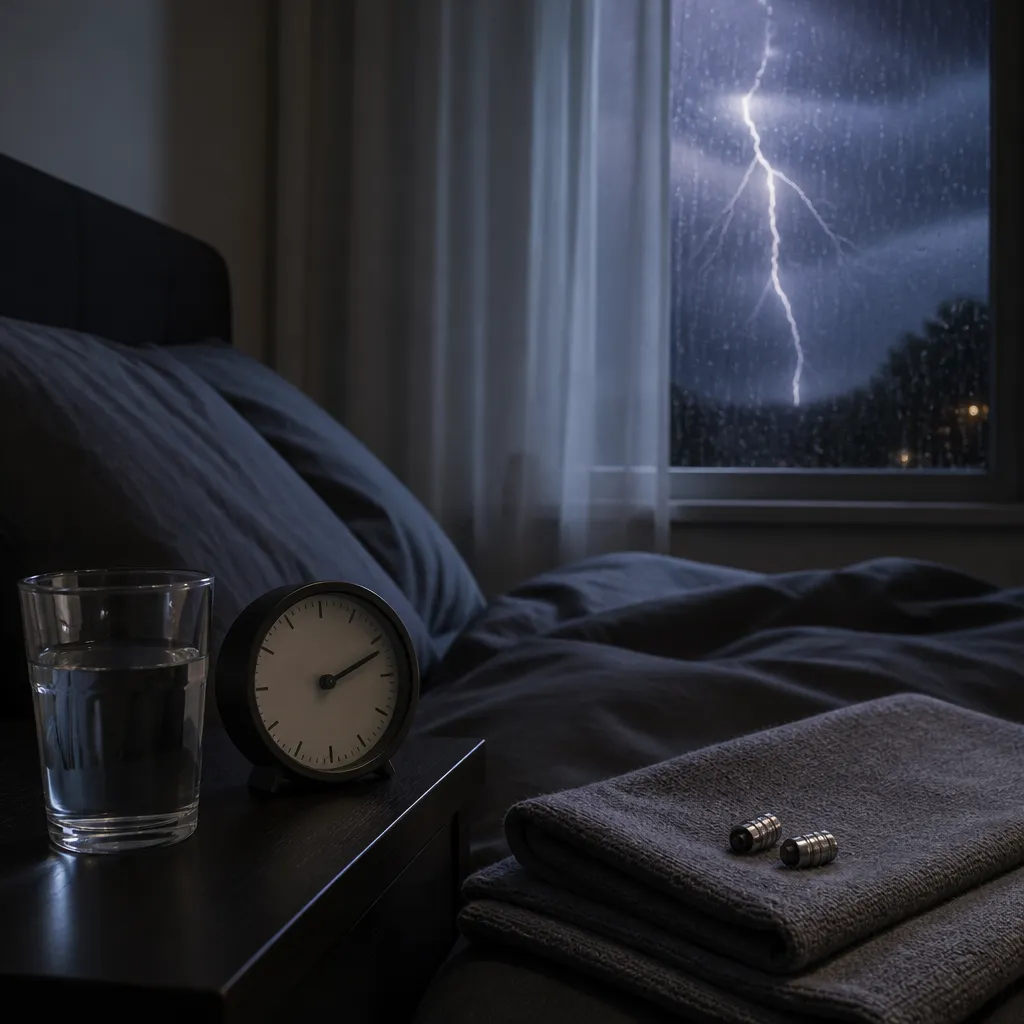
If you already wake at a dropped spoon or a partner rolling over, storm noise sits in a different league. The combination of sudden spikes and long rain sessions gives you many more chances to wake, and you tend to remember the nights you were woken far more clearly than the ones you slept through.
Anyone sleeping during daylight already fights light, traffic, and household noise. Storm noise adds a layer that is hard to plan for because weather rarely fits a roster. Check the forecast before your sleep period begins and set up your bedroom then, not in the middle of the first crack.
Construction, manufacturing, and military workers often wear hearing protection all day and then go home to a bedroom that is not built for recovery. Ear plugs used at night serve a different job from those used on site. Their purpose here is comfort and sleep, not protection from a hazardous workplace level. If your ears ring after a loud shift or a storm, talk to a hearing professional rather than assuming a night plug has solved the problem.
Pro tip: Check the forecast around 4 pm on storm days, and set out your sleep kit before dinner. Fumbling for ear plugs in the dark after the first crack is how most people give up before the night has really started.
Ear plug performance depends mostly on fit. A plug that sits slightly out of the ear canal lets through the sharp, high-pitched components of thunder, and those are the parts most likely to wake you. ATTENU8 builds its plugs around a concave aluminium body with three sizes of soft memory foam tips (XS, S, and M), and the brand rates them at approximately 32dB noise reduction. That figure assumes a proper seal, which a loose tip cannot give you.
Try all three sizes before you need them, lying on your side as you would in bed. Gently pull the outer ear up and back, insert the tip, then wait a few seconds for the foam to expand. If you can still feel pressure on the outside of the ear, or the plug works loose when you turn your head, go one size down.
A common mistake is choosing the size that feels most comfortable on the first try. A snug fit that does not quite seal is less useful than a slightly firmer one that does, and comfort usually improves after a night or two of wear.
Foam tips wear down through ear wax, moisture, and repeated compression. ATTENU8 recommends replacing only the foam tips every 6 to 8 weeks rather than the whole plug. In practice, a tip that no longer springs back after squeezing has lost its seal, so replace it even if the calendar says it is still within range.
Pro tip: Write the date on a sticky note inside your sleep case each time you change tips. A worn tip is easy to overlook, and it is the kind of small failure that makes a good plug seem useless on the worst storm night of the year.
No single fix handles every type of storm noise. Ear plugs cover sharp bangs, a fan or white noise device can cover steady rain, and sealing windows handles wind and distant rumble. The table below compares the three most common approaches.
| Approach | Best For | Main Limitation |
|---|---|---|
| Reusable metal-bodied ear plugs with foam tips | Sudden thunder cracks and close, sharp bangs | Only works with a good seal, and foam tips need replacing every 6 to 8 weeks |
| Fan or white noise machine | Steady rain and masking unpredictable sounds | Research is mixed, and some sleepers find the sound itself disruptive |
| Sealed windows, door draught excluders, and heavier curtains | Wind, gusts, and distant rumble | Can be costly in a rental, and does little against a crack directly overhead |
Most sleepers get the best result by combining ear plugs with sealed windows, then testing a fan only if steady rain is the main problem in their home. Treat the fan as an addition, not a replacement for the other two.
A storm-ready bedroom is set up before the forecast turns. The aim is to lower the baseline noise in the room, so each spike has less contrast against it. Start with the cheapest changes and work up to the more expensive ones only if you still wake.

Check for gaps around window frames and under the bedroom door. Draught excluders, weather seals, and a heavier curtain can noticeably reduce the sound of rain and wind. The Sleep Foundation lists sealed windows among practical ways to limit nighttime noise, and this is one of the few changes that helps everyone in the house at once.
Lightning often arrives as a flash before the sound, and a phone lighting up or a router LED can wake a light sleeper just as effectively as thunder. Put phones on silent, turn screens face down, and switch off notifications for the night. The Sleep Foundation recommends reducing device alerts, and storm nights make that advice more urgent.
Children and pets react to storms in ways that can wake the whole household. A small night light on a dimmer gives a child a steady reference point without a bright glare, and a quiet room away from the windows can help an anxious dog or cat settle. Avoid getting up to comfort them unless you have to, because each unnecessary wake-up adds to the fragmentation you are trying to prevent.
Most storm sleep problems come from a short list of habits. Fixing them costs nothing and often does more than buying new gear.
Checking the radar at 2 am feels productive, but the screen light and the sudden alertness make it harder to fall back asleep. If you need the information, check once before bed and leave the phone in another room for the rest of the night.
Ear plugs kept in a drawer across the room are useless once you are already awake. Keep them in the same place every night, and check that you can find them with the lights off.
A plug that sits slightly out of place can feel fine but block very little. If your ear feels full or you hear your own breathing more than the room, try a different size before deciding the plugs do not work.
Pro tip: Keep a glass of water and a spare pair of ear plugs in the same spot beside your bed, so you do not need to get up in the dark more than once during a storm.
Repeated or very loud exposure can damage hearing, and a close lightning strike can be startlingly loud. Ear plugs reduce what reaches the ear, but they are a comfort and sleep tool, not a substitute for hearing protection at work. If you notice ringing or changes in hearing after a storm, see a doctor or audiologist.
Muffling is expected, so do not assume you will hear everything. Before relying on plugs overnight, test them with your smoke alarm and phone at a realistic volume. If you need to hear a specific alarm, consider a separate alert system rather than depending on your ears alone.
ATTENU8 recommends replacing the foam tips every 6 to 8 weeks. Replace them sooner if they look discoloured, feel stiff, or no longer spring back after you compress them.
It helps some sleepers and not others, and the research on background noise is mixed. Test it on a normal night first. If it makes you more alert or irritated, use ear plugs and sealed windows instead.
Most light sleepers cannot eliminate storm disruption entirely, but they can reduce it a lot. Combining a good seal, sealed windows, a consistent bedtime routine, and fewer device interruptions usually makes the difference between broken sleep and a night you can recover from.
Try all three sizes lying on your side, because the fit changes when you lie down. Choose the largest size that feels comfortable and seals without pressure. If a tip feels like it is pushing on your outer ear, step down one size.
What has your storm season sleep looked like, and which fix has actually worked for you? We would like to hear about your experience.

