


 0

Every 11 November, many veterans stand through a moment of silence that is often the quietest minute of their year. For plenty of them, a ringing in the ears started long before that minute ended. Veterans hearing protection rarely gets attention on Remembrance Day, yet hearing impairments are among the most common service-connected disabilities for veterans. The damage from gunfire, explosions and loud machinery does not heal, so the habits you build now will shape how well you hear in twenty years. This guide covers what the research shows, how noise damage works, and how to build a protection routine that holds up after service.
| Key Insight | Explanation |
|---|---|
| Hearing damage is permanent | Hair cells in the inner ear do not regenerate, so each unprotected exposure adds to a loss you cannot reverse. |
| Veterans carry higher risk | A CDC analysis of 2010 survey data found veterans were 30% more likely to have severe hearing impairment than nonveterans after adjusting for age and occupation. |
| Layer protection for the loudest work | Wear ear plugs under earmuffs during firing, demolition, or any task where impact noise is common. |
| Fit matters more than the label | A plug with a poor seal delivers a fraction of its rated reduction. Test each tip size until you get a seal that holds when you talk and move. |
| Replace foam tips on schedule | Foam tips on reusable plugs need replacing every 6 to 8 weeks, sooner if they flatten, harden, or pick up grime. |
| Get a baseline hearing test | A documented audiogram lets you spot change over time instead of guessing when symptoms become obvious. |
| Treat tinnitus as a health signal | Persistent or one-sided ringing deserves a GP visit and an audiology referral, not a wait-and-see approach. |
Remembrance Day brings crowds, bugles, and speeches, and at some services a rifle volley. For veterans, those sounds can bring back memories and physical reactions that have nothing to do with the ceremony itself. The day is a reminder that the sounds of service stay with people long after they come home.
In practice, I think the day is a useful prompt for a hearing check. It arrives once a year, it is predictable, and it gives you a reason to book an appointment before the busy end of the year fills your calendar. A check-up on or near 11 November costs you an hour and gives you a baseline for everything that follows.
A common mistake is waiting until hearing loss interferes with conversation. By then, the damage has usually been building for years. Early signs are easy to dismiss: asking people to repeat themselves in restaurants, turning the television up a notch each month, or feeling worn out after a noisy day.
The clearest data on this topic comes from a 2011 report by the US Centers for Disease Control and Prevention, which analysed the 2010 Annual Social and Economic Supplement to the Current Population Survey. The authors found that the prevalence of severe hearing impairment among veterans was significantly greater than among nonveterans. The gap was not small, and it was not explained by age or current occupation alone.
According to that analysis, veterans were 30% more likely than nonveterans to have severe hearing impairment after adjusting for age and current occupation. Veterans who served in the United States or overseas between September 2001 and March 2010 were four times more likely than nonveterans to have it. The authors called for stronger military hearing conservation programs and better hearing loss surveillance within military and veterans’ health systems.
Those findings are from a single survey year and a specific era of service, so they should not be read as a precise risk figure for every veteran. What they do show is a consistent pattern: service exposes people to noise at a level that changes outcomes decades later. Earlier research had not found the same gap, which is part of why the 2011 analysis mattered.
Tinnitus, the perception of ringing, buzzing, or hissing without an external source, is a major issue in veteran populations. Audiology reporting on the NOISE study noted that in 2019, 2.1 million veterans had a recognized service-connected disability for tinnitus. That number shows how often ringing sits alongside hearing loss, even when people do not describe it as a hearing problem.
A 2023 study in the PubMed database examined how tinnitus and hearing loss influence the functional status of service members and veterans. The effects reach beyond the ears. Sleep, concentration, and the ability to work in quiet or noisy settings can all be affected, which is why I treat tinnitus as a daily-function issue rather than a minor annoyance.
Hearing loss from noise happens when sensory hair cells in the cochlea, the inner ear structure that turns sound waves into electrical signals, are damaged. Once those cells are gone, the brain receives less information, and sound becomes muffled or distorted. Human auditory hair cells cannot regenerate, which is why noise-induced hearing loss is usually permanent.
Noise damage is cumulative and largely silent. By the time most people notice a change, the damage has been building for years, and no treatment brings the lost hair cells back.
Many people assume their hearing will bounce back after a loud day. Temporary threshold shifts do happen, and your ears may feel muffled for hours afterward. The problem is what happens when you repeat that exposure without recovery time. Each cycle can leave less capacity for the next, and the losses add up quietly.
The Hearing Health Foundation puts the sound levels of common military and occupational sources into context. Fireworks and shotgun blasts are listed at around 150 dB, firearms at around 140 dB depending on caliber, and a jet plane taking off at around 120 dB. Exposure to levels like these without protection can cause nearly instant, permanent hearing loss.
Steady noise, such as a generator or a grinder running for hours, wears down hearing through duration. Impulse noise, such as a blast or a round fired close to the ear, delivers a sudden spike that can cause damage in a fraction of a second. Many veterans were exposed to both types, and the protection that works for one is not always enough for the other.
A product rated around 32dB reduces the sound reaching your eardrum, but no ear plug can make a 150 dB blast safe on its own. That is the honest limit of any single layer. Treat plugs as the everyday foundation and add earmuffs when the sound source is sharp, sudden, or very close.
Military, construction, and manufacturing roles share one habit that causes problems: people put protection on after the noise has already started. A common mistake is waiting until the first round or the first hammer strike to reach for plugs. By then, the first exposure has already been taken, and the habit of skipping protection until “it gets loud” becomes a pattern.
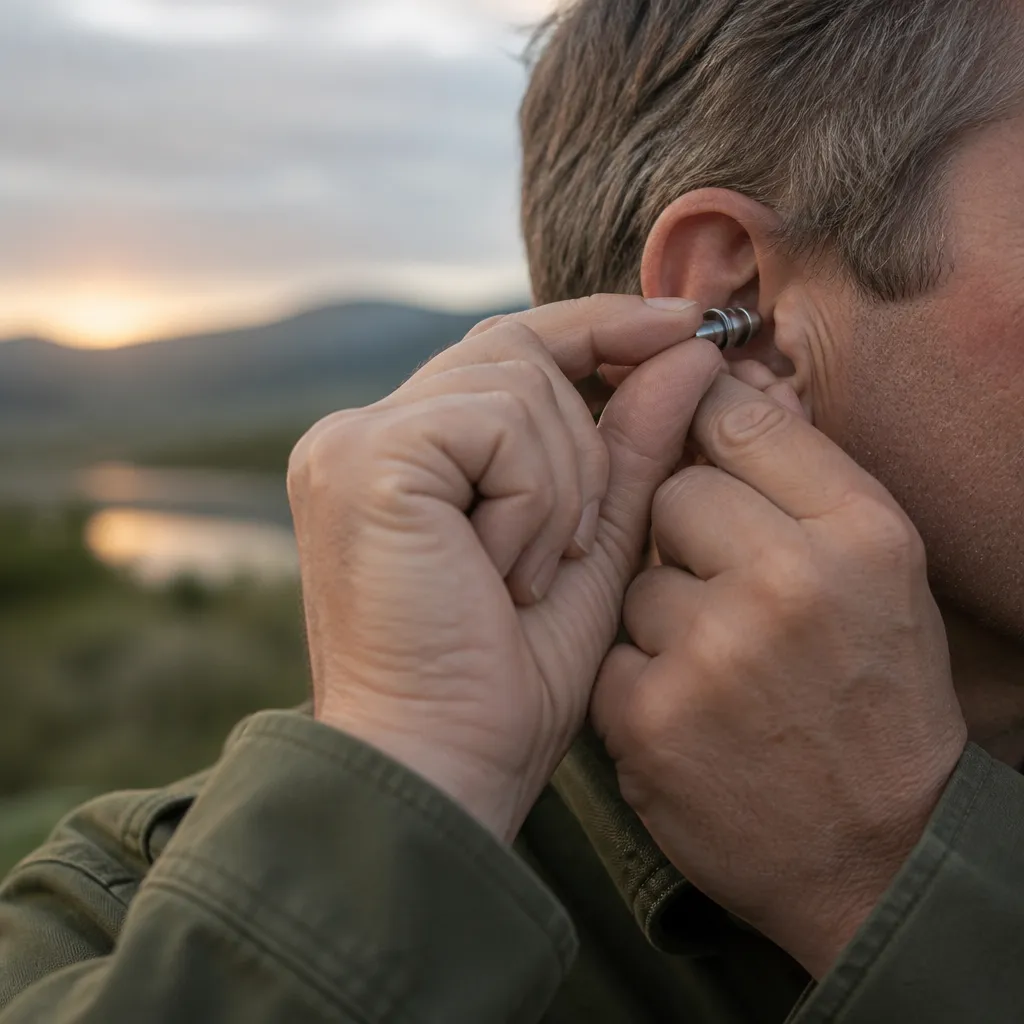
In practice, the routine that works is simple. Insert plugs before you enter the noisy area, check the seal by covering your ears and listening for a change in pressure, and keep them in until the noise source is off. Carry spare tips in a case so a lost or worn tip does not leave you unprotected for the rest of the shift.
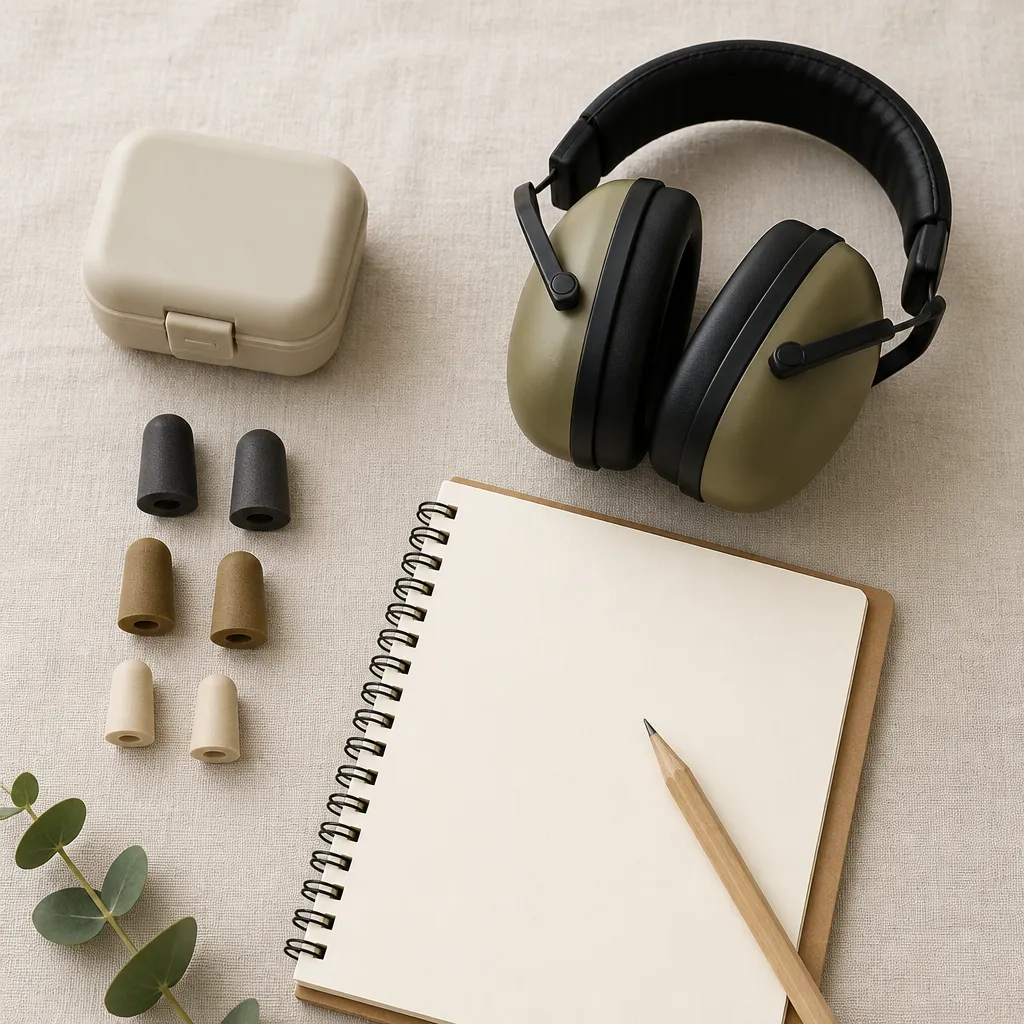
For the loudest tasks, wearing plugs under earmuffs gives you more protection than either option alone. The muffs add a barrier against impact noise, while the plugs help seal the canal. The combination is more comfortable in hot environments than many people expect, provided the earmuff cups do not press the plugs out of position.
Pro tip: Do a quick seal check every time you put plugs in. Cup your hands over your ears for a second, then release. If the sound changes only slightly, the seal is probably weak, so try a different tip size before you start work.
Protection works best as a habit tied to a specific trigger. Put plugs in when you arrive at the range, the site, or the workshop, not when your ears begin to ring. That single change removes the most common gap in most people’s routines, and it costs nothing more than a few seconds each time.
No single option suits every situation. The right choice depends on how often you are exposed, how long each exposure lasts, and whether you need protection during sleep. The table below compares three common approaches with the trade-offs I see most often in practice.
| Option | Best For | Trade-off |
|---|---|---|
| Disposable foam ear plugs | Occasional exposure, emergency kits, and temporary use when you have no other option | Fit varies from person to person, they are usually discarded after use, and the cost adds up with daily wear |
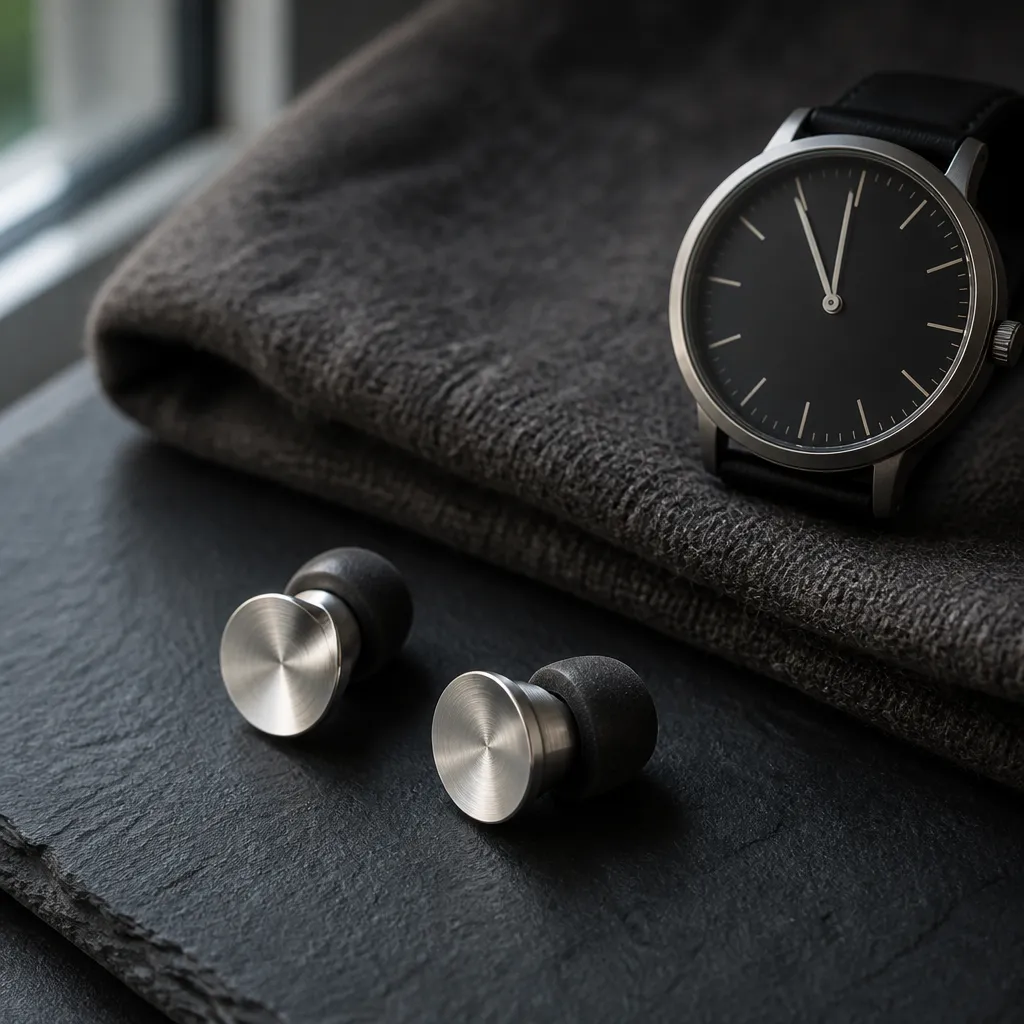
| Reusable metal-bodied plugs with memory foam tips | Nightly sleep, travel, and repeated daily noise where comfort and consistency matter | Higher upfront cost, foam tips need replacing every 6 to 8 weeks, and the fit still needs checking with each tip size |
| Passive earmuffs | Firing ranges, machinery, and loud crowds where you need a sealed barrier over the whole ear | Bulky in heat, awkward with some headwear, and generally less comfortable for sleep |
My view is that reusable plugs are the strongest everyday option for people who wear protection often, because the cost per use falls quickly and the fit becomes familiar. Earmuffs are the better choice for sharp, high-level sources, and disposable plugs are best kept in a kit as a backup. Most veterans end up using two of the three, not one.
Many people who served report that they wake easily, respond to small sounds, or find it hard to settle in a quiet room. Sleep disruption is one of the most common complaints I hear from people with noise sensitivity, and it compounds tinnitus because the brain has fewer chances to rest.
Hypervigilance, tinnitus, and the habit of listening for threats can all keep the nervous system on alert at night. Hearing loss adds another layer, because the brain works harder to fill in missing sound and stays alert to noises it cannot quite identify. Understanding this helps you choose solutions that address both the ears and the sense of safety.
Start with plugs that are comfortable enough to wear for hours without pressure building. Lie on your side and check that the seal holds, because a plug that falls out on the pillow gives you nothing. Keep the bedroom cool and dark, and use a steady sound source such as a table-top white noise machine rather than a loud fan or television.
Pro tip: Make sure you can still hear your smoke alarm with plugs in. If you cannot, use a vibrating or visual alarm instead, and test it once a month so you know it works.
A hearing test is only useful if you can compare it with the next one. Many veterans have a single test done years after service, which tells them where they stand but not how fast their hearing is changing. The better approach is to establish a baseline now and repeat the test at regular intervals.
Ask your GP for a referral to an audiologist and request a full audiogram, which maps your hearing across different frequencies. Ask for a copy of the results, and keep it with your other health records. A baseline gives you a reference point if your hearing changes later.
If you have tinnitus or a sudden change in hearing, see your GP promptly. An ENT specialist can check for treatable causes such as excessive earwax, which the Hearing Health Foundation notes can contribute to tinnitus and can be safely removed.
Keep copies of your audiograms, service records, and any notes about noise exposure during service. If you later need to make a claim or request support, clear dated records make the process easier. Your local veteran support service can explain which records matter most in your situation.
Tinnitus rarely disappears on its own in people with long-term noise exposure, but its impact can be reduced. The aim is to make the sound less intrusive, so it stops dominating your attention. That usually involves a mix of hearing support, sound therapy, and counselling rather than one fix.
Sound therapy uses external, safely administered noise to change how the brain perceives tinnitus. Options include table-top white noise machines, wearable ear-level sound generators, and hearing aids with tinnitus programs. Hearing aids can also help by amplifying the sounds you have lost, which can reduce how loud the tinnitus feels.
Tinnitus Retraining Therapy combines counselling with sound therapy over time. The goal is to train the brain to filter the sound so it becomes less noticeable. It takes consistent effort, and results vary, but many people find that the sound loses its grip over months rather than days.
Get medical advice promptly if tinnitus appears on one side only, comes with sudden hearing loss, or is accompanied by dizziness or pressure. These patterns need assessment rather than self-management. For ongoing tinnitus, an audiology referral is the right next step, not a search for quick fixes online.
Ear plugs reduce sound, but sharp, high-level blasts can exceed what plugs manage on their own. For range work or any firing, wear earmuffs over plugs, and get advice from a hearing professional about the setup that suits your weapons and environment.
Replace foam tips every 6 to 8 weeks with regular use. Replace them sooner if they flatten, harden, lose their shape, or pick up dirt, because a worn tip no longer seals properly.
Not always, but persistent tinnitus should be assessed by a GP or ENT, particularly if it is one-sided or comes with sudden hearing loss. Early assessment helps rule out treatable causes and gives you a plan for managing the sound.
Yes. Hearing loss from noise develops gradually, so a baseline test is the only reliable way to track change. Many people feel fine while losing high-frequency hearing, which becomes noticeable only after the damage is well established.
For most people, yes, provided the plugs are comfortable and you can still hear your smoke alarm or use an alternative alarm. Check the fit each night, and replace worn tips on schedule to keep the seal reliable.
Start with your GP, who can refer you to an audiologist for a full hearing assessment. Your local veteran support services can also explain what records and support pathways are available to you.
What hearing protection routine has worked best for you since leaving service, and what would you tell a veteran who is just starting out?

