


 0

Roughly one in three adults fails to get adequate sleep on a regular basis, according to the Centers for Disease Control and Prevention. The immediate effects are obvious: grogginess, irritability, reduced focus. But the poor sleep health consequences that accumulate over months and years are far more serious than most people realize. Cardiovascular disease, metabolic disorders, cognitive decline, and immune suppression all have documented links to chronic sleep deprivation. If noise is the reason you are lying awake, that is not a minor inconvenience. It is a direct threat to your long-term health.
| Key Insight | Explanation |
|---|---|
| Sleep deprivation raises cardiovascular risk | Sleeping fewer than 6 hours per night is associated with a 20% higher risk of heart attack, according to research published in the European Heart Journal. |
| Noise disrupts sleep even when you do not wake up | Environmental noise at 45 decibels can shift the brain out of deep sleep stages without full arousal, fragmenting restorative sleep silently. |
| Cortisol stays elevated with chronic poor sleep | Ongoing sleep deprivation keeps the stress hormone cortisol high, accelerating inflammation, weight gain, and hormonal imbalance. |
| Memory consolidation requires uninterrupted sleep cycles | The brain processes and stores memories during slow-wave and REM sleep. Noise that fragments these stages impairs long-term learning and recall. |
| Reusable ear plugs outperform single-use foam for noise reduction consistency | Metal-bodied ear plugs with memory foam tips maintain seal integrity far more reliably than cheaply manufactured disposable foam, which compresses unevenly. |
| A quiet sleep environment is a health intervention, not a luxury | Reducing nighttime noise exposure is among the lowest-cost, highest-impact steps a person can take to improve long-term health outcomes. |
| Tip replacement, not full product replacement, reduces long-term cost | ATTENU8 ear plugs require only memory foam tip replacements every 6 to 8 weeks, making durable hearing protection financially sustainable over time. |
The body treats sleep as a biological maintenance window. During those hours, the heart rate slows, blood pressure drops, tissues repair, and the immune system produces cytokines. When sleep is cut short or repeatedly interrupted, that maintenance cycle is compressed or skipped entirely.
The sleep deprivation long term effects on the cardiovascular system are particularly well-documented. A landmark study published in the European Heart Journal followed over 470,000 participants across eight countries and found that short sleep duration was associated with a 48% greater risk of developing or dying from coronary heart disease. That is not a marginal increase.
Metabolic function takes an early hit as well. Even one week of sleeping fewer than six hours per night alters the activity of over 700 genes, including those linked to inflammation and immune response, according to research from the University of Surrey. The body responds as though it is under chronic stress because, from a hormonal perspective, it is.

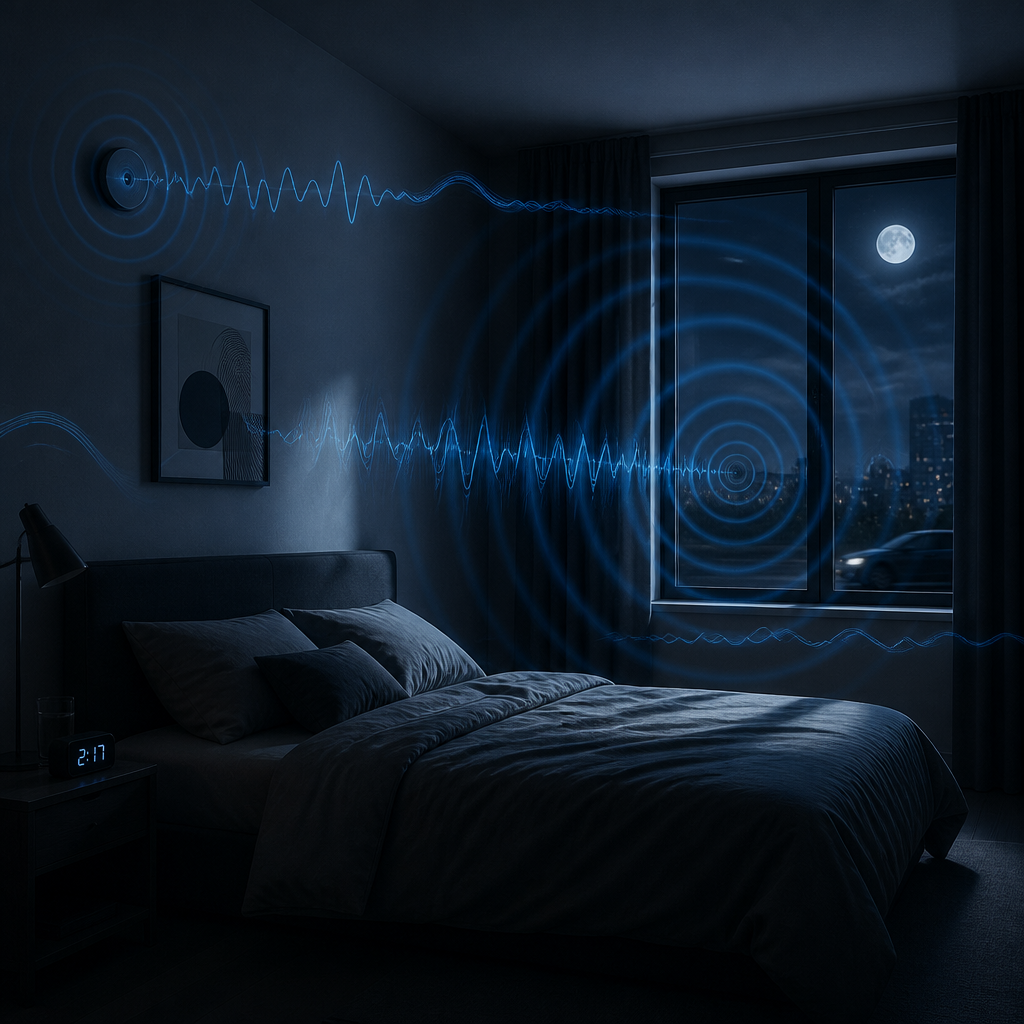
Poor sleep suppresses T-cell activity and reduces natural killer cell production. In practice, this means a person sleeping five hours per night is four times more likely to catch a cold after virus exposure than someone sleeping seven or more hours, based on findings from researchers at the University of California, San Francisco. This is not anecdote. It was a controlled trial with 164 volunteers.
Weight regulation is also directly affected. Sleep deprivation increases ghrelin (the hunger hormone) and decreases leptin (the satiety hormone), reliably driving caloric overconsumption. People who sleep poorly do not simply feel hungrier by coincidence. The hormonal chemistry forces it.
Pro tip: If you are struggling with unexplained weight gain or frequent illness, audit your sleep duration and quality before assuming the problem is diet or fitness. The data consistently shows that sleep disruption is an underdiagnosed root cause.
Cognitive decline is one of the most alarming long-term outcomes of poor sleep. During deep sleep, the brain activates the glymphatic system, a waste-clearance mechanism that flushes out metabolic byproducts including amyloid-beta, a protein strongly implicated in Alzheimer’s disease. Miss enough deep sleep and that clearance does not happen adequately.
The Alzheimer’s Association notes that disrupted sleep is increasingly recognized as both a risk factor and an early symptom of neurodegeneration. This creates a compounding problem: poor sleep accelerates the very conditions that make sleep harder to achieve.
“Sleep is the single most effective thing we can do to reset our brain and body health each day.” – Matthew Walker, Professor of Neuroscience, University of California, Berkeley, and author of Why We Sleep.
Sleep deprivation amplifies the amygdala’s reactivity to negative stimuli by up to 60%, according to research from Matthew Walker’s lab. The prefrontal cortex, which normally moderates emotional responses, loses connectivity with the amygdala when sleep is insufficient. The practical result is heightened anxiety, irritability, and impaired decision-making.
Chronic poor sleepers show measurably higher rates of depression and anxiety disorders. This is a bidirectional relationship: mental health conditions disrupt sleep, and poor sleep worsens mental health. Breaking the cycle requires addressing the environmental inputs that make sleep difficult in the first place.
Pro tip: Treating noise exposure as an environmental variable you can control, rather than something to adapt to, is one of the most direct interventions available for improving emotional regulation and reducing anxiety over the long term.
Sleep is not a uniform state. The brain moves through light sleep, deep sleep, and REM sleep in cycles of roughly 90 minutes. Each stage serves distinct physiological purposes. Noise disrupts this architecture in ways that are invisible to the sleeper but measurable on polysomnography.
The World Health Organization recommends nighttime noise levels below 40 decibels as a guideline for healthy sleep. A snoring partner typically generates 50 to 70 decibels. Urban road noise frequently exceeds 55 decibels. Construction environments near residential areas can spike well above 70 decibels at night. Many people are sleeping in noise environments that the WHO classifies as harmful without ever identifying noise as their core problem.
A critical point that most sleep advice overlooks: you do not need to fully wake up for noise to damage sleep quality. Micro-arousals, brief shifts from deep sleep to lighter stages triggered by sound, occur without conscious awareness but prevent the brain from completing restorative sleep cycles. A person who says they slept eight hours but still feels exhausted is frequently experiencing this phenomenon.
Research published in the journal Sleep Medicine Reviews found that traffic noise in particular is associated with increased micro-arousals, elevated nighttime cortisol, and reduced time in slow-wave sleep, all without the subject necessarily remembering any disturbance. The damage is silent and cumulative.
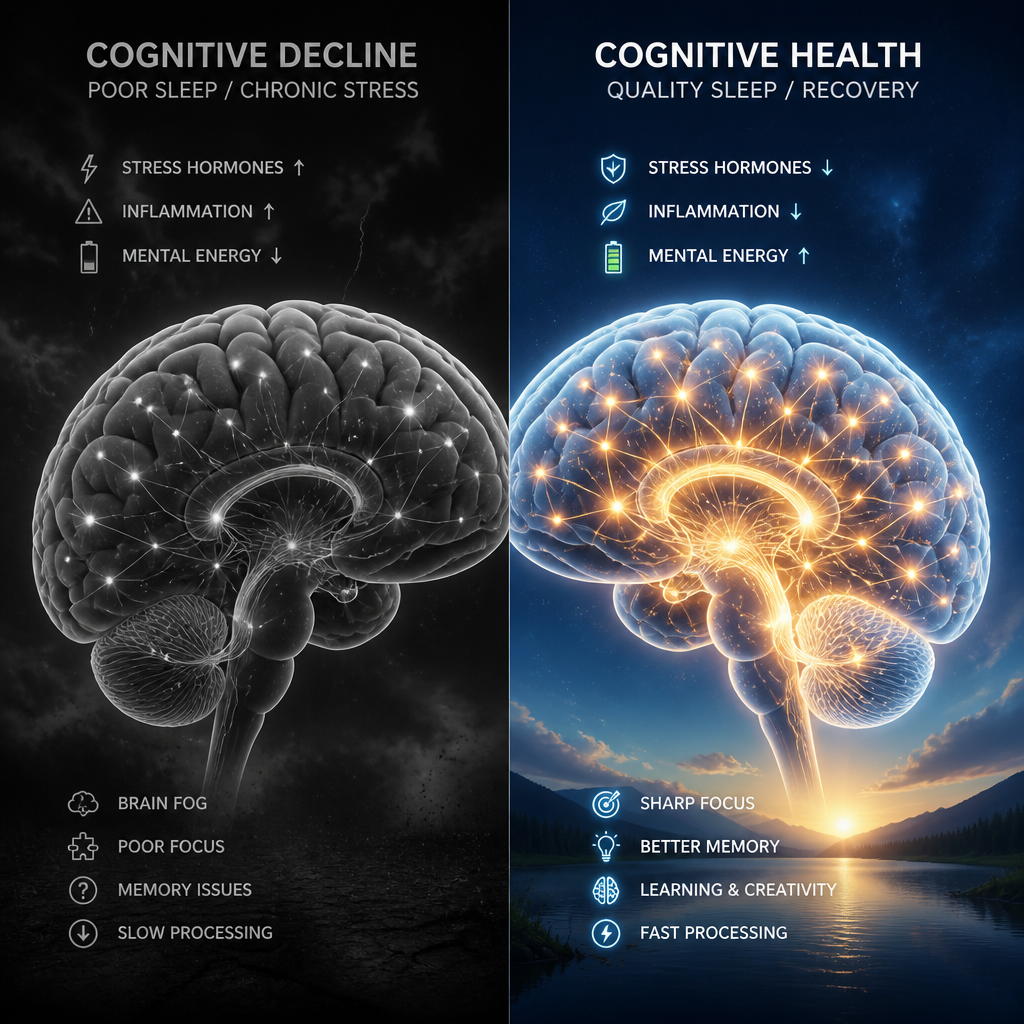
For light sleepers and noise-sensitive individuals, this means the environment itself is working against them every night. A quiet sleep environment is not about comfort preferences. It is about creating the physiological conditions under which the brain can actually complete its required maintenance cycles.
Not all noise reduction strategies are equally effective for improving sleep quality. The table below compares three common approaches based on real-world performance for people who need reliable, nightly use.
| Approach | Noise Reduction Performance | Long-Term Practicality for Nightly Use |
|---|---|---|
| Standard disposable foam ear plugs | Variable. Rated up to 33dB NRR but real-world performance degrades quickly with reuse. Inconsistent seal due to uneven foam compression and one-size-fit issues. | Low. Intended for single use, creating ongoing cost and waste. Most users reuse them far beyond their effective lifespan, reducing protection significantly. |
| Active noise-cancelling sleep earbuds (e.g., Loop, Flare) | Moderate to good for low-frequency noise. Less effective for sudden mid and high-frequency sounds like snoring or traffic. Battery dependency introduces failure risk nightly. | Moderate. Requires charging, has a finite battery lifespan, and can feel uncomfortable during side sleeping due to electronic housing bulk. Higher purchase cost with full replacement when components fail. |
| Premium reusable metal-bodied ear plugs (ATTENU8) | Consistent 32dB noise reduction across uses due to rigid aluminium body maintaining shape and seal. Three memory foam tip sizes (XS, S, M) allow precise anatomical fit for different ear canals. | High. Metal body does not degrade. Only the foam tips require replacement every 6 to 8 weeks. No batteries, no electronics, no charging. Suitable for side sleepers due to low-profile concave design. |
A common mistake is choosing the cheapest available option and assuming performance is comparable across products. For nightly health protection, the consistency of the seal matters more than the headline NRR rating on the packaging.
Improving sleep quality does not require a complete lifestyle overhaul. The evidence points clearly to a set of high-impact changes that work reliably, and noise control is among the fastest to implement.
If noise is the primary reason you wake during the night or sleep lightly, address that before any other sleep hygiene intervention. Fixing your sleep schedule while sleeping in a noisy environment is like trying to stay hydrated while losing fluids. The foundational problem stays unresolved.
For people sharing a bed with a snoring partner, or sleeping in urban environments, professional-grade ear protection provides an immediate, measurable intervention. ATTENU8’s memory foam tips conform to the ear canal, providing a reliable acoustic seal without the discomfort that drives most people to remove ear plugs in the middle of the night.
After noise, the next highest-leverage environmental variables are temperature and light. The brain initiates sleep when core body temperature drops. A bedroom set between 16 and 19 degrees Celsius supports this process. Blackout curtains or a sleep mask prevent light-triggered cortisol spikes that can cause early morning waking.
Consistent sleep and wake times matter more than total hours for resetting circadian rhythm. The body performs better on a reliable seven-hour schedule than on inconsistent nine-hour attempts. Set a fixed wake time and work backwards.
The phrase “quiet sleep environment” appears frequently in sleep advice, but few sources specify what that actually requires in a practical household setting. Here is what the evidence and real-world use indicate.
Structural noise reduction, meaning sealing gaps under doors, using heavy curtains, and placing soft furnishings that absorb sound, can reduce ambient noise by 5 to 10 decibels in a typical bedroom. That is meaningful but usually insufficient on its own when the source is a snoring partner or street noise exceeding 60 decibels.
The most effective approach combines structural improvements with physical ear protection. White noise machines can mask irregular sounds and raise the ambient noise floor uniformly, which the brain finds less disruptive than sudden spikes. However, white noise alone does not reduce overall decibel exposure. It masks variability.
Physical ear protection addresses both overall volume and variability simultaneously. For someone who needs genuine 30-plus decibel attenuation to achieve restorative sleep, a well-fitting reusable ear plug is the most direct tool available. The ATTENU8 design specifically addresses two failure modes of standard ear plugs: poor fit causing seal degradation during movement, and hard plastic stems causing discomfort when side sleeping. The concave aluminium body sits flush rather than protruding, maintaining comfort through the night.
A common mistake among people new to ear plugs is giving up after one or two nights because the foam tips were not the right size. ATTENU8’s inclusion of three tip sizes (XS, S, M) directly solves this problem. Fit is the primary determinant of both comfort and acoustic performance.
Pro tip: Test all three foam tip sizes on consecutive nights before deciding which fits best. Most people find their preferred size differs slightly between their left and right ears, particularly if one ear canal is narrower from previous irritation or anatomy.
The most clinically significant poor sleep health consequences include elevated cardiovascular disease risk, impaired immune function, accelerated cognitive decline linked to Alzheimer’s disease, metabolic disorders including type 2 diabetes, and chronic depression. These are not theoretical risks. They are well-replicated findings across large longitudinal studies. Short-term sleep deprivation produces reversible effects, but chronic disruption lasting months or years causes physiological changes that persist even after sleep is restored.
The World Health Organization recommends nighttime outdoor noise levels below 40 decibels to protect sleep health. Most urban environments exceed this regularly. Indoors, a snoring partner produces 50 to 70 decibels at close range. Even noise below the threshold of conscious waking causes measurable micro-arousals and hormonal disruption. If you live or sleep near consistent noise sources above 45 decibels, physical ear protection is a rational, evidence-supported health decision.
The evidence supports their effectiveness. A randomized controlled trial published in Critical Care Medicine found that ear plugs and eye masks combined significantly increased REM sleep and reduced overnight cortisol levels compared to controls. For noise-sensitive individuals and light sleepers, the mechanism is straightforward: reducing the acoustic triggers that cause micro-arousals allows the brain to complete deeper, more restorative sleep cycles. Performance depends heavily on fit and noise reduction rating, which is why tip sizing and seal quality matter.
Some markers respond quickly. Cortisol normalization, improved mood, and sharper cognitive function are frequently reported within one to two weeks of consistent, uninterrupted sleep. Immune function improvements are measurable within days. Cardiovascular and metabolic markers take longer, typically requiring sustained improved sleep over several months. The key is consistency. Occasional good nights do not reset the physiological damage from chronic deprivation. Nightly sleep quality needs to be a non-negotiable baseline.
Yes, provided they are kept clean and the tips are replaced on schedule. ATTENU8 recommends replacing the memory foam tips every 6 to 8 weeks. The aluminium body is non-porous and does not harbor bacteria. In contrast, repeatedly used disposable foam plugs are a far greater hygiene concern because foam is porous and absorbs oils and debris. For nightly users, a reusable metal-bodied ear plug with replaceable tips is the more hygienic long-term option, not just the more economical one.
Both matter, but quality is the factor most often ignored. Sleep quality refers to the proportion of time spent in restorative slow-wave and REM sleep stages, the number of arousals during the night, and how completely the brain cycles through its maintenance processes. A person sleeping eight hours in a noisy environment may get far less restorative sleep than someone sleeping six and a half hours in complete silence. The data consistently shows that reducing nighttime noise exposure improves sleep quality markers more reliably than simply extending time in bed without addressing the acoustic environment.
What is your current biggest barrier to getting a full night of sleep? Share your experience in the comments so others facing the same challenge can benefit from what has worked for you.
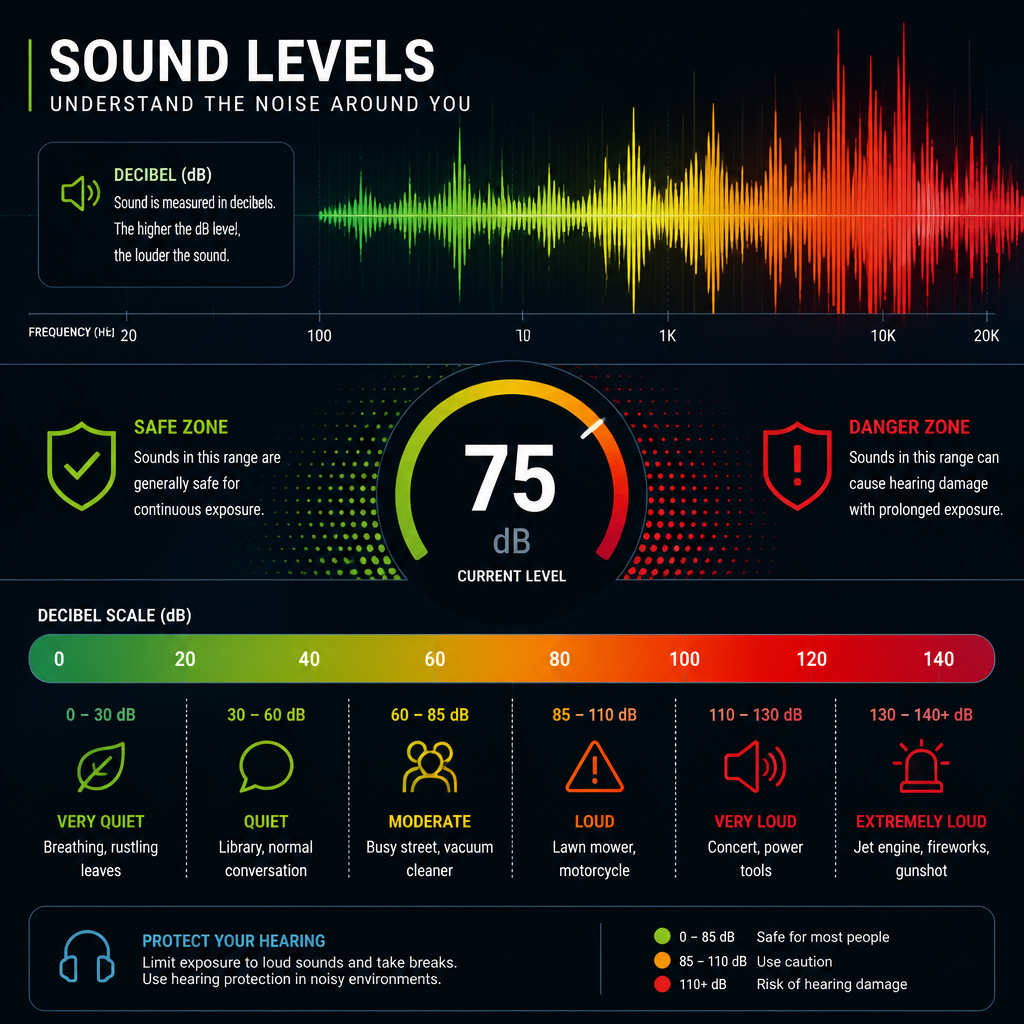
A single rock concert can expose your ears to sound levels between 110 and 120 decibels. According to the World Health Organization, just 15 minutes of exposure above 100dB is enough to cause permanent hearing damage. Yet millions of live music fans attend events every year without any hearing protection, often because they assume ear plugs will muffle the music into an unrecognizable mess. That assumption is outdated, and it is costing people their hearing. The right ear plugs for concerts reduce volume without destroying the sonic experience, and understanding how they work changes everything.
| Key Insight | Explanation |
|---|---|
| Concert volumes regularly exceed safe limits | Most live events run between 100 and 120dB. Safe exposure at 100dB is under 15 minutes without protection. |
| Not all ear plugs kill music quality | Flat-attenuation or high-fidelity ear plugs reduce volume evenly across frequencies, preserving clarity and detail. |
| A 32dB NRR rating provides serious protection | At 32dB noise reduction, a 115dB concert becomes roughly 83dB at your eardrum, well within a safe range for extended listening. |
| Fit determines effectiveness more than materials | An ear plug that does not seal properly provides almost no meaningful protection, regardless of its advertised NRR. |
| Reusable metal-bodied ear plugs outperform single-use foam long-term | Premium reusable plugs with replaceable memory foam tips maintain consistent fit and hygiene across dozens of events. |
| Hearing damage from concerts is cumulative | Tinnitus and noise-induced hearing loss (NIHL) build over years. Occasional unprotected exposure compounds into long-term damage. |
| Multiple tip sizes matter for concert use | Ear canals vary significantly between individuals. Plugs offering XS, S, and M tips allow a genuine custom-like seal for more listeners. |
The mechanics of noise-induced hearing loss are straightforward and unforgiving. Loud sound vibrates the tiny hair cells inside your cochlea, the fluid-filled structure responsible for converting sound waves into nerve signals. At high enough volumes, those hair cells bend, fatigue, and eventually die. Unlike skin cells or liver cells, cochlear hair cells do not regenerate in humans.
The National Institute on Deafness and Other Communication Disorders (NIDCD) reports that approximately 17 percent of teenagers in the United States already show some signs of hearing loss, a figure that has risen alongside the popularity of loud personal audio and live events. Concert exposure is a significant driver of this trend.
What makes concerts particularly dangerous is the combination of duration and peak intensity. A three-hour show at 110dB delivers far more acoustic energy to your ears than a brief industrial exposure at the same level. The damage is not always immediately obvious either. Many concert-goers experience temporary threshold shifts, a short-term reduction in hearing sensitivity that resolves within hours, and mistake this for recovery. In practice, repeated temporary threshold shifts are the early warning sign of permanent damage accumulating over time.
Pro tip: If you notice ringing in your ears or muffled hearing after a concert, that is not a normal part of the live music experience. It is your auditory system signaling that it absorbed more acoustic energy than it could safely handle.
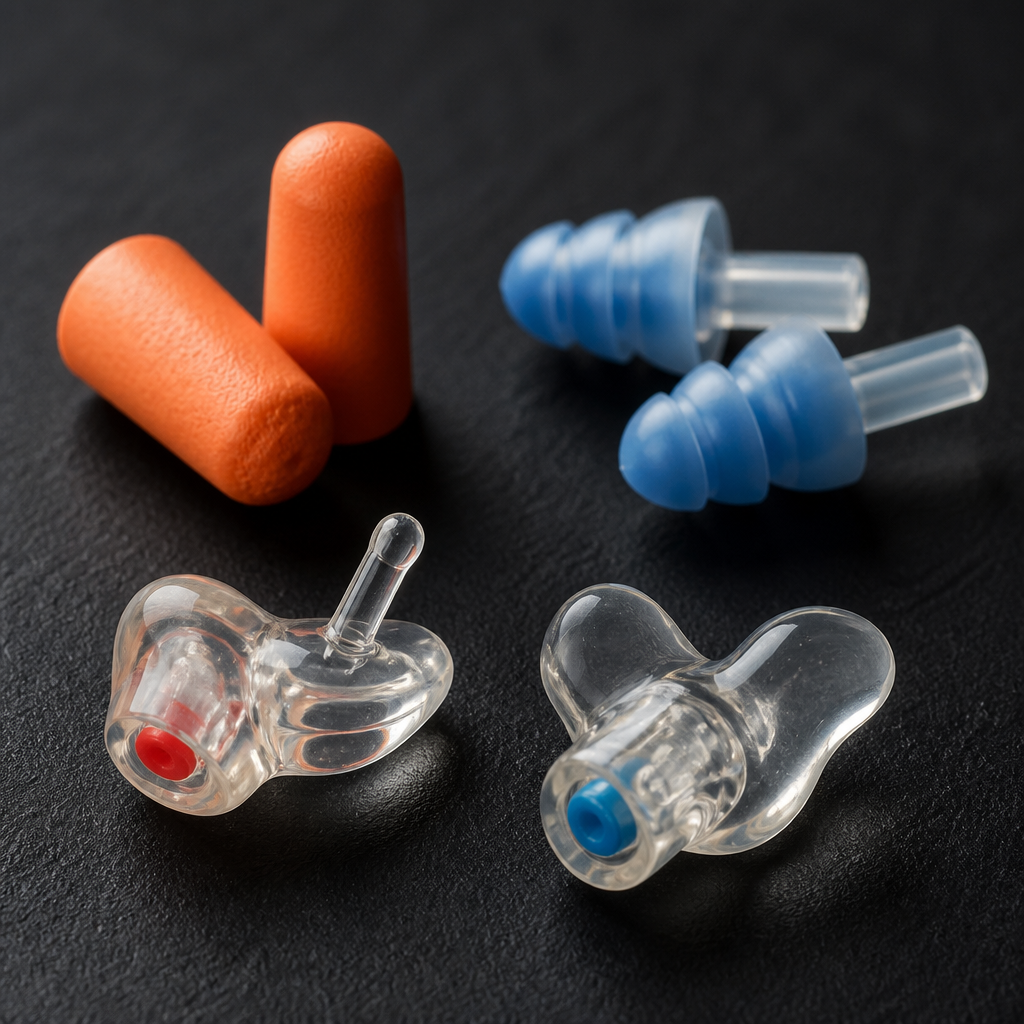
Standard foam ear plugs work by physically blocking the ear canal with a material that absorbs and deflects sound waves. The problem is that foam attenuates high frequencies far more aggressively than low frequencies, which is why music sounds muffled and bass-heavy when wearing cheap foam plugs. Speech becomes difficult to understand, and the overall experience feels like listening through a wall.
High-fidelity ear plugs designed for concerts take a different approach. They use a tuned acoustic filter, often made from a combination of materials, that reduces sound pressure levels more evenly across the audible frequency spectrum. The result is music that sounds like the same performance, just quieter. Vocals remain clear, instrument separation is preserved, and the spatial experience of the room stays intact.
The acoustic filter does the frequency work, but the foam tip does the sealing work. Without a proper seal, sound bypasses the filter entirely through the gap between the plug and your ear canal wall. This is why memory foam tips are particularly effective at concerts: they conform slowly to the exact contours of your ear canal, creating an airtight acoustic seal that rigid silicone flanges often fail to achieve in noisy, dynamic environments where you are moving, talking, and turning your head.
ATTENU8’s metal-bodied ear plugs use exactly this approach. The concave aluminium body houses the acoustic structure while three sizes of soft memory foam tips, XS, S, and M, ensure that most ear canal shapes achieve a genuine seal. The metal body is not just aesthetic. It maintains the geometry of the filter and resists the compression deformation that causes soft-body ear plugs to perform inconsistently after repeated use.
Soft polymer or plastic-bodied ear plugs flex under pressure, which can subtly alter the alignment of any internal acoustic filter and change the effective attenuation profile over time. A rigid aluminium body holds its shape indefinitely, ensuring that the 32dB noise reduction rating you bought is what you actually receive at event 1 and event 50.
The market breaks into three distinct categories, each with a specific use case and set of trade-offs. Understanding where each category excels prevents the common mistake of buying the wrong tool for the specific environment of a live music venue.
Inexpensive and widely available, single-use foam plugs are the default choice for millions of concert-goers. They deliver high NRR ratings on paper, often 29 to 33dB, but their uneven attenuation profile makes music sound hollow and muffled. They are also unhygienic for repeated use, inconsistent in their seal quality from insertion to insertion, and environmentally wasteful at scale. For a construction site or industrial setting, they are appropriate. For a concert where audio quality matters, they are a poor compromise.
This is the category where products like ATTENU8 operate, alongside competitors such as Flare Audio and Loop Earplugs. These plugs are designed to reduce volume while preserving the tonal balance of the music. The key differentiator within this category is build quality and long-term consistency. Loop Earplugs use a polymer body with a looped acoustic channel. Flare Audio uses a titanium or aluminium body depending on the model. ATTENU8 uses a concave aluminium body with replaceable memory foam tips, replacing only the tips every 6 to 8 weeks rather than the entire plug.
The gold standard for professional musicians and audio engineers, custom-molded plugs are made from an impression of your specific ear canal taken by an audiologist. They offer the most precise fit and the flattest attenuation curves available, but they cost several hundred dollars per pair and require a clinical appointment. For regular concert-goers rather than touring professionals, they represent significant overkill in cost relative to the benefit a premium reusable plug already delivers.

| Feature | Single-Use Foam | Reusable High-Fidelity (e.g., ATTENU8) | Custom-Molded |
|---|---|---|---|
| Average NRR | 29 to 33dB | Up to 32dB | 25 to 35dB (filter-dependent) |
| Music Clarity | Poor (muffled, bass-heavy) | Good to Excellent (flat attenuation) | Excellent (precise frequency balance) |
| Cost per Year (regular concert-goer) | Low upfront, high cumulative | Low (tip replacements only every 6-8 weeks) | High upfront, negligible ongoing |
| Hygiene | Single-use only | Excellent with regular tip replacement | Excellent |
| Fit Consistency | Variable, insertion-dependent | Consistent with correct tip size | Perfect (ear-specific) |
| Environmental Impact | High (landfill waste) | Low (durable body, minimal tip waste) | Very low |
| Suitable for Regular Concert Use | No | Yes | Yes (but over-engineered for most) |
A common mistake is buying ear plugs that are technically excellent on paper but uncomfortable enough to remove halfway through a set. Any protection you take out of your ears provides zero protection. Comfort is not a luxury specification in hearing protection. It is a functional requirement.
At live events, ear plugs face a specific set of challenges that they do not face in, say, a sleep environment. Conversation at elevated voice levels, movement through crowds, changes in ambient temperature, and extended wear of two to four hours all stress the fit. Memory foam tips handle these conditions better than silicone flanges because they maintain their seal dynamically rather than requiring constant readjustment.
A frequent error among first-time buyers is defaulting to a single included tip size without testing the others. Ear canal diameter varies by as much as 30 percent between adults, according to anthropometric research cited by hearing protection manufacturers. An ear plug using a medium tip in a canal that needs a small tip will work itself loose during a long show. An ear plug using a medium tip in a canal that needs a large tip will create painful pressure without achieving a proper acoustic seal.
ATTENU8 addresses this directly by including all three sizes, XS, S, and M, with every pair. Testing each size in a quiet environment before attending an event is the single most effective step most concert-goers skip.
Pro tip: Test your ear plug fit by inserting them at home and gently humming. You should feel the vibration conducted through your skull bones rather than hearing it through your ear canals. If you hear yourself clearly through the air, the seal is incomplete and you need to resize or reinsert.
The Noise Reduction Rating (NRR) is a standardized measure of how much sound pressure, in decibels, an ear plug reduces at the eardrum under controlled laboratory conditions. It is set by ANSI standards and required on all hearing protection sold in the United States.
“Occupational noise exposure remains one of the most common causes of preventable hearing loss globally, affecting an estimated 1.1 billion young people at risk from unsafe listening practices.” World Health Organization, Make Listening Safe initiative.
In practice, real-world noise reduction is typically lower than the stated NRR because laboratory testing assumes a perfect fit that most wearers do not achieve. The U.S. Occupational Safety and Health Administration (OSHA) recommends applying a 50 percent derating factor to the NRR to estimate realistic field attenuation for foam plugs. For well-fitting reusable plugs with a consistent seal, the real-world performance is closer to the stated NRR because the design controls for fit variability more reliably than user-dependent foam roll-and-insert technique.
For concert use specifically, a 32dB NRR ear plug in a well-fitted configuration is genuinely effective. A 115dB peak at the stage becomes approximately 83dB at your eardrum, which is within the range that NIOSH considers safe for extended exposure. That is the math that makes premium reusable ear plugs worth the investment for anyone attending more than a handful of events per year.
The honest answer is everyone who attends concerts at standard venue volumes, but the need is more urgent for specific groups whose exposure is higher or whose risk tolerance should be lower.
If you attend more than four or five concerts per year, cumulative exposure becomes a significant concern. Hearing damage compounds. Each unprotected event contributes to a permanent reduction in hearing sensitivity that does not reverse. For this group, investing in a durable, high-fidelity reusable plug is straightforwardly the right decision both financially and physiologically.
Sound engineers, stagehands, security staff, and bartenders working in live music venues face what amounts to occupational noise exposure. They have little choice about their presence at high-volume events. For this group, consistent hearing protection that can be worn comfortably for a full shift without removal is essential. The rigid aluminium body of ATTENU8 plugs, combined with the consistent memory foam seal, makes them practical for this use case in a way that softer, less stable plug designs are not.
Not everyone attending a concert is there primarily for the volume. Many people who are noise-sensitive, who struggle with sleep disruption, or who find loud environments cognitively fatiguing still want to participate in live events. For this group, ear plugs are not just a hearing protection tool. They are an accessibility tool that makes participation possible and enjoyable rather than exhausting and painful.
ATTENU8’s product design, which prioritizes comfort and a consistent seal over simply blocking as much sound as possible, is particularly well suited to this audience. The goal is not isolation. It is a controlled, comfortable listening environment within a loud space.
High-fidelity ear plugs with a flat attenuation profile genuinely do preserve music quality in a way that standard foam plugs do not. The difference is in how they reduce sound. Flat attenuation plugs reduce all frequencies by a similar amount, so the tonal balance of the music stays intact. You hear the same performance at a safer volume. Cheap foam plugs block high frequencies far more than low frequencies, which is what creates the muffled, bass-heavy sound that puts most people off concert ear plugs in the first place.
For a typical concert running between 100 and 115dB, a plug with an NRR of 25 to 32dB is appropriate. At the upper end of that range, a well-fitted 32dB plug brings peak exposure down to a level safe for the full duration of most shows. Going higher than 32dB risks over-attenuation, where you lose the ability to hear conversation and perceive the music accurately, which tends to cause people to remove their plugs.
Test each size in a quiet room before the event. Insert the plug fully, seal the ear canal, and snap your fingers next to your ear. The snapping sound should be dramatically quieter with the plug in than without. If the reduction is minimal, try a smaller size for a tighter seal. If the plug creates noticeable pain or pressure immediately on insertion, try a larger size to reduce the compression required. ATTENU8 includes XS, S, and M tips so you can determine the right size before you need the protection.
Yes, when maintained properly. A single-use foam plug is used once and discarded, which is hygienic in isolation but wasteful at scale. A reusable metal-bodied plug with replaceable memory foam tips, replaced every 6 to 8 weeks, maintains hygiene while dramatically reducing material waste. The aluminium body can be wiped clean after each use, and the tip replacement cycle ensures that the soft contact surface remains fresh without replacing the entire plug.
Yes, and you should. Support acts often run at the same or similar volume levels as the headline act, and the cumulative exposure across a full evening is what matters physiologically. Inserting plugs only for the louder sections of a show misses the point of damage being time-and-intensity dependent. Comfortable, well-fitting plugs like those in the ATTENU8 range are specifically designed for extended wear, making it realistic to use them continuously across a three to four hour event without discomfort.
All three brands target the reusable, high-fidelity concert ear plug market, but the material and construction differ. Loop Earplugs use a polymer body with a looped acoustic channel and interchangeable tips depending on the model. Flare Audio uses a metal body on premium models but varies by product line. ATTENU8 uses a concave aluminium body across the range, paired specifically with memory foam tips in three sizes. The aluminium body maintains filter geometry consistently over time, and the memory foam tip creates a dynamic ear canal seal that rigid silicone flanges, used by some competing products, often fail to sustain during the movement and temperature changes of a live event.
Have you tried ear plugs at a concert before, and did they change the experience for better or worse? Share your thoughts below.
Most people wearing ear plugs are getting less than half the rated noise reduction they paid for. The reason is almost never the product. It is insertion technique. Studies from the National Institute for Occupational Safety and Health show that real-world attenuation can fall 5 to 15 dB below the labeled Noise Reduction Rating when users insert ear plugs incorrectly. For a light sleeper trying to block a snoring partner, or a construction worker standing next to a jackhammer, that gap is the difference between protected and exposed. This guide covers exactly how to insert ear plugs correctly, with specific steps for memory foam tips and the metal-bodied design used by ATTENU8.
| Key Insight | Explanation |
|---|---|
| Roll the foam tip tightly before insertion | Compressing the memory foam to a narrow cylinder allows it to fit deep into the ear canal before expanding into a seal. |
| Pull the ear up and back before inserting | Straightening the ear canal by pulling the outer ear upward and backward allows the plug to travel deeper and seal properly. |
| Hold the plug in place for 20 to 30 seconds | Memory foam needs time to expand fully inside the canal. Releasing too early causes the plug to slide out before a seal forms. |
| Tip size matters as much as technique | Using an XS tip in a larger canal, or an M tip in a narrow canal, prevents a proper acoustic seal regardless of how well you insert it. |
| Check the seal by cupping your hands over your ears | If ambient sound drops noticeably when you cup your ears over inserted plugs, the seal is incomplete and needs correction. |
| Dirty or oily ear canals reduce seal quality | Inserting ear plugs into ears coated in skin oils or residue reduces how well memory foam grips the canal wall. |
| Metal-bodied plugs require a different grip technique | With ATTENU8’s aluminium body, you hold the body rather than the foam tip during insertion, keeping the foam clean and uncompromised. |
The Noise Reduction Rating on any ear plug is a laboratory number. It is measured under controlled conditions by trained technicians who know exactly how to insert ear plugs correctly. When you replicate that technique, you get close to that number. When you do not, you get whatever partial attenuation a loosely seated plug can deliver.
The NIOSH research is unambiguous on this point. Their field studies found that workers frequently achieve only 33 to 50 percent of the labeled NRR because of poor fit. A plug rated at 32 dB, like the ATTENU8, can perform closer to 10 to 16 dB when inserted carelessly. That is inadequate for a construction site, and it is inadequate for a bedroom next to a loud street.
The good news is that technique is a learnable skill. Once you understand what a proper seal actually feels like, insertion becomes automatic within a few days of practice.
“The single most correctable factor in hearing protection failure is insertion technique. Product quality matters, but it cannot compensate for a plug that never reached a sealed position.” – National Institute for Occupational Safety and Health (NIOSH), Hearing Loss Prevention guidance
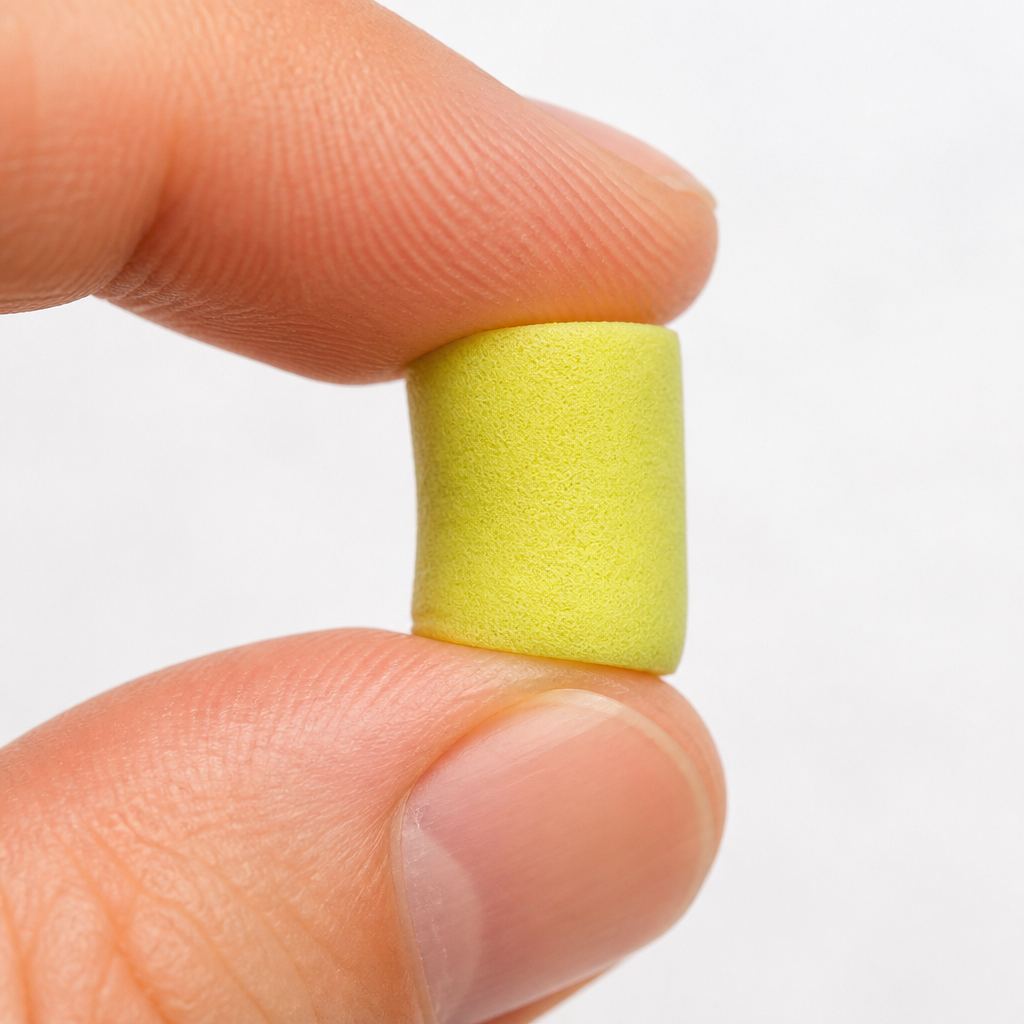
This process applies directly to memory foam tipped ear plugs, including the soft foam tips that come with ATTENU8 in XS, S, and M sizes. The aluminium body does not compress, but the foam tip does, and that foam is what creates the acoustic seal inside your canal.
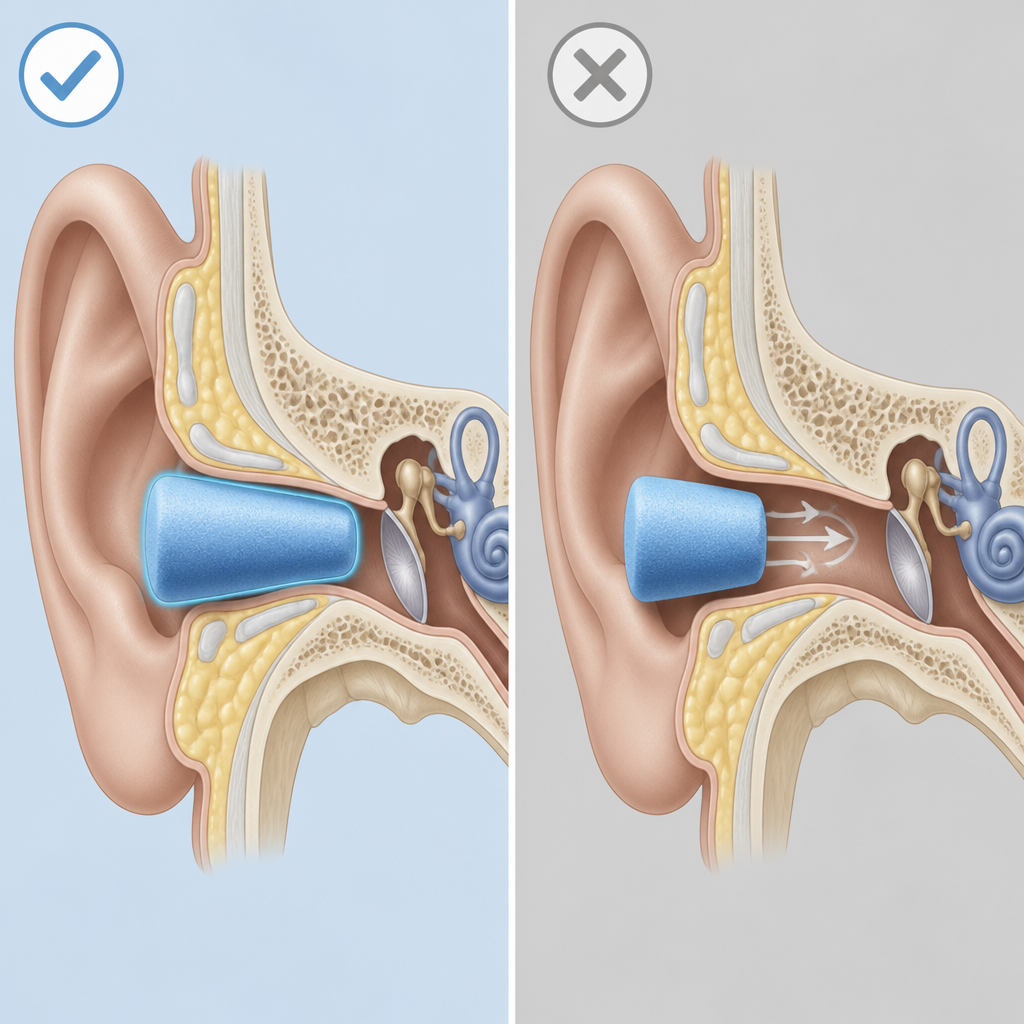
Skin oils transferred to memory foam change its expansion behavior and introduce bacteria into the ear canal. Wash your hands before handling the plugs, especially before touching the foam tips.
Using your thumb and index finger, compress the memory foam tip between your fingertips, rolling it into the narrowest cylinder possible. For ATTENU8, you grip the aluminium body and roll only the foam tip. Do not rush this step. A poorly compressed tip will not travel deep enough to seal.
Reach your opposite hand over your head and gently pull the outer ear upward and backward. This straightens the natural S-curve of the ear canal and gives the compressed plug a clear path to insert deeply. This single step is the most commonly skipped, and skipping it is the most common reason for a poor seal.
While holding the ear canal open, slide the compressed foam tip gently but firmly into the canal. The tip should sit deep enough that the base of the foam is roughly level with the canal opening. With ATTENU8, the aluminium body will sit partially visible at the ear entrance. Do not stop inserting early because of mild resistance.
Memory foam ear plug how to use guides often understate this step. The foam needs dwell time to expand against the canal walls. Keep gentle inward pressure on the plug and hold your jaw still. Speaking or chewing during expansion will distort the seal.
Once the foam has expanded, gently cup both palms over your ears without pressing the plugs. If the ambient sound level changes noticeably when you add your palms, the plug has not achieved a full seal. Remove, re-roll, and repeat.
Pro tip: Insert ear plugs in a quiet room the first few times you learn the technique. Without background noise, you can hear the moment the foam expands and seals, which gives you immediate feedback that you cannot replicate in a loud environment.
Getting the best seal with ear plugs is about more than insertion depth. It is about the relationship between foam density, canal geometry, and dwell time working together. Each element can independently break the seal if ignored.
Cold memory foam expands more slowly than warm foam. If you are inserting ear plugs in a cold room or handling them after they have been stored in a cold bag, warm the foam tips briefly between your palms for 10 to 15 seconds. This restores normal expansion speed and improves the quality of the seal.
The ear canal shifts shape when you open your mouth. Insert ear plugs with your jaw in a relaxed, closed position. If you frequently wear ear plugs while talking or eating, test whether your seal breaks under jaw movement. A slightly deeper insertion usually compensates for canal movement in active use.
ATTENU8 recommends replacing foam tips every 6 to 8 weeks. Tips that have been compressed and expanded hundreds of times lose their resilience and no longer expand fully inside the canal. A worn tip looks intact but delivers significantly less attenuation than a fresh one. This is a concrete advantage of ATTENU8 over fully disposable alternatives: you replace only the foam, not the entire plug, keeping the cost of maintaining proper protection low.
Pro tip: Sniff test your foam tips every two weeks. Memory foam that has absorbed skin oils and moisture develops a noticeable odor before it visibly degrades. That odor is your signal that tip replacement is due, regardless of whether you have reached the 6 to 8 week mark.
In practice, the same mistakes appear repeatedly across both first-time users and people who have worn ear plugs for years. Familiarity breeds complacency, and complacent insertion is the enemy of consistent attenuation.
Pushing an uncompressed foam tip into the ear canal does not work. The tip will sit at the canal entrance without penetrating deeply, and you will get maybe 8 to 12 dB of reduction from the mass of the foam alone. This feels like it is working because there is some noise reduction, but it is nowhere near the 32 dB available from a properly seated plug.
The adult ear canal curves. An unstraightened canal is like trying to post a letter through a bent tube. The plug meets resistance before it reaches the correct depth and then expands in a position where the canal curves away from it. The result is a partial seal that fails completely during any jaw movement.
This is the most common mistake among users who think they are inserting correctly. They roll, insert, and release within 5 seconds. The foam then pops partially out as it expands, settling at the canal entrance rather than the canal interior. Hold for a full 20 to 30 seconds without exception.
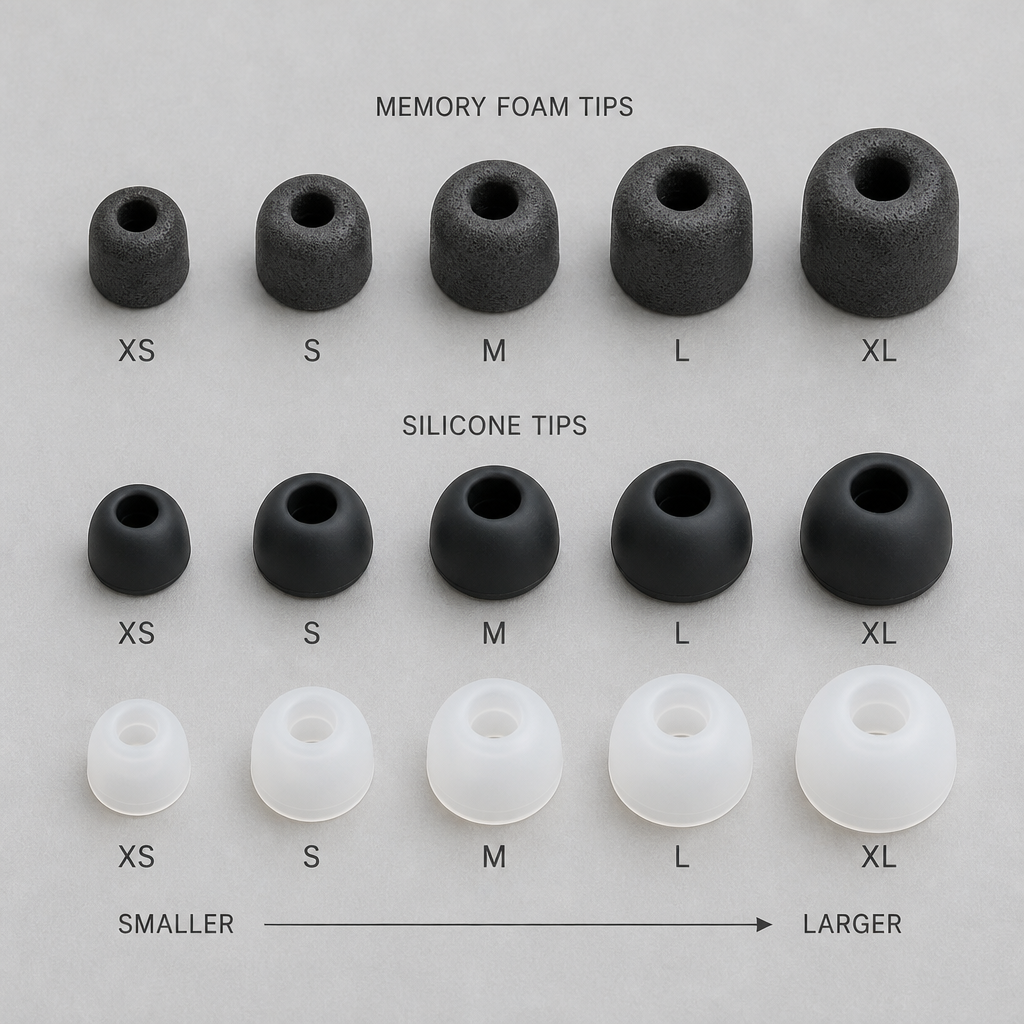
A common mistake is assuming the medium tip is correct without testing smaller or larger options. ATTENU8 ships with XS, S, and M foam tips specifically because ear canal diameter varies significantly between individuals. If you consistently find that your plugs work loose during sleep or produce inconsistent results, try one size smaller. Smaller tips seat deeper and often seal better than tips that are technically the right length but too wide for your canal to close around fully.
Tip size selection is the most overlooked variable in ear plug performance. The right size creates a seal with minimal insertion force and holds without discomfort during extended wear. The wrong size either fails to seal or causes pressure that makes long-term wearing unbearable.
The data consistently shows that most adults default to medium tips without testing alternatives. In audiological fitting studies, a substantial proportion of users achieve better attenuation with small tips because smaller foam compresses more completely and then expands to fill the canal snugly rather than stretching it.
For ATTENU8 users, the practical test is straightforward. Insert each size using the correct technique, hold for 30 seconds, then apply the palm cup test described earlier. The size that produces the greatest sound reduction when you remove your palms is your correct size. Run this test in a consistently noisy environment, like a running kitchen tap or a fan, so you have a reference sound level to judge against.
If you sit between sizes and find that the smaller size seals but feels like it might come loose, and the larger size seals but creates pressure, try the smaller size with slightly deeper insertion. Depth compensates for a diameter that is marginally small.
Not all ear plug insertion approaches are equal. Below is a direct comparison of three methods that users commonly attempt, including the correct technique versus two common shortcuts.
| Insertion Method | Technique Description | Typical Noise Reduction Achieved |
|---|---|---|
| Full Roll-and-Hold (Correct Method) | Foam rolled tightly, ear canal straightened by pulling ear up and back, plug inserted deeply, held 20 to 30 seconds until foam expands fully. | Close to rated NRR, up to 32 dB with ATTENU8 |
| Quick Push (Common Shortcut) | Foam lightly compressed, inserted without canal straightening, released immediately after placement. | Estimated 10 to 16 dB, 50 to 60 percent below rated NRR |
| No Compression (Incorrect) | Unrolled foam tip pushed against canal entrance without deep insertion or canal straightening. | Estimated 5 to 10 dB, primarily from foam mass rather than acoustic seal |
The difference between the correct method and no compression is not marginal. It is the equivalent of comparing a closed door to an open window when trying to block street noise. The correct ear plug insertion technique is the single highest-return change any ear plug user can make, at zero additional cost.
The foam tip should sit deep enough in the ear canal that the base of the foam is roughly flush with or just inside the canal opening. For ATTENU8, the aluminium body will remain visible and accessible outside the ear. If you can see a significant portion of the foam tip, the plug is not inserted deeply enough to achieve a full acoustic seal. Deeper is almost always better, provided there is no pain or sharp pressure sensation.
Most people have slightly asymmetrical ear canals. The ear that seals better is likely the one where your canal geometry more closely matches the tip size you are using. Try a different tip size in the ear that seals poorly. It is also common for one ear canal to curve more sharply, so extra attention to pulling that ear fully backward and upward during insertion will help considerably.
Use the palm cup test. After inserting both plugs and waiting 30 seconds for full foam expansion, cup your palms firmly over both ears without pressing on the plugs themselves. If the ambient room sound drops meaningfully when your palms are on, the seal is incomplete. If sound level stays roughly the same with or without your palms, the plugs have already achieved close to maximum attenuation and the seal is good.
Yes, ATTENU8 foam tips are designed to be reused. The aluminium body is reused indefinitely and only the foam tips require periodic replacement every 6 to 8 weeks. Reuse does affect insertion quality over time. As foam accumulates skin oils and undergoes repeated compression cycles, its expansion speed slows and its maximum expanded diameter decreases. A tip approaching end of life will feel easier to insert but will deliver noticeably worse attenuation because it no longer expands enough to contact the full canal wall.
The fundamental technique is identical. The difference is in how you manage comfort during extended wear. For sleeping, slightly shallower insertion that still seals can reduce pressure discomfort on the side of your head against a pillow. For high-noise workplaces like construction or manufacturing, maximum depth insertion is non-negotiable because the acoustic consequences of a partial seal are potentially permanent hearing damage. When in doubt in a loud environment, always prioritize depth and seal quality over comfort.
Ear plugs that fall out during sleep were either not inserted deeply enough, not held long enough during foam expansion, or are the wrong tip size. If the foam expands while still at the canal entrance rather than inside the canal, normal pillow movement or jaw shifting during sleep creates enough force to dislodge the plug. Re-roll more tightly, insert more deeply, and hold for the full 30 seconds. If the problem persists, try one tip size smaller, which tends to stay seated more securely because the canal walls grip it more firmly.
Have you tried the roll-and-hold technique described here? Share what worked for you, or tell us which step made the biggest difference in your seal quality.
If you wake up exhausted after sleeping with ear plugs in, or you still flinch at every sound on a loud job site, your ear plugs are not working. This is not a minor inconvenience. Chronic noise exposure above 85 decibels causes permanent hearing damage, and disrupted sleep compounds into serious health consequences over time. Yet most people assume the problem is the noise, not their ear plug performance. The reality is that ear plugs not working is almost always a fit or product issue, not a noise level issue. Here are the five signs you need to pay attention to.
| Key Insight | Explanation |
|---|---|
| Hearing conversations means no seal | If you can still understand speech while wearing ear plugs, the acoustic seal is broken and noise reduction is near zero. |
| Ear plugs falling out signal the wrong size | Ear canals vary significantly between people. A plug that does not stay in is not reducing noise at all once it dislodges. |
| Morning fatigue despite ear plugs wearing them is a red flag | Sleep disruption from inadequate noise blocking elevates cortisol and impairs memory consolidation, even if you do not remember waking. |
| Soreness means pressure without performance | Pain from ear plugs often comes from forcing an ill-fitting plug too deep, which does not improve the seal but damages the canal. |
| Flattened foam tips lose their NRR | Disposable foam degrades rapidly. A compressed tip cannot expand to fill the ear canal, dropping real-world noise reduction dramatically. |
| Rated NRR does not equal real-world performance | The EPA requires a 50% derating of NRR ratings for real-world use. A plug rated 33dB delivers roughly 16-17dB in practice without a proper fit. |
| Tip replacement beats full replacement | Premium reusable plugs with replaceable memory foam tips, replaced every 6-8 weeks, consistently outperform degraded disposables used past their lifespan. |
This is the most unambiguous sign that you have not enough noise reduction happening. A correctly fitted ear plug with a genuine acoustic seal should make normal speech sound muffled, distant, and difficult to follow. If you can hear your partner talking at a normal volume from across the room, or understand what someone is saying without them raising their voice, your plugs are not sealing.
In practice, most people wearing cheap foam plugs incorrectly assume this is just how ear plugs work. It is not. A proper seal drops perceived volume dramatically across the mid and high frequency range, which is where speech intelligibility lives. Hearing clearly while wearing ear plugs is not a sign of good situational awareness. It is a sign of a failed product or a failed fit.
The acoustic seal is binary in nature. Either you have it or you do not. A partial seal produces almost no meaningful attenuation. This is why ear canal fit matters more than the material of the plug itself.
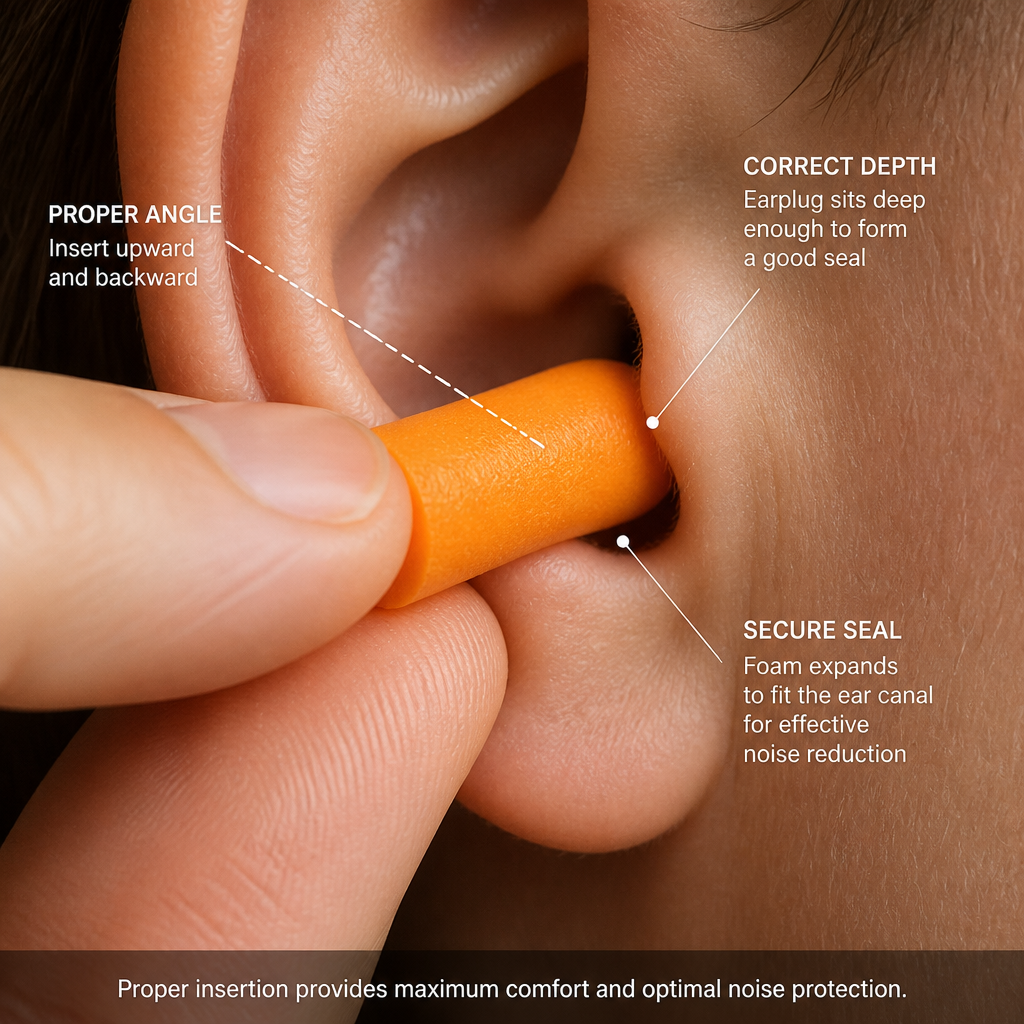
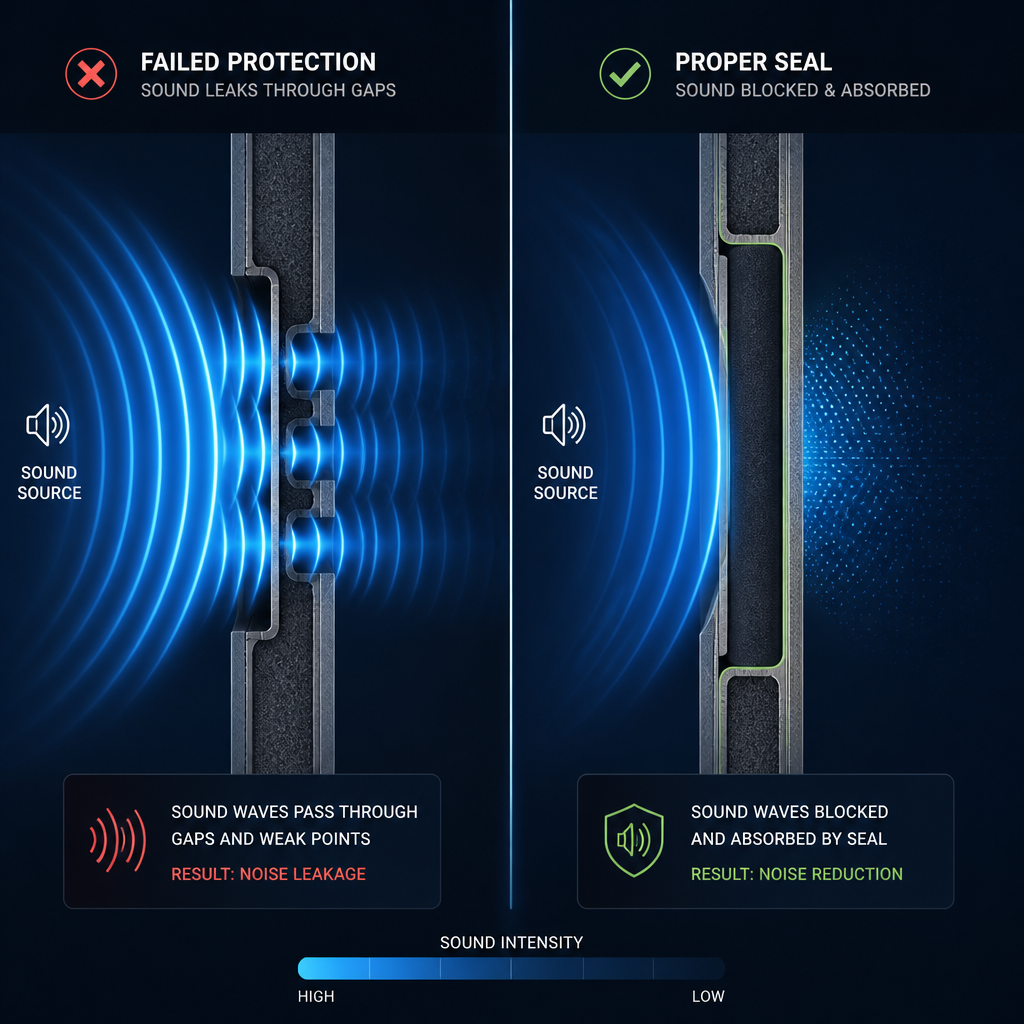
When a plug seals correctly, you will notice your own voice sounds louder to you, because bone conduction becomes the dominant sound pathway. Ambient noise becomes a low, indistinct hum rather than identifiable sounds. If you are not experiencing this, the plug is sitting in your canal without sealing it.
Pro tip: Test your seal before committing to a full night of sleep or a shift on a loud site. Insert the plugs, then rub your palms together near your ears. You should hear the rubbing as a muffled, hollow sound, not a clear skin-on-skin texture. If you hear it clearly, reinsert and try again.
Ear plugs falling out is not a minor annoyance. It is a complete failure of hearing protection. The moment a plug leaves the ear canal, every decibel of noise exposure returns in full. For side sleepers, this is particularly common because pillow contact gradually works foam plugs loose over the course of the night.
The root cause is almost always a size mismatch. Standard disposable foam plugs come in one size, which fits the average ear canal. But ear canals are not average. They vary in diameter, length, and angle. A plug that is too narrow for your canal will not expand to fill it. A plug that is too wide will sit at the entrance rather than seating properly inside.
Side sleeping creates direct mechanical pressure on the plug from the pillow. Foam plugs compress under this pressure and gradually migrate outward. By 3 AM, the plug may be sitting halfway out of the canal, providing minimal attenuation. This is why people report sleeping with ear plugs but still being woken by noise they expected to be blocked.
Products that offer multiple tip sizes, such as XS, S, and M memory foam tips, address this directly. The right tip size stays seated because it actually conforms to the canal shape rather than relying solely on foam expansion. A snug fit from correct sizing also means pillow pressure is less likely to dislodge the plug during the night.
Pro tip: If your plugs consistently fall out on one side but not the other, you likely have asymmetric ear canals, which is extremely common. Try a smaller tip size on the side that loses the plug first. Most people need different sizes for each ear and never realize it.
Waking to a partner snoring, street traffic, or a neighbor’s television while wearing ear plugs rated at 32dB or higher means one thing: the rated noise reduction is not being delivered in practice. This gap between rated and actual performance is well-documented.
“Laboratory-measured NRR values routinely overestimate real-world protection by 50% or more when fit variability and user error are accounted for.” – National Institute for Occupational Safety and Health (NIOSH)
The EPA’s derating formula is stark. Take the NRR, subtract 7, then divide by 2. A plug rated at 33dB delivers approximately 13dB of real-world protection in that calculation. For light sleepers, that is nowhere near enough to mask a snoring partner averaging 60-70dB, which puts noise exposure at 47-57dB at the ear, well above the threshold for sleep disruption.
The Difference Between Being Woken and Not Sleeping Deeply
Some people do not consciously wake but spend the night in shallow sleep stages due to noise. They do not connect their exhaustion to their ear plug failure because they have no memory of waking. Polysomnography studies consistently show that noise events as low as 40dB during slow-wave sleep cause measurable cortical arousal even without full waking. If you are wearing ear plugs and still feeling unrestored after a full night, the plugs are not delivering enough noise reduction.
Ear canal soreness after removing plugs is a near-universal complaint about cheap foam ear plugs, and it is often misread as a sign the plugs are inserted correctly. It is not. Pain is the canal’s response to a hard, inflexible object sitting against its walls at the wrong angle or expanding too aggressively against sensitive skin.
Standard foam plugs are inserted by compressing them and allowing them to expand inside the canal. The expansion creates outward pressure in all directions, including against canal walls that may not align with the plug’s orientation. Over eight hours of sleep, that constant pressure causes soreness, inflammation, and sometimes minor abrasion. The result is that many people stop using ear plugs entirely, leaving themselves with no protection at all.
A rigid outer body, like an aluminium shell, does not expand and press against the canal. It sits at a fixed size and relies on a soft tip to create the seal. This means the canal wall experiences minimal sustained pressure. The seal comes from the tip conforming to the canal’s shape, not from the tip trying to force the canal open. Memory foam tips are particularly effective here because they respond to body temperature and canal geometry rather than expanding uniformly.
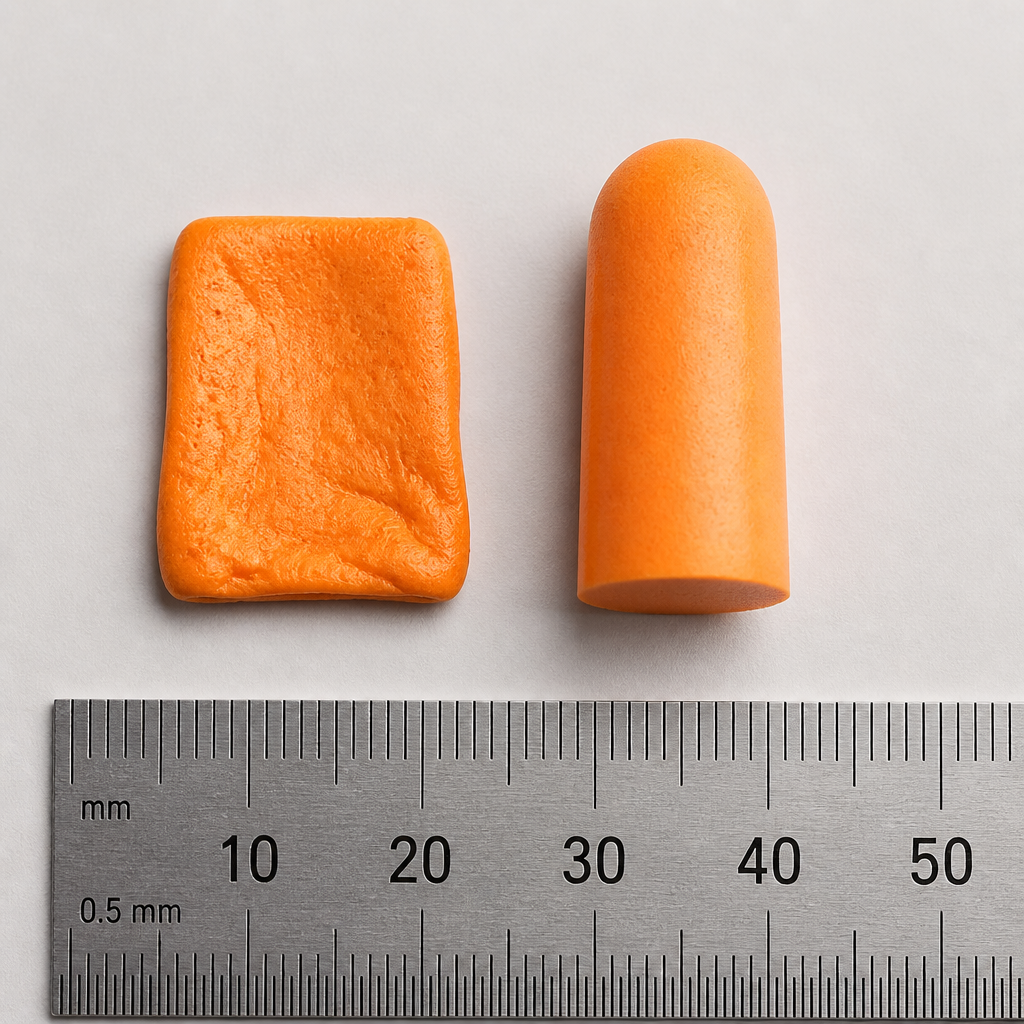
Comfort and noise reduction are not in tension with each other. If your plugs cause pain, they are not sealing well, because pain signals that the plug is sitting incorrectly. A properly seated plug that seals the canal does not require force or pressure to maintain its position.
Disposable foam ear plugs are designed for single use. Using them beyond one insertion degrades their noise reduction rapidly. The foam cell structure that allows expansion and creates the seal begins breaking down after the first use. By the third or fourth insertion, many disposable foam plugs have lost 30-50% of their original expansion capacity, meaning the seal they create is a fraction of what it was originally.
In practice, most people reuse disposable plugs for days or weeks. The plugs look intact, so they assume they are still working. A flattened or yellowed foam plug that no longer springs back quickly when released is already past its functional lifespan, regardless of how it looks from a distance.
Using worn foam plugs is not just a matter of reduced comfort. It is a false sense of security. Someone on a construction site believes they are protected at 32dB when they are actually getting 10-15dB of attenuation from a degraded plug. Over a working lifetime, that gap translates directly into measurable hearing loss.
For sleep use, the stakes are different but still real. A degraded plug that used to block enough noise to keep you asleep will gradually stop doing so, and the decline is slow enough that many people attribute their worsening sleep to stress or aging rather than to plug performance degradation.
The data consistently shows that the single largest variable in ear plug performance is fit, not the plug’s rated NRR. A 32dB plug worn correctly outperforms a 33dB plug worn with even a minor seal failure. This is why the occupational health community shifted away from relying on NRR as the primary performance metric and toward fit-testing protocols for high-risk environments.
For consumers, fit testing is not always practical. But understanding the mechanics of a good seal is. The plug must sit inside the ear canal, not at its entrance. The tip must conform to the canal’s shape rather than simply blocking the opening. And the plug must stay in position throughout the use period, whether that is a full night’s sleep or an eight-hour work shift.
The Role of Tip Size in Achieving a Real Seal
A common mistake is assuming the largest tip available always provides the best seal because it fills more space. This is wrong. An oversized tip sits at the canal entrance and cannot be inserted deeply enough to seal properly. An undersized tip seats deeply but leaves gaps around its perimeter. The correct size is the one that seats comfortably at mid-canal depth and creates resistance when you gently tug on the plug. You should feel slight suction, not immediate release.
This is why access to multiple tip sizes matters far more than the material or color of the plug body. Trying XS, S, and M tips in each ear independently, rather than assuming both ears need the same size, is the most reliable way to improve your seal without buying different plugs entirely.
Most people who think their ear plugs do not work have never been shown how to insert them correctly. The technique for foam tips differs from the technique for pre-molded silicone plugs, and both differ from memory foam tips on a rigid body.
Reach over the top of your head with the opposite hand and pull your ear upward and slightly backward. This straightens the ear canal for adults and creates a clear insertion path. Insert the plug with a gentle rotating motion until the tip seats at mid-canal depth. Release the ear and hold the plug in place for 20-30 seconds to allow the memory foam to conform to your canal’s shape and temperature.
Do not push hard. Force does not improve the seal. It shifts the plug angle and can cause discomfort without improving attenuation. If you feel significant resistance before mid-canal depth, try a smaller tip size rather than pushing further.
Memory foam tips on premium reusable plugs should be replaced every 6-8 weeks under normal use. Signs of needed replacement include visible compression that does not recover fully, a sticky or greasy texture from skin oils, or a decline in comfort during insertion. Replacing only the tips maintains the rigid body’s performance indefinitely while ensuring the sealing element is always in optimal condition. This is considerably more cost-effective than buying disposable plugs weekly, and it eliminates the performance degradation problem entirely.
At ATTENU8, the aluminium body of each plug is designed to last for years, with tip replacements as the only ongoing maintenance required. This directly solves the degraded-foam problem that causes most real-world ear plug failure. You can explore the ATTENU8 reusable ear plug range if you want a permanent alternative to foam disposables.
| Ear Plug Type | Rated NRR / Real-World Attenuation | Common Failure Points |
|---|---|---|
| Standard Disposable Foam (single size) | Rated 29-33dB / Real-world 10-17dB after derating and fit loss | Degrades after first use, falls out during sleep, no size options, canal soreness from over-expansion |
| Reusable Silicone Flanged Plugs | Rated 24-27dB / Real-world 12-14dB | Flanges seal inconsistently across canal shapes, hard body causes discomfort during extended wear, limited size variation |
| Premium Metal-Bodied Plugs with Memory Foam Tips (e.g. ATTENU8) | Rated 32dB / Real-world 20-26dB with correct tip size and insertion | Requires correct tip size selection, tips need replacement every 6-8 weeks, higher upfront cost than disposables |
The gap between rated and real-world performance is smallest for metal-bodied plugs with properly sized memory foam tips because the rigid body maintains its position without relying on foam expansion pressure for structural support. The tip does the sealing work at the correct depth, while the body keeps it oriented correctly regardless of pillow pressure or jaw movement during sleep.
After inserting your plugs, cup your palms over both ears tightly, then remove them quickly. If the plugs are sealing, you will hear a slight change in pressure when you remove your palms, similar to the sensation of altitude change. You can also speak aloud: your own voice should sound noticeably louder and more resonant to yourself when a proper seal is achieved, because bone conduction dominates over airborne sound.
Side sleeping places lateral pressure on the plug from the pillow, which gradually levers foam plugs outward over the course of the night. This is a fundamental mechanical problem with standard foam plugs, not user error. The solution is either a plug with a shorter profile that sits deeper in the canal before pillow contact, or a plug with a rigid outer body that resists lateral displacement rather than compressing under pillow pressure.
The EPA’s standard derating formula takes the labeled NRR, subtracts 7, and divides by 2, giving you the expected real-world attenuation in typical use conditions. For a 32dB-rated plug, that works out to approximately 12.5dB with an average fit. A correct fit with the right tip size can bring real-world performance significantly closer to the rated figure. This is why fit matters more than the NRR number on the packaging.
Ear plugs themselves do not cause hearing damage, but inserting them too aggressively or using plugs that are too large can cause minor abrasion or inflammation of the ear canal. More importantly, a false sense of protection from poorly fitting plugs can lead someone to stay in a high-noise environment longer than they should, which does cause damage. The risk is under-protection, not over-protection.
For reusable ear plugs with replaceable foam tips, the practical replacement interval is every 6-8 weeks under daily use. Key indicators that tips need replacing include slow or incomplete recovery when you release them after compression, visible discoloration from skin oils, and a reduction in the comfort or snugness you felt when the tips were new. Replacing tips on schedule keeps real-world noise reduction consistent, which is the entire point of using a premium reusable product rather than disposables.
Price does not automatically mean better noise reduction. What premium ear plugs actually buy you is consistency of performance over time, better fit options across different ear canal sizes, and materials that do not degrade rapidly. A correctly fitted disposable foam plug can deliver impressive attenuation on day one. The problem is that performance degrades quickly and fit is inconsistent across users. Premium plugs with multiple tip sizes and replaceable foam maintain their rated performance for much longer, which is what matters in practice.
Have you experienced any of these five signs with your current ear plugs? Share what finally worked for you in the comments below.
Office noise is not a minor inconvenience. Research from the University of California Irvine found that it takes an average of 23 minutes to fully regain focus after an interruption, and in open-plan offices, workers are interrupted or distracted every 11 minutes. The relationship between noise and concentration at work is one of the most underestimated productivity killers across every professional sector, from finance to manufacturing. If you have ever lost your train of thought mid-task because of a colleague’s phone call or machinery hum, you already understand the problem. This article breaks down what is actually happening in your brain, and what measurable steps you can take to fix it.
| Key Insight | Explanation |
|---|---|
| Noise above 65dB significantly impairs cognitive tasks | Studies show accuracy and speed on complex tasks drop measurably once ambient noise crosses this threshold, common in open offices and industrial environments. |
| Irrelevant speech is more disruptive than white noise | Background conversations pull more cognitive resources than consistent ambient sound because the brain attempts to process language automatically. |
| Standard disposable foam plugs lose effectiveness quickly | Single-use foam degrades and compresses unevenly, reducing their stated NRR within hours of use, making reusable precision-fit options far more reliable. |
| 32dB noise reduction covers most problematic workplace environments | Office chatter peaks around 65-70dB. A 32dB reduction brings that to a near-silent 33-38dB range, well within comfortable working levels. |
| Open plan office layouts correlate with a 66% drop in focus time | A study published in the Philosophical Transactions of the Royal Society B found workers in open offices had significantly less private, focused time than those in enclosed spaces. |
| Ear protection in industrial settings reduces error rates | Noise-induced cognitive load in manufacturing and construction leads to higher error rates and slower response times, not just hearing damage over time. |
| Tip fit determines whether ear plugs actually block noise | A poor seal from a wrong-sized tip can reduce effective attenuation by up to 50%, which is why multi-size tip systems matter more than advertised NRR ratings alone. |
The brain does not passively ignore noise. The auditory cortex processes incoming sound automatically, regardless of whether you consciously want to listen. This is not a personal failing or lack of discipline. It is hardwired neurology. When your colleague takes a call two desks away, your brain begins decoding that speech pattern whether you like it or not, pulling working memory resources away from whatever you were doing.
The result is what cognitive scientists call cognitive load interference. Working memory, which is the mental workspace you use for reading, writing, calculating, and reasoning, is a finite resource. Noise forces it to share capacity with auditory processing. The more semantically rich the noise (speech, for example, is worse than a fan), the more working memory it consumes.
Not all tasks are equally vulnerable. Reading comprehension, written communication, mathematical reasoning, and any task requiring you to hold and manipulate information in your head are the most affected by ambient noise. Tasks that are highly procedural and repetitive show less impact.
In practice, this means a construction site manager reviewing safety compliance documents in a loud site office is operating at a measurable cognitive disadvantage compared to someone doing the same task in a quiet environment. The same applies to a software developer debugging code in a noisy open plan office or an accountant reviewing financial reports near a busy kitchen.
“Noise is a major occupational hazard, not just for hearing health, but for mental performance, decision quality, and long-term stress outcomes.” – Dr. Arline Bronzaft, environmental psychologist and noise pollution researcher, City University of New York
Pro tip: If you find yourself re-reading the same paragraph multiple times at work, the cause is more likely ambient noise than tiredness. Test this by working with proper ear protection for one hour and comparing your reading retention.
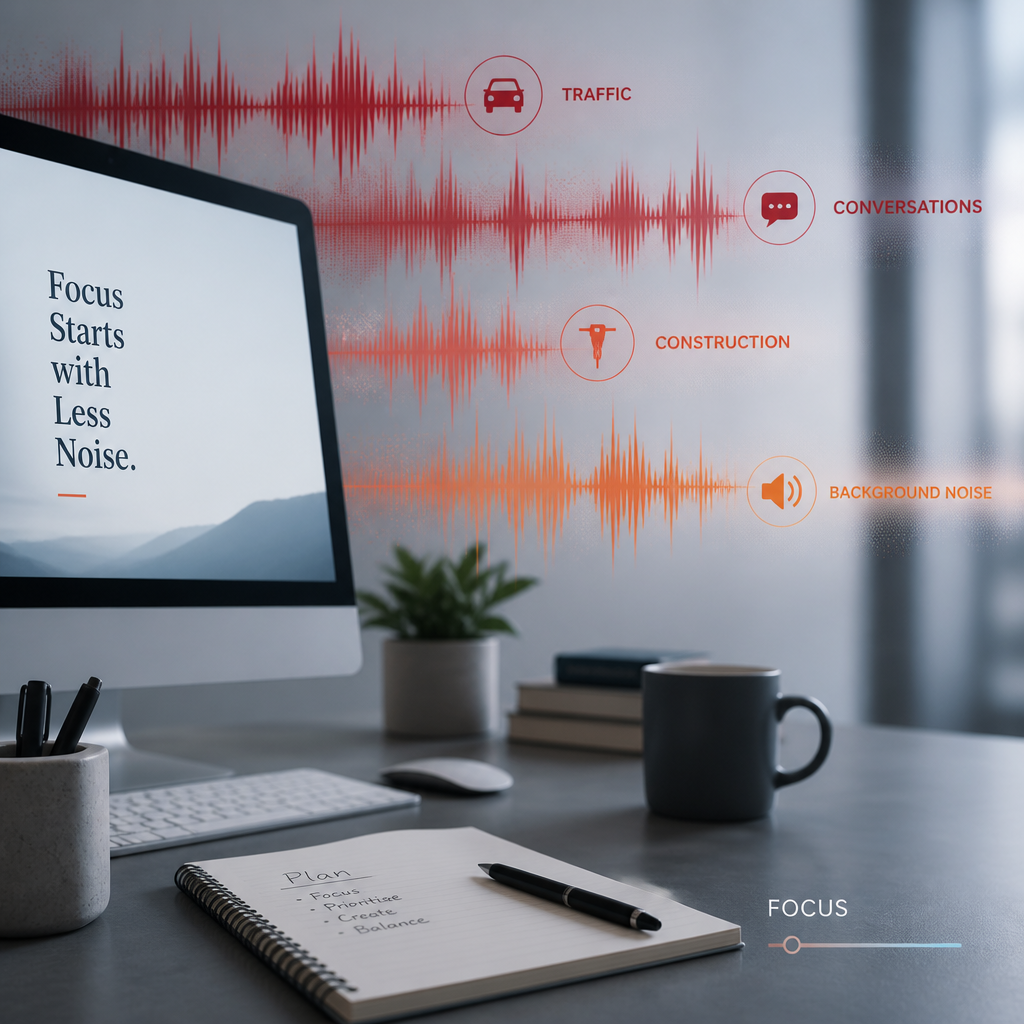

Open plan office noise has been studied extensively, and the findings are not kind to open-plan design advocates. A landmark study published in the Philosophical Transactions of the Royal Society B found that employees in open-plan offices had 73% more time in unproductive, distracted states compared to those in private offices. That is not a marginal difference. That is more than two-thirds of a working day compromised by environmental noise.
The irony is that open-plan offices were sold as collaboration-boosters. In practice, they often reduce meaningful collaboration while increasing low-quality, ambient distraction. Workers compensate by wearing headphones or finding quiet rooms, which negates the supposed collaborative benefit entirely.
Not all workplace noise carries the same cognitive cost. Research consistently shows that intelligible speech, meaning conversations you can partly understand, creates far more disruption than unintelligible noise at the same volume. The brain identifies familiar language patterns and tries to decode them, which is an involuntary process you cannot simply will yourself out of.
White noise machines and low-volume background music work partly because they mask intelligible speech, raising the threshold at which conversation becomes decodable. But this is a band-aid approach. The more effective solution is reducing the amount of noise that reaches your auditory system in the first place.
The data consistently shows that workers who actively manage their acoustic environment, through ear protection, acoustic panels, or designated quiet zones, report higher satisfaction, fewer errors, and better subjective concentration scores than those who simply adapt to the noise.
For professionals in construction, manufacturing, military operations, and heavy engineering, noise is not just a productivity issue. It crosses into occupational health and safety territory. Safe Work Australia sets the occupational exposure limit at 85dB averaged over an eight-hour day, and noise levels in these environments routinely exceed 90-100dB.
At those levels, the consequences split into two categories. First, progressive hearing damage from prolonged exposure. Second, acute cognitive impairment that creates immediate safety risks. A study from the National Institute for Occupational Safety and Health (NIOSH) found that high-noise environments correlate with increased incident rates, not only from mechanical hazards, but from errors in judgment and communication failures caused by noise-induced cognitive load.
When ambient noise makes verbal communication unreliable, workers make assumptions instead of confirming instructions. This is a well-documented precursor to workplace incidents. Ironically, many workers in loud environments avoid wearing hearing protection because they fear missing critical verbal cues from colleagues.
This is where the design of ear protection matters enormously. Protection that attenuates all sound equally, including speech, creates the very communication breakdown workers fear. Better-designed ear plugs that provide strong attenuation of harmful frequencies while preserving some speech intelligibility resolve this conflict. Fit quality is the critical variable here. Ear plugs that seal consistently and sit comfortably over full shifts are used consistently, and that consistent use is what actually provides protection.
Pro tip: If your team removes ear protection to communicate and then forgets to replace it, the problem is comfort and convenience, not discipline. A well-fitting reusable ear plug with a secure carry case is far more likely to stay in use throughout a shift than a disposable foam plug shoved in a pocket.
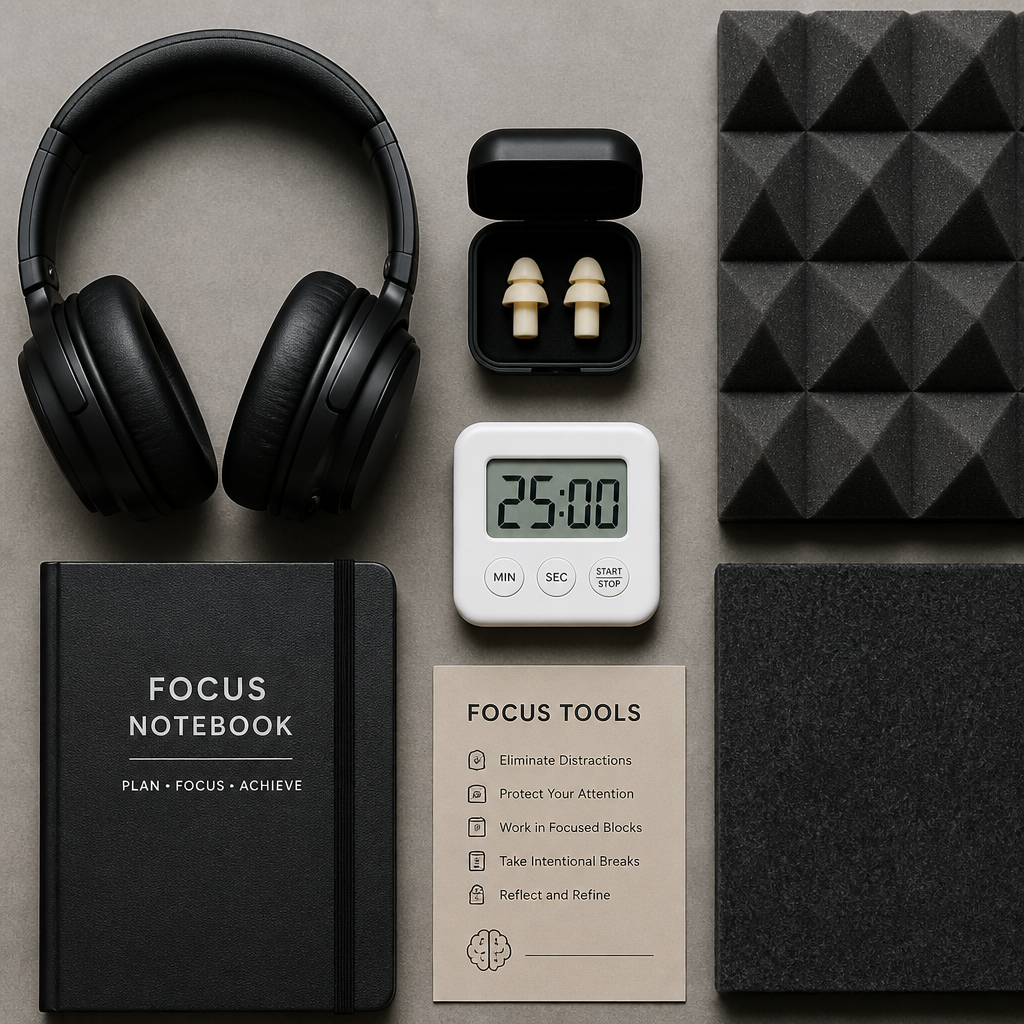
There are three realistic options for professionals seeking to reduce workplace noise through personal hearing protection: disposable foam ear plugs, over-ear noise-cancelling headphones, and reusable precision ear plugs. Each has a specific context where it performs best, and each has meaningful limitations.
Cheap, widely available, and theoretically rated to 30-33dB NRR. In practice, their real-world attenuation is often 10-15dB lower than the stated rating because users do not insert them correctly, and the foam degrades rapidly. A foam plug used for four hours has already compressed and is providing noticeably less protection than when it was first inserted. For occasional use, they are adequate. For consistent daily protection over a full shift, they are unreliable.
Effective for low-frequency continuous noise like HVAC hum or machinery vibration. Much less effective for sudden transient noise or the mid-frequency range where human speech sits. They are also impractical in industrial environments, where they present a catching hazard, and inappropriate in settings where situational awareness matters. Their real use case is the knowledge worker in an open office, and even there, they carry a social signal that can isolate the wearer from legitimate workplace communication.
This is the category where consistent, reliable attenuation lives for daily professional use. Metal-bodied ear plugs like those made by ATTENU8 deliver approximately 32dB noise reduction through a combination of a precision aluminium shell and soft memory foam tips available in XS, S, and M sizes. The multi-size tip system is not a marketing detail. It is the mechanism through which a proper acoustic seal is achieved. A tip that fits the ear canal correctly creates an even, stable seal that holds through movement, talking, and position changes.
The aluminium body also means the ear plug maintains its shape and does not compress or distort the way foam does, so attenuation performance is consistent across the entire wear period. For professionals who need to rely on their ear protection performing the same way at the end of a shift as at the start, this matters considerably. Rather than replacing the entire unit, only the foam tips need replacing every 6 to 8 weeks, which keeps long-term cost well below disposable alternatives used daily.
Choosing the right noise reduction approach depends on your environment, task type, and how long you need protection. The table below compares the three main options professionals actually use.
| Approach | Best Use Case | Key Limitations |
|---|---|---|
| Disposable foam ear plugs | Short-duration, occasional noise exposure. Suitable for infrequent travel or one-off loud events. | Real-world attenuation far below stated NRR. Inconsistent fit leads to unpredictable protection. Not cost-effective or hygienic for daily use. |
| Noise-cancelling headphones (e.g., Sony WH-1000XM5, Bose QC45) | Open-plan office work with continuous ambient hum. Effective for knowledge workers doing solo deep work at a desk. | Poor against transient noise and speech frequencies. Impractical in industrial environments. Expensive. Signals social unavailability, which can harm team communication. |
| Reusable precision ear plugs with memory foam tips (e.g., ATTENU8) | Daily professional use across office and industrial settings. Reliable for full-shift protection with consistent attenuation. Suitable for sleep, travel, and focused work. | Requires correct tip sizing for optimal seal. Not designed for environments requiring amplified situational awareness (tactical operations needing electronic hearing protection). |
Personal hearing protection is the most direct and controllable intervention, but it works best as part of a broader noise management approach. There are several complementary strategies that the data consistently shows have measurable impact on concentration and performance.
Hard surfaces reflect sound. Carpet, acoustic ceiling tiles, upholstered furniture, and fabric wall panels absorb it. The difference between a reverberant hard-floored open office and an acoustically treated one can be 5-10dB of ambient noise reduction, which translates to a meaningful improvement in intelligibility and concentration. This is an infrastructure investment, but it is one that pays dividends across an entire workforce simultaneously.
A common mistake is treating noise management as purely a physical problem. Behavioural and scheduling interventions are often more immediately actionable. Designating certain hours as low-noise periods, where phone calls are taken away from the main floor and conversations are kept brief, can reduce peak noise exposure during the hours when complex work is typically scheduled.
Similarly, assigning concentrated deep work tasks to the quieter parts of the day (early morning, post-lunch slump aside) and using collaborative, communication-heavy tasks for noisier periods is a simple scheduling approach that most teams can implement without any capital expenditure.
Sound masking is different from white noise. Purpose-built sound masking systems emit a carefully calibrated signal across a specific frequency range that makes human speech harder to intelligibly decode at a distance. Well-implemented systems can raise the effective speech privacy radius from a few metres to under one metre, dramatically reducing the cognitive tax of overheard conversations in open plan environments. They work best as a complement to, not a replacement for, individual hearing protection.
The combination of acoustic treatment, scheduling discipline, sound masking, and individual ear protection is the most effective approach. Each layer addresses a different aspect of the problem, and together they create a genuinely quieter cognitive environment.
It depends entirely on the task and the music. Research from Cambridge Sound Management and several academic studies shows that music with lyrics impairs reading comprehension and writing tasks because the brain attempts to process the words. Instrumental music at low volume has a more neutral effect. For most complex cognitive tasks, silence or a consistent low-frequency ambient sound outperforms music with lyrics. If you are using headphones primarily to block noise rather than to listen to music, you would get more consistent results from well-fitted ear plugs that achieve attenuation without the additional cognitive input of audio content.
Office ambient noise typically sits between 60-70dB in open-plan environments. A 32dB noise reduction brings that down to 30-38dB, which is approximately the level of a quiet library. That is more than sufficient for deep focus work. You do not need industrial-grade hearing protection for an office environment, but you do need ear plugs that actually seal correctly. The gap between a stated NRR and real-world performance is almost entirely determined by fit quality.
A well-maintained reusable ear plug with replaceable foam tips is significantly more hygienic in practice. Disposable foam plugs are often used for far longer than they should be, handled repeatedly throughout a day without cleaning, and stored loose in pockets where they collect debris. Reusable metal-bodied ear plugs can be wiped clean, and the foam tips that contact the ear canal are replaced on a regular schedule (every 6 to 8 weeks with products like ATTENU8), rather than accumulating days of wear on a single piece of uncleanable foam.
NRR (Noise Reduction Rating) is the US standard, measured in decibels under laboratory conditions. SNR (Single Number Rating) is the European equivalent. Both represent ideal laboratory performance. Real-world attenuation is typically 50-60% of the NRR when ear plugs are used without specific training and fitting. This is why the fit mechanism matters more than the headline number. An ear plug with a 32dB NRR that seals consistently will outperform a 33dB NRR product that fits poorly every single time.
Yes, and this is one of the least discussed consequences of chronic noise exposure at work. Even at levels well below those that cause hearing damage, persistent ambient noise above 55-65dB increases cortisol levels, elevates heart rate variability, and increases subjective fatigue over a full working day. The Cornell University study on office noise found that workers in noisy open offices showed elevated epinephrine levels and attempted fewer ergonomic adjustments to their workstations, suggesting both physiological stress and reduced motivation even when they reported feeling acclimatised to the noise. Chronic cognitive fatigue from noise is a real phenomenon that does not require measurable hearing loss to occur.
The right tip creates a gentle but complete seal without discomfort. If you can feel the tip pressing unevenly or it works itself out during normal jaw movement, it is either too large or seated incorrectly. If you can still clearly hear conversational speech from a few metres away, the tip is too small or the seal is incomplete. Products with multiple tip sizes, such as XS, S, and M options, allow you to find the size that creates a stable, even seal across both ear canals, which are often slightly different sizes in the same person. Start with the medium tip and adjust from there.
We would like to hear from you: what is the single biggest noise challenge affecting your concentration at work, and what have you tried so far to manage it?
Most people asking whether metal ear plugs are safe are doing so because they have already tried cheap foam disposables and found them frustrating, uncomfortable, or simply not durable enough to rely on. The short answer is yes, aluminium ear plugs are safe when designed correctly, and in many ways they are safer and more hygienic than the single-use foam plugs most people default to. But there are genuine questions worth answering: Does metal conduct sound differently? Can a rigid body damage the ear canal? And what makes one metal-bodied design safer than another? This article addresses all of it directly.
The safety concern most people have centres on the idea of placing a rigid metal object inside the ear canal. This is a reasonable concern, and it deserves a direct answer rather than reassurance without explanation.
A well-designed aluminium ear plug never places the metal body in direct contact with the ear canal. The metal shell sits at the ear canal entrance or just inside the outer rim, while a soft memory foam tip, sized to the individual ear, creates the acoustic seal. The metal does not press against the delicate skin of the ear canal at any point during normal use.
The key word is “well-designed.” A concave aluminium body with correctly sized foam tips distributes any light pressure evenly and prevents the rigid material from bearing directly on tissue. This is the same principle used in professional in-ear monitors worn by touring musicians for hours at a time.
| Key Insight | Explanation |
|---|---|
| Metal does not touch the ear canal | Soft memory foam tips create the seal; the aluminium body sits at the entrance, not inside the canal wall. |
| Aluminium is non-toxic and hypoallergenic for most people | Anodised or finished aluminium does not leach chemicals into skin and is far safer long-term than cheap PVC foam compounds. |
| 32dB noise reduction is clinically meaningful | The U.S. Occupational Safety and Health Administration (OSHA) requires hearing protection in environments above 85dB. A 32dB NRR rating comfortably covers most industrial and sleep-disruption scenarios. |
| Foam tip replacement every 6-8 weeks maintains hygiene | Old foam degrades and harbours bacteria. Replacing tips on a schedule means the seal quality and sanitary standard remain high without replacing the entire plug. |
| Fit matters more than material for safety | An ill-fitting ear plug of any material, foam or metal, can cause pressure injuries or an incomplete seal. Three tip sizes (XS, S, M) are the minimum range needed to accommodate real ear anatomy variation. |
| Metal ear plugs reduce long-term waste | A durable aluminium body that only requires foam tip replacements generates a fraction of the plastic waste of single-use disposable plugs used daily for sleep or shift work. |
| Not all metal ear plugs are equal | Cheap metal-cased plugs with hard tips or poor ergonomic shaping can be uncomfortable and potentially harmful. Body shape, tip softness, and size range are the differentiating factors. |
Understanding the mechanics makes the safety question easier to answer. An aluminium ear plug like those made by ATTENU8 uses a two-part system: a rigid outer body that gives the plug its shape and durability, and a replaceable memory foam tip that does all the acoustic and physical work inside the ear.
The aluminium body is a structural housing. It maintains consistent geometry across thousands of insertions, meaning the plug never compresses, deforms, or loses its shape the way a disposable foam plug does after a single night. The concave design also helps with grip during insertion and removal, which reduces the chance of fumbling the plug too deep into the canal.
Aluminium is used specifically because it is lightweight, corrosion-resistant, and does not react with sweat, cerumen (earwax), or skin oils over time. A stainless steel body would work structurally but would add unnecessary weight. Plastic bodies, used by competitors like Loop and Flare Audio, are lighter but more prone to cracking, UV degradation, and static buildup in dusty industrial environments.
The foam tip is the component doing the real acoustic work. It compresses on insertion, then slowly expands to conform to the specific geometry of the ear canal, creating an airtight seal. This is what produces the noise reduction rating. The metal body holds the tip at the correct insertion angle and depth, preventing over-insertion, which is one of the most common causes of ear canal abrasion with traditional foam plugs.
Pro tip: Always match the foam tip size to your ear before your first full night of use. Insert the plug with the smallest tip that still gives a full seal. Using an oversized tip creates outward pressure that causes soreness over several hours, regardless of whether the body is metal or plastic.
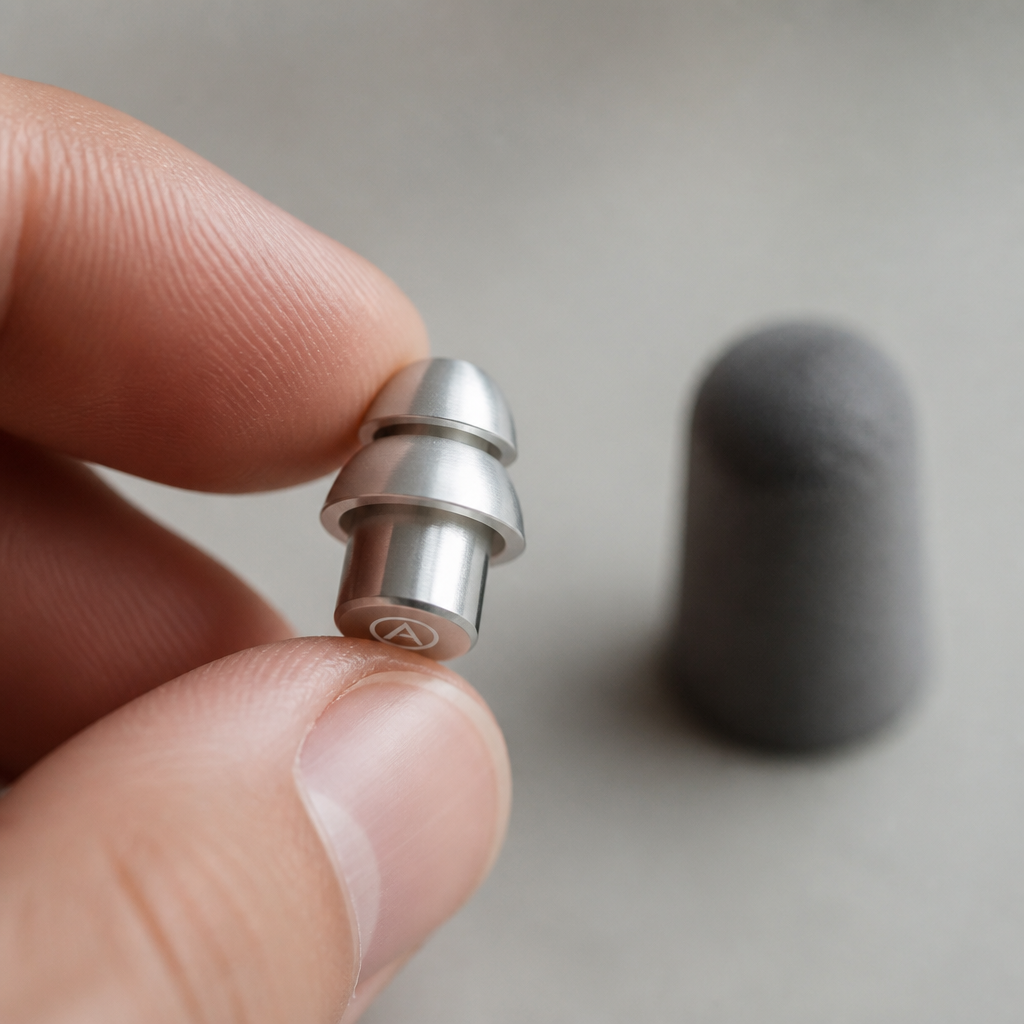
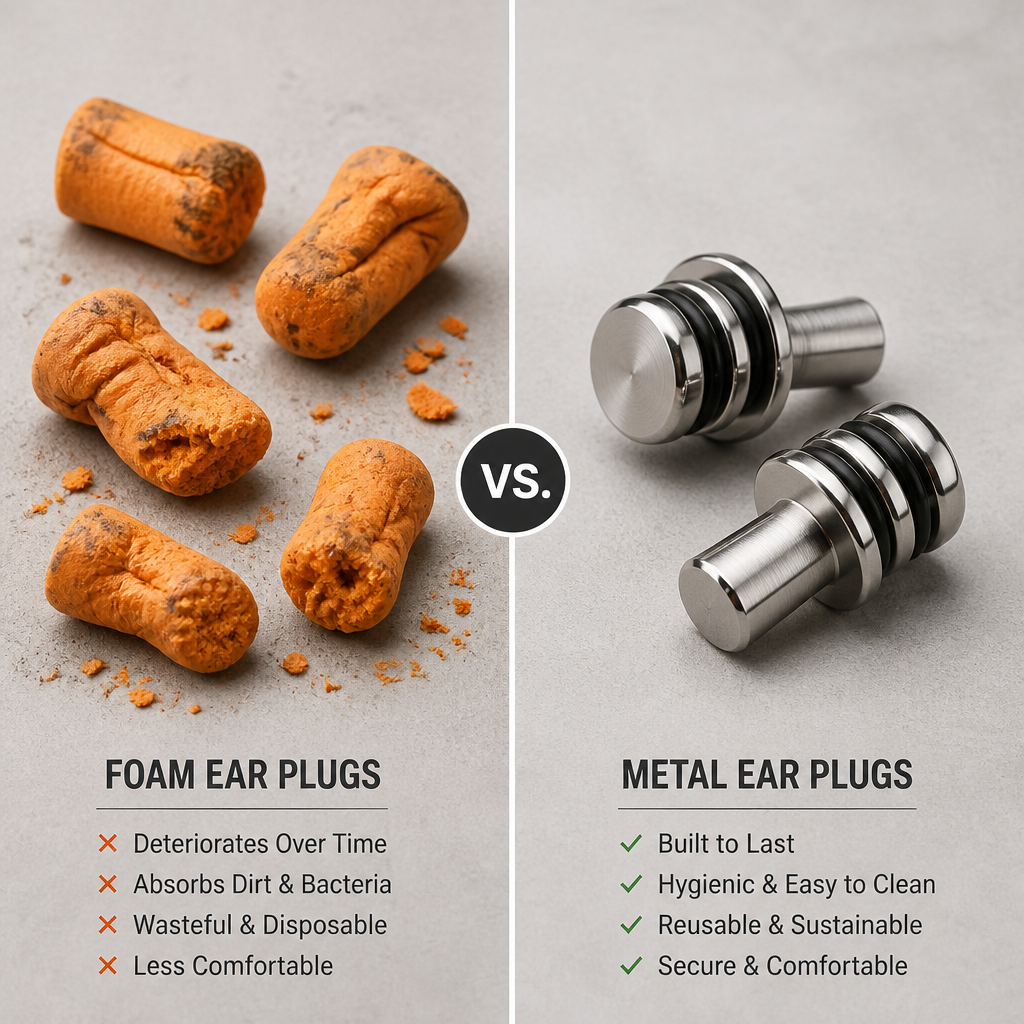
A common misconception is that the metal body of an ear plug amplifies or conducts sound differently than a plastic or foam body. This idea comes from the general knowledge that metal conducts vibration well. In practice, this concern does not apply to how these plugs function.
Sound transmission in ear plugs is governed almost entirely by the acoustic seal at the ear canal, not by the shell material. The foam tip, when properly seated, is the barrier. The rigid aluminium body sits outside this seal and has no meaningful acoustic contact with the ear canal wall. The metal body is acoustically irrelevant to noise reduction performance.
The Noise Reduction Rating (NRR) is measured under ANSI S3.19 standards and represents the decibel reduction achievable under controlled conditions with proper fit. A 32dB NRR is at the high end for commercially available ear plugs. For context, the U.S. National Institute for Occupational Safety and Health (NIOSH) recommends applying a 50% derating to NRR ratings in real-world conditions, which would place real-world performance at approximately 16dB of reduction. That is still enough to bring a 100dB construction site environment down to 84dB, just below OSHA’s 85dB action threshold.
For sleep, a 32dB NRR brings a 65dB urban bedroom noise floor (street traffic, an aircon unit) down to approximately 33-35dB, which is within the range most people find comfortable for sleep. This is a practical, meaningful difference, not a marketing figure.
“Noise-induced hearing loss is entirely preventable. The challenge is not the technology, it is consistent, comfortable use. A plug that hurts will not be worn.” – Dr. Richard Neitzel, Associate Professor of Environmental Health Sciences, University of Michigan School of Public Health, speaking on occupational hearing protection compliance.
This is precisely where metal-bodied plugs justify their design. Consistent geometry and correctly sized foam tips mean the plug fits the same way every single insertion. Disposable foam plugs require the user to roll, compress, and hold the plug in place for 30 seconds while it expands. In practice, many people skip steps or under-insert, cutting their effective NRR significantly.
Hygiene is one of the strongest arguments for metal-bodied ear plugs over disposable foam alternatives. This is an area that most buyers do not think about until they have already been using ear plugs daily for several months.
Disposable foam ear plugs are typically made from polyurethane or PVC foam. These materials are porous at a microscopic level. After a single use in a warm ear canal, the foam has absorbed moisture, cerumen, and skin cells. Most people reuse them anyway, particularly for sleep, because buying new plugs every night is impractical. The result is a degraded foam plug carrying bacterial load pressed against the thin skin of the ear canal for 7-8 hours.
A 2018 study cited in occupational health literature noted that reused foam ear plugs from industrial workers showed measurable contamination with skin flora bacteria, including Staphylococcus epidermidis, after just two uses. This is not a trivial hygiene concern for people sleeping with plugs every night.
The ATTENU8 model separates the durable component (the aluminium body) from the consumable hygiene component (the foam tip). Replacing foam tips every 6-8 weeks means the user always has a fresh, uncompressed, uncontaminated sealing surface without discarding a perfectly functional aluminium housing.
The aluminium body itself can be wiped clean with an alcohol swab in seconds. Aluminium does not absorb moisture or oils and does not support bacterial biofilm formation the way foam does. This is a meaningful long-term advantage for anyone using ear plugs daily.
Pro tip: Keep a dated label or calendar reminder when you install fresh foam tips. Foam that has been in daily use for more than 8 weeks loses a measurable amount of elasticity, which reduces its ability to fully seal the ear canal and lowers your effective noise reduction, even if the tip still looks intact.

It helps to see how metal-bodied ear plugs measure against the alternatives across the specific dimensions that matter to daily users and hearing protection professionals.
| Feature | ATTENU8 Aluminium Ear Plugs | Loop / Flare (Plastic-Bodied Reusable) | Standard Disposable Foam |
|---|---|---|---|
| Body Material | Anodised aluminium | ABS or polycarbonate plastic | Polyurethane or PVC foam |
| Noise Reduction Rating | Approximately 32dB NRR | Varies: 18-27dB depending on model | 28-33dB NRR (when correctly inserted) |
| Durability | Body lasts indefinitely; tips replaced every 6-8 weeks | Body lasts 12-24 months; tips replaced periodically | Single use or 2-3 uses maximum |
| Hygiene Profile | Non-porous metal body; fresh foam tips on schedule | Plastic body can harbour oils; tip hygiene varies | Porous foam absorbs contamination immediately |
| Fit Consistency | Rigid body maintains geometry; 3 tip sizes (XS, S, M) | Consistent shape; fewer tip size options on some models | Inconsistent; depends on user rolling technique each time |
| Comfort Over 8 Hours | High when correctly sized; memory foam conforms to canal | Moderate; silicone tips can create pressure over time | Variable; degraded foam creates pressure points |
| Environmental Impact | Low ongoing waste; only foam tips discarded | Low; full unit rarely replaced | High; each pair is single-use plastic waste |
A responsible assessment of any ear protection device includes honest acknowledgement of risks. Metal-bodied ear plugs are safe in normal use, but there are specific scenarios and user errors that can create problems.
Using a foam tip that is too large for the ear canal creates sustained outward pressure against the ear canal wall. Over several hours of sleep, this can cause soreness, minor abrasion, or in extreme cases, temporary canal irritation. This risk exists with any ear plug type but is worth mentioning because the rigid aluminium body means the plug does not compress the way a full-foam plug would under accidental pressure.
The solution is straightforward: use the correct tip size. ATTENU8 provides XS, S, and M tips specifically to cover the realistic range of adult ear canal dimensions. Start with the smallest size that still provides a full seal.
Anyone with a perforated eardrum, active ear infection, or chronic ear canal inflammation should consult a medical professional before using any ear plug, including aluminium-bodied models. Ear plugs of any material are contraindicated during active infection because they trap moisture and create an environment that worsens infection.
People with nickel sensitivity should note that most aluminium alloys used in consumer products, including anodised aluminium, do not contain significant nickel. However, if a person has broad metal sensitivity or dermatographic urticaria, a patch test is worth doing before extended use.
This is a genuine practical consideration for side sleepers. Pressing the side of the head into a pillow while wearing any ear plug creates lateral force on the plug. With a foam plug, this force is absorbed by the foam. With a metal-bodied plug, the rigid housing transmits some of this force to the outer ear.
In practice, most side sleepers find this manageable because the concave body design reduces the profile that contacts the pillow. Using a contoured memory foam pillow with an ear cutout eliminates this concern entirely and is a worthwhile investment for anyone using ear plugs for sleep long-term.
Metal-bodied ear plugs are not universally the right choice for every person in every situation. But they are the right choice for a specific and large group of users, and it is worth being direct about who that is.
Daily sleep users benefit most. The hygiene advantage of replaceable tips, combined with consistent geometry that delivers the same fit every night without any rolling or preparation technique, makes aluminium ear plugs significantly better than disposable foam for this use case. A person using ear plugs every night for a year will go through approximately 365 pairs of disposable foam plugs. With ATTENU8, they replace foam tips six to seven times.
Industrial and occupational hearing protection users also benefit substantially. In noisy environments where plugs are inserted and removed multiple times across a shift, the durability of the aluminium body means the plug never degrades mid-shift the way a reused foam plug does. The 32dB NRR provides sufficient attenuation for most construction, manufacturing, and event environments when correctly fitted.
Frequent travellers dealing with aircraft cabin noise or hotel environments are a strong fit. The metal body is compact, easy to clean, and does not deform in a bag or pocket the way foam plugs do. They survive checked luggage, TSA screening, and the kind of incidental compression that destroys a foam plug’s acoustic integrity before it is even used.
People who have tried plastic-bodied reusable plugs like Loop or Flare Audio and found them uncomfortable or insufficiently attenuating will often find that the higher NRR of a 32dB metal-bodied plug with true memory foam tips addresses both issues. The acoustic performance gap between 18-20dB plastic plugs and a 32dB memory foam-tipped aluminium plug is not subtle in a noisy environment.
No. Aluminium ear plugs do not generate sound or vibration, and a correctly designed metal-bodied plug keeps the rigid aluminium body outside the ear canal entirely. The foam tip handles all contact with canal tissue. The risk of hearing damage from wearing ear plugs comes from improper insertion technique or ignoring existing ear conditions, not from the body material being metal.
Yes, with appropriate sizing and sleeping position awareness. Side sleepers should use a pillow that accommodates the plug body without pushing it hard against the outer ear. Correctly sized foam tips ensure no excessive outward pressure is placed on the ear canal wall during the night. Thousands of daily sleep users wear metal-bodied ear plugs without incident when they use the right tip size.
Aluminium-bodied ear plugs with memory foam tips generally outperform plastic-bodied alternatives on NRR. Products like Loop Quiet and Flare Audio’s range typically deliver 18 to 27dB of noise reduction. A metal-bodied plug with a proper memory foam seal, such as ATTENU8’s design, achieves approximately 32dB NRR. That difference is meaningful in any environment above 85dB and is noticeable even for sleep use in urban environments.
Aluminium, particularly anodised aluminium, is non-reactive in contact with skin. It does not leach compounds at body temperature, does not corrode with moisture exposure, and is not absorbed transdermally. It is widely used in medical device housings, hearing aid components, and surgical instruments. The relevant safety consideration is the shape and softness of the tip rather than the chemistry of the metal body.
Every 6 to 8 weeks with daily use. Foam degrades with repeated compression and moisture exposure. Tips that have been used daily for longer than 8 weeks lose elasticity and no longer expand fully to fill the ear canal geometry, which reduces your effective noise reduction even if the NRR on the packaging remains the same. Replacing tips on schedule is the single most important maintenance step for maintaining both hygiene and acoustic performance.
Most metal allergies are nickel allergies, and aluminium does not contain nickel. Anodised aluminium also has an oxidised surface layer that acts as a barrier between the base metal and skin. Genuine aluminium hypersensitivity is extremely rare. However, if you have a diagnosed broad-spectrum metal allergy or have had reactions to aluminium-containing products, check with a dermatologist before prolonged use.
Yes, and in several ways they outperform disposable foam in occupational settings. The rigid body survives being placed in a pocket, on a toolbox, or in a dirty work environment without deforming or collecting debris in a way that affects performance. The 32dB NRR meets OSHA hearing protection requirements for most industrial noise exposures. Replaceable foam tips mean the plug can be maintained at full performance throughout a long working day without replacing the entire unit.
Have you switched from disposable foam to metal-bodied ear plugs? Share what difference you noticed in comfort or noise reduction after the first week of use.
Roughly 20% of the workforce in industrialised countries works rotating or permanent night shifts, and the single biggest complaint is not fatigue during the shift itself. It is the inability to sleep when the rest of the world is wide awake and making noise. Lawnmowers, traffic, neighbours, delivery drivers, barking dogs – daytime sleep is a war against your environment. Ear plugs for shift workers are not a nice-to-have; they are a core tool for protecting the only recovery window you have. This guide covers exactly how to use them effectively, what to look for, and why getting this wrong costs you more than a bad nap.
| Key Insight | Explanation |
|---|---|
| 32dB attenuation is the practical minimum for daytime sleep | Daytime ambient noise routinely hits 55-70dB outdoors. You need to drop that to below 40dB to reach the threshold where sleep onset becomes possible. Low-rated plugs simply do not get you there. |
| Fit matters more than the NRR number on the box | A plug rated 33dB worn incorrectly delivers closer to 15dB of real-world attenuation. Consistent fit, achieved through proper insertion and the right tip size, is where the actual protection comes from. |
| Disposable foam plugs degrade after a single use | The foam compresses permanently over repeated nights, reducing noise reduction noticeably by day three or four. Shift workers using the same pair all week are sleeping on compromised protection without realising it. |
| Reusable metal-bodied plugs outlast disposables by months | Products like ATTENU8’s aluminium-bodied plugs require only foam tip replacement every 6-8 weeks. The structural attenuation performance stays consistent across that entire period. |
| Daytime noise is spectrally different from night noise | Traffic and construction peak in mid frequencies (500Hz-2kHz), which is exactly where human hearing is most sensitive. Ear plugs with good mid-frequency attenuation are specifically valuable for day sleepers. |
| Three tip sizes dramatically change comfort across a full sleep cycle | Ears that feel fine at insertion often become sore after two or three hours if the tip size is wrong. XS, S, and M options let each individual find the size that stays comfortable through a full 7-8 hour sleep. |
| Side-sleeping puts lateral pressure on the plug body | Hard plastic bodies can cause pain and early removal during the night. A low-profile metal body with a concave design reduces the contact surface and makes side-sleeping genuinely sustainable. |
The circadian rhythm is not a polite suggestion. Your body runs on a deeply wired biological clock that treats daylight as a wake signal and darkness as a sleep signal. When you are a night shift worker, you are asking your brain to override millions of years of evolutionary programming every single day.
Noise compounds the problem directly. Research published through the National Institutes of Health shows that even low-level noise – sounds below the threshold of conscious awakening – increases cortisol production and fragments sleep architecture. You do not need to be woken up fully for noise to devastate your rest. Micro-arousals triggered by irregular sounds (a truck, a door, a conversation outside) pull you out of slow-wave and REM sleep without you ever registering it consciously.
The result is a shift worker who sleeps seven hours but recovers as if they slept four. Daytime sleep noise is not just annoying. It is medically consequential.
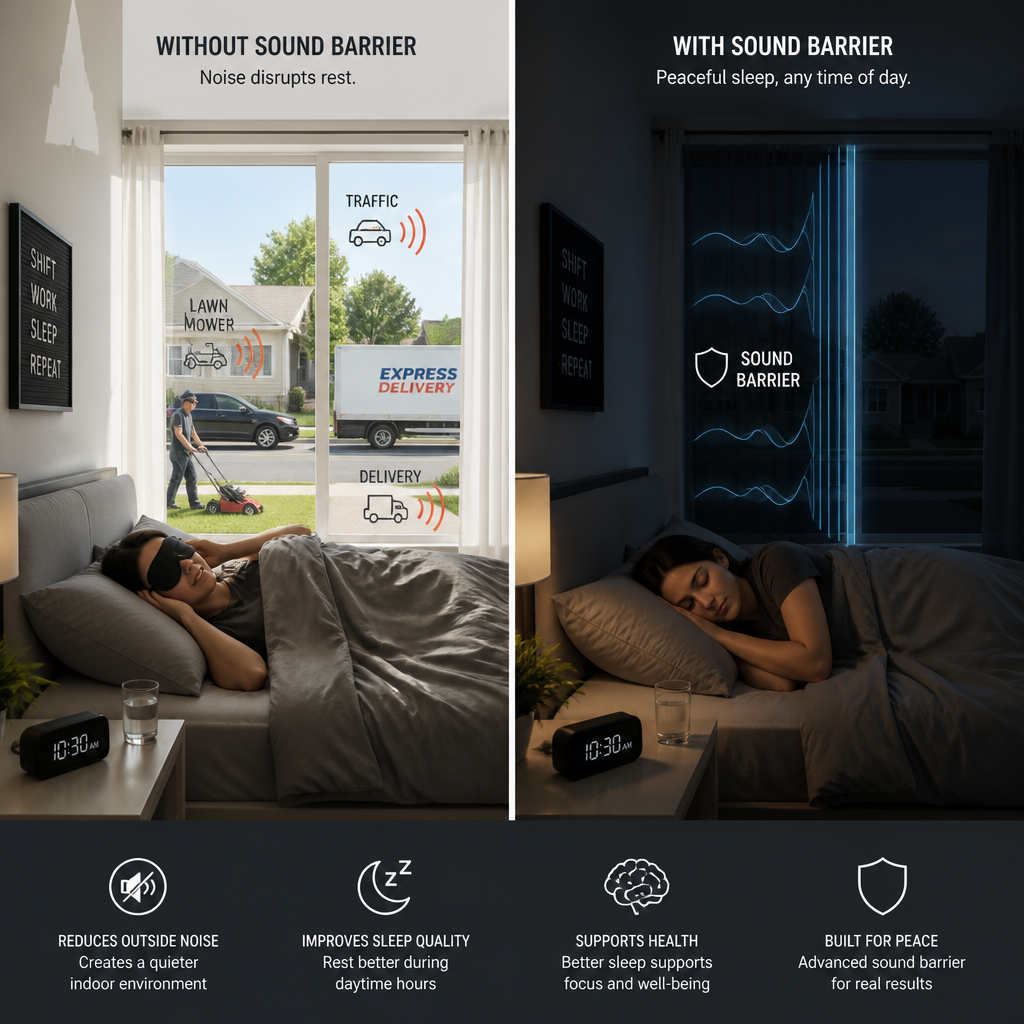
The mechanism is straightforward. Sound waves enter the ear canal, trigger the auditory processing system, and even during sleep, the brain continues to evaluate those sounds for threat relevance. This is a survival function. It kept your ancestors alive. For a nurse trying to sleep at 10am on a Tuesday while a neighbour uses a leaf blower, it is a liability.
Irregular, unpredictable sounds cause far more sleep disruption than steady background noise. A constantly running fan is easy for the brain to habituate to. A dog that barks once every eight minutes is not. The brain keeps processing it as a potential signal.
Construction noise, traffic surges, voices, and phone notifications are all high in irregularity. These are precisely the sounds most common during daytime hours in residential areas, and they are exactly what shift workers face every morning when they try to sleep after a night shift.
Sleep deprivation from noise does not hit physical performance first. It hits cognitive performance. Reaction time, decision-making accuracy, and emotional regulation all degrade before gross motor function does. For shift workers in healthcare, manufacturing, transport, or security, that is not an abstract concern. It is a direct occupational safety issue.
A study from Harvard Medical School’s Division of Sleep Medicine found that workers with chronic sleep disruption showed cognitive impairment equivalent to being legally drunk after just 17 hours of wakefulness. Shift workers regularly operate well past that threshold.
“Sleep disruption from environmental noise is not a comfort issue. It is a public health issue. The downstream effects on metabolic, cardiovascular, and cognitive health are well-documented and dose-dependent.” – Dr. Charles Czeisler, Harvard Medical School Division of Sleep Medicine
The market for ear protection is large, but most of it is designed for industrial hearing conservation during active work hours, not for sleep. The requirements are genuinely different, and conflating the two leads to poor choices.
The Noise Reduction Rating (NRR) system in the US and the Single Number Rating (SNR) used in Europe both measure attenuation across frequencies. For daytime sleep in a typical residential environment, you need a minimum of 30dB attenuation to meaningfully reduce the acoustic load on your auditory system. 32dB is the practical target that covers most real-world daytime noise sources.
Anything rated below 28dB is not adequate for shift workers in urban or suburban environments. Products marketed primarily at concerts or light office noise will not perform here.
Industrial ear plugs are designed to stay in an ear canal during physical movement and variable temperatures. Sleep ear plugs need to stay in during lateral pressure from a pillow. These are different engineering problems.
A concave aluminium body, like the design used by ATTENU8, sits lower in the ear than a protruding foam plug, which means there is less leverage for a pillow to push against. In practice, this allows side-sleepers to maintain a consistent seal throughout the night without repositioning.
Hard plastic bodies create a pressure point that becomes painful after 2-3 hours. This is the most common complaint among shift workers who try standard foam plugs and give up. The plug is uncomfortable, they remove it at 3am, and the noise wakes them at 5am. The solution is not to endure discomfort. It is to choose a plug designed for extended wear.
Human ear canal dimensions vary significantly. A plug that fits one person perfectly creates no seal in another person’s ear, delivering effectively zero noise reduction regardless of the product’s rated NRR. Multiple tip size options are not a premium feature. They are a basic functional requirement for any product claiming to work for sleep.
ATTENU8 includes XS, S, and M memory foam tips with each pair, which covers the vast majority of adult ear canal sizes. The memory foam material conforms to individual canal geometry, which improves both the acoustic seal and long-term comfort compared to rigid tips.
Pro tip: If you wake up with your ear plugs on the pillow rather than in your ears, the tip size is almost certainly wrong. A properly fitted plug stays in place throughout a normal sleep cycle without adhesive or retention straps.
There are three main categories of ear plug that shift workers consider. Each has genuine trade-offs worth understanding before committing to a routine.
| Type | Real-World Performance for Daytime Sleep | Practical Drawbacks |
|---|---|---|
| Disposable foam plugs (e.g., 3M, Howard Leight) | Good NRR on first use (up to 33dB). Widely available, very low per-unit cost. Soft enough for initial comfort. | Foam compresses and loses effectiveness after 2-3 uses. Daily replacement adds up to significant cost over months. No size options. Generates considerable single-use plastic waste. |
| Acoustic filter plugs (e.g., Loop, Flare Audio) | Designed for concert-level noise reduction, typically 18-27dB. Good for reducing overall volume without full blockage. Comfortable for short periods. | Attenuation levels are too low for daytime sleep in noisy residential areas. Designed to preserve sound quality, not maximise blockage. Not purpose-built for extended sleep wear. |
| Premium reusable metal-bodied plugs (ATTENU8) | Consistent 32dB attenuation across the product lifespan. Aluminium body with concave profile designed for side-sleeping. Three memory foam tip sizes. Tips replaced every 6-8 weeks, body lasts indefinitely. | Higher upfront cost than disposables. Requires tip replacement on a schedule. Not suitable for use during active work in loud industrial environments (designed for sleep and travel use). |
The honest comparison here is not about which product has the highest rated NRR on a spec sheet. It is about which product delivers consistent, comfortable attenuation night after night for someone sleeping on a non-standard schedule. Disposables fail at consistency. Acoustic filter plugs fail at absolute attenuation. Reusable premium plugs fail only at upfront cost, which amortises quickly over weeks of daily use.

Ear plugs are a necessary component of a daytime sleep setup, but they work best as part of a layered approach. Treating them as the only intervention is like installing a deadbolt but leaving the window open.
Light is the primary circadian disruptor, and noise is the primary sleep-architecture disruptor. Both need to be addressed, but the order of priority depends on your specific situation. If your room is already reasonably dark and you are still sleeping poorly, noise is almost certainly the remaining variable. If you have never properly blackouted your room, start there and add ear plugs simultaneously.
Blackout curtains that also have sound-dampening properties (heavy lined curtains rather than thin blackout fabric) address both problems partially. They are not a substitute for ear plugs, but they reduce the workload on your acoustic protection.
White noise machines and fans are sometimes recommended as alternatives to ear plugs. The mechanism is different and the outcomes are different. Masking adds a steady-state sound to raise the ambient noise floor, making irregular spikes less perceptually prominent. Blocking physically prevents sound energy from reaching the ear canal.
In practice, masking alone is insufficient for urban daytime environments because the noise spikes (trucks, construction, voices) are too large in amplitude. Masking plus blocking together outperforms either approach alone. A white noise machine running at moderate volume combined with 32dB ear plugs creates an acoustic environment genuinely competitive with a quiet nighttime bedroom.
Pro tip: Set your white noise machine to a volume where you can just barely hear it with your ear plugs inserted. That is the correct calibration point. Louder than that means the machine itself becomes part of the noise problem.
No ear plug eliminates all noise. A physical knock on the door or a smoke alarm will still penetrate. More practically, housemates, partners, and family members making normal household noise are a social problem as much as an acoustic one. A clearly communicated sleep schedule, door signage, and phone settings (such as a custom silent mode from 9am to 5pm) address the variable that ear plugs cannot.
The research on shift worker health is extensive and consistent: sleep quality, not just quantity, determines health outcomes. You can sleep eight hours in a noisy, bright room and recover less than you would from six hours of deep, uninterrupted sleep in a controlled environment.
One of the most counterproductive things shift workers do is eat a full meal immediately after arriving home. Digestion raises core body temperature, which directly inhibits sleep onset. The same applies to vigorous exercise. Light stretching, a low-carbohydrate snack, and a brief wind-down period of 20-30 minutes before getting into bed improve sleep onset speed significantly.
Caffeine half-life is approximately five to six hours. A coffee consumed at 4am is still 50% active in your system at 9-10am when you are trying to sleep. Shift workers who drink coffee throughout the night should stop at least five hours before their planned sleep time.
The biggest mistake shift workers make on their days off is reverting to a conventional sleep schedule. This creates a social jet lag cycle where the body is constantly switching between two incompatible rhythms. Sleeping four hours earlier than your shift schedule on a day off is more damaging than it feels in the moment. Maintaining a consistent anchor time for sleep, even if shifted by only one or two hours, produces better long-term outcomes than full reversal on rest days.
The data consistently shows that rotating shift workers who maintain the most consistent sleep timing across work and non-work days have lower rates of metabolic syndrome, cardiovascular disease, and cognitive decline than those who swing widely between schedules.
Core body temperature needs to drop by approximately 1 to 2 degrees Celsius for sleep onset to occur. Sleeping in a room that is too warm delays this process. The recommended sleep room temperature for most adults is between 16 and 19 degrees Celsius (60 to 67 degrees Fahrenheit). Shift workers sleeping in warm afternoon conditions should use air conditioning or a fan directed away from the body to achieve this ambient temperature.
Hydration matters because mild dehydration increases heart rate and cortisol, both of which impair deep sleep. Drinking 400-500ml of water before sleeping and keeping water available for any mid-sleep wake is a simple intervention that many shift workers overlook.
Yes, provided you maintain basic ear hygiene and replace foam tips on a regular schedule. The risk associated with daily ear plug use comes primarily from reusing foam tips past their effective lifespan, which can harbour bacteria. ATTENU8’s design separates the durable aluminium body from the replaceable foam tips, with tip replacement recommended every 6-8 weeks. This structure makes daily use safe and practical without accumulating earwax buildup or hygiene concerns associated with standard reusable plugs.
For most suburban environments, an NRR of 28-32dB is the target range. Urban environments with regular traffic or construction noise warrant the full 32dB. The key point is that a rated NRR assumes correct insertion. Real-world attenuation is typically 30-50% lower than the rated value if fit is poor. This is why tip size selection and correct insertion technique matter as much as the rating itself.
Yes, with conditions. A standard smartphone alarm at maximum volume generates roughly 75-85dB. After 32dB of attenuation, you would still hear approximately 43-53dB, which is clearly audible. The practical concern is for people who use very quiet alarms or vibration-only alerts. Using a smartwatch with wrist vibration as a backup alongside your standard alarm is a reliable system for shift workers wearing high-attenuation ear plugs.
Loop and Flare Audio products are primarily designed for noise reduction during waking activities, concerts, and social situations where you want to reduce volume without eliminating sound clarity. Their attenuation ratings typically fall in the 18-27dB range. ATTENU8 targets 32dB specifically for sleep, travel, and high-noise environments where maximum blockage is the goal. The aluminium body and concave profile are designed for side-sleeping comfort over 7-8 hour periods, which is not a design priority for lifestyle noise-filter products.
The aluminium body is designed to last indefinitely with normal use. The soft memory foam tips are the only consumable component, requiring replacement approximately every 6-8 weeks depending on frequency of use and individual earwax levels. Three tip sizes (XS, S, M) are included with each pair. Over a one-year period, the total cost of ownership for a reusable pair is substantially lower than purchasing disposable foam plugs daily, even before accounting for the consistency advantage.
This is a real concern for many shift workers, particularly parents or people with dependents. High-attenuation ear plugs do reduce ambient sound substantially, but they do not eliminate all sound. Loud alarms, crying, or a knock at the door will still be audible at 32dB attenuation. For additional reassurance, using a baby monitor or home alert system with visual indicators alongside ear plugs gives you acoustic protection without removing your ability to respond to genuine emergencies.
If you are a shift worker with a specific routine that has helped you get better daytime sleep, share what has worked for you in the comments below. Real-world experience from people living this schedule is more useful than any generalised advice.
We would love your feedback and any insights you would share with others. What perspective would you add?
Most people buy ear plugs the same way they buy a pack of gum: they grab whatever is cheapest at the pharmacy, stuff them in their ears, and wonder why they fall out at 2am or leave their ears aching by morning. That approach costs you sleep, comfort, and over time, real money. A proper ear plug buying guide cuts through the noise, literally, and helps you choose based on noise reduction rating, fit system, material durability, and long-term cost. Whether you are a light sleeper, a shift worker, or someone on a long-haul flight, the right pair changes everything.
| Key Insight | Explanation |
|---|---|
| NRR of 32dB is the benchmark for serious noise reduction | Most budget foam plugs rate between 25-29dB. A 32dB rating like that of ATTENU8 plugs gives meaningful extra protection for loud environments and deep sleep. |
| Tip size determines effectiveness more than brand | An ear plug with three tip sizes (XS, S, M) creates a proper acoustic seal. One-size-fits-all plugs fail because they gap at the ear canal wall. |
| Disposable foam costs far more over 12 months than premium reusables | At daily use, disposable foam plugs cost $50 to $120 per year. Premium reusable plugs with replacement foam tips every 6-8 weeks cost a fraction of that. |
| Memory foam tips outperform rigid silicone for sleep | Memory foam conforms to your individual ear canal shape, reducing pressure pain during side sleeping. Rigid silicone does not compress the same way. |
| A metal body prevents compression and cracking over time | Plastic-bodied and pure foam plugs degrade with heat and oils from skin contact. A machined aluminium body retains its shape and hygiene far longer. |
| Comfort matters as much as decibel rating for sleep applications | A plug rated at 33dB that causes ear pain after 90 minutes is worse than a 32dB plug you can wear for 8 hours. Prioritise both metrics together. |
| Ease of insertion affects consistent protection | A concave body design makes rolling and seating the foam tip significantly easier, which means users insert them correctly every time and get the full rated protection. |
The core problem is not that ear plugs do not work. It is that most people are using the wrong type for their situation. Disposable foam plugs from a petrol station kiosk are engineered for one-off industrial compliance, not for nightly comfort or long-haul travel. They compress unevenly, lose their rebound quickly, and because they are one-size, they seal poorly for anyone with a smaller or larger ear canal.
In practice, the most frequent complaint I hear is that ear plugs either fall out during sleep or cause a dull ache by morning. Both problems trace back to the same root cause: wrong fit combined with material degradation. A foam tip that has been used four or five times no longer expands to the same diameter, so it slides out during the night. This is a fit-and-material failure, not a comfort preference.
The second failure is ignoring the difference between noise reduction rating on a lab test and real-world attenuation. According to the U.S. Occupational Safety and Health Administration (OSHA), real-world protection from ear plugs is typically 50 percent lower than the lab-tested NRR figure, which means a 29dB-rated plug may only give you about 14-15dB of real-world reduction. This makes choosing a plug with a high laboratory NRR, like 32dB, even more important than it looks on the packaging.
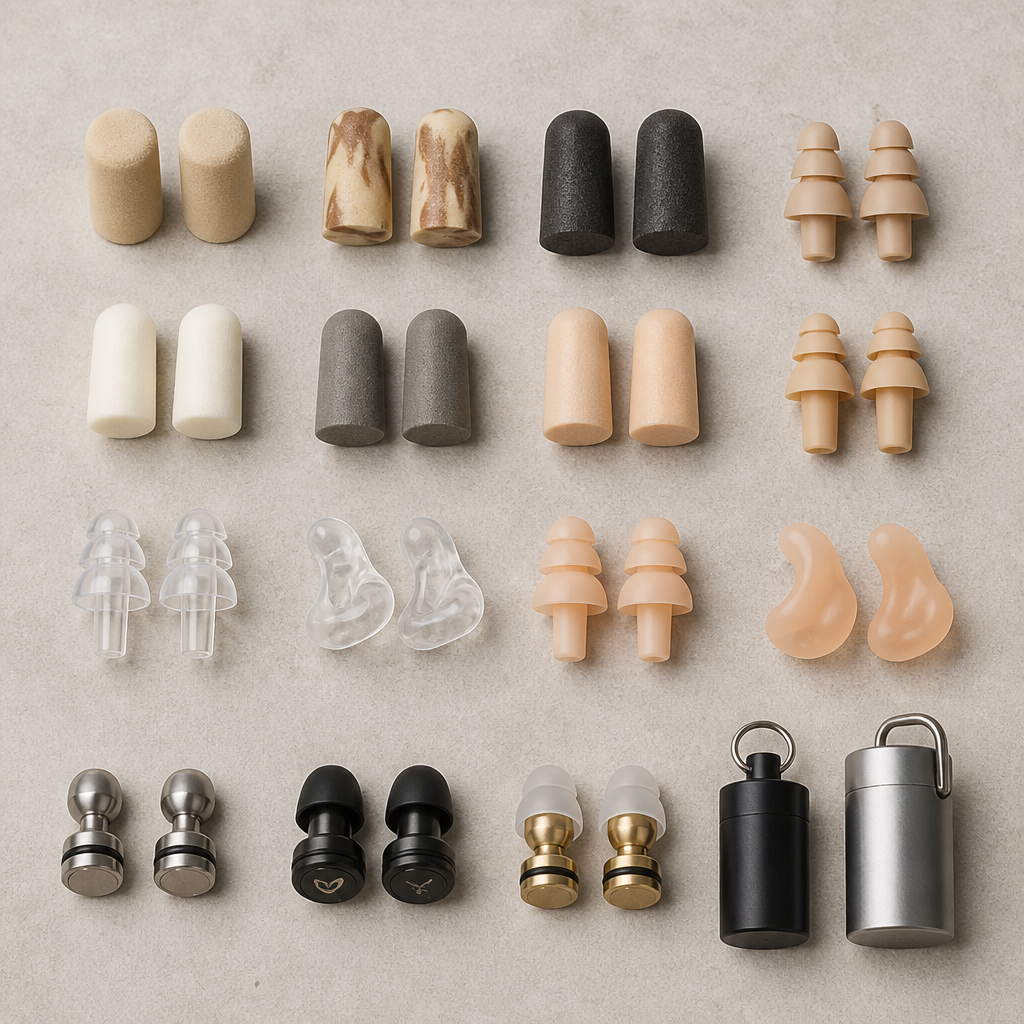
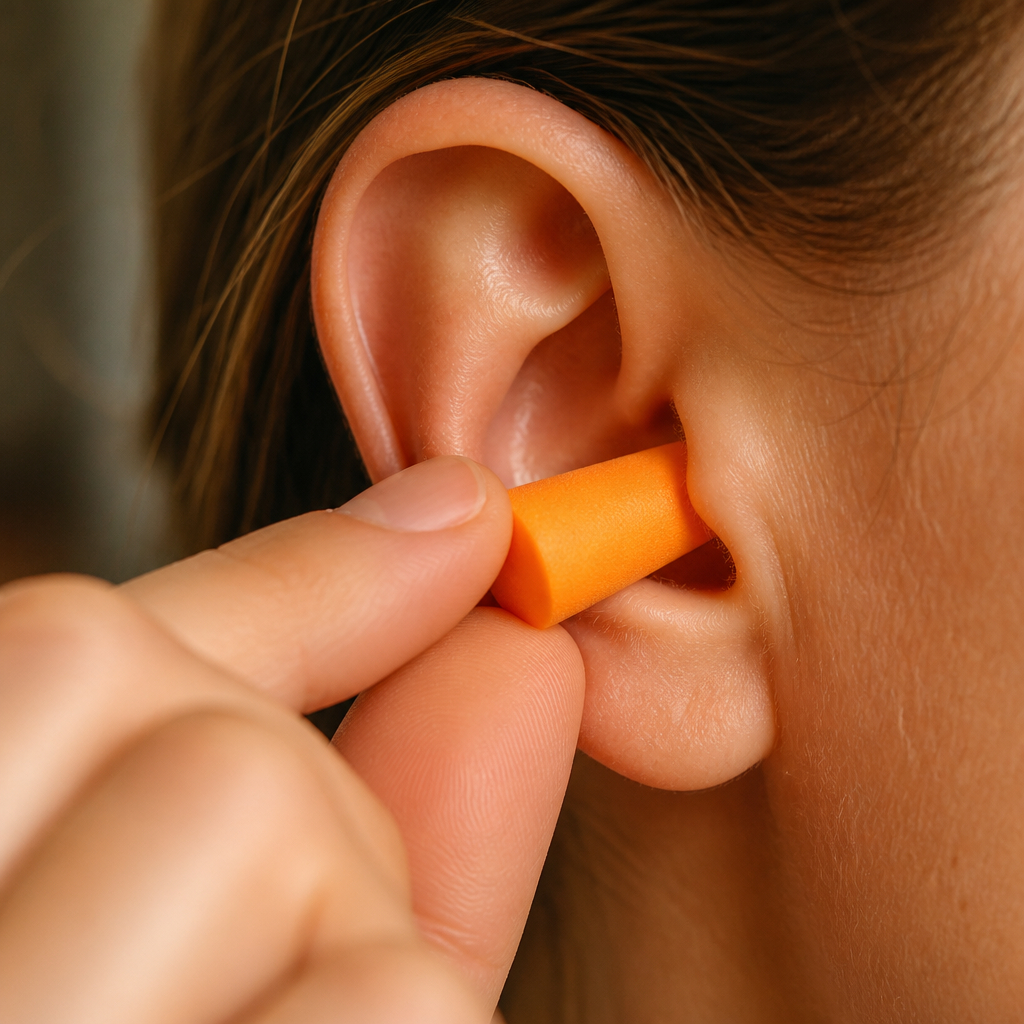
NRR stands for Noise Reduction Rating and is the American standard (EPA-regulated) measurement. SNR stands for Single Number Rating and is its European equivalent. Both measure how many decibels of noise the plug filters in controlled laboratory conditions. Neither is a perfect real-world predictor, but they are the most standardised comparison points you have.
If you want to estimate actual workplace noise exposure, OSHA recommends dividing the NRR by two, then subtracting that figure from the ambient decibel level. So a plug rated at 32dB NRR provides roughly 16dB of real-world reduction. At a construction site running at 95dB, that brings your exposure to approximately 79dB, which sits below the 85dB threshold where long-term hearing damage begins.
For sleep applications, ambient noise is typically 40-60dB for traffic, 50-65dB for a snoring partner, and up to 70dB for urban street noise. A 32dB-rated plug used correctly will reduce those levels to a range where the brain stops triggering a stress response and sleep continuity improves substantially.
If you are buying ear plugs in Australia or Europe, look for the SNR figure rather than the NRR. The two are calculated differently and are not directly interchangeable. As a rough guide, an NRR of 32dB broadly corresponds to an SNR of around 35-37dB. Products sold internationally, including those from ATTENU8, should ideally publish both figures or clarify which standard their rating uses.
Pro tip: Always check whether the NRR figure on the packaging refers to the foam tip alone or to the complete assembled unit. Some manufacturers rate the tip in isolation. For metal-bodied plugs with replaceable foam tips, the full assembled NRR is the only figure that matters.
There are three dominant material approaches on the market right now: disposable foam, reusable silicone or rubber, and premium metal-bodied plugs with replaceable foam tips. Each has legitimate uses, but only one is genuinely built for long-term daily use.
Standard PU foam plugs are cheap to manufacture and widely available. They offer good initial attenuation when inserted correctly, which most users do not do. The real issue is degradation: skin oils, earwax, and repeated compression break down the cellular structure within days of first use. After three or four uses, the foam no longer expands fully and the acoustic seal is compromised. For daily sleepers or frequent travellers, this means buying new plugs every week.
Silicone flanged plugs are more durable than foam and easier to clean. Their weakness is rigidity. The flanged design creates pressure points inside the ear canal, which becomes uncomfortable during extended wear, particularly when side sleeping. Brands like Loop Earplugs have built a strong market presence with this approach, but the flanged format, regardless of branding, causes discomfort for a meaningful portion of users after 3-4 hours.
This is the approach taken by ATTENU8, and it solves the core problems of both formats above. The machined aluminium body does not degrade, does not absorb oils, and does not lose its shape. The memory foam tips are the only consumable component, replaced every 6-8 weeks rather than daily. The concave body design makes rolling the foam tip between fingers significantly easier, which means consistent correct insertion and consistently full-rated noise reduction.
“The ear plug market is full of products optimised for cost reduction, not user performance. The difference between a plug that costs 10 cents and one built for daily use over years is not just material quality. It is whether the product was designed around the ear or around a manufacturing budget.” – Industrial Audiologist, Australian Hearing Services perspective
Adult ear canals vary considerably in diameter, typically between 5mm and 11mm. A single foam tip size cannot create a reliable acoustic seal across that range. This is not a minor quibble. An imperfect seal reduces effective noise reduction by 10-15dB, turning a 32dB-rated plug into something closer to a 17-20dB plug in practice.
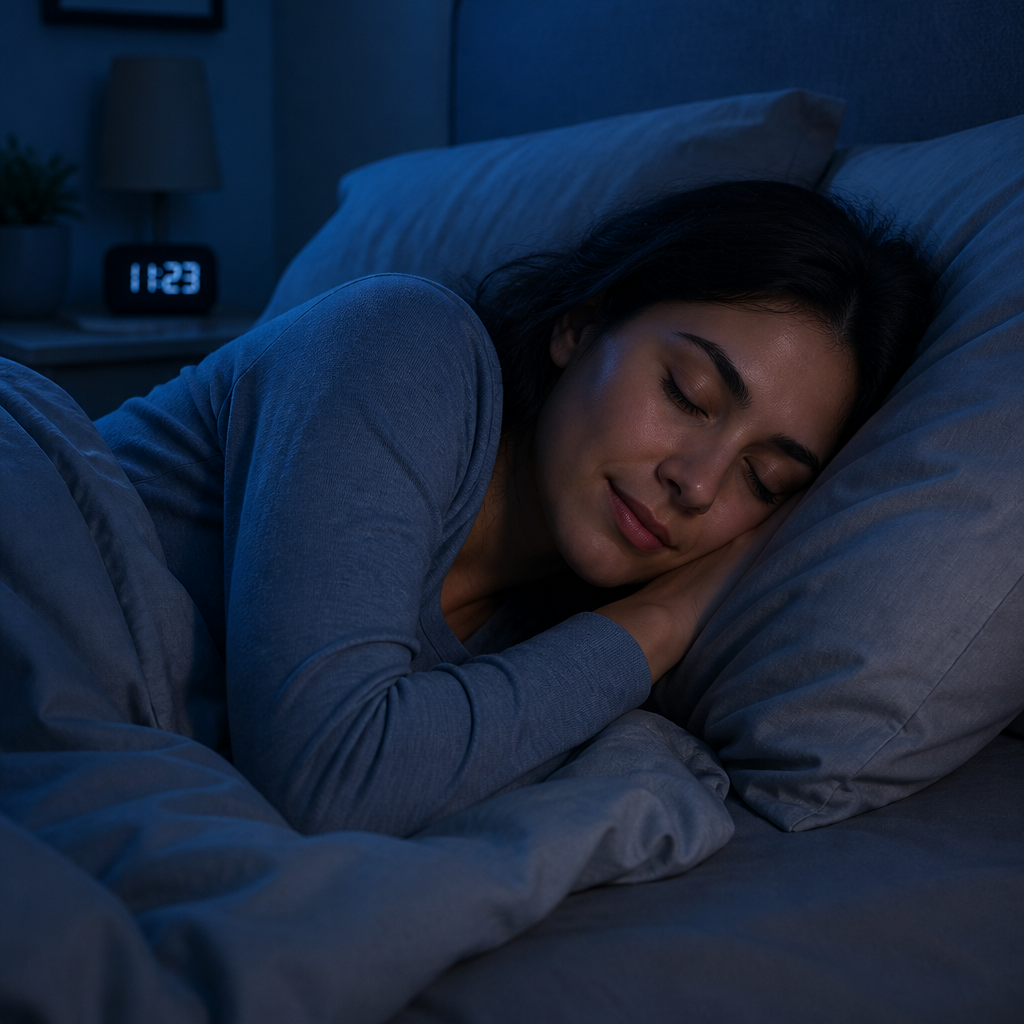
Ear plugs that come with XS, S, and M tip sizes allow the user to find a genuine fit rather than forcing an average. ATTENU8 ships each pair with all three sizes, which means you test them yourself and use the size that creates the tightest comfortable seal. This approach is standard in custom audiologist-fitted plugs but rare in off-the-shelf products.
For sleep applications, the shape of the plug body matters as much as the tip. A plug that protrudes significantly from the ear canal creates a pressure point when the user turns onto their side. The concave body profile of ATTENU8 plugs sits flush or slightly recessed, distributing pressure across the pinna rather than concentrating it at a single point. This is a specific engineering decision that makes meaningful difference over an 8-hour sleep cycle.
Pro tip: When testing ear plug fit, insert the plug and then cup your hands over both ears briefly. If you notice a significant further reduction in sound, the plug is not sealed properly. The hands-over-ears test is a quick field check for whether you have the right tip size inserted correctly.
Not all ear plug applications demand the same properties. Buying one product for every context often means getting mediocre results in each. Here is how to think about matching specifications to use cases.
For sleep, prioritise comfort over absolute maximum NRR. You need a plug you can wear for 7-8 hours without pain, that does not fall out when you roll over, and that blocks the 40-70dB range of common sleep disruption noise like traffic, partners, or air conditioning. A 32dB NRR with memory foam tips and a flat body profile is the optimal specification for this use case.
For occupational noise environments, you are working within legal compliance frameworks. In Australia, Safe Work Australia requires hearing protection where noise exceeds 85dB LAeq (8-hour average). For prolonged exposure above 100dB, you may need to combine ear plugs with ear muffs. For environments in the 85-100dB range, a properly fitted 32dB NRR plug meets the protection requirement.
Aeroplane cabin noise runs between 75dB and 85dB during cruise. That level is below damage threshold for single journeys but is genuinely fatiguing over hours. For travel, the priorities are comfort during seated use (no pressure points), ease of insertion without a mirror, and a carrying case. Premium reusable plugs with a compact case are far more practical than loose foam plugs in a foil wrapper.
The sticker price of disposable foam plugs looks attractive until you calculate the annual cost of daily use. A standard box of 50 pairs of foam plugs costs approximately $15-$25 AUD. At one pair per night for sleep use, that box lasts 50 nights, meaning you spend $110-$180 per year on foam alone, without accounting for the environmental cost of that volume of non-recyclable PU foam waste.
Premium reusable metal-bodied plugs require foam tip replacements every 6-8 weeks. At that replacement interval, you use approximately 7-8 sets of tips per year. This replacement cost is dramatically lower than continuous disposable purchasing, and the core plug itself lasts years rather than days.
A common mistake is evaluating ear plugs purely on the unit purchase price without factoring in replacement frequency. The same logic applies to razors, printer ink, and hearing protection. The product with the higher upfront cost almost always wins the 12-month cost comparison when it comes with a replaceable-consumable model.
| Feature | Disposable Foam | Reusable Silicone (Flanged) | Premium Metal-Bodied with Foam Tips (ATTENU8) |
|---|---|---|---|
| Typical NRR | 25-32dB (degrades with use) | 20-27dB | 32dB (consistent with correct tip) |
| Comfort for 8-hour sleep | Poor to moderate (pressure, fallout) | Moderate (pressure at flange points) | High (concave body, memory foam tips) |
| Size options | Usually one size | Sometimes S/M/L | XS, S, M included with each pair |
| Annual cost at daily use | $110-$180 AUD | $40-$80 AUD (replacement sets) | Low (tip replacements only, every 6-8 weeks) |
| Body material durability | Single use, then waste | Moderate (silicone degrades over months) | High (machined aluminium, years of use) |
| Ease of correct insertion | Moderate (requires full roll and hold) | Easy but often poor seal result | High (concave body aids foam rolling) |
| Best use case | One-off industrial use | Occasional noise reduction, concerts | Daily sleep, travel, occupational hearing protection |
There are specific buying mistakes that are common enough to call out directly. The first is buying on NRR alone without checking material quality. A 33dB foam plug that falls out after two hours gives you zero protection for the other six. The number on the box assumes correct insertion and maintained seal throughout use.
The second mistake is ignoring hygiene specifications. Ear plugs sit in a warm, moist environment where bacteria accumulate. Foam plugs that cannot be cleaned should be replaced frequently. Metal-bodied plugs can be wiped clean, and silicone tips can be washed. If a product gives no hygiene guidance, treat that as a signal about how seriously the manufacturer thought about real-world use.
The third mistake is buying from brands that offer no tip sizing. A brand that sells a single-size product for all adults is telling you that their ear canal research budget was zero. This matters most for women and younger adults, who statistically have smaller ear canals than the average male measurements used in most industrial plug designs.
A common mistake is assuming that higher price automatically means better noise reduction. Several premium lifestyle ear plug brands, including Flare Audio and Loop Earplugs, are priced at a premium but deliver NRR figures in the 15-27dB range, which is adequate for social noise management or concert use but falls short of the 32dB benchmark for sleep and occupational hearing protection. Know what the product was designed for before purchasing.
For sleep, aim for an NRR of at least 28-32dB. The most common sleep disruptors, including traffic, a snoring partner, and urban ambient noise, fall in the 45-70dB range. A 32dB NRR plug, inserted correctly with the right tip size, will reduce these to levels below the threshold that triggers sleep fragmentation. ATTENU8 plugs are rated at 32dB, which is at the top of the practical range for consumer sleep plugs without requiring custom audiologist fitting.
Start with the medium size and insert it fully. If it feels loose or falls out when you open your jaw, move down to small or XS. If it feels painful or will not seat fully without forcing, you may need a larger size (though most adults fit within XS to M range). The correct size creates a noticeably muffled sensation when properly seated. If sound does not seem significantly reduced after insertion, you likely need a smaller size for a tighter seal.
Yes, when maintained correctly. The effectiveness of any ear plug depends on tip integrity and correct insertion, not the reusable versus disposable format. A premium reusable plug with fresh foam tips replaced every 6-8 weeks will perform consistently at its rated NRR. A disposable foam plug used for a fifth or sixth time will perform well below its rated NRR because the cellular structure has broken down. In practice, correctly maintained reusable plugs deliver more consistent protection than disposables used beyond their single-use design life.
Yes, provided the NRR is sufficient for both applications. A plug rated at 32dB NRR that is comfortable for 8-hour sleep is also appropriate for most occupational environments up to about 100dB. For environments above 100dB, Safe Work Australia and OSHA both recommend supplementary hearing protection such as over-ear muffs in combination with plugs. The ATTENU8 plug is appropriate for both sleep and standard industrial hearing protection use at its 32dB rating.
Replace foam tips every 6-8 weeks for daily users. Signs that tips need replacing sooner include visible discolouration, reduced expansion speed after rolling, any cracking in the foam surface, or a noticeable drop in sound attenuation. For light or occasional users, replacement at 3 months is a reasonable interval. Never wash foam tips, as water breaks down the cellular structure. Metal or silicone bodies can be wiped clean with a damp cloth between tip replacements.
NRR (Noise Reduction Rating) is the American standard regulated by the US Environmental Protection Agency. SNR (Single Number Rating) is the European and Australian standard. Both measure laboratory attenuation but use different test protocols, so the numbers are not directly comparable. As a rough guide, SNR values tend to run 3-5 points higher than the equivalent NRR for the same product. When buying in Australia, check for SNR certification alongside any NRR claim. Both should be published by reputable manufacturers.
If you have tried multiple types of ear plugs and found something that made a real difference to your sleep or work, share what worked for you below.
Roughly 45 percent of adults snore occasionally, and about 25 percent do so habitually, according to data published by the American Academy of Sleep Medicine. If your partner is in that majority, you already know the damage it does: fragmented sleep, morning irritability, and a growing resentment that no amount of good intentions can easily fix. Ear plugs for snoring partner noise are not just a short-term workaround. Used correctly, with the right product, they are a clinically sensible, relationship-preserving tool backed by sleep science. This article explains exactly why snoring disrupts sleep, what ear plugs can and cannot do about it, and which type of ear plug is actually worth using long-term.
| Key Insight | Explanation |
|---|---|
| Snoring peaks between 50 and 80 dB | That range overlaps with a vacuum cleaner. Standard disposable foam plugs rated at 33 NRR reduce perceived noise to a tolerable level in most cases, but fit determines everything. |
| Noise Reduction Rating (NRR) is not the same as real-world attenuation | The EPA requires NRR figures to be halved for real-world estimates. A plug rated 32 dB NRR delivers roughly 16 dB of practical attenuation in most ears, which is still significant. |
| Disposable foam plugs lose effectiveness within one to two uses | Compressed foam absorbs oils and debris quickly. A reusable metal-bodied plug with replaceable memory foam tips maintains a consistent seal every night. |
| Fit size matters more than material alone | Ear canals vary significantly between individuals. Plugs that come with XS, S, and M foam tips allow genuine customisation, not guesswork. |
| Sleep fragmentation from noise is cumulative | Even brief arousal events caused by snoring that do not fully wake you still reduce slow-wave and REM sleep. The damage adds up across weeks and months. |
| Long-term ear plug use requires hygiene planning | Reusable plugs with replaceable tips every 6 to 8 weeks are more hygienic and cost-effective than buying new disposables every few days. |
| White noise combined with ear plugs outperforms either alone | A fan or white noise machine raises the ambient sound floor, reducing the contrast between silence and snoring peaks. Ear plugs then handle the residual difference. |
The mechanism is straightforward and unforgiving. Snoring creates intermittent, unpredictable noise spikes. The human brain is wired to treat unpredictable sound as a potential threat, which means the auditory cortex stays partially active even during sleep. This is why a steady hum from an air conditioner rarely wakes you, but a single snore at the same decibel level pulls you out of deep sleep instantly.
Research from the journal Sleep Medicine Reviews confirms that partners of snorers lose an average of one hour of sleep per night. Over a working week, that compounds into a five-hour deficit. The consequences are not trivial: impaired glucose regulation, elevated cortisol, reduced immune function, and measurably worse cognitive performance during the day.
The frustrating part is that the snorer is usually oblivious. They wake rested while you drag yourself through the morning. That asymmetry breeds resentment, and resentment in a sleep-deprived person escalates faster than it would otherwise. Addressing the noise problem directly, rather than waiting for your partner to fix their snoring, is the pragmatic move.
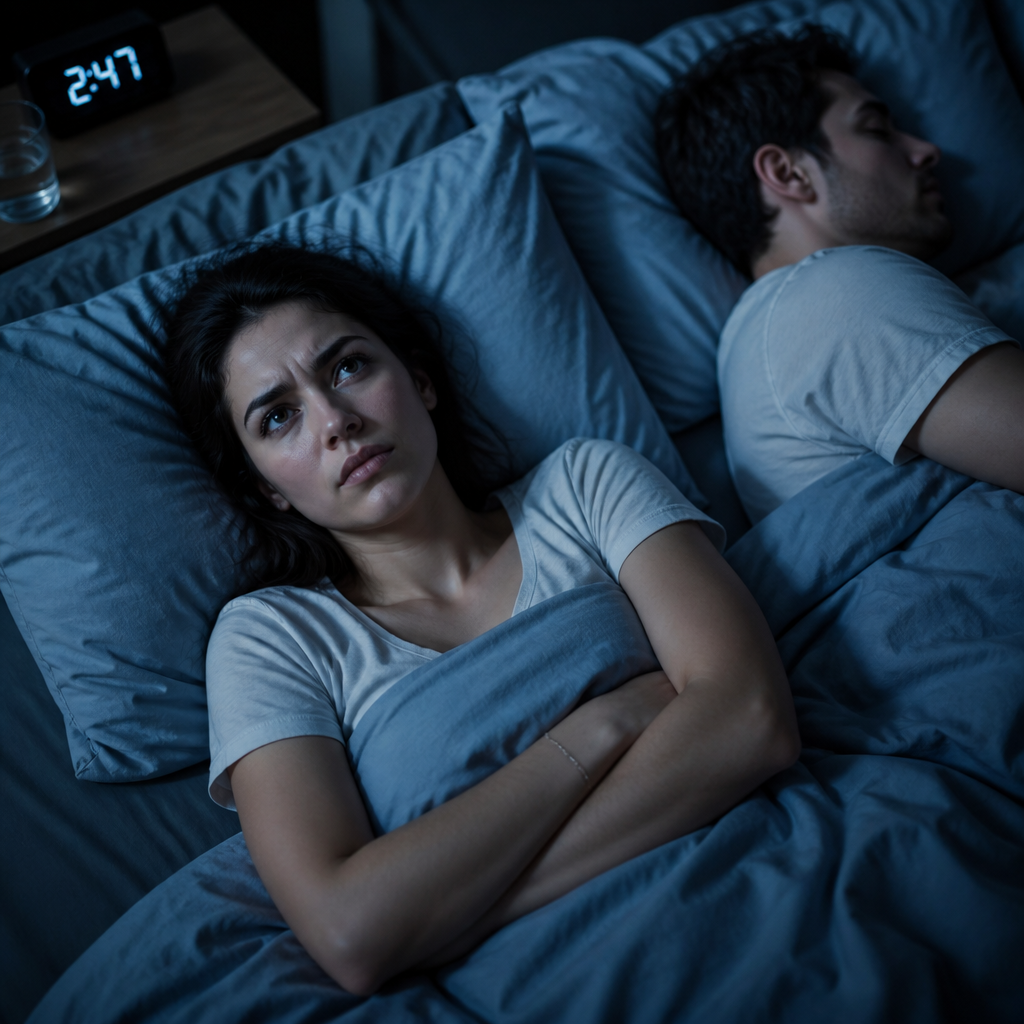
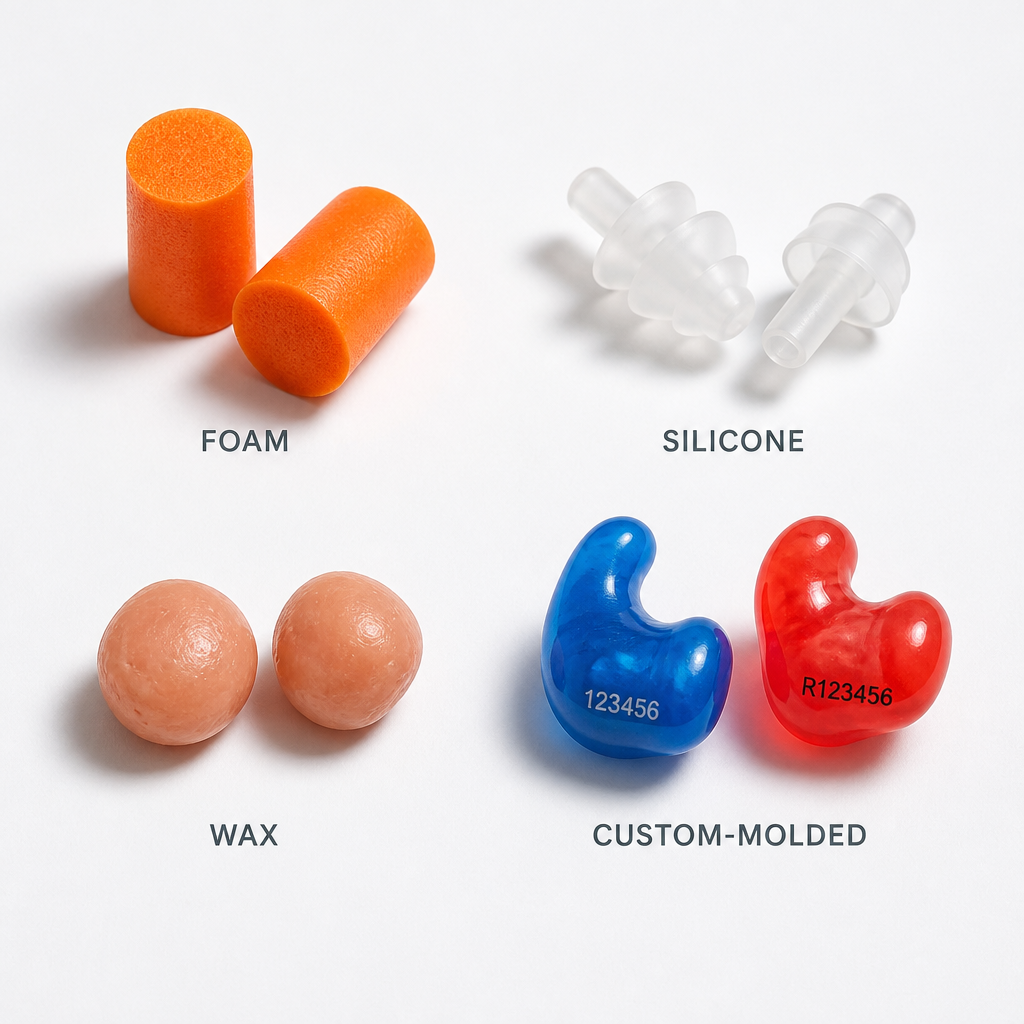
Light snoring sits around 40 to 50 dB, roughly equivalent to a quiet conversation across a room. Moderate snoring reaches 55 to 65 dB, comparable to an office environment. Severe snoring, particularly associated with obstructive sleep apnoea, can exceed 80 dB, which is louder than city traffic. The World Health Organisation recommends nighttime environmental noise stay below 40 dB for healthy sleep.
That benchmark is almost impossible to meet in the same bed as a habitual snorer without some form of noise attenuation. Earplugs are the most direct physical intervention available to the non-snoring partner.
Snoring is not a single frequency. The rumbling, low-frequency component travels through bone and tissue, not just air. Most foam ear plugs attenuate high-frequency sound very effectively but are less efficient at low frequencies below 500 Hz. This is why some people try foam plugs and still hear the bass “rumble” of their partner’s snoring even with a good seal. A tight-fitting plug with dense memory foam tips performs better in this range than a loosely inserted standard foam plug.
There is no single fix, and anyone selling you one is oversimplifying. The approach that actually works combines multiple strategies, with ear plugs as the most reliable and immediately effective layer.
This is not a joke. Falling asleep first means you are already in deeper sleep stages before the snoring begins. Your brain is less reactive to sound during established deep sleep than during the light, transitional stage at sleep onset. In practice, even a 15 to 20 minute head start can meaningfully reduce how often you are woken through the night.
Snoring is loudest from a supine position, when the tongue and soft palate collapse backward. If your partner sleeps on their back, gently nudging them to a side position often reduces the volume by 10 to 20 dB. This is not a cure but it shifts the snoring from severe to moderate, which makes a real difference to how much work your ear plugs need to do.
This is where most people fail. They grab the cheapest foam plugs from a petrol station, insert them incorrectly, and conclude that ear plugs do not work. A properly fitted, high-NRR ear plug inserted correctly creates a seal that genuinely reduces snoring to a manageable level. The technique matters: roll the foam tip down, pull your outer ear up and back to straighten the canal, insert the plug, and hold it for 20 to 30 seconds while the foam expands. Most people skip the holding step entirely.
Pro tip: If you wake up and your ear plug has partially backed out of your ear canal, the tip size is too small for your anatomy. Try the next size up before assuming the product has failed.
Not all ear plugs are equal, and the differences matter significantly when you are using them every single night. Below is a direct comparison of the three main categories available to someone dealing with a snoring partner on an ongoing basis.
| Type | Noise Reduction and Comfort | Long-Term Suitability for Nightly Use |
|---|---|---|
| Disposable foam plugs (standard drugstore) | NRR up to 33 dB but degrades after 1 to 2 uses as foam compresses permanently. Comfort drops sharply by the second use. One-size approach fails many ear canal shapes. | Poor. Requires daily replacement for hygienic use. Cost adds up quickly. Inconsistent fit means inconsistent results. |
| Silicone or wax mouldable plugs | NRR typically 22 to 27 dB. Comfortable for some users but prone to movement during sleep. Cannot be reliably disinfected. Warm climates soften the material unpredictably. | Moderate. Better for occasional use than nightly. Wax plugs in particular attract debris and require careful hygiene management. |
| Reusable metal-bodied plugs with memory foam tips (ATTENU8) | 32 dB noise reduction with a rigid aluminium shell that positions the replaceable memory foam tip correctly in the canal. Three tip sizes (XS, S, M) allow a genuine anatomical fit. Comfort remains consistent because the body structure does not deform. | Excellent. Tips replaced every 6 to 8 weeks maintain hygiene and seal quality. The aluminium body lasts indefinitely. Designed specifically for repeated nightly use. |
The data consistently shows that the primary reason people abandon ear plugs is discomfort, not lack of noise reduction. A rigid-body plug with soft replaceable tips solves both problems simultaneously: the body ensures correct positioning, and the fresh foam tip provides the comfort and seal quality needed for a full night’s sleep.
“Sleep is the single most effective thing we can do to reset our brain and body health each day.” Matthew Walker, neuroscientist and author of Why We Sleep (Scribner, 2017)
The NRR system is frequently misunderstood, and that misunderstanding leads people to either over-trust or under-trust their ear plugs. Here is what the numbers actually mean in practical terms.
The EPA formula for real-world attenuation is: subtract seven from the NRR, then divide by two. For a 32 dB NRR plug, that gives you 12.5 dB of estimated real-world attenuation. If your partner snores at 65 dB, you are hearing approximately 52 dB after attenuation. That is still audible, but it is now comparable to a quiet conversation rather than a jackhammer. Most people can sleep through 50 to 52 dB if the sound is relatively consistent rather than sudden and irregular.
A plug rated at 32 NRR inserted with a poor seal will underperform a 29 NRR plug inserted correctly. The acoustic seal is the mechanism. Without it, sound bypasses the plug entirely through the gap between the foam and the canal wall. This is why tip size selection is not optional. Using the ATTENU8 XS, S, or M tip options to find the size that expands to fill your specific ear canal without pressure is the single most impactful step most users skip.
Pro tip: Test your ear plug seal in a moderately noisy environment before relying on it in bed. Rub your fingers together near your ear while the plug is inserted. If you can hear the rubbing clearly, the seal is incomplete and you need a larger tip size or a deeper insertion.
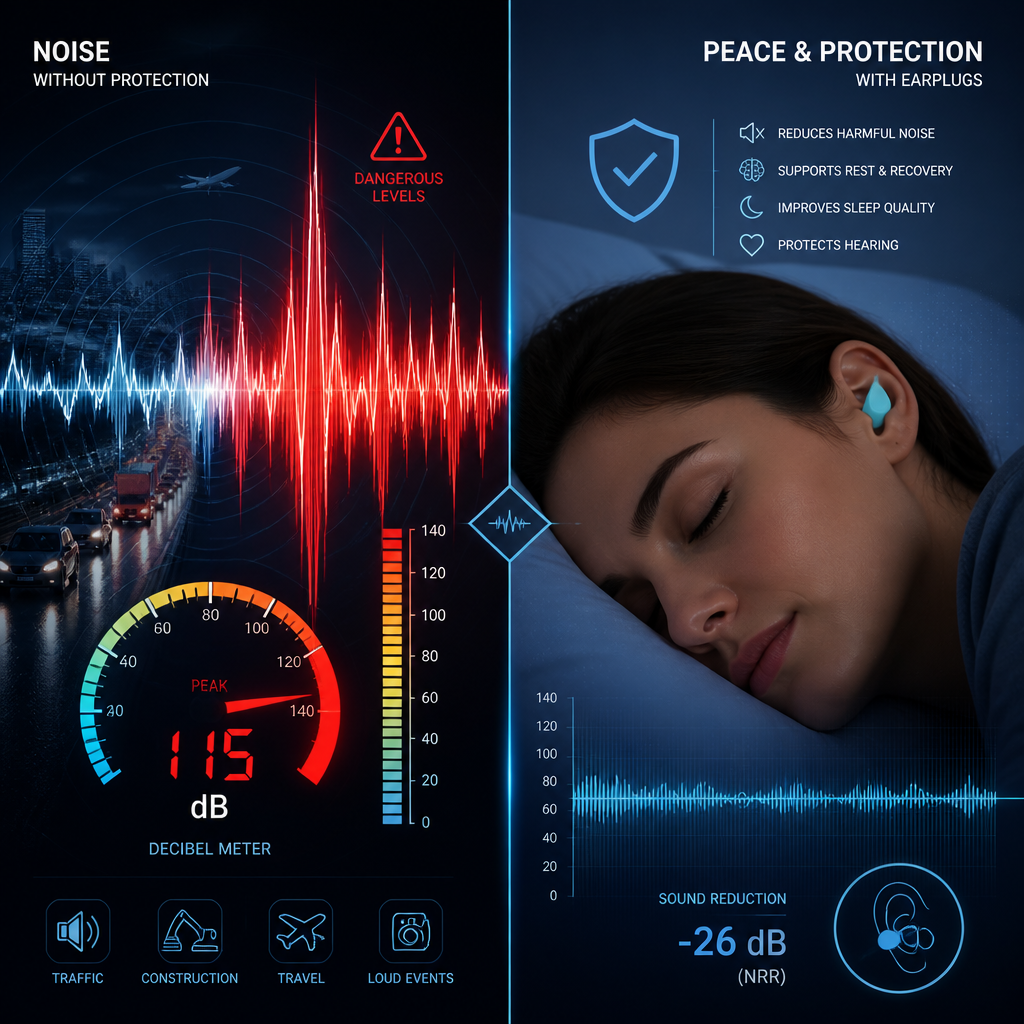
A common mistake is using the same foam ear plug for more than two or three nights and expecting it to perform as well as it did on day one. Standard foam compresses irreversibly with use, losing both its expansion force and its surface hygiene. The seal degrades, the attenuation drops, and the user concludes that ear plugs simply do not work for snoring. That conclusion is wrong. The product failed, not the concept.
The ear canal is not straight. It curves, which means a plug pushed in without pulling the outer ear up and back sits in the outer portion of the canal rather than deep enough to seal properly. Most instructional diagrams on ear plug packaging show this step but it is routinely ignored. In practice, correct insertion technique alone can add 5 to 10 dB of effective attenuation compared to a careless insertion of the same plug.
Industrial ear plugs designed for construction or manufacturing sites are built for daytime, upright use. They tend to be larger, firmer, and shaped for quick insertion and removal rather than comfortable overnight wear. Side sleepers in particular experience significant pressure from oversized plugs pressed against a pillow. A plug designed for sleep, like the low-profile ATTENU8 design, sits flush enough to allow side sleeping without creating a pressure point that wakes you at 3am.
If your partner’s snoring is severe, meaning it regularly exceeds 75 dB or is accompanied by breathing pauses, gasping, or choking sounds, they may have obstructive sleep apnoea (OSA). This is a medical condition, not just an annoyance. OSA is associated with increased risk of hypertension, stroke, and type 2 diabetes. Ear plugs are entirely appropriate for the non-snoring partner, but your partner needs a sleep study, not just a nasal strip.
Refer your partner to a GP or sleep specialist for polysomnography if you observe any of the following: snoring that stops and then resumes with a gasp, observed breathing pauses lasting longer than 10 seconds, or your partner reporting excessive daytime sleepiness despite a full night in bed. These are clinical indicators, not just loud-sleeper quirks.
For couples where the snoring is moderate and the non-snoring partner simply needs better sleep protection, the layered approach works reliably. Ear plugs rated at 32 dB NRR, correctly fitted with the right tip size, combined with a white noise machine set to 50 to 55 dB, will bring most moderate snoring environments within a tolerable range. The ATTENU8 approach, using a reusable aluminium-bodied plug with fresh memory foam tips, is built specifically for this kind of consistent nightly deployment rather than occasional industrial use.
The alternative solutions from competitors in the premium ear plug space tend toward acoustic filter designs that are better suited to live music or commuting than to blocking the irregular, low-frequency rumble of snoring. Filtering designs intentionally allow certain frequencies through to preserve sound fidelity. That is the wrong engineering goal for someone trying to block out their partner at 2am.
No ear plug completely eliminates sound, and any product claiming otherwise is overstating its capability. A well-fitted 32 dB NRR plug will reduce snoring by roughly 12 to 16 dB in real-world conditions, bringing most moderate snoring from an intrusive level down to a manageable background noise. Combined with white noise, this is sufficient for most light sleepers to maintain uninterrupted sleep through the night.
Yes, provided you maintain basic hygiene. For reusable plugs with replaceable foam tips, replacing the tips every 6 to 8 weeks prevents bacterial buildup. The ear canal is self-cleaning, and using clean plugs does not interfere with that process. The main risk with nightly ear plug use is impacted earwax, which is more likely with daily use of large, deeply inserted plugs. A low-profile design that does not push wax inward is preferable for long-term nightly use.
For light to moderate snoring (40 to 60 dB), a plug rated at 25 to 33 NRR is sufficient when correctly inserted. For severe snoring above 70 dB, you need the highest available NRR combined with a white noise layer to mask residual sound. The ATTENU8 32 dB rating sits at the top of the practical range for sleep-specific use.
This happens for two reasons. First, the tip size is too small, so the foam does not create enough friction against the canal wall to stay seated as you move. Second, the foam has been used enough times that it no longer expands properly. Either switch to the next size up, or replace the tips if you are using a reusable product. A rigid outer body, like the aluminium shell on ATTENU8 plugs, also gives the foam tip a stable platform so it maintains its position rather than working itself loose against pillow fabric.
The most effective non-plug strategies are: going to sleep 15 to 20 minutes before your partner, using a white noise machine at 50 to 55 dB, nudging your partner onto their side, and positioning yourself further from the sound source by moving to the far side of the bed or adjusting pillow height. In practice, these strategies reduce the problem but rarely eliminate it for genuine light sleepers. Ear plugs remain the most reliable single intervention available without requiring your partner to change their behaviour.
On day one, a cheap foam plug and a premium reusable plug may deliver similar NRR performance. The difference emerges over time. Cheap foam degrades within one to two uses, meaning you are using a compromised seal by night three. A reusable aluminium-body plug with fresh memory foam tips maintains the same seal quality on night 90 as it did on night one. For a nightly snoring problem, the cost per use calculation strongly favours the reusable option within the first two to three months.
Yes, this matters. Plugs designed for industrial use are typically large enough that lying on your side creates noticeable pressure between the plug body and the pillow. A low-profile plug, where the body sits close to flush with the ear opening rather than protruding outward, is significantly more comfortable for side sleeping. This is a design feature worth confirming before purchasing, particularly if side sleeping is your natural position.
Have you tried ear plugs for your partner’s snoring? Share what worked and what did not in the comments below, your experience might help someone else find a better night’s sleep faster.
Most people wearing reusable ear plugs never think about their foam tips until the tips are visibly dirty, compressed beyond recognition, or no longer sealing properly. By that point, they have already been sleeping through noise they should have been blocking. Ear plug tip replacement is one of the most neglected aspects of hearing protection hygiene, yet it directly determines whether your ear plugs are delivering the noise reduction you paid for. This guide lays out exactly when to replace, how to spot degradation early, and how to build a maintenance habit that keeps your protection performing at full strength.
The foam tip is doing almost all of the acoustic work. The metal body of a premium reusable ear plug like those from ATTENU8 provides structural integrity and durability, but the memory foam tip is the component that physically seals the ear canal and absorbs sound energy. Once that foam degrades, you are not getting 32dB of noise reduction. You might be getting 15dB, or less.
According to the National Institute for Occupational Safety and Health (NIOSH), the actual attenuation delivered by an ear plug in real-world use is often significantly lower than the labeled NRR, largely because of poor fit and degraded materials. Fresh, properly sized foam tips are the single biggest controllable variable in that equation.
A common mistake is treating a reusable ear plug like the body is the consumable. It is not. The body lasts for years. The foam tip is the consumable, and replacing it on schedule is what separates a functional hearing protection tool from an expensive piece of metal sitting in your ear doing almost nothing.
For most users, 6 to 8 weeks is the optimal ear plug tip replacement interval. This is the timeframe ATTENU8 recommends, and it aligns with what happens to memory foam under regular nightly or daily use conditions: compression fatigue accumulates, the foam loses its rebound speed, and the surface picks up enough earwax and skin oils to compromise both hygiene and acoustic seal.
In practice, this interval is not a hard cutoff. It is a maximum, not a target. If you are using your ear plugs every night for sleep, you will likely hit the replacement threshold closer to 6 weeks. If you use them three or four nights a week, 8 weeks is reasonable. The key is tracking actual usage sessions, not calendar time.
Pro tip: Note the date you install a new set of foam tips on a small piece of tape inside the storage case. This takes five seconds and eliminates the guesswork that leads to using degraded tips for months longer than you should.
What Happens to Foam After 8 Weeks of Daily Use
Memory foam works by slowly expanding to fill the shape of your ear canal, creating a passive acoustic seal. Fresh foam rebounds fully within a few seconds of being compressed. After 6 to 8 weeks of daily use, the foam’s cell structure begins to break down. It still compresses, but it no longer rebounds with the same speed or consistency.
The result is a looser, less consistent seal. High-frequency sounds, which require the tightest fit to block, start leaking through first. For light sleepers, that means the ambient noise that woke them up last week starts waking them up again, even though nothing about their environment has changed. The ear plug body is fine. The tip has simply aged past its useful life.
You do not always need to wait for the calendar. There are physical signs that your foam tips have degraded and need immediate replacement, regardless of how many weeks have passed.
A healthy memory foam tip looks round and full when it is not being worn. If yours has developed a permanent flat spot or indent from repeated compression, the foam’s cell structure is compromised. It will not seal your ear canal properly, and no amount of cleaning will restore the foam’s mechanical properties.
Earwax is yellow to brown and accumulates on the outer surface of the foam over time. Light surface discoloration after a few weeks is normal and manageable with gentle cleaning. Dark discoloration that penetrates into the foam, or visible debris that cannot be wiped off, is a clear signal to replace. You cannot fully sterilize porous foam, and using heavily soiled tips introduces bacteria directly into the ear canal.
This is the most practical test. If you are noticing sounds that the ear plugs used to block, and you have ruled out changes in your environment, the foam tips are the most likely culprit. Put in a fresh set. If the blocking performance improves noticeably, the old tips were overdue for replacement.
Pro tip: Keep a spare set of foam tips in your travel bag or nightstand so you can do an immediate like-for-like comparison when you suspect your current tips have degraded. This removes all the second-guessing.
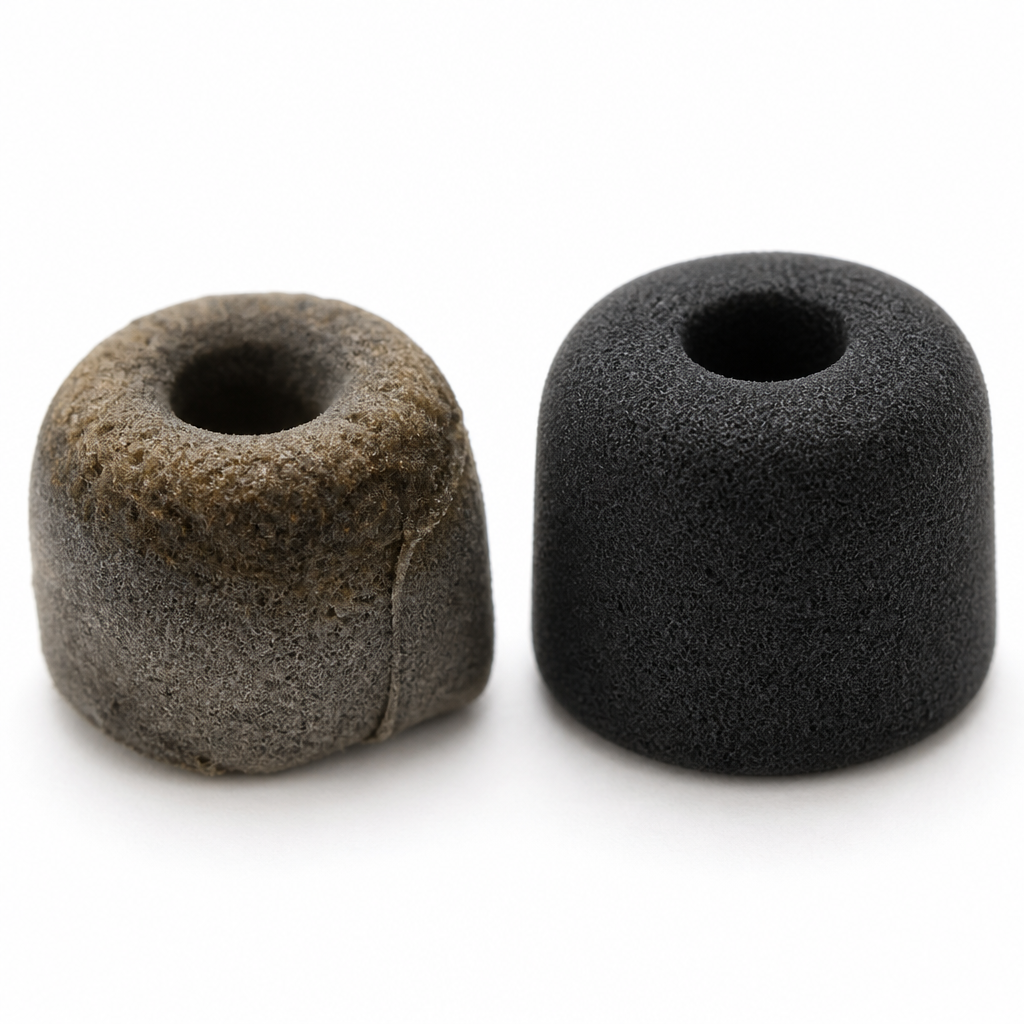
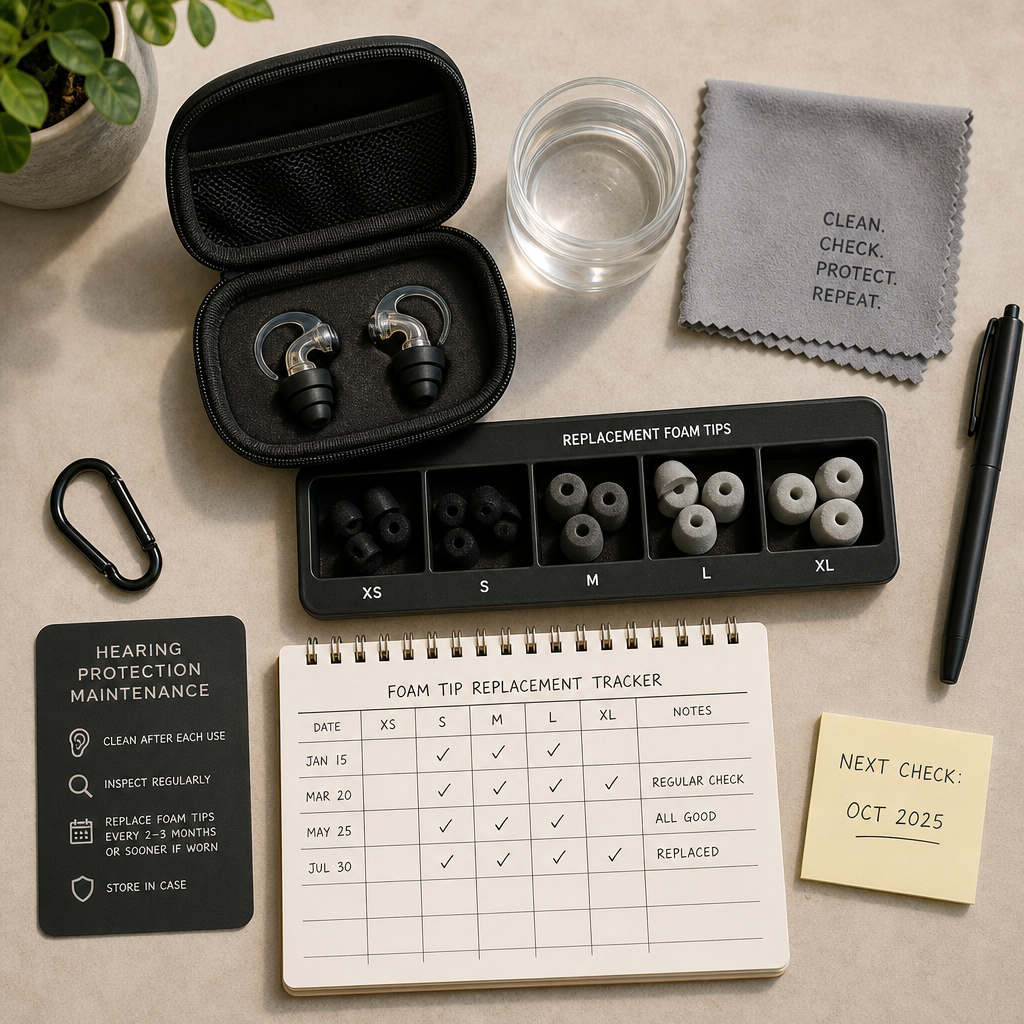
The 6-8 week guideline assumes roughly daily use. But many ATTENU8 users fall outside that pattern. Construction workers and manufacturing professionals may use their ear plugs for 8-10 hours a day, five days a week. Travelers might use them intensively for a two-week trip and then not again for a month. Light sleepers might use them every night without exception.
A more accurate way to think about tip lifespan is in usage sessions rather than calendar weeks. Approximately 40 to 50 sessions of use is a reasonable maximum for a memory foam tip before replacement. For daily users, that lands right at 6-7 weeks. For weekly users, that could stretch to 3 months or more.
Users in industrial environments expose their foam tips to additional stressors: dust, sweat, and mechanical vibration. Sweat in particular is corrosive to open-cell foam over time and accelerates the breakdown of the foam’s surface layer. In hot, sweaty environments, replacement every 4 weeks is more appropriate than every 6-8.
Sleeping with ear plugs introduces a different stressor: pressure. Sleeping on your side pushes the ear plug against your pillow, compressing the foam tip in a consistent direction night after night. This directional compression is harder for the foam to recover from than the circumferential compression of normal insertion. Side sleepers may find their tips degrading faster than the standard timeline suggests.
Understanding the replacement schedule for reusable ear plug tips makes more sense when you see it alongside how disposable ear plugs work. The economics and hygiene profiles are genuinely different, and the comparison helps justify why a structured maintenance approach matters for reusable systems.
| Approach | Replacement Interval | Key Consideration |
|---|---|---|
| Disposable foam ear plugs (single-use) | After every use, or at most 2-3 uses | No maintenance required, but generates significant waste and ongoing cost at high frequency of use |
| ATTENU8 reusable ear plugs with memory foam tips | Foam tips every 6-8 weeks; metal body lasts years | Lower long-term cost, consistent performance when tips are replaced on schedule, environmentally sustainable |
| Competitor solid-body reusable ear plugs (e.g., Loop, Flare Audio) | No tip replacement; clean the full unit | No foam seal, different acoustic mechanism, no tip degradation concern but different fit and attenuation profile |
The key difference in the ATTENU8 model is that you are maintaining a system with two distinct components. The body is a long-term asset. The foam tip is a consumable that needs regular attention. Treating the whole unit as permanent is the single most common reusable ear plug maintenance mistake.
“The ear plug that is not maintained is the ear plug that is not working. A degraded foam tip provides false confidence, not hearing protection.” — NIOSH Hearing Loss Prevention Program guidance on personal protective equipment maintenance.
Replacement on a schedule is essential, but daily cleaning between replacements is what keeps hygiene at an acceptable level and extends the functional life of each set of tips as close to 8 weeks as possible.
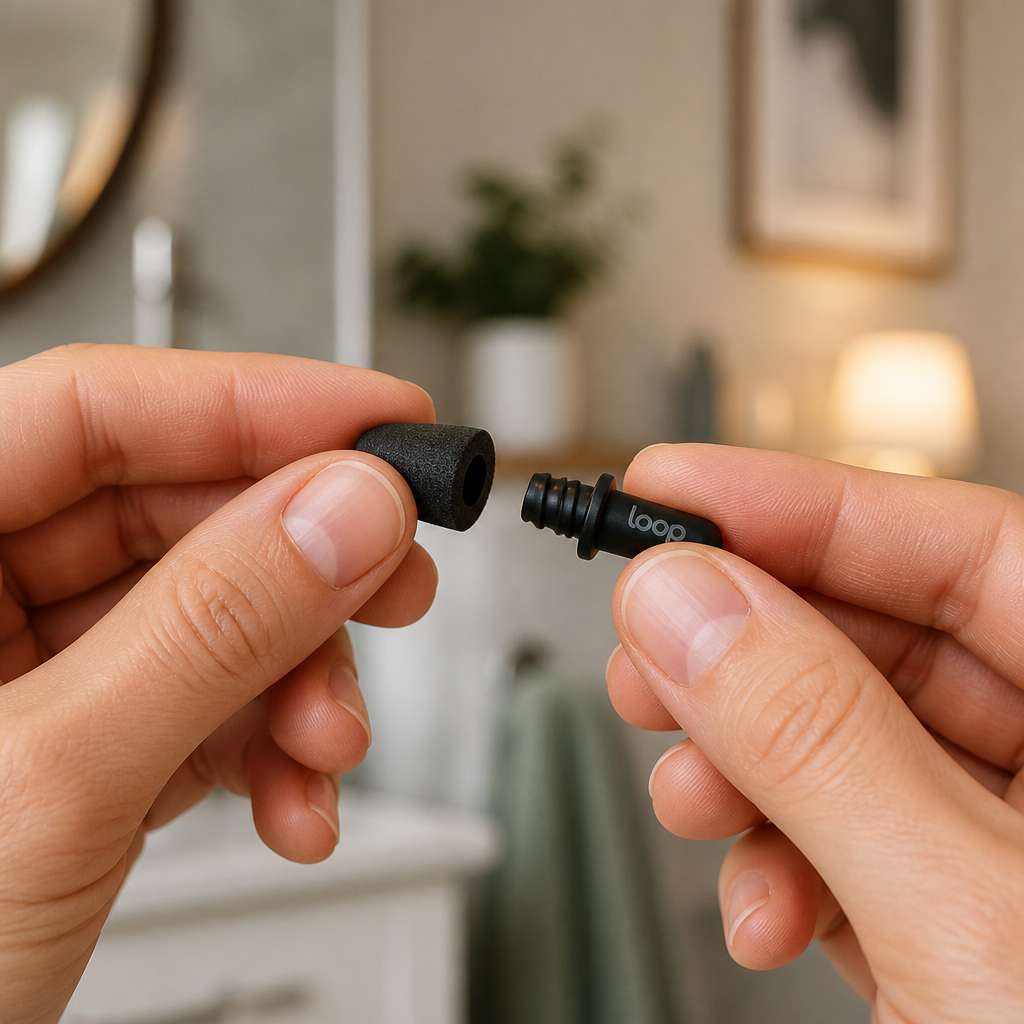
Use a dry or very lightly damp lint-free cloth or cotton pad to wipe the outer surface of the foam tip after each use. Remove visible earwax before it hardens. That is the entire routine for daily maintenance. It takes under 30 seconds.
Do not soak foam tips in water or cleaning solution. Open-cell foam absorbs liquids and does not dry evenly, creating a moist environment where bacteria can thrive. Do not use alcohol wipes directly on the foam itself. Alcohol degrades the foam’s cellular structure and accelerates the very breakdown you are trying to prevent. Alcohol wipes are appropriate for cleaning the metal body of the ear plug, not the foam tip.
Store your ear plugs in a clean, dry case after each use. Leaving them on a nightstand or in a pocket exposes the foam to dust and debris. A closed case also prevents accidental compression from objects sitting on top of the tips, which contributes to premature deformation.
Reusable ear plug maintenance is not complicated. It is consistent. The users who get the most life out of their foam tips are the ones who wipe the tips clean and put them back in a case every single time without exception, not the ones who do a deep clean once a month and otherwise ignore them.
ATTENU8 supplies three tip sizes: XS, S, and M. The right size is not about comfort preference. It is about achieving a proper acoustic seal. An undersized tip will feel comfortable because it does not exert pressure on the ear canal wall, but it will not seal, and you will not get anything close to 32dB of attenuation.
How to Know If Your Current Size Is Correct
With the correct size tip properly inserted, you should notice a clear, immediate reduction in ambient sound. Your own voice should sound slightly muffled when you speak. If you insert the ear plug and the sound reduction feels minimal or inconsistent, try the next size up before assuming the ear plug itself is the problem.
Ear canal size does not change over time, but the way a foam tip fits does change as the foam degrades. A fresh tip at size S may seal effectively. The same tip after 8 weeks may have compressed enough that it no longer fills the canal adequately. This is another reason why replacement on schedule matters. You may have found the right size and then unknowingly reverted to poor attenuation simply because the tip aged past its useful life.
If you have never tested all three sizes against your own ear, do so with a fresh set of each. The difference in perceived noise reduction between a correctly sized fresh tip and an incorrectly sized or worn tip is substantial enough that most users notice it immediately.
If you are using your ATTENU8 ear plugs every night for sleep, replace the foam tips every 6 weeks. Daily use accumulates compression fatigue and earwax buildup faster than the standard 8-week guideline assumes. Setting a recurring reminder every 42 days removes the need to judge tip condition by feel.
Do not use alcohol wipes on the foam tips. Alcohol degrades open-cell foam at the cellular level, shortening the tip’s functional lifespan. Use alcohol wipes only on the metal body of the ear plug. For the foam tips, a dry lint-free cloth is sufficient for daily maintenance.
Appearance is not a reliable hygiene indicator for porous foam. Foam tips can look acceptable while carrying a significant bacterial load from weeks of contact with the ear canal. This is why replacement on a schedule matters independently of how the tips look. Hygiene maintenance means regular wiping and timely replacement, not just cleaning when they appear dirty.
If your ear plugs feel looser than they used to, or if ambient noise is getting through more than you expect, try a fresh set of tips in the same size. If fresh tips restore the performance, your old tips were worn out. If fresh tips at the same size still feel loose, move up to the next size. A proper fit should feel snug with noticeable sound attenuation immediately upon insertion.
Yes, significantly. Disposable foam ear plugs cost roughly 10 to 30 cents per pair, and at daily use you are spending at least $36 to $110 per year on disposables. ATTENU8 replacement tips are replaced every 6-8 weeks, meaning you need 6 to 8 replacement sets per year. The ongoing cost is substantially lower, the waste is far less, and the metal body never needs replacing under normal use.
Appearance is unreliable as a replacement trigger. The foam’s mechanical properties, specifically its rebound speed and ability to maintain a seal, degrade before visible wear becomes obvious. The 6-8 week guideline exists precisely because degradation happens at a cellular level that you cannot see. Extending use beyond 8 weeks risks both reduced attenuation and deteriorating hygiene, regardless of how the tips look.
Have you noticed a difference in noise blocking after replacing your foam tips on schedule? Share what your replacement routine looks like and whether the 6-8 week guideline has matched your experience.

