


 0

The average commercial aircraft cabin registers between 85 and 105 decibels during cruise altitude. That is louder than a lawnmower and well above the threshold where sustained exposure causes fatigue and sleep disruption. If you have ever landed after an overnight flight feeling worse than when you boarded, cabin noise is almost certainly a major culprit. Choosing the right ear plugs for flying is not a minor comfort upgrade. It is the single most effective intervention for getting genuine sleep on a plane, and most travellers are still doing it wrong.
Aircraft cabin noise is not just loud, it is relentless. The constant low-frequency roar of jet engines creates a broadband noise profile that occupies nearly every frequency the human ear is sensitive to. Unlike a single loud event, this sustained exposure keeps your nervous system in a low-level alert state, suppressing the deep sleep stages that actually restore your body.
Research published by the National Institutes of Health confirms that sleep in environments above 55 decibels shows measurable reductions in slow-wave and REM sleep. At 85 to 100 decibels, meaningful sleep becomes nearly impossible without active noise management.
Add in crying infants, announcements, and the person next to you watching a film without headphones, and the acoustic environment of a plane is genuinely hostile to rest. The good news is that reducing perceived noise by even 20 to 30 decibels is enough to shift your sleep architecture back toward something useful.
| Key Insight | Explanation |
|---|---|
| 32dB NRR is the benchmark for flight sleep | Ear plugs rated at 32dB noise reduction cut cabin noise to levels where meaningful sleep is physiologically possible for most people. |
| Foam tip size is more important than brand | A correctly sized soft memory foam tip seals the ear canal completely. An oversized or undersized tip leaks noise and causes discomfort that wakes you mid-flight. |
| Reusable metal-bodied ear plugs outlast the trip | Disposable foam plugs degrade after one or two uses. A durable aluminium-bodied ear plug with replaceable foam tips maintains consistent performance across hundreds of flights. |
| Insertion technique determines actual noise reduction | Even a 32dB-rated ear plug delivers far less protection if inserted incorrectly. Compress, insert, and hold until foam expands fully in the canal. |
| Ear plugs outperform noise-cancelling headphones for sleep | Headphones require battery power, create pressure on the ears during long wear, and are impractical when lying against a seat or pillow. Ear plugs have none of these limitations. |
| Replace foam tips, not the whole ear plug | Premium reusable ear plugs only require foam tip replacements every 6 to 8 weeks. This reduces both cost and plastic waste compared to single-use alternatives. |
| Pre-flight insertion beats reactive use | Inserting ear plugs before takeoff prevents the loudest noise exposure and signals your body that sleep conditions are being established, supporting faster sleep onset. |
When you see a noise reduction rating on a product, that number is measured in controlled laboratory conditions. In practice, real-world attenuation is typically 50 to 70 percent of the stated NRR figure, depending on fit. This means a 32dB rated ear plug delivers approximately 16 to 22dB of actual noise reduction in everyday use. That is still enough to bring a 95dB aircraft cabin down to roughly 73 to 79dB, which is within a range where sleep becomes achievable.
Products rated below 25dB NRR are unlikely to provide sufficient attenuation for in-flight sleep. They may be adequate for muffling voices or softening ambient office noise, but the low-frequency engine drone requires meaningful physical sound blocking, which only a well-fitted, high-rated ear plug delivers.
The ear canal is not a uniform tube. It curves, varies in diameter between individuals, and shifts shape when you move your jaw. Soft memory foam tips conform to this geometry in a way that rigid silicone flanged tips cannot. They create a seal rather than just a plug, which is why foam consistently outperforms silicone for raw decibel reduction in travel contexts.
ATTENU8 ear plugs come with three tip sizes, XS, S, and M, which matters because most competing products offer a single size and expect everyone to make it work. The XS tip alone opens up genuine hearing protection to a substantial portion of the population with smaller ear canals, including many women and younger adults, who are routinely underserved by standard one-size-fits-all products.
Pro tip: Before your next flight, test all three foam tip sizes at home. Insert each one, wait two minutes for full expansion, and tap the ear plug body gently. The size that produces the deepest, most resonant blocking sensation is your correct fit. Use that size exclusively for travel.
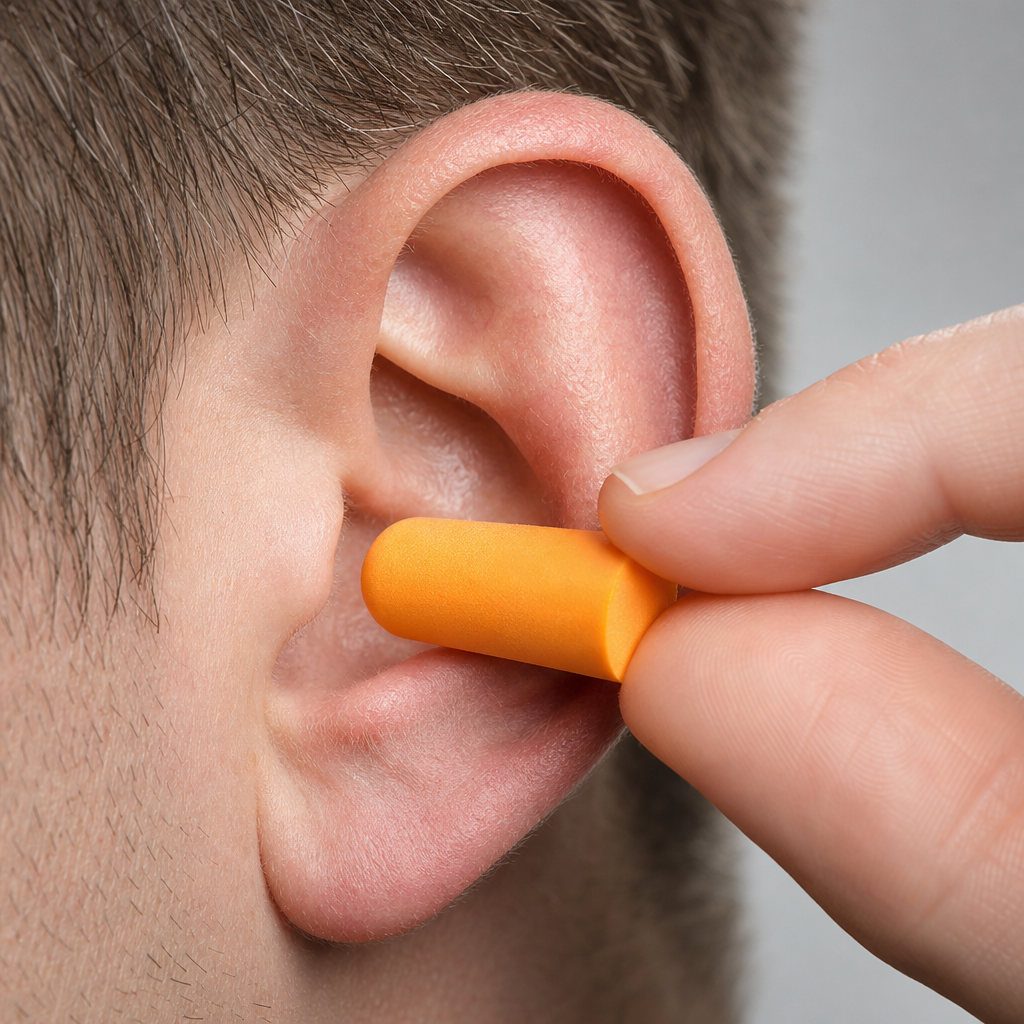
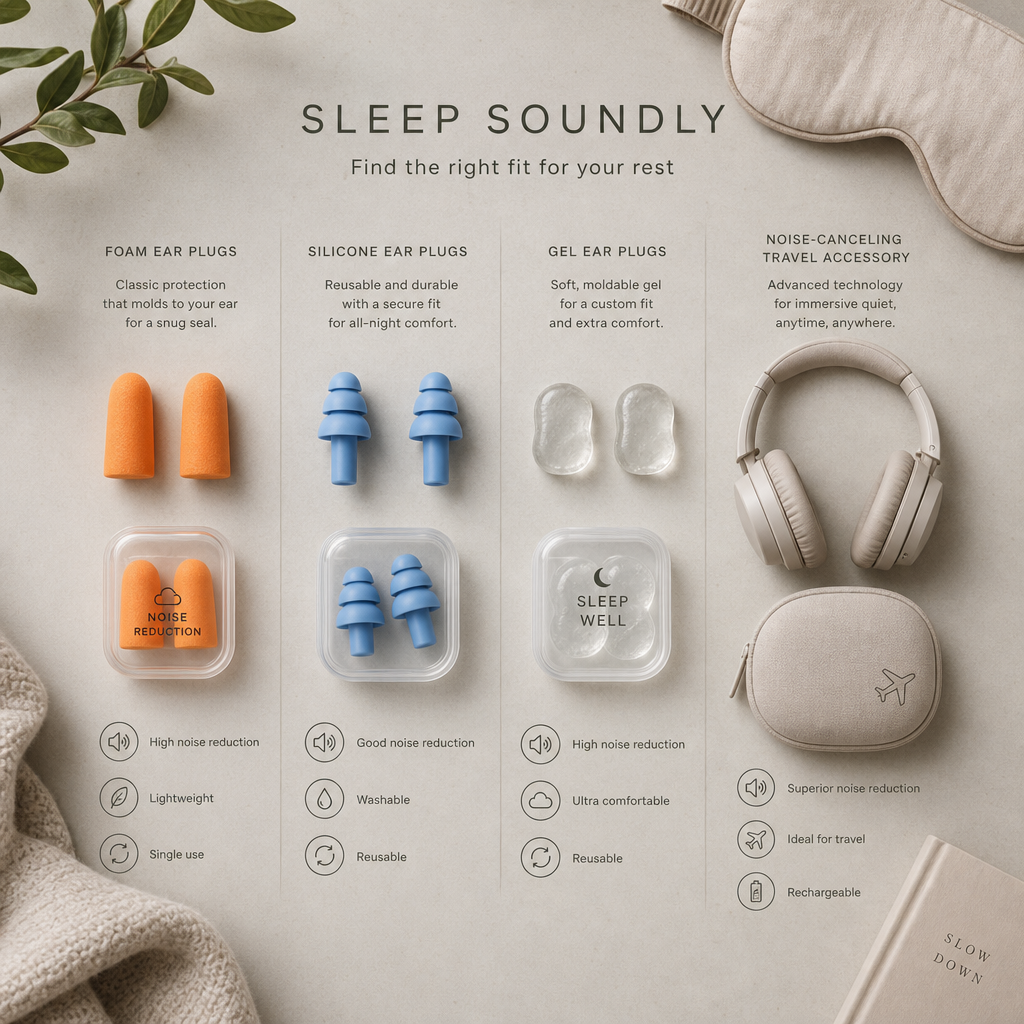
The standard argument for disposable foam ear plugs is convenience. You grab a pair at the airport pharmacy, use them, and throw them away. The argument against is performance, reliability, and the complete absence of any hygiene logic on long-haul routes where you might wear them for ten or twelve hours.
A disposable foam ear plug that has been compressed, expanded, and worn for several hours begins to lose its recovery speed. The foam does not spring back as firmly, which degrades the seal. By the second use, most budget foam plugs are already operating well below their stated NRR. This is not a minor degradation. In practice, a second-use disposable plug rated at 33dB may be delivering closer to 18 to 22dB, which is a significant drop in a high-noise environment.
A premium reusable ear plug with an aluminium body separates the structural element from the consumable element. The body, which handles insertion, shape retention, and durability, lasts indefinitely. The foam tips, which do the acoustic work, are replaced every 6 to 8 weeks under normal use. You are never flying with degraded foam because you control the replacement cycle.
This is the model ATTENU8 is built on. The concave aluminium body gives you a consistent grip point for clean insertion and removal, which also matters when you wake up disoriented at 2am over the Pacific and need to take them out without fumbling. The body does not bend, does not absorb earwax at the structural level, and does not end up compressed at the bottom of your carry-on bag looking like something you found on the floor.
“The primary failure mode for ear plugs in travel settings is not the product specification, it is the degraded condition of the product at the moment of use. Reusable designs with replaceable tips solve this problem structurally.” – Sleep science commentary on hearing protection for travellers, cited in occupational health literature.
Ear plugs for flying are the foundation, but they work best as part of a deliberate system. Noise reduction alone will not guarantee sleep if light, posture, and temperature are working against you. The goal is to reduce the total number of sensory inputs that can trigger a micro-awakening.
Window seats beat middle and aisle seats for sleep on almost every metric. You have a wall to lean against, you control the blind, and you are not disturbed by neighbouring passengers getting up. On long-haul flights, booking a window seat specifically for sleep is worth a modest fare difference or a portion of your frequent flyer points.
A travel pillow that supports the neck in a neutral position prevents the head-drop that jolts you awake. The U-shaped neck pillow is not optimal for window seat sleepers. A wrap-around or full-chin-support pillow keeps your head stable against the cabin wall, especially when turbulence hits.
An eye mask blocks the galley lights, overhead reading lights, and the screen glow from neighbouring passengers. Combined with ear plugs rated at 32dB, an eye mask addresses the two dominant sensory channels that prevent sleep. Temperature regulation is handled by dressing in layers and requesting a blanket immediately after boarding rather than waiting until you are already cold and alert.
Avoid alcohol as a sleep aid. It shortens time-to-sleep onset but fragments sleep architecture, particularly in the second half of the flight. You may fall asleep faster but wake up multiple times and land feeling more fatigued. Hydration with water is the better pre-sleep protocol on a plane.
Pro tip: Insert your ATTENU8 ear plugs before takeoff, not after the aircraft reaches cruise altitude. The engine run-up and climb phase are the loudest parts of the flight. Blocking this noise from the outset also signals your body that the environment is being prepared for sleep, which supports faster sleep onset once the cabin dims.
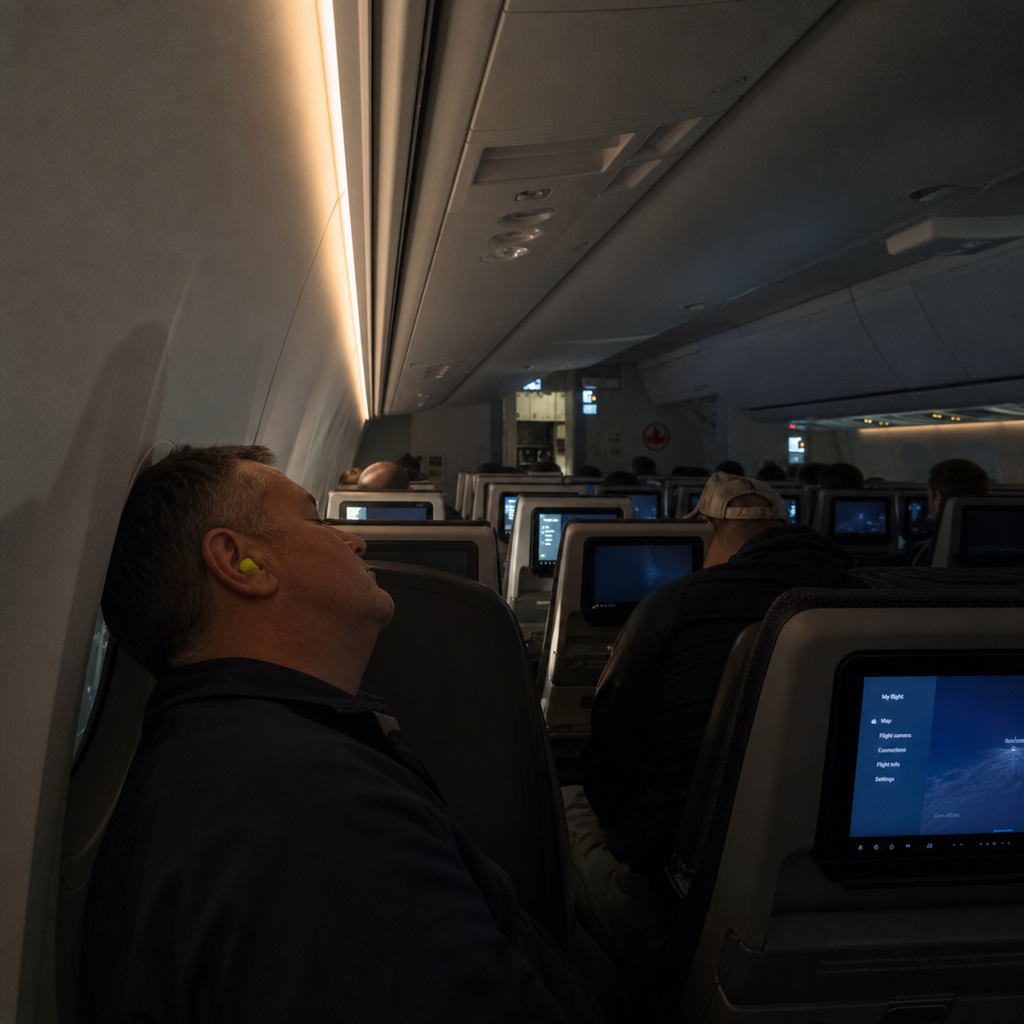
A common mistake is treating ear plug insertion as a casual action. Most people roll the foam tip between two fingers, push it into the ear canal about halfway, and let go. The result is an ear plug that sits at the canal entrance rather than within it, blocking maybe 10 to 15dB instead of the rated 32dB.
The correct technique for memory foam ear plugs involves three steps. First, compress the foam tip completely between your thumb and forefinger for 10 to 15 seconds. Second, reach over your head with the opposite hand to gently pull the top of your ear upward, which straightens and opens the ear canal. Third, insert the compressed foam tip and hold it firmly in place for 30 to 45 seconds while it expands to fill the canal fully.
If you feel significant discomfort or pressure pain within ten minutes of insertion, the tip is too large. Switch to the next size down. If you can hear speech clearly through the ear plug without raising your voice, the tip is too small or not fully inserted. Correct fit should feel like a firm, even pressure with no sharp edges or localised soreness.
The three-size system in ATTENU8 ear plugs, XS, S, and M, exists precisely because ear canals do not conform to a single standard. Most travellers have never actually tested all three sizes back to back. The size that works is often not the one you would guess. XS and S are correct for a larger proportion of the adult population than manufacturers typically acknowledge, because the M tip shipped with most single-size products is oversized for a significant percentage of users.
There are three dominant approaches to noise management on flights: passive ear plugs, active noise-cancelling headphones, and electronic noise-masking earbuds. Each has a legitimate use case, but they are not equally effective for sleep.
| Approach | Noise Reduction for Sleep | Practical Limitations for Long-Haul Travel |
|---|---|---|
| Premium Reusable Ear Plugs (e.g. ATTENU8, 32dB NRR) | High. Passive attenuation of 16 to 22dB real-world, broadband frequency coverage including engine drone. No battery required. | Minimal. Correct tip size needed for full seal. No electronic components to fail. |
| Active Noise-Cancelling Headphones (e.g. over-ear ANC models) | Moderate to high for low-frequency engine noise. Less effective for mid and high frequencies like speech and announcements. | Significant. Battery dies on very long flights. Physically uncomfortable when lying against seat or pillow. Cannot be worn flat. Not suitable for side-sleeping. |
| Standard Disposable Foam Ear Plugs | Moderate initially. Degrades rapidly with use. Real-world performance often below 20dB by second use. | Inconsistent. No size options. Hygiene concerns on multi-day travel. Contributes to plastic waste across frequent travel. |
The data consistently shows that passive ear plugs outperform ANC headphones for sleep-specific use cases because they require no power, create no ear pressure from electronics, and remain functional when you are lying against a seat headrest. Noise-cancelling headphones excel for listening use during waking hours. They are genuinely poor sleep tools for anyone who moves during sleep or travels in anything less than business class with fully flat seating.
For noise reduction travel purposes, the correct framing is: use premium reusable ear plugs as your primary sleep tool, and use ANC headphones for awake entertainment. These are complementary products, not competing ones.
Yes. Ear plugs do not seal the ear canal completely in the way that would prevent pressure equalisation. The Eustachian tube, which connects the middle ear to the throat, handles cabin pressure changes independently of the outer ear canal. Foam ear plugs sit in the outer canal only and do not interfere with this mechanism. If you experience ear pain during descent, it is Eustachian tube dysfunction, not a product issue. Swallowing, yawning, or chewing gum are the correct responses.
A minimum of 32dB NRR is the practical benchmark for flight sleep. Aircraft cabins at cruise altitude typically reach 85 to 100dB. Applying the real-world reduction factor of 50 percent to a 32dB rated product gives approximately 16dB of actual attenuation, which brings most cabin environments into the 70 to 80dB range where sleep is physiologically achievable for the majority of people. Products rated below 25dB NRR are insufficient for this specific environment.
Loop and Flare Audio products are primarily designed around wearable aesthetics and mild social noise filtering, with noise reduction ratings typically in the 18 to 27dB range. ATTENU8 targets the maximum noise reduction use case with a 32dB NRR, a durable aluminium body built for repeated travel use, and a three-size foam tip system that addresses fit across a wider range of ear canal geometries. For light social filtering, lower-rated products are adequate. For genuine sleep on a noisy commercial flight, the 32dB specification is the relevant threshold.
Under typical travel use, foam tips should be replaced every 6 to 8 weeks. This accounts for normal foam compression fatigue, accumulation of earwax that degrades the foam surface, and gradual loss of the expansion speed that creates a proper canal seal. Replacing only the foam tips, rather than the entire ear plug, keeps ongoing costs low and ensures the product consistently delivers its rated noise reduction. ATTENU8 is specifically designed around this replacement model.
At 32dB NRR, flight safety announcements made over a cabin PA system at standard aircraft volume will still be audible, though softer. Cabin crew speaking directly to you at normal volume may require you to briefly remove one ear plug. This is a deliberate trade-off for sleep. If you are concerned about missing specific announcements, inform the cabin crew before sleep that you are wearing hearing protection and ask to be notified directly. Most airlines are accommodating of this request.
For commercial air travel, ear plugs are decisively better than ear muffs for sleep purposes. Ear muffs with equivalent attenuation ratings are physically large, incompatible with airline seating headrests and neck pillows, and generate significant heat during multi-hour wear. They are appropriate for short-duration industrial environments where hearing protection is the only priority. On a ten-hour overnight flight where comfort, portability, and sustained wearability are equally important, in-ear foam plugs with a high NRR rating are the correct tool.
If you have a travel ear plug strategy that works particularly well for you, or a flight route where noise has been a persistent problem, share your experience in the comments. Real-world context from frequent travellers is genuinely useful here.
We would love your feedback and any insights you would share with others. What perspective would you add?
Construction workers face one of the most aggressive noise environments on the planet. The CDC reports that approximately 22 million workers in the United States are exposed to hazardous noise levels at work each year, and construction consistently ranks among the highest-risk industries for noise-induced hearing loss. Yet the most common hearing protection complaint on job sites is simple: foam plugs fall out, get dirty, and workers stop wearing them. Choosing the right ear plugs for construction workers is not just a comfort preference, it is a decision that determines whether your hearing survives a 30-year career.
| Key Insight | Explanation |
|---|---|
| NRR 32dB is the gold standard for heavy construction | Tools like jackhammers and concrete saws regularly exceed 100dB. An NRR of 32dB brings effective exposure to a safer range for prolonged shifts. |
| Fit quality outweighs brand name every time | Even a high-rated plug worn incorrectly delivers a fraction of its rated protection. Proper insertion technique is non-negotiable on a loud site. |
| Disposable foam plugs fail workers over a full shift | They compress, absorb sweat, and lose their seal. A worker relying on degraded foam by hour six has almost no real protection. |
| Multiple tip sizes are essential for a diverse workforce | Ear canal diameter varies significantly between individuals. A single-size plug in a shared toolbox means many workers are underprotected. |
| Reusable plugs reduce site waste and long-term cost | Premium reusable ear plugs with replaceable foam tips cost more upfront but eliminate the daily waste and recurring spend of bulk disposables. |
| Metal-bodied ear plugs survive job site conditions | Aluminium bodies resist crushing, sweat corrosion, and contamination that destroy plastic-bodied alternatives within weeks of heavy use. |
| Hearing loss from construction is permanent and cumulative | There is no medical treatment that reverses noise-induced hearing damage. Every unprotected hour compounds over a career. |
Construction noise is relentless. A standard framing nail gun peaks at 97dB. A circular saw hits 110dB. A jackhammer at close range reaches 130dB. OSHA mandates hearing protection when workers are exposed to 85dB or more averaged over an eight-hour shift, a threshold that is breached routinely before morning coffee break on most active sites.
The damage is not dramatic. It does not hurt. Workers feel fine for years while the sensory hair cells in their cochlea are being progressively destroyed. By the time a worker notices they are asking people to repeat themselves, the loss is already significant and irreversible. Noise-induced hearing loss is entirely preventable, which makes the failure to wear adequate protection genuinely inexcusable from a safety management standpoint.
In practice, the reason most workers skip ear plugs is not defiance. It is discomfort and inconvenience. A plug that falls out every time a worker tilts their head, or that causes ear canal soreness after two hours, will not get worn. This is where plug design matters more than any compliance poster on the site office wall.
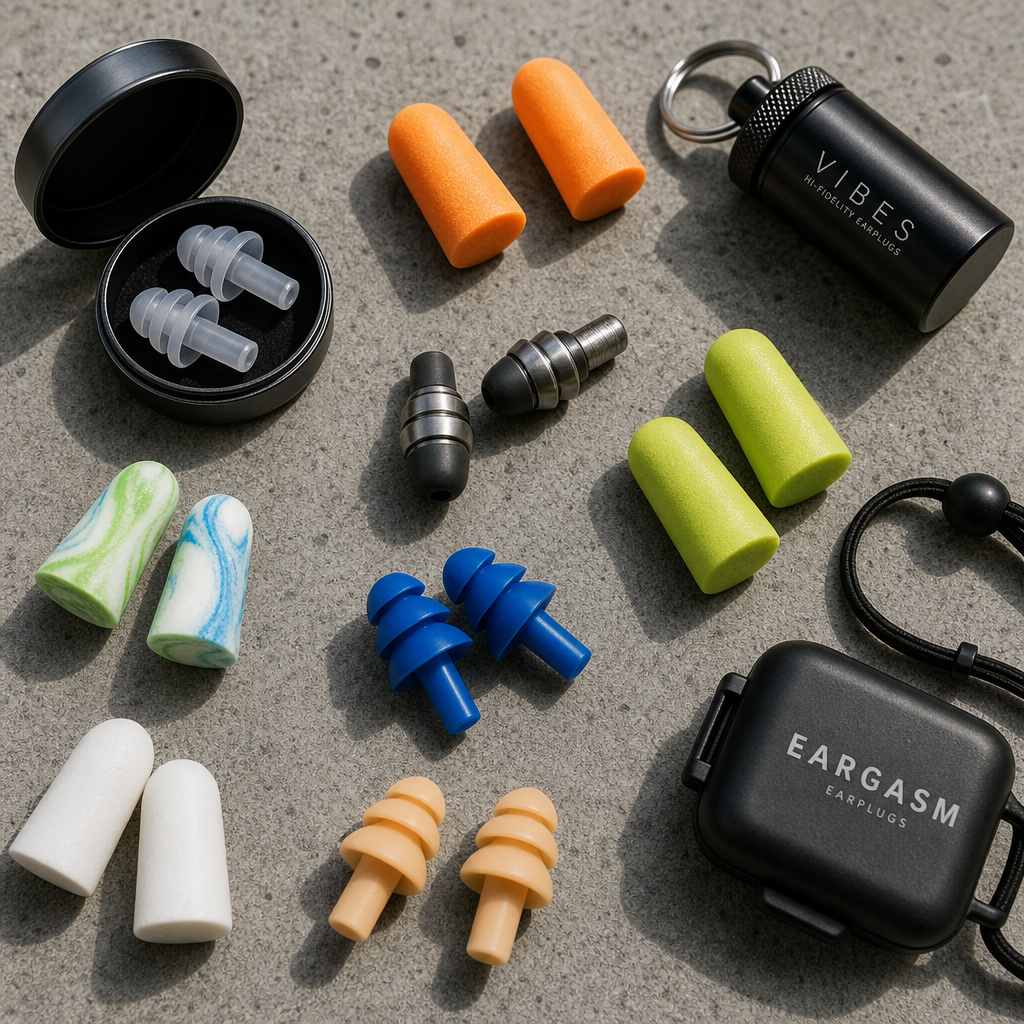
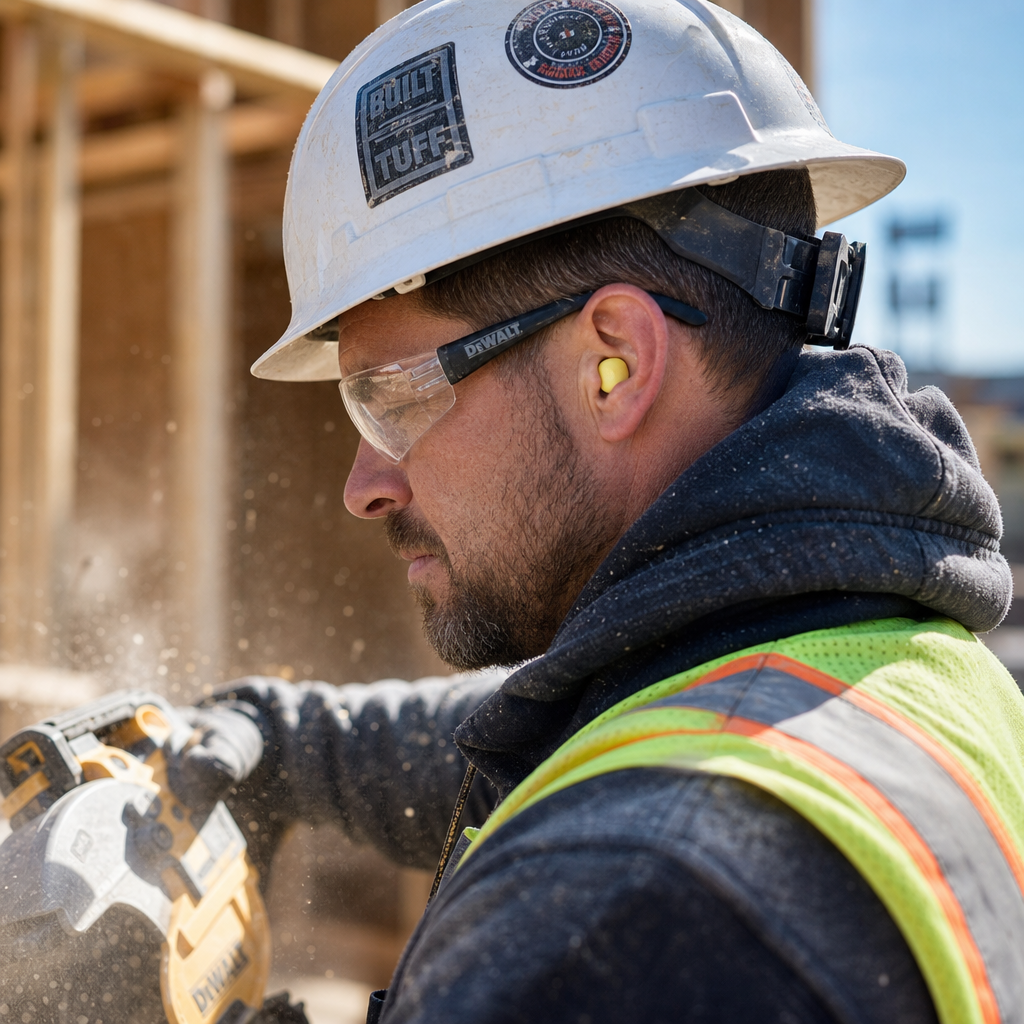
The Noise Reduction Rating (NRR) is an EPA-regulated measurement expressed in decibels that indicates how much sound a hearing protector blocks under controlled laboratory conditions. A plug rated NRR 32dB is among the highest ratings available for insert-style ear plugs, which is precisely what workers in concrete breaking, steel work, or demolition need.
The EPA recommends using a derating formula for real-world estimates. Take the NRR, subtract seven, then divide by two. For an NRR 32 plug, that calculation gives approximately 12.5dB of real-world attenuation. Add that to your ambient noise level calculation. For most heavy construction, this still brings exposure below OSHA action levels during a standard shift.
The data consistently shows that workers consistently underperform laboratory NRR ratings by 30 to 70 percent depending on plug type and insertion technique. This is not a product failure. It is a training and fit failure. High-quality plugs with proper instruction consistently achieve closer to their rated attenuation than cheap plugs worn carelessly.
Pro tip: When selecting ear plugs for a construction crew, look for plugs that include multiple tip sizes. A worker with a narrow ear canal using a medium foam tip will achieve a poor seal regardless of the plug’s NRR rating.
In Australia and Europe, hearing protection is often rated using the Single Number Rating (SNR) system rather than NRR. SNR values are generally higher numerically than their NRR equivalents. If you are sourcing ear plugs internationally for Australian construction sites, verify which standard applies and never assume the numbers are directly comparable.
Not every ear plug design works equally well in a construction context. There are four main types used in industrial and construction settings, and each has meaningful tradeoffs that affect real-world compliance and protection.
These are the yellow rolldown plugs that fill every site safety cabinet. They are cheap, single-use, and almost universally hated by workers after the first hour. They compress and loosen as they absorb moisture, they collect sawdust and grime, and they are typically one-size, which means poor fit for many users. A common mistake is assuming that having boxes of disposable foam plugs on site means workers are protected. Distribution does not equal compliance.
Banded plugs connect two foam or pod-style tips with a rigid band that sits under the chin or behind the neck. They are faster to remove and reinsert than rolldown plugs, which makes them popular in environments where workers need to communicate regularly. However, they typically offer lower attenuation than well-fitted insert plugs and the band can interfere with hard hat straps and chin guards.
This category includes premium options like ATTENU8’s metal-bodied ear plugs, which combine a durable aluminium body with interchangeable memory foam tips. The body is built to last indefinitely under job site conditions. Only the foam tips require periodic replacement, roughly every six to eight weeks depending on use frequency. This design directly addresses the two biggest failure modes of disposable plugs: hygiene degradation within a single shift, and cumulative waste cost.
Earmuffs are effective but incompatible with many construction tasks. They cannot be worn easily with hard hats, welding helmets, or respirators. In high heat, they are uncomfortable enough that workers actively avoid wearing them. For tasks requiring prolonged high-noise exposure without other PPE conflicts, dual protection combining earmuffs over foam plugs is the highest-attenuation option available.

The best ear plugs for loud environments share a specific set of characteristics that separate them from general-consumer products. Understanding these features allows safety managers and individual workers to make defensible purchasing decisions rather than defaulting to whatever is cheapest per unit.
Memory foam creates a superior acoustic seal compared to standard polyurethane foam because it conforms to the irregular geometry of individual ear canals. It recovers its shape more slowly, giving it time to expand and seat properly rather than springing back before the canal walls have been reached. ATTENU8’s three tip sizes (XS, S, and M) address the reality that a single size cannot serve a diverse construction workforce adequately.
Plastic-bodied reusable plugs crack when dropped on concrete, deform in high heat, and become brittle with UV exposure over time. Aluminium bodies do not have these failure modes. They survive being dropped from scaffolding, sitting in a tool bag all week, or being cleaned repeatedly with harsh solvents. For workers who are investing in a piece of PPE they will use every day for years, material quality is not a luxury specification. It is a basic functional requirement.
Workers wearing thick gloves cannot execute the precise rolldown-and-hold technique required for disposable foam plugs without removing their gloves. A plug with a solid body that can be inserted and seated with a simple push-and-hold motion is far more likely to be worn correctly on an active site. Compliance depends on convenience, and any design that creates a friction barrier to use will be avoided.
“The most effective hearing protector is the one the worker will actually wear consistently, all day, every day.” NIOSH, National Institute for Occupational Safety and Health
A disposable foam plug worn for a full shift in summer heat has absorbed sweat, skin oils, and airborne dust. Continuing to wear it the next day is a hygiene problem. Premium reusable plugs with replaceable foam tips solve this cleanly. The aluminium body can be wiped down, and tips are replaced on a scheduled cycle rather than discarded after every use. This is both more hygienic and more cost-effective at scale.
Pro tip: For construction crews managed by a safety officer, ordering replaceable memory foam tips in bulk and scheduling a six-week replacement cycle across all workers is far simpler to manage than maintaining a supply of disposable plugs that disappear unpredictably and inconsistently.
The table below compares the three main categories of industrial ear plugs across the criteria that matter most to construction workers and safety managers.
| Criterion | Disposable Foam Plugs | Standard Reusable Plugs (Plastic Body) | Premium Reusable Plugs (Aluminium Body, e.g., ATTENU8) |
|---|---|---|---|
| Typical NRR Rating | 29-33dB (lab), much lower in real use | 25-30dB | Up to 32dB with correct tip size and insertion |
| Durability Under Construction Conditions | Single shift, then discarded | Weeks to months, prone to cracking and deformation | Years with tip replacements every 6-8 weeks |
| Hygiene Across a Full Shift | Poor. Absorbs sweat and particulates | Moderate. Body can be wiped but foam degrades | High. Metal body wipeable, tips replaced on schedule |
| Fit for Diverse Ear Canals | One size only, poor seal for many workers | Typically 2 sizes | Three sizes (XS, S, M) for consistent seal across workforce |
| Cost Over 12 Months (per worker) | Low per unit, high in aggregate volume | Moderate | Higher upfront, lower ongoing via tip replacement only |
| Ease of Use with Work Gloves | Very difficult, requires removing gloves | Moderate | High. Solid body allows gloved insertion |
| Environmental Waste | High. Daily disposal for every worker | Moderate | Low. Only foam tips replaced periodically |
Correct insertion technique is the single most controllable variable in real-world hearing protection performance. The gap between an NRR 32 plug worn correctly and the same plug inserted lazily can be 15 to 20dB of lost protection. On a 110dB construction site, that difference is the margin between manageable exposure and active hearing damage.
For premium memory foam tips like those used in ATTENU8 ear plugs, the process is straightforward. Reach the opposite hand over the top of the head to pull the outer ear upward and backward. This straightens the ear canal. Insert the plug with the other hand using a gentle pressing motion, holding it in place for five to ten seconds while the memory foam expands and fills the canal. A properly seated plug will feel snug without being painful, and background noise will noticeably reduce.
Cup both hands over your ears briefly after insertion. If noise noticeably decreases further when you add this extra barrier, the plug has not achieved a full seal. Reinsert and try again. This simple field check takes three seconds and confirms whether a worker has adequate protection before walking into a high-noise area.
Some workers find that one ear requires a different tip size than the other. This is more common than most assume. A product offering multiple tip sizes, including XS for narrower canals, directly addresses this. Trying different sizes on each ear separately and identifying the optimal combination is the correct approach, not defaulting to the same size bilaterally without verification.
Hearing protection for construction is not optional in most jurisdictions. OSHA in the United States requires employers to implement a hearing conservation program when workers are exposed to time-weighted average noise levels of 85dB or above over an eight-hour shift. Safe Work Australia imposes similarly structured requirements under the Work Health and Safety regulations, mandating both engineering controls and personal protective equipment where noise cannot be controlled at source.
Employers must provide appropriate hearing protection at no cost to workers, ensure it is properly fitted and worn, and offer training on correct use. Simply having PPE available in the site office does not meet compliance requirements. Documented training records showing workers have been instructed on correct fitting technique are part of a defensible compliance program.
For Australian construction sites, ear plugs should meet the AS/NZS 1270:2002 standard for hearing protectors. Ensure any product purchased, particularly through international online retailers, carries certification to the applicable local standard. ATTENU8’s ear plugs are designed for the premium end of the protective range, targeting the 32dB attenuation that makes them viable across the full spectrum of construction noise environments.
A common mistake at the procurement level is selecting hearing protection based purely on unit price. The real cost calculation must account for replacement frequency, compliance failure rates, and the long-term liability exposure of a workforce with preventable hearing damage. Premium reusable ear plugs with documented attenuation ratings are a straightforward risk management investment.
For most heavy construction environments, an NRR of 29 to 33dB is appropriate. Tools like jackhammers, concrete saws, and pneumatic drills operate at 100 to 130dB, and an NRR 32 plug is the highest attenuation commonly available in insert-style ear plugs. Apply the EPA derating formula (NRR minus 7, divided by 2) to estimate realistic field performance rather than relying on the lab rating alone.
For premium reusable ear plugs with replaceable foam tips, the tips should be changed every six to eight weeks under regular daily use. The solid body of a metal-bodied plug like ATTENU8 does not need replacement, only the foam tip components. This is significantly less waste and cost than replacing disposable plugs daily. Inspect tips regularly for visible compression, tearing, or hardening, and replace earlier if degradation is observed.
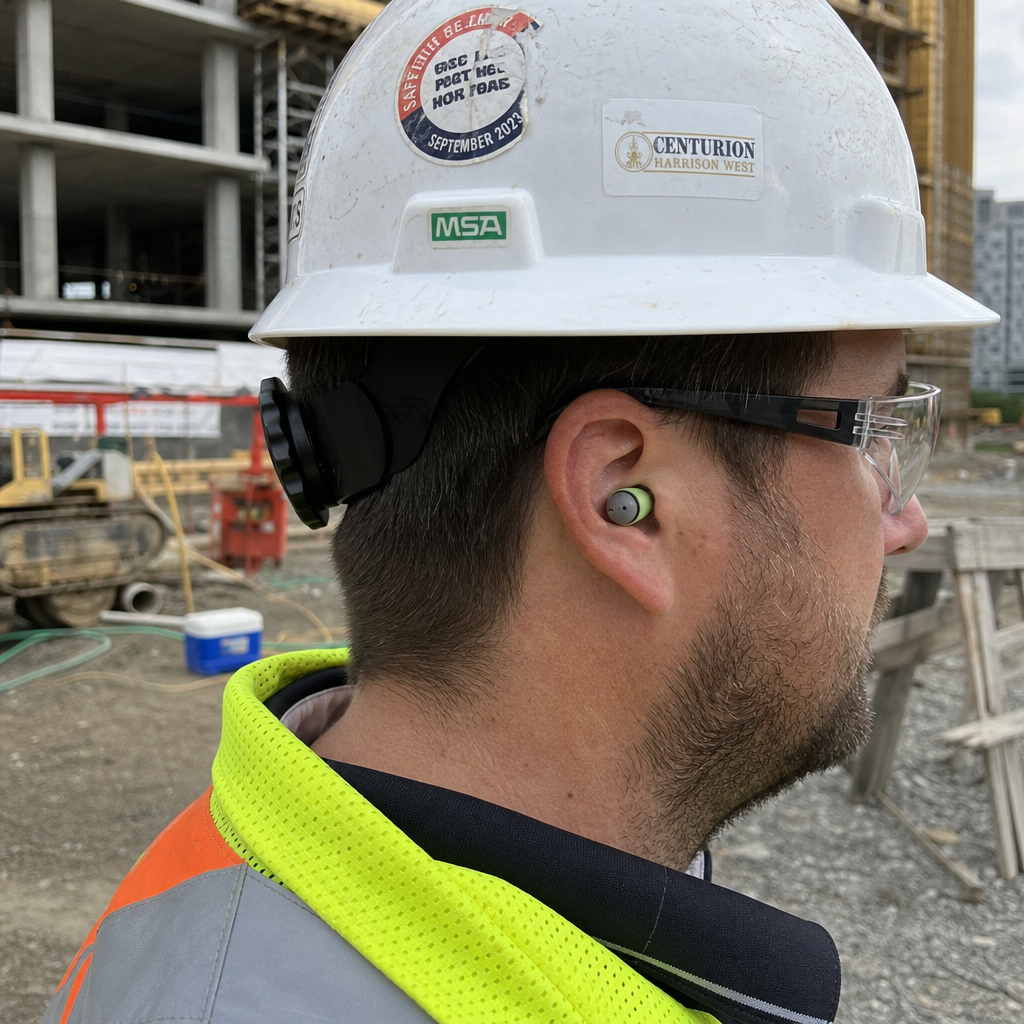
Yes. Insert-style ear plugs are the most compatible hearing protection option for workers wearing hard hats, as they sit entirely within the ear canal and do not interfere with the helmet’s fit or suspension system. Earmuffs are far more problematic with hard hat compatibility. This is one of the primary reasons insert plugs are the dominant PPE choice on active construction sites rather than muffs.
In practice, premium reusable ear plugs with scheduled foam tip replacements are more hygienic for regular workers. A disposable foam plug worn through a sweaty eight-hour shift in dusty conditions has absorbed significant contamination by the end of the day. A metal-bodied plug can be wiped down, and its foam tips replaced on a regular maintenance cycle rather than being a single-use item that workers often reuse anyway because they run out of replacements mid-shift.
NRR (Noise Reduction Rating) is the American standard regulated by the EPA. SNR (Single Number Rating) is used in Europe and Australia under the EN 352 and AS/NZS 1270 frameworks. They measure similar properties but use different test methodologies, and SNR values are numerically higher for equivalent protection levels. Never directly compare NRR and SNR numbers without applying the appropriate conversion. For Australian construction sites, look for AS/NZS 1270:2002 certification on any hearing protector you purchase.
Standard disposable foam plugs lose their seal when workers move their jaw (talking, eating), tilt their head, or when the foam compresses and loses elasticity from heat and moisture. They also rely entirely on a rolldown-and-hold insertion technique that is difficult to execute correctly in work gloves. Premium insert plugs with a solid body maintain their position independently of the foam tip’s elasticity, which is why their retention across a full shift is meaningfully better than rolldown disposables.
Loop and Flare Audio products are primarily designed for lifestyle applications including concerts, commuting, and everyday noise management. They are not rated or designed for heavy industrial noise environments. ATTENU8’s 32dB NRR target and durable aluminium construction are specifically appropriate for construction-level noise exposure. Workers who try lifestyle ear plug brands in a construction context are likely underprotected, even if the products look similar in form factor.
Have you tried switching your construction crew from disposable foam plugs to a premium reusable system? Share what worked or what held you back, your experience helps other safety managers make better decisions.
Most people know noise keeps them awake. What most people do not know is exactly which sleep stage noise destroys first, and why that destruction has consequences that ripple through the next 16 hours of waking life. The relationship between sleep stages and noise is not simply about being startled awake. It is about neurological architecture being quietly dismantled every night. Research from the National Institutes of Health confirms that even noises below the threshold of conscious waking can suppress slow-wave and REM activity. If you are a light sleeper, a shift worker, or someone in a loud environment, this is not abstract science. This is your daily reality.
| Key Insight | Explanation |
|---|---|
| Noise damages sleep even without waking you | Sub-awakening sounds above 40dB suppress slow-wave sleep and reduce restorative delta wave activity without causing conscious arousal. |
| Deep sleep (Stage 3) is the most vulnerable stage | Slow-wave sleep is the hardest sleep to enter and the easiest to disrupt. A single noise event can abort a deep sleep cycle that took 45 minutes to reach. |
| REM sleep disruption impairs memory and emotion | Noise during REM prevents the brain from consolidating memories and processing emotional stress, leaving you cognitively impaired the next day. |
| Intermittent noise is worse than constant noise | The brain habituates to steady background noise more readily. Unpredictable sounds, like traffic or snoring, trigger repeated micro-arousals throughout the night. |
| 32dB noise reduction is the minimum effective threshold for sleep protection | Standard disposable foam plugs rated at 33 NRR degrade quickly and fit poorly. A consistent 32dB seal from a well-fitted reusable plug delivers more reliable protection night after night. |
| Early sleep cycles contain more deep sleep | The first two sleep cycles (approximately hours 1 to 4) are disproportionately rich in Stage 3 sleep. Noise exposure early in the night does the most cumulative damage. |
| Ear plug comfort determines whether people actually use them | An ear plug that causes physical discomfort by 2am will be removed, eliminating all protection. Fit consistency matters more than peak NRR rating on paper. |
Human sleep is not a single uniform state. It cycles through four distinct stages across the night, each serving a different biological function. Understanding what each stage does is the only way to understand precisely what you lose when noise interrupts it.
The four stages are: Stage 1 (light NREM), Stage 2 (intermediate NREM), Stage 3 (deep slow-wave NREM), and REM sleep. A full cycle through all four takes approximately 90 minutes, and a healthy adult completes four to six of these cycles per night. The problem is that the composition of each cycle changes across the night, and not in a forgiving way.
Stage 1 is the transition between wakefulness and sleep. It lasts only a few minutes and is where you are most easily jolted awake. A car door slamming outside during Stage 1 will almost certainly reset the entire process. Stage 2 involves the emergence of sleep spindles, which are bursts of neural activity believed to play a role in protecting sleep from external disturbances. Think of sleep spindles as a weak biological noise gate. They exist, but they have clear limits.
Slow-wave sleep, also called deep sleep or Stage 3, is where the body does its most critical repair work. Growth hormone is released almost exclusively during this stage. The glymphatic system, which clears metabolic waste from the brain, operates at peak efficiency here. Immune function is consolidated. If you lose Stage 3 sleep, you wake up feeling physically unrestored regardless of how many total hours you spent in bed.
The data consistently shows that Stage 3 sleep is front-loaded. You get the most of it in the first half of the night. This means that noise exposure between roughly 10pm and 2am, for someone sleeping at a standard time, does disproportionate damage to the restorative function of sleep.

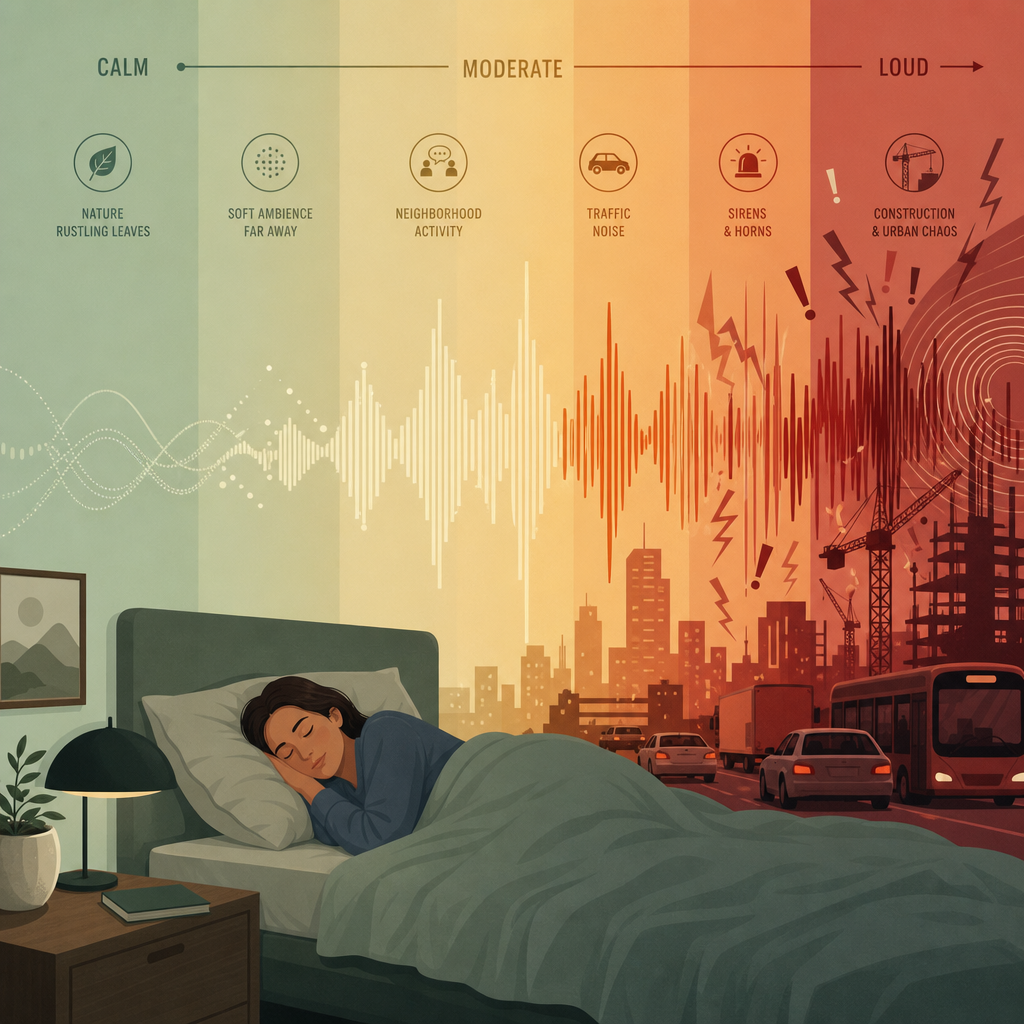
The mechanism by which noise disrupts deep sleep is more insidious than most people assume. You do not need to wake up for the damage to occur. The auditory cortex remains active during sleep. Even when you are fully unconscious, your brain is still processing acoustic information and deciding whether it represents a threat.
Research published in the journal Sleep Medicine Reviews documents that noise events above approximately 40dB during slow-wave sleep trigger measurable changes in EEG activity, reducing delta wave power, which is the specific brain wave pattern associated with deep restorative sleep. The body does not fully wake. It simply gets pulled up from Stage 3 toward the lighter stages, and the restorative process is interrupted.
Micro-arousals are brief shifts in brain state, typically lasting 3 to 15 seconds, that do not produce conscious wakefulness but do disrupt sleep architecture. A person can experience 20 or 30 micro-arousals per night from environmental noise and wake up with no memory of any of them. They simply feel unrefreshed and assume they are not a good sleeper.
In practice, this is one of the most commonly misdiagnosed sleep problems. People in urban environments, people sleeping next to a partner who snores, and people in shared living spaces often attribute their poor sleep quality to stress, diet, or aging when the primary cause is acoustic. A common mistake is assuming that because you do not recall waking up, noise is not affecting your sleep. That assumption is wrong.
Pro tip: If you consistently wake up feeling unrefreshed despite logging 7 to 8 hours in bed, track the noise environment in your bedroom for one week using a free decibel meter app. You may find your room regularly exceeds 45dB during the night, which is enough to suppress slow-wave sleep without ever fully waking you.
A single noisy night is recoverable. Chronic noise exposure across weeks and months produces cumulative deep sleep deprivation, which is associated with increased risk of cardiovascular disease, metabolic dysfunction, and cognitive decline. The World Health Organization’s European office identified road traffic noise as the second largest environmental health risk in Western Europe, accounting for more healthy life years lost than any environmental pollutant except air quality.
“Night-time noise causes sleep disturbance which leads to a number of health effects including cardiovascular disease, cognitive impairment in children, mental health problems and annoyance.” – World Health Organization, Environmental Noise Guidelines for the European Region
While most people have heard that deep sleep matters, REM sleep noise disruption is less discussed and arguably just as damaging for cognitive and emotional function. REM sleep, which stands for Rapid Eye Movement sleep, dominates the second half of the night. This is when the brain processes emotional experiences, consolidates declarative and procedural memory, and generates novel connections between ideas.
Because REM sleep is concentrated in the early morning hours, typically between 4am and 7am for most adults, this is also when many noise environments get louder. Early morning traffic, garbage trucks, delivery vehicles, birds, construction start times. The cruel irony is that the noise you are most likely to hear in the morning is targeting the sleep stage you most need for emotional regulation and cognitive performance.
People who consistently lose REM sleep due to noise report poor emotional regulation, reduced creativity, difficulty with complex problem-solving, and a general sense of mental fogginess. This is distinct from the physical heaviness that comes from losing Stage 3 sleep. REM deprivation specifically impairs the prefrontal cortex’s ability to regulate the amygdala, which means your emotional responses become disproportionate and harder to manage.
For professionals in high-stakes environments, whether that is construction site management, military service, or manufacturing supervision, this is not a minor inconvenience. It is a direct performance and safety risk. The same hearing protection that workers use on site to protect against noise-induced hearing loss should be part of the conversation about protecting the sleep that makes those workers cognitively functional.
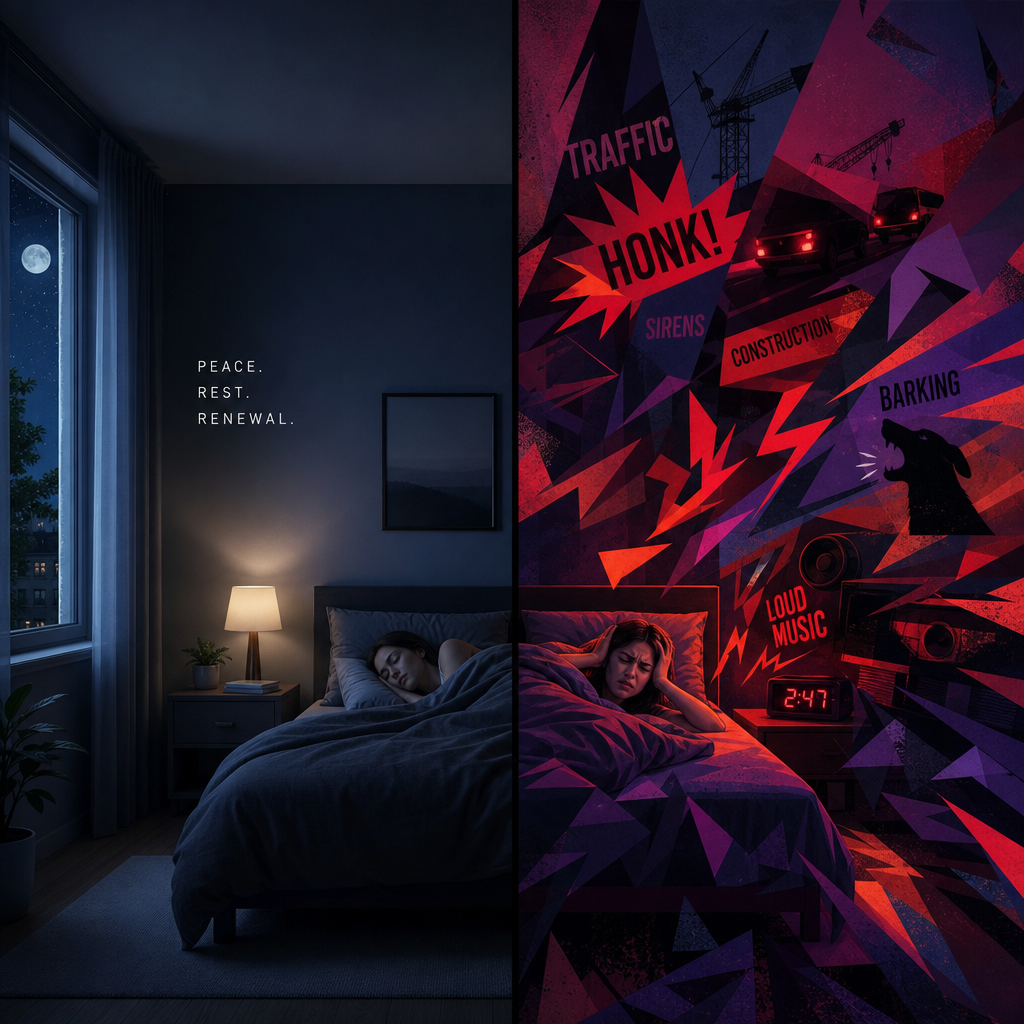
Not all noise is equally destructive to sleep. The research is clear on this: it is not just the volume of a sound that determines how much damage it does. It is the combination of volume, unpredictability, and perceived relevance to the sleeper.
Studies consistently show that sounds with biological or social significance, a baby crying, a voice calling your name, a sudden alert sound, trigger arousal responses at significantly lower volumes than neutral sounds like traffic or rain. This is an evolutionary holdover. The brain is wired to protect against threats, and a meaningful sound gets treated as a potential threat even during sleep.
Snoring from a partner is one of the most common and most damaging noise sources for sleep, and it combines several of the worst features. It is intermittent enough to prevent habituation. It can reach 60 to 80dB at close range. And it often contains vocal qualities that the brain is hardwired to process. A report from the CDC’s sleep health data identifies partner sleep disturbance as one of the leading contributors to short sleep duration in adults.
Traffic noise presents a different but equally serious pattern. It tends to include low-frequency content that travels through walls more effectively than high-frequency sound, making standard cheap foam plugs less effective than their NRR ratings would suggest, since those ratings are measured under controlled conditions that do not reflect real-world use.
Pro tip: When evaluating ear plugs for sleep protection, prioritize consistent fit over maximum NRR rating. A plug that achieves a reliable 28 to 32dB real-world seal every night outperforms one rated at 36dB that you cannot insert correctly or that falls out after an hour. Memory foam tips sized correctly to your ear canal geometry make the difference between lab-rated protection and actual protection.
There are several approaches people use to manage bedroom noise. They are not equally effective, and the differences matter more than most product marketing suggests.
| Approach | Noise Reduction Effectiveness | Practical Limitations |
|---|---|---|
| Standard disposable foam ear plugs | Up to 33dB NRR on paper, but real-world performance is typically 10 to 15dB lower due to poor insertion technique and degradation after first or second use. | Single-use or very short lifespan. Inconsistent fit. Accumulate waste. Many users report discomfort from cylindrical shape pressing on ear canal by 2am to 3am. |
| White noise or sound masking machines | Does not reduce total acoustic energy in the room. Adds a constant sound at approximately 65dB to mask variable noise. Effective for habituation but increases total noise load. | Requires electricity. Masks some sounds but not sudden loud events. Some users find it difficult to sleep without the machine once habituated. Not appropriate for shift workers or travel. |
| Reusable metal-bodied ear plugs with sized memory foam tips (such as ATTENU8) | Consistent 32dB noise reduction with correct tip sizing. Metal body maintains shape integrity over months of use. Multiple tip sizes (XS, S, M) allow genuine anatomical fit rather than one-size-forces-all compression. | Slightly higher upfront cost than disposable foam. Requires learning correct insertion technique once. Foam tips need replacing every 6 to 8 weeks rather than the entire unit. |
Improving sleep quality through noise management requires approaching the problem at two levels: the environment and the ear. Acoustic treatment of a bedroom, meaning heavy curtains, door seals, and soft furnishings, can reduce ambient noise levels by 5 to 10dB. That is meaningful but rarely sufficient for urban environments or partner snoring scenarios.
The more reliable intervention is physical noise attenuation at the ear canal level. This is where the quality of your ear protection directly translates into the quality of your sleep architecture. A consistent 32dB reduction means that a 70dB truck passing outside becomes approximately 38dB at the ear canal level, which is below the threshold at which sleep disruption typically occurs.
Fit consistency is the variable that most ear plug products fail on. Standard cylindrical disposable foam plugs compress into the ear canal in a way that works reasonably well when first inserted but degrades through the night as the foam relaxes. By 3am, the effective seal may have dropped by half. This is precisely when REM sleep is most active and most vulnerable.
The concave design of ATTENU8 ear plugs, combined with memory foam tips in three sizes, is a direct engineering response to this problem. The aluminium body does not deform, and the tip sizing means the foam is working with your ear canal geometry rather than against it. The result is a seal that is as effective at 6am as it was at 10pm. For people whose primary sleep problem is early morning REM disruption from traffic or birds, this consistency is the difference between a functional and a dysfunctional sleep architecture.
Consistency is what converts a good sleep intervention into a good sleep pattern. Using quality ear plugs nightly resets your sleep architecture over time. Within one to two weeks, most light sleepers report a measurable improvement in morning alertness, reduced mid-afternoon energy crashes, and better emotional regulation. These are the downstream effects of protecting Stage 3 and REM sleep rather than treating sleep as a passive, automatic process.
For professionals in loud workplaces who are already wearing hearing protection during the day, extending that protection philosophy to nighttime sleep is a logical and high-return decision. The same principle that prevents occupational hearing loss, consistent, well-fitted noise attenuation, also prevents occupational sleep debt.
Research consistently places the threshold for sleep disruption at around 40 to 45dB for continuous noise and somewhat lower for sudden or intermittent sounds. The World Health Organization recommends average nighttime noise levels below 40dB outdoors, which translates to approximately 30dB or lower inside the bedroom. Even sounds you do not consciously perceive can suppress slow-wave sleep if they exceed this range.
Yes, significantly. Intermittent and unpredictable sounds cause more micro-arousals than steady background noise at the same average volume. Sounds with biological relevance, voices, crying, alarms, also trigger stronger arousal responses at lower decibel levels than neutral sounds. This is why snoring from a partner is often more disruptive than street noise at a similar volume.
Stage 3 slow-wave sleep is the most physiologically vulnerable to noise disruption because it is both the hardest stage to enter and the most easily pushed into lighter stages by acoustic events. However, REM sleep disruption carries its own serious consequences for memory consolidation and emotional regulation, particularly because REM is concentrated in the early morning hours when many noise environments intensify.
Partial habituation does occur for steady, predictable sounds. However, habituation at the conscious level does not mean habituation at the level of sleep architecture. EEG studies show that even long-term urban residents continue to show measurable reductions in slow-wave sleep duration in response to traffic noise, despite reporting that they are used to it and rarely wake up. The damage continues even when awareness of it does not.
In practice, most people notice improved morning alertness within three to five nights of consistent, well-fitted ear plug use. Full restoration of sleep architecture, meaning the return of normal Stage 3 and REM duration and timing, typically takes one to two weeks of consistent noise reduction. This assumes the ear protection maintains an adequate seal throughout the night, which requires a properly sized fit rather than a generic one-size product.
For nightly sleep use, reusable ear plugs with replaceable memory foam tips outperform disposable foam plugs on two critical dimensions: consistency of fit and comfort across the full night. Disposable foam plugs are designed for single short-term industrial use and degrade in seal quality and comfort over hours. A reusable metal-bodied plug with correctly sized foam tips maintains its geometry and seal from first use to last, which is exactly what protecting sleep architecture requires.
There are no documented negative effects of nightly ear plug use when plugs are kept clean and the foam tips are replaced on schedule, approximately every six to eight weeks for regular users. The common concern about ear wax buildup is associated with dirty or damaged plugs left in for extended continuous periods, not with clean, well-maintained ear plugs used for a normal sleep duration. If you experience any ear canal irritation, switching to a smaller foam tip size is usually the first corrective step.
If you have been managing noise-related sleep problems, share what has worked or not worked for you. Firsthand experience helps other readers make better decisions about protecting their sleep.
We would love your feedback and any insights you would share with others. What perspective would you add?
If you live in a city and wake up exhausted, urban noise pollution sleep disruption is almost certainly a contributing factor. The World Health Organization estimates that environmental noise causes at least one million healthy life years lost annually in Western Europe alone, with sleep disturbance ranking as the most damaging effect. Traffic rumble at 2 AM, a neighbour’s air conditioning unit, a garbage truck at 5 AM – none of these need to wake you fully to do serious damage. They fragment your sleep architecture in ways you may never consciously notice but will absolutely feel the next day.
| Key Insight | Explanation |
|---|---|
| 40 dB is the sleep disruption threshold | The WHO identifies 40 dB as the nighttime noise level above which sleep quality measurably deteriorates. City ambient noise frequently exceeds 55-65 dB. |
| You don’t need to wake up to be harmed | Noise events below full waking threshold still trigger cortisol spikes, heart rate increases, and micro-arousals that shorten deep sleep stages. |
| Deep sleep and REM are the most vulnerable stages | Intermittent city noise specifically suppresses slow-wave sleep and REM, the two stages most critical for physical recovery and memory consolidation. |
| Traffic noise is the worst offender | Road traffic noise affects more urban residents than any other noise source and is strongly linked to cardiovascular disease risk in people with chronic sleep disruption. |
| 32 dB attenuation changes the equation | Ear plugs with a Noise Reduction Rating of 32 dB can bring a 65 dB city environment down to a tolerable 33 dB, well within restorative sleep range. |
| Reusable metal-bodied ear plugs outperform disposable foam long-term | Disposable foam plugs degrade in noise reduction performance after a single use. Premium reusable options with replaceable memory foam tips maintain consistent attenuation over months of nightly use. |
| Comfort determines compliance | The best ear plug is the one you actually keep in all night. Concave ergonomic designs with multiple tip sizes dramatically improve overnight retention compared to standard cylindrical foam plugs. |
The brain does not fully shut down during sleep. It continues processing auditory signals, and when those signals are loud or unpredictable enough, it triggers a stress response even if you stay technically asleep. This is the mechanism that makes city noise sleep problems so insidious. You go to bed, you fall asleep, and you think everything is fine. But your autonomic nervous system has been quietly fighting traffic noise all night.
Research published through the European Environment Agency shows that nocturnal noise causes measurable increases in blood pressure, heart rate variability, and adrenaline secretion, all while the sleeper remains unconscious. A single night of this is manageable. Years of it in a city apartment are associated with significantly elevated risks of hypertension, type 2 diabetes, and cardiovascular disease.
The sleep architecture damage is specific and predictable. Noise events during slow-wave sleep (stages 3 and 4) cause the brain to retreat to lighter sleep stages. Because the body cycles through sleep stages roughly every 90 minutes, a single loud truck at 3 AM can cost you an entire slow-wave sleep cycle for the night. Do this repeatedly across weeks and months, and the cumulative cognitive and physical deficit becomes substantial.
Pro tip: If you wake up consistently between 3 AM and 5 AM feeling unrested but cannot identify a clear cause, noise-triggered micro-arousals are almost certainly the culprit. City garbage collection, early delivery vehicles, and street cleaning machines operate heavily in these hours.
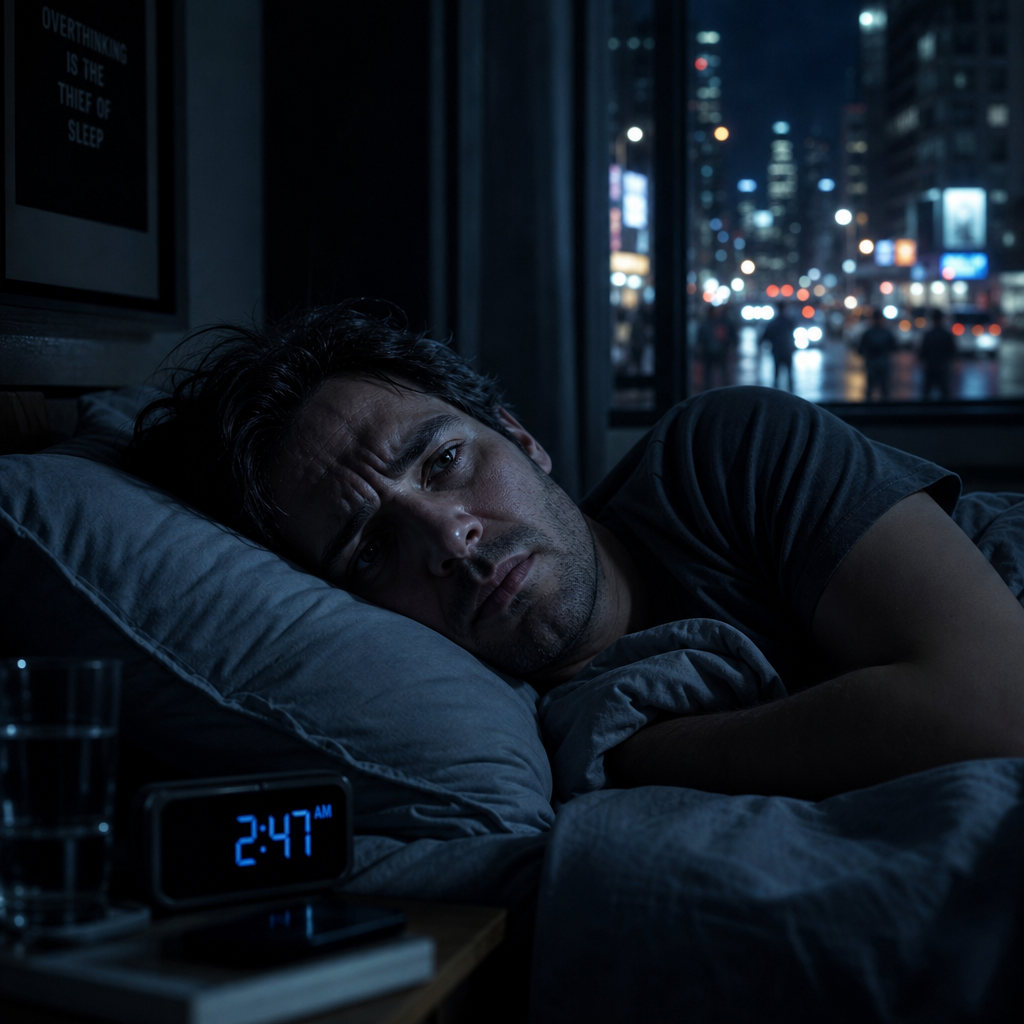
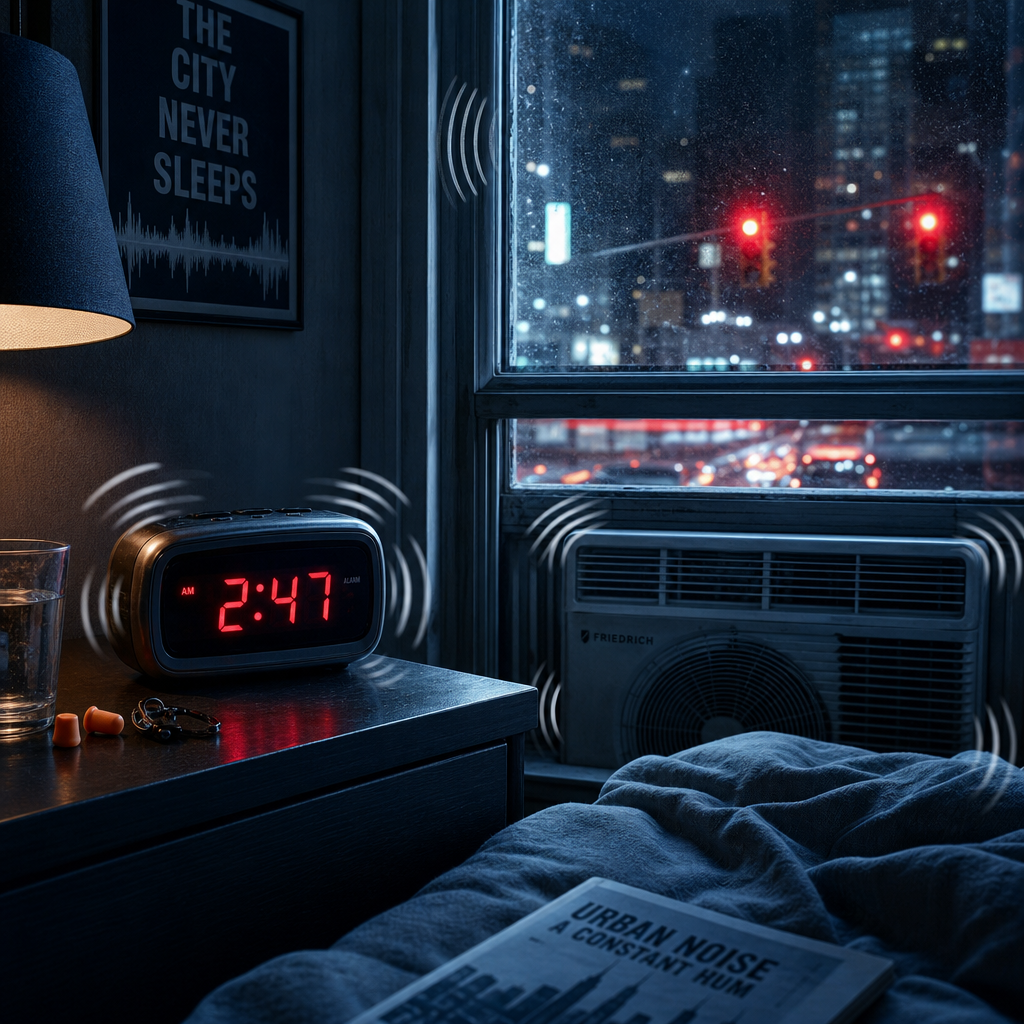
Cortisol is your primary stress hormone, and it operates on a strict circadian schedule. Normally, cortisol levels are at their lowest between midnight and 2 AM, then begin rising gradually to support morning waking. Unpredictable noise events at night spike cortisol out of sequence, which disrupts this natural rhythm and makes it harder for the body to return to deep sleep after disturbance.
In practice, this means a person sleeping in a noisy city apartment may produce cortisol at 1 AM in a pattern that more closely resembles a stress response than restorative rest. Over time, chronically elevated nocturnal cortisol is linked to immune suppression, weight gain, and accelerated cognitive decline.
The WHO’s 2018 Environmental Noise Guidelines for the European Region set outdoor nighttime noise limits at 45 dB, with 40 dB identified as the level below which the majority of the population is protected from serious sleep disturbance. For context, a quiet library measures around 30 dB. A normal conversation is 60 dB. A city street at night typically measures between 55 dB and 75 dB depending on location and time.
Most urban bedrooms, even with windows closed, receive ambient noise levels of 45 dB to 60 dB. This is consistently above the WHO’s protective threshold. A building facade and closed windows typically provide 20 dB to 30 dB of sound attenuation. That brings a 70 dB street into a 40 dB to 50 dB bedroom, still squarely in the zone where noise and sleep quality are meaningfully compromised.
This is where targeted hearing protection with a genuine Noise Reduction Rating becomes important. Ear plugs rated at 32 dB NRR, used correctly with a proper fit, can bring that 50 dB bedroom environment down to approximately 18 dB, which is quieter than a whisper and well within the range for uninterrupted sleep.
“Environmental noise is increasingly recognized as not only an annoyance but a significant public health problem, with sleep disturbance identified as the most critical health effect at low to moderate noise levels.” – World Health Organization Environmental Noise Guidelines, 2018
Not all city noise is equal in terms of sleep disruption. The type, frequency, and predictability of a noise source each affect how severely it fragments sleep. Understanding this matters because different noise sources require different mitigation strategies.
Road traffic noise is the dominant urban noise source and the one most studied in relation to sleep health. Its damage comes less from individual loud events and more from the continuous low-frequency rumble that keeps the auditory cortex partially alert all night. Even at 50 dB, sustained traffic noise reduces slow-wave sleep duration and produces more frequent cortisol responses than complete quiet.
People who live near highways or major arterials frequently report feeling unrested despite logging adequate total sleep time. This is consistent with the research: sleep duration is not the same as sleep quality, and traffic noise preferentially degrades quality while leaving duration intact enough that sufferers often blame other factors entirely.
Sporadic loud events, a car horn, a neighbour’s door slamming, a motorcycle accelerating, produce a sharper and more damaging sleep disruption pattern than continuous noise. The brain’s threat-detection system responds to sudden acoustic changes more vigorously than to steady-state background noise. A single 80 dB impulse noise event can produce a full cortical arousal that takes 20 to 30 minutes of lighter sleep before the body re-enters deep sleep.
For light sleepers particularly, this type of intermittent city noise is the primary driver of poor sleep quality. Ear plugs with consistent, high NRR attenuation are especially effective here because they reduce the peak amplitude of these events below the arousal threshold without requiring the sleeper to do anything active.
Pro tip: If you are a light sleeper living above a busy intersection, prioritise attenuation over everything else. A 32 dB NRR ear plug that fits well and stays in place all night will do more for your sleep than a white noise machine alone, because white noise masks frequency-specific sounds inconsistently and at the cost of adding its own noise floor.
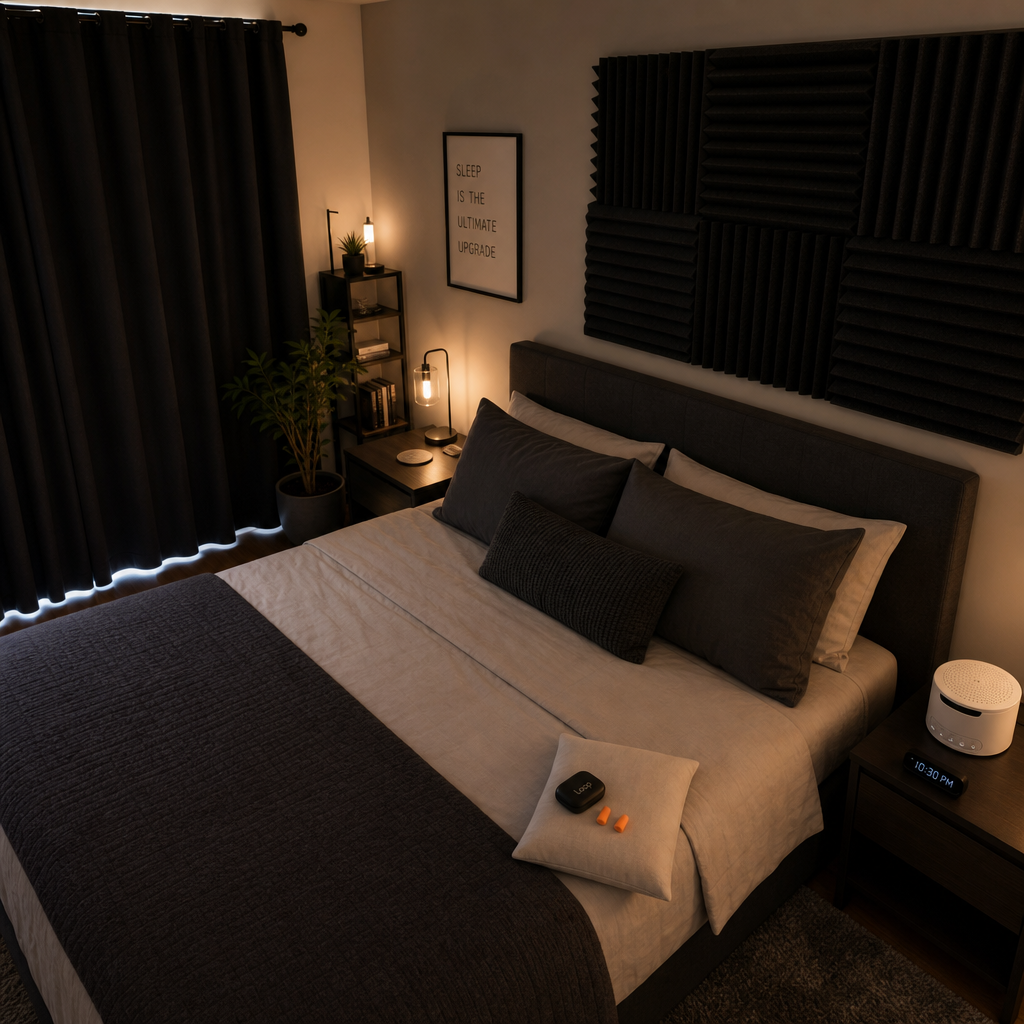
There are three main approaches city dwellers use to address noise and sleep quality. Each has legitimate use cases, but their effectiveness varies significantly depending on noise type, budget, and sleep position.
| Approach | Noise Reduction Effectiveness | Practical Limitations for Urban Sleepers |
|---|---|---|
| White Noise Machines | Moderate: masks consistent background noise reasonably well, but struggles with impulse noise above 70 dB | Adds its own noise floor (typically 50-65 dB), requires electricity, does not travel easily, and can disturb partners at effective masking volumes |
| Window Acoustic Treatments (double glazing, acoustic seals) | High: can add 10-20 dB of additional attenuation beyond standard windows, effective across all noise types | Expensive (often $500-$3,000+ per window), requires landlord approval in rental properties, does not help with internal building noise from neighbours |
| High-NRR Reusable Ear Plugs with Memory Foam Tips | Very High: 32 dB NRR at the ear canal level is the most direct and reliable form of personal noise attenuation available without specialist equipment | Requires correct insertion technique and proper tip sizing, may take 2-3 nights of adjustment for new users, not suitable for those who need to hear alarms at full volume |
In practice, the most effective approach for the majority of urban sleepers is to combine acoustic ear plugs with at least some passive room treatment such as heavy curtains and door seals. Ear plugs address residual and intermittent noise that room treatment cannot fully eliminate, while room treatment reduces the total noise load that ear plugs need to handle.
The standard single-use foam ear plug is the default solution most people try first. It is cheap, widely available, and rated at up to 33 dB NRR in laboratory conditions. The problem is that laboratory conditions bear no resemblance to nightly city sleep use.
Single-use foam plugs lose a significant portion of their attenuation performance after the first use. The foam cell structure compresses and does not fully recover, meaning the plug expands less completely in the ear canal and seals less effectively. By the third or fourth use of the same plug, you may be getting closer to 20 dB of real-world attenuation rather than the rated 33 dB. Most people reuse them anyway because buying a new pair every night is impractical and expensive at scale.
There is also the comfort problem. Cylindrical foam plugs create pressure points inside the ear canal that become genuinely painful after four to five hours. For someone who needs eight hours of sleep, this means the plug comes out at 2 AM and the remaining hours of sleep are unprotected. The plug that seemed like it worked is only working for half the night.
A premium reusable ear plug with a concave aluminium body addresses both failure modes. The metal core does not degrade in the way foam does. It maintains its shape and dimensional consistency night after night, meaning the memory foam tip sits correctly at the canal entrance every time. The concave shape distributes pressure differently than a cylindrical plug, reducing the canal pressure that causes discomfort during extended wear.
The tip replacement schedule, roughly every six to eight weeks with regular nightly use, is the only maintenance required. This preserves the attenuation performance of the system because fresh memory foam expands fully and seals effectively, while the body itself continues to deliver consistent fit geometry. Over a year of city living, a single pair of quality reusable plugs with periodic tip replacements costs a fraction of the disposable equivalent while delivering more consistent protection.
This is the design philosophy behind ATTENU8 ear plugs: a durable aluminium body with three sizes of replaceable memory foam tips (XS, S, M) to accommodate actual ear canal variation across different users, delivering consistent 32 dB attenuation whether it is your first night or your two hundredth.
Addressing urban noise pollution sleep damage effectively means treating your bedroom as a system rather than addressing one noise source in isolation. Here is a layered approach that reflects how real urban noise behaves.
Heavy, floor-length curtains with a dense woven backing can add 5 to 10 dB of sound reduction on top of standard windows. Acoustic door seals applied to gaps around bedroom doors address internal building noise from hallways, stairwells, and neighbours. These are the cheapest structural interventions and should be the first step for renters who cannot modify windows.
White noise or brown noise at a moderate volume (40 to 45 dB) can reduce the perceptual salience of the traffic rumble that gets through your curtains and seals. It does not eliminate the noise but reduces the contrast between silence and noise events, which is part of what makes the brain trigger arousal responses. Keep the volume conservative. Running white noise at 65 dB to cover 60 dB street noise is simply exchanging one noise problem for another.
This is where ear plugs for city living with proper NRR ratings do their most important work. After layers one and two, you may still have 40 to 50 dB of residual noise in the room. That is still above the WHO’s protective threshold. A 32 dB NRR ear plug fitted correctly to your specific ear canal brings that final figure down to safe, restorative levels. The correct tip size is critical here, which is why access to XS, S, and M tip options matters in practice rather than having a one-size product that fits no one particularly well.
Finding the right tip size takes one or two nights of experimentation. A correctly fitted memory foam tip should expand to fill the canal and feel snug but not pressurised. If you remove the plug in the morning and it is unchanged in shape, it did not expand and seal properly. If your ear canal feels sore at the rim, the tip is too large. The XS option is specifically important for women and people with smaller ear canals who are chronically underserved by one-size foam plug products.
Pro tip: Insert memory foam tips by compressing them fully, reaching over the top of your head with your opposite hand to pull the ear upward and outward to straighten the canal, then inserting and holding for 20 to 30 seconds while the foam expands. This technique improves effective attenuation by an estimated 5 to 8 dB compared to a casual insertion, which is a significant difference in a 65 dB city environment.
For people who work in loud professional environments during the day, such as construction, manufacturing, or industrial settings, and then need genuine recovery sleep at night, this layered approach is not optional. Hearing fatigue and noise-induced stress that begins at a job site does not stop when you leave the workplace. Recovery requires both adequate sleep duration and genuine acoustic quiet, and a noisy city apartment provides neither without active intervention.
The World Health Organization identifies 40 dB as the nighttime outdoor noise limit above which sleep disturbance becomes measurable across the general population. Most urban bedrooms with standard windows experience 45 to 60 dB of ambient noise, consistently above this threshold. Impulse noise events above 55 dB are sufficient to trigger cortical arousal even during deep sleep stages.
Yes, and this is one of the better-supported interventions in sleep research. Studies conducted in hospital settings, which share many acoustic properties with urban environments, consistently show that ear plugs reduce the frequency of nocturnal awakenings and improve slow-wave and REM sleep duration. The key variable is whether the ear plug achieves an adequate seal, which depends on fit quality and correct insertion technique rather than rated NRR alone.
A correctly fitted memory foam tip should feel snug within the ear canal after expanding, without creating pain or pressure at the canal entrance. The sound environment should noticeably mute upon insertion. If you can still hear voices clearly at a normal conversational distance immediately after fitting, the tip has not sealed properly and is either too small, inserted too shallowly, or needs to be held in place longer during expansion. Most people find they need different sizes for their left and right ear, which is normal human anatomy.
This is a legitimate concern and one of the main reasons the body geometry of a reusable ear plug matters. A concave aluminium body that sits flush with or slightly recessed from the ear canal entrance creates significantly less lateral pressure when your ear is pressed against a pillow compared to a plug that protrudes. Most side sleepers who switch from standard foam plugs to a properly fitted reusable option with a low-profile body report substantially better overnight comfort, though the first two to three nights of adjustment are common.
White noise machines and ear plugs address the problem differently and are not equivalent. White noise masks background noise by adding a broadband sound that reduces the perceptual contrast of specific noise events. It is moderately effective for consistent low-frequency traffic noise but struggles with sharp impulse events above 70 dB such as car horns, construction starts, or motorcycles. Ear plugs with 32 dB NRR attenuation physically reduce the amplitude of all incoming sound including impulse events, making them more reliable for the type of intermittent noise that is most disruptive to city sleep architecture. The two approaches are complementary rather than competing.
With nightly use, memory foam ear plug tips should be replaced approximately every six to eight weeks. Signs that replacement is needed include visible surface degradation, a reduction in how snugly the tip expands within the canal, or a noticeable increase in background sound reaching you despite correct insertion. Tip degradation is the primary failure mode for reusable ear plug systems, and regular replacement keeps the effective attenuation close to the original specification rather than allowing gradual performance decline.
Regular ear plug use is safe provided basic hygiene is maintained. Reusable plugs should be cleaned according to the manufacturer’s guidance. The main risks associated with ear plug misuse are ear canal infections from unclean plugs and impacted earwax from plugs pushed too deeply into the canal. A correctly fitted plug sits in the outer portion of the ear canal and does not contact the eardrum. If you experience ear discomfort, itching, or muffled hearing that persists after removing your plugs, consult a physician to rule out wax impaction or infection.
Have you found a noise reduction approach that genuinely transformed your sleep in a city environment? Share your experience in the comments so others can learn from what actually worked for you.
Most people shopping for premium ear plugs have already narrowed it down to two names: ATTENU8 and Flare Audio. Both brands reject the disposable foam ear plug model, both target noise-sensitive sleepers and professionals, and both cost considerably more than a box of standard foam inserts. But the similarities end there. When you dig into noise reduction ratings, build quality, fit options, and long-term cost, a clear winner emerges for most use cases. This ATTENU8 vs Flare Audio comparison cuts through the marketing to tell you exactly which product delivers where it matters most.
| Key Insight | Explanation |
|---|---|
| ATTENU8 delivers approximately 32dB noise reduction | This rating exceeds most Flare Audio models and meets occupational hearing protection thresholds in many industrial environments. |
| Metal body construction is a durability differentiator | ATTENU8 uses a concave aluminium body that outlasts the plastic and titanium housings found in comparable Flare Audio products. |
| Three foam tip sizes give ATTENU8 a fit advantage | XS, S, and M memory foam options mean most ear canal sizes are covered, reducing the fit failures that plague single-size ear plug designs. |
| Tip replacement every 6-8 weeks keeps ongoing costs low | ATTENU8 owners replace only the foam tips, not the entire unit, which undercuts the total cost of ownership for most competing products. |
| Flare Audio targets a music and sound-fidelity audience | Flare’s ISOLATE range is engineered for concert-goers and musicians who want sound clarity over maximum attenuation. Different problem, different product. |
| For sleep and high-noise environments, passive foam-tipped designs outperform filtered alternatives | Filtered ear plugs allow some sound through by design. If total noise blocking is the goal, ATTENU8’s memory foam seal is the better choice. |
| Neither brand suits tinnitus sufferers seeking amplification | Both products are passive noise-reduction devices only. Anyone needing sound therapy or amplification requires a different product category entirely. |
Standard disposable foam ear plugs do one thing reasonably well: they expand inside the ear canal and block noise. But they do it inconsistently. Insertion technique, ear canal shape, and foam degradation all reduce actual attenuation well below the printed NRR on the packet. Studies from the National Institute for Occupational Safety and Health have repeatedly shown that real-world protection from disposable foam ear plugs is often 50 percent or less of the laboratory-tested rating.
Premium reusable ear plugs solve this problem by combining a rigid external shell with precisely engineered tips. The shell maintains consistent geometry regardless of how the user handles the product, and replaceable tips ensure the acoustic seal renews regularly. This is the design philosophy behind both ATTENU8 and Flare Audio, and it is why both brands have earned serious attention from noise-sensitive consumers.
Where they diverge is in their definition of “premium.” Flare Audio has built its identity around music-safe attenuation: reducing volume without distorting sound. ATTENU8 has built its identity around maximum passive noise reduction: blocking as much sound as possible, full stop. That philosophical difference explains almost every product decision each company has made.
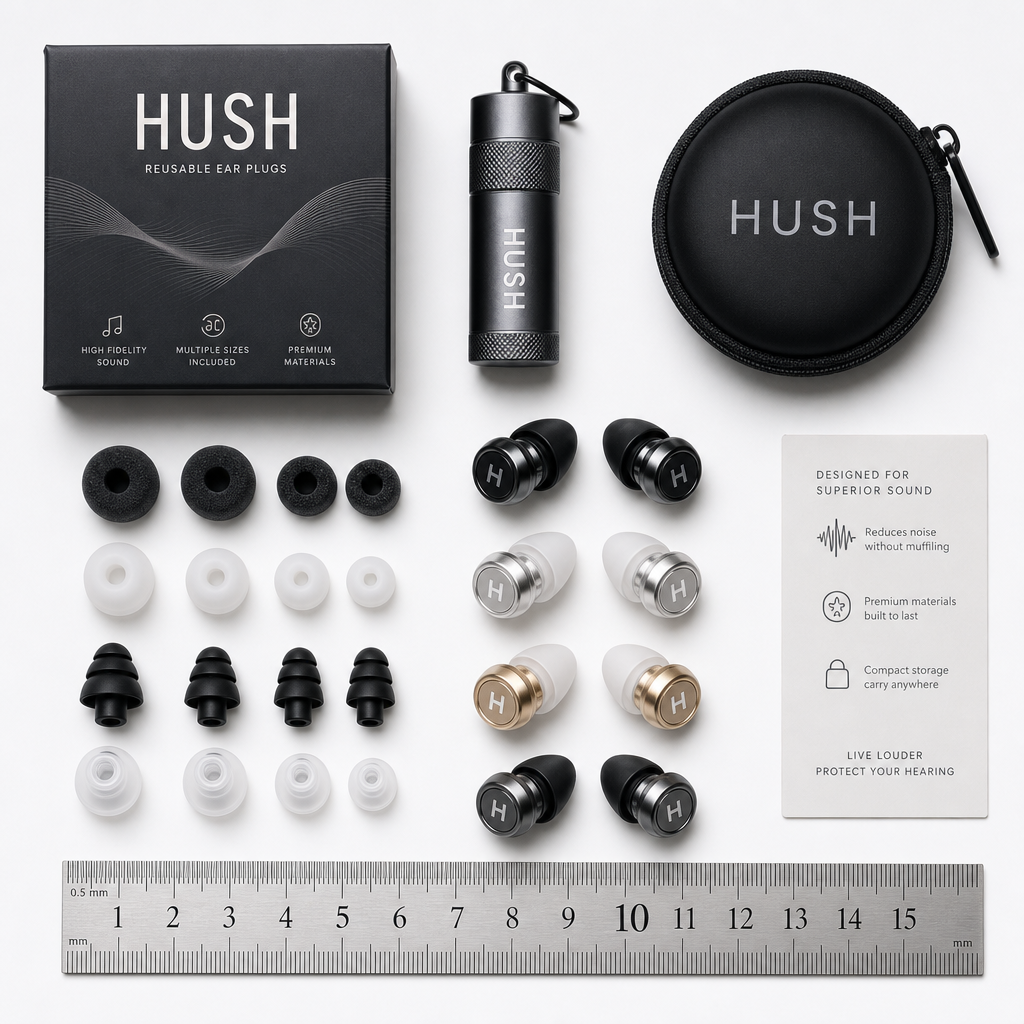
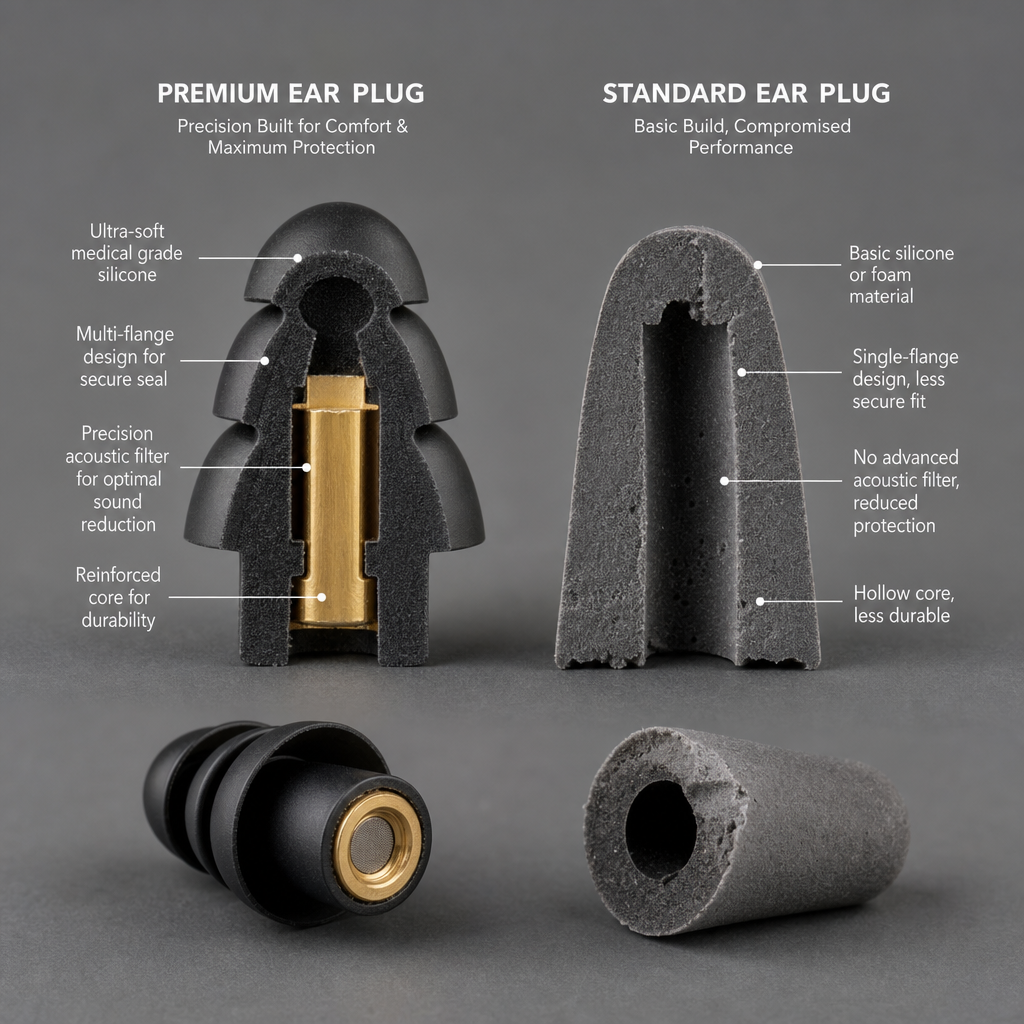
Noise Reduction Rating (NRR) is the US standard measure for ear plug attenuation. The higher the NRR, the more decibels the product blocks. ATTENU8 achieves approximately 32dB noise reduction, which places it firmly in the high-attenuation category alongside industrial-grade hearing protection.
Flare Audio’s flagship ISOLATE ear plugs use a solid metal body with no filter, relying entirely on the tip seal for attenuation. Flare claims attenuation figures in the 35-40dB range in their own marketing materials. However, independent audiological testing and user reports consistently suggest real-world performance sits lower, particularly for low-frequency noise like traffic rumble and snoring, which is precisely the noise profile most relevant to light sleepers.
In practice, a 32dB rated product with a well-engineered memory foam seal will outperform a theoretically higher-rated product with a poor or inconsistent tip fit. ATTENU8’s three-size foam tip system addresses fit consistency directly, which is where most ear plug failures actually happen.
The noise that wakes light sleepers is rarely high-pitched. Partner snoring, traffic, air conditioning units, and street noise all concentrate energy in the 125Hz to 500Hz frequency range. Passive memory foam seals attenuate low frequencies well. Hard metal-bodied ear plugs without foam tips perform less consistently at these frequencies because the solid shell transmits bone-conducted vibration.
ATTENU8’s concave aluminium body combined with memory foam tips creates a composite attenuation system: the foam provides the primary acoustic seal, and the aluminium body adds structural consistency. This combination performs well across the full frequency range relevant to sleep disruption.
Pro tip: When comparing ear plug noise reduction claims, always check whether the figure is an NRR (US standard) or SNR (European standard). SNR values are typically 3-5dB higher than NRR values for the same product, so direct numerical comparisons between brands using different standards can be misleading.
Both ATTENU8 and Flare Audio chose metal over plastic for their ear plug bodies, and for good reason. Metal resists compression, maintains dimensional accuracy over thousands of insertion cycles, and does not degrade from contact with skin oils or cleaning agents. In this regard, both products offer a genuine durability improvement over disposable alternatives.
Flare Audio offers the ISOLATE in aluminium and a titanium variant at a higher price point. The titanium version is extremely lightweight and corrosion-resistant, which appeals to frequent travellers. The aluminium version is functionally comparable to ATTENU8’s aluminium body at a similar weight.
The distinguishing feature of ATTENU8’s build is the concave aluminium body. Rather than a standard cylindrical or bullet-shaped housing, the concave geometry reduces contact pressure against the outer ear during extended wear. This matters considerably for side sleepers, who apply lateral force to the ear plug via a pillow. A standard cylindrical housing creates a point of pressure that becomes uncomfortable after 30-60 minutes. The concave design distributes that pressure more evenly.
In practice, this design choice is one of the most underrated differences in the ATTENU8 vs Flare Audio comparison. Flare Audio’s cylindrical housing is fine for short-duration use like concerts or commuting. For a full eight-hour sleep session, the geometry of ATTENU8’s body is simply more practical.
Pro tip: If you sleep primarily on your side, the shape of the ear plug body matters as much as the NRR. A high-attenuation product that causes enough discomfort to wake you has failed its primary purpose regardless of its specification sheet.
Fit is the single most important variable in ear plug performance, and it is the area where most products fail most users. Human ear canals vary significantly in diameter and depth, and a tip sized for the median ear will underperform for anyone outside that range.
ATTENU8 ships with three sizes of soft memory foam tips: XS, S, and M. Memory foam is the material of choice for maximum passive attenuation because it conforms to the precise contours of the individual ear canal, creating a custom-like seal without the cost of custom moulds. The replacement cycle of every 6-8 weeks ensures the foam retains its expansion properties and continues to form a reliable seal.
Flare Audio offers foam tips on some models and silicone tips on others. Their ISOLATE range typically ships with silicone flanged tips in multiple sizes. Silicone tips are durable and easy to clean, but they do not conform to ear canal geometry the way memory foam does. Users with irregular or narrow ear canals frequently report inconsistent sealing performance with silicone tips.
Flare also offers earfoam tips as accessories, which improves their performance for passive noise reduction use cases. However, purchasing additional tip options adds to the total cost of ownership, reducing one of Flare’s competitive advantages.
ATTENU8’s model of replacing only the foam tips every 6-8 weeks rather than the entire product is both cost-effective and less wasteful. The aluminium body has an indefinite service life under normal use. This contrasts with fully disposable foam ear plugs, which generate significant plastic waste over time, and with competitor products where the entire unit must be replaced if tips are unavailable or discontinued.
Light sleepers are the most demanding ear plug users. They need consistent attenuation throughout the night, physical comfort in multiple sleeping positions, and a product that stays in place without conscious effort. This is a harder specification to meet than it sounds.
ATTENU8 was designed with this use case as a primary application. The concave body, multi-size memory foam tips, and 32dB NRR combine to address every element of that specification. The memory foam tips expand slowly after insertion, which means users who fall asleep quickly will experience the full seal forming naturally rather than needing to adjust after insertion.
Aircraft cabin noise sits primarily in the 70-85dB range, with significant low-frequency content from engine vibration transmitted through the fuselage. This is exactly the frequency profile where memory foam passive ear plugs excel. A 32dB reduction brings an 80dB cabin down to approximately 48dB, which is quieter than a normal conversation and well within the range where most people can sleep.
Flare Audio’s ISOLATE performs adequately for air travel noise. The primary complaint from frequent flyers using Flare products is tip comfort during long-haul flights rather than attenuation performance. This circles back to the tip material and sizing discussion: memory foam consistently outperforms silicone for extended-duration wear.
“The most common reason people abandon premium ear plugs after purchase is discomfort during sleep, not inadequate noise reduction. Physical comfort and acoustic performance are equally important specifications.” – Sleep Foundation, Noise and Sleep Research Overview
Occupational noise exposure standards in most countries require hearing protection when workers are exposed to noise levels exceeding 85dB over an eight-hour shift. For context, a construction site typically measures 85-100dB, a manufacturing floor 90-100dB, and military weapons training 140-165dB per exposure event.
At 32dB NRR, ATTENU8 meets or exceeds protection requirements for most construction and manufacturing environments without requiring the bulky over-ear earmuffs that interfere with communication and situational awareness. For military and weapons training applications, double protection (ear plugs plus earmuffs simultaneously) is standard practice, and ATTENU8 serves as the inner layer of that system effectively.
Professional users expose ear plugs to conditions that consumer-oriented products rarely face: dust, sweat, grease, and repeated insertion and removal throughout a shift. ATTENU8’s aluminium body is resistant to all of these. Aluminium does not absorb oils, can be wiped clean with standard industrial cleaning products, and will not crack or deform under the mechanical stresses of daily professional use.
Flare Audio’s products are designed primarily for consumer use cases. While the materials are durable, the products are not marketed or specified for industrial environments, and the warranty and support infrastructure reflects that. For professionals who need a hearing protection product they can rely on in a workplace safety context, ATTENU8’s positioning is more appropriate.
Premium ear plugs carry a higher upfront cost than disposable alternatives, but the long-term economics change significantly when tip replacement rather than full unit replacement is the maintenance model. ATTENU8’s approach of replacing only memory foam tips every 6-8 weeks means the aluminium body represents a one-time cost that amortises over years of use.
A typical disposable foam ear plug user goes through roughly 2-3 pairs per week if using them nightly. At modest per-pair costs, annual expenditure on disposables accumulates quickly and generates substantial waste. ATTENU8’s model eliminates that waste stream entirely for the body unit and minimises it for the tips.
Flare Audio’s products occupy a similar cost tier upfront. The difference is that Flare’s tip replacement system is less standardised, and tip availability depends on Flare maintaining their accessory range over time. ATTENU8’s simple foam tip design is less vulnerable to product discontinuation risk.
The table below compares ATTENU8, Flare Audio ISOLATE (aluminium), and standard disposable foam ear plugs across the criteria that matter most to the buyers most likely to be evaluating this choice.
| Criterion | ATTENU8 | Flare Audio ISOLATE (Aluminium) | Standard Disposable Foam |
|---|---|---|---|
| Noise Reduction Rating | Approximately 32dB NRR | Claimed 35-40dB, real-world typically lower | Typically 29-33dB NRR (lab conditions) |
| Body Material | Concave aluminium | Cylindrical aluminium or titanium | No rigid body; foam only |
| Tip Material | Soft memory foam (XS, S, M) | Silicone flanged or earfoam (accessory) | Polyurethane foam, single use |
| Sleep Comfort (Side Sleepers) | High (concave body reduces pillow pressure) | Moderate (cylindrical housing creates pressure points) | Moderate (compresses but can dislodge) |
| Tip Replacement Frequency | Every 6-8 weeks | Variable (silicone lasts longer, foam accessory tips shorter) | After every use |
| Target Use Case | Sleep, travel, industrial hearing protection | Concerts, music, commuting, light noise reduction | General noise reduction, construction |
| Long-Term Cost | Low (tips only replacement) | Medium (full unit or accessory tip replacement) | High (full replacement every use) |
| Sustainability | High (aluminium body lasts indefinitely) | High (metal body, but tip accessory availability varies) | Very low (single-use plastic waste) |
ATTENU8 delivers approximately 32dB of verified noise reduction with its memory foam tip system. Flare Audio claims higher figures in marketing materials, but independent real-world testing consistently shows their actual attenuation falls below stated figures, particularly for low-frequency noise. For sleep and industrial applications where maximum passive attenuation is the priority, ATTENU8 is the more reliable choice.
Yes, when the metal body is ergonomically designed for extended wear. ATTENU8’s concave aluminium body is specifically shaped to reduce contact pressure when lying on your side, making it suitable for full-night sleep use. The key factor is body geometry: a cylindrical metal housing can cause discomfort in side-sleeping positions over extended periods, which is why body shape matters as much as material choice.
ATTENU8 recommends replacing the memory foam tips every 6-8 weeks under regular use. This interval maintains the foam’s expansion properties and ensures a consistent acoustic seal. Users in high-hygiene environments or who wear them for extended daily periods may want to replace on the shorter end of that range. The aluminium body itself does not require replacement under normal use.
They can, but they are not optimised for that use case. ATTENU8’s high-attenuation memory foam design prioritises maximum noise blocking over sound fidelity. For concerts or music events where preserving sound quality at lower volume is the goal, filtered ear plugs designed for musicians are more appropriate. ATTENU8 is the better choice when the goal is eliminating noise entirely rather than reducing it while preserving clarity.
Loop ear plugs use a filtered design that allows attenuated sound to pass through a resonance channel, targeting a balanced sound profile at reduced volume. ATTENU8 uses passive memory foam sealing for maximum attenuation without filtration. ATTENU8 blocks more total noise, making it better suited for sleep, high-noise industrial environments, and travel. Loop targets social and music use cases where users still want to hear conversations at reduced volume.
Yes. At approximately 32dB NRR, ATTENU8 meets hearing protection requirements for most construction, manufacturing, and industrial environments regulated under occupational health standards. The aluminium body is durable enough for daily professional use and resistant to the grease, dust, and sweat exposure common in workplace settings. For extreme-noise environments like weapons ranges, ATTENU8 can be used as the inner layer in a double-protection system alongside earmuffs.
For most buyers, no. The acoustic performance difference between aluminium and titanium in a passive ear plug body is negligible because the tip seal, not the body material, determines attenuation. Titanium offers a slight weight reduction and slightly higher corrosion resistance, which matters for extreme environments or highly active users. For sleep and standard daily use, aluminium delivers the same practical performance at a lower cost.
Have you used ATTENU8 or Flare Audio ear plugs? Share what worked for your specific noise situation in the comments below.
If you have spent any time searching for the best reusable ear plugs for sleeping, you have almost certainly run into Loop Ear Plugs and ATTENU8. Both brands promise better rest and long-term value over disposable foam, but the differences between them are significant enough to make or break your sleep quality. This ATTENU8 vs Loop ear plugs comparison cuts through the marketing language and tells you exactly what separates these two products, who each one is genuinely built for, and which delivers more for light sleepers and noise-sensitive individuals who cannot afford to compromise.
| Key Insight | Explanation |
|---|---|
| ATTENU8 delivers approximately 32dB noise reduction | That rating is competitive for sleep use and significantly higher than many Loop variants, making ATTENU8 the stronger pick for genuinely loud environments. |
| ATTENU8 uses a metal aluminium body; Loop uses plastic | The aluminium construction in ATTENU8 resists wear, sweat, and daily handling far better than lightweight plastic housings. |
| Both offer multiple foam tip sizes | ATTENU8 includes XS, S, and M memory foam tips. Getting the right size is the single biggest factor in achieving the rated noise reduction during sleep. |
| ATTENU8 tip replacement is every 6-8 weeks | You replace only the foam tips, not the whole plug. Loop’s silicone tips also last a while, but the plastic body can degrade faster than ATTENU8’s metal shell. |
| Loop targets lifestyle and social use; ATTENU8 targets sleep and protection | Loop’s marketing leans heavily on style and everyday social wear. ATTENU8 is engineered specifically for sleep comfort and high-noise environments. |
| Memory foam versus silicone tips changes the sleep experience | Memory foam moulds to the ear canal shape over time, which generally means better passive seal and fewer pressure points during side sleeping. |
| Price per year of use favours ATTENU8 | When you account for tip replacements versus full product replacement cycles, ATTENU8’s metal body amortises cost more efficiently over 12 months of nightly use. |
ATTENU8 is a premium reusable ear plug built around a concave aluminium body. The metal shell is the core investment. It pairs with soft memory foam tips in three sizes, and those tips are the only part you ever replace. The design philosophy is straightforward: build a body that outlasts the foam, and make tip replacement cheap and easy.
Loop is a range of reusable ear plugs from a Belgian brand that has built strong brand recognition through lifestyle-focused marketing. Loop offers several product lines including the Loop Quiet (aimed at sleep), Loop Experience (aimed at music and social environments), and Loop Switch. Each version uses a plastic circular body with silicone ear tips in multiple sizes.
In practice, these are two very different propositions. ATTENU8 is engineered durability meeting sleep-specific comfort. Loop is a fashion-forward hearing protection product that happens to work reasonably well for sleep in its Quiet version.
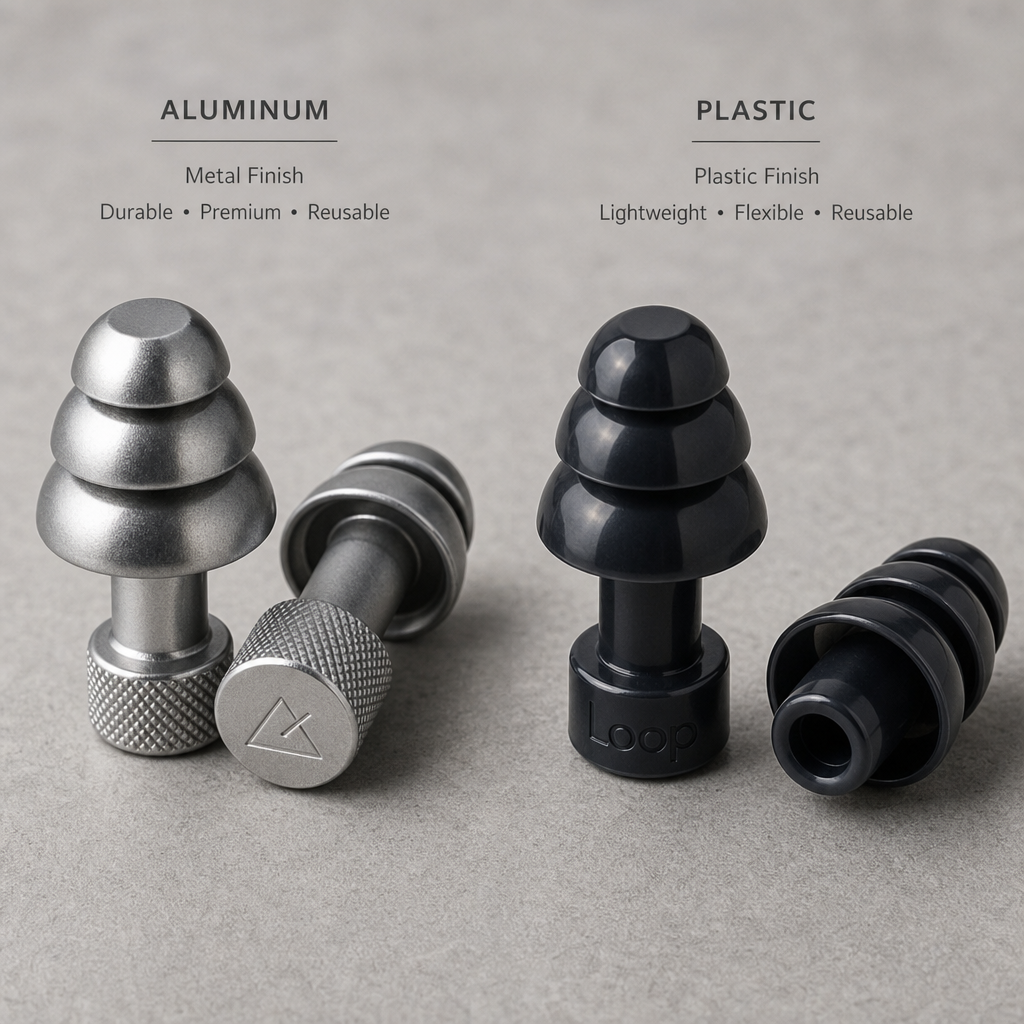
The headline noise reduction figure is where this comparison gets decisive. ATTENU8 achieves approximately 32dB of noise reduction. For context, the World Health Organization identifies noise above 40dB as a potential sleep disruptor, and most urban bedrooms with traffic or a snoring partner sit between 40-60dB. Pulling that down by 32dB puts you in genuinely quiet territory.
Loop Quiet is Loop’s sleep-specific product and is rated at around 26-27dB SNR. That is a meaningful gap. For a light sleeper dealing with a partner who snores at 50-55dB, 5-6dB less noise reduction is not a minor difference. The logarithmic nature of the decibel scale means that difference is perceptible in real-world use.
Noise reduction ratings are only valid when the ear plug achieves a proper seal. Both products require the right tip size to perform at their rated level. ATTENU8’s memory foam tips are self-conforming, which means they actively fill the ear canal shape rather than relying on a fixed silicone form. The data consistently shows that conforming foam seals perform more reliably across varied ear canal shapes than rigid silicone alternatives, particularly when the user is moving during sleep.
“Noise exposure during sleep is associated with cardiovascular effects, sleep disturbance, and reduced cognitive performance the following day.” – World Health Organization, Environmental Noise Guidelines for the European Region
Pro tip: Before buying any ear plug for sleep, test the smallest available tip size first. Most people assume they need a medium or large, but an XS or S tip that creates a tighter seal will outperform a poorly sealed medium every time.
Noise reduction means nothing if the ear plug becomes uncomfortable at 3am and you pull it out. This is where the material choice becomes critical for the specific use case of sleep.
ATTENU8’s memory foam tips compress when inserted and slowly expand to fill the ear canal. For side sleepers pressing one ear into a pillow, the concave aluminium body sits flush rather than protruding, which reduces pressure points. A common mistake is choosing an ear plug with a large protruding body, only to find it impossible to sleep on that side.
Loop Quiet uses silicone ear tips rather than foam. Silicone tips are washable and durable, but they do not conform the way memory foam does. Many users report that after a few hours, silicone tips create a feeling of pressure that foam avoids by moulding into available space rather than pushing against canal walls. This is not a dealbreaker for everyone, but for light sleepers who are already primed to notice discomfort, it is a real issue.
Loop’s circular body design is also a style statement. That round external profile is more likely to press uncomfortably against a pillow compared to ATTENU8’s lower-profile build. In practice, Loop is designed to be seen and worn socially. ATTENU8 is designed to disappear once inserted.
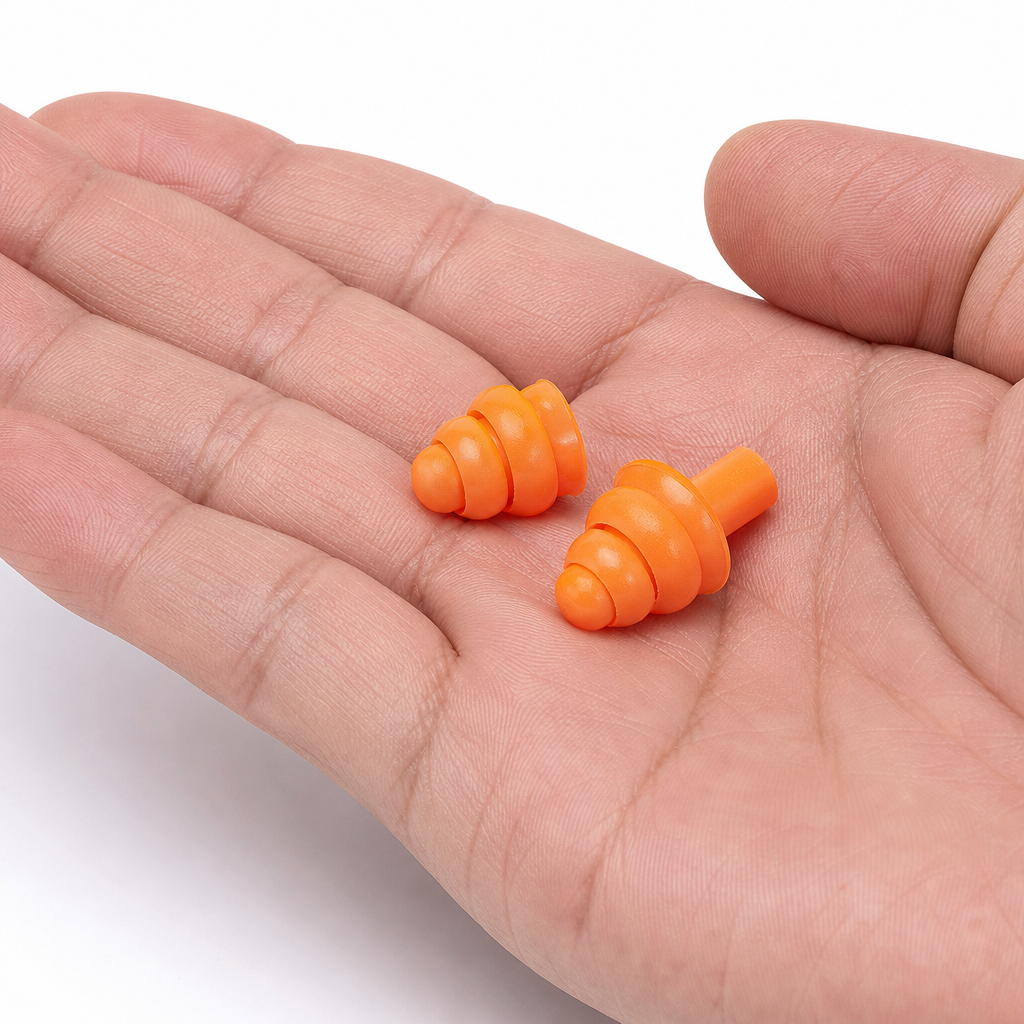
Both ATTENU8 and Loop are positioned as premium alternatives to single-use foam ear plugs. But “reusable” covers a wide range of actual durability, and this is where the material difference between aluminium and plastic becomes financially significant.
ATTENU8’s aluminium body is designed to last indefinitely under normal use conditions. The only scheduled maintenance is foam tip replacement every 6-8 weeks. Foam tips lose their memory and seal quality over time, particularly with nightly use, so this interval is realistic. Replacement tips cost a fraction of a new pair, which means your ongoing cost is low and predictable.
Loop’s silicone tips can be washed and reused for months. However, the plastic body itself is subject to the normal degradation that plastic experiences with heat, sweat, and handling. The body can crack, the loop stem can fatigue, and the overall product lifespan is more variable than a metal-bodied alternative. When the body fails, you replace the whole unit.
Over a 12-month period of nightly use, the total cost of ownership for ATTENU8 includes the initial purchase plus roughly 6-8 sets of replacement tips. Loop’s cost over the same period depends on whether the body survives intact. For heavy daily users or those in physical jobs, the aluminium body wins on longevity without argument.
Pro tip: Factor in the environmental cost alongside the financial one. Replacing only foam tips generates significantly less waste than discarding entire ear plug units when a body degrades. For anyone tracking their consumption footprint, ATTENU8’s model has a clear structural advantage.
| Feature | ATTENU8 | Loop Quiet |
|---|---|---|
| Body material | Premium aluminium (metal) | Plastic |
| Tip material | Soft memory foam (XS, S, M) | Silicone (multiple sizes) |
| Noise reduction rating | Approximately 32dB | Approximately 26-27dB SNR |
| Primary use case | Sleep, travel, high-noise environments | Sleep, general lifestyle, social use |
| Replacement schedule | Tips every 6-8 weeks; body indefinite | Tips last months; body variable |
| Side sleeping profile | Low-profile concave body, pillow-friendly | Circular body can press uncomfortably |
| Durability outlook | High: metal body resists wear and sweat | Moderate: plastic body subject to fatigue |
| Sustainability model | Replace tips only, minimal waste | Replace full unit when body degrades |
ATTENU8 is the right choice if your primary concern is maximum noise reduction during sleep or in loud work environments. If you are a light sleeper who wakes at small sounds, a 32dB reduction is not optional. It is the difference between a functional night’s sleep and another restless one.
It is also the correct choice for professionals who need hearing protection in construction, manufacturing, or military environments. The aluminium body handles the physical conditions of those settings in a way that plastic does not. And because tip replacement is cheap and scheduled, there are no surprise costs mid-project.
If you sleep on your side and have tried other ear plugs only to end up pulling them out at 2am due to pressure, ATTENU8’s low-profile concave body and conforming memory foam tips address exactly that problem. The product was designed with the sleeping human body in mind, not with lifestyle aesthetics as the primary driver.
Loop is a better fit if you want an ear plug you can wear visibly in social settings without drawing attention, and sleep use is secondary. Loop’s brand has invested heavily in making their product look like a piece of jewellery rather than industrial hearing protection. If that matters to you, it is a genuine differentiator.
Loop Quiet also suits people whose noise environment at night is moderate rather than severe. If the issue is light street noise or a fan hum rather than a snoring partner or traffic at 55dB, the 26-27dB reduction may be sufficient, and the silicone tip feel may be perfectly comfortable through the night.
Loop Experience and Loop Switch are explicitly not sleep products. They are tuned for music environments, which means they filter sound rather than block it. Choosing those for sleep would be a product mismatch, not a preference issue.
Yes, in most cases. ATTENU8’s approximately 32dB noise reduction outperforms Loop Quiet’s roughly 26-27dB rating. Snoring typically registers between 50-70dB, so the additional 5-6dB reduction from ATTENU8 is meaningful. Combined with memory foam tips that seal more consistently during movement, ATTENU8 is the stronger choice for this specific problem.
ATTENU8 recommends replacing the foam tips every 6-8 weeks with nightly use. The foam gradually loses its memory and ability to expand fully after repeated compression. You will notice the difference before you reach that mark if the seal starts feeling looser, which is a reliable signal that replacement is due.
Yes. At approximately 32dB noise reduction, ATTENU8 sits within the range recommended for use in construction, manufacturing, and other high-noise professional environments. The aluminium body is built for physical durability that plastic alternatives cannot match in those conditions. Always verify that the specific noise level of your environment falls within the protection range of any ear plug before relying on it for occupational hearing protection.
Loop Quiet is more comfortable for side sleeping than many ear plugs, but the circular external body creates more contact with a pillow than ATTENU8’s lower-profile concave design. Users who sleep predominantly on their side tend to find memory foam-tipped plugs with minimal external protrusion more comfortable over a full night. This is a known trade-off with Loop’s signature circular shape.
ATTENU8 has the more sustainable model. The aluminium body is designed to last indefinitely, and only the small foam tips are replaced on a 6-8 week cycle. Loop’s silicone tips are durable, but when the plastic body eventually fails, the entire unit goes to waste. Over multiple years of use, the material waste generated by ATTENU8 is substantially lower.
In practice, no. The aluminium body is a structural housing. What contacts the ear canal directly is the soft memory foam tip, which warms quickly to body temperature. The metal body sits at the outer entrance of the ear and does not create a cold sensation once settled. Users transitioning from foam disposables typically report the fit feels more secure rather than less comfortable.
Loop Quiet is priced in a similar premium tier to ATTENU8. For sleep-focused buyers, ATTENU8 delivers a higher noise reduction rating, a more durable body, and a lower long-term replacement cost. Loop Quiet earns its price for buyers who prioritise versatility across sleep and social settings. If sleep quality is the sole metric, ATTENU8 delivers more for the same investment.
Have you tried either ATTENU8 or Loop for sleep, and which solved your noise problem better? Share your experience in the comments below.
Most people buy a bag of foam ear plugs, lose half of them, and repeat the cycle every few weeks without ever doing the math. The real cost of disposable ear plugs adds up faster than almost anyone expects, and the environmental toll is worse. If you use ear plugs regularly for sleep, travel, or noise exposure at work, switching to reusable ear plugs is not just an ethical choice. It is the financially smarter one by a significant margin. This article breaks down exactly what you spend, what you save, and which option actually protects your hearing and your wallet over the long run.
| Key Insight | Explanation |
|---|---|
| Disposable ear plugs cost far more annually than most users realise | A regular user spending $3-$5 per box every two weeks spends $78-$130 per year on disposable foam plugs alone. |
| Premium reusable ear plugs have a payback period under three months | A quality metal-bodied reusable pair like ATTENU8 costs far less over 12 months once the initial purchase is made and only foam tips need replacing every 6-8 weeks. |
| Foam tip replacements are the only recurring cost with quality reusables | Unlike disposables where the entire product is thrown away, ATTENU8 users replace only the soft memory foam tips, keeping the aluminium body indefinitely. |
| Disposable ear plugs generate significant plastic and foam waste | A single daily user discards roughly 730 individual foam plugs per year. Reusable ear plugs reduce that waste to near zero. |
| Noise reduction ratings between disposable and premium reusable plugs are comparable | ATTENU8 delivers approximately 32dB noise reduction, matching or exceeding most standard disposable foam plugs rated at 29-33dB NRR. |
| Comfort and fit improve with reusables designed for extended wear | Memory foam tips in three sizes (XS, S, M) on a metal body provide a consistent seal that standard disposable foam plugs rarely achieve for light sleepers. |
| Hygiene is easier to manage with reusable plugs that have replaceable tips | Replacing only the foam tips every 6-8 weeks is cleaner in practice than re-using a disposable plug for multiple nights, which many users do despite manufacturer guidance. |
The sticker price on a box of disposable foam ear plugs looks reasonable. A box of 10 pairs typically costs between $3 and $6 at a pharmacy or hardware store. The problem is the usage rate. Most consistent users go through a pair every one to two days, whether that is for sleeping through a snoring partner, blocking construction noise on a commute, or protecting hearing on a job site.
Run the numbers for a daily user replacing one pair every two days. That is roughly 180 pairs per year, or 18 boxes at the conservative end. At $4 per box, you are spending $72 annually on plugs you throw straight in the bin. A person using a fresh pair every single night for sleep hits 365 pairs, which pushes annual spending toward $146 or more before you factor in any premium or travel-sized packs.
Beyond the direct purchase price, disposable ear plugs carry costs that are easy to overlook. There is the time cost of remembering to restock, running out at 11pm before a flight, or paying airport retail prices that can be two to three times the standard rate. There is also the quality inconsistency: low-cost disposables vary in density between production batches, which means the noise seal you got last month may not be the same as this month.
In practice, people who rely on ear plugs for serious noise protection, such as construction workers or light sleepers, often find themselves doubling up or discarding pairs mid-use because the foam has already compressed and lost its seal. That effectively doubles consumption and cost.
Pro tip: Track your ear plug spending for one month by keeping the empty boxes. Most people are surprised to find they are spending $10-$15 per month on disposables without noticing. That number compounds to $120-$180 per year and goes up every time prices increase.

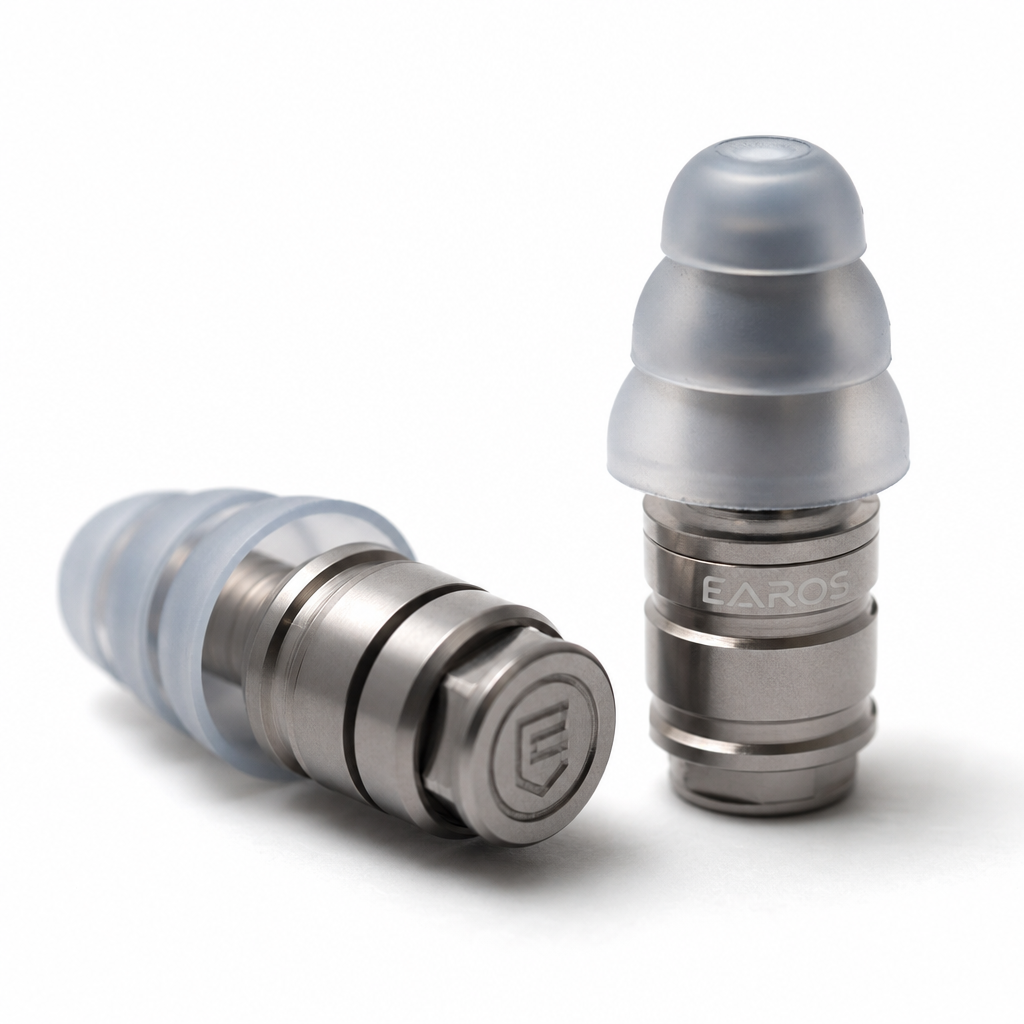
The upfront cost of a quality reusable ear plug is higher than a box of foam disposables. That is simply true and worth stating plainly. A premium metal-bodied pair, such as those made by ATTENU8, represents a one-time investment in the aluminium body, with the only ongoing cost being foam tip replacements every 6-8 weeks.
Those tip replacements are a fraction of the cost of continually buying new disposable pairs. The aluminium body itself does not degrade with normal use. You are not replacing the entire product. You are only replacing the small memory foam sleeves that make contact with your ear canal. This is a fundamentally different cost model, and it favours the reusable option heavily over any period longer than two to three months of regular use.
Not all reusable ear plugs are built to the same standard. Soft silicone options from brands like Loop Earplugs offer reusability but use a single-piece design where the entire unit must eventually be replaced when the tips wear out. Flare Audio takes a similar approach with fixed-tip designs. The ATTENU8 model separates the durable metal body from the consumable foam tips, which means the most expensive component, the precision-machined aluminium housing, is never thrown away.
This matters because the aluminium body is what holds tolerances and delivers the consistent acoustic performance. Once you own it, you own it. The cost structure over a two-year period for ATTENU8 users is predominantly in tip replacements, not full product repurchases.
Pro tip: When calculating the cost of any reusable ear plug, always ask what gets replaced and at what frequency. A pair that requires full replacement every 12 months is only marginally better economically than a high-end disposable. A pair where only low-cost tips are replaced is a fundamentally better investment.
The table below compares three scenarios for a daily ear plug user over 24 months: standard disposable foam plugs, a silicone reusable with periodic full-unit replacement, and ATTENU8 with tip-only replacements. All figures are approximate and based on typical retail pricing patterns.
| Ear Plug Type | Year 1 Cost (Estimate) | Year 2 Cost (Estimate) |
|---|---|---|
| Standard disposable foam (daily use, 1 pair per day) | $120-$150 | $120-$150 |
| Silicone reusable with full-unit replacement every 12 months (e.g. Loop, Flare) | $30-$60 (initial purchase) | $30-$60 (full replacement) |
| ATTENU8 metal-bodied reusable with tip-only replacement every 6-8 weeks | Initial purchase + low-cost tip replacements (approximately 7-8 tip sets) | Tip replacements only (approximately 7-8 tip sets, significantly lower than Year 1 total) |
The comparison makes clear that the only scenario where disposable foam plugs are cheaper is if you use ear plugs fewer than a dozen times per year. At that usage level, any reusable option is overkill economically. For everyone else, and particularly for daily users, the reusable path is the less expensive one by month three and continues to pull further ahead with every passing month.
“Hearing loss is permanent. The economics of ear plug choice are not just about comfort or cost. They are about whether your protection is reliable enough to actually be used every time.” – National Institute for Occupational Safety and Health, guidance on hearing conservation programs.
A common assumption is that cheap disposable foam plugs offer acceptable protection because they carry standard NRR (Noise Reduction Rating) numbers on the box. And it is true that a well-inserted standard foam plug rated at 33dB NRR technically provides strong attenuation. The operative word is well-inserted.

The data consistently shows that real-world attenuation from disposable foam plugs is substantially lower than laboratory NRR ratings. The U.S. Environmental Protection Agency and NIOSH have both noted that field attenuation is typically 50 to 70 percent less than the rated NRR value because most users do not insert disposable foam plugs correctly or consistently. A rated 33dB plug may only deliver 10-15dB of real-world protection for the average user who is not trained in insertion technique.
ATTENU8’s concave aluminium body with three tip sizes (XS, S, M) addresses this problem directly. The structured body guides correct placement in the ear canal, and the soft memory foam tips seal consistently regardless of ear canal size variation. For a light sleeper who puts plugs in half-asleep at 2am, this consistency is not a luxury. It is the difference between the plug actually working and waking up an hour later because the seal collapsed.
The approximately 32dB noise reduction delivered by ATTENU8 is a reliable, repeatable figure because the fit is engineered rather than dependent on user technique. Most disposable foam plug users never achieve that level of attenuation outside of controlled test conditions.
A daily disposable ear plug user generates roughly 730 individual foam plugs per year going directly to landfill. Standard polyurethane foam ear plugs are not recyclable through any mainstream municipal recycling stream. They accumulate in household waste and eventually in landfill, where they take decades to break down.
The environmental cost of this is real, even if it never appears on a receipt. For noise-sensitive individuals and professionals using ear plugs every day, the cumulative waste over five or ten years becomes genuinely significant. Switching to sustainable ear plugs with a metal body that lasts indefinitely and foam tips that are replaced only every 6-8 weeks reduces individual ear plug waste by more than 95 percent for a daily user.
The aluminium body in ATTENU8 ear plugs is a durable, non-degrading material. It does not absorb oils, bacteria, or moisture the way foam does across its full structure. The body can be wiped clean and reused for years. This is a practical hygiene and sustainability advantage that compounds over the product’s lifespan. A foam plug, by contrast, begins to harbour bacteria after its first use and is intended to be discarded immediately.
The broader point for consumers making a purchasing decision is this: sustainable ear plugs are not a premium product category reserved for environmentally motivated buyers. They are simply the rational choice for anyone doing the math on cost, hygiene, and waste over a twelve-month period.
The answer is anyone who uses ear plugs more than twice per week. That threshold is low because the economics shift that quickly. Below that usage level, keeping a small box of disposables for occasional use is entirely reasonable. Above it, the cost argument for disposables collapses.
For light sleepers using ear plugs nightly, reusable ear plugs are the clear choice on every dimension: cost, comfort, consistency of fit, and hygiene. The ATTENU8 memory foam tips in three sizes allow a precise fit that disposable one-size foam plugs cannot match, particularly for people with smaller ear canals who have historically found standard foam plugs uncomfortable or ineffective.
Construction workers, manufacturing professionals, and anyone in a hearing conservation program face a different calculus. Workplace hearing protection requirements under standards such as those published by Safe Work Australia or OSHA in the United States typically specify minimum attenuation levels. A reusable plug delivering a reliable 32dB attenuation every single insertion is a better compliance and safety tool than a disposable that depends heavily on user technique for its rated performance.
In a professional context, the cost savings also become significant at volume. A site where workers go through a pair of disposables per shift across a crew of 20 people over a year represents thousands of dollars in consumables. Transitioning to reusable ear plugs with replaceable tips changes that cost structure substantially.
A common mistake among employers is purchasing the cheapest disposable option in bulk and assuming the NRR number on the box means workers are fully protected. The gap between rated and actual field performance in disposable foam plugs is well-documented and should inform procurement decisions on any site where hearing damage is a real risk.
For travellers, reusable ear plugs also eliminate the frustrating scenario of reaching into a bag on a flight and finding a pair of crushed, already-used foam plugs as the only option. The metal body of a reusable pair survives bag life indefinitely.
For most regular users, foam tips on a quality reusable pair like ATTENU8 should be replaced every 6-8 weeks with daily use. The replacement frequency depends on how often you use them, how you clean them, and how well the foam retains its expansion. If you notice the tips no longer expanding back to their original shape or the noise seal feels looser, it is time to replace them regardless of how many weeks have passed.
Premium reusable ear plugs with memory foam tips match or exceed the real-world performance of most disposable foam plugs. ATTENU8 delivers approximately 32dB noise reduction, which is comparable to the rated NRR of most disposable options. The practical advantage of reusables is consistency: the structured body and correctly sized tip produce a reliable seal every insertion, whereas disposable foam plug performance varies significantly with user technique.
For a daily user spending roughly $4-5 per box of 10 pairs on disposables, the break-even point against a quality reusable pair is typically between 8 and 12 weeks. After that point, the reusable option is simply cheaper with every passing week, with the gap widening as tip replacements are the only recurring expense.
Yes, provided you follow basic maintenance. Wipe the metal body clean regularly with a damp cloth and replace the foam tips every 6-8 weeks. This is actually a more hygienic routine than the common practice of reusing a disposable foam plug across multiple nights, which many people do despite the fact that disposable foam absorbs oils and bacteria and is designed for single use only.
Loop and Flare Audio offer reusable silicone-bodied ear plugs that are a step above standard disposable foam in durability. However, both use integrated designs where the tip and body are effectively one unit, meaning the entire product needs replacing when the tips wear out. ATTENU8 separates the durable precision-machined aluminium body from the replaceable foam tips, which means the most durable component is never discarded. Over a two to three year period, this produces a lower total cost of ownership and less material waste.
Yes, and in many respects they are better suited to professional environments than disposable options. The consistent fit and reliable 32dB attenuation from a well-designed reusable pair like ATTENU8 means workers are not dependent on correct foam rolling and insertion technique to achieve rated protection. For compliance with hearing conservation program requirements, a predictable and repeatable fit is more valuable than a higher theoretical NRR that is rarely achieved in field conditions.
Have you made the switch from disposable to reusable ear plugs? Share what made the difference for you, whether it was cost, comfort, or something else entirely.
Most people walk through their day completely unaware that the sounds around them are quietly eroding their hearing. Everyday noise levels in decibels from sources like blenders, commuter trains, and leaf blowers regularly hit thresholds that cause permanent damage after just minutes of exposure. The World Health Organization estimates that 1.1 billion young people are at risk of hearing loss due to unsafe noise exposure. If you have ever ended a day with ringing ears or muffled hearing, you have already crossed into dangerous territory. This article names the ten worst offenders, gives you the real numbers, and tells you exactly what to do about it.
| Key Insight | Explanation |
|---|---|
| 85 dB is the damage threshold | NIOSH sets 85 dB as the level at which hearing damage begins with prolonged exposure. Many daily sounds exceed this comfortably. |
| Decibel scale is logarithmic | An increase of just 10 dB means the sound is 10 times more intense acoustically. 100 dB is not slightly louder than 90 dB, it is ten times more intense. |
| Restaurants routinely hit 85-95 dB | A busy restaurant is not a calm environment. Ambient noise at peak service can match a power lawn mower. |
| Earbuds at full volume reach 110 dB | Listening through earbuds at maximum volume for 15 minutes can cause the same damage as eight hours in a loud factory. |
| Disposable foam plugs lose NRR fast | Compressed single-use foam plugs provide inconsistent protection because most people do not insert them correctly. A reusable plug with a structured body and proper fit delivers more reliable noise reduction. |
| Hearing loss from noise is irreversible | Unlike some medical conditions, noise-induced hearing loss (NIHL) cannot be reversed with medication or surgery. Prevention is the only effective strategy. |
| Sleep disruption starts at 45 dB | The WHO recommends that nighttime outdoor noise should not exceed 40 dB to prevent sleep disturbance. Traffic noise in most cities far exceeds this level. |
The decibel scale does not behave the way most people expect. Every 3 dB increase doubles the sound energy reaching your ears, which means the safe exposure time is cut in half. At 85 dB, NIOSH guidelines allow 8 hours of exposure. At 88 dB, you are down to 4 hours. At 100 dB, you have about 15 minutes before damage accumulates.
The data consistently shows that people dramatically underestimate the intensity of sounds in their immediate environment. This is not a perception problem, it is a physics problem. Sound pressure increases far faster than human perception suggests, so your brain tells you a sound is only a little louder when it is actually multiple times more intense.
Understanding everyday noise levels in decibels is the first step to making rational decisions about when to protect yourself and when normal conversation levels pose no real risk.
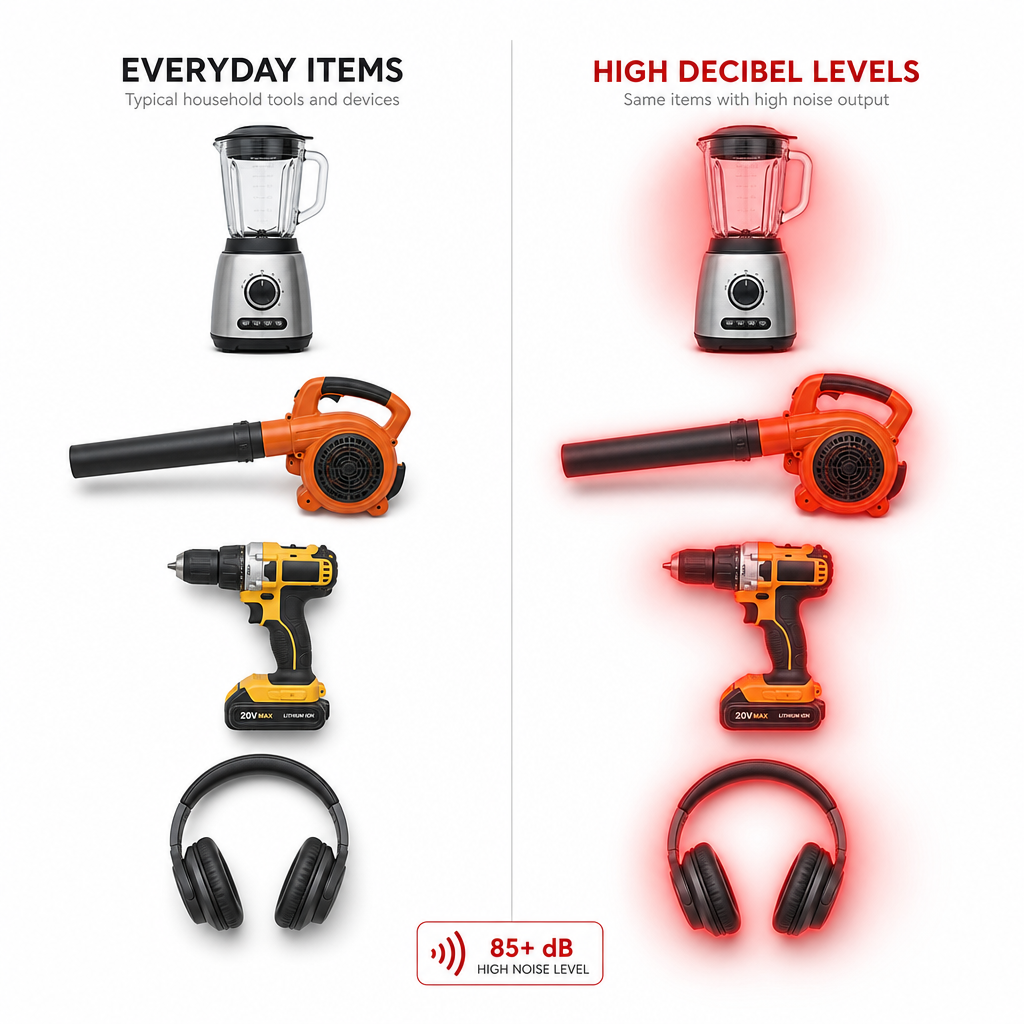
The following list is ordered from surprising to genuinely alarming. Each entry includes real measured decibel ranges drawn from published occupational health and audiology research, not estimates.
Your kitchen blender runs between 88 and 95 dB at one metre of distance. Most people use it for 30-60 seconds at a time without a second thought. A single use is unlikely to cause permanent damage, but daily repeated exposure compounds. Construction workers understand cumulative noise dose. Home cooks generally do not.
A 2019 study published in the journal Ear and Hearing measured ambient noise in 37 New York City restaurants and found average levels of 89 dB. If you eat out three times per week and linger over meals, your cumulative weekly dose from restaurant noise alone approaches occupational exposure limits. Noise-sensitive individuals often report exhaustion after social dining, and this is a physiological response, not anxiety.
At maximum volume, consumer earbuds can produce over 110 dB. At 70% volume, most devices output between 94 and 100 dB. Teenagers and commuters using in-ear headphones on public transport are particularly at risk because they instinctively raise the volume to mask background noise rather than wearing sound-isolating ear protection.
Petrol-powered lawn mowers typically measure 90-96 dB at the operator’s ear. Leaf blowers are worse, ranging from 95 to 106 dB. An hour of weekend gardening without protection represents a serious noise exposure event. The EPA’s noise standards have not been updated since 1974, so these tools remain legal regardless of how damaging they are.
Rail transit noise is one of the most overlooked sources of daily hearing risk. The New York City Transit Authority has published platform noise measurements showing levels routinely above 94 dB during train arrivals, with peaks up to 102 dB. Commuters waiting on platforms multiple times daily receive meaningful cumulative exposure.
Modern cinema sound systems are calibrated to produce peak levels exceeding 100 dB during action sequences. A two-hour film with frequent loud scenes delivers a substantial noise dose. In practice, most audiologists advise wearing discrete hearing protection during action films, which most moviegoers find socially uncomfortable even when it is medically justified.
Wind noise on a motorcycle at 100 km/h generates approximately 90-95 dB at the rider’s ear inside a standard helmet, before the engine noise is added. Motorcycle riders have among the highest rates of high-frequency hearing loss of any non-industrial group. Reusable ear plugs that fit securely inside a helmet without shifting are a practical and underused solution.
A standard circular saw produces around 100-110 dB. Angle grinders and pneumatic nail guns are worse. Occupational safety regulations in most countries require hearing protection above 85 dB in workplace settings, yet DIY users working on weekend home projects apply none of the same standards to themselves despite identical exposure.
This one genuinely surprises people. A crying baby can produce peaks of 110-117 dB at close range. New parents often spend hours per day in close proximity to an infant in distress. Sleep deprivation, stress, and repeated high-decibel exposure combine in a way that is particularly hard on the auditory system.
Sports arenas and concert venues routinely hit 100-110 dB, with peak crowd events reaching 120 dB or higher. The 2014 Seattle Seahawks crowd noise record measured 137.6 dB. Even a two-hour concert at 105 dB represents a noise dose that exceeds NIOSH’s safe daily exposure by a factor of several hundred. Yet most concert-goers would feel conspicuous wearing ear plugs, despite the fact that the permanent hearing damage is entirely preventable.
NIOSH guidelines provide the clearest framework for understanding cumulative noise dose. The table below shows the maximum safe exposure times at various decibel levels before hearing damage is considered likely.
A common mistake is treating these thresholds as pass or fail events. Damage is cumulative. If you spend 30 minutes at 100 dB and then 4 hours at 90 dB in the same day, you have likely exceeded your safe dose for that day even though neither event alone crossed the maximum threshold.
“The dose of noise is what matters, not any single exposure event. Audiologists who treat noise-induced hearing loss consistently find that patients underestimate how many moderate-level exposures they accumulate across an ordinary week.” – American Academy of Audiology guidance on occupational hearing conservation
Pro tip: Download a free sound level meter app on your smartphone (NIOSH’s SLM app is one of the more accurate free options) and measure the environments you spend the most time in. Most people are shocked by what their commute, office, or kitchen registers.
Not all hearing protection delivers what it promises under real-world conditions. The noise reduction rating (NRR) printed on packaging is measured in controlled laboratory conditions with correct insertion technique. In practice, most users achieve only 50% of the listed NRR because of improper fit or inconsistent insertion.
The comparison below covers the three most common categories of everyday hearing protection, assessed on the factors that actually matter for daily use.
| Protection Type | Real-World NRR Performance | Best Use Case |
|---|---|---|
| Single-use disposable foam plugs | Inconsistent. Lab NRR often 29-33 dB, real-world typically 10-15 dB due to poor insertion. Must be replaced after every use to maintain even this level. | Emergency one-off use when nothing else is available. Not suitable for daily use or professional environments. |
| Reusable metal-bodied ear plugs with memory foam tips (e.g., ATTENU8) | More consistent due to structured body guiding correct depth. ATTENU8 delivers approximately 32 dB NRR with included XS, S, and M foam tips allowing proper sizing. Tips replaced every 6-8 weeks, body lasts indefinitely. | Daily sleep protection, commuting, motorcycle riding, concerts, construction, and any scenario requiring reliable repeatable performance. The aluminium body does not compress or degrade the way full-foam plugs do. |
| Electronic earmuffs | High NRR (25-30 dB) with consistent fit. Amplify quiet sounds while blocking loud ones. Bulky and not suited to discreet daily use or sleep. | Industrial and construction environments, shooting ranges, situations where situational awareness matters but loud impulse sounds must be blocked. |
The practical conclusion here is straightforward. If you need hearing protection you will actually use every day, including for sleep, travel, and commuting, a reusable ear plug with a rigid body and replaceable foam tips outperforms disposable options in both consistency and long-term cost. A pair of ATTENU8 ear plugs with tip replacements every 6-8 weeks costs a fraction of what repeated disposable foam plug purchases add up to over a year, while delivering more reliable protection.
The sounds that damage hearing most are not the dramatic ones. The concert you attend twice a year is a risk, but the subway commute you take five days a week is a larger cumulative threat. Noise exposure risk is a daily management problem, not an occasional precaution.
Traffic, partners snoring, and early morning urban noise typically register 50-70 dB inside a bedroom. This is above the WHO’s 40 dB nighttime recommendation and high enough to prevent restorative deep sleep even if you do not fully wake. Wearing ear plugs during sleep is not excessive, it is a direct physiological intervention for sleep quality. The critical requirement is comfort across 6-8 hours, which is where a structured aluminium body with soft memory foam tips outperforms a rolled foam cylinder that slowly expands and shifts during the night.
Construction workers, manufacturing floor staff, and military personnel face occupational noise at 90-120 dB for extended periods. NIOSH data shows that 22 million US workers are exposed to hazardous noise at work each year. Compliance with employer-mandated hearing protection is a legal floor, not a ceiling. Using a secondary pair of reusable, well-fitted ear plugs during off-duty hours in noisy environments gives additional protection to a hearing system that is already under sustained daily load.
Airplane cabin noise during cruising flight measures approximately 85 dB, right at the standard damage threshold. A four-hour flight represents four hours of exposure at exactly the level where the eight-hour safe limit begins. Business travelers taking multiple flights per week accumulate meaningful exposure that most occupational health frameworks would flag as a concern if it were occurring in a factory instead of an airplane seat.
Pro tip: Keep a pair of reusable ear plugs accessible in your commute bag, not stored at home. The ones you have with you are the only ones that protect you. ATTENU8’s aluminium body is durable enough to keep in a bag pocket without being crushed or contaminated the way loose foam plugs are.
NIOSH sets the threshold at 85 dB for an 8-hour exposure. Above this level, safe exposure time halves with every 3 dB increase. Instantaneous sounds above 120 dB, such as gunshots or some industrial machinery, can cause immediate permanent damage with a single exposure. The key point is that damage is dose-dependent: duration matters as much as intensity.
For consistent daily use, yes. Single-use foam plugs provide unreliable protection because most people do not insert them correctly, achieving only about 50% of the stated NRR. A reusable plug with a structured body, like the aluminium-bodied ATTENU8, guides correct insertion depth and stays positioned throughout the night or workday. The replaceable memory foam tips maintain hygiene without requiring you to replace the entire plug, which makes long-term use both cheaper and more consistent.
The practical indicators are ringing or buzzing ears after leaving an environment, muffled hearing that takes minutes or hours to clear, and needing to raise your voice to be heard by someone an arm’s length away. Any of these signals means the ambient level was above 85 dB. A free smartphone sound level meter app can give you real numbers before the exposure rather than after the damage.
Yes, when used correctly. Ear plugs designed for sleep, particularly those with soft memory foam tips and a body that does not press against the ear canal wall when lying on a pillow, are safe for nightly use. The main risk with poorly fitting plugs is discomfort and wax build-up if the plug is too large or sits too deep. Using the correct tip size (ATTENU8 includes XS, S, and M options) and replacing tips every 6-8 weeks prevents hygiene issues.
The sounds that create the highest cumulative risk are not the most dramatic ones. Daily commuter rail, headphone use above 60% volume, and regular restaurant dining collectively represent more cumulative exposure than an occasional concert for most people. Prioritise protection during your most frequent high-noise activities, not just the obviously loud ones.
No, and this is the most dangerous misconception in hearing health. Sounds between 85 and 100 dB often feel merely loud or uncomfortable, not painful. Pain typically begins around 120-130 dB. The absence of pain does not indicate a safe exposure level. Noise-induced hearing loss accumulates silently, often over years, before the affected person notices a functional decline in speech clarity or high-frequency perception.
Have you recently discovered that a sound in your daily routine was louder than you expected? Share what it was and how you are handling it now.
If you sleep on your side, you already know the problem. You press your ear into the pillow, and whatever ear plug you’re wearing turns into a pressure point that wakes you up faster than the noise you were trying to block. Standard foam ear plugs were designed for upright use in loud workplaces, not for hours of lateral skull pressure against a mattress. The result is discomfort, poor seal, and a restless night. Finding genuine ear plugs for side sleepers requires understanding exactly why conventional designs fail this specific use case.
| Key Insight | Explanation |
|---|---|
| Ear plug protrusion causes pillow pain | Standard foam ear plugs extend 10-15mm beyond the ear canal, creating painful leverage when your head presses into a pillow. |
| Low-profile body design is non-negotiable | Ear plugs with a slim, flush-fitting body significantly reduce the pressure point that disrupts side sleeper comfort. |
| Memory foam tips outperform standard foam for sleep | Memory foam conforms to your ear canal shape and maintains a seal even as jaw movement or head repositioning occurs during sleep. |
| Tip size directly controls comfort and seal quality | Using the wrong tip size causes either canal pressure or sound leakage. Multiple size options (XS, S, M) are essential for a proper fit. |
| Reusable metal bodies reduce nightly waste and cost | Single-use foam ear plugs degrade quickly. A durable metal-bodied ear plug with replaceable tips lasts far longer and maintains consistent performance. |
| 32dB noise reduction blocks the most disruptive sleep sounds | Snoring typically registers at 50-80dB. A 32dB reduction brings that into a manageable range that does not trigger full arousal from sleep. |
| Flat-bottom tip geometry is the overlooked variable | A tip that is flatter at its outermost edge sits flush against the pillow rather than twisting or creating a fulcrum that dislodges the plug. |
The overwhelming majority of ear plugs on the market are engineered for occupational hearing protection. Construction workers, factory staff, and airline ground crew use them while standing or seated upright. The design brief for those products does not include surviving six to eight hours of lateral compression between a human skull and a memory foam pillow.
Standard rolled foam ear plugs protrude significantly from the ear canal once expanded. That protrusion acts as a fulcrum. When you lie on your side, the pillow pushes against the protruding end, levering the plug deeper into the canal or simply ejecting it entirely. Neither outcome is useful. The pressure also builds at the outer ear, which is rich in cartilage and nerve endings, causing the dull ache that wakes side sleepers in the early hours.
A common mistake is assuming that softer foam solves the problem. Softer foam compresses more easily under pillow pressure, which means the plug loses its seal. You end up with an ear plug that neither blocks sound nor stays comfortable. The material choice matters, but the shape and profile matter more.
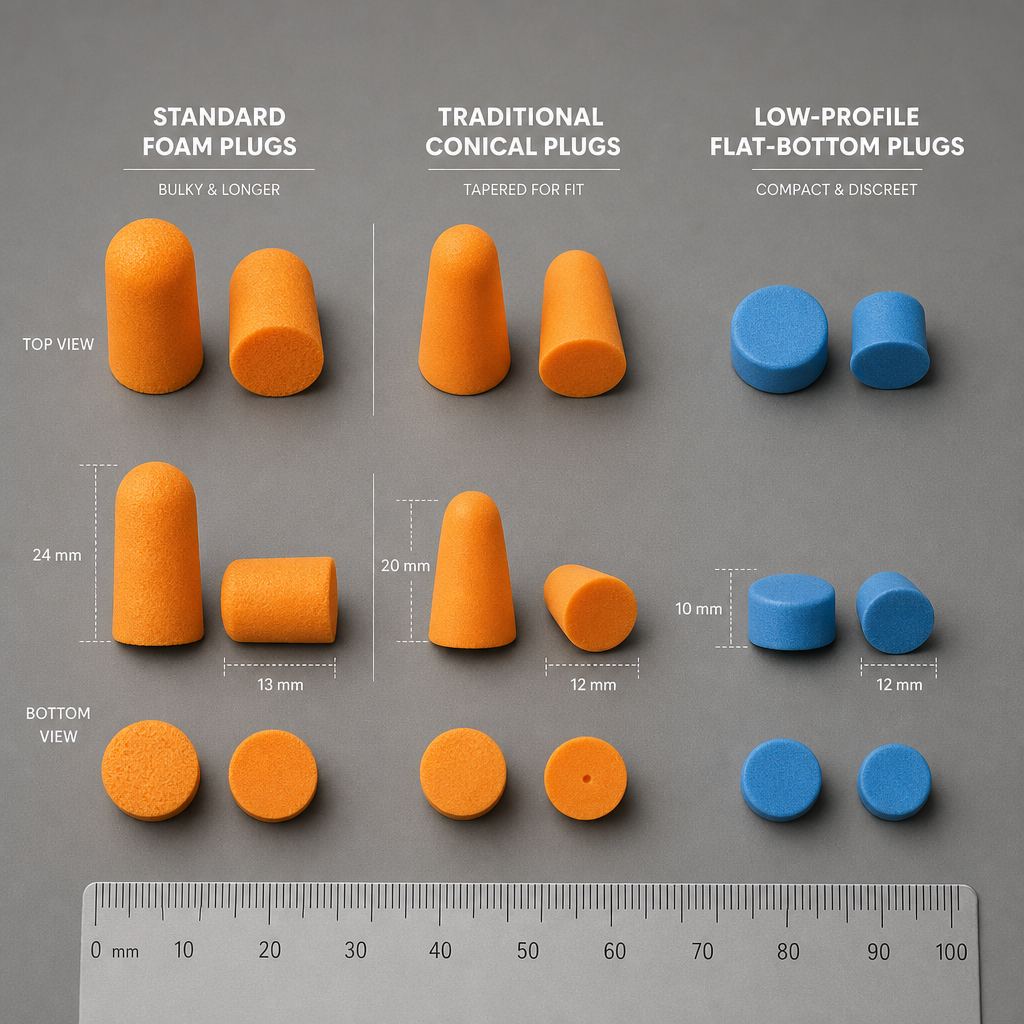
When you lie on your side, the external ear (the pinna) folds slightly inward and the surrounding tissue compresses. Any object protruding from the ear canal is now sandwiched between a rigid skull and a yielding but still resistant pillow surface. The force is not enormous, but it is sustained and directional. Over an hour, that sustained force translates into discomfort significant enough to cause micro-arousals from sleep, even if you do not fully wake up.
According to research published through the National Institutes of Health, noise-related sleep disturbance is associated with increased cardiovascular stress responses even when the sleeper does not consciously wake. The implication is that poor-fitting ear plugs that allow sound to leak through are not just annoying. They are physiologically disruptive. Getting the fit right is not a luxury preference. It is a functional requirement.
The external ear canal is not a straight tube. It runs at an angle, and that angle shifts subtly when jaw muscles relax during sleep and when your head tilts laterally onto a pillow. An ear plug that fits well when inserted upright may lose its seal as you drift into sleep and the canal geometry changes. This is why rigid, one-size-fits-all tips consistently underperform for side sleepers. A tip material that adapts to these micro-changes, the way quality memory foam does, maintains an acoustic seal across the postural shifts of a full night’s sleep.
Even sleepers who manage the initial discomfort often find their ear plugs on the pillow or in the sheets by morning. This happens because pillow movement creates repeated small forces against the protruding plug body. Over dozens of positional shifts throughout the night, those forces accumulate and work the plug loose. A low-profile plug with minimal external protrusion simply has less surface area for the pillow to act against, which is why profile height is one of the most important specifications to check when selecting ear plugs specifically for side sleeping.
Comfort during side sleeping comes from three independent but interacting factors: profile height, tip material, and tip size fit. Get all three right and the ear plug becomes essentially unnoticeable. Get any one of them wrong and you are back to the 3am removal.
Profile height refers to how far the ear plug extends beyond the entrance of the ear canal. Products with a protruding stem, a large handle, or a thick outer flange all create surface area that the pillow can push against. The best ear plugs for lying down have a body that sits as close to flush with the ear opening as possible, or at minimum keeps its lowest possible external profile.
Tip material determines both the initial seal and how well that seal survives movement. Standard PU foam is cheap but compresses under sustained lateral pressure, losing acoustic performance. Memory foam is denser and slower to rebound, which means it holds its shape against the canal wall more effectively even when head pressure shifts. Silicone flanged tips solve the protrusion problem reasonably well but often create a harsher surface contact point that irritates the outer canal during extended wear.
Pro tip: Before buying any ear plug marketed for sleep, check the listed insertion depth and protrusion measurement. If the manufacturer does not publish this, treat it as a red flag. Any product genuinely designed for side sleepers will consider this specification fundamental.
The phrase flat bottom ear plug tips refers to a tip geometry where the outermost face of the plug, the part visible when the plug is inserted, presents a relatively flat rather than convex or tapered surface. This matters specifically for side sleepers because a flat or minimally rounded surface distributes pillow contact force evenly rather than concentrating it at a single point.
A convex or rounded tip end acts like a ball against the pillow. Force is concentrated at the centre point of that curve, which then transmits directly into the canal. A flatter profile spreads that same force across a wider area and reduces the peak pressure at any single point. The reduction in peak pressure is what eliminates the focal ache that wakes side sleepers.
A concave outer surface on the ear plug body, as used in ATTENU8’s aluminium shell, takes the flat-bottom principle further. A concave form actually recesses the central surface away from the pillow contact point, so even under lateral compression the deepest part of the plug exterior is not in direct contact with the pillow material. The contact points become the rim of the concave form, which are closer to the outer ear and further from the canal entrance. This distributes pressure around the periphery rather than driving it axially into the ear canal.
In practice, users report a meaningful difference in overnight comfort when switching from convex-tipped plugs to concave or flat-profile designs. The ear simply stops hurting. That is not a minor quality-of-life detail. For someone who has been tolerating discomfort or abandoning ear plugs altogether, it is the reason they can finally use hearing protection consistently enough to actually improve their sleep.
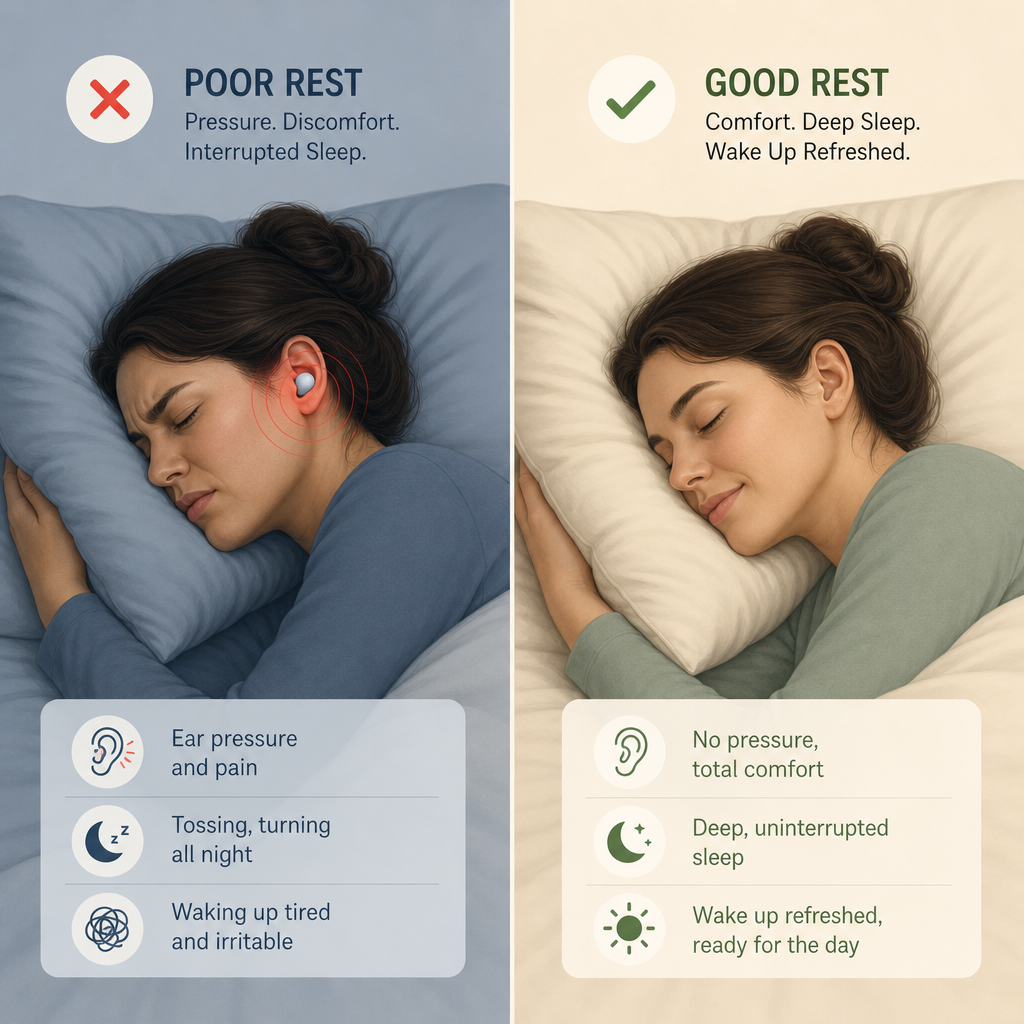
Not all ear plug categories perform equally for side sleepers. The table below compares the three main options a noise-sensitive sleeper or professional is likely to consider, judged specifically on side-sleeping performance rather than general hearing protection adequacy.
| Ear Plug Type | Side Sleeping Suitability | Key Limitation |
|---|---|---|
| Standard disposable foam (cylindrical roll-down) | Poor. High protrusion, loses seal under pillow pressure, difficult to size correctly. | Protrudes 12-15mm from canal, creates direct leverage point against pillow. Must be discarded frequently, adding ongoing cost and waste. |
| Silicone flanged reusable (triple-flange or mushroom tip) | Moderate. Lower profile than foam cylinders but flanges can create pressure hotspots at the outer canal rim. | Rigid flange material does not conform to canal geometry changes during sleep. Fit is highly sensitive to canal shape; poor fit means sound leakage or discomfort. |
| Metal-bodied with memory foam tips (e.g. ATTENU8) | Best for side sleeping. Concave low-profile aluminium body minimises pillow contact. Memory foam tips adapt to canal geometry shifts during sleep. | Higher upfront cost than disposable foam. Tips require replacement every 6-8 weeks. Must be matched to correct tip size (XS, S, M) for optimal fit. |
“Sleep quality has a larger effect on wellbeing than income or marital status. Disrupted sleep is not a minor inconvenience. It is a measurable health risk.” — Matthew Walker, neuroscientist and author of research on sleep and human performance, via University of California Berkeley.
The data consistently shows that acoustic seal quality directly determines how much noise actually reaches the cochlea, regardless of what the packaging NRR claims. A 32dB-rated plug that loses its seal because of pillow pressure is functionally providing far less than 32dB of attenuation. Choosing the right type for your sleep position is not optional if you want the rated performance to actually apply to your situation.
ATTENU8 approached the ear plug design problem from a fundamentally different starting point than most manufacturers. Rather than adapting an occupational hearing protection device for consumer sleep use, the product centres on the physical realities of extended wear in a lying-down position. The aluminium body is machined with a concave profile that keeps the outer surface of the plug from creating the single-point pressure contact that characterises conventional designs.
The metal body is also substantially thinner and lower-profile than a standard foam cylinder at maximum expansion. When inserted correctly with the right tip size, the outermost point of the ATTENU8 plug sits significantly closer to flush with the ear canal entrance than a rolled foam plug does. That reduction in protrusion is the primary reason side sleepers report being able to wear them through the night without the 3am removal.
The inclusion of XS, S, and M memory foam tips is not just a marketing gesture toward inclusivity. Ear canal dimensions vary significantly between individuals. A plug tip that is too large creates painful canal wall pressure. One that is too small cannot maintain an acoustic seal, particularly as the canal geometry shifts during the postural changes of sleep. The ability to match the tip size to actual anatomy means the seal quality is consistent from insertion through to morning.
Memory foam as a tip material also has a specific advantage for the side sleeper context. Its slow rebound rate means that when the tip is compressed by pillow pressure, it does not immediately spring back and eject itself. It holds its compressed form temporarily, then gradually re-expands as pressure is released. This dynamic is the opposite of what happens with standard PU foam, which rebounds aggressively and can work itself out of position throughout the night.
Pro tip: When testing ear plug size for side sleeping, try inserting the plug while lying on your side rather than standing in front of a mirror. The canal orientation changes in that position, and a tip that feels correct upright may be too large or too small when you are horizontal. Assess the fit where it actually needs to perform.
Single-use foam ear plugs seem inexpensive per unit, but a light sleeper or a shift worker using two ear plugs per night spends considerably more annually than the cost of a premium reusable pair. The more significant cost is the repeated failure. Every night spent discarding a dislodged ear plug at 2am, or tolerating discomfort rather than getting consistent noise reduction, is a night of degraded sleep. ATTENU8’s model of replacing only the foam tips every six to eight weeks retains the structural integrity of the metal body while keeping the acoustic seal consistently fresh.
The Noise Reduction Rating (NRR) printed on ear plug packaging is measured in a laboratory under controlled conditions with correctly fitted plugs. Real-world attenuation is typically lower, because most people do not achieve the laboratory-standard insertion depth and seal. The US EPA and OSHA both note that the real-world effective noise reduction is often estimated at approximately half the stated NRR for practical use purposes.
Even accounting for that real-world adjustment, a 32dB-rated plug delivering an effective 16dB of attenuation makes a meaningful difference. A partner snoring at 65dB becomes effectively 49dB, which sits below the threshold at which most people experience full cortical arousal from sleep. The math is simple and the outcome is measurable. More consistent attenuation across the night, maintained by a plug that stays in place, translates directly to more slow-wave and REM sleep stages.
Road traffic at 50 metres registers at approximately 60-65dB. A partner’s snoring can reach 80dB at close range. Urban ambient noise through a closed window sits around 40-50dB. A 32dB-rated ear plug, even at its real-world effective performance, reduces all of these sources to levels that either fall below or approach the roughly 30-35dB ambient threshold associated with undisturbed sleep in adults. That is the target range. It is achievable, but only if the plug maintains its seal throughout the night, which circles back to the fit and profile requirements discussed above.
Products like those from Flare Audio or Loop Ear Plugs position themselves partly around acoustic filtering, preserving some sound frequencies while attenuating others. That is useful for musicians or for people who need situational awareness. For a side sleeper whose sole objective is uninterrupted sleep in a noisy environment, maximum broadband attenuation with a stable overnight fit is the correct specification. Acoustic filtering is a feature that is largely irrelevant at 2am when a truck accelerates past your bedroom window.
Yes, but only with the right design. Low-profile, concave-bodied ear plugs with correctly sized memory foam tips are specifically suited to surviving the pillow pressure and postural shifts of a full night’s sleep. Standard cylindrical foam plugs are not designed for this use case and regularly migrate out of position during the night.
Start with the medium tip and assess the fit lying on your side rather than standing upright. If the plug feels uncomfortable or creates pressure inside the canal, move down to small. If you notice sound leaking through or the plug sits loosely, move up. The correct tip size should feel snug but not painful, and the plug should require gentle effort to remove, not fall out freely.
Memory foam tips used nightly typically require replacement every six to eight weeks. The foam gradually loses its rebound elasticity and its surface accumulates oils and debris from the ear canal that reduce hygiene and acoustic seal quality. Replacing only the tips on a metal-bodied plug is significantly more economical and sustainable than discarding and replacing an entire plug unit.
In practice, no. The aluminium body of a product like ATTENU8 is compact enough that its weight is negligible compared to the forces already acting on the plug from pillow contact. The rigidity of the metal body actually helps maintain the plug’s geometry under pressure, whereas soft foam bodies can deform under sustained lateral compression and lose their shape and seal.
Sleep-specific ear plugs prioritise maximum broadband noise attenuation, low profile for lying down, and sustained overnight comfort. Concert ear plugs prioritise acoustic filtering to preserve music clarity at reduced volume. Travel ear plugs are often optimised for pressure equalisation and ambient noise reduction during flights. These are genuinely different engineering goals. A product optimised for concerts will underperform for a side sleeper who needs 8 hours of maximum attenuation in a horizontal position.
For most cases, yes, particularly if the seal is maintained consistently. Snoring typically ranges from 50dB to 80dB depending on severity. A 32dB rated plug delivering real-world effective attenuation reduces even loud snoring to levels that approach or fall below the threshold for sleep disruption in most adults. For very loud snoring above 80dB, ear plugs alone may be insufficient and should be combined with positional adjustments or other interventions.
The aluminium body can be wiped with a damp cloth or a mild isopropyl alcohol solution. The memory foam tips should not be submerged in water as this degrades the foam structure. Wipe the tips gently with a dry or slightly damp cloth. Given that tips are replaced every six to eight weeks anyway, deep cleaning of the tips is less critical than cleaning the metal body itself.
Have you tried switching from standard foam ear plugs to a low-profile reusable option for side sleeping? Share what worked, or what did not, in the comments below.
Most people who complain that ear plugs do not work are not using the wrong product. They are using the wrong size. A poor fit leaves microscopic gaps around the ear canal, and those gaps are enough to let traffic noise, snoring, or construction sounds pour straight through. Research published by the National Institute for Occupational Safety and Health confirms that an improperly fitted ear plug can reduce its rated noise attenuation by more than 50 percent in real-world use. Getting your ear plug sizes right is not a preference issue. It is the single most important variable in whether your hearing protection actually works.
A common mistake is treating ear plug sizing as optional, something you figure out after purchase and work around if the fit is imperfect. In practice, the ear canal is one of the most variable anatomical features across the human population. Some adults have ear canals as narrow as 5mm in diameter. Others exceed 11mm. That is a more than twofold range, and standard one-size foam plugs simply cannot accommodate it reliably.
The consequence of an oversized tip is pain, pressure, and the urge to remove the plug during the night exactly when you need it most. The consequence of an undersized tip is acoustic leakage: low-frequency sounds such as traffic rumble and snoring bass tones slip around the plug and reach the eardrum almost unimpeded. Neither outcome is acceptable when you are trying to sleep or protect your hearing on a worksite.
ATTENU8 addresses this directly by including three tip sizes, XS, S, and M, with every pair of its aluminium-bodied ear plugs. That design choice is not a marketing feature. It is an engineering necessity driven by the reality of human anatomy.
The ear canal is not a straight tube. It curves inward and slightly upward from the outer opening, and its walls are lined with skin that reacts to foreign objects by generating pressure signals interpreted as discomfort. This is why a tip that feels fine for ten minutes can become genuinely painful after an hour in bed.
Two dimensions matter when sizing ear plugs. The first is the width of the canal opening, which determines how large a tip you can insert comfortably. The second is the depth at which the tip needs to sit to create a full acoustic seal. Most consumer ear plugs, including traditional single-use foam rolls, are designed to sit at a shallow to mid-canal depth. Premium reusable options with memory foam tips, like those ATTENU8 uses, conform to the canal walls at the correct insertion depth rather than relying on radial pressure alone.
The data consistently shows that a meaningful percentage of adults have ear canals that differ in size between the left and right ear. This is not unusual. It means the ideal tip size for your left ear may be one size smaller or larger than your right. ATTENU8 supplies multiple tip sizes per pack precisely to handle this reality. Do not assume symmetry before you test.
“Hearing protector fit testing has demonstrated that the real-world attenuation achieved by workers is substantially lower than laboratory-rated values, primarily due to improper insertion and sizing.” – National Institute for Occupational Safety and Health (NIOSH), Hearing Protector Effectiveness Research
ATTENU8 memory foam tips come in three sizes. Understanding what each one is designed for saves you the trial-and-error cycle that frustrates most first-time users of multi-size systems.
XS tips are designed for narrow ear canals, typically found in smaller adults, many women, and some younger adults. If you have previously found standard foam ear plugs painful or difficult to insert fully, XS is your most likely starting point. An XS tip that fits correctly will expand to fill the canal without creating a feeling of outward pressure against the canal walls.
S tips cover the most common adult ear canal range. In practice, the majority of users land on S as their correct size. If you have used standard foam earplugs without significant pain but also without a reliably good seal, an S tip properly inserted will outperform what you have experienced before. The memory foam conforms to the unique contour of your canal rather than applying uniform radial pressure like a cylinder of compressed foam does.
M tips suit wider ear canals and users who have historically found that ear plugs fall out easily during sleep or physical activity. If an ear plug consistently migrates out of your canal overnight, it is almost certainly undersized. An M tip that fits correctly stays seated without needing to be pushed in aggressively.
Pro tip: Start with the S tip for both ears on your first fitting session. Then use the simple seal test described in the section below before committing to that size. If one ear fails the test, move to M. If insertion feels uncomfortable or tight, try XS.
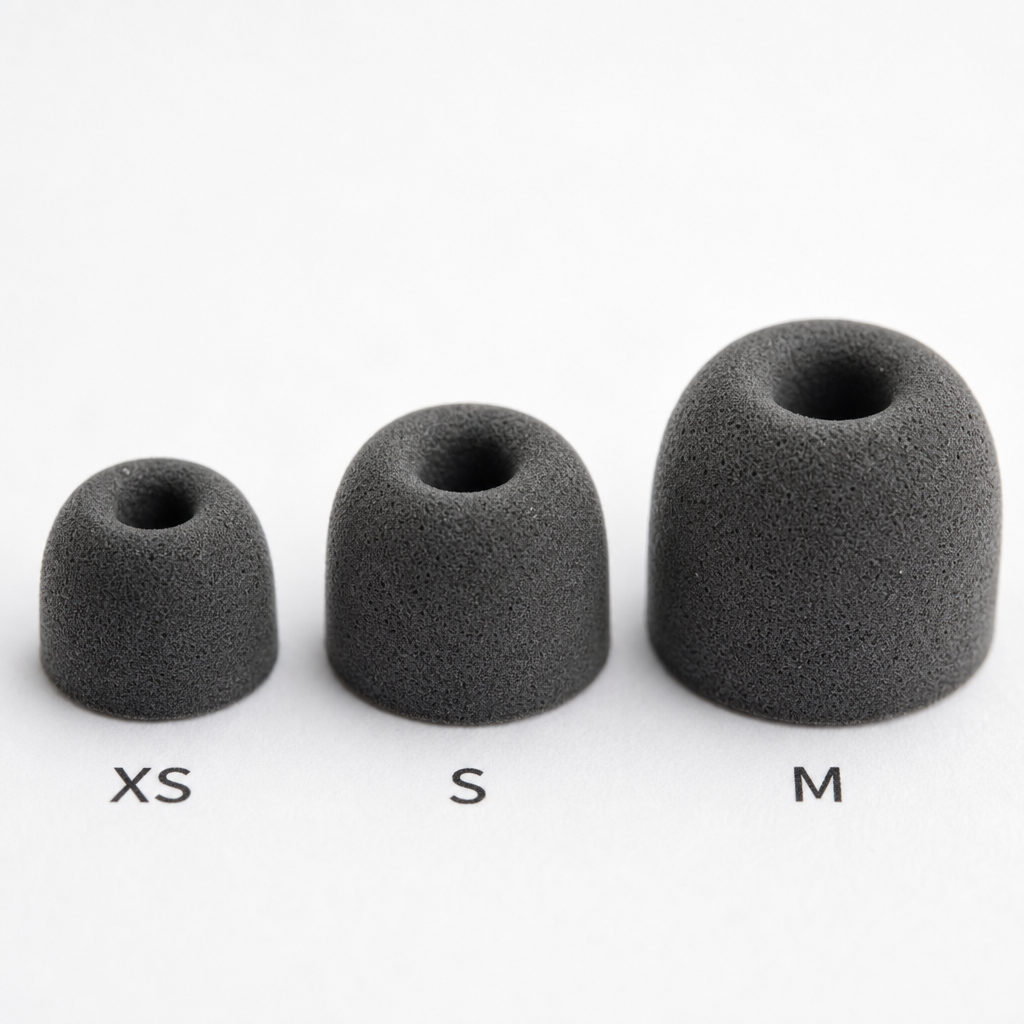
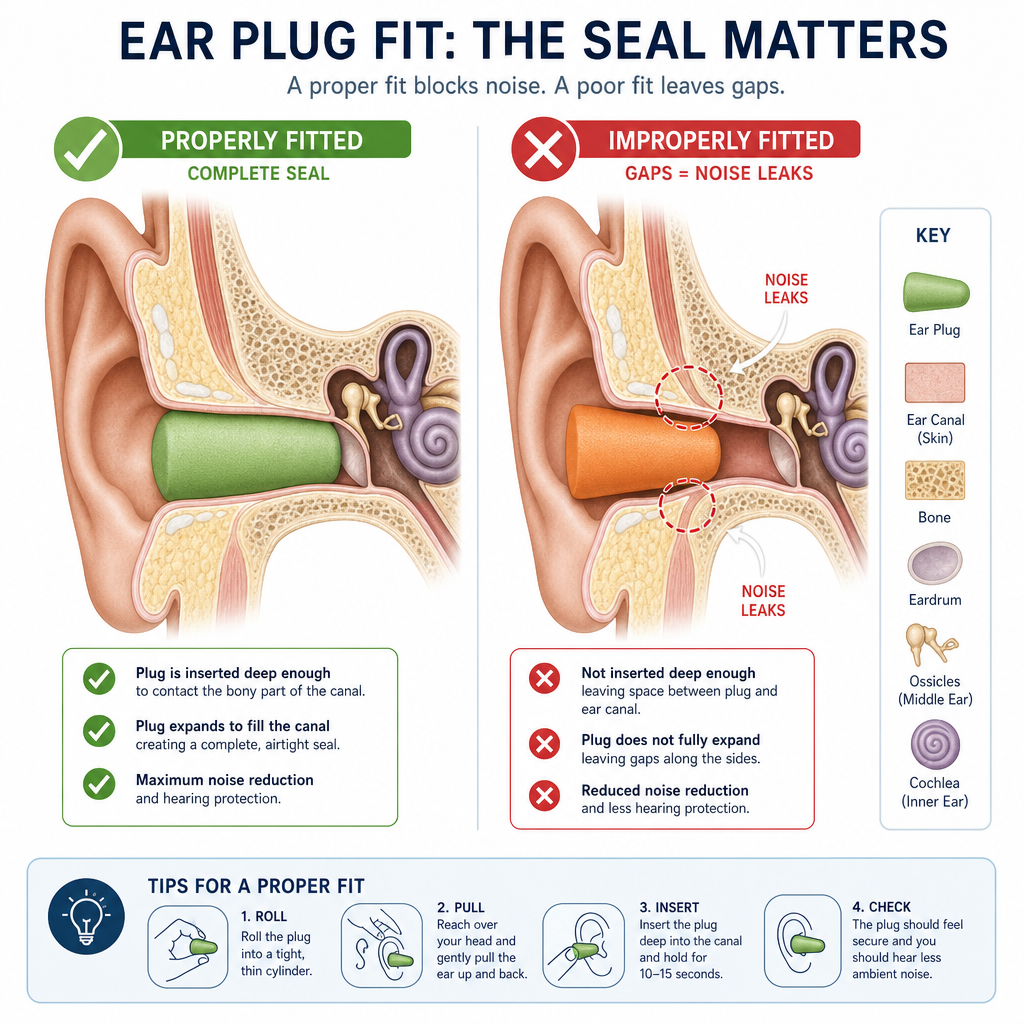
Knowing your size is half the equation. The insertion technique determines whether that size performs at its rated 32dB noise reduction or underperforms by a significant margin. This is where most users, even experienced ones, lose most of their noise attenuation.
Pull your outer ear (pinna) upward and slightly backward with the opposite hand before inserting the plug. This straightens the natural curve of the ear canal and opens the entry point. Insert the tip with a gentle rotating motion rather than pushing straight in. Once the tip is at the canal opening, hold it gently in place for 20 to 30 seconds while the memory foam expands to fill the space. Releasing too early before the foam has fully expanded is the single most common cause of an incomplete seal.
The tip should sit far enough inside the canal that the outer face of the foam sits flush with or just inside the canal opening. You should not be able to see a significant gap between the tip and the canal wall when looking in a mirror. If the foam tip is still visibly proud of the canal entry, it has not been inserted to the correct depth.
With ATTENU8’s aluminium-bodied design, the rigid body of the plug gives you a reliable grip point for insertion without compressing the foam tip before it enters the canal, a problem that plagues traditional roll-down foam plugs where you compress and insert before the foam has time to re-expand fully.
Pro tip: If you are fitting ear plugs for sleep, do your fitting session while standing in a well-lit room before bed rather than lying down in the dark. Proper insertion requires both hands and clear visibility, especially during the first few uses of a new size.
A properly fitted ear plug produces a very specific subjective experience: your own voice sounds louder and more resonant when you speak (the occlusion effect), external ambient sounds drop noticeably, and there is a mild but not painful sense of fullness in the ear. If you do not get all three of these indicators, the seal is incomplete.
With both plugs inserted, cup both palms firmly over your ears. If you hear a significant increase in sound when you cup your hands compared to without the plugs seated, your plugs are not sealed. A properly seated plug means cupping your hands adds almost nothing because the plug is already blocking the canal. A leaking plug means the extra barrier of your palms makes a noticeable difference.
Insert one plug at a time. With one ear open and one sealed, stand in a normally ambient environment and compare the perceived loudness between ears. The plugged ear should sound substantially quieter, not just marginally different. If the difference is subtle, re-insert with the correct technique and retest.
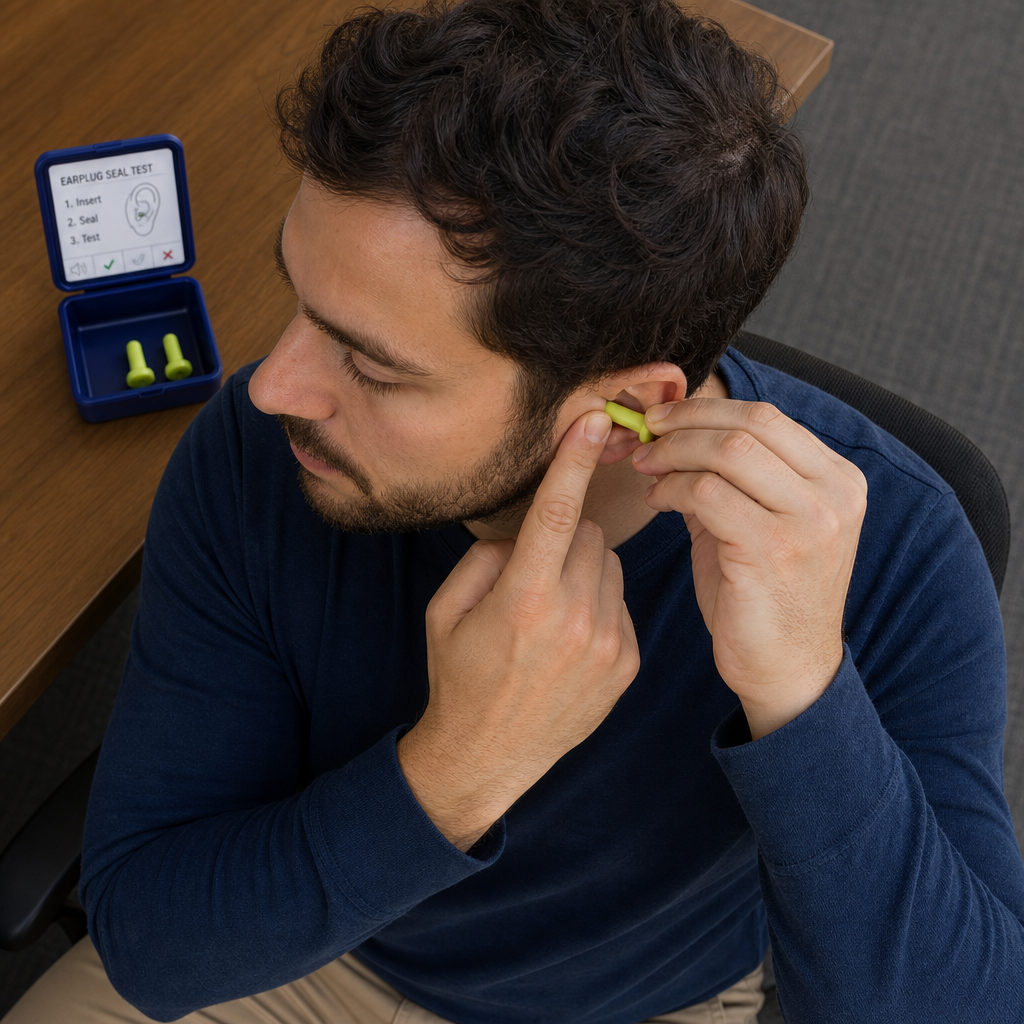
Not all ear plug systems approach sizing the same way. Understanding the trade-offs helps you see exactly why a multi-tip system with memory foam outperforms alternatives for consistent noise reduction across different users and use cases.
| Sizing Approach | How It Works | Noise Reduction Consistency |
|---|---|---|
| Single-size roll-down foam (standard disposable) | User compresses foam, inserts, and waits for expansion. One diameter fits all canal sizes by relying on high radial pressure. | Highly variable. NIOSH data shows real-world attenuation is often 50 percent or less of the rated NRR due to sizing and insertion failures. |
| Silicone flange tips (multiple sizes) | Rigid flanges create a mechanical seal at set diameters. Users select the flange size closest to their canal width. | Good when sized correctly, but the rigid structure does not conform to canal shape variation, leaving gaps in irregular canals. |
| Multi-size memory foam tips on a rigid body (ATTENU8 XS, S, M) | User selects the nearest size then inserts using a pull-and-rotate technique. Memory foam expands and conforms to the exact canal profile. | High and consistent. Foam conformation eliminates gaps caused by canal irregularity, and the rigid aluminium body preserves tip shape during insertion. |
After working through the sizing and insertion process, the following errors account for the vast majority of cases where users report that their ear plugs are not performing as expected.
A common mistake is selecting the smallest tip that does not cause discomfort and stopping there. Comfort is necessary but not sufficient. A tip that is one size too small for your canal may feel pleasant because it causes no pressure, but it will not expand to fill the canal walls and will leave an acoustic gap. The correct size feels snug but not painful, and produces the occlusion effect described above.
Memory foam degrades with repeated compression and contact with skin oils. ATTENU8 recommends replacing tips every 6 to 8 weeks under regular use. A worn tip does not expand fully, which means a size that fitted correctly in week one may be effectively undersized by week ten. The aluminium body of ATTENU8 plugs is designed to last for years. Only the foam tips need periodic replacement, and this is a significant cost and waste advantage over disposable plug systems.
Skipping the step of pulling the pinna upward and back before insertion means you are trying to push a tip around a curve rather than into a straightened tube. The tip seats at the bend, not at the correct depth, and the acoustic seal is incomplete. This mistake is nearly universal among first-time users of any ear plug system.
Asymmetric ear canals are common enough that assuming both ears take the same tip size is a genuine risk. Always test each ear independently with the seal tests above before finalising your size selection for each side.
The most reliable method is to start with a medium (S) tip and test the seal using the palm cup test and the occlusion effect check. If the seal fails or insertion is painful, adjust one size in the appropriate direction. Most adults find S fits one or both ears correctly. ATTENU8 includes all three tip sizes with each purchase, which eliminates the need to guess before buying.
Yes, and this is more common than most people assume. Ear canal dimensions are not necessarily symmetrical across the two sides of the same person. Always test each ear independently and do not assume the size that works for your right ear will work for your left. ATTENU8 provides multiple tip sizes per pack specifically to accommodate this variation.
Three indicators confirm a correct seal: your own voice sounds louder and more resonant when you speak (the occlusion effect), ambient room noise drops substantially, and the palm cup test produces minimal additional sound reduction. If cupping your hands over the plugged ears makes a noticeable difference, the plug is not fully sealing the canal.
Under regular nightly use, memory foam tips should be replaced every 6 to 8 weeks. The foam loses its elasticity over time due to repeated compression and exposure to skin oils, which reduces its ability to expand and fill the canal wall. ATTENU8’s design means only the foam tips need replacing, not the entire plug, which keeps the long-term cost well below disposable foam alternatives.
Ear plug size determines whether the plug physically seals your canal. The noise reduction rating (NRR or SNR) describes the maximum attenuation a correctly fitted plug can deliver. An incorrectly sized or poorly inserted plug never reaches its rated attenuation, regardless of how high the NRR figure is. Getting the size right is what allows the rated figure to be realised in practice. ATTENU8’s 32dB noise reduction is achievable only when the correct tip size is properly inserted.
No. A larger tip than your canal requires does not increase noise reduction. It creates discomfort, outward pressure, and often a paradoxically worse seal because the tip cannot seat at the correct depth. The correct size for your canal, properly inserted, delivers the full rated noise attenuation. Oversizing is as problematic as undersizing.
In most cases, previous discomfort comes from using the wrong size or an incorrect insertion technique, not from an inherent intolerance to ear plugs. The two most common causes are tips that are too large creating canal wall pressure, and tips inserted without straightening the canal first. Starting with an XS tip and using the pinna-pull technique before insertion resolves the problem for the majority of people who believe they simply cannot wear ear plugs.
Have you struggled to find the right ear plug size, or do you have a fitting tip that worked for you? Share your experience in the comments.

