


 0

Roughly 30% of adults report difficulty sleeping due to noise, yet most people grabbing foam ear plugs off a pharmacy shelf have no idea they are choosing between materials with dramatically different noise reduction profiles, comfort levels, and long-term costs. Memory foam ear plugs dominate the market, but silicone and wax each have genuine strengths that make them the right choice in specific situations. This guide cuts through the marketing noise and tells you exactly which material wins for sleep, why the others fall short in particular scenarios, and what to consider if you need something built to last longer than a single night.
| Key Insight | Explanation |
|---|---|
| Memory foam delivers the highest NRR for sleep | A correctly inserted memory foam plug achieves 29-33dB noise reduction, outperforming silicone and wax in controlled tests. |
| Wax moulds well but degrades quickly | Wax conforms to the ear canal shape but picks up debris, loses adhesion within a few uses, and cannot be properly cleaned. |
| Silicone is the best choice for occasional poolside or travel use | Silicone repels water and is easier to clean, but its rigid body reduces acoustic sealing compared to compressed foam. |
| Insertion technique changes everything for foam | A poorly inserted memory foam plug drops from 32dB to under 15dB of effective attenuation, making technique as important as material. |
| Single-use foam is expensive and wasteful long-term | A regular user discards 52 or more pairs per year from disposable foam, while a reusable metal-bodied plug with replaceable tips costs a fraction of that over 12 months. |
| Ear canal size is the most underrated fit variable | Most packaged ear plugs include only one tip size. Plugs that offer XS, S, and M foam tip options consistently report higher comfort and retention through the night. |
| Side sleepers need a low-profile body | Bulky silicone flanged plugs press against pillows and create discomfort within an hour. A compact, concave body design minimises this pressure point. |
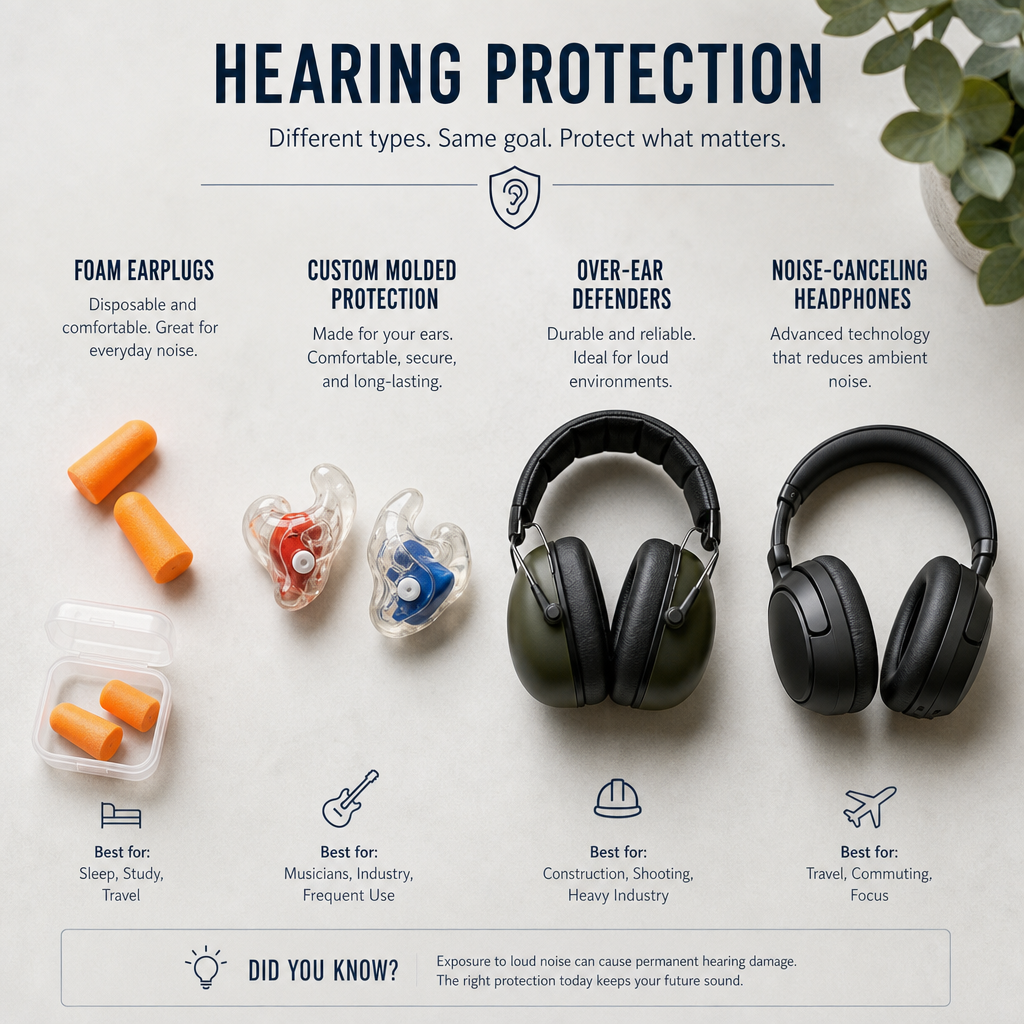
Understanding what each material physically does inside your ear canal explains why performance varies so widely between types.
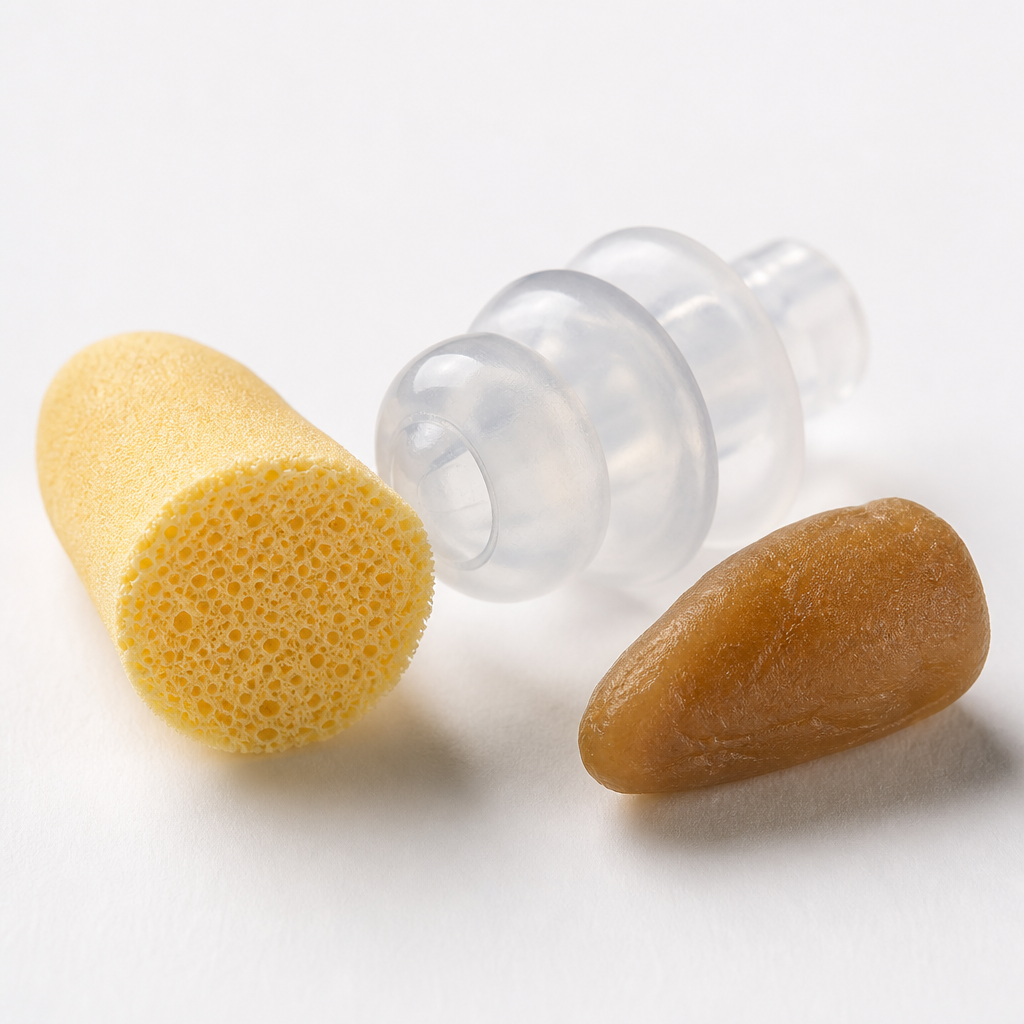
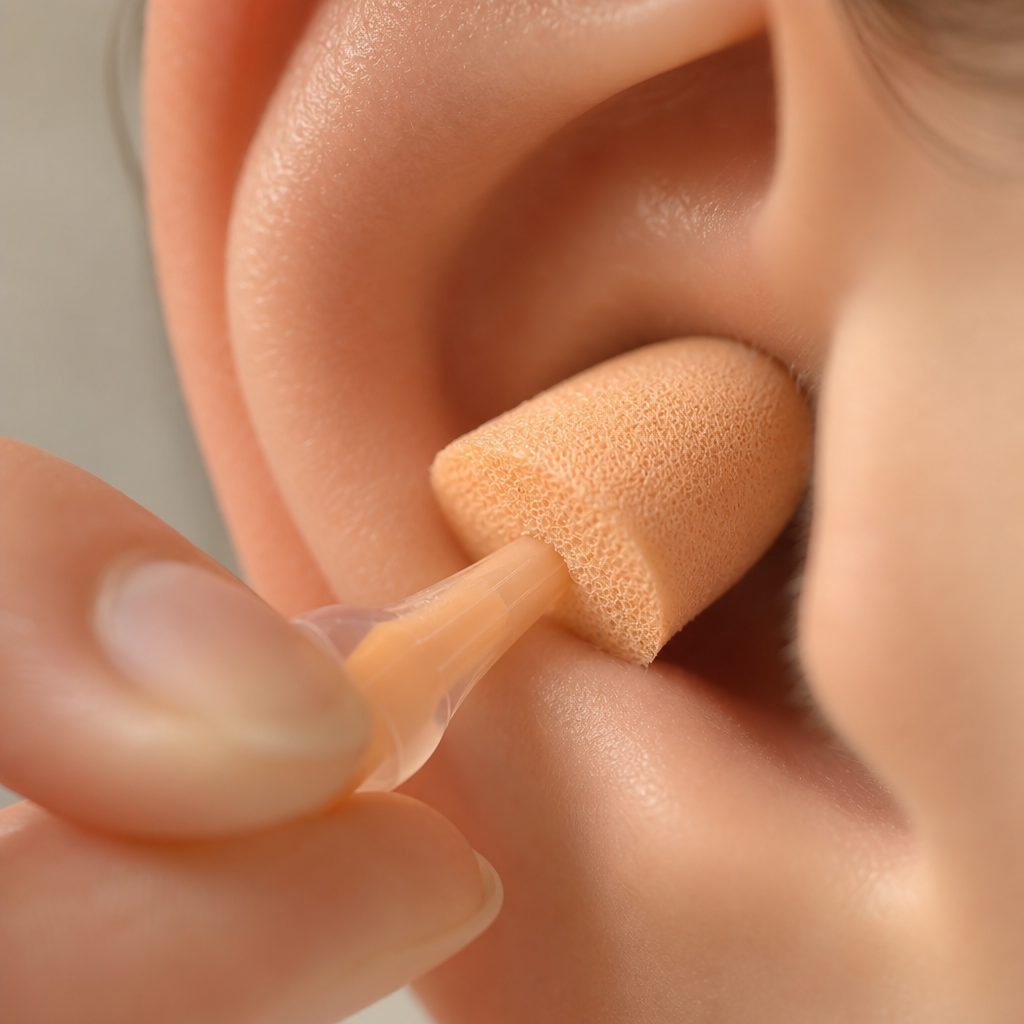
Memory foam ear plugs use slow-recovery polyurethane foam. You compress the plug between your fingers, insert it into the ear canal, and the foam slowly expands to fill the canal’s unique geometry. This expansion is the source of its acoustic advantage: the material conforms to the specific contours of your ear rather than approximating a seal. The result is a genuine acoustic barrier rather than a rough approximation of one.
The limitation is that the foam cell structure absorbs skin oils, earwax, and bacteria over time. Disposable versions become unhygienic after one or two uses. Premium reusable versions, like those from ATTENU8, solve this by housing the foam tip inside a cleanable aluminium body and offering tip replacements every 6-8 weeks rather than replacing the entire unit.
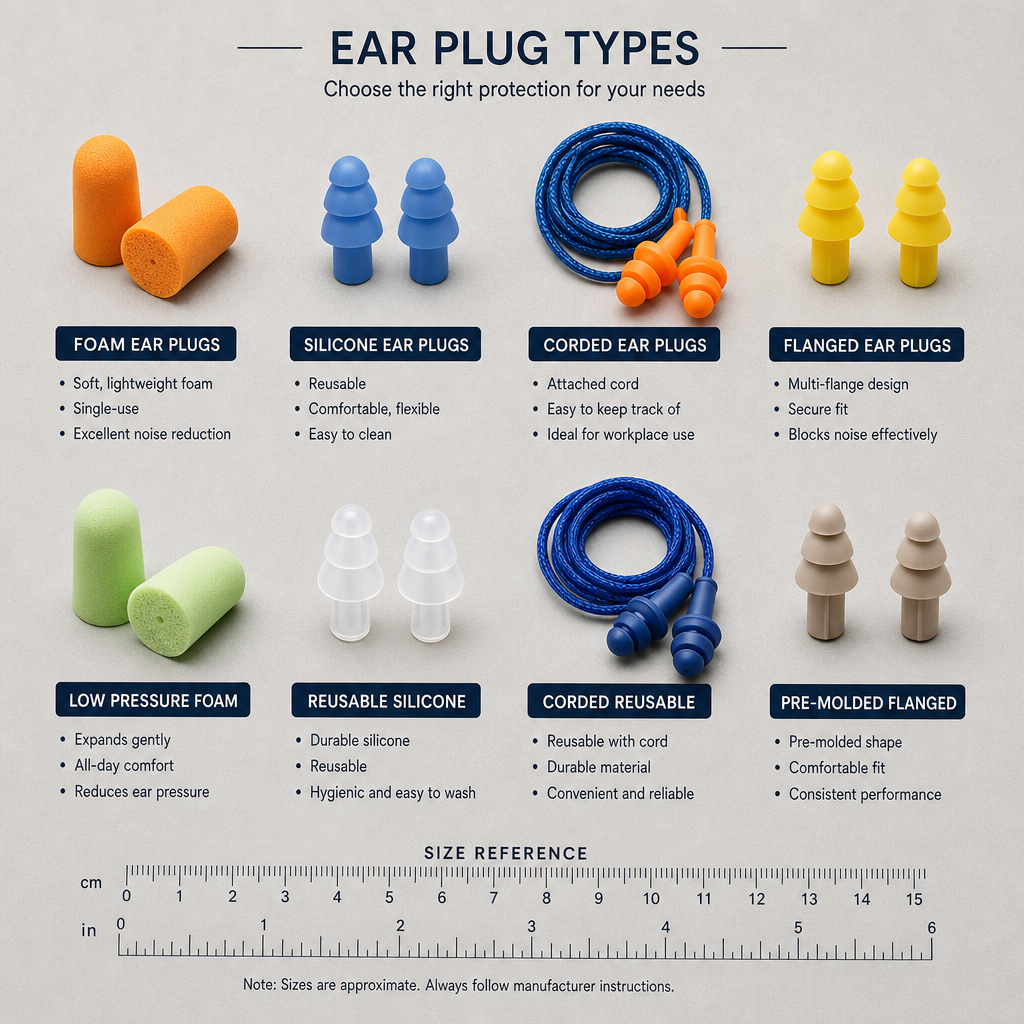
Silicone ear plugs come in two forms: pre-moulded flanged plugs with a fixed shape, and mouldable silicone putty that you flatten over the ear opening. Flanged silicone does not enter the ear canal the way foam does. It sits at the entrance, which limits its noise reduction ceiling. Mouldable silicone putty gets closer to canal-conforming performance but still lacks the pressure-recovery behaviour of memory foam.
Silicone’s real advantage is water resistance. It does not absorb moisture, which matters for swimming, travel, or humid climates. It is also more durable per unit than foam and can be rinsed repeatedly without material degradation.
Wax ear plugs, typically made from petroleum wax or beeswax blended with cotton, are mouldable and self-adhering. You warm the wax between your palms, roll it into a ball, and press it over the ear canal opening. Like mouldable silicone putty, wax does not enter the canal but creates an external seal. The adhesive quality means it stays in place reasonably well during sleep, which is its primary appeal.
In practice, wax accumulates lint, hair, and debris from the first use onward. It cannot be cleaned without losing its structural integrity. Most manufacturers recommend a maximum of two or three uses per plug, making it one of the most wasteful ear plug options available.
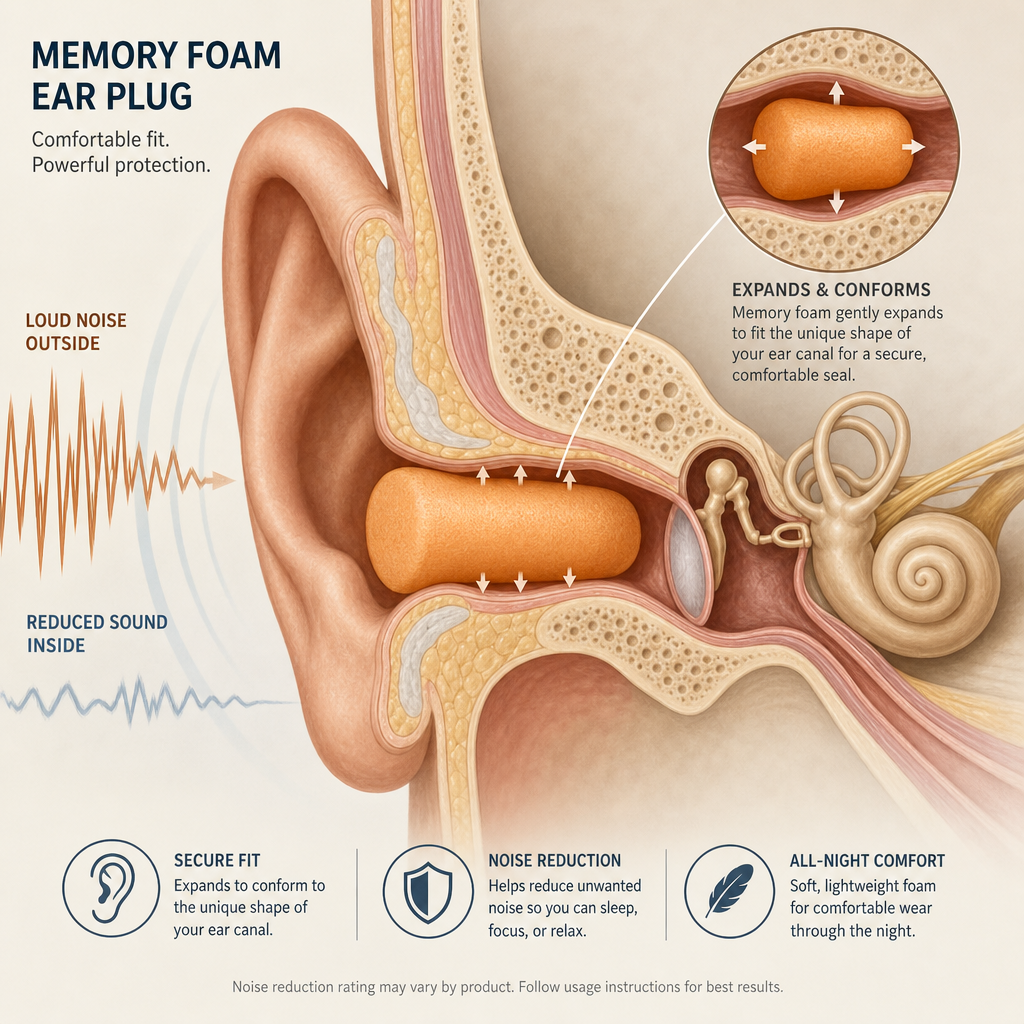
The Noise Reduction Rating (NRR) is the standardised US measure of how many decibels an ear plug attenuates under laboratory conditions. The real-world figure is typically 50% of the listed NRR, according to OSHA’s recommended field correction method. This is where material choice becomes critical for light sleepers.
Correctly inserted memory foam plugs regularly achieve NRR 29-33. After the OSHA field correction, that is roughly 14-16dB of real-world attenuation, which is enough to reduce a snoring partner (approximately 60dB) to something closer to a quiet conversation. ATTENU8’s design targets approximately 32dB NRR, placing it at the high end of the memory foam category. The concave aluminium body also helps users insert the foam tip at the correct depth consistently, which is a design advantage that generic foam cylinders do not offer.
Flanged silicone ear plugs typically achieve NRR 25-27. Mouldable silicone putty plugs generally rate lower, in the NRR 22-25 range, because the external-only seal is inherently less efficient. For moderate noise environments (office air conditioning, light traffic) silicone is adequate. For sleep beside a loud snorer or near a street with heavy vehicle traffic, the gap between silicone and quality memory foam becomes noticeable within the first hour.
Wax plugs typically rate NRR 22-25. The external seal is comparable to mouldable silicone putty in laboratory conditions, but wax degrades between uses, meaning the second and third use of the same plug performs measurably worse than the first. The data consistently shows that wax provides inferior noise reduction compared to well-inserted memory foam across every measured decibel range relevant to sleep noise.
Pro tip: When comparing ear plug NRR ratings, divide the listed number by two to estimate real-world performance. A plug rated NRR 32 provides roughly 16dB of practical noise reduction, not 32dB. Use this calculation to set realistic expectations before purchase.
Noise reduction is irrelevant if you remove the plug at 2am because it is causing ear pain. Comfort during sleep is a more complex requirement than comfort during, say, a concert, because you are lying down for 6-8 hours and changing positions repeatedly.
Standard cylindrical foam plugs create a uniform pressure inside the canal regardless of the individual’s anatomy. For some users, this causes a dull ache after 2-3 hours, particularly in narrower ear canals. A common mistake is choosing the largest available foam plug on the assumption that bigger means better attenuation. Oversized plugs create excessive radial pressure and almost always result in removal during the night.
Memory foam tips in multiple sizes solve this directly. ATTENU8’s system includes XS, S, and M tips precisely because ear canal diameter varies significantly between individuals. Fitting the correct size reduces canal pressure while maintaining the acoustic seal.
Side sleeping introduces a mechanical problem that is rarely discussed in ear plug reviews: the pillow exerts lateral force on anything protruding from the ear. Flanged silicone plugs with their multi-layered fin structure create the most pillow resistance. Standard cylindrical foam plugs that protrude significantly also press inward when a pillow pushes against them, which can cause the plug to migrate deeper into the canal overnight, an uncomfortable and occasionally risky outcome.
A low-profile, concave-bodied metal plug sits flush or recessed against the ear, dramatically reducing pillow contact. This is not a minor comfort preference. For dedicated side sleepers, it is often the difference between sleeping through the night with plugs in and waking up to remove them.
Wax and mouldable silicone both sit at the ear entrance rather than inside the canal, which means they avoid canal pressure entirely. This is comfortable initially, particularly for users with sensitive ear canals. The downside is that external-only plugs shift with jaw movement during sleep and lose their seal more easily than in-canal designs. Users who talk or clench their jaw during sleep report noticeably poorer retention with wax and silicone putty.
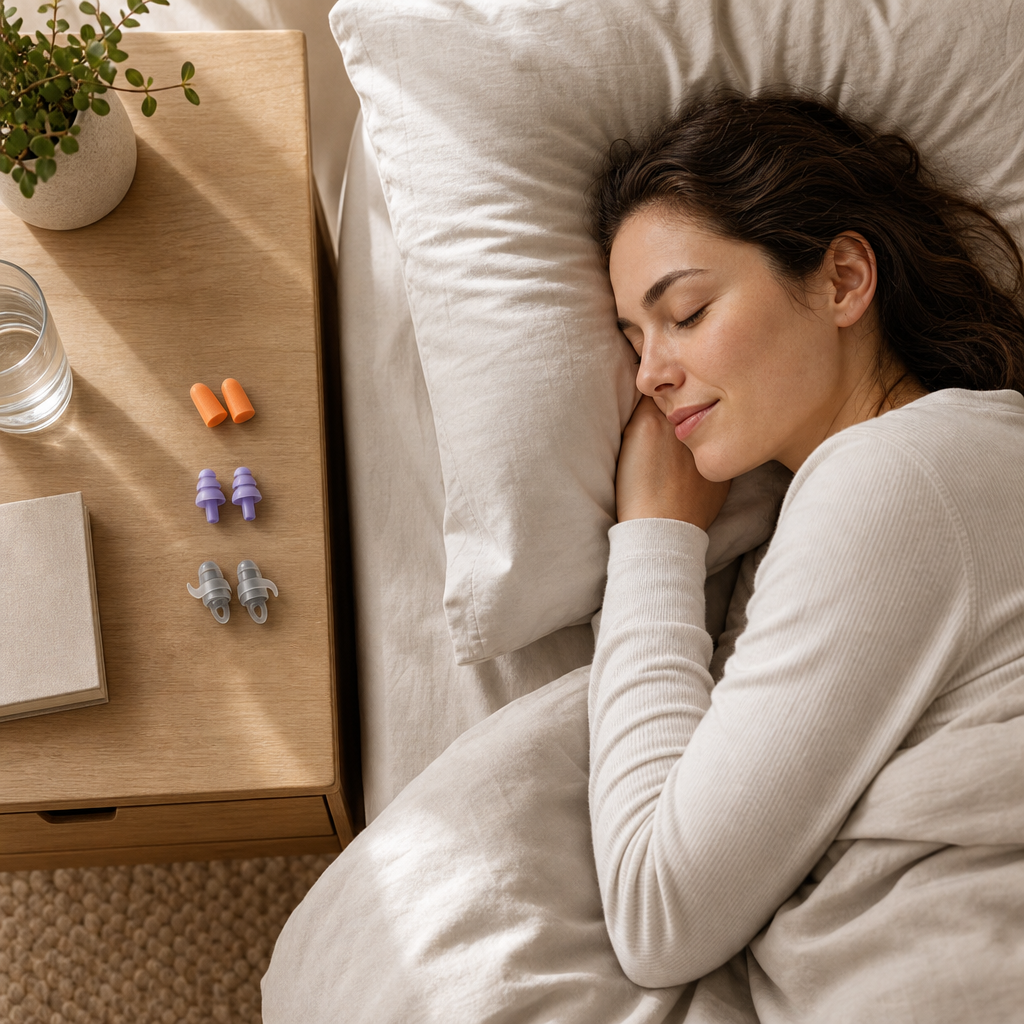
The hidden cost of cheap ear plugs is not the purchase price. It is the cumulative expense and waste of constant replacement, plus the hygiene risk of reusing degraded materials.
A pack of 50 disposable foam pairs costs roughly $10-15 USD. A person using ear plugs every night exhausts that pack in 25 nights. Over one year, they spend $146-219 USD and discard over 700 individual foam plugs. The polyurethane foam in most disposable plugs is not recyclable. This is an environmental and financial inefficiency that is easy to overlook when buying individual packs.
Wax accumulates debris and loses cohesion rapidly. Most wax plug manufacturers acknowledge a useful life of one to three uses. There is no cleaning method that restores a wax plug to its original performance. For anyone using ear plugs more than occasionally, wax is the most expensive option per effective use when you account for how quickly each unit degrades.
Pre-moulded silicone flanged plugs are the most durable single-unit option. They can be washed with soap and water, dried, and reused for months before the flange structure shows meaningful wear. This makes them economically sensible for infrequent use. The problem is that their acoustic performance ceiling remains lower than well-inserted memory foam, so the longevity advantage does not compensate for the noise reduction gap if your primary need is sleep in a genuinely noisy environment.
The design philosophy behind ATTENU8’s metal-bodied system addresses the core problem with disposable foam directly. The aluminium body is permanent and cleanable. The memory foam tips are replaced every 6-8 weeks rather than after every use. This maintains the acoustic performance of fresh foam while eliminating the waste and cost of full-unit disposal. Over a year of nightly use, the cost per effective use is significantly lower than any disposable foam option, and the noise reduction performance remains consistently at the top of what the material category can deliver.
Pro tip: Clean the aluminium body of a metal-bodied ear plug weekly using a cotton swab lightly dampened with isopropyl alcohol. This prevents earwax buildup in the body cavity without damaging the metal finish and extends the interval between tip replacements.
| Feature | Memory Foam (e.g., ATTENU8 reusable) | Silicone (flanged, pre-moulded) | Wax (petroleum or beeswax) |
|---|---|---|---|
| Typical NRR | 29-33dB | 25-27dB | 22-25dB |
| Seal type | In-canal, conforming | Canal entrance, fixed flange | External, adhesive |
| Side sleeping comfort | High (low-profile body) | Low (flange protrudes) | Moderate (flat but shifts) |
| Hygiene / cleanability | High (cleanable body, replaceable tips) | High (washable) | Poor (cannot clean without destroying) |
| Usable life per unit | 6-8 weeks per tip, body is permanent | Several months with care | 1-3 uses maximum |
| Annual cost (nightly use) | Low (tip replacements only) | Low-moderate | Very high |
| Water resistance | Low (foam absorbs moisture) | High | Moderate |
| Best use case | Nightly sleep, noise-sensitive users | Swimming, occasional travel | One-off use, travel emergencies |
The right material depends on the specific problem you are solving. Here are the clear-cut recommendations based on use case rather than marketing claims.
Memory foam is the correct answer here, and specifically a reusable version with multiple tip size options. The NRR advantage over silicone and wax is meaningful at the noise levels produced by snoring (50-80dB) and street traffic (60-85dB). The conforming seal also handles low-frequency sound better than external-seal alternatives, and low frequencies are precisely where snoring and traffic noise concentrate.
Workers in loud environments often need hearing protection that doubles as a sleep aid during irregular daytime sleep. Memory foam at NRR 32 meets OSHA’s recommended protection threshold for most industrial noise environments. The durability and hygiene of a metal-bodied reusable system also matters in this context because workers cannot always maintain a pristine storage environment for foam tips. A plug you can wipe clean and reuse reliably is practically superior to disposable alternatives on a job site.
Silicone flanged plugs are a reasonable choice for someone who needs ear plugs a few times a month for flights or hotel stays. They travel well, do not compress oddly in a bag, and can be rinsed after use. For this user, the lower NRR relative to foam is an acceptable trade-off given the lower frequency of use.
This group should avoid wax entirely. Wax debris left in the canal from a degrading plug is a documented contributor to external ear canal irritation. Silicone or a properly fitted, correctly sized memory foam tip is the better choice. Fitting the right tip size is non-negotiable: an oversized foam tip causes canal abrasion, and an undersized one loses its seal, defeating the purpose entirely.
“Noise-induced hearing loss is 100% preventable, but once it occurs, it is permanent. The choice of hearing protection should be based on fit, comfort, and correct noise reduction rating for the environment, not convenience alone.” – National Institute for Occupational Safety and Health (NIOSH), hearing loss prevention guidelines.
Most material comparisons stop at the tip and ignore the body entirely. This is a significant oversight for anyone buying ear plugs intended for regular, long-term use.
A disposable foam plug has no body separate from the tip. The entire unit is the acoustic material, which means the same material doing the acoustic work is also being compressed, handled, stored loose in a drawer, and eventually discarded. There is no structural component to ensure consistent insertion depth, no housing to protect the foam from contamination between uses, and no mechanism to separate hygiene management of the outer surface from the acoustic performance of the core material.
ATTENU8’s approach separates these functions deliberately. The aluminium body handles insertion geometry (the concave shape naturally positions the tip at the correct canal depth), durability (metal does not degrade from handling), and outer surface hygiene (metal can be cleaned without damage). The memory foam tip handles the acoustic work and is replaced on a schedule that maintains performance without replacing the entire unit. This is the same logic applied in the design of precision instruments: the housing and the working component have different maintenance cycles because they have different wear rates.
Competitors in the premium ear plug space like Flare Audio and Loop have moved toward reusable designs, but their approaches use silicone tips or solid acoustic channel designs rather than memory foam. This gives them a durability advantage over disposable foam but caps their noise reduction ceiling below what a correctly inserted memory foam tip achieves. For users whose primary need is maximum noise attenuation during sleep rather than a lifestyle accessory, the acoustic physics of conforming foam remain the strongest argument for the material category.
Yes, provided you use the correct tip size and replace the foam tips regularly. The risk with nightly foam ear plug use comes from hygiene neglect rather than the material itself. Old, oil-saturated foam tips can harbour bacteria and contribute to external ear canal irritation. Replacing tips every 6-8 weeks and keeping the body clean eliminates this risk. Users who experience recurring ear discomfort should check tip size first, as oversized tips cause canal abrasion over time.
Technically yes, but wax is not the best choice for side sleepers. Wax plugs sit at the ear entrance and are held in place by light adhesion. When you roll onto your side and rest your ear against a pillow, the lateral pressure disrupts the wax seal and often dislodges the plug partially. The noise reduction benefit disappears when the seal breaks. Memory foam with a low-profile body is significantly more stable for side sleeping.
Silicone flanged plugs sit at the entrance of the ear canal rather than inside it. This reduces the pressure sensation inside the canal, which many users interpret as comfort. But the acoustic seal formed at the canal entrance is less complete than a seal formed by a material that expands to fill the canal’s full cross-section. The foam’s in-canal conforming expansion is less immediately comfortable for some users but produces a measurably tighter acoustic barrier, which is what delivers the higher NRR.
Correct insertion produces a noticeable muffling effect within 10-15 seconds of insertion as the foam expands. If you can hear ambient noise at roughly the same level as before insertion, the plug has not sealed. The most common mistakes are not compressing the foam fully before insertion, releasing the plug before it reaches the correct depth in the canal, and inserting without pulling the outer ear upward and back to straighten the canal. This last step is the one most people skip, and it accounts for a large proportion of poor foam plug performance.
Not necessarily. A very high NRR can create a sensation of pressure or fullness that some users find disruptive to sleep. It can also make it difficult to hear an alarm clock or safety alert in the morning. The goal is attenuation sufficient to bring the ambient noise in your sleep environment below the threshold that disrupts sleep onset, roughly 40dB or lower. For most urban sleep environments, an NRR of 28-32 achieves this without over-attenuating. Custom or professional-grade plugs exceeding NRR 33 are typically unnecessary for home sleep use.
A reusable metal-bodied plug with replaceable foam tips is more hygienic than disposable foam in practice, provided the user follows the recommended cleaning and replacement schedule. The reason is counterintuitive: people tend to replace disposable foam plugs less frequently than recommended because they feel wasteful throwing away a plug that still looks intact. A scheduled tip replacement system removes that psychological barrier and ensures the acoustic material is always within its hygiene window.
Have you tried more than one type of ear plug material for sleep, and which worked best for your specific situation? Share your experience in the comments below.
Approximately 1.1 billion young people worldwide are at risk of noise-induced hearing loss, according to the World Health Organization, yet most people cannot identify the exact moment their hearing begins to deteriorate. That is the insidious nature of this condition: it is painless, cumulative, and permanent. Unlike a broken bone, damaged hair cells in the cochlea do not regenerate. Once gone, they are gone. This guide covers exactly how noise-induced hearing loss develops, what the science says about safe exposure thresholds, and which hearing protection strategies actually work for light sleepers, shift workers, construction professionals, and anyone caught between the modern world’s noise and the silence their ears need to stay healthy.
| Key Insight | Explanation |
|---|---|
| 85 dB is the damage threshold | Prolonged exposure above 85 decibels begins destroying cochlear hair cells. A busy restaurant often hits 85 dB without anyone noticing. |
| Damage is cumulative and permanent | Each loud exposure adds to a lifetime total. Hair cells in the cochlea do not regenerate, making prevention the only real treatment. |
| Short bursts of loud noise are also dangerous | A single exposure to 120 dB, such as a gunshot or concert speaker burst, can cause immediate and lasting damage without any warning pain. |
| NRR ratings matter and are often misunderstood | A Noise Reduction Rating of 32 dB does not mean all sound is blocked. Actual real-world attenuation is roughly half the rated figure under typical wearing conditions. |
| Fit quality determines protection quality | The best ear plug on paper provides zero protection if it does not seal properly. Consistent fit, like that provided by memory foam tips in three sizes, is what determines real-world effectiveness. |
| Reusable ear plugs outperform disposables for regular users | Disposable foam ear plugs degrade and are frequently inserted incorrectly. A well-constructed reusable ear plug with replaceable tips maintains consistent performance over months of use. |
| Hearing loss affects sleep, cognition, and mental health | Research links untreated hearing loss to cognitive decline and depression, making prevention a broader health priority, not just an occupational safety checkbox. |
Noise-induced hearing loss (NIHL) is a permanent reduction in hearing ability caused by exposure to excessive sound levels. It occurs when sound pressure waves are intense enough to physically damage the sensory hair cells lining the cochlea, the snail-shaped fluid-filled organ in the inner ear responsible for converting sound vibrations into electrical signals the brain interprets as sound.
NIHL can be acute, caused by a single explosive event such as a gunshot or industrial blast, or it can be gradual, developing over years of repeated exposure to moderately loud environments. The gradual form is far more common and far more underdiagnosed because the person experiencing it rarely notices the slow erosion of their hearing range until significant damage has already occurred.
The condition is also entirely preventable. That distinction is important. Conditions like age-related hearing loss involve biological processes that medicine cannot yet reverse. NIHL, by contrast, is a direct consequence of choices and environments that can be controlled with consistent and correctly used hearing protection.

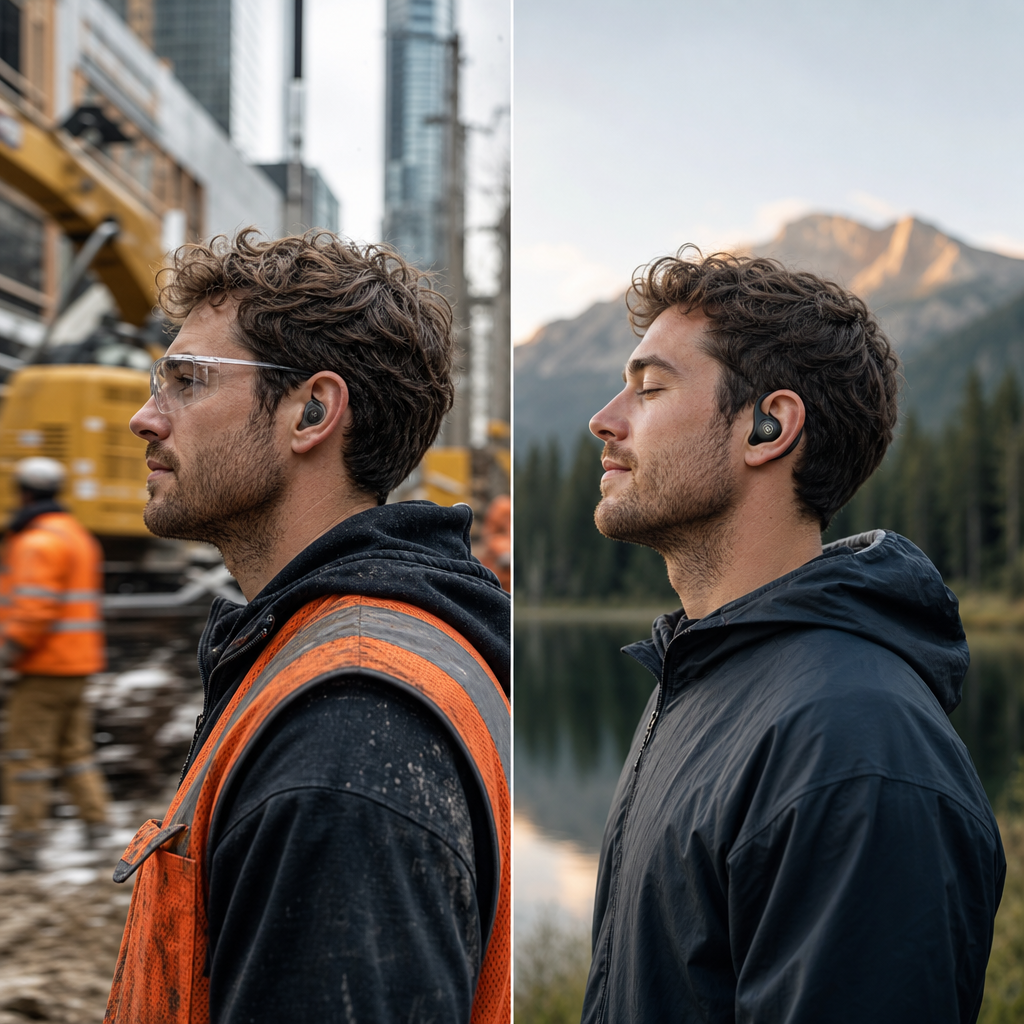
After a single loud exposure, many people notice a temporary muffling of sound or ringing in the ears. This is called a temporary threshold shift (TTS). The cochlear hair cells have been stressed but not yet destroyed. With adequate rest in a quiet environment, hearing often returns to baseline within 16 to 48 hours.
The danger comes from repeated TTS events. Each episode inflicts micro-damage that compounds over time. Eventually, some hair cells die entirely, producing a permanent threshold shift (PTS). By the time most people seek medical attention for hearing loss, they have already crossed from TTS territory into PTS, meaning no intervention will restore what was lost.
The decibel scale is logarithmic, not linear. This trips most people up. An increase from 80 dB to 90 dB does not represent a 12.5 percent increase in sound intensity. It represents a tenfold increase. That distinction matters enormously when assessing risk.
The Occupational Safety and Health Administration (OSHA) in the United States sets the permissible exposure limit at 90 dB for an 8-hour workday. The National Institute for Occupational Safety and Health (NIOSH), which is the research arm of the CDC, uses the more protective standard of 85 dB for 8 hours, with the exposure time halving for every 3 dB increase above that limit.
“Noise-induced hearing loss is 100% preventable. All individuals exposed to hazardous noise levels should be fitted, trained, and required to use hearing protectors.” – National Institute for Occupational Safety and Health (NIOSH)
To make these numbers practical: normal conversation sits around 60 dB. Heavy city traffic averages 85 dB. A motorcycle at close range reaches 100 dB. Power tools and pneumatic drills commonly hit 110 dB. A live music concert near the stage routinely measures between 110 and 120 dB.
At 110 dB, the NIOSH exposure limit before damage risk begins is approximately 1 minute and 53 seconds. Most concert-goers spend two to three hours at those levels. The math is not in their favour, and this applies equally to construction workers operating without protection, travellers on long-haul flights through engine noise, and light sleepers sharing walls with traffic or snoring partners.
Pro tip: Download a calibrated sound level meter app such as NIOSH’s SLM app for iOS to measure the actual decibel level in environments where you spend significant time. The readings are often higher than intuition suggests, particularly in open-plan offices, gyms, and transit hubs.
The CDC estimates that approximately 17 percent of adults in the United States, around 26 million people, have some degree of noise-induced hearing loss in the high-frequency range. Among those aged 20 to 69 who have been exposed to workplace noise, the figure rises to 24 percent. These are not edge-case statistics. This is a mainstream public health problem.
Construction workers, military personnel, manufacturing workers, musicians, airport ground crew, and emergency responders are the most consistently documented high-risk groups. In practice, exposure in these environments is not just occasional. It is sustained, daily, and spans careers that run 20 to 40 years. At 85 dB for 8 hours a day over a working lifetime without protection, measurable permanent hearing loss is effectively certain.
The recreational exposure category is growing. Regular concert attendance, motorised sports, hunting without hearing protection, and extended use of in-ear headphones at high volumes all contribute meaningfully to cumulative exposure. Light sleepers and shift workers face a different but equally real problem: chronic sleep disruption from noise forces the auditory system into prolonged alert states. While low-level chronic noise may not damage cochlear hair cells directly, the compounding fatigue and stress it causes impairs overall physiological resilience and quality of life in documented ways.
The cochlea contains roughly 15,000 to 20,000 hair cells organised along a structure called the basilar membrane. High-frequency sounds stimulate cells near the base. Low-frequency sounds stimulate cells toward the apex. This organisation is why noise-induced hearing loss typically first appears at 4,000 Hz, a frequency range critical for speech clarity, particularly consonant sounds, before progressively affecting adjacent frequencies.
When a hair cell is exposed to excessive sound energy, the mechanical stress causes the stereocilia, the tiny projections on the top of each hair cell, to become overstimulated. This triggers a cascade of biochemical events including the production of reactive oxygen species. These free radicals essentially attack and kill the hair cell from the inside. The cell then undergoes apoptosis and is replaced by scar tissue.
The critical biological fact: mammals, including humans, do not regenerate cochlear hair cells. Fish and birds do. Humans do not. Every hair cell lost to noise damage is permanently gone. This single biological reality is why hearing protection is not optional for anyone serious about long-term health.
Tinnitus, the perception of ringing, buzzing, or hissing in the absence of external sound, is closely associated with noise-induced hearing loss. When hair cells are damaged, the auditory nerve fibres they connect to begin firing spontaneously and erratically. The brain interprets this abnormal electrical activity as sound. For approximately 50 million Americans, according to the American Tinnitus Association, tinnitus is a chronic condition. For many, it is a direct consequence of noise damage that proper hearing protection could have prevented.
Not all hearing protection is equivalent. The gap between a disposable foam ear plug rolled incorrectly into the ear canal and a properly fitted reusable ear plug with a certified 32 dB NRR is not marginal. It is the difference between meaningful protection and a false sense of security.
| Protection Type | Noise Reduction Rating (NRR) | Key Strengths and Weaknesses |
|---|---|---|
| Disposable foam ear plugs | 29-33 dB (rated); 13-17 dB (real-world with typical fit) | Low cost, widely available. High error rate in self-insertion reduces actual attenuation significantly. Degrade quickly. Generate ongoing waste for regular users. |
| Reusable metal-bodied ear plugs with memory foam tips (e.g., ATTENU8) | Up to 32 dB; consistent across uses due to structured body and three-size tip system | Durable aluminium body maintains shape and hygiene. Memory foam tips in XS, S, M sizes allow proper canal fit. Tips replaced every 6-8 weeks rather than the whole unit. Reliable attenuation for daily use in sleep, travel, and occupational contexts. |
| Earmuffs (over-ear hearing protectors) | 20-30 dB typical | No insertion required, reducing fit error risk. Bulky and impractical for sleep, travel, or extended wear. Can cause discomfort and heat in warm environments. Often combined with ear plugs for double protection in extreme noise. |
A common mistake is choosing hearing protection based solely on NRR rating rather than real-world wearability. Protection that is uncomfortable enough to be removed during a noisy shift provides zero benefit for the hours it sits in a pocket. Consistent wear of a well-fitted 32 dB ear plug outperforms intermittent use of any alternative.
Pro tip: If you use ear plugs for sleep, the material and body design matter as much as the NRR. Soft memory foam tips attached to a structured, low-profile body, rather than a loose foam cylinder, reduce the pressure discomfort that causes side sleepers to remove their plugs in the night, defeating their purpose entirely.
Prevention is not complicated in concept, but it requires consistency in practice. The data consistently shows that the largest gap between people who develop NIHL and those who do not is not knowledge. It is the habitual, correctly executed use of protection every time they enter a hazardous sound environment.
Audiologists commonly recommend the 60/60 rule: listen at no more than 60 percent of maximum volume for no more than 60 minutes at a time before taking a break. This is a practical middle ground. In practice, enforcing it requires turning off auto-volume normalization settings on smartphones and resisting the habit of raising volume to compensate for ambient noise, which is better addressed by using noise-isolating ear tips or switching environments.
The hierarchy of controls, as defined by occupational health frameworks, places engineering controls above personal protective equipment. Reducing sound at the source, through acoustic dampening, equipment maintenance, or distance from the noise source, is always preferable to relying entirely on ear plugs. In practice, this means requesting quieter machinery, using soundproofing panels in home studios, and choosing accommodation away from traffic-facing walls when travelling.
Light sleepers and travellers face a specific challenge: noise exposure during sleep is not just a comfort issue. Chronic nighttime noise above 40 dB has been linked by the World Health Organization to sleep disturbance, cardiovascular effects, and cognitive impairment in children. Using well-fitted ear plugs during sleep in noisy environments, whether from snoring partners, urban traffic, or hotel corridors, is a legitimate medical-grade intervention, not a luxury.
For long-haul flights, where engine drone typically measures 85 dB or above throughout the cabin, ear plugs that seal properly against cabin pressure changes are preferable to both passive earmuffs and standard uncupped foam inserts. The consistent fit of a structured ear plug body with appropriately sized memory foam tips maintains attenuation even as cabin pressure fluctuates.
The research on ear plug effectiveness is clear and has been consistent for decades. Properly fitted ear plugs with adequate NRR ratings prevent cochlear hair cell damage in noise environments that would otherwise produce measurable permanent threshold shifts. The operative phrase is properly fitted.
A 2017 study in the Journal of the Acoustical Society of America found that self-inserted disposable foam ear plugs achieved, on average, only 50 percent of their rated NRR due to improper insertion technique. Most users roll the foam, insert it, and release before the foam has fully expanded into the canal, leaving gaps that allow significant sound energy through. Structured ear plug bodies with external rims eliminate this variable almost entirely because the fit does not depend on exact insertion depth or timed compression.
Memory foam conforms more slowly and holds its shape longer than standard polyurethane foam. This means it adapts to the individual contours of the ear canal rather than simply expanding to fill space. The result is a more complete and comfortable seal, particularly for users with irregular or smaller canal geometries who have historically found standard large-format foam ear plugs painful or ineffective. Offering three tip sizes, as ATTENU8 does with XS, S, and M options, is not marketing segmentation. It reflects the anatomical reality that ear canal diameter varies significantly between individuals and between left and right ears in the same person.
A factor rarely addressed in hearing protection discussions is hygiene. Disposable foam ear plugs accumulate cerumen, skin oils, and bacteria and are meant to be discarded after one or a small number of uses. In practice, many users reuse them far beyond this point, increasing infection risk. A metal-bodied ear plug with replaceable foam tips separates the durable structural component from the consumable contact component, maintaining hygiene through regular tip replacement every 6 to 8 weeks while eliminating the waste and cost of discarding the entire unit.
Most people with early-stage noise-induced hearing loss do not know they have it. The high-frequency range where damage first appears, around 4,000 Hz, is not the frequency range of everyday conversation. Life can feel normal while significant damage accumulates.
The following signs warrant a formal audiological evaluation. Requiring the television volume to be set noticeably higher than other household members. Regularly asking people to repeat themselves, particularly on the phone or in background noise. Difficulty distinguishing consonants in speech, such as confusing S, F, and TH sounds. Persistent tinnitus after exposure to loud noise, even when the ringing eventually subsides. A sense of sound being muffled in one or both ears after noise exposure.
None of these symptoms should be self-managed through acceptance or compensation. An audiologist can conduct a pure-tone audiogram that maps your hearing thresholds across the full frequency range and identify whether any loss exists and in which frequencies. The earlier damage is identified, the more effectively further decline can be prevented through consistent hearing protection use going forward.
No. Cochlear hair cells do not regenerate in humans. Once destroyed by noise exposure, hearing loss in those frequency ranges is permanent. Research into hair cell regeneration is ongoing, but no clinically available treatment currently reverses established noise-induced hearing loss. Prevention through consistent use of effective hearing protection is the only reliable strategy.
Ear plugs with a high NRR rating, properly fitted, are highly effective at preventing noise-induced hearing loss. The key qualification is properly fitted. A 32 dB NRR ear plug correctly inserted can reduce a 110 dB environment to approximately 78 dB, well within safe exposure limits. The same ear plug inserted poorly may reduce exposure by only 10 to 15 dB, which is insufficient protection in high-noise environments.
NRR (Noise Reduction Rating) is the standard used in the United States, governed by ANSI/ASA standards. SNR (Single Number Rating) is used in Europe under EN 352 standards. Both describe the attenuation a hearing protector provides, but the testing methodologies differ, making direct numeric comparisons misleading. When evaluating ear plugs, check which standard is being applied and compare only within the same system. A 32 dB NRR product and a 32 dB SNR product are not equivalent in terms of real-world protection.
Memory foam tips on reusable ear plugs should be replaced approximately every 6 to 8 weeks for regular daily users. This interval reflects both hygienic considerations, foam accumulates oils, cerumen, and bacteria, and performance considerations, memory foam loses its elastic recovery properties over time, reducing the quality of the acoustic seal. Replacing only the tips rather than the entire ear plug significantly reduces both cost and waste for long-term users.
For anyone using ear plugs regularly, whether nightly for sleep or daily for occupational noise, reusable ear plugs with replaceable tips are the superior choice. They maintain consistent structural integrity across hundreds of uses, provide repeatable fit quality, reduce ongoing cost, and generate significantly less waste than daily-use disposable alternatives. The initial investment in a durable unit pays for itself quickly compared to purchasing disposable ear plugs at scale.
The conservative standard, recommended by NIOSH, is to use hearing protection for any environment where you must raise your voice to be heard by someone at arm’s length. This corresponds roughly to 85 dB. If you are uncertain, measure. A sound level meter app gives you real data. For sleep, the WHO recommends keeping nighttime noise below 40 dB. Any environment consistently above that threshold makes hearing protection a sensible intervention for sleep quality and long-term health.
Have you noticed changes in your hearing or started using ear plugs to manage noise in your daily life? Share your experience in the comments so others can learn from what has actually worked for you.
If you have ever grabbed a pair of ear plugs off a pharmacy shelf and wondered whether the numbers printed on the packaging actually matter for your sleep, you are not alone. 32dB noise reduction sounds impressive on a label, but most people have no practical frame of reference for what that figure translates to when a partner is snoring at 2am or traffic outside refuses to quiet down. Understanding this number, what it measures, how it is calculated, and what it genuinely delivers in a bedroom context can be the difference between a product that works and one that collects dust in a drawer.
| Key Insight | Explanation |
|---|---|
| 32dB is a logarithmic reduction, not a simple subtraction | A 32dB drop cuts perceived loudness to roughly one-eighth of the original volume, not one-third, because decibels follow a logarithmic scale. |
| The NRR rating is tested in lab conditions, not your bedroom | Real-world attenuation is typically 50 percent of the listed NRR. A 32dB NRR plug realistically delivers around 16dB in everyday use. |
| 32dB is sufficient to bring heavy snoring into a tolerable range | Snoring averages 60-80dB. A reliable 32dB NRR plug reduces that to approximately 44-64dB, which sits below the level that typically disrupts sleep architecture. |
| Fit determines whether the rating is achievable at all | An improperly inserted foam tip can drop effective attenuation to under 10dB, making the product nearly useless regardless of its label. |
| Multiple tip sizes are essential for consistent 32dB performance | One-size-fits-all ear plugs cannot form a proper acoustic seal across the natural variation in human ear canals. Sizing options like XS, S, and M directly affect how close you get to the rated figure. |
| Durable bodies maintain seal geometry over time | Cheap disposable housings deform quickly, widening the gap between rated and actual attenuation the more you use them. |
| 32dB is the highest commonly available consumer NRR rating | Most over-the-counter ear plugs sit between 26dB and 33dB NRR, making 32dB a strong benchmark for sleep-focused hearing protection. |
The decibel scale is logarithmic, and that one fact changes everything about how you should interpret an ear plug’s rating. A reduction of 10dB cuts the perceived loudness of a sound roughly in half. A reduction of 20dB cuts it to about one-quarter. A 32dB noise reduction therefore brings perceived volume down to somewhere around one-eighth of the original intensity, which is a genuinely significant change in how your ears and brain process background noise.
In practice, what that means for sleep is this: a noise source sitting at 70dB, which is roughly the level of a conversation happening in the next room or a moderately busy street, becomes approximately 38dB after a 32dB reduction. Research published through the National Institute for Occupational Safety and Health identifies 40dB as approximately the threshold below which most people can maintain normal sleep without significant disruption to sleep stages. 32dB gets you within striking distance of that threshold from a wide range of real-world noise environments.
The common mistake people make is reading the rating as a simple linear subtraction. They assume 32dB off a 70dB source leaves 38dB, which happens to be arithmetically correct but misses the critical point: the decibel scale means that 38dB sounds dramatically quieter than 70dB in a way that a simple numeric difference cannot convey. The subjective experience of the reduction is far larger than the gap between two numbers suggests.
The Noise Reduction Rating (NRR) is the standard used in the United States and regulated by the Environmental Protection Agency. The Single Number Rating (SNR) is the equivalent European standard. They measure similar things but use different testing methodologies, and they produce numbers that are not directly comparable. A product listing an SNR of 35 and a product listing an NRR of 32 are not delivering the same real-world result.
The NRR is derived from laboratory tests where subjects with no experience wearing ear plugs insert them following written instructions only, without hands-on training. The resulting attenuation measurements are then reduced by a safety margin. The EPA recommends consumers further halve the NRR to estimate real-world performance. That means a 32dB NRR ear plug should be expected to deliver approximately 16dB of attenuation in realistic conditions for an untrained user.
That sounds discouraging, but 16dB of consistent, reliable attenuation is still meaningful for sleep. It brings a 65dB noise source down to 49dB, which is close to the ambient level of a quiet library. The key word is consistent. A well-fitted ear plug with a metal body that maintains its shape, and foam tips sized correctly to the wearer’s canal, can actually deliver closer to the full 32dB than the EPA’s worst-case estimate suggests.
For Australian and European buyers, the SNR tends to run 3 to 5 points higher than an equivalent NRR rating because its testing methodology is somewhat more generous. When comparing products across markets, subtract roughly 4 points from an SNR figure to get an approximate NRR equivalent. This is relevant if you are comparing an Australian-market product against US-standard ratings.
“Hearing protector attenuation can be highly variable. The EPA’s derating recommendation of 50 percent exists because laboratory conditions produce results that most real users cannot replicate without proper fitting technique.” – United States Environmental Protection Agency, Noise Reduction Rating guidance documentation.
To make the number concrete, it helps to map common sleep-disrupting noise sources against what a 32dB NRR ear plug realistically achieves. The data below reflects typical measured sound levels from published acoustic research, not hypothetical scenarios.
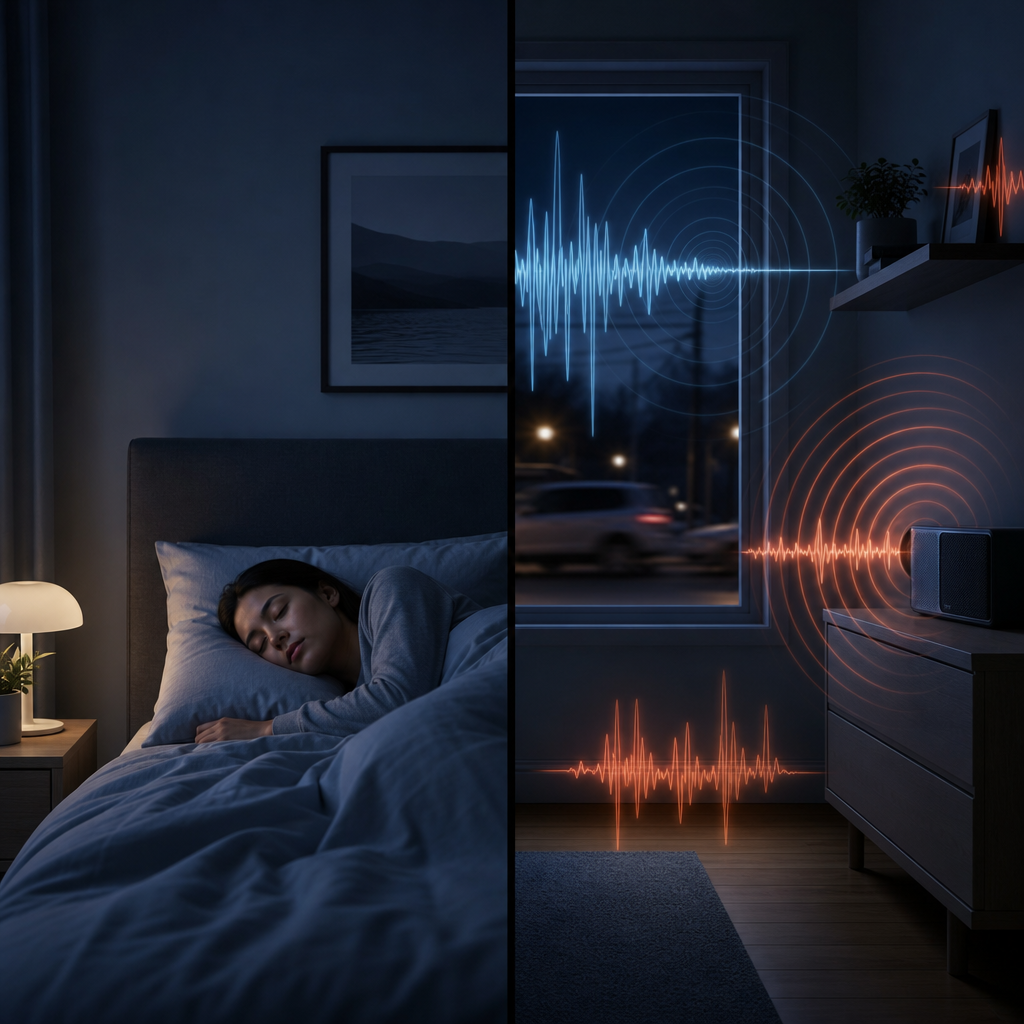
A partner snoring at moderate intensity produces approximately 60-70dB measured at the listener’s ear position. Heavy snoring or sleep apnea-related sounds can reach 80-90dB in close proximity. City traffic filtered through a closed window typically sits between 55 and 65dB inside a bedroom. An air conditioning unit generates approximately 50-60dB at sleeping distance. A noisy neighbour or adjacent apartment produces anywhere from 45 to 75dB depending on wall insulation.
With a well-fitted 32dB NRR ear plug, all of those sources land in a range that the sleeping brain can process without triggering arousal responses. The threshold at which noise reliably fragments sleep architecture, according to research reviewed by the World Health Organization, is around 45dB sustained exposure. 32dB attenuation reduces every scenario above, except extreme close-proximity snoring, to below that threshold.
Pro tip: If your primary sleep noise is a partner who snores above 80dB, position yourself to maximize the distance between your ear and the source. Even a 30cm increase in distance can reduce sound intensity by 5-6dB, which compounds with your ear plug’s 32dB NRR to push the combined attenuation to near-silence for most snoring frequencies.
The rating on the packaging is a ceiling, not a guarantee. Every dB of the rated attenuation depends on forming a complete acoustic seal between the ear tip and the walls of the ear canal. Any gap, no matter how small, creates a path for sound to bypass the protective material entirely. In practice, fit is the single largest variable separating people who report that ear plugs work for their sleep from those who say they do not.
Human ear canals vary significantly in diameter and length. Studies conducted by hearing protection researchers consistently show that a foam tip sized for a medium canal achieves less than 15dB attenuation in a small canal because it cannot compress to fill the space correctly. The same tip in a large canal achieves even less because it cannot expand far enough. This is not a marginal difference. It is the difference between a functional sleep aid and an expensive piece of foam sitting loosely at your ear opening.
Products that ship with a single tip size force every buyer to accept whatever attenuation that size happens to produce in their specific anatomy. Products that include multiple tip sizes, such as XS, S, and M options, allow users to select the fit that actually seals the canal, bringing real-world performance significantly closer to the rated 32dB.
Even with the right tip size, the housing structure holding that tip in place matters. A soft plastic or foam body can deform under the pressure of a pillow or the repeated insertion-and-removal cycle of nightly use. When the housing changes shape, the tip’s position in the canal shifts, breaking the seal and reducing effective attenuation by an unpredictable amount. A rigid aluminium body maintains consistent geometry regardless of how often the plug is inserted, removed, or slept on, which means the seal, and therefore the attenuation, remains stable night after night.
Pro tip: Before going to sleep, insert your ear plugs while sitting upright, pull the top of your ear gently upward and backward to straighten the canal, then compress and insert the foam tip. Lie down only after the foam has fully expanded. This single technique can increase your effective attenuation by 4 to 8dB compared to inserting them while already lying on a pillow.
Not all ear plugs rated at or near 32dB NRR deliver that rating with the same consistency, comfort, or durability. The format and materials of the product directly affect whether the rating is achievable in real sleep conditions.
| Ear Plug Type | Typical Real-World Attenuation vs Rated NRR | Sleep Suitability Factors |
|---|---|---|
| Disposable foam cylinder (single-use) | 40-55% of rated NRR in practice. Housing deforms quickly, reducing seal integrity after first use. | Low durability. No size options. Uncomfortable under pillow pressure. Generates significant waste for nightly users. |
| Silicone flanged reusable plug | 50-65% of rated NRR. Flanges can achieve a better canal seal than a cylinder but are highly sensitive to ear geometry mismatch. | More comfortable than foam cylinders for some users. However, rigid flanges can cause pressure pain during side sleeping. |
| Metal-bodied plug with sized memory foam tips (e.g., ATTENU8) | 65-90% of rated NRR when the correct tip size is used. Aluminium body holds geometry under pillow pressure. Memory foam conforms to individual canal shape. | Superior comfort for side sleepers due to low-profile concave design. Replaceable tips every 6-8 weeks maintain consistent attenuation without replacing the entire unit. |
The data consistently shows that the weakest link in any ear plug system is not the foam material itself but the stability of the housing that positions it. Once you solve the housing problem with a rigid body, the foam tip can do its job, and rated NRR figures become much more achievable in practice.
Memory foam is the preferred material for ear plug tips in sleep applications for one straightforward reason: it conforms slowly to the specific contours of the user’s ear canal rather than applying a single fixed shape. Standard foam expands quickly after compression, which can create pressure before the tip has fully seated itself. Memory foam takes 10 to 20 seconds to reach its final expanded shape, which allows the tip to travel deeper into the canal and form a more complete acoustic seal before the expansion force becomes noticeable.
The acoustic consequence of this conforming behaviour is measurable. A memory foam tip in a size-matched canal will achieve a tighter seal at the mid and high frequency ranges, which are precisely the frequencies most responsible for perceived sleep disruption. Snoring, traffic rumble, and human speech all contain significant energy in the 500Hz to 4000Hz range, which is where memory foam’s superior conforming behaviour produces the most meaningful attenuation compared to standard polyurethane foam.
Tip replacement frequency matters here too. Memory foam degrades with repeated compression and body oil exposure. A tip that has been compressed and re-expanded every night for ten weeks will no longer return to its original shape, reducing its effective diameter and therefore its canal seal. The six to eight week replacement cycle recommended for ATTENU8’s memory foam tips is not an arbitrary commercial decision. It reflects the realistic usable lifespan of memory foam under nightly use conditions before attenuation begins to measurably decline.
The metal body, by contrast, does not degrade in the same way. The aluminium housing of each ATTENU8 plug maintains its geometry indefinitely, meaning the cost of maintaining peak 32dB performance reduces over time to only the tip replacement, rather than the entire product. For a light sleeper using ear plugs every night, that represents a significant practical and financial difference compared to buying disposable foam cylinders weekly.
Complete blocking of snoring is not a realistic expectation from any passive ear plug. What 32dB NRR does in practice is reduce moderate snoring (around 60-70dB) to approximately 38-50dB after attenuation. That range sits below the level that typically triggers arousal responses during sleep, so most users experience significantly fewer disruptions without the source being inaudible. Very loud snoring above 80dB may still be detectable, though at a greatly reduced intensity.
The NRR is a laboratory rating. The EPA recommends dividing it by half to estimate real-world performance for an untrained user. However, with correct insertion technique and a properly sized tip, attenuation closer to the full NRR is achievable. A 32dB NRR product can realistically deliver between 16dB (poor fit, incorrect size) and approximately 28-30dB (correct size, proper insertion technique) in real sleep conditions.
Yes. Wearing hearing protection during sleep presents no risk of hearing damage. The concern about overuse of ear plugs typically relates to hygiene, specifically earwax impaction from repeated deep insertion, and to skin irritation from material contact. Using replaceable foam tips on a regular replacement schedule, keeping the housing clean, and selecting the correct tip size that seals without requiring excessive insertion depth all address these concerns effectively.
Start with a medium tip if you are uncertain. Insert it using proper technique, pull the ear upward and back, compress the tip, insert, and wait for full expansion. If you feel significant pressure or pain during expansion, drop to a small. If the tip feels loose or slides out during the night, move up a size. The correct size creates a sense of fullness without pain, and background noise drops noticeably the moment expansion completes. This trial process takes two to three nights to complete reliably.
Yes, provided the body is designed with sleeping posture in mind. A concave or low-profile aluminium design sits recessed relative to the ear’s outer structure, meaning pillow contact does not drive the plug deeper into the canal or create painful pressure points. Cylindrical or protruding designs, whether plastic or metal, are a worse choice for side sleepers because they transfer pillow force directly into the ear canal. The body geometry matters more than the material when evaluating sleep comfort.
The majority of consumer ear plugs for sleep sit between 20dB and 33dB NRR. Products marketed toward aesthetic or lifestyle positioning, such as some filtered ear plugs from competitors, often rate between 16dB and 26dB NRR because their acoustic filter design prioritises sound fidelity over maximum attenuation. For sleep-focused buyers whose primary goal is noise reduction rather than hearing environmental sounds clearly, 32dB NRR at the top of the consumer range is the appropriate target, and the housing quality determines whether that rating is actually achievable.
Have you tried ear plugs for sleep and found the real-world performance matched the rating on the packaging? Share what worked and what did not in the comments below.
Roughly one in three adults reports some degree of noise sensitivity, yet most ear plugs on the market are still designed for maximum industrial compliance rather than all-night comfort inside a sensitive ear canal. The result is predictable: redness, soreness, a low-grade ache that builds over hours, and eventually an ear plug drawer that nobody opens. Finding comfortable ear plugs for sensitive ears is not a matter of preference; it is a matter of choosing the right materials, geometry, and insertion depth from the start. This guide cuts through the noise and tells you exactly what to look for.

The ear canal is one of the most sensitive passages in the human body. Its skin is thin, often slightly acidic in pH balance, and lacks the subcutaneous fat layer that cushions other skin surfaces. When a stiff, chemically treated foam plug is compressed and jammed deep into that canal, friction, pressure, and residual chemical off-gassing all contribute to irritation.
Standard disposable foam plugs are manufactured with polyurethane foam that frequently contains trace plasticisers and flame retardants. For most users these compounds are benign, but for anyone with a sensitive ear canal, even low-level exposure over several hours produces itching, swelling, or contact dermatitis. The NHS notes that ear canal skin reactions to inserted materials are among the most common minor complaints seen in general practice.
There is also a mechanical problem. Most mass-market foam plugs come in a single diameter, and human ear canals vary significantly in width and curvature. A plug that is too wide applies constant radial pressure. Over four to eight hours of sleep, that sustained pressure causes soreness that many people misattribute to “just being sensitive” rather than to a poor fit.
| Key Insight | Explanation |
|---|---|
| Material choice is the first filter | Memory foam with no added chemical treatments is far less likely to trigger contact reactions in a sensitive ear canal than standard polyurethane foam. |
| Sizing is non-negotiable | A plug that is even slightly oversized applies sustained radial pressure. Brands offering XS, S, and M tip sizes accommodate the real range of adult ear canal widths. |
| Insertion depth drives discomfort | Deep insertion increases pressure on the eardrum and creates an uncomfortable occlusion effect. Shallow-fit designs reduce both pressure and perceived sound distortion. |
| Reusable bodies reduce chemical exposure | A metal-bodied plug with replaceable foam tips means you are only replacing the foam, not exposing your canal repeatedly to a freshly manufactured foam plug with higher off-gassing levels. |
| 32 dB NRR is sufficient for most sensitive-ear use cases | You do not need industrial-grade attenuation for sleep or travel. Around 32 dB noise reduction rating covers snoring, traffic, and aircraft cabin noise without over-sealing the canal. |
| Tip replacement intervals matter | Foam tips that are used beyond their effective life compress unevenly, lose their memory, and create micro-tears that harbour bacteria. Replacing tips every 6 to 8 weeks maintains both hygiene and comfort. |
| Side-sleeping geometry is a real design category | Ear plugs with a low-profile or concave body design reduce the pillow-contact pressure point that makes standard cylindrical plugs painful for side sleepers. |
The three dominant material categories in ear plugs are expanded polyurethane foam, silicone, and hard-body designs with separate foam or silicone tips. Each has a different irritation profile for sensitive users.
This is the yellow or orange roll-down plug sold in every pharmacy. It is cheap, widely available, and completely disposable. The problem for sensitive ears is twofold. First, the foam is moulded with chemical additives that off-gas most aggressively when the foam is new and compressed, which is exactly the condition inside your ear canal. Second, a single size accommodates only a fraction of the population comfortably. In practice, most people who claim ear plugs hurt them have only ever tried this category.
Pro tip: If you need to use a disposable foam plug in a pinch, let it expand in open air for 30 seconds before inserting it. This burns off the initial off-gassing peak and slightly reduces irritation for sensitive users.
Mouldable silicone and wax plugs sit over the ear canal opening rather than inside it, which eliminates insertion-depth pressure entirely. They are a legitimate option for light noise reduction, but they top out around 22 to 25 dB NRR, which is insufficient for loud snoring partners or open-plan office environments. They also accumulate earwax and debris quickly, creating a hygiene concern that worsens with a sensitive canal.
This is the category where premium design solves multiple problems simultaneously. A metal-bodied ear plug, such as those made by ATTENU8, places an aluminium shell between the ear canal and the foam tip. The shell is inert, non-porous, and carries no chemical additives. The foam tip, which is the only component touching the canal, is a clean, precisely formed memory foam piece that can be replaced on a schedule rather than worn until it deteriorates. The aluminium body also creates a consistent geometry that does not deform under pillow pressure, which is a specific advantage for side sleepers.
Ear canal anatomy varies more than most people realise. Research published in clinical audiology literature shows adult ear canal widths ranging from approximately 5 mm to over 9 mm at the first bend. A single-size plug designed to the median produces sustained pressure in the 20 percent of people on either end of that range.
Offering XS, S, and M tip sizes is not a marketing exercise; it is an engineering necessity. A tip that is correctly sized seats at the canal entrance with minimal radial force. The foam expands to fill the canal rather than being forced outward against the canal wall. The result is a gentle seal rather than a pressure-driven one. ATTENU8 supplies all three sizes with each pair, which means you find the right fit through direct comparison rather than guesswork.
The occlusion effect is the hollow, reverberant sound of your own chewing, breathing, or heartbeat that you hear when an ear plug is inserted too deeply. It is caused by the plug sealing the canal before the point where bone conduction vibrations disperse. A common mistake is assuming deeper is better for noise reduction. It is not. A correctly fitted plug at a shallow depth achieves the same or better attenuation without the occlusion effect, and without pressing against the tympanic membrane area where sensitivity is highest.
Pro tip: When testing fit, insert the plug and hum quietly. If you hear a strong booming resonance of your own voice, the plug is too deep or too wide. Adjust tip size before adjusting insertion depth.
| Ear Plug Type | Comfort for Sensitive Ears (1-10) | Noise Reduction / Durability |
|---|---|---|
| Standard Disposable Foam (single size) | 4 out of 10. Chemical off-gassing, no size options, degrades quickly. | Up to 33 dB NRR but inconsistent seal. Single use only. |
| Mouldable Silicone or Wax | 7 out of 10. No insertion pressure but accumulates debris and loses shape rapidly. | 22 to 25 dB NRR. Not suitable for loud environments. Limited reuse. |
| Metal-Body with Replaceable Memory Foam Tips (e.g., ATTENU8) | 9 out of 10. Inert body, multiple tip sizes, consistent geometry, replaceable tips every 6 to 8 weeks. | Approximately 32 dB NRR. Suitable for sleep, travel, and moderate industrial use. Long-term use with tip replacements. |
Sleep is the highest-stakes use case for sensitive-ear users because eight hours of sustained contact in any one position magnifies every design flaw. The data consistently shows that pressure-related pain is the primary reason people abandon ear plugs for sleep, not noise reduction performance.
Soft ear plugs designed for sleep need to meet three specific criteria: low insertion force, a profile that does not protrude significantly from the ear canal opening, and a material that retains its shape without applying increasing pressure as body heat softens the foam.
“The most common cause of ear plug-related discomfort is not allergic reaction but mechanical pressure from an incorrectly sized or over-inserted device. Fit is the first clinical variable to address.” – British Society of Audiology, guidance notes on hearing protection comfort.
Memory foam tips on a concave aluminium body address all three criteria directly. The concave shell sits flush against the outer ear, keeping the profile low enough that side-sleeping on a pillow does not create a painful fulcrum point. The memory foam expands slowly under ear canal warmth, which means it creates its seal gradually rather than immediately, reducing the sudden pressure sensation that wakes sensitive sleepers.

Most irritation from ear plugs is self-inflicted through habits that are easy to correct. The following are the most frequent offenders, based on consistent patterns reported by users transitioning from disposable plugs to premium reusable designs.
Foam tips that have been used for more than 6 to 8 weeks lose their elastic memory. They no longer expand uniformly, which creates an uneven seal with localised pressure points. They also accumulate cerumen (earwax), skin cells, and microorganisms that are not fully removed by surface cleaning. The solution is a scheduled replacement rather than waiting until visible deterioration is obvious.
This is the most basic mistake and the most commonly ignored one. The compression and insertion motion for foam ear plugs transfers whatever is on your fingertips directly into the ear canal. For a sensitive canal, even normal skin bacteria in sufficient concentration causes irritation or low-grade infection. Wash hands before every insertion. This is non-negotiable.
A common mistake is equating tightness with performance. The noise reduction rating of an ear plug is achieved at the correct size, not at the maximum size. Choosing too large a tip simply increases pressure without improving attenuation. Start with the smallest size that creates a perceptible reduction in ambient sound and size up only if you can hear a clear degradation in seal quality.
With a metal-bodied design, the aluminium shell should be wiped with a clean, slightly damp cloth every few days. Residual skin oils and earwax on the shell body, while not inside the canal, can transfer back to the fresh foam tip on reinsertion. This shortens tip life and introduces contaminants that a sensitive canal will respond to.
The industrial hearing protection market defaults to maximum NRR at minimum cost, which produces products that workers wear reluctantly, inconsistently, or not at all. The Health and Safety Executive (HSE) in the UK reports that hearing protection non-compliance in manufacturing environments remains a persistent issue, and discomfort is consistently cited as the primary barrier.
For professionals in construction, manufacturing, or military settings who also have sensitive ear canals, the challenge is finding protection that delivers compliant noise reduction without the all-day pressure and chemical exposure of standard foam plugs. A 32 dB NRR is sufficient for many non-peak industrial exposures, and a metal-body design with memory foam tips provides that attenuation with substantially less irritation than disposable alternatives worn for eight-hour shifts.
The reusable design also has a practical cost advantage in professional settings. Rather than consuming cases of disposable plugs that get contaminated, lost, or degraded mid-shift, a single ATTENU8 pair with scheduled tip replacements represents a controlled, consistent protection standard. Professionals can carry one pair, know the fit is calibrated to their specific ear canal size, and replace tips on a set schedule rather than scrambling for fresh disposables.
For environments exceeding the 32 dB coverage level, such as firing ranges or heavy machinery operations, double protection using ear muffs over reusable plugs is the established approach and requires no change to the plug selection itself.
Yes, but the specific foam type and size matter considerably. Standard single-use polyurethane foam plugs with chemical treatments are the most likely to irritate a sensitive ear canal. Memory foam tips that are free of added plasticisers and come in multiple sizes are significantly better tolerated. Replacing tips on a 6 to 8 week schedule maintains hygiene and reduces the bacterial load that drives irritation in sensitive users.
Medically inert materials rank highest for sensitive canal use. Aluminium (as used in ATTENU8 shells) and clean medical-grade memory foam are both non-reactive for the vast majority of users. Silicone is also low-irritant but performs less well on noise reduction for deep-insertion plugs. The worst materials for sensitive canals are chemically treated expanded foams with no size options.
Irritation from a plug typically presents as redness, mild itching, or soreness at the canal entrance that resolves within a few hours of removing the plug. An ear infection typically involves deeper pain, a feeling of fullness, discharge, or fever. If your symptoms do not fully resolve within 12 hours of removing the plug, or if you have discharge or significant hearing reduction, see a GP or audiologist rather than continuing to troubleshoot plug fit.
Not inherently. NRR is a measure of acoustic attenuation, not of physical pressure. A 33 dB NRR plug and a 22 dB NRR plug at the correct size should apply similar insertion force. The discomfort difference between high and low NRR plugs typically comes from design geometry, not from the rating itself. Deeper insertion is sometimes used to achieve higher ratings on poorly designed plugs, which does increase pressure.
Every 6 to 8 weeks for daily users. If you notice the foam no longer springs back to its original shape within 5 seconds of uncompressing, or if you can see visible discolouration or surface breakdown, replace the tips immediately regardless of elapsed time. Users in humid climates or who sweat heavily should lean toward the 6-week end of that range.
For sensitive ears, reusable ear plugs with replaceable tips are more hygienic in practice. The inert metal shell can be wiped clean thoroughly, which is impossible with porous foam. The tip replacement schedule ensures you are never using a degraded foam surface that harbours bacteria. Disposable foam plugs, in contrast, are often reused by default despite being rated for single use, which dramatically increases bacterial load on the foam surface.
Daily ear plug use is considered safe by audiologists provided the plugs are correctly sized, clean, and not inserted too deeply. The key risks from nightly use are earwax impaction (the plug can push wax deeper over time) and canal irritation from dirty or deteriorated foam. Both risks are managed by correct insertion technique, scheduled tip replacement, and occasional ear hygiene checks with a GP if you notice any change in hearing clarity.
Have you found a specific ear plug material or tip size that finally worked for your sensitive ears? Share your experience in the comments so others dealing with the same problem can learn from what actually helped you.
If you have ever woken up with your ear plugs on the pillow instead of in your ears, you already know how frustrating it is. Ear plugs fall out for specific, fixable reasons, and most people never bother to identify which one is causing their problem. Instead, they buy another box of disposable foam plugs and repeat the cycle. This article breaks down exactly why ear plugs fail during sleep, what ear canal anatomy has to do with it, and which design features actually keep ear plugs in place through a full night. The fix is rarely about trying harder. It is about using the right product and inserting it correctly.
| Key Insight | Explanation |
|---|---|
| Wrong size is the number one cause | Most people use a single-size foam plug that does not match their ear canal diameter, so it pops out under pillow pressure or jaw movement. |
| Incorrect insertion technique negates even good plugs | Foam plugs inserted without rolling and holding lose 40-60% of their seal before expansion completes, making them easy to dislodge. |
| Sleep position creates mechanical pressure | Side sleepers push the outer plug body against the pillow, which levers the tip out of the canal over time. |
| Worn-out foam tips expand less and seal less | Disposable foam degrades after a few uses, reducing elasticity and grip inside the canal. |
| A concave metal body distributes pillow pressure better | Hard-bodied ear plugs like ATTENU8 sit closer to the ear opening, reducing the lever arm that pushes foam tips out. |
| Three tip sizes are not a luxury, they are a requirement | Ear canals vary significantly between adults. Offering XS, S, and M tips dramatically improves the chance of a proper seal. |
| Noise reduction rating (NRR) means nothing if the plug falls out | A 33dB-rated plug that migrates out of position delivers far less than a properly fitted 32dB plug that stays seated all night. |

The most common reason ear plugs fall out is a mismatch between plug size and ear canal dimensions. Standard one-size disposable foam plugs are engineered around an average adult ear canal, which does not exist in practice. Ear canals vary significantly in diameter, length, and curvature, even between left and right ears on the same person.
A plug that fits too loosely has nothing to grip against. When you roll over, when your jaw moves during sleep, or when pillow fabric catches the exposed end of the plug, there is no friction holding it in position. It slides out, usually within the first hour of sleep.
A plug that fits too tightly presents a different problem. The foam generates outward pressure that the ear canal walls eventually push back against. Over several hours, that resistance slowly expels the plug. You wake up with it half-out or gone entirely.
The second major cause is insertion technique. Most people insert foam plugs without compressing them enough first, or they release them before the foam has seated in the canal. A partially expanded plug has almost no grip. It sits near the entrance of the ear canal rather than inside it, where the walls can hold it securely.
“The fit of a hearing protector is critical. A poor fit, regardless of the product’s rated attenuation, dramatically reduces real-world noise reduction.” Source: National Institute for Occupational Safety and Health guidance on hearing protection.
The third cause is material degradation. Disposable foam ear plugs are designed for single use. Using them multiple nights in a row reduces their expansion force. A plug on its third or fourth night of use expands to maybe 70% of its original diameter. That gap is enough for it to migrate out during sleep.
The external auditory canal is not a straight tube. It curves slightly, and in most adults it is roughly 25-35mm long with a diameter between 5mm and 9mm. That range is significant. A plug sized for a 7mm canal will be loose in a 9mm canal and uncomfortably tight in a 5mm one.
The outer cartilaginous portion of the ear canal, roughly the first 10-15mm, is where foam ear plugs actually create their seal. The bony inner portion is narrower and more rigid. When a foam plug is inserted correctly, it should sit with its tip inside this outer third, pressed against the canal walls with enough outward force to stay put but not so much that it causes pain.
If the plug only reaches the entrance of the canal, the slightest movement dislodges it. If it is pushed too deep, it can cause discomfort and the ear canal’s natural self-cleaning mechanism will work to expel it during sleep.
The temporomandibular joint sits immediately adjacent to the ear canal. When the jaw moves during sleep, such as during grinding, yawning, or even swallowing, the ear canal walls flex slightly. This flexing creates a pumping action that can work an improperly seated plug outward over the course of several hours. This is why people who grind their teeth at night report especially poor ear plug retention.
The fix is ensuring the plug seats deep enough that jaw movement works against the natural curve of the canal rather than in line with the plug’s exit path. A properly fitted plug actually becomes more secure as jaw movement occurs because the canal walls grip it from multiple angles.
In practice, the majority of ear plug fit failures come down to three insertion errors. Understanding these is more useful than buying a new brand.
Foam ear plugs need to be rolled into the thinnest possible cylinder before insertion. A common mistake is rolling the foam to about half its diameter and then inserting it. The foam is still too wide to fit past the entrance of the canal and seats in a shallow position. It then expands to press outward on the ear opening rather than inward against the canal walls.
Roll the foam between your fingers until it reaches roughly the diameter of a pencil. Hold it there for three to five seconds. Then insert it quickly and hold your finger over the end for at least 30 seconds while it expands inside the canal.
Pulling the outer ear upward and backward straightens the ear canal, making it significantly easier to insert a plug at the correct angle and depth. Most people skip this step entirely. When you insert a plug without straightening the canal, the plug hits the first curve and stops, seating too shallow.
Reach your right hand over your head to pull your right ear, or use your left hand behind your ear. Either approach opens the canal enough for the plug to seat properly in the cartilaginous portion rather than just at the entrance.
Pro tip: After inserting and holding the plug, do a quick check by cupping your hands over your ears and pressing. If the noise reduction dramatically increases when you press the plug further in, the plug is seated too shallow. Remove it and reinsert using the ear pull method.
Disposable foam ear plugs are rated for one use. The polyurethane foam compresses and re-expands through a chemical process that degrades with each cycle. By the third use, the foam typically expands slower and to a smaller diameter. By the fifth or sixth use, it may not create a meaningful seal at all. If you are reusing disposable plugs and wondering why they fall out, this is almost certainly a contributing factor.

The debate between disposable and reusable ear plugs is not just about cost or environmental impact. It is directly relevant to the question of fit and retention. Here is a direct comparison across the factors that matter most for overnight use.
| Factor | Disposable Foam (Single-Use) | Reusable with Memory Foam Tips (e.g., ATTENU8) |
|---|---|---|
| Size options | Usually one size, occasionally two | XS, S, and M tip sizes to match individual canal diameter |
| Retention over full night | Inconsistent, degrades with reuse | Consistent seal maintained by rigid body anchoring the tip in position |
| Pillow pressure behaviour | Soft outer body catches on fabric, levers out | Concave aluminium body sits flush, reduces surface area catching on fabric |
| Tip replacement frequency | After every use (or degrades quickly) | Every 6-8 weeks of regular use |
| Noise reduction | Rated up to 33dB, highly dependent on fit | Approximately 32dB with consistent real-world performance when properly fitted |
The critical difference is structural. A fully disposable foam plug has no rigid component. The entire plug, tip and body, is the same compressible material. When pillow fabric pushes against the soft outer portion, the force is transmitted directly to the tip inside the ear, which gradually migrates outward.
A metal-bodied reusable plug like those from ATTENU8 separates the two functions. The aluminium body handles external pressure and stays positioned at the ear entrance. The memory foam tip, which is the only part inside the canal, is not exposed to that external force. This is a structural advantage, not a marketing claim.
Flare Audio and Loop Earplugs both offer reusable products but use silicone or acoustic filter designs that prioritise ambient sound management over maximum noise reduction. For someone who needs a full seal for sleep, those designs trade attenuation for social usability. That is a legitimate choice for daytime use but the wrong trade-off for someone whose primary goal is blocking snoring or street noise at 2am.
Getting ear plugs to stay in comes down to a combination of the right product, the right size, and the right insertion technique. All three need to be correct simultaneously. Fixing only one of three does not solve the problem.
If you are using a reusable product with multiple tip sizes, start with the medium tip and test it with a proper insertion. The plug should feel secure without causing pain or a feeling of pressure buildup. If you are pulling it out and finding it was barely gripping anything, move to a smaller size. If it was painful or created uncomfortable pressure, move to a larger size to reduce how deep it needs to sit to seal.
For disposable foam users, the only real size differentiation is between standard and small-sized plugs, which are commonly found in the industrial hearing protection category. Small ear canal plugs are rated for canals under 7mm in diameter and are significantly better-fitting for a large portion of the adult population who have been using standard size their entire lives.
Consistency in insertion produces consistent results. Develop a three-step habit: pull the outer ear back and upward, roll the foam tip until it is at pencil diameter, insert at a slight downward angle and hold for 30-45 seconds. Do this the same way every night and the fit becomes predictable.
Pro tip: If you wear ATTENU8 reusable plugs, you do not need to roll the memory foam tip as aggressively as you would with a disposable plug. The aluminium body gives you something to push and hold against, so you can maintain pressure on the tip while it expands without your finger getting tired. This alone improves insertion quality compared to pushing a soft disposable plug with a bare finger.
Memory foam tips on reusable plugs should be replaced every six to eight weeks with regular use. This is not a vague suggestion. After that window, the foam loses expansion force and the seal becomes inconsistent. ATTENU8 replacement tips are available so you keep the aluminium body indefinitely and only replace what degrades. This is both more economical and more consistent than buying new disposable packs.
Sleep position is a genuinely underappreciated factor in ear plug retention. Side sleepers consistently report more problems with plugs falling out than back sleepers, and the physics explain exactly why.
When you sleep on your side, the ear on the pillow side is under mechanical pressure from the pillow surface. A standard foam plug extends a few millimetres beyond the ear entrance. That extended portion is effectively a lever. The pillow pushes on it, and the fulcrum is the ear entrance, which means the tip inside the canal is being levered outward with every shift during the night.
Back sleepers avoid this entirely because neither ear is in contact with the pillow. If you are a committed side sleeper, the best mitigation is a pillow with a recessed ear cavity, which removes the pillow contact point, or a plug design where the outer body sits flush with or recessed from the ear entrance rather than protruding from it.
The concave design of ATTENU8’s aluminium body is specifically beneficial here. The concave profile means less external material extends beyond the ear opening compared to a cylindrical disposable plug. It reduces the lever arm that pillow pressure can exploit, which translates directly to better overnight retention for side sleepers.
For light sleepers who are also side sleepers, this single design difference can mean the difference between sleeping through the night and waking up at 3am searching for a plug that is now somewhere in the bedding.
This is more common than most people expect and it almost always indicates a size mismatch. Ear canals are not symmetric. Your left and right ear canals can differ in diameter by 1-2mm, which is enough to affect how well the same size plug seals on each side. If one plug consistently falls out, try a smaller tip size on that side. With a product like ATTENU8 that offers XS, S, and M tips, you can actually use different sizes in each ear. Most people never consider this but it is a legitimate and effective approach.
The National Institutes of Health and occupational health guidance indicate that ear plugs used correctly for sleep are safe for nightly use. The primary risks associated with regular ear plug use are earwax impaction caused by pushing wax deeper with repeated insertion, and skin irritation from materials in low-quality plugs. Using clean plugs with fresh tips reduces both risks significantly. ATTENU8’s aluminium body is non-porous and easier to keep hygienic than foam alone.
For most sleep applications, an NRR between 25dB and 33dB is sufficient. Snoring typically measures 50-70dB at close range. Street noise and traffic commonly measure 60-80dB at an open window. A 32dB NRR plug, properly fitted, reduces those sounds to levels below most people’s threshold for sleep disruption. The key word is properly fitted. An improperly inserted 33dB plug consistently underperforms a properly inserted 32dB plug because the seal is what determines real-world attenuation.
Excessive pressure from an over-tightened plug can cause temporary discomfort, pain, and very rarely a minor abrasion on the canal wall. It does not cause hearing damage in the way that noise exposure does. If a plug is causing pain, it is either the wrong size or inserted incorrectly. Move to a smaller tip size so the plug creates a seal at a shallower depth rather than pushing deep with excessive force.
Three indicators confirm correct insertion. First, you should notice an immediate and significant drop in ambient noise, similar to the muffled quality you hear when pressing your hands over your ears. Second, the plug should not protrude significantly beyond the ear opening. Third, it should feel secure but not painful. If you insert the plug and can still hear voices clearly or ambient noise has barely changed, the plug is seated too shallow and needs reinsertion with the ear pull method described earlier in this article.
This is a sensory response to pressure change rather than actual movement. When a foam plug expands inside the ear canal, it creates a seal that changes the pressure in the middle ear space slightly. Some people perceive this pressure shift as a feeling of movement or instability. If the plug is physically still in position when you check, the sensation is not a retention failure. It typically resolves within a few minutes as your middle ear pressure equilibrates. If the sensation persists beyond 15 minutes or causes genuine discomfort, try a smaller tip size that creates a lighter seal.
Have you found a specific insertion trick or product feature that finally got your ear plugs to stay in all night? Share what worked for you so others dealing with the same frustration can benefit.
Roughly 17% of teenagers and adults in the United States already show signs of noise-induced hearing loss, according to the National Institute on Deafness and Other Communication Disorders. For musicians and regular concert-goers, that number climbs sharply higher. The difference between protecting your hearing now and ignoring the problem is not subtle: it is the difference between a full career and tinnitus that never stops ringing. Choosing the right musician ear plugs is one of the most important decisions a performer or live music fan can make, and this guide covers exactly how to do it.
| Key Insight | Explanation |
|---|---|
| Concert noise regularly exceeds safe limits | Live music venues routinely hit 100-115dB. Hearing damage begins at just 85dB with prolonged exposure. |
| Foam tips alone are not enough long-term | Standard disposable foam plugs degrade quickly, fit inconsistently, and are wasteful for daily or weekly use. |
| Memory foam delivers a superior acoustic seal | Soft memory foam tips conform to the ear canal shape, reducing gaps that let damaging frequencies through. |
| 32dB NRR protection is meaningful at concerts | A 32dB reduction brings a 110dB concert down to approximately 78dB, a level safe for extended listening. |
| Correct insertion technique is non-negotiable | Even the best ear plug provides far less protection if inserted loosely. Compression-fit insertion is essential. |
| Tip replacement every 6-8 weeks maintains performance | Worn memory foam tips lose their expansion ability, reducing the acoustic seal and lowering effective NRR. |
| Hearing loss from music is cumulative and permanent | Unlike a cold, damaged hair cells in the cochlea do not regenerate. Protection must be consistent, not occasional. |

Most occupational hearing guidelines are built around intermittent noise exposure. A construction worker takes breaks, moves away from the source, or works in open air. A musician or live music fan is different: they are stationary, close to speaker stacks or stage monitors, and surrounded by reflective surfaces that amplify sound in every direction.
The exposure is also emotionally rewarding, which makes it psychologically harder to protect against. Nobody wants to reduce the experience of music they love. But the data consistently shows that musicians are four times more likely to develop noise-induced hearing loss than the general public, based on research published in occupational health literature from institutions including the National Institutes of Health.
Drummers sit inside a shell of percussion that averages 110dB. Guitarists stand directly in front of stage monitors pushing 95-105dB. Even audience members in general admission at a stadium or festival are exposed to sustained levels well above 100dB. This is not a marginal risk. It is a predictable, preventable injury being sustained every night in venues worldwide.
The inner ear contains tiny hair cells inside the cochlea that translate sound vibrations into electrical signals for the brain. Loud sounds physically damage or destroy these cells. Unlike the cells in your skin or liver, cochlear hair cells do not regenerate. Once they are gone, that frequency range of hearing is gone with them.
The U.S. Occupational Safety and Health Administration sets the permissible exposure limit at 90dB for an eight-hour workday. But damage begins at 85dB. Every 3dB increase above that threshold cuts the safe exposure time in half. At 100dB, you have approximately 15 minutes before damage begins accumulating. A full concert set runs 45-90 minutes minimum.
Tinnitus, the persistent ringing or buzzing in the ears, is often the first warning sign. A common mistake is treating a tinnitus episode after a loud show as something that will simply go away with rest. Sometimes it does. Over time, however, repeated episodes lead to permanent tinnitus that is present 24 hours a day, an outcome reported by a significant number of professional musicians who started without adequate hearing protection.
Noise-induced hearing loss in musicians tends to create notch-like gaps around the 4kHz frequency range rather than a general reduction across all frequencies. This is particularly damaging for musicians because 4kHz sits at the heart of harmonic detail, consonant clarity in vocals, and the presence range of most instruments. Many musicians only notice the loss when they begin struggling to hear speech clearly in noisy environments or find that their mixing decisions sound different to others.
“Hearing loss doesn’t just affect your ability to hear sound. It affects your ability to make music. You cannot mix what you cannot hear.” – Dr. Marshall Chasin, audiologist and author specializing in musicians’ hearing health, Canadian Hearing Services
Not all music ear plugs are built equally, and the differences between types have real consequences for both protection and the listening experience.
These are the yellow or orange rolled-foam plugs available at pharmacies. They typically offer high NRR ratings (up to 33dB) but reduce sound in a very uneven way, cutting high frequencies far more aggressively than low ones. The result is muffled, bass-heavy audio. Musicians describe it as listening through a pillow. For a construction site, that is fine. For any musical context, it makes monitoring your own performance or enjoying a concert nearly impossible.
They are also single-use by design. Using them repeatedly after the foam has compressed and lost its shape dramatically reduces their effective NRR, even though most people cannot tell the difference by feel alone.
Flat-response plugs use a filter to attenuate sound more evenly across frequencies. Music sounds quieter but not muffled. These are popular with musicians who need to monitor on stage and with serious concert-goers who want full audio quality at reduced volume. They are available in custom-molded versions made by audiologists as well as universal-fit versions sold off the shelf.
Custom-molded plugs require a professional ear impression, cost several hundred dollars, and need to be remade if ear canal shape changes (which can happen naturally with age). Universal-fit flat-response options from brands including Flare Audio and Loop Earplugs have made this category more accessible, though fit consistency remains a significant variable between wearers.
Reusable ear plugs with durable aluminium bodies and replaceable memory foam tips represent a different approach to the durability and hygiene problem. ATTENU8’s design uses a concave aluminium body that creates a stable anchor point in the ear, while the memory foam tip does the acoustic sealing work. The tip replacement schedule of every 6-8 weeks means the sealing performance stays consistent, unlike worn-out single-use foam plugs that musicians routinely reuse long past their effective life. The three tip sizes (XS, S, M) address a real-world issue: ear canals vary significantly between people, and one-size-fits-most foam plugs leave consistent gaps in many users.

| Protection Type | Sound Quality at Concerts | Durability and Cost Over Time |
|---|---|---|
| Disposable foam ear plugs | Muffled and bass-heavy. High frequencies are cut disproportionately, making music hard to enjoy or monitor accurately. | Single use by design. Buying them regularly for concerts or rehearsals adds up quickly and creates significant waste. |
| Universal flat-response plugs (e.g. Loop, Flare Audio) | Better frequency balance than foam. Music sounds quieter rather than muffled. Fit consistency varies by ear canal shape. | The body is reusable but typically made of plastic. Replacement tips or full replacement needed when worn. Mid-range price point. |
| Metal-bodied reusable plugs with memory foam tips (ATTENU8) | 32dB NRR with memory foam seal. Consistent performance across uses when tips are replaced on schedule every 6-8 weeks. | Aluminium body is built to last. Only foam tips need replacing, not the entire plug. Lower ongoing cost and less environmental waste. |
Pro tip: When comparing ear plug options, do not rely on NRR numbers alone. The real-world effective NRR is typically 30-50% lower than the rated figure, because that rating assumes laboratory-perfect insertion. Fit, seal quality, and material consistency all affect actual protection.
The NRR (Noise Reduction Rating) system is an American measure set by the Environmental Protection Agency. The FDA recommends applying a derating factor to get a realistic estimate of real-world attenuation. For foam-style plugs, the EPA suggests dividing the NRR by two to get a practical estimate of protection in decibels.
At a practical level, a 32dB NRR plug provides approximately 16dB of real-world protection under average insertion conditions. That still brings a 110dB concert down to roughly 94dB. With correct insertion technique and a proper acoustic seal (which memory foam tips are specifically designed to support), real-world attenuation is closer to the rated figure, bringing that same 110dB concert down toward 78-82dB. That range is safe for extended exposure.
For musicians who spend multiple hours in rehearsal rooms each week before a concert, this accumulation matters enormously. A drummer running four-hour band rehearsals three times a week without protection is accumulating far more exposure than a fan attending one concert per month. Both groups need concert hearing protection, but the urgency and consistency requirement is highest for working musicians.
This is where most people fail, even when they own good ear plugs. Insertion technique determines whether you get 30dB of protection or 10dB of protection from the same product.
Roll the memory foam tip between your fingers to compress it as much as possible before insertion. Reach over the top of your head with the opposite hand to pull the outer ear (pinna) upward and backward. This straightens the ear canal. Insert the compressed foam tip with a single steady push, hold it in place for 30-40 seconds while the foam expands, then release. You should feel a noticeable change in ambient sound as the foam fills the canal and creates a seal.
If you can still hear conversation clearly with the plug inserted, the seal is incomplete. Remove, recompress, and retry. A properly seated foam tip will produce a subtle occlusion effect (your own voice sounds slightly louder to you), which confirms a full seal.
A common mistake made by gigging musicians is removing one ear plug to hear their monitor or fellow musicians more clearly. This defeats the protection for that ear entirely and creates an imbalanced mix that often leads to the musician turning their monitor louder to compensate, making the problem worse. In practice, using matched ear plugs in both ears and adjusting monitor levels through a sound engineer or in-ear monitor system is the correct solution. The goal is symmetric, controlled attenuation, not unprotected listening in one ear.
Pro tip: For drummers and musicians who wear ear plugs for long rehearsal sessions, memory foam tip condition matters more than for occasional concert-goers. Replace tips on schedule even if they look clean. Worn foam loses elastic memory and provides a loose seal that is easy to mistake for full protection.
A musician attending two rehearsals and one concert per week will go through roughly 6 pairs of disposable foam plugs weekly if using them correctly (one pair per session). At common pharmacy prices, that is approximately $150-200 per year spent on disposable foam, plus the environmental cost of thousands of pieces of single-use plastic and foam in landfill.
A reusable metal-bodied ear plug with replaceable memory foam tips changes this equation. The aluminium body lasts indefinitely with basic care. Foam tip replacements at the recommended 6-8 week interval represent a fraction of the ongoing cost. For someone using ear plugs three times per week across 52 weeks, the cost per use drops significantly compared to disposable options within the first few months.
Beyond cost, there is a consistency advantage. When you carry the same pair of ear plugs to every rehearsal and concert, correct insertion becomes habitual. You know how the tips feel when properly seated. You have the right size for your ear canals. A common failure pattern with disposable plugs is grabbing whatever is available and wearing it incorrectly because the fit is slightly off. That is not a minor issue: an improperly seated foam plug at a 110dB concert provides almost no meaningful protection.
Yes, provided the ear plugs fit correctly. Discomfort during extended wear is usually caused by tips that are too large for the ear canal, creating sustained pressure on the canal walls. ATTENU8’s three-size memory foam tip system (XS, S, M) exists specifically to address this: using the correct tip size allows the foam to expand into the canal without forcing it. Most wearers with correctly sized tips report no discomfort across a full two to three hour concert.
All ear plugs change how music sounds to some degree. The difference between a standard foam plug and a quality reusable plug is the character of that change. Standard foam plugs muffle high frequencies disproportionately, making music sound dull and bass-heavy. Memory foam plugs with a strong acoustic seal reduce overall volume more evenly, preserving more of the harmonic balance. Music sounds quieter, not necessarily worse. Many musicians describe the experience as similar to stepping slightly further back from the stage.
For memory foam tips used regularly, every 6-8 weeks is the recommended replacement interval. The visual cue to watch for is foam that no longer bounces back fully after compression, or tips that feel less firm and tacky than when new. Worn tips create incomplete seals that reduce effective NRR without the wearer necessarily noticing. If you are using ear plugs three or more times per week, err toward the 6-week end of that range.
Yes. The aluminium body of a premium ear plug like ATTENU8 sits at the entrance to the ear canal and is not inserted deeply. The memory foam tip does the insertion work. Aluminium is hypoallergenic, non-porous, and easy to clean. It does not absorb earwax or bacteria the way porous foam bodies can. Cleaning the body with a dry or lightly damp cloth between uses is sufficient maintenance.
Drummers need the highest consistent attenuation of any musician, because they are surrounded by the noise source rather than facing it from a distance. A 32dB NRR memory foam ear plug with correct insertion technique brings a typical drum kit environment (averaging 110dB at the kit) down to a manageable level. Drummers who also use an overhead baffle or a drum shield compound this benefit significantly. The key for drummers is consistent use across every rehearsal, not just performances, since rehearsal accumulates far more total exposure hours than gigs alone.
You can, and many ATTENU8 users do exactly this. The 32dB NRR is effective for both applications. The main consideration is hygiene: ear plugs used during sleep absorb more moisture than those used at concerts. Replacing foam tips on schedule and keeping the aluminium body clean addresses this. Using a consistent product for both applications also builds correct insertion habits, which improves real-world protection in both contexts.
Have you tried switching from disposable foam plugs to reusable ear plugs for music, and what difference did you notice in sound quality or comfort? Share your experience below.
Most people buy a bag of foam ear plugs, lose half of them, squish the rest into their ears every night, and never stop to calculate what that habit actually costs. The numbers are surprisingly uncomfortable. When you run a proper reusable vs disposable ear plugs cost comparison across a full year, disposables are rarely the budget option they appear to be at checkout. This article breaks down the real ear plug cost comparison across purchase price, replacement cycles, performance, and waste, so you can make a decision based on data rather than habit.
| Key Insight | Explanation |
|---|---|
| Disposables cost 5 to 10 times more per year than premium reusables | A daily disposable habit runs $50-$100+ annually. A quality reusable pair with periodic foam tip replacements runs under $20 per year after the initial purchase. |
| Foam tip replacements are the key to reusable value | Products like ATTENU8 only require foam tip replacements every 6 to 8 weeks, not whole-unit replacement, dramatically cutting ongoing cost. |
| Noise reduction ratings are not equal across product types | Cheap disposables often claim 32dB NRR but deliver inconsistent results due to poor fit. A well-fitted reusable with memory foam tips consistently achieves rated protection. |
| Disposables generate significant recurring waste | A person using one pair per night generates over 360 foam plugs annually. Reusables reduce that to a handful of replaced tips per year. |
| Material durability is what separates best value ear plugs | Plastic or silicone reusable bodies degrade. A metal-bodied design maintains structural integrity and hygiene far longer, protecting the initial investment. |
| Fit consistency drives real-world noise reduction | Multi-size tip options (XS, S, M) on reusables ensure a proper seal each time. Disposables require correct roll-down technique every single insertion to work properly. |
| The crossover point typically arrives within 60 to 90 days | Most regular ear plug users recoup the cost of a premium reusable pair within the first two to three months compared to ongoing disposable spending. |

The sticker price of disposable foam ear plugs is deliberately low. A bag of 50 pairs from a pharmacy or hardware store typically costs between $5 and $12, which feels trivial. The problem is that the unit economics punish regular users relentlessly over time.
If you use ear plugs every night for sleep, that 50-pair bag lasts approximately 50 nights, or about seven weeks. Over a year, you need roughly eight bags. At an average of $8 per bag, that is $64 per year. For light industrial workers using two pairs per shift, five days a week, the annual spend exceeds $200 before accounting for lost or damaged pairs.
In practice, the real cost is higher than the math suggests. People rarely use exactly one pair per session. Plugs get lost in bedding, contaminated before insertion, or used wet, which compresses hygiene-related replacement. A 2023 report from the Bureau of Labor Statistics noted that hearing protection compliance in noisy workplaces drops sharply when workers find the available equipment uncomfortable, leading to over-purchasing as employers stock up hoping volume compensates for fit failures. Cost compounds when comfort fails.
Disposable foam ear plugs absorb earwax, skin oils, and bacteria with every use. Manufacturers design them to be discarded after one use for this exact reason. In practice, many budget-conscious users stretch a single pair across multiple nights, which creates hygiene risks without actually saving money in any meaningful long-term sense.
This is a hidden replacement driver that the per-bag price never reflects. If hygiene is taken seriously, which it should be for anything inserted in your ear canal, the true cost of disposables aligns closer to the single-use design intention, meaning the annual spend estimates above are floor figures, not averages.
Pro tip: Track your ear plug purchases for one month by saving receipts or checking your pharmacy app purchase history. Most regular users are genuinely surprised by how quickly the spend accumulates, often exceeding $15 to $20 in a single month.
A premium reusable ear plug like the ATTENU8 metal-bodied pair has a higher upfront cost than a bag of foam disposables. That comparison is structurally misleading. You are not comparing one pair to one pair. You are comparing a durable product with a long service life against a consumable that must be repurchased continuously.
The correct comparison is total cost of ownership over 12 months. For ATTENU8, the aluminium body is a one-time purchase. The only recurring cost is replacing the soft memory foam tips every 6 to 8 weeks. Three to four tip replacements per year represent the entire ongoing spend. That is a fundamentally different cost structure than disposables, where every single use draws down a finite consumable inventory.
The metal body does not degrade in the way plastic or silicone alternatives do. There is no UV discolouration, no cracking from repeated handling, and no deformation from compression in a travel bag. The aluminium construction means the structural investment is genuinely long-term, not just marketed as such.
The memory foam tips included in three sizes (XS, S, M) are the only wear component. At a replacement interval of 6 to 8 weeks, a single year requires approximately six to eight tip sets. This targeted replacement model eliminates the largest cost driver in disposable ear plugs: full unit replacement every single use.
“Hearing protection devices should be selected based on fit, attenuation, and user acceptability. Devices that are not worn consistently provide no protection.” – National Institute for Occupational Safety and Health (NIOSH), Criteria for a Recommended Standard: Occupational Noise Exposure
The NIOSH position reinforces a critical point in this cost analysis. A reusable product with multi-size tips that a person actually wears every night is worth more in real-world noise reduction value than a cheap disposable that gets used intermittently because it is uncomfortable.
The table below strips away marketing language and compares three realistic ear plug approaches across the metrics that actually matter for a daily user. The figures are based on standard retail pricing and assumed daily use for sleep or regular noise exposure.
| Product Type | Estimated Annual Cost (Daily Use) | Key Cost Drivers |
|---|---|---|
| Standard Disposable Foam (e.g., 3M E-A-R, Howard Leight) | $60 to $100+ | Full replacement every use. Hygiene degradation forces regular purchasing. Loss and damage add unplanned cost. |
| Mid-Range Reusable Silicone or Plastic (e.g., Loop, Flare Audio) | $25 to $50 (after initial purchase) | Body replacement needed when tips wear or body cracks. Accessories and tips sold separately. Some models require full unit replacement rather than tip-only swap. |
| Premium Metal-Bodied Reusable (ATTENU8) | Under $20 (after initial purchase) | Aluminium body is a one-time investment. Only recurring cost is foam tip replacement every 6 to 8 weeks. No full unit replacement needed. |
The data consistently shows that the initial price of a reusable product is the primary psychological barrier for buyers, not the actual cost over time. Users who switch from daily disposables to a metal-bodied reusable like ATTENU8 typically recoup their investment within 60 to 90 days. Every day after that crossover point, the reusable option is the cheaper choice.
Pro tip: Calculate your personal crossover point by dividing the price of your chosen reusable pair by the daily cost of your current disposables. If disposables cost you $0.20 per day and the reusable costs $30, your crossover is 150 days. After that, every day of use is pure savings.

Cost analysis that ignores performance is just accounting. The purpose of ear plugs is noise reduction, and a cheaper product that fails to deliver consistent attenuation is not actually saving you money. It is charging you for a problem you still have.
Both disposable foam and reusable memory foam products can achieve a 32dB noise reduction rating when fitted correctly. The critical variable is fit consistency, not the rating printed on the packaging.
Disposable foam ear plugs require a specific insertion technique. The user must roll the plug tightly, insert it before it expands, and hold it in place for 20 to 30 seconds. According to NIOSH research, studies have shown that real-world attenuation from disposable foam plugs in field conditions is often 50 to 70 percent lower than laboratory-rated NRR values, primarily because of improper fit.
Reusable ear plugs with sized memory foam tips eliminate a significant portion of this variability. A correctly sized tip from an XS, S, or M range creates a consistent seal without requiring technique mastery. This is especially important for light sleepers who insert ear plugs in low-light conditions, half-asleep, when the precision required for proper foam rolling is simply not realistic.
A common mistake in ear plug cost comparisons is treating all reusables as equivalent in durability. Plastic and silicone bodies do degrade. Loop ear plugs and Flare Audio products use non-metal housings that are susceptible to physical damage, hygiene degradation, and structural wear over months of daily use. When the body fails, the entire unit requires replacement, which reintroduces the full-unit cost structure that reusables are supposed to eliminate.
A machined aluminium body does not have this problem. It resists compression damage in a travel bag, does not absorb oils or bacteria on the hard surface, and maintains its structural integrity indefinitely. The foam tips are the only degradable component, and they are cheap to replace. That asymmetry between a permanent body and a replaceable soft component is the engineering decision that makes the cost model work.
Price and replacement cycles are the visible costs. The costs that rarely appear in any ear plug cost comparison are the ones that accumulate silently.
A single daily disposable ear plug user discards over 700 individual foam plugs per year (two per night). These are petroleum-based polyurethane products that do not biodegrade in any meaningful timeframe. There is no recycling pathway for used foam ear plugs. The environmental cost is real, even if it does not appear on your personal balance sheet.
Reusable alternatives reduce annual ear plug waste to a small number of replaced foam tips per year. For someone who cares about consumption habits, that reduction is a genuine part of the value equation.
Light sleepers using poorly fitting disposables may wake during the night when plugs work loose. The cost of that disruption is not measured in dollars but in cognitive performance, mood regulation, and long-term health. Research published by the CDC and the National Sleep Foundation has consistently linked chronic sleep disruption to increased health risks and reduced daytime productivity.
A product that stays in place, fits correctly, and delivers consistent 32dB attenuation every night is not just a budget decision. It is a sleep quality decision. For the target user of a product like ATTENU8, the light sleeper who has tried foam disposables and found them inconsistent, the performance-adjusted value of a properly fitting reusable is substantially higher than a cost-per-unit comparison captures.
For professionals in construction, manufacturing, or military environments, hearing protection is a compliance requirement, not a personal preference. OSHA mandates hearing protection programs for workers exposed to 85dB or more over an eight-hour time-weighted average. A common mistake employers make is measuring compliance by whether ear plugs are issued, not whether they are worn correctly. Uncomfortable disposables that workers remove or wear incorrectly represent both a compliance failure and a liability cost that dwarfs any savings on cheap bulk foam.
The best value ear plugs for any given person depend on frequency of use, sensitivity to fit and comfort, and whether cost or performance is the primary driver. For genuinely occasional users who need ear plugs once or twice a year at a concert, a cheap disposable is a perfectly rational choice. The economics only shift decisively toward reusables with regular use.
For daily sleep use, the maths are unambiguous. Reusables win on cost within 90 days and maintain that advantage permanently. They also win on comfort for most users once correct tip sizing is established, which takes one or two uses to dial in.
For regular travellers, the metal body of a product like ATTENU8 adds a practical advantage that disposables simply cannot match. Foam plugs compress and deform in luggage, collect debris, and require constant replenishment. A durable aluminium-bodied reusable travels once and keeps performing.
For industrial and workplace use, the case for quality reusables is partly economic and partly compliance-driven. Workers who find their ear protection comfortable are far more likely to wear it correctly and consistently. That compliance dividend has a direct bearing on both hearing health outcomes and employer liability exposure.
Pro tip: If you are evaluating reusables for a workplace environment, calculate the cost per worker per year using the disposable vs reusable model above. For a team of 20 workers using ear plugs five days a week, switching to quality reusables can represent hundreds of dollars in annual supply cost reduction while simultaneously improving average attenuation through better fit compliance.
The answer depends on the product design. Metal-bodied reusables like ATTENU8 only require foam tip replacement every 6 to 8 weeks with daily use. The aluminium body itself does not require replacement under normal conditions. This compares very favourably to all-plastic or silicone reusables, where the entire unit may need replacement after a few months of heavy use.
Yes, and in practice they are often more effective for regular users. Both types can achieve a 32dB noise reduction rating. However, reusables with multi-size memory foam tips provide a more consistent seal across different ear canal shapes, while disposable foam plugs require precise insertion technique to hit their rated attenuation. NIOSH data shows that real-world field attenuation from disposables is frequently 50 percent or lower than the laboratory NRR due to fit issues.
For a daily user, disposable foam ear plugs typically cost $60 to $100 per year in consumable spend. A premium reusable like ATTENU8, after the initial body purchase, costs under $20 per year in foam tip replacements. The cost crossover point, where the reusable becomes the cheaper option, typically arrives within 60 to 90 days of daily use.
Aluminium does not crack under repeated compression, does not absorb skin oils or bacteria on its hard surface, and does not degrade from UV exposure or temperature cycling. Plastic and silicone bodies used in products from competitors like Loop or Flare Audio are functional but do degrade over time with heavy daily use. When the body of a non-metal reusable fails, the entire unit needs replacement, recreating a cost burden that a metal-bodied product avoids entirely.
Yes. A product delivering 32dB noise reduction with a comfortable, consistent fit serves both use cases effectively. The key requirement for workplace use is that the NRR meets or exceeds what OSHA requires for the specific noise exposure level. For sleep, the priority is comfort and a secure fit that remains stable through movement. A well-designed reusable with sized memory foam tips and a lightweight metal body handles both demands without compromise.
ATTENU8 includes XS, S, and M memory foam tips with each pair, so you can test all three sizes and identify which creates the best seal for your ear canal. The correct size is the one that inserts comfortably without forcing, expands to fill the canal naturally, and does not feel loose or work free during normal movement. Most adults find either S or M provides the best fit, but the XS option matters for users with narrower canals who have historically struggled with standard foam plug sizing.
Yes, provided they are maintained correctly. The foam tips on reusable ear plugs are replaceable consumables, and replacing them every 6 to 8 weeks as recommended by ATTENU8 manages hygiene effectively. The metal body can be wiped clean easily because aluminium does not have the porous surface structure of foam that traps bacteria. This maintenance regime is straightforward and takes less time than opening a new bag of disposables each week.
Have you made the switch from disposable to reusable ear plugs? Share your experience with the cost difference and whether the comfort and fit matched your expectations.
A 2023 survey by the American College Health Association found that over 60% of college students report sleep difficulties directly linked to noise, and dorm living is the single biggest culprit. If your roommate keeps a gamer’s schedule, your hallway sounds like a Friday night bar crawl at 2am, or thin walls broadcast every conversation from the suite next door, standard foam dorm room ear plugs rarely cut it. They fall out, they muffle but do not block, and after a week of pulling them off your pillow, most students simply give up. This guide covers what actually works.

Dorm noise is unpredictable in both timing and frequency range. You are not dealing with a single consistent hum like traffic outside a city apartment. You are dealing with bass from a Bluetooth speaker, sharp percussive sounds like doors slamming, mid-range conversational noise bleeding through shared walls, and random spikes at 3am when someone decides the hallway is a good place to have a loud phone call.
In practice, this combination is harder to block than steady industrial noise. Your ear protection needs to attenuate across a wide frequency band, not just dampen a narrow range. This is exactly why cheap single-use foam plugs fail dorm students at a disproportionate rate. They are designed for consistent factory noise, not the chaotic acoustic environment of a college residence hall.
A common mistake is assuming that any foam plug rated at 32dB will perform the same way. NRR (Noise Reduction Rating) is measured under laboratory conditions with a perfect seal. Real-world performance depends almost entirely on fit and insertion technique, which is why the foam tip size and material matter far more than the rating number alone.
| Key Insight | Explanation |
|---|---|
| Fit determines actual noise reduction, not just the NRR number | A 32dB-rated plug with a poor seal delivers far less than a correctly fitted plug with the same rating. Always use the smallest tip size that creates a full seal. |
| Disposable foam plugs are a false economy in dorm settings | Students who sleep 5 nights a week with earplugs go through dozens of disposable pairs per semester. Reusable metal-bodied plugs with replaceable foam tips cost less over a full academic year. |
| Memory foam tips outperform standard polyurethane for side sleepers | Side sleeping, which is the dominant position for restless sleepers, puts lateral pressure on the ear canal. Memory foam conforms rather than pushing back, reducing the painful pressure that wakes people up. |
| Hallway noise peaks between 11pm and 2am in most residence halls | According to sleep research from the National Sleep Foundation, sleep onset typically requires 15 to 20 minutes of quiet. Plan your ear plug use to start before hallway activity peaks, not after it wakes you. |
| Alarm audibility is a legitimate concern with high-NRR plugs | At 32dB reduction, a standard phone alarm set at maximum volume is still audible, but under-bed pillow speakers or vibrating alarm devices remove that anxiety entirely. |
| White noise and ear plugs work better together than either does alone | Ear plugs cut sharp transient spikes. White noise masks the residual low-level ambient hum. Together they are more effective than either strategy in isolation. |
| Hygiene maintenance is the most neglected factor in long-term ear plug use | Replacing foam tips every 6 to 8 weeks prevents wax buildup and ear canal irritation, both of which reduce seal quality and can cause minor infections over a full semester. |
The NRR system, governed by EPA standards in the US, assigns a single decibel figure to hearing protection. What students rarely learn is the correction factor. Real-world performance is typically calculated as NRR minus 7, divided by 2. So a plug rated at 32dB delivers approximately 12.5dB of real-world attenuation under average use conditions, and significantly more when inserted correctly with the right tip size.
For a dorm environment, where peak noise events (a door slam, a shouted conversation) can reach 80 to 90dB, you want the highest real-world NRR you can achieve comfortably. That means prioritizing fit above all else. Three tip sizes, such as the XS, S, and M memory foam options included with ATTENU8 plugs, matter precisely because ear canals vary significantly between individuals and finding your correct size can add 8 to 12dB of additional real-world reduction.
“Sleep deprivation in college students is not just a comfort issue. Chronic sleep loss is associated with lower GPA, higher rates of anxiety, and impaired immune function.” – American Academy of Sleep Medicine, 2022 position statement on student sleep health.
The practical takeaway: do not buy ear plugs based on the NRR number on the package alone. Buy them based on whether they come with multiple tip sizes, whether the tip material stays soft under extended wear, and whether the body design allows comfortable side sleeping.
These are the orange or yellow foam cylinders available at every campus pharmacy for under a dollar a pair. They work adequately for occasional use, such as a single noisy night before an exam. The failure mode is consistency: they compress unevenly after a few uses, the foam hardens and becomes uncomfortable by night two or three, and the one-size-fits-all design creates a poor seal for roughly a third of users.
Over a full semester of 5-night-per-week use, a student burns through 60 to 80 pairs. That is both expensive and wasteful. Single-use plugs are not a sustainable dorm room ear plug solution for anyone dealing with chronic noise.
Silicone earplugs, including the popular flanged or triple-flange designs, offer better hygiene (they can be washed) but generally deliver lower attenuation than foam. The rigid flanges do not deform to match irregular ear canal shapes, which means a significant percentage of side-sleeping students find them uncomfortable or leaky. They are a reasonable option for studying in the library, less so for 7 hours of sleep on a dorm bed.
This is the category ATTENU8 operates in, and it solves the core problems with both options above. The aluminium body is durable enough to handle daily use without degrading. The memory foam tips, available in XS, S, and M, allow you to find the fit that actually seals your specific ear canal. And because only the foam tips need replacing every 6 to 8 weeks rather than the entire unit, the ongoing cost drops sharply after the initial purchase.
In practice, the concave body shape also makes a meaningful difference for side sleepers. Standard cylindrical plugs protrude from the ear and create pressure points when your head is against a pillow. A lower-profile, concave body sits flush enough to reduce that pressure substantially.
Pro tip: When inserting memory foam ear plugs for sleep, compress the tip fully, reach over your head with your opposite hand to gently pull your ear upward and outward to straighten the ear canal, then insert and hold for a full 30 seconds while the foam expands. Most students insert too quickly and then wonder why the plugs feel loose by morning.
| Ear Plug Type | Best For Dorm Use | Key Weakness |
|---|---|---|
| Single-use foam (e.g., standard pharmacy brand) | One-off noisy nights, short trips, exam periods | Hardens quickly, inconsistent seal, expensive over a full semester, not eco-friendly |
| Reusable silicone flanged plugs (e.g., Loop or Flare-style passive plugs) | Studying, concerts, commuting where comfort matters more than maximum attenuation | Lower NRR than foam, rigid flanges create pressure for side sleepers, not optimised for 7-8 hours of wear |
| Premium reusable metal-bodied with replaceable memory foam tips (e.g., ATTENU8) | Nightly sleep use in noisy dorms, consistent high attenuation, side sleepers, long-term cost efficiency | Higher upfront cost, requires correct tip sizing on first use |
The comparison above makes the decision straightforward for any student who needs ear plugs more than twice a week. Single-use plugs are for occasional use. Silicone plugs are for daytime noise management. Metal-bodied reusable plugs with memory foam tips are for the person who needs reliable sleep protection every night for 30 weeks of an academic year.
Ear plugs address your end of the noise equation. But ignoring the social and environmental levers in a shared dorm room means you are only solving half the problem.
Most universities provide a roommate agreement form during orientation week. The data from residence life programs consistently shows that roommates who complete written agreements in the first two weeks of a semester report significantly fewer noise conflicts by mid-semester. Specifics matter more than generalities: agree on headphone use after a set time, define a lights-out window, and establish a protocol for guests on weeknights.
This is not about being rigid. It is about creating clear defaults so that neither person has to repeatedly negotiate the same conflict. A common mistake is leaving these agreements vague, for example, agreeing to be respectful rather than specifying what respectful means at 11:30pm on a Tuesday.
You cannot soundproof a dorm room, but you can reduce noise transmission meaningfully with low-cost modifications. A draft stopper or door sweep under the main door blocks a significant amount of hallway noise because the gap under a standard dorm door is one of the largest acoustic pathways into the room.
Heavy curtains on windows reduce outside noise and also block street light, which compounds sleep quality improvements. A rug on the bare floor absorbs mid-frequency sound reflections inside the room itself, reducing the echo that makes your roommate’s keyboard sound louder than it actually is.

In practice, most dormitory noise follows a predictable curve: moderate from 8pm to 10pm, loud from 10pm to 1am, then dropping sharply. If your sleep schedule allows flexibility, shifting your sleep onset to before 10pm and waking early gives you 7 to 8 hours entirely within the quieter window. This is not always possible with class schedules, but it is underused as a planning tool.
Pro tip: Position your bed against an interior wall rather than a wall shared with a hallway or common room. In most dorm layouts, this single change reduces your exposure to peak-hour hallway noise by a measurable amount, because walls bordering corridors transmit significantly more noise than walls shared between two bedrooms.
Ear plugs lower the noise floor. What you do before bed determines whether that lower noise floor actually translates to sleep. Research published by the National Sleep Foundation consistently shows that sleep onset requires a drop in core body temperature and cortisol levels that is disrupted by stimulants, screens, and irregular schedules.
The most effective combination for dorm sleep is threefold: ear plugs for transient noise spikes, a white noise app or machine set at 50 to 60dB to mask residual ambient sound, and a consistent sleep and wake time held within 30 minutes even on weekends. The ear plugs handle the sudden slam of a door. The white noise handles the steady murmur of voices through the wall. The consistent schedule trains your circadian rhythm to initiate sleep faster, which shortens the window during which noise can prevent sleep onset.
According to research from Harvard Medical School’s Division of Sleep Medicine, sleep regularity has a stronger effect on academic performance than total sleep duration alone. Students who sleep 7 hours at consistent times outperform students who sleep 8.5 hours at irregular times on cognitive assessments. Pair that consistency with effective noise blocking and the performance benefit compounds.
Blue light from screens suppresses melatonin for up to 90 minutes. A student who studies on a laptop until midnight and then expects to fall asleep by 12:15am, even with ear plugs in, is working against their own biology. Set a 30-minute screen-free buffer before your target sleep time and the ear plugs will do far more useful work once you are in bed.
Yes, in most cases. A standard smartphone alarm at maximum volume reaches approximately 80 to 85dB at close range. A 32dB reduction (accounting for real-world correction) still leaves the alarm audible at around 60 to 65dB, which is equivalent to normal conversation volume. If you are a very heavy sleeper, use a vibrating alarm wristband or a pillow alarm speaker as a backup rather than reducing your ear protection.
Memory foam tips used nightly typically degrade in acoustic performance between 6 and 8 weeks. The foam loses its ability to fully expand and create a tight seal, which progressively reduces effective attenuation. Visually, tips that appear yellowed, compressed when unrolled, or noticeably harder than when new should be replaced immediately. ATTENU8 designs its plug system so only the tips need replacing, which keeps the ongoing cost significantly lower than repurchasing complete sets.
A well-designed metal-bodied plug with a concave or low-profile body is safe for side sleeping. The key factor is the profile height. Plugs with a concave aluminium body sit closer to the ear’s natural contour, reducing the pillow pressure that makes cylindrical plugs uncomfortable. If you experience pain during the night, try a softer pillow or one with a recessed ear cutout, often sold as side sleeper pillows.
Document specific incidents with dates and times before escalating to your Residence Advisor. Most universities have formal mediation processes, but RA interventions are more effective when you present specific patterns rather than general complaints. Ear plugs handle the immediate sleep problem while you work through the social process. If the situation does not improve after RA involvement, most residence life offices will facilitate a room reassignment, particularly when documented noise disturbance is shown to affect academic performance.
The aluminium body of a metal-bodied reusable plug should be wiped with a slightly damp cloth weekly to remove earwax and skin oils that accumulate at the tip connection point. Do not submerge the body in water. The foam tips themselves are not washable without compromising their expansion properties. Replace them on schedule rather than attempting to clean them. Skipping hygiene maintenance is the most common cause of ear canal irritation among regular ear plug users.
Loud snoring typically peaks between 60 and 80dB. With a correctly fitted 32dB NRR plug, real-world attenuation can bring that down to 45 to 60dB, which is a substantial reduction but may not eliminate awareness of the sound entirely. Combining ear plugs with a white noise source set at 50dB creates a masking effect that addresses the residual sound. For extreme cases, a combination of ear plugs, white noise, and discussing the issue with your roommate regarding positional snoring remedies is the most practical multi-layer approach.
If you are currently navigating dorm noise issues, share what has actually worked for you in your specific residence hall setup. Practical, specific experiences from other students are far more useful than generic advice, and your input might help someone else survive their first semester.
We would love your feedback and any insights you would share with others. What perspective would you add?
When a product claims to block 32 decibels of noise, that sounds definitive. But anyone who has shoved cheap foam ear plugs into their ears and still heard every snore, car alarm, or construction drill knows the reality is more complicated. Ear plug effectiveness depends on far more than the number printed on the packaging. Lab ratings and real-world performance diverge dramatically, and understanding why is the difference between actually sleeping and lying awake wondering why you spent money on something that isn’t working.
| Key Insight | Explanation |
|---|---|
| NRR ratings are lab results, not field results | The 32dB Noise Reduction Rating is measured under ideal conditions. Real-world attenuation typically runs 50-70% lower than the rated figure. |
| Fit determines most of the outcome | A poorly inserted ear plug, regardless of its NRR, can reduce effectiveness to near zero. Insertion technique matters as much as product quality. |
| Tip size is not one-size-fits-all | Ear canals vary significantly between people. Using the wrong tip size creates gaps that leak sound and destroy the seal. |
| 32dB is among the highest ratings available | Most consumer ear plugs rate between 22dB and 33dB. A genuine 32dB product is at the top of the range and suitable for loud environments like construction sites. |
| Reusable plugs with memory foam tips outperform single-use foam on consistency | Single-use foam degrades with handling. A reusable metal-bodied plug with fresh memory foam tips delivers consistent sealing performance every time. |
| OSHA uses a 50% derating formula for real-world estimates | Regulatory guidance suggests dividing the NRR by 2 for a practical noise reduction estimate. That puts a 32dB plug at roughly 16dB effective attenuation in the field. |
| Replacing tips regularly restores full effectiveness | Memory foam tips compress and lose resilience over time. Replacing them every 6-8 weeks ensures the seal remains intact and the rated attenuation is achievable. |
Decibels are logarithmic, not linear. Reducing noise by 32dB does not mean cutting noise in half. It means reducing sound intensity by a factor of roughly 1,600. In practical terms, a 32dB reduction can bring a 100dB construction environment down to around 68dB, which sits near the threshold of normal conversation volume.
The 32dB noise reduction figure on a product like ATTENU8 ear plugs refers to the Noise Reduction Rating (NRR), a standardized metric established by the U.S. Environmental Protection Agency. This rating is assigned after controlled laboratory testing, not after someone actually wears the plugs at a job site or in a hotel room next to a busy road.
A common mistake is treating the NRR as the number of decibels you will experience being blocked. The real figure is lower. How much lower depends on insertion technique, ear canal shape, and tip condition. But 32dB NRR remains meaningful because it represents the ceiling of what the product can achieve when used correctly.
The NRR is determined using a method called Real-Ear Attenuation at Threshold (REAT). Subjects wear the ear plugs and researchers measure the minimum sound level the subject can detect with and without the plugs at multiple frequencies. The difference between those thresholds, averaged across frequencies and subjects, produces the NRR.
REAT testing is conducted in an acoustic laboratory with trained researchers assisting insertion. Subjects are told exactly how to roll, compress, and insert foam ear plugs. In practice, most people never receive that instruction and never achieve that level of fit. The gap between lab insertion and typical user insertion is significant enough that the U.S. National Institute for Occupational Safety and Health (NIOSH) recommends derating the NRR by 50% for foam plugs when estimating real-world exposure.
The data consistently shows that user training dramatically narrows this gap. Workers who receive proper fit-testing and insertion training get attenuation figures much closer to the lab rating. This is why professional-grade ear plugs designed for consistent use, where users learn correct technique once and apply it repeatedly, perform closer to their rated spec than casual one-time users would achieve.
Ear plugs do not block all frequencies equally. The NRR is a single-number summary, but the underlying data shows most ear plugs block high-frequency sounds more effectively than low-frequency sounds. A loud truck rumble at 125Hz will penetrate more than a sharp power tool noise at 4,000Hz. This explains why people wearing ear plugs can still feel bass-heavy machinery vibration even when high-pitched noise is well controlled.
According to research published through NIOSH, the average worker wearing a foam ear plug achieves only about 33% of the rated NRR in actual workplace conditions. For a 32dB plug, that translates to roughly 10-11dB of effective protection. That is still meaningful, but it is far from the headline number.
The gap exists for three primary reasons. First, most users do not insert ear plugs deeply enough. Second, ear canals are not uniform cylinders, so a tip that works perfectly in one person creates a poor seal in another. Third, ear plugs are often inserted quickly during noisy conditions, without the careful compression and placement the testing protocol requires.
“Hearing protector attenuation obtained in the laboratory is not reliably achieved in the workplace. Studies indicate that workers typically achieve 25 to 50 percent of the attenuation reported by manufacturers.” – National Institute for Occupational Safety and Health (NIOSH), Occupational Noise Exposure guidance
Pro tip: If you are using ATTENU8 ear plugs in a high-noise environment, do a simple self-test before relying on them for extended protection. Insert the plugs correctly, then hum quietly. If you hear your own voice significantly louder than usual inside your head, the seal is good. If it sounds normal, reinsert and try again.
In practice, fit accounts for more variance in ear plug effectiveness than brand, material, or price. A well-fitted standard foam plug consistently outperforms a poorly fitted premium plug. This is not an opinion. It is the central finding of nearly every controlled study comparing ear plug performance in the field versus the lab.
The mechanics are straightforward. Sound travels through air. An ear plug works by creating an airtight seal in the ear canal. Any gap, no matter how small, allows sound to bypass the plug entirely at certain frequencies. A 1mm gap around the ear tip can reduce effective attenuation by more than 10dB.
This is where products like ATTENU8 address a real engineering problem that single-size ear plugs never solve. Human ear canals range considerably in diameter and shape. Offering XS, S, and M memory foam tips is not a marketing exercise. It is the difference between a user finding a size that creates a genuine seal and a user spending years assuming ear plugs just do not work well.
A common mistake is defaulting to the medium tip without testing the smaller sizes. Many adults, particularly women, have smaller ear canals than standard foam plug manufacturers design for. Using an oversized tip creates a plug that sits at the canal entrance rather than inside it, producing dramatically reduced attenuation despite the plug appearing correctly inserted.
Traditional single-use foam ear plugs are compressed, inserted, and then expand to fill the canal. The expansion is passive and uncontrolled. On a good insertion, the foam expands evenly and creates a solid seal. On a bad insertion, it expands asymmetrically, sits too shallow, or compresses against the canal wall at an angle that creates a sound pathway.
A metal-bodied ear plug like ATTENU8 separates the structural component from the sealing component. The aluminium body holds its shape regardless of handling. The memory foam tip provides the seal. This separation means the tip compression is more predictable because the body guides placement and depth consistently. The user is not relying entirely on their own judgment about how deep to push a soft foam cylinder.
Single-use foam ear plugs degrade the moment they are handled. Body oils, moisture, and mechanical compression from insertion compromise the foam’s expansion properties. A plug that worked well on first use may seal less effectively on second or third use. This is why single-use foam plugs are designed to be discarded after one use, a fact that most regular users ignore in practice.
Memory foam tips on ATTENU8 plugs are designed to be replaced every 6-8 weeks rather than after every use. This is a deliberate design choice that maintains consistent sealing performance over time. A fresh tip expands reliably. An aged tip that has been compressed hundreds of times no longer achieves the same expansion profile. Replacing the tip restores the performance, rather than replacing the entire product.
Pro tip: When testing a new tip size with ATTENU8 ear plugs, compress the memory foam fully between your fingers, insert the plug, and hold it in place for a full 30 seconds while the foam expands. This patience, uncommon in everyday use, gives you the most accurate indication of whether that size is right for your ear canal before committing to it for sleep or work use.
The table below compares the three main ear plug categories available to the same target users: people managing noise during sleep or in demanding work environments. These are the options most frequently evaluated by consumers looking for a durable, high-performance solution.
| Ear Plug Type | Typical NRR | Real-World Effectiveness Factors |
|---|---|---|
| Single-use foam (e.g., standard drugstore foam) | 29-33dB rated | High variability. Insertion technique dependent. Degrades on reuse. Achieves 30-50% of rated NRR in typical user conditions. |
| Reusable silicone or flanged plugs (e.g., Loop Earplugs) | 18-27dB rated | More consistent fit due to flange structure but lower ceiling attenuation. Better suited for moderate noise environments than industrial settings. |
| Metal-bodied with replaceable memory foam tips (e.g., ATTENU8) | 32dB rated | High ceiling attenuation combined with structural consistency. Multiple tip sizes address fit variability. Tip replacement every 6-8 weeks maintains seal integrity over extended use. |
Context matters here. A 32dB noise reduction at its achievable real-world range of 16-25dB is still genuinely protective for the specific use cases ATTENU8 targets. For sleep, the most disruptive noises typically range between 60-75dB. Street traffic, a snoring partner, and urban ambient noise all sit in this band. A 20dB reduction brings those sounds down to 40-55dB, which is below the threshold that typically triggers arousal from sleep according to sleep research literature.
For industrial and construction workers, 32dB NRR positions the product at the top tier of available protection. OSHA requires hearing protection when noise exposure exceeds 90dB as an eight-hour time-weighted average. A 32dB rated plug, even derated to 16dB effective attenuation, brings a 106dB environment down to 90dB, right at the permissible exposure limit. Proper fit pushes real-world attenuation higher, providing genuine margin.
The honest answer to whether ear plugs really block 32dB is: not reliably under casual use conditions, but yes under conditions of correct fitting and appropriate tip size selection. The rating is achievable. It just requires technique, not luck. Products designed to make correct fitting easier, through multiple tip sizes, structural guidance from a rigid body, and replaceable tips that maintain their expansion properties, close the gap between the lab number and the bedroom or job site reality.
A 32dB Noise Reduction Rating means the ear plug achieved an average of 32dB of attenuation across tested frequencies under laboratory conditions. For daily use, apply OSHA’s derating approach and estimate roughly 16dB of reliable field protection as a conservative baseline. With good fit and correct insertion technique, real-world attenuation will be higher, potentially 24-28dB for trained users.
Single-use foam ear plugs lose their expansion properties after the first use due to compression from insertion and exposure to body oils and moisture. Reusable memory foam tips also degrade over time, though more slowly. With ATTENU8 ear plugs, replacing the memory foam tips every 6-8 weeks restores the expansion profile and the quality of the seal, which is why consistent performance over months is achievable with a reusable product when tips are maintained.
Yes, 32dB NRR is at the upper end of what consumer and professional ear plugs offer. Most construction and manufacturing environments run between 85-105dB. Even applying NIOSH’s conservative 50% derating formula, a 32dB plug delivers roughly 16dB of field protection. Combined with correct insertion and a well-fitted tip size, effective attenuation of 20-25dB is realistic, which addresses regulatory requirements under OSHA’s 90dB permissible exposure limit for an eight-hour shift.
NRR (Noise Reduction Rating) is the U.S. standard regulated by the EPA and ANSI. SNR (Single Number Rating) is the European equivalent used under EN 352 standards. They are not directly interchangeable. SNR ratings typically run 3-5 points higher than comparable NRR ratings for the same product because the testing methodologies differ. When comparing products from different markets, verify which standard the rating is based on before comparing numbers.
Yes, significantly. Ear canal diameter, length, and curvature all affect whether a given tip size creates a proper seal. This is the core reason why offering multiple tip sizes matters. A person with a narrow ear canal using a standard medium foam tip will have the tip sitting at the canal entrance rather than inside it, reducing effective attenuation by as much as 15dB compared to a correctly sized and positioned tip. Testing XS, S, and M sizes to find the tightest comfortable fit directly improves the attenuation you experience.
Loop Earplugs and similar silicone-flanged designs offer lower NRR ratings, typically in the 18-27dB range, and are engineered for acoustic filtering rather than maximum attenuation. They suit situations where you want to reduce volume without fully blocking sound, such as concerts or open-plan offices. ATTENU8 targets the upper end of the attenuation range at 32dB, making it more appropriate for sleep disruption, industrial noise, or any situation where maximum noise reduction is the priority rather than filtered listening.
Have you noticed a difference between the noise reduction you expected from your ear plugs and what you actually experienced? Share what worked or didn’t work for your specific situation in the comments.
Roughly 20% of the global workforce operates outside standard daylight hours, and the majority of them report chronically poor sleep quality. Shift work sleep is not just inconvenient, it actively disrupts circadian rhythm, raises cortisol levels, and compounds over time into serious health risk. If you work nights and wake up feeling like you never slept, the problem is not willpower. It is biology working against an unnatural schedule, and fixing it requires a deliberate, structured approach.
| Key Insight | Explanation |
|---|---|
| Daytime noise is the biggest sleep saboteur | Traffic, neighbours, and construction peak between 8am and 4pm, directly overlapping most shift workers’ sleep windows. Passive noise control is essential, not optional. |
| 32dB noise reduction is the minimum effective threshold | Ear plugs rated below 28dB rarely suppress the mid-range frequencies that keep the brain alert. Aim for 30dB or higher for meaningful sleep protection. |
| Foam tip fit matters more than brand | An ill-fitting ear plug loses up to 50% of its rated attenuation. Choosing products with multiple tip sizes (XS, S, M) dramatically improves actual in-ear performance. |
| Circadian anchoring shortens adaptation time | Keeping a fixed wake time, even on days off, reduces the re-adaptation window from 5-7 days to roughly 2-3 days when returning to night shifts. |
| Light before sleep is more disruptive than noise | A 10-minute exposure to bright sunlight on the morning commute home can delay melatonin onset by 90 minutes. Blackout measures must come before ear plug selection on the priority list. |
| Disposable ear plugs are a false economy | Single-use foam plugs degrade after one or two uses and rarely maintain their rated NRR. Reusable metal-bodied plugs with replaceable tips deliver consistent attenuation and cost less per use over 12 months. |
| Stimulant cutoff timing is non-negotiable | Caffeine has a 5-6 hour half-life. Consuming coffee at 5am for a shift ending at 7am means measurable caffeine remains active until early afternoon, directly cutting into total sleep time. |
The human circadian system is driven by a master clock in the suprachiasmatic nucleus of the hypothalamus. It responds primarily to light, and it has been calibrated over tens of thousands of years to produce sleep pressure at night. Night shift workers ask that system to run in reverse, and it resists.
According to the National Institute of General Medical Sciences, circadian misalignment causes measurable disruption to hormone cycles including melatonin, cortisol, and growth hormone, all of which govern sleep quality and physical recovery. This is not a minor inconvenience. Chronically misaligned shift workers average 1-4 fewer hours of sleep per 24-hour cycle compared to day workers.
The compounding effect is what makes shift work sleep uniquely dangerous. A single night of short sleep is recoverable. But losing one to two hours daily across a five-day shift block creates a sleep debt that measurably impairs cognitive function, reaction time, and immune response. In practice, most shift workers are operating in a permanent state of partial sleep deprivation without realising it.
“Shift work disorder affects an estimated 10-38% of shift workers, yet fewer than half seek medical advice for their sleep difficulties.” – American Academy of Sleep Medicine
A common mistake is treating shift work sleep as simply an inconvenient version of normal sleep. It is not. It requires active environmental management, strategic scheduling, and often dedicated hearing protection, particularly when trying to sleep during the day in a household or urban environment that was not designed for daytime sleep.
Most articles tell shift workers to “make their bedroom dark and quiet.” That advice is technically correct but useless without specifics. Here is what actually needs to happen.
Standard bedroom curtains block roughly 60-70% of incoming light. That is not sufficient for a shift worker trying to sleep at 9am in summer. Purpose-built blackout blinds or blackout curtains that seal at the edges are required. Stick-on blackout film on the window itself, layered behind curtains, is the most effective non-permanent solution for renters.
Even small light sources matter. A LED standby light, a charging phone screen, or light under a door can suppress melatonin production. Tape over indicator lights and use door draft excluders to block hallway light intrusion.
Core body temperature needs to drop by approximately 1-2 degrees Celsius to initiate sleep onset. Daytime temperatures, particularly in summer, work against this. A bedroom kept at 16-19 degrees Celsius (60-66 Fahrenheit) measurably shortens sleep latency. A basic programmable air conditioner set to cool the room one hour before your planned sleep time is a worthwhile investment for any shift worker.
This is underestimated. A door sign, a shared Google Calendar marking sleep hours, or a simple household rule about noise levels between 8am and 3pm removes a significant source of sleep disruption. Environmental management is partly social management.
Pro tip: Use a white noise machine positioned near the door rather than beside the bed. This masks noise at its entry point into the room rather than trying to cover it after it has already entered your sleep environment.
Noise is the single most common reason shift workers report waking before completing a full sleep cycle. Daytime ambient noise in residential areas sits between 55-70 decibels, driven by traffic, delivery vehicles, lawnmowers, and neighbourhood activity. The brain does not simply filter this out during sleep. Research shows that noise spikes above 45dB trigger measurable cortical arousals even when the sleeper does not fully wake.
The solution is straightforward: quality ear plugs rated at 30dB or higher worn consistently during every daytime sleep session. The challenge is comfort and fit, because an ear plug worn for 6-8 hours needs to stay comfortable, maintain its seal, and not cause the pressure or irritation that wakes many sleepers in the first place.
Standard single-use foam ear plugs are designed for short-term industrial noise exposure, not extended overnight wear. They compress inconsistently, degrade after one or two uses, and provide variable attenuation depending on insertion quality. A study from the National Institute for Occupational Safety and Health found that real-world attenuation from foam plugs is often 50-70% lower than the rated NRR due to improper fit.
For someone sleeping five days a week in a noisy environment, buying and replacing disposable plugs also adds up financially. At roughly $2-4 per pair for quality disposables, and assuming one pair per sleep session, the annual cost exceeds $350.
ATTENU8 ear plugs address the core failures of disposable foam directly. The concave aluminium body holds its shape and creates a consistent acoustic chamber regardless of how many times it is used. The memory foam tips, available in XS, S, and M, compress and conform to individual ear canal geometry for a reliable seal that maintains approximately 32dB of noise reduction each time.
Because only the foam tips require replacement (every 6-8 weeks rather than daily), the per-use cost drops substantially and the fit remains consistent. For a shift worker building a reliable sleep routine, consistency in noise reduction is not a luxury. It is a functional requirement.
Compared to competitors like Loop Earplugs, which prioritise acoustic filtering for social situations over maximum attenuation, or Flare Audio products aimed at concert and travel use, ATTENU8 is built around the use case of sustained, comfortable wear during sleep in genuinely noisy daytime environments.
Pro tip: Keep a dedicated set of ear plugs on your bedside table and pair them with your wind-down routine. Inserting them at the same time each pre-sleep session creates a conditioned sleep cue that speeds up sleep onset independently of noise reduction.
If you take only one physiological insight from this guide, make it this: light is a stronger circadian signal than any supplement, sleep aid, or schedule trick. Melatonin production is suppressed by light exposure at wavelengths between 460-480nm (blue spectrum), and morning sunlight hitting your eyes on the commute home from a night shift can delay your sleep onset by 60-120 minutes.
The walk from night shift to your front door at 7am is one of the most disruptive moments in a shift worker’s day. You are exposing your circadian system to its strongest suppression signal at the exact moment you need it to be winding down. The fix is simple and cheap: amber-tinted wraparound glasses (often marketed as blue-light blocking glasses) worn from the end of shift until you are in bed. They are not stylish but they are clinically effective.
On rest days, the goal is not to flip to a completely normal schedule. That flip-flopping, often called social jet lag, is the primary cause of shift workers feeling permanently unwell. Instead, shift light exposure gradually. If your shift ends at 7am on work days, try to delay natural light exposure until 9-10am on rest days, moving the anchor point gradually rather than swinging it by 12 hours overnight.
The data consistently shows that anchor sleep timing is the single most effective behavioural intervention for shift work sleep quality. An anchor sleep block is a fixed period of sleep that remains consistent regardless of other schedule variations. For night shift workers, this typically means identifying a 4-5 hour core sleep window that does not move, even when a full 7-8 hour block is not achievable.
Some night shift workers cannot achieve a single consolidated sleep block due to household noise, family responsibilities, or simply their own biology. Split sleep, where a 4-5 hour main block is supplemented by a 1-2 hour nap before the shift, is a validated alternative. Research published in occupational health literature consistently shows that total sleep time, not continuity, is the primary driver of cognitive performance on shift.
A practical split schedule for a 10pm to 6am night shift worker might look like this: sleep from 8am to 1pm (5 hours), then a 90-minute nap between 6pm and 7:30pm before heading to work. This keeps total daily sleep at 6.5 hours while working with, not against, natural early-afternoon drowsiness.
Rotating shifts are harder to manage than fixed night shifts because the circadian system never fully adapts before it is disrupted again. In practice, the best approach for rotating schedules is to rotate forward (morning to afternoon to night) rather than backward where possible, because the circadian system adapts more easily to phase delays than phase advances. Forward rotation reduces adaptation time by approximately 30% compared to backward rotation.
The digestive system also runs on a circadian rhythm. Eating a large meal at 3am is processed less efficiently than the same meal at noon, and it signals wakefulness to the brain at a time when you want it heading toward rest. The practical upshot is that night shift workers should treat midnight as roughly equivalent to the dinner hour and front-load calories toward the early part of the shift.
Caffeine has a half-life of 5-6 hours in most adults, and a quarter-life of 10-12 hours. This means coffee consumed at 4am still has measurable stimulant effect at 2pm, well into your main sleep window. The standard recommendation for shift workers is a hard caffeine cutoff 6 hours before planned sleep. If you plan to sleep at 8am, your last coffee needs to be by 2am.
Melatonin supplementation (0.5mg to 2mg taken 30-60 minutes before your intended sleep time) is supported by clinical evidence for reducing sleep latency in shift workers. Higher doses (5-10mg) do not improve effectiveness and increase the risk of next-day grogginess. Start with 0.5mg and adjust as needed.
Choosing the right ear protection for daytime sleep as a shift worker comes down to three factors: noise reduction rating, comfort over 6-8 hours of wear, and total cost of ownership. The table below compares the three main categories of ear plugs available to shift workers.
| Ear Plug Type | Noise Reduction and Comfort | Cost Over 12 Months |
|---|---|---|
| Disposable foam (e.g. 3M E-A-R Classic) | NRR 29dB rated, but real-world attenuation often 40-50% lower due to fit inconsistency. Foam degrades after 1-2 uses. Pressure buildup causes discomfort during extended wear. | $2-4 per pair, daily replacement equals $350+ per year for consistent users. |
| Lifestyle/acoustic filter plugs (e.g. Loop Quiet, Flare Audio Slimfits) | SNR 26-27dB. Designed for social or travel use. Silicone bodies maintain shape but do not conform to canal geometry as effectively as memory foam. Comfortable for 2-4 hours, less so for full sleep sessions. | $25-45 upfront, no replaceable components, full replacement needed when tips wear. Moderate mid-range cost. |
| Reusable metal-bodied with memory foam tips (ATTENU8) | Approximately 32dB noise reduction. Aluminium body maintains acoustic geometry across all uses. Three tip sizes (XS, S, M) ensure canal-specific fit. Memory foam compresses to individual ear shape, maintaining seal during movement during sleep. | Low replacement cost. Only foam tips replaced every 6-8 weeks. Significantly lower annual cost than daily disposables for frequent users. |
The comparison makes clear that lifestyle ear plugs optimised for concerts or commuting are not the right tool for shift work sleep. They solve a different problem. For sustained daytime sleep in noisy environments, the priority is maximum attenuation, consistent fit, and comfort during extended wear. That combination points toward reusable, tip-replaceable options rather than single-use or fixed-geometry alternatives.
The sleep requirement does not change because of shift work. Adults need 7-9 hours per 24-hour period regardless of when those hours fall. Night shift workers often get 5-6 hours due to environmental and social pressures, which is why targeted interventions like noise control and light management matter so much. Total sleep time is the primary metric to protect.
A minimum of 30dB SNR (or equivalent NRR) is the practical threshold for meaningful daytime noise suppression. At 25dB or below, typical residential daytime noise (60-65dB ambient) still reaches the brain at levels above the 35dB threshold that triggers cortical arousal. ATTENU8 ear plugs deliver approximately 32dB, which sits comfortably above this threshold.
Not necessarily. If sleep pressure (the biological drive to sleep) is strong after a full night shift, going directly to bed after minimising light exposure is appropriate. However, if you struggle to sleep immediately, a 30-45 minute wind-down period with blackout conditions and no screen exposure produces better sleep onset than lying awake trying to force sleep.
Full circadian adaptation to permanent night shift takes approximately 2-4 weeks of consistent scheduling. Most shift workers never fully adapt because they revert to a daytime schedule on days off. Partial adaptation, meaning reduced but not eliminated sleep disruption, can occur in 3-7 days with strict light management and fixed sleep timing.
For extended sleep wear, memory foam tips consistently outperform silicone. Silicone maintains a fixed shape that creates pressure points against the ear canal wall over several hours. Memory foam compresses to individual canal geometry and redistributes pressure continuously, making it significantly more comfortable for 6-8 hour wear. The trade-off is that foam tips require more regular replacement, every 6-8 weeks with daily use, compared to silicone which lasts longer but fits less precisely.
Active noise cancellation (ANC) headphones are not designed for sleep. They create over-ear pressure, require charging, and can disconnect during the night, causing sudden noise exposure that disrupts sleep more severely than consistent ambient sound. Over-ear headphones also make rolling from side to side physically uncomfortable. Purpose-built ear plugs with passive noise reduction are more effective, more comfortable, and more reliable for sleep use.
If you work night shifts or sleep during the day and have found a specific approach that made a measurable difference to your sleep quality, share it below. Practical field experience from real shift workers is more useful than any general advice.
We would love your feedback and any insights you would share with others. What perspective would you add?
