


 0

Around 30% of adults report sleeping lightly enough that ordinary household sounds, a partner shifting position, or traffic noise outside pulls them fully awake, according to the American Sleep Association. If you wake up easily and struggle to fall back asleep, you are not simply a bad sleeper. Your sleep architecture, your environment, and possibly your ear canals are working against you. This article breaks down exactly why light sleepers wake so easily, what the research actually says about noise sensitivity sleep disruption, and which light sleeper solutions consistently produce measurable results versus which ones waste your time.

Light sleeping is not a personality trait. It is a measurable difference in how your brain processes sensory input during the non-REM stages of sleep. People who wake up easily tend to produce fewer sleep spindles, which are short bursts of brain activity that essentially act as a buffer between external stimuli and your conscious awareness.
Research published in the journal Current Biology found that individuals with higher sleep spindle activity slept through sounds that reliably woke low-spindle participants. This is a neurological difference, not a willpower issue. The data consistently shows that people cannot simply decide to sleep more deeply without changing the conditions around them.
Age also plays a significant role. As people move past 40, slow-wave sleep, the deepest and most restorative phase, shrinks. That compression pushes more of your sleep into lighter stages where noise, light, and temperature changes can reach your brain and trigger arousal.
Genetic predisposition and baseline anxiety levels both increase the likelihood of light sleeping. If your autonomic nervous system runs hot, meaning your fight-or-flight response is easily activated, sounds that are objectively quiet will register as threats during sleep. This is why some people wake up to a distant car alarm while a partner sleeps through a thunderstorm beside them.
Chronic stress compounds this. Elevated cortisol in the evening delays sleep onset and makes the sleep you do get shallower and more fragmented. Addressing the neurological and environmental causes together is far more effective than tackling either alone.
Sleep is not a uniform state. It cycles through light sleep (N1, N2), deep sleep (N3), and REM sleep roughly every 90 minutes. Each stage serves a different function. N3 drives physical recovery and immune function. REM handles emotional regulation and memory consolidation. Noise disrupts the architecture of these cycles even when it does not fully wake you.
Studies from the World Health Organization have established that noise above 40 decibels at night measurably increases cortisol, elevates heart rate, and pulls sleepers from N3 into N2, fragmenting the restorative portion of the cycle. You may not remember waking, but your body tracks the deficit.
Constant low-level noise is easier to adapt to than intermittent spikes. A steady hum of traffic is far less disruptive than a dog barking twice at 3am. The sudden onset of sound, rather than its volume alone, is what pulls the brain to alert status. This is why even moderate noise sensitivity sleep problems are often worse in urban environments with irregular noise patterns than in genuinely loud but consistent industrial settings.
Light sleepers are disproportionately affected because their already thin spindle buffer gives them almost no tolerance for sudden sound events. Each micro-awakening from an intermittent noise spike extends the time to cycle back into deep sleep, sometimes by 30 to 45 minutes.
| Key Insight | Explanation |
|---|---|
| Sleep spindles determine light sleeping tendency | Low sleep spindle activity means less protection from external sounds. This is neurological, not habitual. |
| Noise above 40dB disrupts sleep even without waking you | WHO research confirms that sub-waking noise events still elevate cortisol and fragment deep sleep cycles. |
| Intermittent noise is worse than consistent noise | Sudden sound spikes are harder to adapt to than steady background hum and cause more micro-arousals. |
| Ear plugs with 32dB NRR provide the most reliable passive protection | A high-NRR plug like those from ATTENU8 physically blocks sound at the ear canal before it reaches the brain. |
| White noise masks but does not eliminate | Sound masking raises your ambient floor but cannot stop high-decibel spikes from breaching that threshold. |
| Memory foam tips improve both seal and comfort for longer wear | A poor seal reduces effective NRR significantly. Properly fitted foam tips maintain seal throughout the night. |
| Sleep hygiene changes alone rarely solve noise sensitivity | Without physical sound attenuation, even perfect sleep hygiene cannot compensate for a disruptive acoustic environment. |
There is no shortage of advice on the internet about sleeping better, but most of it glosses over the single most important variable: if noise is the trigger, then removing noise is the solution. Every other intervention is secondary to that fact.
In practice, the most reliable light sleeper solutions cluster into three categories: physical sound blocking, acoustic environment design, and nervous system regulation before bed. All three matter, but their order of importance depends on your specific trigger profile.
High-NRR ear plugs are the single most effective intervention for noise-triggered waking. A plug rated at 32dB noise reduction does not require any technology to fail, any power source to run out, or any subscription to maintain. It works passively and immediately. The challenge for light sleepers has traditionally been comfort. Disposable foam plugs compress and expand through the night, creating pressure and discomfort that causes some people to remove them unconsciously.
This is where purpose-built designs matter. ATTENU8 ear plugs use a concave aluminium body that holds its shape and distributes pressure evenly, paired with soft memory foam tips in three sizes (XS, S, M). The aluminium shell does not degrade or lose structure, and the tips can be replaced every 6 to 8 weeks rather than discarding the entire device. For light sleepers who have given up on ear plugs due to discomfort, this is the architecture that changes the experience.
Beyond what you put in your ears, your room itself can be optimised. Heavy curtains, draught-proofed doors, and even a rolled towel at the base of a door reduce low-frequency noise bleed significantly. Hard floors and bare walls reflect and amplify sound. Rugs, upholstered furniture, and bookshelves absorb it. These changes compound with physical protection rather than replace it.
For light sleepers whose waking is partially driven by anxiety rather than raw decibels, a lower baseline cortisol level going into sleep means each noise event has less chance of triggering a full arousal. Consistent sleep and wake times, avoiding screens for 60 minutes before bed, and a cooling room temperature between 16 and 19 degrees Celsius all reduce arousal threshold and produce measurable improvements in sleep continuity.
Light sleepers are often told to try white noise machines, sleep masks, or both before reaching for ear plugs. The reasoning is usually that ear plugs are uncomfortable or disorienting. That reasoning is worth examining directly.
| Solution | Mechanism | Effectiveness for Noise-Triggered Waking |
|---|---|---|
| High-NRR ear plugs (e.g., ATTENU8 at 32dB) | Physical attenuation at the ear canal | High. Blocks sound before it reaches the auditory cortex. Works against all noise types including sudden spikes. |
| White noise machine | Acoustic masking by raising ambient floor | Moderate. Effective against low-level consistent noise. Less effective against sudden loud events that exceed the masking level. |
| Sleep mask | Light blocking | Low for noise issues. High for light-triggered waking. Often used in combination with ear plugs for dual-trigger sleepers. |
A common mistake is treating white noise as an equivalent substitute for ear plugs when the problem is noise. White noise raises your ambient floor, but if a car alarm registers at 90dB and your white noise machine plays at 55dB, the spike still clears the threshold. Ear plugs cut the car alarm down to approximately 58dB before it reaches your eardrum, which your brain can now rationalise as non-threatening.
“Noise is the most underestimated environmental factor in sleep quality. We treat it as background. The sleeping brain treats it as a potential threat.” — Matthew Walker, neuroscientist and author of Why We Sleep
Combining ear plugs with a white noise machine is not redundant. The ear plugs handle sudden spikes and the white noise handles the residual low-level bleed. For serious light sleepers, running both simultaneously produces better outcomes than either alone.
Pro tip: If you find white noise keeps you awake instead of helping, set it to brown noise instead. Brown noise has more low-frequency energy and most people find it less mentally stimulating than the higher-frequency hiss of classic white noise.
Noise sensitivity during sleep is not purely about volume. It is about unpredictability, frequency content, and personal relevance. A study from the journal Sleep Medicine found that sounds with personal significance, such as your own name spoken quietly, are more likely to trigger arousal than louder but meaningless sounds. This means noise sensitivity sleep issues are partly cognitive, not just acoustic.

Partners who snore are a particularly common culprit. Snoring typically registers between 50 and 70dB, places it well inside the range that disrupts sleep cycles, and it is highly irregular in its timing. It is also personally significant to the listener, which amplifies the arousal response. High-NRR ear plugs reduce snoring sound by enough to prevent full waking in most cases, while still allowing the wearer to hear a smoke alarm or a child calling out.
Urban light sleepers typically deal with traffic, neighbours, and irregular noise spikes. Rural light sleepers are sometimes caught off guard by animal sounds, wind, or the specific quiet that makes every small sound more prominent by contrast. The appropriate solution is the same in both cases: reduce the peak level of unexpected sounds reaching the ear. The mechanism to do that does not change based on geography.
Light sleepers who travel or work irregular shifts face an additional layer of difficulty: their sleep environment changes constantly. Hotel rooms, airplane cabins, and shared accommodation all introduce noise profiles the brain has not adapted to, which heightens arousal sensitivity further. Carrying a consistent physical solution, ear plugs that reliably perform in any environment, removes one major variable from an already disrupted sleep equation. ATTENU8 ear plugs are compact and reusable, making them a practical fit for frequent travellers who cannot afford to depend on whatever foam plugs are available at a pharmacy in an unfamiliar city.
Pro tip: When travelling across time zones, wear your ear plugs during daytime naps to prevent unfamiliar city noise from cutting short the recovery sleep your body needs to reset its circadian clock faster.
Not all ear plugs are built for sleeping. Some are built for concerts, where you want to hear music with balanced attenuation. Some are built for industrial use, where comfort matters less than maximum protection. Light sleepers need a specific combination: high NRR, comfort for 7 to 9 hours of continuous wear, and a secure fit that does not shift as you move through sleep positions.
The Noise Reduction Rating is the standardised measure of how many decibels an ear plug attenuates under controlled conditions. A rating of 32dB, as delivered by ATTENU8 ear plugs, means a 90dB noise event is reduced to approximately 58dB at the eardrum. That sits below the threshold at which even light sleepers reliably experience full arousal. Anything below 25dB NRR offers limited protection against the typical urban noise spikes that wake light sleepers.
The most technically impressive ear plug delivers zero of its rated NRR if the seal is broken. Fit is not optional. This is why ATTENU8 provides three memory foam tip sizes (XS, S, M) with every pair. In practice, most adults assume they need a medium or large tip and end up with an inadequate seal on a smaller ear canal. Testing all three sizes and choosing the one that expands to fill the canal without creating painful pressure is not pedantic. It is the difference between 32dB of protection and 15dB.
Disposable foam plugs degrade within a single night of wear. They lose their expansion force, flatten under pillow pressure, and can harbour bacteria after repeated use. A metal-bodied reusable ear plug with replaceable foam tips solves all three problems. The aluminium shell maintains its geometry indefinitely. The tips are replaced on a 6 to 8 week cycle, making the ongoing cost far lower than continuous disposable replacement while eliminating the hygiene concerns associated with single-use foam.
Competitors in the premium ear plug space, including Flare Audio and Loop Ear Plugs, have built products with specific design priorities. Flare focuses on titanium shells and broad frequency response. Loop targets lifestyle aesthetic and social use cases. ATTENU8 is specifically optimised for the high-NRR, long-wear comfort profile that light sleepers and hearing protection users need, rather than splitting its design across multiple use cases.
You can reduce the factors that make light sleeping worse, including chronic stress, inconsistent sleep schedules, and poor sleep hygiene, but you cannot meaningfully change your baseline sleep spindle activity. What you can change is how much disruptive stimulus reaches your brain during sleep. That is where environmental and physical interventions do the real work.
Yes, provided you maintain basic hygiene. Reusable ear plugs with replaceable memory foam tips are safe for nightly use. Replace the foam tips every 6 to 8 weeks to prevent bacterial buildup. Disposable foam plugs used repeatedly without replacement are the primary source of ear plug hygiene concerns, not reusable designs with a proper maintenance schedule.
High-quality ear plugs with a 32dB NRR attenuate sound rather than eliminate it. A smoke alarm at 85dB is reduced to approximately 53dB at your eardrum. That is still clearly audible for most people and well above the threshold of awareness during lighter sleep stages. If you are concerned, smoke alarms with strobe lights provide an additional visual alert channel that requires no auditory perception.
Noise sensitivity refers to a lower threshold for auditory arousal during sleep, which sits within the normal range of human variation. A sleep disorder like insomnia involves difficulty falling or staying asleep regardless of environmental conditions, and often includes anxiety about sleep itself as a compounding factor. Many people have both, but they require different primary treatments. If you fall asleep easily in a quiet environment but wake in response to noise, noise sensitivity is the primary target.
Memory foam tips expand slowly to conform to the shape of your ear canal, which produces a better acoustic seal and distributes pressure more evenly over time. Silicone tips create a surface contact seal rather than a volumetric one, which can feel more intrusive and is more sensitive to positional shifts during sleep. For overnight wear, memory foam consistently outperforms silicone in both seal integrity and comfort.
A 32dB NRR ear plug will reduce but not eliminate loud sounds. A crying infant at close range typically produces 80 to 85dB, which reduces to roughly 48 to 53dB with full attenuation. Most parents report that this level is still clearly audible and distinct enough to wake them. Combining ear plugs with a baby monitor that has a visual alert component gives you the best of both: reduced ambient noise disruption and reliable notification for genuine needs.
Have you found a combination of strategies that finally worked for your light sleeping? Share your experience in the comments below.
Most people never clean their ear plugs. They push them in, pull them out, and drop them on a nightstand until they fall apart or stop working. If you own premium reusable ear plugs, that habit is costing you both hygiene and performance. Earwax and skin oils accumulate inside memory foam tips within days, degrading the foam’s expansion and reducing noise reduction from the rated 32dB down to something far less effective. This guide covers exactly how to clean ear plugs properly, maintain the aluminium body, know when to replace foam tips, and extend the life of your investment significantly beyond what disposables offer.
| Key Insight | Explanation |
|---|---|
| Wipe the aluminium body after every use | Skin oils and earwax residue on the metal body cause buildup that makes reinsertion harder and transfers bacteria to fresh foam tips. |
| Never soak memory foam tips | Soaking breaks down the open-cell structure of memory foam, causing it to lose elasticity and fail to expand properly in the ear canal. |
| Replace foam tips every 6 to 8 weeks | Even with regular cleaning, foam degrades at the cellular level after repeated compression, reducing noise seal quality noticeably by week 8. |
| Use isopropyl alcohol at 70 percent, not 99 percent | 99 percent isopropyl alcohol evaporates too quickly to disinfect effectively and can dry out foam material faster than the 70 percent solution. |
| Store in a case, not loose in a pocket | Pocket lint and fabric fibers embed in foam tips and clog the aluminium sound channel, both reducing comfort and introducing bacteria. |
| Match tip size to ear canal at each replacement | Ear canals can change with age and seasonal swelling. Reassessing whether XS, S, or M tips still fit correctly at each replacement maintains the full noise reduction rating. |
| Dry completely before storage | Storing damp ear plugs in a closed case creates a warm, moist environment where bacteria and mould thrive rapidly, causing both odour and potential ear infections. |

The ear canal is one of the warmest, most humid environments on the human body. When you insert an ear plug, you trap that heat and moisture against a foam surface that has already collected earwax and dead skin cells from the previous use. According to the Centers for Disease Control and Prevention, the external ear canal is highly susceptible to bacterial infections, particularly when foreign objects repeatedly introduce contamination into a sealed environment.
Reusable ear plugs with premium components, like the concave aluminium body in ATTENU8 ear plugs, do not degrade the way a single-use foam ear plug does. But the foam tips that interface with your ear canal absolutely do accumulate contamination. A common mistake is treating the metal body as the only part that needs attention and ignoring the foam entirely between replacements.
In practice, users who maintain a consistent ear plug hygiene routine report two clear benefits: the foam tips retain their expansion speed longer, meaning insertion is quicker and more reliable, and they experience fewer episodes of ear irritation or blockage. The cleaning routine itself takes under two minutes per day. There is no reasonable argument for skipping it.
A daily cleaning routine for reusable ear plugs does not require special equipment or significant time. The goal is to remove surface contamination before it bonds to the material and to keep the aluminium body free of oils that make the plug harder to grip and insert cleanly.
You need three things: a small piece of dry lint-free cloth or microfibre fabric, a cotton swab, and a small amount of 70 percent isopropyl alcohol. Do not use household cleaning sprays, hand sanitiser gels, or soap and water directly on the foam tips. Each of those introduces residue or excess moisture that damages foam structure.
First, remove the foam tip from the aluminium body. Hold the aluminium body and wipe it down with a microfibre cloth lightly dampened with isopropyl alcohol. Pay attention to the threaded or friction-fit connection point where earwax tends to accumulate. For the foam tip, use a dry cotton swab to gently dab the outer surface and remove visible debris. If the foam tip needs disinfection, apply the smallest possible amount of isopropyl alcohol to a cotton swab and dab, do not wipe, the surface. Allow both components to air dry for two minutes before reassembling.
Pro tip: Keep a small tin or case with two dry cotton swabs and a single-use alcohol wipe in your travel bag. This makes the daily cleaning routine possible even when you are away from home, which is exactly when ear plug hygiene tends to slip.
The aluminium body of premium reusable ear plugs like those from ATTENU8 is the component built to last years, not weeks. That durability only holds if you remove the cumulative buildup that daily wiping does not fully address. A deep clean of the metal body should happen once per week for daily users and once per two weeks for occasional users.
The concave shape of the aluminium body is designed to sit flush against the outer ear. That curve collects earwax at the edges more than a flat design would. Use a cotton swab dampened with 70 percent isopropyl alcohol and work along the curve in a single direction rather than back and forth, which just redistributes debris rather than removing it.
The central channel running through the aluminium body is what allows the foam tip to be seated and removed. Inspect it visually under a light source. If you see buildup inside the channel, use a dry toothpick to gently dislodge material, then follow with a cotton swab dampened with isopropyl alcohol. Never use water inside the channel because it can sit there and cause corrosion or degrade any internal components.
“Aluminium is highly resistant to corrosion in normal conditions, but it is not immune. Exposure to repeated moisture combined with salt from skin sweat creates a surface oxidation layer over time that roughens the finish and compromises the snug fit between body and tip.” – Materials Science Review, University of Cambridge Engineering Department
After deep cleaning the aluminium body, allow it to air dry fully before reattaching any foam tip. Thirty minutes of air drying on a clean surface is sufficient in most ambient conditions.
Memory foam ear plug tips are more fragile than they look. The open-cell foam structure that allows them to compress for insertion and then slowly expand to fill the ear canal is irreversibly damaged by aggressive cleaning. This is the section where most reusable ear plug owners get things wrong.
Three things reliably destroy memory foam tips prematurely: soaking in any liquid, scrubbing with abrasive materials, and exposure to heat above roughly 40 degrees Celsius. Soaking saturates the foam cells, which then collapse as the liquid evaporates. Scrubbing tears the cell walls. Heat causes the foam polymer to lose its elastic memory. All three are common well-intentioned mistakes.
The correct approach is surface cleaning only. Remove the tip from the aluminium body. Roll it gently between clean fingers to dislodge surface debris. Use a dry cotton swab to absorb any visible earwax or moisture from the outer surface. For disinfection, dab, not wipe, with a cotton swab carrying a minimal amount of 70 percent isopropyl alcohol. Let the tip rest on a clean dry surface for at least five minutes before reinserting or storing.
In practice, even the most diligent surface cleaning cannot reverse the gradual cellular degradation of foam that is compressed daily. This is why the 6 to 8 week replacement schedule exists, not because of visible damage but because of performance decline that is often invisible until you compare a fresh tip side by side with a used one.
Pro tip: Keep a small supply of replacement foam tips in XS, S, and M so you can swap tips immediately when the current ones reach the 6 week mark rather than continuing to use degraded foam because replacements are not on hand. ATTENU8’s three-size system makes this practical to stock without spending much.

There is no single universal cleaning protocol for reusable ear plugs, but some approaches are clearly better than others when measured against the criteria that matter: effective contamination removal, foam preservation, metal body protection, and time investment.
| Cleaning Method | Best For | Risk or Limitation |
|---|---|---|
| Dry cotton swab and lint-free cloth (daily use) | Removing surface earwax and oils from both foam tip and aluminium body without any moisture exposure | Does not disinfect. Bacteria remain on the surface even when visible debris is removed. |
| 70 percent isopropyl alcohol on cotton swab (weekly use) | Disinfecting both the aluminium body and the foam tip surface. Kills common bacteria without leaving harmful residue. | Overuse dries foam tips faster. Applying too much liquid at once introduces moisture risk to the metal body channel. |
| Soap and water rinse (not recommended for foam tips) | Cleaning the aluminium body only, if allowed to dry completely for at least one hour before reassembly | Soap residue on foam tips alters surface texture, reducing the friction that holds the tip in the ear canal. Water inside the body channel accelerates oxidation. |
The data consistently shows that the dry-plus-isopropyl-alcohol combination is the most reliable method for maintaining reusable ear plugs over their full lifespan. It is the method that removes contamination without introducing the moisture or abrasion that shortens foam life.
ATTENU8 recommends replacing foam tips every 6 to 8 weeks. This is not an arbitrary commercial cycle. It reflects the genuine performance degradation curve of polyurethane memory foam under daily compression loads. By week 6, most foam tips have lost measurable expansion speed and maximum diameter, which translates directly to a reduced acoustic seal in the ear canal and a lower effective noise reduction value.
Several visible and tactile signs indicate early replacement is warranted. If the foam tip no longer returns to its original shape within three seconds of being squeezed flat, the elastic memory is compromised. If the surface feels permanently compressed or crinkled in any area, the cell walls have collapsed. If you notice persistent odour despite regular cleaning, bacterial colonisation has reached deeper layers that surface cleaning cannot reach.
Replacing foam tips every 6 to 8 weeks sounds frequent until you compare it to the alternative. Standard disposable foam ear plugs are designed for single use and contribute to significant landfill waste. With ATTENU8, the aluminium body lasts indefinitely under normal use and only the small foam tip is discarded. This is a fundamentally more sustainable model, and the per-use cost over a year is substantially lower than purchasing disposables or competitors with full-body replacement designs.
Cleaning is only half the equation. How you store and carry reusable ear plugs between uses determines whether the cleaning effort translates into a longer, more reliable product life. Poor storage undoes a good cleaning routine within hours.
The single most effective storage habit is using a small hard case rather than leaving ear plugs loose in a pocket, bag pocket, or on a nightstand. A hard case protects the aluminium body from physical impact that could dent the concave surface and alter the fit. It also keeps foam tips away from lint, fabric fibres, and airborne dust that embed in open-cell foam and are extremely difficult to remove without damaging the material.
This point deserves direct emphasis. Storing ear plugs in a closed case while the foam tips are still damp from cleaning creates exactly the conditions that produce bacterial and fungal growth. Always allow a minimum of ten minutes of open-air drying after any cleaning that involves isopropyl alcohol before closing the case. If you used the dry-only cotton swab method, you can store immediately.
For travellers and light sleepers who use ear plugs nightly, keeping two sets of foam tips in rotation is a practical solution. One set is in use while the other airs out and dries completely. This is a minor additional investment that noticeably extends the effective life of each set of tips.
Pro tip: Label the inside of your carry case with the date you installed your current foam tips. A small piece of masking tape with a date written on it costs nothing and removes the guesswork about whether you are at week 4 or week 9 of the current tip cycle.
Hand sanitiser is not recommended for cleaning reusable ear plugs. Most hand sanitisers contain gel carriers, moisturisers, and fragrances that leave a residue on both foam tips and aluminium surfaces. That residue builds up over multiple applications, causing the foam tip to become sticky and the aluminium body to accumulate a film that attracts more debris. Use 70 percent isopropyl alcohol on a cotton swab instead. It evaporates cleanly with no residue.
For daily users, a full deep clean of the aluminium body should happen once per week. For users who wear ear plugs only occasionally, once every two weeks is adequate. The daily wipe-down removes surface contamination, but the weekly deep clean addresses buildup in the concave groove and the connection point between body and tip that daily wiping misses.
A persistent odour after cleaning is a clear sign that bacterial colonisation has reached the interior layers of the foam, which surface cleaning cannot address. This is one of the definitive indicators that the foam tips need immediate replacement, regardless of where you are in the 6 to 8 week schedule. Do not continue using foam tips with persistent odour as this introduces bacteria directly into the ear canal with every insertion.
Yes. Smaller tips, specifically the XS size, undergo proportionally more deformation per insertion than larger tips because a smaller foam volume is being compressed to the same degree. In practice, XS tip users often notice performance decline closer to the 6 week mark rather than the 8 week mark. Users with smaller ear canals should check expansion speed and fit quality at week 5 rather than waiting for week 8.
Sharing reusable ear plugs is not recommended, even with thorough cleaning between uses. The ear canal harbours individual-specific bacterial profiles, and surface cleaning does not sterilise the deep pores of memory foam. The practical solution is keeping foam tips as personal-use consumables. The cost of a spare set of tips is low enough that sharing the aluminium body with a partner, with separate foam tips for each person, is a reasonable and hygienic arrangement.
The aluminium body can tolerate an ultrasonic cleaner with water and a small amount of isopropyl alcohol without damage. However, foam tips should never go into an ultrasonic cleaner. The vibration combined with liquid submersion will collapse the foam cell structure rapidly and permanently. Remove the foam tips before placing the aluminium body in any ultrasonic cleaner, and ensure the body is fully dry before reattaching tips.
If you have a cleaning tip or a maintenance habit that works particularly well for your ear plugs, share it in the comments below. Real-world routines from daily users are often more practical than anything written in a guide.
Most people buy foam ear plugs, lose them within a week, and repeat the cycle indefinitely. The real cost is not the money spent on replacements. It is the inconsistent protection and discomfort that comes from a product built to be disposable. Anodized aluminum ear plugs represent a fundamentally different engineering decision, one where the shell material determines acoustic performance, hygiene retention, and long-term value. If you are serious about noise reduction for sleep, travel, or occupational use, understanding why material quality matters will change how you shop.
| Key Insight | Explanation |
|---|---|
| Anodized aluminum resists corrosion and skin oils | The electrochemical anodizing process creates a hardened oxide layer that does not degrade from sweat, moisture, or daily handling the way plastic bodies do. |
| Material density shapes acoustic performance | A rigid metal body reflects and attenuates sound more effectively than soft plastic or silicone, contributing to the structural integrity behind a 32dB noise reduction rating. |
| Replaceable foam tips extend product life significantly | With ATTENU8, only the foam tips need replacing every 6 to 8 weeks. The aluminum body lasts indefinitely, making the total cost per year far lower than disposable alternatives. |
| Concave body geometry improves fit consistency | Precision-machined aluminum can hold tighter dimensional tolerances than injection-molded plastic, meaning the fit is more repeatable across every pair produced. |
| Premium ear plugs reduce cumulative hearing damage risk | According to the CDC, approximately 17% of adults aged 20 to 69 have permanent hearing damage from noise exposure. Consistent, high-NRR protection is the primary prevention tool. |
| Multiple tip sizes are only useful when the body fits the canal | Offering XS, S, and M foam tip options addresses tip depth, but the rigid body must also be sized correctly. Aluminum allows precise body shaping that plastic cannot always replicate. |
| Anodized surfaces are easier to clean than porous materials | Unlike raw foam or soft silicone, a sealed anodized surface can be wiped clean without absorbing bacteria, which matters for nightly use by light sleepers. |

Anodizing is an electrochemical process that converts the outer layer of aluminum into aluminum oxide, a material that is significantly harder than the base metal. The resulting surface is not a coating applied on top. It is a structural transformation of the metal itself, which means it cannot peel, chip, or flake the way paint or powder coating can.
For ear plugs specifically, this matters because the body of the plug is in direct, repeated contact with skin inside the ear canal. A surface that degrades releases particles you do not want near sensitive tissue. Anodized aluminum ear plugs eliminate that concern entirely. The surface stays inert and stable across years of use.
The hardness of anodized aluminum, typically measuring between 60 and 70 on the Rockwell hardness scale depending on the anodizing depth, also resists the micro-scratches that accumulate on plastic bodies over time. Scratches on any ear plug body create recesses where bacteria and earwax collect. With an anodized surface, this degradation path is effectively eliminated.
ATTENU8 uses a concave aluminum body design that serves two functions simultaneously. The concave geometry helps the plug seat comfortably against the outer ear canal entrance, and the aluminum body provides the rigid acoustic barrier that makes high noise reduction ratings achievable without requiring an uncomfortable insertion depth.
The Noise Reduction Rating, or NRR, assigned to an ear plug is tested under controlled laboratory conditions. But in practice, the gap between rated performance and real-world performance is substantial. A 2015 study published in the International Journal of Audiology found that users typically achieve only 30 to 50 percent of the labeled NRR under real-world wearing conditions. Material quality is one of the primary reasons.
Soft, lightweight plastic bodies flex under pressure from the ear canal. This flexing breaks the acoustic seal that the foam tip is supposed to create and maintain. A rigid anodized aluminum body does not flex. It holds its geometry under insertion pressure, which means the foam tip compresses evenly against the canal walls rather than compensating for a deforming body.
The connection point between the hard body and the soft foam tip is acoustically critical. If the body material is porous or rough, the foam tip can shift slightly during sleep or movement, breaking the seal. An anodized aluminum surface provides a smooth, dimensionally stable attachment point that keeps the foam tip in the correct position.
ATTENU8’s approach of providing three foam tip sizes, XS, S, and M, addresses the canal diameter variable. But the aluminum body ensures that the platform those tips attach to remains consistent. This combination is why a 32dB noise reduction rating is achievable and maintainable across the product’s lifespan.
Low-frequency sounds, including traffic rumble, HVAC systems, and snoring, are notoriously difficult to attenuate. The mass and rigidity of a metal body contribute to better low-frequency attenuation compared to lightweight plastic alternatives. For light sleepers whose primary irritant is low-frequency ambient noise, this is not a minor difference. It is the difference between an interrupted night and an uninterrupted one.
Pro tip: If you are evaluating ear plug performance, ask for the SNR (Single Number Rating) alongside the NRR. The SNR gives a better indication of attenuation across the full frequency spectrum, which matters more for sleep environments than for pure industrial noise applications.
The ear plug market broadly divides into three body material categories: disposable foam, plastic-bodied reusables, and metal-bodied reusables. The differences are not cosmetic. Each material category has real performance and cost implications over a 12-month use period.
| Feature | Disposable Foam | Plastic-Bodied Reusable | Anodized Aluminum (ATTENU8) |
|---|---|---|---|
| Body lifespan | Single use | 6 to 12 months with care | Indefinite with proper handling |
| Tip replacement schedule | Every use | Every 4 to 6 weeks | Every 6 to 8 weeks |
| Surface hygiene | Porous, single use only | Can scratch and harbour bacteria | Non-porous anodized surface, easily wiped clean |
| Acoustic seal consistency | Variable, depends on insertion technique | Moderate, body can flex | High, rigid body maintains geometry |
| Environmental impact | High waste volume | Moderate waste from body replacements | Low, only foam tips discarded |
| Approximate annual cost | High (frequent full replacements) | Moderate | Low after initial purchase (tips only) |
Plastic bodies degrade through UV exposure, skin oil absorption, and mechanical stress. Over months of nightly use, a plastic body becomes discolored, develops micro-cracks, and loses the dimensional precision it had when new. That dimensional loss translates directly into a worse acoustic seal and lower effective noise reduction. Anodized aluminum does not degrade through any of these pathways.
“The hearing protector that workers actually wear consistently is almost always more effective than the theoretically superior device they leave on the shelf.” – National Institute for Occupational Safety and Health (NIOSH), guidance on hearing protection compliance.
This principle applies equally to sleep and travel contexts. A premium ear plug with an aluminum body that remains comfortable and functional for years gets worn. A degraded plastic plug that has lost its fit gets replaced or abandoned. The material choice is also a compliance and consistency choice.

Ear plugs used for sleep are worn for six to eight hours per night, in an environment that combines body heat, moisture, and direct contact with ear canal skin. The hygiene requirements for this use case are more demanding than for short-duration industrial use. Material quality determines whether a plug can meet those requirements over months and years.
Porous surfaces, including raw foam bodies and some silicone compounds, absorb earwax, oils, and moisture. Over time, this absorption creates an environment that supports bacterial growth. The CDC’s guidance on ear-related infections consistently identifies contaminated ear canal objects as a risk factor for external otitis, commonly called swimmer’s ear.
An anodized aluminum surface is non-porous. It can be cleaned with an alcohol wipe in under ten seconds, and the surface returns to its original state. The foam tips are the only consumable component, replaced every 6 to 8 weeks on a schedule that keeps the contact surface fresh without requiring a full product replacement.
A common mistake is purchasing reusable ear plugs based on the initial purchase price without factoring in the hygiene maintenance requirements. Soft silicone-bodied plugs from brands like Loop or Flare Audio may look appealing at first, but silicone that discolors and retains oils requires more intensive cleaning and degrades visually even when structurally intact. With an aluminum body, the cleaning protocol is simpler and the hygiene outcome is more reliable.
Pro tip: For nightly sleep use, wipe the aluminum body of your ear plugs with an isopropyl alcohol pad every three to four days. Replace the foam tips on schedule, not just when they feel visibly dirty. Compressed foam loses its memory and seal-forming ability before it looks worn.
The case for anodized aluminum ear plugs is strongest for two distinct groups, and understanding which group you fall into helps justify the initial investment relative to cheaper alternatives.
Light sleepers are the primary audience for a product like ATTENU8 because they need consistent, nightly protection that does not degrade. A disposable foam plug inserted inconsistently provides wildly variable protection from night to night. An aluminum-bodied plug with properly fitted foam tips provides the same seal every night, which is what actually changes sleep quality over time.
The 32dB noise reduction provided by ATTENU8 is sufficient to reduce a 70dB urban environment, roughly the noise level of a busy street, to approximately 38dB, which is quieter than a library. For partners of snorers, city apartment dwellers, and shift workers sleeping during daylight hours, this is a meaningful and measurable improvement.
Construction workers, manufacturing floor personnel, and military personnel face repeated exposure to noise levels above 85dB, the threshold at which NIOSH recommends hearing protection. For these users, ear plug durability is not a convenience feature. It is a safety requirement.
A plug that physically degrades, loses its fit, or becomes unhygienic within weeks is a liability in an occupational context. Aluminum-bodied plugs that maintain dimensional precision across months of daily use provide a consistency that plastic alternatives cannot match at equivalent price points over a full year of use.
The premium ear plug market has expanded significantly, and the marketing language has not always kept pace with the material reality. Here is what actually distinguishes a quality product from a well-packaged mediocre one.
An NRR claim without reference to the testing standard, typically ANSI S3.19 in the United States or EN 352-2 in Europe, is not verifiable. Any reputable manufacturer should be able to provide the test standard their NRR claim is based on. ATTENU8’s 32dB rating is a substantive noise reduction figure that places it in the top tier of commercially available ear plugs regardless of body material.
A product that requires you to replace the entire unit when the tips degrade is structured against your long-term interests. The value of an aluminum body is realized only when the replacement model separates the durable metal component from the consumable foam component. ATTENU8’s 6 to 8 week foam tip replacement cycle is both hygienic and economical, costing a fraction of what equivalent disposable or full-replacement products cost annually.
Marketing for competing products often focuses entirely on tip material, emphasizing soft silicone or memory foam as the primary comfort driver. Tip material matters, but the body geometry determines how deep the plug sits, how much pressure it exerts on the canal walls, and whether the fit is stable during movement. The concave aluminum body in ATTENU8 is designed to seat at the canal entrance rather than requiring deep insertion, which is the difference between a plug you forget you are wearing and one that causes discomfort after 30 minutes.
Yes. Anodized aluminum is biocompatible and inert. The anodizing process converts the outer surface to aluminum oxide, which does not react with skin oils, sweat, or moisture. It is the same material class used in many medical and cosmetic devices. ATTENU8’s aluminum body is safe for nightly use without any risk of skin sensitization under normal conditions.
Standard disposable foam ear plugs are typically rated between 29dB and 33dB NRR. A 32dB rating from ATTENU8 is therefore at the upper end of the consumer and occupational protection range. The difference in real-world performance comes from consistency. The rigid aluminum body maintains the acoustic geometry that delivers that rating night after night, whereas foam-only plugs degrade in shape and performance with repeated use.
ATTENU8 recommends replacing the foam tips every 6 to 8 weeks under normal nightly use. This schedule is based on the point at which memory foam begins to lose its compression recovery and seal-forming ability, not just its visible cleanliness. Replacing tips on schedule maintains both hygiene and full noise reduction performance without replacing the aluminum body.
Loop and Flare Audio both offer reusable ear plugs with primarily plastic or composite bodies. Their products are positioned toward lifestyle and concert use with moderate attenuation. ATTENU8 uses an anodized aluminum body that delivers higher dimensional stability, better surface hygiene retention, and a 32dB NRR that is appropriate for both sleep protection and occupational noise environments. The replaceable foam tip system also differs from Loop’s solid silicone tip approach, which requires full product replacement when the seal degrades.
Yes. Aluminum ear plugs are permitted in carry-on luggage and pose no screening issues at airport security. The metal body is small enough to fall below the threshold that triggers additional screening in most jurisdictions. For air travel specifically, the 32dB attenuation is effective at reducing engine cabin noise, which typically sits between 75dB and 85dB at cruise altitude, making the flight experience significantly more comfortable and less fatiguing.
ATTENU8’s design addresses ear canal variation primarily through the three foam tip sizes, XS, S, and M. The aluminum body is designed with a concave geometry that positions at the canal entrance rather than deep within the canal, which makes it suitable across a wide range of adult ear canal sizes. For most users, finding the correct foam tip size resolves fit issues without requiring a different body size.
If you use ear plugs regularly for sleep, travel, or work, share your experience with different body materials in the comments. Knowing what has and has not worked for you helps others make better decisions before they buy.
We would love your feedback and any insights you would share with others. What perspective would you add?
Business travel wrecks sleep. The average road warrior loses between one and two hours of sleep per night while traveling, according to data from the Global Business Travel Association, and most of that loss comes down to noise. Crying infants on red-eye flights, HVAC systems rumbling through thin hotel walls, street traffic at 3am in an unfamiliar city. The right travel ear plugs do not just muffle sound; they give you back a functional sleep cycle when your schedule demands you perform the next morning. This guide covers exactly how to use ear plugs effectively across every travel scenario business travelers actually face.
| Key Insight | Explanation |
|---|---|
| NRR 32dB is the practical ceiling for travel plugs | A noise reduction rating of 32dB reduces cabin roar and hotel HVAC noise to below the threshold that disrupts slow-wave sleep. Lower-rated plugs feel comfortable but do not deliver measurable sleep quality improvement. |
| Foam tip fit beats plug material every time | The seal between the foam tip and your ear canal determines 80% of the effective noise reduction. A premium plug worn loosely performs worse than a basic plug inserted correctly. |
| Disposable plugs are a hygiene liability on long trips | Single-use foam plugs accumulate bacteria rapidly and are not designed for repeated nightly use across a two-week trip. Reusable plugs with replaceable tips solve this without adding bulk to your luggage. |
| Plane noise peaks at 85dB during cruise altitude | Research published by the Journal of the Acoustical Society of America puts typical aircraft cabin noise at 80-85dB. Without ear protection, the auditory system stays mildly stressed even during sleep, reducing sleep depth. |
| Hotel corridors average 55-65dB between 10pm and 2am | Footsteps, elevator chimes, and door slams in hotel corridors register at levels that trigger micro-arousals in light sleepers. A 32dB reduction brings this range into the zone the brain categorizes as background noise rather than threat signal. |
| Memory foam tips conform faster in warm ear canals | Cold foam tips from an air-conditioned cabin take longer to expand and seal. Rolling and warming the tip between your fingers for 10 seconds before insertion closes the seal gap that causes early morning noise leakage. |
| Metal-bodied plugs survive carry-on bag abuse that plastic cannot | Concave aluminium bodies resist crushing when packed against laptop chargers and water bottles. This matters on back-to-back travel weeks where the plug case is opened and closed dozens of times. |

Aircraft cabins are acoustically hostile environments. Jet engines, pressurization systems, and airflow through the fuselage combine to produce a constant broadband noise floor that sits between 80 and 85 decibels at cruise altitude. That is louder than most office environments and loud enough to cause gradual hearing fatigue over a four-hour flight.
The problem for sleep specifically is not just volume. It is spectral consistency. The brain’s auditory cortex does not fully disengage during sleep; it continues scanning for novel sounds. A consistent roar registers as environmental background and becomes easier to habituate to than intermittent sounds. But without ear protection, the sheer energy level keeps your sympathetic nervous system slightly activated, which suppresses deep slow-wave sleep and REM cycles regardless of how tired you are.
In practice, business travelers who fly overnight without ear protection report feeling unrested even after six or seven hours in the seat. The body was horizontal but the brain was not cycling through restorative sleep architecture. Noise is the primary culprit, and it is a solvable problem.
“Environmental noise during sleep, even at levels that do not cause awakening, is associated with increased cardiovascular risk and impaired cognitive performance the following day.” – World Health Organization, Environmental Noise Guidelines for the European Region
The fix is straightforward: seal off external noise below 40dB before the flight boards, not after you have already spent 30 minutes trying to fall asleep. Ear plugs with a genuine NRR of 32dB bring that 85dB cabin down to a manageable 53dB equivalent, which is quiet enough for the brain to complete normal sleep cycles.
Noise-cancelling headphones do an excellent job reducing low-frequency engine drone. They are genuinely useful for focus during waking hours. But they are not designed for sleep. They create pressure on the outer ear after about 90 minutes, the battery runs out mid-flight, and they cannot be worn while lying against a headrest or travel pillow without discomfort.
Ear plugs used alongside a travel pillow give you complete lateral sleeping access. There is no battery to manage, no pressure points from ear cups, and no audio lag when you shift head positions. For actual sleep on planes, a well-fitted pair of travel ear plugs outperforms headphones every time.
Most business travelers blame the hotel itself when they sleep badly on the road. In reality, hotel noise blocking failures fall into three predictable categories: corridor traffic, HVAC systems, and urban ambient noise through single-glazed windows. None of these require a room upgrade to fix.
Corridor noise peaks between 11pm and 1am in most city business hotels, driven by guests returning from dinners and evening events. The same ear plugs that handle aircraft cabin noise handle corridor noise easily. A 32dB NRR plug reduces a 65dB door slam to roughly 49dB, which most sleepers habituate to without waking.
Hotel HVAC units in North America and Southeast Asia are notoriously loud. Many older units cycle on and off throughout the night, and the cycling itself, rather than the continuous noise, is what triggers arousals. The brain reacts to change, not constant sound. Ear plugs reduce the amplitude of the on-cycle enough that the acoustic contrast between on and off drops below the threshold that triggers waking.
A common mistake is to run the HVAC fan on continuous low rather than cycling, which produces a consistent white noise floor. Combined with ear plugs, this strategy is highly effective. The fan masks irregular corridor sounds while the plugs reduce the overall volume level to genuinely quiet territory.
Pro tip: Request a room above the fifth floor and away from the elevator bank. Upper floors reduce street noise by 8-12dB through distance alone, and elevator shaft noise is a major source of intermittent disruption that ear plugs cannot fully compensate for once you are a light sleeper.
Single-glazed windows in older city hotels provide almost no acoustic insulation. Street-level noise from traffic, construction, and nightlife easily reaches 70dB inside the room. Ear plugs rated at 32dB bring this to approximately 54dB, which is below the threshold for sleep disruption in most individuals. Heavier sleepers may find this sufficient on its own. Light sleepers benefit from combining ear plugs with the HVAC fan technique described above.
The NRR (Noise Reduction Rating) printed on ear plug packaging is a laboratory figure measured under ideal insertion conditions. Real-world performance is typically 50-70% of the stated NRR. This matters when you are comparing options for travel use.
A plug rated NRR 33 does not perform 10% better than a plug rated NRR 30 in real use. The difference comes down to fit, material, and how consistently you can achieve a proper seal night after night in different environments. This is why tip sizing matters more than most buyers realize. An ear plug that ships with only one tip size forces you to compromise fit, which directly reduces effective noise reduction.
ATTENU8 plugs address this directly by including three tip sizes (XS, S, and M) with every pair. In practice, ear canal diameter varies significantly between individuals and even between left and right ears in the same person. Having access to multiple sizes at the point of purchase means you can optimize the seal without ordering accessories separately.
Pro tip: Test tip sizing at home before your first travel use. Insert the plug, cup your hands over your ears, and compare the sound level with and without cupping. If you hear a significant difference with cupping, the seal is incomplete and you need a larger tip size.
Business travelers who use ear plugs regularly go through dozens of pairs of disposable foam plugs per year. The waste is real, and the cost adds up across 50-plus travel nights annually. The alternative is a durable plug body that only requires foam tip replacement every six to eight weeks.
The ATTENU8 concave aluminium body design specifically solves the durability problem that plastic reusable plugs fail at: structural integrity under compression. When a plug lives in the same bag pocket as keys, chargers, and pens, a plastic stem or silicone body cracks or deforms within a few months. Aluminium does not.

The travel ear plug market has three distinct categories. Each has a genuine use case, but for business travelers using ear plugs multiple nights per week, the practical differences are significant enough to make a clear recommendation.
| Feature | Disposable Foam | Reusable Silicone (e.g., Loop, Flare) | Premium Metal-Bodied (ATTENU8) |
|---|---|---|---|
| Noise Reduction Rating | NRR 29-33 (variable by brand) | NRR 20-27 (comfort-focused, not maximum isolation) | NRR 32 (consistent across tip sizes) |
| Tip Sizing Options | One size only | Two to three sizes, sold separately | XS, S, M included with every pair |
| Durability for Travel | Single use, generates weekly waste on long trips | Body survives moderate use; silicone tips degrade with repeated compression | Aluminium body indefinite lifespan; foam tips replaced every 6-8 weeks |
| Hygiene on Extended Trips | Bacteria accumulate rapidly if reused beyond one night | Silicone is washable but foam channel inserts are not | Aluminium body wipeable; replaceable foam tips maintain hygiene |
| Pack Size and Weight | Bulk required for multi-week trips | Compact case, similar to ATTENU8 | Compact; single pair with tip replacements covers months of travel |
| True Sleep Use | Functional but inconsistent seal night to night | Designed more for awareness than full isolation; sleep use is secondary | Designed specifically for sleep and sustained wear |
The honest assessment: disposable foam plugs are the right choice for occasional travel or short trips where carrying a case is inconvenient. Silicone reusable plugs from brands like Loop or Flare Audio are well-designed for daytime noise management and situational awareness, but they are built around a different use case than full noise isolation for sleep. For road warriors who travel more than 20 nights per year and prioritize sleep quality, a premium metal-bodied plug with replaceable foam tips is the only category that solves the durability, hygiene, and performance problem simultaneously.
Proper insertion technique is where most ear plug users leave 20-30% of available noise reduction on the table. The foam tip must fully expand inside the ear canal to create an airtight seal. Most people insert the plug before the foam has adequately compressed, which leaves gaps around the perimeter of the canal.
The correct technique for memory foam travel ear plugs takes about 15 seconds per ear and makes a measurable difference in isolation quality.
First, roll the foam tip firmly between your thumb and index finger until it is compressed to roughly half its normal diameter. For cold environments like aircraft cabins, warm the tip briefly between your palms first. Cold foam expands more slowly and is more likely to create an incomplete seal.
Second, reach over the top of your head with the opposite hand and gently pull the top of your ear upward and slightly back. This straightens the ear canal and creates a direct insertion path. Insert the compressed tip quickly and hold it in place with light finger pressure for 20-30 seconds while the foam expands.
Third, check the seal by covering both ears with your palms after insertion. If the ambient noise level drops again when you cup your hands, the seal is incomplete. Remove the plug, re-roll the tip, and repeat.
The ATTENU8 concave aluminium body is specifically shaped to facilitate this grip during insertion. The concave profile gives your fingers a natural purchase point so you can maintain steady pressure during the foam expansion phase without the plug slipping.
Ear plugs are a tool, not a complete strategy. Business travelers who sleep consistently well on the road use ear plugs as part of a defined pre-sleep routine that signals the brain to disengage from the travel environment.
The routine matters because novelty keeps the brain vigilant. A new hotel room, new sounds, new smells, and an unfamiliar bed all trigger the hippocampus to maintain a lighter sleep state as a protective mechanism. Inserting ear plugs as part of a consistent ritual, at the same point in the same sequence every night, accelerates the habituation process.
Set the room temperature between 16 and 19 degrees Celsius before changing. Cool environments accelerate the core body temperature drop that initiates sleep onset. Set the HVAC fan to continuous low if available. This creates the consistent background noise floor discussed earlier.
Charge your phone across the room, not beside the bed. Business travelers are particularly susceptible to late-night email checking, which delays sleep onset by 45-90 minutes through both screen light exposure and cognitive activation. If you need an alarm, set it before charging the phone across the room.
Insert your ear plugs last, immediately before lying down. Make this the final physical action before closing your eyes. Over time this sequence becomes a conditioned sleep cue, and the act of inserting the plugs itself begins to induce drowsiness through association.
The data consistently shows that sleep routine consistency is a stronger predictor of sleep quality during travel than any single intervention including supplementation, blackout curtains, or mattress quality. Ear plugs anchored into a repeatable sequence outperform the same ear plugs used irregularly at random points in the evening.
A legitimate concern for business travelers is missing alarms while wearing high-NRR ear plugs. In practice, a 32dB reduction still allows alarm sounds above 80dB to reach approximately 65dB at the ear, which is comfortably above the threshold for waking most people. Standard hotel alarm clocks and phone alarms set to maximum volume are clearly audible through NRR 32 plugs.
If you are in a particularly deep sleep cycle and concerned about heavy sleepers missing softer alarms, place the phone face-down on a hard surface rather than a cushioned one. The vibration transmitted through the surface creates a tactile alarm that works independently of sound level.
What does not work: relying on a wake-up call from the hotel front desk while wearing full-isolation ear plugs. Phone ringtones from across the room through 32dB plugs may not register. Use your phone alarm directly and test the volume in your home environment before relying on it while traveling.
Have feedback on what works for your own travel sleep setup, or questions about finding the right ear plug fit for your situation? Share your experience below.
Yes, provided you maintain basic hygiene. Reusable plugs with replaceable foam tips are the safest option for extended trips because you can replace the tips that contact the ear canal regularly. The ATTENU8 recommendation of replacing foam tips every six to eight weeks is appropriate for nightly use. Wearing ear plugs every night does not damage hearing; in fact, it protects hearing by reducing cumulative noise exposure in loud travel environments.
NRR 32 is the practical target for aircraft sleep. Aircraft cabin noise at cruise altitude typically sits at 80-85dB. An NRR 32 plug reduces this to approximately 64-69dB at real-world insertion efficiency (roughly 50% of the stated NRR in practice). That range is below the level that activates the auditory stress response during sleep. Plugs rated below NRR 28 provide insufficient reduction in a full aircraft cabin environment.
Yes, and this is one of the practical advantages of a high-quality reusable plug. ATTENU8 plugs with NRR 32 meet the noise reduction standard required for most industrial and construction environments. The same pair that protects your sleep in a hotel can be worn during site visits, manufacturing floor inspections, or any other professional environment where noise exposure is a concern. Carry a single pair rather than maintaining separate plugs for different contexts.
The simplest field test is the palm cup test: after inserting the plugs, cup both palms firmly over your ears. If the noise level drops noticeably when you cup your hands, the plug seal is incomplete and you are losing meaningful noise reduction. A proper seal means no acoustic difference between cupped and uncupped. If you consistently fail this test with one size, try a larger foam tip. Proper seal is the single biggest variable in travel ear plug performance.
White noise apps work by masking variable noise with a consistent sound floor, which reduces the acoustic contrast that triggers micro-arousals. Ear plugs work by reducing total sound energy reaching the ear. In practice, the best hotel sleep results come from combining both: ear plugs to reduce overall volume and a white noise source (phone speaker, HVAC fan on continuous) to mask the intermittent variable noises that slip through. Using only a white noise app without ear plugs is significantly less effective in rooms above 60dB ambient noise level.
No. The aluminium mass in a pair of ear plugs is far below the threshold that triggers standard airport metal detectors or millimeter-wave scanners. In practice, ATTENU8 plugs have not triggered airport security in any documented user experience. You can leave them in your carry-on during X-ray screening without issue. If you are traveling to a destination with particularly strict security protocols, placing the plug case in your personal item tray rather than inside a packed bag speeds up the visual inspection process if a secondary check is requested.
Noise-induced hearing loss (NIHL) is the most common occupational injury in manufacturing, and unlike a broken bone, it never heals. The Centers for Disease Control and Prevention estimates that approximately 22 million U.S. workers are exposed to hazardous noise levels each year, with factory and industrial workers bearing the heaviest burden. Factory hearing protection is not a box-ticking exercise. It is the difference between a workforce that retains full hearing into retirement and one that files workers’ compensation claims for permanent disability. This article covers what actually works, what regulations require, and how to choose the right industrial ear plugs for sustained protection.
| Key Insight | Explanation |
|---|---|
| 85 dB is the legal exposure limit for an 8-hour shift | OSHA mandates hearing protection programs for workers exposed to 85 dB or above over an 8-hour time-weighted average. |
| Foam tips degrade faster than the plug body | In industrial environments, tip replacement every 6 to 8 weeks maintains the designed attenuation level rather than compromising it through worn foam. |
| Improper fit eliminates up to 50% of rated protection | An ear plug rated at 32 dB delivers as little as 16 dB real-world attenuation when inserted incorrectly, a critical gap in loud factories. |
| Reusable metal-bodied plugs outperform disposable foam long-term | Consistent geometry across uses means a predictable seal, whereas disposable foam varies with each insertion and user technique. |
| Hearing loss is cumulative and irreversible | Cochlear hair cells damaged by repeated noise exposure do not regenerate, making prevention the only viable strategy. |
| Multiple tip sizes are not optional for mixed workforces | Offering XS, S, and M memory foam tips ensures workers achieve a proper anatomical seal regardless of ear canal diameter. |
| Hygiene compliance improves with premium reusable designs | Workers are more likely to consistently use hearing protection that feels comfortable and carries no single-use stigma. |

The inner ear contains roughly 15,000 hair cells that convert sound vibrations into electrical signals sent to the brain. These cells are not replaced once destroyed. Factory environments routinely expose workers to noise levels between 90 dB and 115 dB, with stamping presses, pneumatic tools, and conveyor systems all contributing to cumulative acoustic energy that strips these cells over months and years.
The insidious part of noise-induced hearing loss is that it progresses silently. Workers often do not notice gradual high-frequency loss until they can no longer follow conversations in noisy restaurants or hear alarm signals clearly. By the time the loss is clinically measurable, the damage is already significant.
In practice, a single exposure to 120 dB, roughly the level of a pneumatic chisel at close range, can cause immediate and permanent threshold shift. Repeated daily exposure to 95 dB without protection will produce measurable hearing loss within two to five years. Neither outcome is acceptable, and neither is reversible.
OSHA’s Occupational Noise Exposure Standard (29 CFR 1910.95) is the governing rule for most U.S. manufacturing facilities. It requires employers to implement a hearing conservation program when workers are exposed to a time-weighted average of 85 dB or more over an 8-hour shift. The standard mandates audiometric testing, hearing protection provision, employee training, and accurate record-keeping.
OSHA uses a 5 dB exchange rate, meaning the permissible exposure time is cut in half for every 5 dB increase in noise level. A worker can be exposed to 90 dB for 8 hours, 95 dB for 4 hours, and 100 dB for 2 hours before reaching the legal maximum. Many factories run at 95 to 100 dB routinely, which collapses the permissible window rapidly.
Non-compliance carries serious financial consequences. OSHA citations for hearing conservation violations regularly exceed $15,000 per incident, and repeat violations can trigger penalties above $150,000. Beyond fines, workers’ compensation claims for occupational hearing loss cost U.S. employers an estimated $242 million annually, according to OSHA’s own published data.
A compliant program requires noise monitoring, annual audiograms, access to hearing protectors with adequate noise reduction rating (NRR), and documented training. The training component is where most programs fall short. Handing workers a bag of foam plugs without demonstrating correct insertion technique is a compliance failure waiting to be challenged.
Pro tip: Schedule audiometric testing at the start of a work week, not after a full shift. Post-shift audiograms capture temporary threshold shifts that inflate apparent loss and complicate accurate baseline comparisons.
Not all industrial ear plugs are engineered for the same use case, and choosing the wrong category creates both safety gaps and compliance exposure. The three main categories used in manufacturing are disposable foam plugs, reusable foam-tipped plugs with structured bodies, and earmuffs. Each has a distinct performance profile.
| Type | Typical NRR | Best Use Case |
|---|---|---|
| Disposable foam ear plugs | 29 to 33 dB | Short-duration, low-compliance environments where cost per unit must be minimal |
| Reusable metal-bodied plugs with memory foam tips (e.g., ATTENU8) | Up to 32 dB | Full-shift daily use requiring consistent fit, durability, and tip hygiene replacement every 6 to 8 weeks |
| Earmuffs | 20 to 30 dB | Intermittent high-impulse noise where quick donning and doffing matters more than all-day comfort |
Earmuffs are frequently overrated in factory settings because they are assumed to be more protective simply due to their size. The data consistently shows that well-fitted in-ear plugs with high NRR ratings match or exceed earmuff performance for continuous noise, while generating significantly less heat-related discomfort during long shifts.
“Hearing protectors that are never worn provide zero protection. Comfort and fit compliance are more important than peak laboratory NRR ratings for any program that expects real-world results.” – NIOSH Hearing Loss Prevention Program Guidance
The NRR is a single-number rating derived from laboratory testing under ideal conditions. A 32 dB NRR plug does not reduce ambient noise by 32 dB in a real factory. OSHA recommends applying a derating factor: divide the NRR by 2 and subtract 7 to estimate real-world attenuation. A 32 dB plug therefore delivers approximately 9 dB of effective protection in practice.
This is why choosing plugs at the highest end of the NRR scale matters for factory hearing protection. A plug rated at 32 dB provides a meaningful real-world advantage over one rated at 22 dB, even after derating. Workers in environments exceeding 100 dB should use dual protection: plugs plus earmuffs simultaneously, which adds approximately 5 to 10 dB of additional combined attenuation beyond the higher-rated device alone.
Pro tip: Use OSHA’s derating formula during your hearing conservation program audit rather than relying on raw NRR numbers. Presenting derated estimates to management justifies sourcing higher-NRR plugs and reduces the risk of under-protection during compliance reviews.

The disposable foam plug is the default choice in most factories because procurement teams price it on a per-unit basis. That calculation ignores the hidden costs: waste volume, inconsistent insertion leading to reduced protection, and the behavioral reality that workers skip wearing plugs they find uncomfortable or ineffective.
A typical worker using disposable foam plugs goes through one pair per shift. At even a modest $0.20 per pair, that is $50 per worker per year in plug cost alone, excluding disposal. A reusable metal-bodied plug with memory foam tip replacements every 6 to 8 weeks costs significantly less per worker per year while delivering a consistent fit that disposables structurally cannot guarantee.
The aluminium body of a plug like the ATTENU8 does not compress, warp, or change shape between uses. The only variable is the foam tip condition, which is why replacing those tips on a schedule maintains the original acoustic seal. With disposable plugs, the entire product is the variable, and every insertion is a new fit attempt with different outcomes.
A common mistake is assuming that experienced workers achieve better disposable plug fit than newer employees. In practice, even trained workers achieve highly variable attenuation with rolled foam plugs because the technique is sensitive to hand pressure, canal geometry, and foam temperature. Structured reusable plugs reduce this variability significantly.
Insertion technique is the single most controllable variable in hearing protection performance, and it is the one most neglected in factory safety training. Workers who are shown correct technique once during onboarding and never corrected again are essentially self-certified as compliant while potentially receiving half the rated protection.
For plugs with pre-fitted memory foam tips, the correct method is to reach over the head with the opposite hand to pull the ear canal open and upward, then insert the plug with a gentle rotating motion until the foam seats fully in the canal. The plug should feel secure without pressure pain. If the plug falls out within 30 seconds, the tip size is wrong or the insertion was incomplete.
Offering three tip sizes, such as the XS, S, and M options available with ATTENU8 plugs, is not a marketing feature. It is a functional necessity. A medium tip in a small ear canal will not seal correctly and will reduce the effective NRR substantially. Workers should be fitted individually, not handed a standard size and sent to the floor.
A simple field check: in a moderately noisy environment, insert the plugs correctly and press both hands flat over the ears. If there is a noticeable jump in sound reduction when the hands are added, the plugs are not sealing properly and the fit needs adjustment. Workers can perform this check themselves in under 10 seconds.
The difference between a hearing conservation program that meets minimum compliance and one that genuinely prevents NIHL comes down to three operational factors: consistent enforcement, individual fit verification, and scheduled equipment maintenance. Programs that treat hearing protection as self-managed rarely sustain high compliance rates beyond the first few months.
Supervisors must be accountable for protection use in their areas, not just HR or the safety officer. When hearing protection compliance is measured as a leading indicator in supervisor performance reviews, compliance rates rise substantially. This is not a theoretical recommendation. Companies that tie line supervisor evaluations to hearing protection observation scores consistently report lower audiogram threshold shift rates in annual testing.
When reusable plugs are part of the program, tip replacement schedules must be institutionalized rather than left to individual workers. A simple system, for example distributing replacement foam tips on a fixed 6-week cycle as part of a safety supply kit, removes the friction that causes workers to continue using degraded tips well beyond their effective life.
This approach mirrors the logic behind scheduled maintenance for other personal protective equipment. A harness that fails an annual inspection gets replaced. Ear plug tips that have exceeded their acoustic integrity should follow the same logic.
Effective manufacturing hearing safety training uses demonstration, not lecture. Workers should insert their own plugs during training, receive immediate corrective feedback, and practice the field seal check described above. Training that happens only on a screen or in a classroom does not produce correct insertion behavior on a noisy floor under time pressure.
OSHA’s standard requires employers to provide hearing protection when a worker’s time-weighted average noise exposure reaches 85 dB over an 8-hour shift. At 90 dB TWA, wearing hearing protection becomes mandatory rather than optional. Most factory environments with active machinery regularly exceed both thresholds.
The most reliable indicator is annual audiometric testing that shows stable hearing thresholds over time. In the field, use the hands-over-ears seal check described above. If pressing your hands flat against plugged ears produces a noticeable increase in attenuation, your plugs are not sealing correctly. Fit testing equipment, such as a portable fit test system, provides quantitative confirmation when available.
Yes, and in practice often more effective. Reusable plugs with structured bodies and fresh memory foam tips deliver consistent geometry on every insertion. Disposable foam plugs vary significantly with each insertion attempt and with foam condition. ATTENU8’s metal-bodied plugs achieve approximately 32 dB NRR, which matches the top end of disposable foam plug ratings, with the added benefit of predictable fit across full shifts.
Memory foam tips used daily in an industrial setting should be replaced every 6 to 8 weeks. Foam that has been compressed and released thousands of times loses its ability to expand fully and seat correctly in the canal. Degraded foam produces a weaker acoustic seal and lower effective attenuation, even if the tip looks visually intact.
Yes, and many workers find this practical. A high-quality reusable plug rated at 32 dB, like ATTENU8, provides meaningful noise reduction both on a factory floor and in a bedroom environment. The tip replacement schedule remains the same regardless of use context. Workers who already trust their plugs from workplace use are more likely to use them consistently for sleep, which is a secondary health benefit worth acknowledging in hearing conservation communications.
NRR (Noise Reduction Rating) is the U.S. standard, regulated by the EPA and used in OSHA compliance calculations. SNR (Single Number Rating) is the European equivalent used in CE-marked products. They are calculated differently and are not directly interchangeable. When sourcing industrial ear plugs for a U.S. facility, use NRR as the reference figure and apply OSHA’s derating formula for compliance documentation.
Have you implemented a hearing protection program in your facility, or are you evaluating reusable ear plug options for your team? Share what has worked or what challenges you are facing, because real-world experience shapes better programs.
Most ear plugs fail not because of the foam, but because of the shape. Traditional cylindrical plugs push straight into the ear canal, ignoring the natural geometry of human anatomy. The result is pressure, poor seal, and noise bleed that defeats the purpose of wearing them at all. Ear plug design has largely been an afterthought in an industry dominated by single-use foam cylinders, but the science of concave shaping tells a very different story about what a proper acoustic seal actually requires and why the shape of the body matters as much as the material.
| Key Insight | Explanation |
|---|---|
| Concave bodies create inward pressure distribution | Rather than pushing outward uniformly, a concave shell guides foam tips to expand evenly against the canal wall, improving seal quality. |
| Ear canal shape is not cylindrical | The human ear canal curves and tapers. Straight-bodied plugs only contact one zone, while concave bodies accommodate the full taper. |
| Aluminium bodies outperform plastic for fit consistency | Metal does not flex or deform over time, maintaining the intended concave geometry wear after wear. |
| Tip size selection drives 70% of attenuation performance | Even the best concave body underperforms with the wrong tip size. Offering XS, S, and M options closes this gap significantly. |
| 32dB NRR requires a complete acoustic seal | Achieving a full 32dB noise reduction depends on both the shape of the plug body and the compression range of the foam tip working together. |
| Reusable plugs with replaceable tips maintain consistent geometry | Replacing only the foam tip every 6 to 8 weeks preserves the structural integrity of the concave body, unlike disposable plugs that deform over a single use cycle. |
| Pressure comfort and noise attenuation are linked | A poor-fitting plug creates uneven pressure that causes discomfort, leading users to remove it prematurely and lose protection. |

The ear canal is not a straight tube. It follows an S-shaped curve from the outer ear to the tympanic membrane, with an average length of 25 to 35mm and a diameter that tapers from roughly 7mm at the entrance to around 4mm deeper in. Any plug design that ignores this anatomy is starting at a structural disadvantage.
In practice, standard cylindrical foam plugs only make reliable contact at one point along this curve. The foam expands outward uniformly, which sounds logical until you account for the directional change in canal orientation. The result is a plug that seals at the entrance but sits loose further in, allowing mid and low-frequency noise to bypass the seal entirely.
Ergonomic ear plugs built on concave principles work differently. The inward curve of the plug body acts as a guide, directing the foam tip to expand against the canal wall rather than just filling open space. This matters most for people who sleep on their side, where pillow pressure compounds any existing fit problem caused by a flat or cylindrical body.
A concave shell does three specific things that a flat or cylindrical body cannot. First, it reduces the contact surface area between the plug body and the outer ear, which distributes insertion pressure more evenly and eliminates the hot-spot discomfort that makes standard plugs unwearable after an hour. Second, the curved geometry creates a mechanical funnel effect that guides soft foam tips inward along the natural angle of the canal rather than straight back. Third, the shape provides a tactile reference point during insertion so users consistently achieve correct depth without guessing.
The data consistently shows that fit consistency is the single largest variable in real-world noise attenuation. A National Institute for Occupational Safety and Health study found that in workplace settings, actual attenuation achieved by workers wearing rated foam plugs averaged roughly 50% less than laboratory NRR values, primarily due to poor insertion technique and inconsistent fit. A well-designed concave body eliminates a significant portion of that gap by making correct insertion the natural outcome rather than the careful one.
Pro tip: When inserting a concave aluminium plug, reach over the top of your head with the opposite hand to gently pull the ear upward and back before seating the tip. This straightens the canal curve and allows the concave body to guide the foam to its optimal depth in one motion.
The comparison between ergonomic ear plugs and standard foam cylinders is not subtle once you understand what is happening acoustically. A cylindrical plug creates uniform radial pressure against the canal wall. This works when the canal is perfectly aligned with the insertion axis, which almost never happens in practice because the canal curves before the plug reaches sealing depth.
When a straight plug meets a curved canal, the leading edge of the foam contacts the canal wall prematurely on one side. The foam then buckles slightly rather than expanding evenly, creating a partial seal with gaps on the opposite wall. Those gaps, even at a fraction of a millimetre, are enough for sound to travel around the plug at frequencies below 1000Hz, which covers snoring, traffic, and most industrial low-frequency noise.
Plastic outer shells, common in budget reusable plugs, flex under pillow pressure or during jaw movement. This changes the geometry of the plug in situ, breaking the seal that was achieved on insertion. An aluminium concave body does not flex. The geometry you inserted is the geometry that stays, which is why material choice is not a luxury decision but a functional one.
A common mistake is assuming that higher foam density automatically means better noise reduction. Foam density determines comfort and expansion rate, not attenuation ceiling. The ceiling is determined by how completely the foam fills the canal cross-section, which is a product of insertion depth and seal consistency, both of which are governed by the plug body shape.
Sleep is where concave ear plug benefits become most obvious, and the reason is positional. When a side sleeper presses their ear into a pillow, any plug with an external protrusion or rigid flat face transfers that pressure directly to the concha and outer ear wall. This causes soreness within 20 to 30 minutes, which is well before most people reach deep sleep stages.
The inward curve of a concave body sits flush against or slightly recessed from the concha plane. Pillow pressure is distributed across the curved surface rather than concentrated at a single hard edge. Users who have switched from standard plugs to concave-body designs consistently report being able to sleep through the night without repositioning, which matters because ear plug removal mid-sleep is one of the primary reasons people report hearing protection failure in both sleep and shift-work contexts.
“The outer ear, specifically the concha and tragus geometry, determines how well any insert-type hearing protector can be worn for extended durations. Design that ignores these landmarks will always trade comfort for attenuation.”
Based on research principles from the Acoustical Society of America on insert-type hearing protector fit and fatigue.
For travel, the relevant challenge is vibration. Aircraft cabin noise sits between 80 and 85dB and includes a strong low-frequency component from engine vibration transmitted through the fuselage. This low-frequency content passes through poorly sealed plugs with ease. A concave body that achieves consistent seal depth provides measurably better low-frequency attenuation because the acoustic path around the plug is minimised, not because the foam itself is better at blocking bass frequencies.

Memory foam and concave bodies are a purposeful pairing, not an aesthetic one. Standard open-cell foam expands rapidly and uniformly, which creates insertion-timing problems: if the foam reaches full expansion before correct depth is achieved, it resists further insertion and the user either forces it too deep or leaves it too shallow. Memory foam expands more slowly, giving the user a 15 to 20 second window to position the plug correctly before the foam locks in place.
When combined with a concave body that guides the tip directionally, this slow-expansion window allows the foam to fill the specific contours of the individual canal rather than simply filling the general space. The outcome is a custom-fit result from a standardised product, which is why memory foam tips in multiple sizes paired with a concave body can achieve attenuation ratings that would otherwise require custom-moulded plugs costing ten times more.
Pro tip: Replace memory foam tips on a fixed schedule rather than waiting for visible degradation. After 6 to 8 weeks of regular use, foam cell structure breaks down and the tip no longer expands to its original diameter, reducing seal quality before any visible wear is apparent. The concave body remains functional indefinitely, so tip replacement is the only maintenance required.
The Noise Reduction Rating system used in the US and equivalent standards in other markets measure attenuation under ideal laboratory conditions using trained test subjects with perfect insertion technique. Real-world attenuation is consistently lower, and the gap is not random: it is directly attributable to fit quality.
OSHA and NIOSH guidance both recommend applying a 50% derating factor to published NRR values for real-world workplace applications to account for typical variation in insertion technique. A plug rated at 32dB NRR should therefore be expected to deliver approximately 16dB of effective attenuation for an average user with standard insertion habits. A plug that makes correct insertion more likely through concave geometry closes this gap meaningfully.
The practical implication is that a 32dB-rated concave-body plug used correctly can outperform a 33dB-rated cylindrical plug used with typical insertion habits. Design quality is not a marginal factor in noise reduction performance: it is the dominant variable separating rated performance from real-world results.
| Design Approach | Fit Consistency | Extended Wear Comfort |
|---|---|---|
| Standard cylindrical foam (disposable) | Low. Uniform expansion does not account for canal curvature. Real-world attenuation averages 40 to 50% below NRR rating. | Poor for side sleepers. Flat insertion face creates pressure point against pillow. Foam degrades after a single use cycle. |
| Flanged silicone (reusable, rigid stem) | Medium. Multiple flanges improve contact points but rigid stem resists canal curvature, creating uneven pressure at deeper flange. | Moderate. Silicone is softer than plastic but the rigid stem transfers jaw movement vibration directly to the seal interface. |
| Concave aluminium body with memory foam tips (reusable) | High. Curved body guides tip along natural canal angle. Slow-expanding memory foam fills canal-specific contours within insertion window. | Best for extended wear. Concave face distributes pillow pressure across curved surface. Aluminium body maintains geometry under compression. |
A concave body curves inward, which serves two functions simultaneously. It reduces the pressure footprint against the concha so the plug sits more comfortably against the outer ear, and it creates a directional guide for the foam tip that channels expansion along the natural curve of the ear canal. A flat or cylindrical body does neither, which is why standard plugs require precise insertion technique to approach their rated performance.
Yes, directly. The primary reason people remove ear plugs prematurely is discomfort from pressure points, not noise breakthrough. A concave body distributes contact pressure across a curved surface instead of concentrating it at a hard edge, which makes several hours of continuous wear achievable rather than exceptional. This matters most for shift workers and side sleepers who need protection across a full sleep cycle.
Memory foam’s advantage is its slow expansion rate, which gives the user time to position the plug before the foam locks in place. A concave body uses that window purposefully by guiding the tip along the correct insertion angle. With a straight body, the same slow expansion window provides no directional advantage and the foam simply expands wherever it happens to be sitting at that moment, which may or may not correspond to correct seal depth.
Research in ear canal anthropometry shows canal diameter, length, and curvature vary significantly across populations and even between an individual’s left and right ears. A design that offers multiple tip sizes, such as XS, S, and M, combined with a concave body that guides insertion angle, accommodates this variation without requiring custom moulding. The concave geometry normalises insertion angle while tip size handles diameter variation, covering the two principal axes of individual difference.
No. Aluminium maintains its geometry under repeated compression, jaw movement, and pillow pressure in a way that plastic cannot. Plastic shells creep and deform over weeks of use, subtly changing the concave geometry and reducing the fit consistency that makes the design work. An aluminium body holds its intended shape indefinitely, which means the 50th insertion performs the same as the first. This is why material choice is directly tied to long-term acoustic performance rather than just durability or appearance.
In controlled laboratory conditions with trained insertion technique, the gap narrows significantly. In real-world conditions, including morning grogginess, low light, and muscle fatigue, the gap widens substantially. The concave design reduces the skill required for correct insertion, which means the performance gap between lab and real-world conditions is smaller. For someone relying on ear protection every night or every shift, that consistency difference compounds into meaningfully better hearing outcomes over time.
If you have switched from standard foam cylinders to a concave-body design, share what difference you noticed in fit or comfort, particularly for overnight wear or noisy work environments.
We would love your feedback and any insights you would share with others. What perspective would you add?
City noise sleep problems affect more people than most realise. According to the World Health Organization, environmental noise is the second largest environmental health risk in Western Europe, and urban dwellers average 40% more nighttime noise exposure than their rural counterparts. If you live near a main road, under a flight path, or in a thin-walled apartment block, you already know the math: one garbage truck at 3am can undo two hours of sleep architecture. This article explains what urban noise actually does to your sleep, what solutions work, and why the type of ear plug you choose matters far more than most people assume.
| Key Insight | Explanation |
|---|---|
| Noise above 40dB disrupts sleep architecture | The WHO identifies 40dB as the threshold above which nighttime noise causes measurable health effects, including reduced deep sleep and elevated cortisol. |
| 32dB reduction covers most urban noise sources | Premium ear plugs rated at 32dB NRR bring typical city apartment noise (60-70dB) down to a manageable 28-38dB range, well within safe sleep territory. |
| Fit quality determines real-world performance | Lab-rated NRR values assume a perfect seal. Ill-fitting foam tips reduce effective noise reduction by up to 50%, making tip size selection critical. |
| Reusable metal-bodied ear plugs outlast disposables by years | A single pair with replaceable foam tips every 6-8 weeks costs a fraction of buying disposable foam plugs nightly over the same period. |
| White noise machines and ear plugs work differently | White noise adds sound to mask spikes. Ear plugs physically reduce decibel levels. Combining both is more effective than either alone for city noise sleep problems. |
| Pressure and hygiene matter for nightly use | Rigid or bulky ear plugs worn for 7-8 hours cause ear canal pressure and soreness. Memory foam tips on a compact metal body distribute pressure more evenly. |
| Apartment noise blocking starts at the source, not the ear | Acoustic curtains and door seals reduce structural noise transmission. Ear plugs handle residual and sudden impact noise that no passive room treatment catches. |
Most people think the problem with city noise is simply being woken up. That is a serious underestimate of what is actually happening. The data consistently shows that even noise events that do not fully wake you still fragment your sleep. Traffic passing at 55dB at 2am will push you from deep sleep into light sleep without you ever opening your eyes, and you will feel it the next morning as fatigue, irritability, and reduced concentration.
A study published through the National Institutes of Health found that urban residents exposed to chronic nighttime traffic noise had significantly higher rates of sleep fragmentation, hypertension, and stress hormone elevation compared to control groups. This is not a comfort issue. It is a public health issue dressed up as a comfort issue.
“Noise is the most widespread occupational and environmental hazard. Its health consequences range from hearing impairment to cardiovascular disease and cognitive impairment in children.” – World Health Organization Environmental Noise Guidelines
The frequencies that cause the most sleep disruption are the unpredictable ones. Your brain habituates to constant background hum reasonably well. What it cannot ignore is sudden peaks: a car horn, a siren, a door slamming in the hallway. Those spike events are what pull you into lighter sleep stages repeatedly across the night.
A full sleep cycle runs approximately 90 minutes. Deep sleep, or slow-wave sleep, occurs in the first half of the night and is where physical recovery happens. REM sleep, critical for memory consolidation and emotional regulation, is concentrated in the second half. Noise spikes in either phase reduce the time you actually spend in restorative sleep, even if your total time in bed stays constant.
In practice, someone in a noisy apartment may clock eight hours in bed and wake up feeling like they slept five. The missing three hours are not lost to wakefulness. They are lost to micro-arousals caused by city noise. This is exactly the scenario ear plugs address most effectively.
There is a spectrum of urban noise solutions, and most people try them in the wrong order. They start expensive, buying into soundproofing panels or moving apartments, when the problem is solvable at a fraction of the cost with the right combination of approaches.
Heavy curtains with acoustic lining can reduce external noise transmission by 10-15dB on windows, which is meaningful for traffic noise coming through glass. Acoustic door sweeps and draught excluders address the gap under apartment doors, which is often the primary route for hallway and neighbour noise. These are passive, one-time investments that reduce baseline noise levels before you even put in ear plugs.
A common mistake is over-investing in one solution and ignoring others. Soundproof curtains will not help if the noise is coming through a shared wall. Identify your primary noise source first: external traffic, upstairs neighbours, or hallway sounds, and match your solution to the actual pathway.
White noise machines and apps work by raising your ambient sound floor, which reduces the contrast between background noise and sudden spikes. They do not eliminate noise. They make it less surprising to your brain. This is genuinely useful and should not be dismissed.
The problem is that effective masking volumes can themselves interfere with sleep quality. Running a fan or white noise machine at 50-55dB to mask 65dB traffic is a compromise, not a solution. Ear plugs that physically reduce incoming decibels are a fundamentally different mechanism and generally more effective for city noise sleep problems where peaks are the main disruptor.
Pro tip: Use a white noise machine at low volume (35-40dB) combined with quality ear plugs. The machine handles the constant hum your plugs slightly attenuate less effectively, while the plugs cut the spike events that would otherwise break through.
Not all ear plugs are equal, and the differences matter enormously when you are wearing them every night for months. The three things that determine whether an ear plug works for urban sleep are noise reduction rating, fit consistency, and comfort over extended wear.
The Noise Reduction Rating (NRR) is a US standard measured in decibels. A 32dB NRR rating means the plug reduces incoming noise by approximately 32dB under laboratory conditions with a perfect fit. In real-world conditions, OSHA recommends derating this figure by 50%, which means a 32dB plug realistically delivers around 16dB of reduction if not fitted properly.
This is why fit is not a secondary concern. It is the primary performance variable. An ear plug with a 32dB NRR that seals properly will dramatically outperform a 33dB rated plug that sits loosely in your canal. Memory foam tips in multiple sizes exist precisely to close this gap between lab ratings and real-world performance.
Most ear plug reviews are written by people who tested the product for ten minutes. Sleep use is a completely different evaluation context. Pressure on the ear canal wall over seven to eight hours causes genuine soreness in many people, particularly with stiff or oversized foam. The shape and weight distribution of the ear plug body matters here.
A concave aluminium body is specifically engineered to sit flush rather than protrude, reducing the lever effect that causes pressure when you roll onto your side. This is not a marginal difference. For side sleepers, it is the difference between waking with sore ears and waking rested.

The disposable foam ear plug market is enormous, but it is optimised for short-term industrial use, not nightly sleep over years. Understanding where disposable foam plugs fail for urban sleepers explains why the premium reusable market exists.
| Feature | Disposable Foam Ear Plugs | Metal-Bodied Reusable Ear Plugs (e.g., ATTENU8) |
|---|---|---|
| Noise Reduction | Typically 29-33dB NRR when new, degrades rapidly with compression cycles | Consistent 32dB NRR with fresh memory foam tips every 6-8 weeks |
| Comfort for Side Sleepers | Bulky foam body protrudes from ear, causes pillow pressure and soreness | Low-profile concave aluminium body sits flush, minimising lateral pressure |
| Long-Term Cost | Daily replacement adds up to significant annual spend for nightly users | One metal body replaces indefinitely; only foam tips replaced every 6-8 weeks |
| Hygiene | Single-use by design; reusing increases bacteria accumulation in foam | Aluminium body is cleanable; foam tips replaced on a regular schedule |
| Fit Customisation | One size; limited ability to match different ear canal diameters | Three tip sizes (XS, S, M) allow user to match their specific canal geometry |
| Environmental Impact | High waste volume for nightly users over years | Dramatically reduced waste; metal body is indefinitely reusable |
In practice, the transition from disposable to reusable metal-bodied ear plugs is not just a sustainability choice. It is a performance upgrade. The ability to replace only the foam tips means you always have a fresh seal without the cost or waste of replacing the entire product. For light sleepers using ear plugs every night, this distinction compounds significantly over time.
Pro tip: When switching from disposable foam to reusable ear plugs, spend the first week testing all three tip sizes on separate nights. Your right and left ear canals are often not identical in diameter, and the size that seals best in each ear may differ.
Apartment noise blocking is a layered problem, and ear plugs are one layer in a stack, not a complete solution on their own. The most effective approach treats your bedroom as a system where each element reduces noise at a different point in its path from source to ear.
Before spending money on solutions, spend ten minutes identifying where your noise actually enters the room. Hold a piece of tissue paper near windows, door frames, and wall sockets with a noise source on the other side. Movement indicates an air gap. Air gaps are where most apartment noise enters, and they are among the cheapest to seal.
Traffic and external noise primarily enter through glazing and window frame gaps. Neighbour noise from adjacent units comes through shared walls and ceilings, where structural transmission means even a solid seal at the air gap does not eliminate the problem. These are fundamentally different problems requiring different approaches.
Beyond basic curtains and door seals, passive apartment soundproofing involves diminishing returns at escalating cost. Adding mass to walls, installing secondary glazing, and floating floors all help, but each step requires building consent, significant outlay, and in most rental apartments, is simply not permitted.
The practical ceiling for most urban renters is around a 15-20dB passive reduction at the room level. At that point, ear plugs handle the residual noise that structural treatment cannot reach. This is the realistic combination that works for most city dwellers: reduce the baseline passively, cut the remaining spikes with high-performance ear plugs.
The single biggest reason ear plugs underperform for urban sleepers is incorrect insertion technique. A partial seal cuts your effective noise reduction by half, turning a 32dB rated plug into something closer to a 10-15dB device.
For memory foam tipped ear plugs, the correct sequence is: compress the foam tip between your fingers, reach your opposite hand over your head to pull your outer ear upward and back to straighten the ear canal, insert the compressed tip fully and hold it in place for 20-30 seconds while the foam expands to fill the canal geometry. Release and check that the plug sits flush with the outer ear rather than protruding.
Most people skip the ear-pull step, which straightens the natural curve of the canal and allows full insertion. Without it, the tip expands in a curved canal and the seal is incomplete. This one step is responsible for most of the performance gap between how an ear plug is rated and how it actually performs.
A common mistake is assuming discomfort means the plug is inserted correctly and deeply. Discomfort usually means the wrong size tip, not deep insertion. If you feel consistent pressure or soreness after the foam has expanded, try a smaller tip size before concluding the product is unsuitable.
Yes, wearing ear plugs nightly is safe for most people provided you maintain good hygiene and use the correct size. The key risks are earwax impaction from pushing debris deeper with oversized plugs, and ear canal irritation from plugs that are too large or too stiff. Using fresh memory foam tips on a replacement schedule of every 6-8 weeks and selecting the correct tip size for your ear canal eliminates both risks for the vast majority of users.
For most urban noise scenarios including traffic, nightlife, and general city ambient noise at levels of 55-70dB, an NRR rating of 28-33dB is sufficient. This brings the effective sound level inside the ear canal down to 25-40dB, which is within the range where most people can achieve uninterrupted sleep. Above 70dB sustained nighttime noise, such as a flat directly above a nightclub, you are facing a structural problem that ear plugs alone will not fully solve.
This depends on your alarm volume and the NRR of your plugs. A 32dB reduction on an alarm set to 80dB still delivers approximately 48dB to your ear, which is clearly audible. If your alarm is phone-based and close to your head, you will hear it. If you rely on a quiet or distant alarm, test this before your first work night. Vibrating alarm options, such as a phone under your pillow or a wrist-worn device, are a reliable backup regardless of ear plug NRR.
Active noise-cancelling headphones are highly effective at reducing consistent low-frequency noise like air conditioning hum or traffic rumble, but they perform poorly on sudden impact noise and high-frequency sounds. They are also large, battery-dependent, and entirely unsuitable for side sleeping. For urban sleep specifically, where sudden noise spikes are the primary disruptor, well-fitted passive ear plugs consistently outperform ANC headphones in real-world use. The low-profile form factor of metal-bodied ear plugs also makes them genuinely compatible with side sleeping in a way no over-ear device can match.
For nightly use, memory foam tips should be replaced every 6-8 weeks. At that point, the foam begins to lose its elastic memory, meaning it no longer expands fully after compression. This reduces the seal quality and therefore the effective noise reduction you receive. The replacement schedule for ATTENU8 tips is built around this foam degradation timeline. Replacing only the tips rather than the entire product is both more economical and produces significantly less waste than disposable alternatives used at the same frequency.
Bass frequencies below approximately 100Hz are carried primarily through structural vibration rather than airborne sound, which means passive ear plugs provide limited attenuation for deep bass. If your neighbour’s subwoofer is shaking the walls, that vibration reaches your body through the bed frame and floor, bypassing your ear canals entirely. For mid and high-frequency neighbour noise, voices, television audio, footsteps, ear plugs at 32dB NRR are highly effective. For low-bass structural noise, addressing the structural transmission path through decoupling your bed from the floor is more effective than ear plugs alone.
Have you found a combination of urban noise solutions that works for your specific apartment situation? Share your experience in the comments, particularly if you have navigated noise problems in high-density city living.
Most people wearing ear plugs are getting less than half the rated noise reduction. That is not a guess. The National Institute for Occupational Safety and Health (NIOSH) has documented repeatedly that improper insertion is the single biggest reason foam ear plugs fail in practice. If you are sleeping through a snoring partner, working a noisy shift, or travelling on a long-haul flight and still hearing everything, the problem almost certainly is not the ear plug itself. It is how you insert it. This guide fixes that, step by step, for both traditional disposable foam and premium reusable options like ATTENU8’s metal-bodied ear plugs.

A disposable foam ear plug rated at 33dB will perform like a 10dB plug if it is sitting at the entrance of your ear canal rather than seated inside it. This is not a fringe case. NIOSH data shows that real-world attenuation from poorly fitted ear plugs can be as low as one-third of the manufacturer’s rated figure. The fitting technique is, by a wide margin, the most important variable.
Premium reusable ear plugs with memory foam tips, such as ATTENU8’s aluminium-bodied ear plugs, are engineered to deliver consistent 32dB reduction. But that number assumes correct insertion. Even the best-designed ear plug cannot compensate for a broken acoustic seal caused by shallow placement or the wrong tip size.
| Key Insight | Explanation |
|---|---|
| Roll before inserting | Compress a foam tip into a tight cylinder before insertion. This allows it to expand slowly and seal the canal properly. |
| Pull your ear up and back first | Straightening the ear canal by pulling the outer ear upward and backward makes insertion significantly easier and more effective for adults. |
| Hold for at least 30 seconds | Memory foam needs time to expand. Releasing too soon is the most common cause of a failed seal. |
| Tip size matters more than brand | A medium tip in a small canal performs worse than a correctly sized small tip. Always test multiple sizes. |
| Reusable tips last 6-8 weeks | Memory foam tips lose their elasticity over time. Replace them on schedule to maintain consistent noise reduction. |
| The roll-down test confirms fit | If the ear plug springs back out when you release it, the canal was not straightened properly or the tip is too large. |
| Clean hands reduce ear infections | Inserting ear plugs with dirty hands pushes bacteria into the canal. Wash hands before every insertion session. |
Follow this sequence exactly. Each step has a specific function. Skipping one, especially the rolling and holding steps, is what separates a 10dB result from a 32dB result.
Before touching your ear plugs or your ears, wash your hands with soap and water. The ear canal is a warm, moist environment that is hospitable to bacterial growth. Pushing debris from your fingers into the canal is a shortcut to otitis externa (swimmer’s ear).
Using your thumb and index finger, roll the foam tip between your fingers until it is compressed into a thin, tight cylinder. The tighter the cylinder, the smoother the insertion. Do not crease or fold the foam, which can create irregular shapes that disrupt the seal.
For ATTENU8 ear plugs, the memory foam tip detaches from the aluminium body. Roll only the foam tip between your fingers, keeping the metal body at one end as a guide for insertion depth.
With your opposite hand, reach over the top of your head and pull the outer ear (the pinna) upward and backward. This straightens the natural S-curve of the adult ear canal, creating a clear path for the ear plug.
A common mistake is skipping this step entirely. Without it, you are trying to push a cylinder into a curved tube. The plug stops short, sits shallow, and the seal fails.
While still pulling the ear upward and backward, slide the compressed tip into the canal using a slow, gentle rotating motion. Push it in far enough that the end of the ear plug is nearly flush with the ear canal entrance. It should not be protruding significantly.
Keep your finger pressed lightly against the ear plug while the foam expands. Thirty seconds is the minimum. Memory foam, particularly in premium reusable tips, requires this expansion time to form a complete acoustic seal against the canal walls.
If you release pressure after five seconds and the plug partially ejects, the tip either needs more compression in Step 2 or you need to size down to a smaller tip.
Cup your hands over both ears and speak aloud. Your voice should sound deeply muffled, almost hollow. Background noise should be noticeably suppressed. If you can still hear ambient sound clearly, re-insert using tighter compression and fuller canal depth.
Pro tip: Insert ear plugs in a quiet environment the first few times you try a new product. You will notice the moment a proper seal forms because the ambient noise will drop sharply. Use that sensation as your calibration point for every insertion going forward.
Reusable ear plugs with rigid bodies, such as the ATTENU8 aluminium-bodied design, require a slightly adapted technique compared to fully soft disposable foam plugs. The core process is the same, but the rigid body changes the insertion feel.
ATTENU8 ear plugs consist of a concave aluminium body and a replaceable memory foam tip. The aluminium body does not compress. Only the foam tip compresses. This means you roll and compress the foam tip section only, using the rigid body as the insertion handle.
In practice, this design makes insertion more controlled and consistent. You have better feedback about depth and angle because the rigid body provides resistance you can feel. Disposable foam plugs give very little tactile feedback, which is why most users insert them too shallowly without realising it.
With a rigid-body ear plug, the aluminium housing sits partially outside the ear canal. The foam tip sits inside. A correct fit means the foam tip is fully inside the canal and the concave aluminium body rests just at the canal entrance. You should be able to lightly press the body with one finger and feel it is snug, not loose or rocking.
Do not yank a well-sealed ear plug straight out. The suction created by a good seal can damage the eardrum if removed suddenly. Twist the ear plug gently while pulling, which breaks the seal gradually before the plug exits the canal. This is standard audiological guidance and applies to all sealed ear plugs, not just reusable ones.
Pro tip: If your reusable memory foam tips feel harder than usual and are not compressing properly, they have likely reached end-of-life. ATTENU8 recommends replacing tips every 6 to 8 weeks. Using worn-out tips means you will never achieve the rated 32dB reduction regardless of how correctly you insert them.
After reviewing audiological guidance from NIOSH, OSHA, and hearing protection product documentation, the same five mistakes appear consistently across both occupational and consumer ear plug use.
This is the most common error. The ear plug looks like it is in the ear, but it is sitting at the canal entrance rather than inside the canal. The acoustic seal never forms. Result: noise reduction drops from the rated 32dB to as little as 5-10dB in real-world testing.
Fix: straighten the ear canal first (Step 3), compress tighter (Step 2), and hold longer (Step 5).
Pushing an uncompressed foam tip directly into the ear canal does not work. The foam is too wide to enter the canal properly. It folds and bunches rather than sealing. Always compress first.
Ear canals vary significantly between individuals. A medium tip in a narrow canal will not compress and expand correctly. It either will not fit or will create pressure without sealing. ATTENU8 ships with XS, S, and M tips specifically to address this. Most people find the correct size on their second or third attempt.
Already covered in Step 1, but worth repeating here because it is skipped constantly. Ear infections from repeated dirty-hand insertion are avoidable and common.
Pulling a sealed ear plug straight out creates a sharp pressure change in the canal. Over time, this risks damaging the eardrum. Always twist while removing.

Not all ear plugs are inserted the same way. The following comparison covers the three main types a noise-sensitive individual is likely to encounter, with specific notes on insertion technique and practical performance differences.
| Ear Plug Type | Insertion Technique | Real-World NRR Performance |
|---|---|---|
| Disposable foam (e.g., 3M 1100) | Roll, pull ear back, insert, hold 30 seconds. No rigid guide. Requires practice to find correct depth. | Rated 29-33dB. Real-world average closer to 10-15dB due to widespread improper insertion. |
| Reusable rigid-body with memory foam tips (e.g., ATTENU8) | Roll foam tip, pull ear back, insert using aluminium body as guide, hold 30 seconds. Tactile feedback makes depth easier to judge. | Rated 32dB. Real-world performance closer to rated value due to rigid body guiding correct depth and tip replacement maintaining foam quality. |
| Pre-moulded silicone flanged plugs (e.g., Loop, Flare) | No rolling required. Insert flanged stem into canal. Much simpler technique but fit depends heavily on canal shape matching the flange design. | Rated 17-27dB depending on model. Consistent performance for matching canal shapes, poor performance for mismatches. Less adaptable than foam. |
The data consistently shows that foam-based ear plugs, when inserted correctly, outperform flanged silicone designs on raw noise reduction. The tradeoff is that foam requires more technique. Reusable foam-tipped designs like ATTENU8 bridge this gap by adding the rigid guide that removes most of the guesswork.
There are three reliable tests for a good seal. Use at least two of them every time you insert ear plugs in a new environment or with a new tip size.
Speak a sentence aloud. With a proper seal, your own voice should sound unnaturally deep and resonant, almost as if it is coming from inside your skull. This is the bone conduction of your voice without the air-conducted component. If your voice sounds normal, the seal is broken.
In a noisy environment, a sealed ear plug creates an immediate and obvious drop in perceived volume. If you insert both ear plugs and background noise drops by roughly half or more in perceived loudness, that is consistent with proper 25-32dB attenuation. If the change is subtle, re-insert.
Gently press the ear plug inward with one finger. If the perceived noise drops further when you do this, the plug was not fully seated. Push it deeper, hold again, and retest.
“Even a small air gap between the ear plug and the canal wall can reduce noise attenuation by 10 to 15dB. Fit quality, not product quality, is the dominant variable in real-world hearing protection performance.” NIOSH, Hearing Loss Prevention Programs documentation.
ATTENU8 includes three tip sizes (XS, S, M) because ear canal dimensions vary enough that a one-size product genuinely does not fit all. This is not marketing. Audiological research confirms significant anatomical variation in adult ear canal diameter and length.
Start with the medium tip. Insert it correctly following the steps above. If it creates discomfort or pressure without a clean seal, try the small tip. If the small tip ejects easily even after 30 seconds of holding and correct rolling technique, try the medium again and focus on deeper insertion.
XS tips are designed for narrower canals and for individuals who find the S tip slightly too large. If you have historically found ear plugs uncomfortable to wear for more than an hour, XS is worth testing before you conclude that ear plugs in general are not suitable for you.
Memory foam degrades with repeated compression and exposure to ear canal moisture. ATTENU8 recommends replacing tips every 6 to 8 weeks for regular users. Signs that replacement is overdue include: tips that no longer compress into a tight cylinder, tips that expand very slowly or incompletely, and noticeably reduced noise attenuation even with correct technique. Replacement tips cost a fraction of buying new ear plugs entirely, which is one of the core practical advantages of a reusable design.
A correctly inserted foam-tipped ear plug should sit inside the ear canal so that its outer end is roughly flush with or slightly recessed from the canal entrance. If a significant portion of the plug is still visible protruding from your ear, it is too shallow. The exact depth varies by individual anatomy, but the foam tip should not be visible past the entrance of the canal once correctly seated.
An ear plug that falls out or ejects itself was almost certainly not compressed tightly enough before insertion. Roll the foam tip into the tightest possible cylinder before inserting, and hold it in place with a finger for a full 30 to 45 seconds while the foam expands. If the problem persists, try a smaller tip size, as an oversized tip will push itself back out as it expands against the canal walls.
For most people, nightly ear plug use is safe provided the plugs are clean, the tips are replaced regularly, and hands are washed before insertion. NIOSH and ENT clinical guidance both confirm that healthy ear canals tolerate correctly inserted, clean ear plugs worn overnight. Reusable designs with replaceable foam tips are preferable to nightly disposable use for both hygiene and environmental reasons.
NRR (Noise Reduction Rating) is the US standard regulated by the EPA, while SNR (Single Number Rating) is the European equivalent. NRR ratings are typically higher than SNR for the same product because the test methodologies differ. ATTENU8’s 32dB figure reflects real-world performance under correct insertion conditions. When comparing ear plugs across brands, check which standard the rating uses before making direct comparisons.
No. A correctly inserted ear plug should feel snug but not painful. Discomfort during or after insertion is almost always caused by one of three things: the tip size is too large for your canal, the insertion angle was incorrect (usually too horizontal rather than angled slightly downward into the canal), or the foam tip is worn out and no longer compresses properly. If pain occurs, remove the plug, let the canal rest, and try a smaller tip size with fresh foam.
Use the three-check method described above: the voice test, the ambient noise test, and the finger press test. In practice, a properly sealed ear plug rated at 32dB will reduce a 90dB construction environment to approximately 58dB perceived at the ear, which is below the NIOSH recommended 85dB action level. If you can still clearly understand conversation around you or hear alarm-level sounds as normal volume, the seal has failed and reinsertion is needed.
If you have tried a different technique or found a tip size combination that works particularly well for you, share your experience in the comments below.
Military personnel face noise exposure levels that civilian shooters rarely encounter. A single rifle shot generates 160-170 dB, and sustained exposure during training exercises without proper firearms hearing protection leads to permanent hearing loss in 60% of combat veterans according to Department of Veterans Affairs data. The difference between standard foam plugs and what special operations forces actually use comes down to attenuation quality, retention under movement, and consistent seal integrity across hundreds of rounds.
| Key Insight | Explanation |
|---|---|
| 32dB NRR is minimum acceptable | Military specifications require at least 32dB noise reduction rating for rifle ranges, with many units demanding higher for crew-served weapons |
| Disposable foam fails under sweat | Single-use foam plugs lose 40-60% effectiveness when wet from perspiration during extended range sessions |
| Insertion depth determines protection | Shallow insertion reduces actual protection by 15-20dB regardless of rated NRR, proper seal requires full ear canal placement |
| Metal bodies retain shape | Aluminum-bodied designs maintain consistent insertion depth and seal integrity across 500+ insertions versus degrading foam |
| Tip replacement beats full replacement | Replacing only foam tips every 6-8 weeks costs 75% less than buying new disposable plugs weekly while maintaining protection levels |
| Double protection for indoor ranges | Military protocol requires plugs plus muffs for indoor shooting where reflected noise adds 5-10dB to exposure levels |
| Fit testing is non-negotiable | Three tip sizes ensure proper seal across 95% of ear canal variations, single-size plugs fail 30-40% of users |
The Department of Defense mandates hearing conservation programs because tinnitus remains the number one service-connected disability, affecting 1.79 million veterans. Range ear protection requirements stem from documented exposure data showing that instructors and trainees experience cumulative noise doses equivalent to years of industrial exposure compressed into weeks.
Standard civilian shooting ear plugs rated at 20-25dB provide insufficient protection for military applications. A 5.56mm rifle produces 165dB at the shooter’s ear, and a .50 caliber machine gun reaches 180dB. The occupational safety threshold sits at 85dB for eight-hour exposure, which means every rifle shot without protection delivers noise equivalent to hours of industrial exposure.
Pro tip: Calculate your actual protection by subtracting 7dB from the manufacturer’s NRR rating, then dividing the remainder by two. This EPA-approved derating formula accounts for real-world fit variations that laboratory testing ignores.
Military units conducting night fire exercises face additional challenges. Removing and reinserting disposable foam plugs in darkness leads to improper placement in 65% of attempts based on field studies. Reusable designs with rigid bodies allow tactile confirmation of proper insertion without visual confirmation.
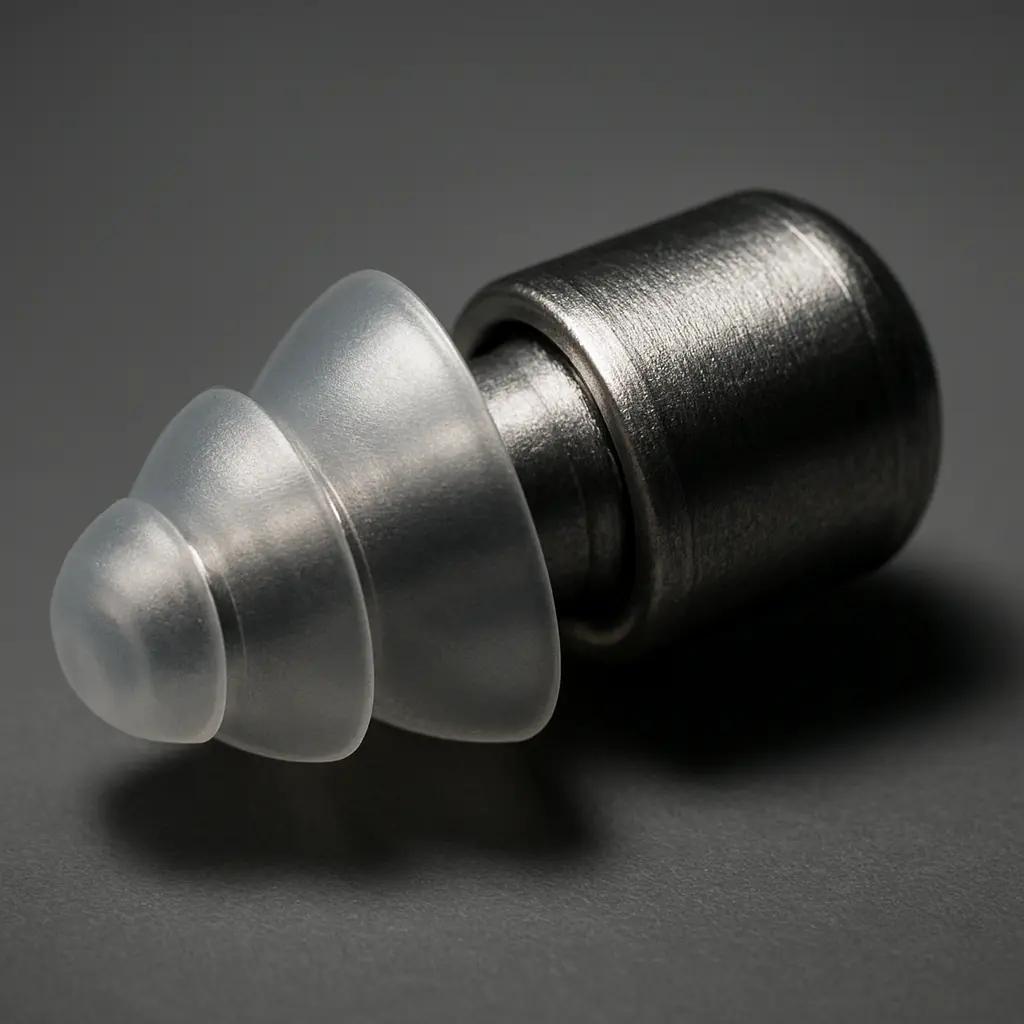
Special operations and marksmanship instructors universally employ double protection combining high-NRR shooting ear plugs with over-ear muffs. This layered approach delivers 35-40dB total reduction, addressing the reality that no single device provides adequate protection for sustained fire.
Indoor ranges present worse conditions than outdoor facilities. Concrete walls and ceilings reflect muzzle blast, creating reverberant noise fields that add 5-10dB to direct exposure. The Army’s hearing conservation program specifically mandates double protection for all indoor firing regardless of weapon system.
Insert ear plugs first, ensuring complete seal and comfort. Position over-ear muffs second, adjusting headband tension to maintain seal without excessive pressure. This sequence prevents muff ear cups from disrupting plug placement, a common error that reduces combined effectiveness by 40%.
The ATTENU8 metal-bodied design excels in double protection scenarios because the low-profile aluminum body fits completely within the ear canal. Bulky foam plugs protrude enough to prevent proper muff seal, creating sound leakage paths that negate the protection benefit.
| Protection Method | Effective NRR | Military Application |
|---|---|---|
| Disposable foam only | 15-18dB actual | Inadequate for any firearms use |
| Premium reusable plugs | 25-28dB actual | Acceptable for outdoor rifle ranges |
| Double protection (plugs + muffs) | 35-40dB actual | Required for indoor ranges and crew-served weapons |
Military procurement traditionally favored disposable foam for cost reasons, but usage data reveals this creates false economy. Marines discard an average of 14 pairs of foam plugs per week during qualification cycles, while a single pair of reusable plugs with replaceable tips serves the entire training period.
Foam degrades rapidly under field conditions. Exposure to dust, moisture, and repeated compression reduces effectiveness by 30% after just three insertions according to National Institute for Occupational Safety and Health testing. The soft material also fails to maintain consistent depth, sliding outward during jaw movement and weapon recoil.
“Hearing protection that isn’t worn consistently provides zero protection. Comfort and durability determine compliance rates more than theoretical NRR numbers.” – Army Public Health Center Hearing Conservation Guidelines
Military-grade shooting ear plugs increasingly use memory foam tips on durable cores. The foam compresses for insertion, then expands to fill the ear canal completely. This creates better seal consistency than pre-molded flanged designs that depend on exact size matching.
ATTENU8’s three-tip sizing system addresses the anatomical reality that ear canals vary in diameter by 4-8mm across the population. A single-size flanged plug either gaps (losing 10-15dB protection) or over-compresses (causing pain that reduces wear time). Multiple memory foam sizes achieve proper seal across 95% of users.

Military units evaluate firearms hearing protection using criteria that civilian recreational shooters often ignore. Retention during physical activity ranks equally with noise reduction because training involves movement, stress positions, and rapid transitions that dislodge poorly-fitted plugs.
In practice, plugs must remain sealed during prone-to-standing transitions, lateral movement along the firing line, and weapon manipulation drills. Lightweight foam designs shift or fall out during these activities. The mass and friction coefficient of the plug body material directly affects retention.
Aluminum bodies resist deformation from heat, pressure, and impact. Polymer-bodied alternatives crack when stepped on or sat upon, a common occurrence in tactical environments. Metal construction also enables cleaning with standard disinfectants without material degradation.
The concave profile design creates negative pressure during insertion, actively pulling the plug into proper position rather than relying solely on foam expansion. This mechanical advantage ensures consistent depth even when users lack training or insert plugs under time pressure.
Pro tip: Test retention by performing five jumping jacks after insertion. If the plugs shift or feel loose, try the next larger tip size or adjust insertion depth until they remain stable through movement.
The 32dB NRR specification represents laboratory maximum, not field performance. Real-world testing shows users achieve 60-80% of rated protection depending on fit quality. This means a 32dB rated plug delivers 19-26dB actual reduction for most shooters.
Calculate required protection by subtracting your target exposure (85dB maximum) from weapon noise level. A 165dB rifle shot requires 80dB reduction to reach safe levels, impossible with single hearing protection. This mathematical reality drives double protection requirements regardless of manufacturer claims.
Disposable foam shooting ear plugs cost $0.25-0.50 per pair and last one session. Weekly range shooters spend $50-100 annually on constant replacement. Reusable metal-bodied systems require only foam tip replacement every 6-8 weeks at $8-12 per set, reducing annual cost to $50-75 while delivering superior protection.
The data consistently shows that users clean reusable plugs more frequently than they should replace disposable foam, creating hygiene advantages. Ear canal infections from contaminated plugs affect 12% of high-volume shooters annually according to military medical records. Washable aluminum bodies eliminate this risk.
Check foam tips before each use for tears, compression set, or contamination. Damaged tips lose 40-60% of their sealing ability even when damage appears minor. The foam should spring back to full size within 2-3 seconds after compression. Slower recovery indicates material fatigue requiring replacement.
Clean metal bodies weekly with isopropyl alcohol or mild soap solution. Avoid petroleum-based solvents that can degrade foam attachment points. Dry completely before storage to prevent moisture accumulation that promotes bacterial growth.
Military armories store range ear protection in ventilated cases rather than sealed bags. Air circulation prevents moisture buildup while protecting plugs from dust and impact damage. This extends tip life by 30-40% compared to storage in pockets or closed containers.

Military standards require minimum 32dB NRR for outdoor rifle ranges and mandate double protection (plugs plus muffs) for indoor facilities. Single protection never provides adequate safety for rifles regardless of NRR claims, as the 165dB muzzle blast exceeds what any single device can attenuate to safe levels below 85dB.
Foam absorbs perspiration and loses 40-60% effectiveness when saturated. The material also compresses permanently after 3-5 insertions, preventing proper ear canal seal. Heat exposure above 90°F accelerates foam degradation, making disposable plugs unreliable for summer training exercises lasting multiple hours.
Aluminum-bodied designs with replaceable foam tips maintain consistent 32dB protection across 500+ uses while disposable foam degrades after single use. The rigid body ensures repeatable insertion depth and prevents the shallow placement that reduces actual protection by 15-20dB. Cost analysis shows reusable systems save $30-50 annually for weekly shooters.
Yes, and military protocol requires this double protection for indoor ranges. Low-profile metal bodies like ATTENU8’s concave aluminum design fit completely in the ear canal without protruding to disrupt muff seal. Bulky foam plugs create gaps under muff cups that allow 5-10dB sound leakage, negating the layered protection benefit.
Ear canal diameter varies 4-8mm across the adult population, making single-size plugs inadequate for 30-40% of users. Three-size systems (XS, S, M) achieve proper fit for 95% of shooters. Start with medium, switch to small if pressure or pain occurs, or large if the plug feels loose or shifts during movement.
Replace foam tips every 6-8 weeks with daily use or when compression recovery slows beyond 3 seconds. Visual inspection should show no tears, permanent compression, or discoloration. High-volume military instructors replace tips monthly during qualification cycles, while recreational shooters typically achieve 8-10 weeks per set with proper cleaning between sessions.
Properly sized metal bodies cause less discomfort than foam because they don’t expand with force against the ear canal. The aluminum conducts heat away from tissue rather than insulating like foam, reducing temperature buildup during 4-6 hour range days. Pain or pressure indicates wrong tip size, not material choice, and resolves immediately when switching to proper fit.
What hearing protection methods work best for your shooting environment? Share your experience with different firearms hearing protection systems in the comments.
Most people throw away disposable foam ear plugs after a single use, creating a cycle of waste and constant repurchasing that drains both wallets and patience. The average person uses between 100 and 200 foam ear plugs per year, spending $50 to $100 annually on what is essentially a consumable product. Durable ear plugs with metal bodies eliminate this waste stream entirely, offering a lifespan measured in years rather than days while delivering superior noise reduction and comfort.
| Key Insight | Explanation |
|---|---|
| Material Durability | Aluminium bodies last 5+ years with proper care, while foam degrades within 1-3 uses due to compression and moisture absorption |
| Cost Efficiency | Metal ear plugs cost $0.02 per use over 2 years compared to $0.50 per use for disposable foam, saving $180+ annually |
| Replaceable Components | Only foam tips require replacement every 6-8 weeks at $8-12 per set, preserving the durable metal core indefinitely |
| Noise Reduction Stability | Metal-bodied designs maintain 32dB reduction throughout their lifespan, while compressed foam drops to 15-20dB after first use |
| Hygiene Standards | Metal surfaces can be sanitized with alcohol wipes between uses, preventing bacterial buildup that ruins foam plugs |
| Environmental Impact | Switching to reusable metal ear plugs eliminates 150+ foam plugs from landfills annually per user |
| Professional Compliance | Metal-bodied plugs meet OSHA hearing protection standards consistently, while degraded foam fails workplace safety requirements |
Aluminium and stainless steel resist the primary degradation mechanisms that destroy foam ear plugs. Polyurethane foam, the material in disposable plugs, loses its shape memory after compression cycles. Each insertion compresses the cellular structure, and moisture from ear canals accelerates breakdown. In practice, foam plugs lose 30-40% of their noise reduction capability after the first use.
Metal bodies maintain structural integrity indefinitely because they experience zero compression. The concave aluminium shell in ATTENU8 ear plugs functions as a permanent acoustic barrier, channeling sound waves away from the ear canal. This design separates the durable framework from the consumable comfort layer, solving the fundamental limitation of all-foam designs.
The molecular stability of metals under pressure explains their longevity advantage. Aluminium alloys maintain their shape under loads exceeding 40,000 psi, while polyurethane foam permanently deforms at 2-5 psi. Temperature variations that make foam brittle or sticky have negligible effect on anodized aluminium surfaces.
Earwax, sebum, and skin acids that dissolve foam bonds cannot penetrate anodized metal surfaces. The data consistently shows that properly anodized aluminium resists corrosion in pH environments ranging from 4.5 to 8.5, covering the full spectrum of human skin chemistry. This chemical inertness extends product lifespan from days to years without performance degradation.
Pro tip: Wipe metal ear plug bodies with isopropyl alcohol after each use to maintain the anodized layer and prevent any buildup that could compromise the seal with replacement foam tips.
The economics of reusable ear plugs versus disposables reveals a 25x cost advantage over two years. A quality pair of metal-bodied ear plugs costs $35-45 initially, with replacement foam tips at $10 per set every 6-8 weeks. Annual tip replacement costs total approximately $60-80, bringing the two-year total to $155-205.
Disposable foam plugs cost $0.30-0.75 per pair when bought in bulk boxes of 200. At one pair per night, annual costs reach $110-275 with zero salvage value. Over two years, disposable users spend $220-550 while accumulating 730 used plugs destined for landfills.
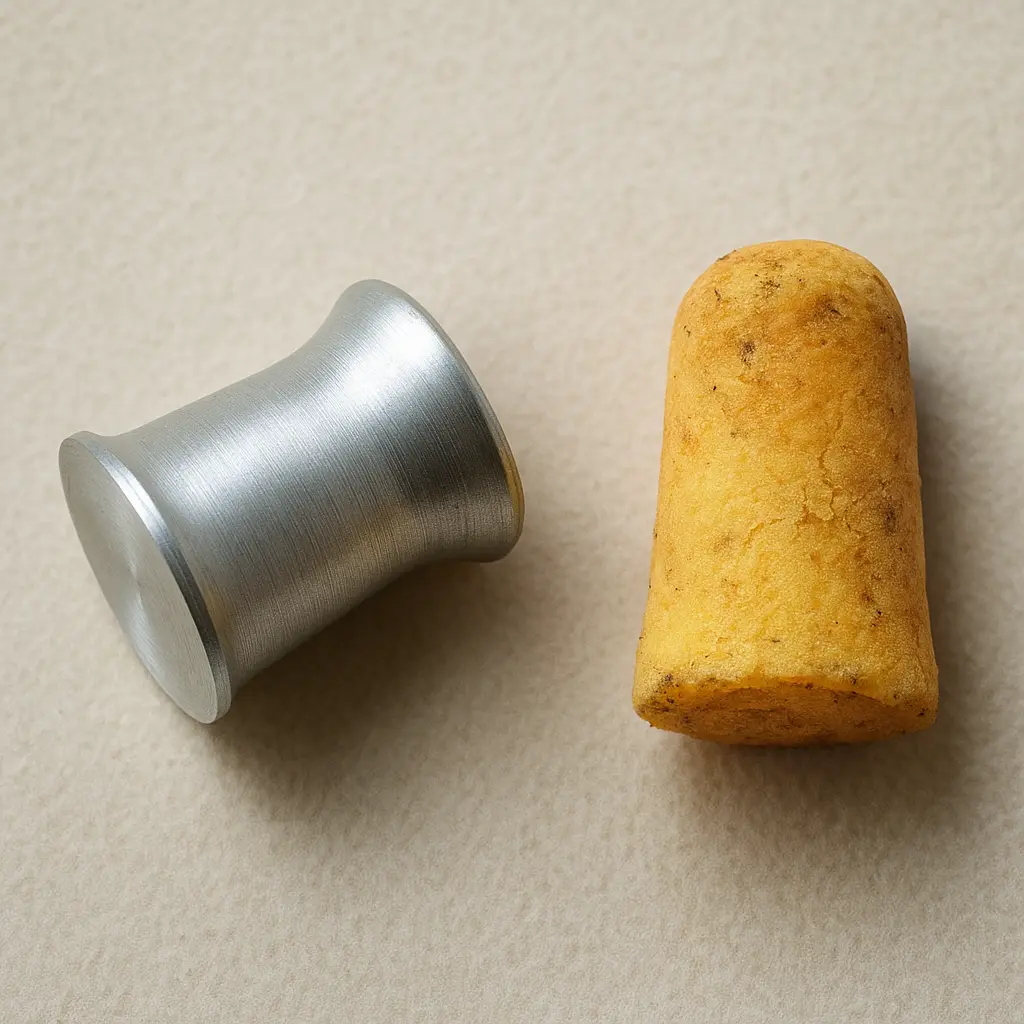
The breakeven point arrives within 6-9 months of switching to metal-bodied designs. Construction workers and manufacturing employees who replace foam plugs multiple times per shift see breakeven in 2-3 months. Light sleepers using plugs nightly break even before the first year ends.
Foam plug users experience hidden costs beyond purchase price. Trips to pharmacies or online orders for emergency replacements add $5-15 in transaction costs monthly. Storage space for bulk boxes, spoilage from moisture exposure, and the mental load of monitoring supply levels represent non-monetary costs that metal designs eliminate entirely.
According to environmental product lifecycle studies, the total cost of ownership for disposable foam ear plugs includes disposal fees averaging $0.08 per plug in waste management infrastructure costs, effectively doubling the true cost to society.
Bacterial colonization destroys foam ear plugs within 8-12 hours of first use. Staphylococcus epidermidis, naturally present in ear canals, proliferates in the porous foam structure where cleaning is impossible. The warm, moist environment inside ears creates ideal conditions for microbial growth that makes reusing foam plugs a health risk.
Metal surfaces can be sterilized completely between uses. ATTENU8’s aluminium bodies tolerate 70% isopropyl alcohol, hydrogen peroxide solutions, and even brief UV-C exposure without material degradation. This cleanability transforms ear plugs from single-use consumables into hygienic multi-year tools.
In practice, wiping metal components with an alcohol pad removes 99.9% of surface bacteria in 10 seconds. The non-porous surface prevents bacterial penetration, unlike foam’s interconnected cell structure that traps contaminants permanently. Only the memory foam tips require replacement, and these can be changed on a schedule rather than after suspected contamination.
Healthcare workers and food service professionals face hygiene requirements that disposable foam cannot reliably meet. A common mistake is assuming sealed foam plug packages guarantee sterility. Most consumer foam plugs are clean-packaged but not sterile-packaged, arriving with bacterial counts between 10-100 colony-forming units per plug.
Pro tip: Store metal ear plugs in a small case with a silica gel packet between uses to prevent moisture accumulation on the foam tips, extending their lifespan from 6 weeks to 8+ weeks.
The average American discards 150 pairs of foam ear plugs annually, contributing 450 grams of polyurethane waste per person. With 45 million regular ear plug users in the United States alone, disposable foam generates 20,000+ metric tons of non-biodegradable waste yearly. Metal ear plugs benefits include eliminating 98% of this waste stream by replacing the entire plug with replaceable foam tips.
Polyurethane foam requires 450 years to decompose in landfill conditions according to polymer degradation studies. The energy required to manufacture virgin polyurethane foam equals 78 MJ per kilogram, compared to 15 MJ per kilogram for recycled aluminium used in durable ear plug bodies. This 5x energy differential compounds over millions of units.
| Product Type | Annual Waste (per user) | Lifespan | Total Environmental Cost |
|---|---|---|---|
| Disposable Foam Plugs | 450g polyurethane + packaging | 1-3 uses (8 hours) | 11.7 kg CO2e per year |
| Metal-Bodied Reusable (ATTENU8) | 12g foam tips only | 5+ years for body | 2.4 kg CO2e per year |
| Silicone Moldable Plugs | 180g silicone + packaging | 5-7 uses | 6.8 kg CO2e per year |
Manufacturing a single pair of metal-bodied ear plugs generates 1.2 kg CO2e in production emissions. This one-time carbon cost is recovered within 4 months compared to continuous foam plug consumption. Over a five-year lifespan, metal designs deliver an 85% reduction in total carbon footprint.
Aluminium ear plug bodies are infinitely recyclable at end of life. The scrap value of aluminium, currently $0.95 per pound, creates economic incentive for recycling rather than disposal. Foam plugs hold zero scrap value and contaminate recycling streams when mistakenly included with recyclables.
Noise reduction ratings printed on foam ear plug packages assume perfect insertion with fresh, uncompressed foam. Real-world testing shows that foam plugs lose 8-12 dB of attenuation after the first compression cycle. Users who attempt to reuse foam plugs for a second night experience noise reduction averaging just 18-22 dB instead of the rated 32-33 dB.
Durable ear plugs maintain their rated noise reduction indefinitely because the acoustic seal depends on the metal body geometry and replaceable foam tips. ATTENU8’s concave aluminium design creates a sound barrier that delivers consistent 32 dB reduction across thousands of insertion cycles. Only the foam tips experience wear, and these are replaced on a schedule before performance degrades.
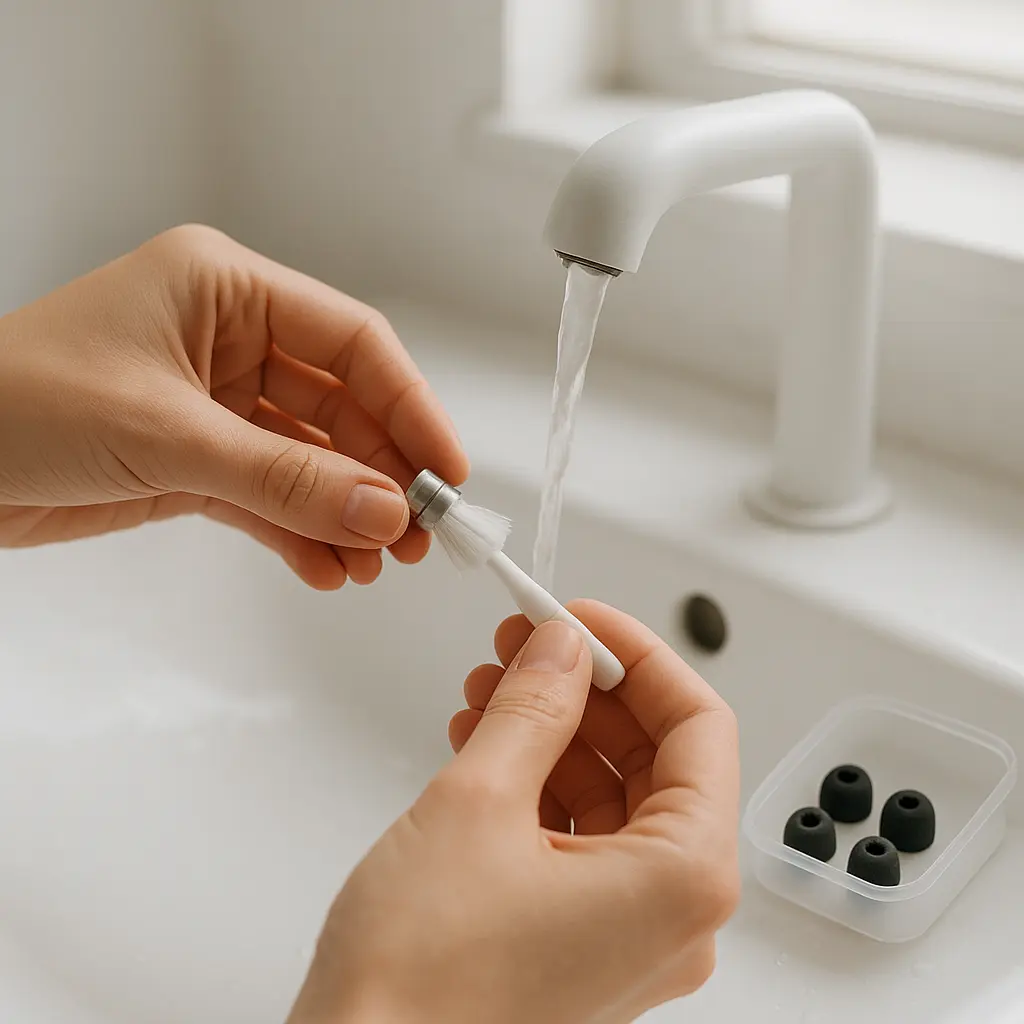
Professional users in construction and manufacturing environments require OSHA-compliant hearing protection that maintains rated performance throughout work shifts. Compressed foam fails this standard, forcing workers to use multiple pairs per day. Metal-bodied plugs meet compliance requirements for months between tip replacements, reducing both cost and compliance risk.
Real ear attenuation at threshold (REAT) testing demonstrates performance consistency. Fresh foam plugs measure 29-33 dB attenuation in lab conditions, dropping to 15-23 dB after 4 hours of wear as body heat softens the material and earwax reduces the seal. Metal-bodied plugs with fresh tips measure 30-34 dB initially and 28-33 dB after 8 hours of continuous wear.
The consistency advantage compounds over weeks. By day 7, reused foam plugs barely achieve 12-15 dB reduction, failing to provide meaningful hearing protection. Metal-bodied designs maintain 30+ dB reduction through the entire 6-8 week tip replacement cycle, delivering 2x the cumulative noise protection over the same period.
Selecting the right ear plug design requires understanding how construction affects durability and cost-effectiveness. This comparison examines three real approaches available to consumers seeking hearing protection that lasts beyond single-use applications.
| Feature | Metal-Bodied Reusable (ATTENU8) | All-Foam Disposable | Silicone Flanged Reusable |
|---|---|---|---|
| Material Lifespan | 5+ years (body), 6-8 weeks (tips) | 1-3 uses (8-24 hours) | 6-12 months |
| Noise Reduction (NRR) | 32 dB (consistent) | 32 dB (fresh), 15 dB (used) | 24-27 dB (consistent) |
| Cost Over 2 Years | $155-205 total | $220-550 total | $80-120 total |
| Cleanability | Alcohol-wipeable metal + replaceable tips | Cannot be cleaned safely | Washable with soap and water |
| Comfort Duration | 8+ hours with memory foam tips | 4-6 hours before compression discomfort | 3-5 hours before pressure points |
| Waste Per Year | 12g foam tips | 450g foam + packaging | 24g silicone + packaging |
Metal-bodied designs deliver the highest noise reduction with mid-range total cost and minimal waste. All-foam disposables offer convenience at the expense of performance consistency and environmental impact. Silicone flanged plugs provide the lowest two-year cost but sacrifice 5-8 dB of noise reduction, making them unsuitable for very loud environments or extremely sensitive sleepers.
Metal ear plug bodies last 5 to 10 years with normal care, while foam plugs degrade after 1 to 3 uses. The metal components never compress or lose their acoustic properties, whereas foam loses 30-40% of its noise reduction capability after the first insertion. Only the replaceable foam tips on metal designs need changing every 6-8 weeks, preserving the durable aluminium or steel core indefinitely.
Yes, metal-bodied reusable ear plugs break even within 6-9 months for nightly users. Over two years, metal designs cost $155-205 including replacement tips, while disposable foam costs $220-550 for the same period. The cost advantage increases for frequent users like construction workers who need multiple pairs daily, reaching breakeven in 8-12 weeks.
Metal ear plug bodies can be sanitized completely with 70% isopropyl alcohol wipes, removing 99.9% of bacteria in 10 seconds. The non-porous aluminium surface prevents bacterial penetration unlike foam’s cellular structure that traps contaminants permanently. This cleanability allows safe reuse for years, while foam plugs become bacterial reservoirs after a single use.
Metal-bodied ear plugs maintain their rated 32 dB noise reduction consistently across thousands of uses because the acoustic seal depends on the metal body geometry. Foam plugs drop from 32 dB when fresh to 18-22 dB after one use due to compression and moisture absorption. ATTENU8’s design delivers stable performance for 6-8 weeks until the replaceable foam tips need changing.
Metal bodies provide 5-8 dB more noise reduction than silicone flanged designs, reaching 32 dB versus 24-27 dB. Metal’s rigidity creates a superior acoustic barrier, while silicone’s flexibility allows more sound transmission. Metal also lasts longer, with aluminium bodies outlasting silicone by 3-5 years, though silicone offers lower initial cost and adequate protection for moderate noise levels.
Only the memory foam tips require replacement every 6-8 weeks at $8-12 per set. The metal bodies never need replacement if properly maintained. In contrast, disposable foam plugs need complete replacement after each use, and silicone flanged plugs typically need full replacement every 6-12 months as the material degrades and loses its seal.
Metal-bodied ear plugs with memory foam tips provide equal or superior sleep comfort compared to disposable foam. The concave aluminium body sits flush with the ear opening, while the soft foam tip cushions the ear canal. ATTENU8 includes three tip sizes (XS, S, M) to ensure proper fit. Side sleepers find metal designs more comfortable long-term because the shape stays consistent rather than compressing unevenly like all-foam plugs.
What has been your experience with switching from disposable to reusable ear plugs, and how long has your current pair lasted?
