


 0

If your sleep tracker reports three awake periods and you can’t remember waking once, the problem may be the room, not your sleep. Sleep tracker noise is a real issue because most wearables read movement and heart rate, never sound. A passing truck, a neighbor’s door, or a partner rolling over can all look the same to a wrist sensor or ring. This guide explains what consumer trackers actually measure, how noise shows up in the numbers, and how to run a simple test to see whether better ear protection changes your results.
| Key Insight | Explanation |
|---|---|
| Trackers cannot hear your room | Wrist and ring sensors detect movement and heart rate. A noisy night and a restless night can look identical in the app. |
| Match wake events to real sounds | Compare each flagged awakening with what you remember, or with a short sound log written at the same time. |
| Read trends over 14 nights | One score moves with alcohol, late meals, and stress as well as noise. Two weeks of data shows patterns that a single night hides. |
| Keep a one-week noise log | Jot down sounds with rough times, such as “dog barking, 2 a.m.” Your log gives the tracker’s timestamps something to be checked against. |
| Swap foam tips every 6-8 weeks | A compressed or worn tip loses its seal, which weakens noise reduction and makes any before-and-after comparison unreliable. |
| Treat workplace hearing protection separately | Trackers do not measure noise dose on a shift. Hearing protection needs its own fit checks and replacement schedule. |
| Test ear plugs on alternating nights | Alternating nights controls for weekday patterns. Hold bedtime, caffeine cutoff, and room temperature as steady as you can. |
Most consumer sleep trackers estimate sleep from motion and heart rate, then infer sleep stages from patterns in those signals. Johns Hopkins Medicine makes the same point in its guide to sleep trackers: most devices produce a guesstimate of how much you are actually sleeping. Exact figures require a medical evaluation, not a wristband.
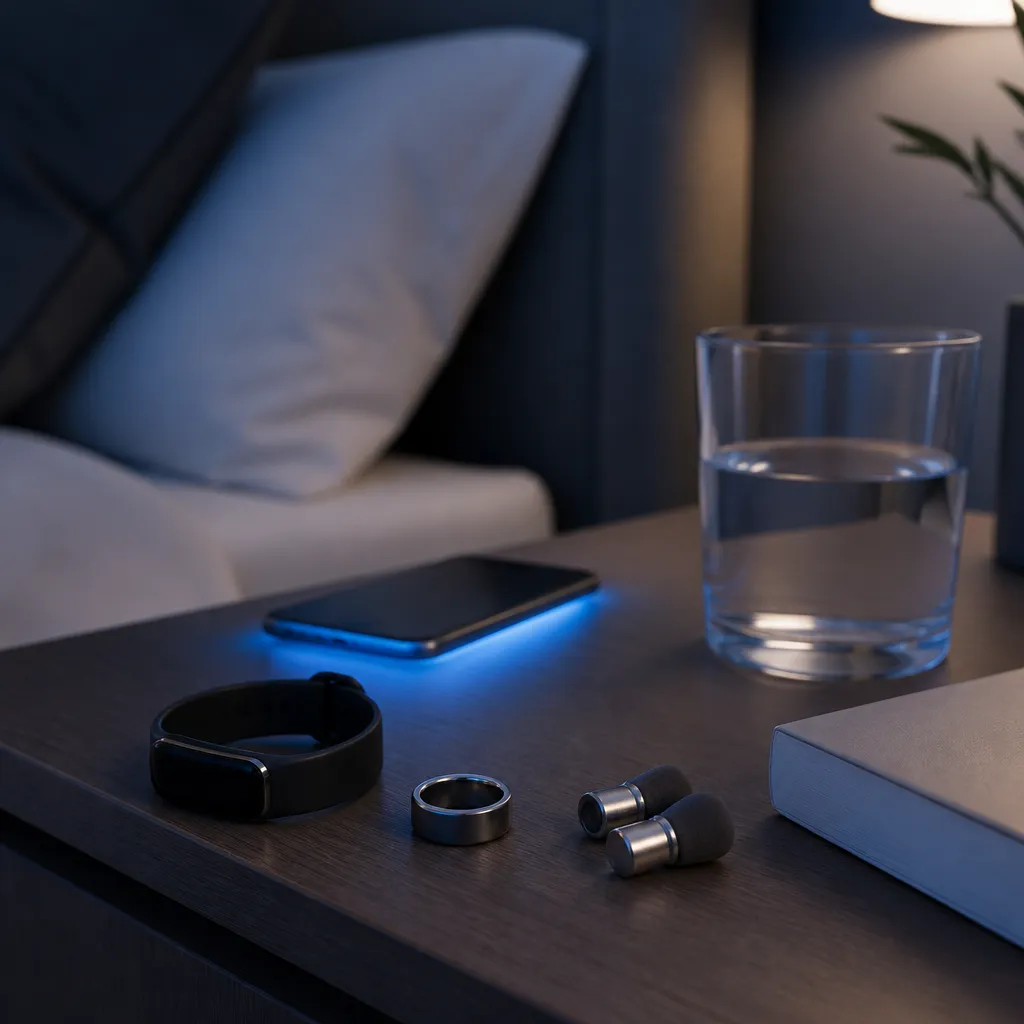
The design premise is simple. Fitbit’s Flex manual describes tracking the length and quality of sleep when you wear the device to bed. Every reading is therefore an inference from what your body does, not a direct record of what happened in the room.
The sensor registers when your wrist or finger moves, and optical sensors pick up changes in pulse. It never records decibels. A loud bang only registers if it makes you move, and a silent turn in bed can look identical to a sound-triggered one.
That gap is why a tracker can tell you that you were restless but not why. The device flags the event and leaves the cause to you, which is exactly where noise-sensitive sleepers get stuck.
A 2023 prospective multicenter study published in JMIR mHealth and uHealth tested 11 wearable, nearable, and airable consumer sleep trackers. Its existence says something useful: accuracy is judged product by product, not as one blanket standard for the whole category.
Pro tip: Check how the app defines sleep and wake before you trust any nightly number. Those thresholds decide whether a noisy moment counts as an awakening at all.
Noise rarely appears in your app labeled as noise. It shows up as a short awake period, a dip in the score, or a small bump in overnight heart rate. A sound that jolts you partway through a light stage can cause a brief arousal, and the body response is what the device records.
The sound is often gone by the time you check your phone. That leaves you with a timestamp and no explanation, which is the most frustrating pattern for noise-sensitive sleepers.
Common culprits include street traffic, a dishwasher cycle, a neighbor’s television, and a phone vibrating on a nightstand. Each of these tends to produce a short, sharp disturbance rather than a long one. If your tracker shows a cluster of awakenings between 1 and 3 a.m., compare that window with your sound log before blaming your mattress or your stress.
In practice, the noise that hurts sleep most is intermittent. Steady background hum is easier to adapt to than an irregular bang or a car alarm that goes off every twenty minutes, which keeps the nervous system on alert.
If you share a bed, a partner’s movement can register on your device. Some trackers try to separate sleepers, but results vary, so treat partner movement as a known blind spot. Snoring is a sound the tracker cannot hear directly. What it can show is the disruption, in the form of more movement and more brief awakenings.
A practical check is to note whether your flagged awakenings line up with nights when your partner was restless or snoring loudly. If they do, the problem is shared, and ear plugs are only part of the fix.
A sleep score blends total time, estimated stages, restlessness, and sometimes resting heart rate into one number. That number looks precise, but it compresses several different causes into a single figure. A noisy night and a night of late caffeine can produce the same drop.
A sleep score tells you how the night looked to a sensor. It does not tell you how the night felt to you.
That distinction matters most for light sleepers. Your sense of having slept badly may be accurate even when total hours look normal, and the score may still fall or rise for reasons unrelated to what kept you up.
Trackers often show more light sleep on nights when you wake easily. That pattern fits noise sensitivity, but it also fits alcohol, a late workout, a hot room, or a new medication. Treat light sleep as a clue to investigate, not a verdict on your environment.
When noise is involved, stage data becomes more useful once you read it next to your own notes. A night with fragmented light sleep and a sound log entry at 3:12 a.m. tells a much clearer story than the stage breakdown alone.
Many people open the app before coffee and read the score like a report card. A low number can raise anxiety about the next night, and anxiety makes you more alert to small sounds. The cycle is common and easy to break: review the trend once a week instead of every morning.
Pro tip: Set a fixed weekly time to review your sleep data. Checking once a week gives you enough nights to see a pattern and keeps a single score from shaping your mood at bedtime.
The cleanest way to learn whether noise is driving your data is to change one variable and watch what happens. Ear plugs are a useful variable because they reduce what reaches your ears without changing your bed, your partner, or your schedule.
Run the test for 14 nights, alternating nights with and without ear plugs. Alternating is better than running seven nights in a row because it spreads weekday effects, such as late work nights, across both groups.
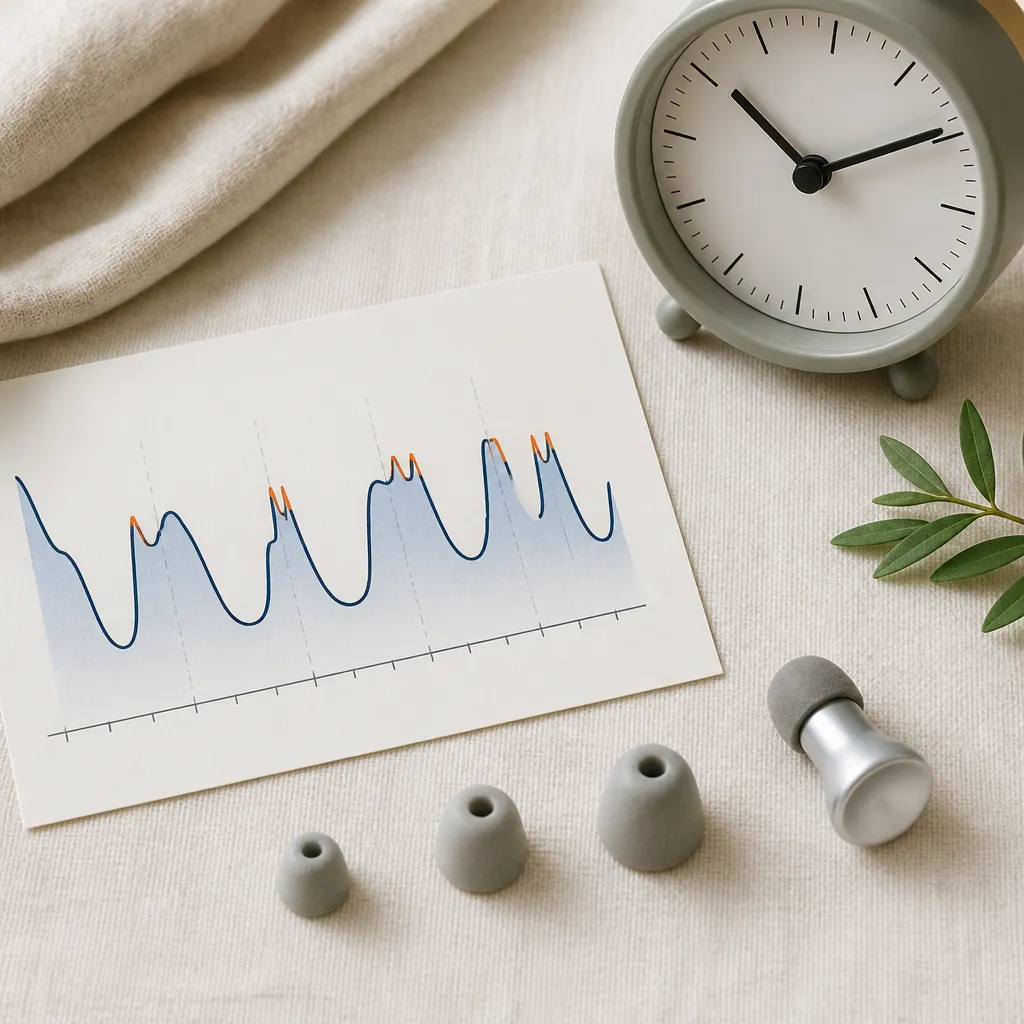
Hold bedtime within about 30 minutes of your usual time. Use the same caffeine cutoff, keep your alcohol habits consistent, and avoid starting a new supplement during the test. If you change something in your routine, write it down so you can explain an outlier later.
Wear the tracker the same way each night, on the same wrist or finger, and charge it on the same schedule. A loose device or one that dies halfway through the week will produce data you can’t trust.
For each night, record four things: total estimated sleep, the number of flagged awakenings, resting heart rate if your device shows it, and a simple 1 to 5 rating of how rested you felt. Your own rating is the most valuable column because the sensor cannot produce it.
Look for a shift across the whole set, not a single standout night. If awakenings drop on ear-plug nights and your rating moves in the same direction, you have a useful answer. If nothing changes, noise may not be your main issue, and it is worth looking at other causes.
Pro tip: Start the test with a fresh set of foam tips. A tip that has lost its shape by week three will skew the second half of your data in a direction you can’t predict.
No single method answers the question on its own. Each approach gives you a different kind of evidence, and the most useful setup combines them. The table below compares three common ways to approach noisy nights.
| Approach | What It Tells You | Where It Falls Short |
|---|---|---|
| Wearable tracker alone | Trends in estimated duration, movement, and resting heart rate | Cannot identify the sound that caused an awakening |
| Tracker plus a written noise log | Matches flagged awakenings to specific sounds and times | Depends on you writing things down, often at 3 a.m. |
| Foam-tip ear plugs tested against tracker trends | Shows whether lower noise exposure changes awakenings and your rating | Needs a disciplined two-week window, and the tracker still estimates |
My recommendation is the third row combined with the second. The tracker supplies consistent timestamps, the log adds context, and the ear-plug test gives you a controlled comparison. A tracker alone leaves you guessing, and a log alone becomes a chore you abandon after three nights.
ATTENU8 builds its reusable ear plugs around a concave aluminium body and three sizes of soft memory foam tips (XS, S, and M), with approximately 32dB of noise reduction. That rating assumes a good seal, so choosing the right tip size matters as much as the product itself.
Because only the foam tips need replacing every 6-8 weeks, the test is easy to repeat. You can compare a fresh set of tips against a worn set without buying a new pair each time.
Sleep trackers and hearing protection solve different problems. A tracker estimates what happened to your sleep, while hearing protection limits what reaches your ears during the shift. Construction, manufacturing, and military work can expose you to sound levels that a wristband will never report, so the two should be managed separately.
Workplace noise exposure is measured with dedicated instruments, not inferred from movement. A tracker might show that you slept poorly after a loud week, but it cannot tell you how much noise you took in during the shift, how long it lasted, or whether your protection was in place.
That is why hearing protection should be chosen for the environment you work in. Check that the product matches the noise you face, and remember that any hearing protection is only as good as its fit.
Insert foam tips by rolling them into a thin shape, pushing them in, and holding them for about 20 to 30 seconds while they expand. Then test the seal by talking and chewing. If your voice sounds boomy or outside sounds seem unchanged, reseat the tip or try another size.
Replace tips that look compressed, discolored, or stiff, even if the 6-8 week mark has not arrived. Damaged foam seals poorly, and a poor seal undermines the protection you think you have.
Pro tip: If you notice ringing, muffled hearing, or distorted sound after a shift, book a hearing test instead of adjusting your sleep tracker settings. A tracker cannot detect changes in your hearing.
A set of ear plugs performs only as well as its foam tips allow. The metal body can stay in service for a long time, but the foam tips are the part that wears down, and they need replacing every 6-8 weeks. Tracking that date matters more than most people expect.
Pick a replacement date when you start a test and write it on your calendar. Otherwise, a tip that has gone stiff by week seven quietly changes both your comfort and your data.

Wipe the metal body with a dry or lightly dampened cloth after use, and let it dry completely before you put it away. Keep it in a case away from heat, direct sunlight, and bathroom humidity. Trapped moisture is one of the quickest ways to shorten the life of foam.
Avoid tossing the plugs into a pocket with keys or coins. Small impacts can dent the sealing edge of the foam, and a dented tip will not seal evenly against the ear canal.
Three sizes sound like a narrow range, but the wrong size is one of the most common reasons for poor performance. If a plug falls out during sleep or feels tight after an hour, try the next size up or down before you judge the product.
When you run your ear-plug test, log which size you used. A size change between weeks changes the seal, and that is a variable you need to know about.
Pro tip: Keep a spare set of foam tips for the length of your test. Swapping in fresh tips mid-test removes one more uncontrolled variable, so you never have to guess whether a worn tip is behind a bad night.
Most consumer sleep trackers do not measure sound levels. They detect movement and heart rate, so they can flag an awakening but cannot identify the sound that caused it. A separate sound log is the most practical way to link the two.
Fitbit estimates wake time from movement and heart rate patterns. A brief arousal with little body movement can be missed, while a small turn or limb shift can be counted as awake even if you barely stirred. Compare the flagged time with your notes before deciding the reading is wrong.
Ring-style trackers also rely on movement and heart rate signals, so they face the same limit. They can show trends clearly over weeks, but they still cannot tell you what sound was present. Use the trend data together with a manual noise log.
Plan on at least 14 nights, alternating between the two conditions where you can. One or two nights tell you very little, because normal variation from stress, alcohol, and schedule can swamp any effect from noise.
Ear plugs sit in your ears, not on your wrist or finger, so they don’t normally affect how the sensor reads movement. The real risk is indirect: a poorly fitted or worn tip changes the noise you hear, which changes the data you are trying to measure.
Yes, when your environment calls for it. Choose protection rated for your workplace, check the fit before every shift, and replace damaged tips. If you notice ringing or changes in your hearing, see a hearing professional rather than relying on sleep data.
Did you ever match a flagged awakening to the sound that caused it, and what did your tracker get right or wrong?
Walk into a hardware store and the ear plugs on the rack look much like the ones sold for sleep or flights. Both claim high noise reduction, both come in small packages, and both promise comfort. The difference shows up when the noise is constant, the shift lasts eight hours, and someone’s hearing is on the line. If you are weighing industrial ear plugs vs consumer models, the real question is not which one is better in general. It is which one has been rated for the job in front of you, and whether that rating holds up once the plug is in a real ear. This guide explains the gap between the two categories, why the number on the package can mislead, and how to choose.
| Key Insight | Explanation |
|---|---|
| Read the rating as a lab figure | Labeled noise reduction ratings come from laboratory testing under ideal fit. Treat the number as a ceiling, not a promise. |
| Derate before you trust it | NIOSH guidance recommends reducing labeled NRR by 50% or more to estimate real-world attenuation for earplugs. |
| Fit decides most of the result | A poor seal can cut protection sharply. In a 100 dB area, an NRR-33 plug may still let through 90 to 95 dBA. |
| Match the plug to the exposure pattern | Constant loud noise over a full shift calls for a rated, fit-checked plug. Sleep and travel use calls for comfort and low intrusion. |
| Reusable only saves money if you maintain it | Foam tips on a reusable design need replacing every 6 to 8 weeks. Dirty or hardened tips lose their seal. |
| Headphones are not hearing protection | Noise cancelling headphones reduce some ambient sound but do not replace earplugs or earmuffs in a loud workplace. |
Industrial ear plugs are designed to be worn for full shifts in places where noise is continuous, impulsive, or both. They are usually bought through safety distributors, carry a labeled noise reduction rating, and often sit inside a written hearing conservation program. Consumer ear plugs are built for a different job: sleeping through a neighbor’s dog, sitting through a flight, or getting through a loud commute without feeling the plug by midnight.
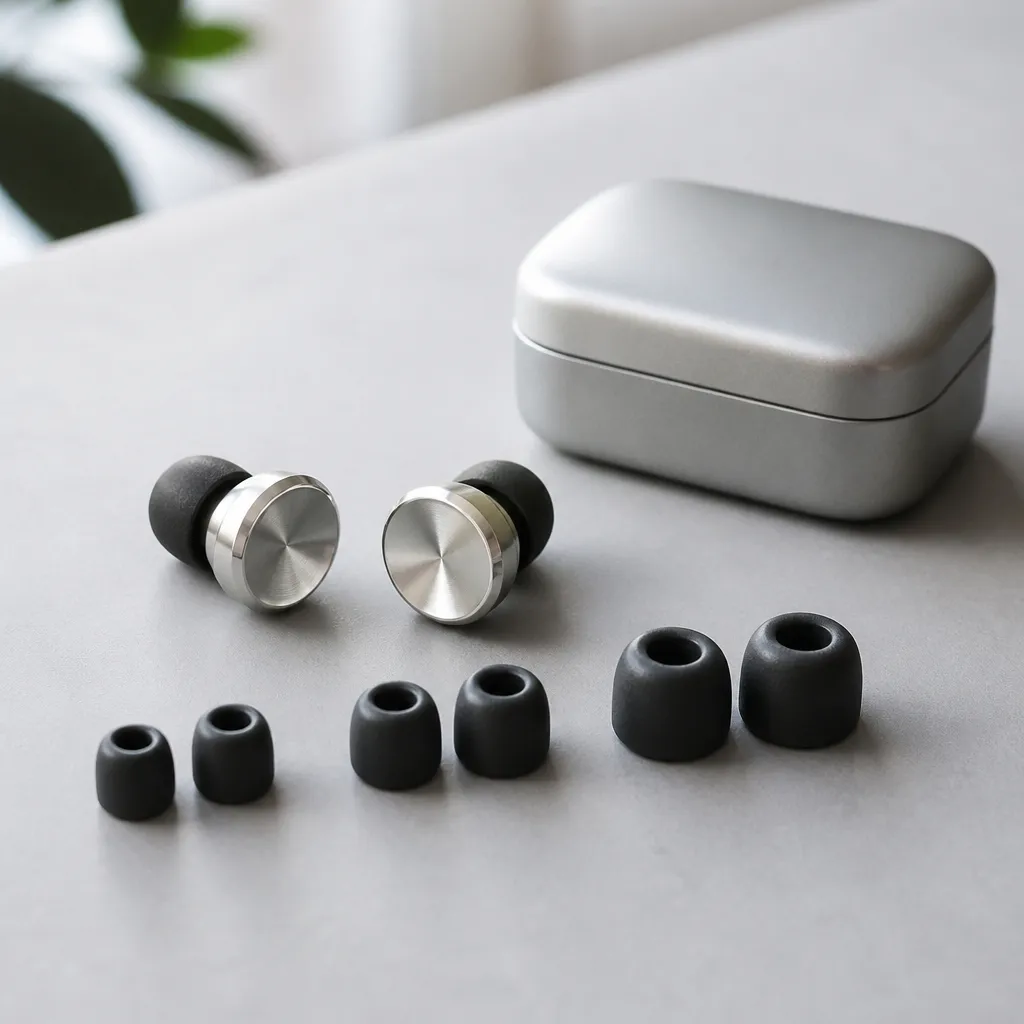
The materials overlap more than the marketing suggests. Foam, silicone, and pre-molded designs show up in both aisles. What separates them is the testing behind the rating, the expected wear time, and the consequence of a poor seal. A leak on a sleep plug means a restless night. The same leak on a stamping line can mean permanent hearing loss over a career.
Hearing protection is usually grouped into five categories: disposable foam, pre-molded reusable, semi-insert or banded, earmuffs, and custom-molded plugs. Consumer products mostly sit in the pre-molded and reusable group, while industrial programs draw from all five. Knowing which group a product belongs to tells you more about its real performance than the packaging does.
The Noise Reduction Rating, or NRR, is the number printed on most US hearing protection packaging. It is a population average from laboratory testing, and it assumes the wearer gets a near-perfect fit. Real workplaces rarely meet that assumption, which is why the number needs adjusting before you use it to plan protection.
Two plugs can carry different NRR values and still perform similarly in a real ear, because the rating reflects a controlled test rather than an everyday wearer. A higher number is useful for comparing products tested the same way. It tells you very little about how a plug will behave in your ear on a Tuesday afternoon.
The practical danger is overconfidence. A worker in a 100 dB environment wearing an NRR-33 plug may expect to be protected down to 85 dBA. If the fit is poor, that worker may actually be receiving something closer to 90 to 95 dBA. That gap is the reason field estimates matter more than the label.
NIOSH recommends derating the labeled NRR by 50% or more to estimate field attenuation for earplugs. Insertion-dependent devices are hit hardest, because their performance depends on the user getting the seal right every time. Earmuffs tend to hold their performance more consistently, although they offer less maximum attenuation than a well-fitted custom plug.
Our own rated figure of approximately 32 dB is measured under lab conditions, and it assumes the right tip size is seated correctly. Plan around a lower real-world number, and use the rating as a comparison point, not a guarantee.
A rating describes what a plug can do on a good day with a good fit. Your protection plan has to cover the average day with an average fit.
Most field failures are not caused by the plug. They are caused by the person wearing it. A foam plug that is not rolled tightly will not expand to fill the canal, and a pre-molded plug pushed in at the wrong angle will leak around the edge. Both problems are invisible until someone checks.
Three tip sizes sounds generous until you realize that the wrong size guarantees a leak. Tips that are too small cannot seal, and tips that are too large cause discomfort and encourage people to pull them out. The right test is simple: insert the plug, hum or speak, and check whether your own voice sounds unusually loud or boomy. That usually signals a leak or a plug seated too shallowly.
For foam, roll the tip into a thin cylinder, pull the top of your ear up and back to straighten the canal, insert the plug, and hold it in place while it expands. For pre-molded designs, the same up-and-back pull applies, but the plug should sit flush and not stick out far enough to rub. Rushed insertion is the most common reason a rated plug performs like an unrated one.
Behavior matters as much as technique. Soundtrace’s guide cites NIOSH 2021 data showing that 53% of noise-exposed workers do not consistently wear hearing protection devices. A plug that stays in the bag will never protect anyone, which is why comfort and fit are safety features, not nice-to-haves.
Pro tip: Ask a supervisor or safety officer to observe your insertion once. Most people have been inserting plugs slightly wrong for years, and a two-minute check can fix a seal that has been leaking since the first day on the job.
Consumer ear plugs are not a lesser product. They are optimized for a different set of problems, and in those situations they often beat industrial alternatives. The main priorities are low pressure, a smaller body that does not press against the jaw while you sleep, and a tip shape that does not feel like a foreign object after six hours.

If you wake up at a passing truck or a partner’s snoring, your goal is not maximum attenuation. Your goal is to block enough sound that the brain stops treating it as a threat. A well-fitted consumer plug with a moderate rating and a comfortable tip often does that job better than a heavy-duty plug that leaves you feeling the pressure every time you turn over.
Light sleepers should also be realistic. A bedroom plug will not silence a jackhammer next door, and it will not make a loud household bearable if the sound is mostly low frequency. Pick a plug for the noise you actually live with.
Travel exposes you to a different pattern: short bursts of high noise, long stretches of mixed sound, and a lot of getting in and out of the plugs. Reusable designs suit this well because they are compact, easy to clean, and quick to reinsert. The trade-off is that you must carry the tips and check their condition before a long flight.
The same logic applies to shared hotel rooms and open-plan offices. You are protecting your sleep or concentration, not guarding against a regulated exposure limit. That distinction matters because it determines how much you should trust the rating on the box.
Most buyers compare products by price per pair, but the more useful comparison is how each setup handles your actual exposure. The table below lines up three common options that people choose between, and it shows where each one earns its keep and where it fails.
| Option | Where It Fits | Where It Falls Short |
|---|---|---|
| Disposable foam plugs (industrial) | Constant high noise on a full shift, especially where fit training is already in place | Single use creates waste and recurring cost; protection depends heavily on each insertion |
| Reusable metal-bodied plugs with foam tips (consumer premium) | Sleep, travel, commuting, and occasional loud settings once the rating and fit have been checked | Needs regular tip replacement and is not a substitute for a workplace program where one is required |
| Earmuffs | Intermittent exposure, quick donning, and situations where a supervisor needs to see protection in use | Bulky, warmer to wear, and the seal can break with glasses or facial hair |
The reusable row is the one buyers most often misread. A reusable plug can be an excellent choice for a commuter or a light sleeper, but it should not be assumed to meet a workplace requirement just because it is durable. Check the rating, the test method, and whether your employer accepts it before you rely on it on the job.
The right answer depends on who sets the rules for your exposure. In a regulated workplace, the program decides, and your job is to follow it. Outside that setting, you have more freedom, but the decision still needs to be deliberate rather than based on what was cheapest at the pharmacy counter.
Use the protection your program specifies, fitted and checked the way your safety team teaches. If you prefer a different style, such as a reusable plug for comfort, ask whether it has been approved as an alternative before you switch. Guessing at compliance is not a defense if something goes wrong later.
Start with a plug that has a labeled rating and a clear test method, then derate that number before deciding whether it covers your exposure. If the noise is constant across the shift, foam or a rated pre-molded plug is usually the practical choice. If your exposure is steady and long term, ask an audiologist about custom-molded plugs, which give the most consistent fit.
A reusable consumer plug is often the better buy. Prioritize comfort for the hours you will wear it, choose a tip size that seals without pressure, and keep a spare set of tips. Do not use a sleep plug as a stand-in for workplace protection when you are on a loud shift, because the rating and wear design were not built for that job.
Hygiene decides how long a plug keeps its seal, and the seal is the entire point. Earwax, skin oil, and grit from the job all reduce the tip’s ability to expand and conform to the canal. Wipe reusable bodies after each use, keep them in a dry case, and inspect tips for hardening, cracks, or permanent flattening.
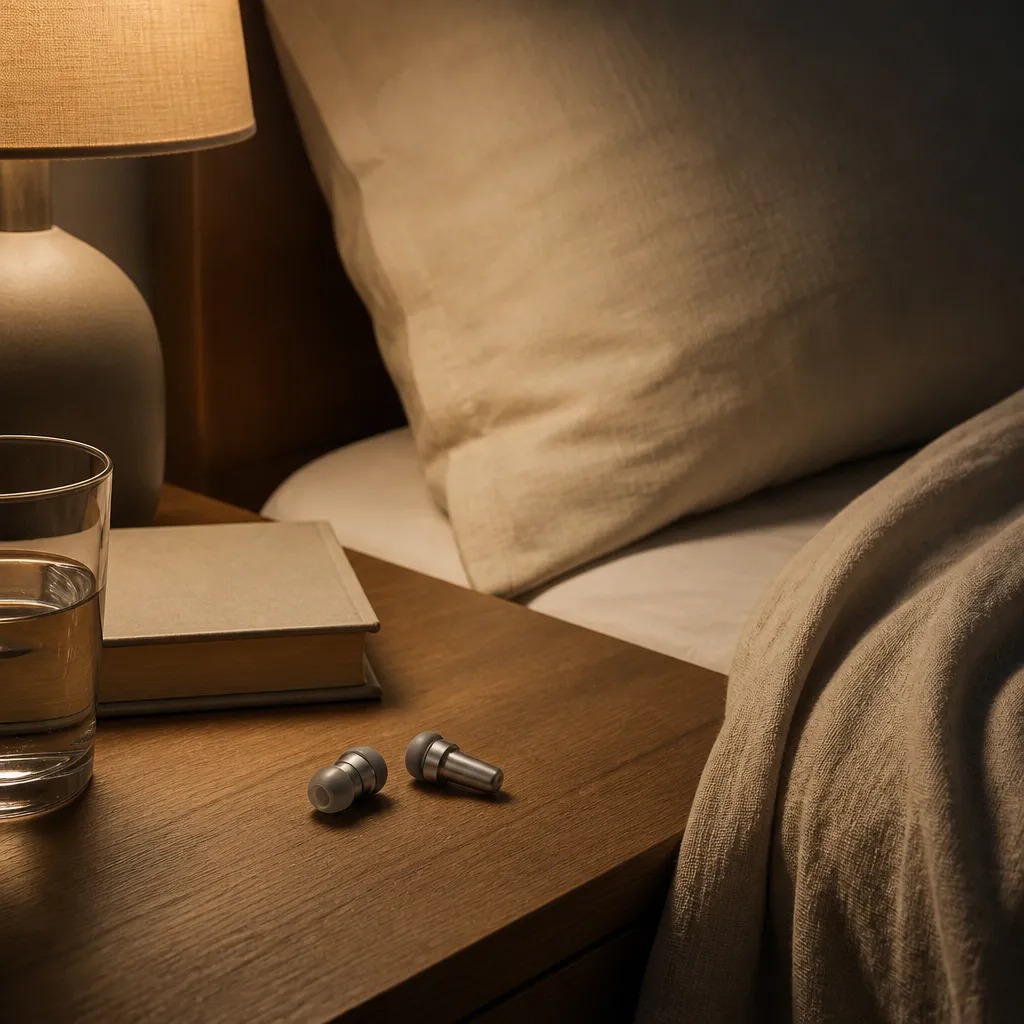
Foam tips on our reusable design should be replaced every 6 to 8 weeks, or sooner if they feel stiff, discolored, or no longer seal. Disposable foam should be thrown away after a shift in a dirty environment or once it gets wet, torn, or contaminated. Replacing a tip costs far less than replacing a hearing loss claim.
Use mild soap and water on the body, then let it dry fully before storing it. Avoid alcohol wipes on foam, which can dry the material and change how it expands. Never store wet plugs in a sealed case, because moisture encourages buildup and odor.
Pro tip: Mark the date on your case when you replace the tips. A simple note on the lid prevents the common habit of using worn tips for months because nobody remembered when they were changed.
The first mistake is buying by price per pair instead of by fit and rating. The second is assuming that a plug which is comfortable at a desk will also hold up in a loud workshop. Comfort is a useful indicator of fit, but it does not measure attenuation.
Another frequent error is treating noise cancelling headphones as hearing protection. Headphones can reduce some background noise, but they do not block sound in the way a sealed plug or muff does, and they can mask warning sounds you need to hear. Keep headphones for listening, and use earplugs or earmuffs when the noise itself is the hazard.
Finally, many people wear one size for every situation. Ears change, and a tip that sealed well last year may leak after a cold or a change in weight. Recheck the fit occasionally, and do not assume a size that once worked still does.
Only if the plug’s rating is adequate for your exposure, your employer’s hearing program accepts it, and you have checked the fit. Sleep plugs are designed for comfort and low intrusion, so they should not be your default for a loud shift without that verification.
NRR stands for Noise Reduction Rating. It is a laboratory average of how much sound a plug blocks under ideal fit. Real-world protection is usually lower, so field estimates typically reduce the labeled number by 50% or more.
A higher number is better only when you are comparing products tested the same way and the plug actually fits you. A high-rated plug with a poor seal can perform worse than a moderate-rated plug that seals well.
If you are exposed to loud noise for most of a shift, if your employer provides a hearing program, or if people need to raise their voices to be heard at arm’s length, you should use a rated and fit-checked plug. When in doubt, get a hearing test and ask a safety professional to assess your exposure.
They can be, but the answer depends on the rating, the tip design, and how well the plug fits your ear. Disposable foam often achieves a high labeled rating, but it still depends on correct insertion. Neither category is automatically better without a fit check.
For our reusable design, replace foam tips every 6 to 8 weeks, or sooner if they harden, discolor, or stop sealing. Disposable foam should be replaced after each dirty or wet shift.
Have you switched from a sleep plug to a workplace-rated plug, or found a fit problem you did not expect? We would like to hear what you learned, so share your experience with us through the contact page on attenu8.co.
If you have ADHD, a humming fridge, a neighbour’s bass line and a colleague’s keyboard can all land at once, and suddenly the email you were writing is gone. For many people with ADHD, sensory overload is the moment focus collapses, and noise is usually the loudest trigger in the room. Ear plugs for ADHD won’t fix attention, but used well they remove the constant background load that makes concentration harder. This guide covers how to match ear plugs to your triggers, how to read noise reduction claims honestly, and where ear plugs help most during work, study and sleep.
| Key Insight | Explanation |
|---|---|
| Start with the trigger, not the product | Decide whether your problem is a constant hum, sudden spikes or speech. Ear plugs work best on broadband and mid-frequency noise, and less well on a single sharp sound you can anticipate. |
| Expect less reduction than the lab number | A 32dB rating is measured under controlled conditions. A poor seal can cost a large share of that protection, so insertion matters as much as the rating. |
| Use plugs for focus work, not only sleep | Many people with ADHD get the most value during open-plan days, commutes and study blocks, when the hardest distractions arrive in bursts. |
| Pair plugs with a low-level sound | Plugs take the sharp edges off the room, and a steady masking sound fills the gap. Total silence can make small sounds feel louder for some people. |
| Replace foam tips every 6-8 weeks | Foam tips lose their shape and seal over time. A worn tip is a common reason a pair suddenly seems to stop working. |
| Trial them on an ordinary day first | Wear them through a normal workday before a flight or a shift. You need to know whether the pressure or muffling bothers you while you are still in control of the situation. |
Sensory overload in ADHD usually arrives as a sudden drop in tolerance rather than a slow build. People often describe a spike in irritation, a need to leave the room, or the sense that every sound has been turned up to the same volume. The filter that normally decides what matters seems to switch off, so a pen click and a colleague’s question compete equally for attention.
A common first step in published guidance is to identify triggers and avoid them when possible. That advice is sound, but most people cannot rearrange their workplace, their family or their commute on demand. Noise is the trigger you can reduce fastest without asking anyone else to change anything.
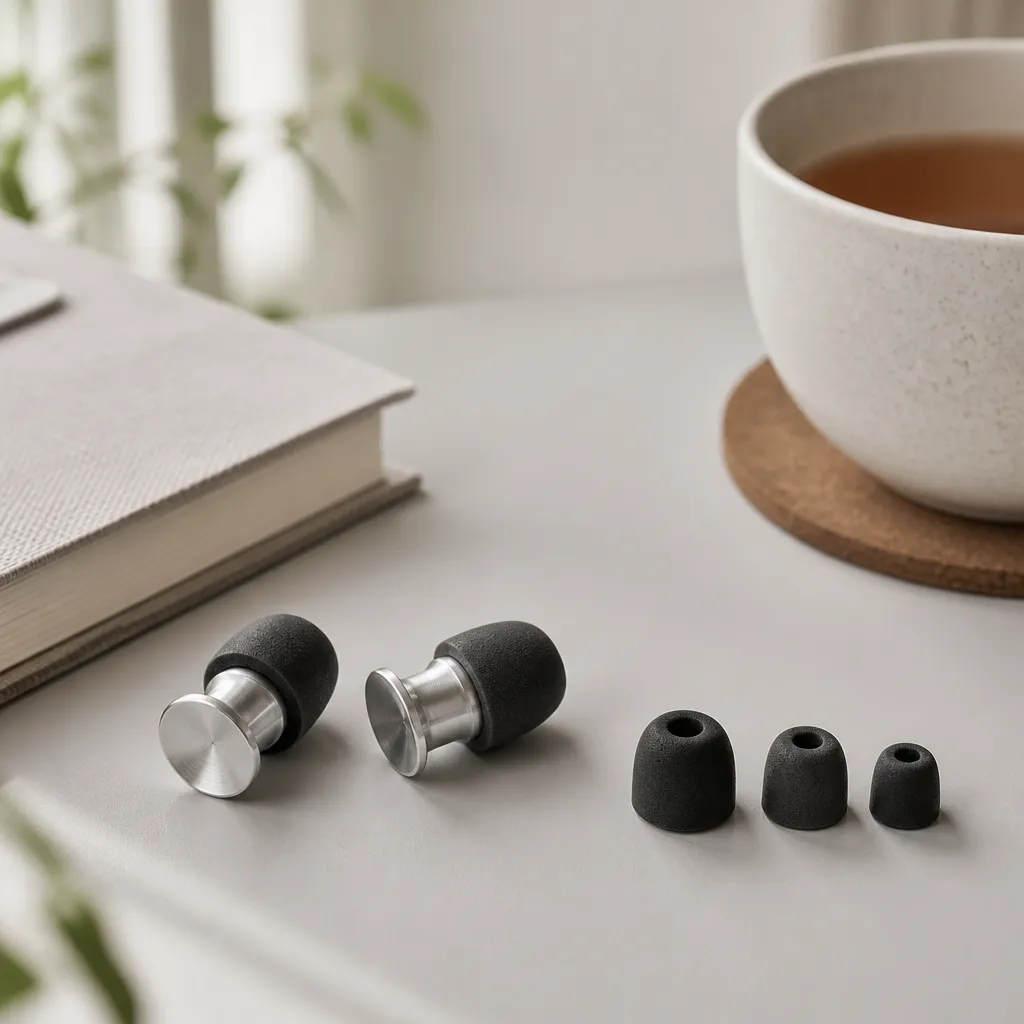
Overload rarely starts with a meltdown. The first signs are usually small: rereading the same sentence, clenching your jaw during a call, or reaching for headphones before you have consciously decided to. Tracking these moments for a week shows you when noise is the cause and when something else, such as hunger, poor sleep or a crowded schedule, is driving the reaction.
In practice, the people who get the most from ear plugs tend to act at the first sign rather than waiting until they are frustrated. Putting plugs in at the start of a loud task is far easier than trying to recover focus after twenty minutes of fighting the noise.
Many people with ADHD describe noise as physically uncomfortable, not just distracting. Sounds with a sharp edge, such as a phone vibrating on a hard desk, can produce a jolt that breaks the thread of a task. Ear plugs will not remove the jolt entirely, but they reduce the sudden contrast that makes it so disruptive.
Not all noise does the same damage. A useful way to think about it is to separate constant sound from sudden sound and from speech, because each calls for a slightly different response. The right ear plug setup depends on which of these is wearing you down.
Air conditioning, traffic, a server room and open-plan background chatter are constant. They rarely feel loud, but they quietly drain attention over a full day. Plugs are well suited to this type of noise because they lower the overall volume evenly, which lets your brain stop tracking the hum.
If the constant noise is the main problem, a moderate noise reduction level is usually more useful than the maximum. Too much isolation can make your own voice and breathing sound odd, and some people then start to fidget or hum to compensate, which adds a new distraction.
Door slams, dropped trays, sirens and notification sounds are the triggers most people with ADHD name first. They are short, but each one resets your attention. Ear plugs reduce how sharp these spikes feel, though they will not silence them completely, so combine them with a habit of moving away from the source when you can.
Overheard conversations are among the hardest sounds to tune out because your brain processes language automatically. Ear plugs reduce speech volume, but they will not block it entirely. In a shared office, a clear ask to colleagues, such as a quiet hour on certain days, often does more than any product.
Noise reduction numbers are the most misunderstood part of buying ear plugs. A rating tells you how much sound a product can block under test conditions, not how much you will experience in a busy train carriage. Understanding that gap helps you choose sensibly and avoid disappointment.
ATTENU8 ear plugs are rated at approximately 32dB, which places them in the range that many people with noise sensitivity find useful for everyday focus work. Lab ratings assume a correct fit on a test rig, so the number is a ceiling. Your real result depends on your ear canal, your tip size and how carefully you insert them.
One independent guide on earplugs for noise sensitivity describes a moderate noise reduction earplug as cutting environmental volume by roughly 65 to 75 percent. That is a useful way to picture the effect, because it shows that even a good plug does not turn a loud room into silence. It makes the room manageable.
The most common mistake is to assume that a higher rating always means better focus. Heavier isolation can feel oppressive, and it can make you more aware of your own pulse and chewing. For many people with ADHD, a moderate level of reduction combined with a steady background sound works better than full blocking.
Pro tip: Judge a pair by what you can still hear. If you can follow a conversation at arm’s length but the sudden noises have lost their sting, the setting is right for daily focus work.
The best ear plug is the one you keep in for the whole task, not the one with the largest number on the box.
Focus work is where ear plugs for ADHD earn their place. Writing, coding, reading and studying all demand sustained attention, and they are exactly the tasks that suffer when a room is noisy. A well-fitted pair turns a distracting environment into one that is workable for the next hour or two.
The key is to use them deliberately. Put them in at the start of a focus block rather than after you have already lost your place. That small timing change prevents the frustration loop where you keep stopping to adjust them.

Open offices combine constant hum with unpredictable speech, which makes them one of the hardest environments for attention. Plugs take the edge off both. They are most useful during the focused parts of your day, such as drafting, analysis or reviewing documents, and less useful during meetings where you need to hear people clearly.
A practical routine is to keep the plugs in a pocket or bag, put them in before a heads-down block and remove them when you need to speak with others. Taking them out and in again takes seconds once the fit is familiar.
Students with ADHD often study in libraries, shared bedrooms or kitchens. In those settings, the most disruptive sounds are usually the ones from other people, such as typing, rustling and conversation. Plugs help with those, but pair them with a steady sound, because absolute silence can make small noises stand out more.
Keep study blocks short at first, around thirty to forty minutes, and notice whether the plugs keep you engaged or make you tired. Fatigue from pressure in the ears is a sign the fit or tip size needs adjusting, not that you need to give up on plugs altogether.
Fit is the single biggest factor in whether ear plugs work for you. A small gap around the tip lets sound leak in, and an over-tight seal can cause discomfort within an hour. Getting the fit right is a skill, and it takes a few days to become automatic.
ATTENU8 ships three sizes of soft memory foam tips, XS, S and M. Ear canals vary a great deal, so do not assume the middle size is correct. Try each size once in a quiet room and choose the one that feels secure without pressing on the ear canal walls.
A tip that is too small will feel loose and let in a high-pitched whine from traffic or electronics. A tip that is too large will feel full and may make your own voice sound boomy, which can be irritating for people who are already sensitive to sound.
Roll the foam tip into a thin cylinder, pull the top of your ear gently up and back, and push the tip in while it expands. Hold it for about thirty seconds while it settles. This method gives a deeper seal than pushing a flat tip straight in.
Pro tip: Do a quick seal check by covering your ears with your palms and then releasing them. If the sound drops noticeably each time and stays low, the seal is working. If the sound barely changes, reinsert the plug before you decide the product has failed.
Because the metal body is reusable, the foam tips are the part that wears out. ATTENU8 recommends replacing tips every 6-8 weeks, depending on how often you wear them and how you clean them. A tip that has lost its shape or collected earwax will leak sound, and many people blame the product rather than the worn foam.
Sleep is where ADHD and noise sensitivity often collide. Light sleepers wake to a partner’s breathing, a neighbour’s door or a car alarm several streets away. Ear plugs can keep those sounds from triggering full wakefulness, which is often the difference between a broken night and a restful one.
Side sleepers are more likely to find that a plug pushes against the pillow and works its way loose. A softer tip size or a slightly shallower insertion can reduce this. If discomfort persists, try sleeping on your back for the first few nights while you adjust.
Some people with ADHD also find that a racing mind keeps them awake even when the room is quiet. In that case, ear plugs solve only part of the problem, and a consistent wind-down routine matters more than the choice of plug.
A low, steady sound such as brown noise or a fan can soften the contrast between sudden noises and silence. Refresh Psychiatry’s overview of misophonia and ADHD notes that sound masking, including white noise, brown noise and fans, can soften the contrast between trigger sounds and silence. Combining that approach with ear plugs often gives better results than either alone.
Silence is not always the goal. For many sensitive sleepers, a predictable background sound does more to keep the brain calm than a perfectly quiet room.
Workplaces and classrooms have different rules, and so do noisy trades. Ear plugs can make a day far more manageable, but they should never be your only protection in genuinely hazardous noise. Hearing protection used at work has to meet the requirements that apply where you work.
If you work in construction, manufacturing or military settings, speak with your safety officer about whether your plugs are suitable as hearing protection. Comfort and focus benefits are real, but they are separate from the certified protection that high-noise environments require. For focus purposes in ordinary offices or classrooms, the decision is far simpler and sits with you.
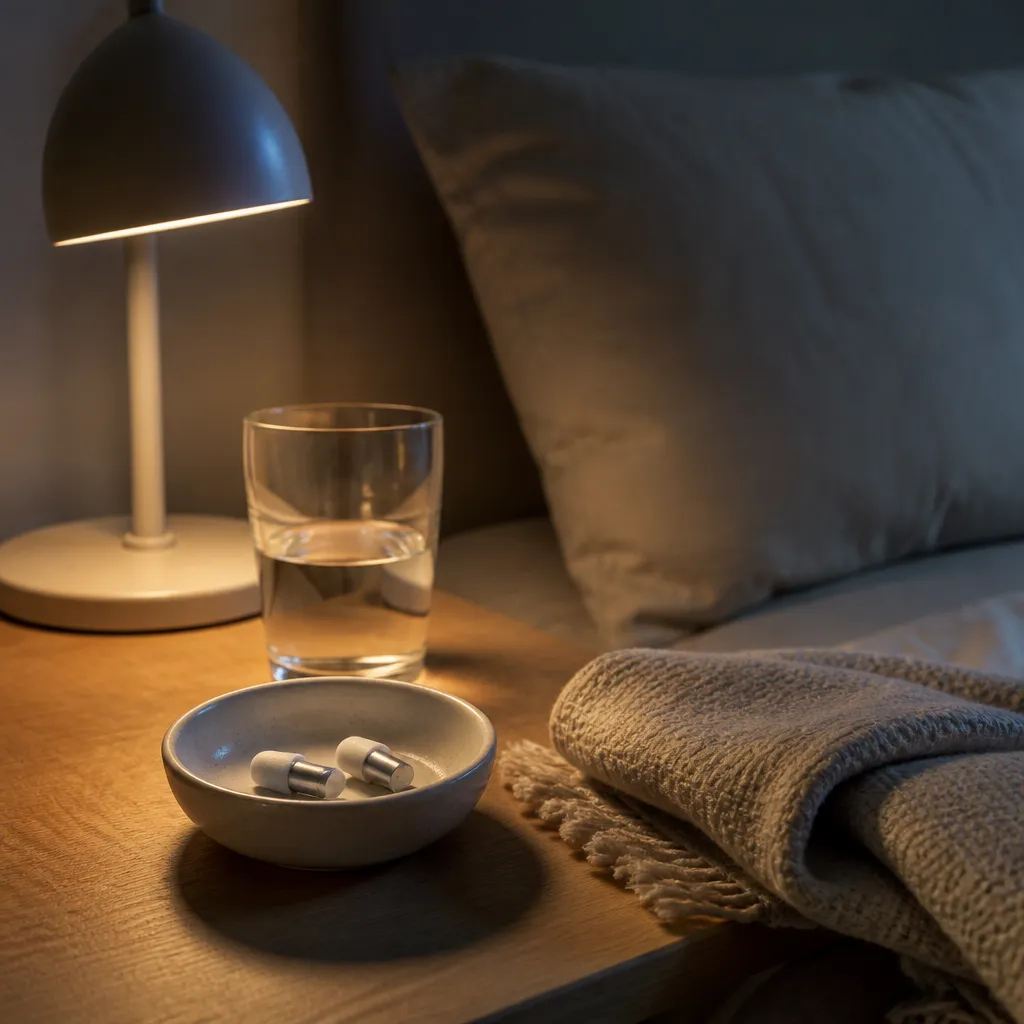
Students who need plugs during lectures should check that they can still hear the instructor. Many lecturers and teachers will support a discreet arrangement, particularly when a student explains that they need to manage sound for focus. A quick conversation before the term starts tends to be easier than explaining mid-lesson.
People in loud workplaces often use ear plugs for hours at a time, which makes fit and tip replacement even more important. A pair that feels fine for thirty minutes can become painful after a full shift. Keep a spare set of tips in your kit so a worn or lost tip does not leave you unprotected.
Ear plugs are one tool among several, and each suits a different kind of sensory problem. The table below compares three common approaches so you can see where each one fits. The best choice often combines two of them rather than relying on a single product.
| Approach | Strengths for ADHD Focus | Limitations |
|---|---|---|
| ATTENU8 reusable metal-bodied ear plugs with memory foam tips | Consistent, moderate reduction across XS, S and M tip sizes. Reusable body and tip replacement every 6-8 weeks keeps running costs predictable. | Requires correct sizing and insertion. Foam tips still need regular replacement, and the body is not designed for hazardous-noise certification. |
| Disposable foam ear plugs | Inexpensive and easy to carry in quantity. Useful as a backup or for one-off events. | Often compressed before insertion, which can be fiddly with sensory sensitivity. Usually replaced far more often, which adds up over time. |
| Over-ear noise-canceling headphones | Strong reduction for constant sound and easy to put on and remove. Can be combined with audio for masking. | Bulky, can cause heat and pressure on the head, and are impractical in some workplaces or on public transport. |
In practice, many people with ADHD use plugs for daily focus work and headphones for particularly demanding days. Choose based on where you spend most of your time, then test the option in that setting for at least a week before deciding.
Ear plugs can help when noise is a major source of distraction or overload. They reduce the constant and sudden sounds that pull attention away from a task, but they do not treat ADHD itself, so they work best as one part of a wider plan.
A moderate level is usually more useful than the maximum for everyday focus. Full isolation can feel uncomfortable and make your own breathing or voice more noticeable, which can become a distraction in its own right.
Many people wear them through focused blocks and remove them during conversations or when they need to be alert to their surroundings. Take a break every few hours, check the fit and stop if you notice pain or irritation in the ear canal.
ATTENU8 recommends replacing foam tips every 6-8 weeks. Tips that look flattened, feel stiff or have collected wax should be replaced sooner, because a worn tip leaks sound and reduces comfort.
Not necessarily. Ear plugs used for focus are not a substitute for certified hearing protection in hazardous noise. Speak with your employer or safety officer to confirm which protection is required for your role.
Have you tried ear plugs for sensory overload or focus work? Tell us what kind of noise gets to you most and what worked, or didn’t, in your own routine.
Your alarm is rarely what wakes you. For many light sleepers, it is the delivery lorry reversing at 6 a.m., a neighbour’s car door, or a bird that has chosen the windowsill for its daily chorus. A noise free morning bedroom is not about expensive soundproofing. It comes from a few deliberate decisions about where your bed sits, what covers your windows, how well your door seals, and whether your ears are protected when the household gets loud. This guide explains how to set up that room, which fixes earn their cost, and where the common shortcuts fall short.
| Key Insight | Explanation |
|---|---|
| Sleep can be disrupted before you wake | Noise can disturb deeper stages of sleep without fully waking you, so a quiet morning matters even when you do not remember the sound. |
| Map the sounds, not just the room | Log the exact times and sources that wake you. A 5 a.m. delivery needs a different fix than a dripping tap or a shared wall. |
| Soft surfaces beat expensive upgrades | Rugs, lined curtains, and a sealed door absorb or block sound far more cheaply than most structural changes. |
| Move the bed away from the noisiest wall | A bed against a street-facing or shared wall carries more of what you hear, so shift it to the quietest side of the room. |
| Use ear plugs as the final layer | Plugs handle the sounds you cannot remove, such as birdsong or a neighbour’s routine, without changing anything in the room. |
| Keep the room dark and clear in the morning | Light and clutter can wake you on their own, so use blackout lining and put noisy items out of reach before bed. |
Each of these fixes works best in order. Start with the source you can name, then add the layers that handle what remains.
Most people assume noise only matters if it wakes them fully. The research says otherwise. Bedroom guidance from Georgia Tech’s Wellness Empowerment Center notes that sound can disrupt the deeper stages of sleep even when you do not become fully conscious, which means you can feel unrested without knowing why.
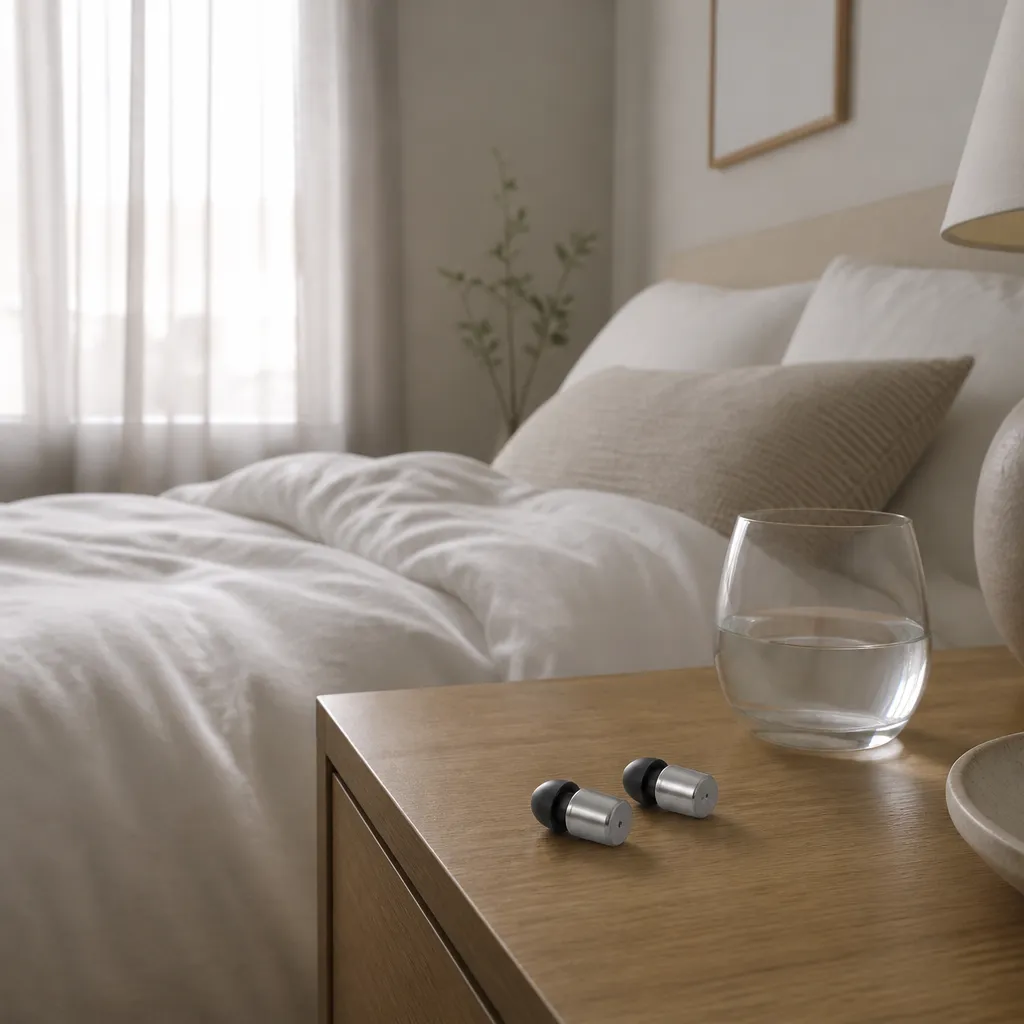
A 2024 study on personal noise exposure and sleep quality found that nocturnal noise exposure is associated with higher risks of sleep disturbance and nocturnal awakening. A university overview of noise pollution and health makes a similar point, describing how noise activates the sympathetic nervous system and leads to fragmented sleep and reduced total sleep time.
Early morning is a particular problem because many people sleep more lightly in the final hours before the alarm. A sound that was ignored at 2 a.m. can become the thing that pulls you out of bed at 5:30, especially when your body is already close to waking.
A quiet bedroom rarely fails because of one loud sound. It fails because several small sounds each stay just under the level you consciously notice, and your sleep pays the cost anyway.
That is why I rarely recommend a single product as the answer. You need to identify each source and match it to a specific fix, which is what the rest of this guide covers.
Sleep guidance from Sleepstation suggests a simple starting point: picture your current sleep space and note what you hear, see, and feel. It asks you to notice intruders, such as birdsong that wakes you far too early, and to write them down before trying to fix anything.
Write down the time you wake, what you heard in the fifteen minutes before, and whether you woke by choice or were startled. Two weeks is usually enough to show repeat patterns, such as a refuse collection on the same day each week or a neighbour’s shower running at the same time every morning.
Outdoor noise such as traffic, deliveries, and birdsong enters through windows and gaps around frames. Shared-wall noise travels through the building structure, so curtains alone will not solve it. Household noise, such as a boiler kicking on, a bathroom extractor fan, or a partner’s alarm, often sits in the middle and is usually the easiest to change.
A window gap needs sealing, a shared wall needs added mass or decoupling, and a noisy appliance may simply need servicing. Treating the wrong source wastes money and gives you a false sense that nothing works. In practice, most people who fail at this step bought a fix that matched their room rather than their actual problem.
Pro tip: Add the times of your first car, first delivery, and alarm to the same log. Matching them often shows that your mystery wake-up is a predictable event you can plan around.
Hard surfaces bounce sound around a room. Bare floors, a glass window, and a bare wall make a small bedroom ring with every noise. Soft materials absorb energy instead, which is why a room with rugs and curtains often feels calmer even when the noise outside has not changed.
Heavy, lined curtains that reach the floor and sit close to the frame do more than block light. They reduce the sound that passes through glass, although they will not stop low-frequency rumble from lorries or buses. Pair them with a draught excluder along the bottom of the door to catch the gap that lets hallway noise in.
A thick rug over bare boards cuts footfall and the echo of a dropped phone. An upholstered headboard, a padded bench, and fitted sheets that do not flap also help. Books on shelves and a stuffed armchair do more than most people expect, because they break up reflections across the room.
Put the bed on the wall that backs onto the quietest space in the house, not the one with the best view. A bed against a street-facing or shared wall carries the thump of doors and voices straight to your pillow. If you cannot move the bed, add a padded headboard and keep the bedside table free of hard objects that rattle.
Once the room is as quiet as you can make it, some sounds will remain. This is where ear plugs and sound masking earn their place. Sleep guidance from Georgia Tech lists white noise machines, fans, and earplugs as practical tools for drowning out outside noise, and in my experience they work best when layered with the room fixes above.
A plug that drops out at 4 a.m. is worse than none, because you stop trusting it. Reusable plugs with a concave metal body and three sizes of soft memory foam tips, such as the ATTENU8 design, let you choose the seal that suits your ear canal. Expect the foam tips to need replacing every 6 to 8 weeks, which is the main ongoing cost of a reusable system.
White noise masks steady sounds such as road hum or a distant ventilation system. It does little against sharp, sudden noises like a door slam or a shouted conversation, and a loud machine can make those moments more startling. Set it low, place the source away from the bed, and keep it running all night rather than switching it on only when you hear something.
The table below compares three common approaches. The right choice depends on how often you need protection and how steady the sound is.
| Approach | Best For | Main Trade-off |
|---|---|---|
| Disposable foam ear plugs | Occasional travel or a single noisy night | Replaced often, and fit varies from pair to pair |
| Reusable metal-bodied ear plugs with memory foam tips | Nightly sleep and repeated loud mornings | Higher upfront cost, and tips need replacing every 6 to 8 weeks |
| White noise machine or fan | Steady background sounds such as traffic hum | Does not block sharp noises, and may disturb a partner |
A quiet room only helps if your schedule gives your body a steady signal to wake. Stanford’s lifestyle medicine guidance on bedroom changes recommends going to bed and waking up at the same time, and it is the single most reliable habit I see in people who feel worn down by early noise.
Choose a wake time you can keep seven days a week, and keep weekend mornings within about an hour of it. Moving the time by several hours each weekend makes every weekday morning feel like jet lag, and your light sleep window will shift with it.
Keep the room dark while you sleep, then bring in light soon after waking. Guidance from the same Georgia Tech source suggests getting sunlight in the morning. Late autumn mornings are dark for longer, so a bedside lamp on a timer can replace the daylight your body expects and make waking feel less abrupt.
A harsh tone at full volume spikes your stress response, which works against a calm start. Choose a gradual tone or a vibrating band, and keep your phone out of reach so notifications do not fire through the night.
Pro tip: Set your alarm to the lowest volume that wakes you within a minute. If you need it louder every week, the problem is the room, not the alarm.
If you work in a loud environment, your sleep problem may also be a hearing problem. Shift workers in construction, manufacturing, and military roles often sleep during the day, when traffic, neighbours, and household routines are at their most active. Sleeping after a loud shift means your ears have already had hours of exposure, so a quiet room is part of recovery, not an extra.
Wear plugs for the whole sleep period rather than only when a lawn mower starts next door. Gaps in use let sound in at the moments you least expect, and a single sudden noise can end a sleep block that took you an hour to settle into.
Plugs that suit sleep are not a substitute for a site’s hearing protection programme. Follow your employer’s requirements during shifts, and ask occupational health for a proper fit assessment if your job requires one. Treat the two as different tools with different jobs.
Most morning noise problems persist because people fix one thing and assume the job is done. These are the errors I see most often, and each one is easy to avoid once you know to look for it.
Curtains do little if the gap under the door funnels hallway sound and the bathroom fan runs for twenty minutes after every shower. Seal the gaps before you buy more fabric, because the cheapest improvement is often the one you can feel with your hand.
A plug pushed in halfway lets through the sounds you were trying to block. Insert it gently, then hum. If your voice sounds boomy, the seal is good, and if it sounds thin and bright, reseat the plug and try again.
A phone playing a show to mask noise keeps your brain alert and adds light at the wrong time. Guidance from Georgia Tech recommends powering down electronics an hour or two before bed. Use a dedicated sound source instead, and charge the phone outside the bedroom.
Yes. Noise can disrupt deeper stages of sleep even when you do not fully wake, so you may feel tired the next day without a clear memory of being disturbed.
Focus on what you can change without permission: lined curtains, rugs, a door draught seal, the bed position, and a sound masking source. Ask your landlord about door seals and any repairs to a noisy fan or boiler, since those are often covered.
Plugs designed for sleep are generally worn nightly, but you should follow the care instructions and replace foam tips on schedule. If you notice ear pain, discharge, or a change in hearing, stop using them and see a clinician.
It helps when it covers steady sounds and stays at a low volume. It hurts when it is loud, placed close to the bed, or used as a substitute for blocking the sources themselves.
Keep a two-week sound log, then fix the single source that appears most often. Once that is quiet, add the room changes and plugs for whatever remains.
Which morning sound wakes you first in your home, and what have you changed so far to quiet it? Share your experience, because the details you describe often reveal fixes that are not yet on this list.
Most people judge a bad night’s sleep by how they feel when the alarm goes off. The real cost often shows up later, in a slow afternoon, a short temper with a colleague, or a missed step on a ladder. When the trigger is noise, such as a neighbour’s television, a partner’s snoring, or a street that never goes quiet, noise disrupted sleep effects can stretch well past breakfast. This article looks at what one night of noise does to your brain, your mood, and your performance, and how reusable ear plugs fit into recovery.
| Key Insight | Explanation |
|---|---|
| Reaction time slips after one night | Research on sleep loss describes slower response speed and more variable performance, so keep safety-sensitive tasks for after a proper night. |
| Noise can cost you sleep without waking you | Brief arousals you never remember can cut into restorative sleep, so a night where you think you slept through is not proof of good sleep. |
| Mood usually takes the hit first | Irritability and low patience often appear before obvious drops in focus, and the people around you may notice first. |
| Irregular sounds do the most damage | A door slam or a late delivery lorry is more likely to disrupt you than a steady fan, so target the unpredictable noise first. |
| Protect the next night, not just the next morning | Preventing a second bad night is the highest-value recovery step, which means having ear plugs ready before the first night of a noisy week. |
| Fit decides how well ear plugs work | Test each tip size in the evening and choose the one that seals without pressure, because a loose fit leaks noise no matter how good the product is. |
| Workplace protection is a separate decision | Shift hearing protection and sleep protection serve different jobs, so choose each one for its own purpose. |
A single night of poor sleep is easy to dismiss, which is why so many people underestimate it. The Sleep Foundation notes that lack of sleep can impair brain function after just one night, making it harder to focus, remember information, make decisions, and react. That list describes the mistakes that happen at a desk, behind a wheel, or on a site the morning after.

A 2010 review by Killgore on the effects of sleep deprivation on cognition found that insufficient sleep leads to a general slowing of response speed and increased variability in performance. The variability matters most in practice. You may have a few sharp moments and then a bad one, and the bad one arrives without warning.
Simple alertness tasks show these changes most clearly. That is why a tired person can feel reasonably capable while their reactions quietly drift.
Your own sense of how you are doing is a poor gauge after a rough night. Your feelings adjust to the fatigue faster than your performance does. In my experience, the simplest check is to ask whether you would sign off a piece of work you wrote in that state. If the answer is no, do not assume the morning after is safe for demanding work.
Noise rarely needs to wake you to do damage. Sound that never reaches full awareness can still trigger brief arousals, small shifts toward lighter sleep that you usually do not remember. Those interruptions can eat into the sleep that restores the body and helps consolidate memory, even when your total time in bed looks normal.
A common pattern in noisy homes is a sleeper who believes they slept seven hours and still feels flattened. The clock records time in bed, not the quality of that time. Fragmented sleep can look long on paper and still leave you unrestored.
This is why people who insist they “never woke up” often have the most unexplained mornings. The noise did its work below the level of memory.
Steady background noise, such as traffic hum or a fan, is easier to tune out over time. Irregular noise is different. A door slamming, a delivery van reversing at 5 a.m., or a partner’s snoring at uneven intervals keeps part of the brain scanning for the next event. In my experience, these unpredictable spikes are the sounds most likely to trigger the arousals described above.
The practical lesson is to target the unpredictable sounds first. A ceiling fan rarely causes the same trouble as a neighbour’s bass at one in the morning.
Pro tip: Before you buy anything, log for one week when you stir and what you heard just before. Matching the pattern of disruptions to the type of noise tells you whether you need sound blocking, masking, or simply a quieter bedroom.
A 2007 review by Alhola on sleep deprivation and cognitive performance notes that people exposed to sleep loss usually experience a decline in cognitive performance and changes in mood. Mood is the part you notice least in yourself and most in other people. Partners, housemates, and colleagues often spot the irritability before you do.
Short temper is the classic morning-after sign. A slow kettle or a message that needs a second read starts to feel disproportionately annoying. With less reserve to absorb small friction, the same irritation costs you more.
Noise also adds its own stress. You may spend the day thinking about the neighbour’s noise, rehearsing a conversation you dread, or worrying about the next night. That rumination drains energy on top of the sleep debt. Quieter nights help, but so does a plan for the evening, so you do not start the next day already anticipating the next disturbance.
A bad night is rarely just a bad night. Without a change to the conditions, it becomes the first day of a three-day problem.
Expect the mood effect to outlast the sleepiness. In my experience, the second and third days after a rough night are where the small arguments happen, and they are usually about nothing.
For professionals in loud workplaces, the morning-after risk is more than a dip in productivity. Construction, manufacturing, and military work often combine high noise exposure with early starts, which leaves little margin for impaired concentration. A worker who is short on sleep and also tired from a noisy shift is carrying two loads at once.
A common mistake is using one device for everything. Hearing protection designed for a loud shift is built for a different job than a device meant to help you sleep, and a single product is rarely the right answer for both. Treat them as two separate decisions.
ATTENU8 positions its ear plugs for sleep and travel. For workplace hearing protection, follow your employer’s requirements and the guidance for your specific site.
Schedule the most safety-sensitive work for the time you are most likely to be sharp. After a noisy night, move equipment checks, driving-heavy tasks, and anything with a long checklist to a period when you can take short breaks. If that is not possible, build in extra checks at the points where a missed step would cost the most.
Pro tip: Keep a short written checklist for tasks you must complete after a poor night. It reduces the chance that a slow reaction turns into a missed step.

Most people try a few fixes before they find one that works. The table below compares three common approaches for the night before a demanding day, with the trade-offs that tend to matter in practice.
| Approach | Where It Works | Where It Falls Short |
|---|---|---|
| Disposable foam ear plugs used nightly | Inexpensive, easy to find, and soft tips can seal well for many sleepers | Single-use, so cost and waste add up, and fit can loosen during sleep on the side |
| ATTENU8 reusable metal-bodied ear plugs with memory foam tips | Three tip sizes (XS, S, M) for fit, about 32dB noise reduction, and foam tips replaced every 6 to 8 weeks while the body lasts | Fit needs a proper check in the evening, and the product is designed for sleep and travel rather than as workplace hearing protection |
| Fan or white noise machine for masking | Hides steady background sound and needs no insertion | Does little against sudden spikes, and it can mask voices or alarms you need to hear at night |
In practice, the best choice depends on the kind of noise you live with. Steady hum responds well to masking, while sharp, irregular sounds call for a physical seal. For people who face irregular noise most nights, a reusable option usually makes more sense than repeatedly buying disposables.
Recovery starts with resisting the urge to undo the whole week in one go. A long lie-in after a bad night can push your body clock later, which makes the next night harder to settle into. The aim is to recover without creating a new problem.
In my experience, the highest-value recovery step is preventing a second bad night. People often focus on daytime fixes, such as extra coffee and an unplanned nap, but the sleep that matters most is the one that follows. Setting up your bedroom before the evening, rather than reacting once you are already awake, makes a real difference.
A short nap early in the afternoon can help alertness, while a long or late nap tends to make the next night’s sleep harder. Caffeine taken late in the day can also delay your ability to fall asleep, so stop earlier than you think you need to. Keep your wake time close to normal, because your body adjusts more easily to a steady schedule than to sudden shifts in either direction.
The cycle breaks when you change the first noisy night, not the fifth. Reusable ear plugs suit this approach because they live in a bedside drawer or travel case and are ready for the next night without a shop run. The cost is spread over time rather than repeated with every night.
ATTENU8 ships three sizes of soft memory foam tips (XS, S, M) on a concave aluminium body. Fit decides how much of the advertised reduction you actually get. Test each size in the evening, lying in your usual sleeping position, and choose the one that seals without a pressure ache.
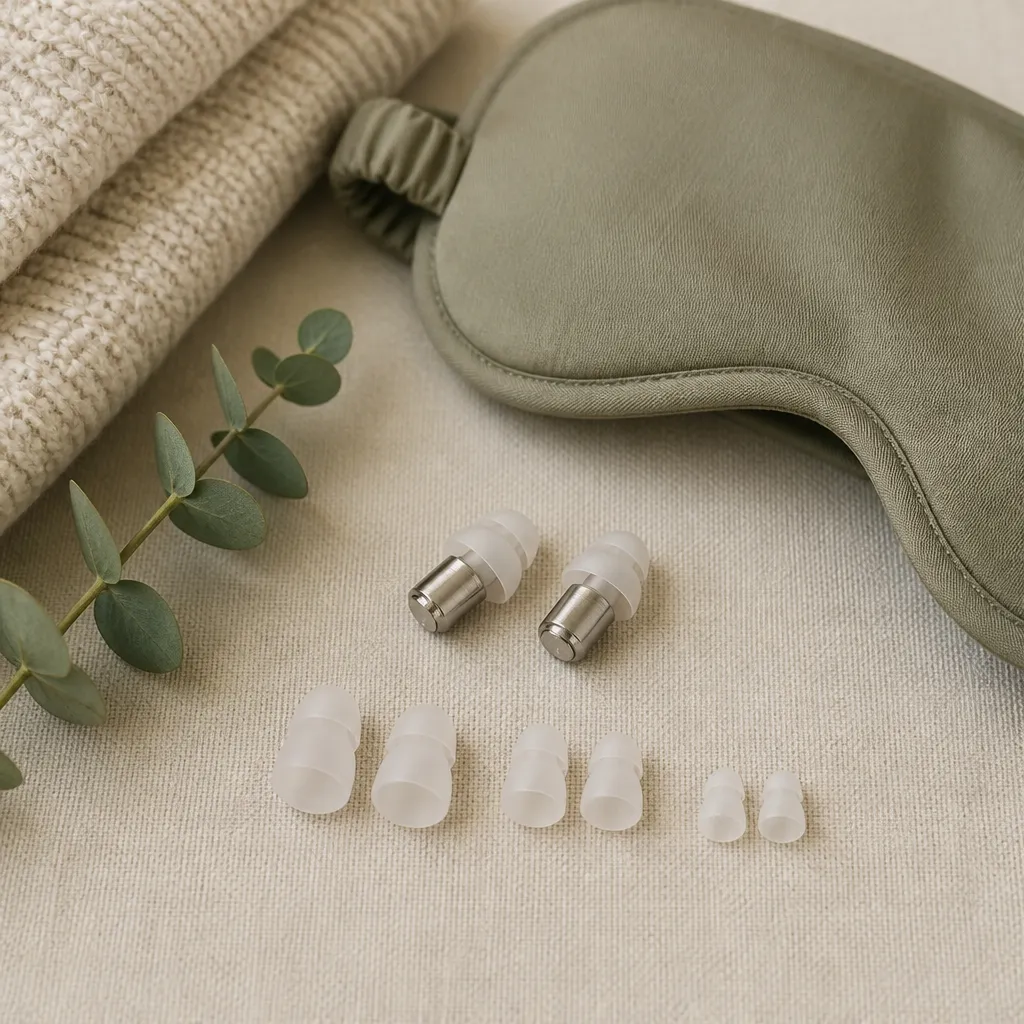
Foam tips need replacing every 6 to 8 weeks, while the metal body stays in use. Swap tips when they lose their shape, look discoloured, or stop sealing, because a tip that no longer expands fully will leak noise. Wash the body with a dry or lightly damp cloth and keep the set in its case between uses.
Pro tip: Keep a spare pair at your bedside and another in your travel bag. Losing a single ear plug on the first night of a trip is the easiest way to lose a whole night of sleep.
Yes. Research summarised by the Sleep Foundation links a single night of lost sleep to trouble with focus, memory, decision making, and reaction. The effects are often most noticeable on tasks that need steady attention.
In practice, the effects of one disrupted night often fade within a day if the following night is sound. Several disrupted nights in a row compound, and mood tends to linger longer than sleepiness.
No. ATTENU8 ear plugs are rated at about 32dB noise reduction, which helps a great deal with everyday sound, but very loud or low-frequency noise can still come through. Good fit matters as much as the product itself.
For most people, nightly use is fine if the plugs are fitted correctly and cleaned regularly. Stop wearing them if you notice pain, irritation, or discharge, and speak to a doctor about any ear problem.
Replace the foam tips every 6 to 8 weeks, or sooner if they lose their shape or stop sealing. The metal body is designed to last, so you do not need to replace the whole set.
ATTENU8 ear plugs are designed for sleep and travel. Follow your workplace’s hearing protection requirements for loud environments and choose protection rated for that job.
Tell us in the comments below which noise wrecks your mornings most, and how your next day went after a rough night.
We would love your feedback and any insights you would share with others. What perspective would you add?
Most offices and homes treat quiet as a luxury, something you get only when the day happens to cooperate. But if you have ever tried to write a difficult paragraph while a colleague’s call drifted through the wall, you already know that quiet is a working condition. Treat silence creativity as something you design into your week, not something you hope to stumble into. This article looks at why quiet helps original thinking, where background noise quietly costs you focus, and what you can change this week, including when a pair of reusable ear plugs does more than another productivity app.
| Key Insight | Explanation |
|---|---|
| Background speech costs more than it feels like | Even when you ignore a conversation, your attention keeps filtering it, and that filtering uses the same capacity you need for connecting ideas. |
| Book your hardest creative block before the office gets loud | Early hours are usually the easiest time to get uninterrupted minutes, so put the problem that needs original thinking there. |
| Lyrics compete with drafting | Music with words uses the same language processing you need for writing and planning, so save it for routine tasks. |
| Passive protection beats willpower | A closed door or a seal in your ears removes the decision to focus every few minutes, which is where most focus sessions fail. |
| Fit decides whether ear plugs help | A loose seal lets through the sharp sounds that break concentration, so test all three tip sizes (XS, S, M) before you judge the product. |
| Replace foam tips on schedule | Foam tips typically need replacing every 6 to 8 weeks, and a worn tip loses both seal and comfort. |
| Schedule silence as a break, not an absence | A ten-minute walk without a podcast or a phone call gives your mind room to make connections that a scroll cannot. |
Quick decisions about your workspace matter more than most productivity advice admits. The first body section below explains why quiet supports the slow, unstructured thinking that creative work depends on.
Creative thinking depends on a mind that can hold a loose problem long enough for unlikely connections to form. Every sudden sound pulls that thread out of your hand, and you start again from the beginning. The idea you were about to reach rarely comes back in the same shape.

Ahrend, an office furniture company, has published an article on how silence affects creativity and productivity. Its central observation is blunt: open offices with central meeting places displace the silence people need. The article argues that a place to retreat in peace is important, and that a space-in-space solution is indispensable for stimulating creativity and productivity.
In practice, the problem is rarely that people dislike noise. The problem is that quiet is almost never scheduled, so it only shows up by accident. A task that needs ten uninterrupted minutes often gets three, and the idea that would have arrived in minute eight never appears.
Silence is not the absence of work. It is the condition under which half-formed ideas get the time they need to become something usable.
The practical lesson is that creative output depends on conditions you can control. You cannot force an insight, but you can remove the reasons it fails to show up. That means treating quiet as infrastructure, the same way you would treat a reliable internet connection.
Deep work means sustained, distraction-free effort on a cognitively demanding task. It is different from being busy, and it is different from answering messages quickly. Most knowledge workers can recall a day full of activity that produced almost nothing they would call finished work.
Every interruption costs more than the seconds it takes to answer. When you return to the task, part of your attention is still on whatever pulled you away, and you spend the first few minutes rebuilding the mental model you had before. Short interruptions can therefore cost far more than they appear to, especially when they arrive every ten or fifteen minutes.
A common mistake is to measure interruptions by their length. A two-minute question feels cheap, but the real cost is the reconstruction that follows. If you have ever reread the same paragraph three times after a tap on the shoulder, you have paid that cost personally.
Partial focus is the most damaging state for creative work because it feels productive. You are at your desk, your document is open, and your inbox is only mildly open in another tab. That split attention keeps you from going deep enough to reach the difficult part of a problem, where new ideas usually show up.
The fix is not a stricter to-do list. It is a clear boundary around the session, with the notifications turned off and the room chosen for the task. Once the boundary exists, you stop negotiating with yourself every few minutes.
Many people believe they work better with a background sound running, and some of them do work well that way on routine tasks. For original thinking, the picture is less comfortable. A time management coach’s article on the connection between quiet and productivity asks whether you always need background noise to work, and warns that the habit may be sabotaging your focus.
Speech is the sound your brain is most reluctant to ignore. Even when you are not following a conversation, your attention keeps checking whether it matters. That checking is a quiet tax on the same mental resources you need to hold a complex argument in view.
Open-plan offices make this worse because speech travels across the room at normal volume. A desk in the middle of a team that talks all day is rarely a good place for drafting, planning, or solving a hard problem. Moving to a quieter spot, even for one afternoon, often shows the difference immediately.
Music with lyrics competes with the language you are trying to produce. If you are writing a proposal, your brain has to process the song and your sentences at the same time, and the sentences usually lose. Instrumental music is a better option for many people, but only if you test it against silence on a real task.
A simple test works well. Spend one morning on a writing task in silence and another in your usual setup, then compare how many sections you finished and how many you had to rewrite. The results are usually clearer than any general rule.
There is no single right tool for protecting quiet, because the noise you face at a desk is different from the noise on a train or a construction site. The table below compares three common approaches by where they work best and what they cost you. Choose based on the environment you actually spend time in, not on what looks most convenient in a product photo.
| Approach | Where It Works Best | Main Trade-off |
|---|---|---|
| Noise-cancelling headphones | Commutes and steady background drone such as air conditioning or traffic | Battery dependence and cost, and sharp voices often still break through |
| Disposable foam ear plugs | Occasional use, tight budgets, and one-off events | Constant replacement adds cost and waste, and fit varies from person to person |
| Reusable metal-bodied ear plugs with foam tips | Daily focus work, light sleep, and loud workplaces where you need to block speech | Higher upfront cost, and the foam tips must be replaced every 6 to 8 weeks |
When you compare these options, look at the sounds that actually interrupt you. Steady hum is easy to tune out, while a sudden voice or a dropped tool is what breaks concentration. Pick the approach that handles the interruptions you face most often, and accept that no option removes every sound.
Pro tip: Before you buy any tool for quiet, spend two days writing down the exact noises that interrupt you. Most people discover that three or four sources cause nearly all their breaks, and those are the only sounds worth targeting.
Home offices seem quieter than they are. The refrigerator, a neighbor’s lawn mower, a child’s television, and the sound of a dishwasher all add up to a constant low-level load. A home workspace only works if you choose the room deliberately and set rules for the people who share it.
Most homes do not have a spare room sitting empty and waiting for a desk. The best option is usually the room furthest from the kitchen, the street, and the main living area. A bedroom with a door that closes can outperform a larger room with an open archway.
In practice, you can test a room by sitting in it for ten minutes at the time you plan to work and noting what you hear. Write down each sound, then ask whether you could ignore it for two hours. Any sound that you would notice repeatedly should either be removed or handled with a tool.
Noise at home is often social, not mechanical. A partner who calls out a question or a teenager who plays music through a speaker can wreck a session in seconds. Agree on a simple signal, such as a closed door for focus blocks, so the other person knows when a question can wait.
Boundaries work best when they are specific. “Please do not interrupt me before noon” is easier to follow than “I need quiet sometimes.” Once the rule is clear, you will be surprised how quickly people adapt.
Ear plugs are often dismissed as a tool for sleeping or for loud machinery, but they are one of the most direct ways to protect a working session. They do not make a room silent, and they do not replace good planning. What they do is remove a large share of the sound that interrupts concentration, without requiring you to move or ask anyone for anything.

ATTENU8 designs its reusable ear plugs with a concave aluminium body and three sizes of soft memory foam tips (XS, S, and M). Each pair is rated for approximately 32dB of noise reduction. A rating like that is measured under test conditions, so treat it as a guide to what the product can block rather than a promise about every office.
Fit is the single biggest factor in whether ear plugs help your focus. A loose seal lets through the sharp, high-frequency sounds that break concentration, so the plug seems to fail even when it is working as designed. Try all three tip sizes before deciding the product does not suit you.
Insert the plug gently and check the seal by speaking a few words. If your own voice sounds unnaturally hollow, the fit may be too loose. A correct seal feels comfortable enough to forget about during a long session.
Foam tips wear out, and a worn tip loses its seal and its comfort. The usual replacement interval is every 6 to 8 weeks, depending on how often you use them. Keeping a note on your calendar prevents the slow drop in performance that people often blame on the product rather than the tip.
Pro tip: Keep one pair at your desk and one in your bag. Most people stop using ear plugs when they forget them on the wrong day, so a second pair removes the excuse before it starts.
Ear plugs cannot fix a bad layout, an unrealistic deadline, or a team that expects instant replies. They also should not be the only protection in a genuinely hazardous environment. If you work near construction, manufacturing, or military equipment, check the noise levels and the workplace hearing protection requirements that apply to your job.
In practice, the best setup combines planning, boundaries, and a tool that blocks the noise you cannot avoid. Ear plugs give you a reliable base layer of quiet, and the rest of your working environment determines whether that quiet turns into finished work.
Silence helps most with tasks that need sustained attention and original connections, such as drafting a new argument or designing a solution. For simple, repetitive tasks, a background sound may be fine. The difference shows up when you compare the same task in silence and in noise, and it is usually clearer than people expect.
Many people find that sessions of 50 to 90 minutes work well, because they are long enough to get past the first restart and short enough to sustain. Pick a length you can protect consistently. A reliable 50 minutes beats an ambitious three hours that gets interrupted every ten minutes.
Many people wear ear plugs for focused blocks rather than the entire day, because they need to hear colleagues, alarms, and announcements. Use them during the sessions where speech and sudden noise cause the most damage. Remove them when you need to stay aware of your surroundings.
Reusable ear plugs cost more upfront but can be cheaper over time, and they create less waste. Disposable foam plugs are a reasonable choice for occasional use or a one-off event. The better option depends on how often you need quiet and whether you can keep the fit consistent.
Check the seal first, then look at the sounds that remain. If the problem is speech from a nearby room, the fix is often a physical change, such as moving desks or closing a door. If the problem is your own thoughts or a full inbox, no ear plug will solve it, and you need a different plan for the work itself.
What does your most productive quiet hour look like, and which noise do you still fight against? Share your experience in the comments, because the details of your workspace are often more useful than any general advice.
Parents often ask whether ear plugs for children are a sensible tool or an accident waiting to happen. The honest answer is that they can help a child who is kept awake by a noisy sibling, traffic, or a household that never fully quiets, but only if the child is ready to manage them, the fit is right, and an adult stays in charge of every insertion. Most problems come from skipping those steps. This guide covers the age question, the safety rules that matter most, and a practical way to introduce ear plugs to a child who is sensitive to sound.
| Key Insight | Explanation |
|---|---|
| Start only when readiness is clear | A child who can follow a stop instruction, keep a plug in without chewing it, and tell you if it hurts is a candidate. A child who pulls at their ears or forgets where plugs are is not ready to manage them alone. |
| Adults handle insertion and removal | For younger children, a parent should insert and remove every plug at bedtime. Never leave a young child to fit or retrieve a plug in the dark. |
| Tips stay at the entrance | The tip should sit at the opening of the ear canal. If it needs pushing to stay put, the size is wrong, so stop and change the tip rather than forcing it. |
| Remove detachable parts and check daily | Small children put objects in their mouths. Keep spare tips in a labelled case out of reach, and inspect plugs each morning for tears or loose pieces. |
| Test audible alarms before sleep | Run a daytime test with the plugs in. If the child cannot clearly hear a smoke or carbon monoxide alarm, do not use plugs while they sleep in that room. |
| Keep adult-sized products for older children | Our plugs are designed for adult ear canals. Talk to a pediatrician or audiologist before using any adult-sized plug on a child, and choose the tip size with them. |
| Stop at any sign of ear pain | Pain, discharge, redness, or a child who keeps pulling at the ear means the plugs come out and a doctor should check the ear before any further use. |
Yes, with conditions. Ear plugs are not automatically dangerous for a child, but the risks come from poor fit, deep insertion, and a lack of supervision. Most parents who ask this question are dealing with a child who wakes at a dishwasher, a sibling’s music, or a car passing the window. Ear plugs reduce the sound that reaches the ear. They do not fix the source of the noise.
Some children have a heightened sensitivity to sound, and a quieter sleeping environment can help them settle. Ear plugs are one tool for that, not a treatment for a sleep disorder or a sensory condition. If the child is distressed by noise during the day as well as at night, that is a conversation to have with a clinician rather than something to solve with a pair of plugs.
In practice, plugs work best as one layer. A door that closes fully, a rug or curtain that dampens echo, and a steady low background sound placed away from the bed all reduce the load before the plug does any work. We have found that families who add plugs to a messy noise environment get less benefit than families who first address the room. A plug should be the final step, not the only step.
There is no single age that works for every child. Readiness matters more than a birthday, and two children of the same age can be at very different stages. The question to ask is whether the child can follow simple instructions, keep a plug at the entrance of the ear, and remove it without tugging or losing it.
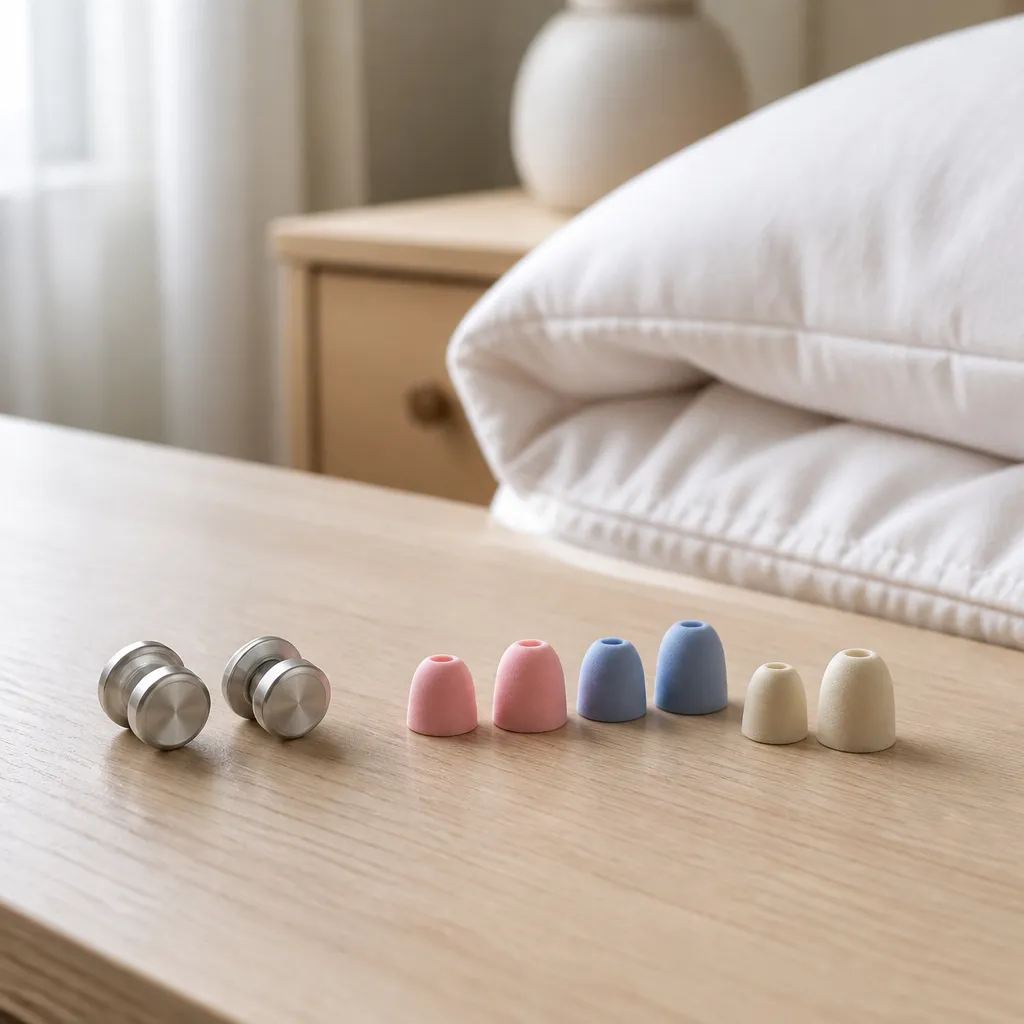
A child who is ready can say when something feels wrong, leaves the plug alone once it is in, and does not chew or mouth it. They can also be trusted to tell you if the plug has fallen out. If a child keeps trying to take plugs out as soon as they go in, that is a signal to wait, not to push through. Readiness is about behaviour, not just age.
For young children, the safest approach is that a parent inserts and removes every plug at bedtime. The child should never be left to fit or retrieve a plug alone, especially in a dark room. This also means the parent can see whether the plug is sitting correctly before the child settles, which catches most problems early. Older children can take on more of this task, but a parent should still check the fit and the tip condition every few nights.
A child’s ear canal is smaller than an adult’s, so a tip that seals well on an adult can sit differently on a child. Our plugs come with XS, S, and M foam tips. The XS tip is the usual starting point for a smaller canal, but size should be checked by feel and by looking at how the tip sits, not assumed from the label. Any choice for a child should be confirmed with a clinician.
A good seal feels snug but not painful, and the child should not be able to hear the room at full volume. One practical check is to have the child hum quietly with the plugs in. If the hum sounds very boomy, that is the occlusion effect, a common feature of plugs that seal well. If the hum sounds unchanged, the plug may not be sealing at all, and the tip may be too small or sitting wrongly.
Pain, a feeling of pressure, a plug that falls out, or a child who keeps reaching for their ear all point to a wrong fit. Stop and try a different tip size. Do not try to force a plug to stay in by pushing it further. Long-term users of ear plugs often find that changing the shape or type of plug relieves pressure points, and the same principle applies to children. A different tip is a better fix than a deeper insertion.
Most of the safety problems with ear plugs for children come from habits rather than the product itself. Simple rules, applied every night, prevent nearly all of them. The rules below are the ones we would want any parent to follow before the first night.
The tip belongs at the entrance of the ear canal, not inside it. Deep insertion can irritate the skin, press on wax, or push material toward the eardrum. A child cannot tell you when this is happening until it hurts, so the parent has to check the depth every time. If you need to push, stop.
Young children explore the world with their mouths, so any small part is a risk. Remove detachable tips when the plugs are not in use, store spares in a labelled case out of reach, and check each plug every morning for tears or pieces that have come away. If a child swallows a tip or part, seek medical advice immediately, and call emergency services straight away if the child is choking or has trouble breathing.
Ear plugs should not be used when a child needs to hear something important. That includes smoke alarms, carbon monoxide alarms, a parent calling from another room, or a child who is unwell. Ear pain or discharge is a reason to skip plugs entirely until a doctor has checked the ear.
Pro tip: Run a daytime test with the plugs in. Ask your child to say when they hear a smoke alarm test or a dropped pan. If they cannot hear a clear alarm, do not use plugs while they sleep in that room.
The first night should never be the first time a child wears plugs. A slow introduction in daylight shows you whether the fit works, lets the child get used to the feeling, and gives you a calm moment to fix problems before bedtime. Introducing plugs as a choice rather than a rule makes a large difference to how the child responds.
Pick a calm part of the afternoon when the child is relaxed. Let them wear the plugs for a few minutes while playing quietly with an adult, then remove them. Praise the attempt rather than the outcome, and never use plugs as a punishment or a threat. A child who associates plugs with a fight will resist them at night.
Once the child tolerates plugs during play, try a short nap or quiet rest with them in. Then move to a full night. A sensible sequence looks like this:
Move to the next step only when the previous one has gone smoothly for several days.
Refusal is common and usually fixable. Let the child choose between two tip colours or sizes, if the choice is safe, and let them help put the plug in while you guide it. If they still refuse, drop the plugs for a few nights and try again later. Forcing the issue almost always makes the next attempt harder.
The main reason parents reach for plugs is sleep, and that is a reasonable goal. The trick is to block enough noise to help a child sleep without blocking so much that they miss sounds they need to hear. More noise reduction is not automatically better, and that is one of the most important points for children.
Our plugs are rated at about 32dB of noise reduction under test conditions. That is a manufacturer figure, and real-world results depend on the seal and the sound. For a child, a very high reduction can hide a parent’s voice, an alarm, or a child’s own cry. A smaller reduction that takes the edge off a noisy house is often more useful than maximum isolation. Reviewers who test plugs for daily use make the same point: a plug that cuts out too much can make a space harder to live in.
Before adding plugs, look at what is making the room loud. A bedroom next to a kitchen, a street-facing window, or a sibling’s music are all easier to fix than to block at the ear. Moving the bed away from an outside wall, sealing a gap under the door, and agreeing on a quiet period in the house often help more than any plug. Plugs then cover what is left.
If a child is still waking often, struggling to fall asleep, or seems exhausted during the day after you have addressed the room and tried plugs, talk to a pediatrician. Ear plugs do not treat sleep disorders, and a doctor can check for other causes. Persistent problems are a clinical question, not a product question.
The best plug for a child is the one an adult can insert, check, and remove without a struggle. If the routine is hard to repeat, the plug is not the right answer for that child yet.
Several approaches are used for children who need quieter ears, and each suits a different age and purpose. The table below compares three common options. None of them replaces a clinician’s advice, and the right choice depends on the child’s age, ear size, and the situation.
| Approach | Best suited for | Main drawback |
|---|---|---|
| Disposable soft foam plugs sized for children | Short-term trials, daytime practice, and travel with a child’s own supply | Single use creates waste, and sizing for a small canal can be hard to judge |
| Reusable metal-bodied plugs with XS foam tips, designed for adult ears | Older children and teens with clinician approval, whose ear canals are close to adult size | Not designed for young children, requires careful insertion, and tips need replacing every 6 to 8 weeks |
| Earmuffs or ear defenders | Loud daytime events, such as concerts, fireworks, or a noisy workshop, where a child can keep them on | Bulky for sleep and uncomfortable against a pillow |
Sleep is only one part of the picture. Children also face loud daytime settings such as sports events, school shows, fireworks, and power tools in a garden or workshop. Late October brings Halloween and, in many regions, fireworks season, so this is a good time to plan for a child who is noise sensitive. Ear plugs can help, but they are not a substitute for proper protection in genuinely hazardous noise.

Fireworks and starter pistols produce short, sharp bursts rather than steady noise. For these, a child may be better served by ear defenders, which are easier to remove and check than plugs. If plugs are used, make sure the child can still hear adults giving instructions, and move away from the loudest speakers or the firework display.
Older children who help with a lawnmower, power tools, or a farm job need hearing protection that matches the noise level. A teen who has been given the right protection and understands why it matters is far more likely to keep it on. Plugs and muffs should be chosen for the task, not just for comfort at home.
Keep a labelled case with spare tips and a clean pair of plugs somewhere accessible for busy weekends. Replace foam tips when they look dirty, torn, or misshapen, and do not wait for the full 6 to 8 week window if the tip has been in a dusty or wet environment.
Pro tip: Before a loud event, let your child practise putting plugs in and out at home for a few minutes. Confidence matters more than the product when the crowd noise starts.
There is no single age that suits every child. Readiness depends on whether the child can follow instructions, keep the plug in place, and tell you if something hurts. For younger children, a parent should handle every insertion and removal, and a pediatrician or audiologist should be consulted before regular use.
They can be, if the plug is correctly sized, inserted by an adult, kept at the entrance of the ear canal, checked daily, and removed if there is pain or discharge. Plugs should never be used where a child needs to hear alarms or a caregiver’s voice.
The smallest tip that seals comfortably without pressure is the right one. Our XS tip is a common starting point for a smaller ear canal, but the final choice should be checked with a clinician, particularly for a young child.
They can reduce some of the noise that disturbs sleep, but they do not treat sleep disorders or sensory conditions. The best results come from reducing noise at the source first, then adding plugs as a final layer. Persistent sleep problems should be discussed with a doctor.
Seek medical advice immediately, even if the child seems well. If the child is choking, has trouble breathing, or is distressed, call emergency services straight away. Keep detachable tips in a labelled case out of reach to prevent this from happening.
Wash reusable plugs and tips with mild soap and water, dry them fully, and inspect them daily. Replace foam tips every 6 to 8 weeks, or sooner if they are dirty, torn, or misshapen.
We would love to hear from parents who have tried this: what age did your child start, and what worked or failed in the first week?
Every year the same week turns an ordinary street into a run of cracks, whistles and thuds. For most people, Guy Fawkes Night on 5 November is a bit of fun. For light sleepers, it is a string of broken nights that starts days before the bonfire and often runs past midnight. If you are searching for Guy Fawkes Night ear plugs that work in a real bedroom, this guide covers what to expect in the UK and Australia, how to choose and fit a pair, and how to quieten your room before the first bang.
| Key Insight | Explanation |
|---|---|
| Start testing before the week of 5 November | Single bangs begin appearing in the days before the night itself. Test your plugs on an ordinary weeknight so you know the seal works before you need it. |
| Fit beats brand | Choose between the XS, S and M tips by lying on your usual sleeping side for around 20 minutes. The size that seals without pressure is the right one. |
| Plan for the late bangs | Private fireworks often continue well after official displays finish. Insert your plugs before dusk so you are not re-settling after a startle. |
| Close the gaps, not just your ears | Sealed windows, lined curtains and draught excluders reduce sound at the source. Plugs do the rest, especially when a window has to stay open for warmth. |
| Replace foam tips on schedule | Compressed or dirty foam changes the seal without warning. Replace the tips every 6 to 8 weeks, and check your spares before 5 November. |
| Keep nightly use for the peak nights | Wirecutter’s guidance cautions against wearing earplugs every night. Use them when the noise is worst and return to your normal routine afterwards. |
Light sleepers rarely wake because a sound is loud. They wake because a sound is sudden, sharp and repeated. Fireworks deliver all three within the same minute, which is why a display two streets away can disrupt sleep more than a steady engine noise from the main road.
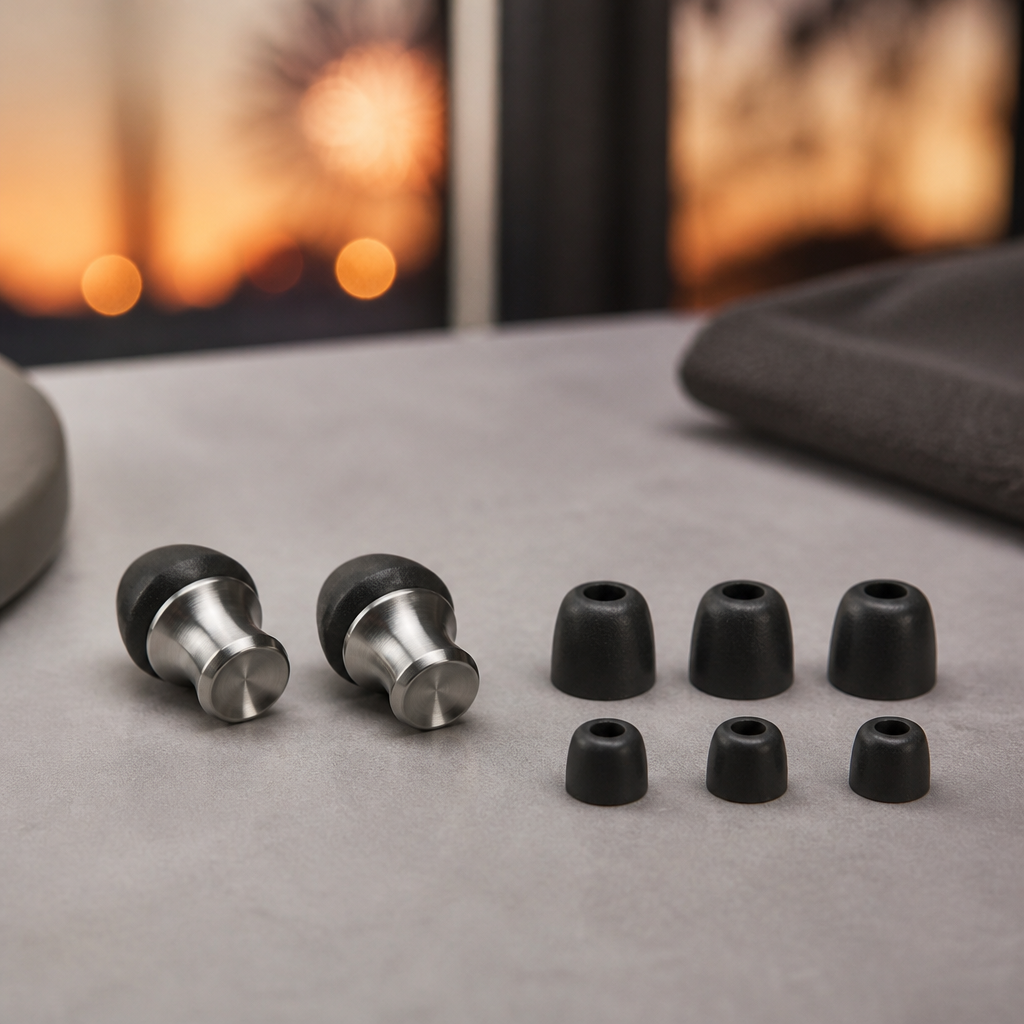
A sleep-focused review that tested earplugs for at least ten nights each makes a useful general point: foam plugs usually block loud noise better than wax or silicone because they carry higher noise reduction ratings. That matters on 5 November, when the problem is not a constant hum but a series of impulses. For impulses, the seal and the material count for more than the volume of the room.
Your brain keeps part of your attention on sounds that could signal danger. A bang from a garden you cannot see keeps that system alert, even when the sound is not loud enough to wake you fully. In practice, a night of scattered bangs often leaves light sleepers feeling unrested, even when they remember falling asleep quickly.
The worst nights are often not 5 November itself. The week before brings a steady drip of single bangs from people testing or planning their own displays. Light sleepers start listening for the next one at bedtime, so the anticipation keeps them awake even on quiet nights. Treat the whole week as the problem, not just the evening.
In the UK, the noise does not stop at the bonfire. Private fireworks, organised displays and the occasional stray rocket tend to build across the days around Thursday 5 November 2026. The clocks went back on 25 October, so by the time most people get home the evenings are already fully dark, which is when much of the firing starts.
Most people set up for the night itself and forget the run-up. A few short bangs on a Saturday evening in late October can wake a light sleeper as easily as the main event, and the expectation of more keeps them alert. The practical fix is to test your plugs during an ordinary week before the 5th, so you know the seal works before it matters.
Organised displays usually finish at a set time, but private fireworks often continue well past the official show. Plan to need your protection until the small hours. Set up the bedroom before you go to bed, not when the first rocket goes up, because settling back down after a startle takes far longer than staying asleep in the first place.
Pro tip: Insert your plugs before dusk, not after the first bang. Once a light sleeper is startled awake, the second attempt to fall asleep is much harder than the first.
Guy Fawkes Night is not a national event in Australia the way it is in Britain, so the calendar looks different. Fireworks are concentrated around New Year’s Eve and public celebrations, and noise can arrive from unexpected places at other times of year. Check with your local council for scheduled displays near you rather than relying on a national date.
What makes early November relevant in Australia is the season. It falls in late spring, when many households start sleeping with windows open and balconies in use. That changes the sound environment more than the fireworks themselves do.
Dense suburbs and apartment blocks carry sound in ways that catch people out. Hard surfaces, shared courtyards and open-plan layouts let a single bang echo through several rooms. If you share a wall or a stairwell with neighbours, expect to hear sounds you would never notice in a detached house with the windows shut.
Earplugs make the most sense when you cannot close the window. Curtains and sealed glass reduce sound at the wall, but earplugs remove it at the ear, which is the only control you have when the window is open for warmth. A fan running for airflow can also mask sharp bangs, so it doubles as a useful tool. Pairing the two is more practical than choosing one.
Three approaches come up most often for fireworks nights: reusable pairs with replaceable foam tips, disposable foam plugs, and headphone-based options such as noise-cancelling headphones or white noise. Each suits a different situation, and it helps to know which one you are buying for before you spend money.
My clear position is this. For a single night, disposable foam is the cheapest way to get a seal. For a season of loud nights, a reusable pair with replaceable tips is the better buy. Headphones are a supplement for steady background noise, not a replacement for plugs when the bangs start.
Reusable metal-bodied pairs use a concave aluminium body with a soft memory foam tip. The ATTENU8 design comes with three tip sizes (XS, S and M) and a rated noise reduction of approximately 32dB. The main advantage is that you replace only the foam tips, which the brand recommends every 6 to 8 weeks, rather than the whole plug. Across a fireworks season with several loud nights, that spreads the cost and cuts the waste.
Disposable foam plugs are inexpensive, widely available, and rated strongly for loud noise. They are the sensible choice for a one-off night or a bag you keep for travel. The drawbacks are waste and the fact that each pair is used once, so a long season adds up quickly. A plug that is too large will feel tight by midnight, so choose the size carefully rather than grabbing whatever is in the box.
A UK sleep guide on fireworks nights lists earplugs alongside noise-cancelling headphones and white noise machines as options. Both are useful for steady background sound. In practice, they handle a continuous drone better than a sudden crack, and headphones are awkward for side sleepers. Use them to cover the background, and keep plugs in for the bangs.
| Option | Best Use | Main Drawback |
|---|---|---|
| Reusable pair with foam tips | Several loud nights across a season | Higher upfront cost, and tips need replacing every 6 to 8 weeks |
| Disposable foam plugs | A single firework night or travel | Single use, more waste, and fit depends on choosing the right size |
| Headphones or white noise | Steady background noise and people who cannot wear plugs | Weaker against sudden bangs and awkward for side sleepers |
Most earplug disappointments come from fit, not from the product itself. A tip that is too small lets the sharp edges of a firework through, and one that is too large starts to press after an hour. Fireworks nights run late, so a plug that feels fine at 9pm can become a problem by 1am if it was never sized properly.
Test each size before the night. Lie on the side you usually sleep on, insert the plug, and stay there for around 20 minutes. Choose the size that seals without pressure and stays put when you roll over. In our experience, one size usually feels clearly right after a few attempts, and the other two are obviously too loose or too tight.
Gently pull your ear up and back to straighten the ear canal, then guide the foam tip in with a light twist until it sits snugly. Hold the body for a few seconds while the foam expands. Forcing the tip deep into the canal is the most common mistake, and it causes discomfort rather than better blocking.
A plug you can still feel an hour after you put it in is the wrong plug, however good its rating looks on the box.
Pro tip: Wash and dry your hands before insertion, and keep the aluminium body free of face cream and wax. Residue can stop the tip sitting flush, which recreates the leak you were trying to avoid.
Plugs do most of the work, but a quieter room makes them more effective and means you rely on them less. Think of it as layering. Close the gaps where sound enters, cover the windows facing the street, and add a steady background sound so the sharp bangs stand out less.
Start with the bedroom you actually sleep in. Move the bed away from the window if you can, and close the door to the rest of the house so that a bang from the front room does not reach you at full strength.
Check the seals around the window frame and the bottom of the door. Draught excluders are cheap and make a noticeable difference to what you hear through a door. Heavy, lined curtains help more than thin ones, and when the window is shut, the glass is doing much of the work. If the window has to stay open for warmth, be honest about that trade-off and lean harder on your earplugs.
A fan or a white noise app works by masking. A steady sound fills the gaps so a sudden crack stands out less. Set it to a constant level and avoid switching it on and off during the night, since that change can itself wake a light sleeper. Test the volume on a quiet evening so it is loud enough to mask but not loud enough to disturb.
Keep the rest of the plan simple. Use the same routine on every loud night, so your body learns what the sequence means and stops reacting to each sound as a new emergency.
The final part of the plan is what happens after the first few nights. Your plugs and your routine need to hold up through the late bangs, and you need to know when to stop using them. Plan the second half of the week as carefully as the first.
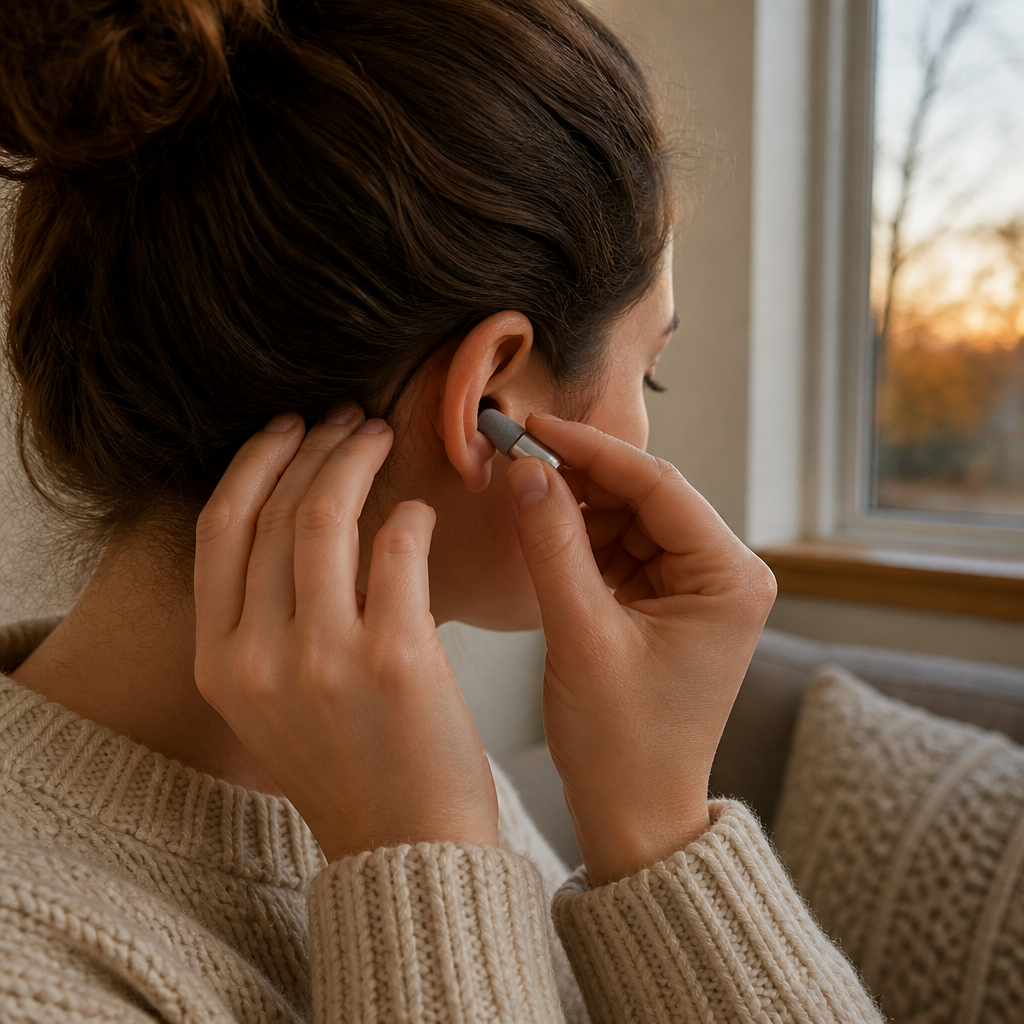
Foam tips lose their shape with use and pick up earwax and dust. Once a tip is compressed or dirty, the seal changes without warning, and more sound can leak through without any obvious reason. For the ATTENU8 design, that means replacing the foam tips every 6 to 8 weeks, and sooner if they look flattened or discoloured.
Check your spare tips before the week starts. Running out on 5 November is a common and avoidable problem.
Plugs are for the peak nights, not the entire season. Wirecutter, the product guide from The New York Times, cautions that earplugs suit temporarily noisy environments and advises people to try not to wear them every night. That applies here. Use them on the nights you need them, then return to your normal routine.
If your work involves regular loud noise on construction sites, in factories or on shift, a sleep plug is not a substitute for the hearing protection your workplace requires. Keep the two separate, and follow the rules set by your employer.
Pro tip: Do a practice night this week, while the streets are still quiet. If the seal fails, you will have time to try another size or open a fresh set of tips.
Ear plugs reduce the sharp bangs considerably, but they will not remove every sound. Pair a well-fitted pair with a closed window or a steady fan for the best results on the loudest nights.
Test them across several nights in a normal week, not just once. One sleep review tested each pair for at least ten nights, which is a sensible benchmark for judging comfort and fit.
Foam plugs are usually rated highly for loud noise, and disposable foam is a strong option for a single night. A reusable pair with good foam tips performs similarly when the fit is right, so fit matters more than format.
No, Guy Fawkes Night is not a national event in Australia. Fireworks there are mostly tied to New Year’s Eve and public celebrations, so check your local council for any scheduled displays near you.
Wearing them on the peak nights is reasonable, but Wirecutter’s guidance advises against using them every night. Replace the foam tips on schedule, and return to your normal routine once the noise drops off.
No. Sleep plugs are designed for comfort at night, not for the noise levels of workplaces or events. If you are standing close to a loud display or working in a noisy environment, follow the guidance for that setting.
Tell us which fireworks night is hardest on your sleep and what has actually worked for you, whether that is a pair of plugs, a fan, or a quieter room.
Most people treat noise as an irritation, something that makes a night harder or a commute more tiring. The research on noise pollution and mental health points to a bigger problem. Long-term exposure to traffic, construction, neighbours, and crowded offices is linked with stress hormone changes, disrupted sleep, and the low-level tension that makes anxiety harder to switch off. If you are a light sleeper, work near heavy machinery, or feel drained after a loud shift, the sound around you may be doing more damage than you realise. This guide explains how that happens and what you can change this week.
| Key Insight | Explanation |
|---|---|
| Sleep is the main pathway | Noise can fragment sleep even when you do not wake up fully. Track how often you wake, not just how many hours you log. |
| Unpredictable sound hits harder | Irregular spikes such as door slams or footsteps keep your attention on watch. Steady sound is easier to ignore, so target the spikes first. |
| Use 85 dBA as a working line | NIOSH sets 85 dBA, averaged over an eight-hour day, as its recommended exposure limit. If you cannot hold a conversation at arm’s length over the noise, assume you need protection. |
| Hearing loss carries a mental cost | Hearing loss is associated with tinnitus, communication difficulty, and poor mental health. Protecting your hearing also protects your mood. |
| Schedule quiet recovery | Give yourself 20 quiet minutes after a loud shift or commute before you start on screens or other demands. |
| Replace foam tips on time | Worn or dirty foam tips fit poorly and let more sound through. For ATTENU8 tips, replace them every 6-8 weeks. |
| Judge changes by two weeks of notes | Log sleep quality and daytime tension for two weeks after each change. Keep what measurably helps and drop the rest. |
Your ears do not switch off when you fall asleep. The auditory system keeps processing sound overnight, and the brain keeps sorting it into harmless or possibly threatening. That is why noise affects mental health: it activates the same alarm circuits you rely on for real danger, even when nothing dangerous is happening.
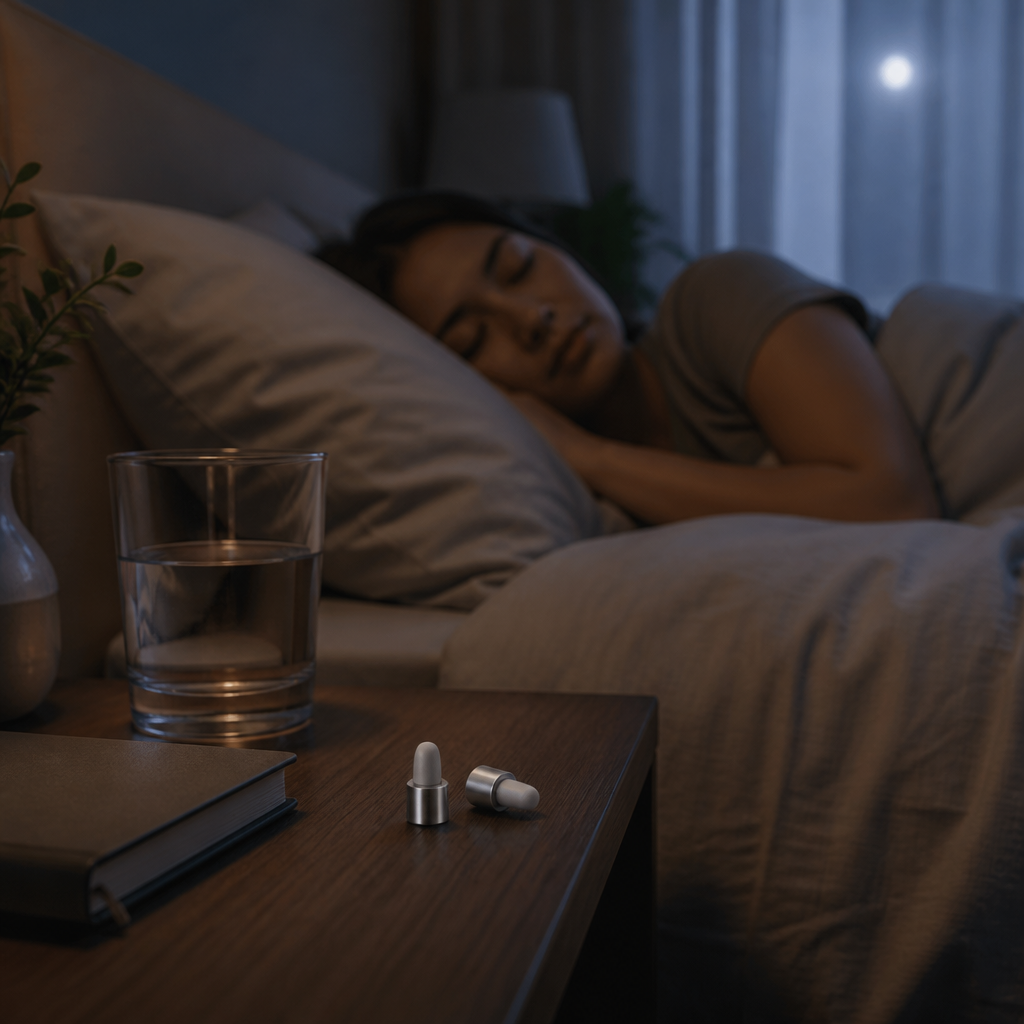
Research on chronic exposure points the same way. A UCLA Health overview of noise pollution lists effects on stress hormones, heart disease risk, and mental health problems among the consequences of long-term exposure. The damage is cumulative. It comes from repeated activation over months and years, not from one bad night.
Sleep is where noise does its most measurable everyday damage. One study summarised in a systematic review of urban noise and psychological distress found that sleep quality dropped sharply under noise exposure, falling from 5.8 to 3.7 on the scale the researchers used. A tired brain reads ambiguous sounds and small problems as threats more readily, so poor sleep feeds anxiety the following day.
In practice, the nighttime wake-ups people describe are rarely dramatic. The cause is often a delivery van reversing, a neighbour’s door, or a pipe that knocks when the heating kicks in. The sound may be too quiet to wake you fully, but it still triggers a brief arousal, and by morning you remember only feeling unrested.
Noise that does not wake you can still change the quality of your sleep. Lighter stages of sleep become more common, and the body does not get the deep recovery it needs. That is why people who sleep eight hours in a noisy flat can still feel exhausted, irritable, and short on patience.
Noise rarely feels dangerous while it is happening. Its cost shows up later as a shorter fuse, worse sleep, and a baseline of tension you stop noticing.
Anxiety responds to noise differently than annoyance does. A steady fan or distant motorway is easy to filter out after a few nights. Irregular sounds, like a car alarm, a slamming door, or footsteps on the floor above, keep part of your attention on watch, and that watchfulness drives much of the noise-related anxiety people describe.
Many people who are sensitive to noise describe a loop. A disturbed night makes them more alert the next evening, and that alertness makes them notice every creak and voice in the hallway. Over several weeks, the bedroom stops feeling like a place to rest and starts feeling like a place to wait.
A common mistake is to treat this as a personality issue. It is usually a learned response, and learned responses can be changed by altering what the brain experiences at night. Reducing the number of unexpected spikes that reach your ears is the first practical step.
White noise machines are often recommended as a cure-all. They work well for steady background sound because they mask it, but they do little for a sudden bang. A common mistake is to turn the machine up to cover everything, which adds its own load across a full night.
Pro tip: Set masking sound just loud enough to cover the steady hum, then deal with the spikes using a physical barrier. Turning the masker up to cover a door slam only trains you to expect the next one.
Some people start to brace before they even lie down, checking whether the neighbours are home or whether the building is quiet. Anticipation keeps the nervous system active, so the noise does not have to be happening to cause tension. A predictable routine, such as the same earplug fit and the same wind-down time, gives the brain a stable signal that the night is under control.
Burnout is usually described as exhaustion that builds over time, with withdrawal and a sense that effort no longer matters. Noise can add to that load quietly. People on construction sites, factory floors, and military training grounds often spend whole shifts in sound that wears down both hearing and concentration.
The NIOSH guidance is clear on the basics. Noise is considered hazardous when it reaches 85 dBA or higher, and the recommended exposure limit is 85 dBA averaged over an eight-hour workday. Workers exposed at or above that level are at risk of significant hearing loss over a working lifetime.

Occupational hearing loss is permanent, but NIOSH notes that it can nearly always be prevented. The health links matter for mental health too. NIOSH associates hearing loss with communication difficulties, tinnitus, heart problems, cognitive decline, and poor mental health. Struggling to follow conversations can push people to withdraw from colleagues and family, which can deepen isolation and low mood.
The burnout pattern shows up when the body never gets a real break. A worker leaves a ten-hour shift with ringing ears, drives home through traffic, and sits down to a television that is still loud. The nervous system has been on alert all day, and it does not come down just because the machinery has stopped.
In practice, the workers who recover best build a short, deliberate quiet period into the end of the shift and the start of the evening. They do not need hours of silence. They need one clear stretch where the sound level drops and the input slows down. A common mistake is to fill that gap with more stimulation, such as loud music or a crowded gym, which keeps the stress system running.
No single tool fixes noise pollution, but the options differ sharply in how well they suit sleep, travel, and loud work. The table below compares three common approaches. ATTENU8 quotes approximately 32dB of noise reduction for its reusable metal-bodied design, which is a useful benchmark when you compare options.
| Approach | Best for | Where it falls short |
|---|---|---|
| Disposable foam earplugs | Occasional use, emergencies, and travel kits | Often used once and thrown away, so costs add up with frequent use. Fit varies between wearers. |
| Reusable metal-bodied earplugs with foam tips (ATTENU8) | Nightly sleep, commuting, and regular noisy work | Higher upfront cost. Foam tips need replacing every 6-8 weeks, and fit depends on choosing the right size from XS, S, or M. |
| Environmental controls (window seals, rugs, masking sound) | Steady or structural noise from neighbours, traffic, or building systems | Slower to set up and often costly in rented homes. Little effect on sudden spikes on their own. |
The most effective approach usually combines two of these. Use a barrier for the spikes and environmental changes for the steady background. Relying on one method alone tends to leave a gap that your nervous system keeps noticing.
Start with the sound that hits you most often, not the loudest sound you can imagine. For most light sleepers that is a single repeating source, such as traffic outside or a flat above. Map it for one week by noting times and triggers. That map usually reveals a pattern you can act on.
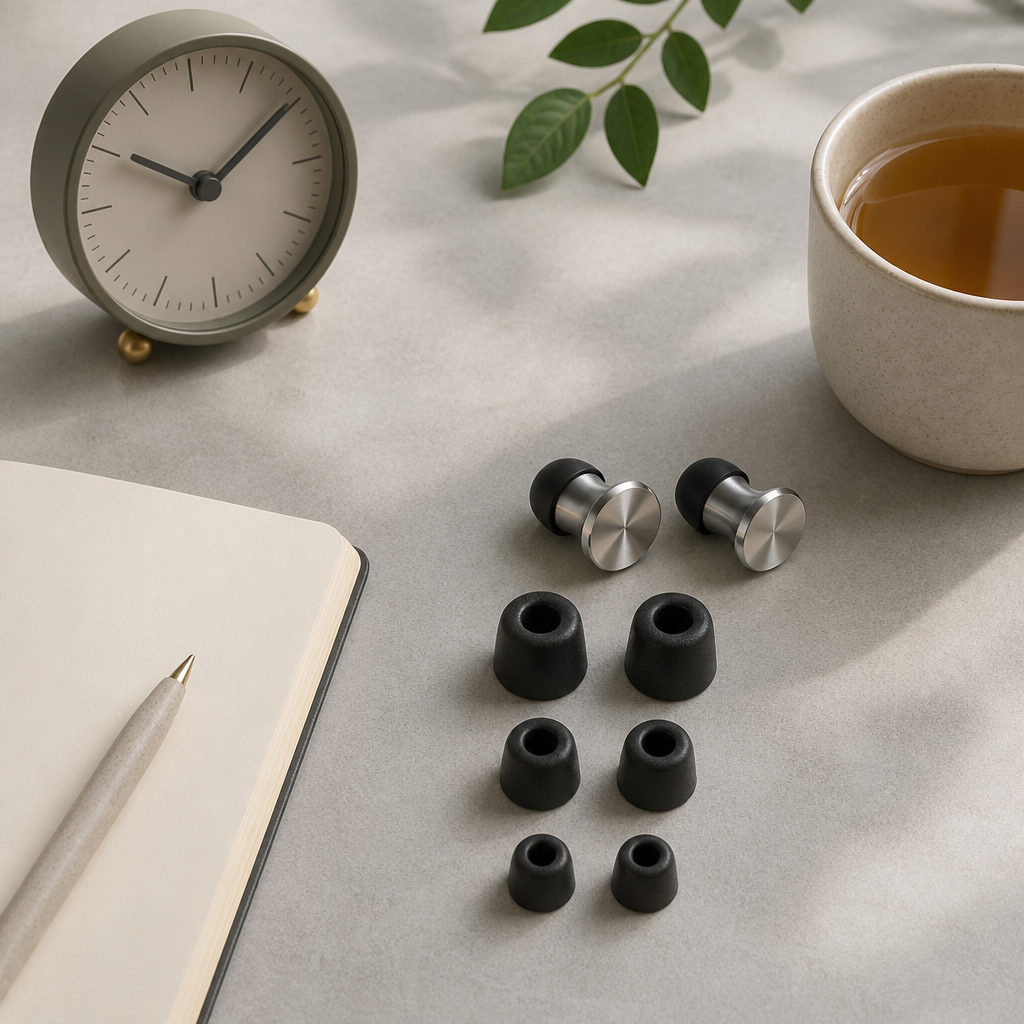
Comfort decides whether you keep earplugs in. Tips that feel tight after an hour become the reason people stop wearing them. Try the three sizes before committing, check the fit by lying on your side, and keep a spare set in your bag so you are not caught without them.
Pro tip: Insert plugs with a gentle twist and hold for a few seconds while the foam expands. If sound still leaks in around one side, the tip is the wrong size or has worn down, not the design.
Move the bed away from shared walls, close the door, and use heavy curtains on street-facing windows. These changes are cheap and reduce what reaches your ears before any protection is needed. Pair them with a fixed wind-down that starts 30 minutes before sleep, so the brain learns when the quiet period begins.
After a loud shift or a noisy commute, take 20 minutes with low sound and no demands. Read, walk without headphones, or sit in a quieter room. Write down how you feel afterward. Over two weeks, the pattern tends to show whether the window helps your mood and tension levels.
Pro tip: Treat the quiet window as part of the workday, not a reward for finishing it. Most people skip it on the busiest days, which is exactly when it matters most.
Noise is not the only cause of anxiety, but long-term exposure is linked with stress hormone changes and mental health problems. For many people, sleep loss from noise makes anxiety worse the next day, which is why sleep is often the most practical place to start.
Noise burnout is a practical term for exhaustion that builds when someone is repeatedly exposed to loud conditions without enough quiet recovery. It is not a formal diagnosis. If you feel persistently drained, irritable, or unable to switch off, talk with a doctor.
NIOSH identifies 85 dBA as the hazardous level, with a recommended exposure limit of 85 dBA averaged over an eight-hour workday. If you have to raise your voice to be heard by someone an arm’s length away, the environment is likely loud enough to justify protection.
Earplugs reduce the sound that reaches your ears, which lowers the number of spikes your brain has to process. They do not remove the source or break the habit of bracing for noise, so pair them with a consistent bedtime routine and, where possible, changes to the room itself.
For ATTENU8 tips, replace the foam every 6-8 weeks. Replace them sooner if they feel hard, collect dirt, or stop sealing well against the ear canal.
See a GP or audiologist if you notice persistent ringing, muffled hearing, or ongoing anxiety and sleep problems. Hearing changes are easier to manage when they are caught early.
Tell us which noise source affects your sleep or focus the most, and which change, if any, has made a real difference for you.
We would love your feedback and any insights you would share with others. What perspective would you add?
A package that says approximately 32 dB looks like a promise. In practice, that number only holds if the plug seals against the ear canal wall for the whole time you wear it. Most people who buy ear plugs for sleep, travel, or a loud job never check the seal, so they assume the rating is what they get. Ear plug fit noise reduction is the variable that decides whether a high rating turns into real quiet or into a muffled sound that still lets the alarm, a snoring partner, or a generator through. This article explains why fit matters more than the decibel figure, how to check your own fit, and what to change when your plugs leak.
| Key Insight | Explanation |
|---|---|
| A rating assumes a seal | Ratings come from controlled tests with the plug inserted correctly. Any gap at the canal wall lets sound through that the number never accounts for. |
| Run the derating formula | Subtract 7 from the rating, divide by 2, then subtract that result from your exposure level. A 32 rating works out to roughly a 12.5 dB real-world allowance on paper. |
| Do the voice check after every insertion | Your own voice should sound muffled and closer. If it sounds normal or echoey, the seal is off and you should reinsert. |
| Pick tip size by trying all three | Test XS, S, and M in the same session and keep the one that holds a light seal without an ache at the canal opening. |
| Replace foam tips every 6 to 8 weeks | Worn foam loses its shape and springiness, which changes the seal faster than most people notice. |
| Judge plugs by the job, not the box | Sleep needs comfort for hours on your side. Industrial noise needs a stable seal through movement, sweat, and head turns. |
The noise reduction rating, or NRR, is a standard measurement of how much sound a hearing protection device reduces, determined through tests. It is a useful comparison tool, but it is a lab number. The test conditions assume the device is inserted properly and stays that way for the duration of the measurement.
Your ears do not work that way. Canal shape, jaw movement, and the angle you insert at all change how much of the plug actually contacts the wall. A rating tells you what the plug can do when it seals. It does not tell you whether it is sealing in your ear right now.
A rating is a single figure derived from testing, so it cannot describe the range of ears that will wear the product. Some people have wide, smooth canals that a foam tip fills easily. Others have narrow or curved canals where even the right size needs careful placement. Both groups can buy the same plug and get very different results.
The rating also says nothing about comfort, and comfort is where many people quietly lose protection. If a plug aches after an hour, most wearers push it in less far or pull it out to reset it. Each adjustment breaks the seal, and the rating on the box is no longer what you are getting.
Sound takes the path of least resistance. A plug only blocks what it touches, so a thin channel of air along the canal wall is enough to let through the hum of a fan, traffic, or a neighbour’s television. The result often feels like the plug is working, because the loudest sounds drop, while the lower and mid-range sounds keep coming through.
We publish a figure of approximately 32 dB for our plugs, and we treat that number as a ceiling you earn by sealing. Anyone who wants the number to match their experience needs to treat fit as the first step, not an afterthought.
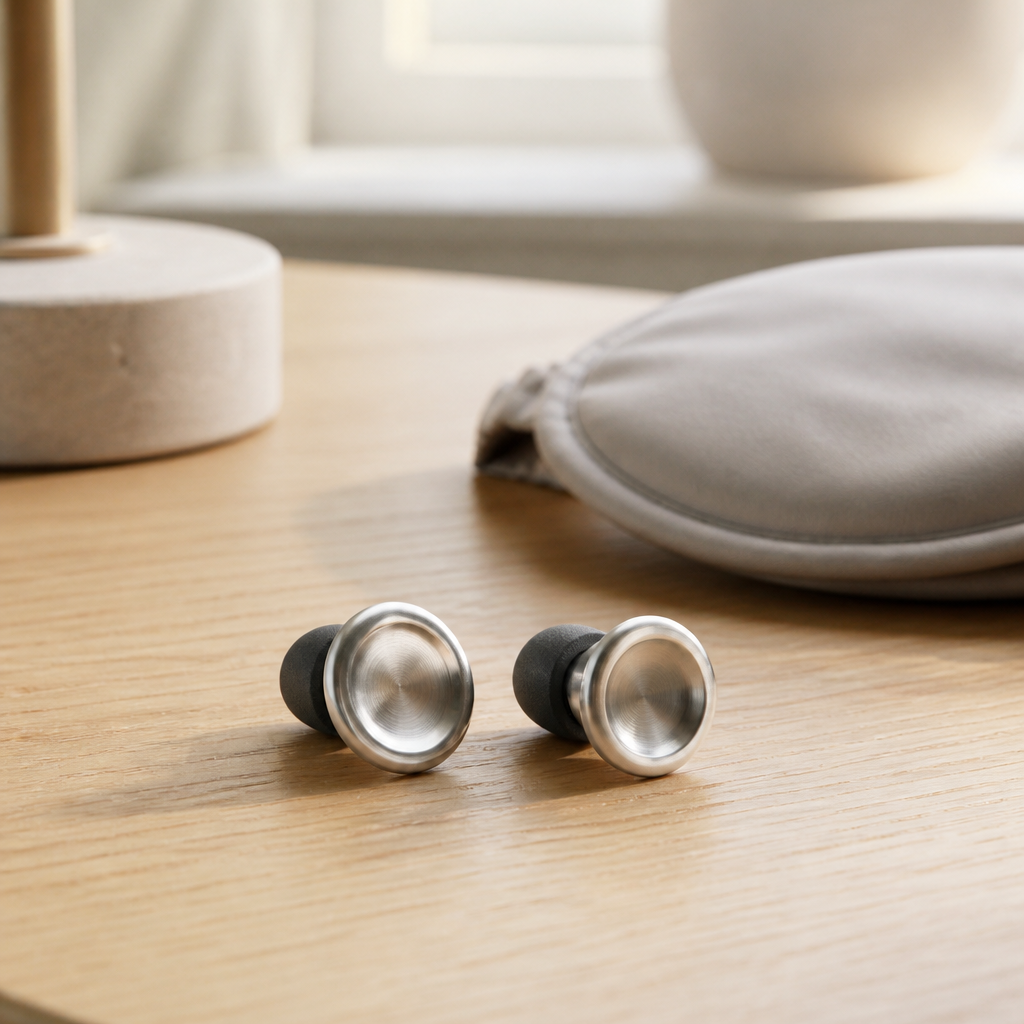
If you want a rough estimate of how much protection you will get in a specific environment, the rating needs a correction before you use it. The standard method is simple, and it is the one most safety guides use as a starting point.
Take the rating, subtract 7, and divide the result by 2. Subtract that number from the noise level you are exposed to in decibels. For a plug rated 32 in a 95 dB environment, you get 32 minus 7 equals 25, then 25 divided by 2 equals 12.5, so the estimated exposure is about 82.5 dB.
That figure is a planning estimate, not a guarantee. It still assumes you inserted the plug correctly and that the seal held for the entire period. If your fit is poor, the actual result will be lower than the calculation, and the calculation will not warn you about it.
A 2023 study indexed in PubMed Central looked at how attenuation changed over a 2-hour work period for devices that had been properly fitted, using workers exposed to hazardous noise. The question it asks is the one that matters on a long shift. A plug that fits well at the start of the day may not give you the same protection three hours later.
In practice, that means you should check your fit at the start of a shift, at lunch, and after any long break where you took the plugs out. Sweat, movement, and the gradual shifting of the plug in the canal all change the seal over time, and none of them show up in the rating.
A seal is not a feeling of tightness. It is the absence of any air path between the plug and the canal wall. You can have a plug that feels snug and still leak, and you can have one that feels loose and still seal, depending on the shape of your canal and where the tip sits.
A leaking plug usually sounds like a whistle, a rush, or a sudden return of sound you thought was gone. At night, the giveaway is often a clock tick or your partner’s breathing coming through clearly while the snoring stays quiet. During the day, the most common sign is a hum from machinery that seems to stay at the same level no matter how much the plug is pressed in.
Low-frequency noise is the hardest to stop, and it is also the sound most likely to leak. Engines, generators, and heavy equipment produce rumble that travels through small gaps, so a plug that seems to block high-pitched sounds can still fail badly against a low hum.
Side sleepers face a specific problem. When you lie on the side with the plug, the pillow pushes the outer end of the plug and changes the angle of the seal. Many people then wake with the plug half out, without realising it.
Our practical advice is to choose a plug size that stays put in the position you sleep in most, not the position you use while sitting upright during the test. If you change sides, check the seal before you sleep, and do not assume that a plug which held at 10 p.m. is still sealing at 3 a.m.
A plug that measures well in a controlled test can still leak in your ear, and the leak is the one variable a decibel rating cannot account for.
Size is the first decision that controls fit, and it is where many buyers make a guess. Our plugs come in three tip sizes, XS, S, and M, because ear canals vary in width and depth. The right size is the one that seals without pressure, not the one that feels most comfortable on the first try.
Start with the size that feels right at the canal opening, then insert it and check the seal. If you hear a whistle when you move your jaw, try the next size up. If the plug feels like it is pushing against the back of your ear, try the next size down.
Do not rely on the first test alone. Try all three sizes in one session, sit quietly, and note which one sounds the most muffled while still feeling easy to wear. That tip size is usually the right one for your canal, even if it is not the one you expected.
Pull the top of your ear up and back to straighten the canal, then insert the plug with a gentle twist. Hold it in place for several seconds while the foam takes its shape. Rushing this step is the most common reason a plug seals at the canal opening but leaks deeper in.
The National Institute on Deafness and Other Communication Disorders notes that after inserting earplugs, your voice should sound different to you, possibly louder. That change is the occlusion effect, and it is your quickest signal that the plug is sealing. If your voice sounds normal, reinsert the plug before you assume the rating is doing its job.
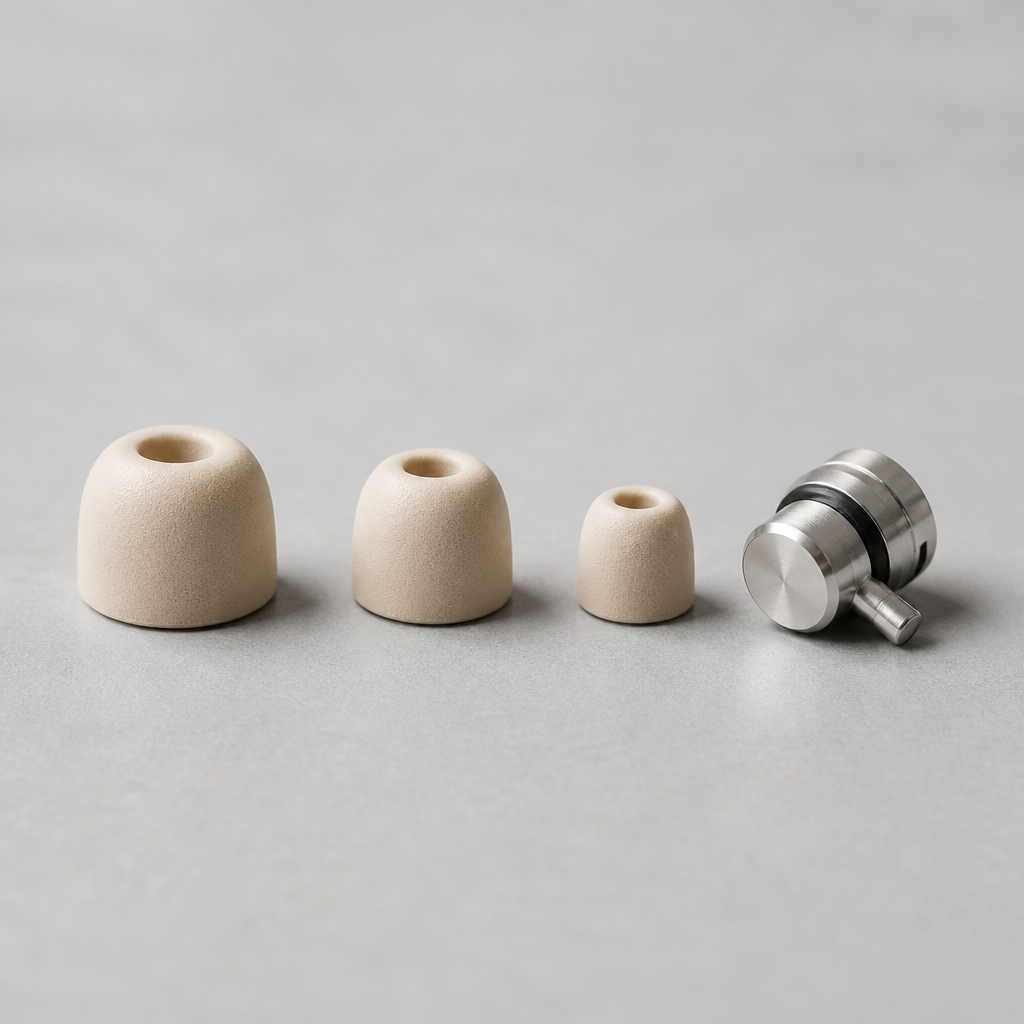
Pro tip: Insert the plug, then cup your palms over your ears for a few seconds and release. If the sound changes and the plug stays put, the seal is holding. If the plug pops out or the sound stays the same, the size or angle is wrong.
Reusable plugs change the fit conversation because the metal body lasts, while the foam tip is the part that wears out. Most of the seal lives in the tip, so keeping the tip in good condition matters more than keeping the body shiny.
Foam tips pick up earwax, skin oil, and dust every time they go in and out of the ear. Over time they compress more slowly, lose their rebound, and stop filling the canal the way they did when new. The change is gradual, so most people do not notice the loss until the plug starts leaking.
We recommend replacing foam tips every 6 to 8 weeks. Treat that as a maximum, not a target. If a tip looks discoloured, feels stiff, or has lost its shape, replace it sooner.
Wipe the metal body with a dry or slightly damp cloth after use, and let it dry completely before you store it. Keep the tips clear of debris, and store the plugs in a case rather than a pocket, where lint and grit can work into the foam.
Wet or dirty tips lose their ability to recover their shape, which weakens the seal before the tip looks damaged. A tip that feels tacky or sticky is past the point where it will seal reliably, even if it still looks usable at a glance.
There are several ways to get a seal, and each one fails in a different place. Knowing where a method usually goes wrong makes it easier to choose one for your situation, and easier to spot the failure when it happens.
The table below compares three common approaches. The right choice depends on how often you wear the plugs, how long you wear them, and how much noise you need to block.
| Approach | How the Seal Forms | Where Fit Usually Fails |
|---|---|---|
| Pre-formed foam plugs (compress, then insert) | The foam expands inside the canal after it is compressed and inserted | Shallow insertion, or uneven recovery in narrow canals, which leaves a channel along the wall |
| Reusable memory foam tips on a metal body (ATTENU8 design) | You choose from three tip sizes, and the soft tip conforms to the canal within the first few minutes of wear | Choosing the wrong size, or wearing tips past the 6 to 8 week replacement window |
| Custom molded plugs (made from an ear impression) | The shape is built from a mould of your own ear canal | Requires a professional impression and fitting, and changes in ear shape over time may need a refit |
For sleep, a reusable tip with a good size match is often the most practical option, because the plug can stay in for hours and the foam is soft enough to reduce pressure. For occasional loud environments, pre-formed foam can work well if you take the time to insert it properly.
For daily exposure at high noise levels, a custom fit often delivers the most consistent seal. The cost is a fitting appointment and a longer lead time, but the fit is tailored to your ear rather than to the average ear the sizing was designed around.
When a plug leaks, most people try to push it in harder. That is usually the wrong fix. Pressure can compress the tip into a shape that seals briefly and then slides out, or it can cause ear discomfort that makes you remove the plug altogether.

Remove the plug and inspect the tip for shape, colour, and stiffness. Reinsert it using the upward and back pull, then perform the voice check. If the voice sounds normal, try the next tip size and repeat the process before you give up on the product.
If the plug still leaks after changing size, check the body and the tip for debris. Replace the tip if it is worn, because a tired tip will not seal even in a correct size.
If you keep hearing through the plugs in a loud workplace, the answer may be a different type of protection rather than a better plug. Earmuffs can add protection over plugs in very loud settings, and a custom fit can help if your canal shape consistently defeats standard sizes.
Do not accept a leak as the normal cost of hearing protection. A plug that fails repeatedly is telling you something about your ear, your size, or your wear pattern, and each of those can be fixed.
Pro tip: Keep a note of the tip size you use and the date you last replaced the tips. A simple log makes it obvious when a seal starts to drift, and it stops you from relying on a worn tip because it still looks fine.
Not necessarily. A higher rating means the plug can reduce more sound when it is sealed properly, but a poorly fitted high-rated plug can perform worse than a well-fitted lower-rated one. Fit is the variable that determines how much of the rating you actually receive.
Use the voice check. After insertion, your voice should sound muffled and closer to you. Then move your jaw and turn your head. If you hear a whistle, a rush, or a sudden return of sound, the seal has broken and you should reinsert or change size.
You can use it as a planning estimate. Subtract 7 from the rating, divide by 2, and subtract that from your exposure level in decibels. The result assumes correct insertion and a consistent seal, so treat it as a best-case figure and verify fit on the job.
Comfort and seal are not the same thing. A plug can sit comfortably in the outer part of the canal while a narrow channel remains deeper in, usually along one wall. Lower-frequency sounds are the most likely to come through that channel, which is why the hum of machinery can stay audible.
Replace them every 6 to 8 weeks, or sooner if they look discoloured, feel stiff, or lose their shape. Earwax and skin oil degrade the foam gradually, so a tip that still looks usable may no longer seal well.
They can be, when the size is right and the tips are in good condition. Reusable tips with a consistent fit can give you a reliable seal over many uses, but the advantage depends on choosing the correct size and replacing tips on schedule.
Tell us which fit problem you have run into most, whether it is a whistle at night or a leak during a shift, because that feedback shapes the guidance we publish next.

