


 0
0

Most people know the feeling of walking out of a loud restaurant or off a noisy shift and feeling oddly drained, irritable, and unable to think straight. Your ears may not hurt at all, yet your brain has been working hard the whole time to separate speech from background noise. That load has a name: auditory fatigue, sometimes called listening fatigue. This guide explains what it is, why it builds up, how to recognize it, and how to give your ears a real break, including where reusable ear plugs help and where they don’t.
| Key Insight | Explanation |
|---|---|
| Fatigue is a brain problem first | Auditory fatigue is exhaustion from processing sound. The effort happens in the brain, so it can drain focus and energy even when nothing feels painful. |
| Following speech over noise is the costliest task | Picking out one voice over traffic, machinery, or a crowd takes far more effort than hearing a quiet room. Background noise is the main multiplier. |
| Schedule 15 to 20 minutes of quiet every day | Reading, walking without headphones, or sitting in a quiet room gives your brain a break from decoding sound. Do it before the evening slump, not after. |
| Reduce loudness instead of just tolerating it | Reusable ear plugs lower the overall level of sound reaching your ears, which lowers the effort your brain spends on it. They do not make speech clearer. |
| Persistent fatigue with hard conversations needs a hearing check | Clinical guidance ties listening fatigue most closely to hearing loss. If you struggle to follow conversations, book an audiologist evaluation rather than guessing. |
| Keep the fit and the tips fresh | Replace foam tips every 6 to 8 weeks. Worn or misshapen tips seal poorly, so you get less reduction and more strain from trying to hear around the gap. |
Auditory fatigue is the tiredness that builds up when your brain spends hours decoding sound. It is a mental and sometimes physical exhaustion, not a condition inside the ear itself. The American Academy of Audiology describes the extra brainpower needed to follow speech as listening effort, and it notes that cognitive resources are limited.
That limit is the whole story. When you spend effort on a conversation in a loud room, you have less left for reading, remembering, or making decisions. The effect is cumulative. A noisy commute, an open-plan office, and a dinner with a lot of overlapping talk can leave you wiped out by early evening even though nothing you heard felt painful or too loud.
Most clinical material frames listening fatigue around hearing loss, because people with reduced hearing must shift more resources toward listening than people without it. In practice, though, anyone can hit that wall. A person with normal hearing working a loud shift or sleeping in a noisy hotel is still asking the brain to sort a constant stream of sound, and the bill comes due later in the day.
The term “auditory fatigue” is used loosely across consumer and clinical writing, and you will also see “listening fatigue” for the same experience. What matters for you is the practical pattern: fatigue tracks the amount and difficulty of sound you process, not just how loud it was at its peak.
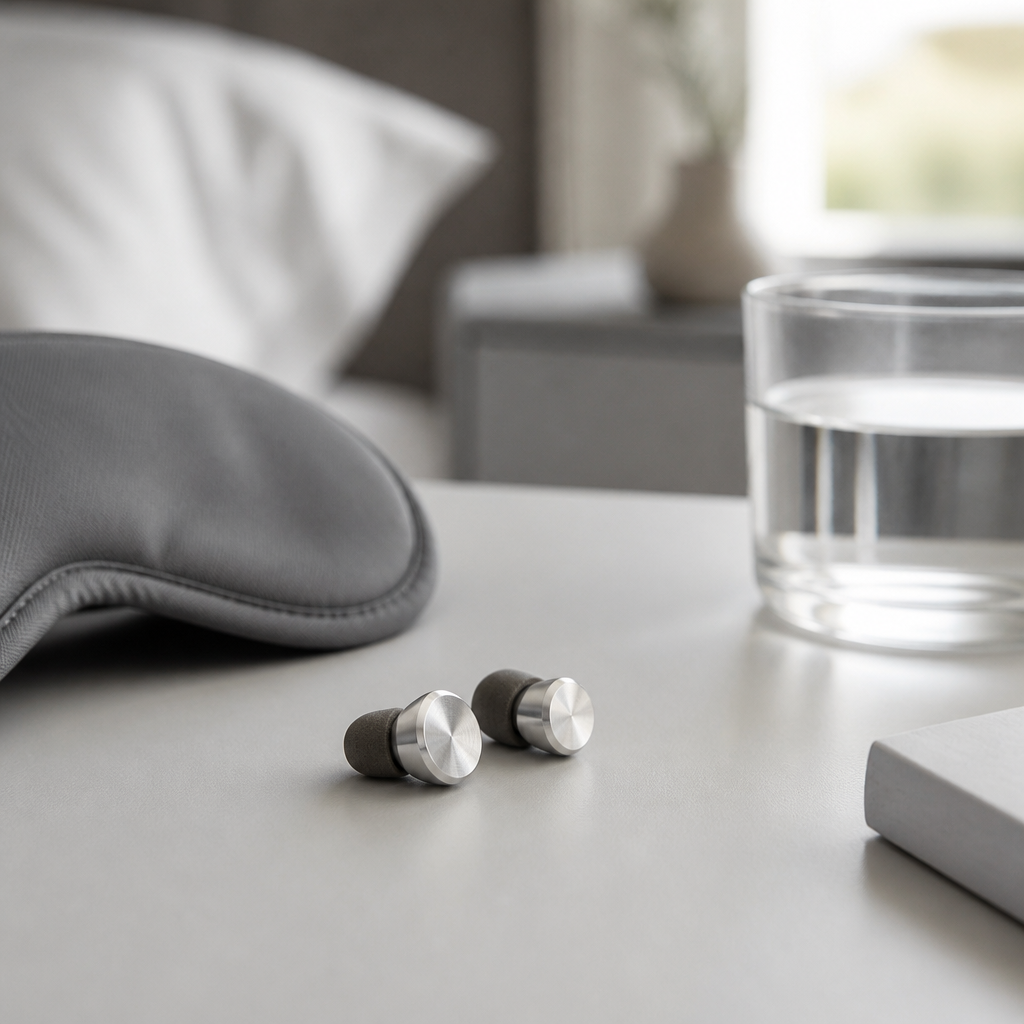
A person with typical hearing does not usually experience the heavy kind of fatigue described in clinical guidance. The auditory system captures sound cleanly, and the brain processes it with relatively little strain. Fatigue appears when the brain has to fill gaps, sort competing sounds, or push through a volume of noise that keeps demanding attention.
Here is the mechanism I explain to people who come to us after a rough month on a job site or a few bad nights in a hotel. Your ears send a signal, and your brain has to decide what matters. Every sound you choose to follow, and every sound you have to ignore, costs something.
When some frequencies are harder to catch, the brain compensates by using context, lip movement, and guesswork to rebuild the message. That reconstruction is slow and tiring. It is why people with reduced hearing often describe conversation as work even when they can technically hear the other person.
The same thing happens in a noisy environment with normal hearing, just on a smaller scale. Consonants get smeared by echo or machinery, and your brain works to recover them. You may not notice the effort while it happens, which is exactly why it shows up later as a headache or flat mood.
Steady noise is tiring because your attention never fully switches off. A ventilation system, traffic hum, or a crowded café keeps the auditory system active in the background. Sudden spikes are worse because they trigger a startle response that pulls focus each time, even when the spike is short.
In my experience, unpredictable noise does more damage than steady noise at the same level. Your brain can adapt to a predictable hum, but a series of unexpected bangs, alarms, or shouted instructions keeps you on alert. That alert state is expensive, and it accumulates faster than most people expect.
Auditory fatigue rarely feels like sore ears. It feels like brain fog, low patience, and a need to lie down after a social event. Clinical sources describe it as mental and sometimes physical exhaustion, and that matches what people report: they feel flat, not injured.
That is why people often misread the problem. They assume they need more sleep or more coffee, when the real issue is that their brain has spent the day decoding sound. Reducing the sound load, not only adding rest, is what changes the outcome.
Ear fatigue usually shows up as a group of small, nonspecific complaints rather than one dramatic sign. Consumer guidance on listening fatigue lists mental exhaustion, low energy, difficulty concentrating, social withdrawal, memory trouble, irritability, headaches after long listening, and tension in the face, neck, or shoulders. Many people recognize two or three of these before they connect them to sound.
The timing is the clue. Symptoms that appear after conversations, meetings, or long periods in noisy spaces, and ease during quiet time, point toward listening load. Symptoms that stay the same regardless of your surroundings point somewhere else and deserve a medical opinion.
Watch for trouble remembering details from a conversation you just had, losing your place in instructions, or needing to ask people to repeat themselves. Irritability is common too, especially when you are the person who feels overwhelmed by a room but cannot explain why. These signs often appear first at work, where the demands are constant and the noise is high.
A simple test I suggest: after a loud day, notice whether you can still follow a written paragraph or a short podcast-free podcast-style story at home. If reading feels like effort and you keep rereading lines, your brain is probably running low on spare capacity.
The physical side often shows as tension in the jaw, neck, and shoulders, along with headaches that build after long periods of listening. People who grind their teeth or hunch over phones and tools tend to notice this more, because the muscles around the head are already working hard. Headache after noise exposure is a signal to lower the load, not to push through.
Fatigue becomes a pattern when it shows up on the same days each week, after the same commute, or after the same type of shift. Track it for two weeks in a notes app, with a line for the loudest environment you were in and a line for how you felt at 8 p.m. The pattern usually points to the specific source of your overload, which makes the fix much easier to choose.
Noise overload is rarely one catastrophic event. It is a set of ordinary exposures that stack up across the day. The people we hear from most often fall into three groups: light sleepers who lose rest to nighttime sound, frequent travelers who spend hours in transit, and workers in loud environments such as construction, manufacturing, and military settings.
Each group needs a different kind of break, and treating them the same is a common mistake. A quiet room helps a commuter very little if the commute is the problem, and a sleep solution does not solve a noisy shift. Start by naming the environment that drains you most, then pick the intervention that matches it.
Light sleepers often wake to small sounds that others never notice, such as a partner’s breathing, a neighbor’s door, or a fridge cycling on. Each waking, even a brief one, interrupts sleep and leaves you tired the next day. That morning fog is part of the same auditory fatigue cycle, because the brain never got full quiet to recover.
For many light sleepers, lowering the overall sound level at night does more than any single gadget. Close the bedroom door, move the bed away from the noisiest wall, and set a consistent wake time so your sleep rhythm is not disturbed by surprise sounds. Foam or reusable ear plugs can then take the remaining edge off the sounds you cannot control.
Planes, trains, and busy hotels combine steady engine noise with unpredictable announcements and voices. The steady part is tiring, and the unpredictable part keeps you alert. Many travelers arrive at their destination feeling worse than the flight itself should have caused, which is a classic sign of accumulated listening effort.
On a long trip, plan one hour per day with no headphones and no loud places. Use that hour for a walk, a quiet café table, or a room with the door shut. A common mistake is wearing noise-canceling headphones at high volume for the whole journey, which removes the outside noise but leaves your brain processing a constant stream of audio on top of it.
Workers in loud environments are the group where hearing protection is most important, and where listening fatigue is often ignored. Tools, machinery, and crews shouting over each other create a sound load that runs for an entire shift. By the end of the day, workers often report difficulty following instructions and feeling drained.
Protection needs to be worn consistently, not only when someone remembers. Many workers take their plugs out to talk, then forget to put them back, which lets exposure climb in the exact moments when the noise is worst. Pick a plug that you can insert correctly every time and carry a spare set, so you are not tempted to go without.
A real break means reducing the sound your brain has to process, then giving it time without demands. Quiet time alone helps, and lowering exposure at the source helps more, especially if you cannot remove the noise from your day. The most effective routines combine both.
The guidance I give most often is simple: decide in advance when your ears will rest, and decide in advance what protection you will use when rest is not possible. Relying on willpower in the middle of a loud day almost always fails.
Aim for 15 to 20 minutes of genuine quiet after your hardest listening block, such as a long meeting, a school pickup, or a loud lunch. Sit somewhere the sound is low, avoid screens with audio, and let your mind wander or read silently. The point is to let your brain stop sorting sound, not to meditate.
Evenings matter just as much. If you spend your day in noisy spaces, keep at least one evening block free of television, music, and background podcasts. Reading in a quiet room, cooking with the radio off, or a short walk without earbuds all count. Patterns of quiet at night often improve how you feel the next morning.
If you use headphones or earbuds, keep the volume at a level where you can still hear someone talking to you at a normal conversational volume. Many people push volume up to block noise, which only adds a second source of load. Clinical advice on earbuds also warns against sealed earbuds at high volume, since they can keep sound focused in the ear canal.
Look at the room too. Soft furnishings, closed doors, and a seat away from speakers or machinery can reduce the load more than any personal device. When you can change the environment, do it first, then use protection for what remains.

Reusable ear plugs work only if they fit and stay clean. Our metal-bodied design uses a concave aluminium body with three sizes of soft memory foam tips (XS, S, and M), rated for approximately 32dB of noise reduction. Choose the tip size that seals without pain, then check the seal by speaking aloud. Your own voice should sound muffled but not hollow.
Replace the foam tips every 6 to 8 weeks rather than waiting for them to crumble. Tips that have hardened, collapsed, or picked up wax and dirt lose their seal, and then you get less reduction and more strain from trying to hear around the gap. Keep the metal body clean with a dry cloth, and store it in a case so the tips do not collect lint.
Pro tip: Insert plugs by pulling your ear up and back, then pushing gently inward while the foam expands. Do this in the same way every time, and you will get a consistent seal instead of a plug that slowly works loose through the day.
Think of attention as a daily budget. Every sound you have to decode spends some of it, and unwanted noise is the expense you never agreed to pay.
Different tools solve different parts of the problem. Quiet time restores your brain, but it cannot reduce noise you have to work in. Reusable ear plugs lower the load while you are exposed, but they do not repair hearing or make speech clearer. A clinical evaluation addresses the underlying hearing picture, which matters most when conversations are hard even in calm rooms.
The table below compares the three approaches we see people combine most often. Most people need at least two of them, and the right mix depends on whether your fatigue comes from your environment, your sleep, or your hearing.
| Approach | Where It Works Best | Main Limitation |
|---|---|---|
| Scheduled quiet time (reading, walking, a quiet room) | Daily recovery after meetings, school runs, or loud social events | Does nothing for noise you cannot leave, such as a shift or a flight |
| Audiologist evaluation and fitted hearing aids | Persistent fatigue and trouble following conversation even in calm rooms | Requires clinical testing and fitting time, and does not replace protection in loud spaces |
| Reusable metal-bodied ear plugs with foam tips | Commutes, light sleep, and loud workplaces where you need consistent protection | Lowers overall loudness rather than improving speech clarity, and foam tips need replacing every 6 to 8 weeks |
If you only pick one, match it to the environment that drains you most. For a night-shift worker, that is usually protection plus a quiet sleep setup. For a parent with a busy office and a noisy home, scheduled quiet time combined with lower headphone volume often delivers the biggest change within two weeks.
Listening fatigue is closely tied to hearing loss in clinical guidance. People with hearing loss have to allocate more brainpower to understanding speech, so the fatigue often grows as the loss progresses. If you find yourself avoiding phone calls, asking people to repeat themselves often, or leaving social events feeling completely drained, a professional hearing evaluation is the right next step.
Audiology guidance recommends having your hearing evaluated and managed by a licensed audiologist. Clinical advice also notes that appropriately fitted hearing aids may reduce listening effort and susceptibility to mental fatigue. A 2013 study published in the journal Ear and Hearing examined how hearing aid use affected listening effort and mental fatigue during sustained speech processing, which is the reason clinicians take this symptom seriously.
Protection and rest still matter after a diagnosis. Hearing aids help you process speech, but they do not eliminate the value of quiet time or the need to protect your ears from loud noise. Treat the evaluation as one part of a plan, not a replacement for changing your daily sound load.
In most consumer and clinical writing, the two terms describe the same experience of exhaustion from processing sound. “Listening fatigue” is the more common phrase in hearing care, while “auditory fatigue” is widely used for the general sound-processing load people feel in noisy places.
Yes, if the problem is a high overall sound level in your environment. Lowering that level reduces the effort your brain spends processing it. Ear plugs do not make speech clearer, so they will not fix fatigue that comes from hearing loss on their own.
A practical starting point is 15 to 20 minutes of genuine quiet after your hardest listening block, plus at least one quiet evening block. Adjust based on how you feel. If you still feel drained the next day, increase the quiet time or reduce exposure at the source.
Replace foam tips every 6 to 8 weeks, or sooner if they look hardened, misshapen, or dirty. Worn tips lose their seal, which reduces protection and can leave you straining to hear around the gap.
See an audiologist if fatigue is persistent, you have trouble following conversations even in calm rooms, or you avoid calls and social events because of how hard listening feels. A licensed audiologist can evaluate your hearing and discuss whether hearing aids or other options would reduce your listening effort.
For most people, yes, provided they are clean, fit comfortably, and are not causing pain or irritation. Stop using them and speak to a doctor if you notice ear pain, discharge, or itching, because those symptoms need a medical opinion.
What does the noisiest part of your day look like, and which of these breaks have you actually managed to keep?
Most packing lists cover chargers, adapters, and a spare pair of socks, then stop. The frequent traveller knows the real failure point is sleep. A cabin that hums for eleven hours, a hotel corridor with a lift that never stops, and a neighbour who snores through thin walls can wreck the first two days of any trip. That is why a solid travel earplugs packing list should treat hearing protection as seriously as a passport. In this guide, we explain why reusable earplugs earn a permanent place in every carry-on, how to choose the right fit, and where they outperform disposable foam.
| Key Insight | Explanation |
|---|---|
| Pack earplugs in the carry-on, not the checked bag | Checked luggage can be delayed or lost, and you still need protection on the first night at a new destination. |
| Choose the tip size by testing the seal | Try XS, S, and M at home, then pick the one that stays put when you yawn, chew, and lie on your side. |
| Replace foam tips every 6 to 8 weeks | Write the date you started a fresh set of tips so the replacement window is easy to track on the road. |
| Treat the decibel rating as a guide, not a guarantee | The approximately 32dB figure is the manufacturer’s rating, and real-world results depend on how well the tip seals your ear canal. |
| Reusable pairs cost less per trip over time | You pay once for the metal body and then replace only the foam tips, which removes the cost and waste of buying disposables for every journey. |
| Keep one pair dedicated to the travel case | A dedicated case means you never scramble for protection at 2am in a dim cabin or a late-night hotel check-in. |
| Check suitability before using earplugs at work | Compare the stated rating with your workplace requirements and follow your site’s hearing conservation rules. |
Earplugs belong in the same pocket every trip, which is the simplest way to make sure they are there when the noise starts. Here is how the frequent traveller can build that habit.
A carry-on is the one bag that never leaves your side, which makes it the right place for the items that protect your sleep. Checked luggage gets delayed, rerouted, or lost more often than most travellers want to admit. When that happens, the first night at a new destination is the one you cannot afford to lose, and a pair of earplugs in your jacket pocket is cheaper insurance than any hotel upgrade.
The packing list for noise is simple. You need something that fits your ears, survives being squashed under a laptop, and needs no thought when you are tired at midnight. Most people skip this because they assume the hotel will be quiet. In practice, hotels are rarely quiet on the nights that matter most, such as late-evening arrivals after a long-haul flight, when the room next door is still awake.
For us, a sleep kit is short: one pair of earplugs in a hard case, a spare set of foam tips, and a small eye mask. The earplugs do the heavy lifting, the tips are the maintenance item, and the mask handles light. Keep the kit in the same pocket every trip so you never have to hunt for it.
The best travel gear is the gear you do not have to think about. If protection lives in the same place every time, you use it every time.
Resist the urge to build a bigger kit. Extra gadgets add weight and clutter, and they tend to get left in hotel drawers. A small, consistent kit gets used, and a used kit is the only kit that does its job.
Cabin noise on a long flight is mostly a steady, low-frequency drone from the engines and airflow. That kind of noise is less startling than a door slam, but it wears you down because it never stops. Foam and well-fitted reusable tips tend to handle this type of sound better than the thin plastic and wax options some travellers try first.
Hotels are a different problem. Noise arrives in bursts: lifts, corridor voices, early housekeeping, and traffic outside a window that does not seal well. Bursts are harder for the brain to ignore, which is why light sleepers often wake more in hotels than at home.
On a flight, you need protection that stays put when you shift in a narrow seat or press your head against a window. On a hotel bed, you need comfort for a side sleeper who may roll onto an ear several times a night. A design that sits deep and feels light matters more than any headline number.
Earplugs should not replace a better room. If your room faces a busy road, ask for a quieter floor at check-in. The earplugs handle whatever noise remains.
Regional trains, sleeper services, and overnight coaches add another layer. Carriage noise and public announcements can ruin a rest stop, and earplugs are often more useful for a daytime nap in a seat than in a bed. Keep a pair within reach of your seat, not buried in a checked bag.
A decibel rating tells you how much noise a product can reduce under test conditions. It does not tell you whether the tip will seal in your ear canal at 3am after a long day. Our product is rated at approximately 32dB, but that number only means something if the fit is right.
Ear canals vary in width and shape, and a tip that feels fine in a shop can loosen after an hour of sleep. Treat fit as the first specification, not an afterthought.
Our tips come in XS, S, and M, and that range covers most adults without forcing a compromise. A tip that is too large creates gaps, while one that is too small slides out when you turn over. Try each size at home before a trip, not in a departure lounge.
Insert the earplug, then cup your hands over your ears and listen for a clear drop in sound. If the room goes quiet and the seal feels stable, you have a candidate fit. Next, yawn and chew, because jaw movement is where many pairs fail. Finally, lie on your side for ten minutes. If you feel pressure or the tip shifts, drop down one size.
Pro tip: Test your fit at home on a normal evening, not on the morning of a flight. Ear canals can feel different when you are tired or congested, so a single check tells you far less than a few nights of practice.
Disposable foam earplugs are cheap at the point of purchase and easy to find almost anywhere. The trade-off is that you throw away a pair after one use, and many travellers end up buying them in bulk and forgetting them at home. For a frequent traveller, that adds up to a steady stream of waste and a recurring cost you never planned for.
A reusable pair changes that equation. You pay once for the body, then replace only the foam tips every 6 to 8 weeks, which keeps the hard part of the kit in use for years. The cost per trip drops quickly once you travel several times a year.
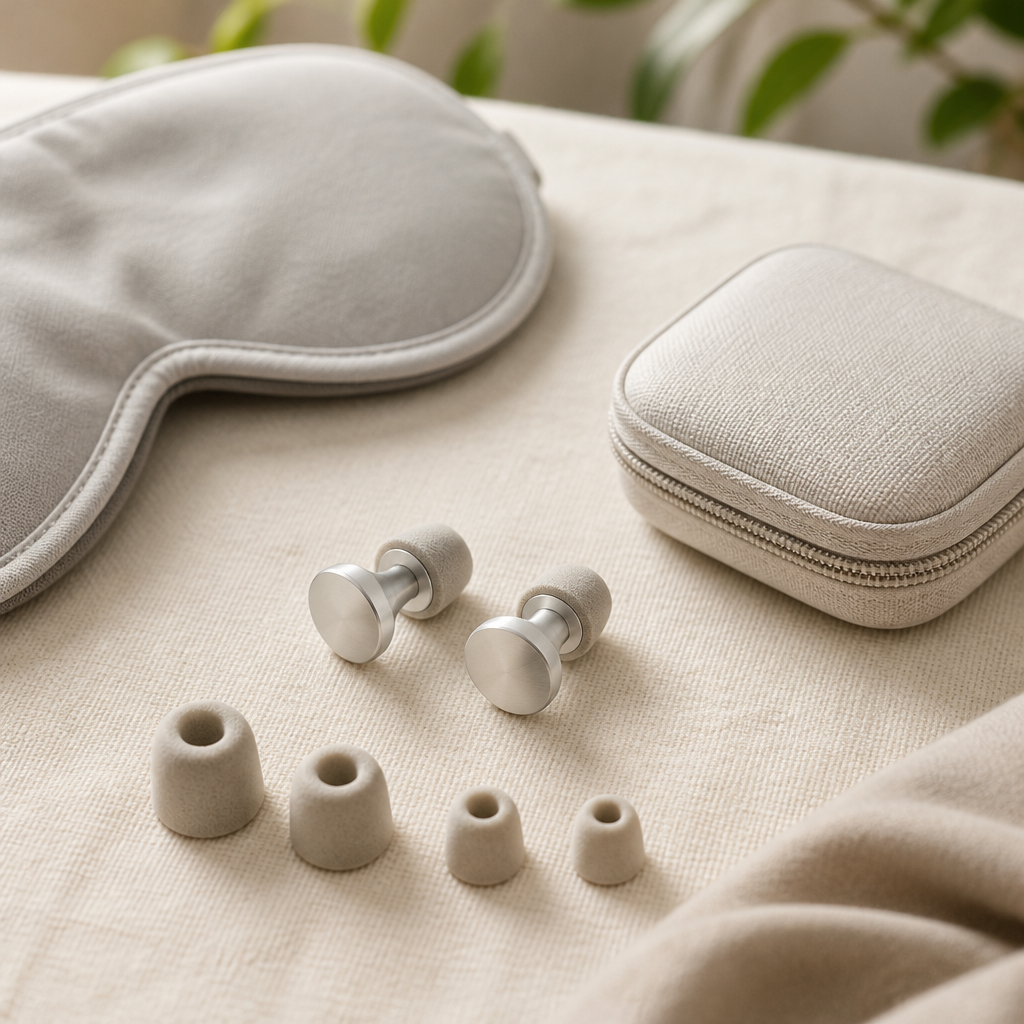
Foam tips are soft, compressible, and effective at reducing broad, steady noise. They are also the part that wears out, so the replacement schedule matters more than the rating on the box. Keep a spare set in the case so a worn tip never becomes the reason you skip sleep.
Wash the metal body with mild soap and water, dry it fully, and avoid storing it in a damp toiletry bag. Keep the tips dry as well, because moisture and earwax build-up shorten their useful life. Hygiene is the real reason to replace tips on schedule, not only comfort.
| Approach | Best For | Main Drawback |
|---|---|---|
| Disposable foam earplugs | Occasional travellers on a tight budget | Single-use waste, and you must buy a new supply for every trip |
| Reusable pairs with fixed silicone tips | Short trips where you want a low-cost, quick fix | The tip cannot be swapped if it loses shape, so a poor fit can mean replacing the whole product |
| Reusable metal-bodied pairs with replaceable foam tips (the ATTENU8 approach) | Frequent flyers, light sleepers, and workers who need repeat hearing protection | Higher upfront cost, and you must keep up with tip replacement every 6 to 8 weeks |
Position matters. Keep your earplugs in an outer pocket or small top compartment where you can reach them without unpacking the whole bag. Digging through a backpack at the gate is how pairs get left behind on the seat.
Store them in a hard case, not loose in a pocket with keys and coins. Grit and small metal objects can damage tips, and a crushed case is useless when you need it most.
A checked bag is the worst place for protection. If it is delayed, you spend the night without your tools. Our advice is simple: the earplugs travel with you, and the spare tips travel in the same pouch.
Add earplugs to your packing list as a named item, not a vague line such as “sleep stuff”. On a three-day city break you may only need one pair. On a longer rotation with overnight coaches, pack the spare foam tips as well, so one lost item does not end the trip.
Check tip condition the week before you leave. If the foam looks compressed, flattened, or discoloured, swap it now rather than discovering the problem on a night flight.
Pro tip: Write the date you fitted a fresh set of tips on a note in your phone or on the inside of the case lid. It takes seconds and makes the 6 to 8 week replacement window easy to track.
Overnight flights are where earplugs earn their keep. The cabin lights dim, the engines settle into a drone, and the people around you finally go quiet, but that quiet is broken by call bells, meal trolleys, and a neighbour’s phone chiming. A good seal covers the steady sound, while a fixed routine handles the rest.
The sequence we recommend is simple. Put the earplugs in before the cabin dims, add the eye mask, and leave the tips in until you land. Reading or scrolling after the earplugs are in tends to keep you alert, so close the screen first.
Time zone shifts make light sleep even lighter. When you arrive at a hotel during the day, the sound of daytime life can stop you from napping properly. Earplugs help you take a short recovery sleep without waking at every trolley or door.
Plan naps in advance and use the same earplug routine each time. Repetition trains your body to wind down as soon as the case opens.
If a tip works loose at 2am, do not force it back in. Ease it out, check it for wax or debris, and reseat it gently. If it still will not hold, switch to the next size. Carry the spare tips so you are never stuck without a working seal.
Many people who use our earplugs do not travel for pleasure. Site visits, plant floors, airside work, and field deployments all put people beside loud equipment for long hours. For them, earplugs are not a sleep aid but a daily safety tool that has to fit, stay comfortable, and be cleaned properly.
Be honest about the limits. A rating on the box is a test figure, and real protection depends on how well the earplugs are inserted and whether they stay sealed through a full shift. If your employer sets a required protection level, check the stated rating against that requirement and follow your site’s hearing conservation rules.
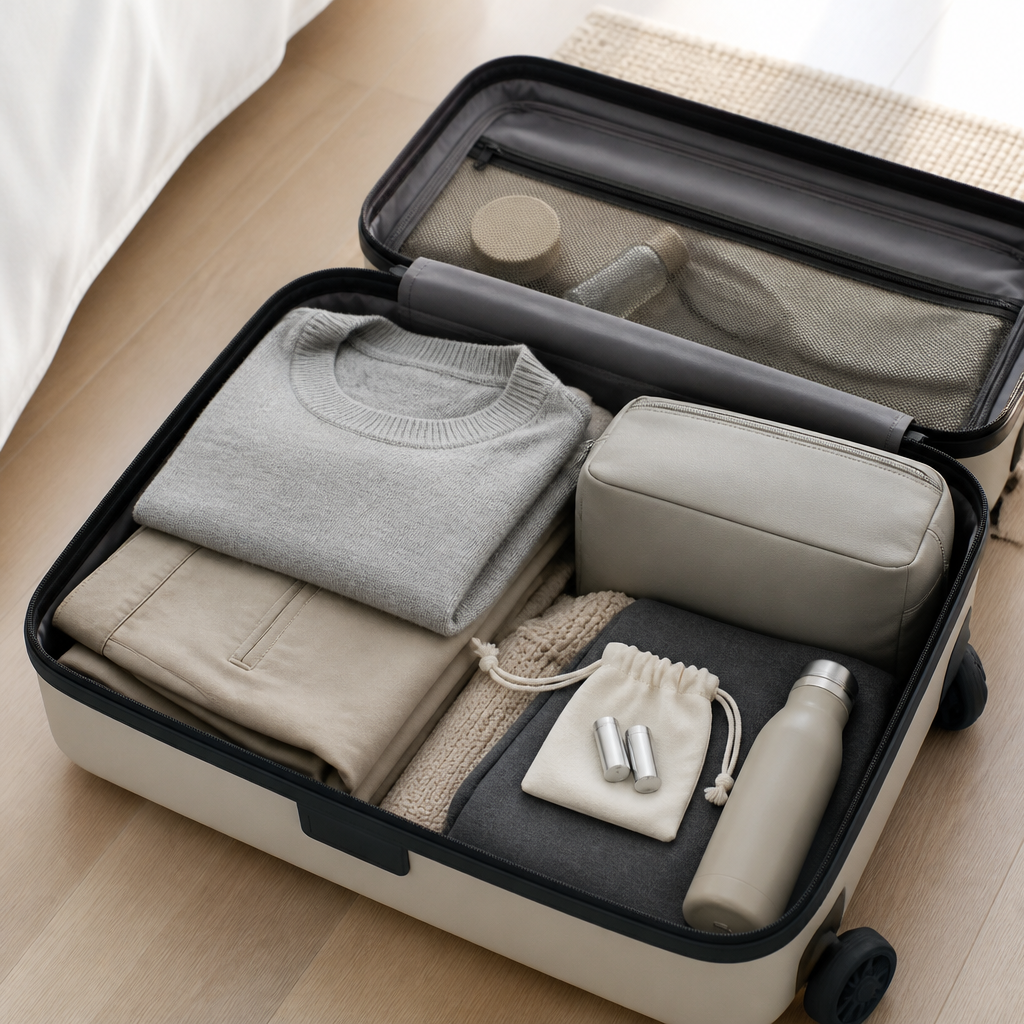
Some tasks produce constant noise, while others produce sharp bursts from impact tools or alarms. Earplugs work best for steady noise you can plan around. For sudden impacts or very high levels, your workplace may require additional protection, so do not treat one pair as a universal answer.
Daily users should clean the metal body after each shift and inspect tips for cracks or tears. Dust and dirt reduce grip and can irritate the ear canal. Replace tips on schedule even when they look fine, because wear is not always visible.
If you travel only once or twice a year, a cheap disposable pair may suit you well enough. Once you are on the road more often, a reusable pair with replaceable tips usually costs less per trip and produces far less waste.
Replace foam tips every 6 to 8 weeks, or sooner if they look compressed or discoloured, or if they no longer hold a seal in your ear.
Yes, earplugs are normally fine in hand luggage. Keep them in your carry-on so they are available during the flight and on arrival, and check your airline’s rules if you are carrying anything unusual in the same bag.
They reduce much of the broad, steady noise that gets through walls, but they cannot block everything. Very loud or sudden noise may still reach you, so pair them with a request for a quieter room when you book.
Test each size at home, then check the seal by yawning, chewing, and lying on your side for a few minutes. Choose the size that stays put, blocks the sound, and feels comfortable for a full night.
Tell us in the comments which trip taught you the most about sleeping with earplugs, and whether your current pair fits the way you need it to.
Hyperacusis turns ordinary life into an obstacle course. A kettle whistle, a neighbour’s television, or someone turning the pages of a newspaper can feel painful, even frightening. If you have lived with that reaction, you already know how quickly it shapes your choices: where you sit in a restaurant, whether you accept a dinner invitation, how you sleep. Ear plugs will not cure hyperacusis, but used with judgement they can lower the daily sound load that keeps your nervous system on alert. This guide explains where ear plugs fit into a coping plan, where they do harm, and how to choose a pair that actually stays in.
| Key Insight | Explanation |
|---|---|
| Hyperacusis is a sound tolerance problem, not only a hearing test problem | The Cleveland Clinic describes everyday sounds that seem unbearably loud, painful or even frightening. Not every case involves hearing loss, so a normal result does not mean your symptoms are imagined. |
| Ear plugs reduce the load, they do not fix the cause | Use them to get through predictable triggers like commutes, shops and workplaces. Treat them as one part of a plan built with a clinician. |
| Fit matters more than brand or price | A leaking plug lets through the high-pitched sounds that hurt most. Test the XS, S and M tips and pick the smallest one that seals without pressure. |
| Replace foam tips every 6 to 8 weeks | The metal body is built to last, but worn foam stops expanding evenly and seals poorly. Write the fitting date on your case so you know when to swap. |
| Do not wear plugs all day at home | Constant sound blocking gives your ears and brain less practice with ordinary sound, which can make tolerance worse over time. Remove them in safe, quiet moments. |
| Keep a trigger log before your appointment | Note the sound, place, time and your stress level for two weeks. This gives an audiologist far more to work with than a general description. |
Hyperacusis is a rare hearing disorder in which sounds that other people consider normal seem uncomfortably, and often unbearably, loud. Clinicians also call it decreased sound tolerance, or DST. The problem is less about how loud a sound is and more about how the auditory system reacts to it, which is why a moderate sound can feel as bad as a shout.
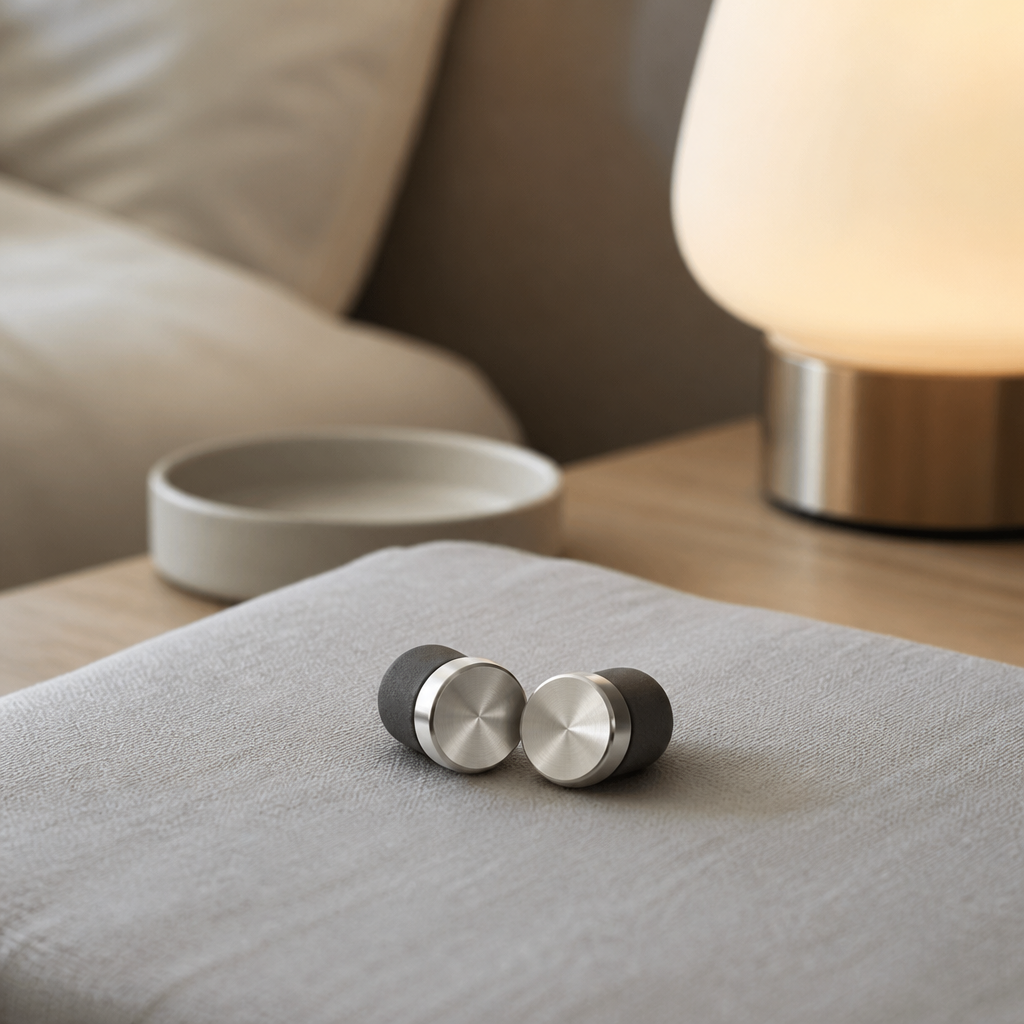
In practice, people describe the sensation as a volume knob stuck near maximum. A conversation in a café stops being background chatter and becomes a flood of competing voices. A tap running, a fridge humming or a page being turned can all register as sharp or painful.
Triggers are often everyday sounds that most people barely notice. The Cleveland Clinic lists people chatting, a car engine running, water running in a kitchen sink, household electrical appliances, and someone turning the pages of a book or newspaper as examples of sounds that can feel intolerable. Many people also find that high-pitched sounds such as whistling, screeching or cymbals are the worst.
Triggers are personal, and they shift over time. Someone may cope well with traffic and struggle badly with a dishwasher, and a week of poor sleep can make a normally tolerable sound unbearable. A simple trigger log, kept for two weeks with the time, place, sound and your stress level, is one of the most useful things you can bring to an audiologist.
Hyperacusis frequently appears alongside tinnitus, the ringing, whistling, clicking or roaring that you hear without an external source. The Cleveland Clinic notes that tinnitus is a more common condition related to hearing loss, but it also points out that not all cases involve tinnitus or hearing loss. That matters if your tests look normal and you still feel overwhelmed by noise, because your symptoms are still real.
Hyperacusis is not only a question of the ear. It is also a question of how the nervous system learns to treat sound, which is why the emotional side deserves as much attention as the hearing side.
Noise sensitivity is a broad term. Many people find certain sounds irritating, and some have a strong reaction to noise linked to anxiety, sensory processing differences, migraines or a stressful environment. Those experiences are real and worth taking seriously, but they do not always involve a change in how the ear and auditory nerve process loudness.
Hyperacusis is the more specific diagnosis. The sound itself becomes physically intolerable across a range of volumes, and the reaction often lingers after the sound stops. One audiology guide describes it as a condition affecting the inner ear that is most often found in people who have had noise-induced hearing loss, although the clinical picture is broader than that.
If a loud restaurant leaves you tired and irritable but you can still enjoy the meal once you move to a quieter table, you are likely dealing with ordinary sensitivity. Most people can plan around that. They choose seats near walls, carry earplugs in a bag and leave early.
The line gets blurry when the reaction spreads. If you start avoiding shops, skipping family gatherings or leaving a job because of how sounds make you feel, the issue has moved past preference. That is the point at which a formal assessment is worth the time, even if you have been managing things yourself.
Several signs are worth raising with a clinician: pain or discomfort from everyday sound rather than simple annoyance, a reaction that lasts minutes or hours after the noise stops, ear pain, and ringing. The audiology guide also lists difficulty sleeping, anxiety and depression among the symptoms that can come with the condition. Keep a short note of which of these you notice, because it helps a clinician separate hyperacusis from other causes.
Most people with hyperacusis avoid sound at some point, and that reflex is understandable. Avoidance buys short-term relief, but it often narrows your life. The Cleveland Clinic notes that some people avoid social situations to reduce the risk of intense loudness, and that the condition can leave you feeling irritable and anxious.
The trap usually works like this. You avoid a sound, the next exposure feels worse because you have had no practice with it, and your brain learns to treat the sound as a threat. Over months, the list of tolerable places gets shorter. Clinicians generally caution against total sound avoidance for this reason.
The same logic applies to ear plugs. They help when you use them to get through specific situations, and they become a problem when they turn into the only way you engage with the world. A pair in your bag for a difficult shift is a tool, but a pair in your ears from breakfast to bedtime is a wall.
The audiology guide lists several treatment routes: medication, hearing aids, tinnitus masking devices, wearing earplugs, and avoiding certain triggers. The Cleveland Clinic states that there is no single cause or cure that works for everyone, but that therapies can help treat the symptoms. The most effective plans tend to combine a few of these rather than relying on one device.
A realistic plan starts with an assessment by an audiologist or ENT, then adds sound management, then gradual, planned exposure to manageable sounds if your clinician recommends it. Ear plugs fit in as protection during the hardest parts of the day, not as the whole plan. The same guide also states that hyperacusis is not curable but that steps can keep it from getting worse, which is why early attention matters.
Ear plugs help by reducing the amount of sound that reaches your ear, which lowers the overall load on a system that is already overreacting. A pair rated at roughly 32dB of noise reduction, like the metal-bodied design ATTENU8 makes, takes the sharp edge off many everyday sounds. The result is not silence, but a level where a conversation or a station announcement becomes something you can tolerate for longer.
The biggest difference for most people is not the moment a siren goes off. It is the background hum of an open-plan office, a supermarket or a busy street that wears you down over an afternoon. Wearing plugs for a planned stretch, such as a commute, a shift or a lunch in a loud room, keeps that background from building into a full flare.
Use them deliberately. Decide before you walk into a space, not after the discomfort starts, because a plug inserted during an acute spike usually arrives too late to prevent the reaction you were trying to avoid.

Some sounds are sudden: a dropped tray, a car horn, a hand dryer, a name shouted across a platform. Those are the moments when hyperacusis tends to produce the strongest pain or fear. Carrying plugs in a small case, or in a coat pocket, means you can insert them within seconds rather than walking away in distress.
Pro tip: Practice inserting your plugs at home in a quiet room before you need them in public. Most people fumble the first few tries under stress, and a rehearsed insertion becomes quick once it is routine.
Fit decides almost everything. A plug that leaks reduces protection and lets in the sharp, high-frequency sounds that are often the most painful for people with hyperacusis. A plug pushed too deep can cause pressure and soreness, which makes you remove it just when you need it. ATTENU8 supplies three foam tip sizes, XS, S and M, so the goal is to find the one that seals without pressure.
Start with the size that feels smallest but still stays put when you move your jaw. Roll the foam tip into a thin cylinder, insert it, and hold it for 20 to 30 seconds while the foam expands. If your own voice booms or you hear a whistle when you yawn, the seal is off. Try the next size and repeat the check.
In practice, many people end up in S, but ear canals vary, and some people with narrow canals need XS to avoid soreness. Do not judge the fit by comfort in the first minute, because a proper seal can feel strange until the foam settles.
The metal body is designed to last, and the foam tips are the part that wears out. Plan to replace them every 6 to 8 weeks, or sooner if they feel hard, crumble or no longer expand properly. A tired tip seals poorly and can trap earwax, so a worn tip is not only less comfortable, it is less effective.
Pro tip: Write the date you fitted each new tip on the case or in your phone calendar. A fixed schedule is easier to follow than guessing when a seal has started to fail.
Ear plugs are one tool among several, and they suit some situations better than others. The table below compares three approaches that people commonly use alongside professional care. Each has trade-offs, and the right choice depends on whether you need protection for a few hours or for a full night.
| Approach | What It Does Well | Where It Falls Short |
|---|---|---|
| Disposable foam ear plugs | Inexpensive, easy to carry, and effective when fitted correctly | Single use, so you replace them constantly, and the fit can vary from pair to pair |
| Reusable metal-bodied ear plugs with foam tips (ATTENU8 design) | Stable reusable body, three tip sizes, rated at roughly 32dB of noise reduction | Needs a fit check, foam tips must be replaced every 6 to 8 weeks, and the upfront cost is higher than a single pack of foam |
| Sound generators or white noise devices | Mask low background sound and can help you fall asleep | Do not reduce the impact of sudden sounds, and can add to your overall noise load if the volume is set too high |
Custom-moulded plugs fitted by an audiologist are a further option, particularly for people who need consistent protection every day. They cost more and take longer to arrive, so they usually make sense once you know which environments you need to manage. Whichever you choose, the comparison works best when you bring the results to your clinician rather than deciding alone.
Three situations come up again and again for people with hyperacusis and noise sensitivity: sleep, travel and work in loud environments. Each one calls for a slightly different approach, and the common mistakes differ too.
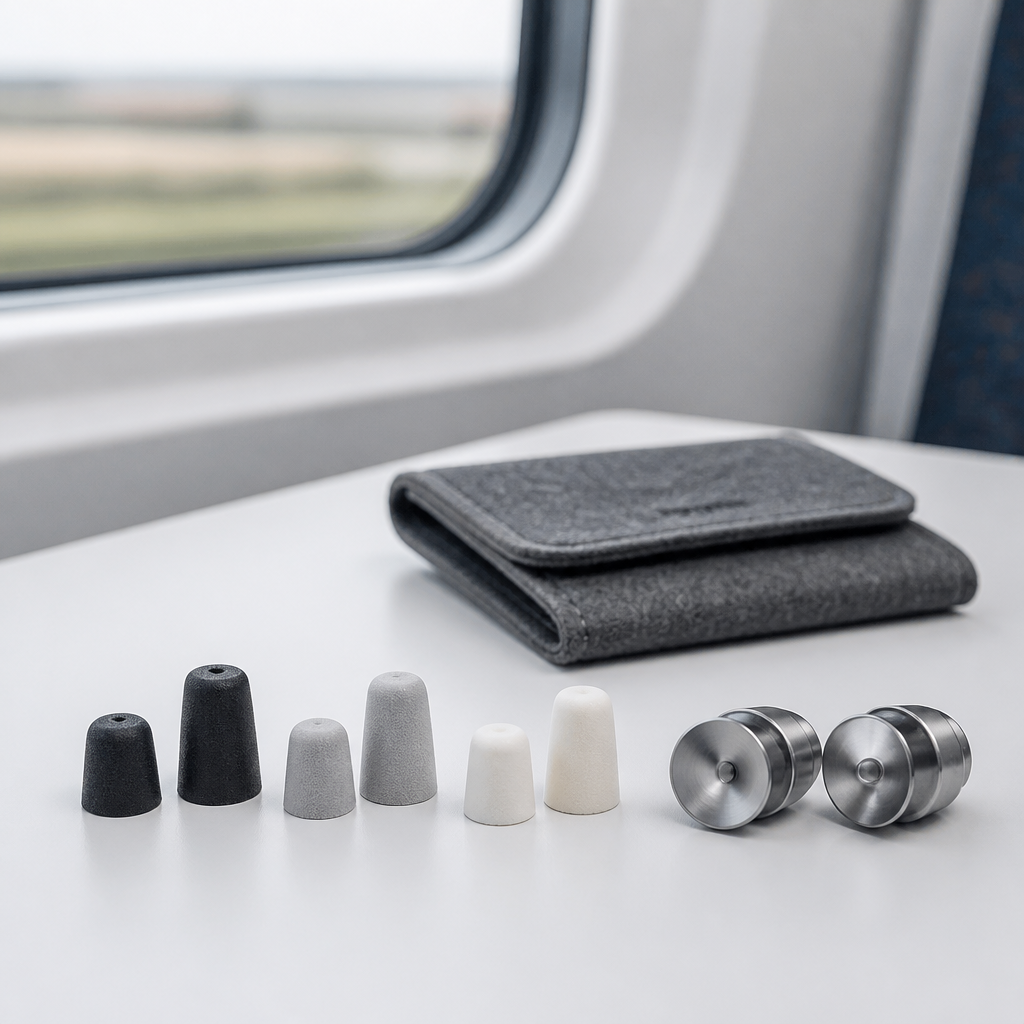
Sleep is where poor sound tolerance costs the most. Traffic, a partner’s breathing, a neighbour’s door or a dripping tap can keep you awake, and a night without rest makes the next day’s sounds feel even louder. The audiology guide lists difficulty sleeping among the symptoms that can come with the condition, so it is worth treating sleep as a priority.
A workable bedtime setup includes plugs with a fit you have already tested, a dark room, and a low, steady background sound if silence feels unbearable. Remove the plugs if you need to hear something important, such as a smoke alarm. Avoid wearing plugs every night without a break unless your clinician advises it, because the ear canal can become irritated and the seal can change over time.
Planes, trains and buses combine constant low rumble with sudden announcements and slamming doors. A pair of plugs in a small case turns a difficult journey into one you can finish. Put them in before the engine noise peaks, not once the carriage has already overwhelmed you, and keep your tips clean and dry so the seal holds through the trip.
People who work around heavy machinery, drills or firearms face a different problem. Their hearing needs protection from damaging sound levels, and their sensitivity may already be high. For these settings, choose plugs against the requirements of your workplace and the hearing protection programme your employer provides, and fit them properly at the start of every shift.
Anyone who notices new pain, ringing or a change in sound tolerance after loud work should book a hearing assessment rather than adding more protection and hoping the symptoms pass. Early attention makes a practical difference, because the guidance on hyperacusis consistently points to assessment as the first step.
No. Ear plugs do not cure hyperacusis, and the Cleveland Clinic notes that there is no single cause or cure that works for everyone. They help by lowering the sound load during specific situations, which can make daily life more manageable while you work on a broader plan with a clinician.
Occasional daily use is not automatically harmful, but wearing them for all waking hours can increase sensitivity over time because your ears and brain get less practice with ordinary sound. Use them for planned situations, remove them at home when it is safe, and ask an audiologist for a schedule that fits your symptoms.
Pain or intense discomfort from everyday sounds, reactions that continue after the noise stops, and ear pain or ringing are strong signals. Only a hearing assessment by an audiologist or ENT can confirm the diagnosis, so book a test rather than relying on a guess.
Every 6 to 8 weeks is the schedule for ATTENU8 foam tips, or sooner if they harden, crumble or stop expanding. Keep the metal body in use and replace only the tips.
Many people try S first, but ear canal size varies. Test XS, S and M, and choose the smallest tip that seals without pressure or whistling when you speak or yawn.
If you have tried ear plugs for hyperacusis or noise sensitivity, tell us which tip size and situations worked for you and which ones were hardest to manage.
We would love your feedback and any insights you would share with others. What perspective would you add?
If you have ever walked out of a concert with a high-pitched whine that lingered until the next morning, you have already seen the link between noise exposure and tinnitus. For many people that ringing fades within a day or two. For others it sticks around, and the question becomes whether a pair of earplugs could have stopped it. The honest answer is that earplugs for tinnitus prevention can work, but only when they are chosen and worn for the right reasons. This guide explains what the evidence supports, where earplugs fall short, and how to use them without making your ears more sensitive over time.
| Key Insight | Explanation |
|---|---|
| Earplugs protect, they do not cure | They reduce the sound reaching your inner ear during loud exposure, but they do not lower tinnitus that has already started. |
| Protect before the ringing starts | Putting plugs in before a loud event is the step most likely to lower your risk of noise-induced tinnitus. |
| Match the tool to the noise | Foam tips suit short, very loud bursts. Filtered or custom designs suit all-day exposure where you still need to hear speech. |
| Read the rating, then test the fit | Higher noise reduction ratings generally mean more reduction, but a poor seal can cut the real-world benefit sharply. |
| Skip constant wear in quiet rooms | Blocking all sound at home for long periods can make your brain amplify sound and tinnitus over time. |
| Replace tips on a schedule | Foam tips that harden, shrink, or pick up debris stop sealing properly, so replace them every 6 to 8 weeks. |
Earplugs cannot prevent every case of tinnitus, and they cannot switch off ringing that has already begun. What they can do is reduce the sound energy reaching your inner ear during exposures that would otherwise cause damage. Of all the steps you can take, wearing hearing protection is one of the few that is fully within your control.
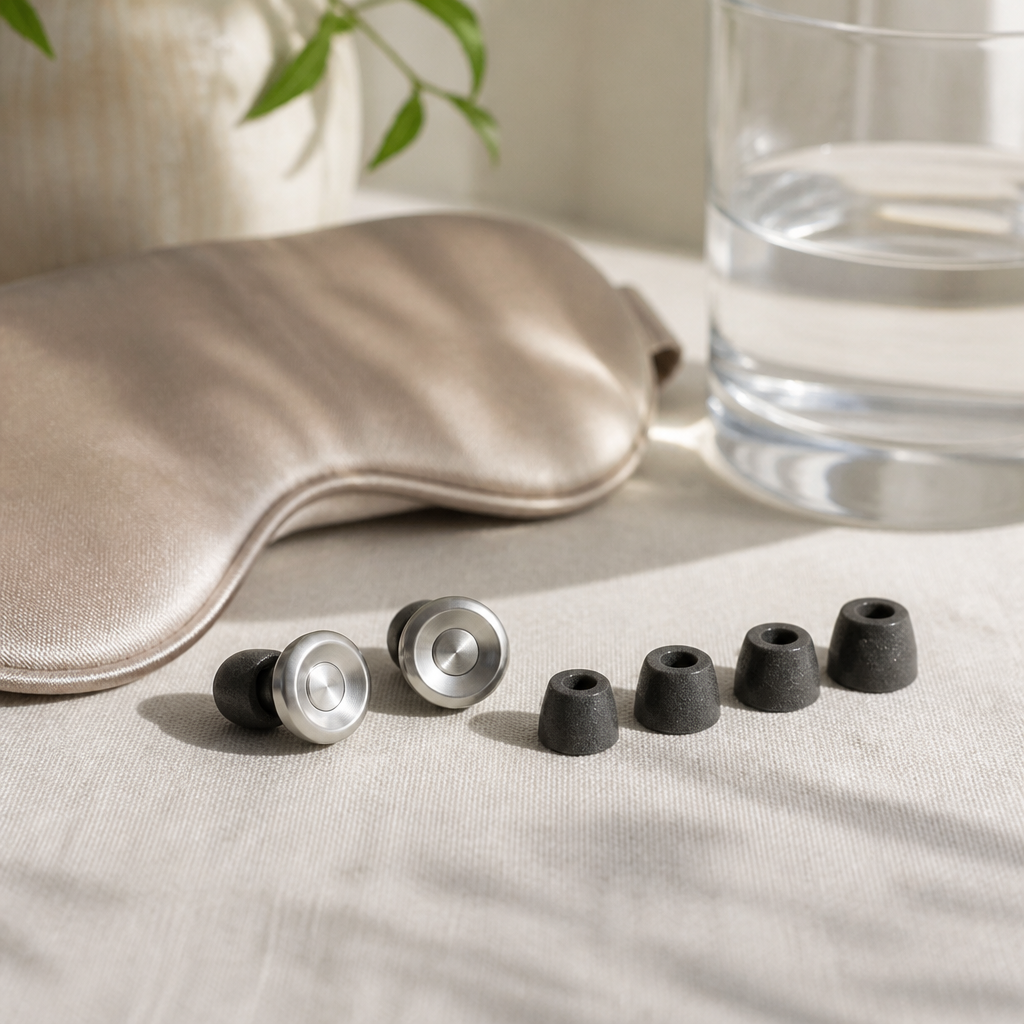
The expert guide on tinnitus earplugs at neuromedcare.com makes a useful distinction. Earplugs protect a vulnerable auditory system from further damage and reduce sound-triggered spikes, but they do not lower tinnitus volume itself. The same guide notes there is no such thing as a tinnitus earplug in the strict sense, so the value comes from wearing a standard, well-fitting pair in the right places.
The evidence for prevention is strongest for loud events. A 2016 review on earplugs and hearing loss found only one well-conducted randomized clinical trial, and it showed that wearing earplugs to concerts reduced the temporary shifts in hearing measured after the show. That is a narrow evidence base, so treat earplugs as a sensible layer of protection rather than a guarantee.
In practice, the highest-value use is the night you already know will be loud. Concerts, motorsport events, power tool days, and long hours at a shooting range are the situations where protection pays off. Wearing plugs through a quiet supermarket trip buys you very little.
Tinnitus often follows damage to the inner ear, where tiny sensory hair cells convert sound into nerve signals. Intense or prolonged noise can injure those cells. The Hearing Associates of Dothan overview describes tinnitus as often caused by inner ear damage that can develop when you are around high noise levels without protection.
Two patterns cause most noise-related ringing. The first is a single sharp event, such as an explosion, a gunshot, or a heavy impact. The second is repeated moderate noise over hours, such as a factory floor or a loud gym class. Sharp, intense sounds from shooting ranges, explosions, or industrial work can pose risk to your ears, and those bursts can lead to tinnitus without protection.
There is a common belief that only very loud places matter. The same overview points out that audiologists believe even moderate noise can cause problems over time, including hearing loss and tinnitus. A commute on a loud train or a full shift beside a blender in a commercial kitchen adds up, even when no single moment feels dangerous.
A practical rule of thumb: if you have to raise your voice to be heard by someone an arm’s length away, the environment is loud enough to justify protection. Ringing or muffled hearing that lingers after you leave is a sign that the exposure was too much for that session.
Ringing or muffled hearing after a loud event is often a temporary threshold shift, meaning your hearing sensitivity has dropped for a while. Repeated episodes raise the risk that some of that loss becomes lasting. That is why the goal is to avoid the first shift, not to wait it out and hope for the best.
Not every earplug behaves the same way, and the type you choose matters more than the brand name on the packet. Foam, filtered, and custom-fit designs trade off attenuation, comfort, and how much ambient sound they let through. Understanding those trade-offs makes it much easier to pick the right tool for each situation.
Foam earplugs can give strong attenuation when they seal well, which is why the neuromedcare guide recommends them for short bursts in very loud settings. The trade-off is that full blockage can feel strange over long periods, and a poorly rolled foam plug can leak noise through the canal.
Filtered or high-fidelity designs reduce volume more evenly, so speech and music stay recognisable. The neuromedcare guide prefers these for daily use in loud environments because they lower volume without total occlusion.
ATTENU8 builds its pairs around a concave aluminium body with three tip sizes, XS, S, and M, so the seal is the part you adjust rather than the whole plug. Only the memory foam tips need replacing, roughly every 6 to 8 weeks depending on use and cleaning. Our stated noise reduction is approximately 32dB, but treat any single figure as a starting point for comparison, not a promise for every noise. You can see the full range on the ATTENU8 homepage.
Pro tip: Try all three tip sizes before you need them, ideally at home, and choose the one that seals comfortably without pressure or a feeling of suction. A tip that is too small leaks, and one that is too large pushes against the canal and becomes uncomfortable within an hour.
Before you choose, compare the options against the noise you actually face. The table below sets out four common approaches and where each one fits best.
| Protection Option | Best Use | Main Trade-off |
|---|---|---|
| Disposable foam earplugs | A single very loud event, such as a live gig or a demolition day | Fit depends heavily on insertion technique, and tips are discarded after use |
| Reusable metal-bodied pairs with foam tips | Repeated loud days, travel, and noisy nights at home | Tips need cleaning and replacement every 6 to 8 weeks |
| Filtered or high-fidelity earplugs | All-day exposure where you still need to hear conversation | Lower maximum attenuation than full-blockage foam |
| Earmuffs | Long sessions where in-ear plugs feel uncomfortable | Bulkier, and less practical under helmets or in tight spaces |
No single option is best for every setting. Hearing Associates of Dothan suggests that having more than one type on hand lets you assess the situation and match protection to the noise level. In our experience, keeping one pair of reusable plugs in your bag and one set of earmuffs in the vehicle covers most real-life exposures.
Also check the noise reduction rating on the packaging. The NIDCD explains that most hearing protectors carry a noise reduction rating, and that a higher rating generally means more reduction. Those ratings come from test conditions, though, and a loose fit or a damaged tip can deliver far less than the number on the box.
Light sleepers are a major reason people buy reusable earplugs, and sleep is where the strategy question gets tricky. Sleep protection and ear protection are different goals. A plug that helps you sleep through traffic is not automatically one that protects against damaging noise, and the two goals can pull in different directions.
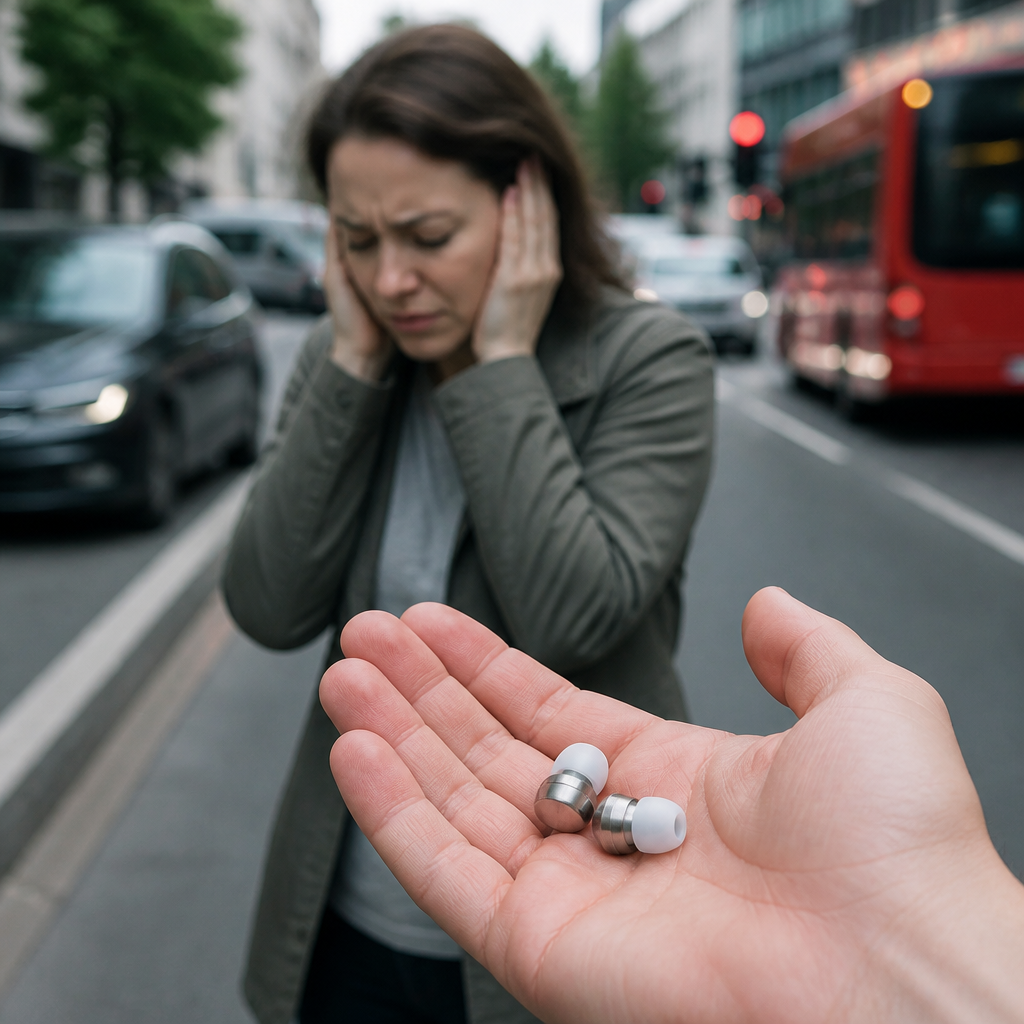
Traffic, neighbours, and a partner’s snoring usually sit well below the levels that injure hearing. Wearing plugs for comfort at night is reasonable, but it should not become a habit that cuts you off from ambient sound for most of the day. Think of sleep plugs as a comfort tool and a separate decision from hearing protection.
The neuromedcare guide raises a point worth taking seriously. Sustained sound deprivation can increase central gain, the brain’s amplification of incoming signals, which can make tinnitus more noticeable. That is why the guide advises against constant wear in quiet settings, where the brain still needs ambient sound to stay calibrated.
Protection is a tool for specific exposures, not a permanent state for your ears.
In practice, use plugs for sleep when you need them, take them out during quiet daytime hours, and avoid making them a default for every room. If you notice that ordinary household sounds have started to feel harsh, that is a signal to scale back your use rather than add more protection.
Workers in construction, manufacturing, and the military often face the highest cumulative noise exposure. For them, earplugs are a daily safety tool rather than an occasional comfort. The real challenge is consistency, because a plug worn for half a shift protects only half of the exposure.
Custom-fit earplugs are often the ideal solution for workers who must wear protection every day, since they follow the exact shape of the ear and tend to be more comfortable over long hours. Off-the-shelf pairs can work well too, but only if the tip size is right and you check the seal each time you insert them.
Pro tip: Clean reusable tips with mild soap and dry them fully before reinserting. Moisture trapped in foam weakens the seal and can irritate the ear canal, which makes people more likely to skip wearing the plug altogether.
A practical routine has three parts. Insert the plugs before you enter the loud zone, check the seal with a quick press and release, and remove them only after you leave the area. Keep a spare pair in your vehicle or locker so you never work unprotected because a plug was lost.
Shooting ranges and training exercises produce sharp impulse noise that can damage hearing quickly. Because the source material on hearing protection stresses that sudden bursts pose real risk, keep both plugs and earmuffs available and choose by the exposure. Plugs suit tight spaces and long gear use, while earmuffs can give extra attenuation when the impulses are frequent and severe.
Earplugs are not harmless in every situation. Overuse can backfire, and the mechanism is central gain rather than the plug itself. The neuromedcare guide describes overuse as a trigger that causes the brain to amplify the signal, so tinnitus seems louder.
Watch for ringing that becomes noticeably louder when you remove your plugs, growing sensitivity to ordinary household sounds, and a reluctance to enter normal environments. These signs suggest that protection has slipped into avoidance. Avoidance is the stage where the problem usually starts to grow.
A specialist perspective in the neuromedcare guide describes how sustained auditory deprivation can reinforce a fear-avoidance loop, worsening both sound sensitivity and tinnitus prominence. Breaking that loop usually requires gradual, medically guided re-exposure to normal sound levels rather than more blocking.
The same guide also cautions against one-size-fits-all advice. Some people with reactive tinnitus or sensory processing concerns need strategic protection while the underlying issue is addressed. Treat advice to never wear plugs with the same skepticism as advice to always wear them.
If ringing has already started, earplugs will not switch it off, so your next step is an assessment rather than another gadget. Ringing that does not settle within a day or two after a loud exposure, or that comes with hearing loss, dizziness, or ear pain, deserves a clinical visit. Do not wait for it to fade on its own if it is still there the next morning.
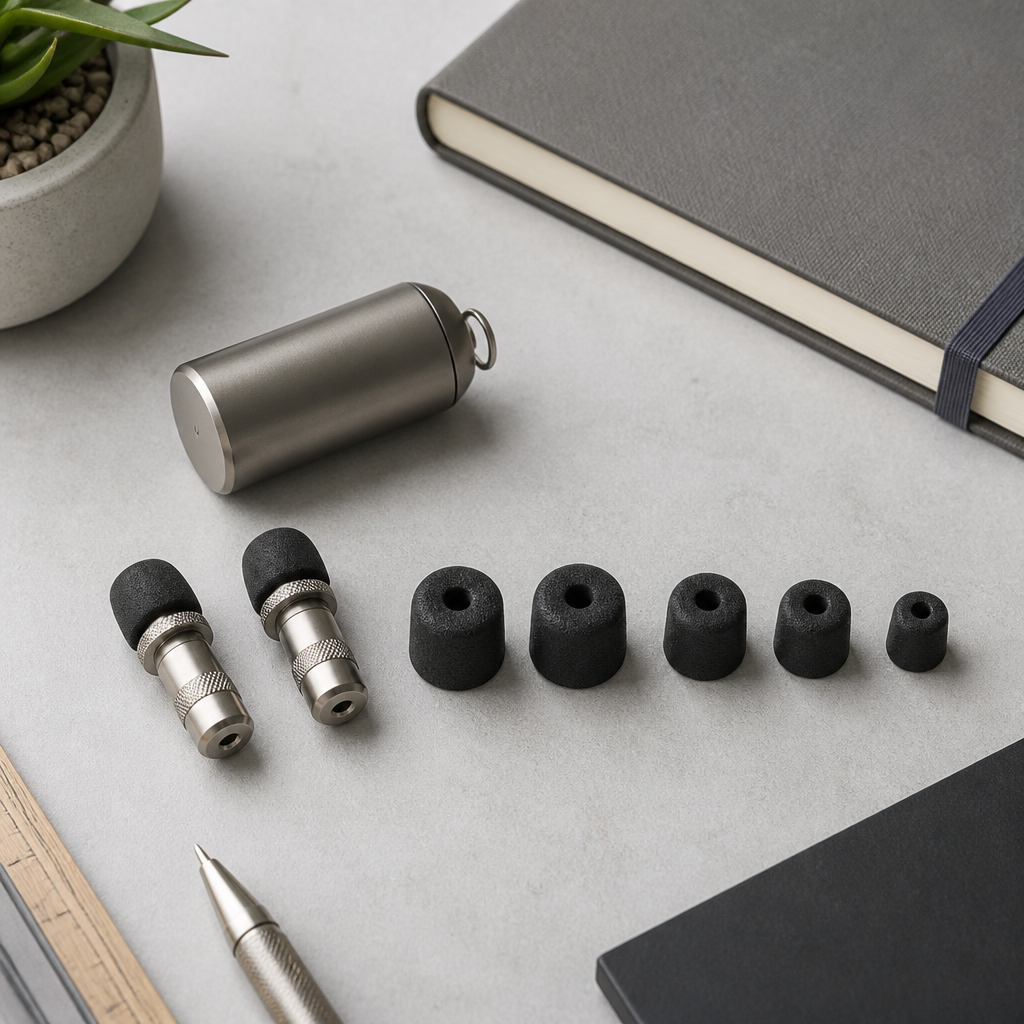
Hearing Associates of Dothan advises consulting an audiologist once symptoms appear, both for treatment advice and for ways to prevent further damage. An audiologist can test your hearing across frequencies and tell you whether your protection plan needs adjusting. That single test often answers more questions than months of guessing.
Bring a short note of your recent loud exposures, when the ringing started, and what protection you used. That history helps a clinician decide whether the problem is ongoing noise damage, something else, or both. Clear notes also make it easier to judge whether your earplugs are doing their job.
Earplugs can lower the risk of noise-induced tinnitus by reducing the sound reaching your ears during loud exposure, but they cannot guarantee prevention. Their value is greatest for events you can plan for, such as concerts, power tool work, and range days.
Wearing earplugs for loud environments does not normally make tinnitus worse. Constant wear in quiet settings can increase central gain over time, which may make tinnitus more noticeable, so use them for specific exposures rather than all day.
For short, very loud events, a well-fitting foam tip usually gives the strongest protection. For all-day exposure where you still need to hear speech, filtered or custom designs are usually more practical. Choose based on how long and how loud the exposure is.
ATTENU8 foam tips should be replaced roughly every 6 to 8 weeks. Replace them sooner if they harden, lose their shape, or pick up dirt, because a worn tip stops sealing properly and cuts protection.
If ringing or muffled hearing lasts beyond a day or two, or comes with ear pain, dizziness, or noticeable hearing loss, book an appointment with a clinician or audiologist. Early assessment gives you the best chance to protect the hearing you still have.
Neither option is universally better. Earmuffs can be more comfortable for long sessions and are easy to put on and take off, while plugs suit tight spaces and situations where earmuffs do not fit under other gear.
Tell us in the comments whether earplugs have helped you avoid ringing after a loud event, or whether a pair ever made your ears feel worse.
The ATTENU8 earplugs story starts with a simple frustration: most foam earplugs are cheap, work well for a night or two, and get thrown away long before they stop being useful. For light sleepers, shift workers, and anyone who spends time near loud machinery, that cycle gets expensive and uncomfortable fast. The ATTENU8 approach was to build a reusable pair with a solid aluminium body and replace only the foam tips. Crowdfunding put the idea in front of backers first, which forces a team to answer hard questions about fit, fulfilment, and replacement tips long before a retail shelf does.
| Key Insight | Explanation |
|---|---|
| The metal body is the long-life part | The aluminium body is designed for reuse, so your ongoing cost is the foam tips, not a new plug each time. |
| Budget for tips every 6 to 8 weeks | Nightly users will go through roughly six to nine sets of tips per year, so plan replacement stock in advance. |
| Fit sets the real attenuation | The 32dB rating only applies when the tip seals the ear canal, so test all three sizes before you rely on them. |
| Ratings are not interchangeable | Different regions and test methods produce different numbers, so compare products only when you know how each figure was measured. |
| Match the plug to the job | Sleep, flights, live music, and industrial work each need a different balance of comfort and reduction. |
| Early feedback is a design tool | Repeated questions from early backers reveal where instructions, packaging, or sizing guidance need to change. |
| Medical signs override any plug | Ear pain, discharge, or sudden hearing change should be checked by a clinician before you use any earplug regularly. |
Most people meet earplugs as a disposable item. You buy a bag, use a pair, and replace them when they stop expanding or start feeling gritty. ATTENU8 takes a different route, with a concave aluminium body as the long-lived part and three sizes of memory foam tips as the consumable.
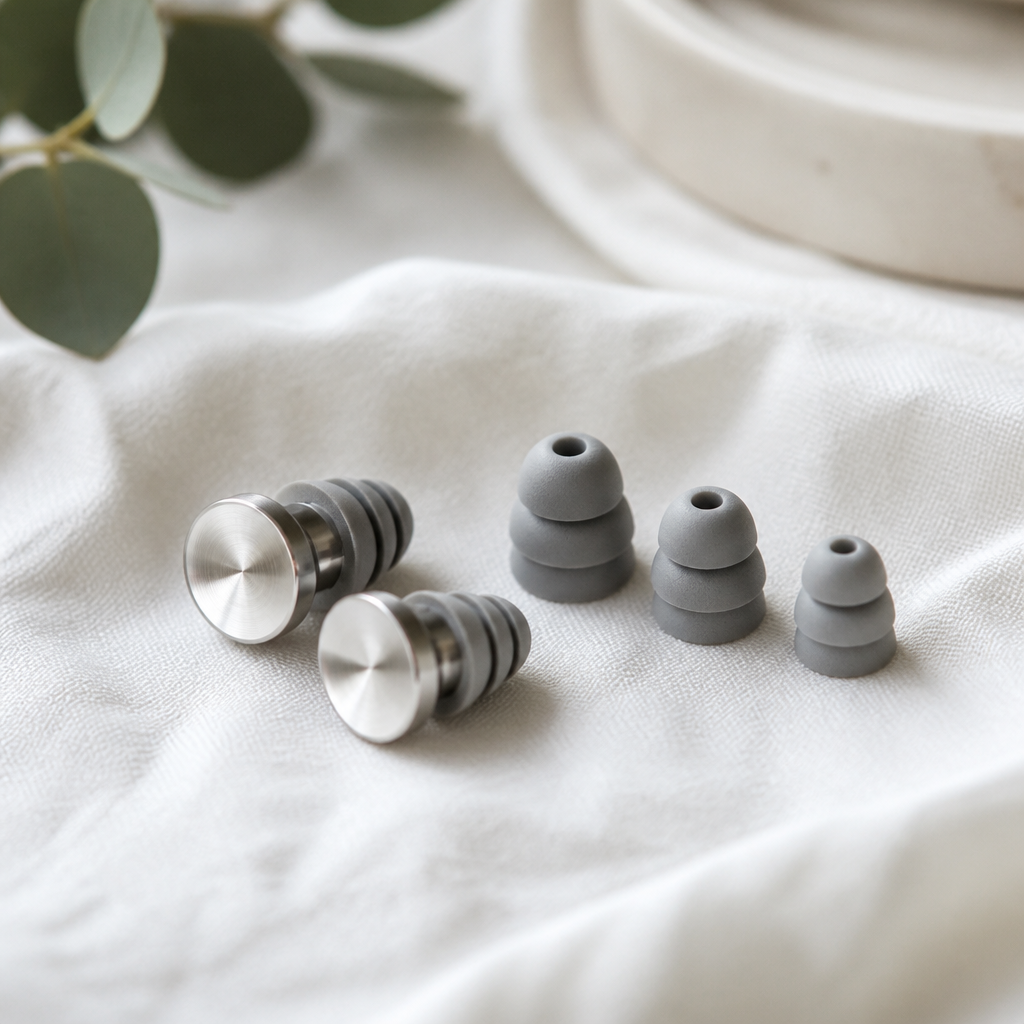
In the original press coverage, the company described a metal body that lasts for years while the tips are expected to last six to eight weeks. Those figures match the replacement schedule the brand gives customers today. The body is built to be reused, and the tips are the part expected to wear out.
A rigid body does two jobs. It holds a consistent shape in the ear canal, so the seal does not drift when you turn over at night. It also gives you a firm grip for insertion and removal, which is harder with a soft foam plug that collapses between your fingers. The product is described as offering balanced noise reduction across the frequency range, with a rating of about 32dB, rather than simply blocking the loudest sounds.
Balanced reduction matters more than a headline number. A plug that cuts high frequencies hard but lets low rumble through leaves a truck or a generator audible, and that low rumble is exactly what wakes light sleepers.
Memory foam is the trade-off. Foam conforms to the canal more readily than many rigid designs, which is why the company says the tips promise a better fit than traditional foam plugs. Foam also has a short life. It compresses, picks up earwax, and loses its recovery over time. Keeping the tips replaceable lets the metal body stay in service while the part that touches your ear gets refreshed.
The best hearing protection is the one still sealed in your ear at three in the morning, not the one with the highest number on the box.
Pro tip: Write the date you fitted new tips on the storage case. Six to eight weeks passes quickly, and a visible reminder is the most reliable way to stop using worn tips.
A crowdfunding campaign is a demand test with a deadline. A Facebook mentions page for the brand describes the first ATTENU8 campaign as reaching 360% of its funding goal. That is a strong signal that people wanted a reusable plug with a metal body. It is not proof that the product will sell the same way through a retail shelf or a repeat purchase cycle, and treating the two as the same is where many campaign teams get into trouble.
Backers buy at a different stage than most customers. They are early adopters who will tolerate rough edges and write about them. Their feedback tends to cluster around which tip size fits most people, whether the body is comfortable for side sleepers, and how the case behaves in a bag. None of that shows up in a single test session. Messages that repeat across early feedback should drive design changes faster than any one measurement.
Public questions are useful too. The brand’s Kickstarter FAQ covers how the product should be fitted and what level of comfort to expect. Questions that appear in a public FAQ show where the instructions are unclear. If the same question appears three times, the product page, packaging, or insert card needs to change, not just the reply.
The hard part comes after the pre-order. Fulfilling a campaign is a one-time logistics event. A product people reorder needs a steady supply of replacement tips, consistent packaging, and a clear route for customers who need a different size. The business case depends on whether a customer comes back in month four to buy tips, not on how quickly the first shipment left the warehouse.
A common mistake is treating the first batch of backers as the whole market. Those buyers already believe in the idea. Repeat sales depend on people who arrive with a sleep problem or a noisy job and need convincing on fit and durability alone. Plan the retail story around that second group from the start.
A 32dB rating is a laboratory figure, and it only applies when the tip seals the ear canal. ATTENU8 ships three sizes of memory foam tips, XS, S, and M, because canal shapes vary widely between people. Choosing the wrong size is the most common reason a reusable plug underperforms, and it is why we tell customers to test before relying on the product for sleep or work.
The official FAQ puts it plainly: when fitted correctly, the product reduces noise to more bearable levels while still giving the hearing protection you need. That sentence carries the whole instruction. Correct fit is the feature, not an add-on.
Start with the size that seals without pressure. A correct tip should feel secure but not painful, and it should not push outward when you chew or move your jaw. If the plug feels loose, step up one size. If it aches after twenty minutes, step down. Many people end up with different sizes in each ear, which is normal and worth checking rather than assuming.
A simple home test works well. Insert the plug, then listen to a low, steady sound such as a fridge hum or a fan. If the hum drops away clearly, the seal is working. If low tones still come through strongly, the tip is probably too small or sitting at an angle.
Most poor results come from insertion, not from the product itself. Pushing the body in too shallowly leaves a gap at the entrance, and forcing it too deep can irritate the canal. The foam tip needs a moment to expand fully after insertion. In practice, hold the body gently in place for several seconds until the tip settles, then check the seal before you walk away.
Another common error is inserting a tip that has been left out on a nightstand and is partly expanded. Keep the tips in the case and compress them as you insert. Dust, earwax, or moisture on the tip reduces grip, so keep the tips dry and clean.
The replacement cycle is the part of the ATTENU8 model customers ask about most. The tips are expected to last six to eight weeks, while the body is built to last for years. For someone who wears plugs every night, that means roughly six to nine sets of tips a year. Budgeting for that schedule is more realistic than assuming you will buy one pair and never think about it again.
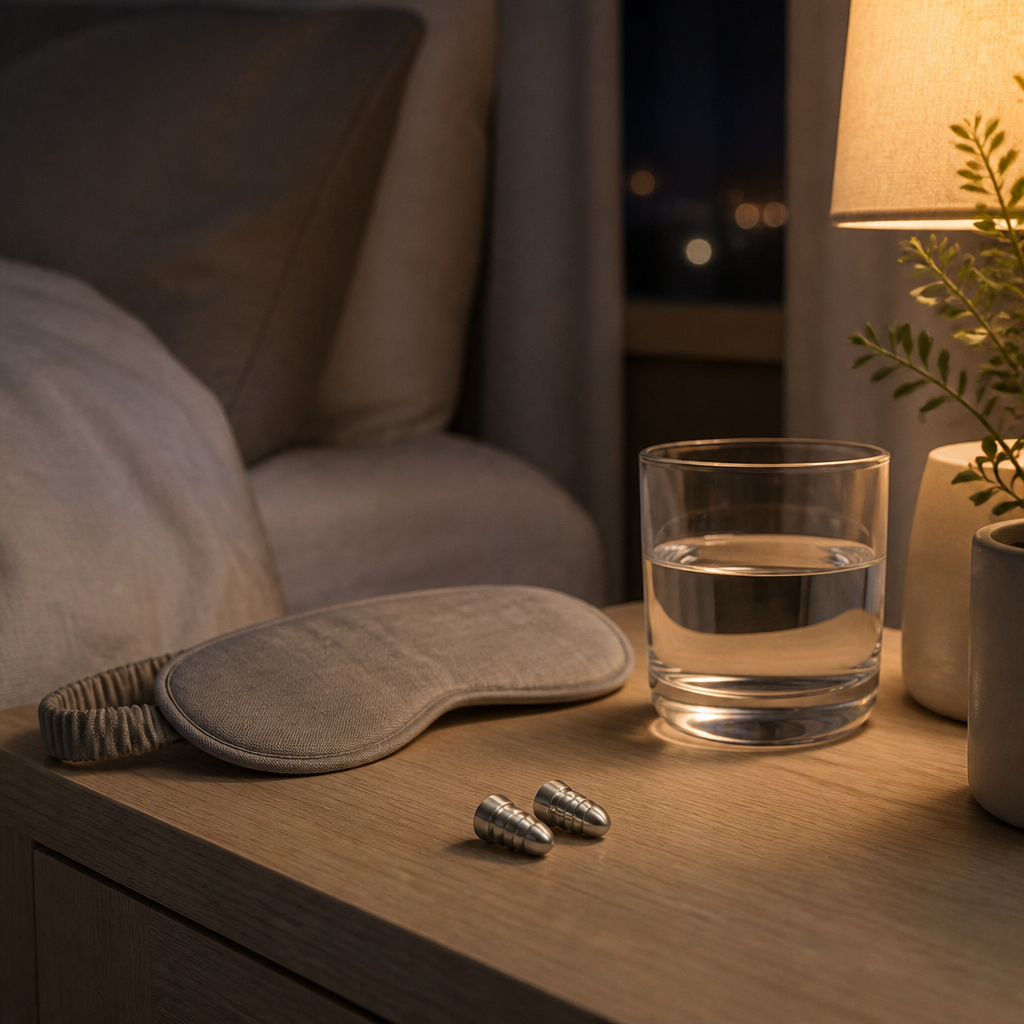
Work out the cost of a replacement cycle rather than the price of a single set. Divide 52 weeks by the number of weeks one set lasts, and you get the number of sets per year. At six weeks per set that is about nine sets a year, and at eight weeks it is about six and a half. The number that matters most is how often you wear them, because heavier use wears tips out faster.
Wipe the metal body with a dry or slightly damp cloth after use, and let it dry before returning it to the case. Earwax is the main enemy of foam. Once a tip is stained or stiff, it rarely returns to its original seal. Store the body and tips in a dry case away from heat, since warm, humid conditions speed up foam breakdown.
Pro tip: Keep a spare set of tips in your bag or desk drawer. The worst time to discover a worn tip is the night before a long flight or the first morning of a shift that requires hearing protection.
Many customers ask whether they can rotate tips between two pairs. That only works if both sets stay clean and are not swapped between ears, since each ear canal shapes the foam differently. Label the tips if you share them between people.
Manufacturer ratings are useful, but they are not interchangeable. Different regions and test standards use different methods, and a single number can hide how a plug performs across low, mid, and high frequencies. ATTENU8 is reported with an SNR of 32, which corresponds to the roughly 32dB reduction described in product coverage. Compare that with other ratings only when you know the test method behind each figure.
A higher number means more reduction under test conditions, which is a fair starting point for sleep and loud work. It does not tell you how comfortable the plug will feel after eight hours, how it handles jaw movement, or whether the seal survives a pillow. A plug can test well and still fail in daily use if the fit is poor. Treat the rating as the ceiling of performance, not the average you will get every night.
Heavy reduction can also make speech sound muffled. That is normal, and it is why people in shared workspaces sometimes choose a lower level for everyday use and save the high-reduction option for loud tasks.
The table below compares three common approaches. The categories are generic, but they reflect the trade-offs buyers actually face when choosing between disposable, fixed-tip reusable, and replaceable-tip designs.
| Approach | Where it works well | Where it falls short |
|---|---|---|
| Disposable foam plugs | Low cost per pair, easy to find, suits one-off use | Short life, a new pair each time, fit becomes inconsistent if reused |
| Reusable plugs with fixed silicone tips | Long life, easy cleaning, no foam to replace | Fit depends heavily on the canal, and comfort can vary over long wear |
| Metal-bodied plugs with replaceable memory foam tips | Rigid reusable body, three tip sizes, foam conforms to the canal, tips replaced on a schedule | Ongoing tip cost, requires correct sizing, rating depends on a good seal |
For a light sleeper, the replaceable-tip option usually wins on comfort and reuse. For someone who needs a dependable seal for a short job, a disposable option may be easier to justify. The right pick depends on how often you wear hearing protection and how much the feel of the tip matters to you.
ATTENU8 targets two groups that rarely have the same needs. Light sleepers and noise-sensitive people want comfort, a reliable seal through a full night, and a plug they will not dread reinserting. Professionals in loud environments want consistent attenuation, durability on a job site, and a body that survives a hard day in a tool bag. The same product can serve both, but how you use it changes.
The original coverage suggested the product for sleeping, live music, flying, and for some people who are sensitive to loud noise, including some autistic people. Those uses share one requirement: a seal that stays put without constant adjustment.
For sleep, the main failure is rarely noise reduction. It is the plug shifting out of place. Many light sleepers wake when a plug moves, which means the product did its job for an hour and then stopped. A rigid body helps, but only if the tip is the right size for the side you sleep on. Test the plug while lying on your usual side before you rely on it.
Flights and shared rooms are another good fit. A steady, reduced level of engine or hotel noise is easier to ignore than sudden spikes, and that is where balanced reduction matters more than a headline number.
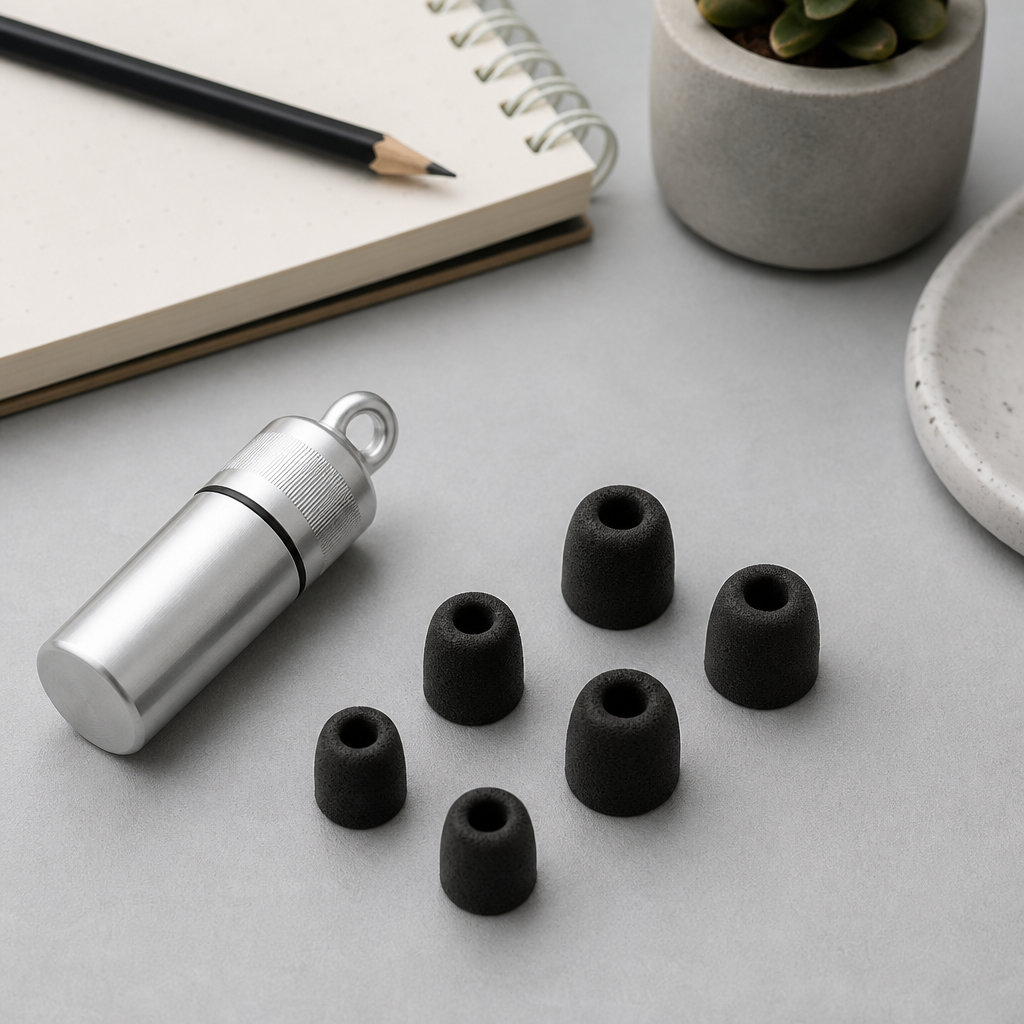
Workplace hearing protection is a different discipline. Construction, manufacturing, and military settings often run formal programs that specify approved products and how fit is checked. A consumer rating should never replace the requirements of your employer or regulator. If your role mandates protection, confirm with your safety officer that a reusable plug meets the requirement before you switch.
In practice, the workers who get the most from reusable plugs carry a spare set, clean the body at the end of a shift, and keep a note of when tips were replaced. Those habits matter more than the specification sheet.
Pro tip: If your work involves very high noise levels over long periods, ask for a noise exposure assessment before relying on any single product. A reusable plug is one part of a protection plan, not the whole plan.
Yes. The metal body is designed for long-term reuse, and only the foam tips need replacing, roughly every six to eight weeks depending on how often you wear them.
The product is rated at about 32dB, the SNR figure reported in product coverage. You only get that level when the tip seals the ear canal, so test your fit before relying on it.
Start with the size that seals without pressure. If it feels loose, step up one size, and if it becomes sore after a while, step down. Check each ear separately because they often differ.
Use them only if they meet the requirements set by your employer or regulator. A consumer rating does not replace a formal hearing protection program, and your safety officer should confirm suitability.
Wipe the metal body with a dry or slightly damp cloth, let it dry fully, and store it in a dry case away from heat. Keep earwax off the tips, since staining and stiffness reduce the seal.
If you have ear pain, discharge, sudden hearing loss, or ringing that does not go away, see a clinician before using any plug regularly. Earplugs should not be used to mask a problem that needs medical attention.
Have you tried a reusable plug with replaceable tips, and did the fit hold up across a full week of use? Share your experience in the comments, since real-world feedback helps us refine our tip sizing guidance.
Most people who wear earplugs for concerts do it wrong. They grab a pair of disposable foam plugs from the venue merch desk, jam them in, and spend the next two hours listening to music that sounds like it is coming through a mattress. So they pull them out. By the time they leave, their ears are ringing, and they have added another small, cumulative dose of permanent damage to their hearing. There is a better way, and it does not require sacrificing the music to save your ears.
| Key Insight | Explanation |
|---|---|
| Rock concert volumes can hit 110-120 dB | At those levels, safe daily exposure limits can be reached in under one minute without protection. |
| Standard foam earplugs destroy sound quality | They remove the ear canal’s natural resonance peak, making music sound muffled and indistinct. Musicians wearing them tend to compensate by playing louder. |
| High-fidelity designs reduce volume, not clarity | A flat-response filter lowers sound evenly across frequencies, preserving the timbre and balance of music while still protecting your ears. |
| Fit determines how much protection you actually get | A loose earplug with a 32 dB rating gives you far less than that in practice. The seal matters as much as the specification. |
| Reusable metal-bodied plugs outperform disposables long-term | A durable housing paired with replaceable foam tips gives you consistent protection without the cost and waste of single-use alternatives. |
| Musicians and audience members have different protection needs | A performer on stage needs to hear themselves and their band clearly. Audience members need to protect against sustained high-volume exposure from the PA system. |
| Tip size is not a minor detail | An XS or S tip inserted correctly into a smaller ear canal creates a better seal than a medium tip forced in poorly. Multiple sizes are essential, not a luxury. |
Live music is loud by design. A rock or electronic concert regularly pushes sound levels to 110 decibels or above, and at those levels, the maximum safe daily noise exposure limit can be reached in less than one minute. This is not theoretical. Repeated exposure to sound above 85 dB causes measurable, cumulative damage to the hair cells in the cochlea, and those cells do not regenerate.
The World Health Organization has estimated that 1.1 billion young people globally face risk from recreational sound exposure, including concerts, nightclubs, and music festivals. Regular concert-goers and musicians are among the most consistently exposed groups. Tinnitus, that persistent ringing or buzzing after a loud show, is often the first signal that damage has already occurred.
The fundamental problem with concert hearing damage is that it accumulates invisibly over years. Each individual show might feel harmless. The pattern across a decade of regular attendance is not.
The good news is that hearing protection at concerts is not a compromise between safety and experience. It is a question of choosing the right tool for the situation. Earplugs designed for music behave very differently from the foam cylinders you find at hardware stores, and the difference is immediately noticeable the first time you wear them at a show.
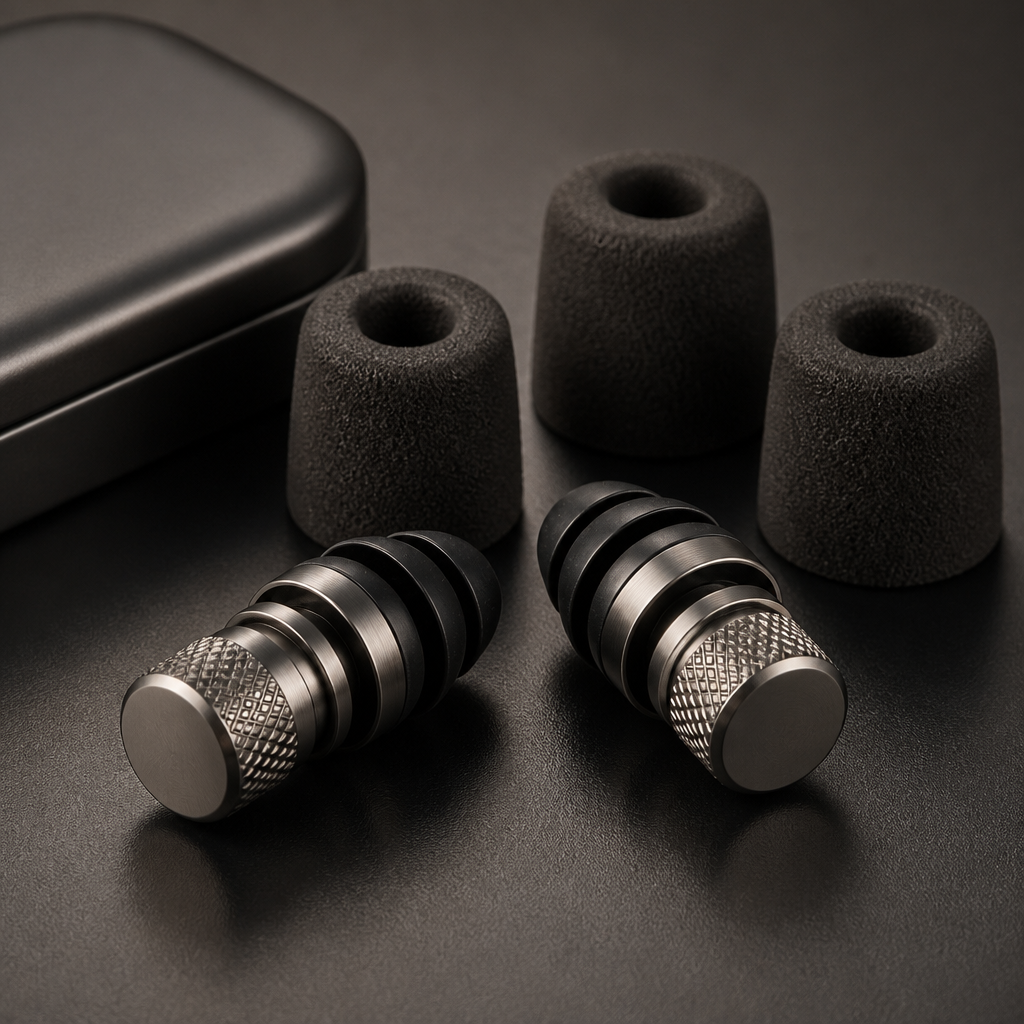
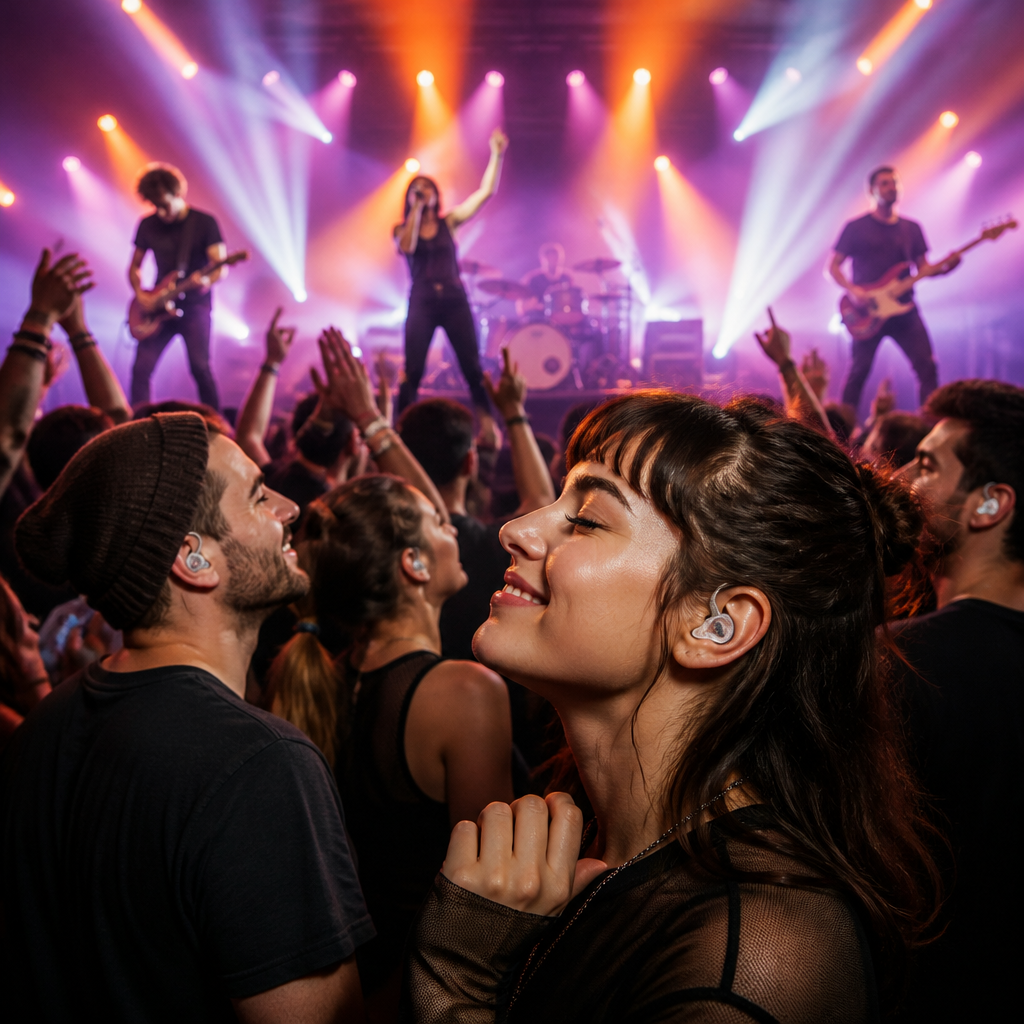
The average open ear canal has a natural acoustic resonant peak of approximately 17 dB at around 2,700 Hz. When you insert a standard foam earplug, you block the ear canal and remove that natural resonance entirely. The result is unbalanced attenuation: high frequencies are cut far more aggressively than low frequencies, which is why everything sounds muffled, bass-heavy, and indistinct.
This is not just an aesthetic annoyance. Research comparing foam earplugs and musician-grade hearing protection found that pianists wearing foam earplugs played significantly louder than when wearing earplugs with a flat frequency response. The musicians were unconsciously compensating for the loss of sound clarity by pushing harder. The foam plugs were actively making the performers’ situation worse, not better.
For concert-goers, the same dynamic plays out differently. You pull the plugs out because the music sounds terrible, which means you are unprotected. Or you leave them in and spend the evening frustrated. Neither outcome is acceptable when well-engineered alternatives exist.
Pro tip: If you have ever left a foam earplug in only one ear to “test” sound quality and found the muffled ear sounded worse, you experienced the resonance removal problem firsthand. That muffled sound is what your brain is trying to correct for. A flat-response earplug eliminates that problem.
A high-fidelity earplug is built around one core principle: attenuation should be as even as possible across the full frequency spectrum. Instead of blocking the ear canal completely, these designs use an acoustic filter or resistor that controls how much sound passes through. The goal is to reproduce the listening experience of the open ear, but at a lower overall volume.
The filter in a high-fidelity earplug is tuned to add back something close to the ear canal’s natural resonance peak, which standard foam removes. The result is that music retains its tonal balance. The kick drum still sounds like a kick drum. The vocalist’s midrange still carries. The cymbal wash is present but not painful. Volume drops; clarity does not.
The housing of an earplug affects how the filter performs and how consistently it seals. A rigid, dimensionally stable body, such as one machined from aluminium, holds its geometry precisely over time. It does not deform under body heat or repeated use. This matters because the fit between the earplug body and the ear tip determines the quality of the acoustic seal, and the seal determines whether you are getting the protection the rating promises.
ATTENU8’s concave aluminium body is designed around this principle. The metal body creates a meaningful density differential with the memory foam tip, which is part of what drives the approximately 32 dB SNR performance. The concave shape also helps guide the foam tip to a consistent depth, reducing the variability that undermines protection with cheaper designs. You can read more about why the aluminium body matters for both noise reduction and long-term durability in ATTENU8’s guide to the aluminium advantage.
Pro tip: When inserting any earplug before a show, pull the top of your outer ear upward and back slightly to straighten the ear canal. Insert the tip, then hold it in place for a few seconds while the foam expands. This step alone significantly improves the acoustic seal and the actual protection you receive.
Not every earplug works the same way at a concert. The table below compares the three main categories you will encounter, based on what actually matters for live music use.
| Earplug Type | Sound Quality at Concerts | Best For |
|---|---|---|
| Standard disposable foam | Poor. Heavy muffling, bass-dominant, unnatural. Uneven attenuation removes natural ear canal resonance and makes music sound distorted. | Industrial noise, construction, situations where music quality is irrelevant. Not suited for concerts or musical performance. |
| High-fidelity filtered earplugs (non-custom) | Good to excellent. Flat-response filter preserves tonal balance. Music sounds like music at lower volume. Suitable for most concert environments. | Regular concert-goers, festival attendees, musicians who need to hear themselves and their bandmates clearly during performance. |
| Custom-moulded musician earplugs | Excellent. Professionally fitted to individual ear canal shape, providing the most accurate and consistent attenuation. Highest sound quality available. | Professional touring musicians, audio engineers, anyone who attends multiple live music events per week and can justify the cost of a professional fitting. |
For most people, high-fidelity non-custom earplugs represent the best balance of performance, cost, and practicality. Custom-moulded options offer the highest accuracy but require an audiologist appointment and considerably higher upfront investment. The key upgrade from disposable foam is not the price. It is the filter design.
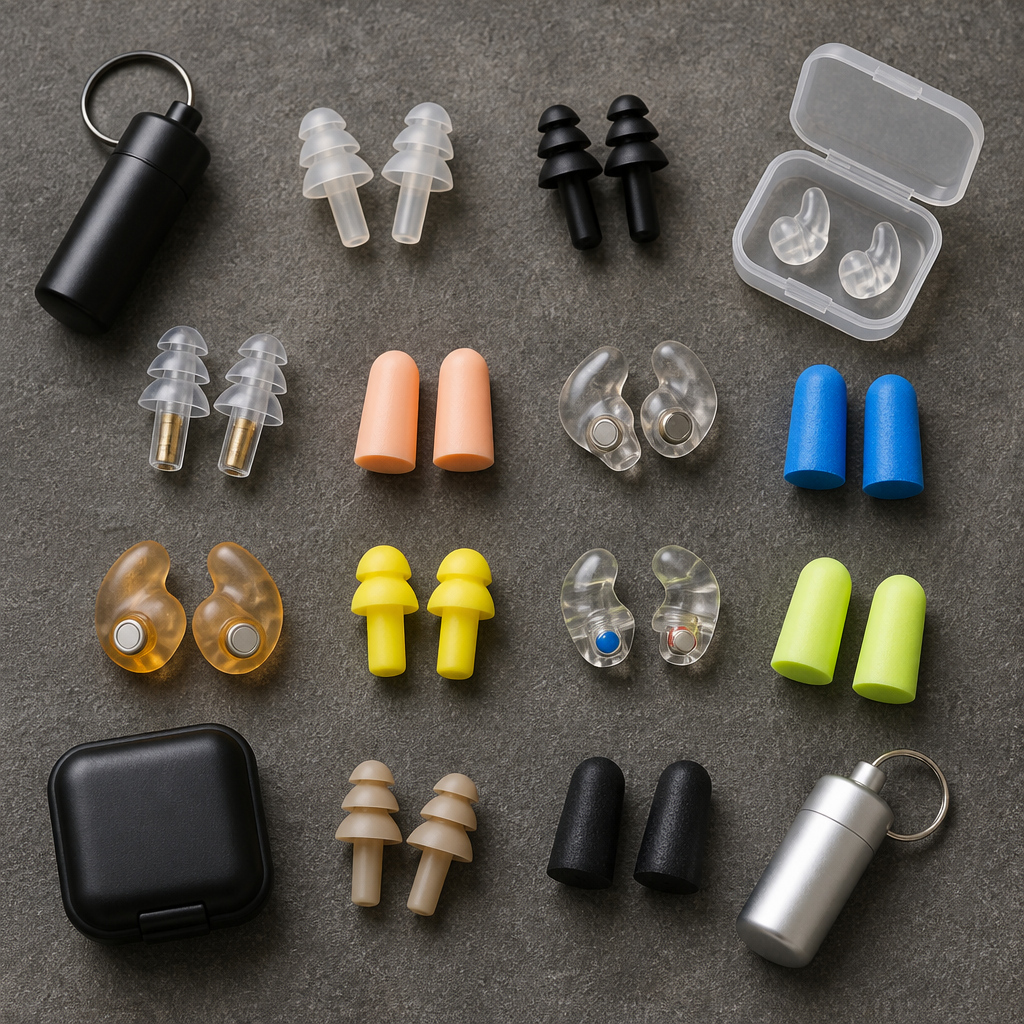
A guitarist standing in front of a 4×12 cabinet and a fan in the crowd are both at risk, but from different acoustic sources. The musician faces direct, close-range instrument noise from multiple sources simultaneously: their own instrument, their monitor wedge, the backline from other players, and, at many venues, the house PA as well. Their exposure is prolonged and often higher in peak level than what the audience experiences.
In-ear monitors have changed the situation for many working musicians, allowing them to control their personal mix at a safe level while blocking ambient stage noise. But many smaller venues and rehearsal situations still rely on floor wedge monitors, and musicians in those environments often have no attenuation at all. A well-fitted pair of hearing protection earplugs worn during rehearsal, not just live shows, is where most of the cumulative risk actually accumulates for regular players.
This is the practical challenge that stops most musicians from wearing protection consistently. With standard foam earplugs, a singer cannot hear their own pitch accurately. A drummer cannot hear the nuance of their cymbal work. A guitarist loses the harmonic detail that informs their playing. High-fidelity earplugs with even attenuation solve this by preserving frequency balance. The musician hears themselves and their bandmates at a safer volume, not through a sonic fog.
Studies of professional pop, rock, and jazz musicians have confirmed that greater musical experience correlates with higher hearing thresholds, particularly in the 3-6 kHz frequency range. Weekly playing hours show a stronger link to measurable hearing loss than years of playing. The math on consistent use of hearing protection during practice and performance is straightforward: less cumulative exposure means slower progression of damage.
Noise reduction ratings (NRR in the US, SNR in European CE-certified products) describe how much sound attenuation an earplug provides under standardised test conditions. A higher number means more attenuation. For concert use, the right figure depends on the environment and the role you are in.
An earplug rated at approximately 32 dB SNR, such as the ATTENU8, will bring a 110 dB concert environment down to roughly 78 dB for a well-fitted user. That puts you comfortably within safe listening territory for an extended show. The same protection level meets occupational hearing protection thresholds for construction and manufacturing environments. For concerts, it is more than adequate. The critical variable is fit: a poorly inserted earplug rated at 32 dB may only deliver 15-20 dB of actual attenuation.
Some music earplugs are rated in the 15-25 dB range, which still provides meaningful protection at moderate concert volumes. The argument for lower attenuation is typically that it feels more natural and less isolating. In practice, if you are attending shows where the PA is running at 105 dB or above, a 20 dB earplug leaves you at 85 dB, which is the threshold at which sustained exposure begins to cause damage. For loud venues, higher attenuation paired with good sound quality is the correct choice, not lower attenuation with marginally better music fidelity.
The ATTENU8 earplug is designed to sit at the upper end of this range, delivering approximately 32 dB SNR while using memory foam tips that conform to the individual ear canal shape. The combination of a rigid aluminium body and soft foam tip is what makes that rating achievable across a range of ear sizes and canal geometries.
The most common reason good earplugs underperform is that people use the wrong tip size for their ear canal. A tip that is too large creates discomfort and is inserted too shallowly. A tip that is too small does not seal properly and allows sound to leak around the edges. Both failures reduce the effective attenuation you receive, regardless of what the product specification says.
If you experience discomfort within a few minutes, the tip is likely too large. If you can hear external sounds clearly at a level that suggests the earplug is barely attenuating, the tip is likely too small or not inserted deeply enough. Starting with a small tip and working up is usually more reliable than guessing based on how your ear looks from the outside. Ear canals vary significantly in diameter and angle.
ATTENU8 includes three tip sizes, XS, S, and M, plus a set of flat bottom tips for side sleepers. For concert use, the standard tip sizes are the relevant ones. Taking five minutes before your first show to test each size correctly is worth it. You are looking for a seal that reduces ambient noise noticeably when the tip is seated properly, without causing pressure pain.
Memory foam tips pick up skin oils, earwax, and debris with regular use. A contaminated tip does not expand as cleanly and may provide a less consistent seal over time. Replacing tips every 6-8 weeks with regular use keeps your protection performing to specification. This is substantially cheaper than replacing the entire earplug, which is the only option with single-use disposables. The aluminium body, properly maintained, does not need replacing.
Pro tip: Between concerts, store your earplugs in a hard case rather than a fabric pouch. The aluminium body is robust, but foam tips that are crushed or deformed before use will not expand correctly in the ear canal. A small rigid case keeps the foam tips in their natural shape and prevents contamination.
Standard foam earplugs do cause noticeable muffling because they attenuate high frequencies far more than low frequencies, removing the natural resonance of your ear canal. High-fidelity earplugs are specifically designed to avoid this. They use an acoustic filter that reduces volume evenly across frequencies, so the music retains its tonal balance. The experience is closer to turning down the volume on a speaker than to covering your ears with your hands.
SNR (Single Number Rating) is used on CE-certified products sold in Europe and the UK, while NRR (Noise Reduction Rating) is the American standard. They are calculated differently, so the numbers are not directly interchangeable, but both describe the attenuation a product provides under standardised test conditions. When comparing earplugs, make sure you are comparing ratings from the same system. ATTENU8 is CE-certified with a rating of approximately 32 dB SNR, following the BS EN352-2:2002 standard.
Yes, and if you perform regularly in loud environments, it is important that you do. The key is choosing hearing protection that maintains sound clarity through a flat frequency response, rather than standard foam that muffles high frequencies and forces you to compensate by playing louder or harder. High-fidelity earplugs allow musicians to hear pitch, dynamics, and tone accurately, just at a safer overall volume.
With regular use, memory foam tips should be replaced approximately every 6-8 weeks. Tips that have been used frequently collect skin oils and earwax that reduce their ability to expand fully and seal consistently. When you notice the foam is slower to expand after compression, or the fit feels looser than it used to, it is time for a new set of tips. The metal body of the earplug does not require replacement under normal use.
Comfort depends almost entirely on fit. An earplug that is the wrong size or inserted incorrectly creates pressure and discomfort within minutes. With the correct tip size inserted properly, quality earplugs should be forgettable after the first few minutes of a show. Memory foam tips that conform to the shape of the individual ear canal are considerably more comfortable over extended wear than rigid silicone or flanged tips, particularly during two or three hour concerts.
The priorities differ. A musician on stage needs consistent, accurate sound reproduction so they can perform well, in addition to protection from peak sound levels. An audience member primarily needs reliable attenuation of sustained high-volume PA output. In practice, a well-designed high-fidelity earplug with approximately 32 dB attenuation works well for both roles. Where musicians benefit from additional precision, custom-moulded options fitted by an audiologist offer the most accurate individual calibration.
It is not too late to prevent further damage, even if some has already occurred. Noise-induced hearing loss is cumulative, meaning every loud event without protection adds to the total. Starting now reduces the rate at which damage accumulates going forward. If you already notice persistent ringing or difficulty distinguishing speech in noisy environments, it is worth having a hearing assessment, but that is not a reason to delay starting protection.
Have you found a specific earplug setup that works for you at concerts or during performances? Share your experience in the comments. It helps other music lovers and musicians find what actually works.
Your bedroom might be costing you hours of genuine rest without a single obvious sign. Poor sleep is rarely just about stress or bad habits. Often, the room itself is the problem: too warm, too bright, too loud, or some combination of all three. Creating a sleep-friendly bedroom is not about expensive renovations or high-tech gadgets. It is about understanding exactly how noise, light, and temperature interact with your biology at night, then making targeted changes that remove the obstacles your body is fighting against. This guide covers each factor in practical detail, with a clear position on what works.
| Key Insight | Explanation |
|---|---|
| Your brain never switches off its response to sound | Auditory processing continues throughout every sleep stage. Noise that does not fully wake you still triggers stress hormones and shifts you into lighter sleep. |
| The WHO recommends bedroom noise below 30 dB(A) at night | Noise above 40 dB causes measurable sleep fragmentation. At 55 dB, typical of a busy urban street, full arousals and insomnia become likely. |
| Even low-level light suppresses melatonin significantly | Research shows room light before and during bedtime can suppress melatonin production by more than 50% compared to dim light conditions. |
| The ideal sleep temperature is 60 to 67°F (15 to 19°C) | Your body needs to drop its core temperature to initiate and maintain sleep. A warm room actively fights this process throughout the night. |
| Intermittent noise is more disruptive than steady noise | The brain cannot habituate to sounds that keep changing. A sudden 40 dB thump is harder to sleep through than a constant 45 dB hum. |
| Ear plugs outperform white noise for protecting deep sleep | Sound masking raises the background noise floor. Physical attenuation at the ear is more effective at preserving slow-wave and REM sleep stages. |
| Soft furnishings absorb sound inside the room | Rugs, heavy curtains, upholstered furniture, and wall textiles act as acoustic insulators that reduce the reflective noise inside your bedroom. |
Sleep is not a passive state you fall into when you close your eyes. It is an active biological process that your body initiates only under the right conditions. Your core temperature needs to drop. Your brain needs to detect darkness and begin producing melatonin. Your auditory system needs to stop registering threat signals. When any one of those conditions is compromised, your body either delays sleep onset or spends the night cycling in and out of lighter stages rather than reaching the deep, restorative phases it needs.
The problem with most bedroom environments is accumulation. A slightly too-warm room is manageable. Add some street light through inadequate curtains, plus intermittent traffic noise, and the combined load on your nervous system is significant enough to fragment your sleep architecture across the entire night. Fixing only one factor while ignoring the others will produce limited results. This guide addresses all three together.
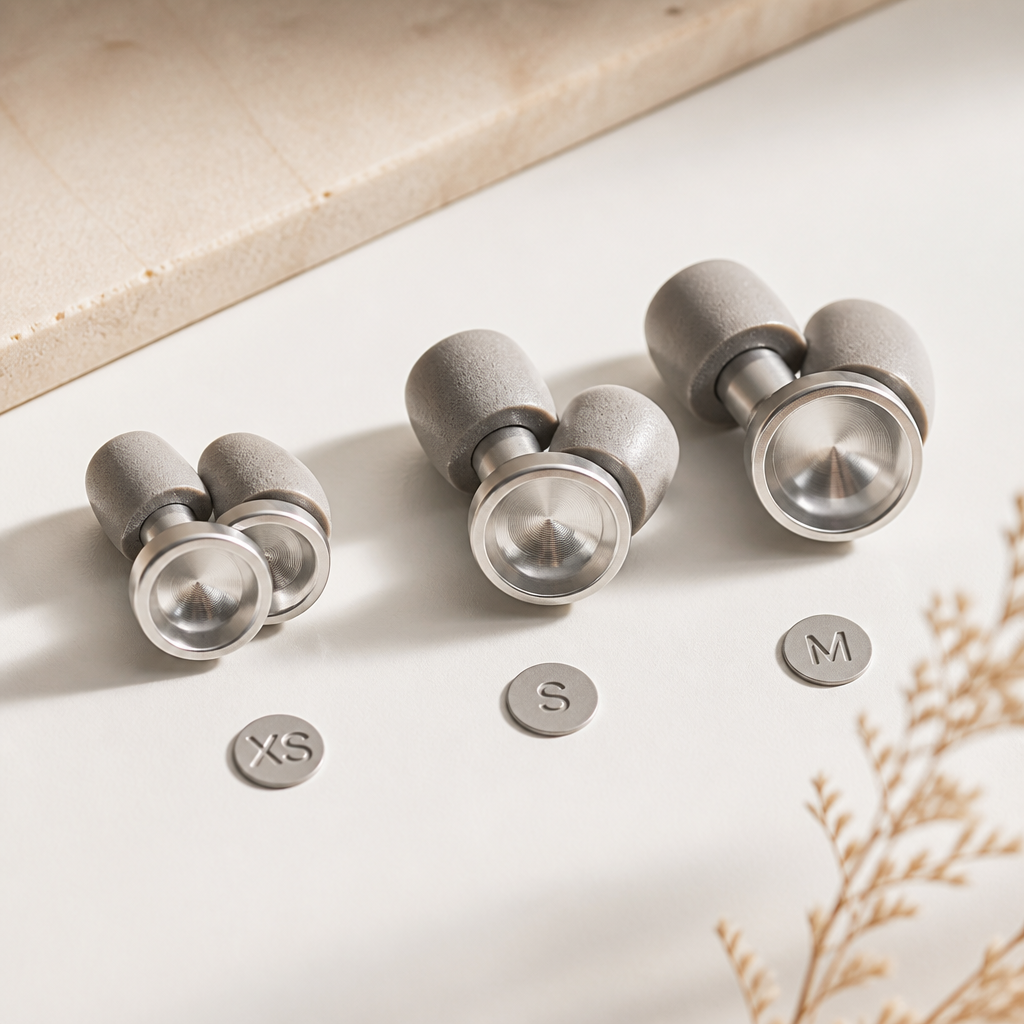
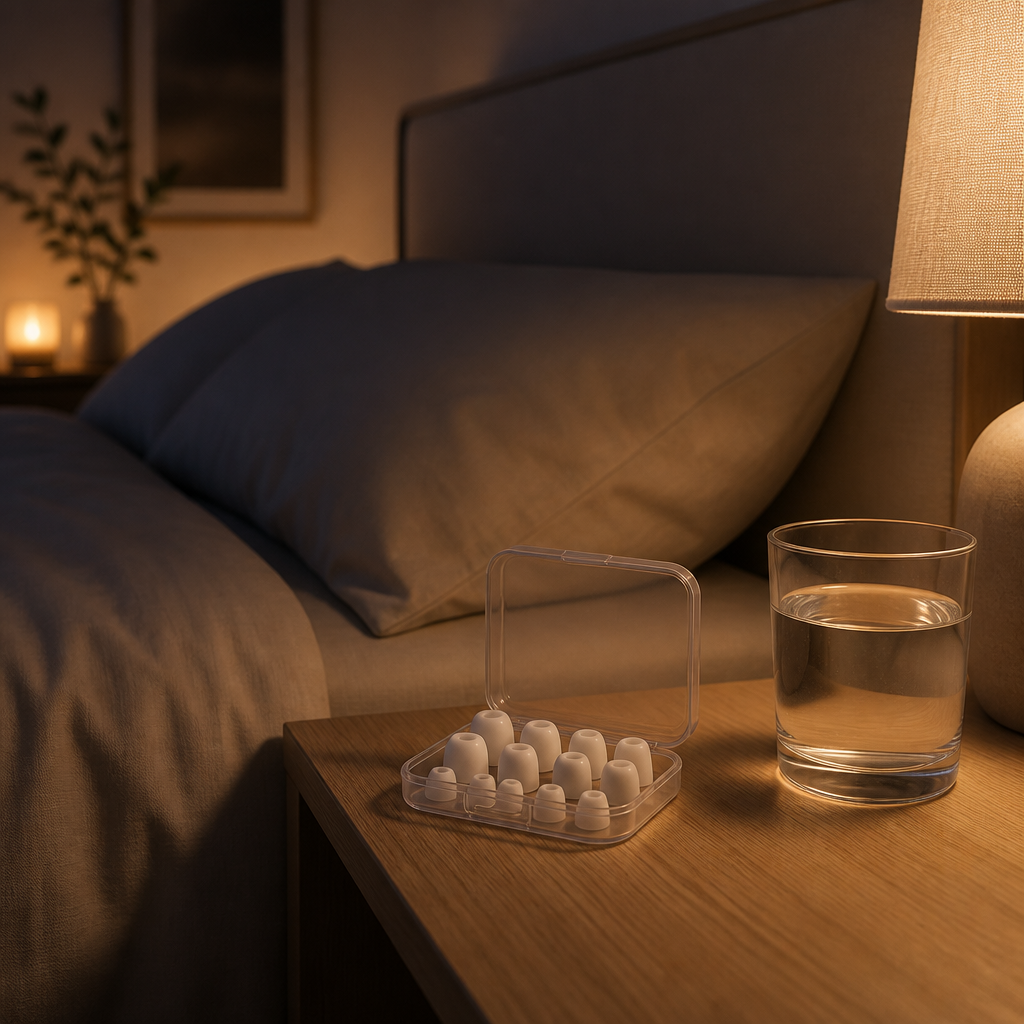
Noise is the most underestimated sleep disruptor. Most people assume that if they sleep through a sound, it is not affecting them. The research is clear that this assumption is wrong. Noise can shift you from deep sleep into lighter sleep stages, trigger micro-arousals you will not remember, and raise cortisol and adrenaline levels, all without causing a full awakening. The cumulative effect is a night that technically clocks eight hours but leaves you tired and cognitively dulled the next morning.
The brain remains in a more alert state in response to noise, making it harder to transition into deeper sleep stages, and can lead to frequent brief awakenings throughout the night, disrupting the continuity of sleep cycles.
The priority for most sleepers is not eliminating all noise, which is rarely achievable, but reducing the variation in noise levels. It is the spike above the baseline that causes arousals, not the steady background. A gap of more than roughly 15 dB between background noise and a sudden intrusion is enough to trigger a stage shift. Closing that gap is the practical goal.
Start with the most direct path noise takes into the room. Gaps under doors are a major entry point that most people overlook. A simple draught excluder or door sweep cuts a surprising amount of hallway, traffic, and neighbour noise. Double-glazed windows outperform single-glazed by a wide margin, but if replacement is not an option, secondary glazing film applied to the existing pane adds meaningful attenuation at low cost.
Heavy curtains or lined drapes do double duty. They reduce light, which is discussed below, and they absorb some of the sound that reaches the window surface. They are not a substitute for proper glazing but they contribute to the overall noise load reduction in a way that lightweight curtains do not.
Hard, bare surfaces reflect sound. A bedroom with polished floors, bare walls, and minimal furniture is acoustically live, meaning sound bounces around the room rather than being absorbed. Adding a rug underfoot, upholstered seating, and wall textiles or acoustic panels reduces that reflective noise meaningfully. The goal is not to turn your bedroom into a recording studio. Even modest soft furnishings make the acoustic character of the room calmer.
When structural and soft-furnishing changes are not enough, or when the noise source is genuinely beyond your control, such as a snoring partner, early-morning street noise, or shared-wall neighbours, direct ear protection is the most reliable solution. The difference between ear plugs that fit correctly with a high noise reduction rating and those that fit poorly is substantial. A well-fitted pair providing around 32 dB of noise reduction brings urban traffic noise or a snoring partner down to a level that most sleepers can maintain deep sleep through.
Pro tip: The fit of an ear plug matters more than the noise reduction rating number on the packet. A plug rated at 33 dB that does not seal properly will perform worse than a correctly inserted plug rated at 28 dB. Always check that you have the right tip size before writing off ear plugs as uncomfortable or ineffective. ATTENU8 ear plugs come with three memory foam tip sizes (XS, S, M) so you can match your actual ear canal dimensions rather than guessing.
Reusable metal-bodied ear plugs have a significant practical advantage for nightly sleep use. Unlike disposable foam plugs, which degrade and lose their expansion properties after a single use and accumulate ear wax inside a porous structure that cannot be cleaned, a durable aluminium-bodied plug maintains consistent shape and hygiene over time. Only the foam tips need replacing every six to eight weeks, keeping running costs low while ensuring the seal quality stays reliable. For more on how different ear plug materials compare for sleep, read the guide on memory foam vs silicone vs wax ear plugs for sleep.
White noise machines are commonly recommended as a sleep aid. They work by raising the background noise floor, which narrows the gap between that floor and sudden intrusions. This approach is genuinely useful for some sleepers, particularly infants and those disturbed by low-level intermittent sounds. However, the evidence for white noise as a replacement for physical noise reduction is weaker than widely assumed. Research has shown that certain forms of sound masking can reduce REM sleep duration and worsen outcomes when combined with specific noise types, such as traffic. For light sleepers who need to protect their most restorative sleep stages, physical attenuation at the ear remains the more dependable approach. If you want to understand why, the article on noise and sleep quality covers the science in detail.
Your body uses light as its primary timing cue. The circadian rhythm, the internal 24-hour biological clock that governs when you feel sleepy and when you feel alert, responds directly to light detected by specialised photoreceptors in the eyes. Even low levels of light at night suppress melatonin production from the pineal gland. Research published in the Journal of Clinical Endocrinology and Metabolism found that room light before and during bedtime suppressed melatonin by more than 50% compared to dim light conditions. Fifty percent is not a marginal effect. It fundamentally delays and disrupts the biological preparation for sleep.
The practical implication is that the question is not whether you can see light in your bedroom, but whether your eyes can detect any meaningful lux level. Light sources you have stopped consciously noticing, a charging cable indicator, the standby dot on a television, streetlight edges around curtains, still register biologically and affect your sleep quality.
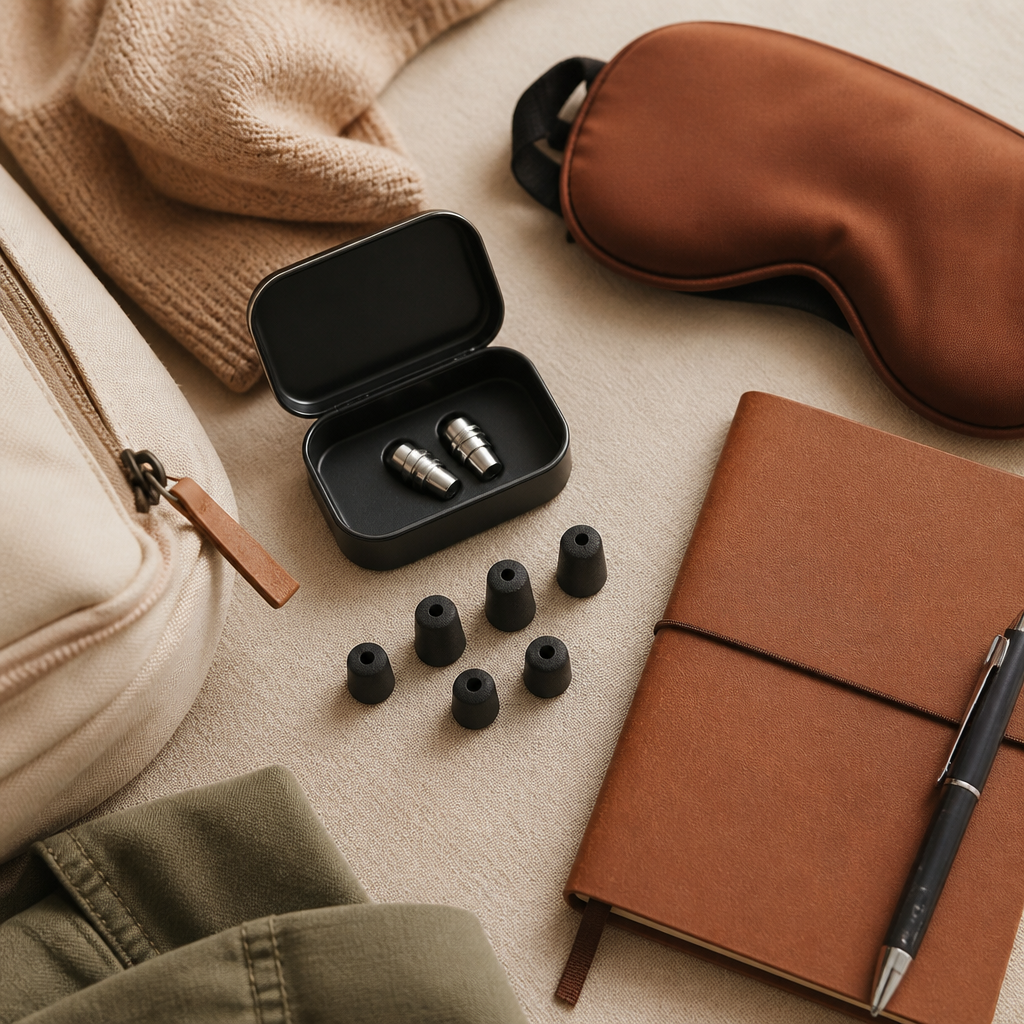
Standard blackout curtains block 85 to 99% of light through the fabric itself. This is a real and meaningful improvement over unlined curtains. The limitation is that most blackout curtains leave edge gaps at the sides, top, and bottom where light enters around the fabric panel. These gaps can introduce 10 to 50 lux of ambient light into the bedroom even with the curtains drawn, which is enough to measurably suppress melatonin. A simple fix is to use curtains that extend significantly wider and taller than the window frame, or to install a separate blackout roller blind that sits flush to the window reveal before hanging the decorative curtains over it.
Pro tip: Before spending money on new curtains, test your current bedroom darkness by standing in the room for five minutes with the lights off and your eyes fully adjusted. If you can clearly distinguish furniture shapes from across the room, the ambient light level is high enough to affect melatonin production. The goal is a room where you genuinely cannot see your hand at arm’s length.
Blue-spectrum light from phones, tablets, and laptop screens is particularly effective at suppressing melatonin because the photoreceptors in the eye that feed the circadian system are most sensitive to this wavelength. A common practical mistake is assuming that a screen brightness dimmer or night-mode filter fully eliminates the problem. These filters shift colour temperature but do not eliminate the physiological effect. The more reliable rule is to stop screen use entirely for 30 to 60 minutes before your target sleep time, replacing that window with activity that does not involve a backlit display.
Any artificial light left on in the room during sleep, including a television on standby, a digital alarm clock with a bright display, or even a phone screen that activates overnight for notifications, can disrupt sleep continuity. Replacing a bright digital clock with a dim-display or analogue model eliminates a surprisingly common source of circadian disruption. Devices that need to charge overnight should be placed in a drawer, a different room, or covered so the indicator light does not reach the eye.
The body initiates sleep partly through a reduction in core temperature. This is not a passive response to the room being cool. It is an active thermoregulatory process where blood flow is redirected to the skin to radiate heat outward. A warm bedroom actively interferes with that process, making it harder for the body to reach the internal temperature conditions associated with deep, consolidated sleep.
Most adults sleep best in a bedroom kept between 60 and 67°F (15 to 19°C). A room set at 70°F or above works against the body’s own cooling mechanism. The research consistently shows that excess heat disrupts sleep and increases nighttime awakenings. The practical recommendation is to err cooler rather than warmer, and to use bedding layers to regulate individual comfort rather than raising the room temperature.
If you do not have precise thermostat control, opening a window 30 minutes before sleep allows the room to drop temperature ahead of your sleep window rather than relying on your body heat alone to warm a cooler room after you get in. A fan directed at the bed provides both a cooling effect through air circulation and a consistent low-level sound that some sleepers find helps mask intermittent noise. Switching from heavy synthetic bedding to natural fibres such as cotton, bamboo, or linen allows heat to dissipate rather than accumulate under the covers.
If you currently sleep at 70°F and the idea of 65°F sounds uncomfortable, drop the thermostat by one degree every few nights rather than making an abrupt change. The body adapts, and most people find that after a week or two at a cooler setting they sleep noticeably more soundly and wake less in the middle of the night. The goal is continuous, consolidated sleep, not simply falling asleep faster.
The challenge for many sleepers is not the winter, when a cool bedroom is achievable without much effort, but the summer months when ambient temperatures make the 60 to 67°F target difficult to reach without air conditioning. Prioritising cooling the room before sleep is more effective than trying to cool it during sleep. Closing blinds or heavy curtains during daylight hours prevents solar heat gain, which keeps the room meaningfully cooler by the time you need to sleep. Lightweight breathable bedding layers allow adjustment across different nights without changing the room temperature. A cooling pillow cover or moisture-wicking pillowcase helps maintain a comfortable contact temperature at the head, which has an outsized effect on perceived comfort during sleep.
There is no single right answer for every sleeper, but there is a clear hierarchy of effectiveness depending on the noise source and individual sensitivity. The table below compares three main approaches to reducing bedroom noise for sleep.
| Approach | Best Use Case | Key Limitations |
|---|---|---|
| Structural noise reduction (glazing, door seals, soft furnishings) | Persistent external noise from traffic, neighbours, or urban environments. Works passively throughout the night without any action from the sleeper. | Higher upfront investment for glazing upgrades. Does not address noise sources already inside the bedroom such as a snoring partner. Cannot be adjusted based on nightly conditions. |
| White or pink noise masking (dedicated machine or app) | Predictable, low-to-moderate external noise where narrowing the gap between background and intrusion sounds is sufficient. Useful for infants and those who dislike the sensation of ear plugs. | Adds noise to the room rather than reducing it. Evidence suggests it can reduce REM sleep duration in some conditions. Ineffective against louder intermittent noise sources such as snoring or early-morning deliveries. Volume must be kept reasonably low to avoid its own disruption. |
| Ear plugs with high NRR (reusable metal-bodied with memory foam tips) | Any situation where the sleeper needs reliable, consistent attenuation regardless of noise source. Particularly effective for light sleepers, shift workers, and those sharing a room with a partner who snores. | Requires correct tip size selection for an effective seal. Initial adjustment period for new wearers. Foam tips require replacement every six to eight weeks to maintain hygiene and seal quality. Not suitable for sleepers who need to hear alarms or dependent children. |
In practice, a layered approach works best for noise-sensitive sleepers. Structural improvements reduce the noise level entering the room. Ear plugs then handle the residual noise that structural changes cannot address. For those who share a bedroom with a snoring partner, structural changes alone are rarely sufficient, and ear plugs become the primary tool. See the detailed guide to ear plugs for a snoring partner if this is your specific situation.
Pro tip: If you find ear plugs uncomfortable for side sleeping, the issue is almost always the plug body diameter, not the concept of ear plugs. Slim metal-bodied reusable plugs with a concave profile sit closer to flush with the ear canal opening, which means there is less surface area pressing against the pillow when your head turns. This is a significant practical advantage over bulkier foam plugs that protrude and create pressure points during the night. The guide on ear plugs for side sleepers covers this in more detail.
The World Health Organization recommends that indoor night noise levels remain below 30 dB(A) for uninterrupted, restorative sleep. For reference, a whispered conversation sits at around 30 dB and a quiet library at around 40 dB. Sounds above 40 dB are associated with measurable sleep fragmentation. At 55 dB, typical of a busy urban street, full arousals and chronic insomnia become likely. The goal is not absolute silence but consistent sound levels with minimal sudden spikes above the baseline.
Start with the path noise takes into the room. Sealing gaps under doors with draught excluders, installing heavier curtains or secondary glazing, and adding soft furnishings to absorb reflective sound inside the room all reduce the noise load. For the residual noise that structural changes cannot address, well-fitted ear plugs with a noise reduction rating of around 32 dB are the most reliable tool. A white noise machine can complement these changes by raising the baseline sound level, which narrows the perceived gap between background noise and sudden intrusions.
It affects sleep quality directly, not just comfort. The body initiates sleep through a reduction in core temperature, redirecting blood flow to the skin to radiate heat outward. A bedroom that is too warm actively prevents this process, increasing nighttime awakenings and reducing time spent in deep, consolidated sleep. Research consistently shows that temperatures above roughly 71°F (22°C) disrupt sleep. The effect is not subtle. Most people who switch from a warm bedroom to the recommended 60 to 67°F range notice a meaningful improvement in how rested they feel within a few nights.
Regular unlined curtains are not adequate for a genuinely sleep-friendly bedroom. Even low-level ambient light reaching your eyes during sleep suppresses melatonin and can fragment sleep cycles. Blackout curtains block the majority of light through the fabric itself, but their effectiveness depends on minimising the edge gaps around the frame where light enters around the curtain panel. A blackout blind that sits flush within the window reveal, combined with full-width curtains, is the most reliable approach. A simple eye mask is a cheaper, effective alternative if curtain upgrades are not practical right now.
Both. The most significant benefit for most noise-sensitive sleepers is not faster sleep onset but protected sleep architecture throughout the night. Because your auditory system remains active during sleep, noise that does not wake you can still push you from deep slow-wave sleep into lighter stages, reducing the restorative value of the night. Ear plugs that provide consistent attenuation protect those deep sleep stages from mid-night noise intrusions, which is why many people who start using them report feeling noticeably more rested even when they believed they were already sleeping through the noise.
For reusable ear plugs with replaceable memory foam tips, every six to eight weeks is the practical guideline for nightly use. This is not arbitrary. Memory foam degrades with repeated compression cycles and accumulates ear wax and oils in its cellular structure that cleaning cannot fully remove. A tip that has passed this point provides a worse seal, lower effective noise reduction, and carries a higher hygiene risk. Replacing only the tip rather than the entire plug keeps the cost manageable while ensuring the performance and cleanliness stay consistent each night.
How does your bedroom measure up on all three factors, and which one are you planning to tackle first? Share your experience below.
Hearing loss and tinnitus have ranked as the top two service-connected disabilities among veterans for longer than most active-duty personnel have been serving. That is not a coincidence. It is the direct, documented result of operating in some of the loudest environments human beings can survive, often without adequate ear protection in place. The case for earplugs for military use is not a comfort story. It is a readiness story, a career-longevity story, and for tens of thousands of veterans drawing disability compensation right now, a story that ended far too late.
| Key Insight | Explanation |
|---|---|
| Tinnitus is the single most compensated VA disability | More than 3.5 million veterans receive VA disability compensation for tinnitus, a direct consequence of noise exposure during service. |
| Hazardous impulse noise starts at 140 dBP | A single gunshot or explosion can permanently damage hearing. Damage from impulse noise can occur in a fraction of a second, with no warning and no recovery. |
| Most hearing damage in the field is preventable | DoD mandates hearing testing before and after deployment precisely because noise-induced hearing loss is a preventable injury when protection is worn consistently. |
| Off-duty hearing protection is just as important | Noise exposure on base, in barracks, or during transit accumulates. Using earplugs during rest periods reduces total daily exposure and improves sleep quality. |
| Situational awareness fears can be addressed by fit and design | The main reason soldiers skip hearing protection is fear of missing critical soft sounds. Well-fitted, appropriately-rated earplugs allow ambient sound while blocking hazardous peaks. |
| Reusable, durable earplugs reduce compliance failure | Single-use foam earplugs get discarded, lost, or improperly fitted. Durable reusable options with consistent tip sizing remove the excuse of “I didn’t have any with me.” |
| Hearing protection directly supports combat effectiveness | A soldier with degraded hearing is a liability. Protecting hearing is not a personal choice, it is a force readiness issue that commanders increasingly enforce. |
The numbers here are not abstractions. According to the 2024 U.S. Department of Veterans Affairs Annual Benefits Report, tinnitus ranked as the single most compensated service-connected disability among veterans, with more than 3.5 million veterans drawing compensation for it. Hearing loss consistently ranks second. These two conditions have held those top two spots for as long as the VA has reported them.
Estimates from hearing research suggest that approximately 68% of deployed soldiers return with some degree of ear damage, and that the majority did not consistently protect both ears during combat. The auditory rehabilitation costs that flow from this are substantial, running into hundreds of millions of dollars annually. This is not a problem at the margins of military health. It is the single most common occupational injury in uniform.
The scale matters because it reframes the conversation. Military hearing protection is not a niche health topic for soldiers stationed near artillery ranges. It applies to every infantry soldier, every aircrew member, every vehicle operator, and every sailor working near engine rooms. If your role puts you within range of any weapon system, any explosion, or any sustained machinery noise, your hearing is at risk on every operation.
Tinnitus and hearing loss have remained the number one and two most common injuries of service members for as long as the U.S. Department of Veterans Affairs has reported such statistics.
Understanding why earplugs are non-negotiable starts with understanding what the ears are actually up against. The threshold for hazardous continuous noise exposure is 85 decibels (dBA) over an eight-hour period. Hazardous impulse noise, the kind produced by firearms and explosions, begins at 140 decibels of peak pressure (dBP). A single shot from a standard infantry rifle exceeds this threshold significantly.
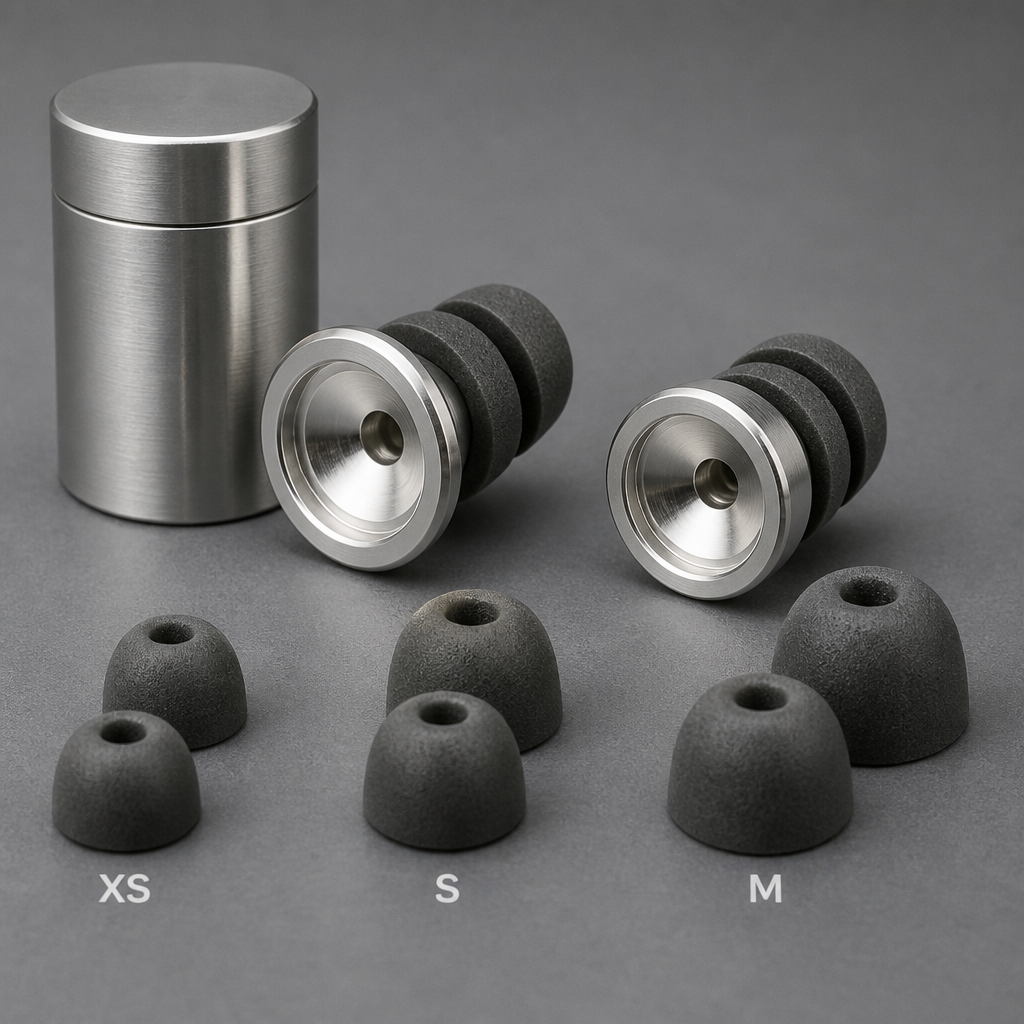
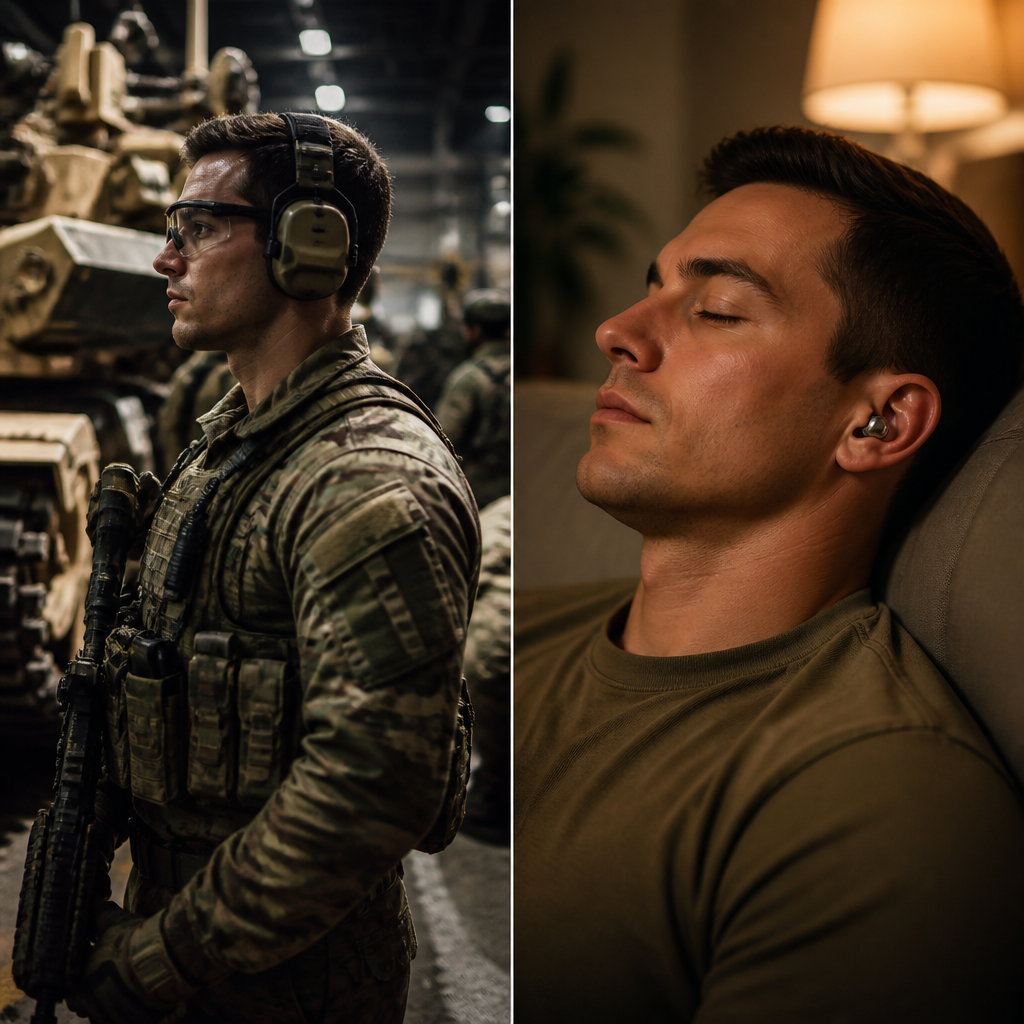
What makes impulse noise so dangerous is that it does not give the ear time to respond. The acoustic reflex, the ear’s natural protective mechanism, takes around 25 milliseconds to activate. A close-range gunshot reaches the cochlea far faster than that. Every unprotected shot fired or heard in the field contributes to cumulative damage that is silent, painless, and irreversible.
The noise hazards in military environments extend well beyond combat. Training ranges, helicopter operations, armored vehicle interiors, naval deck operations, and even certain maintenance tasks all generate sustained or peak noise levels that exceed safe exposure thresholds. A soldier who fires on a range twice a week without tactical earplugs in place is accumulating damage every single training cycle, not just in a combat zone.
Continuous operational noise such as that inside an armored vehicle or aircraft can push past 85 dBA with ease. Over an eight-hour shift or a full day’s operation, even moderate noise levels compound into significant physiological stress on the cochlear hair cells, which do not regenerate. Once those cells are gone, the hearing they provided is gone permanently.
Pro tip: If you have to raise your voice to be heard by someone standing three feet away, you are already in a noise environment that qualifies as hazardous exposure. That is a practical field test that requires no equipment.
Compliance with hearing protection orders in combat settings has historically been poor, and the reason is specific: soldiers fear they will miss a critical soft sound, such as an enemy movement or a whispered command, that could cost them or their team their lives. This concern is understandable. It is also, when examined closely, an argument for better earplugs rather than an argument against wearing any.
The logic breaks down the moment you consider the alternative. A soldier who takes unprotected fire from a weapon system at close range risks acute acoustic trauma that can cause immediate, severe hearing loss. Even sub-acute exposure across a deployment degrades the exact auditory sensitivity that the soldier was trying to preserve. Refusing hearing protection in the name of hearing acuity is a strategy that destroys the very asset it claims to protect.
A significant part of why soldiers skip protection is that standard-issue disposable foam earplugs fit poorly for a large percentage of the population. An improperly fitted foam earplug does not deliver its rated noise reduction. It sits loose, falls out during movement, and blocks low-frequency ambient sound more than the high-frequency impulse peaks that actually cause damage. That experience teaches soldiers that earplugs do not work, when the real issue is that the earplug they used was the wrong size and inserted incorrectly.
This is the practical argument for premium-fit hearing protection. An earplug with multiple tip sizes, soft memory foam that conforms precisely to the ear canal, and a stable body that stays seated during active movement will consistently deliver its rated protection. Consistent fit means consistent protection. There is no other way to get there.
Pro tip: Always test your earplug seal before relying on it. Cup your hands over your ears and compare the perceived sound level to the earplug-only level. A properly seated earplug should produce a noticeably quieter result than cupped hands alone.
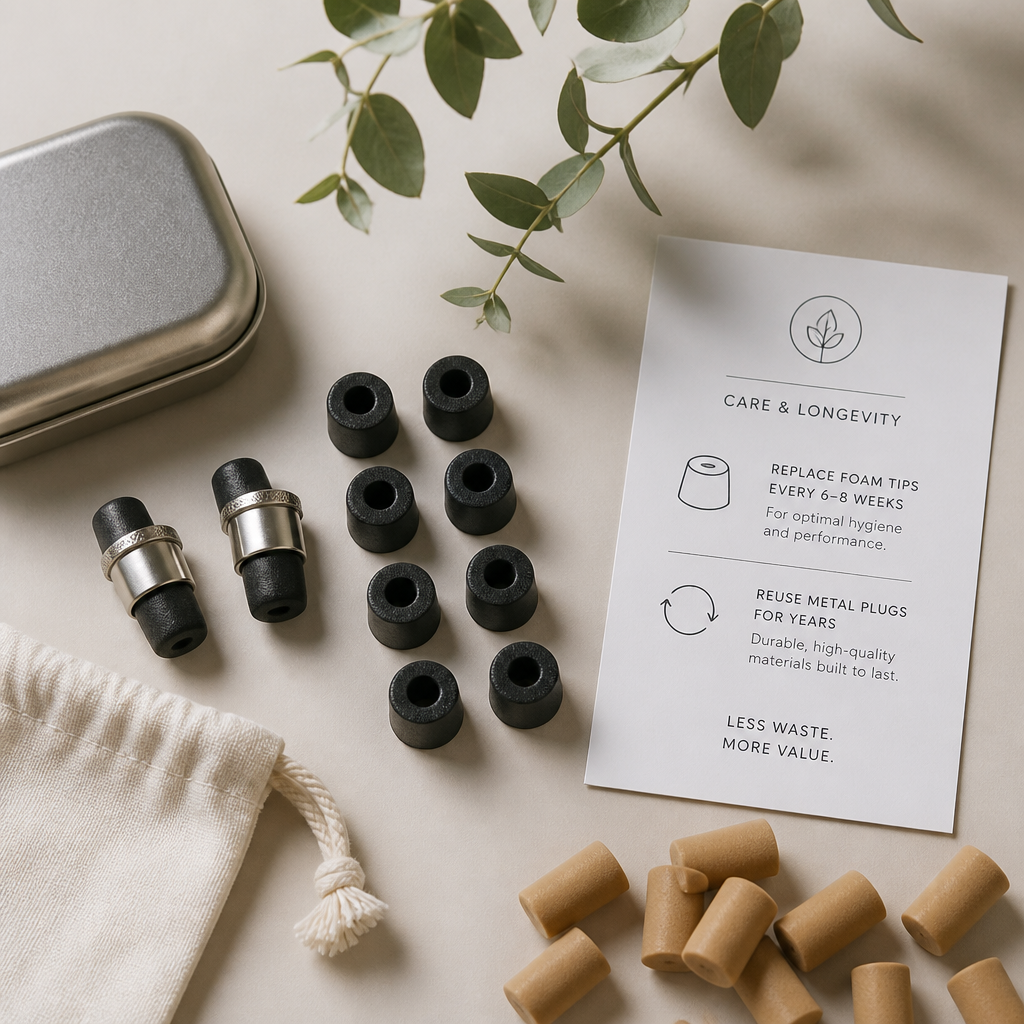
The noise exposure problem in military life does not stop when operations do. Barracks environments, flight lines, naval vessels, and forward operating bases are noisy around the clock. Generators, aircraft, vehicle traffic, and shared sleeping quarters create ambient noise environments that erode sleep quality even when personnel are technically off duty.
Research published in military health literature confirms that sleep loss in military settings is pervasive and has measurable negative effects on cognitive performance, physiological recovery, and operational functioning. The Human Performance Resource Center, a DoD resource, specifically identifies foam earplugs as a recommended tool for minimizing environmental noise disturbance during sleep in operational contexts.
Sleep and hearing are linked at the physiological level. Chronic noise-disrupted sleep elevates stress hormone levels, impairs immune function, and degrades the attentional systems that soldiers rely on for situational awareness. Using hearing protection for armed forces personnel during rest periods is not a soft wellness recommendation. It is a readiness measure that supports the same combat effectiveness that training and physical conditioning are supposed to deliver.
For personnel who struggle with light sleep or who are stationed in environments with persistent background noise, reusable earplugs with a reliable seal and comfortable foam tips make the difference between five hours of fractured sleep and a full recovery cycle. That difference is measurable in reaction time, decision quality, and physical output the following day.
Not all earplugs are equal, and the difference matters most when you are trying to protect hearing in genuinely dangerous noise environments. The characteristics that separate a reliable earplug from an inadequate one come down to fit consistency, material durability, noise reduction rating, and whether the earplug can be trusted to perform the same way every single time it is inserted.
A noise reduction rating (NRR) of approximately 32 dB is highly relevant for military applications. It means that at the frequencies where impulse noise causes the most cochlear damage, the earplug attenuates the incoming pressure wave by around 32 decibels. For reference, a firearm that produces 165 dBP at the shooter’s ear would be reduced to approximately 133 dBP with 32dB-rated protection in place. That difference is the line between temporary threshold shift and permanent cochlear cell death.
ATTENU8 earplugs are built precisely around this standard, with a concave aluminium body that maintains its shape across thousands of uses and three sizes of soft memory foam tips (XS, S, M) that allow personnel to achieve a genuine acoustic seal regardless of ear canal diameter. The tips require replacement every six to eight weeks with regular use, but the body itself is effectively permanent. That durability matters in the field, where single-use foam earplugs get lost, crushed, or contaminated.
Single-use foam earplugs are the default issue item in most militaries because they are cheap per unit. But they are only cheap if every soldier uses them correctly, every time, and replaces them at the right intervals. In practice, soldiers reuse disposables past the point of effectiveness, fail to insert them properly because the technique requires practice, and discard them when the foam degrades. The result is hearing protection that exists on paper but fails in the field.
A reusable earplug with a fixed body and replaceable foam tips removes most of that failure mode. The insertion technique becomes consistent because the earplug’s physical form does not change. The seal is reliable because the tip material is fresh and correctly sized. And the earplug is actually present because it is kept with the soldier’s kit rather than used once and thrown away.
| Earplug Type | Key Advantage | Key Limitation for Military Use |
|---|---|---|
| Standard disposable foam | Low cost per unit, widely available, no maintenance required | Inconsistent fit, degrades rapidly, frequently reused past effectiveness, high waste, easy to lose |
| Reusable metal-bodied with memory foam tips (e.g., ATTENU8) | Consistent fit across uses, durable body, multiple tip sizes for reliable seal, approximately 32dB NRR, only tips need periodic replacement | Higher upfront cost, tips require replacement every 6-8 weeks with regular use |
| Electronic tactical communication earplugs (TCAPS) | Amplify ambient sound while blocking impulse peaks, enable communication in high-noise environments | Expensive, battery-dependent, require maintenance and charging, not always field-practical for all roles |
The choice between these types depends on role and context. Electronic TCAPS are the gold standard for combat where communication is simultaneous with noise hazard exposure, but they are not always accessible or practical. For training, off-duty recovery, travel, and base environments, a high-quality reusable earplug with a confirmed noise reduction rating is the most reliable and most frequently available option. It is also the option most soldiers are likely to actually have on their person.
The U.S. Department of Defense has formal policy mandating hearing conservation across all branches. Hearing Conservation Programs (HCPs) are required whenever personnel are exposed to continuous or intermittent noise with an eight-hour time-weighted average at or above 85 dBA, or to impulse noise at or above 140 dBP. Those thresholds cover an enormous range of military occupational tasks.
DoD policy now mandates baseline hearing testing before deployment and follow-up testing after return. This is a direct acknowledgment that deployment-related noise exposure causes measurable threshold shifts, and that these shifts need to be tracked at the individual level. The intent is to catch damage early, before a soldier is discharged with a 10% VA disability rating for tinnitus that will follow them for the rest of their life.
HCPs are a command-level responsibility, but they only work if individual soldiers comply. A program that issues earplugs but does not enforce wearing them produces audiograms that document the damage rather than prevent it. Commanders who treat hearing protection as optional are not making a trade-off between readiness and safety. They are accepting guaranteed long-term readiness degradation in exchange for short-term operational comfort.
The practical implication is that soldiers should carry quality hearing protection as standard kit, not as something to be requested from supply. Personnel who take responsibility for their own hearing protection, rather than waiting for a command to issue something adequate, exit service with functional hearing. Those who do not often spend the rest of their lives managing tinnitus that wakes them at 3am.
Pro tip: Store your reusable earplugs in a hard case attached to your kit. The single most common reason soldiers do not wear hearing protection when they should is that they left it somewhere else. Proximity drives compliance. If the earplug is within arm’s reach, it gets used.
For most military applications involving firearms and explosive noise, an NRR of 29 dB or higher is the practical minimum. An NRR of around 32 dB provides meaningful attenuation of the impulse noise peaks most likely to cause permanent cochlear damage. Higher NRR ratings are available but can come with trade-offs in fit comfort and ambient awareness, depending on the design.
With standard passive earplugs, some reduction in communication clarity is inevitable. The critical insight is that the damage done by unprotected impulse noise degrades hearing far more severely and permanently than the temporary muffling effect of a well-fitted passive earplug. Electronic TCAPS resolve this trade-off entirely for roles where budget and logistics support them, but for the majority of military applications, a passive earplug with a reliable seal is far better than nothing.
Memory foam tips on reusable earplugs should be replaced every six to eight weeks with regular daily use, or sooner if the foam shows visible compression, cracking, or contamination. The rigid body of a quality reusable earplug such as ATTENU8’s aluminium-bodied design does not degrade and does not need replacement, which is the core durability advantage over disposable alternatives.
It is genuinely among the most common service-connected conditions in military medicine. According to the 2024 VA Annual Benefits Report, tinnitus is the single most compensated service-connected disability, with hearing loss close behind in second place. These figures represent real veterans drawing real monthly compensation for conditions that were preventable with consistent use of adequate hearing protection during their service.
They are required by DoD policy whenever personnel operate in environments meeting defined noise thresholds, including continuous noise averaging 85 dBA or above over an eight-hour period and impulse noise at or above 140 dBP. Hearing Conservation Programs are mandatory across all DoD components, not optional guidance. The gap between policy and field compliance is real, but the regulatory requirement is unambiguous.
The term tactical earplugs typically refers to earplugs designed with the specific demands of military operational environments in mind, including durability under field conditions, secure fit during active movement, and compatibility with other head-worn equipment such as helmets and communication headsets. Standard consumer foam earplugs may carry a comparable NRR on paper but frequently fail in practice due to poor fit consistency and low durability. For military use, the design and materials of the earplug matter as much as the rated attenuation.
What has been your experience with hearing protection in training or operational settings? Share your thoughts below and help others in the community find what actually works.
You fall asleep, but a car door slams outside. A neighbour’s TV bleeds through the wall. Your partner shifts and the floorboards creak. You drift off again, but the damage is already done. Most people underestimate just how much sleep and productivity are intertwined, and fewer still connect the dots between that one noisy night and the slow-motion cognitive erosion that follows them into the office, the job site, or the cockpit the next morning. The research on this is not subtle: sleep deprivation costs the U.S. economy alone an estimated $411 billion in lost productivity every year. Noise is a primary driver. And yet it remains almost entirely preventable.
| Key Insight | Explanation |
|---|---|
| Sleep deprivation is a billion-dollar productivity drain | A RAND Corporation study estimated U.S. productivity losses from insufficient sleep at approximately $411 billion per year, with around 1.23 million working days lost annually. |
| Noise disrupts sleep at very low volumes | WHO guidelines indicate that sound above 30 dB(A) for continuous background noise can impair sleep quality, well below the level most people notice consciously. |
| Noise reduces REM and slow-wave sleep specifically | Environmental noise increases light sleep stages at the direct expense of restorative slow-wave sleep and REM, the stages most critical for memory consolidation and cognitive repair. |
| Cognitive impairment from sleep loss mirrors intoxication | Research documents that sustained wakefulness produces cognitive deficits comparable to being legally drunk, affecting decision-making speed, memory recall, and sustained focus. |
| Noise sleep deprivation has measurable next-day effects | Studies show that road traffic noise during sleep leads to decreased perceived sleep quality, impaired mood, and slower reaction times the following day. |
| Even one poor night compounds across the week | Chronic partial sleep restriction accumulates cognitive debt that a single weekend recovery sleep cannot fully reverse, making every noisy night a compounding performance liability. |
| Blocking noise at the source is the most direct fix | Unlike white noise masking or environmental renovation, high-attenuation ear protection worn during sleep targets the problem at the point where noise enters the body. |
Most productivity conversations focus on tools, habits, and time management. Sleep rarely gets the same attention, despite carrying more leverage over daily output than almost any other single factor. When researchers at RAND Corporation modelled the economic impact of sleep insufficiency across five countries, they found that the U.S. alone loses up to $411 billion per year in productivity, representing about 2.28 percent of GDP. Around 1.23 million working days are lost annually as a direct result of sleep insufficiency.
The individual-level numbers are just as striking. Research cited by occupational health sources suggests a poor sleeper costs their employer roughly $2,280 more per year than a well-rested counterpart, both in performance losses and health-related costs. Fatigue at work across the U.S. workforce is estimated to cost companies around $136 billion annually in lost productive time. These are not rounding errors. They are structural drags on output that most organisations are treating as invisible.
The reason sleep quality work performance is so tightly coupled comes down to what sleep actually does. It is not passive downtime. It is the period when the brain consolidates memory, clears metabolic waste, restores emotional regulation, and primes the prefrontal cortex for the kind of high-order reasoning that demanding jobs require. Skip it, and you are not just tired. You are operating with a demonstrably impaired instrument.
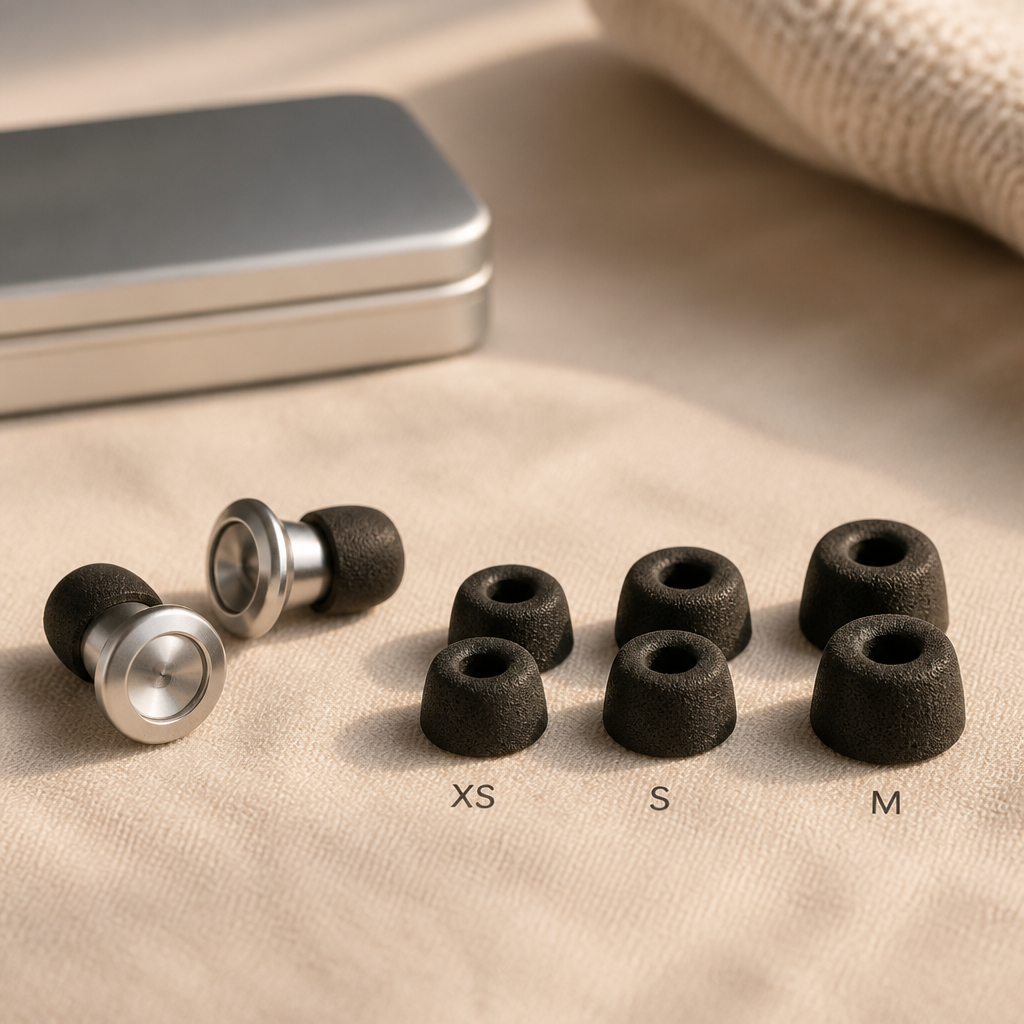
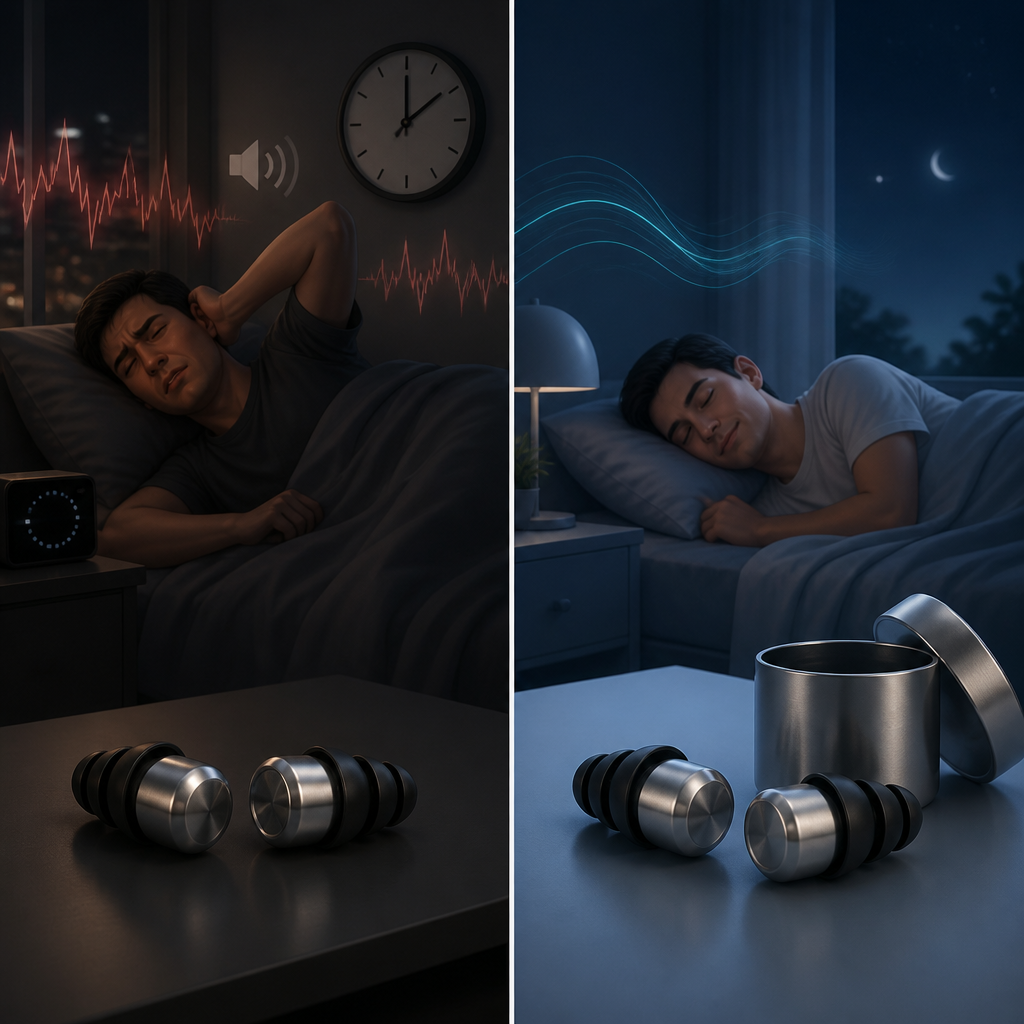
Noise does not need to wake you up fully to cause harm. That is the part most people miss. You can sleep through a noise event and still suffer measurable physiological consequences from it. Research published in peer-reviewed sleep and health journals shows that even during sleep, the auditory system remains active and responsive. A noise event triggers a cascade: increased brain activity, body movement, elevated blood pressure and heart rate, and a release of stress hormones, all without you ever becoming consciously aware of it.
The World Health Organization recommends that continuous background noise should not exceed 30 dB(A) during sleep, and that individual noise events should stay below 45 dB(A). To give those numbers context: a quiet bedroom with a ticking clock sits around 30 dB. Busy street traffic registers around 70 dB. A subway train hits 90 dB. Most urban and suburban bedrooms regularly exceed the WHO’s recommended sleep threshold.
The cruelest part of noise sleep deprivation is what it steals. Environmental noise specifically reduces slow-wave sleep and REM sleep, pushing the brain into lighter stages instead. These deeper stages are not just more restful in a vague sense. Slow-wave sleep is when the brain consolidates procedural and declarative memory. REM sleep is when emotional processing and creative problem-solving are rehearsed. Lose enough of them, and the effect accumulates night after night.
During the active waking phase, your body requires a higher noise intensity to trigger a stress response than it does during sleep. This asymmetry is important because it explains why people routinely underestimate how noise-damaged their sleep actually is. You feel like you slept through it. The data from a polysomnogram would tell a different story: more arousals, less deep sleep, a night profile that looks shallower than it should.
Reducing indoor noise levels can increase the amount of slow-wave sleep and REM sleep. After a noise-disrupted night, next-day effects include decreased perceived sleep quality, impaired mood, and slower reaction time.
Pro tip: If you wake up feeling unrested despite what seemed like a full night of sleep, noise arousals are a primary suspect. You do not need to remember waking up for noise to have fragmented your sleep architecture.
The cognitive consequences of disrupted sleep are well-documented and show up in the exact capabilities that professional performance depends on. Research published in peer-reviewed neuroscience journals confirms that sleep deprivation significantly impairs sustained attention and reaction time. A 2025 study in Frontiers in Neuroscience found that acute sleep deprivation prolonged reaction time in participants by over 83 milliseconds on auditory tasks, a difference that in real-world settings translates to missed cues, delayed responses, and compounding errors.
Sleep-deprived workers show measurable decline in: decision-making speed, working memory, emotional regulation, sustained concentration, creative problem-solving, and judgment under pressure. The emotional regulation piece is consistently underappreciated. A tired person does not just think more slowly. They become more reactive, less tolerant of ambiguity, and less capable of collaborative work. Meetings get longer. Conflicts escalate more easily. Projects stall.
Research has also documented that operating on chronically insufficient sleep produces cognitive deficits comparable to being legally intoxicated. Yet the person experiencing them often does not recognise the level of their own impairment. This is one of the most operationally dangerous aspects of the problem: unlike intoxication, sleep-deprived people tend to believe they are performing fine.
A single bad night is recoverable. Chronic exposure to nighttime noise, the kind that shaves 30-45 minutes off your deep sleep every night for months, is not something you simply sleep off on a Sunday. Cognitive debt accumulates, and the research on chronic shift workers, who experience ongoing sleep disruption, shows that they develop persistent performance deficits even after what they report as adequate sleep. For anyone sharing a room with a snorer, living near a main road, or sleeping in a thin-walled apartment, this is not a hypothetical.
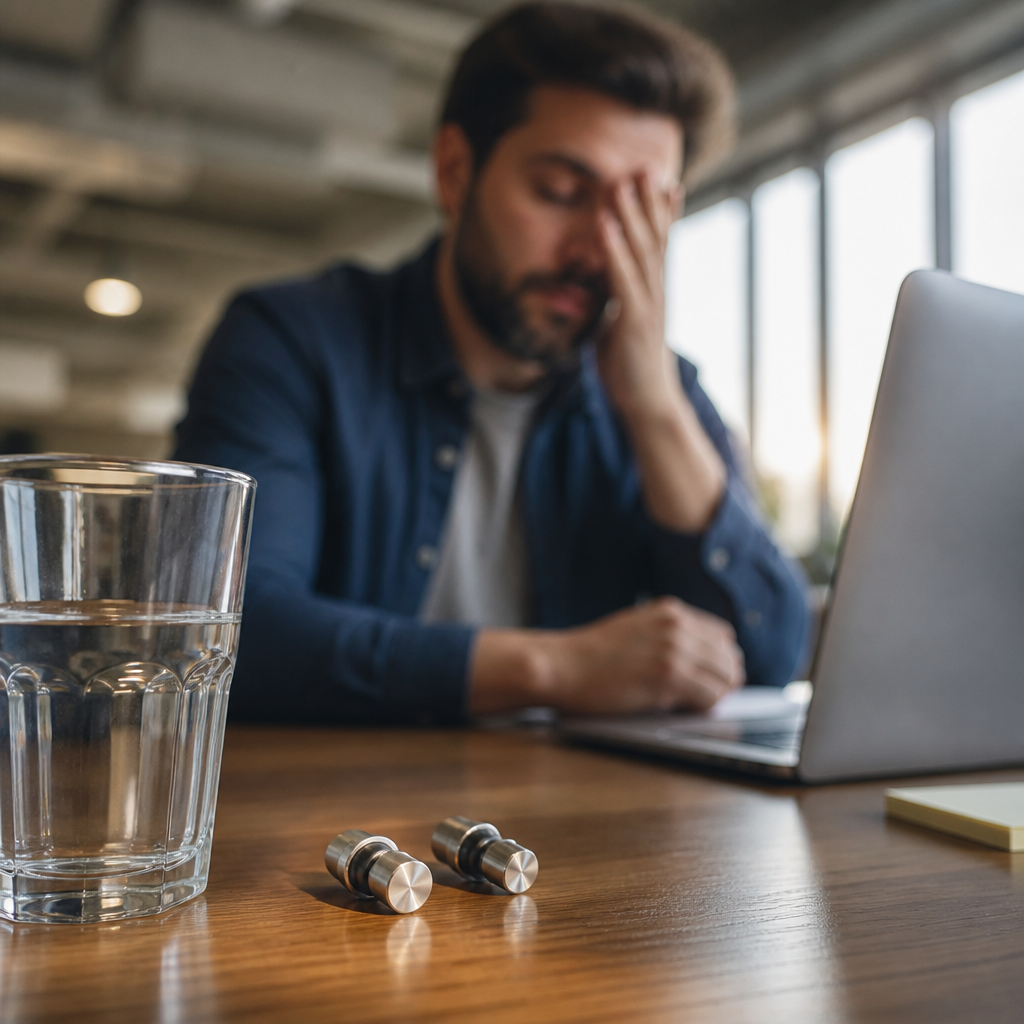
Not all sleep-noise sufferers are in the same position. But certain groups face amplified consequences that make the stakes considerably higher than a groggy morning.
Light sleepers spend more time in shallower sleep stages by default, which means any intrusive noise has a higher probability of triggering a full arousal or microarousal. Their sleep architecture is already less robust. Add a noisy environment and the margin between a functional night and a broken one narrows to almost nothing. Shift workers compound this with circadian misalignment, making noise protection during daytime sleep especially critical.
Construction workers, military personnel, and manufacturing operators often face a double exposure: occupational noise during work hours followed by insufficient or disrupted recovery sleep. The performance degradation that results is not abstract. Slower reaction times and impaired judgment in high-noise, high-risk workplaces directly increase the probability of accidents and injury. For this population, sleep is not a lifestyle preference. It is a safety input.
Pro tip: If your job requires sustained attention, rapid decision-making, or physical coordination, protect your sleep with the same seriousness you apply to your hearing protection at work. The risks of sleep deprivation on job performance are just as quantifiable.
There are several approaches people use to reduce noise during sleep. They are not equivalent. The right choice depends on the consistency of noise exposure, the noise frequency range involved, and how much disruption the sleep environment generates every night.
| Approach | Noise Reduction Effectiveness | Practical Considerations |
|---|---|---|
| Disposable foam ear plugs | Moderate (typically 25-33 dB NRR depending on brand and fit). Effective when correctly inserted. | Single-use design creates significant ongoing cost and waste. Fit consistency varies with each insertion. Material degrades quickly. Not suitable for daily long-term use without frequent replacement. |
| White noise machines or apps | Masking effect only. Does not reduce decibel level. Effectiveness depends on relative volume between masking sound and intrusive noise. | Works well for low-level ambient noise. Less effective against sudden peaks (traffic, snoring). Adds sound rather than removing it. No protection value in occupational settings. |
| Premium reusable ear plugs with memory foam tips | High and consistent, up to approximately 32 dB NRR. Consistent fit achieved via sized foam tips (XS, S, M) that conform to ear canal shape. | Durable metal body lasts significantly longer than disposable alternatives. Foam tips require replacement every 6-8 weeks rather than after each use. Suitable for nightly use, travel, and occupational environments. Higher initial cost, substantially lower long-term cost. |
The comparison above reflects a practical reality: masking noise and blocking noise are fundamentally different strategies. Masking works by introducing a competing sound. Blocking works by physically attenuating the sound wave before it reaches the eardrum. For anyone dealing with intermittent high-intensity noise events, the type most likely to cause sleep-disrupting arousals, blocking is the more effective approach.
If you want to improve sleep quality, start with the environment, not the supplement stack or the sleep hygiene checklist. Most sleep hygiene advice assumes a quiet room. For people who do not have one, it is partially irrelevant. Getting the noise problem solved first creates the conditions where everything else can actually work.
Spend one week paying deliberate attention to what wakes you, or what you suspect might be waking you without your conscious awareness. Common sources include partner snoring or movement, traffic and street noise, air conditioning and plumbing, thin walls between apartments, and early morning deliveries or bin collections. Once you know the source, you can match the solution to the problem rather than guessing.
A noise reduction rating of 32 dB brings a 70 dB traffic noise environment down to roughly 38 dB at the ear, which sits just above the WHO’s individual event threshold for sleep. That represents a meaningful improvement that moves you into a range where restorative sleep stages become achievable. For louder environments, pairing ear protection with some room-level mitigation (heavy curtains, weatherstripping on windows) gets you further.
The ATTENU8 approach takes this seriously. The aluminium-bodied reusable design provides consistent attenuation night after night because the structure does not degrade the way disposable foam does. Three foam tip sizes allow a proper fit regardless of ear canal dimensions, and that fit consistency directly determines how reliably the 32 dB attenuation is actually delivered. A poorly fitting ear plug that delivers 15 dB in practice is not the same product as one delivering 32 dB. The fit and attenuation mechanism matters as much as the stated NRR.
A common mistake with reusable ear plugs is neglecting tip replacement. The memory foam degrades with use and washing, which reduces both hygiene and acoustic performance. Replacing foam tips every 6-8 weeks keeps attenuation consistent and maintains the comfort that determines whether you actually wear them every night or abandon the habit after a week. Explore the full range of replacement options to build this into a simple routine.
Pro tip: Keep a spare set of foam tips on your bedside table. The moment they start feeling less comfortable or less snug, replace them. The cost of a foam tip is trivial compared to the cost of one week of degraded sleep performance at work.
Most adults require between seven and nine hours of sleep per night to maintain full cognitive function. Research indicates that consistently sleeping fewer than six hours produces accumulating cognitive deficits that impair the kinds of skills most jobs depend on: sustained attention, decision-making, memory, and emotional regulation. There is no reliable evidence that people can adapt to chronic short sleep without performance consequences.
Yes, and this is one of the most important things to understand about noise sleep deprivation. The auditory system remains active during sleep. Environmental noise can trigger measurable physiological responses, including elevated heart rate, increased blood pressure, and shifts in brain activity, without ever bringing you to full wakefulness. These microarousals reduce the proportion of time spent in restorative slow-wave and REM sleep, with real effects on next-day performance.
WHO guidelines set the threshold for continuous background noise at 30 dB(A) for sleep, with individual noise events ideally staying below 45 dB(A). These are low numbers. A quiet bedroom fan can sit at or near the continuous threshold. Street traffic, snoring, and plumbing sounds regularly exceed it. The practical implication is that most urban and suburban sleeping environments are noisier than they need to be for genuinely restorative sleep.
Premium reusable ear plugs with correctly sized memory foam tips deliver comparable or superior attenuation to standard disposable foam plugs, with one important practical advantage: fit consistency. Disposable plugs rely on a roll-and-insert technique that produces variable results. A reusable plug with a fitted, maintained foam tip delivers more predictable attenuation every night, which matters for anyone using them as a systematic sleep quality tool rather than an occasional fix.
The effects are broad but most pronounced in the domains of sustained attention, working memory, decision-making speed, and emotional regulation. These are the precise functions that deteriorate under sleep pressure. Improving sleep quality means more time spent in restorative sleep stages, which supports memory consolidation, clearer thinking under pressure, faster reaction times, and a measurably calmer, more focused presence at work. The downstream effects on error rates, interpersonal friction, and creative output are all real and documented.
Yes, when used correctly and maintained properly. The key practices are choosing the right tip size for a comfortable fit (not over-inserted), replacing foam tips regularly to maintain hygiene and performance, and keeping the plugs clean. A well-fitting, well-maintained reusable ear plug causes no long-term issues with regular nightly use. Discomfort is almost always a function of poor fit, which is resolved by selecting the right tip size from the XS, S, or M options available.
Noise is consistently identified as one of the top factors disrupting adult sleep, alongside temperature, light, and stress. It is also one of the most practically addressable. You cannot always control your work schedule, your anxiety levels, or your bedroom temperature without significant life changes. You can control whether disruptive sound reaches your ears during sleep with a reliable ear plug. That makes it one of the highest-return interventions available, particularly for light sleepers and anyone in a noisy environment.
Have you noticed a direct connection between noisy nights and your ability to focus or make decisions the next day? Share your experience below.
If you reach for earplugs every time you go to bed, you are far from alone. Light sleepers, shift workers, city dwellers, and anyone sharing a bed with a loud snorer have made nightly earplug use a routine. But a question lingers: are earplugs safe to use every night, or does regular use quietly damage your hearing and ear health over time? The short answer is yes, nightly earplug use is safe for most adults, provided the earplugs fit correctly, are kept clean, and are inserted without forcing them too deep. The longer answer, covered here, matters because the caveats are real and avoidable.
| Key Insight | Explanation |
|---|---|
| Nightly use is safe for most healthy adults | Sleeping with earplugs every night is generally safe when they are kept clean, inserted correctly, and maintained properly. |
| Hygiene is the single biggest variable | Earwax buildup and ear infections almost always trace back to dirty or poorly maintained earplugs, not to the act of wearing them. |
| Fit matters more than the noise rating number | A well-fitted earplug with a moderate noise reduction rating (NRR) outperforms a poorly fitted one with a higher rating. Three tip sizes help you find the right seal. |
| Earplugs do not cause hearing loss when used correctly | Earplugs reduce sound level reaching the eardrum. There is no physiological mechanism by which a correctly inserted earplug damages hearing. |
| Side sleepers need a low-profile design | Pillow pressure pushes standard foam plugs deeper into the canal. A compact, body-friendly earplug body reduces this risk significantly. |
| Disposable foam plugs accumulate bacteria fast | Single-use foam that gets reused night after night becomes a hygiene problem. Reusable designs with cleanable bodies change this equation. |
| Some people should consult a professional first | If you have a history of recurring ear infections, perforated eardrums, or unusual earwax buildup, seek medical guidance before using earplugs nightly. |
The case for sleeping with earplugs rests on solid ground. Nearly 30% of adults identify noise as one of the biggest obstacles to quality rest. Research published in the Journal of Clinical Sleep Medicine found that people who wore earplugs experienced 50% fewer nighttime wake-ups caused by noise, along with a 20% improvement in overall sleep efficiency. That means more time in restorative deep sleep, which directly affects physical recovery, memory consolidation, and mood regulation.
A separate study examining earplugs as a countermeasure against environmental noise found they “mitigated nearly all” noise-related effects on sleep structure, including protecting N3 deep sleep from disruption. When 85% of participants in that study reported sleeping better with earplugs than without them, the benefit is not trivial or anecdotal. It is measurable and consistent.
The concern about nightly earplug use safety typically centres on the ear canal itself, not on hearing. Earplugs block sound mechanically. They do not emit anything into the ear. They do not affect the inner ear’s hair cells, which are the structures actually responsible for hearing. Chronic noise exposure damages those hair cells. Earplugs do the opposite: they lower the sound level reaching the eardrum, which means correctly used earplugs protect rather than harm hearing over the long term.
The medical consensus is clear: earplugs are safe for regular use when proper technique is followed. The risks that do exist are almost entirely hygiene problems, not hearing problems.
Most audiologists and ENT specialists agree that some users benefit from taking one or two nights off per week, allowing the ear canal to complete its natural self-cleaning process. This is a reasonable precaution, not a hard clinical requirement. It becomes more relevant when you are using soft foam tips every single night without cleaning the earplug body between uses.
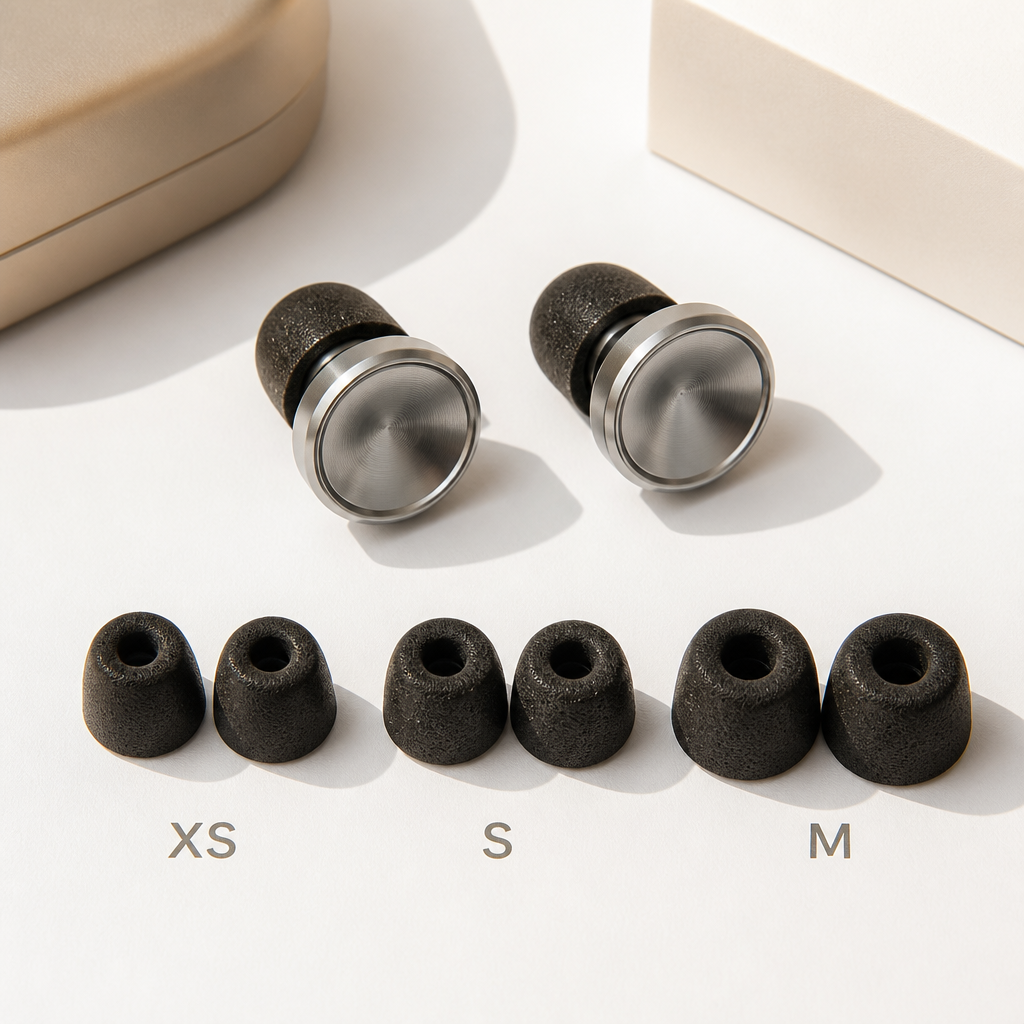
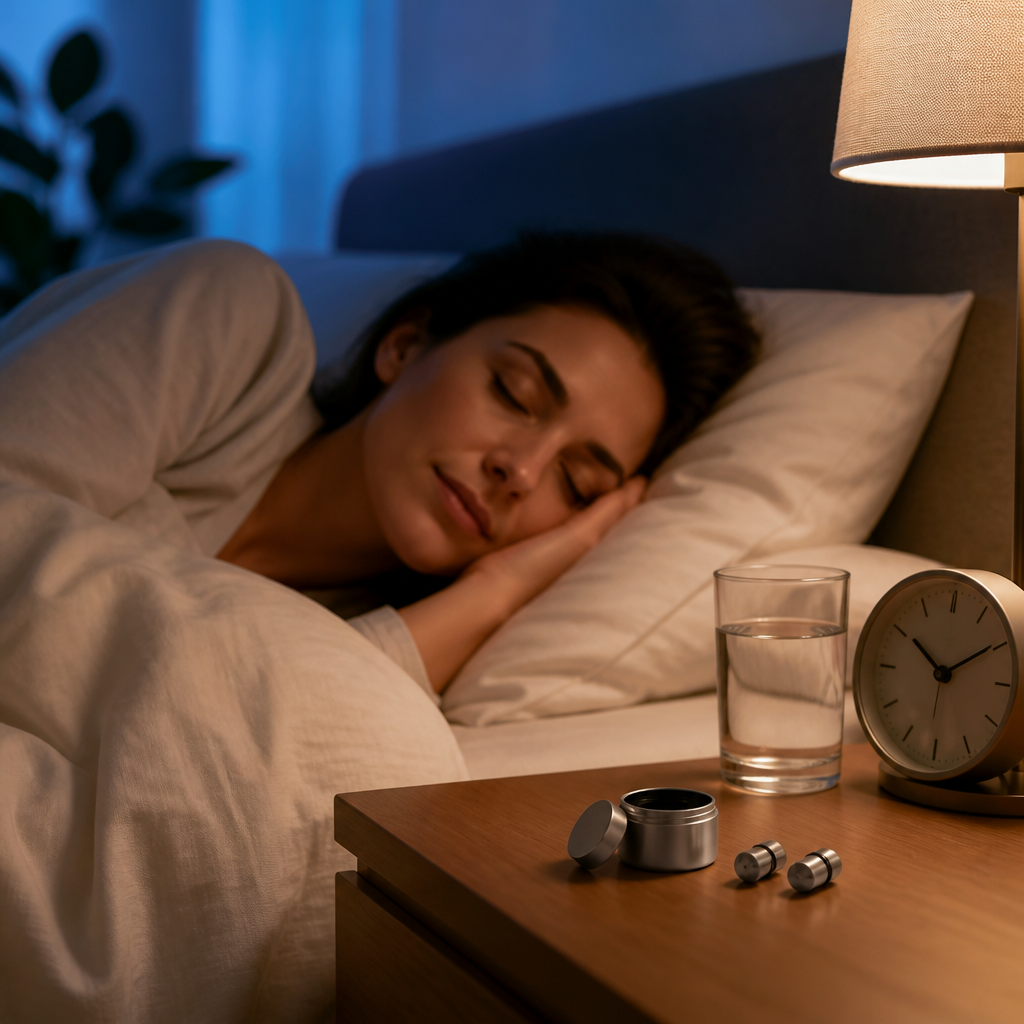
The risks of sleeping with earplugs are real but consistently overstated when hygiene and fit are treated as an afterthought. Understanding what can actually go wrong, and what cannot, lets you make an informed decision rather than an anxious one.
This is the most common side effect associated with regular earplug use. The ear canal naturally moves earwax outward through a process called epithelial migration. When an earplug blocks that path night after night, wax can accumulate and pack deeper into the canal. The consequences range from a feeling of fullness or muffled hearing to tinnitus (ringing in the ear) and temporary hearing reduction. Earwax buildup is not permanent, but it does require intervention: medicated eardrops or professional removal by a clinician.
The practical fix is twofold. First, do not insert earplugs so deeply that they pack against the wax. Second, take occasional nights off and keep ears gently clean. Using a reusable earplug with a cleanable body reduces the debris that enters the canal each night.
Bacteria accumulate on earplugs, particularly on porous foam surfaces that are difficult to clean properly. Reusing disposable foam earplugs night after night introduces bacteria directly into a warm, enclosed space. The result can be an outer ear infection (otitis externa), which presents with pain, swelling, fluid accumulation, and sometimes temporary hearing loss. Proper storage in a clean case, regular cleaning with mild soap and water, and replacing worn foam tips on schedule eliminate most of this risk.
Inserting earplugs too deeply is a genuine risk, particularly for side sleepers. When a large, protruding earplug gets pressed by a pillow, it can be forced further into the canal than intended. Excessive pressure can cause eardrum irritation and pain. A straightforward test: you should be able to remove your earplugs easily with two fingers. If you need tweezers, they are too far in. Choosing an earplug with a compact, low-profile body designed for sleep reduces this risk considerably.
Earplugs do not cause permanent hearing loss when used as intended. There is no physiological mechanism by which a correctly inserted earplug that simply reduces sound level would damage the cochlea or auditory nerve. The anxiety around this risk is not supported by clinical evidence. The risks that are real (earwax buildup, infection, over-insertion pain) are all manageable with basic hygiene habits.
Pro tip: If you wake up with a feeling of fullness or muffled hearing that clears within a few minutes of removing your earplugs, that is normal pressure equalisation. If the muffled sensation persists for hours after removal, see a healthcare professional to rule out earwax impaction or infection.
Not all earplugs are equally suited to nightly use. The materials, form factor, and hygiene characteristics of different designs create meaningfully different experiences and risk profiles over months and years of daily wear.
| Earplug Type | Noise Reduction | Hygiene for Nightly Use |
|---|---|---|
| Disposable foam | High NRR on paper (often rated 30-33 dB), but highly variable in practice because fit consistency is poor and foam degrades quickly | Poor for repeated use. Porous surface traps bacteria and earwax. Designed for single use, meaning daily replacement is the only safe approach, which creates cost and waste |
| Wax or silicone putty | Moderate. Conforms well to outer ear but does not seal the canal as precisely as an inserted tip | Better than foam for some users, but putty picks up debris, loses shape over time, and cannot be thoroughly cleaned between uses |
| Metal-body reusable with foam tips | Consistent and reliable. A precisely machined aluminium body paired with a correctly sized memory foam tip delivers predictable attenuation night after night, around 32 dB when properly fitted | Excellent. The hard metal body can be wiped clean between uses. Only the foam tip needs periodic replacement, typically every 6-8 weeks, rather than replacing the entire earplug daily |
The comparison above illustrates why the earplug body material matters as much as the tip. Disposable foam plugs carry a hygiene burden that is unavoidable without daily replacement. A durable, cleanable body with replaceable soft tips addresses both the hygiene problem and the fit consistency problem in one design.
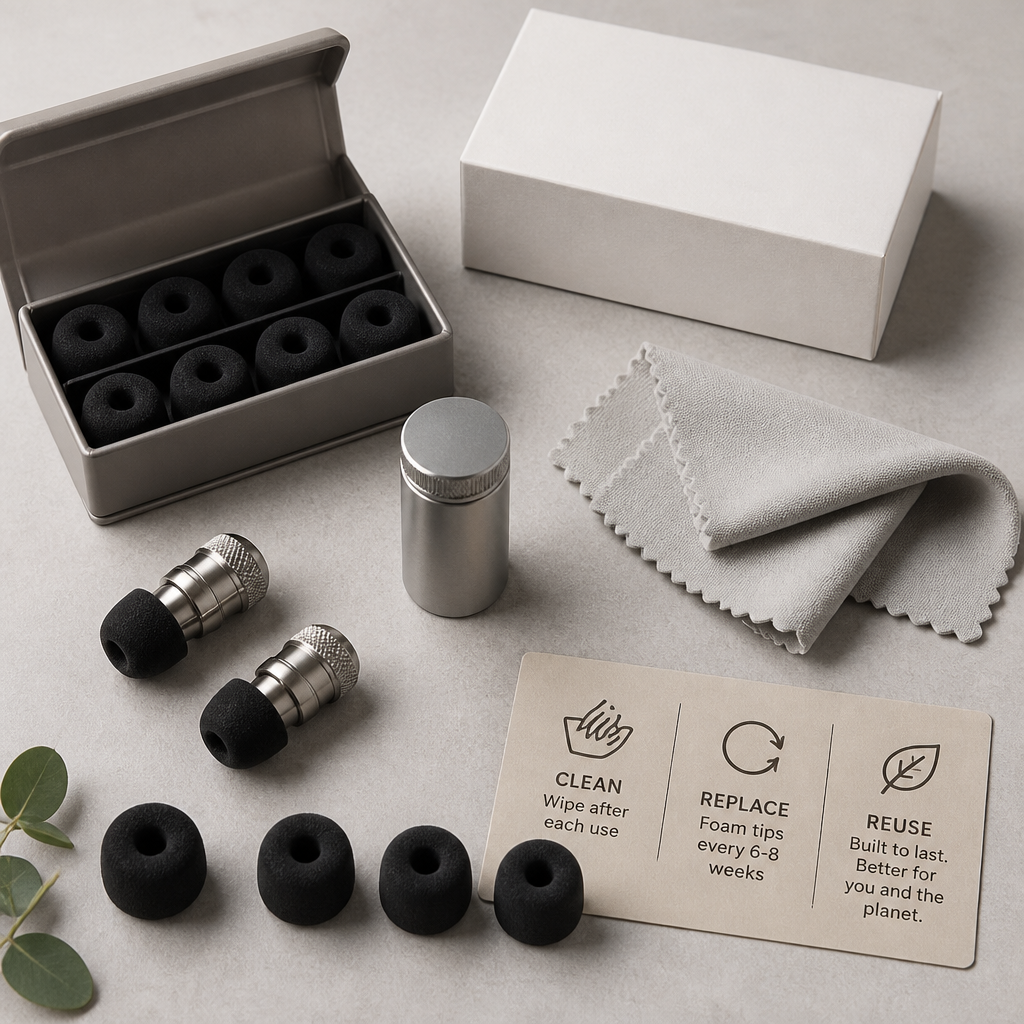
The gap between earplugs that cause problems and earplugs that genuinely improve sleep without side effects almost always comes down to habits, not the earplugs themselves. A few consistent practices eliminate the majority of reported issues.
Ear canals vary more than most people realise. Using a tip that is too small means the earplug does not seal properly, which undermines noise reduction without improving safety. Using a tip that is too large means the foam is under compression and may migrate deeper into the canal over a night of movement. Earplugs that come with multiple tip sizes (typically XS, S, and M) allow you to find the seal that holds position through a full night of sleep without over-reaching. Start with a medium tip, then size down or up based on how the earplug sits after a full night.
The goal is a seal just inside the opening of the ear canal, not maximum insertion depth. For foam tip earplugs, compress the tip, gently pull the outer ear upward and back to straighten the canal, insert the tip just far enough to feel resistance, and hold it briefly as the foam expands to fill the canal entrance. You should feel a noticeable drop in ambient sound. If you do not, the tip size or fit is wrong, not the depth.
Pro tip: Always wash your hands before inserting earplugs. The bacteria count on unwashed hands is one of the most preventable contributors to ear infections among regular earplug users. This step takes ten seconds and eliminates a significant hygiene risk.
For reusable earplugs, wipe the earplug body with a clean, damp cloth after each night’s use. Wash it with mild soap and water regularly, and dry it completely before storing. Keep earplugs in a clean case when not in use, not loose in a bag or on a nightstand where they collect dust and debris. Replace foam tips on schedule. Tips that have compressed, yellowed, or lost their expansion response are past their effective life and should be swapped out.
If you notice persistent muffled hearing, itching, pain, or discharge from the ear canal, stop using earplugs and consult a healthcare professional. These are signals that something needs attention. Most experienced earplug users never encounter these issues because consistent hygiene prevents them. But the monitoring step matters, particularly in the first few weeks of daily use when you are still dialling in your routine.
For the vast majority of adults, sleeping with earplugs every night is straightforward and beneficial. A smaller group should approach it more carefully or seek professional guidance first.
If you have a history of repeated outer or inner ear infections, your ear canal environment is already compromised. Regular earplug use creates additional moisture and potential bacterial exposure. A healthcare professional can advise whether earplugs are appropriate for you and which type minimises risk in your specific case.
A perforated eardrum changes the anatomy of the ear canal and the risk profile of anything inserted into it. If you have a known or suspected perforation, do not use earplugs without medical clearance. This is non-negotiable and not a situation for self-management.
Sleeping with earplugs safe for your ears does not automatically mean it is safe for your circumstances. Parents of infants who rely entirely on their hearing to detect distress, and individuals who depend solely on an auditory smoke or carbon monoxide alarm, need to weigh 32 dB of noise reduction against their specific safety context. Some households address this with additional alert systems (vibrating alarm devices, bed shakers, visual strobe alarms) rather than abandoning earplugs altogether.
Some people naturally produce significantly more earwax than average. For these individuals, nightly earplug use without any earwax management routine can accelerate buildup. Taking one or two nights off per week, allowing the canal to self-clear, and periodic professional ear cleaning if needed keeps this manageable without abandoning earplugs entirely.
Pro tip: If you are new to nightly earplug use, keep a simple log for the first month: note any mornings where you wake with ear discomfort, fullness, or reduced hearing. Patterns in that log make it much easier to identify whether a hygiene habit, tip size, or insertion technique needs adjusting before a minor issue becomes a persistent one.
Yes, for most healthy adults, using earplugs every night over an extended period is safe. The key conditions are consistent hygiene, correct insertion, appropriate tip sizing, and regular replacement of foam tips. Long-term users who maintain these habits rarely experience significant ear health issues. If anything, the long-term protection from chronic noise disruption outweighs the minor management effort required to keep earplugs clean.
No. Earplugs reduce the sound level reaching the eardrum. They do not affect the cochlea, auditory nerve, or the inner ear structures responsible for hearing. There is no physiological mechanism by which a correctly used earplug causes hearing loss. In contrast, chronic exposure to noise without hearing protection is a well-established cause of permanent hearing damage. Earplugs work in the opposite direction.
For reusable earplugs with replaceable memory foam tips, the replacement interval is typically every 6-8 weeks with nightly use. Signs that tips need replacing include: loss of expansion speed (the tip no longer bounces back quickly after compression), visible discolouration or yellowing, a persistent odour, or a noticeably looser seal than when the tips were new. Replacing tips on schedule is far more economical and hygienic than replacing the entire earplug.
Pain after wearing earplugs overnight is almost always caused by one of three things: tips that are too large and create excessive canal pressure, insertion that was too deep, or a reaction to bacteria on dirty earplugs. Start by checking tip size. Then verify insertion depth: you should be able to grasp and remove the earplug easily with two fingers. Clean the earplug body and replace the tips. If pain persists after correcting these factors, see a healthcare professional to rule out an early ear infection or irritation.
Earplugs with around 32 dB of noise reduction significantly lower background noise but do not create total silence. A standard smoke alarm or phone alarm emits sound at a level that remains audible through a well-fitted earplug for most people. However, if you are a particularly heavy sleeper, if your alarm is unusually quiet, or if you are in a situation where you bear specific responsibility for hearing nighttime alerts, it is worth testing your alarm audibility while wearing your earplugs and considering supplemental alert systems if needed.
Earwax buildup from nightly earplug use is a manageable inconvenience, not a serious health threat when addressed promptly. Symptoms include a feeling of fullness in the ear, muffled hearing, or ringing. Left untreated for extended periods, impacted earwax can become uncomfortable and harder to remove. Prevention through occasional nights off and proper hygiene is straightforward. If buildup occurs, medicated eardrops designed to soften wax are usually effective. For more significant impaction, a clinician can perform safe removal.
Yes, with one important condition: the reusable earplug must actually be cleaned regularly. A reusable earplug with a hard body that can be wiped and washed between uses, paired with replaceable foam tips, is substantially more hygienic than a disposable foam plug that cannot be properly cleaned and accumulates bacteria with each use. Disposable foam earplugs reused night after night without replacement are among the most hygiene-compromised options available, despite being the most widely used.
Have you been using earplugs every night, and has a particular habit or product feature made a difference to your comfort and ear health? Share your experience in the comments below.

