


 0

If you have ADHD, a humming fridge, a neighbour’s bass line and a colleague’s keyboard can all land at once, and suddenly the email you were writing is gone. For many people with ADHD, sensory overload is the moment focus collapses, and noise is usually the loudest trigger in the room. Ear plugs for ADHD won’t fix attention, but used well they remove the constant background load that makes concentration harder. This guide covers how to match ear plugs to your triggers, how to read noise reduction claims honestly, and where ear plugs help most during work, study and sleep.
| Key Insight | Explanation |
|---|---|
| Start with the trigger, not the product | Decide whether your problem is a constant hum, sudden spikes or speech. Ear plugs work best on broadband and mid-frequency noise, and less well on a single sharp sound you can anticipate. |
| Expect less reduction than the lab number | A 32dB rating is measured under controlled conditions. A poor seal can cost a large share of that protection, so insertion matters as much as the rating. |
| Use plugs for focus work, not only sleep | Many people with ADHD get the most value during open-plan days, commutes and study blocks, when the hardest distractions arrive in bursts. |
| Pair plugs with a low-level sound | Plugs take the sharp edges off the room, and a steady masking sound fills the gap. Total silence can make small sounds feel louder for some people. |
| Replace foam tips every 6-8 weeks | Foam tips lose their shape and seal over time. A worn tip is a common reason a pair suddenly seems to stop working. |
| Trial them on an ordinary day first | Wear them through a normal workday before a flight or a shift. You need to know whether the pressure or muffling bothers you while you are still in control of the situation. |
Sensory overload in ADHD usually arrives as a sudden drop in tolerance rather than a slow build. People often describe a spike in irritation, a need to leave the room, or the sense that every sound has been turned up to the same volume. The filter that normally decides what matters seems to switch off, so a pen click and a colleague’s question compete equally for attention.
A common first step in published guidance is to identify triggers and avoid them when possible. That advice is sound, but most people cannot rearrange their workplace, their family or their commute on demand. Noise is the trigger you can reduce fastest without asking anyone else to change anything.
Overload rarely starts with a meltdown. The first signs are usually small: rereading the same sentence, clenching your jaw during a call, or reaching for headphones before you have consciously decided to. Tracking these moments for a week shows you when noise is the cause and when something else, such as hunger, poor sleep or a crowded schedule, is driving the reaction.
In practice, the people who get the most from ear plugs tend to act at the first sign rather than waiting until they are frustrated. Putting plugs in at the start of a loud task is far easier than trying to recover focus after twenty minutes of fighting the noise.
Many people with ADHD describe noise as physically uncomfortable, not just distracting. Sounds with a sharp edge, such as a phone vibrating on a hard desk, can produce a jolt that breaks the thread of a task. Ear plugs will not remove the jolt entirely, but they reduce the sudden contrast that makes it so disruptive.
Not all noise does the same damage. A useful way to think about it is to separate constant sound from sudden sound and from speech, because each calls for a slightly different response. The right ear plug setup depends on which of these is wearing you down.
Air conditioning, traffic, a server room and open-plan background chatter are constant. They rarely feel loud, but they quietly drain attention over a full day. Plugs are well suited to this type of noise because they lower the overall volume evenly, which lets your brain stop tracking the hum.
If the constant noise is the main problem, a moderate noise reduction level is usually more useful than the maximum. Too much isolation can make your own voice and breathing sound odd, and some people then start to fidget or hum to compensate, which adds a new distraction.
Door slams, dropped trays, sirens and notification sounds are the triggers most people with ADHD name first. They are short, but each one resets your attention. Ear plugs reduce how sharp these spikes feel, though they will not silence them completely, so combine them with a habit of moving away from the source when you can.
Overheard conversations are among the hardest sounds to tune out because your brain processes language automatically. Ear plugs reduce speech volume, but they will not block it entirely. In a shared office, a clear ask to colleagues, such as a quiet hour on certain days, often does more than any product.
Noise reduction numbers are the most misunderstood part of buying ear plugs. A rating tells you how much sound a product can block under test conditions, not how much you will experience in a busy train carriage. Understanding that gap helps you choose sensibly and avoid disappointment.
ATTENU8 ear plugs are rated at approximately 32dB, which places them in the range that many people with noise sensitivity find useful for everyday focus work. Lab ratings assume a correct fit on a test rig, so the number is a ceiling. Your real result depends on your ear canal, your tip size and how carefully you insert them.
One independent guide on earplugs for noise sensitivity describes a moderate noise reduction earplug as cutting environmental volume by roughly 65 to 75 percent. That is a useful way to picture the effect, because it shows that even a good plug does not turn a loud room into silence. It makes the room manageable.
The most common mistake is to assume that a higher rating always means better focus. Heavier isolation can feel oppressive, and it can make you more aware of your own pulse and chewing. For many people with ADHD, a moderate level of reduction combined with a steady background sound works better than full blocking.
Pro tip: Judge a pair by what you can still hear. If you can follow a conversation at arm’s length but the sudden noises have lost their sting, the setting is right for daily focus work.
The best ear plug is the one you keep in for the whole task, not the one with the largest number on the box.
Focus work is where ear plugs for ADHD earn their place. Writing, coding, reading and studying all demand sustained attention, and they are exactly the tasks that suffer when a room is noisy. A well-fitted pair turns a distracting environment into one that is workable for the next hour or two.
The key is to use them deliberately. Put them in at the start of a focus block rather than after you have already lost your place. That small timing change prevents the frustration loop where you keep stopping to adjust them.

Open offices combine constant hum with unpredictable speech, which makes them one of the hardest environments for attention. Plugs take the edge off both. They are most useful during the focused parts of your day, such as drafting, analysis or reviewing documents, and less useful during meetings where you need to hear people clearly.
A practical routine is to keep the plugs in a pocket or bag, put them in before a heads-down block and remove them when you need to speak with others. Taking them out and in again takes seconds once the fit is familiar.
Students with ADHD often study in libraries, shared bedrooms or kitchens. In those settings, the most disruptive sounds are usually the ones from other people, such as typing, rustling and conversation. Plugs help with those, but pair them with a steady sound, because absolute silence can make small noises stand out more.
Keep study blocks short at first, around thirty to forty minutes, and notice whether the plugs keep you engaged or make you tired. Fatigue from pressure in the ears is a sign the fit or tip size needs adjusting, not that you need to give up on plugs altogether.
Fit is the single biggest factor in whether ear plugs work for you. A small gap around the tip lets sound leak in, and an over-tight seal can cause discomfort within an hour. Getting the fit right is a skill, and it takes a few days to become automatic.
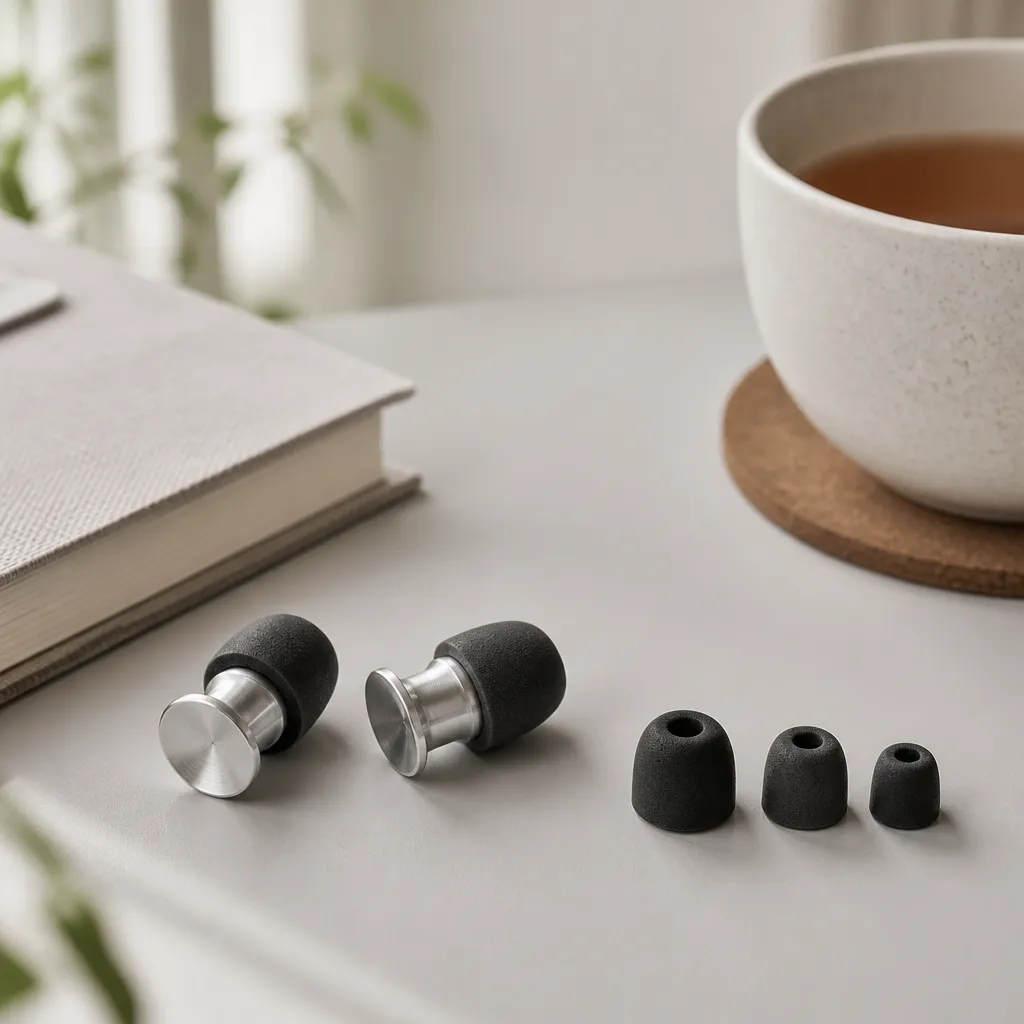
ATTENU8 ships three sizes of soft memory foam tips, XS, S and M. Ear canals vary a great deal, so do not assume the middle size is correct. Try each size once in a quiet room and choose the one that feels secure without pressing on the ear canal walls.
A tip that is too small will feel loose and let in a high-pitched whine from traffic or electronics. A tip that is too large will feel full and may make your own voice sound boomy, which can be irritating for people who are already sensitive to sound.
Roll the foam tip into a thin cylinder, pull the top of your ear gently up and back, and push the tip in while it expands. Hold it for about thirty seconds while it settles. This method gives a deeper seal than pushing a flat tip straight in.
Pro tip: Do a quick seal check by covering your ears with your palms and then releasing them. If the sound drops noticeably each time and stays low, the seal is working. If the sound barely changes, reinsert the plug before you decide the product has failed.
Because the metal body is reusable, the foam tips are the part that wears out. ATTENU8 recommends replacing tips every 6-8 weeks, depending on how often you wear them and how you clean them. A tip that has lost its shape or collected earwax will leak sound, and many people blame the product rather than the worn foam.
Sleep is where ADHD and noise sensitivity often collide. Light sleepers wake to a partner’s breathing, a neighbour’s door or a car alarm several streets away. Ear plugs can keep those sounds from triggering full wakefulness, which is often the difference between a broken night and a restful one.
Side sleepers are more likely to find that a plug pushes against the pillow and works its way loose. A softer tip size or a slightly shallower insertion can reduce this. If discomfort persists, try sleeping on your back for the first few nights while you adjust.
Some people with ADHD also find that a racing mind keeps them awake even when the room is quiet. In that case, ear plugs solve only part of the problem, and a consistent wind-down routine matters more than the choice of plug.
A low, steady sound such as brown noise or a fan can soften the contrast between sudden noises and silence. Refresh Psychiatry’s overview of misophonia and ADHD notes that sound masking, including white noise, brown noise and fans, can soften the contrast between trigger sounds and silence. Combining that approach with ear plugs often gives better results than either alone.
Silence is not always the goal. For many sensitive sleepers, a predictable background sound does more to keep the brain calm than a perfectly quiet room.
Workplaces and classrooms have different rules, and so do noisy trades. Ear plugs can make a day far more manageable, but they should never be your only protection in genuinely hazardous noise. Hearing protection used at work has to meet the requirements that apply where you work.
If you work in construction, manufacturing or military settings, speak with your safety officer about whether your plugs are suitable as hearing protection. Comfort and focus benefits are real, but they are separate from the certified protection that high-noise environments require. For focus purposes in ordinary offices or classrooms, the decision is far simpler and sits with you.

Students who need plugs during lectures should check that they can still hear the instructor. Many lecturers and teachers will support a discreet arrangement, particularly when a student explains that they need to manage sound for focus. A quick conversation before the term starts tends to be easier than explaining mid-lesson.
People in loud workplaces often use ear plugs for hours at a time, which makes fit and tip replacement even more important. A pair that feels fine for thirty minutes can become painful after a full shift. Keep a spare set of tips in your kit so a worn or lost tip does not leave you unprotected.
Ear plugs are one tool among several, and each suits a different kind of sensory problem. The table below compares three common approaches so you can see where each one fits. The best choice often combines two of them rather than relying on a single product.
| Approach | Strengths for ADHD Focus | Limitations |
|---|---|---|
| ATTENU8 reusable metal-bodied ear plugs with memory foam tips | Consistent, moderate reduction across XS, S and M tip sizes. Reusable body and tip replacement every 6-8 weeks keeps running costs predictable. | Requires correct sizing and insertion. Foam tips still need regular replacement, and the body is not designed for hazardous-noise certification. |
| Disposable foam ear plugs | Inexpensive and easy to carry in quantity. Useful as a backup or for one-off events. | Often compressed before insertion, which can be fiddly with sensory sensitivity. Usually replaced far more often, which adds up over time. |
| Over-ear noise-canceling headphones | Strong reduction for constant sound and easy to put on and remove. Can be combined with audio for masking. | Bulky, can cause heat and pressure on the head, and are impractical in some workplaces or on public transport. |
In practice, many people with ADHD use plugs for daily focus work and headphones for particularly demanding days. Choose based on where you spend most of your time, then test the option in that setting for at least a week before deciding.
Ear plugs can help when noise is a major source of distraction or overload. They reduce the constant and sudden sounds that pull attention away from a task, but they do not treat ADHD itself, so they work best as one part of a wider plan.
A moderate level is usually more useful than the maximum for everyday focus. Full isolation can feel uncomfortable and make your own breathing or voice more noticeable, which can become a distraction in its own right.
Many people wear them through focused blocks and remove them during conversations or when they need to be alert to their surroundings. Take a break every few hours, check the fit and stop if you notice pain or irritation in the ear canal.
ATTENU8 recommends replacing foam tips every 6-8 weeks. Tips that look flattened, feel stiff or have collected wax should be replaced sooner, because a worn tip leaks sound and reduces comfort.
Not necessarily. Ear plugs used for focus are not a substitute for certified hearing protection in hazardous noise. Speak with your employer or safety officer to confirm which protection is required for your role.
Have you tried ear plugs for sensory overload or focus work? Tell us what kind of noise gets to you most and what worked, or didn’t, in your own routine.

