


 0
0

If you wake up at the sound of a car door closing three streets away, you already know that light sleeping is not a personality quirk. It is a physiological reality that leaves you exhausted, irritable, and hunting for solutions that actually hold up through a full night. The problem with most advice on ear plugs for light sleepers is that it treats every plug as roughly equal. It is not. The gap between a cheap foam roll-and-insert and a precision-fit, high-attenuation plug is the difference between waking up rested and waking up at 3am because someone flushed a toilet two rooms away.
Light sleepers spend more time in the lighter stages of the sleep cycle, which means their brain is closer to full wakefulness for a greater portion of the night. A noise that a deep sleeper processes and ignores is enough to pull a light sleeper fully conscious. This is not a weakness. In many contexts, it is a useful sensitivity. But in a modern noise-polluted environment, it becomes a chronic problem.
The sounds that trigger waking are rarely the loud, obvious ones. It is the intermittent drip, the distant traffic surge, the partner shifting and breathing. Intermittent noise is consistently harder for the brain to habituate to than steady background sound, because the brain keeps flagging each new instance as a potential threat requiring attention.
This means the solution is not simply “block all sound.” It means reducing ambient noise to a level low and consistent enough that the brain stops flagging it. That is exactly what a well-fitted, high-attenuation ear plug does.
| Key Insight | Explanation |
|---|---|
| Intermittent noise is worse than steady noise | The brain cannot habituate to sounds that keep changing. Cutting the peaks of intermittent noise is the priority for light sleepers. |
| Fit determines attenuation more than material | A poorly fitted ear plug with a 33dB rating will underperform a well-fitted plug rated at 28dB. Seal is everything. |
| Memory foam tips outperform rigid silicone for sleep | Memory foam conforms to the unique shape of your ear canal and maintains a seal when you roll over in your sleep, which rigid tips cannot reliably do. |
| Reusable metal-bodied plugs hold their shape indefinitely | Unlike disposable foam plugs, a metal-bodied plug does not degrade. Only the foam tips need replacing, roughly every 6 to 8 weeks. |
| Around 32dB noise reduction is the target for sleep use | This level reduces most ambient noise to a tolerable background hum without creating the disorienting total silence that some sleepers find uncomfortable. |
| Sizing matters more than most brands admit | Ear canals vary significantly between people. A plug supplied with multiple tip sizes (XS, S, M) gives you a genuine chance of finding the right fit. |
| Pressure on the ear canal kills compliance | If your plugs hurt after an hour, you will take them out at 2am without realising it. Comfort is not a luxury feature; it is what determines whether the plug actually works all night. |
Noise disrupts sleep at the architectural level. Before you fully wake up, noise triggers micro-arousals, brief shifts from deeper sleep stages to lighter ones that you may not consciously register but that accumulate into a night of fragmented, unrestorative sleep. You wake up feeling like you barely slept even though the clock says eight hours.
The sounds that cause the most damage are not necessarily the loudest. Research on sleep and noise consistently points to two factors: unpredictability and relevance. A sound that changes volume suddenly, or one that carries meaning (a name, a siren, a child crying) is far more disruptive than a steady loud hum. This is why traffic noise from a busy road is often more damaging to sleep than living near a motorway where the sound is constant.
The goal for a light sleeper is not silence. It is acoustic consistency. Remove the peaks and spikes, and the brain can finally stop standing guard.
For light sleepers, even low-level noise spikes (a partner snoring, a neighbour’s TV, an air conditioning unit cycling on) are enough to cause arousals multiple times per hour. Over weeks and months, this compounds into genuine sleep deprivation and its downstream effects: poor concentration, mood instability, impaired immune function.
Pro tip: If you wake up feeling unrested despite sleeping a full eight hours, noise-triggered micro-arousals are one of the first things to rule out. Wearing well-fitted ear plugs for a week is a simple, low-cost diagnostic as much as it is a solution.
The Noise Reduction Rating (NRR) printed on ear plug packaging is a laboratory figure. It describes the maximum attenuation measured under controlled conditions with a correct fit. In real-world use, actual attenuation is lower, because most people do not insert plugs with the same precision as a lab technician.
A rating of around 32dB, like that delivered by ATTENU8’s metal-bodied plugs, represents a strong real-world reduction that brings most bedroom noise environments into the range where sleep disruption drops sharply. You are not eliminating sound entirely. You are taking a room at, say, 55 to 65 decibels of intermittent noise and reducing what your ear canal receives to a quiet background murmur.
Why the Correct Fit Closes the Gap Between Lab and Real Life
The single biggest reason people do not get the rated attenuation from their ear plugs is poor fit. With foam roll-and-insert plugs, users frequently do not compress the foam enough, do not pull the ear up and back to straighten the canal, or do not hold the plug in place long enough for the foam to expand fully. The result is a partial seal that delivers perhaps half the rated attenuation.
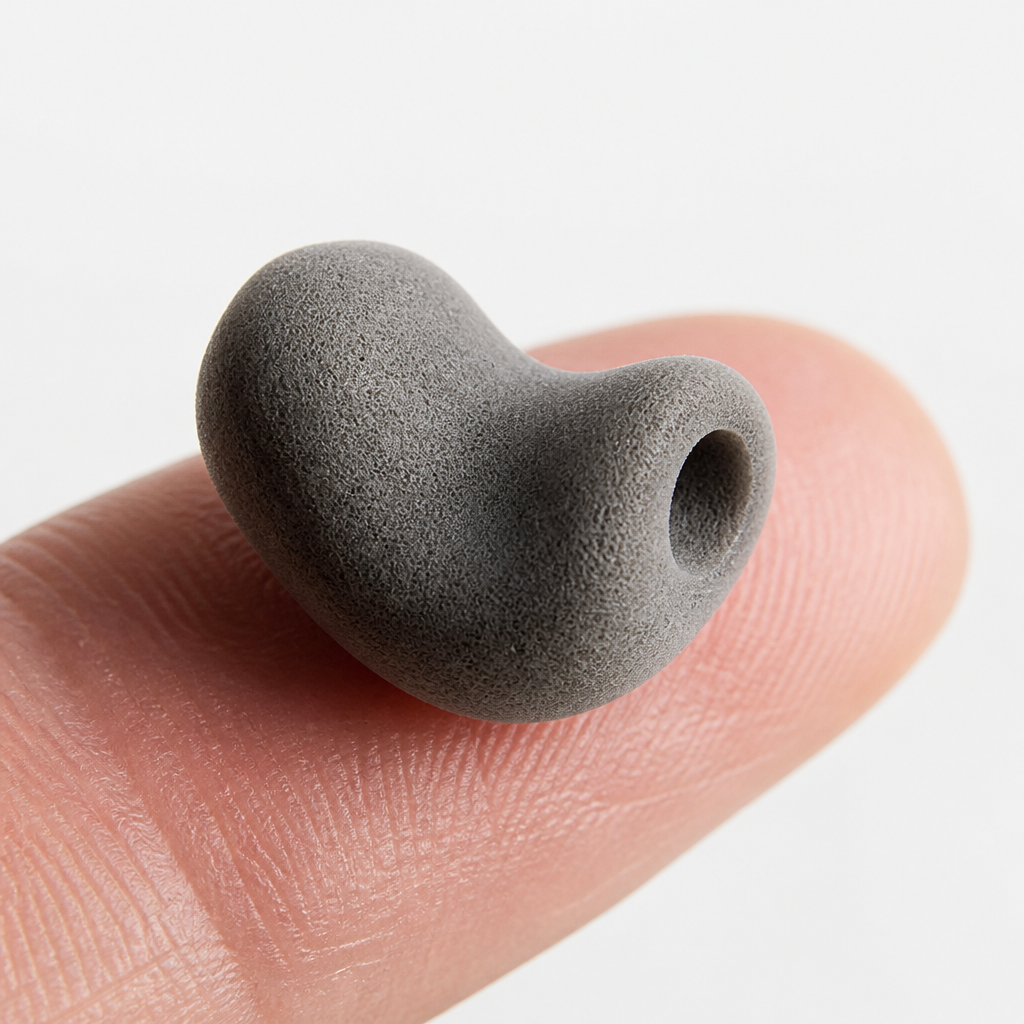
A plug with a rigid or semi-rigid body and replaceable memory foam tips removes much of this variability. The body positions the tip accurately in the canal, and the memory foam conforms to the specific geometry of your ear rather than relying on you to insert it at exactly the right angle every single night.
Pro tip: When testing a new ear plug for the first time, insert it in a noisy room rather than a quiet one. You will immediately feel the difference in seal quality when you rotate the plug slightly to find the optimal position, which is impossible to assess in silence.
Disposable foam ear plugs are the default choice for most people because they are cheap and widely available. For occasional use in a construction environment or a noisy flight, they are fine. For nightly sleep use, they have significant practical problems.
Disposable foam plugs are designed to expand to fill the canal, which means they generate outward pressure against the canal wall. That pressure is tolerable for an hour. Across eight hours, especially for side sleepers where the plug is also being compressed by a pillow, it becomes genuinely uncomfortable. Most people remove their plugs at some point in the night without realising it, which means the protection disappears exactly when they need it most, during the lighter sleep stages in the early morning hours.
Disposable foam plugs are supposed to be discarded after each use but rarely are. Reused foam plugs accumulate ear wax and skin oils, become stiffer, and lose their expansion ability, reducing their attenuation progressively. Most people are using plugs that are performing well below their rated NRR because the foam has been used past its effective lifespan.
A reusable metal-bodied plug solves both problems. The body does not generate expanding pressure. The foam tips are replaced on a clear schedule (every 6 to 8 weeks) so you always have fresh, properly performing foam. And because you are replacing tips rather than entire plugs, the ongoing cost is a fraction of continually buying disposable packs.
There are three realistic categories of ear plug available for regular sleep use. Each has a clear use case, and understanding the trade-offs makes the decision straightforward rather than overwhelming.
| Type | Best For | Main Limitation |
|---|---|---|
| Disposable foam plugs (e.g., standard polyurethane roll-and-insert) | Occasional use, travel, first-time users. High NRR ratings available. Low upfront cost. | Pressure discomfort over long wear; hygiene degrades quickly when reused; inconsistent fit without technique; significant ongoing waste and cost for nightly users. |
| Reusable metal-bodied plugs with memory foam tips (e.g., ATTENU8) | Nightly sleep use, travel, noise-sensitive individuals who need consistent, comfortable attenuation every night. Durable. Multiple tip sizes for fit. | Higher upfront cost than disposables. Foam tips need replacing every 6 to 8 weeks, though this cost is minimal compared to ongoing disposable purchase. |
| Electronic sleep earbuds (e.g., advanced earbud-style devices with passive noise cancellation and audio playback) | Users who want to pair noise blocking with ambient sound or sleep audio. Battery-powered options with companion apps. | High cost (some options priced above $250). Battery dependency. Bulkier profile uncomfortable for side sleepers. Overkill for users who simply need reliable noise attenuation without audio features. |
For someone who struggles with noise every night, the reusable metal-bodied plug sits in the practical sweet spot. It delivers consistent, high attenuation without the pressure problem of disposable foam, without the cost and complexity of electronic options, and without the hygiene issues that accumulate when you reuse foam you were supposed to throw away.
Fit is the variable most guides skip past. Even a well-designed plug will underperform if it is inserted incorrectly, and for light sleepers there is no margin for error. A partial seal that lets in 40% of ambient noise can be the difference between sleeping through the night and lying awake at 4am.
First, reach over the top of your head with the opposite hand and gently pull your ear up and back. This straightens the ear canal, which curves slightly in most people. Second, insert the plug with a slow, gentle rotating motion rather than pushing it straight in. Rotation helps the tip seat properly against the canal wall. Third, hold the plug in place for a few seconds to allow the memory foam to begin conforming to the canal shape.
If you can still hear conversation clearly with both plugs in, the seal is not right. Reinsert and try pulling the ear further back before inserting. Sizing is the other variable. A foam tip that is too large creates excessive pressure; one that is too small cannot form a seal. This is why having three tip sizes available (XS, S, and M) is not a marketing feature. It is a functional requirement for achieving real attenuation across the range of adult ear canal sizes.
Side sleepers face an additional challenge: pillow pressure on the outer ear can partially dislodge or compress a plug, breaking the seal. A plug with a low-profile, concave body sits closer to the ear, reducing the leverage a pillow has on it. Flat, protruding plug designs are particularly bad for side sleepers because the pillow acts as a lever against the body of the plug, slowly working it loose during the night.
When evaluating the best ear plugs for sleeping, the criteria that matter most for light sleepers are different from what matters for occasional industrial use. Here is what actually determines whether a plug works through the night, every night.
For sleep, you are looking for roughly 28 to 33dB of noise reduction. Below 28dB, intermittent noise spikes (snoring peaks, traffic surges) can still clear the threshold for micro-arousal. Above 33dB starts to feel disorienting and can make you miss sounds you actually need to hear, like an alarm. The 32dB sweet spot that ATTENU8’s plugs deliver sits right in the effective range for sleep-specific noise reduction for sleep.
Memory foam tips win for overnight wear. They conform and hold their position without generating sustained outward pressure. Silicone tips are more durable but create a harder seal that many people find uncomfortable after several hours. The body material determines the overall profile: a lightweight aluminium body keeps the total weight and bulk low, which matters when your ear is pressed against a pillow for eight hours.
A disposable foam plug used every night costs more per year than most people realise when they do the arithmetic on a pack-by-pack basis. A reusable metal-bodied plug with replaceable foam tips front-loads the cost and then drops it to the minimal recurring expense of replacement tips every six to eight weeks. Over 12 months of nightly use, the reusable option is consistently cheaper and generates significantly less waste.
Pro tip: Keep a second pair of tips accessible on your nightstand. If you remove your plugs in the night and the tips feel compressed or uncomfortable, swapping to a fresh pair takes seconds and means you are not lying awake trying to reinsert a fatigued foam tip at 3am.
Wearing well-fitted ear plugs for sleep does not damage hearing. The risk associated with ear plugs is primarily related to incorrect insertion or excessive force, not routine nightly use. If you experience pain or discomfort, it is a sign the fit is wrong or the tip size is too large, both of which are easy to correct. Regular gentle cleaning of the outer ear remains good practice regardless of ear plug use.
At around 32dB of noise reduction, a standard smartphone alarm set to a moderate to high volume will still be audible. The attenuation reduces ambient noise significantly but does not create total sound isolation. If you are concerned, test your alarm volume with plugs in before relying on it, and use a phone alarm rather than a distant clock across the room.
Start with a medium tip. Insert it and assess two things: whether the seal feels complete (ambient noise drops noticeably) and whether the pressure is comfortable. If the medium tip creates significant discomfort or feels like it is stretching the canal, move to a small. If you can hear clearly around the seal with minimal outside noise reduction, try medium before moving to large. Most adults find medium fits one ear and small fits the other, which is completely normal.
Yes, provided the foam tips are replaced on schedule (every 6 to 8 weeks) and the metal body is wiped down periodically. This is actually more hygienic than the common practice of reusing disposable foam plugs well beyond a single use, which is how most people use them despite manufacturer guidance. Fresh foam tips on a clean metal body beat degraded, ear-wax-saturated disposable foam that has been used twenty times.
Snoring is one of the most common reasons people seek sleep ear plugs, and a well-fitted, high-attenuation plug is an effective first-line solution. Snoring typically peaks at 50 to 60 decibels at close range. A plug delivering 32dB of attenuation reduces that to the low-20-decibel range, which for most light sleepers sits below the threshold for sleep disruption. It does not fix the snoring, but it removes it as a barrier to your sleep.
Most people adapt within three to five nights. The first night often feels slightly unusual, particularly if you are not accustomed to the sensation of something in your ear canal. By the third or fourth night, the sensation becomes background and most people report they stop noticing the plugs entirely. The key is starting with a correctly sized, comfortable tip rather than pushing through discomfort from a poor fit, which will make the adaptation period longer and more unpleasant.
Have you found a particular ear plug style or technique that finally solved your sleep noise problem? Share your experience below so other light sleepers can benefit from what actually worked for you.
If you wake at the slightest sound, whether it is a partner snoring, a car door slamming outside, or the low hum of a neighbour’s television, you already know that ordinary sleep advice does not cut it. What you actually need is a precise level of noise reduction that blocks the sounds that jolt you awake without making you feel entombed. 32dB noise reduction sits in a specific, practical range that addresses the most disruptive sleep noises without the discomfort of over-isolation. This article breaks down why that number matters, what it means for your sleep, and how to choose ear plugs that actually deliver it.
| Key Insight | Explanation |
|---|---|
| 32dB targets the most disruptive sleep sounds | Snoring peaks between 60 and 90dB. A 32dB reduction brings those peaks down to a range where most light sleepers can stay asleep. |
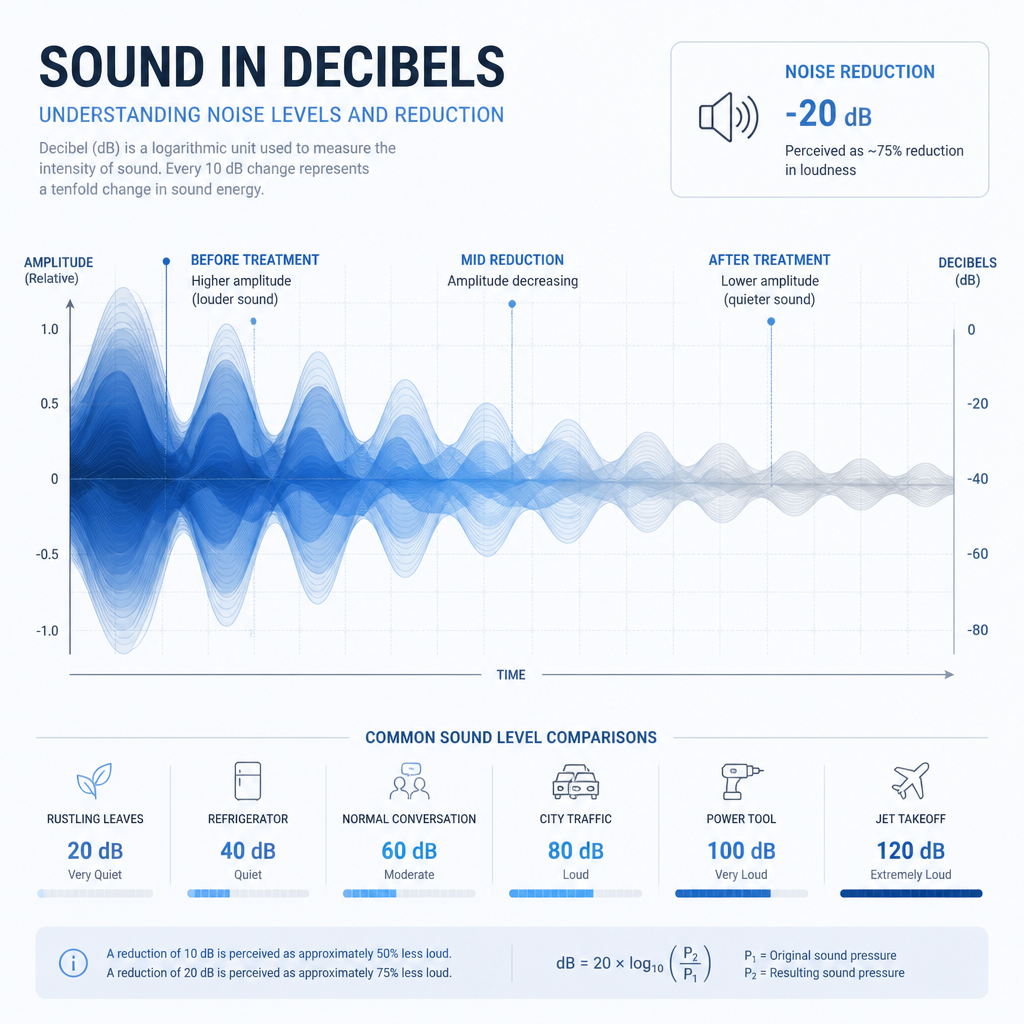
| The decibel scale is logarithmic, not linear | A 10dB reduction is perceived as roughly halving the loudness. 32dB is a very significant perceptual reduction, not a minor tweak. |
| Over-isolation is a real problem | Very high attenuation can amplify internal sounds like your own heartbeat and breathing, causing discomfort that disrupts sleep differently. |
| Fit determines whether rated NRR is achieved | A 32dB-rated plug worn loosely may deliver far less. Memory foam tips that conform to your ear canal are the most reliable route to consistent attenuation. |
| Reusable metal-bodied ear plugs outlast disposable foam | ATTENU8’s aluminium-bodied design requires only tip replacement every 6 to 8 weeks, meaning the attenuation performance stays consistent without buying new plugs constantly. |
| Tip size matters as much as plug design | Using the wrong size tip (too small or too large) changes the seal and undermines the noise reduction rating entirely. |
| Bedroom noise above 40dB meaningfully disrupts sleep | Rooms measuring above 40dB at night carry a greater likelihood of sleep interruption, making 32dB reduction sufficient to bring most environments into a comfortable range. |
A noise reduction rating of 32dB is not an abstract specification. It is the difference between a snoring partner waking you up four times a night and sleeping through until your alarm. To understand why, you need to understand how decibels work, specifically that they are measured on a logarithmic scale. A difference of 10dB is perceived by the human ear as roughly a doubling or halving of loudness. That means 32dB of reduction is a very large perceptual shift, not a small one.
In practical bedroom terms, typical snoring falls somewhere in the range of 60 to 90dB at the ear of the person trying to sleep beside it. Street traffic at night commonly sits between 50 and 70dB depending on proximity. A 32dB reduction applied consistently brings both of those sources down to a range where most people, including light sleepers, can remain asleep without interruption.
Pro tip: Do not compare ear plug ratings by looking at the single NRR number alone. Check whether the product specifies performance across different frequency ranges, since low-frequency rumble (traffic, bass from a neighbour’s music) is harder to attenuate than mid-range sounds like voices.
The noise reduction rating on ATTENU8 ear plugs is approximately 32dB, which places them squarely in the range designed for environments that are genuinely loud at night, not just slightly noisy. This is not the rating you see on the cheap foam cylinders you buy at a petrol station, many of which deliver far less in real-world use because they are poorly fitted by the wearer.

Light sleepers do not simply have a lower noise threshold. The architecture of their sleep is different. They spend more time in lighter sleep stages where auditory arousal thresholds are lower, meaning smaller sounds are more likely to trigger a full awakening. This is not a character flaw or anxiety issue. It is a physiological pattern, and it means general advice like “use white noise” or “get thicker curtains” often does not go far enough.
What light sleepers need is a reliable reduction in peak sound events, the sudden, sharp sounds that trigger cortical arousal. These are the sounds that interrupt deep sleep: a door closing, a passing vehicle with a loud exhaust, or a partner rolling over and snoring suddenly. Ear plugs for light sleepers need to perform at the moment of those peaks, not just provide average attenuation across a quiet room.
Sleep researchers have documented that the brain continues processing sound during sleep. Certain sounds, particularly those with sudden onset or vocal characteristics, are processed differently to steady background noise, even when a person is asleep. This is why a steady air conditioner hum rarely wakes people while a single cough from the next room will. The 32dB reduction from well-fitted ear plugs reduces the amplitude of those peak events enough to fall below the arousal threshold for most light sleepers.
This is also why sleep noise reduction is not well served by partial solutions. A 10 to 15dB reduction from a loosely fitting foam plug may do little for someone who wakes at sounds above 40 to 45dB. You need the full rated attenuation to reach the sounds that are actually causing the problem.
A moderate noise reduction of around 30 to 35dB sits in a comfortable range for sleeping because it addresses the sounds most likely to cause disruption while still allowing wearers to hear their alarms at close range.
Let us run through a concrete scenario. A bedroom in a city apartment with traffic noise outside registers approximately 55dB. Your partner snores at around 65dB at your ear. Without ear plugs, you are being hit with sound events up to 65dB throughout the night. Sleep researchers note that bedroom environments above 40dB carry a meaningfully greater risk of sleep interruption.
With 32dB of attenuation, that 65dB snoring event arrives at your ear at roughly 33dB, well within the range that most people, including many light sleepers, can sleep through. The 55dB traffic noise drops to approximately 23dB, which is quieter than a whisper in a library. That is not a marginal improvement. That is a fundamentally different sleep environment.
The most common objection light sleepers raise about wearing ear plugs is the fear of sleeping through their alarm. This concern is understandable but often overstated. A modern smartphone alarm at maximum volume typically reaches 80 to 90dB at arm’s length on a bedside table. Even with 32dB of attenuation, you are still hearing 50 to 58dB at your ear, which is louder than a normal conversation. In practice, almost no one sleeps through a full-volume alarm while wearing 32dB-rated ear plugs.
Pro tip: If alarm anxiety is stopping you from wearing ear plugs, place your phone alarm directly on your bedside surface rather than propped in a case. The vibration transmits through the surface and adds a tactile cue alongside the attenuated sound, giving you two independent signals.
The 32dB window is also why ATTENU8 ear plugs are designed for sleep and travel specifically, rather than industrial hearing protection. Industrial environments require higher ratings because the hazard noise levels are dangerously high. Sleep noise is disruptive, not hazardous, and the solution requires precision rather than maximum blockage.
Not all ear plugs deliver equivalent results even when they advertise similar ratings. The material, the body design, and the tip fit all interact to determine whether you actually receive the rated 32dB attenuation or something significantly lower. The table below compares the three main categories of best ear plugs for sleeping against the criteria that matter most for consistent nighttime use.
| Ear Plug Type | Typical Real-World NRR | Sleep Suitability |
|---|---|---|
| Disposable foam cylinders (e.g., standard drugstore foam) | Often 15 to 25dB in practice due to poor insertion technique and irregular fit | Low. Uncomfortable for side sleepers, degrades quickly with reuse, inconsistent seal |
| Silicone or resin acoustic filter plugs (e.g., Loop Sleep) | Typically 20 to 27dB depending on model and fit | Moderate. Comfortable for some users but the rigid body can cause pressure pain when side sleeping for extended periods |
| Metal-bodied plugs with memory foam tips (e.g., ATTENU8) | Approximately 32dB with correct tip size, consistent across uses | High. The concave aluminium body sits low in the concha, memory foam seals the canal, and tip replacement every 6 to 8 weeks maintains consistent attenuation |
The critical difference in the third category is that the aluminium body does not compress or degrade. The only part that changes performance over time is the memory foam tip, which ATTENU8 replaces on a simple 6 to 8 week schedule. Disposable foam plugs, by contrast, lose their expansion and sealing properties after only a handful of uses, meaning your NRR drops progressively even if you cannot feel the difference.
There is a tempting logic to seeking the highest possible noise reduction rating. If 32dB is good, then 40dB must be better. In practice, this breaks down quickly for sleep applications. Very high attenuation creates what researchers describe as occlusion, where the sensation of your own body sounds (breathing, heartbeat, jaw movement) becomes amplified and intrusive because external sound has been reduced to near silence.
For light sleepers, this can mean trading one type of sleep disruption for another. Instead of being woken by external noise, you are kept awake by the amplified internal sounds of your own body. Many people who try very high-attenuation industrial ear plugs for sleep report this experience within the first night.
Sleep-specific noise reduction sits most comfortably in the 28 to 35dB range for most adults. This range attenuates the common disruptive sounds (snoring at 65 to 90dB, urban traffic at 50 to 70dB, occasional loud voices) without producing the occlusion effect that makes higher-rated industrial plugs unsuitable for bed. The 32dB specification on ATTENU8 ear plugs is positioned deliberately within this effective window, not at the maximum end of what is technically achievable.
This is a genuine design decision, not a manufacturing limitation. Plugs that deliver 37 to 40dB typically require a deeper canal insertion and a harder body material, both of which reduce comfort over an 8-hour sleep period significantly.
A 32dB noise reduction rating is a laboratory measurement taken under controlled conditions with correct insertion technique. The gap between the rated figure and what you actually experience in bed is determined almost entirely by fit. A loosely inserted foam plug that does not seal the ear canal fully can deliver 10 to 15dB of attenuation or less, regardless of what the packaging claims.
Memory foam tips address this problem more reliably than solid silicone or foam cylinders because they conform to the specific geometry of each individual ear canal. No two ear canals are the same shape or size, which is why ATTENU8 provides three tip sizes (XS, S, and M) with each pair. Using the correct tip size is not a minor convenience detail. It is the single most important factor in whether you receive the full 32dB of rated attenuation.
A common mistake is defaulting to the medium tip because it sounds like the most average option. In practice, many adults, particularly women, find the small tip provides a better seal with less pressure. The correct fit is one where the tip, once compressed and inserted, expands to fill the canal without protruding significantly outside the ear and without requiring force to maintain position. If you can feel the plug working loose within a few minutes of lying down, you need a larger size or a deeper insertion.
The aluminium body of ATTENU8 ear plugs contributes to fit consistency in a way that plastic or silicone bodies do not. Metal does not flex or compress during insertion, meaning the tip receives consistent pressure to roll and seat properly each time. Plastic bodies can deform slightly during handling, which changes the insertion geometry in subtle but performance-relevant ways.
Pro tip: When inserting memory foam ear plugs, reach the opposite hand over your head to gently pull the top of your ear upward and outward before inserting the compressed tip. This straightens the ear canal and allows the foam to seat deeper and seal more completely, significantly improving your real-world attenuation result.
It means the ear plugs are rated to reduce the sound reaching your ear canal by approximately 32 decibels under proper insertion conditions. Because decibels are logarithmic, this represents a very substantial reduction in perceived loudness, roughly equivalent to cutting the perceived volume of a sound to well under a quarter of its original intensity at the ear.
For most people sharing a bed with a snoring partner, 32dB of attenuation will reduce the snoring to a level that no longer causes full arousal from sleep. Extremely loud snoring (above 85dB) may still be audible as a low, muffled sound, but the peak events that trigger waking are typically reduced below the arousal threshold. Complete silence is not the goal and not realistic. Sufficient reduction to stay asleep is, and 32dB reliably achieves that for the majority of light sleepers.
The most important difference is consistency of performance. Disposable foam plugs degrade quickly with repeated use, losing their expansion properties and their ability to seal the ear canal. ATTENU8 uses a durable aluminium body that never degrades, paired with replaceable memory foam tips that are changed every 6 to 8 weeks to maintain a consistent seal. This means the 32dB attenuation is repeatable every night, not just on the first use.
Yes. Wearing ear plugs at 32dB noise reduction for sleep does not damage hearing. Hearing damage from ear plugs is not a real risk under normal sleeping conditions. The only hygiene-related concern is ear canal cleanliness, which is managed by replacing the foam tips on schedule and keeping the aluminium body clean. You should not use ear plugs if you have an active ear infection or a condition affecting the ear canal without consulting a medical professional first.
NRR (Noise Reduction Rating) is the standard used in the United States, while SNR (Single Number Rating) is used in Europe and Australia. The two systems use different test methodologies, so the numbers are not directly comparable. An NRR of 32dB and an SNR of 32dB do not represent identical real-world performance. When comparing ear plugs, check which standard the manufacturer is using and compare only within the same standard to avoid misleading comparisons.
Not necessarily, provided the ear plugs are comfortable for extended wear and deliver sufficient attenuation for both environments. Aircraft cabin noise typically sits around 75 to 85dB, which is louder than most bedroom environments. A 32dB-rated ear plug handles both contexts effectively. The main practical difference is portability and hygiene management on the go, which is where a metal-bodied reusable design has a clear advantage over single-use foam plugs that compress in luggage and lose performance before you even use them.
Have you tried switching to a higher-rated ear plug for sleep and found it caused more problems than it solved? Share your experience in the comments below.

