


 0

You love your partner. You do not love the noise they make at 2am. If you have ever lain awake at night listening to a sound that sits somewhere between a freight train and a chainsaw, you already know that snoring is not just an annoyance – it is a genuine threat to your health, your relationship, and your ability to function the next day. Finding the right ear plugs for snoring partner situations is one of the most practical steps any couple can take, and yet most people waste months trying products that fall out, hurt their ears, or barely dent the noise. This guide cuts through the confusion and tells you exactly what works.
| Key Insight | Explanation |
|---|---|
| 32 dB or higher noise reduction is the target for snoring | Loud snoring commonly reaches 60-80 dB. You need meaningful noise reduction, not token attenuation, to actually sleep through it. |
| Fit matters more than the stated NRR number | An earplug rated at 33 dB that does not seal properly in your ear canal will perform worse than a well-fitted 28 dB earplug. The rating assumes a perfect fit. |
| Disposable foam is a short-term fix with real long-term costs | If you need ear plugs every night, buying disposable pairs adds up fast and creates a lot of waste. Reusable options are more economical after the first few weeks. |
| Side sleepers need low-profile designs | Bulky or protruding ear plugs press painfully into your ear canal when your head is on a pillow. Profile and softness matter as much as noise reduction rating. |
| Memory foam tips outperform rigid silicone for overnight comfort | Memory foam conforms to the shape of your individual ear canal, creating a seal without sustained pressure. Rigid tips cause soreness over a full night. |
| Multiple tip sizes are non-negotiable for a proper fit | Ear canals differ considerably between people. Ear plugs that include XS, S, and M tip options give you the best chance of achieving the seal you actually need. |
| Ear plug hygiene is the most overlooked factor in long-term use | Reusable ear plugs with replaceable tips eliminate the hygiene problem that makes people abandon daily use. Replace tips every 6-8 weeks, not when they feel disgusting. |
Sleep disruption from a snoring partner is not just about the noise level in the moment. The real damage comes from the pattern. Snoring is irregular – it surges, pauses, and surges again – which means your brain never fully habituates to it the way it might with steady background noise like a fan. Each unexpected peak pulls you out of deeper sleep stages, even when you do not fully wake up.
Research consistently shows that people who sleep next to heavy snorers suffer disrupted sleep architecture, meaning they spend less time in the slow-wave and REM stages that govern physical recovery and memory consolidation. The non-snoring partner can end up chronically sleep-deprived while the snorer sleeps through their own noise entirely. That imbalance creates real friction in relationships over time.
The practical answer that couples turn to, before considering separate bedrooms, is ear plugs. And that is a reasonable first step, provided you choose the right type. Early research suggests that wearing noise reduction earbuds or ear plugs to bed can help improve sleep quality and reduce daytime tiredness, which reinforces what most chronic non-sleepers already know from experience.
The non-snoring partner often carries the full sleep debt while the snoring partner feels completely rested. Solving the noise problem is not a luxury – it is a matter of basic daily function.
Ear plugs work through passive noise isolation: they physically block sound waves from reaching your eardrum by creating a seal in the outer ear canal. The effectiveness of that seal is measured by the Noise Reduction Rating (NRR) in the US, or the Signal-to-Noise Ratio (SNR) in Europe. These two systems use different test methodologies, so a European product rated at 27 dB SNR is not directly comparable to a US product rated at 27 dB NRR.
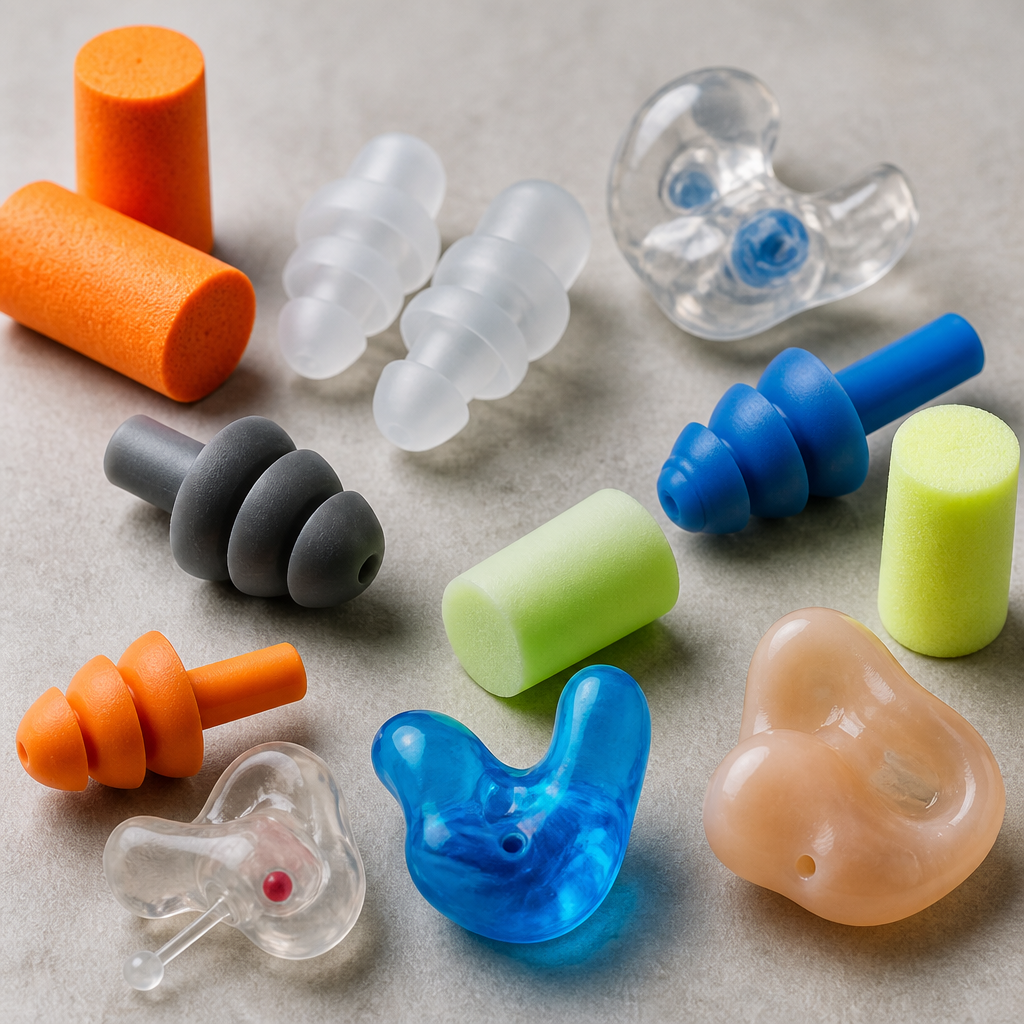

For snoring specifically, you want to be looking at products with an NRR of at least 30-32 dB. Snoring commonly sits between 60 and 80 decibels at close range – a sound level comparable to a busy restaurant or heavy traffic. Dropping that to a manageable background murmur requires serious attenuation, not the modest reduction that cheap wax or low-grade foam can provide.
The single biggest predictor of real-world performance is whether the ear plug creates a complete seal in your specific ear canal. No seal means no meaningful noise reduction, regardless of what the packaging claims. This is why so many people try cheap disposables, find they “don’t work,” and give up on ear plugs entirely – when the actual problem was a poor fit, not the concept itself.
Ear canals are not standardised. They differ in diameter, length, and shape between individuals. Ear plugs that come in multiple tip sizes, particularly XS, S, and M options, address this directly. A product that forces you to use a single size is always going to leave a significant portion of users with an imperfect seal and disappointing results.
Pro tip: When inserting foam-tipped ear plugs, roll the tip between your fingers to compress it, then hold it in place for 20-30 seconds while it expands. Releasing it too early is the most common reason foam ear plugs fail to seal properly.
The material and shape of the ear plug body affects comfort as much as the tip. Soft, floppy bodies compress easily against pillow pressure but can work their way out during the night. Rigid bodies hold their position but can feel hard and uncomfortable over hours of side sleeping. A structured body made from a smooth, low-friction material like aluminium holds its position reliably while remaining comfortable enough to wear through a full night.
If you need ear plugs every single night to sleep next to a snoring partner, the choice between disposable and reusable is not just about preference – it is about economics and hygiene. Here is a direct comparison of the three main approaches couples use.
| Approach | Best For | Main Drawbacks |
|---|---|---|
| Disposable foam ear plugs (single-use, high NRR) | Maximum noise reduction on a tight budget, short-term or occasional use | Ongoing cost adds up; wasteful; can feel dirty after one use if you try to reuse them; no size options mean poor fit for many people |
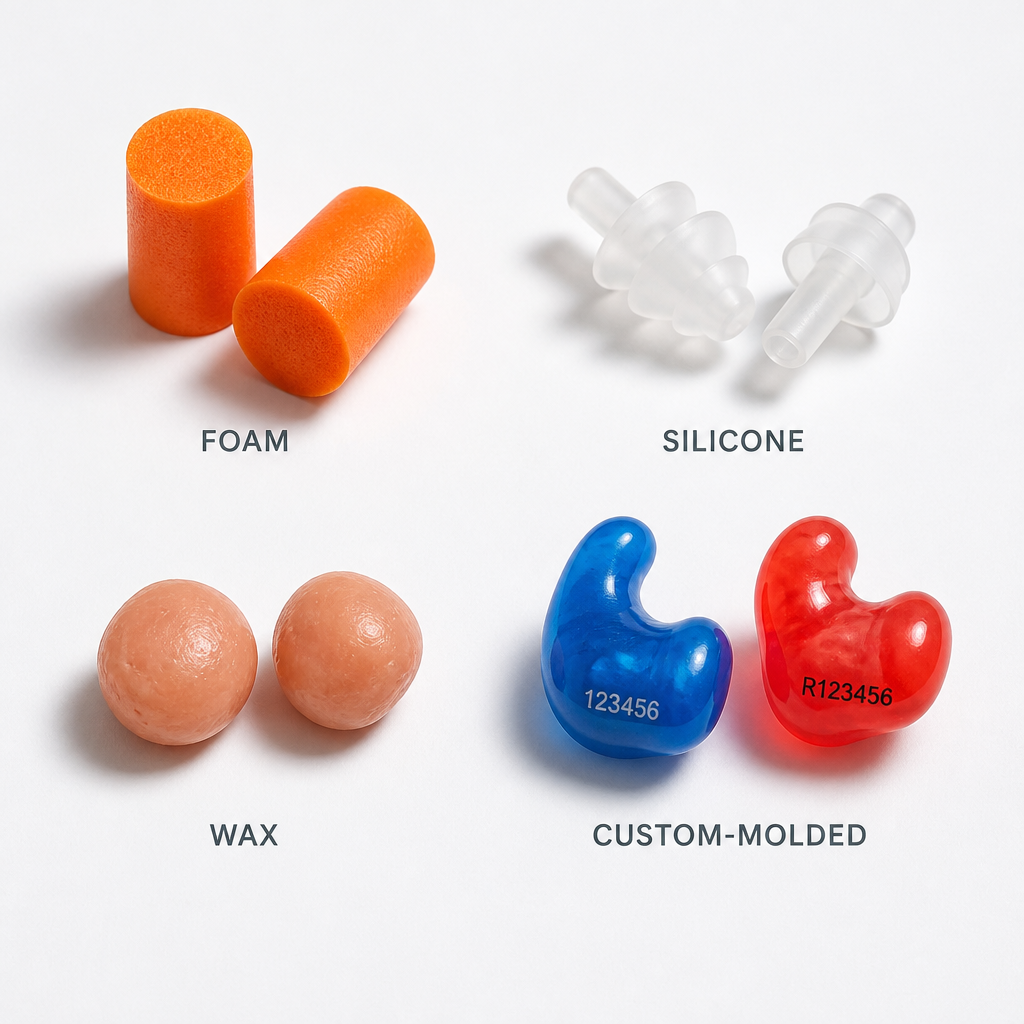
| Silicone or wax reusable ear plugs (mouldable) | People with very small ear canals or sensitivity to foam; occasional travellers | Wax picks up debris quickly; silicone tips wear out and harden; noise reduction is often lower than foam; can be hard to insert correctly every time |
| Premium reusable ear plugs with replaceable memory foam tips (structured body) | Nightly use over months and years; people who want consistent fit and hygiene; eco-conscious buyers | Higher upfront cost; requires tip replacement every 6-8 weeks; needs cleaning |
In practice, anyone using ear plugs nightly will find that disposables become expensive and wasteful very quickly. A pair of premium reusable ear plugs with replaceable memory foam tips costs more upfront but delivers consistent performance night after night without the recurring expense of constantly buying new boxes. The hygiene argument is equally strong: memory foam tips that are replaced on a regular schedule stay clean in a way that a crumpled, reused disposable foam plug simply cannot.
ATTENU8 ear plugs take this approach further with an aluminium body that holds its shape night after night, paired with soft memory foam tips in three sizes (XS, S, M) that are replaced every 6-8 weeks. The result is roughly 32 dB of noise reduction from a product that is genuinely built for long-term, nightly use – not a one-time purchase that you quietly abandon after two weeks because it hurts.
Pro tip: If you are switching from disposables to reusable ear plugs, give yourself at least a week to adjust. Your brain is accustomed to the exact feel of your old plugs, and a new product will feel strange for the first few nights even when it is performing better. Most people who abandon reusable ear plugs do so in the first three days – before the adjustment period ends.
Ear plugs are the most direct solution, but how you use them and what else you pair them with determines whether they actually solve the problem. Here is what works consistently across different snoring situations.
Ear plugs reduce the absolute level of sound reaching your eardrum, but they do not produce silence. What remains after a well-fitted 32 dB ear plug is a muffled version of the snoring, still identifiable as a pattern. The most effective approach is to pair ear plugs with a consistent background sound – a fan, a white noise machine, or a rain sound from a speaker in the room – so that the reduced snoring is masked by neutral, non-intrusive audio. The combination works better than either solution alone.
The key is that the background sound should be constant and predictable. Your brain stops registering constant, patterned sound relatively quickly. It cannot stop registering the irregular peaks and troughs of snoring in the same way, which is why the masking strategy works.
A common and underrated approach is to fall asleep before your partner. Snoring typically becomes louder as the snorer enters deeper sleep, so if you are already in a deeper sleep stage yourself when the noise peaks, you are less likely to be roused by it. Ear plugs combined with an earlier sleep time relative to your partner can make a significant difference even when the snoring itself is quite loud.
Encouraging your partner to sleep on their side rather than their back also reduces snoring intensity for most people. Snoring is typically worse when someone sleeps on their back because the tongue and soft palate are more likely to partially obstruct the airway in that position. This is not always a solvable problem – some people roll back during the night regardless – but it is worth trying as a first line approach.
If your partner’s snoring is very loud, involves gasping or complete pauses in breathing, and leaves them feeling unrefreshed despite adequate sleep time, that is a pattern that warrants a conversation with a doctor rather than a better pair of ear plugs. Sleep apnea is a medical condition, not just a loud habit, and it has real health consequences for the snorer. No ear plug solves the underlying problem on that side of the bed.
Most people who share a bed with a snoring partner sleep on their side, partly because facing away from the source of noise provides a tiny reduction in perceived volume. But side sleeping creates a specific problem for ear plug users: the ear that is resting on the pillow is compressed. Bulky, protruding ear plugs dig into the cartilage of the outer ear and create a pressure point that makes it impossible to stay comfortable through the night.
The design of the ear plug body matters enormously here. Products with a large outer housing – including most consumer-grade earbuds and many silicone ear plugs – are not practical for side sleeping. You need an ear plug that sits flush with or just inside the ear canal opening, without a significant protrusion that catches the pillow.
A concave aluminium body, like the one used in ATTENU8 ear plugs, solves this directly. The shape is designed to sit cleanly in the ear without protruding outward, which means the pillow pressure is distributed across the smooth curved surface rather than a hard angular edge. Combined with soft memory foam tips that do not resist compression in the same way rigid silicone does, the result is an ear plug you can actually wear for eight hours on your side without waking up with a sore ear.
Pro tip: If you wake up with a sore outer ear after wearing ear plugs, the problem is almost always the body shape rather than the tip. Switching to a lower-profile design with a smooth curved housing will usually solve this without any sacrifice in noise reduction performance.
For most snoring situations, you want an NRR of at least 30-32 dB. Snoring can reach 60-80 dB at close range, and ear plugs in this range will reduce it to a level that most people can sleep through, especially when paired with some background sound masking. Products below 25 dB NRR are unlikely to make a meaningful difference against loud snoring.
A well-fitted reusable ear plug with quality memory foam tips can match or exceed the real-world performance of disposable foam plugs. The stated NRR of disposables is often slightly higher on paper, but disposables are frequently inserted poorly, which collapses their effective performance. A reusable product you know how to use correctly, every night, will outperform a disposable you rush into place half-asleep.
For most people, wearing ear plugs nightly is safe provided you keep them clean and replace tips or whole plugs regularly. The main risks are wax buildup (because ear plugs can push wax inward over time) and irritation or infection from dirty ear plugs. Using reusable ear plugs with replaceable tips and keeping them clean manages both risks. If you experience pain, itching, or a feeling of fullness that does not clear, see a doctor.
Disposable foam plugs are the most likely to migrate out during the night, especially if they were not inserted correctly or if your ear canal is on the larger side. Reusable ear plugs with a structured body and a correctly sized tip hold their position much more reliably. If you find your ear plugs regularly out by morning, the first thing to try is a different tip size rather than a different product entirely.
The feeling of occlusion, where your own voice and internal sounds become amplified, is a real issue for some people. Starting with a slightly lower-attenuation product and building tolerance gradually can help. Some people also find that pairing ear plugs with a familiar background sound in the room reduces the sense of isolation because there is still something to hear, just at a lower level. If the anxiety is specifically about not hearing a smoke alarm or baby, that concern is valid and worth weighing against the sleep deprivation being caused by the snoring.
Start with the medium size if you have no prior information about your ear canal size. Insert the tip, hold it in place, and note whether you feel a seal forming – a slight pressure change as you release, or a noticeable reduction in ambient sound. If the medium feels loose or falls out easily, move to small. If it feels like it will not seat properly, try the medium from a different brand before assuming you need larger. Most people find that one ear is slightly different from the other, and this is completely normal.
Have you found a combination that actually works for sleeping next to a snoring partner? Share what made the difference for you in the comments – your experience is exactly what other couples need to hear.
Roughly 45 percent of adults snore occasionally, and about 25 percent do so habitually, according to data published by the American Academy of Sleep Medicine. If your partner is in that majority, you already know the damage it does: fragmented sleep, morning irritability, and a growing resentment that no amount of good intentions can easily fix. Ear plugs for snoring partner noise are not just a short-term workaround. Used correctly, with the right product, they are a clinically sensible, relationship-preserving tool backed by sleep science. This article explains exactly why snoring disrupts sleep, what ear plugs can and cannot do about it, and which type of ear plug is actually worth using long-term.
| Key Insight | Explanation |
|---|---|
| Snoring peaks between 50 and 80 dB | That range overlaps with a vacuum cleaner. Standard disposable foam plugs rated at 33 NRR reduce perceived noise to a tolerable level in most cases, but fit determines everything. |
| Noise Reduction Rating (NRR) is not the same as real-world attenuation | The EPA requires NRR figures to be halved for real-world estimates. A plug rated 32 dB NRR delivers roughly 16 dB of practical attenuation in most ears, which is still significant. |
| Disposable foam plugs lose effectiveness within one to two uses | Compressed foam absorbs oils and debris quickly. A reusable metal-bodied plug with replaceable memory foam tips maintains a consistent seal every night. |
| Fit size matters more than material alone | Ear canals vary significantly between individuals. Plugs that come with XS, S, and M foam tips allow genuine customisation, not guesswork. |
| Sleep fragmentation from noise is cumulative | Even brief arousal events caused by snoring that do not fully wake you still reduce slow-wave and REM sleep. The damage adds up across weeks and months. |
| Long-term ear plug use requires hygiene planning | Reusable plugs with replaceable tips every 6 to 8 weeks are more hygienic and cost-effective than buying new disposables every few days. |
| White noise combined with ear plugs outperforms either alone | A fan or white noise machine raises the ambient sound floor, reducing the contrast between silence and snoring peaks. Ear plugs then handle the residual difference. |
The mechanism is straightforward and unforgiving. Snoring creates intermittent, unpredictable noise spikes. The human brain is wired to treat unpredictable sound as a potential threat, which means the auditory cortex stays partially active even during sleep. This is why a steady hum from an air conditioner rarely wakes you, but a single snore at the same decibel level pulls you out of deep sleep instantly.
Research from the journal Sleep Medicine Reviews confirms that partners of snorers lose an average of one hour of sleep per night. Over a working week, that compounds into a five-hour deficit. The consequences are not trivial: impaired glucose regulation, elevated cortisol, reduced immune function, and measurably worse cognitive performance during the day.
The frustrating part is that the snorer is usually oblivious. They wake rested while you drag yourself through the morning. That asymmetry breeds resentment, and resentment in a sleep-deprived person escalates faster than it would otherwise. Addressing the noise problem directly, rather than waiting for your partner to fix their snoring, is the pragmatic move.
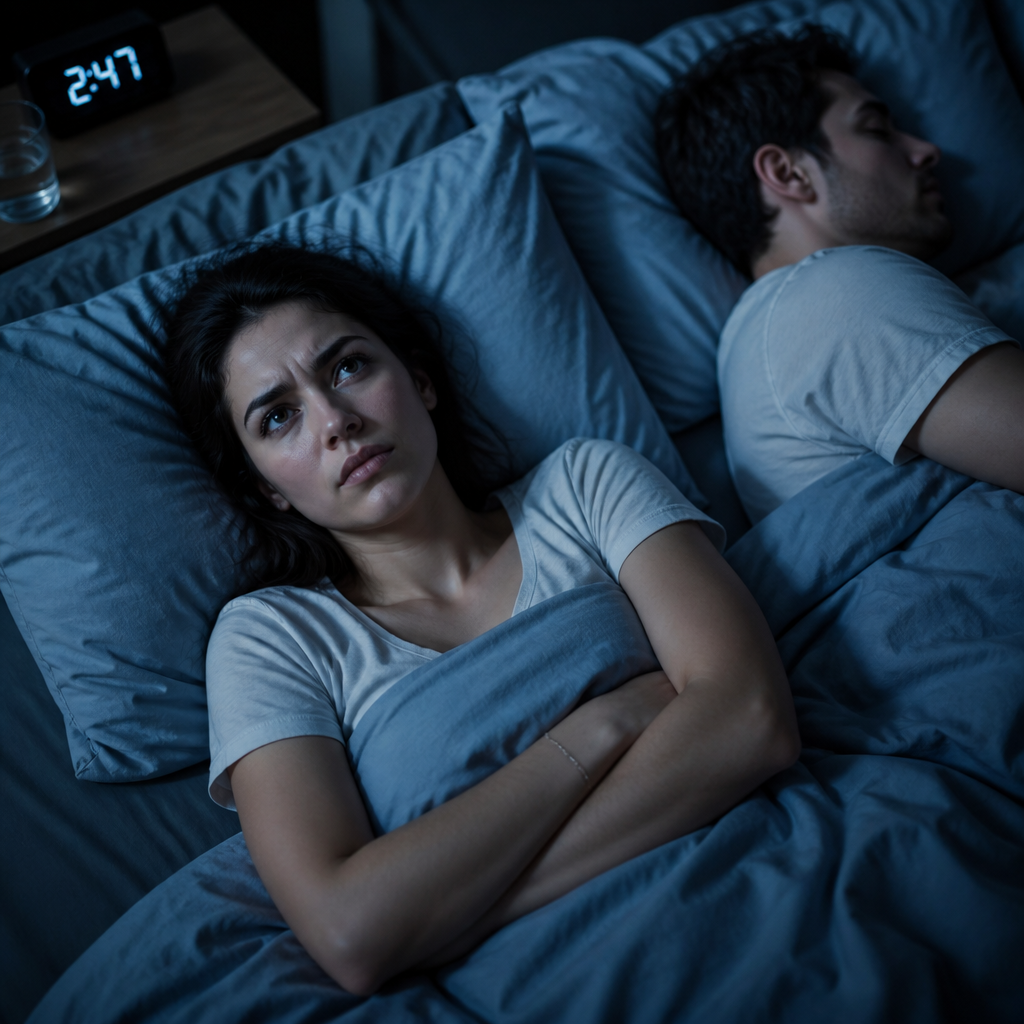
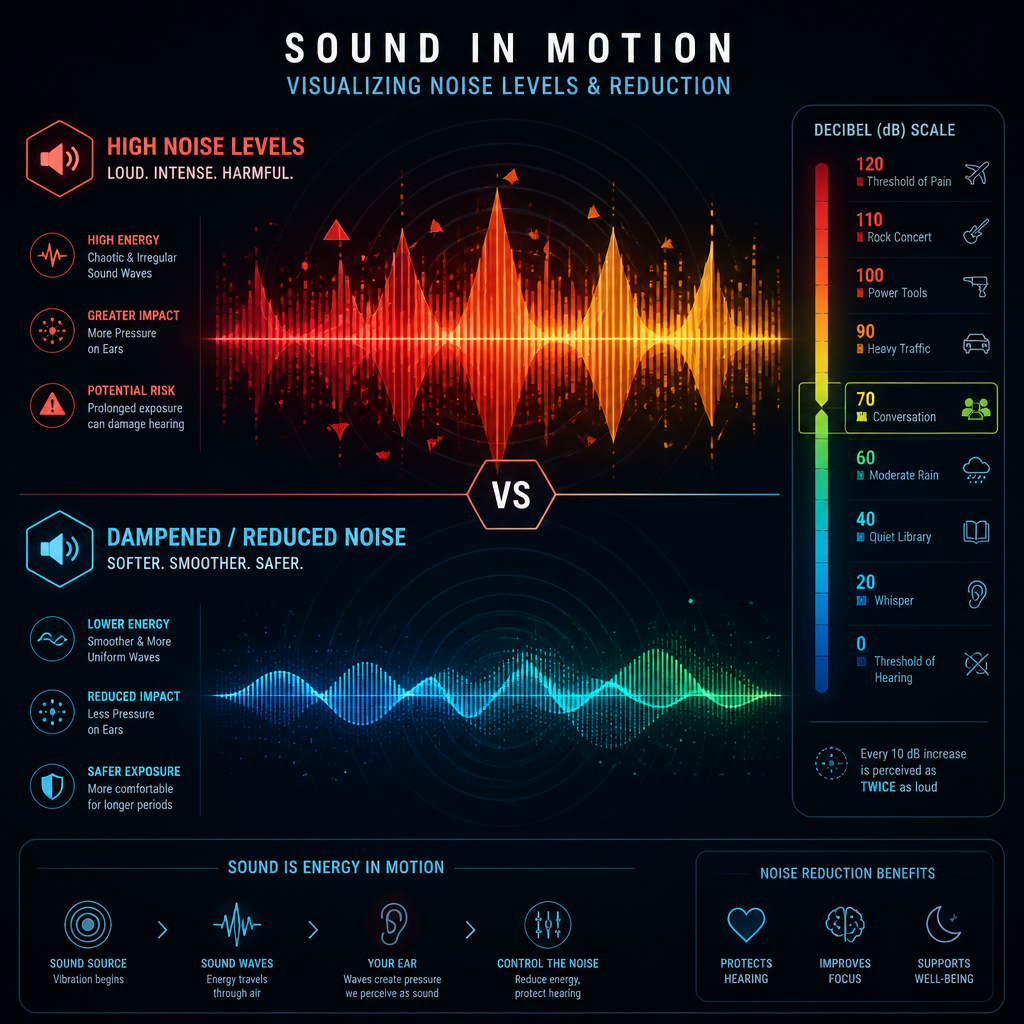
Light snoring sits around 40 to 50 dB, roughly equivalent to a quiet conversation across a room. Moderate snoring reaches 55 to 65 dB, comparable to an office environment. Severe snoring, particularly associated with obstructive sleep apnoea, can exceed 80 dB, which is louder than city traffic. The World Health Organisation recommends nighttime environmental noise stay below 40 dB for healthy sleep.
That benchmark is almost impossible to meet in the same bed as a habitual snorer without some form of noise attenuation. Earplugs are the most direct physical intervention available to the non-snoring partner.
Snoring is not a single frequency. The rumbling, low-frequency component travels through bone and tissue, not just air. Most foam ear plugs attenuate high-frequency sound very effectively but are less efficient at low frequencies below 500 Hz. This is why some people try foam plugs and still hear the bass “rumble” of their partner’s snoring even with a good seal. A tight-fitting plug with dense memory foam tips performs better in this range than a loosely inserted standard foam plug.
There is no single fix, and anyone selling you one is oversimplifying. The approach that actually works combines multiple strategies, with ear plugs as the most reliable and immediately effective layer.
This is not a joke. Falling asleep first means you are already in deeper sleep stages before the snoring begins. Your brain is less reactive to sound during established deep sleep than during the light, transitional stage at sleep onset. In practice, even a 15 to 20 minute head start can meaningfully reduce how often you are woken through the night.
Snoring is loudest from a supine position, when the tongue and soft palate collapse backward. If your partner sleeps on their back, gently nudging them to a side position often reduces the volume by 10 to 20 dB. This is not a cure but it shifts the snoring from severe to moderate, which makes a real difference to how much work your ear plugs need to do.
This is where most people fail. They grab the cheapest foam plugs from a petrol station, insert them incorrectly, and conclude that ear plugs do not work. A properly fitted, high-NRR ear plug inserted correctly creates a seal that genuinely reduces snoring to a manageable level. The technique matters: roll the foam tip down, pull your outer ear up and back to straighten the canal, insert the plug, and hold it for 20 to 30 seconds while the foam expands. Most people skip the holding step entirely.
Pro tip: If you wake up and your ear plug has partially backed out of your ear canal, the tip size is too small for your anatomy. Try the next size up before assuming the product has failed.
Not all ear plugs are equal, and the differences matter significantly when you are using them every single night. Below is a direct comparison of the three main categories available to someone dealing with a snoring partner on an ongoing basis.
| Type | Noise Reduction and Comfort | Long-Term Suitability for Nightly Use |
|---|---|---|
| Disposable foam plugs (standard drugstore) | NRR up to 33 dB but degrades after 1 to 2 uses as foam compresses permanently. Comfort drops sharply by the second use. One-size approach fails many ear canal shapes. | Poor. Requires daily replacement for hygienic use. Cost adds up quickly. Inconsistent fit means inconsistent results. |
| Silicone or wax mouldable plugs | NRR typically 22 to 27 dB. Comfortable for some users but prone to movement during sleep. Cannot be reliably disinfected. Warm climates soften the material unpredictably. | Moderate. Better for occasional use than nightly. Wax plugs in particular attract debris and require careful hygiene management. |
| Reusable metal-bodied plugs with memory foam tips (ATTENU8) | 32 dB noise reduction with a rigid aluminium shell that positions the replaceable memory foam tip correctly in the canal. Three tip sizes (XS, S, M) allow a genuine anatomical fit. Comfort remains consistent because the body structure does not deform. | Excellent. Tips replaced every 6 to 8 weeks maintain hygiene and seal quality. The aluminium body lasts indefinitely. Designed specifically for repeated nightly use. |
The data consistently shows that the primary reason people abandon ear plugs is discomfort, not lack of noise reduction. A rigid-body plug with soft replaceable tips solves both problems simultaneously: the body ensures correct positioning, and the fresh foam tip provides the comfort and seal quality needed for a full night’s sleep.
“Sleep is the single most effective thing we can do to reset our brain and body health each day.” Matthew Walker, neuroscientist and author of Why We Sleep (Scribner, 2017)
The NRR system is frequently misunderstood, and that misunderstanding leads people to either over-trust or under-trust their ear plugs. Here is what the numbers actually mean in practical terms.
The EPA formula for real-world attenuation is: subtract seven from the NRR, then divide by two. For a 32 dB NRR plug, that gives you 12.5 dB of estimated real-world attenuation. If your partner snores at 65 dB, you are hearing approximately 52 dB after attenuation. That is still audible, but it is now comparable to a quiet conversation rather than a jackhammer. Most people can sleep through 50 to 52 dB if the sound is relatively consistent rather than sudden and irregular.
A plug rated at 32 NRR inserted with a poor seal will underperform a 29 NRR plug inserted correctly. The acoustic seal is the mechanism. Without it, sound bypasses the plug entirely through the gap between the foam and the canal wall. This is why tip size selection is not optional. Using the ATTENU8 XS, S, or M tip options to find the size that expands to fill your specific ear canal without pressure is the single most impactful step most users skip.
Pro tip: Test your ear plug seal in a moderately noisy environment before relying on it in bed. Rub your fingers together near your ear while the plug is inserted. If you can hear the rubbing clearly, the seal is incomplete and you need a larger tip size or a deeper insertion.
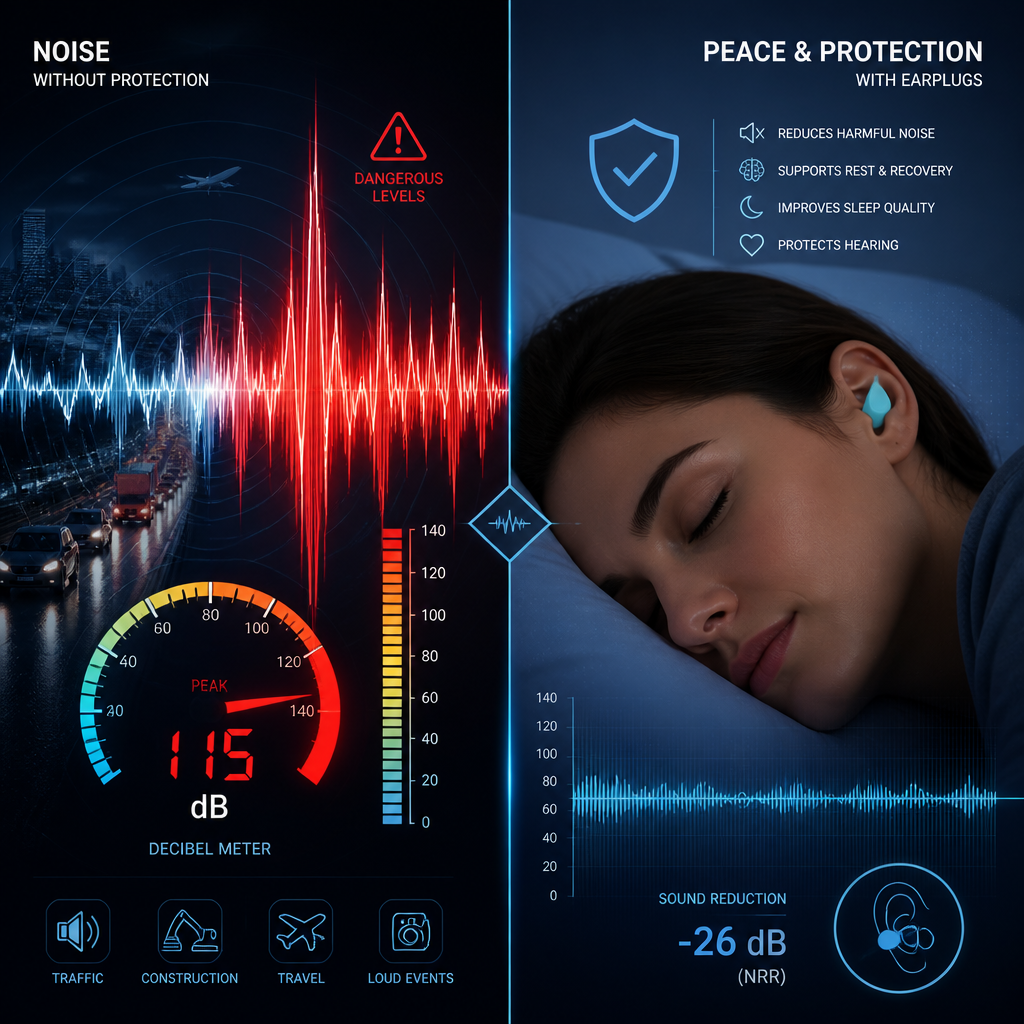
A common mistake is using the same foam ear plug for more than two or three nights and expecting it to perform as well as it did on day one. Standard foam compresses irreversibly with use, losing both its expansion force and its surface hygiene. The seal degrades, the attenuation drops, and the user concludes that ear plugs simply do not work for snoring. That conclusion is wrong. The product failed, not the concept.
The ear canal is not straight. It curves, which means a plug pushed in without pulling the outer ear up and back sits in the outer portion of the canal rather than deep enough to seal properly. Most instructional diagrams on ear plug packaging show this step but it is routinely ignored. In practice, correct insertion technique alone can add 5 to 10 dB of effective attenuation compared to a careless insertion of the same plug.
Industrial ear plugs designed for construction or manufacturing sites are built for daytime, upright use. They tend to be larger, firmer, and shaped for quick insertion and removal rather than comfortable overnight wear. Side sleepers in particular experience significant pressure from oversized plugs pressed against a pillow. A plug designed for sleep, like the low-profile ATTENU8 design, sits flush enough to allow side sleeping without creating a pressure point that wakes you at 3am.
If your partner’s snoring is severe, meaning it regularly exceeds 75 dB or is accompanied by breathing pauses, gasping, or choking sounds, they may have obstructive sleep apnoea (OSA). This is a medical condition, not just an annoyance. OSA is associated with increased risk of hypertension, stroke, and type 2 diabetes. Ear plugs are entirely appropriate for the non-snoring partner, but your partner needs a sleep study, not just a nasal strip.
Refer your partner to a GP or sleep specialist for polysomnography if you observe any of the following: snoring that stops and then resumes with a gasp, observed breathing pauses lasting longer than 10 seconds, or your partner reporting excessive daytime sleepiness despite a full night in bed. These are clinical indicators, not just loud-sleeper quirks.
For couples where the snoring is moderate and the non-snoring partner simply needs better sleep protection, the layered approach works reliably. Ear plugs rated at 32 dB NRR, correctly fitted with the right tip size, combined with a white noise machine set to 50 to 55 dB, will bring most moderate snoring environments within a tolerable range. The ATTENU8 approach, using a reusable aluminium-bodied plug with fresh memory foam tips, is built specifically for this kind of consistent nightly deployment rather than occasional industrial use.
The alternative solutions from competitors in the premium ear plug space tend toward acoustic filter designs that are better suited to live music or commuting than to blocking the irregular, low-frequency rumble of snoring. Filtering designs intentionally allow certain frequencies through to preserve sound fidelity. That is the wrong engineering goal for someone trying to block out their partner at 2am.
No ear plug completely eliminates sound, and any product claiming otherwise is overstating its capability. A well-fitted 32 dB NRR plug will reduce snoring by roughly 12 to 16 dB in real-world conditions, bringing most moderate snoring from an intrusive level down to a manageable background noise. Combined with white noise, this is sufficient for most light sleepers to maintain uninterrupted sleep through the night.
Yes, provided you maintain basic hygiene. For reusable plugs with replaceable foam tips, replacing the tips every 6 to 8 weeks prevents bacterial buildup. The ear canal is self-cleaning, and using clean plugs does not interfere with that process. The main risk with nightly ear plug use is impacted earwax, which is more likely with daily use of large, deeply inserted plugs. A low-profile design that does not push wax inward is preferable for long-term nightly use.
For light to moderate snoring (40 to 60 dB), a plug rated at 25 to 33 NRR is sufficient when correctly inserted. For severe snoring above 70 dB, you need the highest available NRR combined with a white noise layer to mask residual sound. The ATTENU8 32 dB rating sits at the top of the practical range for sleep-specific use.
This happens for two reasons. First, the tip size is too small, so the foam does not create enough friction against the canal wall to stay seated as you move. Second, the foam has been used enough times that it no longer expands properly. Either switch to the next size up, or replace the tips if you are using a reusable product. A rigid outer body, like the aluminium shell on ATTENU8 plugs, also gives the foam tip a stable platform so it maintains its position rather than working itself loose against pillow fabric.
The most effective non-plug strategies are: going to sleep 15 to 20 minutes before your partner, using a white noise machine at 50 to 55 dB, nudging your partner onto their side, and positioning yourself further from the sound source by moving to the far side of the bed or adjusting pillow height. In practice, these strategies reduce the problem but rarely eliminate it for genuine light sleepers. Ear plugs remain the most reliable single intervention available without requiring your partner to change their behaviour.
On day one, a cheap foam plug and a premium reusable plug may deliver similar NRR performance. The difference emerges over time. Cheap foam degrades within one to two uses, meaning you are using a compromised seal by night three. A reusable aluminium-body plug with fresh memory foam tips maintains the same seal quality on night 90 as it did on night one. For a nightly snoring problem, the cost per use calculation strongly favours the reusable option within the first two to three months.
Yes, this matters. Plugs designed for industrial use are typically large enough that lying on your side creates noticeable pressure between the plug body and the pillow. A low-profile plug, where the body sits close to flush with the ear opening rather than protruding outward, is significantly more comfortable for side sleeping. This is a design feature worth confirming before purchasing, particularly if side sleeping is your natural position.
Have you tried ear plugs for your partner’s snoring? Share what worked and what did not in the comments below, your experience might help someone else find a better night’s sleep faster.

