


 0
0

If you wake up exhausted after sleeping with ear plugs in, or you still flinch at every sound on a loud job site, your ear plugs are not working. This is not a minor inconvenience. Chronic noise exposure above 85 decibels causes permanent hearing damage, and disrupted sleep compounds into serious health consequences over time. Yet most people assume the problem is the noise, not their ear plug performance. The reality is that ear plugs not working is almost always a fit or product issue, not a noise level issue. Here are the five signs you need to pay attention to.
| Key Insight | Explanation |
|---|---|
| Hearing conversations means no seal | If you can still understand speech while wearing ear plugs, the acoustic seal is broken and noise reduction is near zero. |
| Ear plugs falling out signal the wrong size | Ear canals vary significantly between people. A plug that does not stay in is not reducing noise at all once it dislodges. |
| Morning fatigue despite ear plugs wearing them is a red flag | Sleep disruption from inadequate noise blocking elevates cortisol and impairs memory consolidation, even if you do not remember waking. |
| Soreness means pressure without performance | Pain from ear plugs often comes from forcing an ill-fitting plug too deep, which does not improve the seal but damages the canal. |
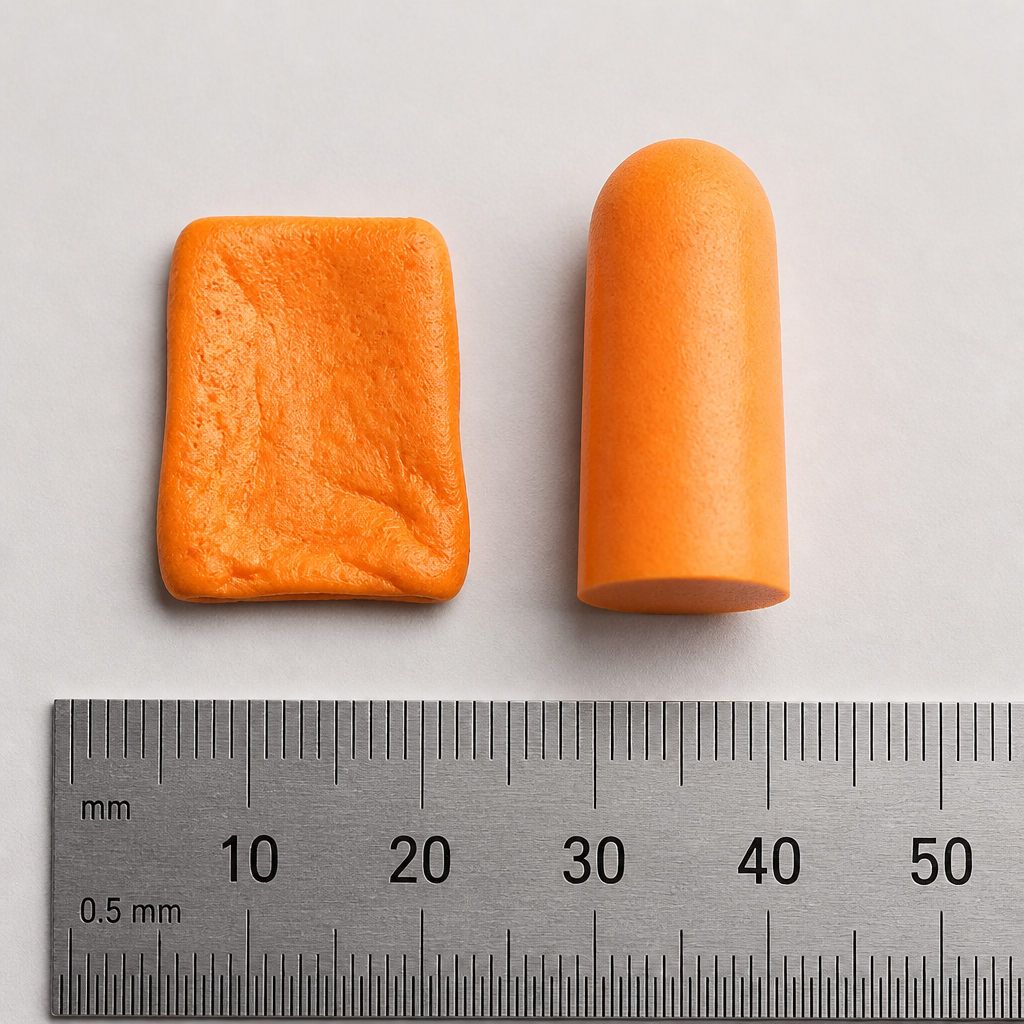
| Flattened foam tips lose their NRR | Disposable foam degrades rapidly. A compressed tip cannot expand to fill the ear canal, dropping real-world noise reduction dramatically. |
| Rated NRR does not equal real-world performance | The EPA requires a 50% derating of NRR ratings for real-world use. A plug rated 33dB delivers roughly 16-17dB in practice without a proper fit. |
| Tip replacement beats full replacement | Premium reusable plugs with replaceable memory foam tips, replaced every 6-8 weeks, consistently outperform degraded disposables used past their lifespan. |
This is the most unambiguous sign that you have not enough noise reduction happening. A correctly fitted ear plug with a genuine acoustic seal should make normal speech sound muffled, distant, and difficult to follow. If you can hear your partner talking at a normal volume from across the room, or understand what someone is saying without them raising their voice, your plugs are not sealing.
In practice, most people wearing cheap foam plugs incorrectly assume this is just how ear plugs work. It is not. A proper seal drops perceived volume dramatically across the mid and high frequency range, which is where speech intelligibility lives. Hearing clearly while wearing ear plugs is not a sign of good situational awareness. It is a sign of a failed product or a failed fit.
The acoustic seal is binary in nature. Either you have it or you do not. A partial seal produces almost no meaningful attenuation. This is why ear canal fit matters more than the material of the plug itself.
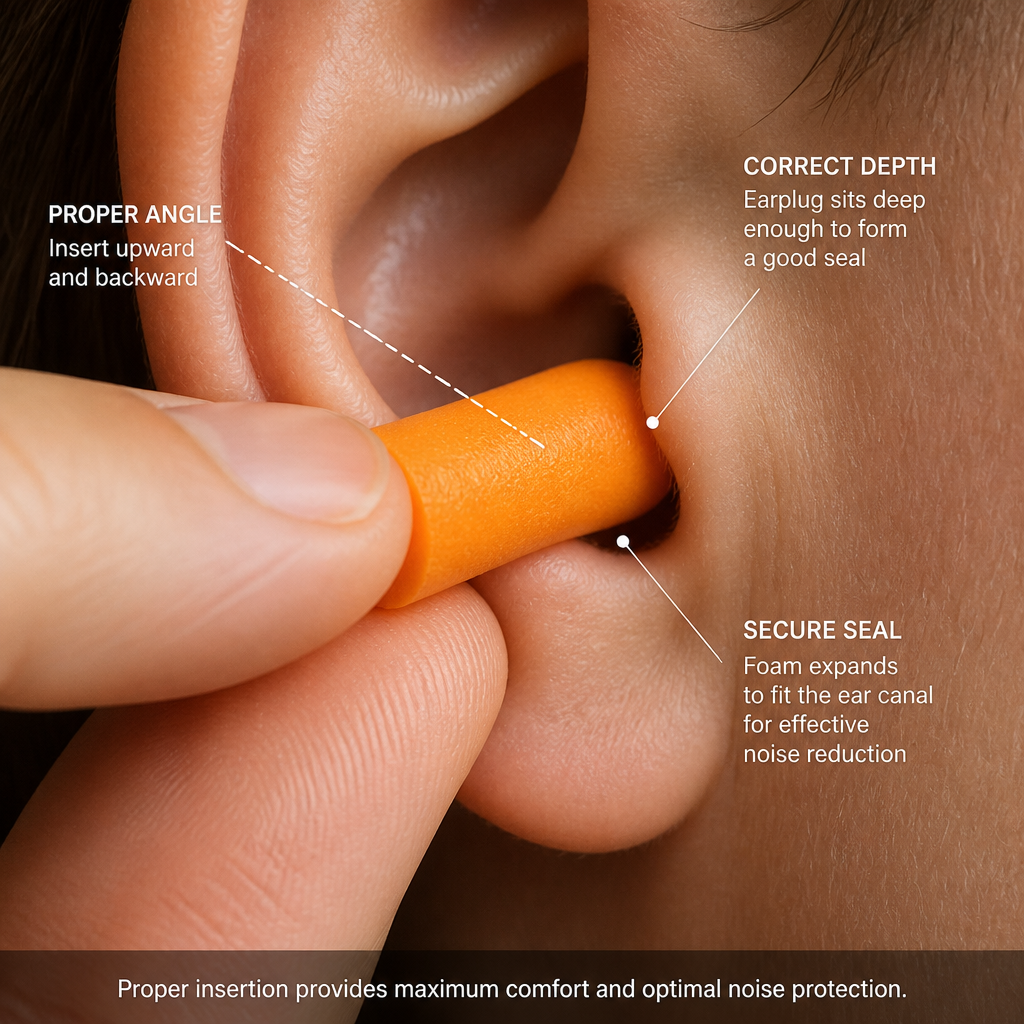
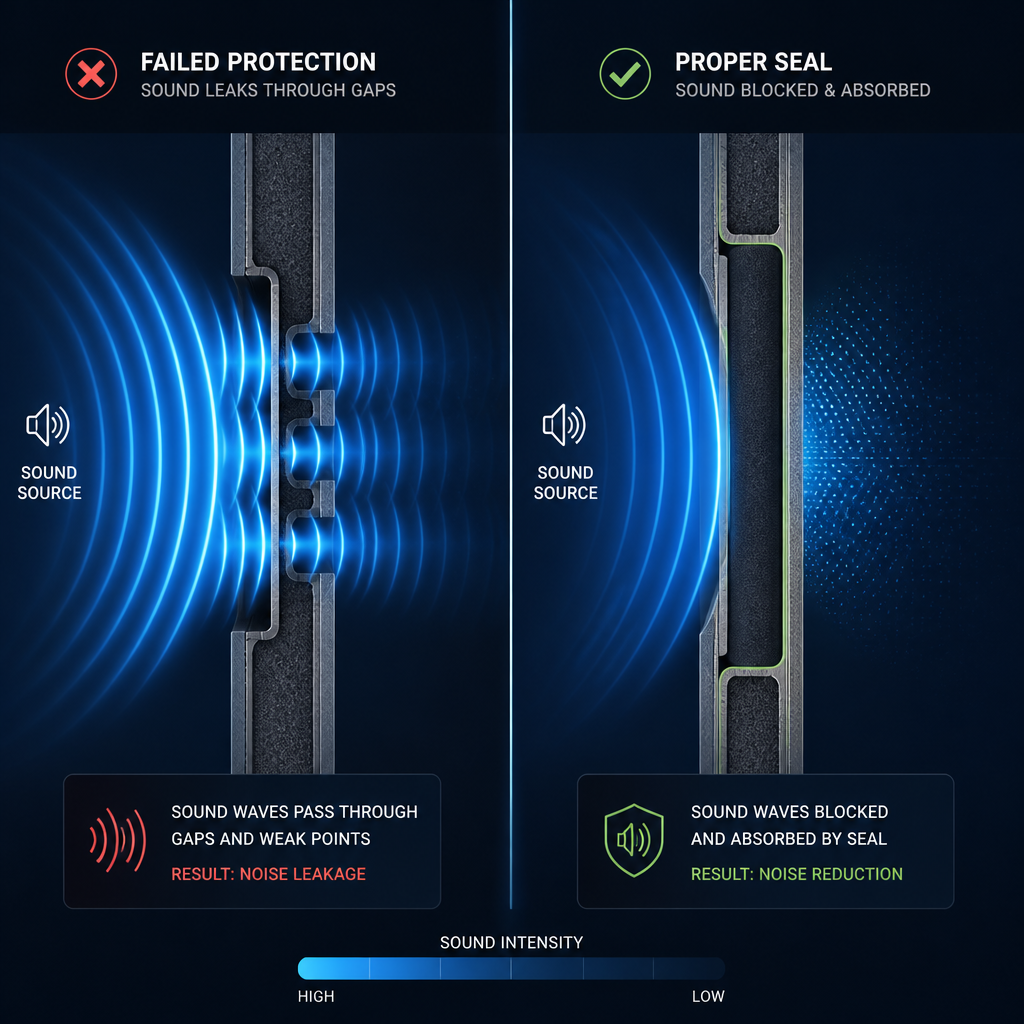
When a plug seals correctly, you will notice your own voice sounds louder to you, because bone conduction becomes the dominant sound pathway. Ambient noise becomes a low, indistinct hum rather than identifiable sounds. If you are not experiencing this, the plug is sitting in your canal without sealing it.
Pro tip: Test your seal before committing to a full night of sleep or a shift on a loud site. Insert the plugs, then rub your palms together near your ears. You should hear the rubbing as a muffled, hollow sound, not a clear skin-on-skin texture. If you hear it clearly, reinsert and try again.
Ear plugs falling out is not a minor annoyance. It is a complete failure of hearing protection. The moment a plug leaves the ear canal, every decibel of noise exposure returns in full. For side sleepers, this is particularly common because pillow contact gradually works foam plugs loose over the course of the night.
The root cause is almost always a size mismatch. Standard disposable foam plugs come in one size, which fits the average ear canal. But ear canals are not average. They vary in diameter, length, and angle. A plug that is too narrow for your canal will not expand to fill it. A plug that is too wide will sit at the entrance rather than seating properly inside.
Side sleeping creates direct mechanical pressure on the plug from the pillow. Foam plugs compress under this pressure and gradually migrate outward. By 3 AM, the plug may be sitting halfway out of the canal, providing minimal attenuation. This is why people report sleeping with ear plugs but still being woken by noise they expected to be blocked.
Products that offer multiple tip sizes, such as XS, S, and M memory foam tips, address this directly. The right tip size stays seated because it actually conforms to the canal shape rather than relying solely on foam expansion. A snug fit from correct sizing also means pillow pressure is less likely to dislodge the plug during the night.
Pro tip: If your plugs consistently fall out on one side but not the other, you likely have asymmetric ear canals, which is extremely common. Try a smaller tip size on the side that loses the plug first. Most people need different sizes for each ear and never realize it.
Waking to a partner snoring, street traffic, or a neighbor’s television while wearing ear plugs rated at 32dB or higher means one thing: the rated noise reduction is not being delivered in practice. This gap between rated and actual performance is well-documented.
“Laboratory-measured NRR values routinely overestimate real-world protection by 50% or more when fit variability and user error are accounted for.” – National Institute for Occupational Safety and Health (NIOSH)
The EPA’s derating formula is stark. Take the NRR, subtract 7, then divide by 2. A plug rated at 33dB delivers approximately 13dB of real-world protection in that calculation. For light sleepers, that is nowhere near enough to mask a snoring partner averaging 60-70dB, which puts noise exposure at 47-57dB at the ear, well above the threshold for sleep disruption.
The Difference Between Being Woken and Not Sleeping Deeply
Some people do not consciously wake but spend the night in shallow sleep stages due to noise. They do not connect their exhaustion to their ear plug failure because they have no memory of waking. Polysomnography studies consistently show that noise events as low as 40dB during slow-wave sleep cause measurable cortical arousal even without full waking. If you are wearing ear plugs and still feeling unrestored after a full night, the plugs are not delivering enough noise reduction.
Ear canal soreness after removing plugs is a near-universal complaint about cheap foam ear plugs, and it is often misread as a sign the plugs are inserted correctly. It is not. Pain is the canal’s response to a hard, inflexible object sitting against its walls at the wrong angle or expanding too aggressively against sensitive skin.
Standard foam plugs are inserted by compressing them and allowing them to expand inside the canal. The expansion creates outward pressure in all directions, including against canal walls that may not align with the plug’s orientation. Over eight hours of sleep, that constant pressure causes soreness, inflammation, and sometimes minor abrasion. The result is that many people stop using ear plugs entirely, leaving themselves with no protection at all.
A rigid outer body, like an aluminium shell, does not expand and press against the canal. It sits at a fixed size and relies on a soft tip to create the seal. This means the canal wall experiences minimal sustained pressure. The seal comes from the tip conforming to the canal’s shape, not from the tip trying to force the canal open. Memory foam tips are particularly effective here because they respond to body temperature and canal geometry rather than expanding uniformly.
Comfort and noise reduction are not in tension with each other. If your plugs cause pain, they are not sealing well, because pain signals that the plug is sitting incorrectly. A properly seated plug that seals the canal does not require force or pressure to maintain its position.
Disposable foam ear plugs are designed for single use. Using them beyond one insertion degrades their noise reduction rapidly. The foam cell structure that allows expansion and creates the seal begins breaking down after the first use. By the third or fourth insertion, many disposable foam plugs have lost 30-50% of their original expansion capacity, meaning the seal they create is a fraction of what it was originally.
In practice, most people reuse disposable plugs for days or weeks. The plugs look intact, so they assume they are still working. A flattened or yellowed foam plug that no longer springs back quickly when released is already past its functional lifespan, regardless of how it looks from a distance.
Using worn foam plugs is not just a matter of reduced comfort. It is a false sense of security. Someone on a construction site believes they are protected at 32dB when they are actually getting 10-15dB of attenuation from a degraded plug. Over a working lifetime, that gap translates directly into measurable hearing loss.
For sleep use, the stakes are different but still real. A degraded plug that used to block enough noise to keep you asleep will gradually stop doing so, and the decline is slow enough that many people attribute their worsening sleep to stress or aging rather than to plug performance degradation.
The data consistently shows that the single largest variable in ear plug performance is fit, not the plug’s rated NRR. A 32dB plug worn correctly outperforms a 33dB plug worn with even a minor seal failure. This is why the occupational health community shifted away from relying on NRR as the primary performance metric and toward fit-testing protocols for high-risk environments.
For consumers, fit testing is not always practical. But understanding the mechanics of a good seal is. The plug must sit inside the ear canal, not at its entrance. The tip must conform to the canal’s shape rather than simply blocking the opening. And the plug must stay in position throughout the use period, whether that is a full night’s sleep or an eight-hour work shift.
The Role of Tip Size in Achieving a Real Seal
A common mistake is assuming the largest tip available always provides the best seal because it fills more space. This is wrong. An oversized tip sits at the canal entrance and cannot be inserted deeply enough to seal properly. An undersized tip seats deeply but leaves gaps around its perimeter. The correct size is the one that seats comfortably at mid-canal depth and creates resistance when you gently tug on the plug. You should feel slight suction, not immediate release.
This is why access to multiple tip sizes matters far more than the material or color of the plug body. Trying XS, S, and M tips in each ear independently, rather than assuming both ears need the same size, is the most reliable way to improve your seal without buying different plugs entirely.
Most people who think their ear plugs do not work have never been shown how to insert them correctly. The technique for foam tips differs from the technique for pre-molded silicone plugs, and both differ from memory foam tips on a rigid body.
Reach over the top of your head with the opposite hand and pull your ear upward and slightly backward. This straightens the ear canal for adults and creates a clear insertion path. Insert the plug with a gentle rotating motion until the tip seats at mid-canal depth. Release the ear and hold the plug in place for 20-30 seconds to allow the memory foam to conform to your canal’s shape and temperature.
Do not push hard. Force does not improve the seal. It shifts the plug angle and can cause discomfort without improving attenuation. If you feel significant resistance before mid-canal depth, try a smaller tip size rather than pushing further.
Memory foam tips on premium reusable plugs should be replaced every 6-8 weeks under normal use. Signs of needed replacement include visible compression that does not recover fully, a sticky or greasy texture from skin oils, or a decline in comfort during insertion. Replacing only the tips maintains the rigid body’s performance indefinitely while ensuring the sealing element is always in optimal condition. This is considerably more cost-effective than buying disposable plugs weekly, and it eliminates the performance degradation problem entirely.
At ATTENU8, the aluminium body of each plug is designed to last for years, with tip replacements as the only ongoing maintenance required. This directly solves the degraded-foam problem that causes most real-world ear plug failure. You can explore the ATTENU8 reusable ear plug range if you want a permanent alternative to foam disposables.
| Ear Plug Type | Rated NRR / Real-World Attenuation | Common Failure Points |
|---|---|---|
| Standard Disposable Foam (single size) | Rated 29-33dB / Real-world 10-17dB after derating and fit loss | Degrades after first use, falls out during sleep, no size options, canal soreness from over-expansion |
| Reusable Silicone Flanged Plugs | Rated 24-27dB / Real-world 12-14dB | Flanges seal inconsistently across canal shapes, hard body causes discomfort during extended wear, limited size variation |
| Premium Metal-Bodied Plugs with Memory Foam Tips (e.g. ATTENU8) | Rated 32dB / Real-world 20-26dB with correct tip size and insertion | Requires correct tip size selection, tips need replacement every 6-8 weeks, higher upfront cost than disposables |
The gap between rated and real-world performance is smallest for metal-bodied plugs with properly sized memory foam tips because the rigid body maintains its position without relying on foam expansion pressure for structural support. The tip does the sealing work at the correct depth, while the body keeps it oriented correctly regardless of pillow pressure or jaw movement during sleep.
After inserting your plugs, cup your palms over both ears tightly, then remove them quickly. If the plugs are sealing, you will hear a slight change in pressure when you remove your palms, similar to the sensation of altitude change. You can also speak aloud: your own voice should sound noticeably louder and more resonant to yourself when a proper seal is achieved, because bone conduction dominates over airborne sound.
Side sleeping places lateral pressure on the plug from the pillow, which gradually levers foam plugs outward over the course of the night. This is a fundamental mechanical problem with standard foam plugs, not user error. The solution is either a plug with a shorter profile that sits deeper in the canal before pillow contact, or a plug with a rigid outer body that resists lateral displacement rather than compressing under pillow pressure.
The EPA’s standard derating formula takes the labeled NRR, subtracts 7, and divides by 2, giving you the expected real-world attenuation in typical use conditions. For a 32dB-rated plug, that works out to approximately 12.5dB with an average fit. A correct fit with the right tip size can bring real-world performance significantly closer to the rated figure. This is why fit matters more than the NRR number on the packaging.
Ear plugs themselves do not cause hearing damage, but inserting them too aggressively or using plugs that are too large can cause minor abrasion or inflammation of the ear canal. More importantly, a false sense of protection from poorly fitting plugs can lead someone to stay in a high-noise environment longer than they should, which does cause damage. The risk is under-protection, not over-protection.
For reusable ear plugs with replaceable foam tips, the practical replacement interval is every 6-8 weeks under daily use. Key indicators that tips need replacing include slow or incomplete recovery when you release them after compression, visible discoloration from skin oils, and a reduction in the comfort or snugness you felt when the tips were new. Replacing tips on schedule keeps real-world noise reduction consistent, which is the entire point of using a premium reusable product rather than disposables.
Price does not automatically mean better noise reduction. What premium ear plugs actually buy you is consistency of performance over time, better fit options across different ear canal sizes, and materials that do not degrade rapidly. A correctly fitted disposable foam plug can deliver impressive attenuation on day one. The problem is that performance degrades quickly and fit is inconsistent across users. Premium plugs with multiple tip sizes and replaceable foam maintain their rated performance for much longer, which is what matters in practice.
Have you experienced any of these five signs with your current ear plugs? Share what finally worked for you in the comments below.

