


 0

Construction is one of the loudest industries on the planet, and the damage it does to workers’ hearing is permanent. Earplugs for construction workers are not an optional accessory; they are a frontline defence against irreversible noise-induced hearing loss. Yet despite the well-documented risks, construction workers report wearing hearing protection devices less than 20% of the time on site. The result: an industry where 14% of all construction workers already have measurable hearing difficulty. If you are choosing hearing protection for a construction environment, the decision matters more than most workers realise, and getting it wrong is a mistake you cannot undo.
Construction sites produce some of the most sustained and varied noise exposures of any workplace. The noise is not a single tone you can mentally tune out. It shifts throughout the day: concrete saws, jackhammers, pneumatic tools, heavy machinery reversing, and the ambient roar of plant equipment running in the background for hours at a time.
The National Institute for Occupational Safety and Health (NIOSH) sets the recommended occupational exposure limit at 85 dBA. Common construction equipment routinely exceeds that threshold. Forklifts produce around 90 dBA and hammer drills can reach 120 dBA. At those levels, sustained exposure without protection does not cause gradual, manageable decline. It causes cumulative, irreversible cochlear damage that typically goes unnoticed until a worker has already lost a significant portion of their hearing range.
The insidious part of noise-induced hearing loss is that it rarely hurts. Workers dismiss temporary ringing after a shift as normal. Over years, those “temporary” episodes become permanent. By the time a worker notices they are struggling to follow conversations, the damage is already done.
Every hearing protection device sold in the United States carries a Noise Reduction Rating (NRR), a single number measured in decibels that reflects how much noise the device blocks under ideal laboratory conditions. A higher NRR means greater theoretical noise reduction. In practice, the real-world attenuation is almost always lower than the lab figure.
OSHA recommends derating the NRR by 50% for foam earplugs to account for the gap between lab performance and real-world use. So a foam earplug with a 33 dB NRR will deliver roughly 11 to 16 dB of actual attenuation on a job site when worn by someone who has not been trained to insert them correctly. That is a significant gap, and it means that the number on the box alone should never be the sole basis for choosing a product.
The reason for the gap is technique. Disposable foam earplugs require a precise insertion method: roll the plug tightly, insert it before it begins to expand, and hold it firmly in place for 20 to 30 seconds until the foam fully conforms. Skip any step and the seal is compromised, sometimes dramatically. Field observations consistently show that a large proportion of workers skip the holding step entirely, cutting real attenuation by 8 dB or more.
Pro tip: If you can still hear your own voice clearly and loudly while wearing foam earplugs and talking, the seal has probably failed. A properly sealed earplug produces a noticeable occlusion effect, where your own voice sounds hollow and amplified inside your head.
OSHA’s construction noise standards are primarily governed by 29 CFR 1926.52 and 29 CFR 1926.101. The permissible exposure limit (PEL) for construction workers is 90 dBA over an 8-hour time-weighted average. When exposures reach or exceed this level and engineering or administrative controls cannot bring noise down to safe levels, employers are required to provide hearing protection.
Importantly, OSHA also requires that employers make hearing protectors available at no cost to employees exposed to an 8-hour time-weighted average of 85 dBA or greater. If a worker already shows signs of noise-induced hearing loss, the threshold tightens further, and protection must reduce exposure to at least 85 dB. OSHA does not mandate a specific brand or style of hearing protection. Instead, the requirement is that the device provides a sufficient NRR for the environment and that workers are trained to use it correctly.
Under 29 CFR 1926.101, ear protective devices that are inserted into the ear canal must be individually fitted or determined to fit the worker by a competent person. This is not just a procedural box to tick. A poorly fitted earplug delivers a fraction of its rated protection, making individual fit assessment a genuine safety requirement, not a bureaucratic formality.
The NRR printed on a box of disposable foam earplugs is a laboratory number. It reflects what trained subjects achieved under ideal conditions with expert insertion in a calibrated test environment. Real job sites are not calibrated test environments.
| Key Insight | Explanation |
|---|---|
| Aim for NRR 25 or higher on active construction sites | Most construction equipment operates between 85 and 110 dBA. An NRR of 25 to 33 dB gives meaningful protection across this range when fitted correctly. |
| Fit matters more than the number on the box | An NRR 33 foam plug worn incorrectly can deliver less real-world protection than an NRR 25 plug that fits perfectly every time, every shift. |
| Dusty and oily conditions degrade disposable foam fast | Foam absorbs oils from skin and dust from the environment, breaking down its cell structure and reducing its ability to form an acoustic seal. |
| OSHA mandates individually fitted ear protection in construction | 29 CFR 1926.101 requires that inserted ear protectors are fitted or verified by a competent person, not just handed out in bulk. |
| Reusable earplugs with replaceable tips cut long-term costs significantly | For construction crews using disposables daily, switching to a quality reusable programme with tip replacements every 6 to 8 weeks can reduce annual hearing protection spend by 65 to 80 percent. |
| Hearing loss on construction sites is cumulative and permanent | There is no treatment for noise-induced cochlear damage. Prevention through consistent, correctly worn hearing protection is the only effective strategy. |
| Comfort determines compliance | Workers who find earplugs painful, hot, or irritating remove them. The best hearing protection on a construction site is the one that stays in all shift. |
Not every earplug design suits construction environments equally. Understanding the differences between the main categories helps you choose something that will actually be worn, not pocketed after the first hour of a shift.
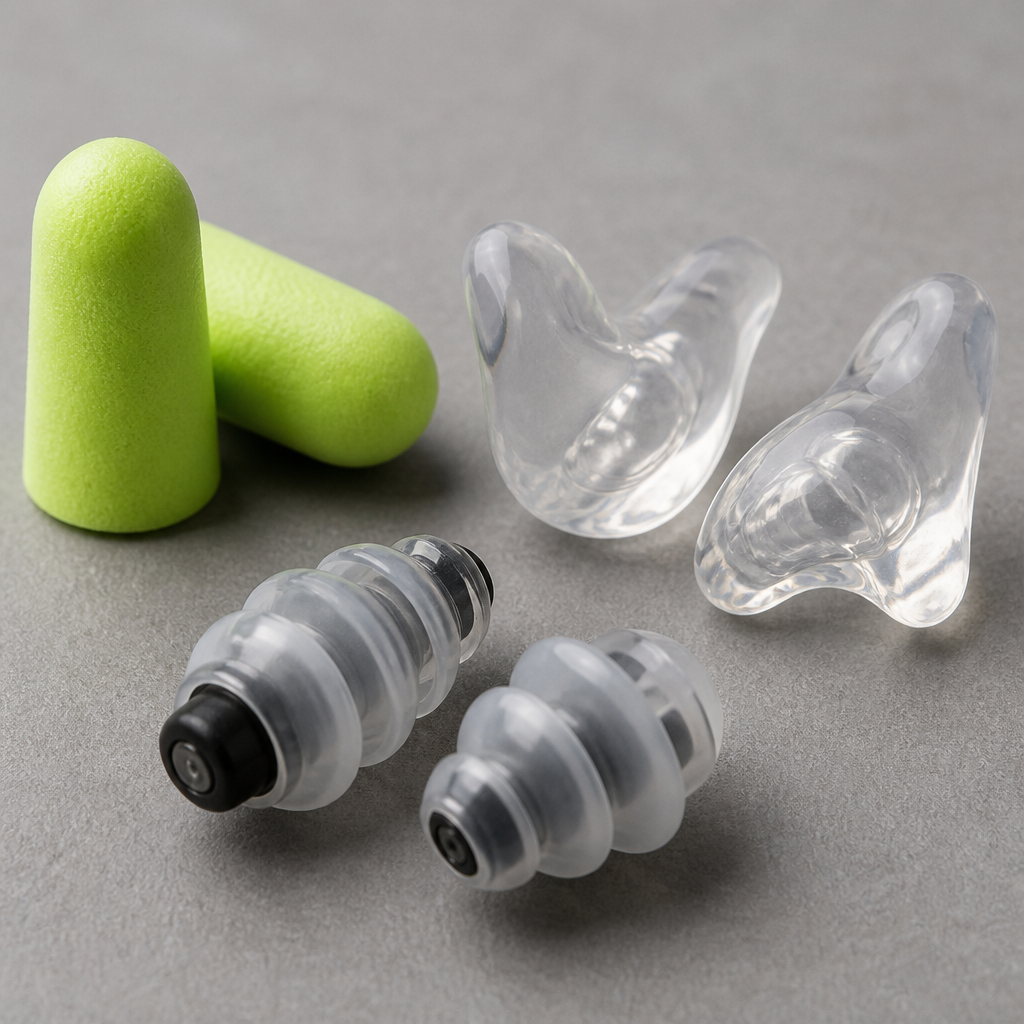

Disposable foam plugs are the most widely distributed form of occupational hearing protection. They are inexpensive per unit, widely available, and, in a laboratory environment with a trained user, capable of achieving very high NRR ratings. For construction sites, their weaknesses are significant. Foam absorbs the natural oils from fingertips during insertion, and on a dusty site it collects particulates that embed in the cell structure. Repeated use across a shift, or using a single pair for multiple days, accelerates this degradation. A foam plug that started the day at an effective NRR of 20 dB may be delivering 10 dB or less by afternoon.
There is also the technique problem. Correct insertion of a foam plug is a skill that must be taught and consistently maintained. On a busy site, workers inserting protection quickly between tasks rarely achieve the tight roll, deep placement, and prolonged hold that the lab test assumes.
Reusable earplugs built around a rigid body, particularly those with a metal housing, address most of the degradation problems that make disposables unreliable in industrial environments. The structured body maintains shape regardless of handling. The foam tips, which carry the NRR performance, can be replaced on a set schedule rather than relying on a worker to visually assess whether a small foam plug still functions correctly.
A premium metal-bodied earplug with memory foam tips delivers approximately 32 dB of noise reduction when properly fitted, covering most construction environments up to around 100 dBA. Three tip sizes ensure a seal that suits different ear canal geometries rather than assuming a universal fit. This is directly relevant to the OSHA 29 CFR 1926.101 individual fit requirement: a sized tip system is a practical mechanism for demonstrating that fit has been considered per worker, not just per job site.
Over-ear earmuffs offer the advantage of being easy to put on and remove quickly, which suits intermittent noise environments. Their weakness on a construction site is compatibility with other PPE. Hard hats, safety glasses, and face shields all compromise the seal of an over-ear muff. When the muff cushion cannot create a continuous contact with the skin around the ear, NRR drops sharply. For environments exceeding 100 dBA or for workers using equipment like jackhammers or concrete saws at close range, combining quality earplugs with earmuffs worn over the top is the appropriate solution. The two devices work together, with combined attenuation calculated according to OSHA guidance rather than by simply adding the two NRR values.
The purchasing decision for construction earplugs involves more variables than the NRR number. Here is what actually matters in a high-noise, high-usage environment.
A construction site is not a controlled environment. Earplugs get dropped on concrete, stuffed into pockets with gloves and fasteners, and handled with sweaty or dirty hands. A metal-bodied earplug outlasts foam and plastic equivalents significantly because the housing does not compress, crack, or absorb contamination the way softer materials do. The structured body also means the acoustic properties of the housing itself remain consistent throughout the product’s life. Only the foam tips, which are the consumable part, need periodic replacement.
Ear canal dimensions vary considerably between individuals. A one-size approach that uses a medium foam plug as the default leaves workers with smaller or larger canals with a compromised seal. A system offering at least three tip sizes, such as XS, S, and M, allows each worker to use the size that creates a genuine acoustic seal for their anatomy. This is not a comfort nicety. It is the difference between achieving the rated NRR and falling well short of it throughout the working day.
Eight-hour shifts are standard. Longer shifts are common. An earplug that causes pressure pain, skin irritation, or canal soreness after two hours is an earplug that will be removed. Comfort is the primary driver of compliance, and compliance is what determines whether hearing protection actually protects hearing. Memory foam conforms to the shape of the canal without exerting constant outward pressure the way standard expanded foam does, making it a more comfortable choice for extended wear.
Pro tip: Before committing to a hearing protection system for a crew, have workers trial the product for a full shift. Comfort reports after 8 hours are far more useful than comfort reports after 5 minutes. Any earplug can feel fine initially. The ones that stay in all day are the ones that matter.
Construction sites are dirty. Hearing protection that cannot be cleaned or that degrades with exposure to dust and sweat is not a good fit for the environment. A metal body can be wiped clean. Memory foam tips that are replaced on a schedule of every 6 to 8 weeks stay hygienic without requiring workers to make daily judgements about whether their protection is still serviceable. Disposable foam, by contrast, is technically single-use but is routinely used across multiple days or even weeks, accumulating contamination that compromises both the hygiene and the acoustic performance of the plug.
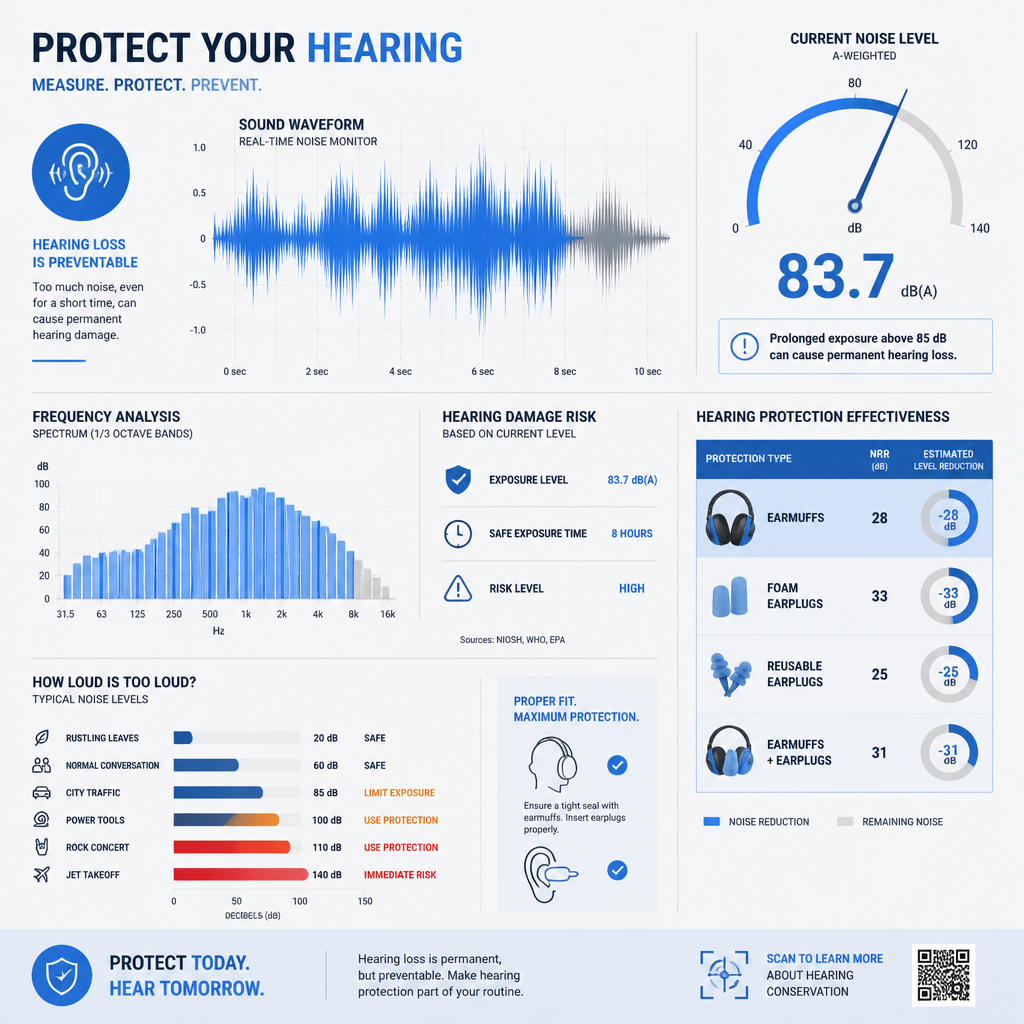
The comparison between reusable and disposable earplugs in a construction context is not purely a cost question. It involves practical performance, compliance, and long-term programme management.
| Factor | Disposable Foam Earplugs | Premium Reusable Earplugs (Metal Body, Memory Foam Tips) |
|---|---|---|
| Upfront cost per worker | Low per unit; cumulative cost is high with daily replacement | Higher upfront; tip replacements every 6 to 8 weeks are the only ongoing cost |
| NRR consistency across a shift | Degrades as foam absorbs oil, sweat, and dust throughout the day | Consistent when tips are within their replacement cycle and correctly sized |
| Fit assurance | Dependent entirely on insertion technique, which varies per worker and per insertion | Sized tips create a repeatable seal without requiring the same technique precision as rolled foam |
| Durability on a construction site | Single-use design; performance falls immediately when reused beyond intended life | Metal housing withstands drops, pocket storage, and worksite conditions without structural degradation |
| Hygiene management | Accumulates contamination if reused; hygiene depends on worker replacing as directed | Metal body is wipeable; foam tips replaced on a schedule regardless of appearance |
| Environmental impact | High waste volume for large crews using daily disposables across a full year | Significantly reduced waste with only tip replacements going to disposal |
For a construction crew switching from disposables to a reusable programme with scheduled tip replacements, the long-term cost reduction can reach 65 to 80 percent annually. The performance benefit compounds that financial case: protection that workers actually want to wear because it is comfortable, that does not degrade mid-shift because of site conditions, and that provides a repeatable seal regardless of whether someone is inserting their third or three-hundredth pair.
The gap between rated NRR and real-world attenuation is almost entirely caused by seal failure. Closing that gap comes down to consistent technique, the right tip size, and knowing when tips have reached the end of their effective life.
With a memory foam tip earplug, insertion is more straightforward than with a rolled disposable foam plug because the structured body gives you something to hold and guide. The tip should be lightly compressed between two fingers, then inserted with a gentle rotational motion while pulling the outer ear up and back with the opposite hand. This straightens the ear canal and allows the tip to seat fully. The earplug is correctly positioned when the body sits flush with the outer ear, not protruding, and when you hear a noticeable reduction in ambient noise immediately on insertion.
If the earplug consistently works loose during the shift, the tip is too small for the canal. If insertion is painful or the earplug creates significant pressure even after the foam has had time to warm and conform, the tip is likely too large. A proper fit sits securely without requiring force to stay in place. For first-time users, trialling the smallest tip first and working up is usually the most reliable approach, because an earplug that does not seat causes fewer problems to identify than one that is forced into place.
Memory foam tips give clear visual signals before acoustic performance fails completely. Tips that no longer recover their shape within a few seconds of compression, tips that have become stiff or sticky, or tips with visible surface contamination embedded in the foam have passed their useful life. Replacing tips on a regular schedule of every 6 to 8 weeks removes the subjectivity from this decision entirely, which is the right approach for a worksite programme where individual workers cannot be expected to make daily condition assessments on a small consumable.
For those looking at structured earplug programmes for a construction team, the ATTENU8 range is built specifically around this model: a durable metal body designed to outlast the job site, with memory foam tips in XS, S, and M that are replaced on a schedule rather than when they look worn.
For most construction environments, an NRR of 25 to 33 dB is the practical target range. Sites with equipment operating around 85 to 95 dBA need protection that brings exposure below the OSHA PEL of 90 dBA. For higher-noise tasks, such as operating concrete saws or jackhammers, combining earplugs with over-ear muffs provides supplementary protection. An NRR of 32 dB, properly fitted, covers the majority of construction work environments.
Disposable foam plugs are designed for single-use and should be replaced daily at minimum. In practice, they degrade faster on dusty or oily sites and should be inspected at the start of each shift. For reusable earplugs with memory foam tips, the body is durable and does not need replacement, but the foam tips should be swapped every 6 to 8 weeks to maintain their acoustic performance and hygiene.
Earplugs have a practical advantage on most construction sites because they are compatible with hard hats, safety glasses, and face shields without compromising the acoustic seal. Earmuffs lose significant NRR when their cushion seal is broken by PPE components. For extremely high-noise tasks above 100 dBA, the correct answer is both: earplugs worn beneath earmuffs provides combined protection that neither device achieves alone.
OSHA does not mandate a specific brand or product type. The requirements under 29 CFR 1926.52 and 1926.101 are that hearing protection provides a sufficient NRR for the exposure level, that it is provided at no cost to workers exposed at or above 85 dBA, and that inserted ear protectors are individually fitted or verified by a competent person. Workers must also be trained to use the protection correctly.
The most common reasons are discomfort during long shifts, the perception that noise exposure is not severe enough to cause harm, and the inconvenience of inserting and removing protection frequently throughout the day. Comfort-driven compliance is a documented pattern in occupational health research: workers will wear protection consistently only when it does not actively interfere with their ability to do their job. This makes comfort a safety specification, not a luxury.
Yes, provided the NRR is sufficient and the fit is comfortable for extended wear in both contexts. A 32 dB NRR earplug with sized memory foam tips works equally well for blocking a snoring partner as it does for reducing exposure on a job site. The key is that the product maintains consistent attenuation, and that the tips are kept in good condition. For construction use, replace tips more frequently if you are wearing them in high-dust environments.
A correctly inserted earplug significantly changes how you perceive your own voice. Speaking while wearing well-seated earplugs produces a noticeably hollow, amplified sound internally. If ambient conversation and machinery sound only slightly muffled rather than substantially reduced, the seal has failed and the earplug needs to be reinserted or the tip size reconsidered. Ringing in your ears after leaving the site is a clear sign that attenuation during the shift was insufficient.
Have you changed your approach to hearing protection on site, and what made the difference? Share your experience below.
Construction workers face one of the most aggressive noise environments on the planet. The CDC reports that approximately 22 million workers in the United States are exposed to hazardous noise levels at work each year, and construction consistently ranks among the highest-risk industries for noise-induced hearing loss. Yet the most common hearing protection complaint on job sites is simple: foam plugs fall out, get dirty, and workers stop wearing them. Choosing the right ear plugs for construction workers is not just a comfort preference, it is a decision that determines whether your hearing survives a 30-year career.
| Key Insight | Explanation |
|---|---|
| NRR 32dB is the gold standard for heavy construction | Tools like jackhammers and concrete saws regularly exceed 100dB. An NRR of 32dB brings effective exposure to a safer range for prolonged shifts. |
| Fit quality outweighs brand name every time | Even a high-rated plug worn incorrectly delivers a fraction of its rated protection. Proper insertion technique is non-negotiable on a loud site. |
| Disposable foam plugs fail workers over a full shift | They compress, absorb sweat, and lose their seal. A worker relying on degraded foam by hour six has almost no real protection. |
| Multiple tip sizes are essential for a diverse workforce | Ear canal diameter varies significantly between individuals. A single-size plug in a shared toolbox means many workers are underprotected. |
| Reusable plugs reduce site waste and long-term cost | Premium reusable ear plugs with replaceable foam tips cost more upfront but eliminate the daily waste and recurring spend of bulk disposables. |
| Metal-bodied ear plugs survive job site conditions | Aluminium bodies resist crushing, sweat corrosion, and contamination that destroy plastic-bodied alternatives within weeks of heavy use. |
| Hearing loss from construction is permanent and cumulative | There is no medical treatment that reverses noise-induced hearing damage. Every unprotected hour compounds over a career. |
Construction noise is relentless. A standard framing nail gun peaks at 97dB. A circular saw hits 110dB. A jackhammer at close range reaches 130dB. OSHA mandates hearing protection when workers are exposed to 85dB or more averaged over an eight-hour shift, a threshold that is breached routinely before morning coffee break on most active sites.
The damage is not dramatic. It does not hurt. Workers feel fine for years while the sensory hair cells in their cochlea are being progressively destroyed. By the time a worker notices they are asking people to repeat themselves, the loss is already significant and irreversible. Noise-induced hearing loss is entirely preventable, which makes the failure to wear adequate protection genuinely inexcusable from a safety management standpoint.
In practice, the reason most workers skip ear plugs is not defiance. It is discomfort and inconvenience. A plug that falls out every time a worker tilts their head, or that causes ear canal soreness after two hours, will not get worn. This is where plug design matters more than any compliance poster on the site office wall.
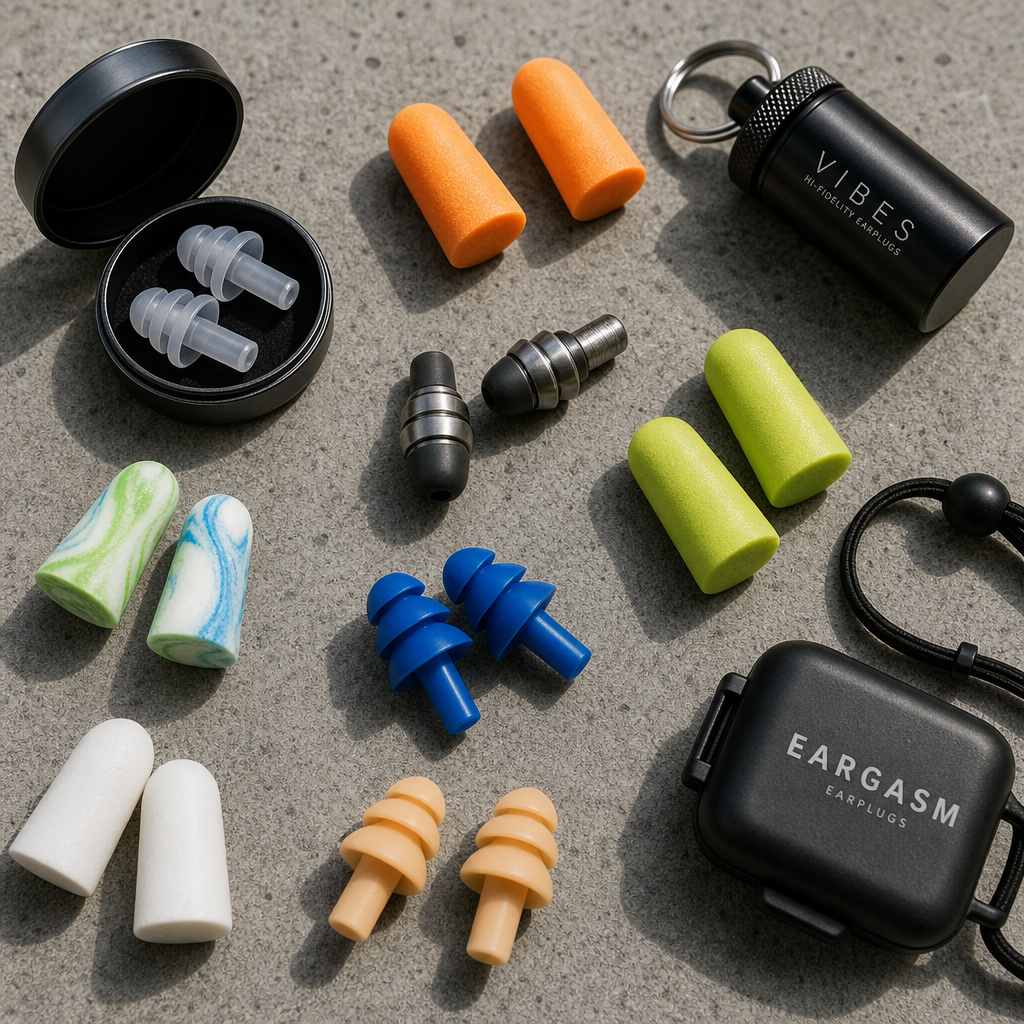
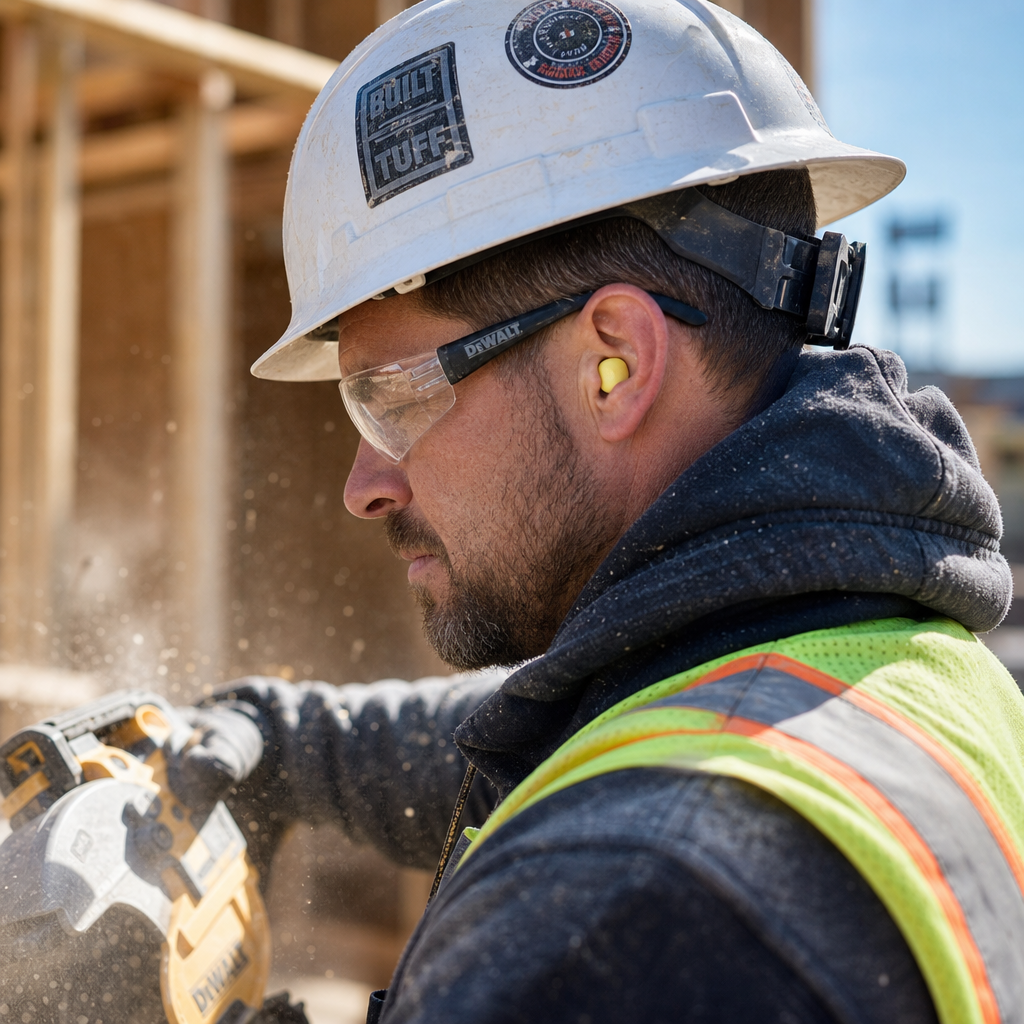
The Noise Reduction Rating (NRR) is an EPA-regulated measurement expressed in decibels that indicates how much sound a hearing protector blocks under controlled laboratory conditions. A plug rated NRR 32dB is among the highest ratings available for insert-style ear plugs, which is precisely what workers in concrete breaking, steel work, or demolition need.
The EPA recommends using a derating formula for real-world estimates. Take the NRR, subtract seven, then divide by two. For an NRR 32 plug, that calculation gives approximately 12.5dB of real-world attenuation. Add that to your ambient noise level calculation. For most heavy construction, this still brings exposure below OSHA action levels during a standard shift.
The data consistently shows that workers consistently underperform laboratory NRR ratings by 30 to 70 percent depending on plug type and insertion technique. This is not a product failure. It is a training and fit failure. High-quality plugs with proper instruction consistently achieve closer to their rated attenuation than cheap plugs worn carelessly.
Pro tip: When selecting ear plugs for a construction crew, look for plugs that include multiple tip sizes. A worker with a narrow ear canal using a medium foam tip will achieve a poor seal regardless of the plug’s NRR rating.
In Australia and Europe, hearing protection is often rated using the Single Number Rating (SNR) system rather than NRR. SNR values are generally higher numerically than their NRR equivalents. If you are sourcing ear plugs internationally for Australian construction sites, verify which standard applies and never assume the numbers are directly comparable.
Not every ear plug design works equally well in a construction context. There are four main types used in industrial and construction settings, and each has meaningful tradeoffs that affect real-world compliance and protection.
These are the yellow rolldown plugs that fill every site safety cabinet. They are cheap, single-use, and almost universally hated by workers after the first hour. They compress and loosen as they absorb moisture, they collect sawdust and grime, and they are typically one-size, which means poor fit for many users. A common mistake is assuming that having boxes of disposable foam plugs on site means workers are protected. Distribution does not equal compliance.
Banded plugs connect two foam or pod-style tips with a rigid band that sits under the chin or behind the neck. They are faster to remove and reinsert than rolldown plugs, which makes them popular in environments where workers need to communicate regularly. However, they typically offer lower attenuation than well-fitted insert plugs and the band can interfere with hard hat straps and chin guards.
This category includes premium options like ATTENU8’s metal-bodied ear plugs, which combine a durable aluminium body with interchangeable memory foam tips. The body is built to last indefinitely under job site conditions. Only the foam tips require periodic replacement, roughly every six to eight weeks depending on use frequency. This design directly addresses the two biggest failure modes of disposable plugs: hygiene degradation within a single shift, and cumulative waste cost.
Earmuffs are effective but incompatible with many construction tasks. They cannot be worn easily with hard hats, welding helmets, or respirators. In high heat, they are uncomfortable enough that workers actively avoid wearing them. For tasks requiring prolonged high-noise exposure without other PPE conflicts, dual protection combining earmuffs over foam plugs is the highest-attenuation option available.
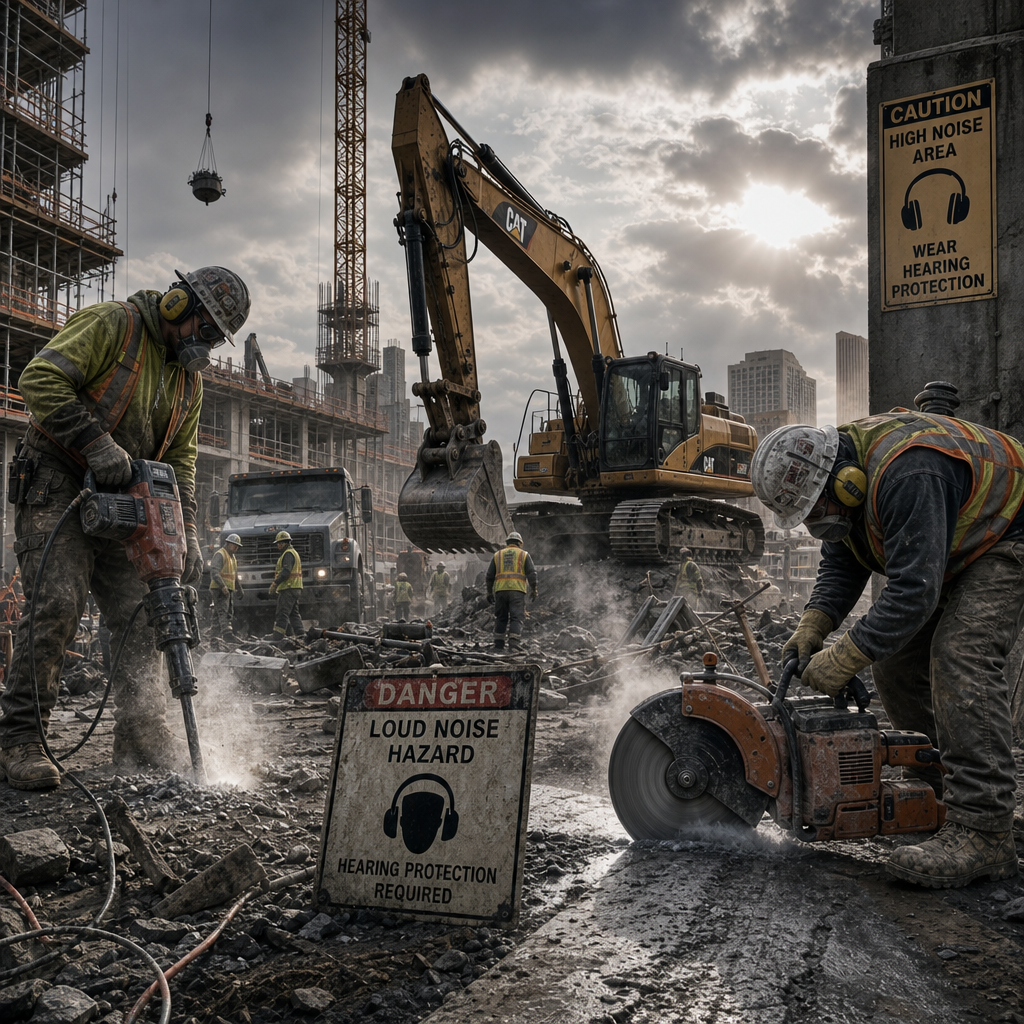
The best ear plugs for loud environments share a specific set of characteristics that separate them from general-consumer products. Understanding these features allows safety managers and individual workers to make defensible purchasing decisions rather than defaulting to whatever is cheapest per unit.
Memory foam creates a superior acoustic seal compared to standard polyurethane foam because it conforms to the irregular geometry of individual ear canals. It recovers its shape more slowly, giving it time to expand and seat properly rather than springing back before the canal walls have been reached. ATTENU8’s three tip sizes (XS, S, and M) address the reality that a single size cannot serve a diverse construction workforce adequately.
Plastic-bodied reusable plugs crack when dropped on concrete, deform in high heat, and become brittle with UV exposure over time. Aluminium bodies do not have these failure modes. They survive being dropped from scaffolding, sitting in a tool bag all week, or being cleaned repeatedly with harsh solvents. For workers who are investing in a piece of PPE they will use every day for years, material quality is not a luxury specification. It is a basic functional requirement.
Workers wearing thick gloves cannot execute the precise rolldown-and-hold technique required for disposable foam plugs without removing their gloves. A plug with a solid body that can be inserted and seated with a simple push-and-hold motion is far more likely to be worn correctly on an active site. Compliance depends on convenience, and any design that creates a friction barrier to use will be avoided.
“The most effective hearing protector is the one the worker will actually wear consistently, all day, every day.” NIOSH, National Institute for Occupational Safety and Health
A disposable foam plug worn for a full shift in summer heat has absorbed sweat, skin oils, and airborne dust. Continuing to wear it the next day is a hygiene problem. Premium reusable plugs with replaceable foam tips solve this cleanly. The aluminium body can be wiped down, and tips are replaced on a scheduled cycle rather than discarded after every use. This is both more hygienic and more cost-effective at scale.
Pro tip: For construction crews managed by a safety officer, ordering replaceable memory foam tips in bulk and scheduling a six-week replacement cycle across all workers is far simpler to manage than maintaining a supply of disposable plugs that disappear unpredictably and inconsistently.
The table below compares the three main categories of industrial ear plugs across the criteria that matter most to construction workers and safety managers.
| Criterion | Disposable Foam Plugs | Standard Reusable Plugs (Plastic Body) | Premium Reusable Plugs (Aluminium Body, e.g., ATTENU8) |
|---|---|---|---|
| Typical NRR Rating | 29-33dB (lab), much lower in real use | 25-30dB | Up to 32dB with correct tip size and insertion |
| Durability Under Construction Conditions | Single shift, then discarded | Weeks to months, prone to cracking and deformation | Years with tip replacements every 6-8 weeks |
| Hygiene Across a Full Shift | Poor. Absorbs sweat and particulates | Moderate. Body can be wiped but foam degrades | High. Metal body wipeable, tips replaced on schedule |
| Fit for Diverse Ear Canals | One size only, poor seal for many workers | Typically 2 sizes | Three sizes (XS, S, M) for consistent seal across workforce |
| Cost Over 12 Months (per worker) | Low per unit, high in aggregate volume | Moderate | Higher upfront, lower ongoing via tip replacement only |
| Ease of Use with Work Gloves | Very difficult, requires removing gloves | Moderate | High. Solid body allows gloved insertion |
| Environmental Waste | High. Daily disposal for every worker | Moderate | Low. Only foam tips replaced periodically |
Correct insertion technique is the single most controllable variable in real-world hearing protection performance. The gap between an NRR 32 plug worn correctly and the same plug inserted lazily can be 15 to 20dB of lost protection. On a 110dB construction site, that difference is the margin between manageable exposure and active hearing damage.
For premium memory foam tips like those used in ATTENU8 ear plugs, the process is straightforward. Reach the opposite hand over the top of the head to pull the outer ear upward and backward. This straightens the ear canal. Insert the plug with the other hand using a gentle pressing motion, holding it in place for five to ten seconds while the memory foam expands and fills the canal. A properly seated plug will feel snug without being painful, and background noise will noticeably reduce.
Cup both hands over your ears briefly after insertion. If noise noticeably decreases further when you add this extra barrier, the plug has not achieved a full seal. Reinsert and try again. This simple field check takes three seconds and confirms whether a worker has adequate protection before walking into a high-noise area.
Some workers find that one ear requires a different tip size than the other. This is more common than most assume. A product offering multiple tip sizes, including XS for narrower canals, directly addresses this. Trying different sizes on each ear separately and identifying the optimal combination is the correct approach, not defaulting to the same size bilaterally without verification.
Hearing protection for construction is not optional in most jurisdictions. OSHA in the United States requires employers to implement a hearing conservation program when workers are exposed to time-weighted average noise levels of 85dB or above over an eight-hour shift. Safe Work Australia imposes similarly structured requirements under the Work Health and Safety regulations, mandating both engineering controls and personal protective equipment where noise cannot be controlled at source.
Employers must provide appropriate hearing protection at no cost to workers, ensure it is properly fitted and worn, and offer training on correct use. Simply having PPE available in the site office does not meet compliance requirements. Documented training records showing workers have been instructed on correct fitting technique are part of a defensible compliance program.
For Australian construction sites, ear plugs should meet the AS/NZS 1270:2002 standard for hearing protectors. Ensure any product purchased, particularly through international online retailers, carries certification to the applicable local standard. ATTENU8’s ear plugs are designed for the premium end of the protective range, targeting the 32dB attenuation that makes them viable across the full spectrum of construction noise environments.
A common mistake at the procurement level is selecting hearing protection based purely on unit price. The real cost calculation must account for replacement frequency, compliance failure rates, and the long-term liability exposure of a workforce with preventable hearing damage. Premium reusable ear plugs with documented attenuation ratings are a straightforward risk management investment.
For most heavy construction environments, an NRR of 29 to 33dB is appropriate. Tools like jackhammers, concrete saws, and pneumatic drills operate at 100 to 130dB, and an NRR 32 plug is the highest attenuation commonly available in insert-style ear plugs. Apply the EPA derating formula (NRR minus 7, divided by 2) to estimate realistic field performance rather than relying on the lab rating alone.
For premium reusable ear plugs with replaceable foam tips, the tips should be changed every six to eight weeks under regular daily use. The solid body of a metal-bodied plug like ATTENU8 does not need replacement, only the foam tip components. This is significantly less waste and cost than replacing disposable plugs daily. Inspect tips regularly for visible compression, tearing, or hardening, and replace earlier if degradation is observed.
Yes. Insert-style ear plugs are the most compatible hearing protection option for workers wearing hard hats, as they sit entirely within the ear canal and do not interfere with the helmet’s fit or suspension system. Earmuffs are far more problematic with hard hat compatibility. This is one of the primary reasons insert plugs are the dominant PPE choice on active construction sites rather than muffs.
In practice, premium reusable ear plugs with scheduled foam tip replacements are more hygienic for regular workers. A disposable foam plug worn through a sweaty eight-hour shift in dusty conditions has absorbed significant contamination by the end of the day. A metal-bodied plug can be wiped down, and its foam tips replaced on a regular maintenance cycle rather than being a single-use item that workers often reuse anyway because they run out of replacements mid-shift.
NRR (Noise Reduction Rating) is the American standard regulated by the EPA. SNR (Single Number Rating) is used in Europe and Australia under the EN 352 and AS/NZS 1270 frameworks. They measure similar properties but use different test methodologies, and SNR values are numerically higher for equivalent protection levels. Never directly compare NRR and SNR numbers without applying the appropriate conversion. For Australian construction sites, look for AS/NZS 1270:2002 certification on any hearing protector you purchase.
Standard disposable foam plugs lose their seal when workers move their jaw (talking, eating), tilt their head, or when the foam compresses and loses elasticity from heat and moisture. They also rely entirely on a rolldown-and-hold insertion technique that is difficult to execute correctly in work gloves. Premium insert plugs with a solid body maintain their position independently of the foam tip’s elasticity, which is why their retention across a full shift is meaningfully better than rolldown disposables.
Loop and Flare Audio products are primarily designed for lifestyle applications including concerts, commuting, and everyday noise management. They are not rated or designed for heavy industrial noise environments. ATTENU8’s 32dB NRR target and durable aluminium construction are specifically appropriate for construction-level noise exposure. Workers who try lifestyle ear plug brands in a construction context are likely underprotected, even if the products look similar in form factor.
Have you tried switching your construction crew from disposable foam plugs to a premium reusable system? Share what worked or what held you back, your experience helps other safety managers make better decisions.

