


 0

Walk into a hardware store and the ear plugs on the rack look much like the ones sold for sleep or flights. Both claim high noise reduction, both come in small packages, and both promise comfort. The difference shows up when the noise is constant, the shift lasts eight hours, and someone’s hearing is on the line. If you are weighing industrial ear plugs vs consumer models, the real question is not which one is better in general. It is which one has been rated for the job in front of you, and whether that rating holds up once the plug is in a real ear. This guide explains the gap between the two categories, why the number on the package can mislead, and how to choose.
| Key Insight | Explanation |
|---|---|
| Read the rating as a lab figure | Labeled noise reduction ratings come from laboratory testing under ideal fit. Treat the number as a ceiling, not a promise. |
| Derate before you trust it | NIOSH guidance recommends reducing labeled NRR by 50% or more to estimate real-world attenuation for earplugs. |
| Fit decides most of the result | A poor seal can cut protection sharply. In a 100 dB area, an NRR-33 plug may still let through 90 to 95 dBA. |
| Match the plug to the exposure pattern | Constant loud noise over a full shift calls for a rated, fit-checked plug. Sleep and travel use calls for comfort and low intrusion. |
| Reusable only saves money if you maintain it | Foam tips on a reusable design need replacing every 6 to 8 weeks. Dirty or hardened tips lose their seal. |
| Headphones are not hearing protection | Noise cancelling headphones reduce some ambient sound but do not replace earplugs or earmuffs in a loud workplace. |
Industrial ear plugs are designed to be worn for full shifts in places where noise is continuous, impulsive, or both. They are usually bought through safety distributors, carry a labeled noise reduction rating, and often sit inside a written hearing conservation program. Consumer ear plugs are built for a different job: sleeping through a neighbor’s dog, sitting through a flight, or getting through a loud commute without feeling the plug by midnight.
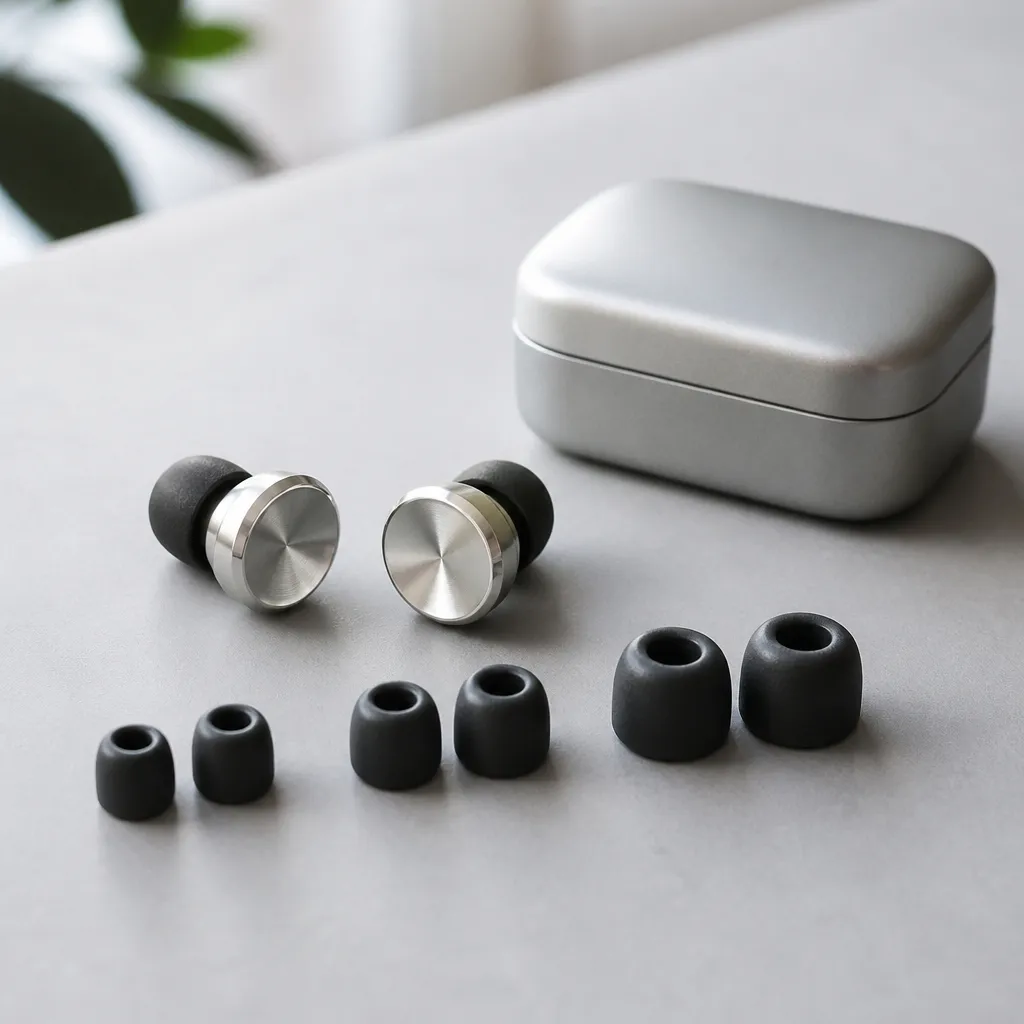
The materials overlap more than the marketing suggests. Foam, silicone, and pre-molded designs show up in both aisles. What separates them is the testing behind the rating, the expected wear time, and the consequence of a poor seal. A leak on a sleep plug means a restless night. The same leak on a stamping line can mean permanent hearing loss over a career.
Hearing protection is usually grouped into five categories: disposable foam, pre-molded reusable, semi-insert or banded, earmuffs, and custom-molded plugs. Consumer products mostly sit in the pre-molded and reusable group, while industrial programs draw from all five. Knowing which group a product belongs to tells you more about its real performance than the packaging does.
The Noise Reduction Rating, or NRR, is the number printed on most US hearing protection packaging. It is a population average from laboratory testing, and it assumes the wearer gets a near-perfect fit. Real workplaces rarely meet that assumption, which is why the number needs adjusting before you use it to plan protection.
Two plugs can carry different NRR values and still perform similarly in a real ear, because the rating reflects a controlled test rather than an everyday wearer. A higher number is useful for comparing products tested the same way. It tells you very little about how a plug will behave in your ear on a Tuesday afternoon.
The practical danger is overconfidence. A worker in a 100 dB environment wearing an NRR-33 plug may expect to be protected down to 85 dBA. If the fit is poor, that worker may actually be receiving something closer to 90 to 95 dBA. That gap is the reason field estimates matter more than the label.
NIOSH recommends derating the labeled NRR by 50% or more to estimate field attenuation for earplugs. Insertion-dependent devices are hit hardest, because their performance depends on the user getting the seal right every time. Earmuffs tend to hold their performance more consistently, although they offer less maximum attenuation than a well-fitted custom plug.
Our own rated figure of approximately 32 dB is measured under lab conditions, and it assumes the right tip size is seated correctly. Plan around a lower real-world number, and use the rating as a comparison point, not a guarantee.
A rating describes what a plug can do on a good day with a good fit. Your protection plan has to cover the average day with an average fit.
Most field failures are not caused by the plug. They are caused by the person wearing it. A foam plug that is not rolled tightly will not expand to fill the canal, and a pre-molded plug pushed in at the wrong angle will leak around the edge. Both problems are invisible until someone checks.
Three tip sizes sounds generous until you realize that the wrong size guarantees a leak. Tips that are too small cannot seal, and tips that are too large cause discomfort and encourage people to pull them out. The right test is simple: insert the plug, hum or speak, and check whether your own voice sounds unusually loud or boomy. That usually signals a leak or a plug seated too shallowly.
For foam, roll the tip into a thin cylinder, pull the top of your ear up and back to straighten the canal, insert the plug, and hold it in place while it expands. For pre-molded designs, the same up-and-back pull applies, but the plug should sit flush and not stick out far enough to rub. Rushed insertion is the most common reason a rated plug performs like an unrated one.
Behavior matters as much as technique. Soundtrace’s guide cites NIOSH 2021 data showing that 53% of noise-exposed workers do not consistently wear hearing protection devices. A plug that stays in the bag will never protect anyone, which is why comfort and fit are safety features, not nice-to-haves.
Pro tip: Ask a supervisor or safety officer to observe your insertion once. Most people have been inserting plugs slightly wrong for years, and a two-minute check can fix a seal that has been leaking since the first day on the job.
Consumer ear plugs are not a lesser product. They are optimized for a different set of problems, and in those situations they often beat industrial alternatives. The main priorities are low pressure, a smaller body that does not press against the jaw while you sleep, and a tip shape that does not feel like a foreign object after six hours.

If you wake up at a passing truck or a partner’s snoring, your goal is not maximum attenuation. Your goal is to block enough sound that the brain stops treating it as a threat. A well-fitted consumer plug with a moderate rating and a comfortable tip often does that job better than a heavy-duty plug that leaves you feeling the pressure every time you turn over.
Light sleepers should also be realistic. A bedroom plug will not silence a jackhammer next door, and it will not make a loud household bearable if the sound is mostly low frequency. Pick a plug for the noise you actually live with.
Travel exposes you to a different pattern: short bursts of high noise, long stretches of mixed sound, and a lot of getting in and out of the plugs. Reusable designs suit this well because they are compact, easy to clean, and quick to reinsert. The trade-off is that you must carry the tips and check their condition before a long flight.
The same logic applies to shared hotel rooms and open-plan offices. You are protecting your sleep or concentration, not guarding against a regulated exposure limit. That distinction matters because it determines how much you should trust the rating on the box.
Most buyers compare products by price per pair, but the more useful comparison is how each setup handles your actual exposure. The table below lines up three common options that people choose between, and it shows where each one earns its keep and where it fails.
| Option | Where It Fits | Where It Falls Short |
|---|---|---|
| Disposable foam plugs (industrial) | Constant high noise on a full shift, especially where fit training is already in place | Single use creates waste and recurring cost; protection depends heavily on each insertion |
| Reusable metal-bodied plugs with foam tips (consumer premium) | Sleep, travel, commuting, and occasional loud settings once the rating and fit have been checked | Needs regular tip replacement and is not a substitute for a workplace program where one is required |
| Earmuffs | Intermittent exposure, quick donning, and situations where a supervisor needs to see protection in use | Bulky, warmer to wear, and the seal can break with glasses or facial hair |
The reusable row is the one buyers most often misread. A reusable plug can be an excellent choice for a commuter or a light sleeper, but it should not be assumed to meet a workplace requirement just because it is durable. Check the rating, the test method, and whether your employer accepts it before you rely on it on the job.
The right answer depends on who sets the rules for your exposure. In a regulated workplace, the program decides, and your job is to follow it. Outside that setting, you have more freedom, but the decision still needs to be deliberate rather than based on what was cheapest at the pharmacy counter.
Use the protection your program specifies, fitted and checked the way your safety team teaches. If you prefer a different style, such as a reusable plug for comfort, ask whether it has been approved as an alternative before you switch. Guessing at compliance is not a defense if something goes wrong later.
Start with a plug that has a labeled rating and a clear test method, then derate that number before deciding whether it covers your exposure. If the noise is constant across the shift, foam or a rated pre-molded plug is usually the practical choice. If your exposure is steady and long term, ask an audiologist about custom-molded plugs, which give the most consistent fit.
A reusable consumer plug is often the better buy. Prioritize comfort for the hours you will wear it, choose a tip size that seals without pressure, and keep a spare set of tips. Do not use a sleep plug as a stand-in for workplace protection when you are on a loud shift, because the rating and wear design were not built for that job.
Hygiene decides how long a plug keeps its seal, and the seal is the entire point. Earwax, skin oil, and grit from the job all reduce the tip’s ability to expand and conform to the canal. Wipe reusable bodies after each use, keep them in a dry case, and inspect tips for hardening, cracks, or permanent flattening.

Foam tips on our reusable design should be replaced every 6 to 8 weeks, or sooner if they feel stiff, discolored, or no longer seal. Disposable foam should be thrown away after a shift in a dirty environment or once it gets wet, torn, or contaminated. Replacing a tip costs far less than replacing a hearing loss claim.
Use mild soap and water on the body, then let it dry fully before storing it. Avoid alcohol wipes on foam, which can dry the material and change how it expands. Never store wet plugs in a sealed case, because moisture encourages buildup and odor.
Pro tip: Mark the date on your case when you replace the tips. A simple note on the lid prevents the common habit of using worn tips for months because nobody remembered when they were changed.
The first mistake is buying by price per pair instead of by fit and rating. The second is assuming that a plug which is comfortable at a desk will also hold up in a loud workshop. Comfort is a useful indicator of fit, but it does not measure attenuation.
Another frequent error is treating noise cancelling headphones as hearing protection. Headphones can reduce some background noise, but they do not block sound in the way a sealed plug or muff does, and they can mask warning sounds you need to hear. Keep headphones for listening, and use earplugs or earmuffs when the noise itself is the hazard.
Finally, many people wear one size for every situation. Ears change, and a tip that sealed well last year may leak after a cold or a change in weight. Recheck the fit occasionally, and do not assume a size that once worked still does.
Only if the plug’s rating is adequate for your exposure, your employer’s hearing program accepts it, and you have checked the fit. Sleep plugs are designed for comfort and low intrusion, so they should not be your default for a loud shift without that verification.
NRR stands for Noise Reduction Rating. It is a laboratory average of how much sound a plug blocks under ideal fit. Real-world protection is usually lower, so field estimates typically reduce the labeled number by 50% or more.
A higher number is better only when you are comparing products tested the same way and the plug actually fits you. A high-rated plug with a poor seal can perform worse than a moderate-rated plug that seals well.
If you are exposed to loud noise for most of a shift, if your employer provides a hearing program, or if people need to raise their voices to be heard at arm’s length, you should use a rated and fit-checked plug. When in doubt, get a hearing test and ask a safety professional to assess your exposure.
They can be, but the answer depends on the rating, the tip design, and how well the plug fits your ear. Disposable foam often achieves a high labeled rating, but it still depends on correct insertion. Neither category is automatically better without a fit check.
For our reusable design, replace foam tips every 6 to 8 weeks, or sooner if they harden, discolor, or stop sealing. Disposable foam should be replaced after each dirty or wet shift.
Have you switched from a sleep plug to a workplace-rated plug, or found a fit problem you did not expect? We would like to hear what you learned, so share your experience with us through the contact page on attenu8.co.

