


 0

You finish a 10-hour night shift, drive home in broad daylight, and crawl into bed while the rest of the world is mowing lawns, running deliveries, and letting their kids play outside. If you are a shift worker trying to sleep during the day, noise is not just annoying. It is physiologically working against you. Studies consistently show that daytime sleep is shorter, lighter, and more fragmented than nighttime sleep, even when the person is genuinely exhausted. Choosing the right earplugs for shift workers is not a comfort upgrade. It is a health decision. This guide explains exactly what to look for, what actually works, and why a premium pair of reusable earplugs beats a bag of disposables every single time.
According to research cited by the American College of Emergency Physicians, daytime sleep while working night shifts is routinely impacted by reduced sleep quality and duration, increased sleep latency, and fragmented sleep. This is not just about noise. Your circadian rhythm is actively signaling your body to stay awake during daylight hours, and external sounds amplify that problem considerably.
The scale of the issue is significant. According to the US Bureau of Labor Statistics, roughly 15 to 20 million American workers work nights or rotating shifts, representing a meaningful share of the entire adult workforce. Research estimates that up to 62% of night-shift workers complain of short sleep duration. That chronic sleep debt accumulates quickly, and its effects go well beyond tiredness. Shift work sleep disorder is associated with increased risks of cardiovascular disease, metabolic disorders, gastrointestinal problems, mood disturbances, and reduced cognitive performance.
Noise is one of the few variables a shift worker can actually control. And it is worth controlling properly.
| Key Insight | Explanation |
|---|---|
| 32dB noise reduction is the target for daytime sleep | Daytime ambient noise levels are significantly higher than nighttime. A high-NRR earplug at approximately 32dB gives you meaningful attenuation against traffic, voices, and household activity. |
| Disposable foam fails daily users quickly | Single-use foam earplugs were designed for occasional industrial use. Used every day, they compress unevenly, accumulate bacteria, and stop forming a reliable seal within days. |
| A hard earplug body causes real pain for side sleepers | Many shift workers sleep on their side. A rigid or bulky earplug presses against the ear canal and pillow, causing soreness that disrupts sleep regardless of noise reduction rating. |
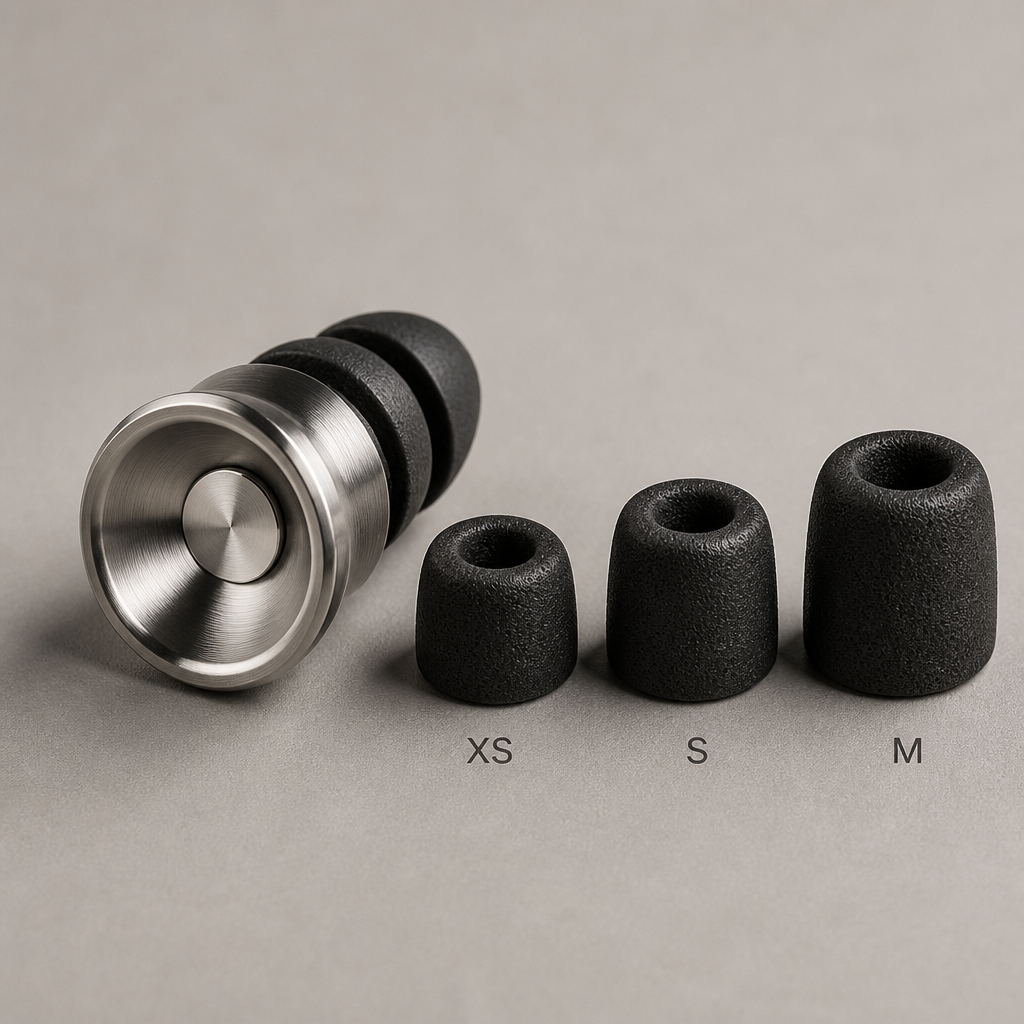
| Multiple tip sizes are essential, not optional | Ear canals vary significantly between people. An earplug that does not seal properly loses most of its rated noise reduction. Three tip sizes (XS, S, M) allow a proper, comfortable fit for nearly every user. |
| Reusable earplugs save money and reduce waste | A pair of premium reusable earplugs with replaceable foam tips every 6-8 weeks costs a fraction of buying disposable packs weekly. For a daily shift worker, this adds up fast. |
| Earplugs work best as part of a layered noise strategy | Combining earplugs with other noise-reduction measures (white noise, acoustic curtains) produces better results than either alone, particularly against low-frequency rumble. |
| Consistency of use matters more than perfection | The best earplug is the one you will actually wear every sleep session. Comfort and ease of insertion determine long-term use more than any single specification. |
Not all earplugs are built for the specific demands of a shift worker sleeping in a noisy, sunlit environment during peak daytime hours. There is a short list of features that genuinely matter, and a longer list of marketing terms that do not.
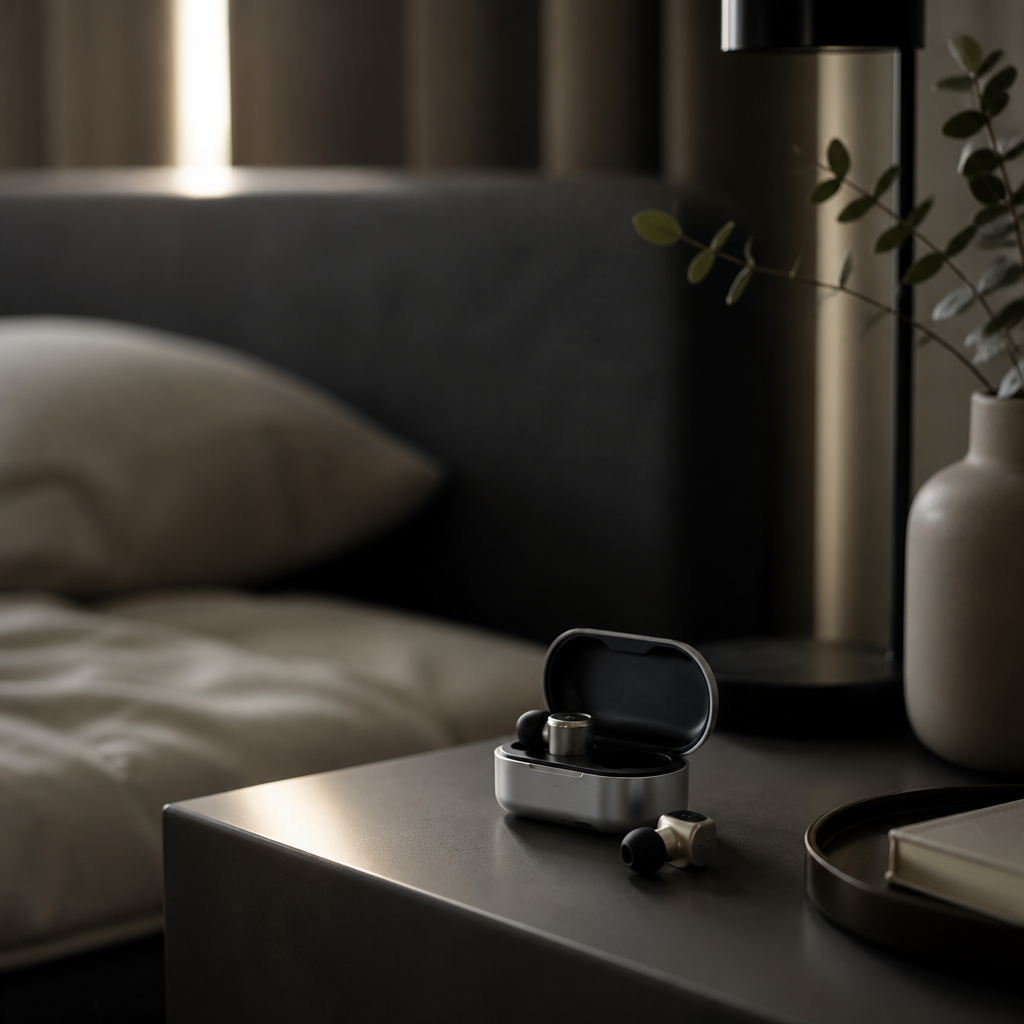
Look for an NRR (Noise Reduction Rating) of 30dB or higher for daytime sleep. Daytime ambient noise, including traffic, construction, lawnmowers, and children, regularly exceeds 70dB. A 32dB noise reduction rating brings that down to a manageable level that allows the brain to stay in deeper sleep stages without being jolted awake. This is the rating ATTENU8 earplugs are engineered to deliver, placing them at the high end of what is appropriate for sleep use without over-isolating the wearer.
This is where most generic earplugs fail shift workers. A thick, protruding earplug body is tolerable sitting upright. It becomes a pressure point the moment your head hits a pillow on its side. ATTENU8’s concave aluminium body sits flush rather than protruding, which means side sleepers are not fighting a lump pressed between their ear and the pillow for hours at a stretch.
Soft memory foam tips conform to the individual ear canal shape and hold a seal without the wearer needing to constantly re-insert. The ATTENU8 design comes with XS, S, and M tip sizes precisely because a one-size earplug is genuinely not a good fit for most people. A poor fit does not just reduce comfort, it directly reduces the effective noise attenuation you receive. Using the wrong size can cut your actual noise reduction by 10dB or more.
Pro tip: To find your correct tip size, insert each size and hum quietly. The size that produces the most resonance in your own voice is the one forming the best seal in your ear canal. Start with S if you are unsure.
Shift workers use their earplugs every single day, not occasionally. A disposable foam earplug used daily accumulates ear wax, compresses unevenly, and degrades its seal within a few uses. A metal-bodied earplug with replaceable foam tips solves both problems at once. The body stays clean, durable, and consistent. The tips are replaced every 6-8 weeks, ensuring a fresh seal without the cost or waste of replacing the entire unit.
Earplugs are your most direct tool for blocking daytime noise, but they work best inside a layered environment designed to reduce the total sound load before it reaches your ears. Think of it as building concentric rings of noise control around your sleep space.
Noise, even if it does not fully awaken you, will alter sleep cycles and reduce the restorative quality of sleep. Shift workers experience this effect continuously and cumulatively. Reducing the noise burden at every layer is not overkill. It is necessary maintenance for a functioning sleep environment.
Seal gaps under doors and around windows with acoustic weatherstripping. Thick curtains or acoustic panels absorb mid-to-high frequency sounds like voices and traffic. A white noise machine or a steady brown noise source played at low volume can mask the irregular, unpredictable sounds that are most likely to trigger arousal, such as a door slamming or a dog barking. These sounds are difficult for earplugs alone to fully mask because they are sudden and broadband.
This is where your earplugs sit. At 32dB of noise reduction, a quality earplug is doing the heavy lifting of bringing residual room noise down to a level your sleeping brain can ignore. The combination of a treated room and high-performance earplugs is meaningfully more effective than either alone, particularly for low-frequency sound like traffic rumble that passes through walls relatively easily.
Pro tip: If you live in a particularly noisy area (near a highway, flight path, or construction zone), combine earplugs with a white noise machine set to brown noise rather than white. Brown noise has more low-frequency energy and does a better job masking rumble and bass-heavy outdoor sounds.
There are three main categories of earplug available to shift workers for daily daytime sleep use. Here is an honest comparison of how they perform in real, everyday conditions.
| Earplug Type | Best Suited For | Key Limitations for Daily Shift Workers |
|---|---|---|
| Disposable foam | Occasional, high-noise industrial environments. Inexpensive entry point. | Degrades quickly with daily use. Accumulates bacteria. Uncomfortable for side sleepers due to expansion pressure. Generates significant waste over weeks of use. Inconsistent seal as foam ages. |
| Soft silicone or wax plug-style | Light sleepers sensitive to in-canal pressure. Occasional travel use. | Generally lower NRR (22-27dB), which may be insufficient for noisy daytime environments. Less consistent seal than foam. Some styles can work loose during sleep. |
| Premium reusable with replaceable foam tips (e.g., ATTENU8) | Daily shift workers needing consistent 32dB noise reduction with long-term comfort. | Higher upfront cost than disposable foam. Tips need replacement every 6-8 weeks, though this is minimal ongoing cost compared to daily disposable use. |
In practice, the disposable foam option is tempting purely on unit price, but it is the most expensive over a month of daily use and produces the most inconsistent results. The reusable metal-body design wins on every practical metric for a daily shift-work user: consistent seal quality, hygiene, side-sleeper comfort, and long-term cost.
Earplugs handle the noise problem directly. But if the rest of your sleep environment and pre-sleep routine is working against you, even the best earplugs will only get you so far. These are the night shift sleep tips that make a measurable difference and the ones that are mostly theater.
Blackout curtains with sealed edges are non-negotiable. Light suppresses melatonin production regardless of your level of exhaustion. Standard curtains with gaps around the sides let in enough light to keep your circadian clock confused. Use curtains with a 99-100% blackout rating and consider tape or magnetic strips to seal the edges if gaps remain.
Keeping your bedroom temperature in the range of 16-19 degrees Celsius (60-67 degrees Fahrenheit) actively supports the drop in core body temperature that accompanies sleep onset. This is one of the few environmental factors with consistent research support, and it costs nothing beyond a habit adjustment.
Consistent sleep scheduling, even on days off, reduces the cumulative misalignment between your body clock and your environment. Varying your sleep window by more than an hour or two on rest days effectively resets the disruption you spent the rest of the week trying to minimize.
Leaving screens on for background noise is counterproductive. The visual flicker and irregular audio spikes from television or video content produce micro-arousals in ways that steady white noise does not. Use a dedicated white noise device or a simple fan instead.
Posting “Day Sleeper” signs on your door has limited practical effect unless you also communicate with the specific people in your household or building who are actually disrupting your sleep. The sign does not reach the neighbors. A direct conversation, and a set of quality earplugs, does.
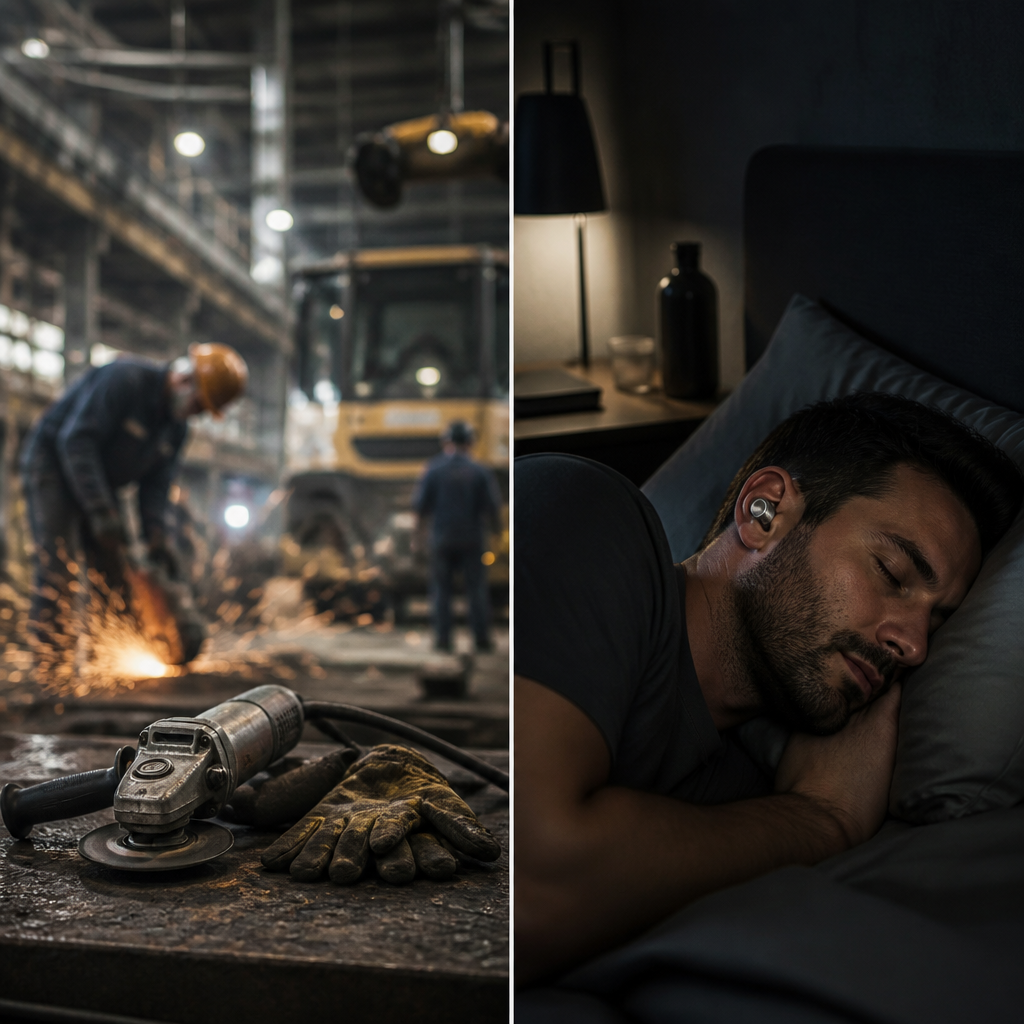
Shift workers in loud industries face a compounding challenge: they need hearing protection at work and noise reduction for sleep. Using the same premium reusable earplug for both contexts, or having a dedicated pair for each, is a more sustainable approach than constantly cycling through disposable foam. ATTENU8’s design specifically addresses this by pairing a durable aluminium body with soft memory foam tips that protect comfort across extended wear periods, whether that is an 8-hour shift or an 8-hour sleep window.
A common mistake is choosing earplugs based on NRR rating alone without considering insertion comfort and daily wearability. A 33dB foam earplug that you stop wearing after two weeks because it causes ear soreness delivers zero noise reduction. A 32dB reusable earplug you can wear comfortably every day delivers its full rated benefit, compounded across months of consistent use.
Yes, provided you keep them clean and replace worn components. The main risks with daily earplug use are ear wax buildup and hygiene issues, both of which are directly addressed by reusable designs with replaceable tips. With a metal-bodied earplug like ATTENU8, the body can be wiped clean regularly, and foam tips are swapped every 6-8 weeks so you are never sleeping on degraded, bacteria-laden material. Wearing clean, well-fitting earplugs every day poses no inherent risk to your hearing health.
Aim for a minimum of 28-30dB NRR, with 32dB being the practical sweet spot for daytime sleep in a typical residential environment. Daytime ambient noise in suburban and urban areas commonly sits between 60-75dB, including traffic, lawn equipment, children, and general household activity. A 32dB reduction brings that into the range where your sleeping brain can stay in deeper sleep stages rather than being repeatedly pulled toward lighter, more fragmented sleep.
Yes, but earplug design matters enormously here. Bulky or protruding in-ear designs press against the ear canal when your head is on a pillow, creating pressure and soreness that disrupts sleep over a long session. ATTENU8’s concave aluminium body sits flush rather than protruding, which specifically addresses this problem. Memory foam tips also compress against pillow pressure rather than transmitting it directly to the ear canal wall.
For daily use, memory foam earplug tips should be replaced every 6-8 weeks. Daily insertion, removal, and the natural accumulation of ear wax and skin oils gradually degrades the foam, reducing both its sealing ability and its hygiene. With ATTENU8 replacement tips, the process is straightforward and inexpensive because you are only replacing the consumable component, not the entire earplug. This is a significant practical advantage over disposable designs that require purchasing an entirely new unit.
No earplug blocks all noise, and a 32dB NRR earplug is not intended to. At that level, a standard alarm clock or phone alarm set to a reasonable volume remains audible and effective. What changes is the baseline of ambient noise that surrounds your sleep, which is the traffic, voices, appliances, and background activity that pull you out of deep sleep stages repeatedly. If you are genuinely concerned about sleeping through alarms, place your phone closer to your head or use a vibration-based alarm as a backup. Most shift workers find this is not a practical problem with standard 32dB earplugs.
Earplugs attenuate sound entering the ear canal across a broad frequency range. A white noise machine works differently: it creates a consistent ambient sound that masks the sudden, irregular noises most likely to cause micro-arousals, such as a door slamming or a vehicle backfiring. Used together, they address complementary problems. Earplugs reduce the overall noise floor. White noise smooths out the unpredictable peaks that earplugs alone cannot fully neutralize. For shift workers in particularly noisy environments, the combination is meaningfully more effective than either alone.
Have you found a particular combination of noise-blocking strategies that finally made daytime sleep work for you? Share your experience below. What you have tried, and what actually helped, could make a real difference for another shift worker reading this.
Roughly 20% of the workforce in industrialised countries works rotating or permanent night shifts, and the single biggest complaint is not fatigue during the shift itself. It is the inability to sleep when the rest of the world is wide awake and making noise. Lawnmowers, traffic, neighbours, delivery drivers, barking dogs – daytime sleep is a war against your environment. Ear plugs for shift workers are not a nice-to-have; they are a core tool for protecting the only recovery window you have. This guide covers exactly how to use them effectively, what to look for, and why getting this wrong costs you more than a bad nap.
| Key Insight | Explanation |
|---|---|
| 32dB attenuation is the practical minimum for daytime sleep | Daytime ambient noise routinely hits 55-70dB outdoors. You need to drop that to below 40dB to reach the threshold where sleep onset becomes possible. Low-rated plugs simply do not get you there. |
| Fit matters more than the NRR number on the box | A plug rated 33dB worn incorrectly delivers closer to 15dB of real-world attenuation. Consistent fit, achieved through proper insertion and the right tip size, is where the actual protection comes from. |
| Disposable foam plugs degrade after a single use | The foam compresses permanently over repeated nights, reducing noise reduction noticeably by day three or four. Shift workers using the same pair all week are sleeping on compromised protection without realising it. |
| Reusable metal-bodied plugs outlast disposables by months | Products like ATTENU8’s aluminium-bodied plugs require only foam tip replacement every 6-8 weeks. The structural attenuation performance stays consistent across that entire period. |
| Daytime noise is spectrally different from night noise | Traffic and construction peak in mid frequencies (500Hz-2kHz), which is exactly where human hearing is most sensitive. Ear plugs with good mid-frequency attenuation are specifically valuable for day sleepers. |
| Three tip sizes dramatically change comfort across a full sleep cycle | Ears that feel fine at insertion often become sore after two or three hours if the tip size is wrong. XS, S, and M options let each individual find the size that stays comfortable through a full 7-8 hour sleep. |
| Side-sleeping puts lateral pressure on the plug body | Hard plastic bodies can cause pain and early removal during the night. A low-profile metal body with a concave design reduces the contact surface and makes side-sleeping genuinely sustainable. |
The circadian rhythm is not a polite suggestion. Your body runs on a deeply wired biological clock that treats daylight as a wake signal and darkness as a sleep signal. When you are a night shift worker, you are asking your brain to override millions of years of evolutionary programming every single day.
Noise compounds the problem directly. Research published through the National Institutes of Health shows that even low-level noise – sounds below the threshold of conscious awakening – increases cortisol production and fragments sleep architecture. You do not need to be woken up fully for noise to devastate your rest. Micro-arousals triggered by irregular sounds (a truck, a door, a conversation outside) pull you out of slow-wave and REM sleep without you ever registering it consciously.
The result is a shift worker who sleeps seven hours but recovers as if they slept four. Daytime sleep noise is not just annoying. It is medically consequential.
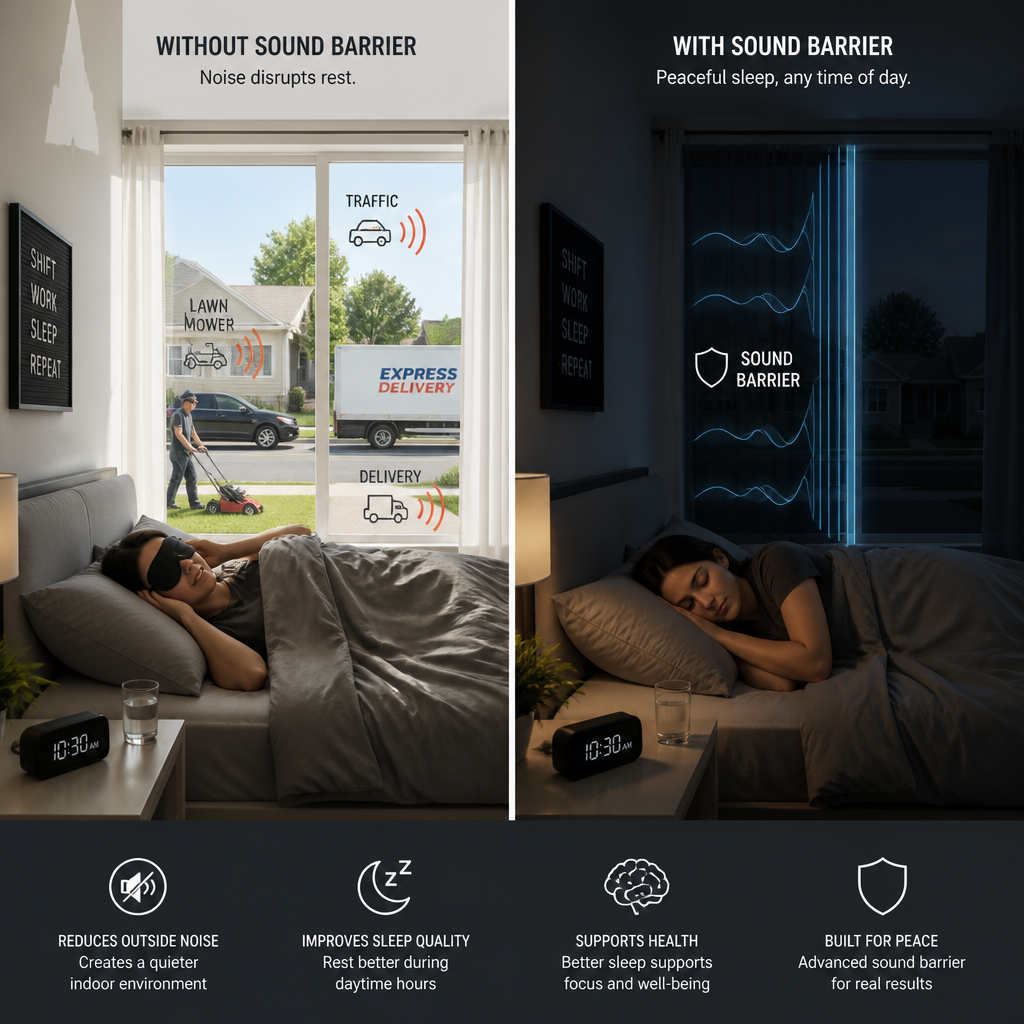
The mechanism is straightforward. Sound waves enter the ear canal, trigger the auditory processing system, and even during sleep, the brain continues to evaluate those sounds for threat relevance. This is a survival function. It kept your ancestors alive. For a nurse trying to sleep at 10am on a Tuesday while a neighbour uses a leaf blower, it is a liability.
Irregular, unpredictable sounds cause far more sleep disruption than steady background noise. A constantly running fan is easy for the brain to habituate to. A dog that barks once every eight minutes is not. The brain keeps processing it as a potential signal.
Construction noise, traffic surges, voices, and phone notifications are all high in irregularity. These are precisely the sounds most common during daytime hours in residential areas, and they are exactly what shift workers face every morning when they try to sleep after a night shift.
Sleep deprivation from noise does not hit physical performance first. It hits cognitive performance. Reaction time, decision-making accuracy, and emotional regulation all degrade before gross motor function does. For shift workers in healthcare, manufacturing, transport, or security, that is not an abstract concern. It is a direct occupational safety issue.
A study from Harvard Medical School’s Division of Sleep Medicine found that workers with chronic sleep disruption showed cognitive impairment equivalent to being legally drunk after just 17 hours of wakefulness. Shift workers regularly operate well past that threshold.
“Sleep disruption from environmental noise is not a comfort issue. It is a public health issue. The downstream effects on metabolic, cardiovascular, and cognitive health are well-documented and dose-dependent.” – Dr. Charles Czeisler, Harvard Medical School Division of Sleep Medicine
The market for ear protection is large, but most of it is designed for industrial hearing conservation during active work hours, not for sleep. The requirements are genuinely different, and conflating the two leads to poor choices.
The Noise Reduction Rating (NRR) system in the US and the Single Number Rating (SNR) used in Europe both measure attenuation across frequencies. For daytime sleep in a typical residential environment, you need a minimum of 30dB attenuation to meaningfully reduce the acoustic load on your auditory system. 32dB is the practical target that covers most real-world daytime noise sources.
Anything rated below 28dB is not adequate for shift workers in urban or suburban environments. Products marketed primarily at concerts or light office noise will not perform here.
Industrial ear plugs are designed to stay in an ear canal during physical movement and variable temperatures. Sleep ear plugs need to stay in during lateral pressure from a pillow. These are different engineering problems.
A concave aluminium body, like the design used by ATTENU8, sits lower in the ear than a protruding foam plug, which means there is less leverage for a pillow to push against. In practice, this allows side-sleepers to maintain a consistent seal throughout the night without repositioning.
Hard plastic bodies create a pressure point that becomes painful after 2-3 hours. This is the most common complaint among shift workers who try standard foam plugs and give up. The plug is uncomfortable, they remove it at 3am, and the noise wakes them at 5am. The solution is not to endure discomfort. It is to choose a plug designed for extended wear.
Human ear canal dimensions vary significantly. A plug that fits one person perfectly creates no seal in another person’s ear, delivering effectively zero noise reduction regardless of the product’s rated NRR. Multiple tip size options are not a premium feature. They are a basic functional requirement for any product claiming to work for sleep.
ATTENU8 includes XS, S, and M memory foam tips with each pair, which covers the vast majority of adult ear canal sizes. The memory foam material conforms to individual canal geometry, which improves both the acoustic seal and long-term comfort compared to rigid tips.
Pro tip: If you wake up with your ear plugs on the pillow rather than in your ears, the tip size is almost certainly wrong. A properly fitted plug stays in place throughout a normal sleep cycle without adhesive or retention straps.
There are three main categories of ear plug that shift workers consider. Each has genuine trade-offs worth understanding before committing to a routine.
| Type | Real-World Performance for Daytime Sleep | Practical Drawbacks |
|---|---|---|
| Disposable foam plugs (e.g., 3M, Howard Leight) | Good NRR on first use (up to 33dB). Widely available, very low per-unit cost. Soft enough for initial comfort. | Foam compresses and loses effectiveness after 2-3 uses. Daily replacement adds up to significant cost over months. No size options. Generates considerable single-use plastic waste. |
| Acoustic filter plugs (e.g., Loop, Flare Audio) | Designed for concert-level noise reduction, typically 18-27dB. Good for reducing overall volume without full blockage. Comfortable for short periods. | Attenuation levels are too low for daytime sleep in noisy residential areas. Designed to preserve sound quality, not maximise blockage. Not purpose-built for extended sleep wear. |
| Premium reusable metal-bodied plugs (ATTENU8) | Consistent 32dB attenuation across the product lifespan. Aluminium body with concave profile designed for side-sleeping. Three memory foam tip sizes. Tips replaced every 6-8 weeks, body lasts indefinitely. | Higher upfront cost than disposables. Requires tip replacement on a schedule. Not suitable for use during active work in loud industrial environments (designed for sleep and travel use). |
The honest comparison here is not about which product has the highest rated NRR on a spec sheet. It is about which product delivers consistent, comfortable attenuation night after night for someone sleeping on a non-standard schedule. Disposables fail at consistency. Acoustic filter plugs fail at absolute attenuation. Reusable premium plugs fail only at upfront cost, which amortises quickly over weeks of daily use.
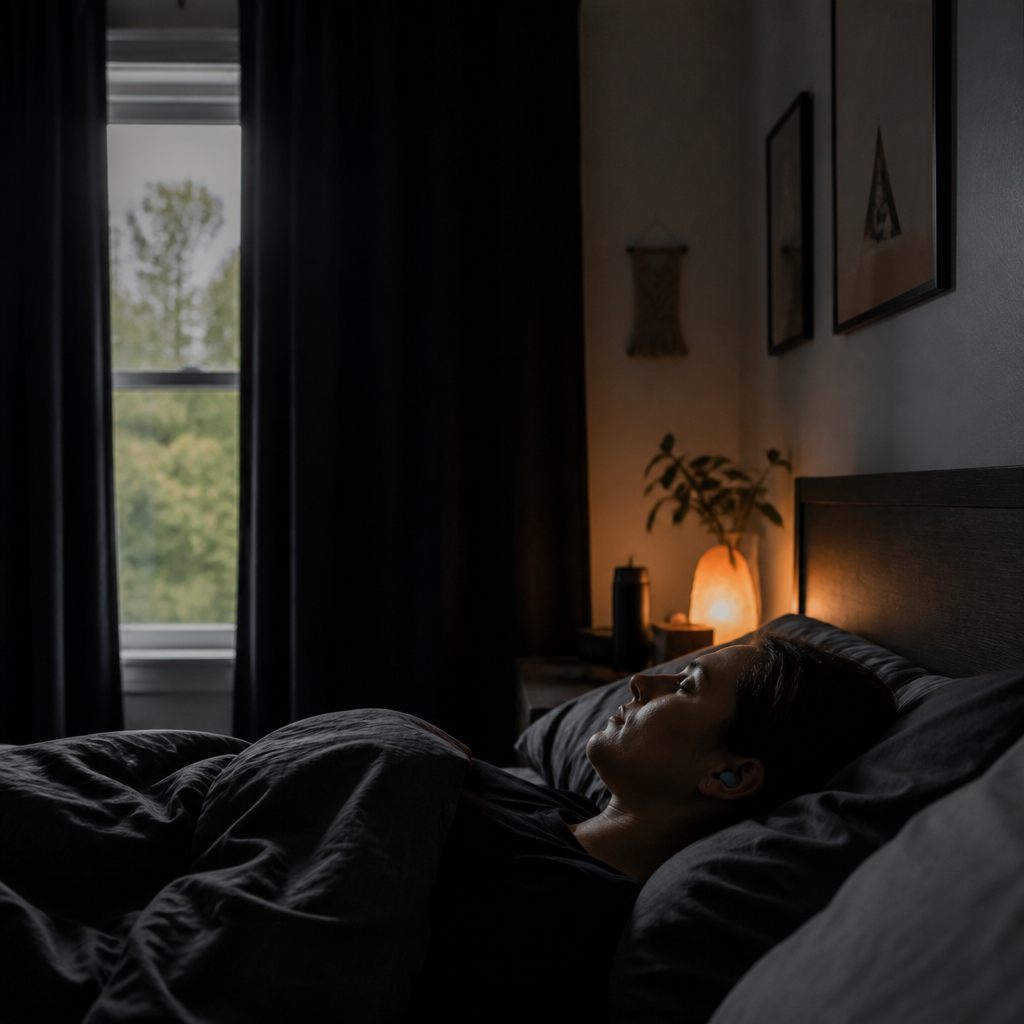
Ear plugs are a necessary component of a daytime sleep setup, but they work best as part of a layered approach. Treating them as the only intervention is like installing a deadbolt but leaving the window open.
Light is the primary circadian disruptor, and noise is the primary sleep-architecture disruptor. Both need to be addressed, but the order of priority depends on your specific situation. If your room is already reasonably dark and you are still sleeping poorly, noise is almost certainly the remaining variable. If you have never properly blackouted your room, start there and add ear plugs simultaneously.
Blackout curtains that also have sound-dampening properties (heavy lined curtains rather than thin blackout fabric) address both problems partially. They are not a substitute for ear plugs, but they reduce the workload on your acoustic protection.
White noise machines and fans are sometimes recommended as alternatives to ear plugs. The mechanism is different and the outcomes are different. Masking adds a steady-state sound to raise the ambient noise floor, making irregular spikes less perceptually prominent. Blocking physically prevents sound energy from reaching the ear canal.
In practice, masking alone is insufficient for urban daytime environments because the noise spikes (trucks, construction, voices) are too large in amplitude. Masking plus blocking together outperforms either approach alone. A white noise machine running at moderate volume combined with 32dB ear plugs creates an acoustic environment genuinely competitive with a quiet nighttime bedroom.
Pro tip: Set your white noise machine to a volume where you can just barely hear it with your ear plugs inserted. That is the correct calibration point. Louder than that means the machine itself becomes part of the noise problem.
No ear plug eliminates all noise. A physical knock on the door or a smoke alarm will still penetrate. More practically, housemates, partners, and family members making normal household noise are a social problem as much as an acoustic one. A clearly communicated sleep schedule, door signage, and phone settings (such as a custom silent mode from 9am to 5pm) address the variable that ear plugs cannot.
The research on shift worker health is extensive and consistent: sleep quality, not just quantity, determines health outcomes. You can sleep eight hours in a noisy, bright room and recover less than you would from six hours of deep, uninterrupted sleep in a controlled environment.
One of the most counterproductive things shift workers do is eat a full meal immediately after arriving home. Digestion raises core body temperature, which directly inhibits sleep onset. The same applies to vigorous exercise. Light stretching, a low-carbohydrate snack, and a brief wind-down period of 20-30 minutes before getting into bed improve sleep onset speed significantly.
Caffeine half-life is approximately five to six hours. A coffee consumed at 4am is still 50% active in your system at 9-10am when you are trying to sleep. Shift workers who drink coffee throughout the night should stop at least five hours before their planned sleep time.
The biggest mistake shift workers make on their days off is reverting to a conventional sleep schedule. This creates a social jet lag cycle where the body is constantly switching between two incompatible rhythms. Sleeping four hours earlier than your shift schedule on a day off is more damaging than it feels in the moment. Maintaining a consistent anchor time for sleep, even if shifted by only one or two hours, produces better long-term outcomes than full reversal on rest days.
The data consistently shows that rotating shift workers who maintain the most consistent sleep timing across work and non-work days have lower rates of metabolic syndrome, cardiovascular disease, and cognitive decline than those who swing widely between schedules.
Core body temperature needs to drop by approximately 1 to 2 degrees Celsius for sleep onset to occur. Sleeping in a room that is too warm delays this process. The recommended sleep room temperature for most adults is between 16 and 19 degrees Celsius (60 to 67 degrees Fahrenheit). Shift workers sleeping in warm afternoon conditions should use air conditioning or a fan directed away from the body to achieve this ambient temperature.
Hydration matters because mild dehydration increases heart rate and cortisol, both of which impair deep sleep. Drinking 400-500ml of water before sleeping and keeping water available for any mid-sleep wake is a simple intervention that many shift workers overlook.
Yes, provided you maintain basic ear hygiene and replace foam tips on a regular schedule. The risk associated with daily ear plug use comes primarily from reusing foam tips past their effective lifespan, which can harbour bacteria. ATTENU8’s design separates the durable aluminium body from the replaceable foam tips, with tip replacement recommended every 6-8 weeks. This structure makes daily use safe and practical without accumulating earwax buildup or hygiene concerns associated with standard reusable plugs.
For most suburban environments, an NRR of 28-32dB is the target range. Urban environments with regular traffic or construction noise warrant the full 32dB. The key point is that a rated NRR assumes correct insertion. Real-world attenuation is typically 30-50% lower than the rated value if fit is poor. This is why tip size selection and correct insertion technique matter as much as the rating itself.
Yes, with conditions. A standard smartphone alarm at maximum volume generates roughly 75-85dB. After 32dB of attenuation, you would still hear approximately 43-53dB, which is clearly audible. The practical concern is for people who use very quiet alarms or vibration-only alerts. Using a smartwatch with wrist vibration as a backup alongside your standard alarm is a reliable system for shift workers wearing high-attenuation ear plugs.
Loop and Flare Audio products are primarily designed for noise reduction during waking activities, concerts, and social situations where you want to reduce volume without eliminating sound clarity. Their attenuation ratings typically fall in the 18-27dB range. ATTENU8 targets 32dB specifically for sleep, travel, and high-noise environments where maximum blockage is the goal. The aluminium body and concave profile are designed for side-sleeping comfort over 7-8 hour periods, which is not a design priority for lifestyle noise-filter products.
The aluminium body is designed to last indefinitely with normal use. The soft memory foam tips are the only consumable component, requiring replacement approximately every 6-8 weeks depending on frequency of use and individual earwax levels. Three tip sizes (XS, S, M) are included with each pair. Over a one-year period, the total cost of ownership for a reusable pair is substantially lower than purchasing disposable foam plugs daily, even before accounting for the consistency advantage.
This is a real concern for many shift workers, particularly parents or people with dependents. High-attenuation ear plugs do reduce ambient sound substantially, but they do not eliminate all sound. Loud alarms, crying, or a knock at the door will still be audible at 32dB attenuation. For additional reassurance, using a baby monitor or home alert system with visual indicators alongside ear plugs gives you acoustic protection without removing your ability to respond to genuine emergencies.
If you are a shift worker with a specific routine that has helped you get better daytime sleep, share what has worked for you in the comments below. Real-world experience from people living this schedule is more useful than any generalised advice.
We would love your feedback and any insights you would share with others. What perspective would you add?

