


 0

If you lie awake listening to traffic, a snoring partner, or neighbourhood noise, you are not just unlucky. You are dealing with a documented physiological problem. Research into noise and sleep quality makes one thing very clear: your brain never fully switches off its response to sound, even during deep sleep. The noise that does not fully wake you is still doing damage, triggering stress hormones, shifting you into lighter sleep stages, and quietly eroding the recovery your body depends on. This article breaks down exactly what the science says and what you can practically do about it.
| Key Insight | Explanation |
|---|---|
| Your brain stays alert to noise all night | Even during deep sleep, auditory processing continues. Sounds trigger physiological reactions without necessarily causing full wakefulness. |
| Noise pushes you into lighter sleep stages | Environmental noise increases stage 1 (lightest) sleep and reduces slow-wave and REM sleep, the two most restorative stages. |
| Sounds as low as 30 dB can disturb rest | Even relatively quiet noise can affect sleep. A whispered conversation sits around 30 dB. Your bedroom does not need to be loud to be disruptive. |
| Noise activates your stress hormones at night | Nighttime noise triggers adrenaline and cortisol production, elevates heart rate, and raises blood pressure, even without waking you. |
| Sound machines are not a reliable fix | Recent research published in the journal Sleep found that pink noise reduced REM sleep by nearly 19 minutes and worsened outcomes when combined with traffic noise. |
| Earplugs outperform sound masking for deep sleep protection | The same study found that wearing earplugs was far more effective than pink noise at protecting deep, restorative sleep from traffic noise disruption. |
| Noise sensitivity is partly neurological | Research suggests brain rhythm patterns influence how vulnerable an individual is to noise-related awakenings, meaning light sleepers are not imagining it. |
Sleep is not a single state. It is a cycle of distinct stages, each with a different function and a different level of vulnerability to noise. Stage 1 is the lightest, barely distinguishable from wakefulness. Stage 2 is where most of us spend roughly half the night. Slow-wave sleep (stage 3) is the deepest, most physically restorative stage. REM sleep is where memory consolidation, emotional processing, and cognitive recovery happen.
Environmental noise, particularly from traffic and aircraft, has been shown to increase time spent in stage 1 sleep while reducing slow-wave and REM sleep. That trade-off matters enormously. You might technically sleep for eight hours, but if noise keeps pulling you out of slow-wave and REM and pushing you into stage 1, you will wake up feeling like you barely rested. Stage 2 is also where noise is most likely to cause a full awakening, since auditory awakening thresholds are generally lower there than in slow-wave sleep.
One important nuance: most noise-triggered arousals are not remembered. Your brain briefly surfaces, registers the sound, and partially settles again, all without you being consciously aware. This is why many people insist they slept through the noise when their sleep quality data tells a completely different story.
Pro tip: If you consistently feel unrefreshed despite getting enough hours in bed, noise-triggered micro-arousals are a credible cause. You do not need to remember waking up for the disruption to be real.
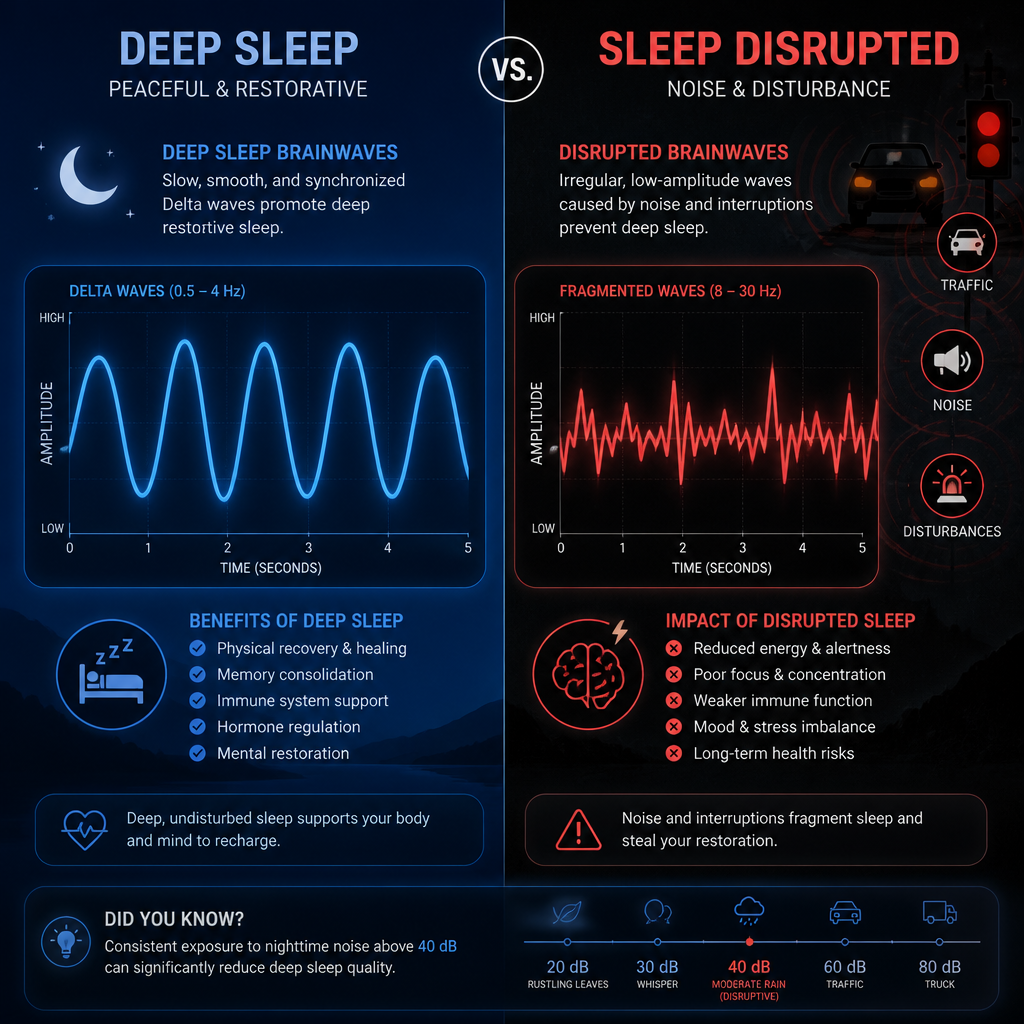
The effects of noise during sleep are not limited to wakefulness. Even sounds that do not cause a full awakening trigger measurable physiological responses. Research has found that a noise of around 48 dB, quieter than the hum of a refrigerator, was 3.4 times more likely to cause a change in pulse wave amplitude, a measure related to blood flow. Sounds above 40 dB produced detectable increases in heart rate.
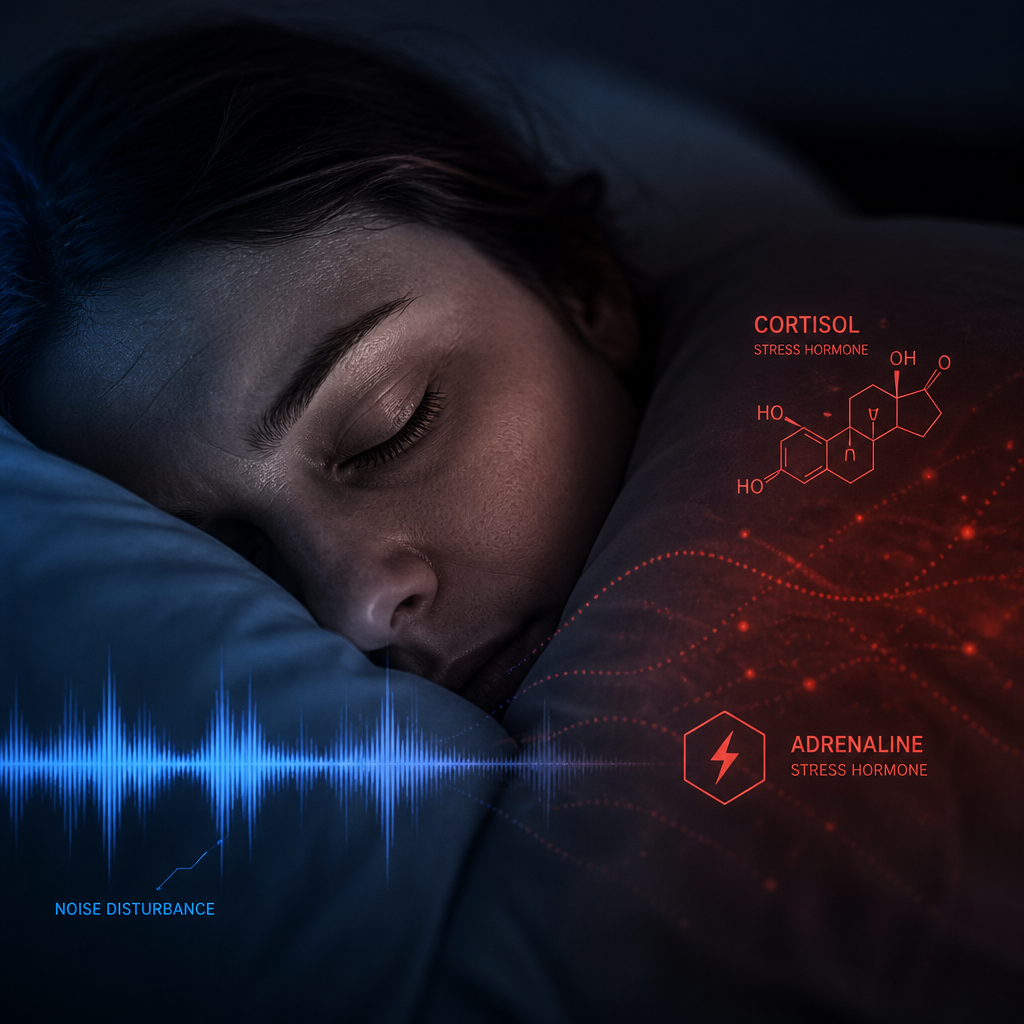
Nighttime noise also stimulates the production of stress hormones including adrenaline and cortisol, and can elevate blood pressure. Researchers have suggested that these responses may be a primitive survival mechanism, the body preparing to respond to a potential threat. That is useful if a predator actually approaches. It is damaging if it happens every time a truck changes gear outside your window.
Chronic exposure compounds the problem. When noise-triggered cardiovascular responses occur repeatedly night after night, research indicates they may increase the risk of hypertension, heart disease, and other adverse health outcomes. This is not a fringe finding. Research has estimated that traffic-related noise alone causes the loss of over one million years of healthy life among Western Europeans annually.
Even when you sleep through the noise, your nervous system does not. Adrenaline, cortisol, elevated heart rate, disrupted blood flow: the body keeps score, even when the conscious mind does not.
Health guidance generally recommends keeping nighttime bedroom noise below 30 decibels to support uninterrupted sleep. For context, busy road traffic runs at roughly 70 to 85 dB, a subway at around 90 dB, and even a conversation in an adjacent room can exceed 30 dB when sound travels through walls. Reaching that 30 dB threshold in a typical urban or suburban bedroom is harder than it sounds.
If you have ever shared a room with someone who sleeps through a thunderstorm while you lie awake at the sound of a dripping tap, you already know that noise sensitivity is not uniform. Research confirms this is not just a personality trait. Brain rhythm patterns, specifically the activity of sleep spindles during stage 2 sleep, appear to play a role in how effectively a person’s brain filters out external sounds during sleep. People with more active sleep spindles show greater resilience to noise disruption.
Age is another significant factor. Studies show that children and older adults are the most vulnerable to sound-related sleep disruption. Emotional salience also matters: a sound with personal significance, such as your baby’s cry, your name, or an alarm, cuts through sleep far more effectively than a neutral sound at the same volume. The brain is not passively receiving noise. It is actively evaluating it.
For genuine light sleepers, this neurological sensitivity is not something that can be trained away easily. It calls for a practical, physical reduction in the noise reaching the ears, rather than an expectation that willpower or adaptation will solve the problem.
Pro tip: If you identify as a light sleeper and you have tried relaxation techniques without much success, focus on the environment first. Reducing the decibel level reaching your ears is a more reliable intervention than trying to change how your brain processes sound during sleep.
Understanding the scale of the problem helps calibrate the solution. Not all noise is equal, and what disrupts sleep is a combination of volume, frequency, unpredictability, and duration. A single loud event is disruptive; repeated unpredictable events across the night are far worse, because the brain cannot habituate to irregular patterns the way it can to constant background sound.
The most common sleep-disrupting noise sources include road traffic, aircraft, snoring partners, neighbours, and environmental sounds like air conditioning or plumbing. In urban settings, it is rare to have a bedroom that stays below 40 dB through the night without active intervention. Even a quiet suburban environment can see regular spikes from passing vehicles, animals, or wind.
Snoring deserves a specific mention because it is uniquely difficult to habituate to. Research on emotional noise shows that personally relevant sounds are harder to filter out, and few sounds are more personally relevant at 2 AM than a partner’s snoring directly beside you. Snoring typically registers between 50 and 70 dB, well above the threshold for disrupting sleep architecture.
There are broadly three categories of approach to managing sleep disruption noise: physical noise blocking, acoustic masking, and environmental modification. Each has a different evidence base and a different practical ceiling.
| Approach | How It Works | Evidence and Limitations |
|---|---|---|
| Ear protection (earplugs) | Physically reduces sound reaching the ear canal. High-quality options with memory foam tips can reduce noise by 25 to 32 dB across a wide frequency range. | Research from the University of Pennsylvania found earplugs outperformed pink noise machines at protecting both REM and deep slow-wave sleep from traffic noise disruption. Most direct evidence of benefit. |
| Sound masking (white, pink, or brown noise) | Adds continuous background sound to reduce the perceived contrast when disruptive noises occur. | A study published in the journal Sleep found pink noise at 50 dB reduced REM sleep by nearly 19 minutes on its own, and worsened sleep further when combined with traffic noise. Popular but overstated in effectiveness. |
| Environmental modification (windows, insulation, room positioning) | Structural changes to reduce external noise entering the room: double glazing, heavy curtains, door seals, changing which room you sleep in. | Double-pane windows can reduce noise by 10 to 20 dB. Effective but expensive and impractical for renters. Best used in combination with ear protection rather than as a standalone solution. |
The practical takeaway is that earplugs, particularly well-fitted ones that maintain a seal throughout the night, represent the most evidence-backed immediate intervention for noise-related sleep disruption. Sound masking is better suited to situations where earplugs are not practical, and even then the evidence for benefit is weaker than most sound machine marketing implies.
For light sleepers and anyone dealing with persistent sleep disruption noise, the goal is not to eliminate every sound from the universe. It is to reduce the spikes, the sudden changes in volume that pull you out of deeper sleep stages. That is where the right ear protection makes a significant difference.
Comfort across an entire night’s sleep is the non-negotiable factor that most people underestimate. A plug that works well for 30 minutes may become painful by hour three, particularly for side sleepers. Foam tips that conform to the ear canal are more comfortable for extended wear than rigid options. Having multiple tip sizes available matters too, because ear canal dimensions vary significantly between individuals, and a poor fit means both discomfort and reduced noise attenuation.
Durability is the second factor. Disposable foam earplugs need to be replaced constantly, accumulate in landfill, and often lose their expansion capacity after a single use. A well-constructed reusable option with replaceable foam tips addresses both the environmental cost and the long-term economics. The ATTENU8 aluminium-bodied earplug is built around exactly this principle: a precision-machined metal body with three sizes of soft memory foam tips (XS, S, and M), delivering around 32 dB of noise reduction with foam tips that only need replacing every six to eight weeks rather than after every use.
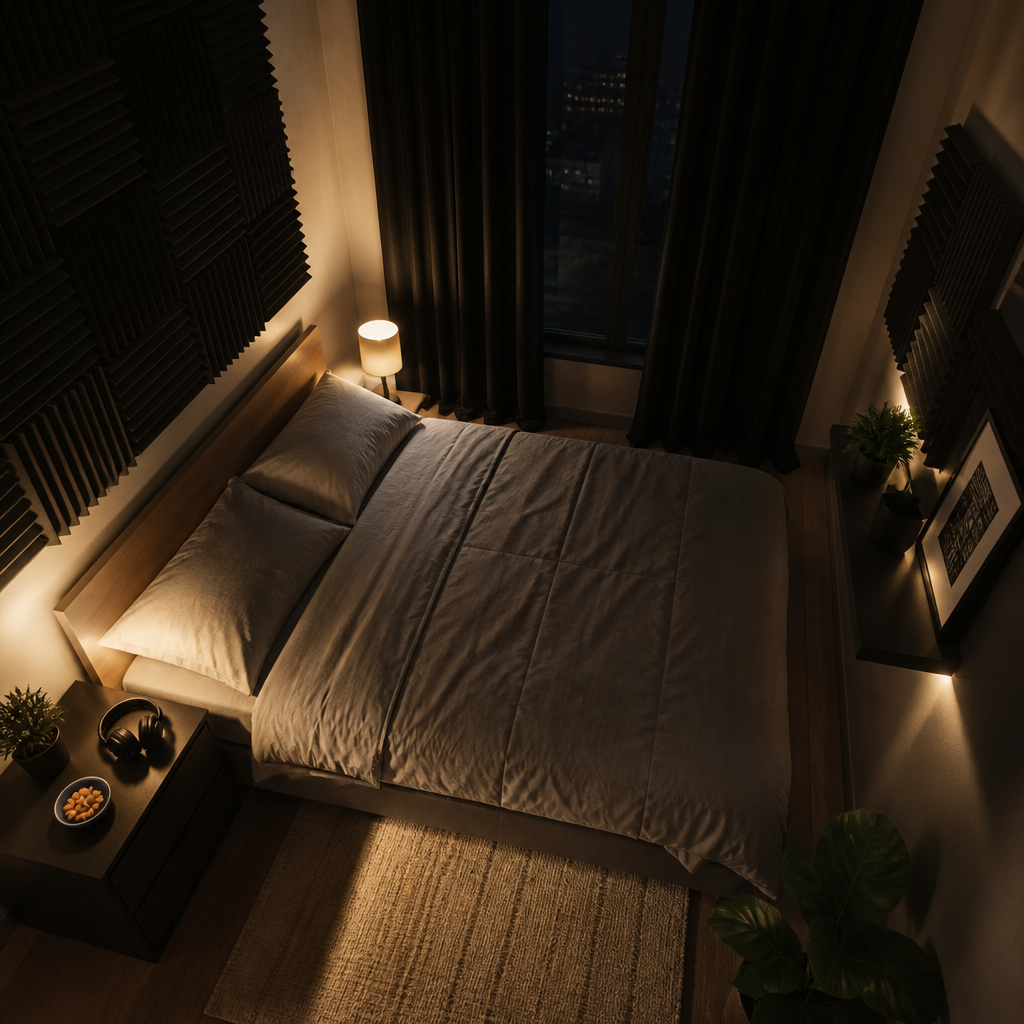
In practice, ear protection works best as the primary intervention, with environmental modifications as a supporting layer. Closing windows, using heavier curtains to absorb sound reflections, and positioning the bed away from the noisiest wall all reduce the baseline noise level before earplugs need to do their work. Start with the physical environment, then add ear protection, and you compound the benefit of both without needing to reach for a sound machine that the evidence suggests may be doing more harm than good.
For people in genuinely loud occupational environments, such as construction or manufacturing, the principle that protects hearing at work applies at home too: sustained noise exposure at levels that trigger physiological stress responses has cumulative consequences. The same discipline that goes into workplace hearing protection should extend to the sleep environment.
Pro tip: If you travel frequently for work and struggle with hotel noise, carrying your own earplugs is one of the highest-return sleep interventions available. Hotel rooms vary wildly in noise levels, and blackout curtains handle light but do nothing for sound from corridors, traffic, or thin walls.
Research suggests sounds as low as 30 decibels can affect rest, and noises above 40 dB produce measurable cardiovascular responses even without waking a sleeper. For context, a quiet conversation registers around 40 to 50 dB. You do not need to be startled awake for noise to be damaging your sleep quality.
Partially, but not fully. The brain can become less likely to fully wake in response to familiar, predictable sounds over time. However, the underlying physiological responses, including cortisol production and heart rate changes, persist even with adaptation. Chronic exposure to noise does not become harmless simply because it becomes familiar.
The evidence is more cautious than the marketing. A recent study published in the journal Sleep found that pink noise, one of the most popular formats, reduced REM sleep by nearly 19 minutes per night, and made sleep quality worse when combined with traffic noise. Sound masking can reduce the perceived contrast of disruptive noises, but it does so by adding more sound to the ear. Physical noise blocking through well-fitted earplugs is better supported by the research for protecting deep and REM sleep.
Stage 2 sleep is where most full awakenings triggered by noise occur, largely because auditory awakening thresholds are lower there than in slow-wave sleep. However, slow-wave sleep and REM sleep are both reduced by environmental noise exposure even when the noise does not cause a full waking event. All stages are affected; stage 2 is just where you are most likely to notice it consciously.
Yes. Chronic exposure to nighttime noise has been linked in research to elevated risk of hypertension, heart disease, and other cardiovascular conditions. The mechanism is the repeated activation of stress responses during sleep, including cortisol and adrenaline release and heart rate elevation, which accumulate as a physiological burden over time. This is why managing your sleep noise environment is a health priority, not just a comfort preference.
Memory foam tips that expand to form a seal within the ear canal are generally the most comfortable for extended wear and the most effective at reducing noise across a broad frequency range. The key variables are tip size, which must match your ear canal for both comfort and attenuation, and the body design, which should not create pressure points for side sleepers. Reusable earplugs with replaceable foam tips are more practical and economical for nightly use than single-use disposables.
Yes. Studies consistently show that children and older adults are the most vulnerable to noise-related sleep disruption. Children spend a higher proportion of sleep in REM, which is particularly sensitive to audio interference. Older adults tend to experience lighter sleep overall, which raises their vulnerability to being woken by noise events. Both groups benefit disproportionately from a quieter sleep environment.
Have you found a particular approach that helped you manage noise and get better sleep? Share your experience below, as it might help someone else dealing with the same problem.
If you live in a city and wake up exhausted, urban noise pollution sleep disruption is almost certainly a contributing factor. The World Health Organization estimates that environmental noise causes at least one million healthy life years lost annually in Western Europe alone, with sleep disturbance ranking as the most damaging effect. Traffic rumble at 2 AM, a neighbour’s air conditioning unit, a garbage truck at 5 AM – none of these need to wake you fully to do serious damage. They fragment your sleep architecture in ways you may never consciously notice but will absolutely feel the next day.
| Key Insight | Explanation |
|---|---|
| 40 dB is the sleep disruption threshold | The WHO identifies 40 dB as the nighttime noise level above which sleep quality measurably deteriorates. City ambient noise frequently exceeds 55-65 dB. |
| You don’t need to wake up to be harmed | Noise events below full waking threshold still trigger cortisol spikes, heart rate increases, and micro-arousals that shorten deep sleep stages. |
| Deep sleep and REM are the most vulnerable stages | Intermittent city noise specifically suppresses slow-wave sleep and REM, the two stages most critical for physical recovery and memory consolidation. |
| Traffic noise is the worst offender | Road traffic noise affects more urban residents than any other noise source and is strongly linked to cardiovascular disease risk in people with chronic sleep disruption. |
| 32 dB attenuation changes the equation | Ear plugs with a Noise Reduction Rating of 32 dB can bring a 65 dB city environment down to a tolerable 33 dB, well within restorative sleep range. |
| Reusable metal-bodied ear plugs outperform disposable foam long-term | Disposable foam plugs degrade in noise reduction performance after a single use. Premium reusable options with replaceable memory foam tips maintain consistent attenuation over months of nightly use. |
| Comfort determines compliance | The best ear plug is the one you actually keep in all night. Concave ergonomic designs with multiple tip sizes dramatically improve overnight retention compared to standard cylindrical foam plugs. |
The brain does not fully shut down during sleep. It continues processing auditory signals, and when those signals are loud or unpredictable enough, it triggers a stress response even if you stay technically asleep. This is the mechanism that makes city noise sleep problems so insidious. You go to bed, you fall asleep, and you think everything is fine. But your autonomic nervous system has been quietly fighting traffic noise all night.
Research published through the European Environment Agency shows that nocturnal noise causes measurable increases in blood pressure, heart rate variability, and adrenaline secretion, all while the sleeper remains unconscious. A single night of this is manageable. Years of it in a city apartment are associated with significantly elevated risks of hypertension, type 2 diabetes, and cardiovascular disease.
The sleep architecture damage is specific and predictable. Noise events during slow-wave sleep (stages 3 and 4) cause the brain to retreat to lighter sleep stages. Because the body cycles through sleep stages roughly every 90 minutes, a single loud truck at 3 AM can cost you an entire slow-wave sleep cycle for the night. Do this repeatedly across weeks and months, and the cumulative cognitive and physical deficit becomes substantial.
Pro tip: If you wake up consistently between 3 AM and 5 AM feeling unrested but cannot identify a clear cause, noise-triggered micro-arousals are almost certainly the culprit. City garbage collection, early delivery vehicles, and street cleaning machines operate heavily in these hours.
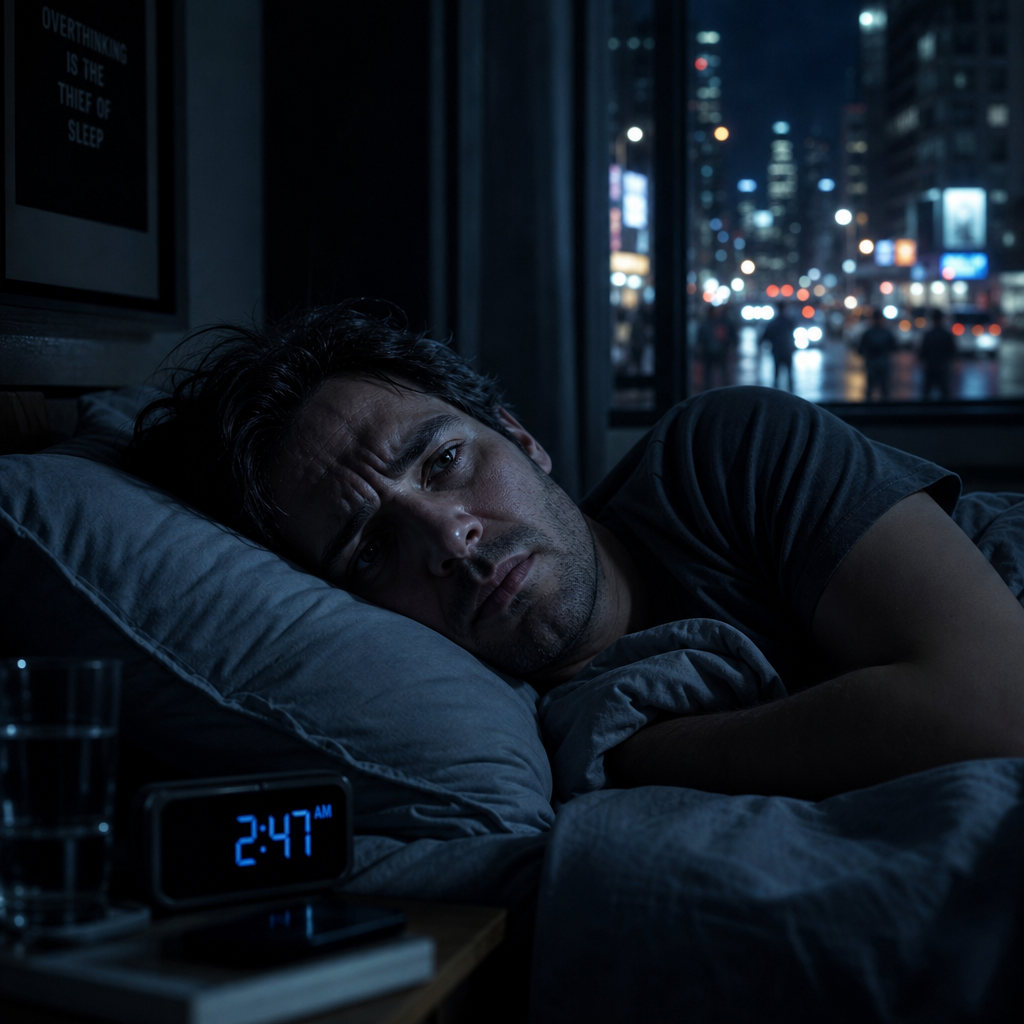
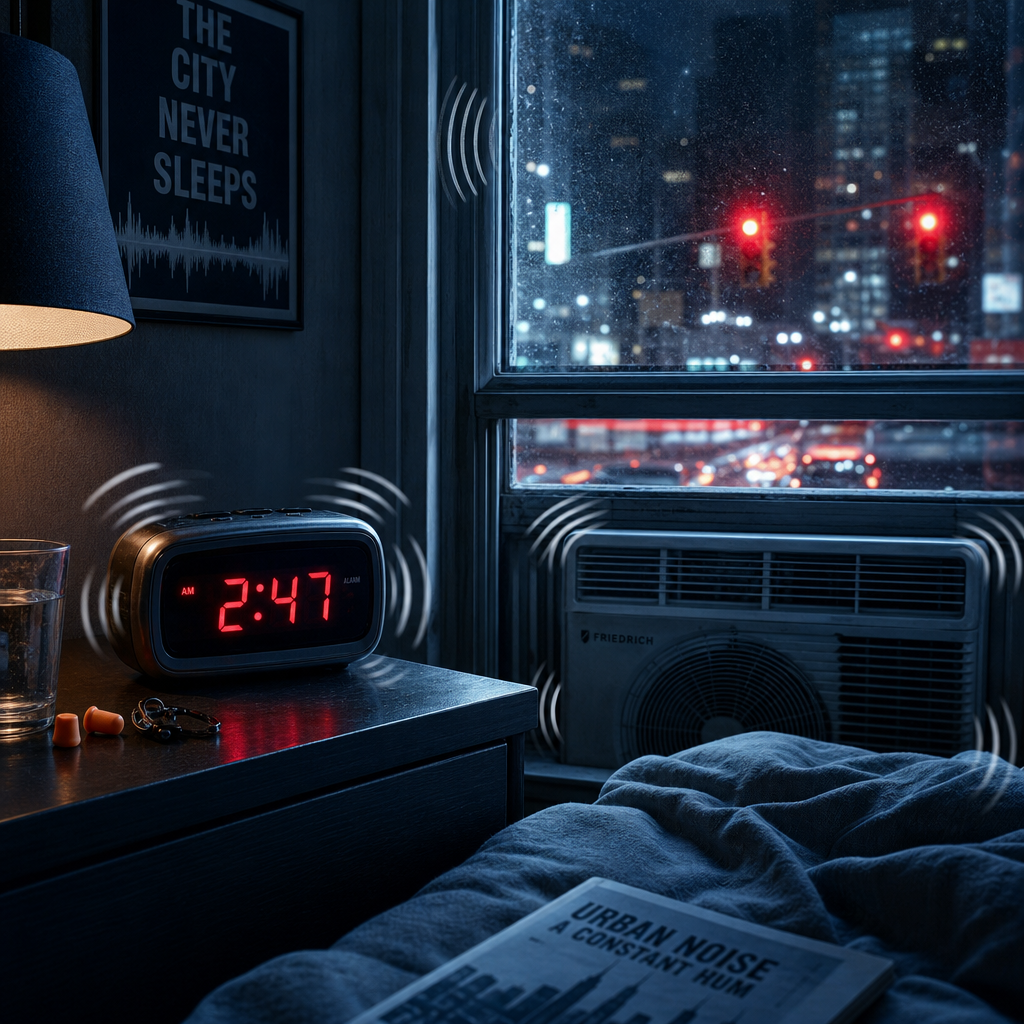
Cortisol is your primary stress hormone, and it operates on a strict circadian schedule. Normally, cortisol levels are at their lowest between midnight and 2 AM, then begin rising gradually to support morning waking. Unpredictable noise events at night spike cortisol out of sequence, which disrupts this natural rhythm and makes it harder for the body to return to deep sleep after disturbance.
In practice, this means a person sleeping in a noisy city apartment may produce cortisol at 1 AM in a pattern that more closely resembles a stress response than restorative rest. Over time, chronically elevated nocturnal cortisol is linked to immune suppression, weight gain, and accelerated cognitive decline.
The WHO’s 2018 Environmental Noise Guidelines for the European Region set outdoor nighttime noise limits at 45 dB, with 40 dB identified as the level below which the majority of the population is protected from serious sleep disturbance. For context, a quiet library measures around 30 dB. A normal conversation is 60 dB. A city street at night typically measures between 55 dB and 75 dB depending on location and time.
Most urban bedrooms, even with windows closed, receive ambient noise levels of 45 dB to 60 dB. This is consistently above the WHO’s protective threshold. A building facade and closed windows typically provide 20 dB to 30 dB of sound attenuation. That brings a 70 dB street into a 40 dB to 50 dB bedroom, still squarely in the zone where noise and sleep quality are meaningfully compromised.
This is where targeted hearing protection with a genuine Noise Reduction Rating becomes important. Ear plugs rated at 32 dB NRR, used correctly with a proper fit, can bring that 50 dB bedroom environment down to approximately 18 dB, which is quieter than a whisper and well within the range for uninterrupted sleep.
“Environmental noise is increasingly recognized as not only an annoyance but a significant public health problem, with sleep disturbance identified as the most critical health effect at low to moderate noise levels.” – World Health Organization Environmental Noise Guidelines, 2018
Not all city noise is equal in terms of sleep disruption. The type, frequency, and predictability of a noise source each affect how severely it fragments sleep. Understanding this matters because different noise sources require different mitigation strategies.
Road traffic noise is the dominant urban noise source and the one most studied in relation to sleep health. Its damage comes less from individual loud events and more from the continuous low-frequency rumble that keeps the auditory cortex partially alert all night. Even at 50 dB, sustained traffic noise reduces slow-wave sleep duration and produces more frequent cortisol responses than complete quiet.
People who live near highways or major arterials frequently report feeling unrested despite logging adequate total sleep time. This is consistent with the research: sleep duration is not the same as sleep quality, and traffic noise preferentially degrades quality while leaving duration intact enough that sufferers often blame other factors entirely.
Sporadic loud events, a car horn, a neighbour’s door slamming, a motorcycle accelerating, produce a sharper and more damaging sleep disruption pattern than continuous noise. The brain’s threat-detection system responds to sudden acoustic changes more vigorously than to steady-state background noise. A single 80 dB impulse noise event can produce a full cortical arousal that takes 20 to 30 minutes of lighter sleep before the body re-enters deep sleep.
For light sleepers particularly, this type of intermittent city noise is the primary driver of poor sleep quality. Ear plugs with consistent, high NRR attenuation are especially effective here because they reduce the peak amplitude of these events below the arousal threshold without requiring the sleeper to do anything active.
Pro tip: If you are a light sleeper living above a busy intersection, prioritise attenuation over everything else. A 32 dB NRR ear plug that fits well and stays in place all night will do more for your sleep than a white noise machine alone, because white noise masks frequency-specific sounds inconsistently and at the cost of adding its own noise floor.
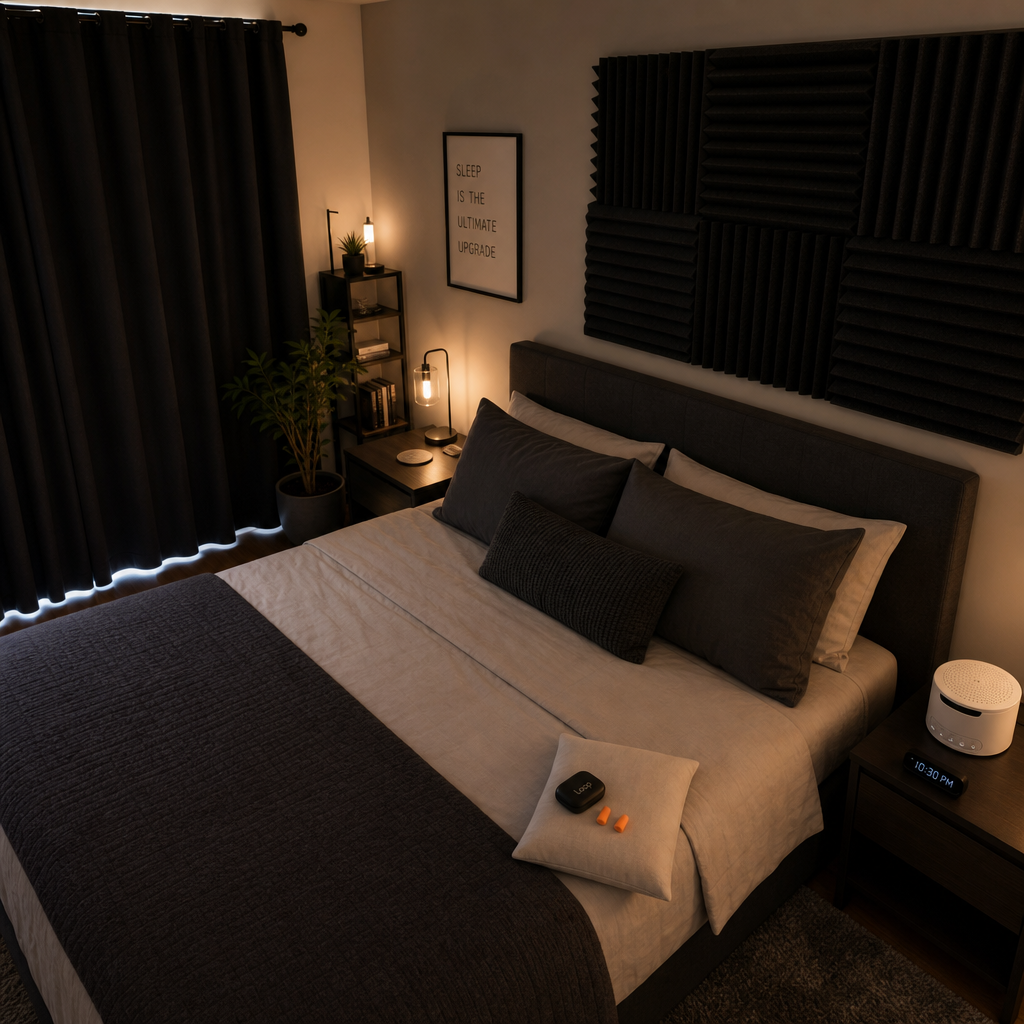
There are three main approaches city dwellers use to address noise and sleep quality. Each has legitimate use cases, but their effectiveness varies significantly depending on noise type, budget, and sleep position.
| Approach | Noise Reduction Effectiveness | Practical Limitations for Urban Sleepers |
|---|---|---|
| White Noise Machines | Moderate: masks consistent background noise reasonably well, but struggles with impulse noise above 70 dB | Adds its own noise floor (typically 50-65 dB), requires electricity, does not travel easily, and can disturb partners at effective masking volumes |
| Window Acoustic Treatments (double glazing, acoustic seals) | High: can add 10-20 dB of additional attenuation beyond standard windows, effective across all noise types | Expensive (often $500-$3,000+ per window), requires landlord approval in rental properties, does not help with internal building noise from neighbours |
| High-NRR Reusable Ear Plugs with Memory Foam Tips | Very High: 32 dB NRR at the ear canal level is the most direct and reliable form of personal noise attenuation available without specialist equipment | Requires correct insertion technique and proper tip sizing, may take 2-3 nights of adjustment for new users, not suitable for those who need to hear alarms at full volume |
In practice, the most effective approach for the majority of urban sleepers is to combine acoustic ear plugs with at least some passive room treatment such as heavy curtains and door seals. Ear plugs address residual and intermittent noise that room treatment cannot fully eliminate, while room treatment reduces the total noise load that ear plugs need to handle.
The standard single-use foam ear plug is the default solution most people try first. It is cheap, widely available, and rated at up to 33 dB NRR in laboratory conditions. The problem is that laboratory conditions bear no resemblance to nightly city sleep use.
Single-use foam plugs lose a significant portion of their attenuation performance after the first use. The foam cell structure compresses and does not fully recover, meaning the plug expands less completely in the ear canal and seals less effectively. By the third or fourth use of the same plug, you may be getting closer to 20 dB of real-world attenuation rather than the rated 33 dB. Most people reuse them anyway because buying a new pair every night is impractical and expensive at scale.
There is also the comfort problem. Cylindrical foam plugs create pressure points inside the ear canal that become genuinely painful after four to five hours. For someone who needs eight hours of sleep, this means the plug comes out at 2 AM and the remaining hours of sleep are unprotected. The plug that seemed like it worked is only working for half the night.
A premium reusable ear plug with a concave aluminium body addresses both failure modes. The metal core does not degrade in the way foam does. It maintains its shape and dimensional consistency night after night, meaning the memory foam tip sits correctly at the canal entrance every time. The concave shape distributes pressure differently than a cylindrical plug, reducing the canal pressure that causes discomfort during extended wear.
The tip replacement schedule, roughly every six to eight weeks with regular nightly use, is the only maintenance required. This preserves the attenuation performance of the system because fresh memory foam expands fully and seals effectively, while the body itself continues to deliver consistent fit geometry. Over a year of city living, a single pair of quality reusable plugs with periodic tip replacements costs a fraction of the disposable equivalent while delivering more consistent protection.
This is the design philosophy behind ATTENU8 ear plugs: a durable aluminium body with three sizes of replaceable memory foam tips (XS, S, M) to accommodate actual ear canal variation across different users, delivering consistent 32 dB attenuation whether it is your first night or your two hundredth.
Addressing urban noise pollution sleep damage effectively means treating your bedroom as a system rather than addressing one noise source in isolation. Here is a layered approach that reflects how real urban noise behaves.
Heavy, floor-length curtains with a dense woven backing can add 5 to 10 dB of sound reduction on top of standard windows. Acoustic door seals applied to gaps around bedroom doors address internal building noise from hallways, stairwells, and neighbours. These are the cheapest structural interventions and should be the first step for renters who cannot modify windows.
White noise or brown noise at a moderate volume (40 to 45 dB) can reduce the perceptual salience of the traffic rumble that gets through your curtains and seals. It does not eliminate the noise but reduces the contrast between silence and noise events, which is part of what makes the brain trigger arousal responses. Keep the volume conservative. Running white noise at 65 dB to cover 60 dB street noise is simply exchanging one noise problem for another.
This is where ear plugs for city living with proper NRR ratings do their most important work. After layers one and two, you may still have 40 to 50 dB of residual noise in the room. That is still above the WHO’s protective threshold. A 32 dB NRR ear plug fitted correctly to your specific ear canal brings that final figure down to safe, restorative levels. The correct tip size is critical here, which is why access to XS, S, and M tip options matters in practice rather than having a one-size product that fits no one particularly well.
Finding the right tip size takes one or two nights of experimentation. A correctly fitted memory foam tip should expand to fill the canal and feel snug but not pressurised. If you remove the plug in the morning and it is unchanged in shape, it did not expand and seal properly. If your ear canal feels sore at the rim, the tip is too large. The XS option is specifically important for women and people with smaller ear canals who are chronically underserved by one-size foam plug products.
Pro tip: Insert memory foam tips by compressing them fully, reaching over the top of your head with your opposite hand to pull the ear upward and outward to straighten the canal, then inserting and holding for 20 to 30 seconds while the foam expands. This technique improves effective attenuation by an estimated 5 to 8 dB compared to a casual insertion, which is a significant difference in a 65 dB city environment.
For people who work in loud professional environments during the day, such as construction, manufacturing, or industrial settings, and then need genuine recovery sleep at night, this layered approach is not optional. Hearing fatigue and noise-induced stress that begins at a job site does not stop when you leave the workplace. Recovery requires both adequate sleep duration and genuine acoustic quiet, and a noisy city apartment provides neither without active intervention.
The World Health Organization identifies 40 dB as the nighttime outdoor noise limit above which sleep disturbance becomes measurable across the general population. Most urban bedrooms with standard windows experience 45 to 60 dB of ambient noise, consistently above this threshold. Impulse noise events above 55 dB are sufficient to trigger cortical arousal even during deep sleep stages.
Yes, and this is one of the better-supported interventions in sleep research. Studies conducted in hospital settings, which share many acoustic properties with urban environments, consistently show that ear plugs reduce the frequency of nocturnal awakenings and improve slow-wave and REM sleep duration. The key variable is whether the ear plug achieves an adequate seal, which depends on fit quality and correct insertion technique rather than rated NRR alone.
A correctly fitted memory foam tip should feel snug within the ear canal after expanding, without creating pain or pressure at the canal entrance. The sound environment should noticeably mute upon insertion. If you can still hear voices clearly at a normal conversational distance immediately after fitting, the tip has not sealed properly and is either too small, inserted too shallowly, or needs to be held in place longer during expansion. Most people find they need different sizes for their left and right ear, which is normal human anatomy.
This is a legitimate concern and one of the main reasons the body geometry of a reusable ear plug matters. A concave aluminium body that sits flush with or slightly recessed from the ear canal entrance creates significantly less lateral pressure when your ear is pressed against a pillow compared to a plug that protrudes. Most side sleepers who switch from standard foam plugs to a properly fitted reusable option with a low-profile body report substantially better overnight comfort, though the first two to three nights of adjustment are common.
White noise machines and ear plugs address the problem differently and are not equivalent. White noise masks background noise by adding a broadband sound that reduces the perceptual contrast of specific noise events. It is moderately effective for consistent low-frequency traffic noise but struggles with sharp impulse events above 70 dB such as car horns, construction starts, or motorcycles. Ear plugs with 32 dB NRR attenuation physically reduce the amplitude of all incoming sound including impulse events, making them more reliable for the type of intermittent noise that is most disruptive to city sleep architecture. The two approaches are complementary rather than competing.
With nightly use, memory foam ear plug tips should be replaced approximately every six to eight weeks. Signs that replacement is needed include visible surface degradation, a reduction in how snugly the tip expands within the canal, or a noticeable increase in background sound reaching you despite correct insertion. Tip degradation is the primary failure mode for reusable ear plug systems, and regular replacement keeps the effective attenuation close to the original specification rather than allowing gradual performance decline.
Regular ear plug use is safe provided basic hygiene is maintained. Reusable plugs should be cleaned according to the manufacturer’s guidance. The main risks associated with ear plug misuse are ear canal infections from unclean plugs and impacted earwax from plugs pushed too deeply into the canal. A correctly fitted plug sits in the outer portion of the ear canal and does not contact the eardrum. If you experience ear discomfort, itching, or muffled hearing that persists after removing your plugs, consult a physician to rule out wax impaction or infection.
Have you found a noise reduction approach that genuinely transformed your sleep in a city environment? Share your experience in the comments so others can learn from what actually worked for you.

