


 0
0

Roughly one in three adults fails to get adequate sleep on a regular basis, according to the Centers for Disease Control and Prevention. The immediate effects are obvious: grogginess, irritability, reduced focus. But the poor sleep health consequences that accumulate over months and years are far more serious than most people realize. Cardiovascular disease, metabolic disorders, cognitive decline, and immune suppression all have documented links to chronic sleep deprivation. If noise is the reason you are lying awake, that is not a minor inconvenience. It is a direct threat to your long-term health.
| Key Insight | Explanation |
|---|---|
| Sleep deprivation raises cardiovascular risk | Sleeping fewer than 6 hours per night is associated with a 20% higher risk of heart attack, according to research published in the European Heart Journal. |
| Noise disrupts sleep even when you do not wake up | Environmental noise at 45 decibels can shift the brain out of deep sleep stages without full arousal, fragmenting restorative sleep silently. |
| Cortisol stays elevated with chronic poor sleep | Ongoing sleep deprivation keeps the stress hormone cortisol high, accelerating inflammation, weight gain, and hormonal imbalance. |
| Memory consolidation requires uninterrupted sleep cycles | The brain processes and stores memories during slow-wave and REM sleep. Noise that fragments these stages impairs long-term learning and recall. |
| Reusable ear plugs outperform single-use foam for noise reduction consistency | Metal-bodied ear plugs with memory foam tips maintain seal integrity far more reliably than cheaply manufactured disposable foam, which compresses unevenly. |
| A quiet sleep environment is a health intervention, not a luxury | Reducing nighttime noise exposure is among the lowest-cost, highest-impact steps a person can take to improve long-term health outcomes. |
| Tip replacement, not full product replacement, reduces long-term cost | ATTENU8 ear plugs require only memory foam tip replacements every 6 to 8 weeks, making durable hearing protection financially sustainable over time. |
The body treats sleep as a biological maintenance window. During those hours, the heart rate slows, blood pressure drops, tissues repair, and the immune system produces cytokines. When sleep is cut short or repeatedly interrupted, that maintenance cycle is compressed or skipped entirely.
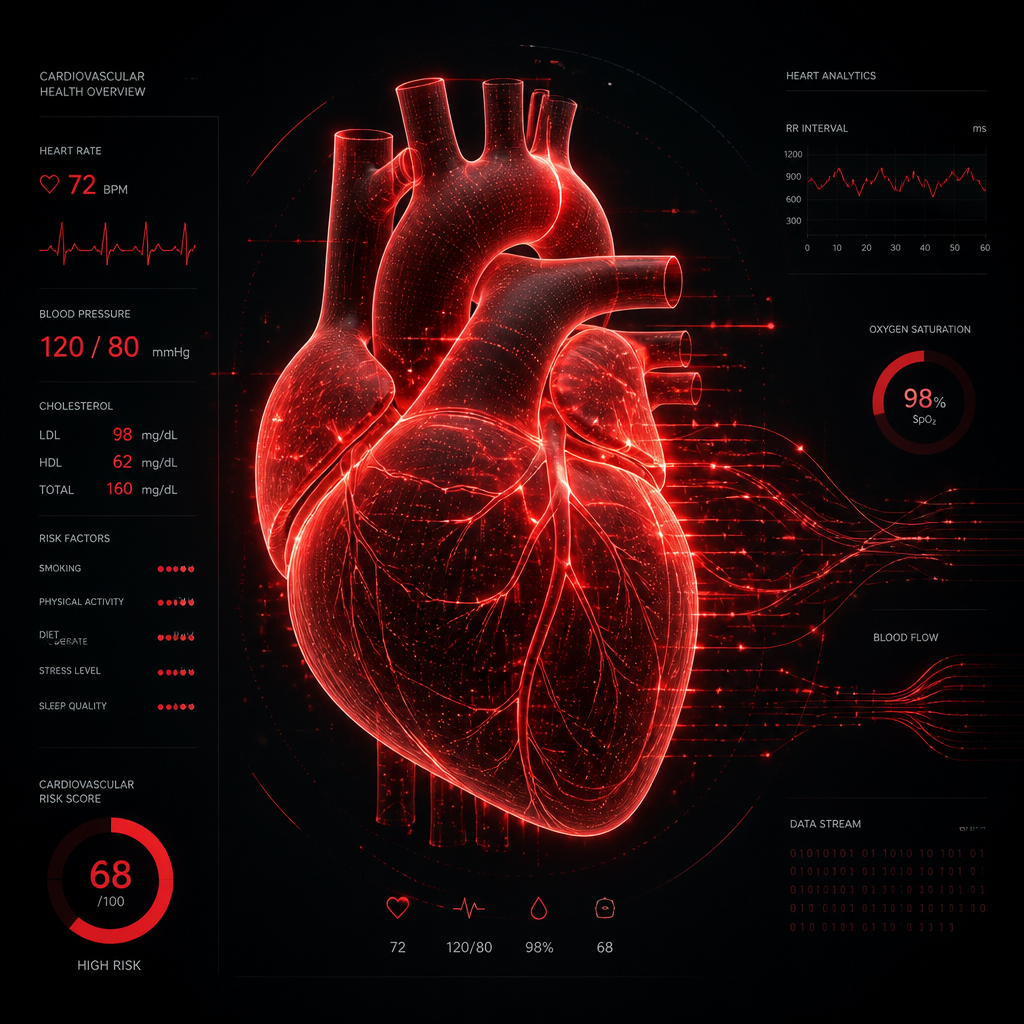
The sleep deprivation long term effects on the cardiovascular system are particularly well-documented. A landmark study published in the European Heart Journal followed over 470,000 participants across eight countries and found that short sleep duration was associated with a 48% greater risk of developing or dying from coronary heart disease. That is not a marginal increase.
Metabolic function takes an early hit as well. Even one week of sleeping fewer than six hours per night alters the activity of over 700 genes, including those linked to inflammation and immune response, according to research from the University of Surrey. The body responds as though it is under chronic stress because, from a hormonal perspective, it is.
Poor sleep suppresses T-cell activity and reduces natural killer cell production. In practice, this means a person sleeping five hours per night is four times more likely to catch a cold after virus exposure than someone sleeping seven or more hours, based on findings from researchers at the University of California, San Francisco. This is not anecdote. It was a controlled trial with 164 volunteers.
Weight regulation is also directly affected. Sleep deprivation increases ghrelin (the hunger hormone) and decreases leptin (the satiety hormone), reliably driving caloric overconsumption. People who sleep poorly do not simply feel hungrier by coincidence. The hormonal chemistry forces it.
Pro tip: If you are struggling with unexplained weight gain or frequent illness, audit your sleep duration and quality before assuming the problem is diet or fitness. The data consistently shows that sleep disruption is an underdiagnosed root cause.
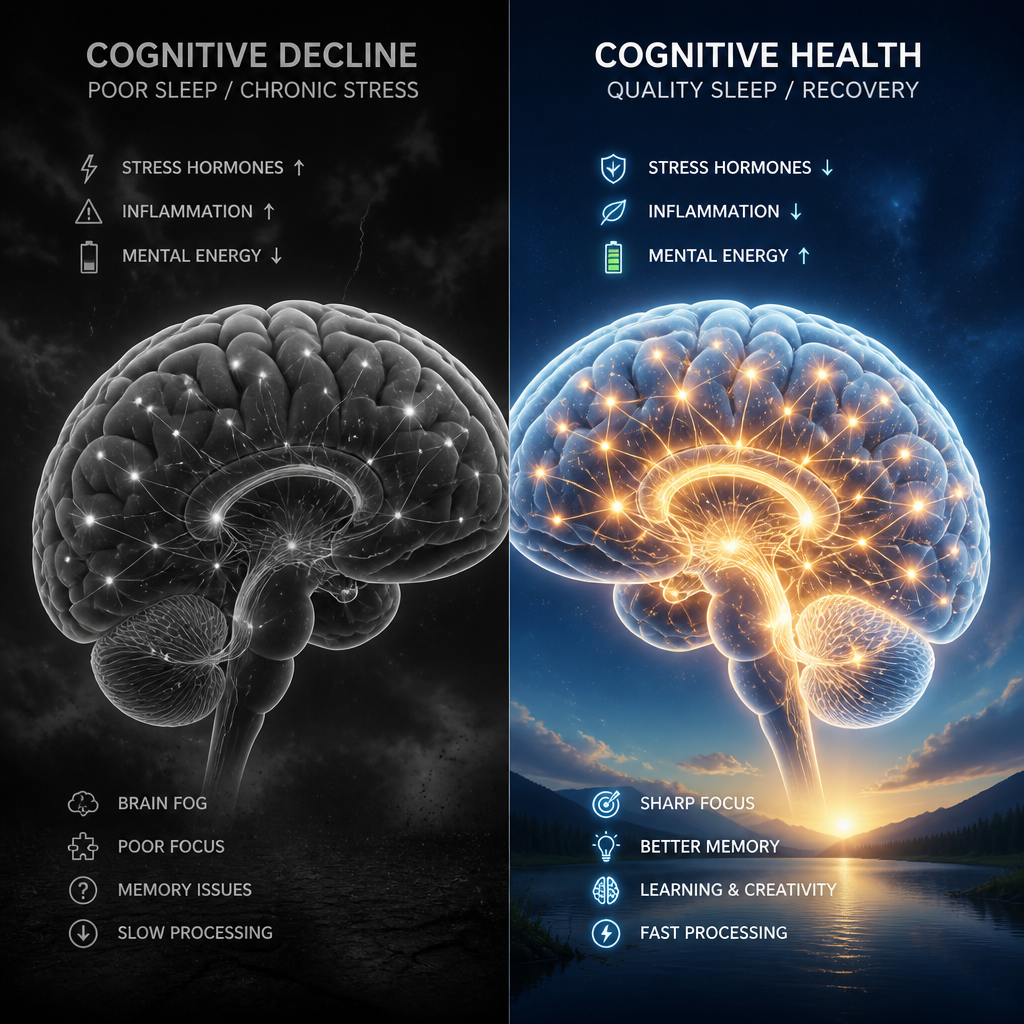
Cognitive decline is one of the most alarming long-term outcomes of poor sleep. During deep sleep, the brain activates the glymphatic system, a waste-clearance mechanism that flushes out metabolic byproducts including amyloid-beta, a protein strongly implicated in Alzheimer’s disease. Miss enough deep sleep and that clearance does not happen adequately.
The Alzheimer’s Association notes that disrupted sleep is increasingly recognized as both a risk factor and an early symptom of neurodegeneration. This creates a compounding problem: poor sleep accelerates the very conditions that make sleep harder to achieve.
“Sleep is the single most effective thing we can do to reset our brain and body health each day.” – Matthew Walker, Professor of Neuroscience, University of California, Berkeley, and author of Why We Sleep.
Sleep deprivation amplifies the amygdala’s reactivity to negative stimuli by up to 60%, according to research from Matthew Walker’s lab. The prefrontal cortex, which normally moderates emotional responses, loses connectivity with the amygdala when sleep is insufficient. The practical result is heightened anxiety, irritability, and impaired decision-making.
Chronic poor sleepers show measurably higher rates of depression and anxiety disorders. This is a bidirectional relationship: mental health conditions disrupt sleep, and poor sleep worsens mental health. Breaking the cycle requires addressing the environmental inputs that make sleep difficult in the first place.
Pro tip: Treating noise exposure as an environmental variable you can control, rather than something to adapt to, is one of the most direct interventions available for improving emotional regulation and reducing anxiety over the long term.
Sleep is not a uniform state. The brain moves through light sleep, deep sleep, and REM sleep in cycles of roughly 90 minutes. Each stage serves distinct physiological purposes. Noise disrupts this architecture in ways that are invisible to the sleeper but measurable on polysomnography.
The World Health Organization recommends nighttime noise levels below 40 decibels as a guideline for healthy sleep. A snoring partner typically generates 50 to 70 decibels. Urban road noise frequently exceeds 55 decibels. Construction environments near residential areas can spike well above 70 decibels at night. Many people are sleeping in noise environments that the WHO classifies as harmful without ever identifying noise as their core problem.
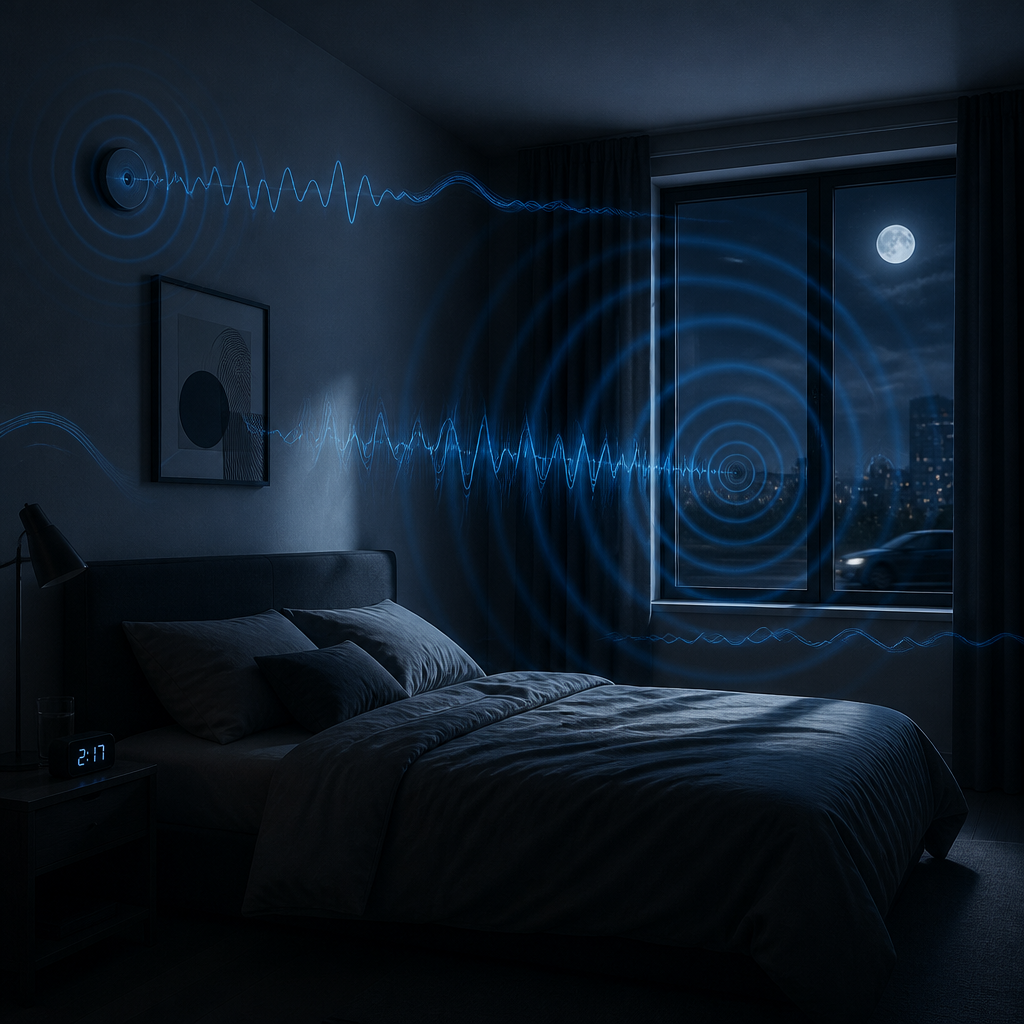
A critical point that most sleep advice overlooks: you do not need to fully wake up for noise to damage sleep quality. Micro-arousals, brief shifts from deep sleep to lighter stages triggered by sound, occur without conscious awareness but prevent the brain from completing restorative sleep cycles. A person who says they slept eight hours but still feels exhausted is frequently experiencing this phenomenon.
Research published in the journal Sleep Medicine Reviews found that traffic noise in particular is associated with increased micro-arousals, elevated nighttime cortisol, and reduced time in slow-wave sleep, all without the subject necessarily remembering any disturbance. The damage is silent and cumulative.
For light sleepers and noise-sensitive individuals, this means the environment itself is working against them every night. A quiet sleep environment is not about comfort preferences. It is about creating the physiological conditions under which the brain can actually complete its required maintenance cycles.
Not all noise reduction strategies are equally effective for improving sleep quality. The table below compares three common approaches based on real-world performance for people who need reliable, nightly use.
| Approach | Noise Reduction Performance | Long-Term Practicality for Nightly Use |
|---|---|---|
| Standard disposable foam ear plugs | Variable. Rated up to 33dB NRR but real-world performance degrades quickly with reuse. Inconsistent seal due to uneven foam compression and one-size-fit issues. | Low. Intended for single use, creating ongoing cost and waste. Most users reuse them far beyond their effective lifespan, reducing protection significantly. |
| Active noise-cancelling sleep earbuds (e.g., Loop, Flare) | Moderate to good for low-frequency noise. Less effective for sudden mid and high-frequency sounds like snoring or traffic. Battery dependency introduces failure risk nightly. | Moderate. Requires charging, has a finite battery lifespan, and can feel uncomfortable during side sleeping due to electronic housing bulk. Higher purchase cost with full replacement when components fail. |
| Premium reusable metal-bodied ear plugs (ATTENU8) | Consistent 32dB noise reduction across uses due to rigid aluminium body maintaining shape and seal. Three memory foam tip sizes (XS, S, M) allow precise anatomical fit for different ear canals. | High. Metal body does not degrade. Only the foam tips require replacement every 6 to 8 weeks. No batteries, no electronics, no charging. Suitable for side sleepers due to low-profile concave design. |
A common mistake is choosing the cheapest available option and assuming performance is comparable across products. For nightly health protection, the consistency of the seal matters more than the headline NRR rating on the packaging.
Improving sleep quality does not require a complete lifestyle overhaul. The evidence points clearly to a set of high-impact changes that work reliably, and noise control is among the fastest to implement.
If noise is the primary reason you wake during the night or sleep lightly, address that before any other sleep hygiene intervention. Fixing your sleep schedule while sleeping in a noisy environment is like trying to stay hydrated while losing fluids. The foundational problem stays unresolved.
For people sharing a bed with a snoring partner, or sleeping in urban environments, professional-grade ear protection provides an immediate, measurable intervention. ATTENU8’s memory foam tips conform to the ear canal, providing a reliable acoustic seal without the discomfort that drives most people to remove ear plugs in the middle of the night.
After noise, the next highest-leverage environmental variables are temperature and light. The brain initiates sleep when core body temperature drops. A bedroom set between 16 and 19 degrees Celsius supports this process. Blackout curtains or a sleep mask prevent light-triggered cortisol spikes that can cause early morning waking.
Consistent sleep and wake times matter more than total hours for resetting circadian rhythm. The body performs better on a reliable seven-hour schedule than on inconsistent nine-hour attempts. Set a fixed wake time and work backwards.
The phrase “quiet sleep environment” appears frequently in sleep advice, but few sources specify what that actually requires in a practical household setting. Here is what the evidence and real-world use indicate.
Structural noise reduction, meaning sealing gaps under doors, using heavy curtains, and placing soft furnishings that absorb sound, can reduce ambient noise by 5 to 10 decibels in a typical bedroom. That is meaningful but usually insufficient on its own when the source is a snoring partner or street noise exceeding 60 decibels.
The most effective approach combines structural improvements with physical ear protection. White noise machines can mask irregular sounds and raise the ambient noise floor uniformly, which the brain finds less disruptive than sudden spikes. However, white noise alone does not reduce overall decibel exposure. It masks variability.
Physical ear protection addresses both overall volume and variability simultaneously. For someone who needs genuine 30-plus decibel attenuation to achieve restorative sleep, a well-fitting reusable ear plug is the most direct tool available. The ATTENU8 design specifically addresses two failure modes of standard ear plugs: poor fit causing seal degradation during movement, and hard plastic stems causing discomfort when side sleeping. The concave aluminium body sits flush rather than protruding, maintaining comfort through the night.
A common mistake among people new to ear plugs is giving up after one or two nights because the foam tips were not the right size. ATTENU8’s inclusion of three tip sizes (XS, S, M) directly solves this problem. Fit is the primary determinant of both comfort and acoustic performance.
Pro tip: Test all three foam tip sizes on consecutive nights before deciding which fits best. Most people find their preferred size differs slightly between their left and right ears, particularly if one ear canal is narrower from previous irritation or anatomy.
The most clinically significant poor sleep health consequences include elevated cardiovascular disease risk, impaired immune function, accelerated cognitive decline linked to Alzheimer’s disease, metabolic disorders including type 2 diabetes, and chronic depression. These are not theoretical risks. They are well-replicated findings across large longitudinal studies. Short-term sleep deprivation produces reversible effects, but chronic disruption lasting months or years causes physiological changes that persist even after sleep is restored.
The World Health Organization recommends nighttime outdoor noise levels below 40 decibels to protect sleep health. Most urban environments exceed this regularly. Indoors, a snoring partner produces 50 to 70 decibels at close range. Even noise below the threshold of conscious waking causes measurable micro-arousals and hormonal disruption. If you live or sleep near consistent noise sources above 45 decibels, physical ear protection is a rational, evidence-supported health decision.
The evidence supports their effectiveness. A randomized controlled trial published in Critical Care Medicine found that ear plugs and eye masks combined significantly increased REM sleep and reduced overnight cortisol levels compared to controls. For noise-sensitive individuals and light sleepers, the mechanism is straightforward: reducing the acoustic triggers that cause micro-arousals allows the brain to complete deeper, more restorative sleep cycles. Performance depends heavily on fit and noise reduction rating, which is why tip sizing and seal quality matter.
Some markers respond quickly. Cortisol normalization, improved mood, and sharper cognitive function are frequently reported within one to two weeks of consistent, uninterrupted sleep. Immune function improvements are measurable within days. Cardiovascular and metabolic markers take longer, typically requiring sustained improved sleep over several months. The key is consistency. Occasional good nights do not reset the physiological damage from chronic deprivation. Nightly sleep quality needs to be a non-negotiable baseline.
Yes, provided they are kept clean and the tips are replaced on schedule. ATTENU8 recommends replacing the memory foam tips every 6 to 8 weeks. The aluminium body is non-porous and does not harbor bacteria. In contrast, repeatedly used disposable foam plugs are a far greater hygiene concern because foam is porous and absorbs oils and debris. For nightly users, a reusable metal-bodied ear plug with replaceable tips is the more hygienic long-term option, not just the more economical one.
Both matter, but quality is the factor most often ignored. Sleep quality refers to the proportion of time spent in restorative slow-wave and REM sleep stages, the number of arousals during the night, and how completely the brain cycles through its maintenance processes. A person sleeping eight hours in a noisy environment may get far less restorative sleep than someone sleeping six and a half hours in complete silence. The data consistently shows that reducing nighttime noise exposure improves sleep quality markers more reliably than simply extending time in bed without addressing the acoustic environment.
What is your current biggest barrier to getting a full night of sleep? Share your experience in the comments so others facing the same challenge can benefit from what has worked for you.

