


 0

Your alarm is rarely what wakes you. For many light sleepers, it is the delivery lorry reversing at 6 a.m., a neighbour’s car door, or a bird that has chosen the windowsill for its daily chorus. A noise free morning bedroom is not about expensive soundproofing. It comes from a few deliberate decisions about where your bed sits, what covers your windows, how well your door seals, and whether your ears are protected when the household gets loud. This guide explains how to set up that room, which fixes earn their cost, and where the common shortcuts fall short.
| Key Insight | Explanation |
|---|---|
| Sleep can be disrupted before you wake | Noise can disturb deeper stages of sleep without fully waking you, so a quiet morning matters even when you do not remember the sound. |
| Map the sounds, not just the room | Log the exact times and sources that wake you. A 5 a.m. delivery needs a different fix than a dripping tap or a shared wall. |
| Soft surfaces beat expensive upgrades | Rugs, lined curtains, and a sealed door absorb or block sound far more cheaply than most structural changes. |
| Move the bed away from the noisiest wall | A bed against a street-facing or shared wall carries more of what you hear, so shift it to the quietest side of the room. |
| Use ear plugs as the final layer | Plugs handle the sounds you cannot remove, such as birdsong or a neighbour’s routine, without changing anything in the room. |
| Keep the room dark and clear in the morning | Light and clutter can wake you on their own, so use blackout lining and put noisy items out of reach before bed. |
Each of these fixes works best in order. Start with the source you can name, then add the layers that handle what remains.
Most people assume noise only matters if it wakes them fully. The research says otherwise. Bedroom guidance from Georgia Tech’s Wellness Empowerment Center notes that sound can disrupt the deeper stages of sleep even when you do not become fully conscious, which means you can feel unrested without knowing why.
A 2024 study on personal noise exposure and sleep quality found that nocturnal noise exposure is associated with higher risks of sleep disturbance and nocturnal awakening. A university overview of noise pollution and health makes a similar point, describing how noise activates the sympathetic nervous system and leads to fragmented sleep and reduced total sleep time.
Early morning is a particular problem because many people sleep more lightly in the final hours before the alarm. A sound that was ignored at 2 a.m. can become the thing that pulls you out of bed at 5:30, especially when your body is already close to waking.
A quiet bedroom rarely fails because of one loud sound. It fails because several small sounds each stay just under the level you consciously notice, and your sleep pays the cost anyway.
That is why I rarely recommend a single product as the answer. You need to identify each source and match it to a specific fix, which is what the rest of this guide covers.
Sleep guidance from Sleepstation suggests a simple starting point: picture your current sleep space and note what you hear, see, and feel. It asks you to notice intruders, such as birdsong that wakes you far too early, and to write them down before trying to fix anything.
Write down the time you wake, what you heard in the fifteen minutes before, and whether you woke by choice or were startled. Two weeks is usually enough to show repeat patterns, such as a refuse collection on the same day each week or a neighbour’s shower running at the same time every morning.
Outdoor noise such as traffic, deliveries, and birdsong enters through windows and gaps around frames. Shared-wall noise travels through the building structure, so curtains alone will not solve it. Household noise, such as a boiler kicking on, a bathroom extractor fan, or a partner’s alarm, often sits in the middle and is usually the easiest to change.
A window gap needs sealing, a shared wall needs added mass or decoupling, and a noisy appliance may simply need servicing. Treating the wrong source wastes money and gives you a false sense that nothing works. In practice, most people who fail at this step bought a fix that matched their room rather than their actual problem.
Pro tip: Add the times of your first car, first delivery, and alarm to the same log. Matching them often shows that your mystery wake-up is a predictable event you can plan around.
Hard surfaces bounce sound around a room. Bare floors, a glass window, and a bare wall make a small bedroom ring with every noise. Soft materials absorb energy instead, which is why a room with rugs and curtains often feels calmer even when the noise outside has not changed.
Heavy, lined curtains that reach the floor and sit close to the frame do more than block light. They reduce the sound that passes through glass, although they will not stop low-frequency rumble from lorries or buses. Pair them with a draught excluder along the bottom of the door to catch the gap that lets hallway noise in.
A thick rug over bare boards cuts footfall and the echo of a dropped phone. An upholstered headboard, a padded bench, and fitted sheets that do not flap also help. Books on shelves and a stuffed armchair do more than most people expect, because they break up reflections across the room.
Put the bed on the wall that backs onto the quietest space in the house, not the one with the best view. A bed against a street-facing or shared wall carries the thump of doors and voices straight to your pillow. If you cannot move the bed, add a padded headboard and keep the bedside table free of hard objects that rattle.
Once the room is as quiet as you can make it, some sounds will remain. This is where ear plugs and sound masking earn their place. Sleep guidance from Georgia Tech lists white noise machines, fans, and earplugs as practical tools for drowning out outside noise, and in my experience they work best when layered with the room fixes above.
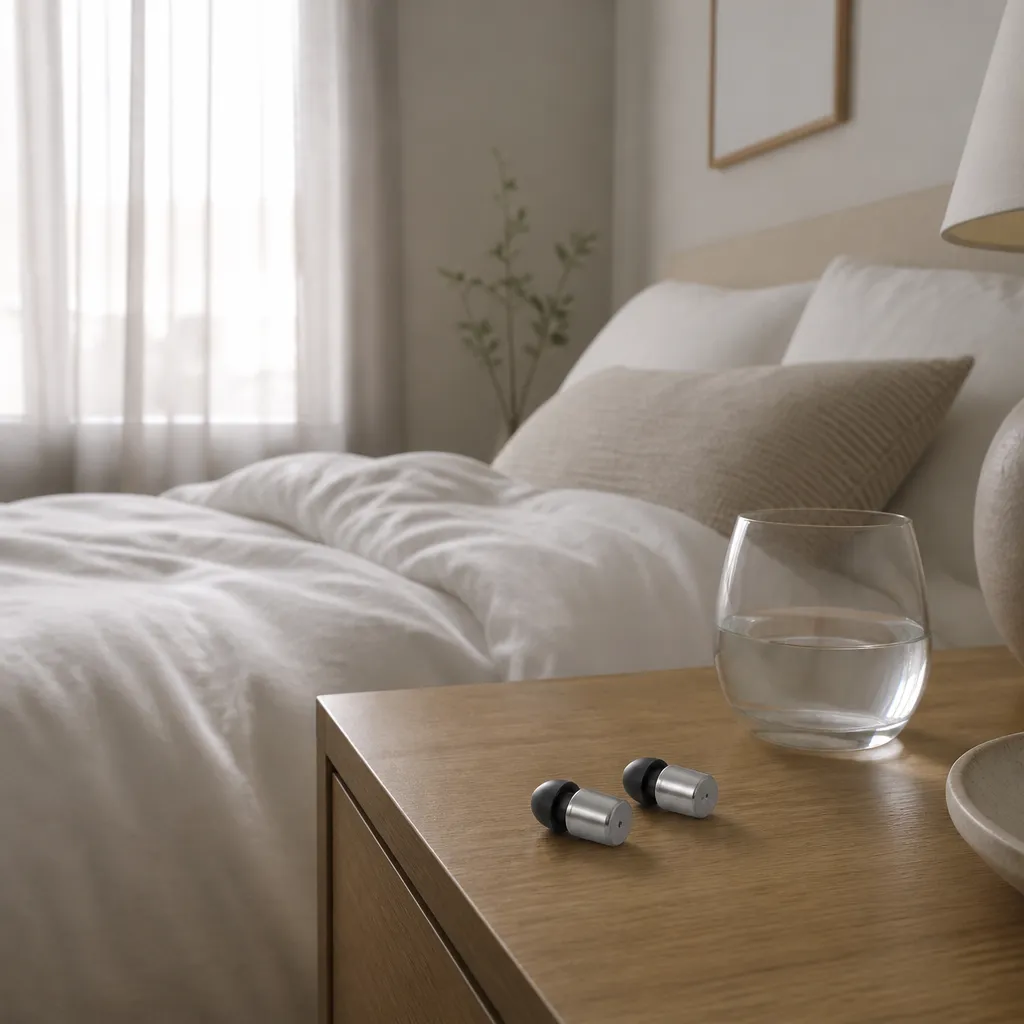
A plug that drops out at 4 a.m. is worse than none, because you stop trusting it. Reusable plugs with a concave metal body and three sizes of soft memory foam tips, such as the ATTENU8 design, let you choose the seal that suits your ear canal. Expect the foam tips to need replacing every 6 to 8 weeks, which is the main ongoing cost of a reusable system.
White noise masks steady sounds such as road hum or a distant ventilation system. It does little against sharp, sudden noises like a door slam or a shouted conversation, and a loud machine can make those moments more startling. Set it low, place the source away from the bed, and keep it running all night rather than switching it on only when you hear something.
The table below compares three common approaches. The right choice depends on how often you need protection and how steady the sound is.
| Approach | Best For | Main Trade-off |
|---|---|---|
| Disposable foam ear plugs | Occasional travel or a single noisy night | Replaced often, and fit varies from pair to pair |
| Reusable metal-bodied ear plugs with memory foam tips | Nightly sleep and repeated loud mornings | Higher upfront cost, and tips need replacing every 6 to 8 weeks |
| White noise machine or fan | Steady background sounds such as traffic hum | Does not block sharp noises, and may disturb a partner |
A quiet room only helps if your schedule gives your body a steady signal to wake. Stanford’s lifestyle medicine guidance on bedroom changes recommends going to bed and waking up at the same time, and it is the single most reliable habit I see in people who feel worn down by early noise.
Choose a wake time you can keep seven days a week, and keep weekend mornings within about an hour of it. Moving the time by several hours each weekend makes every weekday morning feel like jet lag, and your light sleep window will shift with it.
Keep the room dark while you sleep, then bring in light soon after waking. Guidance from the same Georgia Tech source suggests getting sunlight in the morning. Late autumn mornings are dark for longer, so a bedside lamp on a timer can replace the daylight your body expects and make waking feel less abrupt.
A harsh tone at full volume spikes your stress response, which works against a calm start. Choose a gradual tone or a vibrating band, and keep your phone out of reach so notifications do not fire through the night.
Pro tip: Set your alarm to the lowest volume that wakes you within a minute. If you need it louder every week, the problem is the room, not the alarm.
If you work in a loud environment, your sleep problem may also be a hearing problem. Shift workers in construction, manufacturing, and military roles often sleep during the day, when traffic, neighbours, and household routines are at their most active. Sleeping after a loud shift means your ears have already had hours of exposure, so a quiet room is part of recovery, not an extra.
Wear plugs for the whole sleep period rather than only when a lawn mower starts next door. Gaps in use let sound in at the moments you least expect, and a single sudden noise can end a sleep block that took you an hour to settle into.
Plugs that suit sleep are not a substitute for a site’s hearing protection programme. Follow your employer’s requirements during shifts, and ask occupational health for a proper fit assessment if your job requires one. Treat the two as different tools with different jobs.
Most morning noise problems persist because people fix one thing and assume the job is done. These are the errors I see most often, and each one is easy to avoid once you know to look for it.
Curtains do little if the gap under the door funnels hallway sound and the bathroom fan runs for twenty minutes after every shower. Seal the gaps before you buy more fabric, because the cheapest improvement is often the one you can feel with your hand.
A plug pushed in halfway lets through the sounds you were trying to block. Insert it gently, then hum. If your voice sounds boomy, the seal is good, and if it sounds thin and bright, reseat the plug and try again.
A phone playing a show to mask noise keeps your brain alert and adds light at the wrong time. Guidance from Georgia Tech recommends powering down electronics an hour or two before bed. Use a dedicated sound source instead, and charge the phone outside the bedroom.
Yes. Noise can disrupt deeper stages of sleep even when you do not fully wake, so you may feel tired the next day without a clear memory of being disturbed.
Focus on what you can change without permission: lined curtains, rugs, a door draught seal, the bed position, and a sound masking source. Ask your landlord about door seals and any repairs to a noisy fan or boiler, since those are often covered.
Plugs designed for sleep are generally worn nightly, but you should follow the care instructions and replace foam tips on schedule. If you notice ear pain, discharge, or a change in hearing, stop using them and see a clinician.
It helps when it covers steady sounds and stays at a low volume. It hurts when it is loud, placed close to the bed, or used as a substitute for blocking the sources themselves.
Keep a two-week sound log, then fix the single source that appears most often. Once that is quiet, add the room changes and plugs for whatever remains.
Which morning sound wakes you first in your home, and what have you changed so far to quiet it? Share your experience, because the details you describe often reveal fixes that are not yet on this list.

