


 0
0

Pick up a pair of standard foam ear plugs and compress them between your fingers. In seconds, the material starts recovering, begins its push outward, and you hope for the best. Now consider that the entire structure doing the acoustic work, the housing guiding placement, depth, and seal, is made from a soft cylinder with no rigid reference point at all. That is the fundamental design limitation that a metal ear plug body solves. ATTENU8 built its ear plugs around a concave aluminium body precisely because the material choice is not cosmetic. It is structural, hygienic, and directly tied to consistent noise reduction performance every single time you insert them.
| Key Insight | Explanation |
|---|---|
| Aluminium holds its geometry permanently | Unlike plastic, aluminium does not creep, warp, or deform from body heat or compression over time, keeping the ear plug body dimensionally stable for years. |
| The concave shape guides foam tip placement | ATTENU8’s concave aluminium body positions the memory foam tip consistently at the right depth, removing the guesswork that causes variable sealing with straight foam cylinders. |
| Aluminium is non-porous, plastic is not | A non-porous surface does not harbour earwax, oils, or bacteria between uses. Plastic surfaces develop micro-scratches that trap contaminants over time. |
| Only the foam tips need replacing, not the body | ATTENU8 foam tips are replaced every 6-8 weeks. The aluminium body lasts years, making this far cheaper than discarding complete plastic or foam ear plugs repeatedly. |
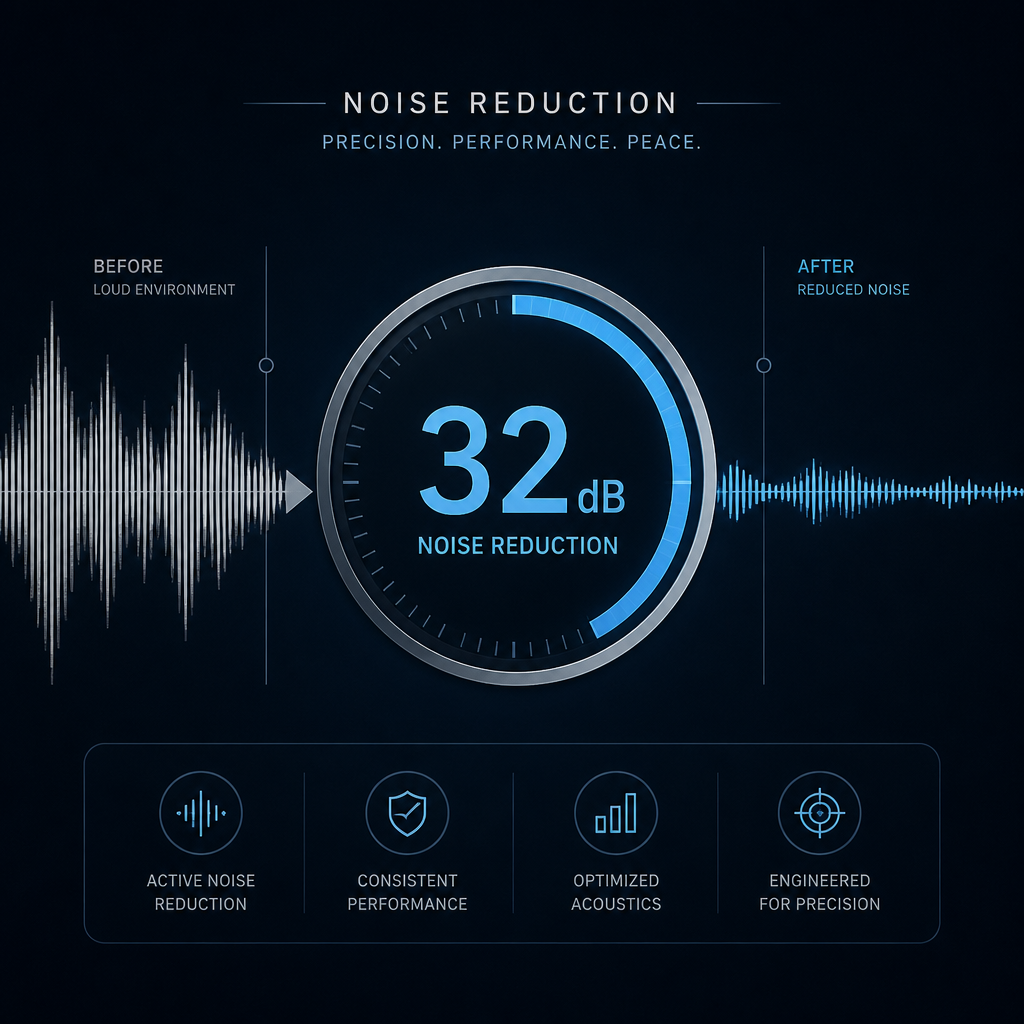
| The density change between aluminium and foam drives noise reduction | The acoustic mass difference between the aluminium body and the memory foam tip contributes to ATTENU8’s approximately 32dB SNR rating, exceeding what foam-only designs typically achieve. |
| Anodised aluminium resists corrosion in a moisture-rich environment | The ear canal produces moisture, heat, and oils. Anodised aluminium forms a protective oxide layer that makes it resistant to this environment where plastic coatings peel and degrade. |
| Three foam tip sizes ship with every pair | XS, S, and M memory foam tips let wearers dial in the fit without buying accessories separately, a key practical advantage over one-size competitors. |
Most people shopping for ear plugs focus entirely on the noise reduction rating. That number matters, but it is only achievable if the ear plug maintains its structural integrity and seals correctly on every insertion. The housing material determines whether that happens reliably or only sometimes.
Disposable foam ear plugs work well when new. Their design asks the user to compress the foam, insert it, and wait for it to expand. The problem is that the foam is doing three jobs at once: it is the structure, the seal, and the attenuator. When foam degrades from repeated handling, body oils, and moisture, all three functions degrade together. There is no rigid component to maintain geometry.
A metal ear plug body separates those functions. The aluminium housing provides stable geometry and guides placement. The foam tip provides the seal. Because each component does only its own job, the system remains reliable even as tips wear and get replaced. This is the engineering logic behind ATTENU8’s design, and it is why material selection is not a marketing decision but a functional one.
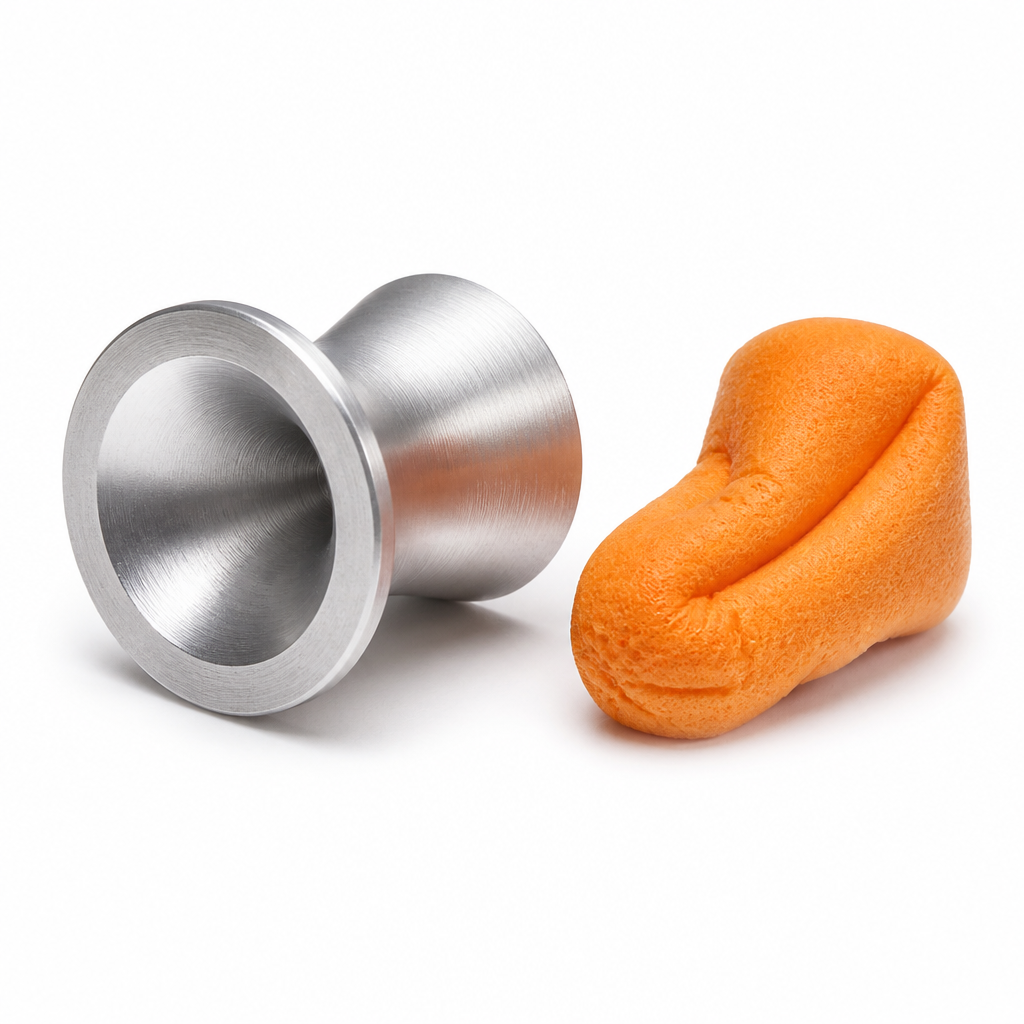
Aluminium is not chosen arbitrarily for precision applications. Its combination of properties makes it genuinely superior for a wearable hearing protection device that needs to survive years of daily handling in a warm, moist environment.
Aluminium has a density of approximately 2.7 g/cm³, which means the ATTENU8 body contributes negligible weight to the ear plug. For a product worn during sleep, weight matters. Heavy ear plugs create pressure against the pillow and the ear canal walls, interrupting sleep rather than enabling it. The aluminium body is rigid enough to hold its shape under any realistic handling force while remaining light enough that side sleepers do not feel it pressing against the pillow throughout the night.
Aluminium alloys also offer high strength-to-weight ratios compared with most plastics, meaning the body resists the micro-fractures and stress cracking that can affect plastic housings at stress concentration points, particularly around the tip-insertion area where repeated flexing occurs.
When aluminium is exposed to air, a layer of aluminium oxide forms almost instantaneously on its surface. This oxide layer provides excellent resistance to the warm, humid, earwax-rich environment of the ear canal. ATTENU8’s anodised finish reinforces this protection further, creating a harder surface that resists the daily abrasion of insertion and removal. Plastic housings have no equivalent natural protection mechanism. Their resistance depends entirely on coatings and formulation quality, both of which degrade with UV exposure, heat cycling, and chemical contact.
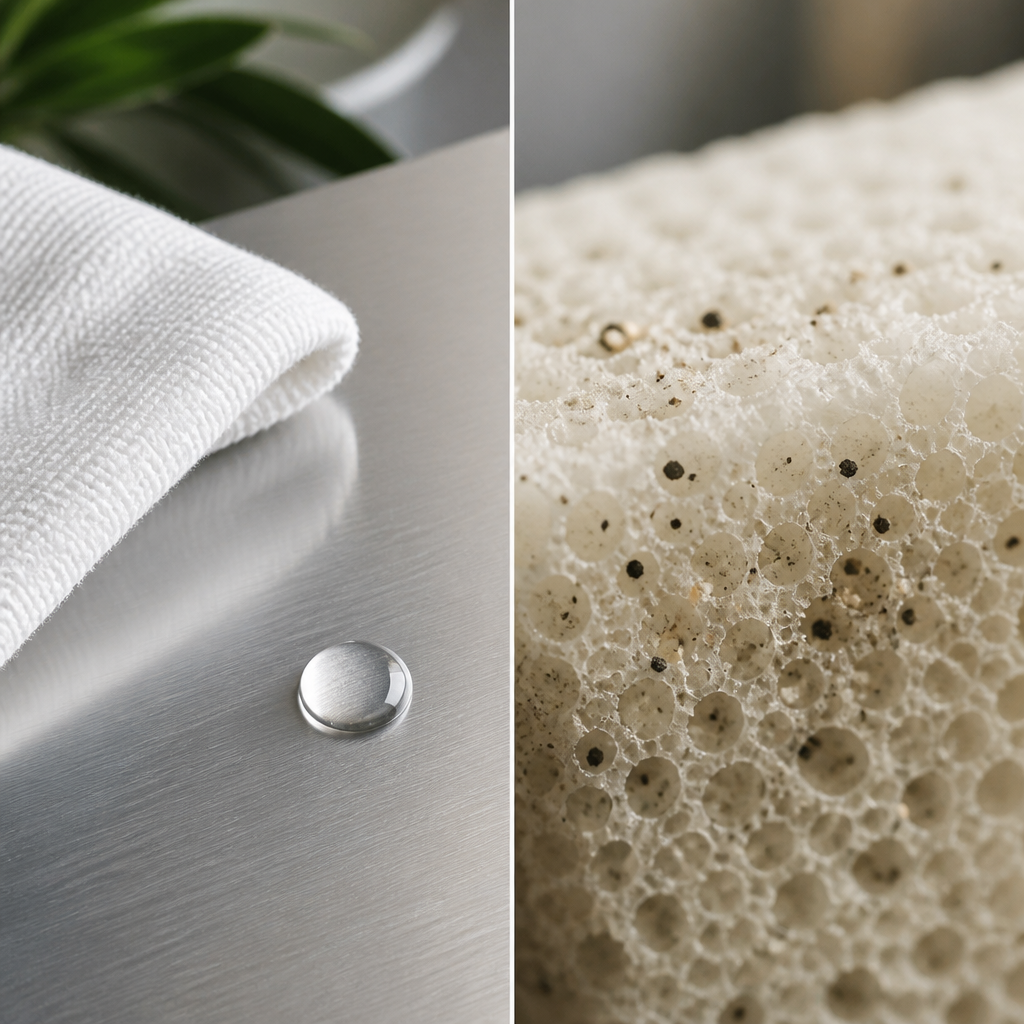
Pro tip: Wipe the aluminium body with a damp cloth weekly. Because the surface is non-porous and anodised, this 30-second routine keeps the body clean without any risk of damage to the material or surface finish.
The density change between the aluminium body and the soft memory foam tip is not incidental. It is acoustically significant. Sound energy transmits efficiently through materials of similar acoustic impedance and loses energy at boundaries between materials of very different impedance. The aluminium-to-foam interface creates exactly that kind of impedance mismatch, which contributes to the sound attenuation before the acoustic energy even reaches the ear canal. This is part of why ATTENU8 achieves an approximately 32dB SNR rating rather than the lower figures typical of foam-only designs.
Plastic-bodied ear plugs occupy a middle ground in the market: more structured than raw foam, less durable than metal. In practice, plastic housings fail in ways that are gradual enough to be invisible until the product simply stops performing reliably.
The ear canal sits at body temperature, and ear plugs worn during sleep are held against warm skin for six to eight hours at a time. Many consumer plastics have relatively low heat deflection temperatures. Over months of nightly use, repeated thermal cycling causes dimensional change in the housing. A housing that no longer holds its original geometry no longer positions the foam tip at the designed depth and angle. The seal quality becomes inconsistent, and users notice that the same ear plugs seem to provide less noise reduction than they once did.
Aluminium’s thermal properties are fundamentally different. It conducts heat away from contact points quickly and has a melting point far beyond any temperature the ear canal will reach. The geometry of an aluminium body remains stable after years of use in the same way it was stable on day one.
Plastic surfaces develop micro-scratches from routine handling. Every insertion and removal, every time the ear plug is dropped on a nightstand, every contact with keys and coins in a travel bag adds surface damage. Those micro-scratches create a texture that traps earwax, skin oils, and moisture. Over time, a plastic housing that started smooth develops a microscopically rough surface that is both harder to clean and more hospitable to bacterial growth.
Porous surfaces, including raw foam bodies and some silicone compounds, absorb earwax, oils, and moisture. Over time, this absorption creates an environment that supports bacterial growth. A non-porous metal surface with an anodised finish does not share this vulnerability.
Anodised aluminium, by contrast, resists scratch formation due to the hardness of the oxide layer. The surface that ships with the product is largely the surface you will be cleaning two years later.
Plastic housings are sensitive to prolonged UV exposure, which degrades polymer chains and causes brittleness, discolouration, and surface cracking. Travel ear plugs spend time in bags left in cars, on windowsills, and in direct sunlight. An aluminium body is unaffected by UV radiation. It does not bleach, does not become brittle, and does not develop surface crazing. For a product meant to be genuinely reusable over years, this resistance to environmental degradation is not a minor benefit. It is the difference between a product that lives up to its “reusable” claim and one that quietly becomes unreliable within 12-18 months.
Pro tip: When travelling, store ATTENU8 in its case rather than loose in a bag. Not because the aluminium body needs protection from impact, but because keeping the foam tips clean before insertion matters more than protecting the body itself.
The shape of the ATTENU8 body is as important as the material. A concave aluminium profile is not an aesthetic choice. It is an ergonomic and acoustic one.
Standard cylindrical foam ear plugs rely entirely on the user’s technique for insertion depth and angle. Get it slightly wrong and the seal is compromised. Get it very wrong and the noise reduction rating the lab measured becomes irrelevant to what you actually experience. The concave shape of the ATTENU8 body creates a natural resting depth, guiding the foam tip to a consistent position in the ear canal on every insertion.
This is especially important for first-time users and for people with irregular sleep positions who reinsert ear plugs during the night without the benefit of a mirror or full concentration. The body acts as a depth stop, making correct placement the path of least resistance rather than a technique that requires practice.
For side sleepers in particular, a low-profile housing that sits flush with the ear rather than protruding is important for comfort. ATTENU8 includes specific bottom foam tips designed for side sleepers, addressing directly the pressure point that causes most people to abandon ear plugs after one uncomfortable night.
Ear plugs for sleep are worn for six to eight hours in a warm, enclosed environment with direct skin contact. The hygiene requirements for this use case are more demanding than for short-duration industrial use. Material choice has direct hygiene consequences.
Raw foam bodies and many silicone compounds are porous or semi-porous at a microscopic level. They absorb earwax, skin oils, and moisture. A foam plug that looks clean visually may have absorbed contaminants that cleaning cannot remove because the material holds them beneath the surface. This is why disposable foam plugs are disposable. The cleaning problem is solved by replacement.
The anodised aluminium body of ATTENU8 is non-porous. Contaminants sit on the surface rather than being absorbed into it. A wipe with a damp cloth removes them. This is also why the maintenance model makes sense: the foam tips, which do the sealing and do come into sustained contact with ear canal skin, are replaced every 6-8 weeks. The aluminium body, which does not absorb contaminants, is simply cleaned. The two components have different maintenance schedules because they have different hygiene properties.
Competitors with plastic bodies occupy an awkward middle ground: they are presented as reusable, but their surfaces develop the micro-scratch texture that traps contaminants over time. The choice to use aluminium with an anodised finish at ATTENU8 is a choice to make the reusable promise a genuine one rather than a compromise.
Understanding how these three housing approaches compare across the dimensions that actually matter to daily users cuts through a lot of marketing noise. The table below addresses the specific performance categories relevant to sleep, travel, and noise-sensitive use.
| Performance Category | Aluminium Body (ATTENU8) | Plastic Body (Lifestyle Competitors) | Raw Foam (Disposable) |
|---|---|---|---|
| Structural longevity | Decades. Aluminium does not warp, crack, or deform from heat or handling. | 12-24 months typical before thermal cycling and micro-cracking affect geometry. | Single use. Degrades from first handling. |
| Noise reduction consistency | Consistent. Concave body guides foam tip to correct depth every insertion. | Variable. Housing geometry may shift over time, affecting tip positioning. | Highly variable. Entirely technique-dependent. No rigid reference point. |
| Hygiene maintenance | Non-porous anodised surface. Wipe clean. Replace foam tips every 6-8 weeks. | Surface develops micro-scratches that trap contaminants. Harder to clean reliably. | Not cleaned. Discarded after use. |
| Weight and sleep comfort | Very low weight. Low-profile concave shape. Specific side-sleeper tips included. | Light, but protrusion profile varies. Side-sleeper comfort is a common complaint. | Very light but unstable. Moves during sleep. Often found on the pillow by morning. |
| Environmental and cost impact | Body lasts years. Only tips replaced every 6-8 weeks. Minimal waste. | Full product replaced when housing degrades. More waste than metal alternative. | Disposed of after every use. Highest ongoing cost and waste generation. |
| SNR rating | Approximately 32dB. CE certified to BS EN352-2:2002. | Typically 17-24dB SNR for lifestyle-positioned plugs. | High when new, but field performance typically much lower due to inconsistent insertion. |
The upfront price of aluminium ear plugs is higher than disposable foam. This is a real fact, not a disadvantage when examined over any meaningful time horizon, but it is the number that stops some buyers at the first decision point.
Consider the actual cost model. A pair of disposable foam ear plugs used nightly means 365 pairs consumed per year. Even at low per-pair cost, the annual spend adds up consistently, and the waste is substantial. A box of 200 pairs looks economical until you calculate how quickly it disappears for a person using them every night.
With ATTENU8, the aluminium body is a one-time purchase. Replacement foam tips are the only ongoing cost, at a replacement interval of every 6-8 weeks. Over a two-year period, the total cost of the durable reusable ear plugs model, including all tip replacements, is substantially lower than the equivalent in disposable foam. One internal analysis referenced by ATTENU8 describes metal designs as 70-80% cheaper than disposable foam over multi-year periods, despite higher initial cost.
The environmental case is equally clear. A single aluminium body replacing hundreds of disposable foam units over its lifetime represents a material reduction in plastic and foam waste. For buyers motivated by sustainability, this is not a secondary consideration. It is a core reason to choose the metal option from the start.
For professionals in construction, manufacturing, or other high-noise environments who require hearing protection for repeated daily use across years, the economics are even more straightforward. The aluminium body does not degrade with industrial-environment exposure in the way that plastic-bodied alternatives do. The maintenance overhead is predictable: clean the body, replace foam tips on schedule, and the product performs consistently.
No. Aluminium has a density of approximately 2.7 g/cm³, which means the ATTENU8 body adds negligible weight compared with any realistic alternative. The concave shape also sits lower in the ear than most cylindrical or bulbous plastic designs, which reduces the feeling of protrusion, particularly relevant for side sleepers.
The aluminium body contributes in two ways. First, it guides the memory foam tip to the correct insertion depth consistently, which is where most noise reduction is lost in foam-only designs. Second, the acoustic impedance mismatch at the aluminium-to-foam boundary adds an additional attenuation layer before sound reaches the ear canal. Together, these effects support ATTENU8’s approximately 32dB SNR rating.
Aluminium naturally forms a protective oxide layer when exposed to air, giving it inherent corrosion resistance. ATTENU8’s anodised finish reinforces this further. The combination of the natural oxide layer and the anodised surface means the body is well-suited to the warm, moist environment of the ear canal and does not corrode, stain, or discolour with regular use and proper cleaning.
Loop and Flare Audio products use plastic or silicone housings and tend to target lifestyle or concert-going use cases with lower SNR ratings, typically in the 17-24dB range. ATTENU8’s aluminium body achieves approximately 32dB SNR, which positions it at the higher end of hearing protection for sleep and professional environments. The structural longevity and hygiene properties of the aluminium housing are also distinct from what plastic or silicone-bodied alternatives offer.
ATTENU8 foam tips are designed to be replaced every 6-8 weeks of regular use. The tips are the sealing component that contacts the ear canal and that absorbs the most wear and contamination. The aluminium body does not require replacement, only regular cleaning with a damp cloth. This maintenance model means the ongoing cost is low and the aluminium body itself is genuinely a long-term investment.
The anodised aluminium surface of ATTENU8 does not come into direct contact with ear canal skin. The memory foam tips form the interface between the product and the skin. Aluminium itself has a strong biocompatibility profile and is used widely in medical and food-contact applications. The combination of an anodised outer body and foam tips means metal sensitivity is not a practical concern for the vast majority of users.
If you have switched from disposable foam or a plastic-bodied ear plug to a metal body design, we would like to hear what difference you noticed in fit, comfort, or noise reduction quality.

