


 0

If you wake at 3 a.m. to a snoring partner, a passing truck, or a neighbour’s television, you already know that noise is one of the most reliable destroyers of deep sleep. Sleeping with earplugs is the most direct fix available, yet most people who try them give up within a week because they chose the wrong type, inserted them incorrectly, or worried whether nightly use was actually safe. This guide covers all of it: the real benefits, the genuine risks, how to insert earplugs properly, how to keep them clean, and what to look for when choosing a pair built to last longer than a single night.
| Key Insight | Explanation |
|---|---|
| Nightly use is safe for most adults | Sleeping with earplugs every night is generally safe provided they are kept clean, inserted correctly, and replaced when worn. |
| Fit matters more than noise rating | A poorly fitted earplug with a high noise rating blocks less sound than a well-fitted one with a moderate rating. Three tip sizes help you find the right seal. |
| Earwax buildup is the main hygiene risk | Earplugs can push wax deeper into the canal over time. Taking one or two nights off per week and keeping ears clean prevents most issues. |
| Side sleepers need a low-profile design | Lying on a pillow pushes standard earplugs further in. A concave body design with soft memory foam tips reduces that inward pressure significantly. |
| Reusable metal-bodied earplugs outlast foam | The metal body lasts indefinitely. Only the memory foam tip needs replacing every 6 to 8 weeks, making them far cheaper and less wasteful over time. |
| Around 32 dB reduction is the practical target for sleep | Standard sleep earplugs reduce noise by 25 to 33 dB. That range is sufficient to mask snoring, traffic, and typical urban noise without silencing emergency alerts entirely. |
| Never insert so deeply that removal requires tools | A correctly seated earplug comes out easily with your fingers. If it doesn’t, it is inserted too deeply and may cause eardrum irritation. |
The brain does not fully switch off during sleep. It continues to monitor the auditory environment, and sudden or variable sounds, a truck braking, a partner rolling over and snoring, a neighbour closing a door, trigger a micro-arousal that pulls you out of deep sleep even when you don’t fully wake up. These micro-arousals accumulate across the night, cutting the time you spend in the restorative stages your body actually needs.
Research suggests that reducing noise during sleep may increase the time spent in deeper sleep stages, which translates to better concentration, improved mood, and sharper reaction time the following day. Earplugs address this at the source by reducing the volume of incoming sound before it reaches the ear canal, rather than masking it with another sound the way white noise machines do.
For light sleepers, the effect is immediate. For people living in cities, near construction, or sharing a bedroom with a heavy snorer, earplugs are less a lifestyle accessory and more a genuine necessity. The question is not really whether to use them but how to use them in a way that is comfortable, hygienic, and sustainable over months and years.
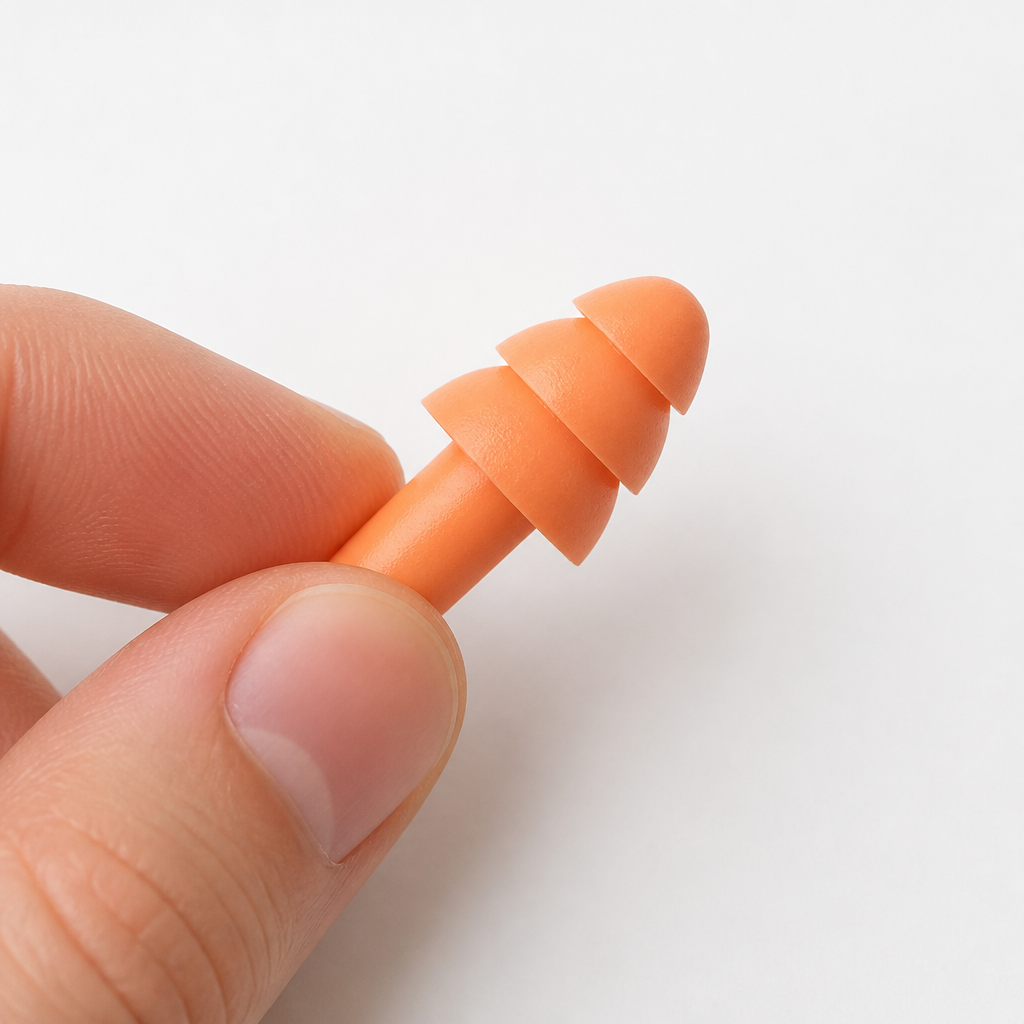

The short answer is yes, for most healthy adults. Earplugs reduce noise by roughly 25 to 33 dB, which is well within safe limits. Hearing damage requires prolonged exposure to sounds above 85 dB. Earplugs do the opposite: they lower the sound level reaching the eardrum, so there is no physiological mechanism by which correctly used earplugs cause hearing loss.
The medical consensus is reassuring. Most audiologists and ENT specialists agree that earplugs are safe for regular use when proper technique is followed. Some practitioners suggest taking one or two nights off per week to allow the ear canal to complete its natural cleaning process, which is a reasonable precaution rather than a hard clinical requirement.
There are two situations where caution is warranted. If you have a history of recurring ear infections, unusual earwax buildup, or a perforated eardrum, speak to a healthcare professional before using earplugs regularly. And if you have a responsibility to hear nighttime alerts, such as a parent of a young infant or someone who relies on a smoke alarm as their only fire warning, factor that into your decision about how much noise reduction you need.
A well-fitted earplug that stays clean and is inserted to the right depth is one of the lowest-risk sleep interventions available. The risks come almost entirely from poor hygiene or improper insertion, not from noise reduction itself.
Pro tip: If you need to hear alarms, set your phone alarm to a maximum volume and place it close to your pillow rather than abandoning earplugs entirely. Most 30 to 32 dB earplugs will still allow a loud alarm to wake you.
Earplug risks are real but almost entirely avoidable. Understanding them is more useful than being frightened by them.
This is the most common side effect of regular earplug use. Earplugs can push earwax deeper into the canal over time, leading to muffled hearing, itching, or temporary hearing loss. The ear is self-cleaning under normal conditions: its outward hair motion gradually moves wax toward the opening. Earplugs can interrupt this. Taking occasional nights off and avoiding pushing earplugs unusually deep addresses this for most people.
Bacteria from unclean or inadequately dried earplugs can cause outer ear infections, a condition sometimes called otitis externa. This risk applies almost exclusively to earplugs that are not cleaned regularly or are stored damp. It is not a reason to avoid earplugs. It is a reason to treat them like any other item that touches your body daily: clean them properly and replace the contact surface when it wears out.
Inserting earplugs too deeply may cause eardrum irritation or pressure pain. A correctly placed earplug should come out easily with your fingers. If removal requires anything other than a gentle fingertip pull, the plug is in too far. This is particularly relevant for foam plugs that expand aggressively after insertion.
Sleeping on your side can push a standard earplug further into the ear canal, increasing pressure on the canal wall. This is one of the most common complaints from people who try earplugs and give up. The solution is a low-profile design that does not protrude significantly from the ear, combined with a soft tip material that compresses gently rather than creating rigid resistance.
Pro tip: If you wake up with pressure pain or a sore ear canal, it almost always means your earplug either sits too deep or uses a tip material that is too firm for your anatomy. Try a smaller tip size before concluding that earplugs are not for you.
Correct insertion is where most people go wrong, and it is responsible for a significant share of earplug complaints including poor noise reduction, discomfort, and infections. The technique is simple once you know it, but it is not intuitive.
Start with clean hands. Reach over your head with the opposite hand and gently pull the top of the ear upward and slightly outward. This straightens the ear canal, which curves slightly in most adults. With your other hand, slide the earplug in until you feel a gentle seal form. You will notice ambient sound become noticeably muffled when the fit is correct. Hold it in place for a few seconds if using an expanding foam tip, so it can fully seat.
For memory foam tips on a metal-bodied earplug like ATTENU8’s, no rolling is required. The tip is already soft and conforms to the canal as it seats. Push gently inward rather than trying to compress the tip first. Once fitted, the earplug should not shift around or pull out easily when tugged gently.
A reliable test: cover your ears with your palms after inserting the earplugs. If there is a significant difference in noise level between covered and uncovered, the seal is incomplete. There should be very little additional sound reduction when you add your palms, because the earplugs are already doing the work. If covering your ears makes a noticeable difference, try a larger tip size or re-seat the earplug.
Never pull an earplug straight out with force, particularly after sleeping, when the tip may have expanded further overnight. The correct technique is to first break the seal: for a metal-bodied earplug, push the body gently upward with your thumb so the tip faces slightly downward in the canal. This releases the suction and allows the plug to come out cleanly at a better angle. Do not twist or unscrew the stem from the tip during this process.
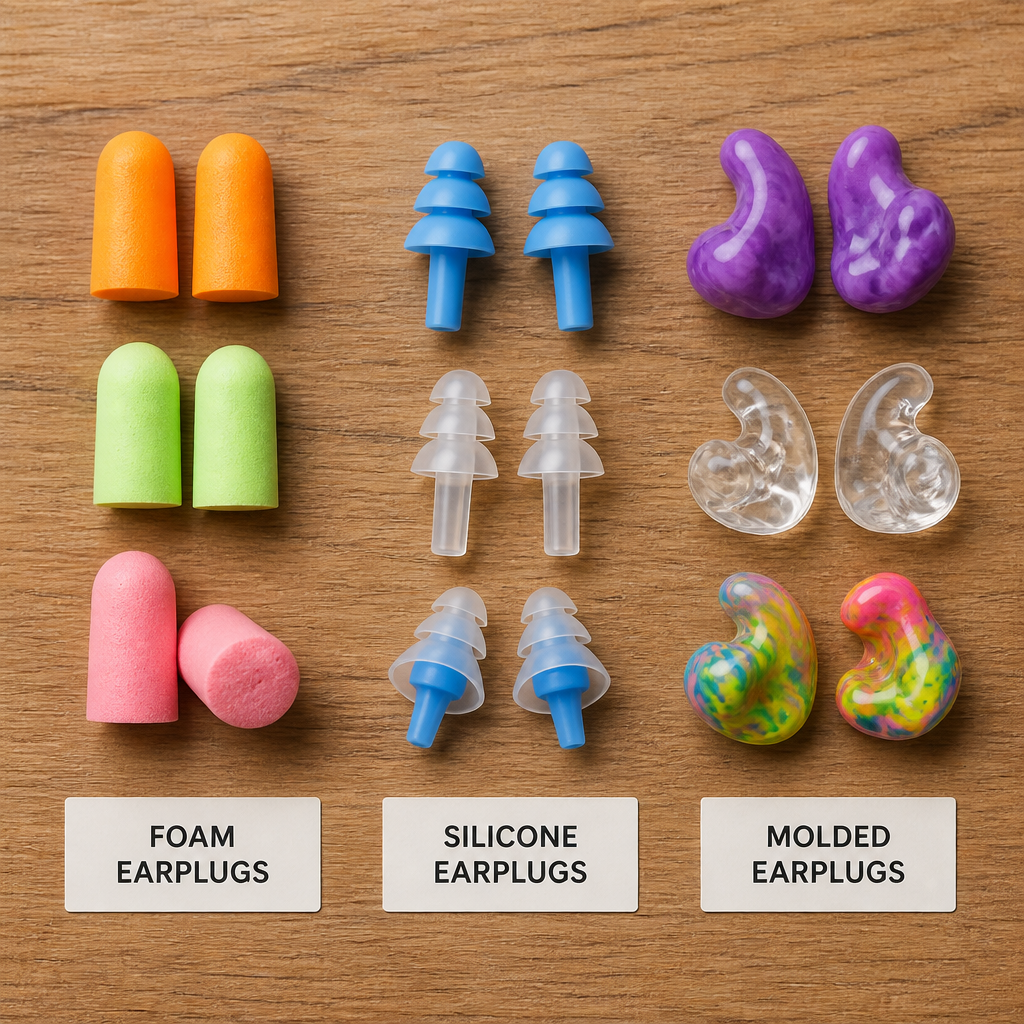
Not all earplugs are designed with sleep in mind, and the differences between types matter more than the marketing copy on the packaging. The table below compares the three main types you will encounter when choosing earplugs for sleeping.
| Earplug Type | Comfort for Sleep | Longevity and Hygiene |
|---|---|---|
| Disposable foam (single-use polyurethane) | Soft but bulky. The roll-and-insert technique is awkward for side sleepers. Degrades quickly, losing expansion recovery within a few uses. | Poor. Porous surface traps moisture and bacteria. Must be replaced every few days for hygiene. Generates significant waste over months of daily use. |
| Silicone or wax moulded (pre-shaped, reusable) | Sits in the outer ear rather than the canal, which suits some people. Less effective noise reduction. Can feel rigid against the pillow for side sleepers. | Moderate. Easier to clean than foam. However, the moulded shape degrades or distorts over time, reducing the seal. |
| Metal-bodied with memory foam tips (e.g. ATTENU8) | Excellent. The concave aluminium body keeps the earplug low-profile against the pillow. Soft memory foam tips seat comfortably without aggressive expansion. Three tip sizes (XS, S, M) allow a precise fit for different canal shapes. | Excellent. The metal body is permanent and easy to clean. Only the foam tip needs replacing every 6 to 8 weeks, rather than disposing of the entire earplug. |
The practical conclusion: disposable foam earplugs are fine for occasional use, such as a noisy hotel or a one-off event, but they are a poor long-term solution for nightly sleep. They accumulate bacteria quickly, lose their shape, and the roll-insert-hold technique is tedious at 11 p.m. A reusable, metal-bodied earplug with replaceable foam tips gives you consistent noise reduction, better hygiene control, and a fraction of the waste over a year of use.
Pro tip: When comparing earplugs, pay attention to whether tip sizes are included. A single-size earplug is a compromise for everyone. The difference between a size S and a size M tip can be the difference between a functional seal and a plug that falls out overnight.
Earplug hygiene is the single most neglected aspect of daily earplug use, and it is directly responsible for the most common side effects, including infections and irritation. Cleaning earplugs is not complicated, but it requires consistency.
For a metal-bodied earplug, wipe the aluminium body with a clean damp cloth or wash it with mild soap and warm water. Rinse thoroughly and allow it to dry completely before storing. A damp metal surface stored in a closed case will foster bacterial growth, so drying is not optional.
Memory foam tips accumulate skin oils, moisture, and earwax with each use. Even with regular cleaning, the foam material begins to lose its elasticity and becomes less hygienic over time. The practical replacement interval for memory foam tips used nightly is every 6 to 8 weeks. Replacing only the tips, rather than the entire earplug, keeps the cost low and eliminates waste from the durable metal body, which does not need to be discarded.
Replace foam tips immediately if you notice visible discolouration, a persistent odour, a change in texture such as hardening or crumbling, or if the tip no longer expands and returns to its original shape. Any of these changes mean the foam has degraded past the point where it provides a reliable seal or meets basic hygiene standards.
Taking a night or two off from earplugs each week also allows the ear canal to complete its natural self-cleaning cycle. This simple habit prevents the gradual wax accumulation that is the most common complaint among nightly earplug users.
Side sleeping with earplugs is where most people struggle. The problem is straightforward: when your ear is against a pillow, any earplug that protrudes from the canal gets pushed inward. Standard foam earplugs, which stick out significantly when inserted, create uncomfortable inward pressure that either wakes you up or causes soreness by morning.
A low-profile design solves this. The ATTENU8 metal-bodied earplug uses a concave aluminium body specifically shaped to sit flush and reduce pillow-to-earplug contact. Unlike cylindrical foam plugs that protrude outward, the concave body keeps the bearing surface close to the ear. The foam tips supplied for the underside of the earplug are also designed to cushion contact for side sleepers specifically.
Beyond earplug design, a few adjustments make side sleeping significantly more comfortable. Use a pillow with some softness or give: a firm foam pillow pushes back against the earplug with more force than a softer fill. Some side sleepers find a small indentation or travel-style pillow with a central cutout removes the pressure entirely. These are minor changes, but combined with the right earplug shape, they make nightly use genuinely sustainable.
A common mistake is choosing a tip that is too large in an attempt to maximise noise reduction. An oversized tip creates a tighter canal seal but also more outward pressure, which means more resistance when the pillow pushes the plug inward. Use the smallest tip size that still passes the palm-cover test for a good seal. On the ATTENU8 fit guide, start with size S and move up or down based on whether the plug shifts around or creates discomfort.
Yes, for most healthy adults, sleeping with earplugs every night is safe when they are kept clean, inserted correctly, and replaced or maintained when worn. The main risks, earwax buildup and minor irritation, are manageable with basic hygiene habits. If you have a history of ear infections or perforated eardrums, consult a healthcare professional before making earplugs a nightly habit.
No. Standard sleep earplugs reduce noise by around 25 to 33 dB, which is well within safe hearing limits. Hearing damage requires prolonged exposure to sounds above 85 dB. Earplugs do the opposite of this: they lower the sound level reaching the eardrum. There is no mechanism by which correctly used earplugs cause hearing loss.
Ear soreness after sleeping with earplugs almost always comes from one of three causes: the tip size is too large and creating excessive canal pressure, the plug was inserted too deeply and pressed against sensitive tissue, or a side-sleeping position pushed the earplug further in against the pillow. Try a smaller tip size, ensure you are not inserting past the point of a comfortable seal, and consider a low-profile earplug designed for side sleeping.
For disposable foam earplugs, replace them every few days at most. Their porous surface accumulates bacteria quickly even with regular use. For reusable metal-bodied earplugs with foam tips, the metal body can be cleaned and reused indefinitely. The foam tips should be replaced approximately every 6 to 8 weeks with nightly use, or sooner if they show discolouration, hardening, or loss of expansion.
A 30 to 32 dB earplug will not silence a smoke alarm or loud phone alarm. It will reduce the perceived volume, but both types of alerts are specifically designed to be loud enough to wake sleeping people. If you are concerned, set your phone alarm to maximum volume and place it close to your head. Earplugs reduce ambient noise levels without creating total acoustic isolation.
Side sleepers need a low-profile earplug that does not protrude significantly from the ear canal, combined with a soft tip that compresses gently rather than creating rigid resistance against the pillow. A metal-bodied earplug with a concave shape and soft memory foam tips, available in multiple sizes, addresses the main sources of side-sleeping discomfort. The ATTENU8 design was specifically developed with this use case in mind, including foam tips designed for the underside for side sleeper positioning.
Cover your ears with your palms after inserting the earplugs. If there is a significant drop in noise level when you add your palms, the seal is incomplete and the plug needs to be reseated or a larger tip tried. A well-fitted earplug creates a seal thorough enough that cupping your hands over your ears adds very little additional noise reduction. The plug should also not shift around in the canal and should come out easily with gentle finger contact, without requiring force.
Have you tried sleeping with earplugs before? Share what worked, what didn’t, and whether switching earplug types or tip sizes made a difference for you.

