


 0
0

Most people who switch to reusable ear plugs replace them far too soon, not because the product failed, but because they never cleaned them properly. If your ATTENU8 ear plugs are feeling sticky, inserting slower, or smelling off after a few weeks, a dirty maintenance routine is almost certainly the cause. Knowing how to clean ear plugs correctly means understanding that the aluminium body and the foam tips are two separate materials that need two separate approaches. Treat them the same way and you will either damage the foam or under-clean the metal. This guide covers exactly what to do, how often, and what to avoid.
The ear canal is warm, slightly moist, and produces wax. Every time you insert an ear plug, the foam tip picks up earwax, skin oils, and dead skin cells. Left on the surface of porous foam, that material becomes a bacterial culture sitting directly against your ear canal. The aluminium body accumulates sebum and surface grime that, over time, makes the plug feel unpleasant to handle and harder to grip for insertion.
A common mistake is treating the metal body as the only part that needs attention and ignoring the foam entirely between tip replacements. In practice, users who maintain a consistent ear plug hygiene routine report two clear benefits: the foam tips retain their expansion speed longer, meaning insertion is quicker and more reliable, and they experience fewer episodes of ear irritation or blockage.
The cleaning routine itself takes under two minutes per day. There is no reasonable argument for skipping it.
| Key Insight | Explanation |
|---|---|
| Use different cleaning methods for each component | The aluminium body tolerates isopropyl alcohol wipes. The memory foam tips do not. Alcohol degrades the foam’s cellular structure and accelerates breakdown. |
| Daily wipe is non-negotiable | A dry lint-free cloth wipe of the foam tips after each use removes surface oils before they bond into the foam. This is the single most effective thing you can do. |
| Deep clean the metal body weekly | Daily users should deep clean the aluminium body once per week. Occasional users can do this every two weeks. The concave shape collects oils that daily wiping alone misses. |
| Replace foam tips every 6 to 8 weeks | ATTENU8 recommends replacing foam tips every 6 to 8 weeks for daily users. Good cleaning habits extend performance within that window but do not replace it. |
| Never store ear plugs loose | Leaving them on a nightstand or in a pocket exposes the foam to dust and debris. A closed case also prevents accidental compression that causes premature deformation. |
| Appearance is not a reliable hygiene indicator | Foam tips can harbour bacteria well before they look visibly dirty. Set a calendar reminder for tip replacement rather than relying on how they look. |
| Clean your ears before inserting plugs at night | Wiping your ear canal area with a warm washcloth before insertion removes excess earwax and oils that would otherwise transfer to the foam, extending tip life noticeably. |
A daily cleaning routine for reusable ear plugs does not require special equipment or significant time. The goal is to remove surface contamination before it bonds to the material and to keep the aluminium body free of oils that make the plug harder to handle.
After each use, remove the foam tips from the aluminium body. Use a dry, lint-free cloth to wipe the outer surface of each foam tip. Do not rub hard. You are lifting surface oils and loose earwax, not scrubbing. Then take a dry cotton swab and run it around the inside of the aluminium concave housing to remove any visible residue.
Once or twice a week, replace the dry cotton swab with one that has been lightly touched against an isopropyl alcohol wipe. This step is for the aluminium body only. Wipe the exterior surface and the interior channel of the metal housing, then leave it to air dry for thirty seconds before reattaching the foam tips.
Pro tip: Keep a small tin or case with two dry cotton swabs and a single-use alcohol wipe in your travel bag. This makes the daily cleaning routine possible even when you are away from home, which is exactly when ear plug hygiene tends to slip.
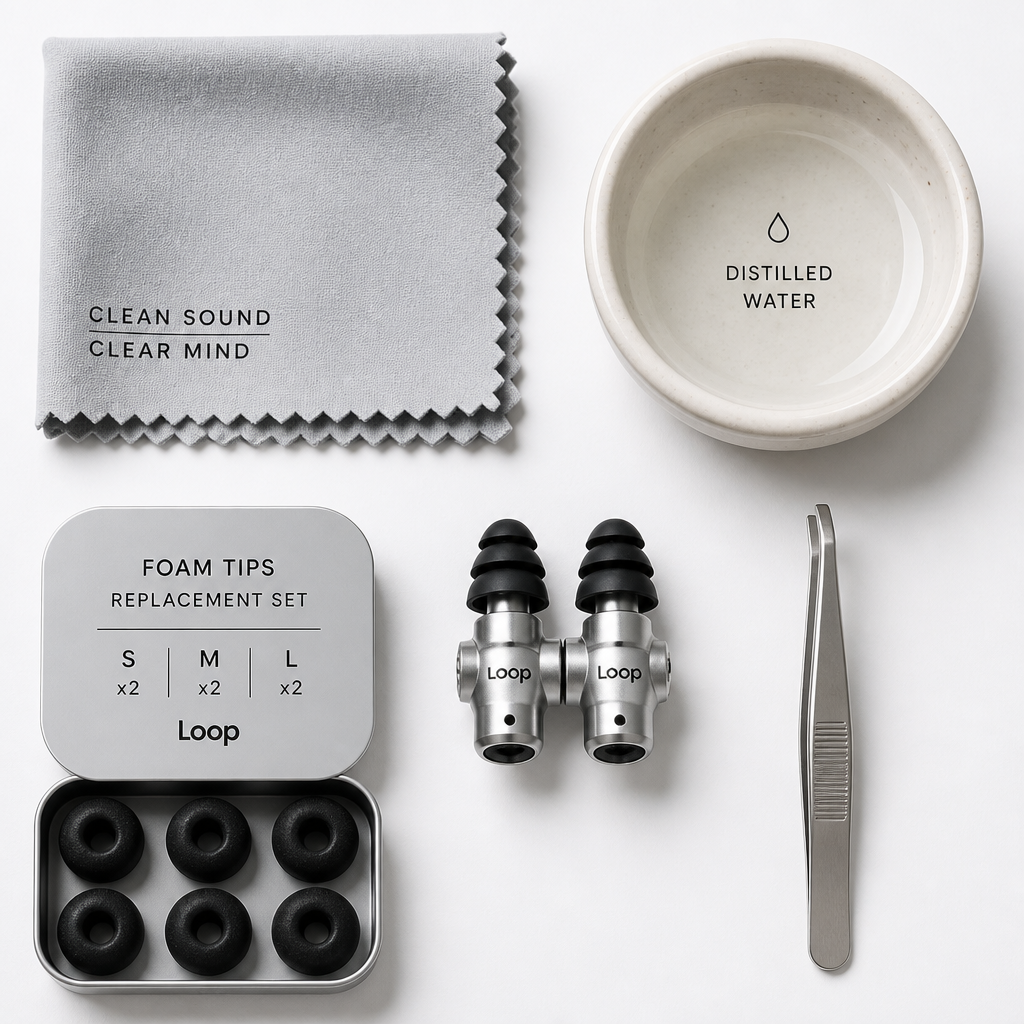
The aluminium body of a premium reusable ear plug is the component built to last years, not weeks. That durability only holds if you remove the cumulative buildup that daily wiping does not fully address. A deep clean of the metal body should happen once per week for daily users and once per two weeks for occasional users.
Isopropyl alcohol at 70% concentration is the correct choice. It disinfects effectively, evaporates quickly, and does not corrode aluminium. Apply it with a lint-free cloth or a cotton swab. Do not submerge the aluminium housing in water. While aluminium itself does not rust, extended moisture exposure can affect any internal mechanics of the assembly and will certainly saturate any residual foam fibres inside the housing.
The concave shape of the aluminium body is designed to sit flush against the outer ear. That curve also collects oils at its edges. Pay specific attention to the lip of the housing when doing a deep clean. A cotton swab gives you the precision to reach that edge without soaking the surrounding components.
Avoid abrasive materials, including rough cloths and stiff brushes. Scratching the surface of the aluminium does not affect its function, but it creates micro-grooves that trap dirt more easily and make future cleaning harder. Soap and water are not ideal for the metal housing because the risk of trapping moisture inside the assembly is real and the benefit over alcohol is minimal.
Pro tip: After a deep clean, hold the aluminium housing up to a light source and look inside the channel. If you can see residue you missed, use a fresh cotton swab. If it comes away clean, you are done. This visual check takes five seconds and keeps you honest about the standard of your cleaning.
Memory foam tips are porous. That porosity is exactly what makes them comfortable and effective at sealing against the ear canal, but it also means contamination works into the material rather than sitting entirely on the surface. This creates two rules that cannot be broken: do not use alcohol on foam, and do not submerge foam in liquid.
For daily maintenance, a dry lint-free cloth is sufficient. Remove the tip from the aluminium body first. Hold the tip gently between two fingers, do not compress it fully, and use the cloth to wipe the outer surface in a light rolling motion. This lifts surface earwax and oil without pushing it further into the foam structure.
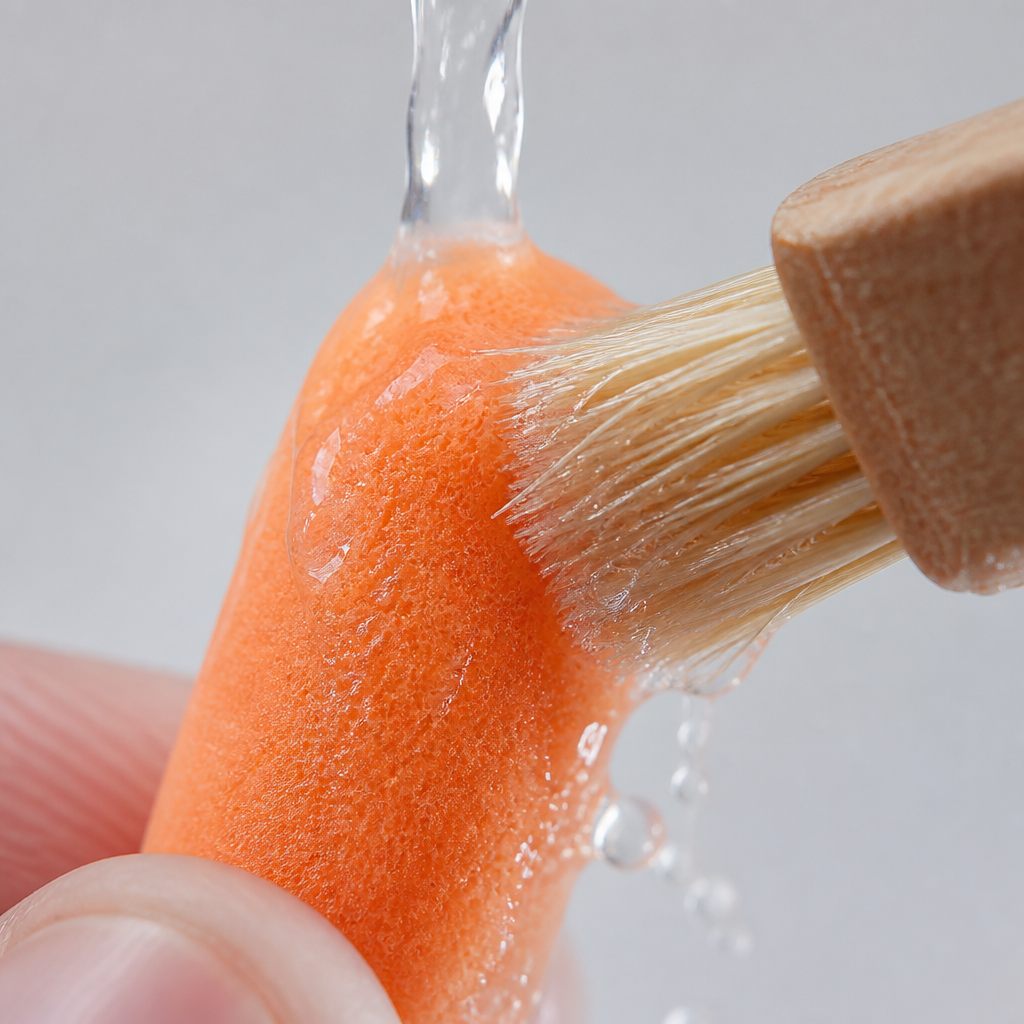
For a slightly deeper clean of the foam surface, a cloth that is barely damp with plain water and mild soap can be used. The emphasis is on barely damp. You want surface moisture only. After wiping, allow the tip to air dry completely before reinserting it into the aluminium housing or placing it back in a storage case. Inserting a wet ear plug can cause ear irritation and create conditions for bacterial growth.
Alcohol degrades the foam’s cellular structure and accelerates the very breakdown you are trying to prevent. Alcohol wipes are appropriate for cleaning the metal body of the ear plug, not the foam tip. This distinction matters more than it might seem. Users who clean the entire plug, metal and foam together, with the same alcohol wipe end up with foam that hardens and loses its slow-expansion behaviour in a matter of weeks rather than the expected 6 to 8 weeks.
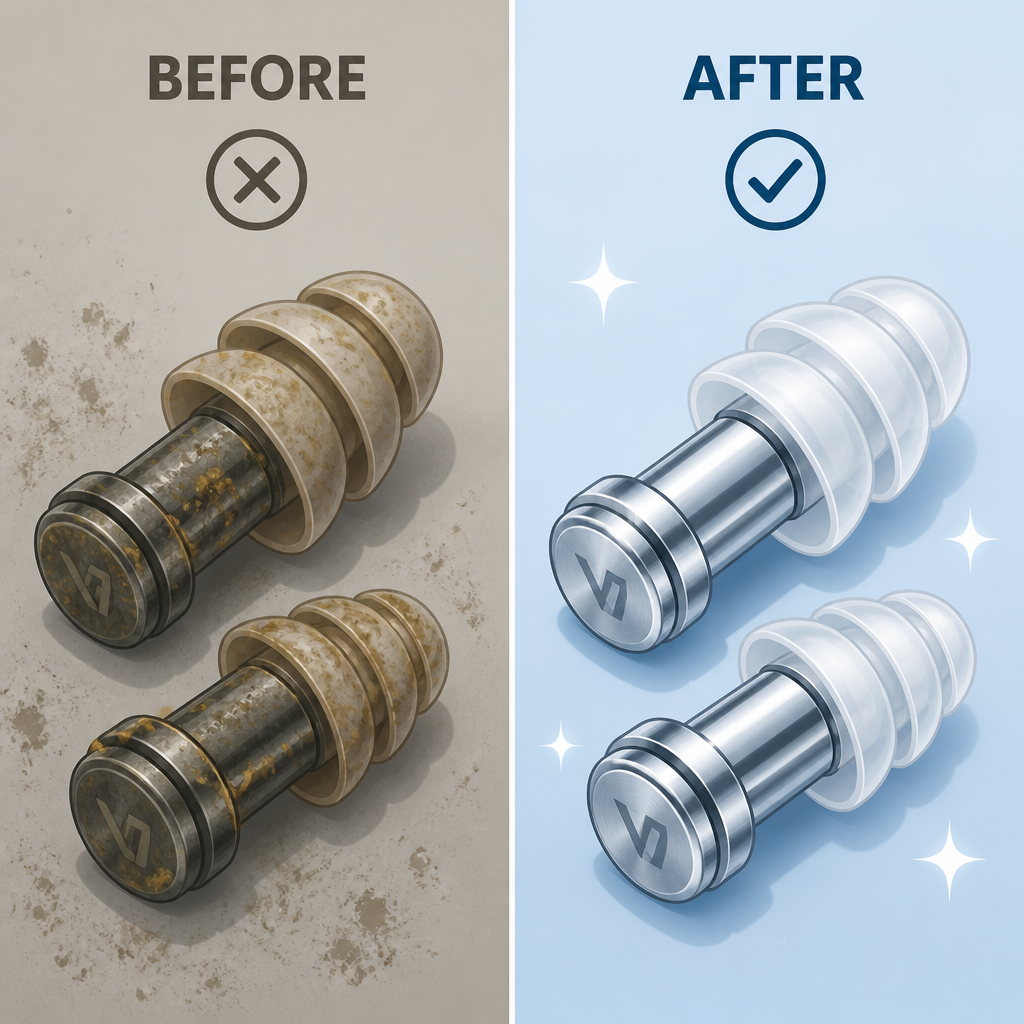
Good cleaning habits extend the useful life of foam tips within their service window, but they do not make foam last indefinitely. ATTENU8 recommends replacing foam tips every 6 to 8 weeks for daily users. The three available sizes, XS, S, and M, allow you to stock replacements cheaply without guessing which size you need.
Earwax is yellow to brown and accumulates on the outer surface of the foam over time. Light surface discoloration after a few weeks is normal and manageable with gentle cleaning. Dark discoloration that penetrates into the foam, or visible debris that cannot be wiped off, is a clear signal to replace. You cannot fully sterilise porous foam, and using heavily soiled tips introduces bacteria directly into the ear canal.
This is the most practical test. If you are noticing sounds that the ear plugs used to block, and you have ruled out changes in your environment, the foam tips are the most likely culprit. Put in a fresh set. If the blocking performance improves noticeably, the old tips were overdue for replacement.
The same logic applies to insertion feel. A foam tip that no longer expands slowly and evenly after compression is not sealing reliably. That inconsistent seal is both a comfort problem and a noise reduction problem. Appearance is not a reliable hygiene indicator for porous foam. Set a six-week calendar reminder rather than waiting until you can see the problem.
Pro tip: Keep a spare set of foam tips in your travel bag or nightstand so you can do an immediate like-for-like comparison when you suspect your current tips have degraded. The comparison removes any doubt about whether cleaning or replacement is the right call.
The way you store your ear plugs between uses has a larger impact on foam tip lifespan than most users realise. Temperature extremes, compression, and dust exposure between uses all accelerate the degradation that cleaning is trying to slow down.
Store reusable ear plugs in their provided case or a small, breathable container after every single use. Room temperature storage in a bedroom nightstand is ideal. The case protects the foam from dust and accidental compression from objects sitting on top of the tips. A closed case also keeps the aluminium body from picking up pocket lint and surface grime that makes daily cleaning harder.
Never store foam tips in sealed plastic bags or humid bathroom drawers. Moisture trapped against foam accelerates bacterial growth and material breakdown. The bathroom is the worst possible storage location for ear plugs despite being the most convenient one for many users.
Avoid storing ear plugs in car glove compartments where temperature fluctuations can be extreme. Heat degrades foam elasticity, and one sustained period of high heat can reduce tip life significantly. When travelling, the small travel tin with a dry cotton swab mentioned earlier is the right approach: compact, clean, and protective.
Reusable ear plug maintenance is not complicated. It is consistent. The users who get the most life out of their foam tips are the ones who wipe the tips clean and put them back in a case every single time without exception, not the ones who do a deep clean once a month and otherwise ignore them.
Dirty hands transfer oils, bacteria, and debris to foam tips before they even reach your ear canal. Wash or sanitise your hands before handling ear plugs. This is especially relevant for professionals using ear plugs in construction, manufacturing, or industrial environments where hands carry heavy contamination. It is a ten-second step that meaningfully extends both hygiene and tip life.
Not all cleaning approaches deliver the same results. The table below compares the three methods most commonly used by reusable ear plug owners, measured against the criteria that matter for ATTENU8 ear plugs specifically.
| Cleaning Method | Best Used For | Risk and Limitation |
|---|---|---|
| Dry lint-free cloth wipe (daily) | Foam tips after every use. Fast, zero moisture risk, sufficient for surface oil and earwax removal. | Does not disinfect. Does not address cumulative buildup on the aluminium body. |
| Isopropyl alcohol wipe (weekly) | Aluminium body only. Disinfects effectively, evaporates quickly, no corrosion risk on metal. | Must never contact foam tips. Alcohol degrades cellular foam structure rapidly and shortens tip life. |
| Mild soap and barely damp cloth | Foam tip surface cleaning when a dry wipe is insufficient. Useful for removing stubborn buildup. | Requires complete air drying before reuse. Risk of over-saturating the foam if too much water is used. Not suitable for the aluminium housing due to moisture retention risk. |
You can use a barely damp cloth with a small amount of mild soap to clean the surface of the foam tips, but you should not submerge them in water or run them under a tap. Saturating the foam pulls moisture into the cellular structure, which is difficult to fully remove and creates conditions for bacterial growth. Always allow the tips to air dry completely before putting them back in your ears or your storage case.
ATTENU8 recommends replacing foam tips every 6 to 8 weeks for daily users. With consistent cleaning after every use, most users reach the higher end of that range reliably. If you notice the foam is no longer expanding slowly after compression, or you can hear more than you used to, replace the tips immediately regardless of where you are in the 6 to 8 week window.
No. Alcohol wipes are appropriate for the aluminium metal body only. Using an alcohol wipe on the memory foam tips degrades the foam’s cellular structure, causing the foam to harden and lose its slow-expansion behaviour much earlier than it should. Keep your cleaning method strictly separated: alcohol for the metal, dry cloth for the foam.
Pack a small tin with two dry cotton swabs and a single-use alcohol wipe. After each use on the road, wipe the foam tips with a dry cotton swab and clean the aluminium body with the alcohol wipe. Keep the ear plugs in their case between uses rather than loose in a bag. This maintains the same standard of care as your home routine without requiring any extra bulk in your luggage.
Yes. Foam ear plugs sit directly against the ear canal and pick up earwax, skin oils, and bacteria with every use. If those contaminants are not removed consistently, the ear plug reintroduces them into the ear canal on the next use. Ear infections, irritation, and blockage are all documented outcomes of poor ear plug hygiene. A daily wipe-down routine is the most straightforward way to prevent this.
Correct cleaning, specifically the dry cloth method for foam tips and alcohol wipe for the aluminium body, does not reduce noise performance. What does reduce performance is incorrect cleaning. Using alcohol on the foam tips causes them to harden and deform, which degrades the ear canal seal that the noise reduction rating depends on. Maintain the tips correctly and replace them on schedule, and the noise reduction performance holds for the full life of the aluminium body.
ATTENU8 supplies foam tips in XS, S, and M. The right size is not just about comfort preference. It is about fit in the ear canal, which determines both the noise reduction seal and the likelihood of the tip dislodging during sleep. If you are unsure of your size, the size that gives you a slow, even expansion feeling after compression is the correct one. The ATTENU8 product page has guidance on selecting between sizes if you need to reassess after your initial purchase.
Have a maintenance tip or cleaning routine that has worked well for your ATTENU8 ear plugs? Share it in the comments below, because real-world experience from daily users often reveals things a guide like this cannot fully anticipate.

