


 0

If you have ever lain awake at 2 a.m. listening to a partner snore, a neighbour’s bass, or street traffic rattling through your window, you already know that not every earplug solves the problem equally. The ATTENU8 vs Loop earplugs debate comes down to one core question: do you want the maximum noise reduction a reusable earplug can realistically deliver, or do you want a lighter, more social-friendly attenuation that takes the edge off sound without blocking it entirely? Both products are reusable, both target noise-sensitive individuals, and both cost more than a bag of disposable foam plugs. That is where the similarities end.
| Key Insight | Explanation |
|---|---|
| ATTENU8 delivers approximately 32dB noise reduction (SNR 32) | This places it in the same attenuation tier as traditional industrial foam plugs, while being fully reusable and more comfortable to insert. |
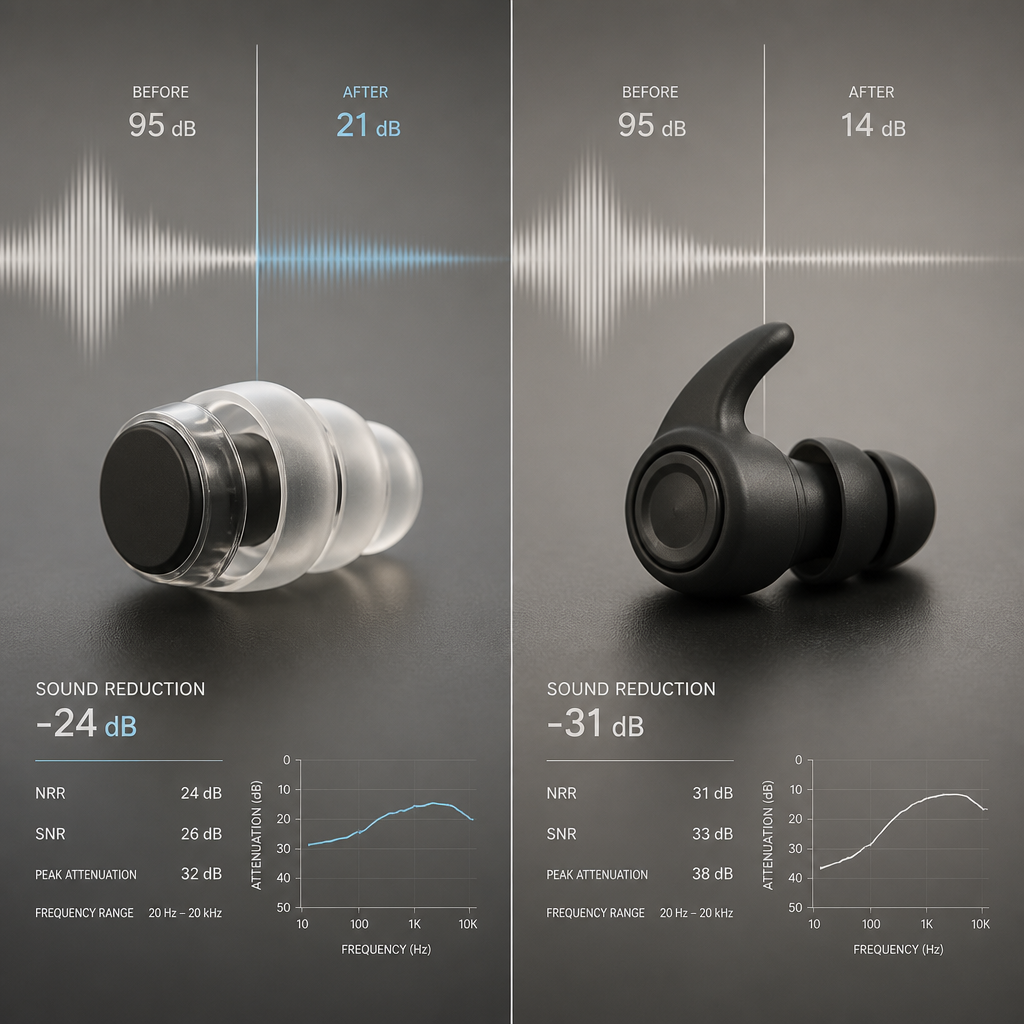
| Loop’s flagship sleep product (Quiet 2) is rated at 24dB SNR / 14dB NRR | This is meaningful attenuation for ambient social noise, but falls short for heavy snoring, construction, or high-decibel environments. |
| The material difference matters more than most people expect | ATTENU8’s aluminium body paired with memory foam creates a density change that dramatically improves low-frequency noise absorption, the type most likely to disrupt sleep. |
| Loop earplugs are silicone-bodied | Silicone is flexible and comfortable, but it does not create the same acoustic mass as metal. This is a trade-off between comfort and raw attenuation. |
| ATTENU8 foam tips are replaced every 6 to 8 weeks, not the whole product | The aluminium body is a one-time purchase. Only the memory foam tip is consumable, which reduces long-term cost significantly compared to disposable alternatives. |
| Loop’s product range targets multiple use cases simultaneously | Loop offers concert, focus, and sleep variants (and a multi-mode switch version). This breadth is useful for casual users, but adds complexity for someone who specifically needs maximum sleep protection. |
| Real-world attenuation is always lower than the rated figure | Standard regulatory halving corrections mean a 32dB-rated product delivers roughly 16dB real-world protection. Even so, 16dB of consistent nightly protection is meaningfully more than 12dB from a 24dB-rated product. |
Before diving into the detailed comparison, it is worth stating clearly: these two products are not actually competing for the same buyer in most cases. ATTENU8 is built around a single uncompromising goal, the highest practical noise reduction in a durable, reusable format. The Loop range is built around versatility and lifestyle aesthetics. If you are reading this because noise is genuinely affecting your sleep or you work in a loud professional environment, that distinction will determine everything.
Understanding the physical construction of each product explains most of the performance differences before you even look at a spec sheet.
ATTENU8 uses a concave aluminium body paired with soft memory foam tips available in three sizes: XS, S, and M. The metal body is anodised and weighs approximately 2 grams per earplug, making it lighter than most people expect from a metal product. The concave shape improves grip during insertion and positions the foam tip precisely at the canal entrance, which is important for achieving a reliable acoustic seal night after night.
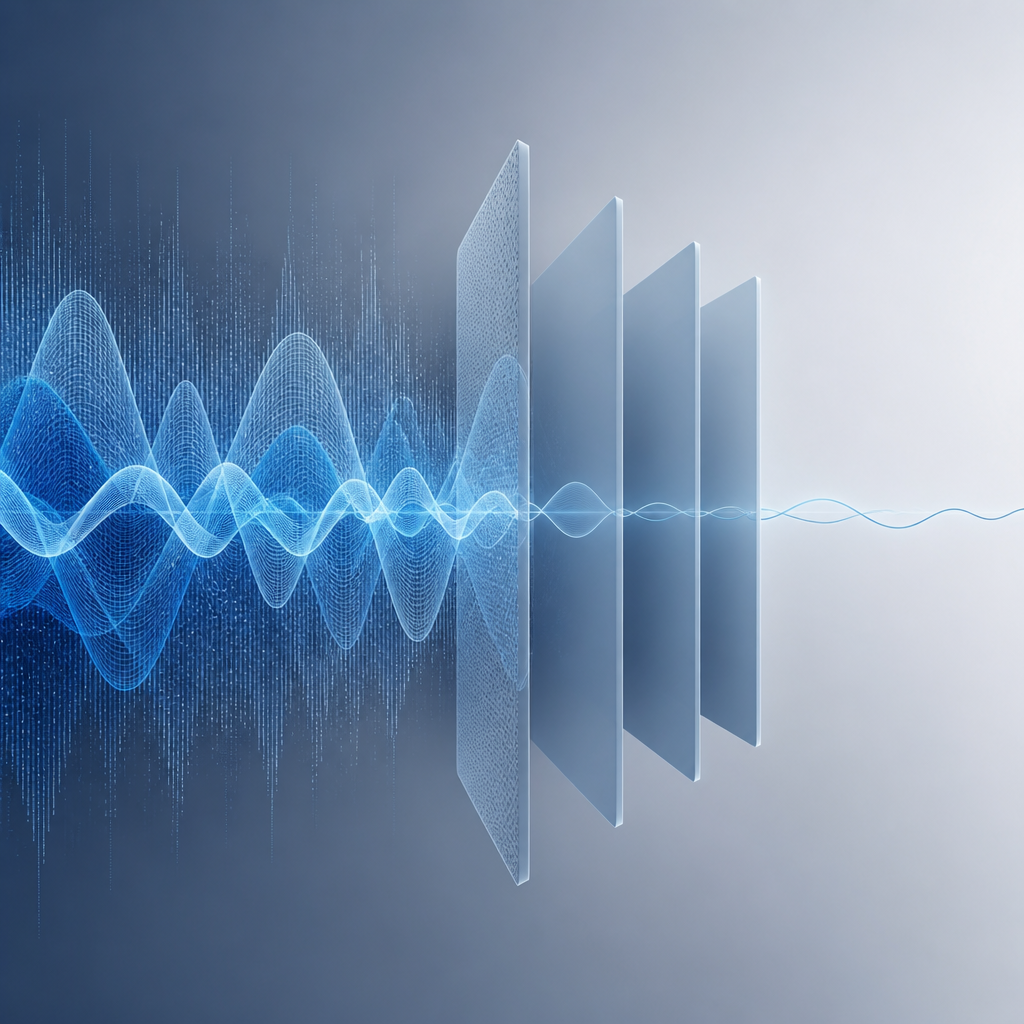
The physics behind the design are deliberate. Low-frequency sound, the type generated by snoring, traffic rumble, and HVAC systems, carries the most energy and is the hardest for standard foam to absorb. By creating a density change between the dense aluminium body and the compressible memory foam, ATTENU8 significantly improves attenuation in exactly this frequency range. This is not a marketing claim. It is the same acoustic principle used in industrial hearing protection design, applied to a consumer sleep product.
The product carries CE certification to BS EN352-2:2002, the European standard for hearing protection plugs. The SNR 32 rating places it in the same protection category as heavy-duty disposable foam earplugs, without requiring you to throw the earplug body away after each use.
Loop produces several distinct products targeting different use cases. The Quiet 2 is the model most directly aimed at sleep and focus users. It is made from flexible silicone rather than metal, which makes it softer and more pliable, but also means it lacks the acoustic mass that metal provides.
The Quiet 2 is rated at 24dB SNR (approximately 14dB NRR). The Experience 2, aimed at concerts and travel, is rated at 17dB SNR. The premium Switch 2 model, which includes a physical mode selector for toggling between three levels of attenuation, is rated at different levels depending on the mode selected. None of the Loop products reach the 32dB SNR level that ATTENU8 delivers.
Pro tip: When comparing earplug ratings, always look at SNR for European-market products and NRR for US-market products. They are calculated differently and cannot be directly compared as equal numbers. ATTENU8’s SNR 32 is not the same as a product with NRR 32. The key is to compare SNR to SNR or NRR to NRR for an honest picture.
The rated SNR or NRR figure on any earplug is a laboratory measurement. Real-world attenuation is consistently lower because ears differ, insertion technique varies, and no two ear canals are identical. Regulatory agencies in most markets recommend applying a halving correction to rated figures to estimate real-world protection. For ATTENU8 at SNR 32, a conservative real-world estimate is around 16dB of consistent nightly attenuation. For Loop Quiet 2 at SNR 24, the equivalent figure is around 12dB.
That 4dB difference might not sound significant, but acoustic attenuation is measured on a logarithmic scale. A 3dB difference represents roughly double the sound energy. The gap between 12dB and 16dB of real-world protection is not trivial for someone in a genuinely noisy environment.
The metal body of an earplug provides the structure and positioning that makes correct seal geometry repeatable night after night. The foam tip provides the actual acoustic seal. When both work together, consistent protection becomes achievable rather than hit-or-miss.
Standard SNR ratings are averaged across frequencies. What the number does not tell you is how a product performs specifically at low frequencies, which is where sleep-disrupting noise typically lives. Snoring peaks between 50Hz and 500Hz. Road traffic rumble sits in a similar range. Traditional foam plugs, and silicone earplugs by extension, attenuate high frequencies more effectively than low ones.
The density contrast in ATTENU8’s aluminium-plus-memory-foam construction creates better low-frequency attenuation than a uniform foam or silicone material. This is why users who have found standard foam earplugs insufficient for partner snoring often report a noticeable improvement with ATTENU8, even if both products carry similar top-line ratings.
Pro tip: If a partner’s snoring is the specific problem you are trying to solve, prioritise attenuation products with a metal or dense composite body. The rated SNR figure alone will not tell you whether a product handles low-frequency sound well. Look at the construction material first.
This is the area where the comparison becomes more nuanced. Comfort is not a single variable. It includes how an earplug feels during insertion, how it feels after several hours of wearing, whether it stays in place through movement, and whether it creates pressure pain when you lie on your side.
Side sleepers face a specific challenge that most earplug reviews gloss over. Any earplug that protrudes from the ear canal will create pressure against the pillow when you roll over. Sustained pressure on a hard object against soft tissue is uncomfortable enough to wake you up, which defeats the purpose of wearing the earplug in the first place.
ATTENU8’s concave aluminium body sits close to the ear canal entrance without significant protrusion. The 21mm height and 10mm width of the assembled earplug (body plus tip) is compact enough that most side sleepers do not report pillow pressure as a problem. The inclusion of a dedicated pair of flat bottom foam tips designed specifically for side sleepers further addresses this. This level of deliberate design for a specific sleep position is not something most competing products bother to include.
Loop Quiet 2 uses a small circular loop structure that connects to a tip. The loop itself is the part that sits against the outer ear. Some users find this comfortable because the loop is flexible silicone, but others, particularly those who move frequently during sleep, find the loop creates lateral pressure against the ear concha. The company markets the Quiet 2 as comfortable for side sleepers, and for many users it is, but the fit is highly dependent on individual ear geometry.
Both ATTENU8 and Loop Quiet 2 include multiple tip sizes. ATTENU8 provides XS, S, and M memory foam tips, plus the flat bottom tips for side sleepers. Loop Quiet 2 includes four sizes (XS, S, M, L). More tip sizes increase the probability of finding a good fit, which directly impacts how much noise reduction you actually achieve.
Memory foam, which ATTENU8 uses, expands to fill the ear canal shape after compression during insertion. This self-adapting behaviour creates a more reliable seal across a wider range of ear canal shapes than a fixed-geometry silicone tip. A silicone tip either fits or it does not. Memory foam adjusts. For users with irregular or unusually shaped ear canals, this matters significantly.
The table below compares ATTENU8 against the two most relevant product tiers from the Loop range: the sleep-focused Quiet 2 and the versatile Switch 2. All specifications are drawn from manufacturer or verified retailer listings.
| Feature | ATTENU8 | Loop Quiet 2 |
|---|---|---|
| Body material | Anodised aluminium (concave shape) | Flexible silicone |
| Tip material | Soft memory foam (replaceable) | Silicone tips (washable) |
| Noise reduction rating | SNR 32 (approx. 32dB) | SNR 24 / NRR 14 |
| Tip sizes included | XS, S, M + flat bottom tips for side sleepers | XS, S, M, L |
| Primary use case | Sleep, travel, high-noise industrial settings | Sleep, focus, general noise sensitivity |
| Certification | CE certified (BS EN352-2:2002) | CE certified |
| Tip replacement cycle | Every 6 to 8 weeks (tips only, body is permanent) | Full product replacement or tip cleaning |
| Protrusion from ear | Minimal (21mm height with tip) | Loop structure extends beyond ear canal |
| Low-frequency attenuation | Enhanced by metal-to-foam density change | Standard silicone attenuation |
| Best for side sleepers | Yes, includes dedicated flat bottom tips | Moderate, depends on ear shape |
ATTENU8 is the right choice if noise is seriously disrupting your sleep or if you work in an environment where adequate hearing protection is not optional. The SNR 32 rating with CE certification means it meets professional hearing protection standards. That matters if you are in construction, manufacturing, military settings, or any workplace where sustained noise exposure above safe thresholds is a reality. A lifestyle earplug rated at SNR 17 or SNR 24 is simply not appropriate in those environments, no matter how comfortable it is.
For sleep specifically, ATTENU8 is the stronger choice for light sleepers dealing with low-frequency noise sources: a snoring partner, traffic, HVAC systems, or neighbours with subwoofers. The combination of metal body acoustic mass and memory foam tip self-adapting seal addresses the exact conditions that standard foam or silicone earplugs handle poorly.
ATTENU8 is also the better long-term cost option for daily users. Because only the foam tips are consumable and those last 6 to 8 weeks each, the ongoing cost of ownership is low relative to disposable alternatives. The aluminium body does not degrade in the way foam does. It does not compress and lose its shape. It does not absorb moisture and soften over weeks of use. It is the same body on day one and on day 365.
Loop earplugs, on the other hand, make more sense for users who want a single product that moves between social settings, office focus work, and occasional sleep use. The multi-mode Switch 2 is particularly well suited to someone who does not need maximum attenuation but wants flexibility. If SNR 24 is sufficient for your noise environment and you prioritise a sleek appearance over raw decibel blocking, that product serves you well. The honest answer is that many people who think they need maximum attenuation actually do not, and for them, the versatility of a mid-tier silicone earplug is a genuine advantage.
But if you are reading this comparison because your current earplugs are not working well enough, the answer is almost always to move up the attenuation scale, not sideways to a product with a different aesthetic at a similar or lower protection rating.
The durability comparison between a metal-bodied and a silicone-bodied product is straightforward. Aluminium does not degrade under normal use conditions. It does not fatigue from repeated compression and release the way silicone eventually does. Silicone is a durable material in absolute terms, but it is less durable than anodised aluminium under the specific conditions of repeated nightly use.
The cost calculation favours ATTENU8 for high-frequency users. Disposable foam earplugs used nightly cost meaningfully more per year than a reusable product with only foam tip replacements every 6 to 8 weeks. The ATTENU8 model, where only the tips are replaced rather than the entire product, is inherently more cost-efficient for long-term regular users.
For occasional users, the comparison is less clear-cut. If you use earplugs a few times a month, any reusable product represents good value over disposables. In that case, the choice between ATTENU8 and a mid-range silicone earplug comes down to how much attenuation you actually need in those specific situations.
There is also an environmental dimension worth noting. Disposable foam earplugs are one of the more wasteful personal care products in common use. A product that replaces only the foam tip rather than the entire earplug every few weeks is a meaningful reduction in material waste for daily users. The aluminium body of ATTENU8 is also recyclable at end of life in a way that mixed-material or silicone products are not always handled cleanly.
For anyone serious about hearing health over the long term, the decision to invest in a higher-attenuation reusable product is one of the more straightforward ones to make. Hearing loss from noise exposure is cumulative and irreversible. Consistent protection matters more than occasional perfect protection. A product you actually wear every night, that fits reliably and delivers genuine attenuation, is worth more than a technically superior product that you skip using because it is uncomfortable or inconvenient. ATTENU8’s design specifically addresses the friction points that cause people to abandon hearing protection: difficult insertion, poor fit, discomfort during side sleeping, and the expense of constant replacement.
If you want to explore ATTENU8’s full product details, tip replacement options, or find the right size for your ear, visit attenu8.co directly.
For most people dealing with a snoring partner, ATTENU8 is the stronger choice. Snoring is a low-frequency sound, and the density contrast between ATTENU8’s aluminium body and memory foam tip creates better attenuation in that frequency range than silicone-bodied alternatives. The SNR 32 rating also provides approximately 8dB more rated protection than Loop Quiet 2’s SNR 24, which translates to a meaningful real-world difference in how effectively disruptive noise is blocked.
Yes. ATTENU8 is specifically designed with side sleepers in mind. The compact profile of the aluminium body minimises pillow pressure, and the product includes a dedicated pair of flat bottom foam tips designed to reduce protrusion further for side sleeping. This level of side-sleeper-specific design is not common across the earplug category.
The memory foam tips should be replaced approximately every 6 to 8 weeks under regular nightly use. The aluminium body itself does not need to be replaced. Only the consumable foam tip is changed, which makes ATTENU8 significantly more economical and less wasteful than disposable earplug alternatives used daily.
Loop’s product range is not generally designed or certified for industrial hearing protection requirements. Products rated at SNR 17 to SNR 24 fall below the attenuation typically required in sustained high-noise workplaces like construction sites, manufacturing floors, or military environments. ATTENU8’s SNR 32 rating and CE certification to BS EN352-2:2002 puts it in the hearing protection tier appropriate for professional noise environments.
Yes. While ATTENU8 is particularly effective for sleep, the same properties that make it useful at night (high attenuation, secure fit, reliable seal) make it useful in any high-noise environment. Frequent flyers, commuters on loud public transport, and people with general noise sensitivity during the day will benefit from the same level of consistent protection. The compact carrying case makes it practical to keep with you throughout the day.
SNR (Single Number Rating) is the European standard measurement for hearing protector attenuation. NRR (Noise Reduction Rating) is the US standard. They use different testing methodologies and cannot be compared as equal numbers. A product rated SNR 32 does not have the same real-world performance as a product rated NRR 32. When comparing earplugs across different markets, always confirm which standard applies and compare like-for-like. ATTENU8 carries an SNR 32 rating under European CE certification standards.
The Switch 2 is a versatile product designed for users who want one earplug that works across multiple settings: concerts, focus work, and sleep. It is a well-designed option for that specific use case. However, even in its highest-attenuation mode, it does not reach ATTENU8’s SNR 32 protection level. If your primary need is sleep protection or professional hearing protection, the Switch 2’s versatility does not compensate for the attenuation gap. If you genuinely need one product for multiple environments and maximum sleep attenuation is not the priority, the Switch 2 is a reasonable choice.
Have you tried ATTENU8, Loop earplugs, or any other reusable earplug for sleep or noise sensitivity? Share what worked, and what did not, in the comments below.

