


 0

Most people who switch to reusable earplugs eventually notice the same thing: after a few weeks, the foam tips feel slower to expand, the metal body feels slightly tacky, and the earplugs start to smell faintly of something they would rather not think about. That is not a product failure. That is a maintenance failure. Knowing how to clean reusable earplugs correctly is the single most important habit that separates people who get months of reliable performance from their earplugs and people who throw them out after six weeks convinced reusable options are not worth it. This guide covers every part of earplug hygiene, from daily wiping to weekly deep cleans, and tells you exactly when foam tips need replacing.
| Key Insight | Explanation |
|---|---|
| Metal body and foam tips need separate cleaning approaches | The aluminium body can handle a damp cloth with mild soap. The foam tip cannot be submerged in liquid or cleaned with alcohol without permanent damage to its expansion properties. |
| Never use alcohol on foam tips | Alcohol degrades open-cell foam at a cellular level, causing the tip to lose its shape-memory and noise-sealing ability. Use alcohol wipes only on the metal body, never the foam. |
| Wipe the foam tip after every single use | A dry lint-free cloth removes surface earwax before it hardens and embeds deeper into the foam. This one habit extends tip lifespan significantly more than any deep-clean routine. |
| Replace foam tips every 6 to 8 weeks with daily use | Memory foam begins losing its expansion properties around week five due to accumulated oils and compressed cellular structure. Visual cleanliness is not a reliable indicator of functional life remaining. |
| Dirty earplugs can cause ear infections | Bacteria and fungi accumulate on unclean earplug surfaces and are reintroduced into the ear canal on every insertion. Regular cleaning eliminates this cycle. |
| Store earplugs in a closed, dry case after every use | Leaving earplugs on a nightstand exposes the foam to airborne dust and debris. A closed case also prevents accidental compression that deforms the tip prematurely. |
| The expansion test reveals actual tip condition | Compress the tip fully and release. A healthy tip returns to 90% of its original shape within 3 to 4 seconds. If it takes 6 to 8 seconds or longer, the foam is due for replacement regardless of how it looks. |
The ear canal is one of the warmest, most humid environments on the human body. Every time you insert an earplug, the foam tip picks up earwax, skin oils, and dead skin cells. Left on the surface of porous foam, that material becomes a bacterial culture sitting directly against your ear canal wall on the next use.
The health consequences are real. Repeatedly blocking the ear canal with unclean earplugs can cause a buildup of earwax that the ear’s natural self-cleaning mechanism cannot clear. Beyond wax buildup, dirty earplugs can introduce bacteria into the ear canal, increasing the risk of ear infections, including otitis externa, commonly known as swimmer’s ear. These are not hypothetical risks for someone who uses earplugs every night. They are predictable outcomes of poor earplug hygiene.
The performance consequences are just as significant. Earwax and skin oils accumulate inside memory foam tips within days of use, degrading the foam’s expansion speed and reducing noise reduction from the rated level down to something far less effective. If your earplugs once blocked out your partner’s snoring and now seem barely adequate, a dirty foam tip is often the cause before tip replacement is even necessary.
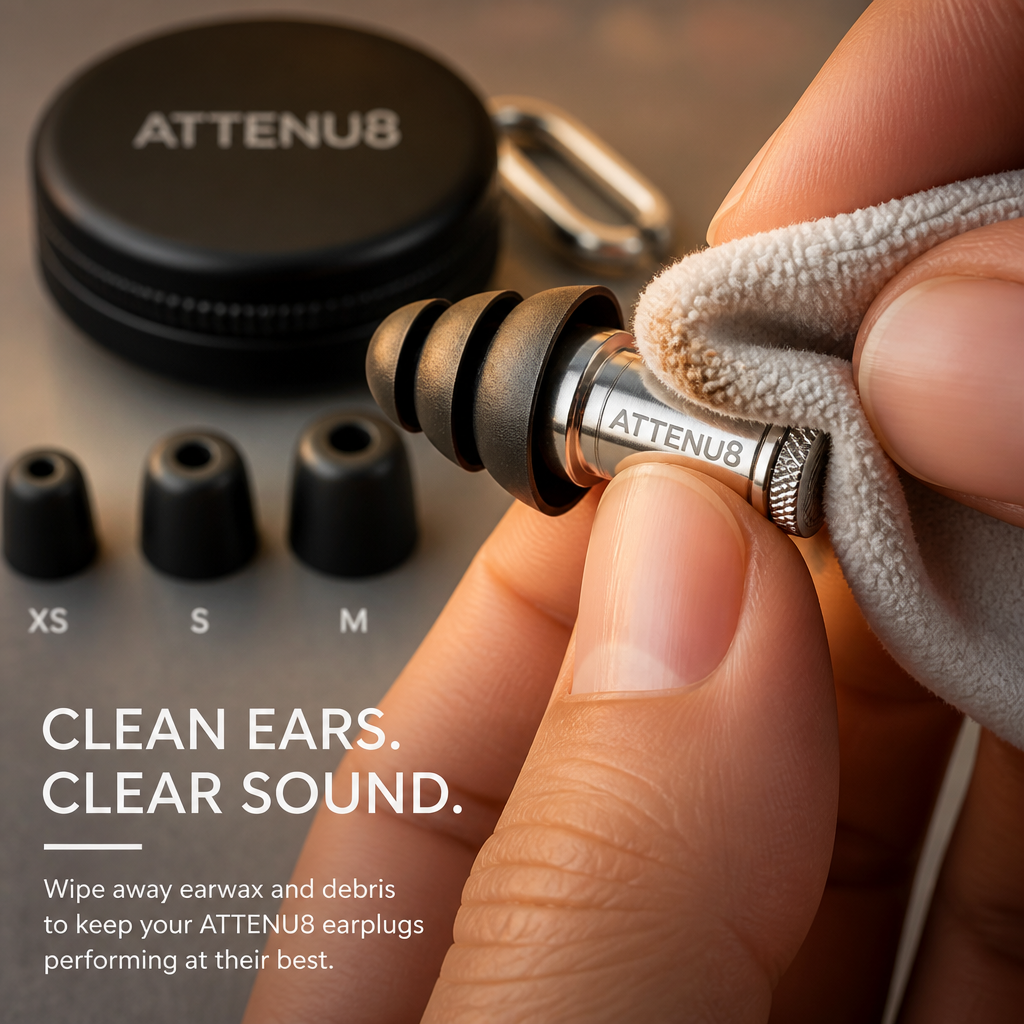
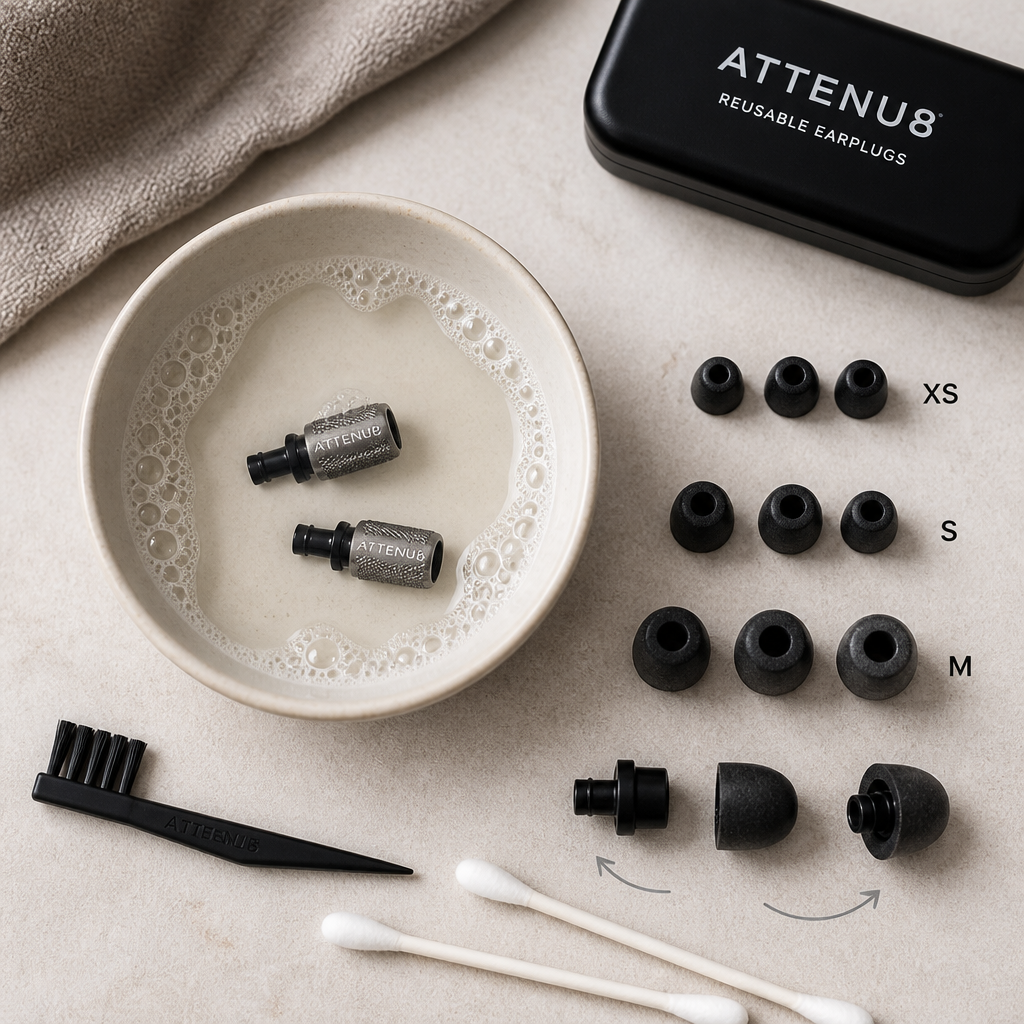
This is the point most earplug hygiene guides miss entirely. Premium reusable earplugs like ATTENU8 have two physically distinct components: an aluminium body and a replaceable memory foam tip. These two materials have completely different hygiene properties and require completely different cleaning approaches.
The anodised aluminium body is non-porous. Contaminants sit on the surface rather than being absorbed into the material. A wipe with a damp cloth removes them effectively. The aluminium does not degrade with routine cleaning, and it does not harbour bacteria beneath the surface the way porous foam does.
The memory foam tip is porous. It absorbs earwax, skin oils, and moisture. It can be surface-cleaned, but cannot be soaked without permanently disrupting the polymer structure that enables shape memory. This creates two firm rules: do not use alcohol on foam tips, and do not submerge foam tips in liquid. Treat both parts the same way and you will either damage the foam or under-clean the metal. The components have different maintenance schedules because they have different hygiene properties.
The cleaning problem with disposable foam is solved by replacement. The advantage of a non-porous aluminium body is that contaminants stay on the surface where cleaning can actually reach them.
After removing the foam tip, wipe the aluminium body with a dry or very lightly damp lint-free cloth. This removes the sebum and surface grime that accumulates from handling and insertion. The concave shape of the body is designed to sit flush against the outer ear, which means skin contact is constant. A daily wipe keeps the body feeling clean to handle and prevents buildup that eventually transfers to your fingers during insertion.
Once per week for daily users, and once every two weeks for occasional users, clean the metal body with warm water and mild soap. Use a soft cloth or cotton pad, not a rough scouring material that could scratch the anodised surface. Work around the body thoroughly, paying attention to any groove or seam where the foam tip attaches, as earwax residue accumulates there from the tip-to-body connection point. Rinse with clean water and dry thoroughly before reattaching the foam tip.
Pro tip: Dry the aluminium body completely before reattaching the foam tip. Moisture trapped between the metal body and foam tip creates a warm, enclosed environment where bacterial growth accelerates, which is exactly the condition you are trying to prevent.
After each use, use a dry lint-free cloth or clean cotton pad to wipe the outer surface of the foam tip. Remove visible earwax before it hardens into the foam surface. This takes five seconds and is the single most effective habit in any earplug maintenance routine. Users who do this consistently report that their foam tips retain expansion speed longer and need replacement less frequently than users who skip it.
If wax has already hardened on the foam surface, dampen a lint-free cloth very lightly with plain warm water and gently work the wax loose. Do not scrub aggressively. The goal is to lift the deposit from the surface, not to push it deeper into the foam structure. A cotton swab can be used to address specific spots, but keep it on the surface and do not press into the foam body. Once cleaned, allow the tip to air dry fully before storage or reuse.
Pro tip: Clean your ear canals with a warm washcloth before inserting earplugs at night. This removes excess earwax and oils that would otherwise transfer directly to the foam tip on insertion, reducing the rate of buildup at the source rather than just managing it after the fact.
The most common mistake in earplug maintenance is doing one big monthly clean and ignoring the earplugs the rest of the time. Consistency matters more than intensity. A quick wipe after every use prevents accumulation from ever reaching a level that requires aggressive cleaning.
Wipe the foam tip with a dry lint-free cloth after removal. Wipe the aluminium body with the same or a fresh cloth. Return both to a clean, closed case. This routine takes under 30 seconds and forms the foundation of earplug hygiene.
Deep clean the metal body with warm water and mild soap. Inspect the foam tip visually for discoloration, embedded earwax, or surface damage. Run the expansion test: compress the tip fully and count the seconds until it returns to shape. If it takes more than 4 to 5 seconds, the tip is approaching replacement time. A healthy tip should recover within 3 to 4 seconds.
Replace the foam tips entirely. If you use your earplugs every night for sleep, replace tips at the 6-week mark rather than waiting for 8 weeks. Daily use accumulates compression fatigue and earwax buildup faster than the 8-week guideline assumes. Setting a recurring reminder every 42 days removes the need to judge tip condition by feel alone. The metal body requires no scheduled replacement, only routine cleaning.
The list of things that will damage your earplugs is shorter than the list of things that will clean them, but the consequences of using the wrong product are significant and often irreversible.
Alcohol and solvent-based cleaners should never be used on foam tips. Alcohol degrades open-cell foam at the cellular level, causing permanent loss of the compression-recovery that creates an acoustic seal. Alcohol wipes are acceptable on the metal body only. This is one of the most common mistakes users make when they decide to “sanitize” their earplugs properly.
Boiling water or very hot water should not be used on foam tips. High heat causes foam to distort and disrupts the shape-memory properties. Warm water only, and only on the surface, not as a soak. Fully soaking memory foam tips compromises their expansion properties permanently, as water disrupts the polymer structure that enables shape memory.
Hydrogen peroxide, bleach, and strong disinfectants are not appropriate for foam tips. They are effective at killing bacteria, but they degrade foam materials in the same session. For the aluminium body, mild soap and water performs the cleaning task without the material risk. Using alcohol wipes only on the metal body is the correct boundary to maintain.
One of the real advantages of a metal-bodied earplug system like ATTENU8 is that only the foam tips need replacing, not the entire product. The aluminium body does not degrade with proper cleaning and lasts indefinitely. The foam tips, which form the acoustic seal and come into direct contact with the ear canal, have a functional lifespan that regular maintenance extends but cannot indefinitely delay.
Memory foam tips begin losing their expansion properties around the five-week mark due to accumulated oils and compressed cellular structure. The 6 to 8 week replacement schedule is based on the point at which foam loses its compression recovery and seal-forming ability, not just its visible cleanliness. Replacing tips on schedule maintains both hygiene and full noise reduction performance without replacing the aluminium body.
Visual inspection reveals obvious problems: discoloration, visible earwax buildup, tears, or permanent compression that does not expand fully. These signs indicate you have already exceeded the optimal replacement window. A more reliable indicator is the expansion test: compress the tip fully between your fingers. A healthy tip returns to 90% of its original shape within 3 to 4 seconds. Tips requiring 6 to 8 seconds or failing to expand fully have lost critical acoustic performance, regardless of how they look. Also replace tips immediately if they feel sticky, emit a persistent odor, or show any visible cracking.
ATTENU8 foam tips come in three sizes: XS, S, and M. The right size is not about comfort preference. It is about achieving a proper acoustic seal. If you are noticing sounds that your earplugs used to block, and you have ruled out an environment change, the foam tips are the most likely culprit, but so is using a tip that is too small for your ear canal. Replacement time is also a good opportunity to verify that you are using the correct tip size.
Where you store your earplugs between uses has a direct effect on how quickly they accumulate contamination and how long the foam tips perform. Most people store them incorrectly, then wonder why cleaning never quite removes the problem.
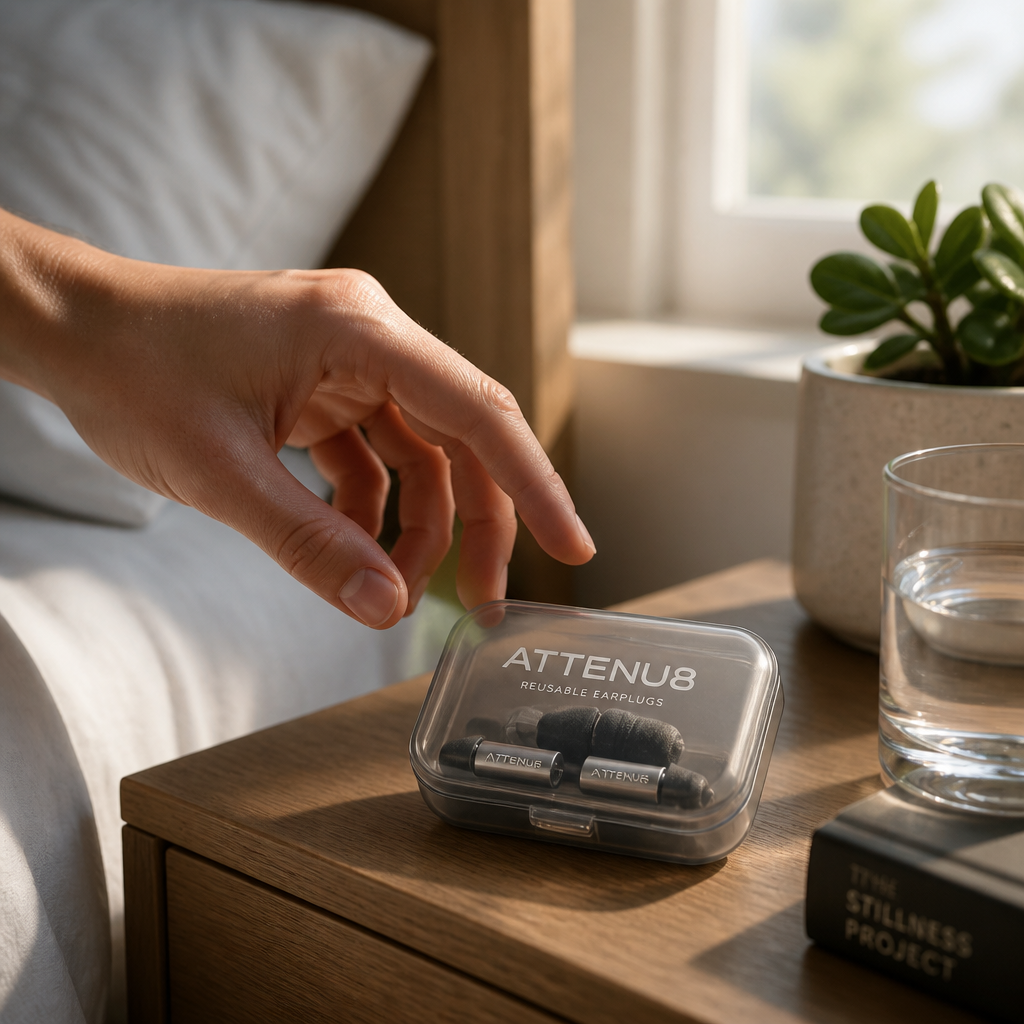
Store your earplugs in a clean, dry, closed case after every use. Leaving them on a nightstand or loose in a pocket exposes the foam to airborne dust, skin cells, and environmental debris that embeds into the foam surface before you even put them in your ears. A closed case also prevents accidental compression from objects sitting on top of the tips, which contributes to premature deformation.
Avoid storing earplugs in humid environments such as bathroom cabinets. Trapped moisture against foam tips accelerates bacterial growth and material breakdown. Room temperature storage in a bedroom nightstand drawer is the correct approach. Car glove compartments are a particularly bad choice. Temperature fluctuations between extreme heat and cold degrade foam elasticity, and one summer week in a hot car can reduce foam tip lifespan by the equivalent of two to three weeks of normal use.
A simple habit worth adopting: keep a small note in your earplug case with the date you last replaced the tips. Six to eight weeks passes faster than expected when you are using them every night, and degraded tips are often the silent cause of progressively worsening fit and noise reduction.
| Cleaning Method | Safe for Foam Tips | Safe for Metal Body |
|---|---|---|
| Dry lint-free cloth wipe | Yes. Recommended for daily use on foam tips. Removes surface wax without moisture risk. | Yes. Effective for daily maintenance of the aluminium surface. |
| Warm water and mild soap | Surface only. A very lightly damp cloth on the foam surface is acceptable. Do not soak or submerge. | Yes. The recommended weekly deep-clean method for the aluminium body. Rinse and dry thoroughly. |
| Alcohol wipes or solvent cleaners | No. Alcohol degrades open-cell foam at a cellular level and permanently reduces expansion properties. | Yes, with care. Effective for sanitising the anodised aluminium surface. Keep away from foam contact points. |
The foam tip should be wiped with a dry lint-free cloth after every single use. The metal body benefits from a daily wipe-down and a more thorough clean with warm water and mild soap once per week. The frequency of deep cleaning increases with the frequency of use. Daily sleepers should clean the metal body weekly and replace foam tips every 6 weeks. Occasional users can extend the deep-clean interval to every two weeks and replace tips at the 8-week mark.
For ATTENU8-style memory foam tips, a very lightly damp cloth on the surface is acceptable, but soaking or submerging the foam tip in soapy water is not. Water disrupts the polymer structure that enables shape memory. Fully soaking a memory foam tip permanently compromises its expansion properties. The foam tip should be surface-cleaned and allowed to dry completely before reuse. Traditional disposable foam earplugs should simply be discarded rather than washed, as water damage destroys their function entirely.
Alcohol on a foam tip degrades the open-cell foam structure at a cellular level. The tip may appear unchanged visually, but its compression-recovery speed will decrease noticeably over subsequent uses, reducing the acoustic seal and therefore the noise reduction. Alcohol wipes are safe to use on the aluminium body of ATTENU8 earplugs, but should never contact the foam tip directly. If you want to sanitise the foam surface, allow the dry wipe routine and the natural anti-microbial properties of the aluminium body to do the work.
The most reliable test is the expansion test. Compress the foam tip fully between your fingers and count the seconds until it returns to its original shape. A tip in good condition recovers to 90% of its shape within 3 to 4 seconds. A tip that takes 6 to 8 seconds or longer has lost critical seal-forming ability and should be replaced. Also replace tips if they show visible discoloration, hardened earwax that will not clean off, a persistent odor, or any tearing or cracking. As a baseline schedule, replace tips every 6 weeks with daily nighttime use and every 8 weeks with less frequent use.
No. Sharing earplugs transfers bacteria and earwax from one person’s ear canal to another. Even with cleaning in between, this practice introduces hygiene risks that are not worth taking. If multiple people in a household need ear protection, each person should have their own set. The cost of additional foam tips is minimal compared to the hygiene risk of sharing.
Yes, and this is more significant than most people expect. Earwax and skin oils embedded in the foam surface alter the tip’s texture and slow its expansion rate. A tip that expands too slowly does not fully seal the ear canal before you settle your head on a pillow, leaving gaps that reduce effective noise reduction substantially below the rated level. Consistent cleaning keeps expansion speed close to the original performance of a fresh tip, which is the single best indicator that noise reduction is being maintained.
Always store earplugs in a closed, dry case after each use. A nightstand drawer in a bedroom is ideal. Avoid bathrooms, which have elevated humidity, and car glove compartments, which experience extreme temperature swings that degrade foam elasticity. Never toss earplugs loose into a bag or pocket where they can pick up debris and suffer accidental compression. A clean case is part of the hygiene system, not optional.
If you have a cleaning routine that has worked particularly well for your ATTENU8 earplugs, share it in the comments below. We would genuinely like to hear what other users have found effective.

