


 0

Your bedroom might be costing you hours of genuine rest without a single obvious sign. Poor sleep is rarely just about stress or bad habits. Often, the room itself is the problem: too warm, too bright, too loud, or some combination of all three. Creating a sleep-friendly bedroom is not about expensive renovations or high-tech gadgets. It is about understanding exactly how noise, light, and temperature interact with your biology at night, then making targeted changes that remove the obstacles your body is fighting against. This guide covers each factor in practical detail, with a clear position on what works.
| Key Insight | Explanation |
|---|---|
| Your brain never switches off its response to sound | Auditory processing continues throughout every sleep stage. Noise that does not fully wake you still triggers stress hormones and shifts you into lighter sleep. |
| The WHO recommends bedroom noise below 30 dB(A) at night | Noise above 40 dB causes measurable sleep fragmentation. At 55 dB, typical of a busy urban street, full arousals and insomnia become likely. |
| Even low-level light suppresses melatonin significantly | Research shows room light before and during bedtime can suppress melatonin production by more than 50% compared to dim light conditions. |
| The ideal sleep temperature is 60 to 67°F (15 to 19°C) | Your body needs to drop its core temperature to initiate and maintain sleep. A warm room actively fights this process throughout the night. |
| Intermittent noise is more disruptive than steady noise | The brain cannot habituate to sounds that keep changing. A sudden 40 dB thump is harder to sleep through than a constant 45 dB hum. |
| Ear plugs outperform white noise for protecting deep sleep | Sound masking raises the background noise floor. Physical attenuation at the ear is more effective at preserving slow-wave and REM sleep stages. |
| Soft furnishings absorb sound inside the room | Rugs, heavy curtains, upholstered furniture, and wall textiles act as acoustic insulators that reduce the reflective noise inside your bedroom. |
Sleep is not a passive state you fall into when you close your eyes. It is an active biological process that your body initiates only under the right conditions. Your core temperature needs to drop. Your brain needs to detect darkness and begin producing melatonin. Your auditory system needs to stop registering threat signals. When any one of those conditions is compromised, your body either delays sleep onset or spends the night cycling in and out of lighter stages rather than reaching the deep, restorative phases it needs.
The problem with most bedroom environments is accumulation. A slightly too-warm room is manageable. Add some street light through inadequate curtains, plus intermittent traffic noise, and the combined load on your nervous system is significant enough to fragment your sleep architecture across the entire night. Fixing only one factor while ignoring the others will produce limited results. This guide addresses all three together.
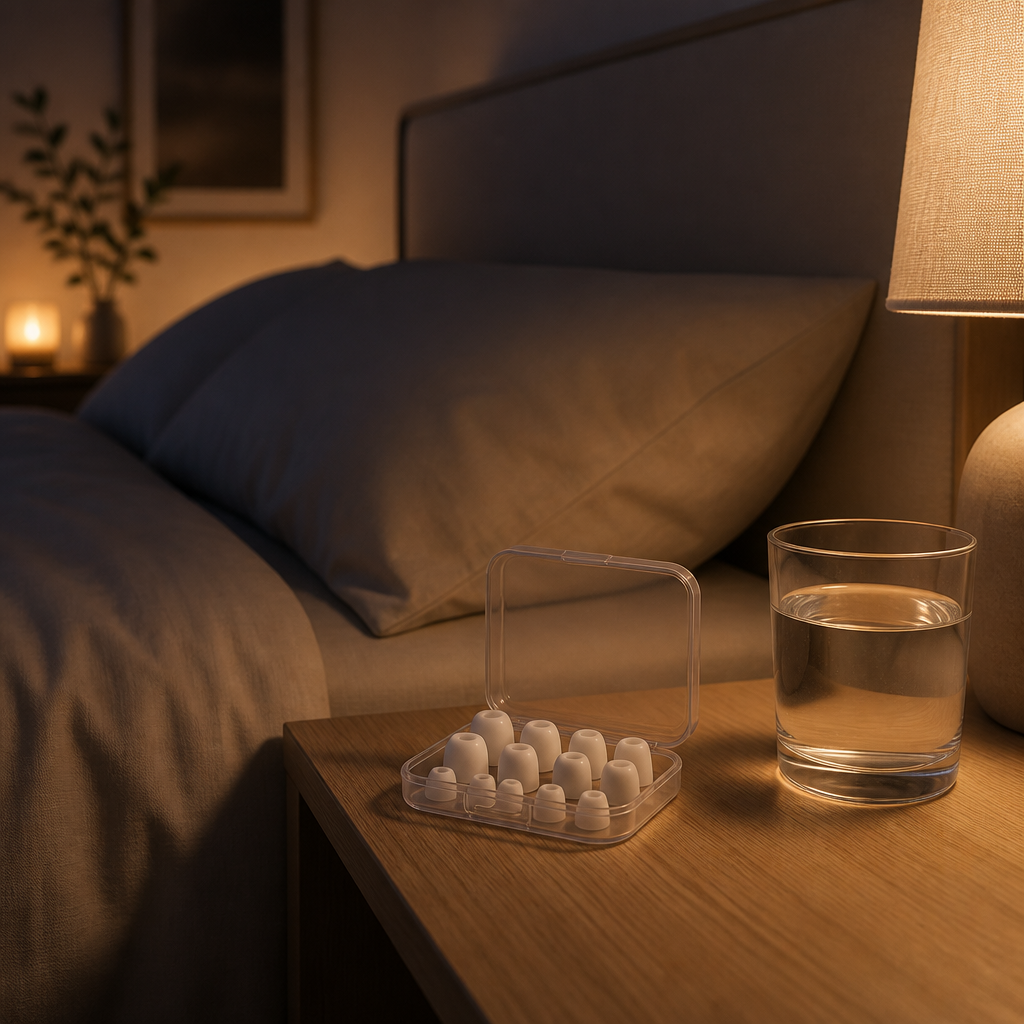
Noise is the most underestimated sleep disruptor. Most people assume that if they sleep through a sound, it is not affecting them. The research is clear that this assumption is wrong. Noise can shift you from deep sleep into lighter sleep stages, trigger micro-arousals you will not remember, and raise cortisol and adrenaline levels, all without causing a full awakening. The cumulative effect is a night that technically clocks eight hours but leaves you tired and cognitively dulled the next morning.
The brain remains in a more alert state in response to noise, making it harder to transition into deeper sleep stages, and can lead to frequent brief awakenings throughout the night, disrupting the continuity of sleep cycles.
The priority for most sleepers is not eliminating all noise, which is rarely achievable, but reducing the variation in noise levels. It is the spike above the baseline that causes arousals, not the steady background. A gap of more than roughly 15 dB between background noise and a sudden intrusion is enough to trigger a stage shift. Closing that gap is the practical goal.
Start with the most direct path noise takes into the room. Gaps under doors are a major entry point that most people overlook. A simple draught excluder or door sweep cuts a surprising amount of hallway, traffic, and neighbour noise. Double-glazed windows outperform single-glazed by a wide margin, but if replacement is not an option, secondary glazing film applied to the existing pane adds meaningful attenuation at low cost.
Heavy curtains or lined drapes do double duty. They reduce light, which is discussed below, and they absorb some of the sound that reaches the window surface. They are not a substitute for proper glazing but they contribute to the overall noise load reduction in a way that lightweight curtains do not.
Hard, bare surfaces reflect sound. A bedroom with polished floors, bare walls, and minimal furniture is acoustically live, meaning sound bounces around the room rather than being absorbed. Adding a rug underfoot, upholstered seating, and wall textiles or acoustic panels reduces that reflective noise meaningfully. The goal is not to turn your bedroom into a recording studio. Even modest soft furnishings make the acoustic character of the room calmer.
When structural and soft-furnishing changes are not enough, or when the noise source is genuinely beyond your control, such as a snoring partner, early-morning street noise, or shared-wall neighbours, direct ear protection is the most reliable solution. The difference between ear plugs that fit correctly with a high noise reduction rating and those that fit poorly is substantial. A well-fitted pair providing around 32 dB of noise reduction brings urban traffic noise or a snoring partner down to a level that most sleepers can maintain deep sleep through.
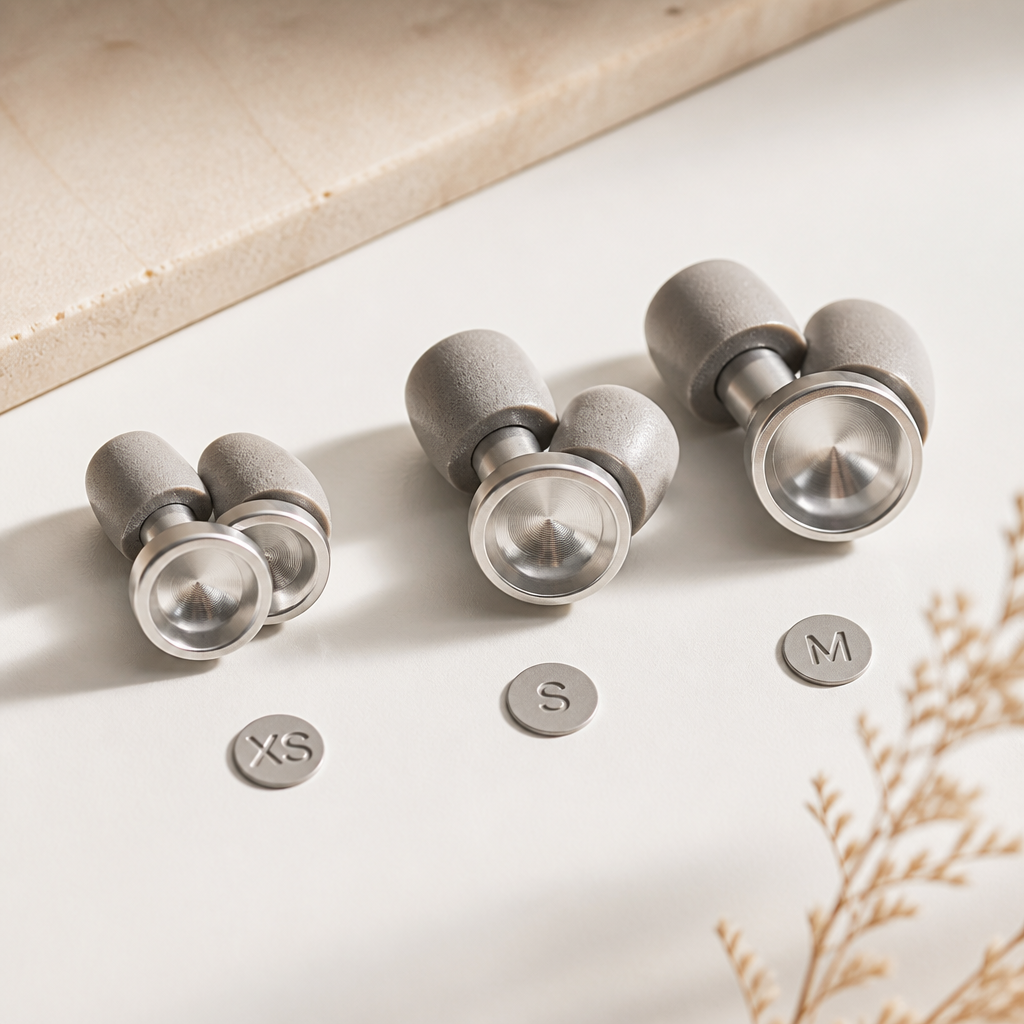
Pro tip: The fit of an ear plug matters more than the noise reduction rating number on the packet. A plug rated at 33 dB that does not seal properly will perform worse than a correctly inserted plug rated at 28 dB. Always check that you have the right tip size before writing off ear plugs as uncomfortable or ineffective. ATTENU8 ear plugs come with three memory foam tip sizes (XS, S, M) so you can match your actual ear canal dimensions rather than guessing.
Reusable metal-bodied ear plugs have a significant practical advantage for nightly sleep use. Unlike disposable foam plugs, which degrade and lose their expansion properties after a single use and accumulate ear wax inside a porous structure that cannot be cleaned, a durable aluminium-bodied plug maintains consistent shape and hygiene over time. Only the foam tips need replacing every six to eight weeks, keeping running costs low while ensuring the seal quality stays reliable. For more on how different ear plug materials compare for sleep, read the guide on memory foam vs silicone vs wax ear plugs for sleep.
White noise machines are commonly recommended as a sleep aid. They work by raising the background noise floor, which narrows the gap between that floor and sudden intrusions. This approach is genuinely useful for some sleepers, particularly infants and those disturbed by low-level intermittent sounds. However, the evidence for white noise as a replacement for physical noise reduction is weaker than widely assumed. Research has shown that certain forms of sound masking can reduce REM sleep duration and worsen outcomes when combined with specific noise types, such as traffic. For light sleepers who need to protect their most restorative sleep stages, physical attenuation at the ear remains the more dependable approach. If you want to understand why, the article on noise and sleep quality covers the science in detail.
Your body uses light as its primary timing cue. The circadian rhythm, the internal 24-hour biological clock that governs when you feel sleepy and when you feel alert, responds directly to light detected by specialised photoreceptors in the eyes. Even low levels of light at night suppress melatonin production from the pineal gland. Research published in the Journal of Clinical Endocrinology and Metabolism found that room light before and during bedtime suppressed melatonin by more than 50% compared to dim light conditions. Fifty percent is not a marginal effect. It fundamentally delays and disrupts the biological preparation for sleep.
The practical implication is that the question is not whether you can see light in your bedroom, but whether your eyes can detect any meaningful lux level. Light sources you have stopped consciously noticing, a charging cable indicator, the standby dot on a television, streetlight edges around curtains, still register biologically and affect your sleep quality.
Standard blackout curtains block 85 to 99% of light through the fabric itself. This is a real and meaningful improvement over unlined curtains. The limitation is that most blackout curtains leave edge gaps at the sides, top, and bottom where light enters around the fabric panel. These gaps can introduce 10 to 50 lux of ambient light into the bedroom even with the curtains drawn, which is enough to measurably suppress melatonin. A simple fix is to use curtains that extend significantly wider and taller than the window frame, or to install a separate blackout roller blind that sits flush to the window reveal before hanging the decorative curtains over it.
Pro tip: Before spending money on new curtains, test your current bedroom darkness by standing in the room for five minutes with the lights off and your eyes fully adjusted. If you can clearly distinguish furniture shapes from across the room, the ambient light level is high enough to affect melatonin production. The goal is a room where you genuinely cannot see your hand at arm’s length.
Blue-spectrum light from phones, tablets, and laptop screens is particularly effective at suppressing melatonin because the photoreceptors in the eye that feed the circadian system are most sensitive to this wavelength. A common practical mistake is assuming that a screen brightness dimmer or night-mode filter fully eliminates the problem. These filters shift colour temperature but do not eliminate the physiological effect. The more reliable rule is to stop screen use entirely for 30 to 60 minutes before your target sleep time, replacing that window with activity that does not involve a backlit display.
Any artificial light left on in the room during sleep, including a television on standby, a digital alarm clock with a bright display, or even a phone screen that activates overnight for notifications, can disrupt sleep continuity. Replacing a bright digital clock with a dim-display or analogue model eliminates a surprisingly common source of circadian disruption. Devices that need to charge overnight should be placed in a drawer, a different room, or covered so the indicator light does not reach the eye.
The body initiates sleep partly through a reduction in core temperature. This is not a passive response to the room being cool. It is an active thermoregulatory process where blood flow is redirected to the skin to radiate heat outward. A warm bedroom actively interferes with that process, making it harder for the body to reach the internal temperature conditions associated with deep, consolidated sleep.
Most adults sleep best in a bedroom kept between 60 and 67°F (15 to 19°C). A room set at 70°F or above works against the body’s own cooling mechanism. The research consistently shows that excess heat disrupts sleep and increases nighttime awakenings. The practical recommendation is to err cooler rather than warmer, and to use bedding layers to regulate individual comfort rather than raising the room temperature.
If you do not have precise thermostat control, opening a window 30 minutes before sleep allows the room to drop temperature ahead of your sleep window rather than relying on your body heat alone to warm a cooler room after you get in. A fan directed at the bed provides both a cooling effect through air circulation and a consistent low-level sound that some sleepers find helps mask intermittent noise. Switching from heavy synthetic bedding to natural fibres such as cotton, bamboo, or linen allows heat to dissipate rather than accumulate under the covers.
If you currently sleep at 70°F and the idea of 65°F sounds uncomfortable, drop the thermostat by one degree every few nights rather than making an abrupt change. The body adapts, and most people find that after a week or two at a cooler setting they sleep noticeably more soundly and wake less in the middle of the night. The goal is continuous, consolidated sleep, not simply falling asleep faster.
The challenge for many sleepers is not the winter, when a cool bedroom is achievable without much effort, but the summer months when ambient temperatures make the 60 to 67°F target difficult to reach without air conditioning. Prioritising cooling the room before sleep is more effective than trying to cool it during sleep. Closing blinds or heavy curtains during daylight hours prevents solar heat gain, which keeps the room meaningfully cooler by the time you need to sleep. Lightweight breathable bedding layers allow adjustment across different nights without changing the room temperature. A cooling pillow cover or moisture-wicking pillowcase helps maintain a comfortable contact temperature at the head, which has an outsized effect on perceived comfort during sleep.
There is no single right answer for every sleeper, but there is a clear hierarchy of effectiveness depending on the noise source and individual sensitivity. The table below compares three main approaches to reducing bedroom noise for sleep.
| Approach | Best Use Case | Key Limitations |
|---|---|---|
| Structural noise reduction (glazing, door seals, soft furnishings) | Persistent external noise from traffic, neighbours, or urban environments. Works passively throughout the night without any action from the sleeper. | Higher upfront investment for glazing upgrades. Does not address noise sources already inside the bedroom such as a snoring partner. Cannot be adjusted based on nightly conditions. |
| White or pink noise masking (dedicated machine or app) | Predictable, low-to-moderate external noise where narrowing the gap between background and intrusion sounds is sufficient. Useful for infants and those who dislike the sensation of ear plugs. | Adds noise to the room rather than reducing it. Evidence suggests it can reduce REM sleep duration in some conditions. Ineffective against louder intermittent noise sources such as snoring or early-morning deliveries. Volume must be kept reasonably low to avoid its own disruption. |
| Ear plugs with high NRR (reusable metal-bodied with memory foam tips) | Any situation where the sleeper needs reliable, consistent attenuation regardless of noise source. Particularly effective for light sleepers, shift workers, and those sharing a room with a partner who snores. | Requires correct tip size selection for an effective seal. Initial adjustment period for new wearers. Foam tips require replacement every six to eight weeks to maintain hygiene and seal quality. Not suitable for sleepers who need to hear alarms or dependent children. |
In practice, a layered approach works best for noise-sensitive sleepers. Structural improvements reduce the noise level entering the room. Ear plugs then handle the residual noise that structural changes cannot address. For those who share a bedroom with a snoring partner, structural changes alone are rarely sufficient, and ear plugs become the primary tool. See the detailed guide to ear plugs for a snoring partner if this is your specific situation.
Pro tip: If you find ear plugs uncomfortable for side sleeping, the issue is almost always the plug body diameter, not the concept of ear plugs. Slim metal-bodied reusable plugs with a concave profile sit closer to flush with the ear canal opening, which means there is less surface area pressing against the pillow when your head turns. This is a significant practical advantage over bulkier foam plugs that protrude and create pressure points during the night. The guide on ear plugs for side sleepers covers this in more detail.
The World Health Organization recommends that indoor night noise levels remain below 30 dB(A) for uninterrupted, restorative sleep. For reference, a whispered conversation sits at around 30 dB and a quiet library at around 40 dB. Sounds above 40 dB are associated with measurable sleep fragmentation. At 55 dB, typical of a busy urban street, full arousals and chronic insomnia become likely. The goal is not absolute silence but consistent sound levels with minimal sudden spikes above the baseline.
Start with the path noise takes into the room. Sealing gaps under doors with draught excluders, installing heavier curtains or secondary glazing, and adding soft furnishings to absorb reflective sound inside the room all reduce the noise load. For the residual noise that structural changes cannot address, well-fitted ear plugs with a noise reduction rating of around 32 dB are the most reliable tool. A white noise machine can complement these changes by raising the baseline sound level, which narrows the perceived gap between background noise and sudden intrusions.
It affects sleep quality directly, not just comfort. The body initiates sleep through a reduction in core temperature, redirecting blood flow to the skin to radiate heat outward. A bedroom that is too warm actively prevents this process, increasing nighttime awakenings and reducing time spent in deep, consolidated sleep. Research consistently shows that temperatures above roughly 71°F (22°C) disrupt sleep. The effect is not subtle. Most people who switch from a warm bedroom to the recommended 60 to 67°F range notice a meaningful improvement in how rested they feel within a few nights.
Regular unlined curtains are not adequate for a genuinely sleep-friendly bedroom. Even low-level ambient light reaching your eyes during sleep suppresses melatonin and can fragment sleep cycles. Blackout curtains block the majority of light through the fabric itself, but their effectiveness depends on minimising the edge gaps around the frame where light enters around the curtain panel. A blackout blind that sits flush within the window reveal, combined with full-width curtains, is the most reliable approach. A simple eye mask is a cheaper, effective alternative if curtain upgrades are not practical right now.
Both. The most significant benefit for most noise-sensitive sleepers is not faster sleep onset but protected sleep architecture throughout the night. Because your auditory system remains active during sleep, noise that does not wake you can still push you from deep slow-wave sleep into lighter stages, reducing the restorative value of the night. Ear plugs that provide consistent attenuation protect those deep sleep stages from mid-night noise intrusions, which is why many people who start using them report feeling noticeably more rested even when they believed they were already sleeping through the noise.
For reusable ear plugs with replaceable memory foam tips, every six to eight weeks is the practical guideline for nightly use. This is not arbitrary. Memory foam degrades with repeated compression cycles and accumulates ear wax and oils in its cellular structure that cleaning cannot fully remove. A tip that has passed this point provides a worse seal, lower effective noise reduction, and carries a higher hygiene risk. Replacing only the tip rather than the entire plug keeps the cost manageable while ensuring the performance and cleanliness stay consistent each night.
How does your bedroom measure up on all three factors, and which one are you planning to tackle first? Share your experience below.

