


 0

Ask a light sleeper why a dog barking at 3 a.m. wakes them while a passing truck does not, and most will shrug. The answer sits in noise masking sleep science, and it is more useful than most sleep advice. Your brain does not simply register sound and decide whether it matters. It keeps checking incoming noise against what it expects, and that check decides whether you stay asleep. Once you know which sounds trigger that check and which ones your brain learns to ignore, you can stop guessing at fixes. Here is what the research supports, what it does not, and how to apply it to your own bedroom.
| Key Insight | Explanation |
|---|---|
| Steady sound masks, sudden sound wakes | The sleeping brain tracks change. A constant hum gives it nothing new to flag, while an irregular noise demands a check every time it starts. |
| Meaning lowers the wake threshold | Your name, a child’s cry, or a family ringtone can wake you at levels that would leave you undisturbed otherwise. Volume reduction alone will not stop these. |
| Low frequencies travel farther | Traffic rumble and neighbour bass pass through walls and are harder to absorb than higher pitches, so plugs alone will disappoint if rumble is your main problem. |
| A single decibel figure is an average | An approximate 32dB rating does not describe performance at every pitch. Judge your setup using the sounds you actually hear at night. |
| Fit decides most of the result | A loose seal lets sound through regardless of the rating on the packet. Check the tip size before blaming the product. |
| Worn tips lose their seal | Foam tips should be replaced every 6-8 weeks. Tips that have lost their softness seal less well, and you lose attenuation without noticing. |
Noise masking is the process where one sound makes another harder to hear. A steady sound at a moderate level raises the point at which a quieter sound becomes audible, especially when the two share similar pitches. In a bedroom, the masking sound is usually a fan, a white noise machine, or the low hum of an air conditioner.
Masking explains why a constant hum can make a neighbour’s television disappear. It does not explain why the same hum fails to keep you asleep when a car door slams. For that you need to separate two questions: can you hear the sound, and does your brain treat it as something to respond to?
In practice, people blur these two terms constantly. A setup that lowers volume by a fixed amount does not guarantee sleep, because sleep depends on what the remaining sound does over the course of the night.
Decibels describe sound energy, not impact on sleep. Two sounds at the same level can have very different effects depending on whether they are steady, varied, or meaningful. Most people only notice this after they buy a fan, turn it up, and still wake at 4 a.m.
Pro tip: Before buying anything, write down the sounds that actually wake you. Note whether each one was sudden, repeating, or familiar, because that pattern will tell you more than any rating on the box.
Sleep does not switch off hearing. The Sleep Foundation notes that nighttime noise can disrupt sleep stages even when you do not fully wake or remember the disturbance. Your brain is still sorting incoming sound while you sleep, and it is choosing which signals deserve a response.
Intermittent sounds are the most common trigger. A truck that passes every twenty minutes, a dripping tap, or a neighbour’s gate all share an unpredictable start. Each new onset is a change, and change is what the sleeping brain is tuned to notice.
A steady sound at the same level gives the brain nothing new to flag. This is why many people sleep through a heavy storm with rain drumming on the roof, then wake to a single drip hitting a metal gutter. The rain is consistent. The drip is a pattern break.
Meaning lowers the wake threshold more than volume does. Hearing your name, a child’s cry, or a phone ringing with a tone you associate with family can wake you at levels that would otherwise leave you undisturbed. This is why a whisper from the next room can wake a parent when a loud freight train does not.
Earplugs reduce level, not meaning. If your child’s voice is what wakes you, lowering the volume will help less than you expect. Match the solution to the sound, not to the general idea of noise.
Habituation is the brain’s way of ignoring what it has learned is harmless. Repeated, unchanging sound gradually drops out of attention, which is why a fan that seemed loud on the first night is often barely noticeable by the second week. Individual speed varies, but the pattern is consistent enough to plan around.
A quiet bedroom is not automatically a safe one. What matters most is whether the sounds that remain are predictable.
Most people need several nights before a new steady sound fades. The first night often feels worse because the brain is still checking it, so judging a fan or white noise machine after one night gives misleading results. Give any new masking setup at least a week before deciding it failed.
Habituation works best for sound that is genuinely constant. A fan that cycles up and down, or a machine that loops a noticeable pattern, keeps the brain alert. Look for steady output, not just a steady label on the box.
White noise has real evidence behind it, but the evidence is mixed. A 2021 study indexed on PubMed found that white noise improved sleep, measured both subjectively and objectively, in people who reported difficulty sleeping. The Sleep Foundation is more cautious, noting that white noise does not help everyone and that research on background noise is inconsistent.
Our practical advice is to treat steady sound as one tool among several. If it helps, keep it. If it makes you more alert or you find yourself listening for changes in its texture, switch to physical attenuation and leave the machine off.
Two sounds with identical decibel levels can behave very differently in a bedroom. Higher-pitched sounds such as alarms and crockery clinks are easier to stop with a snug seal, while low-frequency rumble from traffic, bass music, and heavy machinery tends to travel through walls and past some seals. A single number cannot describe that spread.

Low frequencies have longer wavelengths, which means they travel further and are harder to absorb with soft materials. This is why you can feel a neighbour’s subwoofer through the floor even when the treble is inaudible. Foam tips and sealed bodies do a good job on higher pitches, but they cannot make a wall do what it was never built to do.
In practice, if your main problem is low rumble, plugs alone will disappoint you. Pair them with a steady mid-frequency sound, or address the source by sealing gaps under doors and adding heavy curtains.
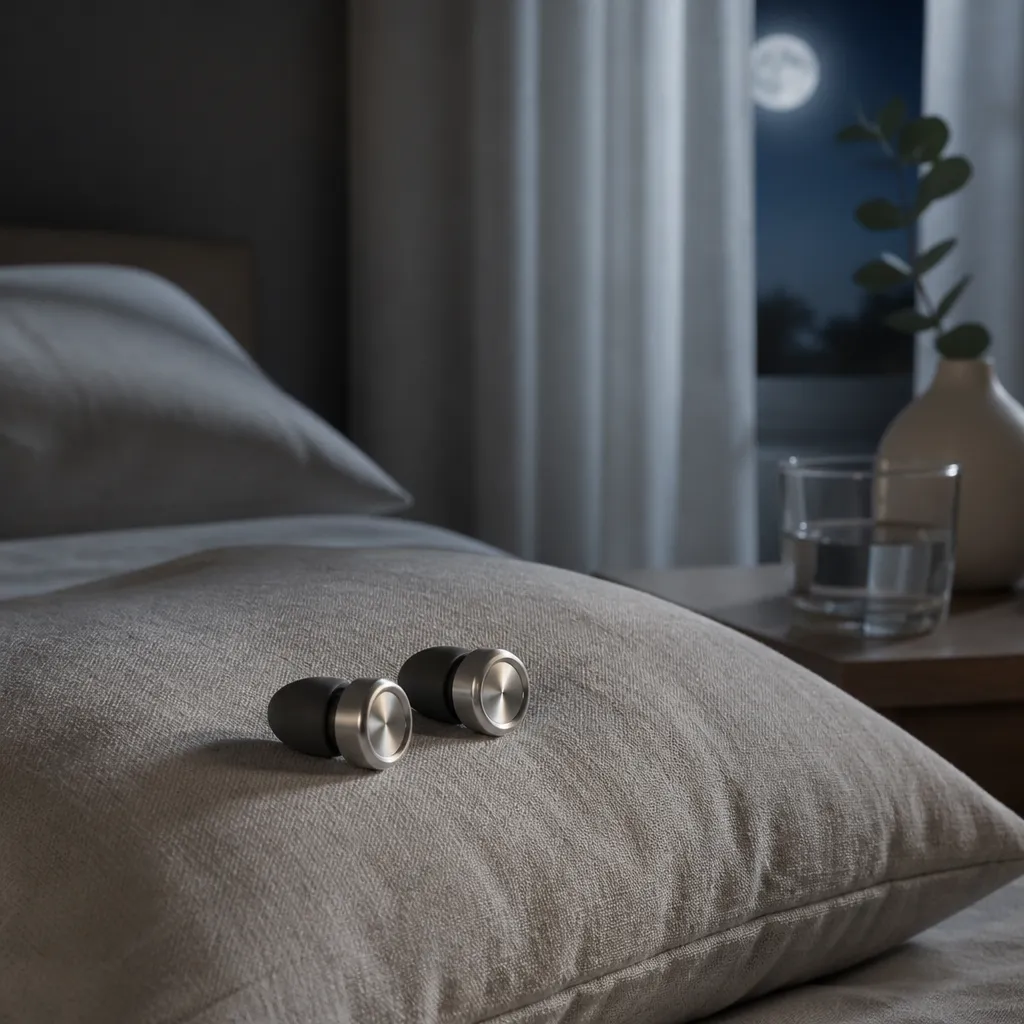
The approximate 32dB rating on ATTENU8 plugs is an average across the frequency range, and attenuation is uneven across that range. The concave aluminium body and three sizes of memory foam tip (XS, S, M) are designed to seal the ear canal, and the seal does most of the work at higher pitches where voices and alarms sit. Low rumble will always be the weak point of any plug.
Pro tip: Test your setup with the noises you actually hear at night. If you can still hear the low rumble but not the voices, add a masking layer for the bass rather than hunting for a stronger plug.
The three most common approaches to sleep noise are steady background sound, disposable foam earplugs, and reusable plugs with sealed metal bodies. Each one works on a different part of the problem, so comparing them by a single score misses the point.
Steady sound suits people who find silence unsettling and whose main problem is sudden or irregular noise. Disposable foam suits occasional use or short trips where you are happy to replace them. Reusable metal-bodied plugs suit people who sleep with plugs most nights and want a consistent fit over a long period.
| Approach | What It Does to Incoming Sound | Where It Falls Short |
|---|---|---|
| Steady background sound (fan or white noise machine) | Raises the background level so sudden sounds are less distinct, and the brain habituates to a constant tone | Does little against unpredictable spikes, and can keep some light sleepers alert |
| Disposable foam earplugs | Seals the ear canal to reduce sound across the range, with the seal doing most of the work | Usually replaced often, and a poor fit lets sound through regardless of the rating |
| Reusable metal-bodied earplugs with memory foam tips | Seals the canal with a sized tip (XS, S, M) on a fixed body, with about 32dB noise reduction | Low frequencies still pass through, and the tips need replacing every 6-8 weeks |
The table makes the trade-offs clear, but the best choice often combines two approaches. A light sleeper in a noisy flat might use plugs for sudden sounds and a fan for the low rumble underneath.
Comparing products is less useful than checking how each option fits your sleep pattern. Foam tips on reusable plugs should be replaced every 6-8 weeks, since worn tips lose their softness and seal less well. Replacing tips on schedule is the cheapest way to keep the attenuation you already paid for.
For a closer look at materials, read our guide to metal vs foam ear plugs for sleep.
Many noise-related disruptions never reach full awareness. The Sleep Foundation reports that environmental noise such as traffic has been linked to more time in stage 1 sleep and less time in slow wave and REM sleep. You may wake the next morning feeling flat without recalling a single sound.

Stage 1 is the light transition between wakefulness and sleep. When noise pushes you into more of it, you spend less time in deep slow wave sleep and in REM, which matter for memory and mood. This is why a night that feels only slightly broken can leave you foggy at 10 a.m.
Nighttime noise may also prompt extra production of hormones such as adrenaline and cortisol, along with a raised heart rate and blood pressure. These responses can occur even when the sleeper stays asleep. That is the core argument for reducing arousal at the source rather than accepting broken sleep as normal.
In practice, the goal is not to sleep through everything. It is to cut the number of disruptions your body has to respond to, which is where masking and sealing earn their place. For more on this, see our article on sleep stages and noise.
The same masking logic matters for people who work near machinery, construction plant, or in military and manufacturing settings. The American Academy of Pediatrics notes that environmental noise can affect hearing, learning, sleep, and quality of life, and can trigger a physiological stress response. On a job site the concern is daily exposure, not just sleep.
Masking helps you focus or rest, but it does not protect your hearing. A radio playing over a generator does not reduce the level reaching your ears, and a loud steady sound can still damage hearing over a full shift. Protection against workplace noise is a different job from making a bedroom feel quieter.
Follow the exposure requirements at your site and your employer’s hearing protection program. A plug that is comfortable for sleep may not be the right tool for a noisy shift, so check what the work requires before you choose.
On a site, fit determines whether any rating means anything. Plugs worn for a full shift need to be inserted correctly and checked during breaks, since a seal that loosens by midday removes most of the benefit. Keeping a spare tip size in your kit makes that routine easier.
Pro tip: If you use plugs for both work and sleep, keep the two pairs separate so the work pair does not wear down the tips you rely on at night. Replace tips on the same 6-8 week schedule so you always know the seal is reliable.
Your brain tracks patterns during sleep and responds most strongly to change, especially sounds that are unpredictable or meaningful. A steady sound at the same level gives the brain nothing new to react to, so it fades into the background.
It can help some people. A 2021 study indexed on PubMed found improved sleep in people who reported difficulty sleeping, but the Sleep Foundation notes that white noise does not help everyone and that the research is mixed. Test it for at least a week before judging it.
Not completely. A snug seal reduces a lot of sound, but low frequencies travel through walls and are harder to absorb. Combine plugs with a steady sound or seal gaps in the room if rumble is your main problem.
It is an approximate average noise reduction, so it cannot describe how the plug performs at every pitch. Treat it as a guide, and judge the result against the sounds you actually hear at night.
Replace the foam tips every 6-8 weeks. Worn tips lose their softness and seal less well, which reduces the attenuation you rely on.
No. Plugs chosen for sleep are not a substitute for a workplace hearing protection program. Follow your site’s requirements, check fit during the shift, and arrange a hearing check if you notice changes.
What is the one sound that always wakes you, and what have you tried to mask it?

