


 0
0

You roll onto your side, finally drift off, and by 3 AM your ear plugs are somewhere in the bedding and your partner’s snoring is back at full volume. If this is a recurring event, you are not doing something wrong. The ear plugs are. Most ear plugs on the market are engineered for upright use or back sleeping, and they fail side sleepers in specific, predictable ways. Understanding the physics of what happens when your head presses a plug against a pillow for eight hours makes the solution obvious. The problem is not your ears. It is the plug’s body shape, material, and profile height.
| Key Insight | Explanation |
|---|---|
| Profile height is the single biggest retention factor | Any plug that protrudes beyond the ear opening gives pillow pressure a fulcrum point to push against, loosening it overnight. |
| Standard foam plugs are designed for upright use | They expand uniformly when you are sitting or standing. Side sleeping introduces lateral shear forces the design does not account for. |
| Pillow pressure acts as a slow lever arm | The longer a plug’s external body, the more mechanical force pillow contact generates. A shorter, concave external body dramatically reduces this effect. |
| Memory foam tips hold a seal better than open-cell foam | Open-cell foam rebounds quickly and can create pressure points. Slow-rebound memory foam conforms to the ear canal shape and maintains contact during positional shifts. |
| Multiple tip sizes are not a luxury, they are a retention requirement | A tip that is even slightly too small for your canal will not seat properly. An ill-fitting tip is the most common reason plugs that work for some people fail others. |
| Insertion depth matters more in side sleeping than in any other use case | Partial insertion is the leading cause of displacement. A plug seated fully at the correct depth has far less external material for pillow pressure to act on. |
| Rigid or high-profile plugs cause pain that forces you to remove them | Even plugs that do not fall out can fail side sleepers by waking them with soreness. Low-profile, soft-interface designs eliminate the pain problem before it starts. |
Side sleeping is the dominant sleep position. Research tracking actual in-bed movement found that people spend roughly 54% of their time in bed on their side, compared to about 37% on their back and 7% on their stomach. That means most people asking “why do my ear plugs fall out?” are side sleepers, and most of the ear plug industry is still not designing specifically for them.
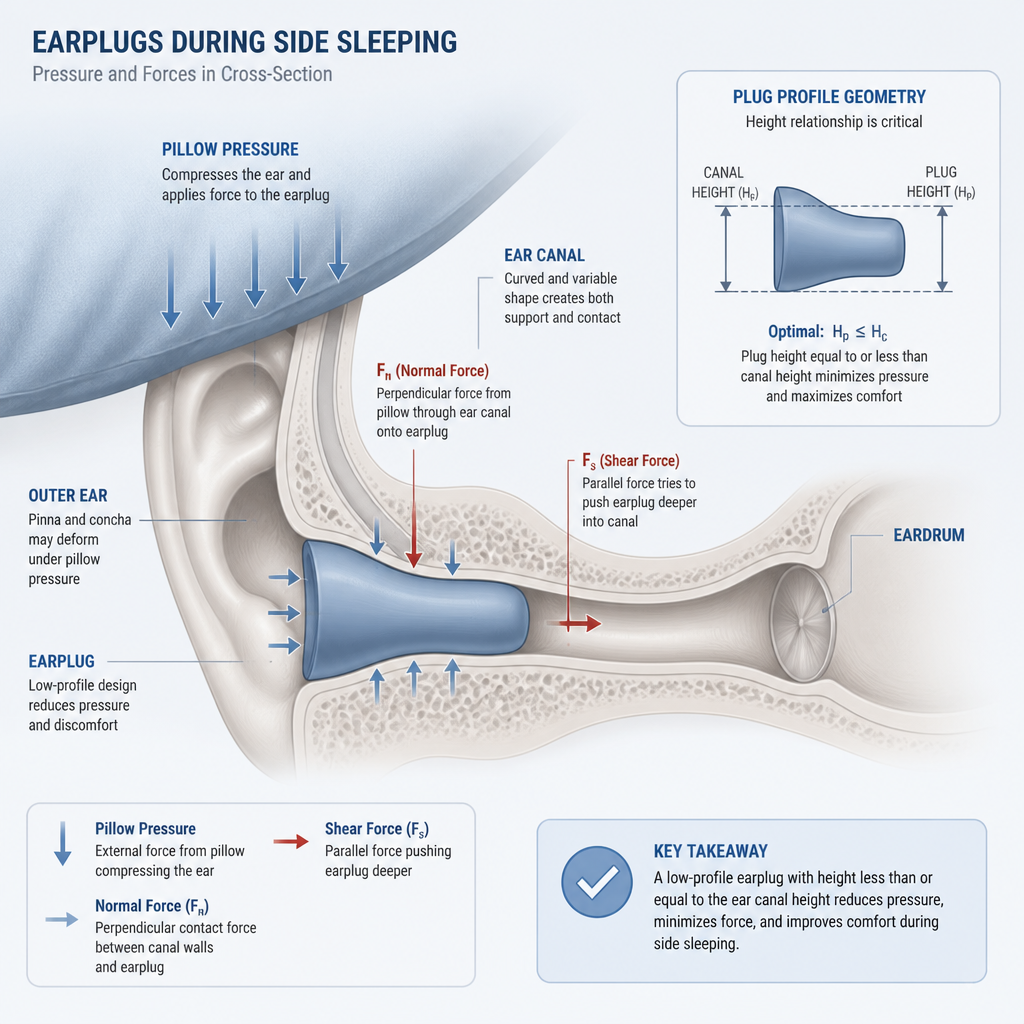
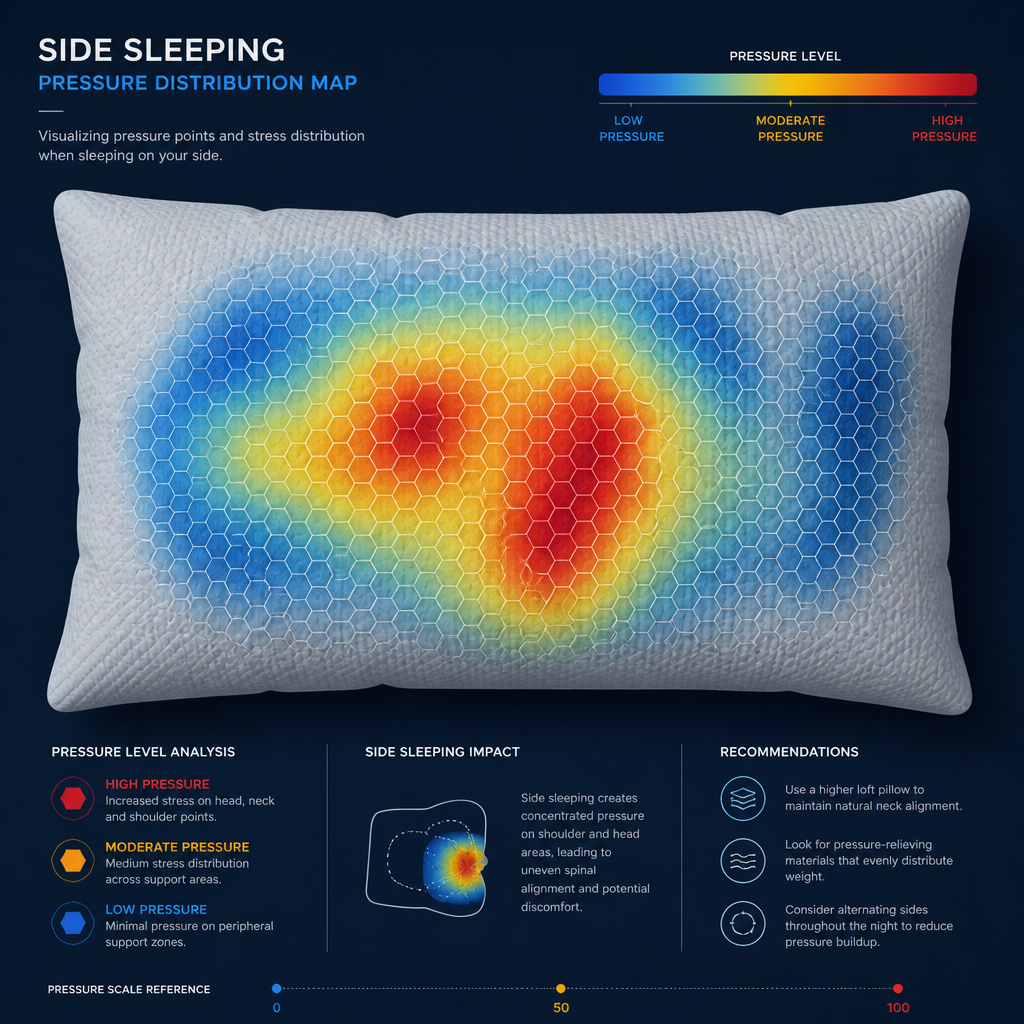
When you sleep on your back, an ear plug faces no lateral pressure. It sits inside the ear canal with gravity working neutrally. When you sleep on your side, the ear pressed into the pillow becomes a compression point. Any plug with external material protruding from the ear opening now acts as a bridge between your skull and the pillow surface. Every time you shift, roll, or press your head deeper into the pillow, that bridge transmits force directly inward, either driving the plug deeper than it should sit or levering it back out.
Back sleepers can often get away with almost any design. Side sleepers cannot. The physics are simply different, and a plug that works perfectly for one sleep position can be genuinely useless for the other. Recognising this is the starting point for finding ear plugs for side sleepers that actually perform through the night.
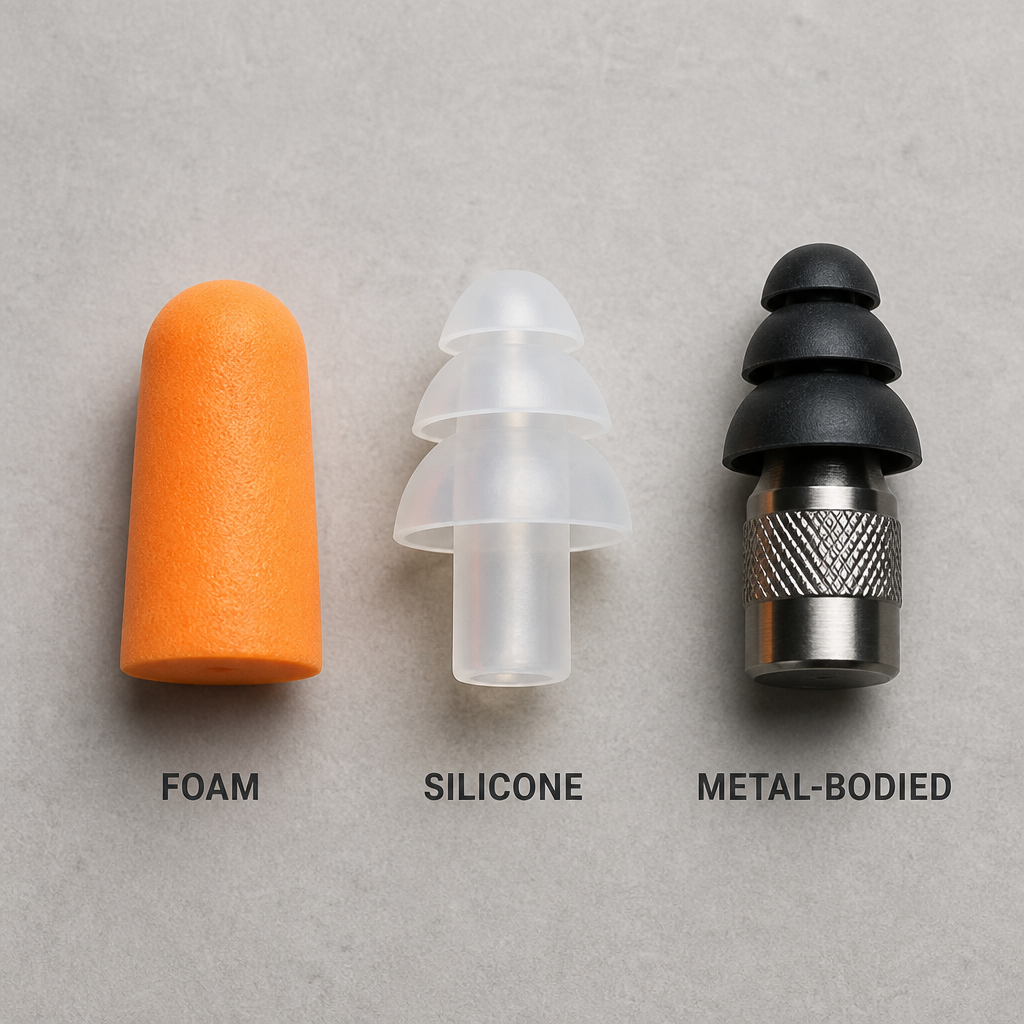
These are not vague, overlapping causes. Each one is distinct and has a specific fix. If you can identify which failure mode is happening to you, you can solve it.
The most common cause is also the simplest. Many people do not insert foam ear plugs deeply enough for them to stay in place. Foam ear plugs need to be rolled tightly, inserted while still compressed, and then held in place while they expand inside the ear canal. If they are only partially inserted, they are far more likely to pop out during the night. Side sleepers are particularly vulnerable to this because pillow pressure will gradually work a shallow-seated plug out of position even if it seemed secure when you lay down.
Pro tip: After inserting a compressed foam tip, hold your fingertip gently over it for 30 to 40 seconds while it expands. Do not remove your finger early. A tip that has fully expanded against the canal wall has dramatically better retention than one you let go of immediately.
Ear canals vary significantly in diameter and shape. A tip that is too small for your canal will not create the friction fit needed to stay put, and will not reduce sound adequately either. A tip that is too large will be uncomfortable enough that you consciously or unconsciously remove it in your sleep. Consumer Reports notes that an ear plug “that is too small would not reduce sound sufficiently and may fall out,” while one that is too large “will likely not seal the ear and would be uncomfortable.” Getting the size right is a retention requirement, not a comfort bonus.
This is why the availability of multiple tip sizes in XS, S, and M genuinely matters. It is not a marketing feature. It is the difference between a plug that seats correctly and one that will be on your pillow by morning.
This is the failure mode most specific to side sleepers, and it is the one the industry has been slowest to address. When a cylindrical foam plug or a high-profile premoulded plug sits in your ear with material extending past the ear opening, it creates a lever arm. Pillow pressure applies force to the exposed outer end of the plug. The longer that external body, the more torque is generated inside the ear canal, gradually working the plug loose over hours. Side sleepers report finding plugs in their pillow cases, not because they fell out instantly, but because this lever mechanism operated slowly through the night.
A low-profile or concave body design eliminates this mechanism by removing the lever arm. When the outer surface of the plug sits flush with or recessed from the ear opening, pillow pressure has nothing external to act on.
The ear canal is not a static tube. Jaw movement during sleep, including grinding, clenching, or normal relaxation, changes the canal’s shape slightly. This movement can loosen a plug that was initially well-seated. Combined with normal position shifts during the night, this means a plug that relies entirely on friction from tip expansion has a limited window before it migrates. Designs where the body itself anchors against the ear’s natural geometry, rather than relying solely on foam tip expansion, maintain retention through this movement.
Not every ear plug design is made equal for side sleeping. Here are the specific physical characteristics that separate ear plugs that stay in from ones that will be gone by morning.
This is the single most important design variable for side sleeper retention. A concave outer body means less external material extends beyond the ear opening compared to a standard cylindrical plug. A standard cylindrical foam plug creates a hard, unforgiving bridge between your head and the pillow. A low-profile or concave design reduces the lever arm that pillow pressure can exploit, which translates directly to better overnight retention. For a committed side sleeper, this single structural difference can be the deciding factor between sleeping through the night and waking at 3 AM searching for a plug in the sheets.
The concave aluminium body of ATTENU8’s design was developed with exactly this problem in mind. The metal body provides a rigid, dimensionally stable outer structure that does not deform under pillow pressure the way foam does, while the concave profile keeps external protrusion minimal. You can read more about the full design rationale in the ATTENU8 guide on why ear plugs fall out at night.
The contact surface between an ear plug and the ear canal matters as much as the body design. Open-cell foam rebounds quickly, which creates pressure against the canal wall rather than conforming to it. Slow-rebound memory foam adapts to the individual shape of your ear canal and maintains that contact through temperature changes and position shifts. It applies gentler, more consistent pressure, which is both more comfortable and creates a more stable seal. For comfortable ear plugs for side sleeping, the tip material is where the difference between eight hours of silence and a sore, disrupted night is made.
Pro tip: Replace memory foam tips every six to eight weeks, even if they still look intact. Foam loses its slow-rebound characteristics over time, and a tired tip that rebounds too quickly will both lose its seal and create more pressure. Replacement tips are a small cost compared to buying new plugs entirely.
A design that ships with multiple tip sizes acknowledges the reality that one size does not work for all ear canals. For side sleepers specifically, a marginally too-small tip will work itself out under pillow pressure. A marginally too-large tip will cause enough discomfort to disrupt sleep or prompt unconscious removal. Starting with the right size is the foundation everything else builds on.
These three approaches represent the realistic options for a side sleeper looking for reliable overnight noise reduction. Each has a different profile height, material behaviour, and retention characteristic under pillow pressure.
| Ear Plug Type | Side Sleeper Retention | Comfort Under Pillow Pressure |
|---|---|---|
| Disposable cylindrical foam | Poor. High-profile cylindrical body creates a lever arm against the pillow. Plugs commonly found in pillow cases by morning. | Variable. Open-cell foam can rebound too aggressively, creating pressure points. Can cause soreness after several hours. |
| Silicone or wax moulded | Good. Flat profile sits flush against the outer ear, removing the lever arm problem. Less protrusion means less displacement. | Good for short periods. Wax and silicone putty designs can become sticky and pick up debris. Not practical for multi-night reuse. |
| Metal-bodied with memory foam tips (e.g. ATTENU8) | Best for side sleepers. Concave metal body minimises external protrusion. Rigid structure does not deform under pillow pressure. Foam tip seats and holds independently of body movement. | Excellent for extended overnight use. Memory foam tip conforms to canal shape without aggressive rebound. Metal body does not compress against cartilage the way rigid foam does. |
Silicone plugs perform better than standard cylindrical foam for side sleepers, but they have a hygiene and longevity problem. Wax plugs in particular pick up lint and dust and are generally single-use or very limited use. The metal-bodied approach solves the retention problem structurally while the replaceable foam tip system addresses both hygiene and comfort. For a detailed material breakdown, see the ATTENU8 comparison of metal vs. foam ear plugs for sleep.
Even the best-designed ear plug will fail if it is inserted incorrectly. Side sleepers need a slightly modified technique from the standard industrial insertion method, which tends to over-seat the plug for overnight use.
Start by rolling the memory foam tip between your thumb and forefinger for three to four seconds until it is compressed. Then, reach your opposite hand over your head and gently pull your ear upward and back to straighten the ear canal. Insert the compressed tip with a gentle rotating motion until the outer edge of the foam sits just at the entrance of the ear canal. Then hold your fingertip lightly over it for 30 to 40 seconds while the foam expands and seats itself against the canal walls.
The common mistake is inserting the plug and immediately laying down before the foam has expanded. When the foam expands against a canal that is already angled by the pillow position, it can seat asymmetrically and create a gap on one side. Insert the plug while sitting upright, let it fully expand, then lay down on your side. This simple sequence, consistently applied, dramatically reduces overnight displacement.
The best approach for side sleepers is to remove the variable of pillow pressure from the insertion equation entirely. Insert while upright, let the tip seal set, then adopt your sleep position. Do not let the pillow be part of the fitting process.
It is also worth testing any new ear plug design during a 30-minute side-lying rest before committing to overnight use. If pressure or discomfort develops within half an hour, it will only worsen over eight hours. That 30-minute test is a practical filter that saves a lot of disrupted nights. For a full breakdown of what else can cause overnight displacement, the ATTENU8 side sleeper’s guide to comfortable ear plugs covers insertion mechanics in detail.
Standard cylindrical foam ear plugs have a high external profile that protrudes from the ear opening. When you sleep on your side, the pillow presses against this protruding section, creating mechanical leverage that gradually works the plug loose over several hours. The foam’s open-cell structure also means it does not hold its shape as consistently as a rigid body under sustained lateral pressure. Low-profile designs with a concave or flush outer surface remove this lever arm and dramatically improve overnight retention.
Yes. The key features to look for are a low-profile or concave outer body that sits flush with the ear opening rather than protruding from it, a slow-rebound memory foam tip that conforms to the canal shape without aggressive expansion, and multiple tip sizes so you can find the correct fit for your specific ear canal. Metal-bodied designs with replaceable foam tips address all three requirements and maintain their shape under pillow pressure in a way all-foam designs cannot.
For most sleep applications, such as blocking a snoring partner, traffic noise, or HVAC sounds, around 30 to 32 dB of noise reduction is effective. Maximum industrial-grade attenuation is not necessary and can actually create a disorientating silence that some people find harder to sleep in. Around 32 dB is the practical sweet spot: it eliminates disruptive environmental noise while leaving some awareness of genuinely important sounds.
For most healthy adults, wearing ear plugs every night is safe when they are inserted correctly and kept clean. The main risks associated with regular use are ear canal irritation from materials that are too rigid or too large, and wax buildup if plugs are worn too deeply for extended periods. Using memory foam tips that sit at the correct depth rather than deep in the canal, and replacing foam tips on a regular schedule, addresses both of these concerns. If you experience soreness or discharge, stop use and consult a doctor.
Memory foam tips should be replaced every six to eight weeks with regular nightly use. Foam loses its slow-rebound characteristics over time even when it still looks intact. A tip that has degraded will rebound more quickly, apply more pressure to the ear canal, lose its seal more readily, and sit less securely under pillow pressure. For reusable metal-bodied ear plugs like ATTENU8, only the foam tips need replacing rather than the entire plug, which makes ongoing maintenance both straightforward and significantly cheaper than buying new disposable plugs continuously.
It is the foundation everything else builds on. A tip that is too small for your ear canal will not create the friction contact needed to stay seated, particularly under pillow pressure, and will also leak sound at the edges. A tip that is too large will create enough discomfort to cause unconscious removal during the night. Matching tip size to your canal is not a fine-tuning step. It is the baseline requirement for any ear plug to work for side sleeping at all.
Soreness during side sleeping is almost always caused by one of three things: a plug body that protrudes and creates a pressure point between your ear and the pillow, a tip that is too large and applying excessive radial pressure inside the canal, or a tip material that rebounds too aggressively. Rigid or high-profile designs create the most soreness because they act as a hard bridge between your skull and the pillow surface. Low-profile, concave-bodied plugs with soft memory foam tips eliminate all three causes simultaneously. If soreness is your primary complaint, profile height and tip material are the two variables to change first.
Have you found a specific design or technique that finally solved the ear plug retention problem for you as a side sleeper? Share what worked in the comments.
Noise-induced hearing loss does not announce itself with a dramatic event. It accumulates shift by shift, flight by flight, concert by concert, until one day the damage is done and no amount of money brings your hearing back. If you are still reaching for a fresh pair of disposable foam plugs every morning, you are solving a permanent problem with a temporary tool. Reusable ear plugs for work and daily life exist precisely because certain environments are loud enough, and frequent enough, to make single-use protection both wasteful and expensive. The eight environments below are not edge cases. They are the places where hearing protection stops being optional.
| Key Insight | Explanation |
|---|---|
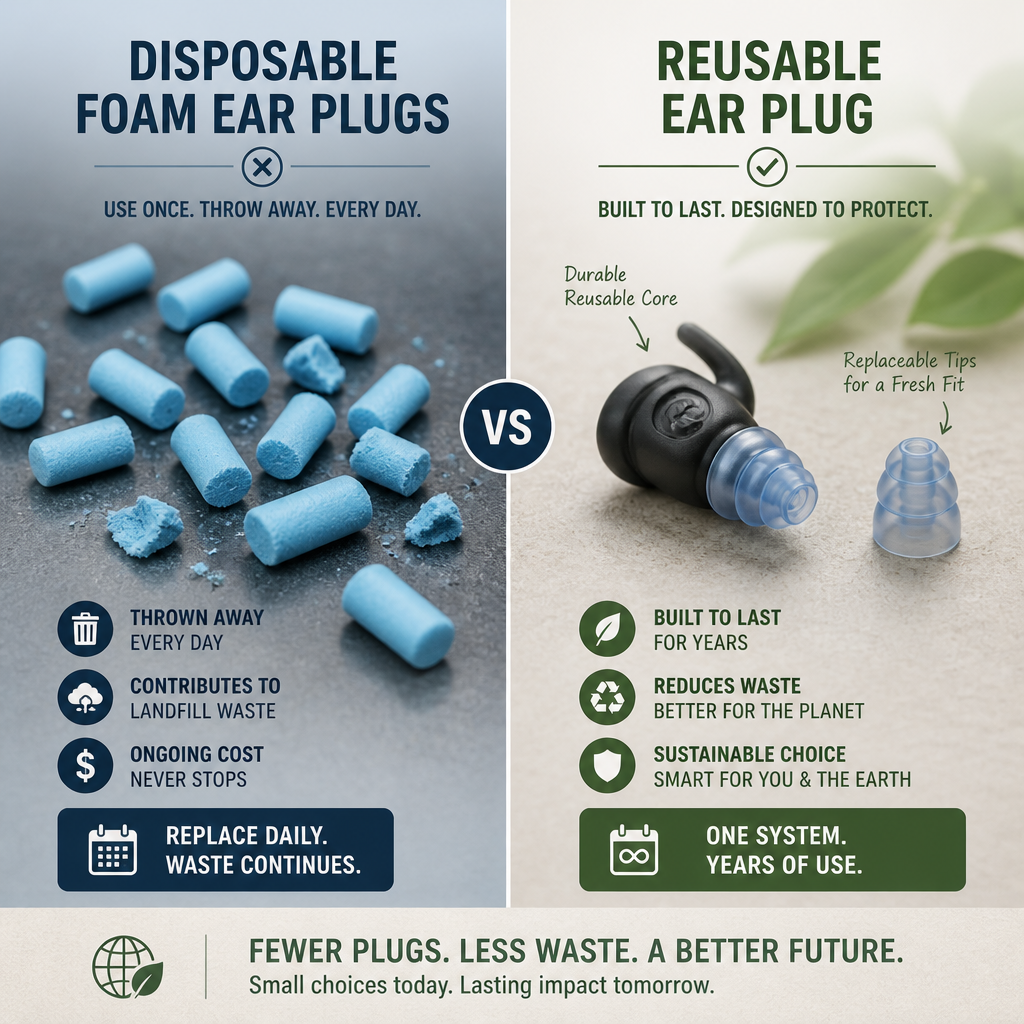
| Reusable plugs cut long-term costs sharply | Replacing only foam tips every 6 to 8 weeks instead of buying new disposable plugs daily makes reusable ear plugs dramatically cheaper over a working year. |
| Metal bodies outlast foam bodies | A concave aluminium body like the one used in ATTENU8 plugs resists compression, crushing, and contamination in ways that all-foam or all-plastic plugs simply cannot match on active job sites. |
| Fit determines actual noise reduction | Rated NRR figures mean nothing if the plug does not seat properly. Memory foam tips in multiple sizes (XS, S, M) ensure a reliable seal regardless of ear canal shape. |
| Hearing damage is cumulative and permanent | Every unprotected hour in a loud environment adds to lifetime exposure. Professionals in construction, manufacturing, or the military face repeated daily exposure that compounds over careers. |
| Sleeping with ear plugs requires comfort above all else | Side sleepers in particular need a low-profile plug that does not create painful pressure points during hours of use. Hard-shell reusable plugs with soft memory foam tips solve this directly. |
| Disposable plugs create ongoing waste and cost | A construction worker using one pair of disposables per shift generates hundreds of discarded plugs per year. Reusable plugs with replaceable tips reduce that waste to near zero. |
| Around 32 dB of noise reduction covers most loud environments | A plug delivering approximately 32 dB of noise reduction handles construction machinery, concert stages, aircraft cabins, and urban transit noise without over-blocking to the point of communication failure. |
Construction is the environment most people picture when they think about hearing protection in loud environments. Jackhammers, pile drivers, angle grinders, and heavy plant equipment produce sustained noise levels that are genuinely dangerous over a full shift. The problem is not a single loud moment. It is eight or ten hours of cumulative exposure, day after day, for an entire working life.
Disposable foam plugs work in theory, but in practice they fall apart on a busy site. Dust and sawdust contaminate them within hours. Workers handle them with dirty gloves. They get crushed in pockets, lost in debris, and replaced improperly by people who have not been trained to roll and insert them correctly. A badly inserted disposable plug can deliver far less than its rated protection.
A durable ear plug with a metal body changes this dynamic. You clean it, you reuse it, and because it does not degrade visibly the way foam does, workers are more likely to actually wear it consistently. The ATTENU8 aluminium body paired with replaceable memory foam tips gives site workers the rated 32 dB noise reduction they need without generating a trail of discarded plugs behind every shift.
Pro tip: On construction sites, keep your reusable plugs on a lanyard or cord attachment. The single most common reason workers go unprotected is that they cannot find their plugs quickly when a loud machine starts up nearby.
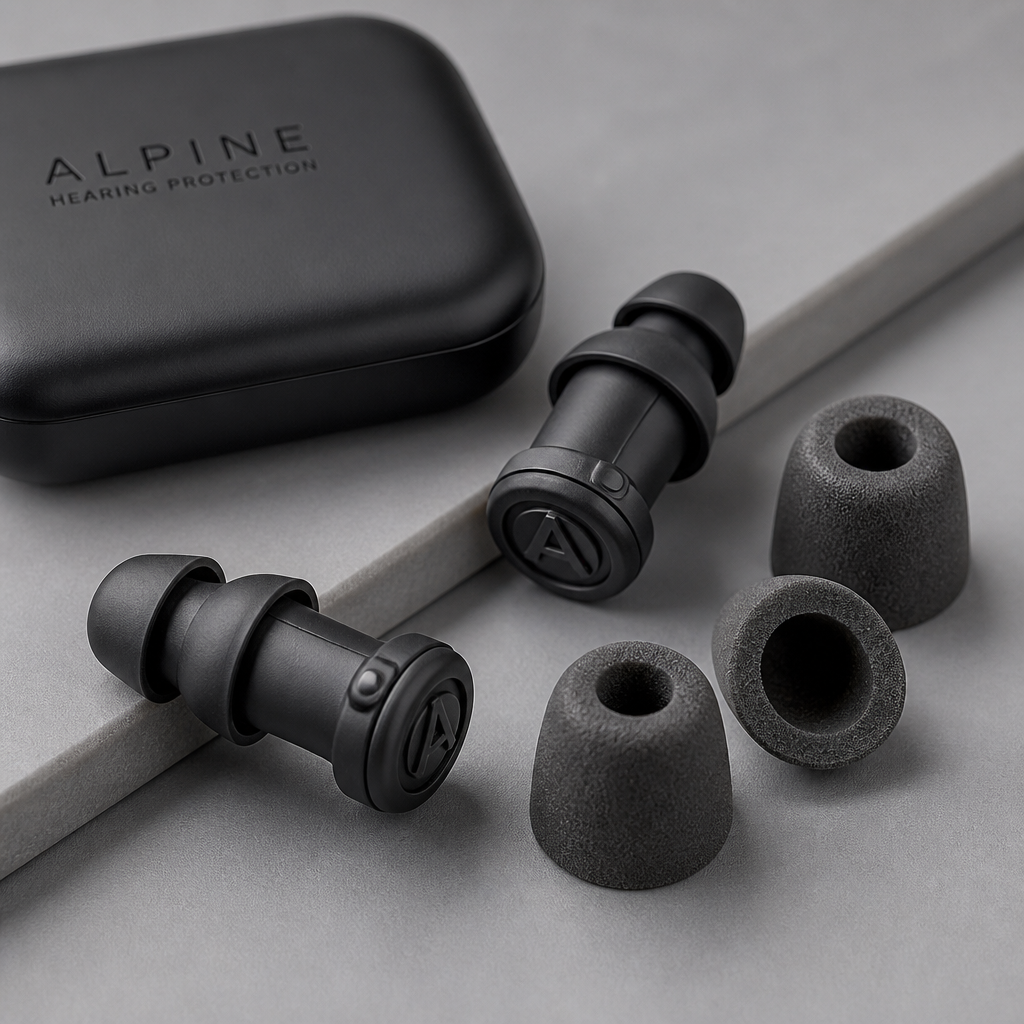
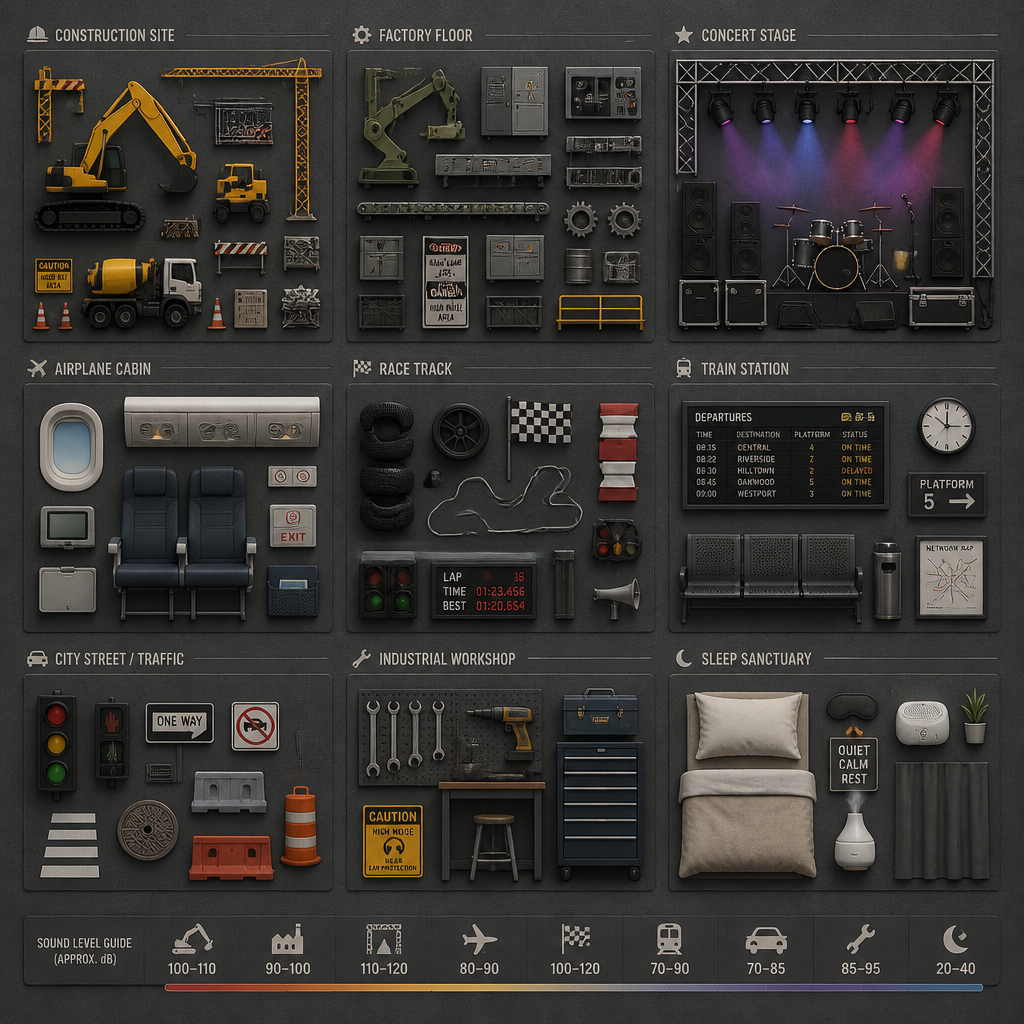
Most workplace safety regulators set an action level where hearing protection becomes mandatory. Reusable plugs rated at approximately 32 dB of noise reduction are well-suited to the range of noise sources found on typical sites, from power tools at closer range to general ambient machinery noise across a larger site. The key is consistent wear, and consistent wear depends on comfort and convenience, which is where reusable metal-bodied plugs earn their keep.
Factory workers face a different challenge from construction workers. The noise on a manufacturing floor is often more constant and less variable. Stamping presses, conveyor systems, CNC machines, and ventilation systems combine into a relentless background roar that rarely drops below dangerous levels during a shift.
In this context, ear plugs for work need to be comfortable enough to wear for an entire shift without causing fatigue or the urge to remove them. This is where most cheap reusable plugs fail. Rigid flanged plugs in a fixed size create pressure in ear canals that are not perfectly suited to that size, and workers quietly pull them out by mid-morning. Memory foam tips that conform to the specific shape of an individual ear canal are simply more comfortable over long periods.
Manufacturing environments also tend to be cleaner than construction sites, which makes the hygiene case for reusable plugs even stronger. You can wipe down a metal-bodied plug at the end of a shift in seconds. That is not something you can say about a foam plug that has absorbed eight hours of sweat.
In large manufacturing operations, the cost of supplying disposable ear plugs to an entire workforce adds up quickly. More importantly, compliance monitoring becomes harder when workers are constantly swapping plugs in and out due to discomfort. Workers who own a personal pair of reusable plugs tend to wear them more consistently, which is the actual goal of any hearing protection program.
Concert venues, festival stages, and nightclubs routinely operate at sound levels that can cause temporary hearing threshold shifts after a single event. For casual attendees, this is a one-off risk. For musicians, sound engineers, venue staff, and frequent concert-goers, it is a cumulative occupational hazard.
The classic objection to wearing ear plugs at concerts is sound quality. Standard disposable foam plugs muffle high frequencies disproportionately, turning a live performance into a muffled, bass-heavy experience. This is not a problem with good reusable plugs that use memory foam tips designed to attenuate evenly across the frequency range. You hear the music. You just hear it at a safer level.
The best ear plugs for concerts are the ones you actually wear. A plug that sits in your pocket because it sounds terrible or feels uncomfortable provides exactly zero protection.
Musicians who perform multiple nights per week have the strongest case for investing in high-quality reusable plugs. The ATTENU8 approach of a durable metal body with replaceable soft tips means the product stays in rotation for years, not weeks. Over a touring season, that economics argument becomes very clear very fast.
Aircraft cabin noise is a steady, low-frequency roar produced by engines, airframe vibration, and pressurization systems. It sits at levels that are not acutely dangerous in the way a construction site is, but they are fatiguing over a long-haul flight and they contribute meaningfully to cumulative exposure for frequent flyers.
Ear plugs for travel solve two distinct problems on a plane. First, they reduce the physiological fatigue that comes from prolonged exposure to cabin noise. Frequent travellers consistently report arriving less exhausted when they wear ear protection on long flights. Second, for travellers trying to sleep in economy class, they block the ambient noise that prevents sleep onset and disrupts sleep cycles.
Airports themselves are a second layer. Gate areas, particularly near runway-facing windows, produce significant ambient noise. Carry-on luggage that includes a pair of reusable plugs takes up almost no space and costs nothing extra once the initial purchase is made.
Pro tip: Keep your reusable ear plugs in your carry-on rather than your checked luggage. The environments where you need them most, aircraft cabins, airport gate areas, and transit hubs, are all airside, not at your destination.
Firearms, artillery, and military vehicles produce some of the most intense impulse noise that human ears are routinely exposed to. A single unprotected gunshot at close range exceeds safe exposure limits in an instant. For military personnel, the cumulative exposure across a career of training exercises, live fire events, and operational deployments is substantial.
The durability requirement in military and tactical contexts is extreme. Equipment gets wet, dirty, compressed, dropped, and subjected to temperature extremes that destroy consumer-grade products quickly. A metal-bodied reusable ear plug is simply better suited to this kind of abuse than an all-foam or all-plastic alternative. The aluminium body does not deform, does not absorb moisture, and does not degrade with the same predictable failure pattern that foam plugs exhibit.
For civilians in shooting sports, the same logic applies. Range days are loud. Cumulative range exposure over years of regular practice adds up to meaningful hearing damage if protection is inconsistent. A reusable plug that you own, maintain, and carry as standard kit is more likely to actually be used than a disposable plug you have to remember to stock.
Military personnel who wear helmets, headsets, or communication gear face a fit challenge that standard bulky ear muffs cannot solve. A low-profile in-ear plug that provides strong attenuation without interfering with other headgear is often the only practical option. The compact form factor of metal-bodied plugs with memory foam tips fits this requirement directly.
Motorsport venues are among the loudest recreational environments a person can enter voluntarily. Formula racing, motorcycle events, and drag strips produce sustained noise levels that can cause hearing damage to spectators, let alone pit crew members and marshals who work track-side for entire race days.
For pit crew and track workers, hearing protection is professional-grade necessity. For spectators attending multiple events per season, the cumulative argument applies with force. One race weekend without protection is one thing. Ten race weekends per year over a decade is a very different calculation.
The practical challenge at motorsport events is that you also need situational awareness. You need to hear commands, radio calls, or safety announcements. A plug delivering around 32 dB of noise reduction brings the roar of a race engine down to a manageable level without blocking human voice frequencies entirely, which is the practical balance that matters in this environment.
Underground rail systems, particularly older infrastructure, produce wheel squeal and acceleration noise that can be genuinely loud at platform level and inside carriages. Bus travel in dense urban environments adds engine noise, stop-start braking, and passenger noise to the mix. For daily commuters making this journey twice a day, five days a week, the exposure is not trivial.
Beyond the hearing protection argument, there is a practical productivity and wellbeing case. Commuters who use ear plugs during transit report lower stress levels on arrival at work and improved concentration during the commute itself when using it to read or decompress. The plugs do not need to be paired with any audio device to deliver this benefit. Silence, or near-silence, is the point.
Urban noise pollution also extends beyond transit. City apartments near arterial roads, flight paths, or entertainment districts expose residents to sustained outdoor noise that disrupts concentration and rest. Reusable ear plugs worn during focused work periods, or during afternoon rest, address this directly.
This is the environment where comfort matters most and where most ear plugs fail their users. A plug that is fine for two hours on a job site becomes intolerable at hour four of a sleep attempt, particularly for side sleepers who press one ear into a pillow.
Standard cylindrical foam plugs create pressure points when the pillow compresses against them. This wakes light sleepers repeatedly and causes enough discomfort that many people abandon ear plugs for sleep entirely, accepting the noise rather than the discomfort. This is a product design failure, not a user failure.
The concave aluminium body design of ATTENU8 plugs addresses this directly. The recessed profile sits within the ear without protruding, reducing the pressure point problem that makes most plugs unwearable for side sleepers. The soft memory foam tips conform to the ear canal and hold their position without requiring the user to shove the plug deeper to maintain a seal.
Light sleepers near busy roads, shift workers sleeping during daytime hours, travellers in hotels near street level, and partners of people who snore are the core audience for sleep-specific hearing protection. The snoring use case alone is significant. The noise generated by a partner’s snoring can be genuinely loud, and a plug delivering around 32 dB of noise reduction brings it to a level that no longer prevents sleep onset.
Visit the ATTENU8 product page to see how the three memory foam tip sizes (XS, S, and M) address the fit problem that causes most sleep ear plug failures.
Not all ear plugs are built the same, and the environment you are protecting against should drive your choice. The table below compares the three main categories directly on the factors that matter most across the eight environments covered above.
| Protection Type | Best For | Key Limitations |
|---|---|---|
| Disposable foam plugs (single-use) | One-off situations, shared use in visitor safety kits, environments with very high contamination risk | High ongoing cost, significant waste, inconsistent insertion quality, no size options, degrades quickly in dirty or humid conditions |
| Reusable silicone or flanged plugs (plastic body) | Occasional use, budget-conscious buyers, environments where comfort over long periods is less critical | Fixed flange size fits many ear canals poorly, pressure build-up during extended wear, less durable under heavy physical use |
| Reusable metal-bodied plugs with memory foam tips (ATTENU8) | Daily professional use, sleep, travel, concerts, any environment requiring consistent long-term wear and high durability | Higher upfront cost than disposables, foam tips need replacement every 6 to 8 weeks (though this is the only recurring cost) |
With a metal-bodied reusable plug like ATTENU8, you replace only the memory foam tips, not the entire plug. Tips typically need replacing every 6 to 8 weeks with daily use. The aluminium body itself lasts years under normal conditions. Compare this to disposable foam plugs, which need replacing after every use or every shift.
Yes, provided you clean them regularly. A metal body wipes down in seconds with a damp cloth. Memory foam tips should be replaced on the 6 to 8 week schedule rather than cleaned repeatedly, as foam absorbs moisture over time and loses its sealing properties. In practice, reusable plugs with replaceable tips are more hygienic than disposable plugs handled repeatedly with dirty hands on a job site.
Most cylindrical foam plugs are uncomfortable for side sleepers because they protrude from the ear and create pressure points when a pillow presses against them. A low-profile plug with a concave or recessed body design reduces this problem significantly. Soft memory foam tips that conform to your ear canal without requiring deep insertion also help maintain a seal without discomfort during several hours of side sleeping.
Construction sites with heavy machinery typically require plugs with an NRR of 25 dB or higher. Many construction-grade plugs are rated at 25 dB to 33 dB. A plug delivering approximately 32 dB of noise reduction covers the majority of construction noise sources effectively. The actual protection you get depends equally on correct insertion and consistent wear throughout the shift, which is why comfort and fit matter as much as the rated figure.
Frequent travellers benefit from reusable plugs in three ways. First, there is no need to carry or restock disposables across multiple trips. Second, a consistent pair of plugs that you have already fitted to your ear canals provides reliable protection without the insertion variability of disposables handled in cramped conditions. Third, the environmental footprint is dramatically lower, which matters to travellers who are already conscious of their per-trip impact.
A well-fitted plug delivering around 32 dB of noise reduction reduces dangerous background noise to safe levels while preserving enough hearing range for face-to-face communication at normal speaking distance. Human speech, especially in the mid-frequency range where most conversation occurs, remains intelligible at close range even with plugs inserted. The common complaint that ear plugs block all communication usually comes from plugs that fit poorly or are inserted too deeply, not from the protection level itself.
If you wear ear plugs in any of the environments above, we would genuinely like to hear which situations drive you to reach for them first and what has stopped you from switching to a reusable option so far.
We would love your feedback and any insights you would share with others. What perspective would you add?
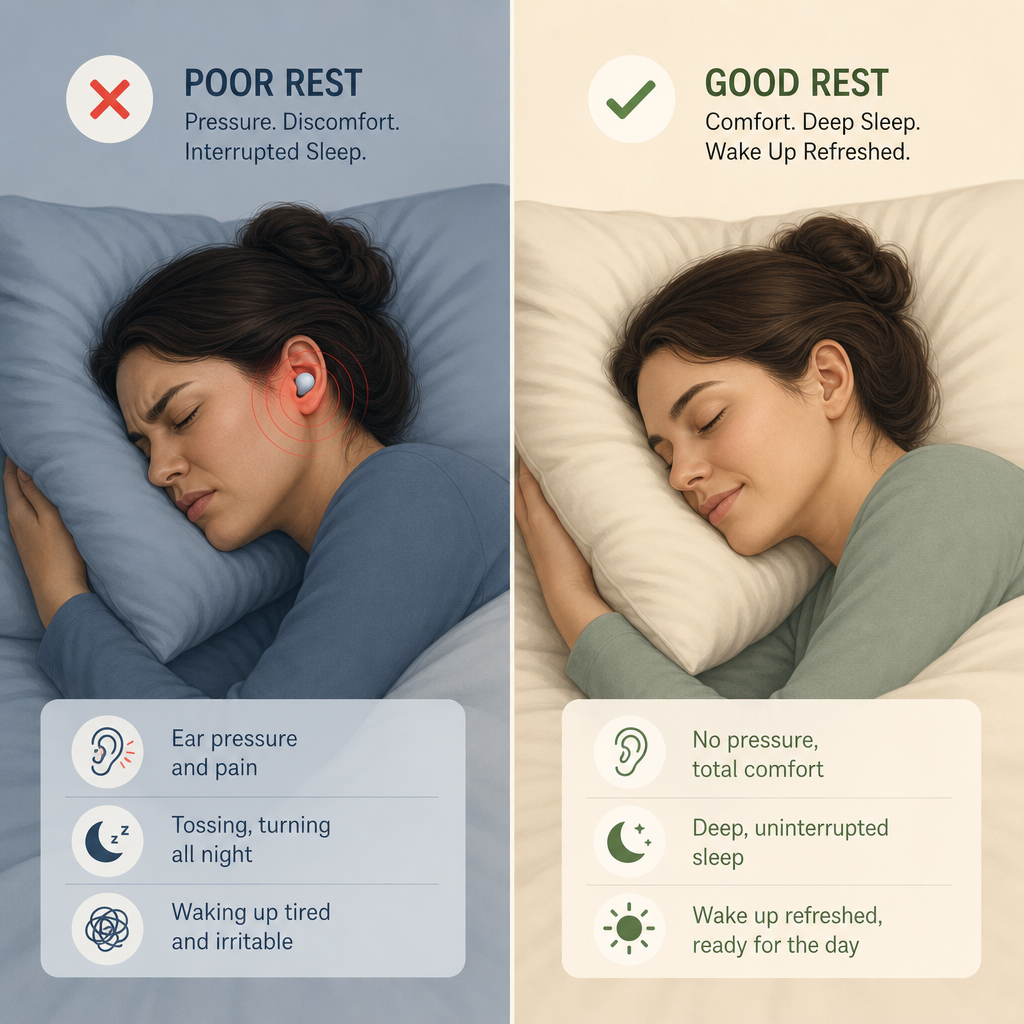
If you sleep on your side, you already know the problem. You press your ear into the pillow, and whatever ear plug you’re wearing turns into a pressure point that wakes you up faster than the noise you were trying to block. Standard foam ear plugs were designed for upright use in loud workplaces, not for hours of lateral skull pressure against a mattress. The result is discomfort, poor seal, and a restless night. Finding genuine ear plugs for side sleepers requires understanding exactly why conventional designs fail this specific use case.
| Key Insight | Explanation |
|---|---|
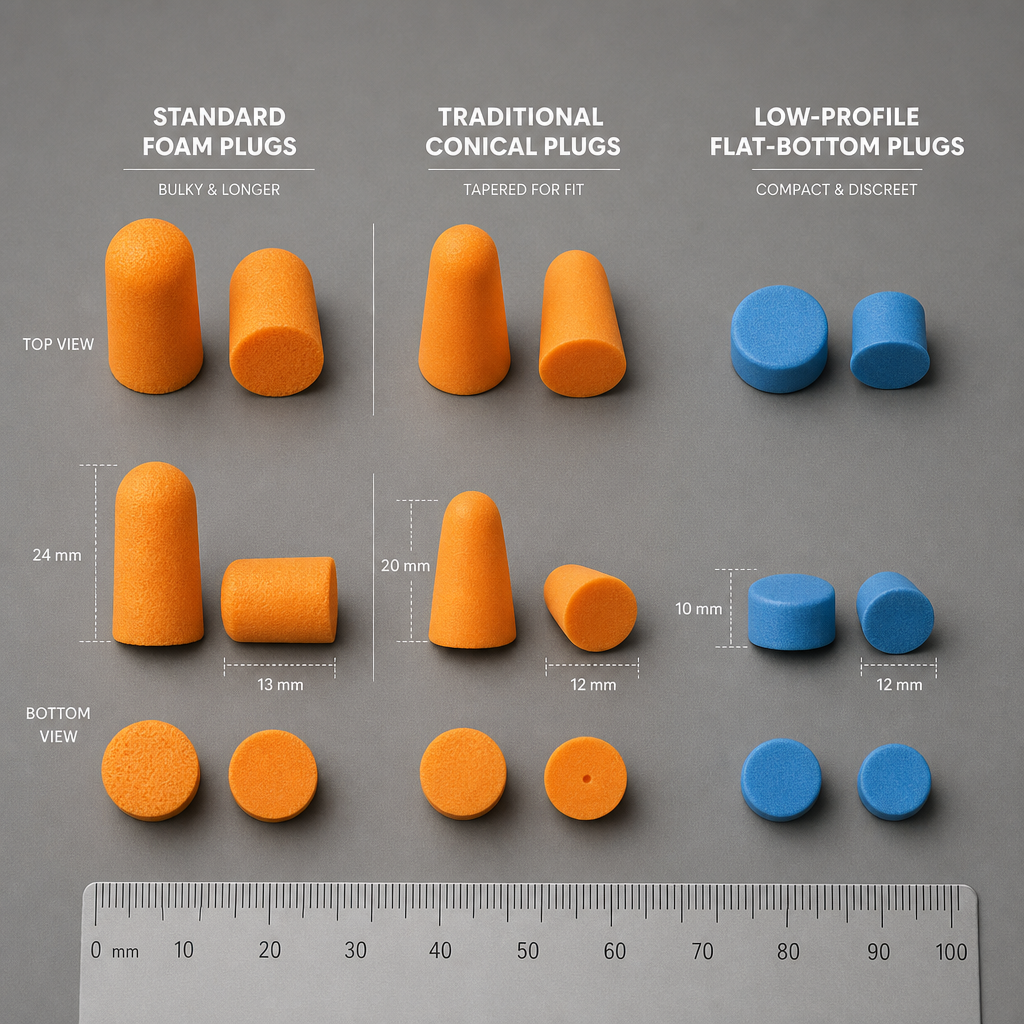
| Ear plug protrusion causes pillow pain | Standard foam ear plugs extend 10-15mm beyond the ear canal, creating painful leverage when your head presses into a pillow. |
| Low-profile body design is non-negotiable | Ear plugs with a slim, flush-fitting body significantly reduce the pressure point that disrupts side sleeper comfort. |
| Memory foam tips outperform standard foam for sleep | Memory foam conforms to your ear canal shape and maintains a seal even as jaw movement or head repositioning occurs during sleep. |
| Tip size directly controls comfort and seal quality | Using the wrong tip size causes either canal pressure or sound leakage. Multiple size options (XS, S, M) are essential for a proper fit. |
| Reusable metal bodies reduce nightly waste and cost | Single-use foam ear plugs degrade quickly. A durable metal-bodied ear plug with replaceable tips lasts far longer and maintains consistent performance. |
| 32dB noise reduction blocks the most disruptive sleep sounds | Snoring typically registers at 50-80dB. A 32dB reduction brings that into a manageable range that does not trigger full arousal from sleep. |
| Flat-bottom tip geometry is the overlooked variable | A tip that is flatter at its outermost edge sits flush against the pillow rather than twisting or creating a fulcrum that dislodges the plug. |
The overwhelming majority of ear plugs on the market are engineered for occupational hearing protection. Construction workers, factory staff, and airline ground crew use them while standing or seated upright. The design brief for those products does not include surviving six to eight hours of lateral compression between a human skull and a memory foam pillow.
Standard rolled foam ear plugs protrude significantly from the ear canal once expanded. That protrusion acts as a fulcrum. When you lie on your side, the pillow pushes against the protruding end, levering the plug deeper into the canal or simply ejecting it entirely. Neither outcome is useful. The pressure also builds at the outer ear, which is rich in cartilage and nerve endings, causing the dull ache that wakes side sleepers in the early hours.
A common mistake is assuming that softer foam solves the problem. Softer foam compresses more easily under pillow pressure, which means the plug loses its seal. You end up with an ear plug that neither blocks sound nor stays comfortable. The material choice matters, but the shape and profile matter more.

When you lie on your side, the external ear (the pinna) folds slightly inward and the surrounding tissue compresses. Any object protruding from the ear canal is now sandwiched between a rigid skull and a yielding but still resistant pillow surface. The force is not enormous, but it is sustained and directional. Over an hour, that sustained force translates into discomfort significant enough to cause micro-arousals from sleep, even if you do not fully wake up.
According to research published through the National Institutes of Health, noise-related sleep disturbance is associated with increased cardiovascular stress responses even when the sleeper does not consciously wake. The implication is that poor-fitting ear plugs that allow sound to leak through are not just annoying. They are physiologically disruptive. Getting the fit right is not a luxury preference. It is a functional requirement.
The external ear canal is not a straight tube. It runs at an angle, and that angle shifts subtly when jaw muscles relax during sleep and when your head tilts laterally onto a pillow. An ear plug that fits well when inserted upright may lose its seal as you drift into sleep and the canal geometry changes. This is why rigid, one-size-fits-all tips consistently underperform for side sleepers. A tip material that adapts to these micro-changes, the way quality memory foam does, maintains an acoustic seal across the postural shifts of a full night’s sleep.
Even sleepers who manage the initial discomfort often find their ear plugs on the pillow or in the sheets by morning. This happens because pillow movement creates repeated small forces against the protruding plug body. Over dozens of positional shifts throughout the night, those forces accumulate and work the plug loose. A low-profile plug with minimal external protrusion simply has less surface area for the pillow to act against, which is why profile height is one of the most important specifications to check when selecting ear plugs specifically for side sleeping.
Comfort during side sleeping comes from three independent but interacting factors: profile height, tip material, and tip size fit. Get all three right and the ear plug becomes essentially unnoticeable. Get any one of them wrong and you are back to the 3am removal.
Profile height refers to how far the ear plug extends beyond the entrance of the ear canal. Products with a protruding stem, a large handle, or a thick outer flange all create surface area that the pillow can push against. The best ear plugs for lying down have a body that sits as close to flush with the ear opening as possible, or at minimum keeps its lowest possible external profile.
Tip material determines both the initial seal and how well that seal survives movement. Standard PU foam is cheap but compresses under sustained lateral pressure, losing acoustic performance. Memory foam is denser and slower to rebound, which means it holds its shape against the canal wall more effectively even when head pressure shifts. Silicone flanged tips solve the protrusion problem reasonably well but often create a harsher surface contact point that irritates the outer canal during extended wear.
Pro tip: Before buying any ear plug marketed for sleep, check the listed insertion depth and protrusion measurement. If the manufacturer does not publish this, treat it as a red flag. Any product genuinely designed for side sleepers will consider this specification fundamental.
The phrase flat bottom ear plug tips refers to a tip geometry where the outermost face of the plug, the part visible when the plug is inserted, presents a relatively flat rather than convex or tapered surface. This matters specifically for side sleepers because a flat or minimally rounded surface distributes pillow contact force evenly rather than concentrating it at a single point.
A convex or rounded tip end acts like a ball against the pillow. Force is concentrated at the centre point of that curve, which then transmits directly into the canal. A flatter profile spreads that same force across a wider area and reduces the peak pressure at any single point. The reduction in peak pressure is what eliminates the focal ache that wakes side sleepers.
A concave outer surface on the ear plug body, as used in ATTENU8’s aluminium shell, takes the flat-bottom principle further. A concave form actually recesses the central surface away from the pillow contact point, so even under lateral compression the deepest part of the plug exterior is not in direct contact with the pillow material. The contact points become the rim of the concave form, which are closer to the outer ear and further from the canal entrance. This distributes pressure around the periphery rather than driving it axially into the ear canal.
In practice, users report a meaningful difference in overnight comfort when switching from convex-tipped plugs to concave or flat-profile designs. The ear simply stops hurting. That is not a minor quality-of-life detail. For someone who has been tolerating discomfort or abandoning ear plugs altogether, it is the reason they can finally use hearing protection consistently enough to actually improve their sleep.
Not all ear plug categories perform equally for side sleepers. The table below compares the three main options a noise-sensitive sleeper or professional is likely to consider, judged specifically on side-sleeping performance rather than general hearing protection adequacy.
| Ear Plug Type | Side Sleeping Suitability | Key Limitation |
|---|---|---|
| Standard disposable foam (cylindrical roll-down) | Poor. High protrusion, loses seal under pillow pressure, difficult to size correctly. | Protrudes 12-15mm from canal, creates direct leverage point against pillow. Must be discarded frequently, adding ongoing cost and waste. |
| Silicone flanged reusable (triple-flange or mushroom tip) | Moderate. Lower profile than foam cylinders but flanges can create pressure hotspots at the outer canal rim. | Rigid flange material does not conform to canal geometry changes during sleep. Fit is highly sensitive to canal shape; poor fit means sound leakage or discomfort. |
| Metal-bodied with memory foam tips (e.g. ATTENU8) | Best for side sleeping. Concave low-profile aluminium body minimises pillow contact. Memory foam tips adapt to canal geometry shifts during sleep. | Higher upfront cost than disposable foam. Tips require replacement every 6-8 weeks. Must be matched to correct tip size (XS, S, M) for optimal fit. |
“Sleep quality has a larger effect on wellbeing than income or marital status. Disrupted sleep is not a minor inconvenience. It is a measurable health risk.” — Matthew Walker, neuroscientist and author of research on sleep and human performance, via University of California Berkeley.
The data consistently shows that acoustic seal quality directly determines how much noise actually reaches the cochlea, regardless of what the packaging NRR claims. A 32dB-rated plug that loses its seal because of pillow pressure is functionally providing far less than 32dB of attenuation. Choosing the right type for your sleep position is not optional if you want the rated performance to actually apply to your situation.
ATTENU8 approached the ear plug design problem from a fundamentally different starting point than most manufacturers. Rather than adapting an occupational hearing protection device for consumer sleep use, the product centres on the physical realities of extended wear in a lying-down position. The aluminium body is machined with a concave profile that keeps the outer surface of the plug from creating the single-point pressure contact that characterises conventional designs.
The metal body is also substantially thinner and lower-profile than a standard foam cylinder at maximum expansion. When inserted correctly with the right tip size, the outermost point of the ATTENU8 plug sits significantly closer to flush with the ear canal entrance than a rolled foam plug does. That reduction in protrusion is the primary reason side sleepers report being able to wear them through the night without the 3am removal.
The inclusion of XS, S, and M memory foam tips is not just a marketing gesture toward inclusivity. Ear canal dimensions vary significantly between individuals. A plug tip that is too large creates painful canal wall pressure. One that is too small cannot maintain an acoustic seal, particularly as the canal geometry shifts during the postural changes of sleep. The ability to match the tip size to actual anatomy means the seal quality is consistent from insertion through to morning.
Memory foam as a tip material also has a specific advantage for the side sleeper context. Its slow rebound rate means that when the tip is compressed by pillow pressure, it does not immediately spring back and eject itself. It holds its compressed form temporarily, then gradually re-expands as pressure is released. This dynamic is the opposite of what happens with standard PU foam, which rebounds aggressively and can work itself out of position throughout the night.
Pro tip: When testing ear plug size for side sleeping, try inserting the plug while lying on your side rather than standing in front of a mirror. The canal orientation changes in that position, and a tip that feels correct upright may be too large or too small when you are horizontal. Assess the fit where it actually needs to perform.
Single-use foam ear plugs seem inexpensive per unit, but a light sleeper or a shift worker using two ear plugs per night spends considerably more annually than the cost of a premium reusable pair. The more significant cost is the repeated failure. Every night spent discarding a dislodged ear plug at 2am, or tolerating discomfort rather than getting consistent noise reduction, is a night of degraded sleep. ATTENU8’s model of replacing only the foam tips every six to eight weeks retains the structural integrity of the metal body while keeping the acoustic seal consistently fresh.
The Noise Reduction Rating (NRR) printed on ear plug packaging is measured in a laboratory under controlled conditions with correctly fitted plugs. Real-world attenuation is typically lower, because most people do not achieve the laboratory-standard insertion depth and seal. The US EPA and OSHA both note that the real-world effective noise reduction is often estimated at approximately half the stated NRR for practical use purposes.
Even accounting for that real-world adjustment, a 32dB-rated plug delivering an effective 16dB of attenuation makes a meaningful difference. A partner snoring at 65dB becomes effectively 49dB, which sits below the threshold at which most people experience full cortical arousal from sleep. The math is simple and the outcome is measurable. More consistent attenuation across the night, maintained by a plug that stays in place, translates directly to more slow-wave and REM sleep stages.
Road traffic at 50 metres registers at approximately 60-65dB. A partner’s snoring can reach 80dB at close range. Urban ambient noise through a closed window sits around 40-50dB. A 32dB-rated ear plug, even at its real-world effective performance, reduces all of these sources to levels that either fall below or approach the roughly 30-35dB ambient threshold associated with undisturbed sleep in adults. That is the target range. It is achievable, but only if the plug maintains its seal throughout the night, which circles back to the fit and profile requirements discussed above.
Products like those from Flare Audio or Loop Ear Plugs position themselves partly around acoustic filtering, preserving some sound frequencies while attenuating others. That is useful for musicians or for people who need situational awareness. For a side sleeper whose sole objective is uninterrupted sleep in a noisy environment, maximum broadband attenuation with a stable overnight fit is the correct specification. Acoustic filtering is a feature that is largely irrelevant at 2am when a truck accelerates past your bedroom window.
Yes, but only with the right design. Low-profile, concave-bodied ear plugs with correctly sized memory foam tips are specifically suited to surviving the pillow pressure and postural shifts of a full night’s sleep. Standard cylindrical foam plugs are not designed for this use case and regularly migrate out of position during the night.
Start with the medium tip and assess the fit lying on your side rather than standing upright. If the plug feels uncomfortable or creates pressure inside the canal, move down to small. If you notice sound leaking through or the plug sits loosely, move up. The correct tip size should feel snug but not painful, and the plug should require gentle effort to remove, not fall out freely.
Memory foam tips used nightly typically require replacement every six to eight weeks. The foam gradually loses its rebound elasticity and its surface accumulates oils and debris from the ear canal that reduce hygiene and acoustic seal quality. Replacing only the tips on a metal-bodied plug is significantly more economical and sustainable than discarding and replacing an entire plug unit.
In practice, no. The aluminium body of a product like ATTENU8 is compact enough that its weight is negligible compared to the forces already acting on the plug from pillow contact. The rigidity of the metal body actually helps maintain the plug’s geometry under pressure, whereas soft foam bodies can deform under sustained lateral compression and lose their shape and seal.
Sleep-specific ear plugs prioritise maximum broadband noise attenuation, low profile for lying down, and sustained overnight comfort. Concert ear plugs prioritise acoustic filtering to preserve music clarity at reduced volume. Travel ear plugs are often optimised for pressure equalisation and ambient noise reduction during flights. These are genuinely different engineering goals. A product optimised for concerts will underperform for a side sleeper who needs 8 hours of maximum attenuation in a horizontal position.
For most cases, yes, particularly if the seal is maintained consistently. Snoring typically ranges from 50dB to 80dB depending on severity. A 32dB rated plug delivering real-world effective attenuation reduces even loud snoring to levels that approach or fall below the threshold for sleep disruption in most adults. For very loud snoring above 80dB, ear plugs alone may be insufficient and should be combined with positional adjustments or other interventions.
The aluminium body can be wiped with a damp cloth or a mild isopropyl alcohol solution. The memory foam tips should not be submerged in water as this degrades the foam structure. Wipe the tips gently with a dry or slightly damp cloth. Given that tips are replaced every six to eight weeks anyway, deep cleaning of the tips is less critical than cleaning the metal body itself.
Have you tried switching from standard foam ear plugs to a low-profile reusable option for side sleeping? Share what worked, or what did not, in the comments below.

