


 0

Shared accommodation rarely gives you silence. A roommate’s late video call, a corridor full of slamming doors, and a flatmate who studies with music on can wreck a night’s sleep and a week of focus. For many students, ear plugs are the cheapest fix that actually works, but only if you choose the right type, fit it properly, and use it with a plan.
This guide covers how ear plugs help with studying and sleep in halls or shared flats, which types suit a student budget, and where the habit goes wrong. The advice comes from working with people who spend long nights around other people’s noise, so it focuses on what happens in real rooms rather than generic tips.
| Key Insight | Explanation |
|---|---|
| Fit matters more than the label | A plug that leaks at the edge does very little, so test all tip sizes before you commit to a pair. |
| Steady sound is easier to study through than sudden sound | A constant hum fades from attention within minutes, while a neighbour’s voice keeps pulling your focus back. |
| Nightly use needs moderation | Wirecutter’s reporting found that the otolaryngologists it spoke with accepted occasional use but cautioned against wearing plugs every night. |
| Clean hands before every insertion | Foam plugs have to be squeezed before they go in, so dirty fingers carry bacteria straight into the ear canal. |
| Replace foam tips on a schedule | ATTENU8 foam tips need replacing every 6-8 weeks, so write the date on your calendar when you start a new set. |
| Pair plugs with a flatmate agreement | Plugs handle the noise you cannot control, while a quiet-hours agreement handles the noise you can. |
Noise in a shared flat is not the same as noise at home. At home, you usually know where a sound comes from and when it will stop. In halls, the sources multiply, and the schedule belongs to other people, which means you cannot plan around it.
Irregular noise does more damage to sleep than steady noise. A single door slam at 2 a.m. can pull you out of light sleep even when the room has been quiet for an hour. That is why students who say the building is “not that loud” often still wake up exhausted.
Your brain keeps monitoring for sounds that might matter, and it does this most strongly in unfamiliar rooms. Voices, footsteps, and a phone buzzing on the next pillow are the sounds that trigger a full awakening. A steady fan or a low hum often does much less harm because the brain learns to ignore it.
This is the main reason ear plugs work well in accommodation. They do not need to silence everything. They need to lower the sharp, sudden sounds that break your sleep and pull your attention away from reading.
Light sleepers, students with early lectures, and anyone who shares a wall with a late-night gamer or a flatmate on a different timetable tend to see the biggest difference. If you already read about why ear plugs work for light sleepers, you will recognise the pattern: the sounds that wake you are usually short and sharp, not loud and constant.
Students with shift jobs or unusual study hours also gain from ear plugs, since daytime sleep in a busy building is hard to protect without them. The principle is the same across all these groups: reduce the interruptions you cannot schedule away.
Ear plugs help with studying in a specific way. They cut the voices and sudden noises that break your concentration, but they do not make your brain fully quiet. Expect a reduction in distraction, not a sound-proof bubble, and set your expectations on that basis.
Most students try ear plugs once in a noisy library or common room, decide they are uncomfortable, and go back to headphones. Headphones with music are often a worse choice, because lyrics and rhythm compete with the text you are reading.
Ear plugs work best on speech from nearby people and on sudden noises such as doors, shouting, or dropped objects. They are less effective against low-frequency rumble, such as a bass line through a wall, which passes through the body as much as the ear. If your room shakes, plugs will help less than you hope.
In practice, the best test is simple. Sit at your desk with a plug in and ask a friend to talk at normal volume from the door. If you can still follow the conversation clearly, the fit or the plug type is not the right match for your room.
Libraries tend to suit ear plugs well because the noise is mostly human speech and keyboard clatter. Your own room is harder, because there is often a neighbour’s television or a hallway conversation at the same level as your reading voice. Use plugs in both places, but expect them to do more in the library.
If you revise at home, combine plugs with a clear signal to housemates, such as a sign on the door during exam weeks. Plugs reduce what you hear, but they cannot stop someone from walking in and starting a conversation.
Pro tip: Put your ear plugs in before you sit down to study, not halfway through a session. Once you are already distracted, the plug feels like a fix you are forcing on yourself, and most students take it out within ten minutes.
For a wider view of how focus and sleep interact across different living situations, read our guide on blocking noise to focus for longer.
Sleep is where ear plugs earn their place. A room shared with a roommate who keeps different hours, or a corridor with late arrivals, creates the kind of noise that ruins a full night. Ear plugs remove the worst of it, but only when the rest of your sleep setup is reasonable.
Hallway noise tends to peak in the hour after a club night or a late takeaway run. Doors, footsteps, and loud goodnights carry through thin walls and are often the sounds that wake light sleepers at 3 a.m. Foam plugs and well-fitted reusable plugs both reduce these spikes effectively.
If your building has a fire door that slams, you should still hear the alarm. Test your plugs once in daylight with a friend making sudden noises to confirm that you can still tell when someone calls your name in the corridor.
Ear plugs are only one part of a good sleep setup in a shared room. Place your bed away from the door if you can, keep a small lamp for reading rather than the overhead light, and use a dark sleep mask if your roommate studies late. These small changes reduce the number of times the plugs have to do all the work.
Many students also find that a steady, low sound such as a fan helps mask the sharp noises that remain. Plugs and a fan together often work better than either alone, although you should avoid turning the fan up so high that it becomes a new source of disturbance.
If you want to see how this applies to other sleep situations, our article on dorm room ear plugs for roommate and hallway noise covers the same problem from a different angle.
Choosing ear plugs for a student budget means balancing three things: how well they fit, how often you will use them, and how much you want to spend over a full academic year. A cheap single-use pack is perfectly sensible for a few nights of heavy noise. For daily study and sleep across a whole year, the maths shifts toward reusable options.
The table below compares three common approaches. It is not a ranking, because the right choice depends on how your ears respond and how you will use the plugs.
| Approach | Best for | Main trade-off |
|---|---|---|
| Disposable foam pairs | Occasional nights, exam weeks, and a tight budget | Single use, and the squeeze-and-insert step needs clean hands every time |
| Reusable soft silicone plugs | Students who want a soft, washable plug for regular use | Fit can vary between ear shapes, so the seal may be less consistent |
| Reusable metal-bodied plugs with replaceable foam tips | Daily study and sleep across a full academic year | Higher upfront cost, and the foam tips need replacing every 6-8 weeks |
Foam plugs are the most common choice in student budgets, and they work well for short-term noise. The downside is that they only perform well when you compress them fully before insertion and hold them in place while they expand. Rushed insertion is the usual reason foam plugs feel loose by the end of the night.
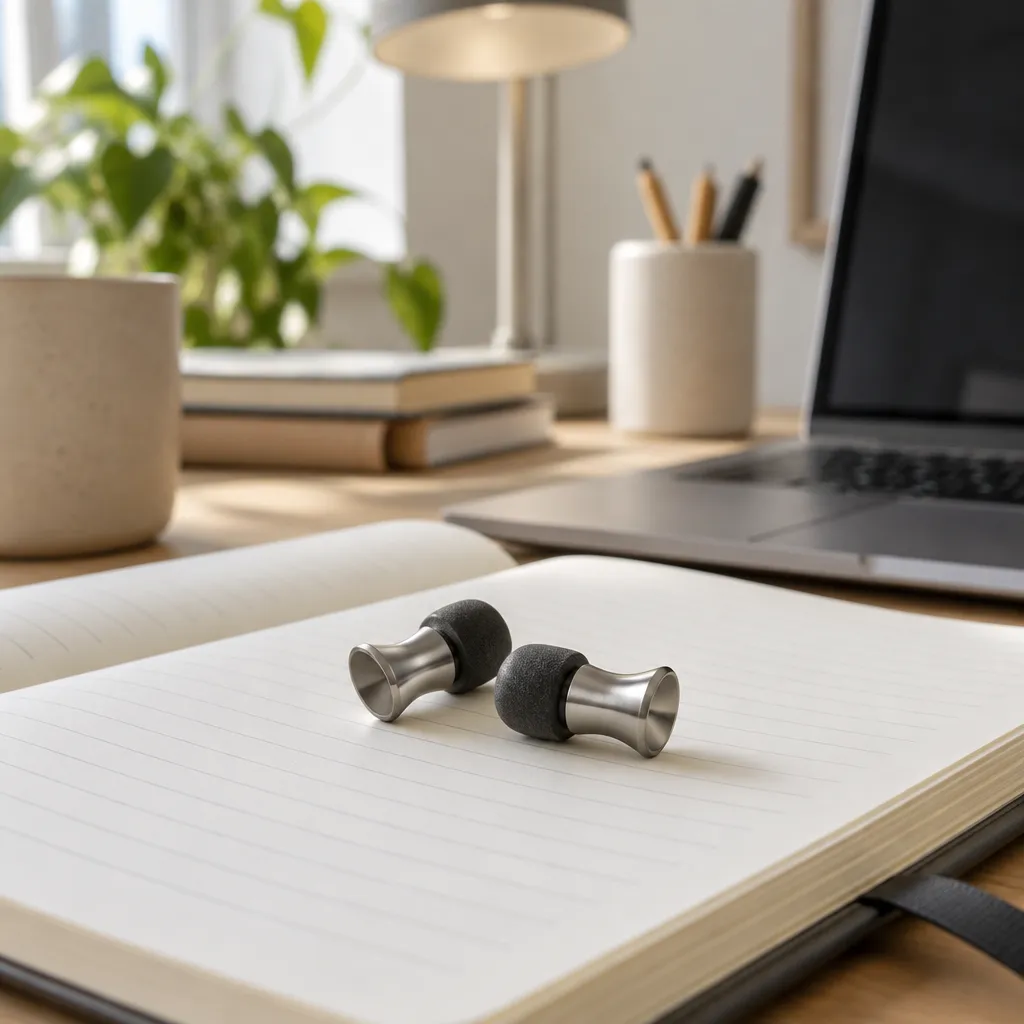
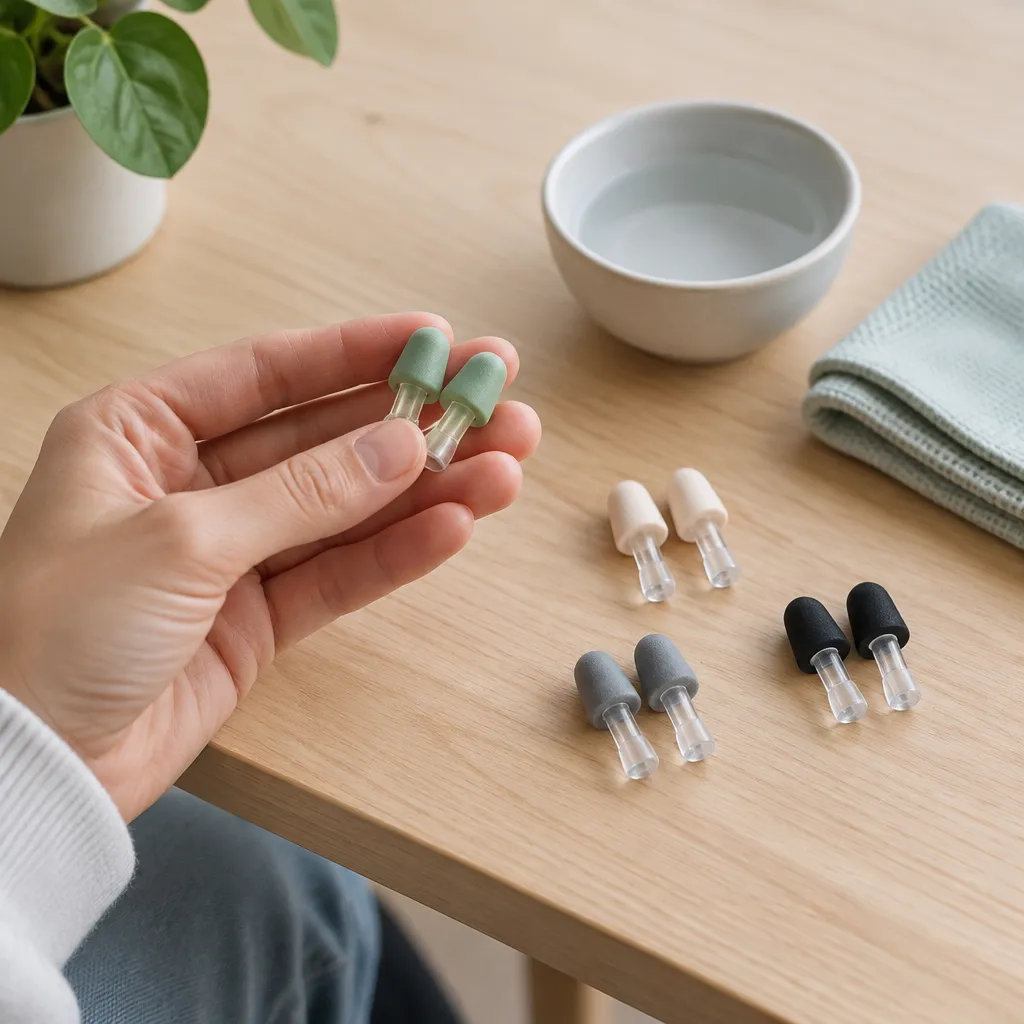
Reusable plugs make more sense if you use them most nights. The ATTENU8 design uses a concave aluminium body with three sizes of soft memory foam tips (XS, S, and M), which gives you a way to find the right seal without buying a new pair. Over a year, that replaceable-tip approach usually means fewer complete replacements.
Fit is the factor students most often ignore. Try the smallest tip first, insert it gently, and check whether you can still hear a quiet voice from across the room. If the sound drops sharply and the plug feels comfortable after ten minutes, you have the right size. If it aches or slips, move up or down one size.
Noise ratings on packaging are useful but not directly comparable. Manufacturers measure reduction in different ways, and a figure such as the 32dB reduction offered by ATTENU8 should be read as a guide to performance, not a promise about every room. Fit and comfort will matter more than the number on the box.
Ear plugs are a useful tool, but they are not harmless when used carelessly. The ear has its own self-cleaning process, and wearing plugs every night can interfere with it. Understanding that process is the difference between a sensible habit and a problem that builds up quietly.
Wirecutter’s reporting on earplug use described otolaryngologists who agreed that plugs are a good remedy for temporarily noisy environments, while cautioning against nightly use. The consistent message was that occasional use is fine, and that repeated use is where problems tend to start.
For most students, the safest pattern is to use plugs on the nights that matter most, such as exam eves, early starts, or a particularly loud week in halls. Nightly use across a whole term is harder to justify. If you find yourself needing plugs every night, that is a sign to fix the room, not to keep adding more plugs.
Take a night off when you can, and let your ears go without a plug for at least a few nights each week. This gives the ear canal time to clear itself and also helps you notice whether your sleep is improving without them.
Clean hands are the single most important hygiene habit. Wash your hands before handling any foam plug, and avoid touching the tip with fingers that have been on keyboards, phones, or door handles. Foam plugs get handled more than most people realise, which is why the squeeze-and-insert step deserves care.
Clean reusable plugs regularly according to the manufacturer’s instructions, and let them dry completely before storing them in a case. Storing a damp plug in a sealed box invites bacteria to grow, and that is exactly what you want to avoid in a shared room.
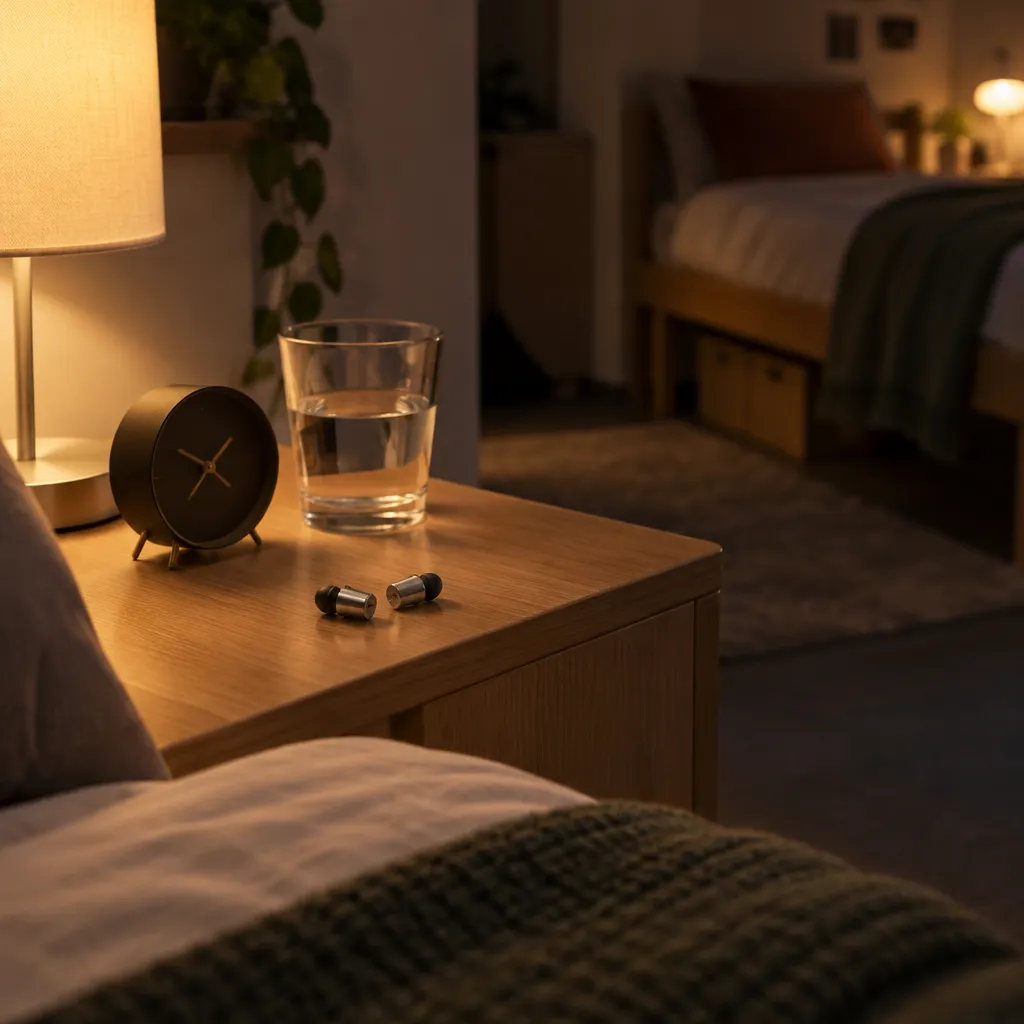
Pro tip: Keep a small zip bag for your plugs and put it on your desk, not in your bag. Students who carry plugs around in pockets or bags tend to insert them with dirty hands, and a desk-side case makes the clean-hands habit easier to keep.
Ear plugs solve your problem, but they do nothing for the flatmate who is also struggling to sleep or study. A short conversation about noise early in the term saves far more trouble than a tense argument in week eight. In shared accommodation, the most effective tool is often an agreement, not a product.
Start with specifics. Saying “keep the noise down” is vague and easy to ignore. Saying “no music after midnight on weeknights, and headphones only during shared study hours” gives everyone something they can follow.
Propose quiet hours that match the most sensitive person in the flat, then let the others suggest changes. Most conflicts happen because one person assumes the rules apply only to them. A written list on the fridge or in a group chat keeps the agreement visible and makes it easier to revisit later.
Agree on a signal for when someone is in an exam week. A small sign on the door or a message in the group chat is enough, and it gives your flatmates a clear reason to keep the corridor quiet without feeling singled out.
If a roommate regularly ignores agreed quiet hours, plugs will only reduce the symptoms. In that case, speak to your accommodation provider or resident support team early, before the problem affects your grades or your health. Plugs are a personal tool, and they should not be the only plan for a persistent problem.
Be honest with yourself about what plugs can handle. They can reduce speech and sudden noise, but they cannot fix a room where the sound is constant, the walls are very thin, or the bass travels through the floor.
If your flat has a mix of schedules, our guide to sleeping by day with ear plugs offers ideas for matching quiet time to unusual timetables, which can apply to students with late placements or night shifts.
A plug used once in a panic rarely changes much. A plug used on a planned schedule, with a note of what happened, gives you real information about whether it helps. A two-week trial is a practical way to find out.
Choose a week with ordinary workload, not an exam week, so you can judge the plugs on normal conditions. Use them for both study and sleep, and keep a short note each morning.
In week one, test your tip size during study sessions in the library or your room. Confirm that you can hear a fire alarm or a name called from the corridor, and make sure the fit stays comfortable for at least an hour. If the plug aches or slips, change the tip before you change the plug.
In week two, use the plugs on at least four nights, and keep one or two nights without them for comparison. Note how quickly you fall asleep, whether you wake at sudden sounds, and how focused you feel the next morning.
A simple log is more useful than a vague feeling. Record the time you go to bed, whether you used plugs, what woke you if anything did, and how many hours of study you completed. After two weeks, patterns usually become clear.
If the log shows fewer wake-ups and better focus, keep the routine and plan the next purchase. If it shows no difference, check the fit, the room layout, and whether the main noise source is one that plugs cannot cover, such as a shared wall with a loud television.
Pro tip: Set a calendar reminder for the day you start a new set of foam tips. Most students keep using worn tips because they never noticed the date, and a fresh set makes a visible difference to comfort and seal.
Occasional use is generally considered fine, but nightly use over a long period is where caution matters. Plugs should be inserted with clean hands, removed regularly, and given rest nights where possible. If you notice pain, itching, or a feeling of blockage, stop using them and speak to a doctor.
Yes, and they work well for speech and sudden noises. They are less effective against low-frequency sound such as bass through a wall. Combine plugs with a clear signal to housemates during study hours for the best results.
Disposable foam pairs are the cheapest option for occasional nights and exam weeks. For daily use across a full academic year, reusable plugs with replaceable tips usually work out better over time, provided you find a size that seals well.
ATTENU8 foam tips should be replaced every 6-8 weeks. Worn or compressed tips lose their seal, so a fresh set often makes a noticeable difference to comfort and noise reduction.
Start by restating the agreement calmly and in writing, such as in a group chat. If the problem continues, contact your accommodation provider or resident support team early. Ear plugs can reduce the impact, but they should not be the only plan for a persistent problem.
Tell us which noise source disrupts your study or sleep most in your accommodation, and which fit or routine has made the biggest difference for you.

