


 0

Most people grab a pair of earplugs, shove them in, and wonder why they can still hear everything. The problem is almost never the earplug itself. It is almost always the size. An earplug size guide is not a luxury for the overly particular. It is the single most important factor in whether you get the noise reduction and comfort you paid for. A plug that is even slightly too small breaks its seal, letting sound leak in around the edges. A plug that is too large creates uncomfortable pressure that wakes you up or makes a full shift at work unbearable. Getting this right changes everything.
Ear canals are not standard. They vary significantly from person to person in diameter, depth, and shape, and in many people the left and right canals are not even symmetrical. A plug engineered to deliver 32dB of noise reduction delivers that figure only when it is correctly sized and properly seated. The rated noise reduction on the packaging assumes a complete acoustic seal. Break that seal with the wrong size and you lose a substantial portion of the protection.
The material matters too. Memory foam tips compress on insertion and then expand to fill the canal. This means the size you choose is the approximate diameter of the canal, not a size you squeeze down to a point and hope for the best. If the foam expands and still cannot reach the canal walls, sound gets through. If it over-fills the canal, you feel pressure, soreness, or a vacuum sensation that makes wearing them impossible for more than a few minutes.
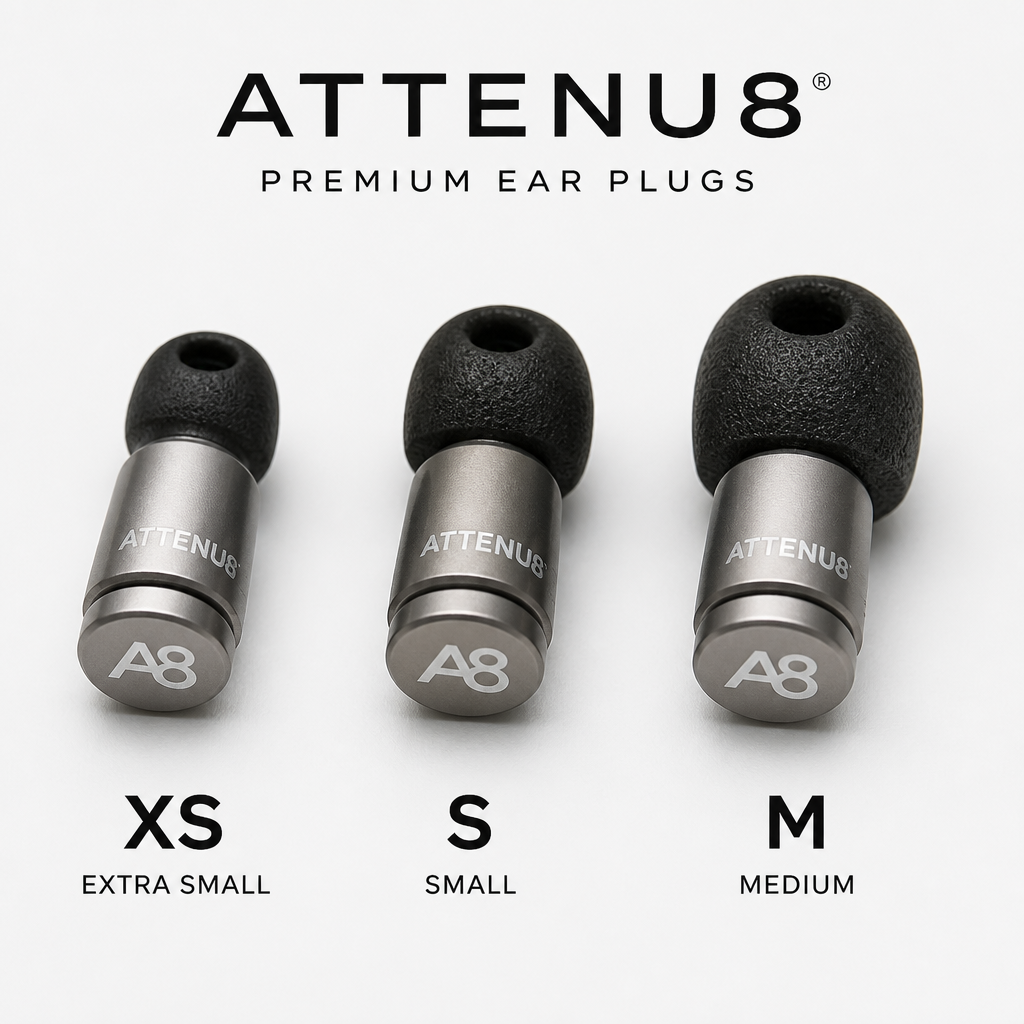
This is why ATTENU8 includes three foam tip sizes, XS, S, and M, with every pair rather than shipping a single “universal” tip. No single diameter fits every ear. Matching the tip size to your canal is what makes the aluminium body and 32dB rating actually work for you.
| Key Insight | Explanation |
|---|---|
| Start with size M and adjust from there | Medium is the closest to an average adult canal diameter and is the right baseline for most adults before fine-tuning. |
| A proper seal should feel snug, not painful | Mild resistance and a gentle muffling of ambient sound immediately on insertion tells you the foam is sealing correctly. |
| Too small means sound leaks, not just looseness | An undersized tip cannot reach the canal walls. You may not notice the gap, but noise will get through even if the plug feels seated. |
| Too large causes pressure pain and poor sleep | An oversized tip creates a strong vacuum sensation or soreness within minutes. It also tends to work itself out of the canal overnight. |
| Left and right ears can need different sizes | Ear canal asymmetry is common. Test each ear independently rather than assuming one size works for both. |
| Insertion technique is just as important as size | Even the correct size will underperform if not inserted deeply enough. The roll-pull-hold method is essential for memory foam tips. |
| Replace foam tips every 6 to 8 weeks | Worn-out foam loses its expansion memory and cannot form a reliable seal regardless of size. The tip, not the body, drives fit quality over time. |
When ATTENU8 includes three tip sizes in a single pack, it is acknowledging something the industry has historically ignored: one size does not fit most people, let alone all people. The XS, S, and M designations correspond to the compressed insertion diameter and the expanded sealing diameter of the memory foam tip. Each step up in size increases both dimensions, which is why using the wrong one has such a direct effect on both comfort and acoustic performance.
XS tips are designed for narrow ear canals. This is more common than most people assume. Children aged roughly ten and older, many women, and some adults with naturally narrow canals find that standard or medium tips cause immediate discomfort or do not stay in place during movement. If you have ever had a standard foam earplug feel genuinely painful on insertion, XS is the size you should try first.
The XS tip also works well for people who sleep on their side. A smaller, properly fitted tip creates less lateral pressure against the pillow-side ear, which makes it dramatically more comfortable through a full night of sleep.
Small tips bridge the gap between XS and M. They suit people whose canals fall in a below-average to average range but find XS tips too loose and M tips too tight. Many adults who describe “sensitive ears” or “earplugs always hurt me” are actually just using medium tips in what are, anatomically, small canals. Switching to S often resolves the problem entirely without any sacrifice in noise reduction.
M tips are the best starting point for most adults. The average adult ear canal is approximately 9mm in diameter, and M tips are designed to create a reliable seal at that range. If M tips feel comfortable, stay in place during normal head movement, and produce a clear reduction in ambient noise immediately on insertion, you have found your size and there is nothing more to do.
Pro tip: If you have never sized your ears before, insert one M tip and leave it in place for 60 seconds. If it stays secure, feels snug without pain, and reduces ambient sound noticeably and evenly, M is your size. If it creeps outward, feels loose, or lets sound through unevenly, drop to S.
The fastest and most reliable method is a simple size test using all three tips, one ear at a time. This takes about five minutes and eliminates guesswork entirely.
Start with M. Roll the foam tip between your fingers until it compresses to a narrow cylinder. Reach over your head with your opposite hand, pull the outer ear gently upward and back to straighten the canal, then insert the compressed tip with a slight rotating motion until it sits just inside the canal opening. Hold it in place gently for 20 to 30 seconds while the memory foam expands.
After it has fully expanded, assess three things: comfort, fit stability, and noise reduction quality. A correctly sized tip feels snug but not painful, does not shift when you move your jaw or turn your head, and produces a clear, even muffling of background sound. If the M tip passes all three, you are done.
If M feels tight or causes a vacuum-like pressure sensation, move to S. If M sits loosely or you can hear background sound clearly through it, you have an unusual situation, and a retest with fresh insertion technique is worth trying before concluding M is too small. Poor insertion technique mimics the symptoms of an undersized tip.
Pro tip: Test each ear separately. A meaningful number of people have one canal that takes S and one that takes M. ATTENU8’s design allows you to use different tip sizes on each earplug, so asymmetric sizing is entirely practical.
After insertion, look in a mirror. The foam tip should sit just inside the canal opening with the aluminium body of the earplug resting close to the ear rather than protruding outward at a visible angle. If the earplug is angling sharply outward, the tip is not seated deeply enough. This is usually a technique issue, not a size issue, but it is worth ruling out before changing sizes.
The body gives clear feedback when an earplug is the wrong size. The problem is that most people interpret these signals as “earplugs just aren’t for me” rather than as a straightforward sizing issue with a simple fix.
An undersized tip cannot form a complete seal against the canal walls. The most obvious sign is that the earplug feels loose or shifts during normal movement. You may need to push it back in frequently, and it often works its way out entirely during sleep. The subtler and more important sign is reduced noise protection: ambient sound comes through more clearly than expected, often with a directional or uneven quality because the seal is inconsistent rather than absent.
If you are using earplugs specifically for sleep and find that sound still wakes you despite wearing them, an undersized tip is one of the first things to check. The gap around an undersized foam tip is often small enough to be invisible but large enough to let enough sound through to disturb light sleep.
An oversized tip announces itself through discomfort. Pain or soreness within minutes of insertion is a strong indicator that the earplug is pressing against sensitive canal tissue. Some people also describe a strong vacuum sensation or a feeling of excessive fullness. These are not signs that you need to “get used to earplugs.” They are signs you need a smaller tip.
A secondary sign is that oversized tips sometimes work themselves out during sleep despite feeling tight on insertion. This happens because the foam is compressing the canal walls rather than filling the canal, and the body’s natural response is to push the foreign object out. Switching down one size typically solves both the discomfort and the displacement problem at once.
A well-fitting earplug stays in place during movement and sleep, reduces noise evenly in both ears, and does not cause pain or strong pressure. If yours does not meet all three criteria, the issue is almost always size or insertion depth, not the earplug itself.
| Size | Best Suited For | Common Fit Failure If Wrong |
|---|---|---|
| XS | Narrow canals, children (10+), side sleepers, adults who find standard tips painful on insertion | If too small for the canal: loose seal, tip migrates out during sleep, reduced noise reduction |
| S | Below-average to average canals, adults with “sensitive ears,” anyone for whom M causes pressure | If too small: intermittent seal loss during jaw movement; if too large: mild pressure, less severe than M in the wrong ear |
| M | Average to larger adult canals, industrial or occupational hearing protection where maximum seal is priority | If too large: pain, vacuum sensation, tip ejected by ear overnight; if too small: sound leakage, inconsistent noise reduction |
Sizing and insertion are inseparable. You can have the correct tip size and still get poor noise reduction if the insertion is shallow or rushed. Memory foam tips require a specific technique because the foam needs to expand inside the canal, not in front of it.
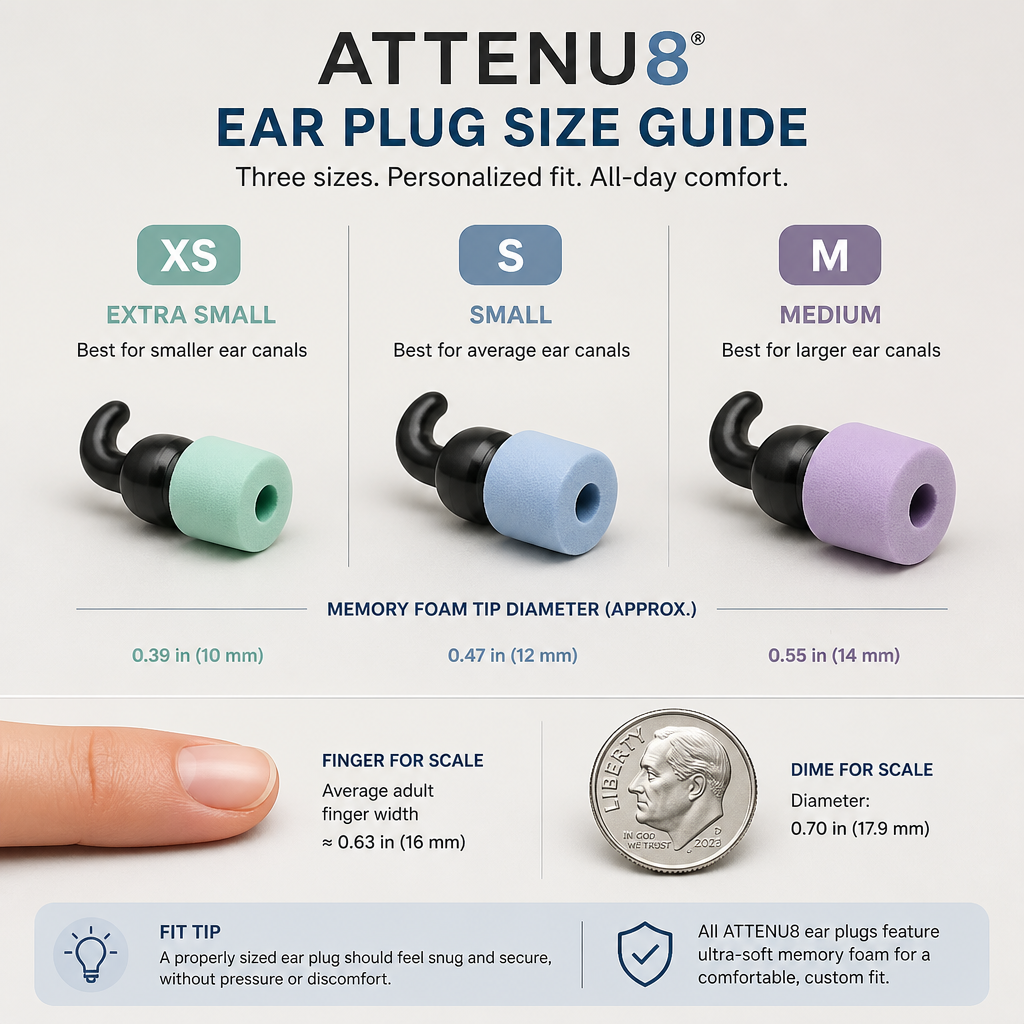
Roll the foam tip between your fingers into the narrowest cylinder you can manage. Reach over your head with the hand on the opposite side to the ear you are inserting, grasp the outer ear, and pull gently upward and back. This straightens the ear canal, making insertion significantly easier and deeper. Insert the compressed tip with a slight rotating motion and push it in until it sits inside the canal entrance. Hold it firmly in place for 20 to 30 seconds while the foam expands to fill the canal.
The holding step is where most people fail. Letting go too early means the foam expands while partially outside the canal and then stops short of a full seal. The discomfort of holding it in place for 30 seconds is worth the complete seal you get as a result.
Once the foam has fully expanded, snap your fingers or click near each ear individually. The sound should be noticeably and roughly equally muffled on both sides. If one ear lets through significantly more sound than the other, either the tip on that side is undersized or the insertion was incomplete. Remove, reroll, and reinsert before concluding it is a size problem.
Another useful check is to hum gently. With a proper bilateral seal, your own voice resonates with a noticeably “in your head” quality. If it does not, at least one seal is incomplete.
The demands on an earplug differ considerably between a sleeping environment and an occupational noise environment, and those differences have implications for how tightly you should prioritize the seal when choosing your size.
For sleep, comfort is the first filter. An earplug that causes even mild discomfort will disrupt sleep more reliably than the noise it was supposed to block. Side sleepers in particular find that one size too large creates enough pressure against the pillow-side ear to become a consistent source of waking through the night. Start with the smallest size that still produces a clear seal, rather than the largest size that technically fits.
The other sleep-specific consideration is tip retention. A tip that is correctly sized for your canal will stay in place for a full night without any tendency to migrate out. If you frequently wake up to find one or both tips on your pillow, undersizing is almost certainly the cause.
In construction, manufacturing, or any environment where noise levels regularly exceed safe thresholds, the acoustic seal takes priority. The 32dB noise reduction rating on ATTENU8’s tips is a ceiling, not a guarantee. You only approach that ceiling with the right size and correct insertion. In a workplace context, this is not just about comfort. It is about actual hearing protection over months and years of exposure.
If you work in a high-noise environment, test your fit at the start of each shift rather than assuming yesterday’s insertion was typical. Foam tips that are due for replacement, roughly every 6 to 8 weeks, lose their expansion memory and provide a weaker seal even when the size is correct. Fresh tips on a correctly sized canal are the baseline for reliable protection.
Pro tip: In loud work environments, do the snap-finger seal check after every insertion. It takes three seconds and tells you immediately whether you have a functioning seal before you are exposed to the noise source. Do not wait until your hearing feels fatigued to check.
Start with M. It corresponds to the approximate average adult ear canal diameter, making it the most statistically likely fit for a first attempt. Insert it using the roll-pull-hold technique, hold for 30 seconds, and assess comfort and noise reduction. If M is comfortable and the seal is clear, you are done. If it is too tight or too loose, move to S or try reseating with improved insertion technique before switching sizes.
Yes, and more often than most people expect. Ear canal asymmetry is a normal anatomical variation. Testing each ear independently is the only way to know for certain. ATTENU8’s design allows each earplug to carry a different tip size, so there is no practical barrier to using XS on one side and S on the other if that is what your ears require.
There are two common causes. First, the tip may be undersized: it felt snug immediately after insertion because the fresh foam had just expanded, but it gradually shifted or partially unseated as you moved in your sleep. Second, the foam tips may be due for replacement. Memory foam that has been compressed and expanded repeatedly loses its ability to fully expand, which means it no longer fills the canal even if the size was correct originally. Replace tips every 6 to 8 weeks to maintain consistent performance.
No. This is one of the most common misconceptions about earplug sizing. A properly sized tip that forms a complete seal provides the full rated noise reduction. An oversized tip may feel tighter initially, but it creates pressure against canal walls rather than filling the canal, which can actually result in a less consistent seal and causes significant discomfort that makes you remove the earplugs earlier. Correct size, not maximum size, is what delivers optimal protection.
ATTENU8 recommends replacing the memory foam tips every 6 to 8 weeks with regular use. Over time, foam loses its expansion memory, which means a worn tip behaves like an undersized tip even if you chose the right size originally. If your earplugs are providing noticeably less noise reduction than when they were new and your insertion technique has not changed, worn tips are the most likely explanation. When you fit new replacement tips, take a moment to reconfirm your size, since the expansion of fresh foam is different enough from worn foam to occasionally change what feels comfortable.
XS tips are for narrow ear canals, and canal diameter has no reliable relationship to body size, height, or gender. Some adults with larger frames have naturally narrow canals and need XS or S tips for the same anatomical reason that some smaller-framed adults comfortably wear M. The only way to know is to test. If M causes discomfort and S still feels tight, try XS before concluding that reusable foam-tip earplugs will not work for you.
Have you found that one size works better in one ear than the other, or discovered that switching sizes made a significant difference to your sleep or hearing protection? Share your experience in the comments.
If you have ever woken up at 3 a.m. to find your earplugs on the pillow instead of in your ears, you are not alone. Earplugs falling out at night is one of the most common complaints among light sleepers, side sleepers, and anyone relying on hearing protection for rest. The frustrating part is that it rarely has one cause. Wrong size, poor insertion, sleep position, and worn-out tips all work against you simultaneously. This guide breaks down every reason it happens and gives you the practical fixes that actually work, so you can stop troubleshooting at 3 a.m. and start sleeping.
| Key Insight | Explanation |
|---|---|
| Wrong size is the most common culprit | Ear canals vary significantly in diameter and length, even between your left and right ear. A plug that is too small has no grip. A plug that is too large creates outward pressure that slowly expels it. |
| Poor insertion defeats any earplug | Foam tips must be compressed before insertion and held in place for 20 to 30 seconds while the foam expands. Releasing too early means the plug never seats properly. |
| Side sleeping multiplies the problem | Pillow pressure against the ear acts as a lever, gradually working a protruding earplug loose. Low-profile designs reduce this effect significantly. |
| Worn-out foam tips lose their grip | Memory foam tips that have been used too long lose elasticity. They stop expanding to fill the canal and simply slide out. Replacing tips every 6 to 8 weeks restores performance. |
| The metal body versus foam body difference matters | A rigid outer body keeps the earplug correctly positioned against the ear, whereas an all-foam plug can shift as a whole unit when you move. |
| Left and right ears often need different tip sizes | Most people assume symmetry, but asymmetric ear canals are common. Test each ear independently with different tip sizes before settling on one pair. |
| Insertion depth is not optional | A partially inserted earplug sits at the entrance of the canal where walls cannot hold it. The foam needs to be inside the canal, not perched at the opening. |
The reason most people cycle through earplug after earplug without solving the problem is that they treat it as a product issue when it is usually a fit issue. The earplug itself is rarely at fault. The combination of wrong size, wrong technique, and wrong earplug type for the sleep position is almost always what fails.
Ear canals come in a wide range of diameters, lengths, and curvatures. A standard one-size disposable plug is built around an average that does not accurately represent most individuals. If the plug is too small for your canal, it has nothing to grip against and slides out within the first hour. If it is too large, the foam generates outward pressure that the canal walls eventually push back against, slowly ejecting the plug over several hours. You wake up with it half out or gone entirely.
Jaw movement is a less obvious contributor. Grinding, clenching, or even normal jaw relaxation during sleep shifts the tissues around the ear canal. An earplug that was marginally positioned when you fell asleep can work loose by morning just from this movement alone.
Pro tip: If your earplug falls out consistently on the same side, that specific ear canal may be slightly smaller or differently shaped than the other. Try one tip size smaller on that side before assuming the whole pair needs replacing.
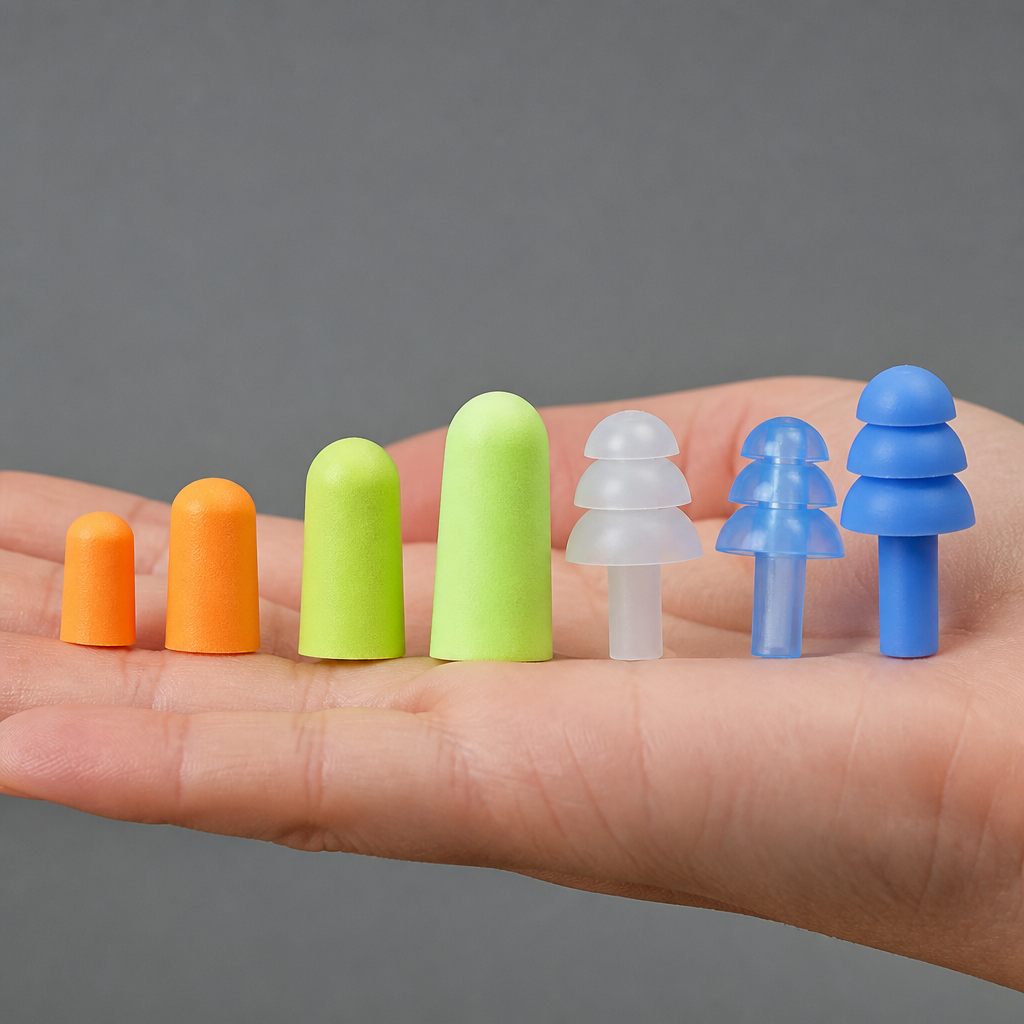
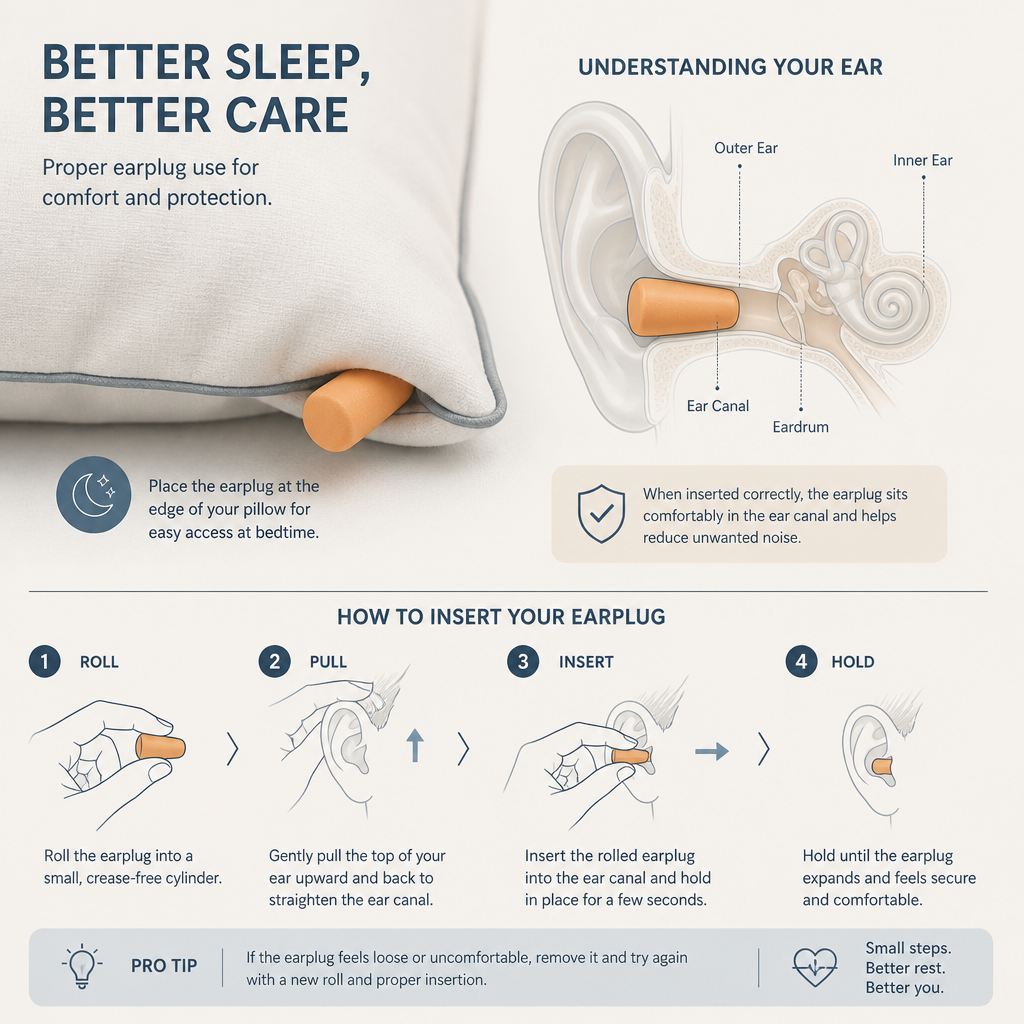
The single most effective intervention for earplugs that will not stay in is matching tip size to canal diameter. This sounds obvious but most people skip it because disposable foam plugs come in one size, and reusable options are often sold as one-size-fits-all. That is a product limitation, not a biological truth.
Insert the earplug with the tip you think is closest to your size. After insertion, gently tug the earplug backward. A correctly sized tip should offer moderate resistance, not slide out immediately but also not require significant force to remove. If it slides free with almost no resistance, go one size up. If removal feels uncomfortable or creates a strong vacuum sensation, go one size down.
Test each ear independently. Asymmetric ear canals are more common than most people realise. Your right ear may take a medium tip comfortably while your left ear needs a small. Using a product that includes multiple tip sizes, such as XS, S, and M options, is the only practical way to address this without spending money on custom moulds.
A properly sized earplug should feel snug without causing a pressure buildup sensation. There should be a noticeable but not uncomfortable reduction in ambient sound immediately after insertion. If the sound reduction feels weak and you can hear clearly without the plug being fully in, the tip is too small. If you feel pain or significant pressure within a few minutes, the tip is too large.
The fit of a hearing protector is critical. A poor fit, regardless of the product’s rated attenuation, means the wearer is not receiving the protection they expect. Sizing is not a secondary concern, it is the primary one.
ATTENU8 includes three pairs of memory foam tips in XS, S, and M with every unit specifically because canal variation between individuals, and between ears on the same person, is the rule rather than the exception. Explore the full ATTENU8 earplug range to see how the sizing system works in practice.
Pro tip: When testing tip sizes, do the test lying down on your side, not sitting upright. A fit that feels secure while you are upright can behave very differently once pillow pressure enters the equation.
Even the correctly sized earplug falls out if insertion is done poorly. This is the most fixable cause of earplugs falling out at night, and it is almost entirely a technique problem, not an equipment problem.
For memory foam tips, compress the tip between your fingers until it is as narrow as possible before inserting it. Then, reach your opposite hand over the top of your head and gently pull your outer ear upward and slightly backward. This straightens the ear canal and opens it for easier insertion. Insert the compressed tip with a slight rotating motion, pushing it in far enough that only a small portion remains visible. Then hold it in place for 20 to 30 seconds while the foam expands.
The holding step is where most people fail. Releasing the earplug before the foam has expanded means the plug was never anchored. It sits near the entrance to the canal rather than inside it, where the canal walls can grip it. A partially expanded plug has almost no resistance to movement.
A properly inserted earplug should sit with only a small portion visible at the entrance to the ear canal. If you can see most of the plug protruding from your ear, it is not inserted deeply enough. The foam body needs to be inside the canal, not balanced at the opening. When inserted correctly, you should notice an immediate and significant reduction in ambient sound, noticeably more than when the plug was sitting only partially in.
With a metal-bodied earplug like ATTENU8, the concave aluminium shell sits flush against the outer ear, giving you a clear tactile reference for correct positioning. The body does not shift as a whole unit the way an all-foam plug does, which makes maintaining insertion depth through the night considerably more reliable.

Side sleepers face a problem that back sleepers do not. When your ear presses into a pillow, any earplug that protrudes past the outer ear becomes a lever. The pillow pushes against the outer part of the earplug while the canal wall holds the inner part, and over several hours of sustained pressure the earplug slowly works its way out.
A bulky or high-profile earplug design amplifies this problem. The further the earplug extends past the ear, the greater the mechanical advantage the pillow has in pushing it loose. This is why low-profile earplug designs are not just a comfort preference for side sleepers, they are a functional requirement. An earplug that sits flush with the outer ear, or that uses a concave body designed to sit within the ear contour, dramatically reduces the leverage available to pillow pressure.
The ATTENU8 concave aluminium body is specifically shaped to sit within the natural contour of the outer ear rather than protruding from it. Bottom foam tips are included in the kit specifically for side sleepers, allowing the plug to sit closer to flush when lateral sleeping is the priority. For more detail on how sleep position interacts with earplug performance, see the ATTENU8 guide on memory foam versus silicone earplugs for side sleepers.
A softer pillow compresses around the ear rather than pushing against the earplug, which reduces the ejection force significantly. Some side sleepers find that a pillow with a contoured cutout or a pillow designed with a recessed area for the ear solves the problem entirely without changing earplugs. However, this is a workaround, not a fix. The correct earplug, correctly inserted and correctly sized, should not require a special pillow to stay in place.
Not all earplugs behave the same way at night. The type of earplug you choose has direct consequences for how reliably it stays in through movement, pressure, and hours of continuous wear.
| Earplug Type | Stay-in Performance for Sleep | Best Suited For |
|---|---|---|
| Disposable foam (all-foam body) | Poor to moderate. The entire plug can shift as a unit. Foam degrades quickly, losing grip. Requires fresh plug each night for reliable performance. | Occasional use, back sleepers who move minimally. |
| Reusable metal body with memory foam tips | Good to excellent. Rigid outer body anchors position. Memory foam tips conform to canal shape. Tips replaceable independently every 6 to 8 weeks. | Nightly use, side sleepers, anyone needing consistent 30+ dB attenuation. |
| Silicone or acoustic-filter design | Moderate. Fixed silicone shape cannot conform to canal variation. Better for daytime or social use where some ambient sound pass-through is desirable. | Daytime noise management, travel, work environments where situational awareness matters. |
The key difference between a metal-bodied reusable earplug and an all-foam disposable comes down to structural stability. When an all-foam plug shifts, the entire plug moves. When a metal-bodied earplug with a foam tip is correctly inserted, the rigid body holds position while the foam tip maintains the acoustic seal. That separation of structural and sealing functions is what makes the design significantly more reliable for overnight use.
For a deeper look at how noise attenuation figures translate to real-world sleep performance, the ATTENU8 article on why 32 dB is the sweet spot for sleep covers the science behind NRR ratings and what they actually deliver overnight.
Foam tips have a finite lifespan. Memory foam that has been compressed and released hundreds of times loses its elasticity. A tip that no longer rebounds quickly after compression cannot create an adequate seal inside the canal, and a tip without a reliable seal has nothing to hold it in place. This is one of the least-discussed reasons for earplugs that progressively get worse at staying in over time.
The practical indicator is simple: if you compress the tip and it does not spring back to its original shape within a few seconds, it needs replacing. Discolouration, stiffness, or any visible deformation of the foam surface are also clear signals. For nightly use, foam tips typically need replacing every 6 to 8 weeks. This is considerably more economical than replacing the entire earplug, which is the only option with disposable products.
One of the practical advantages of a reusable metal-bodied earplug is that the aluminium body itself does not wear out. Only the foam tips degrade, and they can be replaced independently. This makes the long-term cost lower than continuously buying disposable packs, while also reducing waste. For context on the full sleep environment picture, the ATTENU8 room-by-room guide on sleep environment and noise reduction covers how earplug performance fits into a broader approach to sleep-friendly spaces.
Pro tip: Keep a small note in your earplug case with the date you last replaced the tips. Six to eight weeks goes faster than you expect when you are using them every night, and degraded tips are the silent cause of progressively worsening overnight fit.
This almost always points to a size mismatch on that specific ear. Ear canals are frequently asymmetric, meaning your left and right canals differ in diameter or shape. Try one tip size smaller on the side that keeps losing the plug. If that does not resolve it, that canal may have a curvature that requires a slightly different insertion angle. Adjust the pull direction when opening the canal before insertion.
Movement alone rarely ejects a correctly fitted earplug. What movement does is amplify any existing fit problem. A plug that is marginally too small, barely inserted, or using a worn-out tip will fall out during movement. A correctly sized, properly inserted plug with fresh foam tips should remain in place through normal sleep movement. If you are a very active sleeper and nothing stays in, the focus should be on maximising insertion depth and switching to memory foam tips that conform more completely to the canal wall.
For most people, nightly earplug use is safe provided hygiene is maintained. Clean your earplugs regularly and replace foam tips on schedule. The main risks from nightly use are earwax buildup and minor ear canal irritation, both of which are typically avoided by keeping the earplugs clean and not forcing plugs that feel uncomfortable. If you experience any pain, ringing, or change in hearing, stop use and consult a doctor.
The most common cause is foam fatigue over the course of the night. When you first insert a foam plug, it compresses and expands against the canal walls. Over several hours, as the foam slowly relaxes further, that outward pressure decreases and the grip weakens. With worn-out foam this happens faster. Jaw relaxation during deep sleep also changes the geometry of the ear canal slightly, which can be enough to release a marginally fitted plug. Fresh tips that rebound consistently solve most cases of this gradual slipping.
Not necessarily. Most earplug fitting failures are solved by correct size selection and correct insertion technique, not by custom moulding. Custom earplugs are genuinely useful for people with unusually shaped canals, but they represent a significant expense and a process that takes time. Before pursuing that route, work through the complete checklist: test each ear independently with multiple tip sizes, master the compress-pull-insert-hold technique, check whether your current tips need replacing, and assess whether your sleep position is working against the earplug design. Most people find a standard solution within those four steps.
A low-profile reusable earplug with a rigid outer body and replaceable memory foam tips is the most reliable option for side sleepers. The rigid body prevents the earplug from shifting as a whole unit under pillow pressure, while the memory foam tip conforms to the individual canal shape for a secure seal. The profile of the earplug should sit close to or within the outer ear contour rather than protruding from it, which minimises the lever effect of the pillow over several hours of side sleeping.
Share your own experience with earplugs falling out at night in the comments below, including what worked and what did not, because the more specific the detail, the more useful it is to others dealing with the same problem.
We would love your feedback and any insights you would share with others. What perspective would you add?

