


 0

Shared accommodation rarely gives you silence. A roommate’s late video call, a corridor full of slamming doors, and a flatmate who studies with music on can wreck a night’s sleep and a week of focus. For many students, ear plugs are the cheapest fix that actually works, but only if you choose the right type, fit it properly, and use it with a plan.
This guide covers how ear plugs help with studying and sleep in halls or shared flats, which types suit a student budget, and where the habit goes wrong. The advice comes from working with people who spend long nights around other people’s noise, so it focuses on what happens in real rooms rather than generic tips.
| Key Insight | Explanation |
|---|---|
| Fit matters more than the label | A plug that leaks at the edge does very little, so test all tip sizes before you commit to a pair. |
| Steady sound is easier to study through than sudden sound | A constant hum fades from attention within minutes, while a neighbour’s voice keeps pulling your focus back. |
| Nightly use needs moderation | Wirecutter’s reporting found that the otolaryngologists it spoke with accepted occasional use but cautioned against wearing plugs every night. |
| Clean hands before every insertion | Foam plugs have to be squeezed before they go in, so dirty fingers carry bacteria straight into the ear canal. |
| Replace foam tips on a schedule | ATTENU8 foam tips need replacing every 6-8 weeks, so write the date on your calendar when you start a new set. |
| Pair plugs with a flatmate agreement | Plugs handle the noise you cannot control, while a quiet-hours agreement handles the noise you can. |
Noise in a shared flat is not the same as noise at home. At home, you usually know where a sound comes from and when it will stop. In halls, the sources multiply, and the schedule belongs to other people, which means you cannot plan around it.
Irregular noise does more damage to sleep than steady noise. A single door slam at 2 a.m. can pull you out of light sleep even when the room has been quiet for an hour. That is why students who say the building is “not that loud” often still wake up exhausted.
Your brain keeps monitoring for sounds that might matter, and it does this most strongly in unfamiliar rooms. Voices, footsteps, and a phone buzzing on the next pillow are the sounds that trigger a full awakening. A steady fan or a low hum often does much less harm because the brain learns to ignore it.
This is the main reason ear plugs work well in accommodation. They do not need to silence everything. They need to lower the sharp, sudden sounds that break your sleep and pull your attention away from reading.
Light sleepers, students with early lectures, and anyone who shares a wall with a late-night gamer or a flatmate on a different timetable tend to see the biggest difference. If you already read about why ear plugs work for light sleepers, you will recognise the pattern: the sounds that wake you are usually short and sharp, not loud and constant.
Students with shift jobs or unusual study hours also gain from ear plugs, since daytime sleep in a busy building is hard to protect without them. The principle is the same across all these groups: reduce the interruptions you cannot schedule away.
Ear plugs help with studying in a specific way. They cut the voices and sudden noises that break your concentration, but they do not make your brain fully quiet. Expect a reduction in distraction, not a sound-proof bubble, and set your expectations on that basis.
Most students try ear plugs once in a noisy library or common room, decide they are uncomfortable, and go back to headphones. Headphones with music are often a worse choice, because lyrics and rhythm compete with the text you are reading.
Ear plugs work best on speech from nearby people and on sudden noises such as doors, shouting, or dropped objects. They are less effective against low-frequency rumble, such as a bass line through a wall, which passes through the body as much as the ear. If your room shakes, plugs will help less than you hope.
In practice, the best test is simple. Sit at your desk with a plug in and ask a friend to talk at normal volume from the door. If you can still follow the conversation clearly, the fit or the plug type is not the right match for your room.
Libraries tend to suit ear plugs well because the noise is mostly human speech and keyboard clatter. Your own room is harder, because there is often a neighbour’s television or a hallway conversation at the same level as your reading voice. Use plugs in both places, but expect them to do more in the library.
If you revise at home, combine plugs with a clear signal to housemates, such as a sign on the door during exam weeks. Plugs reduce what you hear, but they cannot stop someone from walking in and starting a conversation.
Pro tip: Put your ear plugs in before you sit down to study, not halfway through a session. Once you are already distracted, the plug feels like a fix you are forcing on yourself, and most students take it out within ten minutes.
For a wider view of how focus and sleep interact across different living situations, read our guide on blocking noise to focus for longer.
Sleep is where ear plugs earn their place. A room shared with a roommate who keeps different hours, or a corridor with late arrivals, creates the kind of noise that ruins a full night. Ear plugs remove the worst of it, but only when the rest of your sleep setup is reasonable.
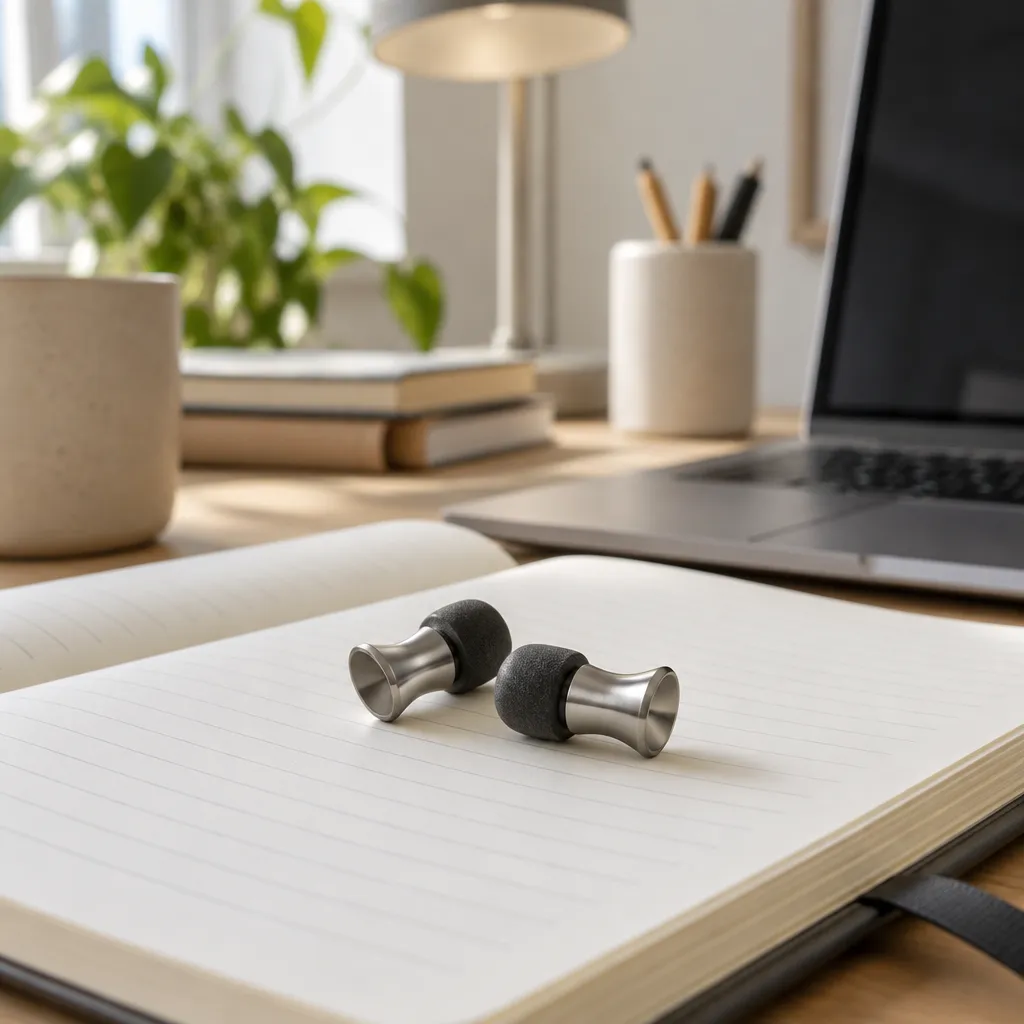
Hallway noise tends to peak in the hour after a club night or a late takeaway run. Doors, footsteps, and loud goodnights carry through thin walls and are often the sounds that wake light sleepers at 3 a.m. Foam plugs and well-fitted reusable plugs both reduce these spikes effectively.
If your building has a fire door that slams, you should still hear the alarm. Test your plugs once in daylight with a friend making sudden noises to confirm that you can still tell when someone calls your name in the corridor.
Ear plugs are only one part of a good sleep setup in a shared room. Place your bed away from the door if you can, keep a small lamp for reading rather than the overhead light, and use a dark sleep mask if your roommate studies late. These small changes reduce the number of times the plugs have to do all the work.
Many students also find that a steady, low sound such as a fan helps mask the sharp noises that remain. Plugs and a fan together often work better than either alone, although you should avoid turning the fan up so high that it becomes a new source of disturbance.
If you want to see how this applies to other sleep situations, our article on dorm room ear plugs for roommate and hallway noise covers the same problem from a different angle.
Choosing ear plugs for a student budget means balancing three things: how well they fit, how often you will use them, and how much you want to spend over a full academic year. A cheap single-use pack is perfectly sensible for a few nights of heavy noise. For daily study and sleep across a whole year, the maths shifts toward reusable options.
The table below compares three common approaches. It is not a ranking, because the right choice depends on how your ears respond and how you will use the plugs.
| Approach | Best for | Main trade-off |
|---|---|---|
| Disposable foam pairs | Occasional nights, exam weeks, and a tight budget | Single use, and the squeeze-and-insert step needs clean hands every time |
| Reusable soft silicone plugs | Students who want a soft, washable plug for regular use | Fit can vary between ear shapes, so the seal may be less consistent |
| Reusable metal-bodied plugs with replaceable foam tips | Daily study and sleep across a full academic year | Higher upfront cost, and the foam tips need replacing every 6-8 weeks |
Foam plugs are the most common choice in student budgets, and they work well for short-term noise. The downside is that they only perform well when you compress them fully before insertion and hold them in place while they expand. Rushed insertion is the usual reason foam plugs feel loose by the end of the night.
Reusable plugs make more sense if you use them most nights. The ATTENU8 design uses a concave aluminium body with three sizes of soft memory foam tips (XS, S, and M), which gives you a way to find the right seal without buying a new pair. Over a year, that replaceable-tip approach usually means fewer complete replacements.
Fit is the factor students most often ignore. Try the smallest tip first, insert it gently, and check whether you can still hear a quiet voice from across the room. If the sound drops sharply and the plug feels comfortable after ten minutes, you have the right size. If it aches or slips, move up or down one size.
Noise ratings on packaging are useful but not directly comparable. Manufacturers measure reduction in different ways, and a figure such as the 32dB reduction offered by ATTENU8 should be read as a guide to performance, not a promise about every room. Fit and comfort will matter more than the number on the box.
Ear plugs are a useful tool, but they are not harmless when used carelessly. The ear has its own self-cleaning process, and wearing plugs every night can interfere with it. Understanding that process is the difference between a sensible habit and a problem that builds up quietly.
Wirecutter’s reporting on earplug use described otolaryngologists who agreed that plugs are a good remedy for temporarily noisy environments, while cautioning against nightly use. The consistent message was that occasional use is fine, and that repeated use is where problems tend to start.
For most students, the safest pattern is to use plugs on the nights that matter most, such as exam eves, early starts, or a particularly loud week in halls. Nightly use across a whole term is harder to justify. If you find yourself needing plugs every night, that is a sign to fix the room, not to keep adding more plugs.
Take a night off when you can, and let your ears go without a plug for at least a few nights each week. This gives the ear canal time to clear itself and also helps you notice whether your sleep is improving without them.
Clean hands are the single most important hygiene habit. Wash your hands before handling any foam plug, and avoid touching the tip with fingers that have been on keyboards, phones, or door handles. Foam plugs get handled more than most people realise, which is why the squeeze-and-insert step deserves care.
Clean reusable plugs regularly according to the manufacturer’s instructions, and let them dry completely before storing them in a case. Storing a damp plug in a sealed box invites bacteria to grow, and that is exactly what you want to avoid in a shared room.
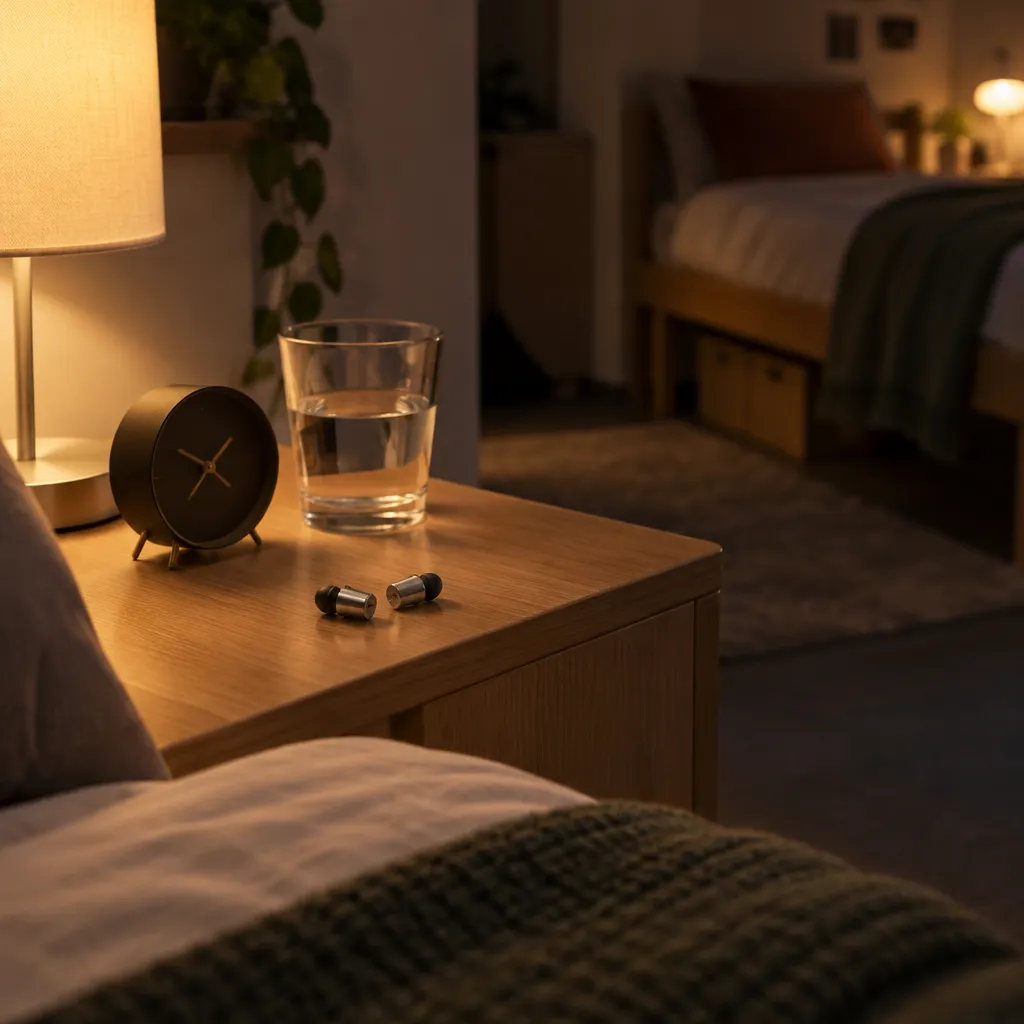
Pro tip: Keep a small zip bag for your plugs and put it on your desk, not in your bag. Students who carry plugs around in pockets or bags tend to insert them with dirty hands, and a desk-side case makes the clean-hands habit easier to keep.
Ear plugs solve your problem, but they do nothing for the flatmate who is also struggling to sleep or study. A short conversation about noise early in the term saves far more trouble than a tense argument in week eight. In shared accommodation, the most effective tool is often an agreement, not a product.
Start with specifics. Saying “keep the noise down” is vague and easy to ignore. Saying “no music after midnight on weeknights, and headphones only during shared study hours” gives everyone something they can follow.
Propose quiet hours that match the most sensitive person in the flat, then let the others suggest changes. Most conflicts happen because one person assumes the rules apply only to them. A written list on the fridge or in a group chat keeps the agreement visible and makes it easier to revisit later.
Agree on a signal for when someone is in an exam week. A small sign on the door or a message in the group chat is enough, and it gives your flatmates a clear reason to keep the corridor quiet without feeling singled out.
If a roommate regularly ignores agreed quiet hours, plugs will only reduce the symptoms. In that case, speak to your accommodation provider or resident support team early, before the problem affects your grades or your health. Plugs are a personal tool, and they should not be the only plan for a persistent problem.
Be honest with yourself about what plugs can handle. They can reduce speech and sudden noise, but they cannot fix a room where the sound is constant, the walls are very thin, or the bass travels through the floor.
If your flat has a mix of schedules, our guide to sleeping by day with ear plugs offers ideas for matching quiet time to unusual timetables, which can apply to students with late placements or night shifts.
A plug used once in a panic rarely changes much. A plug used on a planned schedule, with a note of what happened, gives you real information about whether it helps. A two-week trial is a practical way to find out.
Choose a week with ordinary workload, not an exam week, so you can judge the plugs on normal conditions. Use them for both study and sleep, and keep a short note each morning.
In week one, test your tip size during study sessions in the library or your room. Confirm that you can hear a fire alarm or a name called from the corridor, and make sure the fit stays comfortable for at least an hour. If the plug aches or slips, change the tip before you change the plug.
In week two, use the plugs on at least four nights, and keep one or two nights without them for comparison. Note how quickly you fall asleep, whether you wake at sudden sounds, and how focused you feel the next morning.
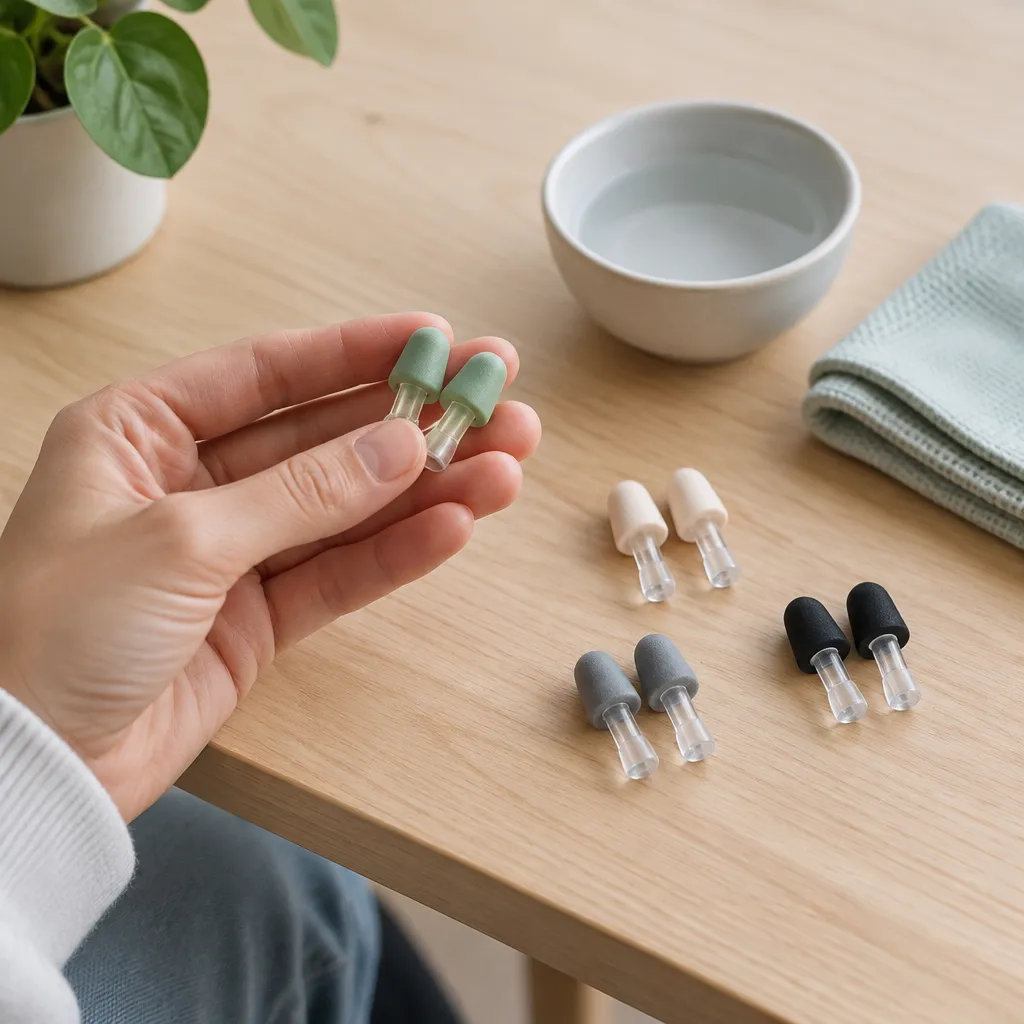
A simple log is more useful than a vague feeling. Record the time you go to bed, whether you used plugs, what woke you if anything did, and how many hours of study you completed. After two weeks, patterns usually become clear.
If the log shows fewer wake-ups and better focus, keep the routine and plan the next purchase. If it shows no difference, check the fit, the room layout, and whether the main noise source is one that plugs cannot cover, such as a shared wall with a loud television.
Pro tip: Set a calendar reminder for the day you start a new set of foam tips. Most students keep using worn tips because they never noticed the date, and a fresh set makes a visible difference to comfort and seal.
Occasional use is generally considered fine, but nightly use over a long period is where caution matters. Plugs should be inserted with clean hands, removed regularly, and given rest nights where possible. If you notice pain, itching, or a feeling of blockage, stop using them and speak to a doctor.
Yes, and they work well for speech and sudden noises. They are less effective against low-frequency sound such as bass through a wall. Combine plugs with a clear signal to housemates during study hours for the best results.
Disposable foam pairs are the cheapest option for occasional nights and exam weeks. For daily use across a full academic year, reusable plugs with replaceable tips usually work out better over time, provided you find a size that seals well.
ATTENU8 foam tips should be replaced every 6-8 weeks. Worn or compressed tips lose their seal, so a fresh set often makes a noticeable difference to comfort and noise reduction.
Start by restating the agreement calmly and in writing, such as in a group chat. If the problem continues, contact your accommodation provider or resident support team early. Ear plugs can reduce the impact, but they should not be the only plan for a persistent problem.
Tell us which noise source disrupts your study or sleep most in your accommodation, and which fit or routine has made the biggest difference for you.
Ask a light sleeper why a dog barking at 3 a.m. wakes them while a passing truck does not, and most will shrug. The answer sits in noise masking sleep science, and it is more useful than most sleep advice. Your brain does not simply register sound and decide whether it matters. It keeps checking incoming noise against what it expects, and that check decides whether you stay asleep. Once you know which sounds trigger that check and which ones your brain learns to ignore, you can stop guessing at fixes. Here is what the research supports, what it does not, and how to apply it to your own bedroom.
| Key Insight | Explanation |
|---|---|
| Steady sound masks, sudden sound wakes | The sleeping brain tracks change. A constant hum gives it nothing new to flag, while an irregular noise demands a check every time it starts. |
| Meaning lowers the wake threshold | Your name, a child’s cry, or a family ringtone can wake you at levels that would leave you undisturbed otherwise. Volume reduction alone will not stop these. |
| Low frequencies travel farther | Traffic rumble and neighbour bass pass through walls and are harder to absorb than higher pitches, so plugs alone will disappoint if rumble is your main problem. |
| A single decibel figure is an average | An approximate 32dB rating does not describe performance at every pitch. Judge your setup using the sounds you actually hear at night. |
| Fit decides most of the result | A loose seal lets sound through regardless of the rating on the packet. Check the tip size before blaming the product. |
| Worn tips lose their seal | Foam tips should be replaced every 6-8 weeks. Tips that have lost their softness seal less well, and you lose attenuation without noticing. |
Noise masking is the process where one sound makes another harder to hear. A steady sound at a moderate level raises the point at which a quieter sound becomes audible, especially when the two share similar pitches. In a bedroom, the masking sound is usually a fan, a white noise machine, or the low hum of an air conditioner.
Masking explains why a constant hum can make a neighbour’s television disappear. It does not explain why the same hum fails to keep you asleep when a car door slams. For that you need to separate two questions: can you hear the sound, and does your brain treat it as something to respond to?
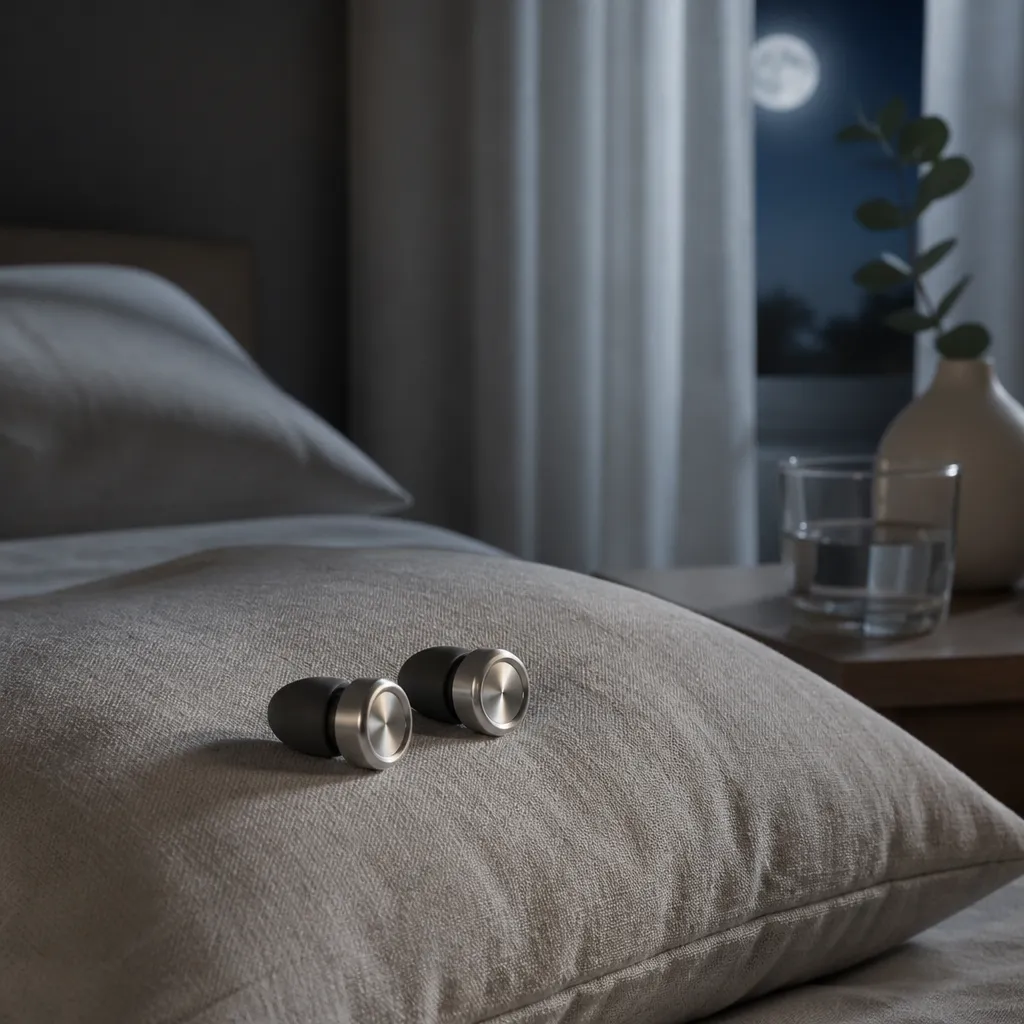
In practice, people blur these two terms constantly. A setup that lowers volume by a fixed amount does not guarantee sleep, because sleep depends on what the remaining sound does over the course of the night.
Decibels describe sound energy, not impact on sleep. Two sounds at the same level can have very different effects depending on whether they are steady, varied, or meaningful. Most people only notice this after they buy a fan, turn it up, and still wake at 4 a.m.
Pro tip: Before buying anything, write down the sounds that actually wake you. Note whether each one was sudden, repeating, or familiar, because that pattern will tell you more than any rating on the box.
Sleep does not switch off hearing. The Sleep Foundation notes that nighttime noise can disrupt sleep stages even when you do not fully wake or remember the disturbance. Your brain is still sorting incoming sound while you sleep, and it is choosing which signals deserve a response.
Intermittent sounds are the most common trigger. A truck that passes every twenty minutes, a dripping tap, or a neighbour’s gate all share an unpredictable start. Each new onset is a change, and change is what the sleeping brain is tuned to notice.
A steady sound at the same level gives the brain nothing new to flag. This is why many people sleep through a heavy storm with rain drumming on the roof, then wake to a single drip hitting a metal gutter. The rain is consistent. The drip is a pattern break.
Meaning lowers the wake threshold more than volume does. Hearing your name, a child’s cry, or a phone ringing with a tone you associate with family can wake you at levels that would otherwise leave you undisturbed. This is why a whisper from the next room can wake a parent when a loud freight train does not.
Earplugs reduce level, not meaning. If your child’s voice is what wakes you, lowering the volume will help less than you expect. Match the solution to the sound, not to the general idea of noise.
Habituation is the brain’s way of ignoring what it has learned is harmless. Repeated, unchanging sound gradually drops out of attention, which is why a fan that seemed loud on the first night is often barely noticeable by the second week. Individual speed varies, but the pattern is consistent enough to plan around.
A quiet bedroom is not automatically a safe one. What matters most is whether the sounds that remain are predictable.
Most people need several nights before a new steady sound fades. The first night often feels worse because the brain is still checking it, so judging a fan or white noise machine after one night gives misleading results. Give any new masking setup at least a week before deciding it failed.
Habituation works best for sound that is genuinely constant. A fan that cycles up and down, or a machine that loops a noticeable pattern, keeps the brain alert. Look for steady output, not just a steady label on the box.
White noise has real evidence behind it, but the evidence is mixed. A 2021 study indexed on PubMed found that white noise improved sleep, measured both subjectively and objectively, in people who reported difficulty sleeping. The Sleep Foundation is more cautious, noting that white noise does not help everyone and that research on background noise is inconsistent.
Our practical advice is to treat steady sound as one tool among several. If it helps, keep it. If it makes you more alert or you find yourself listening for changes in its texture, switch to physical attenuation and leave the machine off.
Two sounds with identical decibel levels can behave very differently in a bedroom. Higher-pitched sounds such as alarms and crockery clinks are easier to stop with a snug seal, while low-frequency rumble from traffic, bass music, and heavy machinery tends to travel through walls and past some seals. A single number cannot describe that spread.

Low frequencies have longer wavelengths, which means they travel further and are harder to absorb with soft materials. This is why you can feel a neighbour’s subwoofer through the floor even when the treble is inaudible. Foam tips and sealed bodies do a good job on higher pitches, but they cannot make a wall do what it was never built to do.
In practice, if your main problem is low rumble, plugs alone will disappoint you. Pair them with a steady mid-frequency sound, or address the source by sealing gaps under doors and adding heavy curtains.
The approximate 32dB rating on ATTENU8 plugs is an average across the frequency range, and attenuation is uneven across that range. The concave aluminium body and three sizes of memory foam tip (XS, S, M) are designed to seal the ear canal, and the seal does most of the work at higher pitches where voices and alarms sit. Low rumble will always be the weak point of any plug.
Pro tip: Test your setup with the noises you actually hear at night. If you can still hear the low rumble but not the voices, add a masking layer for the bass rather than hunting for a stronger plug.
The three most common approaches to sleep noise are steady background sound, disposable foam earplugs, and reusable plugs with sealed metal bodies. Each one works on a different part of the problem, so comparing them by a single score misses the point.
Steady sound suits people who find silence unsettling and whose main problem is sudden or irregular noise. Disposable foam suits occasional use or short trips where you are happy to replace them. Reusable metal-bodied plugs suit people who sleep with plugs most nights and want a consistent fit over a long period.
| Approach | What It Does to Incoming Sound | Where It Falls Short |
|---|---|---|
| Steady background sound (fan or white noise machine) | Raises the background level so sudden sounds are less distinct, and the brain habituates to a constant tone | Does little against unpredictable spikes, and can keep some light sleepers alert |
| Disposable foam earplugs | Seals the ear canal to reduce sound across the range, with the seal doing most of the work | Usually replaced often, and a poor fit lets sound through regardless of the rating |
| Reusable metal-bodied earplugs with memory foam tips | Seals the canal with a sized tip (XS, S, M) on a fixed body, with about 32dB noise reduction | Low frequencies still pass through, and the tips need replacing every 6-8 weeks |
The table makes the trade-offs clear, but the best choice often combines two approaches. A light sleeper in a noisy flat might use plugs for sudden sounds and a fan for the low rumble underneath.
Comparing products is less useful than checking how each option fits your sleep pattern. Foam tips on reusable plugs should be replaced every 6-8 weeks, since worn tips lose their softness and seal less well. Replacing tips on schedule is the cheapest way to keep the attenuation you already paid for.
For a closer look at materials, read our guide to metal vs foam ear plugs for sleep.
Many noise-related disruptions never reach full awareness. The Sleep Foundation reports that environmental noise such as traffic has been linked to more time in stage 1 sleep and less time in slow wave and REM sleep. You may wake the next morning feeling flat without recalling a single sound.

Stage 1 is the light transition between wakefulness and sleep. When noise pushes you into more of it, you spend less time in deep slow wave sleep and in REM, which matter for memory and mood. This is why a night that feels only slightly broken can leave you foggy at 10 a.m.
Nighttime noise may also prompt extra production of hormones such as adrenaline and cortisol, along with a raised heart rate and blood pressure. These responses can occur even when the sleeper stays asleep. That is the core argument for reducing arousal at the source rather than accepting broken sleep as normal.
In practice, the goal is not to sleep through everything. It is to cut the number of disruptions your body has to respond to, which is where masking and sealing earn their place. For more on this, see our article on sleep stages and noise.
The same masking logic matters for people who work near machinery, construction plant, or in military and manufacturing settings. The American Academy of Pediatrics notes that environmental noise can affect hearing, learning, sleep, and quality of life, and can trigger a physiological stress response. On a job site the concern is daily exposure, not just sleep.
Masking helps you focus or rest, but it does not protect your hearing. A radio playing over a generator does not reduce the level reaching your ears, and a loud steady sound can still damage hearing over a full shift. Protection against workplace noise is a different job from making a bedroom feel quieter.
Follow the exposure requirements at your site and your employer’s hearing protection program. A plug that is comfortable for sleep may not be the right tool for a noisy shift, so check what the work requires before you choose.
On a site, fit determines whether any rating means anything. Plugs worn for a full shift need to be inserted correctly and checked during breaks, since a seal that loosens by midday removes most of the benefit. Keeping a spare tip size in your kit makes that routine easier.
Pro tip: If you use plugs for both work and sleep, keep the two pairs separate so the work pair does not wear down the tips you rely on at night. Replace tips on the same 6-8 week schedule so you always know the seal is reliable.
Your brain tracks patterns during sleep and responds most strongly to change, especially sounds that are unpredictable or meaningful. A steady sound at the same level gives the brain nothing new to react to, so it fades into the background.
It can help some people. A 2021 study indexed on PubMed found improved sleep in people who reported difficulty sleeping, but the Sleep Foundation notes that white noise does not help everyone and that the research is mixed. Test it for at least a week before judging it.
Not completely. A snug seal reduces a lot of sound, but low frequencies travel through walls and are harder to absorb. Combine plugs with a steady sound or seal gaps in the room if rumble is your main problem.
It is an approximate average noise reduction, so it cannot describe how the plug performs at every pitch. Treat it as a guide, and judge the result against the sounds you actually hear at night.
Replace the foam tips every 6-8 weeks. Worn tips lose their softness and seal less well, which reduces the attenuation you rely on.
No. Plugs chosen for sleep are not a substitute for a workplace hearing protection program. Follow your site’s requirements, check fit during the shift, and arrange a hearing check if you notice changes.
What is the one sound that always wakes you, and what have you tried to mask it?
Holiday hosting usually means someone sleeps on a sofa bed beside the kitchen, a toddler wakes at dawn, and the dishwasher runs at midnight. If you are a light sleeper, one loud night can ruin the whole visit. Good ear plugs for holiday hosting are a planning tool, not a luxury. This guide covers how to set up rooms, choose plugs that guests will actually keep in, and protect your own sleep when the house is full.
| Key Insight | Explanation |
|---|---|
| Give the lightest sleeper the quietest room | Choose the room furthest from the kitchen, bathroom, and front door, and check that its door closes fully. |
| Keep a spare pair at every bed | Guests forget or lose plugs, and a spare pair costs far less than one ruined night. |
| Test the seal before anyone arrives | A plug that does not seal gives little protection, so try the XS, S, and M tips in advance. |
| Plan for early departures | Flights and long drives start before the house wakes, so agree on a quiet exit route the night before. |
| Replace foam tips every 6-8 weeks | Worn tips lose their seal, so count visits during a busy season and swap tips when they harden or feel loose. |
| Treat labelled ratings as a ceiling | Lab ratings assume perfect fit, and one lab reviewer notes that OSHA recommends derating labelled NRR by 50 percent for real use. |
| Hand guests a short sleep card | List the room quirks, the quiet hours, and where the spare plugs are, so nobody has to guess at 2 a.m. |
Your household noise fades into the background because your brain has learned which sounds matter. A guest has no such filter. The fridge hum, a creaking floorboard upstairs, and a car door outside all register as new events, and new events are what wake a light sleeper.
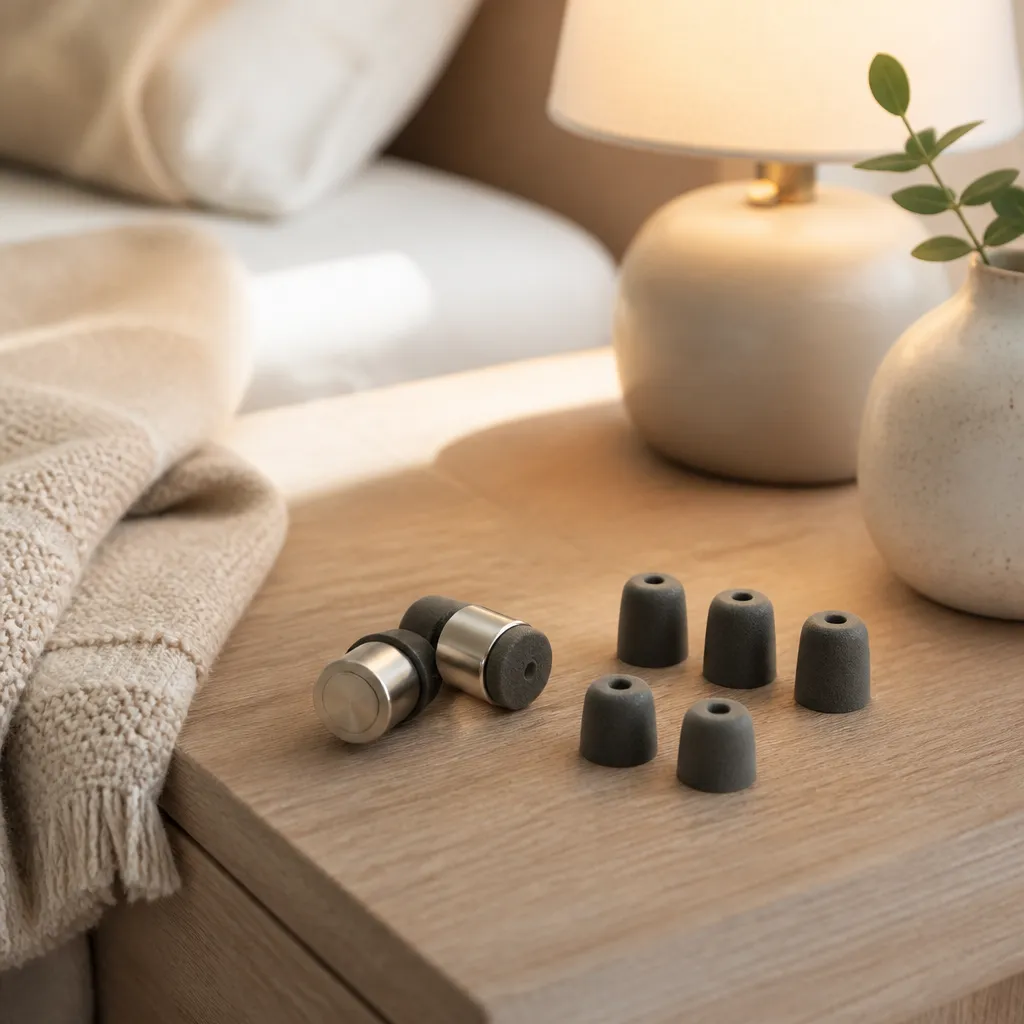
Overnight guests add three predictable noise sources: late conversations in the kitchen, bathroom traffic in the early morning, and people leaving before dawn. Each one is short and sharp. Steady background noise is easier to ignore than sudden spikes, and sudden spikes are what break sleep.
Most households stop hearing the dishwasher cycle, the heating ticking on, and traffic on the street at a set level. Guests hear all of it for the first time. If their room sits above the kitchen or next to a shared bathroom, the first night will feel louder than expected.
Guests leaving for an early flight often pack in the dark, unzip bags, and speak in whispers that carry. Even a careful guest creates a dozen small sounds before the front door closes. Hosts who sleep lightly tend to wake at the first zip.
Most sleep problems during holiday hosting are layout problems. Before anyone arrives, walk through the house at night with the lights off and listen. The best guest room is the quietest one at 11 p.m. and 6 a.m., not the one with the nicest view.
Put the lightest sleeper in the room furthest from the kitchen, bathroom, and front door. If a guest has told you they sleep badly, that choice matters more than the bedding. Check that the door closes fully, because a door that rattles in its frame can undo a good room.
A solid door and a rug cut more sound than most people expect. Heavy curtains do far less for noise than for light, so do not count them as soundproofing.
Sofa beds in living rooms are the hardest sleeping spot to protect. The kitchen may be on the other side of a thin wall, and late television carries into the room. If a sofa bed is the only option, agree on a quiet hour with the household and move late-night snacks to another room.
Bathroom traffic is the second problem. If the only bathroom is past a guest’s bedroom, point them to the one by the stairs at night, and leave a small night light on so nobody flips on the main light at 3 a.m.
A guest who has never slept in ear plugs will often take them out within an hour if they feel tight or sore. The fix is not a stronger plug. It is a better fit and a plug the guest can wear without thinking about it.
A labelled noise reduction figure only applies when the plug seals the ear canal. ATTENU8 metal-bodied plugs come with three sizes of soft memory foam tips (XS, S, and M) and deliver approximately 32dB of noise reduction when fitted correctly. The right size seals without pressure, so test sizes before the guest arrives rather than at 2 a.m.
Do not guess a guest’s ear size from anything else. Ask them to try the smallest tip first, then move up if the plug slides out when they turn their head.
Light sleepers often roll several times a night. A plug that feels fine on your back can press on the ear when you turn onto your side, and that pressure is a common reason people wake without knowing why. One long-running review of earplugs for noise sensitivity makes the same point, noting that switching shape, such as moving from tapered to cylindrical, can relieve pressure points.
A plug a guest keeps in all night will always beat a stronger plug they take out at midnight.
Pro tip: Give each guest the tip size that you confirmed on yourself during testing, then keep one spare pair in a labelled pouch on the nightstand.
Hosts often sleep worst during the holidays. You get up earlier to cook, go to bed later after clean-up, and wake for every guest who gets up in the night. Protect your own sleep as carefully as you prepare the guest room.
Keep your own plugs in the same place every night, ideally in a case you can find in the dark. If you use a white noise source, place it on the far side of the room from the door so it masks the hallway rather than the sounds you need to sleep through.
A simple routine helps: same plugs, same side of the bed, same time. Sleep is easier to protect when you do not have to decide anything.
Agree on a clear sleep window. If the kitchen closes at a set time and the shower is off limits after 10 p.m., you have a reason to sleep through whatever remains. Hosts who wait for the noise to stop usually end up sleeping less.

No single option works for every guest. The table below compares three common approaches for holiday hosting: disposable foam plugs, reusable metal-bodied plugs with replaceable tips, and sound masking from a fan or white noise device.
| Option | Where It Works Well | Where It Falls Short |
|---|---|---|
| Disposable foam ear plugs | Cheap to stock in bulk and easy to hand out for a single overnight stay | Usually used once, fit varies from guest to guest, and they end up in the bin after one night |
| Reusable metal-bodied plugs with foam tips | Three tip sizes for a better seal, tips replaced every 6-8 weeks, and one body that lasts many visits | A higher upfront cost than a bag of disposables, and each guest needs a size check |
| Fan or white noise device | Masks steady background sound without anything in the ears, which suits guests who dislike plugs | Does little against sharp noises, can keep a light sleeper awake if set too loud, and needs a power outlet |
In practice, many hosts use a combination. Give the lightest sleeper reusable plugs, keep foam plugs for guests who stay one night, and use masking for the hallway. Plugs handle the sharp sounds that masking cannot cover.
Plugs used by several guests need checking before the next visit. Dirty or hardened tips lose their seal, and a lost seal lets the noise straight back in. Make the check part of your post-holiday routine.
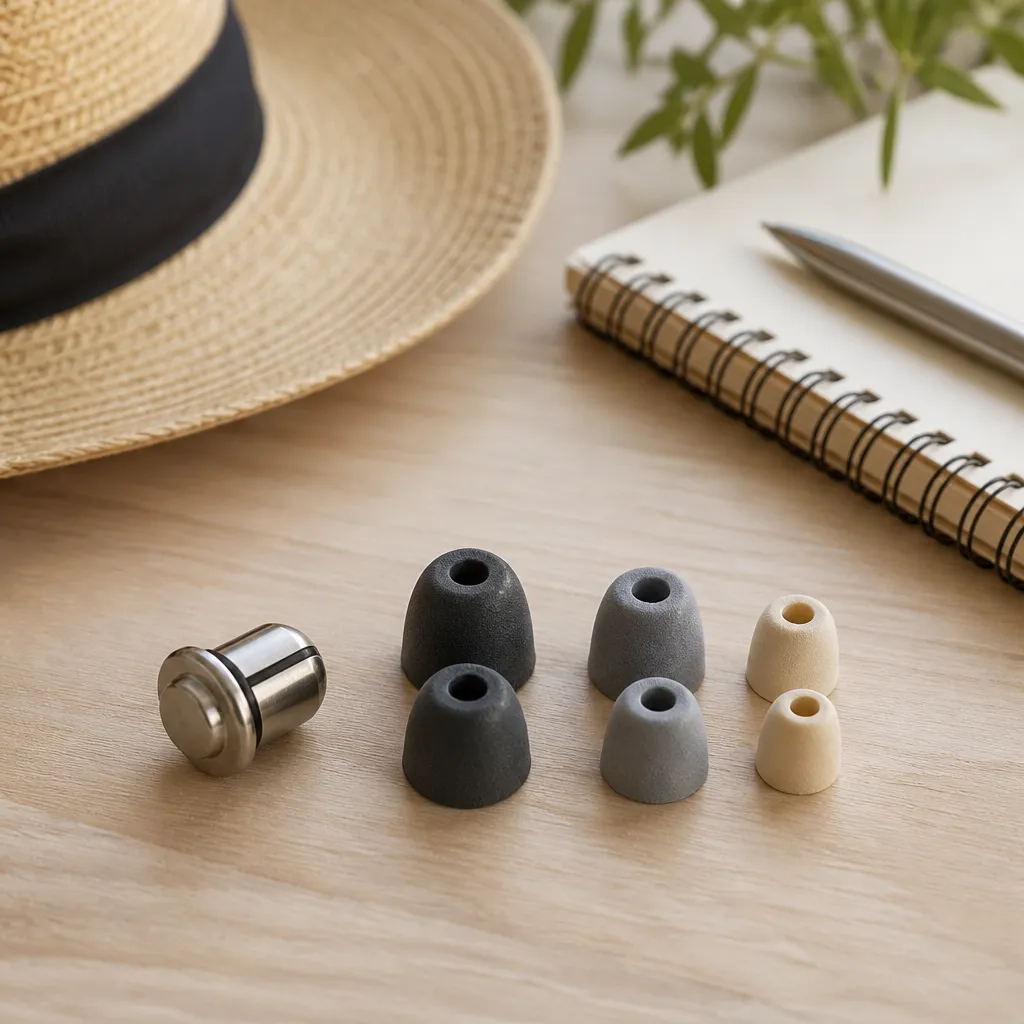
ATTENU8 foam tips need replacing every 6-8 weeks, so you do not have to replace the whole plug. A holiday season with several guests can use up that window faster than the calendar suggests. Count the visits, not just the weeks, if your house is busy.
Wipe the metal body with a dry or lightly damp cloth, let it air dry, and store it in a clean pouch. Do not keep plugs in a damp bathroom cabinet or loose in a coat pocket with keys. Debris lodged in a tip is a common cause of a failed seal.
Pro tip: Write the date each tip was fitted on the pouch. Tips past the 6-8 week mark are the first thing to replace when a guest says their plugs have stopped working.
Ear plugs reduce noise, but they do not turn a loud household into a quiet one. If your holiday includes a party with music, a loud game, or power tools next door, plan for a quiet room rather than hoping the plugs will cope. People who wear hearing protection at work should apply the same logic on a noisy holiday as on a job site.
HearingTracker, which tests earplugs in a laboratory, notes that OSHA recommends derating labelled noise reduction ratings by 50 percent to reflect real-world use. For planning purposes, treat a label of 30 as roughly 15 in practice. The discount is a guide, not a guarantee, but it stops you from expecting perfect results.
The same lab review describes a shallow insertion with a small air gap that produced a resonant peak of around 1,300 Hz, making sound pressure at the eardrum 12 dB louder than with no protection at all. Push the tip in until it seals, then check that it holds when you move your jaw. A plug that feels snug but lets in air is worse than none.
A baseline hearing test is worth doing if you wear hearing protection often. It gives you a reference point, and an audiologist can tell you whether your current plugs suit your ears.
For most adults, sleeping in ear plugs is fine if they fit well and you clean them regularly. Stop using them if you notice ear pain, itching, or discharge, and see a doctor if those symptoms do not clear.
Ask the guest to wear them for ten minutes, then turn their head and chew. If the plug moves, loosens, or the room sound changes noticeably, try the next size up.
Avoid sharing, even reusable ones, because ear wax and skin oils transfer easily. Give each guest their own pair or a disposable set for the stay.
Move them to the quietest room if you have one, check the door seal, and offer a fan or white noise source. If the noise comes from a party or television, ask the household to adjust rather than expecting the guest to put up with it.
ATTENU8 foam tips need replacing every 6-8 weeks. Replace them sooner if they feel hard, sticky, or no longer seal, especially after several guests have used the same pair.
No. Ear plugs reduce crying but will not block it fully, so place the child’s sleeping area away from the guest room and use a monitor if the baby sleeps nearby.
Tell us which sleep setup worked best for your overnight guests, or which one failed, because your experience will help other hosts plan their rooms before the next visit.
Every 11 November, many veterans stand through a moment of silence that is often the quietest minute of their year. For plenty of them, a ringing in the ears started long before that minute ended. Veterans hearing protection rarely gets attention on Remembrance Day, yet hearing impairments are among the most common service-connected disabilities for veterans. The damage from gunfire, explosions and loud machinery does not heal, so the habits you build now will shape how well you hear in twenty years. This guide covers what the research shows, how noise damage works, and how to build a protection routine that holds up after service.
| Key Insight | Explanation |
|---|---|
| Hearing damage is permanent | Hair cells in the inner ear do not regenerate, so each unprotected exposure adds to a loss you cannot reverse. |
| Veterans carry higher risk | A CDC analysis of 2010 survey data found veterans were 30% more likely to have severe hearing impairment than nonveterans after adjusting for age and occupation. |
| Layer protection for the loudest work | Wear ear plugs under earmuffs during firing, demolition, or any task where impact noise is common. |
| Fit matters more than the label | A plug with a poor seal delivers a fraction of its rated reduction. Test each tip size until you get a seal that holds when you talk and move. |
| Replace foam tips on schedule | Foam tips on reusable plugs need replacing every 6 to 8 weeks, sooner if they flatten, harden, or pick up grime. |
| Get a baseline hearing test | A documented audiogram lets you spot change over time instead of guessing when symptoms become obvious. |
| Treat tinnitus as a health signal | Persistent or one-sided ringing deserves a GP visit and an audiology referral, not a wait-and-see approach. |
Remembrance Day brings crowds, bugles, and speeches, and at some services a rifle volley. For veterans, those sounds can bring back memories and physical reactions that have nothing to do with the ceremony itself. The day is a reminder that the sounds of service stay with people long after they come home.
In practice, I think the day is a useful prompt for a hearing check. It arrives once a year, it is predictable, and it gives you a reason to book an appointment before the busy end of the year fills your calendar. A check-up on or near 11 November costs you an hour and gives you a baseline for everything that follows.
A common mistake is waiting until hearing loss interferes with conversation. By then, the damage has usually been building for years. Early signs are easy to dismiss: asking people to repeat themselves in restaurants, turning the television up a notch each month, or feeling worn out after a noisy day.
The clearest data on this topic comes from a 2011 report by the US Centers for Disease Control and Prevention, which analysed the 2010 Annual Social and Economic Supplement to the Current Population Survey. The authors found that the prevalence of severe hearing impairment among veterans was significantly greater than among nonveterans. The gap was not small, and it was not explained by age or current occupation alone.
According to that analysis, veterans were 30% more likely than nonveterans to have severe hearing impairment after adjusting for age and current occupation. Veterans who served in the United States or overseas between September 2001 and March 2010 were four times more likely than nonveterans to have it. The authors called for stronger military hearing conservation programs and better hearing loss surveillance within military and veterans’ health systems.
Those findings are from a single survey year and a specific era of service, so they should not be read as a precise risk figure for every veteran. What they do show is a consistent pattern: service exposes people to noise at a level that changes outcomes decades later. Earlier research had not found the same gap, which is part of why the 2011 analysis mattered.
Tinnitus, the perception of ringing, buzzing, or hissing without an external source, is a major issue in veteran populations. Audiology reporting on the NOISE study noted that in 2019, 2.1 million veterans had a recognized service-connected disability for tinnitus. That number shows how often ringing sits alongside hearing loss, even when people do not describe it as a hearing problem.
A 2023 study in the PubMed database examined how tinnitus and hearing loss influence the functional status of service members and veterans. The effects reach beyond the ears. Sleep, concentration, and the ability to work in quiet or noisy settings can all be affected, which is why I treat tinnitus as a daily-function issue rather than a minor annoyance.
Hearing loss from noise happens when sensory hair cells in the cochlea, the inner ear structure that turns sound waves into electrical signals, are damaged. Once those cells are gone, the brain receives less information, and sound becomes muffled or distorted. Human auditory hair cells cannot regenerate, which is why noise-induced hearing loss is usually permanent.
Noise damage is cumulative and largely silent. By the time most people notice a change, the damage has been building for years, and no treatment brings the lost hair cells back.
Many people assume their hearing will bounce back after a loud day. Temporary threshold shifts do happen, and your ears may feel muffled for hours afterward. The problem is what happens when you repeat that exposure without recovery time. Each cycle can leave less capacity for the next, and the losses add up quietly.
The Hearing Health Foundation puts the sound levels of common military and occupational sources into context. Fireworks and shotgun blasts are listed at around 150 dB, firearms at around 140 dB depending on caliber, and a jet plane taking off at around 120 dB. Exposure to levels like these without protection can cause nearly instant, permanent hearing loss.
Steady noise, such as a generator or a grinder running for hours, wears down hearing through duration. Impulse noise, such as a blast or a round fired close to the ear, delivers a sudden spike that can cause damage in a fraction of a second. Many veterans were exposed to both types, and the protection that works for one is not always enough for the other.
A product rated around 32dB reduces the sound reaching your eardrum, but no ear plug can make a 150 dB blast safe on its own. That is the honest limit of any single layer. Treat plugs as the everyday foundation and add earmuffs when the sound source is sharp, sudden, or very close.
Military, construction, and manufacturing roles share one habit that causes problems: people put protection on after the noise has already started. A common mistake is waiting until the first round or the first hammer strike to reach for plugs. By then, the first exposure has already been taken, and the habit of skipping protection until “it gets loud” becomes a pattern.
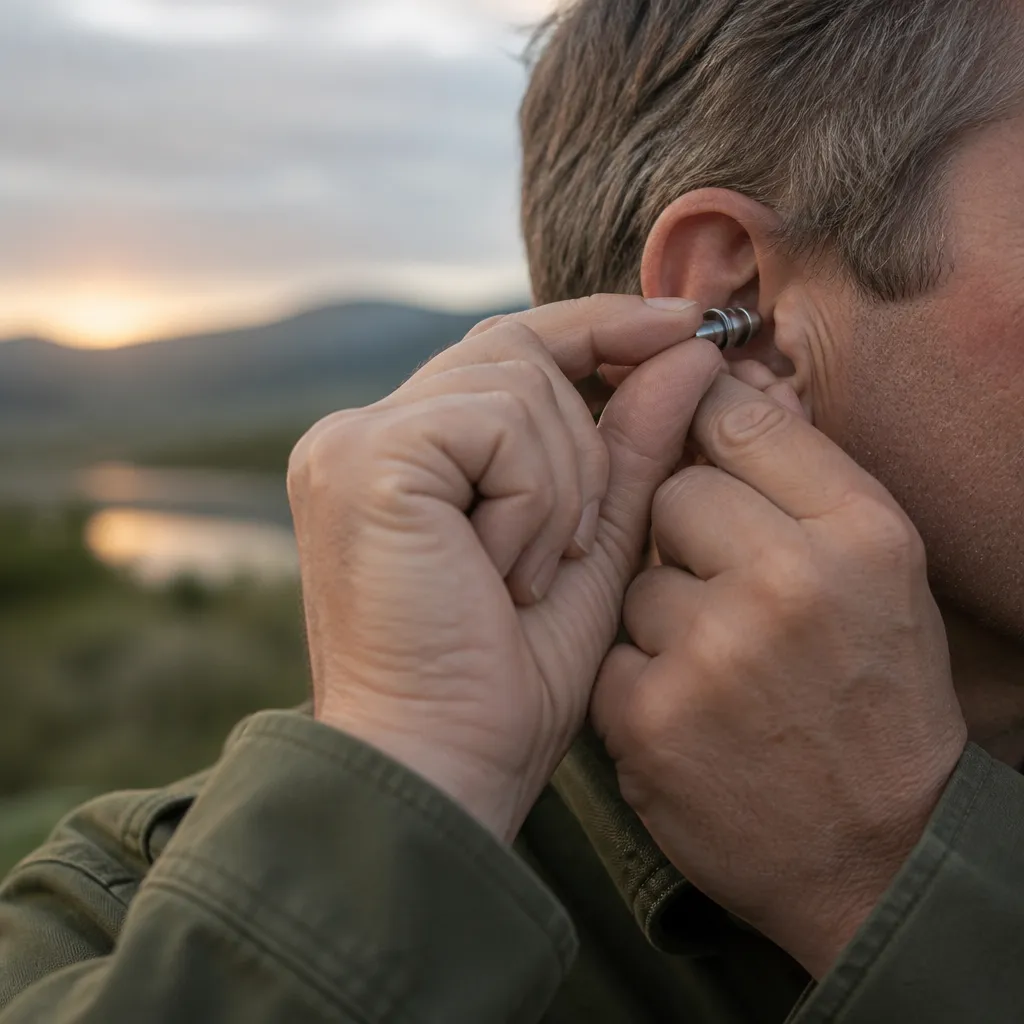
In practice, the routine that works is simple. Insert plugs before you enter the noisy area, check the seal by covering your ears and listening for a change in pressure, and keep them in until the noise source is off. Carry spare tips in a case so a lost or worn tip does not leave you unprotected for the rest of the shift.
For the loudest tasks, wearing plugs under earmuffs gives you more protection than either option alone. The muffs add a barrier against impact noise, while the plugs help seal the canal. The combination is more comfortable in hot environments than many people expect, provided the earmuff cups do not press the plugs out of position.
Pro tip: Do a quick seal check every time you put plugs in. Cup your hands over your ears for a second, then release. If the sound changes only slightly, the seal is probably weak, so try a different tip size before you start work.
Protection works best as a habit tied to a specific trigger. Put plugs in when you arrive at the range, the site, or the workshop, not when your ears begin to ring. That single change removes the most common gap in most people’s routines, and it costs nothing more than a few seconds each time.
No single option suits every situation. The right choice depends on how often you are exposed, how long each exposure lasts, and whether you need protection during sleep. The table below compares three common approaches with the trade-offs I see most often in practice.
| Option | Best For | Trade-off |
|---|---|---|
| Disposable foam ear plugs | Occasional exposure, emergency kits, and temporary use when you have no other option | Fit varies from person to person, they are usually discarded after use, and the cost adds up with daily wear |
| Reusable metal-bodied plugs with memory foam tips | Nightly sleep, travel, and repeated daily noise where comfort and consistency matter | Higher upfront cost, foam tips need replacing every 6 to 8 weeks, and the fit still needs checking with each tip size |
| Passive earmuffs | Firing ranges, machinery, and loud crowds where you need a sealed barrier over the whole ear | Bulky in heat, awkward with some headwear, and generally less comfortable for sleep |
My view is that reusable plugs are the strongest everyday option for people who wear protection often, because the cost per use falls quickly and the fit becomes familiar. Earmuffs are the better choice for sharp, high-level sources, and disposable plugs are best kept in a kit as a backup. Most veterans end up using two of the three, not one.
Many people who served report that they wake easily, respond to small sounds, or find it hard to settle in a quiet room. Sleep disruption is one of the most common complaints I hear from people with noise sensitivity, and it compounds tinnitus because the brain has fewer chances to rest.
Hypervigilance, tinnitus, and the habit of listening for threats can all keep the nervous system on alert at night. Hearing loss adds another layer, because the brain works harder to fill in missing sound and stays alert to noises it cannot quite identify. Understanding this helps you choose solutions that address both the ears and the sense of safety.
Start with plugs that are comfortable enough to wear for hours without pressure building. Lie on your side and check that the seal holds, because a plug that falls out on the pillow gives you nothing. Keep the bedroom cool and dark, and use a steady sound source such as a table-top white noise machine rather than a loud fan or television.
Pro tip: Make sure you can still hear your smoke alarm with plugs in. If you cannot, use a vibrating or visual alarm instead, and test it once a month so you know it works.
A hearing test is only useful if you can compare it with the next one. Many veterans have a single test done years after service, which tells them where they stand but not how fast their hearing is changing. The better approach is to establish a baseline now and repeat the test at regular intervals.
Ask your GP for a referral to an audiologist and request a full audiogram, which maps your hearing across different frequencies. Ask for a copy of the results, and keep it with your other health records. A baseline gives you a reference point if your hearing changes later.
If you have tinnitus or a sudden change in hearing, see your GP promptly. An ENT specialist can check for treatable causes such as excessive earwax, which the Hearing Health Foundation notes can contribute to tinnitus and can be safely removed.
Keep copies of your audiograms, service records, and any notes about noise exposure during service. If you later need to make a claim or request support, clear dated records make the process easier. Your local veteran support service can explain which records matter most in your situation.
Tinnitus rarely disappears on its own in people with long-term noise exposure, but its impact can be reduced. The aim is to make the sound less intrusive, so it stops dominating your attention. That usually involves a mix of hearing support, sound therapy, and counselling rather than one fix.
Sound therapy uses external, safely administered noise to change how the brain perceives tinnitus. Options include table-top white noise machines, wearable ear-level sound generators, and hearing aids with tinnitus programs. Hearing aids can also help by amplifying the sounds you have lost, which can reduce how loud the tinnitus feels.
Tinnitus Retraining Therapy combines counselling with sound therapy over time. The goal is to train the brain to filter the sound so it becomes less noticeable. It takes consistent effort, and results vary, but many people find that the sound loses its grip over months rather than days.
Get medical advice promptly if tinnitus appears on one side only, comes with sudden hearing loss, or is accompanied by dizziness or pressure. These patterns need assessment rather than self-management. For ongoing tinnitus, an audiology referral is the right next step, not a search for quick fixes online.
Ear plugs reduce sound, but sharp, high-level blasts can exceed what plugs manage on their own. For range work or any firing, wear earmuffs over plugs, and get advice from a hearing professional about the setup that suits your weapons and environment.
Replace foam tips every 6 to 8 weeks with regular use. Replace them sooner if they flatten, harden, lose their shape, or pick up dirt, because a worn tip no longer seals properly.
Not always, but persistent tinnitus should be assessed by a GP or ENT, particularly if it is one-sided or comes with sudden hearing loss. Early assessment helps rule out treatable causes and gives you a plan for managing the sound.
Yes. Hearing loss from noise develops gradually, so a baseline test is the only reliable way to track change. Many people feel fine while losing high-frequency hearing, which becomes noticeable only after the damage is well established.
For most people, yes, provided the plugs are comfortable and you can still hear your smoke alarm or use an alternative alarm. Check the fit each night, and replace worn tips on schedule to keep the seal reliable.
Start with your GP, who can refer you to an audiologist for a full hearing assessment. Your local veteran support services can also explain what records and support pathways are available to you.
What hearing protection routine has worked best for you since leaving service, and what would you tell a veteran who is just starting out?
Wearing ear plugs in hot weather is a different problem from wearing them in a cool bedroom. A stuffy room, a sweaty pillow and a few extra degrees can soften foam tips, make the ear canal feel swollen and turn a snug seal into a plug that slides out before dawn. If you are a light sleeper who depends on quiet to get through the night, that is more than an annoyance. This guide explains why heat changes the fit, how to choose and care for tips, when nightly use becomes a problem, and what to do on hot work shifts where hearing protection still matters.
| Key Insight | Explanation |
|---|---|
| Heat changes the seal, not the plug | Warm skin and sweat soften foam and change how the canal feels, so a tip that fit in winter may slide out in summer. |
| Size for the night you actually have | If your ears feel full or the plug pops out on hot nights, try the next size down before you assume the product is faulty. |
| Dry the body after every night | Moisture left on the metal body and tips invites irritation, so wipe and air-dry before storing them. |
| Replace tips every 6-8 weeks | Foam tips are the consumable part of a reusable pair. Replace them on schedule, and sooner if they feel stiff, sticky or misshapen. |
| Do not make them a nightly default | Ear plugs work best as a tool for specific nights. Give your ear canals regular breaks, especially if you notice itching or discharge. |
| Plan for hot work shifts | Carry a spare set of tips, check the seal after each break, and never assume a plug that held in the morning still fits at noon. |
Your ear canal is lined with skin, and skin sweats. When your body temperature rises overnight, moisture collects in the canal and on anything you put in it. In practice, the first sign is usually not discomfort. It is a plug that feels fine at bedtime and is halfway out by the time you roll onto your side.
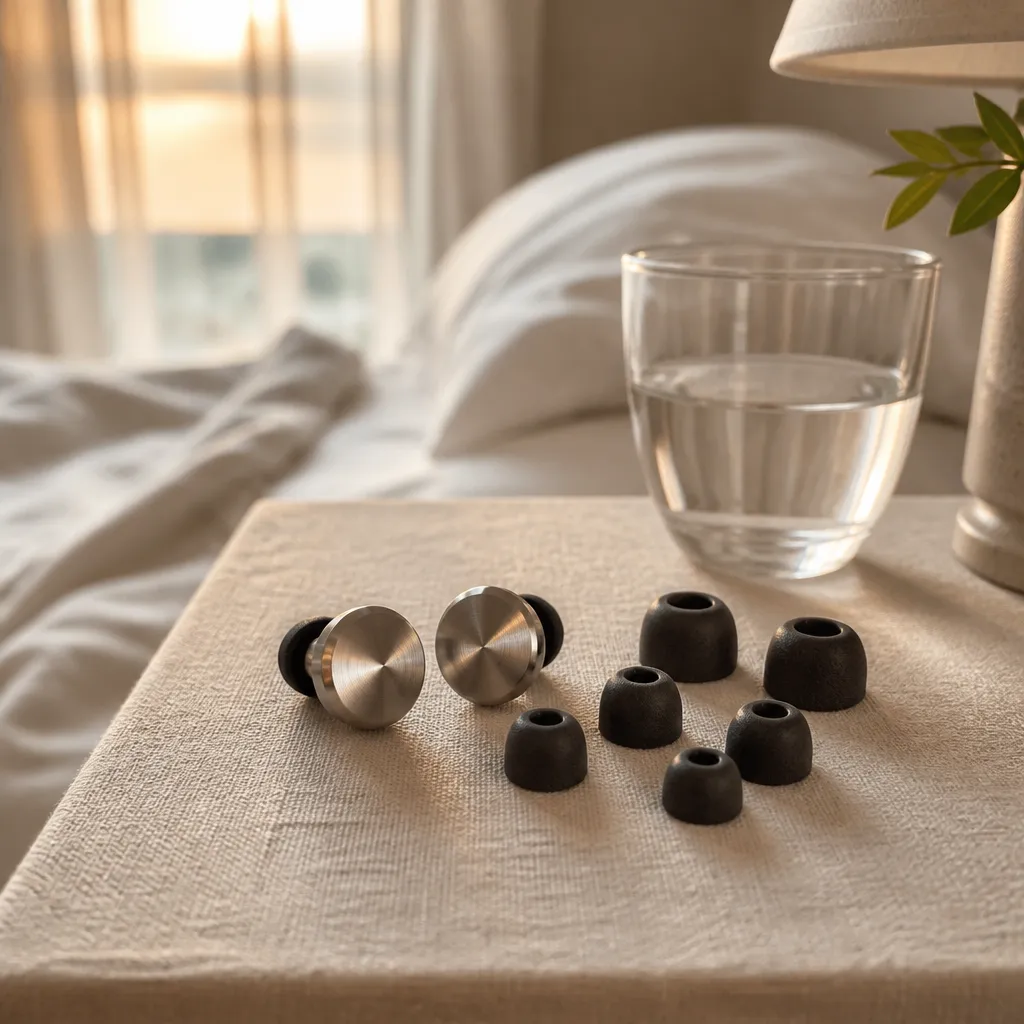
Memory foam is designed to expand slowly and conform to the canal. Once it absorbs sweat, it loses some of that springiness and can feel tacky. A damp tip also compresses differently, so the seal that formed in the first minute may not hold for the next eight hours. Damp foam is the most common reason a good plug stops working in heat.
A common mistake is to push a sweaty plug in harder. That compresses the tip further, causes pressure discomfort and often drives moisture deeper into the canal. Remove the plug, let it breathe for a minute, then reinsert it gently with a slight twist.
Seasonal change affects more than room temperature. Heavier bedding, a closed window and a warm body all change how much the canal swells and how much your head moves during sleep. Many people notice that the same tip works on a cool night and fails on the next muggy one. That is not a defect. The environment has changed the fit, and the fix is usually a change in tip size, drying routine or sleep position rather than a new product.
Keep the sound side in mind too. A rated noise reduction figure is measured in controlled conditions. Once a plug loses its seal, the sound you hear through the gap can be far louder than the rating suggests. ATTENU8 pairs are rated at approximately 32dB, and that figure only applies when the metal body sits firmly in the canal.
Most people buy ear plugs once, assume the fit is settled and only think about it when something goes wrong. Warm weather makes that a poor strategy. The Guardian’s guide to earplugs makes the broader point that finding the right pair is not as simple as grabbing the first pack you see, and that applies even more when the canal changes from one night to the next. Reusable designs give you room to adjust, and that adjustment is where summer comfort comes from.
ATTENU8 ships three tip sizes, XS, S and M, so the first job is to find the one that seals without pressure. On a warm evening, test with the plug in place for a few minutes before you lie down. If it feels full or presses against the canal wall, step down a size. If it wobbles or whistles when you turn your head, step up.
Test your sizing during a warm evening rather than in a cool bathroom. The fit you choose in a cool room may feel too snug once you have been in a warm bed for an hour. Note the size that works on your hottest night, because that is the one that will carry you through a heatwave.
Foam loses shape when it is wet, dirty or old. A tip that has been used for two months in a humid bedroom will not recover the way a new one does. Tips that feel sticky, look discoloured or stay flattened after you release them need replacing. Replacing foam tips every 6-8 weeks is the baseline schedule, and in humid climates it is worth checking them more often.
A tired tip is a small problem on a cool night and a large one when you are trying to sleep through traffic or neighbours. Replace it before sound starts leaking in, not after.
Hygiene matters more in summer because sweat, skin oils and dust collect on anything that sits in the ear canal for hours. The goal is simple: keep the plug and the canal reasonably dry and clean, and never store a damp plug in a sealed case. Most problems come from habits rather than the product itself.
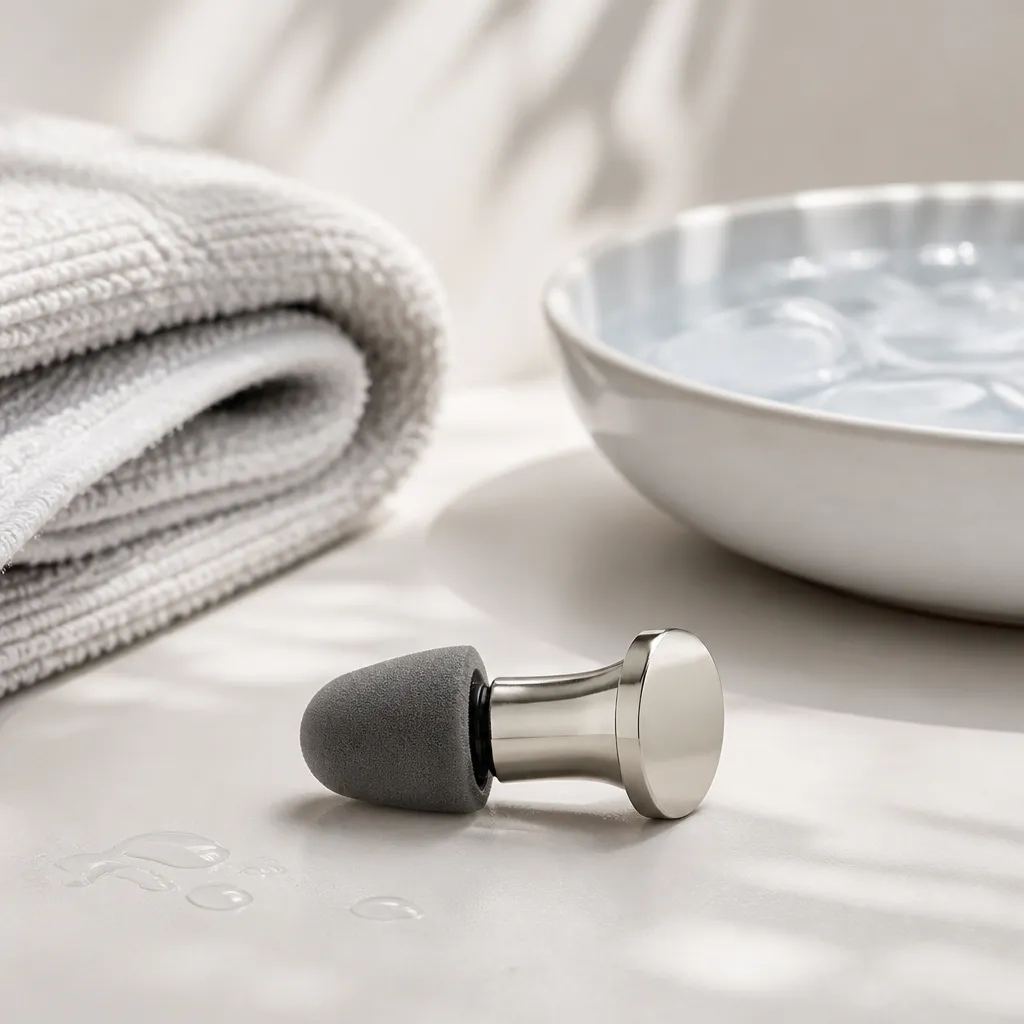
When you remove your plugs in the morning, wipe the aluminium body with a dry cloth and let the tips air out for a few minutes before you put them away. Storing them wet keeps moisture against the material you will insert again. An open tray or breathable pouch on the bedside table works better than a closed case for this reason.
Wash the body with lukewarm water and mild soap when it looks dirty, rinse it and dry it fully. Remove foam tips before cleaning the body if your model allows, and do not soak foam. Keep a spare set at home and in your work bag so you never reuse a damp pair because the replacement is still in a drawer.
Pro tip: Keep a small zip bag with a spare set of tips in your travel bag and another by your bed. Swapping them takes seconds and stops you from sleeping on a tip that has already absorbed a night of sweat.
If you notice itching, odour, discharge or pain after wearing plugs in heat, stop using them and speak with a doctor or pharmacist. Those signs are not something a better tip will fix.
No single product suits every sleeper in every climate, so it helps to compare the main options on the things that matter when it is hot. The table below focuses on fit retention, hygiene and running cost over a season rather than on lab numbers, which tell you less about a damp night than you might expect.
| Approach | Works best when | Main drawback in heat |
|---|---|---|
| Reusable metal body with foam tips | You sleep most nights in the same bed and want one pair to last | Foam tips need replacing every 6-8 weeks and must be dried between uses |
| Single-use foam plugs | You travel and prefer to discard them after a night | Foam compresses differently when sweaty, and the waste adds up over a summer |
| Silicone or moulded plugs | Foam never seals your canal well | Silicone can hold moisture if not dried, and cleaning takes more care |
For most light sleepers in warm rooms, the reusable option wins on total cost and consistency, but only if you commit to drying and tip replacement. Single-use foam can work for a single trip where you do not want to carry a case, yet it is hard to rely on for a whole summer. Moulded silicone suits people with unusual canal shapes, though it needs the same drying discipline.
Lowering the room temperature is the most effective fix, but it is not always possible. Many people sleep with a fan running, and that brings a second problem. Moving air and fan noise can hide small sounds, or create a constant hum you then notice more. Your plugs should seal well enough that the room is quiet, not just that the fan is running.
In hot rooms, the seal usually fails long before the plug does. Check the fit first, then blame the product.
A fan aimed directly at your face dries the skin around the canal and can make the plug feel loose as surface temperature changes. Point it across the room or at a wall so air circulates without blowing on your head. A steady fan can also work as a sound mask, since a consistent broadband hum is easier to sleep through than sudden noises.
Side sleeping is the position where a plug is most likely to shift, because the pillow pushes against the outer ear. Some sleepers change position on hot nights to get off a warm mattress, and that can move a plug that was fine before. If you can, settle on the side that feels most comfortable, check the plug on waking, and avoid pressing the ear into a pillow with a damp cover.
Ear plugs are useful, but wearing them every night is a habit that deserves a second look. The New York Times Wirecutter guide on wearing earplugs every night advises against making them a nightly default. Heat makes the downsides more likely, because a warm, moist canal is slower to recover from constant covering.
Itching, a feeling of fullness that does not clear, a change in hearing that lasts after you remove the plugs, or any discharge are signals to stop for a few nights. Dryness and mild irritation are also common when plugs are worn for long stretches in heat. Give the canal time to recover before returning to nightly use.
On nights when the room is hot and total silence is not essential, try a fan, a window positioned for a breeze or a lighter sleep mask, and keep plugs for the nights you need them most. A rotation like this gives the canal regular rest and stops plugs becoming a crutch. It is a sensible starting point for light sleepers, and you can adjust it once you know which nights need the extra quiet.
For people on construction sites, in manufacturing plants or in military training, heat and noise often arrive together. Sweat, helmets, gloves and long shifts all make hearing protection harder to keep in place. The aim is not to skip protection when it is hot. It is to plan the routine so the protection still seals at the end of the shift.
Sweat gathers quickly under a helmet, so start each shift with dry tips and a dry body. Carry a spare set in a pocket or sealed pouch. At each break, remove the plugs, let the canal and tips air out and check that nothing has shifted before reinserting them. A plug that fitted at seven in the morning may feel different at noon.
Water breaks are good practice, but they are also when plugs get knocked, pulled or handled with dirty gloves. Wash your hands before touching your ears. To check the seal, gently pull the outer ear and press the plug back in. If it moves easily or the noise sounds much louder on one side, replace the tip before you return to the noisy area.
Pro tip: Keep one spare set of tips in your helmet liner or a pocket. On long hot shifts, a fresh tip at lunch does more for comfort and protection than almost any other change you can make.
They can, but heat changes how the tip seals. Sweat and warmth soften foam, so you may need a different size, fresh tips or a more careful drying routine than you used in cooler months.
Replace foam tips every 6-8 weeks as a baseline. In humid or sweaty conditions, replace them sooner if they feel tacky, stay flattened or no longer seal cleanly.
Many people wear them regularly, but nightly use in a warm, moist canal raises the risk of irritation. Take regular breaks and stop if you notice itching, discharge or pain.
Wipe and dry the body after every night. Wash it with mild soap and water when it looks dirty, and replace tips on schedule rather than trying to clean foam repeatedly.
Check the size first. Try the next size down if they feel full, or the next size up if they whistle or drop out. Also look at your sleep position, pillow pressure and whether a fan is blowing directly at your ears.
Tell us what has worked for you on hot nights, whether that is a tip size, a drying habit or a fan setup.
We would love your feedback and any insights you would share with others. What perspective would you add?
Storm noise sleep disruption is one of the least discussed causes of broken nights in Australia. A thunderclap at 2 am rarely wakes you fully, yet it can pull you out of deep sleep, leave you lying awake for twenty minutes, and leave you flat the next day without you ever connecting the two. If you are a light sleeper, or you work in loud conditions and need your ears to recover at night, storm noise is a specific problem with specific fixes. This guide explains why storms disrupt sleep differently from other noise, what the research says, and which options hold up when the sky opens.
| Key Insight | Explanation |
|---|---|
| You can wake without remembering it | Storm noise can shift you into lighter sleep stages even when you do not fully wake, so a “good night” memory is not proof of good sleep. |
| Unpredictable bangs cause more damage than steady rain | Sudden spikes keep the body on alert. A steady sound may mask them for some sleepers, but not for everyone. |
| Fit decides how much a plug blocks | Ear plugs only deliver their rated reduction when the foam tip seals the ear canal. Test all three sizes lying down before storm season. |
| Replace foam tips every 6 to 8 weeks | ATTENU8 recommends replacing only the foam tips on this schedule. A tip that no longer springs back has lost its seal. |
| Combine fixes instead of picking one | Earplugs handle sharp cracks, sealed windows handle wind and rumble, and a fan can cover steady rain for sleepers who respond well to it. |
| Plan the morning after | Storm nights are linked to next-day sleepiness and irritability, so move demanding tasks and protect an earlier bedtime the following night. |
Most people assume they sleep through storms because they remember nothing about the night. Research on environmental noise suggests that is the wrong test. A 2014 review by Demian Halperin, published in Sleep Science, found that nighttime environmental noise provokes measurable biological changes, including a stress response, and clearly affects sleep architecture as well as subjective sleep quality.
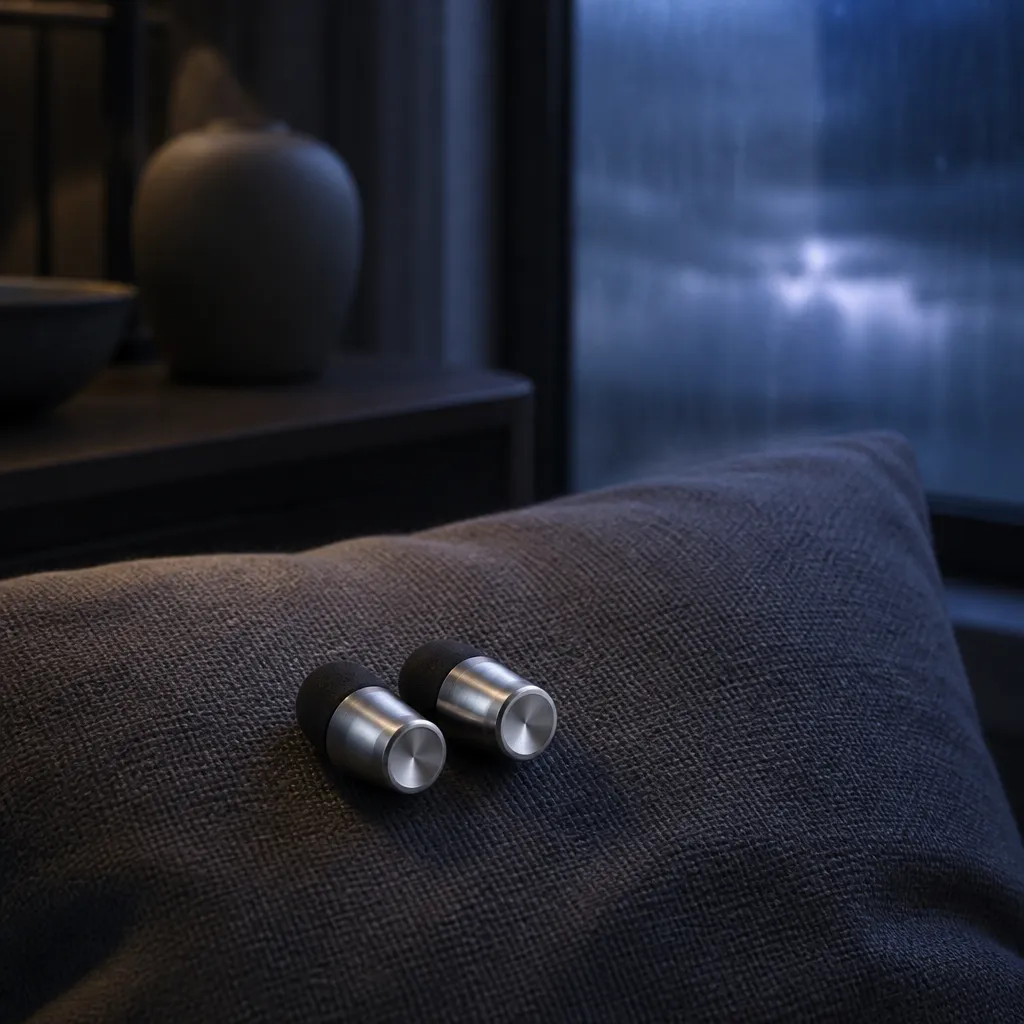
Storm noise is different from the steady traffic hum that much of the research examines. Thunder arrives in unpredictable bursts, often with a sharp crack that rises well above the level of a quiet suburban bedroom. Heavy rain on a tin or metal roof adds a constant roar that some sleepers find harder to tune out than a single noise.
Predictability is the real issue. The Sleep Foundation notes that noises can wake you or change your sleep stages even when you do not fully wake, and that steady background sound can help mask unpredictable noise for some people. Storm noise is the opposite of steady, which is why one housemate can sleep through a storm while the other stares at the ceiling.
In practice, the first crack is rarely the whole problem. The sounds that do the most damage are the second and third, the ones you half expect, which keep your nervous system on watch. A light sleeper often wakes before each burst, drifts back, and wakes again, and that fragmented pattern leaves you more tired than one long, clean wake-up would.
Sleep is lost in the gaps between storm noises, not only during them. For a light sleeper, the anticipation of the next crack is often what keeps them awake.
A sudden loud sound is the most disruptive type of noise for sleep. The Sleep Foundation summarises research on environmental noise, such as air and vehicle traffic, showing that it can increase stage 1 sleep, the lightest stage, while reducing slow wave sleep and REM sleep. Storm noise is not traffic, and I am not aware of a study that measures thunder specifically, but the mechanism is likely to be similar: the sound intrudes, the brain shifts toward lighter sleep, and the deep stages get squeezed.
Slow wave sleep is closely tied to physical recovery, and REM sleep is linked to memory and emotional processing. Losing either one across a stormy night is a real cost, even if you wake up feeling you slept fine. That gap between how you feel and what your sleep was actually like is where storm season does its quietest damage.
Rain is a different problem. Its sound is continuous, so many people assume it is harmless. For some sleepers it works like the white noise the Sleep Foundation describes, masking the sharper sounds around it. For others, the steady roar becomes a background stressor they cannot switch off, and the research on background noise is mixed enough that personal preference matters more than any rule.
In practice, rain helps people who already sleep well with a fan running, and it makes people who prefer silence more irritable. Test a fan or white noise on an ordinary quiet night before a storm forecast, not during the first storm of the season.
Wind adds another layer: a loose gutter, a fence panel that knocks, a bin lid rolling down the driveway. These sounds are short, irregular, and often metallic, which makes them hard to predict and easy to hear through an open gap. Sealing the spaces around windows and doors removes much of this intrusive noise more effectively than most gadgets.
The enHealth guidance on the health effects of environmental noise, published in Australia, found that noise had a larger effect on self-reported sleep than on objectively assessed sleep. The report suggests annoyance may be one factor behind that gap. In other words, how you feel about your night matters, and it can be disrupted even when measured sleep changes look small.
The Halperin review adds that people who struggle with nighttime noise often report daytime sleepiness, tiredness, annoyance, mood changes, and reduced well-being and cognitive performance the next day. If you have had a run of storm nights and then feel unusually short-tempered at work, the noise is a likely contributor, not a coincidence.
Do not schedule your hardest task for the morning after a storm. Move demanding work, avoid a late afternoon coffee, and go to bed a little earlier the following night. You are paying back a sleep debt over several nights, not trying to catch up in a single long sleep.
A common mistake is treating a rough morning as a motivation problem. In most cases it is a sleep problem, and the fix starts with the next evening rather than with willpower at breakfast.
Storm season in much of eastern and northern Australia tends to run from spring into summer, and storms can roll through in the afternoon, evening, or overnight. With the calendar now at November, many households are about to face their first long run of storm nights, so it is worth setting up before the forecast turns.
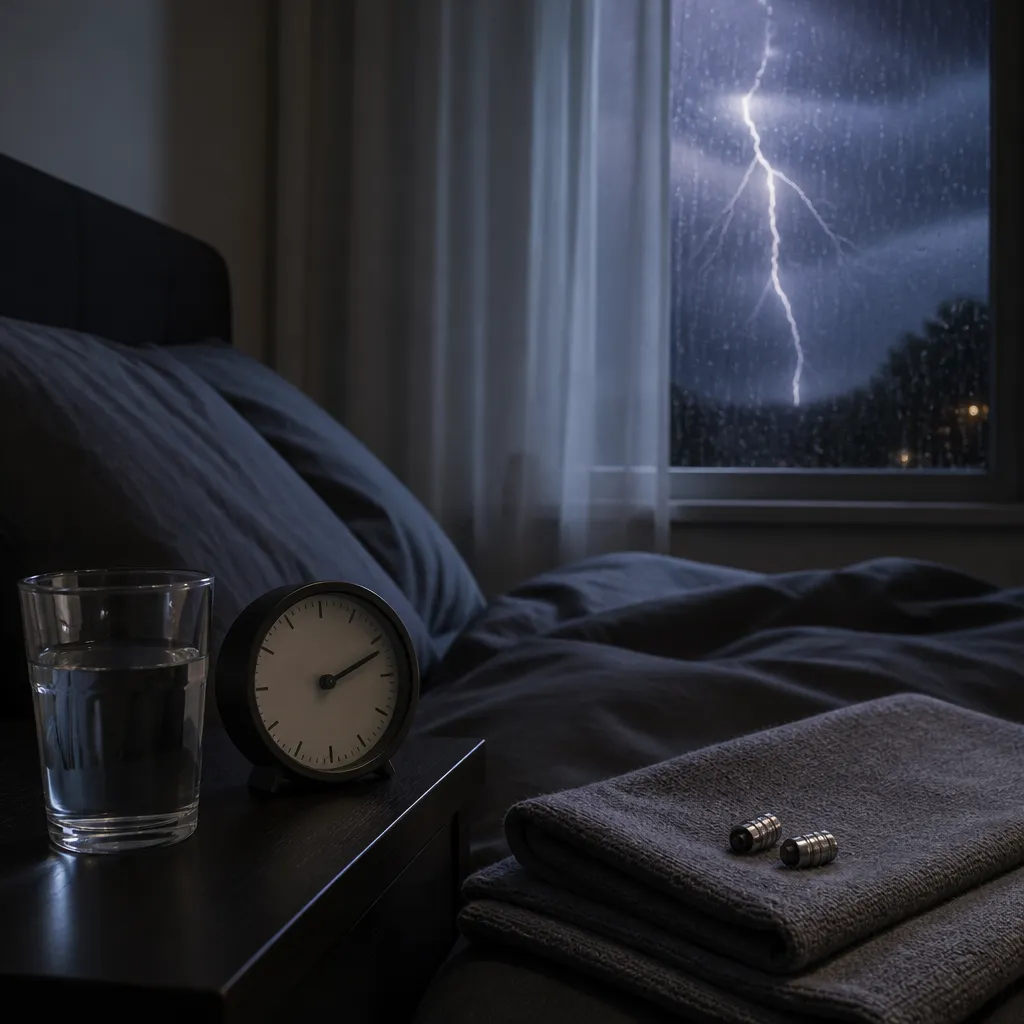
If you already wake at a dropped spoon or a partner rolling over, storm noise sits in a different league. The combination of sudden spikes and long rain sessions gives you many more chances to wake, and you tend to remember the nights you were woken far more clearly than the ones you slept through.
Anyone sleeping during daylight already fights light, traffic, and household noise. Storm noise adds a layer that is hard to plan for because weather rarely fits a roster. Check the forecast before your sleep period begins and set up your bedroom then, not in the middle of the first crack.
Construction, manufacturing, and military workers often wear hearing protection all day and then go home to a bedroom that is not built for recovery. Ear plugs used at night serve a different job from those used on site. Their purpose here is comfort and sleep, not protection from a hazardous workplace level. If your ears ring after a loud shift or a storm, talk to a hearing professional rather than assuming a night plug has solved the problem.
Pro tip: Check the forecast around 4 pm on storm days, and set out your sleep kit before dinner. Fumbling for ear plugs in the dark after the first crack is how most people give up before the night has really started.
Ear plug performance depends mostly on fit. A plug that sits slightly out of the ear canal lets through the sharp, high-pitched components of thunder, and those are the parts most likely to wake you. ATTENU8 builds its plugs around a concave aluminium body with three sizes of soft memory foam tips (XS, S, and M), and the brand rates them at approximately 32dB noise reduction. That figure assumes a proper seal, which a loose tip cannot give you.
Try all three sizes before you need them, lying on your side as you would in bed. Gently pull the outer ear up and back, insert the tip, then wait a few seconds for the foam to expand. If you can still feel pressure on the outside of the ear, or the plug works loose when you turn your head, go one size down.
A common mistake is choosing the size that feels most comfortable on the first try. A snug fit that does not quite seal is less useful than a slightly firmer one that does, and comfort usually improves after a night or two of wear.
Foam tips wear down through ear wax, moisture, and repeated compression. ATTENU8 recommends replacing only the foam tips every 6 to 8 weeks rather than the whole plug. In practice, a tip that no longer springs back after squeezing has lost its seal, so replace it even if the calendar says it is still within range.
Pro tip: Write the date on a sticky note inside your sleep case each time you change tips. A worn tip is easy to overlook, and it is the kind of small failure that makes a good plug seem useless on the worst storm night of the year.
No single fix handles every type of storm noise. Ear plugs cover sharp bangs, a fan or white noise device can cover steady rain, and sealing windows handles wind and distant rumble. The table below compares the three most common approaches.
| Approach | Best For | Main Limitation |
|---|---|---|
| Reusable metal-bodied ear plugs with foam tips | Sudden thunder cracks and close, sharp bangs | Only works with a good seal, and foam tips need replacing every 6 to 8 weeks |
| Fan or white noise machine | Steady rain and masking unpredictable sounds | Research is mixed, and some sleepers find the sound itself disruptive |
| Sealed windows, door draught excluders, and heavier curtains | Wind, gusts, and distant rumble | Can be costly in a rental, and does little against a crack directly overhead |
Most sleepers get the best result by combining ear plugs with sealed windows, then testing a fan only if steady rain is the main problem in their home. Treat the fan as an addition, not a replacement for the other two.
A storm-ready bedroom is set up before the forecast turns. The aim is to lower the baseline noise in the room, so each spike has less contrast against it. Start with the cheapest changes and work up to the more expensive ones only if you still wake.
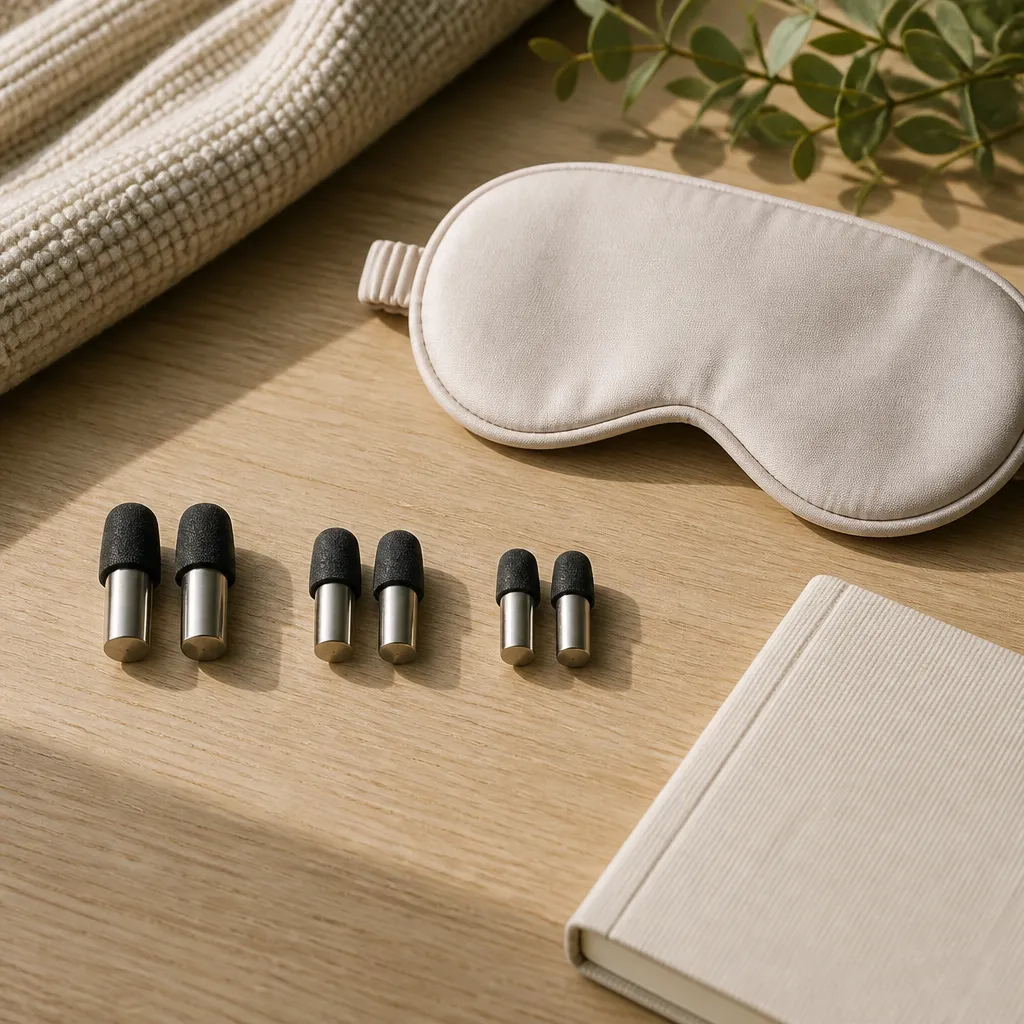
Check for gaps around window frames and under the bedroom door. Draught excluders, weather seals, and a heavier curtain can noticeably reduce the sound of rain and wind. The Sleep Foundation lists sealed windows among practical ways to limit nighttime noise, and this is one of the few changes that helps everyone in the house at once.
Lightning often arrives as a flash before the sound, and a phone lighting up or a router LED can wake a light sleeper just as effectively as thunder. Put phones on silent, turn screens face down, and switch off notifications for the night. The Sleep Foundation recommends reducing device alerts, and storm nights make that advice more urgent.
Children and pets react to storms in ways that can wake the whole household. A small night light on a dimmer gives a child a steady reference point without a bright glare, and a quiet room away from the windows can help an anxious dog or cat settle. Avoid getting up to comfort them unless you have to, because each unnecessary wake-up adds to the fragmentation you are trying to prevent.
Most storm sleep problems come from a short list of habits. Fixing them costs nothing and often does more than buying new gear.
Checking the radar at 2 am feels productive, but the screen light and the sudden alertness make it harder to fall back asleep. If you need the information, check once before bed and leave the phone in another room for the rest of the night.
Ear plugs kept in a drawer across the room are useless once you are already awake. Keep them in the same place every night, and check that you can find them with the lights off.
A plug that sits slightly out of place can feel fine but block very little. If your ear feels full or you hear your own breathing more than the room, try a different size before deciding the plugs do not work.
Pro tip: Keep a glass of water and a spare pair of ear plugs in the same spot beside your bed, so you do not need to get up in the dark more than once during a storm.
Repeated or very loud exposure can damage hearing, and a close lightning strike can be startlingly loud. Ear plugs reduce what reaches the ear, but they are a comfort and sleep tool, not a substitute for hearing protection at work. If you notice ringing or changes in hearing after a storm, see a doctor or audiologist.
Muffling is expected, so do not assume you will hear everything. Before relying on plugs overnight, test them with your smoke alarm and phone at a realistic volume. If you need to hear a specific alarm, consider a separate alert system rather than depending on your ears alone.
ATTENU8 recommends replacing the foam tips every 6 to 8 weeks. Replace them sooner if they look discoloured, feel stiff, or no longer spring back after you compress them.
It helps some sleepers and not others, and the research on background noise is mixed. Test it on a normal night first. If it makes you more alert or irritated, use ear plugs and sealed windows instead.
Most light sleepers cannot eliminate storm disruption entirely, but they can reduce it a lot. Combining a good seal, sealed windows, a consistent bedtime routine, and fewer device interruptions usually makes the difference between broken sleep and a night you can recover from.
Try all three sizes lying on your side, because the fit changes when you lie down. Choose the largest size that feels comfortable and seals without pressure. If a tip feels like it is pushing on your outer ear, step down one size.
What has your storm season sleep looked like, and which fix has actually worked for you? We would like to hear about your experience.
A summer festival means hours of bass, crowds pressed against the barrier, and a high-pitched whine that lingers until the following week. Most people treat that ringing as a badge of honour. It is actually a sign that your inner ear has been overloaded. Ear plugs for festivals are the simplest fix, but only if they fit properly, suit the sound levels you will face, and get worn consistently across a multi-day event. This guide covers those three things, along with what to do before next summer’s line-up is announced.
| Key Insight | Explanation |
|---|---|
| Ringing means damage has already started | Tinnitus after a set is a sign of overexposure, not proof the show was good. Treat it as a cue to change your routine for the next set. |
| Rated noise reduction is a best-case number | Lab ratings assume a perfect seal. OSHA guidance recommends derating a rating by 50 percent to estimate real-world protection. |
| Fit matters more than the price tag | A well-seated plug outperforms an expensive one with the wrong tip size. Test all three sizes at home, weeks before the event. |
| Carry a backup pair | Losing or damaging one pair in a crowd is common. Keep a spare in a separate pocket or bag so you are never unprotected. |
| Step away from the speakers every hour or two | A few minutes away from the main stage gives your ears recovery time. Pick your quiet spot before the music starts. |
| Choose a moderate rating you will actually keep in | Heavy muffling flattens the music and tempts you to remove your plugs. A plug you wear for the whole set protects more than a stronger one you pull out. |
| Plan your gear before the line-up drops | Check fit, order replacement tips, and set a routine in the off-season so you are not solving problems on site. |
A festival stage can push sound well past the levels most people experience in daily life, and the damage builds over time. Many attendees assume only a full day of close-up noise is risky, but several loud sets on consecutive nights add up. A ring that fades by morning does not mean the strain on your inner ear has gone with it.
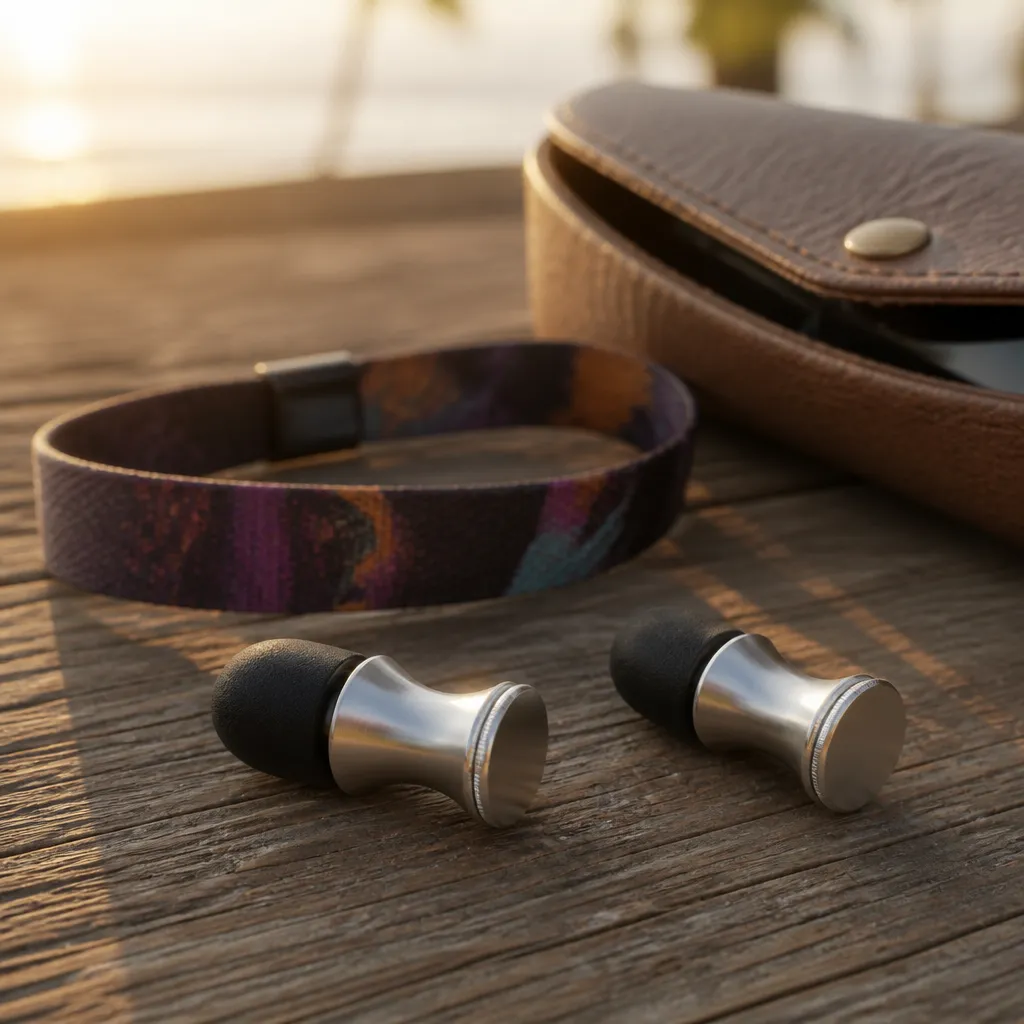
Consumer testing of concert ear plugs often uses a simple worked example: a 100 dB set with a plug rated at 20 dB noise reduction brings the sound reaching your ear down to about 80 dB. That is a meaningful drop, but only if the plug is sitting properly in the canal. The rest of this guide explains why that condition is harder to meet than most people expect.
Tinnitus after a set is the most visible sign of overexposure, and it is easy to shrug off as part of the fun. In practice, it means the level and duration of what you just heard exceeded what your ears comfortably absorb. Repeated exposure without recovery is what turns a temporary ring into something that lasts, so treat each ringing night as a reason to change your routine, not as proof you had a good time.
Sound at the front barrier can be far louder than sound at the back of the field, because you are closer to the speaker stacks and the level climbs quickly as you approach them. Many people plant themselves at the front for the headliner and then wonder why their ears are ringing on Sunday. Standing a few rows back, or moving to the edge of the crowd during the loudest sets, lowers your exposure without costing you the atmosphere.
Every box of ear plugs carries a noise reduction number, and it is the figure most buyers compare first. The problem is that the number is measured under ideal conditions, with the plug seated perfectly in a test setup. Your ear canal is not a test setup, so the protection you actually receive will be lower.
The noise reduction rating (NRR) is a laboratory figure that shows how many decibels a plug can block under controlled fit. Our pairs carry a rated figure of approximately 32 dB, and we state it plainly because it is what the lab measured. It is a useful way to compare one plug against another, but it is not a promise about what you will hear at a live show.
OSHA, the US workplace safety body, recommends derating a plug’s rating by 50 percent to estimate real-world protection. Applied to a 32 dB rating, that gives you roughly 16 dB to plan around. Use the lower figure as your working assumption, then decide whether that is enough for the stage you plan to stand near. A pair that delivers half its rated number in your ear is still doing useful work, but only if you know that is what you bought.
Higher ratings mean more muffling, and heavy muffling can make music sound flat and distant, which is why many attendees pull their plugs out after the first song. Testing on concert plugs has found that the models which sound most natural usually offer moderate attenuation, while the strongest noise reduction tends to sacrifice frequency balance. At a festival you want to feel the bass, follow the melody, and talk to friends, so a moderate rating you keep in place beats a heavy rating you remove at nine o’clock.
The best ear plug is the one still in your ear when the headliner starts.
Pro tip: Decide your target reduction before you buy, based on how close you plan to stand. Then choose a plug that gets you there in real use, not just on the packaging.
No ear plug performs as rated without a proper acoustic seal, and fit is where most festival protection fails. Ear canals vary widely in size and shape, and a tip that is too small lets sound leak past the seal. Some plugs run large, so the size you assume you need may be wrong, and the only way to find out is to test.
Our pairs come with XS, S, and M memory foam tips, and most people settle on one size that feels comfortable and seals cleanly. Test all three before the event, not on the first night of the festival. Insert each size, then hum quietly with your mouth closed. A good seal makes your own voice sound deeper and closer, while a poor seal leaves it sounding almost normal.

A seal can fail quietly. Shallow insertion is a common cause: when a plug sits at the entrance of the canal rather than deeper inside, an air gap can form and amplify certain frequencies. Lab testing of concert plugs has shown that a shallow fit with a pinhole gap can create a resonant peak near 1,300 Hz, pushing sound at the eardrum about 12 dB louder than wearing nothing at all. If the music suddenly sounds thin or sharp, re-seat the plug before you assume it is working.
Dirt, sweat, and festival dust reduce grip on the tip and change how it seals. Our foam tips are designed to be replaced every six to eight weeks of regular use, and a tip that looks flattened, discoloured, or stiff should be swapped sooner. Keep a spare set in the case so a worn tip is never the reason you go without protection.
Not every festival day needs the same level of protection. A afternoon near a small stage carries very different exposure from a night at the front of the main stage, and your gear should reflect that. The table below compares three common options so you can match the product to the situation rather than buying the most expensive one by default.
| Option | Best Use | Main Drawback |
|---|---|---|
| Disposable foam plugs | Backup pairs and low-exposure afternoons | Typically thrown away after one use, so costs add up over a season, and fit can vary from pair to pair. |
| Reusable metal-bodied plugs with replaceable tips | Multi-day festivals, nightly use, and anyone who wants a consistent fit | Needs regular cleaning and tip replacement, and the upfront cost is higher. |
| Custom-moulded plugs fitted by an audiologist | Frequent loud events, musicians, and people with sensitive hearing | Requires an appointment and a fitting fee, and is less flexible if your exposure changes. |
For a single-day outdoor show with a mix of quiet and loud acts, a reusable pair with a moderate rating covers most situations. For a multi-day festival where you will be near the speakers every night, a reusable pair with fresh tips and a backup set makes more sense than disposables. If you attend loud events every month, a custom-moulded pair can be worth the appointment.
In crowds, plugs get dropped, sat on, or left in a tent. A second pair kept in a different pocket or bag means a lost pair on day two does not end your protection. Disposable foam pairs also work well as a backup, since you can carry a few without much weight or cost.
Ear plugs do the heavy lifting, but how you move through a festival day matters just as much. Most people spend the whole day in one spot, at one volume, and never give their ears a break. A better pattern is to plan your exposure the way you plan water and food, with deliberate pauses built in.
Sound levels drop noticeably as you move away from the speaker stacks, which is why standing at the back of a large field is so different from standing at the barrier. Before a headliner, decide where you will watch from, and choose a spot where you can still see the stage without being pinned against it. Your friends will still find you, and your ears will be grateful on Monday.
Hearing health guidance for festivals consistently recommends finding quiet spots to take breaks, because stepping away from the noise for a few minutes can reduce the risk of hearing loss. In practice, look for a shaded area, a food stall away from the stage, or a spot behind a tent. Use the break to sit down, take your plugs out for a minute if the area is quiet, and then put them back in before the next set.
Heat and dehydration make long days harder, and tired ears recover more slowly. Drink water steadily, and do not wait until you feel thirsty. Limit additional noise after the show as well, since a loud car ride home or a late-night bar can add to the dose you took in during the day. Give your ears a quiet evening before you go back to normal life.
Pro tip: Set a phone reminder for the first quiet break of each day. Most people forget to take one until the ringing starts, and a scheduled pause is far easier to keep.
The best time to sort out your festival hearing protection is not the week before the event. Off-season is when you have time to test fits, order replacement tips, and build a routine without rushing. Start now, and you will walk into the 2027 season with gear you already trust.
Fit testing at home takes ten minutes and tells you more than any product review. Try all three tip sizes, hum to check the seal, and wear your chosen pair for an hour while you do something ordinary, like cooking or reading. If your plug falls out, causes discomfort, or makes everything sound tinny, you have time to try something else before the season starts.
A practical festival kit includes your main pair, a backup pair, a spare set of tips, and a small case that protects the plugs in a bag. Keep it in the same place each time so you never leave without it. Consistency matters, because a kit you grab on the way out the door is more likely to get used than one you have to hunt for.
Buying good plugs is only half the job. Decide in advance that you will put them in before the first set, take a quiet break each day, and replace tips on a fixed schedule. Write those rules down. A routine you agreed to in October is far more likely to hold up when the headliner starts in July.
Yes, provided the plug is comfortable and properly seated. Wearing protection through loud sets is the point, but you should still step away from the speakers during breaks and remove your plugs in quiet areas when it is safe to do so.
They reduce volume, and they can change how music sounds. A moderate rating preserves more detail and bass than a very heavy one, so you can still follow the melody and talk with friends. A poorly seated plug can make music sound thin, so check the seal if things sound off.
Test each tip size at home. Hum with your mouth closed, and if your own voice sounds deeper and closer, the seal is good. If the plug feels loose, causes pain, or the music suddenly sounds sharp, re-seat it or try a different size.
Our foam tips are designed to be replaced every six to eight weeks of regular use. Replace them sooner if they look flattened, discoloured, or stiff, since worn tips seal less reliably.
Ringing that persists, or hearing that stays muffled, should be checked by an audiologist or doctor rather than waited out. Use the experience to adjust your plan for next time, including rating, placement, and break habits.
What has your experience been with ear plugs at summer festivals, and which tip size or routine worked best for you?
If your Saturday morning starts with a neighbour’s mower at 7am, you are not imagining it. In much of Australia, November is when lawns move from early tidy-up work into full growth, and noisy neighbours across the country shift from occasional yard jobs to weekly mowing, edging, blowing and pump runs. For light sleepers, the damage rarely comes from one loud hour. It comes from stop-start noise that keeps your nervous system on alert all weekend. This guide explains when the racket peaks, which machines cause the most trouble, how to raise the issue without starting a feud, and how to protect your sleep while the lawn settles.
| Key Insight | Explanation |
|---|---|
| Unpredictable noise does more damage than steady noise | A mower that runs every Saturday at the same time is easier to plan around than one that starts at random on weeknights. |
| Heavy early-spring jobs should be finished by November | Dethatching is best done in early spring, so a neighbour still scarifying or scalping in November is making the loudest noise at the worst time. |
| Leaf blowers and pressure washers are the first thing to address | Their high-pitched noise carries through closed windows, and they are usually the easiest machines to ask a neighbour to skip or move. |
| Ask for a specific schedule, not silence | Requests like “Could you mow before 10am on Saturdays?” get far better responses than general complaints about noise. |
| Ear plugs solve the bedroom problem, not the street problem | Well-fitted foam tips rated at approximately 32dB noise reduction help at night, but they work best alongside bedroom changes. |
| Keep a dated noise log before you escalate | Dates, times, equipment and duration make a council complaint easier to act on, and they make your own conversations more specific. |
Spring lawn care is supposed to follow the grass, not the calendar. One Australian lawn checklist makes the point plainly: growth depends on grass type, climate, soil condition and rainfall, so a date on the calendar is only a rough guide. That means many lawns are only now reaching their busy phase, and a fortnightly mow in September can quietly become a weekly job by mid-November.

In practice, the noise peaks on weekday evenings after work and on weekend mornings, when people finally have time outside. A mower at 6pm on a Thursday lands on a light sleeper who is trying to wind down, and a leaf blower at 8am on a Sunday is just as disruptive to someone who went to bed late. Neither is extreme on its own, but together they keep your sleep cycle interrupted for days.
Unpredictable noise wakes people more often than steady noise does, even when the steady noise is louder.
This is the point I make to anyone who asks why November feels worse than September. Your brain adapts to a noise it can predict, but it keeps listening for the next start-up sound when it cannot. A neighbour who mows on the same Saturday each month is far easier to live with than one who runs a machine three evenings a week with no pattern at all.
Light sleepers usually notice the start of a noise more than its volume, which is why the first few seconds of a machine firing up often do the waking.
Not every loud weekend is a careless neighbour. Many people are working through a spring checklist that they meant to finish weeks ago. The standard sequence is to inspect the lawn first, clear winter debris, mow correctly, check for compaction and thatch, and only then fertilise. Once you know that sequence, you can tell whether a neighbour is catching up or just getting started.
The most useful sign of active growth is not the month but how often the lawn needs cutting. A lawn that moves from every fortnight to every few days is in full growth, and the mowing noise will follow that pattern. If you hear a machine three times in one week, the grass is probably growing faster than its owner expected.
Warm-season grasses such as buffalo, couch, kikuyu and zoysia respond to soil warmth. One Australian reference point used in lawn care guidance is around 14°C soil temperature, and October is often cited as a fertilising reference in many regions. Treat those figures as signals to check, not as dates to obey.
A late frost can burn fresh growth, so some owners hold back on their heavy jobs until the risk passes. Mower servicing, sharpening and scalping are all meant to happen early in spring, before the lawn takes off. When those tasks slide, they often land in late spring, which is why you may hear a neighbour’s mower being tuned up or run hard in November.
Pro tip: Note the date your own lawn first needs mowing twice a week. Once you know that date, you can plan your sleep routine and check your ear plug seal before the noise starts, rather than after a bad night.
Not all garden noise is equal. A mulching mower running on a sunny afternoon is a minor nuisance, while a high-pitched blower at dawn can wake a sleeper through a closed bedroom window. Ranking machines by how they affect sleep, rather than by how loud they are on paper, gives you a more useful list of what to ask a neighbour to change.
Petrol mowers produce a low, sustained rumble that travels through walls and floors. The bigger spring issue is the catcher. When a neighbour switches from mulch mowing to bagging, the machine runs longer and the emptying trips add extra stop-start noise. Mulch mowing also reduces the number of passes needed on a lush lawn.
Blunt blades and poor servicing make mowers slower and louder because the machine works harder for longer. A neighbour with a sharp blade and a serviced engine often finishes in less time with less strain on the motor, which means less noise overall.
Leaf blowers and line trimmers produce the sharpest noise in most suburbs, and they are the easiest to ask a neighbour to skip. Their pitch cuts through closed windows and ear plugs more easily than the rumble of a mower. In November, grass clippings and early seed heads collect on paths and driveways, so blowing becomes a routine weekend job for many households.
My advice is to ask for blowing to happen before 9am on weekends, or to swap for a broom where that is practical. Trimming often comes at the end of a mowing session, so if the mowing window is agreed, the trimming can follow the same window.
Pool pumps and pressure washers run for long periods, which makes them different from a short mowing session. A pump that runs overnight is a constant hum that never switches off, and it is easy to stop noticing until it starts costing you sleep. Pressure washers are loud and often used in bursts that feel unpredictable.
Hedge trimmers are brief but frequent in late spring, as shrubs flush with new growth. Several short bursts across a Sunday afternoon can be more disruptive than one longer job, because your brain never fully settles between them.
Most noise disputes start with a vague complaint at the fence line and end with both people feeling annoyed. A better approach is to raise the issue once, early, with a specific request the neighbour can actually say yes to. In my experience, a calm conversation in daylight on a quiet day gets better results than a note slipped under a door after a bad night.
Choose a moment when neither of you is mid-task and you are rested. Speak before the next scheduled weekend, not during the noise itself. Opening with “I’ve noticed the mower going early on Saturdays and I’m finding it hard to sleep” describes the problem without accusing anyone.
Ask for a window, not silence. Requests such as “Could the mowing and blowing happen before 10am on weekends?” or “Could the pump run only during the day?” are easy to agree to and easy to check. If it helps, offer a trade, such as you doing your own noisy jobs at a time that suits them.
A common mistake is asking someone to stop gardening altogether. People rarely agree to that, and some will respond by doing the job at the same time just to make a point. Keep the request reasonable and you are far more likely to get a schedule change.
Pro tip: Follow the conversation with a short text that repeats the agreed window. It removes doubt about what was said and gives you a reference point if the noise continues.
Each response suits a different situation. The right choice depends on how often the noise happens, whether the neighbour is open to talking, and how badly your sleep is suffering. The table below sets out where each option works and where it falls short.
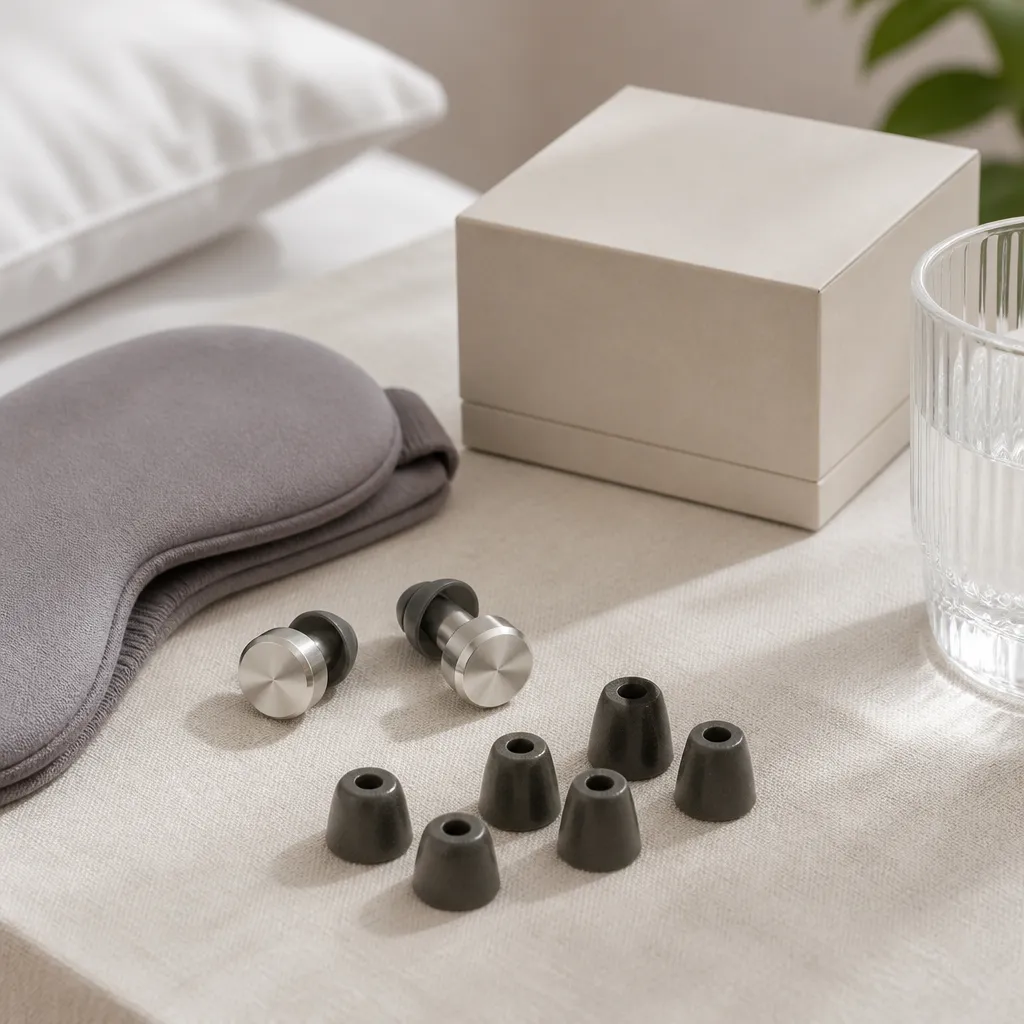
| Approach | When it works | Where it falls short |
|---|---|---|
| Talking to the neighbour with a specific request | Occasional noise from someone you can speak to easily | Does not work if the neighbour ignores the request or is hard to reach |
| Formal complaint to your local council | Repeated noise that appears to breach local guidance, backed by a dated log | Slower, and the council may need clear evidence before acting |
| Well-fitted ear plugs plus bedroom changes | Any situation where you cannot control the source, including overnight pumps | Does nothing to change the neighbour’s habits or the daytime noise outside |
In practice, I would start with the conversation, keep the log running while you wait, and use ear plugs to protect your sleep in the meantime. A council complaint is the right route when the noise is frequent and the conversation has failed, not a first step between neighbours.
Ear plugs only work if they seal properly, and most disappointment comes from a poor fit rather than a poor product. ATTENU8 ear plugs use a concave aluminium body with three sizes of soft memory foam tips (XS, S and M), rated at approximately 32dB noise reduction. That rating assumes a good seal, so fit is the first thing to get right.
Try each tip size in the morning, before you need them, rather than at 11pm when you are tired. The tip should feel snug without pressure or ache. If your own voice sounds hollow or the seal breaks when you yawn or chew, move up a size. Ears often differ, so check each side separately.
Insert the tip gently, compress the foam slightly, and hold it in place for a few seconds while it expands. Rushing this step is the most common cause of a leaking seal, especially for people used to pushing in softer foam.
The metal body is built to last, and only the foam tips need replacing, every 6 to 8 weeks with regular use. A worn tip loses its shape and seal, which can make the plug feel like it is working while it quietly lets noise through. Keep a spare set in the bedside drawer so a worn pair does not leave you exposed during a noisy weekend.
Be honest about the limits. Ear plugs reduce the sharp, high-pitched noise of blowers and trimmers well, but they do less against low rumble that travels through the structure of a house. For that, you need the bedroom changes covered in the next section.
You do not need a renovation to make a bedroom quieter, but you do need to think about where sound enters and how it bounces around the room. Hard surfaces such as bare floors, large mirrors and plain painted walls reflect sound back into the room. Softer materials absorb more of it, which is why a room full of fabric often feels calmer even when the outside noise has not changed.
A thick rug, lined curtains and an upholstered headboard all help. Layout matters too. Moving the bed away from a shared wall with a neighbour’s pump or machine shed can make a bigger difference than any single purchase. For a clear overview of soft furnishings and room layout, this design resource on sound-dampening ideas covers the basics.

Most noise leaks through gaps rather than through thick glass. Check for light showing around the window frame at night, or a faint whistle when the wind picks up. Draught strips, door seals and a well-fitting bedroom door do more than most people expect, and they cost far less than replacing a window.
Garden noise rules differ between councils and states, and they are rarely the same as rules for construction or industrial noise. Before you make a formal complaint, check your council’s website for the guidance that applies to your street. Councils often take repeated noise more seriously than a single bad weekend, which is why a diary matters.
Record the date, start and end time, type of equipment, rough duration and how it affected your sleep. Keep entries factual and brief. Three weeks of consistent entries is far more persuasive than a long list of complaints written in the heat of the moment.
Escalate when the conversation has failed, the noise keeps repeating, and your log shows a clear pattern. Start with the contact listed on your council’s website, and keep copies of everything you send. You should not need to escalate over a single bad Saturday.
Pro tip: Use the same log to plan your ear plug routine. If the diary shows blowers at 8am on Sundays, you know which mornings to check your tips and seals before the weekend arrives.
There is no single hour that applies everywhere. Check your council’s noise guidance, then ask your neighbour for a specific window that suits both households. Most people accept a sensible morning start, and a schedule request is more likely to work than a complaint about one particular time.
For most healthy adults, reusable foam-tipped ear plugs are designed for regular use and are comfortable to sleep in. Stop using them if you feel pain, irritation or discharge, and speak to a GP if symptoms do not settle. Keep the tips clean and replace them when they lose their shape.
Replace the foam tips every 6 to 8 weeks with regular use. The aluminium body is designed to stay in service, so you only need to replace the tips rather than the whole pair. A tip that no longer springs back or shows visible wear is due for replacement sooner.
No, and anyone who says they do is overselling. Well-fitted plugs reduce the high and mid-frequency sounds of mowers, blowers and trimmers well, but low rumble can still reach you. A good seal, a softer bedroom and an agreed mowing window together give the best result.
You usually cannot stop someone from doing a lawful activity, but you can ask for a specific time window and a quieter alternative such as a broom on certain days. If the noise is frequent and the conversation does not help, a dated noise log gives your council something concrete to act on.
Not every task needs to be finished by November, since fertilising and some repair work depend on when the grass resumes growth. Heavy early-spring jobs such as dethatching are best done early in the season, so a late dethatch in November usually means a neighbour is catching up.
Tell us which garden machine wakes you most often and whether a specific schedule request has ever worked for you, because your experience will help other light sleepers plan their weekends.
Most people treat a noisy night as a one-off annoyance. A siren at 2 a.m., a neighbour’s television through the wall, or a partner’s snoring might cost you one bad morning. The long term noise sleep effects are harder to see and more expensive. Your body keeps reacting to sounds you have stopped noticing, and the bill arrives later as fatigue, poor concentration, and raised blood pressure. This guide explains what the research says, what it costs in practice, and where a durable fix such as reusable ear plugs fits in.
| Key Insight | Explanation |
|---|---|
| Waking up is not the only cost | Noise that never fully wakes you can still shift time out of slow wave and REM sleep, the stages most tied to recovery. |
| Nighttime exposure is the worst timing | A 2014 review by Demian Halperin described nocturnal noise as possibly the most worrying form of noise pollution for health, because its effects combine during the night and carry into the next day. |
| Stress hormones work overnight | Night noise can prompt adrenaline and cortisol release, along with higher heart rate and blood pressure, even when you stay asleep. |
| Daytime performance pays first | Sleepiness, irritability, and slower thinking the next day are the costs most people notice before any long-term damage. |
| Sleep losses accumulate | Several nights of mild disruption add up, and chronic poor sleep is linked to heart disease, diabetes, and depression in the research. |
| Match the fix to the noise | Earplugs handle sudden, unpredictable sounds well, while masking sound and sealing a room address steady background noise. |
Sleep is not a single state. It cycles through lighter stages 1 and 2, deep slow wave sleep, and REM sleep several times a night, and each stage does different work. Deep sleep supports physical recovery, while REM is tied to memory and emotional processing. When noise intrudes, the damage is often invisible in the morning.
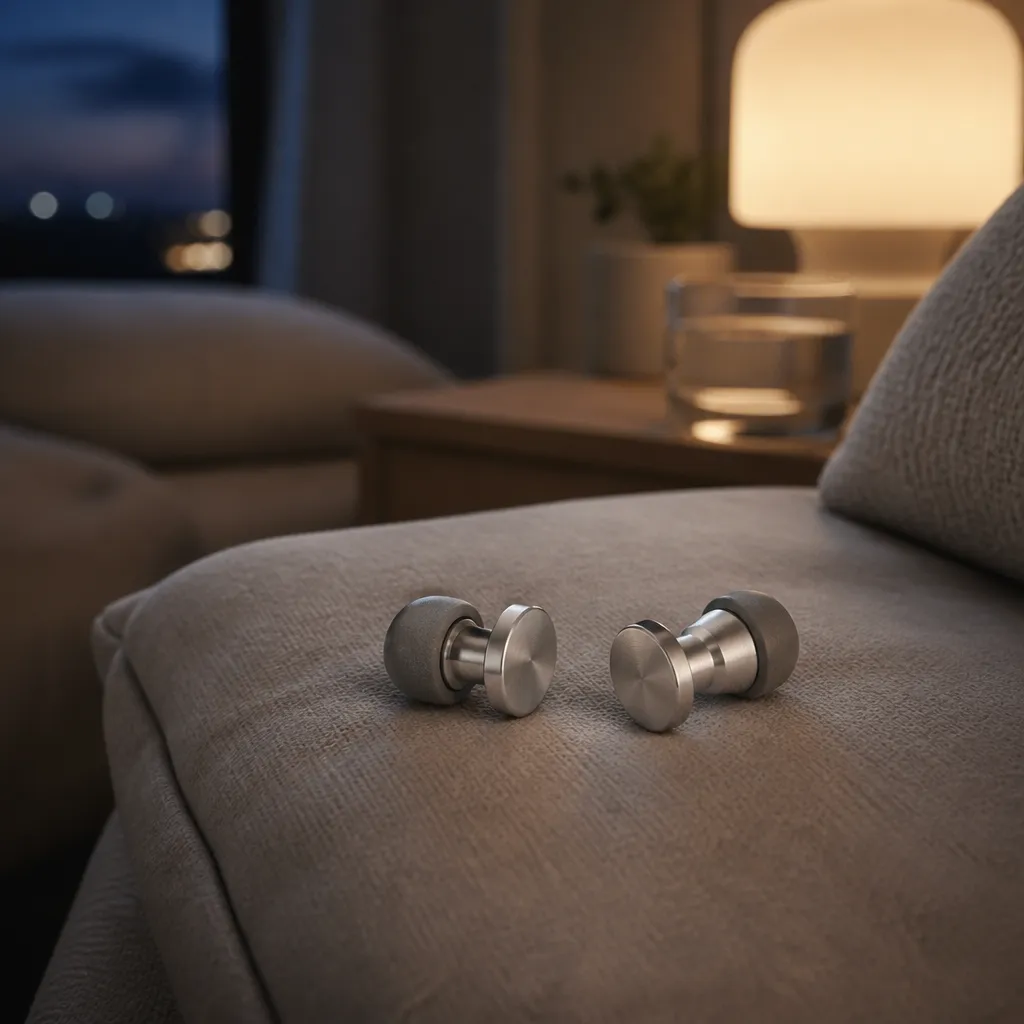
The Sleep Foundation summarises research showing that environmental noise, such as air and vehicle traffic, can increase time spent in stage 1 sleep and reduce slow wave and REM sleep. Even sounds that do not wake you can change how your night is structured. You may remember nothing and still wake up unrefreshed.
Micro-arousals are brief shifts toward wakefulness that often leave no memory. A truck passing at 3 a.m. may never register consciously, yet the sleeper’s brain can still respond. In practice, people who insist they sleep through the night often describe mornings that feel heavier than their hours in bed suggest.
Eight hours in bed means little if a large share of that time is spent in lighter sleep. The Sleep Foundation notes that a quiet bedroom is generally best, although steady background sounds such as a fan may mask unpredictable noise for some sleepers. White noise does not help everyone, and research on background sound is mixed, so test it on yourself rather than assuming it works.
Pro tip: For three mornings in a row, note your sleep duration, how many times you were disturbed, and how alert you feel by 10 a.m. Patterns appear faster than you expect, and they show whether noise or something else is the real problem.
The brain processes sound even while you sleep. The Sleep Foundation’s summary of the research indicates that nighttime noise may trigger extra production of hormones such as adrenaline and cortisol, along with elevated heart rate and blood pressure. You do not need to be awake for these changes to occur.
Cortisol follows a daily rhythm and normally begins rising in the early morning as part of the body’s wake cycle. Repeated stress responses during the night can disturb that rhythm. The practical result is grogginess at the time you should feel sharpest, and it is easy to blame caffeine or age for a problem that started at 4 a.m.
Halperin’s 2014 review describes poor sleep as associated with cardiometabolic, psychiatric, and social negative outcomes in both adults and children. It also cites emerging evidence that the short-term effects of nocturnal noise may be followed by long-term adverse cardiometabolic outcomes. That is a research signal rather than a verdict on any single night, which is why the pattern matters more than one loud evening.
A common mistake is to treat a bedroom that feels tolerable at 11 p.m. as a safe one. Noise you barely notice at bedtime can still push heart rate and blood pressure around in the small hours.
The noise you have learned to ignore is often the noise your body has not stopped responding to.
The first invoice for poor noise management arrives the next day. Halperin’s review notes that people who struggle with nocturnal noise often report daytime sleepiness, tiredness, annoyance, mood changes, and reduced well-being and cognitive performance. These are the costs most people feel in their working hours.
Sleep disruption also changes how you handle the rest of your day. A tired person has less patience for small problems and less tolerance for stress. Those effects are usually the first signals that the nights have been costing more than you realised.
Cognitive performance is usually the first thing to slip. The CDC’s 2023 review on sleep deprivation, sleep disorders, and chronic disease states that inadequate sleep disrupts critical neural processes and impairs cognitive functioning. For anyone who drives, operates machinery, or makes decisions in a loud job, a foggy morning is a safety issue, not just an inconvenience.
Annoyance is a documented outcome of noise exposure, not a character flaw. Noise-driven sleep loss can make small frustrations feel bigger and shorten your patience with the people you live with. Partners often notice the change before the person experiencing it does.
One noisy night is an irritation. Five noisy nights a week for a year is a pattern, and patterns are what the long-term evidence is built on. The strongest long-term findings concern chronic poor sleep in general, and noise is one of the most controllable contributors to it.
The effects are cumulative in a practical sense. Each night that falls short of restorative sleep leaves less margin for the next one, so the body starts the following day from a lower baseline.
The CDC’s 2023 review links sleep deprivation with chronic disease, and the broader research associates long-term poor sleep with higher risks of heart disease, diabetes, and obesity. Noise does not explain all of that risk. It does, however, add a repeated stressor to a system that is already working hard to recover.
People adapt to noise in the sense that they stop reporting it. That adaptation is subjective. The sleep stage shifts described earlier can still happen, so feeling fine about a noisy bedroom is not reliable evidence that your nights are restorative. Halperin’s review makes the same point by separating measurable effects from the subjective feeling of disturbed sleep.
A 2024 paper by M. Basner in the journal Sleep, indexed on the publisher’s site, notes that countless studies have shown that traffic noise disturbs sleep and impairs sleep recuperation. Traffic is the best-studied source, but the underlying mechanism applies to any unpredictable sound that reaches a sleeper.
Most people never add up what noise costs them. Start with sleep, then money, then time, because each one hides a different part of the bill.
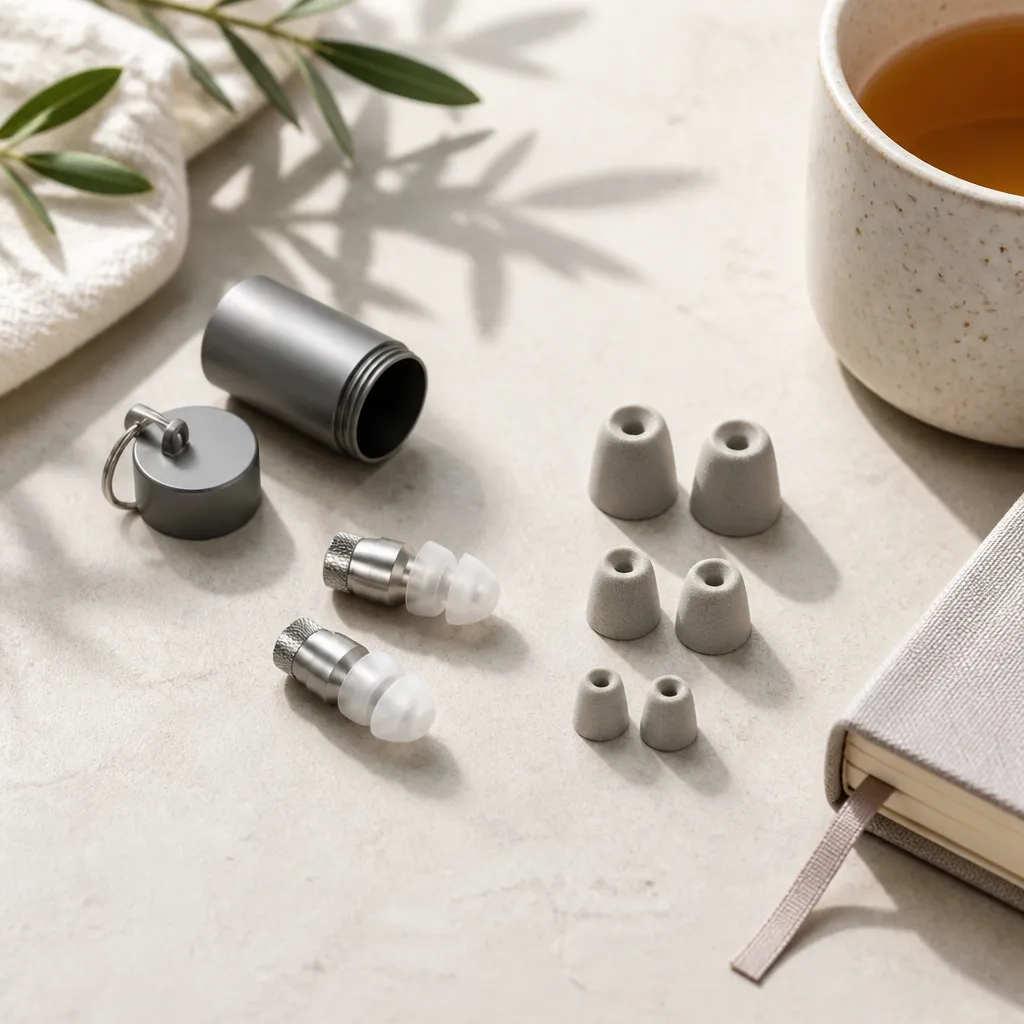
Suppose you use one disposable foam pair per night. That is roughly 365 pairs a year, and each one is a small recurring purchase you forget about. A reusable pair with foam tips replaced every six to eight weeks needs about six to nine tip sets a year. The exact savings depend on local prices, so work out your own cost per night before deciding.
The ATTENU8 design uses a concave aluminium body with three sizes of soft memory foam tips (XS, S, M). The manufacturer rates it at approximately 32dB noise reduction. For a light sleeper, the value is not only financial. It is a fit you can rely on every night, without wondering whether the plug has collapsed.
For people in construction, manufacturing, or military settings, hearing protection is not optional, and noise-related sleep loss sits on top of daytime exposure. A worker who sleeps poorly has less margin for error on the next shift, and a loud job leaves no room for a foggy head.
Pro tip: Replace foam tips on a calendar schedule rather than waiting until they look worn. Tips can lose their seal before any visible damage appears, and a poor seal quietly removes the protection you paid for.
No single fix suits every sleeper. The right choice depends on whether your problem is sudden spikes, a steady hum, or a room that lets everything in.
| Approach | Best For | Main Drawback |
|---|---|---|
| Disposable foam ear plugs | Trying earplugs for the first time or occasional travel | Recurring purchase cost and variable fit from pair to pair |
| Reusable metal-bodied ear plugs with foam tips (ATTENU8) | Nightly sleep and repeated use in loud settings | Higher upfront cost and a short fit trial to find the right tip size |
| White noise or a fan with sealed windows | Steady background noise and sleepers who like masking | Does not reduce sudden spikes, and some people find constant sound disruptive |
Earplugs work best on sudden, unpredictable noise such as traffic, neighbours, and shift-change alarms. They do not help with every sound, and an ill-fitting pair can cause discomfort that makes you stop wearing them. Fit is the variable most people underrate.
Disposable foam plugs are cheap to try and easy to buy, but they are compressed, used once, and thrown away. A reusable design with a concave aluminium body and interchangeable tips changes the cost pattern and gives you a consistent fit to test over several weeks. Expect an adjustment period, and try the XS, S, and M tips before deciding that none of them suits you.
Yes. The Sleep Foundation notes that sounds which do not fully wake you can still change how time is spent in each sleep stage. Halperin’s review also describes stress responses such as raised heart rate and blood pressure during nocturnal noise exposure.
There is no reliable timeline for an individual. Next-day effects such as sleepiness and poor concentration are documented, while the long-term cardiometabolic links are based on repeated exposure and are still emerging. Treat the pattern as the signal, not a single night.
For most healthy adults, reusable plugs with clean tips used as directed are a practical option. Clean them regularly and stop using them if you notice ear pain, discharge, or changes in hearing. See a clinician before continuing if any of those symptoms appear.
ATTENU8 recommends replacing the foam tips every six to eight weeks, rather than replacing the whole pair. Setting a calendar reminder is more reliable than judging by appearance, because a worn seal is not always visible.
It can help some sleepers, particularly against steady background sound. Research on background noise is mixed, and white noise does not reduce sudden spikes such as a passing vehicle or a door slamming, so it is often best combined with other measures.
No. Light, temperature, schedule, and health conditions all matter. Start with the noise audit described earlier, because it is one of the few variables you can measure and change quickly.
Tell us which noise disrupts your nights most, and what, if anything, has actually helped you sleep through it.
Open-plan offices promise collaboration and deliver interruptions. A colleague’s call, a keyboard clattering two desks over, and a printer that never stops can break a train of thought before it forms. For people who already struggle with focus, ear plugs for open plan office work have become one of the cheapest fixes that actually changes the day. The trick is not blocking everything. It is blocking the right sounds for a full shift, without losing the ability to hear your name or a fire alarm.
| Key Insight | Explanation |
|---|---|
| Aim for a comfortable level, not silence | An office vendor’s summary of workplace research puts the comfortable level near 50 dB. Total silence can feel unnatural and bring on boredom, so target the sharp peaks like calls and clatter. |
| Test for four hours, not four minutes | Pressure points and seal problems usually appear after a long sitting stretch. Judge a pair across a full morning of typing before you decide. |
| Choose by seal before rating | A tip that leaks loses more noise reduction than any rating on the packaging can make up for. |
| Remove plugs before any conversation you need | Plugs reduce speech but do not erase it. Take them out or reseat them before standups, calls, and anyone who needs to reach you. |
| Replace foam tips every 6 to 8 weeks | Replacing only the tips keeps the seal consistent and avoids throwing away a whole pair. Swap sooner if the tips feel stiff or lose shape. |
| Test your building’s alarms with plugs in | Confirm you can hear the fire alarm and evacuation signal before relying on plugs for a full workday. |
Most open-plan complaints are not about loud noise. They are about unpredictable noise, the kind that arrives every few minutes and forces your brain to decide whether it matters. A conversation two desks away is harder to ignore than a steady hum, because your attention keeps checking on it.
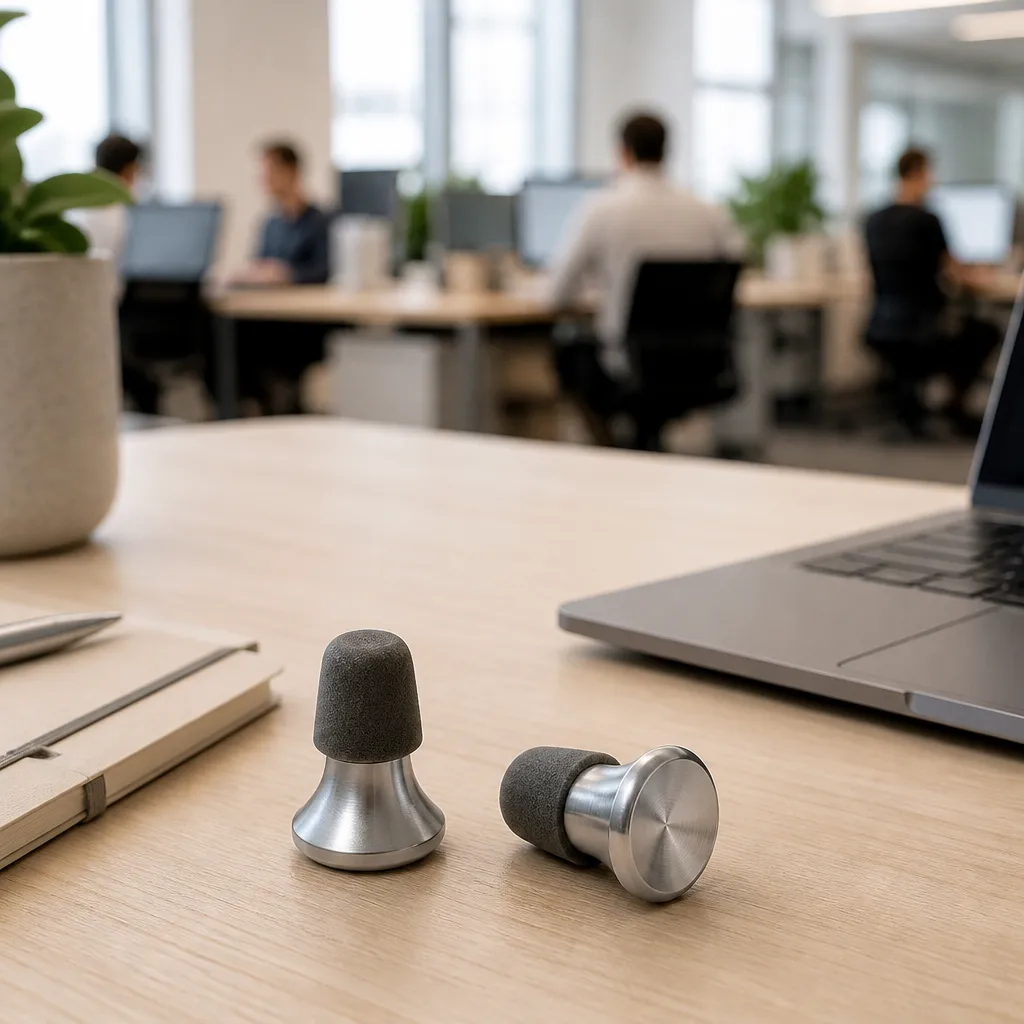
Framery’s office noise guidance makes a point that matches what many shared-floor workers describe: too much noise can make concentration harder, raise stress, and cause headaches, while too little can bring on boredom. The goal is not a silent room. You want the sharp, speech-heavy peaks gone while the floor still feels alive.
Speech carries meaning, which is why it pulls your attention so hard. Sound masking systems work by adding subtle ambient noise that makes nearby speech harder to understand, and that same logic explains why a soft background can feel calmer than a dead-quiet desk. Ear plugs take a different route: they lower the overall level at your ear, so the same conversation becomes less intrusive.
In practice, a well-fitting pair handles keyboards, phone calls across the room, and chair squeaks well. It does far less for a colleague standing beside your desk, because close-range speech is loud enough to get through a good seal. Expect plugs to solve the background problem, not the face-to-face one.
Before buying anything, spend a week noting when your focus breaks. A desk by the kitchen and a desk in the middle of a team pod can sound like two different buildings, so generic advice about open offices will only take you so far.
Write down the time, the source, and whether you lost more than a minute of work. Patterns show up quickly: a standup at 10:00, the coffee machine mid-afternoon, a sales team’s calls after lunch. Those are the windows where a pair of ear plugs earns its place, and they tell you whether you need a light reduction or a stronger one.
Noise reduction ratings are useful for comparing products, but they do not tell you how the result sounds. ATTENU8 ear plugs are rated at roughly 32dB. In an office, the more useful question is whether that reduction takes the edge off phone calls and keyboard noise without making colleagues sound muffled or your own voice sound boomy. A long-term tester of earplugs for noise sensitivity notes that very high reduction can isolate you from your surroundings and make conversation difficult, which is exactly the trade-off an open floor exposes.
Pro tip: Log your focus breaks for five working days before you buy. If most interruptions are speech, prioritize seal and clarity over maximum reduction. If they come from constant hum or equipment, you can accept a stronger reduction.
Sleep-focused plugs often fail at a desk. They are built for lying down, and pressure that feels fine on a pillow turns into an ache after three hours of sitting and typing. Noisy World’s testing used a minimum of four hours of wearing time as its bar, and that is the right standard for a workday.
A plug that does not seal the ear canal loses most of its value. Seal consistency is one of the criteria long-term testers weigh most heavily, because a gap lets through the mid-range frequencies that carry speech. Once a pair is in, talk for a few seconds. Your own voice will sound deeper because of the occlusion effect, which is normal with a sealed fit. If the room sounds unchanged, the seal is leaking and the tip size is probably wrong.
Switching from a tapered tip to a cylindrical or multi-flange design can relieve pressure within a single day. ATTENU8 ships three foam tip sizes, XS, S, and M, for this reason. Most people fit one size clearly better than the others, and the wrong size is often the first reason a pair feels painful by mid-morning.
The best ear plug for an open office is the one you forget you are wearing by mid-morning.
That is the test worth applying. If you are constantly adjusting, reseating, or noticing the ache, the pair is working against you no matter how good its rating looks.
The strongest objection to wearing ear plugs at work is a fair one: you still need to hear what matters. A good shared-floor setup does not mean being cut off. It means being deliberate about when you are plugged in and when you are not.
Most people who give up on plugs do so because they missed something they should have heard, not because the plugs were uncomfortable. Build the awareness routine first, then decide how long you can comfortably wear them each day.

Find out what your building’s fire alarm and evacuation signals sound like, then test whether you can hear them with plugs in. Remove plugs before you walk through a shared corridor or stairwell, and make that a habit rather than a decision you make under stress. It costs a few seconds and matters more than any product specification.
Plugs reduce speech but do not erase it. Colleagues who approach from behind or call across the floor can be harder to catch. Tell your team you wear them, agree on a shoulder tap or a chat message for urgent items, and reseat or remove a plug before any meeting you are expected to join.
No single tool covers every open-plan problem. Personal ear plugs solve your problem fast and cheaply, while building-level fixes solve it for everyone but take longer and need budget approval. The table below compares three common approaches for the typical shared-desk worker.
| Approach | Best For | Main Drawback |
|---|---|---|
| Reusable metal-bodied ear plugs with interchangeable foam tips | Immediate, personal relief from keyboard noise, calls, and nearby chatter | Comfort depends on finding the right tip size, and you lose some awareness of soft sounds while wearing them |
| Sound masking system installed by facilities | Reducing speech intelligibility across a whole floor at once | You cannot control it personally, and it needs careful setup so it does not become a new distraction |
| Acoustic ceiling baffles or panels | Cutting echo and reverberation across large open runs | Slow to install and costly, and it does little for a loud coworker sitting directly beside you |
In practice, most people should start with personal plugs this week and raise structural fixes with facilities in parallel. Plugs give you an immediate result you can test, while panels and masking are the changes that lift the whole floor once they are in.
Ear plugs are personal, but the noise problem is shared. Many open offices have no written quiet-hours policy, so a small agreement with your team often does more than a one-off purchase.
Ask for two hours a day where calls move to a booth or huddle room. Frame the request around output: teams that protect deep-work time tend to finish more of it. Parterre’s list of office noise fixes includes dedicated quiet spaces and sound-friendly furniture, and both are inexpensive to suggest in a team meeting.
Put a simple signal on your desk, such as a card or a headphone clip, that says you are in focus mode. Pair it with a team rule that urgent items go by chat or a quick tap on the shoulder rather than a call across the room. Signals only work when the whole team agrees to them.
Pro tip: Ask facilities to measure noise at your desk at two different times of day before you request panels. A single reading taken at 9:00 on a quiet Monday tells you almost nothing about the afternoon you actually struggle through.
Your desk position matters as much as your plugs. Sitting with your back to a high-traffic path or the printer reduces the number of sudden sounds you have to filter, and fewer sudden sounds mean you can wear a lighter, more comfortable pair for longer.
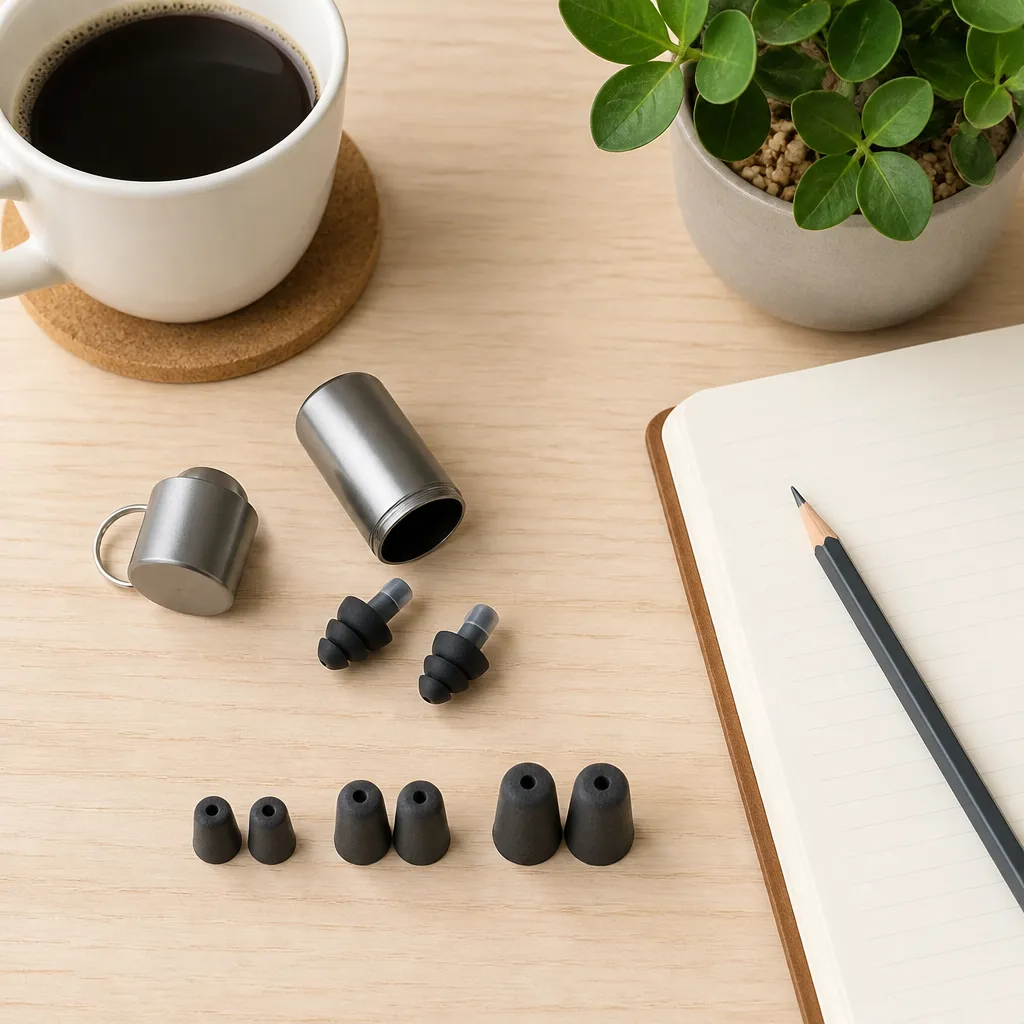
Face away from the walkway if you can. Desks at the edge of a bay usually pick up less echo than desks in the middle of a long open run, so ask for a move if your seat sits in the echo zone. A seat with a clear view of the room also reduces startle responses, because you see people coming rather than hearing them arrive.
Keep your plugs in a small case in your bag or drawer rather than loose on your desk. That way you can insert them before a loud task and remove them before a call. Replacing only the foam tips every six to eight weeks keeps the seal consistent and costs far less than replacing a whole pair, which is the practical reason to buy reusable plugs in the first place. You can find the tip replacement options on the ATTENU8 website.
Yes, for most people, provided the fit is right and you take short breaks. Plan to reseat or remove them around lunch and before any call that matters.
They reduce speech but do not eliminate it. Close-range conversation still gets through, so remove plugs for discussions you need to follow and set up a simple tap or message system for urgent contact.
Every six to eight weeks is the standard schedule for ATTENU8 tips. Replace them sooner if they stiffen, lose their shape, or the seal starts to feel weaker.
They can be, but only after you have confirmed you can hear your building’s alarm and evacuation signal with them in. Always remove plugs when moving through shared corridors and stairwells.
For speech and sudden sounds, plugs usually win because they sit in the ear without a battery and leave you free to take a call. Headphones suit steady, low background noise, but they are bulkier for all-day wear and get in the way when you need to talk.
Share your experience with ear plugs on a shared floor, including the fit problems you ran into and whatever finally made the workday bearable.

